Adhyaya 13
Jarāsandha as Obstacle to the Rājasūya — Kṛṣṇa’s Strategic Genealogical Brief (Sabhā Parva, Adhyāya 13)
Upa-parva: Rājasūyārambha Parva (Counsel on the Rājasūya and the Jarāsandha Problem)
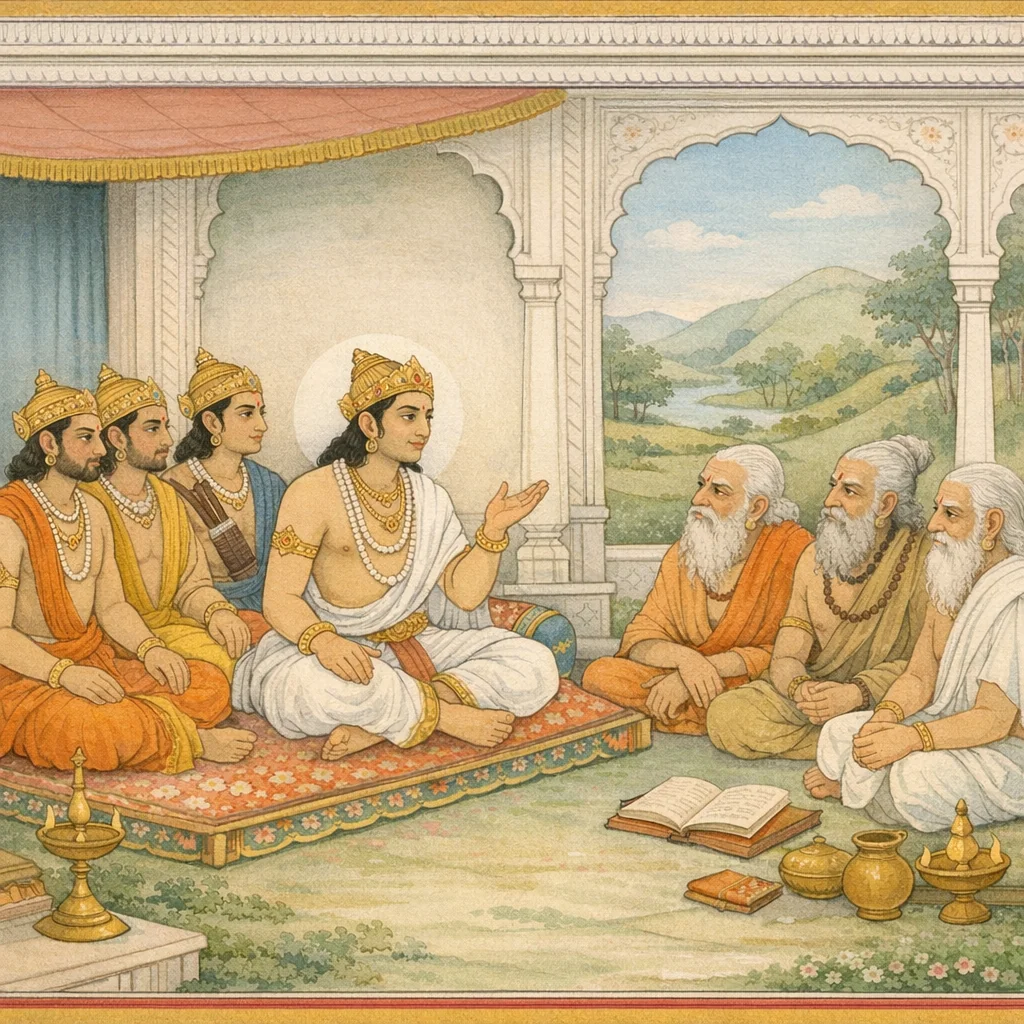
Kṛṣṇa addresses Yudhiṣṭhira, affirming his qualifications for the rājasūya while introducing a decisive constraint: Jarāsandha’s continued dominance makes the rite unattainable. To justify this assessment, Kṛṣṇa outlines a structured survey of kṣatriya origins and political formations, then enumerates key rulers and factions aligned with, subordinated to, or intimidated by Jarāsandha. He describes Jarāsandha’s accumulation of power, the presence of notable supporters and martial associates, and the broader climate of fear that has displaced or constrained multiple polities. The discourse includes an account of the Yādavas’ earlier strategic relocation from Mathurā to Dvārakā under Magadhan pressure, emphasizing defensive statecraft and fortification. Kṛṣṇa then states the operational conclusion: if Yudhiṣṭhira seeks the rājasūya in full legitimacy, he must undertake efforts aimed at the release of captive kings and the removal of Jarāsandha’s coercive control. The chapter ends as Kṛṣṇa invites Yudhiṣṭhira’s reasoned decision on this counsel.
Chapter Arc: राजसूय करनेवाले प्राचीन राजर्षियों की महिमा और पुण्यलोक-प्राप्ति का श्रवण—युधिष्ठिर के भीतर एक महान संकल्प का अंकुर फूटता है। → सभा में युधिष्ठिर बार-बार विचार करते हैं: क्या वे कुरुश्रेष्ठ होकर भी इस महायज्ञ के योग्य हैं, और क्या यह यज्ञ धर्म की वृद्धि करेगा या अहंकार/राजनीतिक वैर को जगाएगा? वे सभासदों का सत्कार कर समर्थन का वातावरण बनाते हैं, पर निर्णायक मार्गदर्शन के लिए कृष्ण को ही उपाय मानते हैं। → मंत्रियों, भ्राताओं, ऋत्विजों और महर्षियों का एकस्वर अनुमोदन—“धर्मज्ञ! आप राजसूय के सर्वथा योग्य हैं”—और युधिष्ठिर का कृष्ण (जनार्दन) को निश्चयार्थ बुलाने का दृढ़ निर्णय। → द्वारका में कृष्ण तक संदेश पहुँचता है; सर्वशक्तिमान और सर्वज्ञ माने गए कृष्ण युधिष्ठिर के दर्शनाभिलाषी होकर इन्द्रसेन सहित इन्द्रप्रस्थ के लिए प्रस्थान करते हैं। → कृष्ण का आगमन निकट है—अब राजसूय की वास्तविक तैयारी, दिग्विजय/राजनीतिक समर्पण और संभावित विरोध (विशेषतः शिशुपाल आदि) की छाया आगे मंडराती है।
Shlokas
Verse 1
(दाक्षिणात्य अधिक पाठके ३ ३ “लोक मिलाकर कुल ३७३ श्लोक हैं) भस्न्यैमा+ज (2) अिमन- (राजसूयारम्भपर्व) त्रयोदशो 5 ध्याय: युधिष्ठिरका राजसूयविषयक संकल्प और उसके विषयमें भाइयों, मन्त्रियो, मुनियों तथा श्रीकृष्णसे सलाह लेना वैशम्पायन उवाच ऋषेस्तद् वचन श्रुत्वा निशश्वास युधिष्ठिर: । चिन्तयन् राजसूयेष्टिं न लेभे शर्म भारत,वैशम्पायनजी कहते हैं--जनमेजय! देवर्षि नारदका वह वचन सुनकर युधिष्िरने लंबी साँस खींची। राजसूययज्ञके सम्बन्धमें चिन्तन करते हुए उन्हें शान्ति नहीं मिली
Vaiśampāyana said: O Bhārata (Janamejaya), having heard those words of the sage, Yudhiṣṭhira heaved a deep sigh. As he pondered the royal consecration-sacrifice (Rājasūya), he could find no peace of mind.
Verse 2
राजर्षीणां च त॑ श्रुत्वा महिमानं महात्मनाम् | यज्वनां कर्मभि: पुण्यैलोकप्राप्तिं समीक्ष्य च,राजसूययज्ञ करनेवाले महात्मा राजर्षियोंकी वैसी महिमा सुनकर तथा पुण्यकर्मोंद्वारा उत्तम लोकोंकी प्राप्ति होती देखकर एवं यज्ञ करनेवाले राजर्षि हरिश्वन्द्रका महान् तेज (तथा विशेष वैभव एवं आदर-सत्कार) सुनकर उनके मनमें राजसूययज्ञ करनेकी इच्छा हुई
Vaiśampāyana said: Having heard of the greatness of those high-souled royal sages, and seeing that by the meritorious deeds of sacrificers one attains exalted worlds, and further hearing of the extraordinary splendor—together with special prosperity and honor—of the royal sage Hariścandra who performed sacrifice, the desire to perform the Rājasūya sacrifice arose in his mind.
Verse 3
हरिश्नन्द्रे च राजर्षि रोचमानं विशेषत: । यज्वानं यज्ञमाहर्तु राजसूयमियेष स:,राजसूययज्ञ करनेवाले महात्मा राजर्षियोंकी वैसी महिमा सुनकर तथा पुण्यकर्मोंद्वारा उत्तम लोकोंकी प्राप्ति होती देखकर एवं यज्ञ करनेवाले राजर्षि हरिश्वन्द्रका महान् तेज (तथा विशेष वैभव एवं आदर-सत्कार) सुनकर उनके मनमें राजसूययज्ञ करनेकी इच्छा हुई
Vaiśampāyana said: Hearing in particular of the radiant glory of the royal sage Hariścandra—how a sacrificer, by holy rites, attains exalted worlds—and learning of his great splendor and the honor he received as a performer of sacrifice, he conceived the desire to undertake the Rājasūya, the royal consecration-sacrifice.
Verse 4
युधिष्ठटिरस्तत: सर्वानर्चयित्वा सभासद: । प्रत्यर्चितश्न तै: सर्वेर्यज्ञायैव मनो दधे,तदनन्तर युधिष्ठिरने अपने समस्त सभासदोंका सत्कार किया और उन सब सदस्योंने भी उनका बड़ा सम्मान किया। अन्तमें (सबकी सम्मतिसे) उनका मन यज्ञ करनेके ही संकल्पपर दृढ़ हो गया
Thereafter Yudhiṣṭhira honored all the members of the assembly, and they all honored him in return. At last, (with the consent of all) his mind became firmly set upon the resolve to perform the sacrifice.
Verse 5
स राजसूयं राजेन्द्र कुरूणामृषभस्तदा । आहर्तु प्रवर्ण चक्रे मन: संचिन्त्य चासकृत्,राजेन्द्र! कुरुश्रेष्ठ युधिष्ठिने उस समय बार-बार विचार करके राजसूययज्ञके अनुष्ठानमें ही मन लगाया
Vaiśampāyana said: O king, at that time Yudhiṣṭhira—the foremost of the Kurus—after repeatedly reflecting, resolved to set his mind upon accomplishing the Rājasūya sacrifice.
Verse 6
भूयश्वाद्भुतवीर्यौजा धर्ममेवानुचिन्तयन् | कि हित॑ सर्वलोकानां भवेदिति मनो दधे,हम और पराक्रमवाले धर्मराजने पुनः अपने धर्मका ही चिन्तन किया और सम्पूर्ण लोकोंका हित कैसे हो, इसी ओर वे ध्यान देने लगे
Then again, that king of wondrous valor and energy, reflecting only on dharma, set his mind upon this: “What course would bring welfare to all the worlds?”
Verse 7
अनुगृह्नन् प्रजा: सर्वा: सर्वधर्मभृतां वर: । अविशेषेण सर्वेषां हितं चक्रे युधिष्ठिर:,युधिष्ठिर समस्त धर्मात्माओंमें श्रेष्ठ थे। वे सारी प्रजापर अनुग्रह करके सबका समानरूपसे हितसाधन करने लगे
Yudhiṣṭhira, the foremost among those who uphold every form of dharma, showed favor to all the people. Without making distinctions, he set himself to securing the welfare of everyone alike—governing with impartial care and ethical responsibility.
Verse 8
सर्वेषां दीयतां देयं मुडचन् कोपमदावुभौ । साधु धर्मेति धर्मेति नान्यच्छूयेत भाषितम्,क्रोध और अभिमानसे रहित होकर राजा युधिष्ठिरने अपने सेवकोंसे कह दिया कि 'देनेयोग्य वस्तुएँ सबको दी जायँ अथवा सारी जनताका पावना (ऋण) चुका दिया जाय।' उनके राज्यमें “धर्मराज! आप धन्य हैं। धर्मस्वरूप युधिष्ठिर आपको साधुवाद!” इसके सिवा और कोई बात नहीं सुनी जाती थी
Vaiśampāyana said: “Let what ought to be given be given to everyone—casting off both anger and pride.” In that realm, one heard nothing else spoken except repeated praise: “Well done—dharma! dharma!”
Verse 9
एवंगते ततस्तस्मिन् पितरीवाश्वसञ्जना: । न तस्य विद्यते द्वेष्ठा ततो5स्याजातशत्रुता,उनका ऐसा व्यवहार देख सारी प्रजा उनके ऊपर पिताके समान भरोसा रखने लगी। उनके प्रति द्वेष रखनेवाला कोई नहीं रहा। इसीलिये वे “अजातशत्रु' नामसे प्रसिद्ध हुए
When matters had thus come to pass, the people came to place their trust in him as in a father. No one remained who bore him hatred; therefore he became renowned by the name “Ajātaśatru” (“one whose enemies are not born”).
Verse 10
परिग्रहान्नरेन्द्रस्य भीमस्य परिपालनात् । शत्रूणां क्षपणाच्चैव बीभत्सो: सव्यसाचिन:,निकामवर्षा: स्फीताश्न आसञ्जनपदास्तथा । महाराज युधिष्ठिर सबको आत्मीयजनोंकी भाँति अपनाते, भीमसेन सबकी रक्षा करते, सव्यसाची अर्जुन शत्रुओंके संहारमें लगे रहते, बुद्धिमान् सहदेव सबको धर्मका उपदेश दिया करते और नकुल स्वभावसे ही सबके साथ विनयपूर्ण बर्ताव करते थे। इससे उनके राज्यके सभी जनपद कलहशून्य, निर्भय, स्वधर्मपरायण तथा उन्नतिशील थे। वहाँ उनकी इच्छाके अनुसार समयपर वर्षा होती थी
Vaiśampāyana said: Because the king governed with just restraint, because Bhīma protected the people, and because Arjuna—terrible in battle and ambidextrous—kept destroying the enemies, the realm prospered. Under Mahārāja Yudhiṣṭhira, all were embraced as one’s own; Bhīmasena stood as the people’s shield; Savyasācī Arjuna remained intent on the suppression of hostile forces; the wise Sahadeva continually instructed everyone in dharma; and Nakula, by nature, dealt with all in courteous humility. Therefore the provinces of that kingdom were free from strife, fearless, devoted to their proper duties, and steadily advancing; and rains came in due season, as desired.
Verse 12
इस प्रकार श्रीमह्याभारत सभापवके अन्तर्गत लोकपालसभाख्यानपर्वमें पाण्डु-संदेश- कथनविषयक बारहवाँ अध्याय पूरा हुआ,वार्धुषी यज्ञसत्त्वानि गोरक्ष॑ कर्षणं वणिक्
Thus, in the Śrī Mahābhārata, within the Sabhā Parva—specifically in the section known as the ‘Account of the Assemblies of the World-Guardians’—the twelfth chapter, dealing with the narration of Pāṇḍu’s message, comes to an end. The closing words evoke the sustaining pillars of orderly life: wealth and lending, sacrificial resources, protection of cattle, agriculture, and trade—suggesting that righteous governance rests not only on power but on the ethical maintenance of society’s economic and ritual foundations.
Verse 13
धीमत: सहदेवस्य धर्माणामनुशासनात् | वैनत्यात् सर्वतश्चैव नकुलस्थ स्वभावत: । अविग्रहा वीतभया: स्वधर्मनिरता: सदा,विशेषात् सर्वमेवैतत् संजज्ञे राजकर्मणा । अनुकर्ष च निष्कर्ष व्याधिपावकमूर्च्छनम् इति श्रीमहा भारते सभापर्वणि राजसूयारम्भपर्वणि वासुदेवागमने त्रयोदशो 5 ध्याय: इस प्रकार श्रीमह्याभारत सभापवकिे अन्तर्गत राजसूयारम्भपर्वमें वायुदेवागमनविषयक तेरहवाँ अध्याय पूरा हुआ
Vaiśampāyana said: Through the wise Sahadeva’s guidance in matters of dharma, and through Nakula’s innate modesty and good nature on every side, they remained free from quarrel, rid of fear, and always devoted to their own duties. In particular, all this harmony and steadiness arose from the discipline of royal administration. (Thus ends the thirteenth chapter in the Sabhā Parva, in the section on the commencement of the Rājasūya, concerning the arrival of Vāsudeva.)
Verse 14
सर्वमेव न तत्रासीद् धर्मनित्ये युधिष्ठिरे । उन दिनों राजाके सुप्रबन्धसे ब्याजकी आजीविका, यज्ञकी सामग्री, गोरक्षा, खेती और व्यापार--इन सबकी विशेष उन्नति होने लगी। निर्धन प्रजाजनोंसे पिछले वर्षका बाकी कर नहीं लिया जाता था तथा चालू वर्षका कर वसूल करनेके लिये किसीको पीड़ा नहीं दी जाती थी। सदा धर्ममें तत्पर रहनेवाले युधिष्ठिरके शासनकालमें रोग तथा अग्निका प्रकोप आदि कोई भी उपद्रव नहीं था | १२-१३ ह ।। दस्युभ्यो वज्चकेभ्यश्व राज्ञ: प्रति परस्परम्
Vaiśampāyana said: In the reign of Yudhiṣṭhira, ever steadfast in dharma, there was no such thing as disorder. Under his well-ordered rule, lawful livelihoods and public welfare prospered—resources for sacrifice, protection of cattle, agriculture, and trade all advanced. The poor were not pressed for arrears from the previous year, nor were people harassed to extract the current year’s taxes. In that dharma-governed kingdom there were no calamities such as disease or outbreaks of fire, and no fear from bandits or deceivers.
Verse 15
प्रियं कर्तुमुपस्थातुं बलिकर्म स्वकर्मजम्,कामतो> प्युपयुञ्जानै राजसैलों भजैर्जनै: । दूसरे राजालोग विभिन्न देशके कुलीन वैश्योंके साथ धर्मराज युधिष्ठिरका प्रिय करने, उन्हें कर देने, अपने उपार्जित धन-रत्न आदिकी भेंट देने तथा संधि-विग्रहादि छः कार्योमें राजाको सहयोग देनेके लिये उनके पास आते थे। सदा धर्ममें ही लगे रहनेवाले राजा युधिष्ठिरके शासनकालमें राजस स्वभाववाले तथा लोभी मनुष्योंद्वारा इच्छानुसार धन आदिका उपभोग किये जानेपर भी उनका देश दिनोदिन उन्नति करने लगा
Vaiśampāyana said: People came to present themselves before Dharmarāja Yudhiṣṭhira in order to please him—bringing the customary tribute arising from their own occupations. Even though men of passionate (rājasa) temperament and greedy disposition enjoyed wealth and pleasures as they wished, under Yudhiṣṭhira’s rule—ever devoted to dharma—the realm nevertheless advanced day by day, sustained by orderly taxation, loyal cooperation, and righteous governance.
Verse 16
अभिहर्तु नृपा: षट्सु पृथग् जात्यैश्व नैगमै: । ववृधे विषयस्तत्र धर्मनित्ये युधिषछ्ठिरे
Vaiśampāyana said: In that realm, kings of many distinct classes and communities—six in number, along with various guilds and civic bodies—came forward to render tribute and service. Thus the dominion and resources there increased, for Yudhiṣṭhira was steadfastly devoted to dharma, and his righteous governance drew prosperity and orderly allegiance.
Verse 17
सर्वव्यापी सर्वगुणी सर्वसाह: स सर्वराट्,राजा युधिष्ठिरकी ख्याति सर्वत्र फैल रही थी। सभी सदगुण उनकी शोभा बढ़ा रहे थे। वे शीत एवं उष्ण आदि सभी द्वद्धोंको सहनेमें समर्थ तथा अपने राजोचित गुणोंसे सर्वत्र सुशोभित होते थे
Vaiśampāyana said: King Yudhiṣṭhira’s fame was spreading everywhere. Endowed with every noble quality, he enhanced his own splendor through virtue itself. Able to endure all pairs of opposites—cold and heat and the like—and adorned with the qualities befitting a king, he shone in every place as a universal sovereign.
Verse 18
यस्मिन्नधिकृत: सम्राड् भ्राजमानो महायशा: । यत्र राजन् दश दिश: पितृतो मातृतस्तथा । अनुरक्ता: प्रजा आसन्नागोपाला द्विजातय:,राजन! दसों दिशाओंमें प्रकाशित होनेवाले वे महायशस्वी सम्राट् जिस देशपर अधिकार जमाते, वहाँ ग्वालोंसे लेकर ब्राह्मणोंतक सारी प्रजा उनके प्रति पिता-माताके समान भाव रखकर प्रेम करने लगती थी
Vaiśampāyana said: Wherever that illustrious, radiant emperor held sovereign authority, O King, in all the ten directions the people—from cowherds to the twice-born—became devoted to him, loving him as they would a father and a mother.
Verse 19
वैशम्पायन उवाच स मन्त्रिण: समानाय्य क्षातृश्व वदतां वर: | राजसूयं प्रति तदा पुन: पुनरपृच्छत,वैशम्पायनजी कहते हैं--जनमेजय! वक्ताओंमें श्रेष्ठ राजा युधिष्ठिरे उस समय अपने मन्त्रियों और भाइयोंको बुलाकर उनसे बार-बार पूछा--'राजसूययज्ञके सम्बन्धमें आपलोगोंकी क्या सम्मति है?”
Vaiśampāyana said: Then Yudhiṣṭhira—foremost among speakers and a true kṣatriya—summoned his ministers and his brothers and repeatedly asked them their considered opinion regarding the Rājasūya sacrifice.
Verse 20
ते पृच्छमाना: सहिता वचो3र्थ्य मन्त्रिणस्तदा | युधिष्ठिरं महाप्राज्ञ यियक्षुमिदमब्रुवन्,इस प्रकार पूछे जानेपर उन सब मन्त्रियोंने एक साथ यज्ञकी इच्छावाले परम बुद्धिमान् युधिष्ठिस्से उस समय यह अर्थयुक्त बात कही--
Vaiśaṃpāyana said: When they were thus questioned, all those ministers, gathered together, then addressed Yudhiṣṭhira—of great wisdom and intent on performing a sacrifice—with these meaningful words.
Verse 21
येनाभिषिक्तो नृपतिर्वारुणं गुणमृच्छति । तेन राजापि त॑ कृत्स्नं सम्राडुगुणमभीप्सति,“महाराज! राजसूययज्ञके द्वारा अभिषिक्त होनेपर राजा वरुणके गुणोंको प्राप्त कर लेता है; इसलिये प्रत्येक नरेश उस यज्ञके द्वारा सम्राट्के समस्त गुणोंको पानेकी अभिलाषा रखता है
They said: “O great king, when a ruler is consecrated through the Rājasūya, he attains the qualities of Varuṇa; therefore every monarch longs, by that sacrifice, to obtain in full the virtues befitting a sovereign emperor.”
Verse 22
तस्य सम्राड्गुणाहस्य भवत:ः कुरुनन्दन । राजसूयस्य समयं मन्यन्ते सुहृदस्तव,“कुरुनन्दन! आप तो सम्राटके गुणोंको पानेके सर्वथा योग्य हैं; अतः आपके हितैषी सुहृद् आपके द्वारा राजसूययज्ञके अनुष्ठानका यह उचित अवसर प्राप्त हुआ मानते हैं
Vaiśampāyana said: “O joy of the Kurus, you are fully worthy of the qualities befitting a sovereign ruler. Therefore your well-wishing friends judge that this is the proper time for you to undertake the Rājasūya sacrifice.”
Verse 23
तस्य यज्ञस्थ समय: स्वाधीन: क्षत्रसम्पदा । साम्ना षडग्नयो यस्मिंश्षीयन्ते शंसितव्रतैः,“उस यज्ञका समय क्षत्रसम्पत्ति यानी सेना आदिके अधीन है। उसमें उत्तम व्रतका आचरण करनेवाले ब्राह्मण सामवेदके मन्त्रोंद्वार अग्निकी स्थापनाके लिये छः: अग्निवेदियोंका निर्माण करते हैं
Vaiśampāyana said: For that sacrifice, the appointed time and its smooth execution lay under the control of royal power and resources—armies and the like. In that rite, Brahmins of praised vows, using Sāman chants, establish the sacred fires by constructing six fire-altars, ensuring the ritual proceeds in proper order and discipline.
Verse 24
दर्वीहोमानुपादाय सर्वान् यः प्राप्तुते क्रतून् | अभिषेकं च यस्यान्ते सर्वजित् तेन चोच्यते,“जो उस यज्ञका अनुष्ठान करता है, वह “दर्वीहोम' (अग्निहोत्र आदि)-से लेकर समस्त यज्ञोंके फलको प्राप्त कर लेता है एवं यज्ञके अन्तमें जो अभिषेक होता है, उससे वह यज्ञकर्ता नरेश 'सर्वजित् सम्राट' कहलाने लगता है
Vaiśampāyana said: He who performs this sacrifice gains the fruits of all rites—from the darvīhoma offerings (such as the daily fire-oblation) onward. And because, at the conclusion, the consecratory anointing (abhiṣeka) is performed for him, that royal sacrificer is thereafter spoken of as “Sarvajit,” the all-conquering sovereign—signifying ritual completeness and the ethical ideal of kingship established through duly sanctioned ceremony rather than mere force.
Verse 25
समर्थो5सि महाबाहो सर्वे ते वशगा वयम् | अचिरात् त्वं महाराज राजसूयमवाप्स्यसि,“महाबाहो! आप उस यज्ञके सम्पादनमें समर्थ हैं। हम सब लोग आपकी आज्ञाके अधीन हैं। महाराज! आप शीघ्र ही राजसूययज्ञ पूर्ण कर सकेंगे
Vaiśaṃpāyana said: “O mighty-armed one, you are fully capable of accomplishing this sacrifice. We all stand under your command. O great king, before long you will attain and complete the Rājasūya.”
Verse 26
अविचार्य महाराज राजसूये मन: कुरु । इत्येवं सुह्ृदः सर्वे पृथक् च सह चाब्रुवन्,“अत: किसी प्रकारका सोच-विचार न करके आप राजसूयके अनुष्ठानमें मन लगाइये।” इस प्रकार उनके सभी सुहृदोंने अलग-अलग और सम्मिलित होकर अपनी यही सम्मति प्रकट की
Vaiśampāyana said: “O great king, without wavering in doubt, set your mind upon the Rājasūya.” Thus all his well-wishers—some individually and some together—voiced the same counsel, urging him to proceed without hesitation toward the royal consecration.
Verse 27
स धर्म्य पाण्डवस्तेषां वच: श्रुत्वा विशाम्पते | धृष्टमिष्टं वरिष्ठ च जग्राह मनसारिहा,प्रजानाथ! शत्रुसूदन पाण्डुनन्दन युधिष्ठिरने उनका यह साहसपूर्ण, प्रिय एवं श्रेष्ठ वचन सुनकर उसे मन-ही-मन ग्रहण किया
Vaiśampāyana said: O lord of the people, that righteous Pāṇḍava—Yudhiṣṭhira, the foe-subduer—having heard their words, accepted within his heart that bold counsel, which was dear to him and, in his judgment, the best.
Verse 28
श्रुत्वा सुहृद्गचस्तच्च जानंश्वाप्पात्मन: क्षमम् । पुनः पुनर्मनो दध्ने राजसूयाय भारत,भारत! उन्होंने सुहदोंका वह सम्मतिसूचक वचन सुनकर तथा यह भी जानते हुए कि राजसूययज्ञ अपने लिये साध्य है, उसके विषयमें बारम्बार मन-ही-मन विचार किया
Vaiśampāyana said: Having heard that approving counsel of his well-wishing friends, and knowing too that the Rājasūya sacrifice lay within his own power to accomplish, O Bhārata, he again and again set his mind upon it—turning the matter over inwardly with deliberate resolve.
Verse 29
स भ्रातृभि: पुनर्थीमानृत्विग्भिश्व महात्मभि: | मन्त्रिभिश्वापि सहितो धर्मराजो युधिष्ठिर: । धौम्यद्वैपायनाद्यैश्व मन्त्रयामास मन्त्रवित्,फिर मन्त्रणाका महत्त्व जाननेवाले बुद्धिमान् धर्मराज युधिष्ठिर अपने भाइयों, महात्मा ऋत्विजों, मन्त्रियों तथा धौम्य एवं व्यास आदि महर्षियोंके साथ इस विषयपर पुन: विचार करने लगे
Then the wise Dharmarāja Yudhiṣṭhira, accompanied by his brothers, the great-souled officiating priests, and his ministers, consulted again on the matter with the seers—Dhaumya, Dvaipāyana (Vyāsa), and others—being himself skilled in counsel.
Verse 30
युधिछिर उवाच इयं या राजसूयस्य सम्रार्ड्हस्य सुक्रतो: । श्रद्धधानस्य वदत: स्पृहा मे सा कथं भवेत्,युधिष्ठिरने कहा--महात्माओ! राजसूय नामक उत्तम यज्ञ किसी सम्राटके ही योग्य है, तो भी मैं उसके प्रति श्रद्धा रखने लगा हूँ; अतः आपलोग बताइये, मेरे मनमें जो यह राजसूययज्ञ करनेकी अभिलाषा हुई है, कैसी है?
Yudhiṣṭhira said: “This desire that has arisen in me for the Rājasūya—an exalted, richly accomplished sacrifice, fit for a sovereign and a noble rite—how should it be regarded? Though I speak with faith and reverence for it, tell me: what is the true nature of this longing in my heart to perform the Rājasūya?”
Verse 31
वैशम्पायन उवाच एवमुक्तास्तु ते तेन राज्ञा राजीवलोचन । इदमूचुर्वच: काले धर्मराजं॑ युधिष्ठिरम्,वैशम्पायनजी कहते हैं--कमलनयन जनमेजय! राजाके इस प्रकार पूछनेपर वे सब लोग उस समय धर्मराज युधिष्ठिरसे यों बोले--
Vaiśampāyana said: O lotus-eyed king, when they had thus been addressed by that ruler, those men, at that moment, spoke these words to Dharmarāja Yudhiṣṭhira.
Verse 32
अहतस्त्वमसि धर्मज्ञ राजसूयं महाक्रतुम् अथैवमुक्ते नृपतावृत्विग्भिऋ्रषिभिस्तथा
Vaiśampāyana said: “O dharma-knower, you are unstruck and unharmed; therefore perform the Rājasūya, that great royal sacrifice.” When this was said to the king, the officiating priests and the sages likewise assented and spoke in support.
Verse 33
स तु राजा महाप्राज्ञ: पुनरेवात्मना55त्मवान्,तदनन्तर मनको वशमें रखनेवाले महाबुद्धिमान् राजा युधिष्लिरने सम्पूर्ण लोकोंके हितकी इच्छासे पुनः: इस विषयपर मन-ही-मन विचार किया--'जो बुद्धिमान् अपनी शक्ति और साधनोंको देखकर तथा देश, काल, आय और व्ययको बुद्धिके द्वारा भलीभाँति समझ करके कार्य आरम्भ करता है, वह कष्टमें नहीं पड़ता। केवल अपने ही निश्चयसे यज्ञका आरम्भ नहीं किया जाता।” ऐसा समझकर यत्नपूर्वक कार्यभार वहन करनेवाले युधिष्छिरने उस कार्यके विषयमें पूर्ण निश्चय करनेके लिये जनार्दन भगवान् श्रीकृष्णको ही सब लोगोंसे उत्तम माना और वे मन-ही-मन उन अप्रमेय महाबाहु श्रीहरिकी शरणमें गये, जो अजन्मा होते हुए भी धर्म एवं साधु पुरुषोंकी रक्षा आदिकी इच्छासे मनुष्यलोकमें अवतीर्ण हुए थे
Vaiśampāyana said: The supremely intelligent king, Yudhiṣṭhira—self-controlled and reflective—again pondered inwardly, wishing for the welfare of all worlds. He reasoned that a wise person, after assessing his own strength and resources and carefully weighing place, time, income, and expenditure, begins an undertaking without falling into distress; and that a sacrifice should not be commenced merely on the basis of one’s private resolve. Having understood this, Yudhiṣṭhira, who bore the burden of responsibility with deliberate effort, judged Janārdana, Lord Śrī Kṛṣṇa, to be the best among all for arriving at a final decision in that matter. In his heart he sought refuge in that immeasurable, mighty-armed Śrī Hari—unborn, yet descended into the human world out of the will to protect dharma and safeguard the righteous.
Verse 34
भूयो विममृशे पार्थों लोकानां हितकाम्यया । सामर्थ्ययोगं सम्प्रेक्ष्य देशकालौ व्ययागमौ,तदनन्तर मनको वशमें रखनेवाले महाबुद्धिमान् राजा युधिष्लिरने सम्पूर्ण लोकोंके हितकी इच्छासे पुनः: इस विषयपर मन-ही-मन विचार किया--'जो बुद्धिमान् अपनी शक्ति और साधनोंको देखकर तथा देश, काल, आय और व्ययको बुद्धिके द्वारा भलीभाँति समझ करके कार्य आरम्भ करता है, वह कष्टमें नहीं पड़ता। केवल अपने ही निश्चयसे यज्ञका आरम्भ नहीं किया जाता।” ऐसा समझकर यत्नपूर्वक कार्यभार वहन करनेवाले युधिष्छिरने उस कार्यके विषयमें पूर्ण निश्चय करनेके लिये जनार्दन भगवान् श्रीकृष्णको ही सब लोगोंसे उत्तम माना और वे मन-ही-मन उन अप्रमेय महाबाहु श्रीहरिकी शरणमें गये, जो अजन्मा होते हुए भी धर्म एवं साधु पुरुषोंकी रक्षा आदिकी इच्छासे मनुष्यलोकमें अवतीर्ण हुए थे
Vaiśampāyana said: Again the son of Pṛthā reflected, desiring the welfare of all people. Considering the proper alignment of resources and capability, and carefully weighing place and time, income and expenditure, the wise king Yudhiṣṭhira thought within himself: “One who is prudent—after assessing his strength and means, and after rightly understanding by reason the factors of place, time, revenue, and cost—does not fall into distress. A sacrifice should not be begun merely on the basis of one’s private resolve.” Having thus understood, Yudhiṣṭhira, who bore the burden of duty with deliberate effort, regarded Janārdana, Lord Śrī Kṛṣṇa, as the best of all for arriving at a firm decision in that undertaking; and in his heart he sought refuge in that immeasurable, mighty-armed Śrī Hari, who, though unborn, had descended into the human world out of the will to protect dharma and the righteous.
Verse 35
विमृश्य सम्यक् च धिया कुर्वन् प्राज्ञो न सीदति । न हि यज्ञसमारम्भ: केवलात्मविनिश्चयात्,तदनन्तर मनको वशमें रखनेवाले महाबुद्धिमान् राजा युधिष्लिरने सम्पूर्ण लोकोंके हितकी इच्छासे पुनः: इस विषयपर मन-ही-मन विचार किया--'जो बुद्धिमान् अपनी शक्ति और साधनोंको देखकर तथा देश, काल, आय और व्ययको बुद्धिके द्वारा भलीभाँति समझ करके कार्य आरम्भ करता है, वह कष्टमें नहीं पड़ता। केवल अपने ही निश्चयसे यज्ञका आरम्भ नहीं किया जाता।” ऐसा समझकर यत्नपूर्वक कार्यभार वहन करनेवाले युधिष्छिरने उस कार्यके विषयमें पूर्ण निश्चय करनेके लिये जनार्दन भगवान् श्रीकृष्णको ही सब लोगोंसे उत्तम माना और वे मन-ही-मन उन अप्रमेय महाबाहु श्रीहरिकी शरणमें गये, जो अजन्मा होते हुए भी धर्म एवं साधु पुरुषोंकी रक्षा आदिकी इच्छासे मनुष्यलोकमें अवतीर्ण हुए थे
Vaiśampāyana said: “One who reflects well and acts with clear intelligence does not fall into distress. For the undertaking of a sacrifice is not begun merely on the strength of one’s private resolve.” Having thus weighed the matter for the welfare of all, King Yudhiṣṭhira—great in understanding and intent on bearing the burden carefully—sought firm certainty about the enterprise. He regarded Janārdana, Bhagavān Śrī Kṛṣṇa, as the best guide among all, and inwardly took refuge in that immeasurable, mighty-armed Śrī Hari, who, though unborn, descends into the human world to uphold dharma and protect the righteous.
Verse 36
भवतीति समाज्ञाय यत्नतः कार्यमुद्रहन् । स निश्चयार्थ कार्यस्य कृष्णमेव जनार्दनम्,तदनन्तर मनको वशमें रखनेवाले महाबुद्धिमान् राजा युधिष्लिरने सम्पूर्ण लोकोंके हितकी इच्छासे पुनः: इस विषयपर मन-ही-मन विचार किया--'जो बुद्धिमान् अपनी शक्ति और साधनोंको देखकर तथा देश, काल, आय और व्ययको बुद्धिके द्वारा भलीभाँति समझ करके कार्य आरम्भ करता है, वह कष्टमें नहीं पड़ता। केवल अपने ही निश्चयसे यज्ञका आरम्भ नहीं किया जाता।” ऐसा समझकर यत्नपूर्वक कार्यभार वहन करनेवाले युधिष्छिरने उस कार्यके विषयमें पूर्ण निश्चय करनेके लिये जनार्दन भगवान् श्रीकृष्णको ही सब लोगोंसे उत्तम माना और वे मन-ही-मन उन अप्रमेय महाबाहु श्रीहरिकी शरणमें गये, जो अजन्मा होते हुए भी धर्म एवं साधु पुरुषोंकी रक्षा आदिकी इच्छासे मनुष्यलोकमें अवतीर्ण हुए थे
Vaiśampāyana said: Having understood the matter and taking up the burden of action with care, Yudhiṣṭhira sought firm certainty about what should be done and regarded Janārdana—Kṛṣṇa alone—as the best guide. Then the great-minded king, intent on the welfare of all worlds and restraining his own mind, reflected inwardly: “A wise man, after assessing his strength and resources and clearly grasping by reason the factors of place, time, income, and expenditure, begins an undertaking; such a man does not fall into distress. A sacrifice should not be commenced merely on the basis of one’s private resolve.” Thinking thus, and bearing the responsibility with diligence, Yudhiṣṭhira took refuge in the immeasurable, mighty-armed Śrī Hari—though unborn, he descends into the human world for the protection of dharma and the good.
Verse 37
सर्वलोकात् परं मत्वा जगाम मनसा हरिम् । अप्रमेयं महाबाहुं कामाज्जातमजं नृषु,तदनन्तर मनको वशमें रखनेवाले महाबुद्धिमान् राजा युधिष्लिरने सम्पूर्ण लोकोंके हितकी इच्छासे पुनः: इस विषयपर मन-ही-मन विचार किया--'जो बुद्धिमान् अपनी शक्ति और साधनोंको देखकर तथा देश, काल, आय और व्ययको बुद्धिके द्वारा भलीभाँति समझ करके कार्य आरम्भ करता है, वह कष्टमें नहीं पड़ता। केवल अपने ही निश्चयसे यज्ञका आरम्भ नहीं किया जाता।” ऐसा समझकर यत्नपूर्वक कार्यभार वहन करनेवाले युधिष्छिरने उस कार्यके विषयमें पूर्ण निश्चय करनेके लिये जनार्दन भगवान् श्रीकृष्णको ही सब लोगोंसे उत्तम माना और वे मन-ही-मन उन अप्रमेय महाबाहु श्रीहरिकी शरणमें गये, जो अजन्मा होते हुए भी धर्म एवं साधु पुरुषोंकी रक्षा आदिकी इच्छासे मनुष्यलोकमें अवतीर्ण हुए थे
Considering Hari to be higher than all the worlds, he turned to Him in his mind. He sought refuge in that immeasurable, mighty-armed Lord—unborn, yet appearing among men by His own will—thereby placing the coming decision under divine guidance rather than mere personal resolve.
Verse 38
पाण्डवस्तर्कयामास कर्मभिदरदेवसम्मतै: । नास्य किंचिदविज्ञातं नास्य किंचिदकर्मजम्,पाण्डुनन्दन युधिष्ठिरने श्रीकृष्णके देवपृूजित अलौकिक कर्मोंद्वारा यह अनुमान किया कि श्रीकृष्णके लिये कुछ भी अज्ञात नहीं है तथा कोई भी ऐसा कार्य नहीं है, जिसे वे कर न सकें
Yudhiṣṭhira, son of Pāṇḍu, reasoned from Kṛṣṇa’s otherworldly deeds—approved even by the gods—and concluded that nothing was unknown to Śrī Kṛṣṇa and that there was no task He could not accomplish.
Verse 39
नस किंचिन्न विषहेदिति कृष्णममन्यत । सतुतां नैछिकीं बुद्धि कृत्वा पार्थो युधिष्ठिर:,द्वारकावासिन कृष्णं द्वारवत्यां समासदत् । उनके लिये कुछ भी असहा नहीं है। इस तरह उन्होंने उन्हें सर्वशक्तिमान् एवं सर्वज्ञ माना। ऐसी निश्चयात्मक बुद्धि करके कुन्तीनन्दन युधिष्ठिरने गुरुजनोंके प्रति निवेदन करनेकी भाँति समस्त प्राणियोंके गुरु श्रीकृष्णके पास शीघ्र ही एक दूत भेजा। वह दूत शीघ्रगामी रथके द्वारा तुरंत यादवोंके यहाँ पहुँचकर द्वारकावासी श्रीकृष्णसे द्वारकामें ही मिला
He regarded Kṛṣṇa as one for whom nothing was unbearable. With that firm and decisive conviction—holding Śrī Kṛṣṇa to be omnipotent and omniscient—Yudhiṣṭhira, Kuntī’s son, swiftly sent a messenger to Him, as one petitions elders and teachers. Riding a fast chariot, the envoy at once reached the Yādavas and met Śrī Kṛṣṇa, dweller in Dvārakā, there in Dvāravatī.
Verse 40
गुरुवद् भूतगुरवे प्राहिणोद् दूतमज्जसा । शीघ्रगेन रथेनाशु स दूत: प्राप्प पयादवान्
Honoring Him with the reverence due a teacher—the Guru of all beings—he promptly dispatched a messenger. Speeding in a swift chariot, that envoy soon reached the Yādavas.
Verse 41
(स प्रह्दः प्राउ्जलि भूूत्वा व्यज्ञापपत माधवम् ।। उसने विनयपूर्वक हाथ जोड़ भगवान् श्रीकृष्णसे इस प्रकार निवेदन किया। दूत उवाच धर्मराजो हृषीकेश धौम्यव्यासादिभि: सह । पाज्चालमात्स्यसहितै भ्रतिभिश्चैव सर्वश: ।। त्वद्दर्शने महाबाहो काड्क्षते स युधिष्ठिर: । दूतने कहा--महाबाहु हृषीकेश! धर्मराज युधिष्छिर धौम्य एवं व्यास आदि महर्षियों, द्रपद और विराट आदि नरेशों तथा अपने समस्त भाइयोंके साथ आपका दर्शन करना चाहते हैं। वैशम्पायन उवाच इन्द्रसेनवच: श्रुत्वा यादवप्रवरो बली ।) दर्शनाकड्क्षिणं पार्थ दर्शनाकाड्क्षयाच्युत:
With palms joined and head bowed in humility, the messenger made his petition to Mādhava. The messenger said: “O Hṛṣīkeśa, mighty-armed one! King Dharmarāja Yudhiṣṭhira, together with Dhaumya, Vyāsa, and other great sages, along with the Pāñcālas and Matsyas, and with all his brothers, longs to behold you.” Vaiśampāyana said: Hearing Indrasena’s words, Acyuta—the strong foremost of the Yādavas—desiring that meeting as well, turned his mind toward Pārtha, who was likewise eager for Kṛṣṇa’s sight.
Verse 42
व्यतीत्य विविधान् देशांस्त्वरावान् क्षिप्रवाहन:,मार्गमें अनेक देशोंको लाँघते हुए वे बड़ी उतावलीके साथ आगे बढ़ रहे थे। उनके रथके घोड़े बहुत तेज चलनेवाले थे
Swiftly crossing many different lands, he pressed on in great haste; the horses of his chariot were exceedingly fast, driving him forward without delay.
Verse 43
इन्द्रप्रस्थगतं पार्थमभ्यगच्छज्जनार्दन: । स गृहे पितृवद् भ्रात्रा धर्मराजेन पूजित: । भीमेन च ततो<पश्यत् स्वसारं प्रीतिमान् पितु:,भगवान् जनार्दन इन्द्रप्रस्थमें आकर राजा युधिष्ठिरसे मिले। फुफेरे भाई धर्मराज युधिष्ठिर तथा भीमसेनने अपने घरमें श्रीकृष्णका पिताकी भाँति पूजन किया। तत्पश्चात् श्रीकृष्ण अपनी बुआ कुन्तीसे प्रसन्नतापूर्वक मिले
Vaiśaṃpāyana said: Janārdana (Kṛṣṇa) went to Pārtha (Arjuna) in Indraprastha. In the royal house his cousin-brother Dharmarāja (Yudhiṣṭhira) honored him with the reverence due to a father, and Bhīma also paid him homage. Thereafter the Blessed Lord Janārdana, filled with affection for his father’s sister, met his aunt Kuntī with gladness.
Verse 44
प्रीत: प्रीतेन सुहदा रेमे स सहितस्तदा । अर्जुनेन यमाभ्यां च गुरुवत् पर्युपासित:,तदनन्तर प्रेमी सुहृद् अर्जुनसे मिलकर वे बहुत प्रसन्न हुए। फिर नकुल-सहदेवने गुरुकी भाँति उनकी सेवा-पूजा की
Vaiśaṃpāyana said: Delighted by the affection of his dear friend, he rejoiced in their company. Arjuna and the twin brothers (Nakula and Sahadeva) attended upon him with the reverence and care one offers to a teacher.
Verse 45
त॑ विश्रान्तं शुभे देशे क्षणिनं कल्पमच्युतम् । धर्मराज: समागम्याज्ञापयत् स्वप्रयोजनम्,इसके बाद उन्होंने एक उत्तम भवनमें विश्राम किया। थोड़ी देर बाद जब वे मिलनेके योग्य हुए और इसके लिये उन्होंने अवसर निकाल लिया, तब धर्मराज युधिष्ठिरे आकर उनसे अपना सारा प्रयोजन बतलाया
Vaiśaṃpāyana said: When Acyuta had rested for a short while in an auspicious place, Dharmarāja (Yudhiṣṭhira) approached him and communicated his purpose, setting forth the matter that needed to be accomplished.
Verse 46
युधिछिर उवाच प्रार्थितो राजसूयो मे न चासौ केवलेप्सया । प्राप्पते येन तत् ते हि विदितं कृष्ण सर्वश:,युधिष्ठटिर बोले--श्रीकृष्ण! मैं राजसूययज्ञ करना चाहता हूँ; परंतु वह केवल चाहनेभरसे ही पूरा नहीं हो सकता। जिस उपायसे उस यज्ञकी पूर्ति हो सकती है, वह सब आपको ही ज्ञात है
Yudhiṣṭhira said: “O Kṛṣṇa, I desire to perform the Rājasūya sacrifice; yet it cannot be fulfilled by wish alone. By what means that sacrifice may be brought to completion—all this, O Kṛṣṇa, is known to you in every way.”
Verse 47
यस्मिन् सर्व सम्भवति यश्न सर्वत्र पूज्यते । यश्न सर्वेश्वरो राजा राजसूयं स विन्दति,जिसमें सब कुछ सम्भव है अर्थात् जो सब कुछ कर सकता है, जिसकी सर्वत्र पूजा होती है तथा जो सर्वेश्वर होता है, वही राजा राजसूययज्ञ सम्पन्न कर सकता है
“Only that king in whom all capacities are found—who can accomplish every undertaking, who is honored everywhere, and who stands as the supreme lord among rulers—such a king alone is fit to obtain and complete the Rājasūya sacrifice.”
Verse 48
त॑ राजसूय॑ सुह्ृदः कार्यमाहु: समेत्य मे । तत्र मे निश्चिततमं तव कृष्ण गिरा भवेत्,मेरे सब सुहृद् एकत्र होकर मुझसे वही राजसूययज्ञ करनेके लिये कहते हैं; परंतु इसके विषयमें अन्तिम निश्चय तो आपके कहनेसे ही होगा
Yudhiṣṭhira said: “My well-wishing friends, having gathered together, urge me to undertake the Rājasūya sacrifice. Yet, in this matter, my final and firm decision will rest upon your word, O Kṛṣṇa.”
Verse 49
केचिद्धि सौहृदादेव न दोषं परिचक्षते । स्वार्थहेतोस्तथैवान्ये प्रियमेव वदन्त्युत,कुछ लोग प्रेम-सम्बन्धके नाते ही मेरे दोषों या त्रुटियोंको नहीं बताते हैं। दूसरे लोग स्वार्थवश वही बात कहते हैं, जो मुझे प्रिय लगे
Yudhiṣṭhira said: “Some, merely out of affection and friendship, do not point out my faults at all. Others, driven by self-interest, speak only what is pleasing to me.”
Verse 50
प्रियमेव परीप्सन्ते केचिदात्मनि यद्धितम् । एवम्प्रायाश्व दृश्यन्ते जनवादा: प्रयोजने,कुछ लोग जो अपने लिये हितकर है, उसीको मेरे लिये भी प्रिय एवं हितकर समझ बैठते हैं। इस प्रकार अपने-अपने प्रयोजनको लेकर प्राय: लोगोंकी भिन्न-भिन्न बातें देखी जाती हैं
“Some seek only what benefits themselves, and imagine that the same must be pleasing and beneficial for me as well. Thus, owing to their various aims, people’s opinions are most often seen to differ.”
Verse 51
त्वं तु हेतूनतीत्यैतान् कामक्रोधौ व्युदस्य च । परम॑ यत् क्षमं लोके यथावद् वक्तुमहसि,परंतु आप उपर्युक्त सभी हेतुओंसे एवं काम-क्रोधसे रहित होकर (अपने स्वरूपमें स्थित हैं। अतः) इस लोकमें मेरे लिये जो उत्तम एवं करनेयोग्य हो, उसको ठीक-ठीक बतानेकी कृपा करें
Yudhiṣṭhira said: “But you—having risen above these motives and having cast aside desire and anger—are established in inner clarity. Therefore, please tell me, precisely and rightly, what in this world is best and truly fitting for me to do.”
Verse 116
निकामवर्षा: स्फीताश्न आसञ्जनपदास्तथा । महाराज युधिष्ठिर सबको आत्मीयजनोंकी भाँति अपनाते, भीमसेन सबकी रक्षा करते, सव्यसाची अर्जुन शत्रुओंके संहारमें लगे रहते, बुद्धिमान् सहदेव सबको धर्मका उपदेश दिया करते और नकुल स्वभावसे ही सबके साथ विनयपूर्ण बर्ताव करते थे। इससे उनके राज्यके सभी जनपद कलहशून्य, निर्भय, स्वधर्मपरायण तथा उन्नतिशील थे। वहाँ उनकी इच्छाके अनुसार समयपर वर्षा होती थी
Vaiśampāyana said: In King Yudhiṣṭhira’s realm, rains came in due season as desired; the people ate well and the countryside was prosperous and well-settled. Yudhiṣṭhira embraced everyone as though they were his own kin; Bhīmasena protected all; Arjuna, the ambidextrous archer, remained intent on the destruction of enemies; the wise Sahadeva continually instructed people in dharma; and Nakula, by nature, dealt with everyone with courteous humility. Therefore all districts of their kingdom were free from quarrel, fearless, devoted to their own duties, and steadily advancing.
Verse 143
राजवल्लभतश्चैव नाश्रूयत मृषा कृतम् लुटेरोंसे, ठगोंसे, राजासे तथा राजाके प्रिय व्यक्तियोंसे प्रजाके प्रति अत्याचार या मिथ्या व्यवहार कभी नहीं सुना जाता था और आपसमें भी सारी प्रजा एक-दूसरेसे मिथ्या व्यवहार नहीं करती थी
Vaiśampāyana said: Even from the king’s favourites no false dealing was ever heard of. Neither robbers nor cheats, nor the king, nor those dear to the king were known to oppress the people or act deceitfully toward them; and among themselves too, the whole populace did not engage in dishonest conduct.
Verse 163
कामतो> प्युपयुञ्जानै राजसैलों भजैर्जनै: । दूसरे राजालोग विभिन्न देशके कुलीन वैश्योंके साथ धर्मराज युधिष्ठिरका प्रिय करने, उन्हें कर देने, अपने उपार्जित धन-रत्न आदिकी भेंट देने तथा संधि-विग्रहादि छः कार्योमें राजाको सहयोग देनेके लिये उनके पास आते थे। सदा धर्ममें ही लगे रहनेवाले राजा युधिष्ठिरके शासनकालमें राजस स्वभाववाले तथा लोभी मनुष्योंद्वारा इच्छानुसार धन आदिका उपभोग किये जानेपर भी उनका देश दिनोदिन उन्नति करने लगा
Vaiśampāyana said: Even when people of passionate temperament and greedy disposition indulged in wealth and pleasures as they wished, the realm continued to prosper day by day under King Yudhiṣṭhira, who was ever devoted to dharma. From many lands, other kings and noble Vaiśyas came to him to please Dharmarāja, to pay tribute, to present the riches and jewels they had acquired, and to support the king in the six measures of statecraft—peace, war, marching, halting, seeking shelter, and dual policy.
Verse 323
मन्त्रिणो भ्रातरश्चान्ये तद्बच: प्रत्यपूजयन् । “धर्मज्ञ! आप राजसूय महायज्ञ करनेके सर्वथा योग्य हैं।' ऋत्विजों तथा महर्षियोंने जब राजा युधिष्ठिरसे इस प्रकार कहा, तब उनके मन्त्रियों और भाइयोंने उन महात्माओंके वचनका बड़ा आदर किया
Vaiśampāyana said: The ministers, the brothers, and the other attendants honored those words. “O knower of dharma, you are in every way fit to perform the great Rājasūya sacrifice.” When the officiating priests and the great seers spoke thus to King Yudhiṣṭhira, his ministers and brothers received the sages’ counsel with deep respect.
Verse 403
द्वारकावासिन कृष्णं द्वारवत्यां समासदत् । उनके लिये कुछ भी असहा नहीं है। इस तरह उन्होंने उन्हें सर्वशक्तिमान् एवं सर्वज्ञ माना। ऐसी निश्चयात्मक बुद्धि करके कुन्तीनन्दन युधिष्ठिरने गुरुजनोंके प्रति निवेदन करनेकी भाँति समस्त प्राणियोंके गुरु श्रीकृष्णके पास शीघ्र ही एक दूत भेजा। वह दूत शीघ्रगामी रथके द्वारा तुरंत यादवोंके यहाँ पहुँचकर द्वारकावासी श्रीकृष्णसे द्वारकामें ही मिला
Vaiśampāyana said: The messenger met Kṛṣṇa, the resident of Dvārakā, in Dvāravatī itself. In the course of the tale, Yudhiṣṭhira—having concluded that Kṛṣṇa is all-powerful and all-knowing, and that nothing is unbearable for him—acts with reverent discernment: as one would petition elders and teachers, he promptly sends an envoy to the universal teacher, Śrī Kṛṣṇa, seeking guidance and support.
Verse 416
इन्द्रसेनेन सहित इन्द्रप्रस्थमगात् तदा । वैशम्पायनजी कहते हैं--दूत इन्द्रसेनकी यह बात सुनकर यदुवंशशिरोमणि महाबली भगवान् श्रीकृष्ण दर्शनाभिलाषी युधिष्ठिरके पास स्वयं भी उनके दर्शनकी अभिलाषासे दूत इन्द्रसेनके साथ इन्द्रप्रस्थ नगरमें आये
Vaiśampāyana said: Then, accompanied by Indrasena, he went to Indraprastha. In the flow of the narrative, this marks a prompt and respectful response to a message delivered through a trusted envoy—showing how rightful rulers and allies act without delay when duty, alliance, and the desire for a righteous meeting call them.
Frequently Asked Questions
The dilemma is how to pursue a universal-sovereignty rite without normalizing coercive domination: Kṛṣṇa frames the rājasūya as improper or infeasible while Jarāsandha’s imprisonment of other rulers persists, forcing a choice between ceremonial ambition and restoring political justice.
Legitimate authority is not merely personal virtue or ritual correctness; it depends on the ethical condition of the political order. Removing systemic coercion and enabling the freedom of other rulers is presented as integral to righteous sovereignty.
No explicit phalaśruti appears in this adhyāya; instead, the chapter functions as pragmatic meta-guidance—linking ritual success (rājasūya completion) to a prior corrective action (the liberation of captive kings and neutralization of Jarāsandha’s dominance).