Adhyaya 83
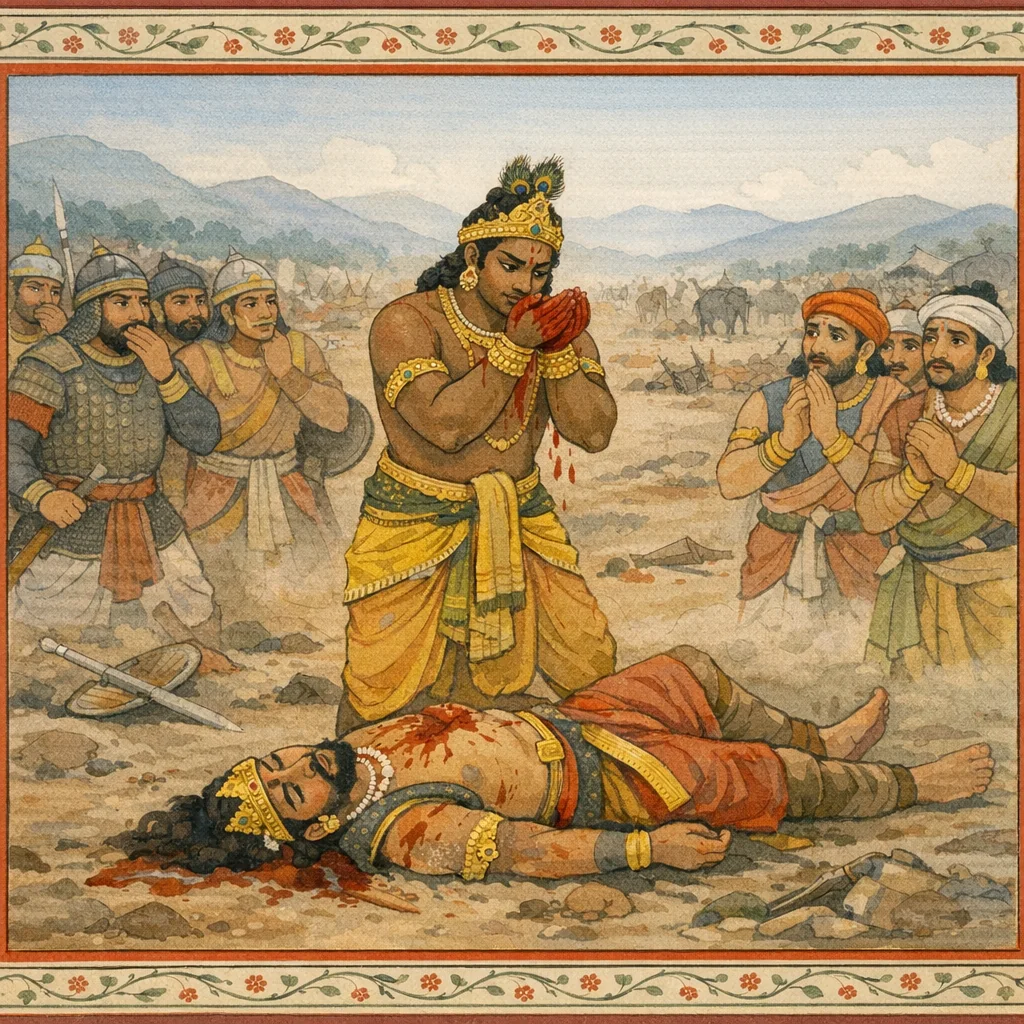
Chapter Arc: रणभूमि में भीमसेन का प्रतिज्ञा-क्रोध फिर जाग उठता है—दुःशासन सामने है, और सभा-अपमान का ऋण अभी शेष। कौरव-पाण्डव दोनों सेनाएँ सुनती हैं कि आज केवल युद्ध नहीं, प्रतिशोध का न्याय होने जा रहा है। → दुःशासन (राजपुत्र) भीम पर नव-नव बाणों की वर्षा करता है, तीव्रता से घायल करता है। भीम क्रुद्ध होकर भयंकर शक्ति (शक्ति-आयुध) फेंकता है; दुःशासन उसे ज्वलित उल्का-सा आते देख बचाव करता/करने का यत्न करता है। दोनों पक्षों के योद्धा—कौरव, सोमक, पाण्डव—इस द्वंद्व को घेरकर देखते हैं; वाणी-प्रहार भी चलता है, जहाँ दुःशासन उपहास और पुरानी कटुता उछालता है। → भीमसेन दुःशासन का वध कर देता है और प्रतिज्ञा के अनुसार उसके रक्त से अंजलि भरकर पीता है—कौरवों के सामने गर्जना करते हुए उसे ललकारता है कि अब फिर ‘गौरिति-गौरिति’ (बैल-बैल) कहकर पुकारे। यह क्षण युद्ध के बीच प्रतिज्ञा-पूर्ति का उग्र, भयावह शिखर बनता है। → भीम का प्रतिज्ञा-ऋण उतरता है; कौरव-पक्ष में भय, घृणा और शोक की लहर दौड़ती है, पाण्डव-पक्ष में कठोर संतोष और उग्र उत्साह। भीम अन्य योद्धाओं को भी चुनौती देता है—कर्ण, दुर्योधन, कृप, अश्वत्थामा, कृतवर्मा—कि आज समस्त योद्धा मिलकर भी उसे रोकें। → दुःशासन-वध के बाद भीम की खुली चुनौती से अगला संघर्ष और अधिक भीषण होने का संकेत देता है—क्या कौरव-सेना इस आघात के बाद संगठित रह पाएगी, और कौन भीम के सामने टिकेगा?
Shlokas
Verse 1
(दाक्षिणात्य अधिक पाठके ८ ३ श्लोक मिलाकर कुल ४४३ “लोक हैं।) भीकम (2 अमान ग्रय्शीतितमो<ध्याय: भीमद्वारा दुःशासनका रक्तपान और उसका वध, युधामन्युद्वारा चित्रसेनका वध तथा भीमका हर्षोद्गार संजय उवाच तत्राकरोद् दुष्करं राजपुत्रो दुःशासनस्तुमुलं युद्ध्यमान: । चिच्छेद भीमस्य धनु: शरेण षष्ट्या शरै: सारथिमप्यविध्यत्,संजय कहते हैं--राजन्! वहाँ तुमुल युद्ध करते हुए राजकुमार दुःशासनने दुष्कर पराक्रम प्रकट किया। उसने एक बाणसे भीमसेनका धनुष काट डाला और साठ बाणोंसे उनके सारथिको भी घायल कर दिया
Sañjaya said: O King, there Duhśāsana, the prince, displayed a feat hard to accomplish while fighting in that tumultuous battle. With a single arrow he cut Bhīma’s bow, and with sixty arrows he struck even Bhīma’s charioteer as well.
Verse 2
स तत् कृत्वा राजपुत्रस्तरस्वी विव्याध भीम॑ नवशभि: पृषत्कै: । ततो5भिनद् बहुभि: क्षिप्रमेव वरेषुभिर्भीमसेनं महात्मा,ऐसा करके उस वेगशाली राजपुत्रने भीमसेनपर नौ बाणोंका प्रहार किया। इसके बाद महामना दुःशासनने बड़ी फुर्तीके साथ बहुत-से उत्तम बाणोंद्वारा भीमसेनको अच्छी तरह बींध डाला
Sañjaya said: Having done so, the swift prince struck Bhīma with nine arrows. Then the high-souled warrior quickly pierced Bhīmasena again and again with many excellent shafts.
Verse 3
ततः क्रुद्धों भीमसेनस्तरस्वी शक्ति चोग्रां प्राहिणोत् ते सुताय । तामापतन्ती सहसातिघोरां दृष्टवा सुतस्ते ज्वलितामिवोल्काम्
Sañjaya said: Then Bhīmasena, blazing with anger and mighty in force, hurled a fierce śakti-weapon at your son. Seeing that exceedingly dreadful missile rushing upon him in an instant—like a flaming meteor—your son beheld the oncoming peril in the very midst of battle.
Verse 4
दृष्टवा तु तत् कर्म कृतं सुदुष्करं प्रापूजयन् सर्वयोधा: प्रहृष्टा:,उसके इस अत्यन्त दुष्कर कर्मको देखकर सभी योद्धा बड़े प्रसन्न हुए और उसकी भूरि-भूरि प्रशंसा करने लगे। फिर आपके पुत्रने तुरंत ही एक बाण मारकर भीमसेनको गहरी चोट पहुँचायी। इससे फिर उन्हें बड़ा क्रोध हुआ। वे उसकी ओर देखकर शीघ्र ही रोषसे प्रज्वलित हो उठे
Sañjaya said: Seeing that exceedingly difficult feat accomplished, all the warriors, delighted, acclaimed him and praised him greatly. Thereafter, your son at once struck Bhīmasena with an arrow, inflicting a deep wound; this again kindled Bhīma’s wrath, and, fixing his gaze upon him, he quickly flared up with anger.
Verse 5
अथाशु भीम॑ च शरेण भूयो गाढं स विव्याध सुतस्त्वदीय: । चुक्रोध भीम: पुनराशु तस्मै भृशं प्रजज्वाल रुषाभिवीक्ष्य,उसके इस अत्यन्त दुष्कर कर्मको देखकर सभी योद्धा बड़े प्रसन्न हुए और उसकी भूरि-भूरि प्रशंसा करने लगे। फिर आपके पुत्रने तुरंत ही एक बाण मारकर भीमसेनको गहरी चोट पहुँचायी। इससे फिर उन्हें बड़ा क्रोध हुआ। वे उसकी ओर देखकर शीघ्र ही रोषसे प्रज्वलित हो उठे
Sañjaya said: Then your son quickly struck Bhīma once again with an arrow, piercing him deeply. Bhīma, enraged anew, fixed his gaze upon him; and, burning fiercely with wrath, he flared up at once.
Verse 6
विद्धो5स्मि वीराशु भृशं त्वयाद्य सहस्व भूयो5पि गदाप्रहारम् । उक्त्वैवमुच्चै: कुपितो5थ भीमो जग्राह तां भीमगदां वधाय,और बोले--'वीर! तूने तो आज मुझे शीघ्रतापूर्वक बाण मारकर बहुत घायल कर दिया; किंतु अब स्वयं भी मेरी गदाका प्रहार सहन कर।' उच्च स्वरसे ऐसा कहकर कुपित हुए भीमसेनने दुःशासनके वधके लिये एक भयंकर गदा हाथमें ले ली
Sañjaya said: “I am pierced, O hero—today you have swiftly and grievously wounded me with your arrows. Now endure, in return, the blow of my mace as well.” Saying this aloud, Bhīma, inflamed with anger, seized his terrible mace, intent on slaying Duḥśāsana.
Verse 7
उवाच चाद्याहमहं दुरात्मन् पास्यामि ते शोणितमाजिमध्ये । अथैवमुक्तस्तनयस्तवाग्रां शक्ति वेगात् प्राहिणोन्मृत्युरूपाम्,फिर वे इस प्रकार बोले--“दुरात्मन! आज इस संग्राममें मैं तेरा रक्त-पान करूँगा।' भीमके ऐसा कहते ही आपके पुत्रने उनके ऊपर बड़े वेगसे एक भयंकर शक्ति चलायी, जो मृत्युरूप जान पड़ती थी
Sañjaya said: “And he declared, ‘O wicked one, today, in the midst of this battle, I shall drink your blood.’ When Bhīma spoke thus, your son at once hurled at him with great force a dreadful spear-weapon, appearing like Death itself.”
Verse 8
आविध्य भीमो5पि गदां सुघोरां विचिक्षिपे रोषपरीतमूर्ति: । सा तस्य शक्ति सहसा विरुज्य पुत्र तवाजी ताडयामास मूर्श्नि,इधरसे रोषमें भरे हुए भीमसेनने भी अपनी अत्यन्त घोर गदा घुमाकर फेंकी। वह गदा रणभूमिमें दुःशासनकी उस शक्तिको टूक-टूक करती हुई सहसा उसके मस्तकमें जा लगी
Sañjaya said: Bhīma too, his form possessed by wrath, whirled his most dreadful mace and hurled it. On the battlefield it shattered that spear-weapon, the śakti, in an instant, and then struck your son upon the crown of his head.
Verse 9
स विक्षरन् नाग इव प्रभिन्नो गदामस्मै तुमुले प्राहिणोद् वै । तयाहरद् दश धन्वन्तराणि दुःशासनं भीमसेन: प्रसहा,मदस्रावी गजराजके समान अपने घावोंसे रक्त बहाते हुए भीमसेनने उस तुमुल युद्धमें दुःशासनपर जो गदा चलायी थी, उसके द्वारा उन्होंने उसे बलपूर्वक दस धनुष (चालीस हाथ) पीछे हटा दिया
Sañjaya said: “Bleeding from his wounds like a maddened, musth-flowing elephant, Bhīmasena hurled his mace at Duḥśāsana amid the tumult of battle. Struck by that blow, Duḥśāsana was forced back—overpowered and driven a full ten bow-lengths.”
Verse 10
तया हतः पतितो वेपमानो दुःशासनो गदया वेगवत्या । विध्वस्तवर्मा भरणाम्बरस्रग् विचेष्टमानो भृशवेदनातुर:,दुःशासन उस वेगवती गदाके आघातसे धरतीपर गिरकर काँपने और अत्यन्त वेदनासे व्याकुल हो छटपटाने लगा। उसका कवच टूट गया, आभूषण और हार बिखर गये तथा कपड़े फट गये थे
Sañjaya said: Struck by that swift, forceful mace, Duḥśāsana fell to the ground, trembling. His armor was shattered; his ornaments, garlands, and garments were thrown into disarray. Writhing in agony, he lay overwhelmed by intense pain.
Verse 11
हया: ससूता निहता नरेन्द्र चूर्णीकृतश्चास्य रथ: पतन्त्या । दुःशासनं पाण्डवा: प्रेक्ष्य सर्वे हृष्टा: पज्चाला: सिंहनादानमुछ्चन्,नरेन्द्र! उस गदाने गिरते ही दुःशासनके रथको चूर-चूर कर डाला और सारथिसहित उसके घोड़ोंको भी मार डाला। दुःशासनको उस अवस्थामें देखकर समस्त पाण्डव और पांचाल-योधा हर्षमें भरकर सिंहनाद करने लगे
Sanjaya said: O king, as that mace came crashing down, Duhshasana’s chariot was smashed to pieces, and his horses along with the charioteer were slain. Seeing Duhshasana brought to such a plight, all the Pandavas and the Panchala warriors, filled with exultation, let out lion-roars.
Verse 12
त॑ पातयित्वाथ वृकोदरो5थ जगर्ज हर्षेण विनादयन् दिश: । नादेन तेनाखिलपार्श्ववर्तिनो मूर्च्छाकुला: पतितास्त्वाजमीढ,इस प्रकार वृकोदर भीम दुःशासनको धराशायी करके हर्षसे उल््लसित हो सम्पूर्ण दिशाओंको प्रतिध्वनित करते हुए जोर-जोरसे गर्जना करने लगे। अजमीढ़वंशी नरेश! उस सिंहनादसे भयभीत हो आस-पास खड़े हुए समस्त योद्धा मूर्च्छित होकर गिर पड़े
Sañjaya said: Having struck down Duḥśāsana, Vṛkodara (Bhīma) roared in exultation, making the quarters resound. O descendant of Ajamīḍha, that lion-like cry threw all the warriors standing nearby into panic and confusion; overwhelmed, they fainted and fell.
Verse 13
भीमो<पि वेगादवतीर्य यानादू दुःशासनं वेगवानभ्यधावत् | ततः स्मृत्वा भीमसेनस्तरस्वी सापत्नकं यत् प्रयुक्त सुतैस्ते,फिर भीमसेन भी शीघ्रतापूर्वक रथसे उतरकर बड़े वेगसे दःशासनकी ओर दौड़े। उस समय वेगशाली भीमसेनको आपके पुत्रोंद्वारा किये गये शत्रुतापूर्ण बर्ताव याद आने लगे थे
Sañjaya said: Bhīma too, leaping down swiftly from his chariot, rushed with great speed toward Duḥśāsana. At that moment the powerful Bhīmasena recalled the hostile, rivalrous wrongs that your sons had inflicted—memories that sharpened his resolve in the midst of war.
Verse 14
तस्मिन् सुघोरे तुमुले वर्तमाने प्रधानभूयिष्ठतरैः समन्तात् । दुःशासनं तत्र समीक्ष्य राजन् भीमो महाबाहुरचिन्त्यकर्मा,जज्वाल क्रोधादथ भीमसेन आज्यप्रसिक्तो हि यथा हुताश: । राजन! वहाँ चारों ओर जब प्रधान-प्रधान वीरोंका वह अत्यन्त घोर तुमुल युद्ध चल रहा था, उस समय अचिन्त्यपराक्रमी महाबाहु भीमसेन दुःशासनको देखकर पिछली बातें याद करने लगे--*देवी द्रौपदी रजस्वला थी। उसने कोई अपराध नहीं किया था। उसके पति भी उसकी सहायतासे मुँह मोड़ चुके थे तो भी इस दुःशासनने द्रौपदीके केश पकड़े और भरी सभामें उसके वस्त्रोंका अपहरण किया।” उसने और भी जो-जो दुःख दिये थे, उन सबको याद करके भीमसेन घीकी आहुतिसे प्रज्वलित हुई अग्निके समान क्रोधसे जल उठे
Sanjaya said: O King, as that exceedingly dreadful and tumultuous battle raged on every side, ruled by the foremost heroes, mighty-armed Bhima—whose deeds were beyond imagining—caught sight of Duhshasana there. Remembering the old wrongs, Bhimasena blazed with wrath like a fire that flares when fed with ghee. His fury was not mere battle-heat, but a moral reckoning for Duhshasana’s outrage against Draupadi, now ripening amid the war’s chaos.
Verse 15
स्मृत्वाथ केशग्रहणं च देव्या वस्त्रापहारं च रजस्वलाया: । अनागसो भर्त॒पराड्मुखाया दुःखानि दत्तान्यपि विप्रचिन्त्य
Sanjaya said: Remembering how the queen’s hair had been seized, and how the menstruating lady had been stripped of her garments, and thinking again and again on the sufferings inflicted upon her—though she was innocent, and though her husband had been forced to turn away, powerless to protect—his mind grew heavy with troubled thought. The verse recalls a grave violation of dignity and dharma, set forth as a moral cause that later ripens into calamity.
Verse 16
तत्राह कर्ण च सुयोधनं च कृपं द्रौ्णिं कृतवर्माणमेव
Thereupon, he addressed Karṇa, and Suyodhana, and Kṛpa, and Droṇa’s son (Aśvatthāmā), and Kṛtavarmā as well.
Verse 17
इत्येवमुक्त्वा सहसाभ्यधाव- न्रिहन्तुकामोडतिबलस्तरस्वी,ऐसा कहकर अत्यन्त बलवान् वेगशाली एवं अद्वितीय वीर भीमसेन अपने रथसे कूदकर पृथ्वीपर आ गये और दुःशासनको मार डालनेकी इच्छासे सहसा उसकी ओर दौड़े। उन्होंने युद्धमें पराक्रम करके दुर्योधन और कर्णके सामने ही दुःशासनको उसी प्रकार धर दबाया, जैसे सिंह किसी विशाल हाथीपर आक्रमण कर रहा हो। वे यत्नपूर्वक उसीकी ओर दृष्टि जमाये हुए थे। उन्होंने उत्तम धारवाली सफेद तलवार उठा ली और उसके गलेपर लात मारी। उस समय दुःशासन थरथर काँप रहा था
Sanjaya said: Having spoken thus, the exceedingly strong and swift warrior, intent on killing, suddenly rushed forward. Driven by a fierce resolve in the midst of battle, he moved to strike down his foe—an act that heightens the war’s moral tension, where vows, wrath, and retribution press hard against the boundaries of righteous conduct.
Verse 18
तथा तु विक्रम्य रणे वृकोदरो महागजं केसरिको यथैव । निगृहा दुःशासनमेकवीर: सुयोधनस्याधिरथे: समक्षम्,ऐसा कहकर अत्यन्त बलवान् वेगशाली एवं अद्वितीय वीर भीमसेन अपने रथसे कूदकर पृथ्वीपर आ गये और दुःशासनको मार डालनेकी इच्छासे सहसा उसकी ओर दौड़े। उन्होंने युद्धमें पराक्रम करके दुर्योधन और कर्णके सामने ही दुःशासनको उसी प्रकार धर दबाया, जैसे सिंह किसी विशाल हाथीपर आक्रमण कर रहा हो। वे यत्नपूर्वक उसीकी ओर दृष्टि जमाये हुए थे। उन्होंने उत्तम धारवाली सफेद तलवार उठा ली और उसके गलेपर लात मारी। उस समय दुःशासन थरथर काँप रहा था
Sanjaya said: Thus, having displayed his prowess in battle, Vṛkodara (Bhīma), like a lion assailing a mighty elephant, seized Duḥśāsana—single-handedly—right before Suyodhana upon his chariot. The scene underscores the fierce, personal culmination of Bhīma’s long-held vow amid the brutal ethics of war, where sworn retribution and battlefield justice collide.
Verse 19
रथादवप्लुत्य गत: स भूमौ यत्नेन तस्मिन् प्रणिधाय चक्षु: । असिं समुद्यम्य सित॑ सुधारं कण्ठे पदा55क्रम्प च वेपमानम्,ऐसा कहकर अत्यन्त बलवान् वेगशाली एवं अद्वितीय वीर भीमसेन अपने रथसे कूदकर पृथ्वीपर आ गये और दुःशासनको मार डालनेकी इच्छासे सहसा उसकी ओर दौड़े। उन्होंने युद्धमें पराक्रम करके दुर्योधन और कर्णके सामने ही दुःशासनको उसी प्रकार धर दबाया, जैसे सिंह किसी विशाल हाथीपर आक्रमण कर रहा हो। वे यत्नपूर्वक उसीकी ओर दृष्टि जमाये हुए थे। उन्होंने उत्तम धारवाली सफेद तलवार उठा ली और उसके गलेपर लात मारी। उस समय दुःशासन थरथर काँप रहा था
Sañjaya said: Leaping down from his chariot, that mighty warrior came onto the ground, fixing his gaze intently upon him. Raising a bright, keen-edged sword, Bhīma pressed his foot upon Duḥśāsana’s throat as the latter trembled—an act driven by fierce resolve in the midst of war, where wrath and retribution eclipse restraint and foreshadow the grim fulfillment of Bhīma’s vow.
Verse 20
उवाच तदगौरिति यद् ब्रुवाणो हृष्टो वदे: कर्णसुयोधना भ्याम् । ये राजसूयावभूथे पवित्रा जाता: कचा याज्ञसेन्या दुरात्मन्
Sañjaya said: “When you spoke those words—‘that is improper’—you did so with a kind of elation, addressing Karṇa and Suyodhana. Yet those who were sanctified at the purificatory rite connected with the Rājasūya—those born of the sacred act—(you revile them), O wicked-minded one, (even) in regard to Yājñasenī.”
Verse 21
श्रुत्वा तु तद् भीमवच: सुघोरं दुःशासनो भीमसेन निरीक्ष्य,भीमसेनका यह अत्यन्त भयंकर वचन सुनकर दुःशासनने उनकी ओर देखा। देखते ही वह क्रोधसे जल उठा। युद्धस्थलमें उनके वैसा कहनेपर उसकी त्यौरी बदल गयी थी; अतः वह समस्त कौरवों तथा सोमकोंके सुनते-सुनते मुसकराकर रोषपूर्वक बोला --
Sañjaya said: Hearing those exceedingly dreadful words spoken by Bhīma, Duḥśāsana fixed his gaze upon Bhīmasena. At once he flared up with anger; and, in the hearing of the Kauravas and the Somakas, he smiled and spoke with wrath—his brow knit in response to Bhīma’s challenge on the battlefield.
Verse 22
जज्वाल भीम॑ं स तदा स्मयेन संशृण्वतां कौरवसोमकानाम् । उक्तस्तदा55जौ स तथा सरोषं जगाद भीम॑ परिवर्तनेत्र:,भीमसेनका यह अत्यन्त भयंकर वचन सुनकर दुःशासनने उनकी ओर देखा। देखते ही वह क्रोधसे जल उठा। युद्धस्थलमें उनके वैसा कहनेपर उसकी त्यौरी बदल गयी थी; अतः वह समस्त कौरवों तथा सोमकोंके सुनते-सुनते मुसकराकर रोषपूर्वक बोला --
Sañjaya said: At that moment, in the hearing of the Kauravas and the Somakas, he (Duḥśāsana) looked toward Bhīma; and as soon as he saw him, he blazed with anger. When Bhīma spoke thus on the battlefield, his expression changed; then, smiling before all those listeners, he replied to Bhīma with wrath—revealing the ethical tension of war-words that inflame vengeance and harden resolve rather than restore restraint.
Verse 23
अयं करिकराकार: पीनस्तनविमर्दन: । गोसहस्रप्रदाता च क्षत्रियान्तकर: कर:,“यह है हाथीकी सूँड़के समान मोटा मेरा हाथ, जो रमणीके ऊँचे उरोजोंका मर्दन, सहस्रों गोदान तथा क्षत्रियोंका विनाश करनेवाला है। भीमसेन! इसी हाथसे मैंने सभामें बैठे हुए कुरुकुलके श्रेष्ठ पुरुषों और तुमलोगोंके देखते-देखते द्रौपदीके केश खींचे थे!
Sanjaya said: “This hand of mine—thick like an elephant’s trunk—has crushed the full breasts of women; it has bestowed gifts of a thousand cows; and it has also been a hand that brings the destruction of kshatriyas. Bhimasena, with this very hand I once dragged Draupadi by the hair in the assembly, while the foremost men of the Kuru line sat there and you all looked on.” The verse frames the same instrument (the ‘hand’) as capable of generosity and grievous wrongdoing, sharpening the ethical contrast between dharmic giving and adharma committed through humiliation and violence—an admission that past sin now fuels present enmity and war.
Verse 24
अनेन याज्ञसेन्या मे भीम केशा विकर्षिता: । पश्यतां कुरुमुख्यानां युष्माकं च सभासदाम्,“यह है हाथीकी सूँड़के समान मोटा मेरा हाथ, जो रमणीके ऊँचे उरोजोंका मर्दन, सहस्रों गोदान तथा क्षत्रियोंका विनाश करनेवाला है। भीमसेन! इसी हाथसे मैंने सभामें बैठे हुए कुरुकुलके श्रेष्ठ पुरुषों और तुमलोगोंके देखते-देखते द्रौपदीके केश खींचे थे!
Sañjaya said: “With this very hand, O Bhīma, I dragged the hair of Yājñasenī, while the foremost of the Kurus looked on—and you too, seated in the assembly.” The line recalls the public outrage of Draupadī’s humiliation, underscoring the ethical collapse in the royal court and the enduring moral debt that fuels the war’s retribution.
Verse 25
एवं त्वसौ राजसुतं निशम्य ब्रुवन्तमाजी विनिपीड्य वक्ष: । भीमो बलात्त॑ प्रतिगृहा दोर्भ्या- मुच्चैर्ननादाथ समस्तयोधान्,युद्धस्थलमें ऐसी बात कहते हुए राजकुमार दुःशासनकी छातीपर चढ़कर भीमसेनने उसे दोनों हाथोंसे बलपूर्वक पकड़ लिया और उच्च स्वरसे सिंहनाद करते हुए समस्त योद्धाओंसे कहा--“आज दुःशासनकी बाँह उखाड़ी जा रही है। यह अब अपने प्राणोंको त्यागना ही चाहता है। जिसमें बल हो, वह आकर इसे मेरे हाथसे बचा ले।” इस प्रकार समस्त योद्धाओंको ललकारकर महाबली, महामनस्वी, कुपित भीमसेनने एक ही हाथसे वेगपूर्वक दुःशासनकी बाँह उखाड़ ली। उसकी वह बाँह वज़्के समान कठोर थी। भीमसेन समस्त वीरोंके बीच उसीके द्वारा उसे पीटने लगे
Sañjaya said: Hearing the prince speaking thus, Bhīma pressed upon his chest in the thick of battle, seized him forcefully with both arms, and roared aloud, addressing all the warriors. The scene underscores the brutal immediacy of war, where vows and vengeance drive action beyond restraint, and where strength is publicly tested amid the collapse of ordinary ethical limits on the battlefield.
Verse 26
उवाच यस्यास्ति बल॑ स रक्ष- त्वसौ भवेदद्य निरस्तबाहु: । दुःशासनं जीवित प्रोत्सूजन्त- माक्षिप्य योधांस्तरसा महाबल:,युद्धस्थलमें ऐसी बात कहते हुए राजकुमार दुःशासनकी छातीपर चढ़कर भीमसेनने उसे दोनों हाथोंसे बलपूर्वक पकड़ लिया और उच्च स्वरसे सिंहनाद करते हुए समस्त योद्धाओंसे कहा--“आज दुःशासनकी बाँह उखाड़ी जा रही है। यह अब अपने प्राणोंको त्यागना ही चाहता है। जिसमें बल हो, वह आकर इसे मेरे हाथसे बचा ले।” इस प्रकार समस्त योद्धाओंको ललकारकर महाबली, महामनस्वी, कुपित भीमसेनने एक ही हाथसे वेगपूर्वक दुःशासनकी बाँह उखाड़ ली। उसकी वह बाँह वज़्के समान कठोर थी। भीमसेन समस्त वीरोंके बीच उसीके द्वारा उसे पीटने लगे
Sañjaya said: “Let any man of strength come and protect him! Today he shall be left without an arm. Duḥśāsana is casting away his very life.” Saying this, the mighty warrior (Bhīma), with sudden force, challenged the fighters around him. In the ethical heat of the battlefield, the act is framed not as mere cruelty but as the grim fulfillment of a vowed retribution within the logic of kṣatriya war—where personal oaths, wrath, and public challenge collide with the limits of dharma.
Verse 27
एवं क्रुद्धो भीमसेन: करेण उत्पाटयामास भुजं महात्मा | दुःशासनं तेन स वीरमध्ये जघान वज्राशनिसंनिभेन,युद्धस्थलमें ऐसी बात कहते हुए राजकुमार दुःशासनकी छातीपर चढ़कर भीमसेनने उसे दोनों हाथोंसे बलपूर्वक पकड़ लिया और उच्च स्वरसे सिंहनाद करते हुए समस्त योद्धाओंसे कहा--“आज दुःशासनकी बाँह उखाड़ी जा रही है। यह अब अपने प्राणोंको त्यागना ही चाहता है। जिसमें बल हो, वह आकर इसे मेरे हाथसे बचा ले।” इस प्रकार समस्त योद्धाओंको ललकारकर महाबली, महामनस्वी, कुपित भीमसेनने एक ही हाथसे वेगपूर्वक दुःशासनकी बाँह उखाड़ ली। उसकी वह बाँह वज़्के समान कठोर थी। भीमसेन समस्त वीरोंके बीच उसीके द्वारा उसे पीटने लगे
Sañjaya said: Enraged, the great-souled Bhīmasena tore out Duḥśāsana’s arm with his hand. Then, in the midst of the warriors, he struck Duḥśāsana with that arm, which was like a thunderbolt—an act of ferocious retribution in the brutal ethics of battlefield vengeance, where wrath and remembered humiliation erupt into bodily punishment.
Verse 28
उत्कृत्य वक्ष: पतितस्य भूमा- वथापिबच्छोणितमस्य कोष्णम् | ततो निपात्यास्य शिरोडपकृत्य तेनासिना तव पुत्रस्य राजन्,इसके बाद पृथ्वीपर पड़े हुए दुःशासनकी छाती फाड़कर वे उसका गरम-गरम रक्त पीनेका उपक्रम करने लगे। राजन्! उठनेकी चेष्टा करते हुए दुःशासनको पुनः गिराकर बुद्धिमान् भीमसेनने अपनी प्रतिज्ञा सत्य करनेके लिये तलवारसे आपके पुत्रका मस्तक काट डाला और उसके कुछ-कुछ गरम रक्तको वे स्वाद ले-लेकर पीने लगे। फिर क्रोधमें भरकर उसकी ओर देखते हुए इस प्रकार बोले---
Verse 29
सत्यां चिकीर्षुर्मतिमान् प्रतिज्ञां भीमो5पिबच्छोणितमस्य कोष्णम् | आस्वाद्य चास्वाद्य च वीक्षमाण: क्रुद्धों हि चैन निजगाद वाक्यम्,इसके बाद पृथ्वीपर पड़े हुए दुःशासनकी छाती फाड़कर वे उसका गरम-गरम रक्त पीनेका उपक्रम करने लगे। राजन्! उठनेकी चेष्टा करते हुए दुःशासनको पुनः गिराकर बुद्धिमान् भीमसेनने अपनी प्रतिज्ञा सत्य करनेके लिये तलवारसे आपके पुत्रका मस्तक काट डाला और उसके कुछ-कुछ गरम रक्तको वे स्वाद ले-लेकर पीने लगे। फिर क्रोधमें भरकर उसकी ओर देखते हुए इस प्रकार बोले---
Sañjaya said: Bent on making his vow come true, the wise Bhīma drank Duḥśāsana’s warm blood. Tasting it again and again, and glaring at him in wrath, he then addressed him with harsh words.
Verse 30
स्तन्यस्य मातुर्मधुसर्पिषोर्वा माध्वीकपानस्य च सत्कृतस्य । दिव्यस्य वा तोयरसस्य पानात् पयोदधिभ्यां मथिताच्च मुख्यात्,“मैंने माताके दूधका, मधु और घीका, अच्छी तरह तैयार किये हुए मधूक-पुष्पनिर्मित पेय पदार्थका, दिव्य जलके रसका, दूध और दहीसे बिलोये हुए ताजे माखनका भी पान या रसास्वादन किया है; इन सबसे तथा इनके अतिरिक्त भी संसारमें जो अमृतके समान स्वादिष्ट पीनेयोग्य पदार्थ हैं, उन सबसे भी मेरे इस शत्रुके रक्तका स्वाद अधिक है
Sañjaya said: “I have tasted my mother’s milk; I have drunk honey and clarified butter; I have enjoyed well-prepared mādhvīka made from madhūka blossoms; I have sipped the essence of celestial waters; and I have tasted the finest fresh butter churned from milk and curd. Yet, more delicious than all these—and than any nectar-like drink in the world—is the taste of my enemy’s blood.”
Verse 31
“मैंने माताके दूधका, मधु और घीका, अच्छी तरह तैयार किये हुए मधूक-पुष्पनिर्मित पेय पदार्थका, दिव्य जलके रसका, दूध और दहीसे बिलोये हुए ताजे माखनका भी पान या रसास्वादन किया है; इन सबसे तथा इनके अतिरिक्त भी संसारमें जो अमृतके समान स्वादिष्ट पीनेयोग्य पदार्थ हैं, उन सबसे भी मेरे इस शत्रुके रक्तका स्वाद अधिक है
Sañjaya said: “I have tasted my mother’s milk, honey and ghee; I have drunk a well-prepared beverage made from madhūka blossoms; I have savored the essence of celestial waters; and I have also tasted fresh butter churned from milk and curds. Yet, beyond all these—and beyond every other drink in the world praised as nectar-like—nothing is as sweet to me as the taste of this enemy’s blood.”
Verse 32
अथाह भीम: पुनरुग्रकर्मा दुःशासनं क्रोधपरीतचेता: । गतासुमालोक्य विहस्य सुस्वरं किं वा कुर्या मृत्युना रक्षितोडसि,तदनन्तर भयानक कर्म करनेवाले भीमसेन क्रोधसे व्याकुलचित हो दुःशासनको प्राणहीन हुआ देख जोर-जोरसे अट्टहास करते हुए बोले--“क्या करूँ? मृत्युने तुझे दुर्दशासे बचा दिया”
Sañjaya said: Then Bhīma, again bent on dreadful deeds and with his mind overwhelmed by wrath, looked upon Duḥśāsana lying lifeless. Laughing aloud in a harsh, ringing voice, he said, “What more can I do? Death has already protected you—saving you from the full measure of the misery you deserve.”
Verse 33
आकर्णपूर्णरिषुभिम॑हात्मा चिच्छेद पुत्रो दशभि: पृषत्कै: । तब क्रोधमें भरे हुए वेगशशाली भीमसेनने आपके पुत्रपर एक भयंकर शक्ति छोड़ी। प्रज्वलित उल्काके समान उस अत्यन्त भयानक शक्तिको सहसा अपने ऊपर आती देख आपके महामनस्वी पुत्रने कानतक खींचकर छोड़े हुए दस बाणोंके द्वारा उसे काट डाला,अन्यानि पानानि च यानि लोके सुधामृतस्वादुरसानि तेभ्य: । सर्वेभ्य एवाभ्यधिको रसो<यं ममाद्य चास्याहितलोहितस्य एवं ब्रुवा्ं पुनराद्रवन्त- मास्वाद्य रक्त तमतिप्रहृष्टम् । ये भीमसेनं ददृशुस्तदानीं भयेन ते5पि व्यथिता निपेतु: ऐसा कहते हुए वे बारंबार अत्यन्त प्रसन्न हो उसके रक्तका आस्वादन करने और उछलने-कूदने लगे। उस समय जिन्होंने भीमसेनकी ओर देखा, वे भी भयसे पीड़ित हो पृथ्वीपर गिर गये
Sañjaya said: Seeing Bhīmasena, inflamed with wrath, hurl a dreadful spear-like missile at your son, your high-souled son—steady in battle—cut it down with ten arrows drawn to the ear and released with full force.
Verse 34
ये चापि नासन् व्यथिता मनुष्या- स्तेषां करेभ्य: पतितं हि शस्त्रम् भयाच्च संचुक्रुशुरस्वरैस्ते निमीलिताक्षा ददृशु: समन्ततः,जो लोग भयसे व्याकुल नहीं हुए, उनके हाथोंसे भी हथियार तो गिर ही पड़ा। वे भयसे मन्द स्वरमें सहायकोंको पुकारने लगे और आँखें कुछ-कुछ बंद किये ही सब ओर देखने लगे
Sañjaya said: Even those men who had not yet been shaken by panic still let their weapons slip from their hands. Overcome by fear, they began to cry out in muted voices for help, and with eyes half-closed they looked all around—bewildered, seeking safety amid the terror of battle.
Verse 35
तं तत्र भीम॑ ददृशु: समन्ताद् दौ:शासनं तद् रुधिरं पिबन्तम् । सर्वेडपलायन्त भयाभिपन्ना न वै मनुष्योडयमिति ब्रुवाणा:,जिन लोगोंने भीमसेनको दुःशासनका रक्त पीते देखा, वे सभी भयभीत हो यह कहते हुए सब ओर भागने लगे कि “यह मनुष्य नहीं राक्षस है!”
Sañjaya said: There they saw Bhīma on every side—drinking the blood of Duḥśāsana. Stricken with terror, all fled away, crying, “This is no man!”
Verse 36
तस्मिन् कृते भीमसेनेन रूपे दृष्टवा जना: शोणितं पीयमानम् । सम्प्राद्रवंश्षित्रसेनेन सार्ध॑ भीम॑ रक्षो भाषमाणा भयार्ता:,भीमसेनके वैसा भयानक रूप बना लेनेपर उनके द्वारा रक्तका पीया जाना देखकर सब लोग भयसे आतुर हो भीमको राक्षस बताते हुए चित्रसेनके साथ भाग चले
Sañjaya said: When Bhīmasena assumed such a dreadful aspect, and the people saw him drinking blood, they were seized by fear; calling Bhīma a rākṣasa, they fled away with Citraseṇa.
Verse 37
युधामन्युः प्रद्रुतं चित्रसेन॑ सहानीक स्त्वभ्ययादू राजपुत्र: | विव्याध चैनं निशितै: पृषत्कै- व्यपेतभी: सप्तभिराशुमुक्तै:,चित्रसेनको भागते देख राजकुमार युधामन्युने अपनी सेनाके साथ उसका पीछा किया और निर्भय होकर शीघ्र छोड़े हुए सात पैने बाणोंद्वारा उसे घायल कर दिया
Sañjaya said: Seeing Citraseṇa in flight, the prince Yudhāmanyu pursued him with his troops and, fearless, swiftly loosed seven keen arrows that wounded him.
Verse 38
संक्रान्तभोग इव लेलिहानो महोरग: क्रोधविषं सिसक्षु: । निवृत्य पाड्चालजमभ्यविध्य- त्त्रिभि: शरै: सारथिमस्य षड्भि:,तब जिसका शरीर पैरोंसे कुचल गया हो, अतएव जो क्रोधजनित विषका वमन करना चाहता हो, उस जीभ लपलपानेवाले महान् सर्पके समान चित्रसेनने पुन: लौटकर उस पांचालराजकुमारको तीन और उसके सारथिको छ: बाण मारे
Sañjaya said: Like a great serpent licking its tongue, as though it had been trampled underfoot and now sought to discharge the poison born of wrath, Citraseṇa turned back and struck the Pāñcāla prince with three arrows and his charioteer with six.
Verse 39
ततः सुपुड्खेन सुयन्त्रितेन सुसंशिताग्रेण शरेण शूर: । आकर्णमुक्तेन समाहितेन युधामन्युस्तस्यथ शिरो जहार,तत्पश्चात् शूरवीर युधामन्युने धनुषको कानतक खींचकर ठीकसे संधान करके छोड़े हुए सुन्दर पंख और तीखी धारवाले सुनियन्त्रित बाणद्वारा चित्रसेनका मस्तक काट दिया
Then the hero Yudhāmanyu, with a well-guided arrow of fair feathers and a keen, sharpened point, drew his bow to the ear and, steady in concentration, let it fly; with that shaft he severed Citraseṇa’s head.
Verse 40
तस्मिन् हते भ्रातरि चित्रसेने क्रुद्ध: कर्ण: पौरुष॑ दर्शयान: । व्यद्रावयत् पाण्डवानामनीकं प्रत्युध्यातो नकुलेनामितौजा:,अपने भाई चित्रसेनके मारे जानेपर कर्ण क्रोधमें भर गया और अपना पराक्रम दिखाता हुआ पाण्डव-सेनाको खदेड़ने लगा। उस समय अमितबलशाली नकुलने आगे आकर उसका सामना किया
When his brother Citraseṇa was slain, Karṇa, inflamed with wrath and displaying his manly prowess, drove back the Pāṇḍava battle-array. At that moment the mighty Nakula advanced to meet and oppose him.
Verse 41
भीमो<पि हत्वा तत्रैव दुःशासनममर्षणम् | पूरयित्वाञज्जलिं भूयो रुधिरस्योग्रनि:स्वन:
Bhīma too, there on the spot, slew Duḥśāsana the implacable; and with a dreadful roar he again cupped his hands in añjali and filled them with blood.
Verse 42
एष ते रुधिरं कण्ठात् पिबामि पुरुषाधम
“Here—your blood—I drink from your throat, you basest of men!”
Verse 43
ये तदास्मान् प्रनृत्यन्ति पुनर्गारिति गौरिति
Sañjaya said: “Those who, at that time, danced about us again and again, crying out ‘gā!’ and ‘gau!’…”
Verse 44
तान् वयं प्रतिनृत्याम: पुनर्गौरिति गौरिति । “जो लोग उस दिन कौरवसभामें हमें 'बैल बैल' कहकर खुशीके मारे नाच उठते थे, उन सबको आज बारंबार “बैल-बैल' कहते हुए हम भी प्रसन्नतापूर्वक नृत्य कर रहे हैं ।। ४३ ई || प्रमाणकोट्यां शयनं कालकूटस्य भोजनम्
Sañjaya said: “We too are now dancing in return, again and again crying, ‘Ox! Ox!’—mocking those very men who, on that earlier day in the Kaurava court, exulted and danced as they jeered at us with the same insult.”
Verse 45
दंशनं चाहिभि: कृष्णैर्दाहं च जतुवेश्मनि । द्यूतेन राज्यहरणमरण्ये वसतिश्न या
Sañjaya said: “There was the biting by dark serpents, and the burning in the house of lac; there was the loss of the kingdom through the game of dice, and the enforced dwelling in the forest. These remembered wrongs form the moral background of the war.”
Verse 46
द्रौपद्या: केशपक्षस्य ग्रहणं च सुदारुणम् इष्वस्त्राणि च संग्रामेष्वसुखानि च वेश्मनि
Sañjaya said: “The most cruel seizure of Draupadī by her hair, the grievous use of weapons in battles, and the many miseries endured even within the home—these are the bitter fruits that have unfolded.”
Verse 47
विराटभवने यश्न क्लेशोडस्माकं पृथग्विध: । शकुनेर्धार्तराष्ट्रस्य राधेयस्य च मन्त्रिते
Sañjaya said: “In the palace of Virāṭa, our troubles took on many distinct forms—arising from the counsels and plotting of Śakuni, of Dhṛtarāṣṭra’s son, and of Rādheya (Karna).”
Verse 48
अनुभूतानि दुः:खानि तेषां हेतुस्त्वमेव हि । दुःखान्येतानि जानीमो न सुखानि कदाचन
Sañjaya said: “The sufferings you have experienced—of those, you alone are truly the cause. These are the only things we have come to know: sorrows, and never happiness at any time.”
Verse 49
धृतराष्ट्रस्य दौरात्म्यात् सपुत्रस्य सदा वयम् | “मुझे प्रमाणकोटितीर्थमें विष पिलाकर नदीमें डाल दिया गया, कालकूट नामक विष खिलाया गया, काले सर्पोंसे डसाया गया, लाक्षागृहमें जलानेकी चेष्टा की गयी, जूएके द्वारा हमारे राज्यका अपहरण किया गया और हम सब लोगोंको वनवास दे दिया गया। द्रौपदीके केश खींचे गये, जो अत्यन्त दारुण कर्म था। संग्राममें हमपर बाणों तथा अन्य घातक अस्त्रोंका प्रयोग किया गया और घरमें भी चैनसे नहीं रहने दिया गया। राजा विराटके भवनमें हमें जो महान् क्लेश उठाना पड़ा, वह तो सबसे विलक्षण है। शकुनि, दुर्योधन और कर्णकी सलाहसे हमें जो-जो दुःख भोगने पड़े, उन सबकी जड़ तू ही था। पुत्रोंसहित धृतराष्ट्रकी दुष्टतासे हमें ये दुःख भोगने पड़े हैं। इन दुःखोंको तो हम जानते हैं, किंतु हमें कभी सुख मिला हो, इसका स्मरण नहीं है” || ४४--४८ $ || इत्युक्त्वा वचन राजन् जयं प्राप्य वृकोदर: । पुनराह महाराज स्मयंस्तौ केशवार्जुनौ
Sañjaya said: “Because of the wickedness of Dhṛtarāṣṭra together with his sons, we have continually suffered.” Having spoken these words, O King, Vṛkodara (Bhīma)—after winning the victory—addressed again Keśava and Arjuna, smiling. The verse frames the war’s violence within a moral ledger: the Pandavas’ hardships are presented not as random misfortune but as consequences of sustained injustice, now answered by rightful retribution on the battlefield.
Verse 50
असूृम्दिग्धो विस्रवल्लोहितास्य: क्रुद्धो>त्यर्थ भीमसेनस्तरस्वी । दुःशासने यद् रणे संभश्रुतं मे तद् वै सत्यं कृतमद्येह वीरो
Sañjaya said: “Smeared with blood, with gore streaming from his mouth, the mighty Bhīmasena—furious beyond measure—has today, here, fulfilled in truth what I had heard he had vowed in battle against Duḥśāsana.”
Verse 51
महाराज! ऐसी बात कहकर खूनसे भीगे और रक्तसे लाल मुखवाले, अत्यन्त क्रोधी, वेगशाली वीर भीमसेन युद्धमें विजय पाकर मुसकराते हुए पुनः श्रीकृष्ण और अर्जुनसे बोले --4वीरो! दुःशासनके विषयमें मैंने जो प्रतिज्ञा की थी, उसे आज यहाँ रणभूमिमें सत्य कर दिखाया ।। अन्रैव दास्याम्यपरं द्वितीयं दुर्योधनं यज्ञपशुं विशस्य । शिरो मृदित्वा च पदा दुरात्मन: शान्तिं लप्स्ये कौरवाणां समक्षम्,“यहीं दूसरे यज्ञपशु दुर्योधनको काटकर उसकी बलि दूँगा और समस्त कौरवोंकी आँखोंके सामने उस दुरात्माके मस्तकको पैरसे कुचलकर शान्ति प्राप्त करूँगा”
Sañjaya said: “O King! Having spoken thus, Bhīmasena—his face smeared and reddened with blood, fiercely wrathful and swift—won victory in the battle and, smiling, spoke again to Śrī Kṛṣṇa and Arjuna: ‘Heroes! The vow I made concerning Duḥśāsana I have today fulfilled here on the battlefield. Next I shall offer a second sacrifice: I will slay Duryodhana as a sacrificial beast; and, before the eyes of all the Kauravas, I will crush that wicked man’s head beneath my foot and thereby attain peace.’”
Verse 52
एतावदुक््त्वा वचन प्रद्ृष्टो ननाद चोच्चै रुधिराद्द्रगात्र: । ननर्द चैवातिबलो महात्मा वृत्र निहत्येव सहस्रनेत्र:
Sañjaya said: Having spoken only this much, his eyes blazing with intensity, his limbs smeared with blood, he roared aloud. That exceedingly mighty, great-souled warrior bellowed like Indra of a thousand eyes after slaying Vṛtra—projecting fierce resolve amid the moral darkness of war.
Verse 82
इस प्रकार श्रीमह्ाभारत कर्णपर्वमें दुःशासन और भीमसेनका युद्धविषयक बयासीवाँ अध्याय पूरा हुआ
Sanjaya said: Thus, in the revered Mahabharata, within the Karna Parva, the eighty-second chapter—concerning the battle between Duhshasana and Bhimasena—comes to its close. The narration marks a decisive moment in the moral landscape of the war, where long-held enmities and past wrongs culminate in direct, personal combat.
Verse 83
ऐसा कहकर खूनसे भीगे शरीरवाले अत्यन्त बलशाली महामना भीम वृत्रासुरका वध करके गर्जनेवाले सहस्र नेत्रधारी इन्द्रके समान उच्च स्वरसे गर्जन और सिंहनाद करने लगे ।। इति श्रीमहाभारते कर्णपर्वणि दुःशासनवधे ऋयशीतितमो<ध्याय:
Sanjaya said: Having spoken thus, the high-souled Bhima—his body drenched in blood yet possessed of tremendous strength—slew his foe as Indra of a thousand eyes slew Vṛtrāsura; then he roared aloud and gave a lion-like shout. Thus, in the Mahabharata, in the Karna Parva, in the episode of the slaying of Duhshasana, ends the eighty-third chapter.
Verse 153
जज्वाल क्रोधादथ भीमसेन आज्यप्रसिक्तो हि यथा हुताश: । राजन! वहाँ चारों ओर जब प्रधान-प्रधान वीरोंका वह अत्यन्त घोर तुमुल युद्ध चल रहा था, उस समय अचिन्त्यपराक्रमी महाबाहु भीमसेन दुःशासनको देखकर पिछली बातें याद करने लगे--*देवी द्रौपदी रजस्वला थी। उसने कोई अपराध नहीं किया था। उसके पति भी उसकी सहायतासे मुँह मोड़ चुके थे तो भी इस दुःशासनने द्रौपदीके केश पकड़े और भरी सभामें उसके वस्त्रोंका अपहरण किया।” उसने और भी जो-जो दुःख दिये थे, उन सबको याद करके भीमसेन घीकी आहुतिसे प्रज्वलित हुई अग्निके समान क्रोधसे जल उठे
Sanjaya said: Then Bhimasena blazed with wrath—like a fire fed with ghee. In that tumultuous and terrifying battle, as the foremost heroes clashed on every side, the mighty-armed Bhima, of inconceivable prowess, caught sight of Duhshasana and began recalling the past: how Draupadi, though innocent and in her season, was seized by the hair in the full assembly and her garments were dragged away, even when her husbands had turned their faces from helping her. Remembering those humiliations and every other pain inflicted upon her, Bhima’s anger flared up like a sacrificial flame.
Verse 206
ते पाणिना कतरेणावकृष्टा- स्तद् ब्रूहि त्वां पृष्छति भीमसेन: । वे उससे इस प्रकार बोले--“दुरात्मन! याद है न वह दिन, जब तुमने कर्ण और दुर्योधनके साथ बड़े हर्षमें भरकर मुझे “बैल' कहा था। राजसूययज्ञमें अवभृूथस्नानसे पवित्र हुए महारानी द्रौपदीके केश तूने किस हाथसे खींचे थे? बता, आज भीमसेन तुझसे यह पूछता और इसका उत्तर चाहता है”
Sanjaya said: “With which hand were her tresses dragged? Tell me—Bhimasena asks you this and demands an answer.” The question is not merely about a physical act but about moral accountability: the outrage done to Draupadi’s dignity is recalled on the battlefield as a debt of adharma that must be named and answered for.
Verse 413
शृण्वतां लोकवीराणामिदं वचनमत्रवीत् । इधर भीमसेन भी अमर्षमें भरे हुए दुःशासनका वहीं वध करके पुनः उसके खूनसे अंजलि भरकर भयंकर गर्जना करते और विश्वविख्यात वीरोंके सुनते हुए इस प्रकार बोले --
Sanjaya said: In the hearing of the world-renowned heroes, he uttered these words. Thereupon Bhimasena, filled with fierce wrath, slew Duhshasana on the spot; then, scooping up a handful of his blood, he roared terribly and spoke thus before the celebrated warriors—an act driven by vengeance, where sworn oaths and retribution eclipse gentler restraints.
Verse 423
ब्रूहीदानीं तु संहृष्ट: पुनर्गौरिति गौरिति । “नराधम दुःशासन! यह देख, मैं तेरे गलेका खून पी रहा हूँ। अब इस समय पुनः हर्षमें भरकर मुझे 'बैल-बैल' कहकर पुकार तो सही
Sanjaya said: “Now then, exulting once more, cry out again, ‘Ox! Ox!’—O vile Duhshasana! Look here: I am drinking the blood from your throat. At this moment, filled with fierce joy, call to me again by that taunt, ‘Ox, ox!’”
Verse 1636
निहन्मि दुःशासनमप्य पापं संरक्ष्यतामद्य समस्तयोधा: । उन्होंने वहाँ कर्ण, दुर्योधन, कृपाचार्य, अश्वत्थामा और कृतवर्माको सम्बोधित करके कहा--'आज मैं पापी दुःशासनको मारे डालता हूँ। तुम समस्त योद्धा मिलकर उसकी रक्षा कर सको तो करो”
Sanjaya said: “Today I will slay the sinful Duhshasana. Let all the warriors protect him today—if they are able.” Addressing Karna, Duryodhana, Kripacharya, Ashvatthama, and Kritavarma, he issued this challenge, casting Duhshasana’s death as a deed of moral reckoning within the brutal logic of war and retribution.