Adhyaya 95
Droṇa-parva Adhyāya 95 — Sātyaki’s Breakthrough and the Routing of Allied Contingents
Upa-parva: Sātyaki’s Advance through Droṇa’s Host (Droṇānīka-taraṇa Episode)
Saṃjaya reports that Sātyaki, after striking down Sudarśana, addresses his charioteer and characterizes the battlefield as a turbulent ‘ocean’ of chariots, horses, elephants, and weapon-waves—deadly, loud, and difficult to cross. He asserts that Droṇa’s host has been traversed and urges a swift, composed drive toward the remaining enemy mass, anticipating proximity to Arjuna (Kirīṭin, wielder of Gāṇḍīva) and interpreting omens as indicating Jayadratha’s imminent death before sunset. The charioteer responds with confidence, declaring that even formidable commanders would not induce fear while he drives under Sātyaki’s protection, and asks whom Sātyaki intends to send toward death. Sātyaki vows to fulfill his pledge by cutting down the Kāmboja-led blocking force and promises to demonstrate his capacity so that Duryodhana will regret the losses. The narrative then shifts to action: the driver whips the horses forward; Sātyaki is met with missile volleys from Yavana and allied fighters, which he neutralizes by cutting down arrows and weapons. He counterattacks with precise, sharp shafts, severing heads and arms, piercing armor, and causing mass rout; the battlefield is depicted as blood-soaked and strewn with bodies. The surviving forces flee in panic, and Sātyaki, pleased at having dispersed the Kāmbojas, Yavanas, and Śakas, urges the charioteer onward; observers (including cāraṇas) acclaim the advance as he proceeds as Arjuna’s rear-guard support.
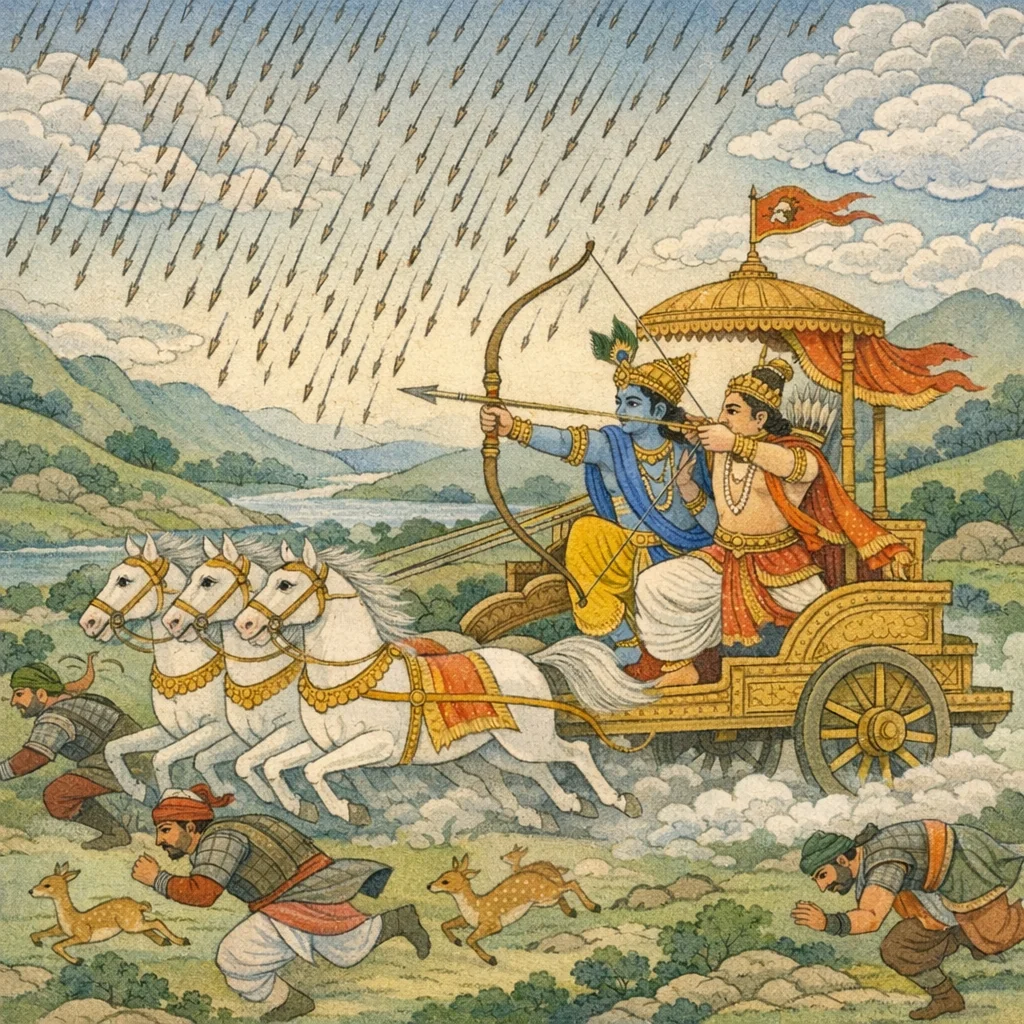
Chapter Arc: संजय धृतराष्ट्र से कहते हैं—सुदक्षिण के मारे जाने के बाद रणभूमि में अर्जुन के सामने अनेक जनपदों की सेनाएँ उमड़ पड़ती हैं; रथ पर केशव सहित पार्थ बाण-वर्षा से ढँक जाता है, फिर भी उसका तेज़ क्षीण नहीं होता। → अभीषाह, शूरसेन, शिबि, वसाति आदि दल धनंजय पर शर-वर्षा करते हैं; अर्जुन प्रतिशर-प्रहार से उन्हें छिन्न-भिन्न करता है, सैकड़ों योद्धा भयभीत होकर तितर-बितर भागते हैं। तभी रथियों में श्रेष्ठ श्रुतायु क्रुद्ध होकर तीक्ष्ण तोमर से अर्जुन पर प्रहार करता है और युद्ध का केंद्र एक घोर द्वंद्व की ओर खिंच जाता है। → अपने रथ को शरजाल से आच्छादित देखकर और शत्रुओं को अग्नि-सम दीप्त मानकर अर्जुन ‘शाक्रास्त्र’ प्रकट करता है; सहस्रों नतपर्वण बाण निकलते हैं और वह परमक्रुद्ध होकर श्रुतायु, अच्युतायु, नियतायु, दीर्घायु तथा अन्य म्लेच्छ-अम्बष्ठ योद्धाओं को यमसदन की ओर भेज देता है—कहीं गदा चूर-चूर होती है, कहीं इन्द्रध्वज-सा देह धराशायी होता है। → अर्जुन मदोन्मत्त गज की भाँति रथ, घोड़े और हाथियों की पंक्तियाँ रौंदता हुआ शत्रु-सेना को तोड़ देता है; जो बचे वे भय से पलायन करते हैं और उस मोर्चे पर पाण्डव-पक्ष का पलड़ा भारी हो जाता है। → कौरव-सेना के अन्य महारथी इस संहार का प्रतिशोध लेने को किस प्रकार संगठित होंगे—यह अगले प्रसंग की ओर संकेत करता है।
Shlokas
Verse 1
अत्-४-#कात त्रिनवतितमो<्थ्याय: अर्जुनद्वारा श्रुतायु, अच्युतायु, नियतायु, दीर्घायु, म्लेच्छ- सैनिक और अम्बष्ठ आदिका वध संजय उवाच हते सुदक्षिणे राजन् वीरे चैव श्रुतायुथे । जवेनाभ्यद्रवन् पार्थ कुपिता: सैनिकास्तव,संजय कहते हैं--राजन्! काम्बोजराज सुदक्षिण और वीर श्रुतायुधके मारे जानेपर आपके सारे सैनिक कुपित हो बड़े वेगसे अर्जुनपर टूट पड़े
Sañjaya said: “O King, when Sudakṣiṇa of Kāmboja and the heroic Śrutāyudha had been slain, all your soldiers, inflamed with wrath, rushed at Pārtha (Arjuna) with great speed.”
Verse 2
अभीषाहा: शूरसेना: शिबयो5थ वसातय: । अभ्यवर्षस्ततो राजन् शरवर्षर्धन॑जयम्,महाराज! वहाँ अभीषाह, शूरसेन, शिबि और वसाति-देशीय सैनिकगण अर्जुनपर बाणोंकी वर्षा करने लगे
Sañjaya said: “O King, then the Abhīṣāhas, the Śūrasenas, the Śibis, and the warriors of the Vasāti country poured down a rain of arrows upon Dhanañjaya (Arjuna).”
Verse 3
तेषां षष्टिशतानन्यान् प्रामथ्नात् पाण्डव: शरै: | ते सम भीता: पलायन्ते व्याप्रात् क्षुद्रमृूगा इव,उस समय पाण्डुकुमार अर्जुनने उपर्युक्त सेनाओंके छः हजार सैनिकों तथा अन्य योद्धाओंको भी अपने बाणोंद्वारा मथ डाला। जैसे छोटे-छोटे मृग बाघसे डरकर भागते हैं, उसी प्रकार वे अर्जुनसे भयभीत हो वहाँसे पलायन करने लगे
Sañjaya said: Arjuna, the son of Pāṇḍu, struck down those troops—along with six thousand others—by means of his arrows. Terrified, they fled from him, like small deer scattering in fear of a tiger.
Verse 4
ते निवृत्ता: पुनः पार्थ सर्वतः पर्यवारयन् । रणे सपत्नान् निध्नन्तं जिगीषन्तं परान् युधि,उस समय अर्जुन रणक्षेत्रमें शत्रुओंपर विजय पानेकी इच्छासे उनका संहार कर रहे थे। यह देख उन भागे हुए सैनिकोंने पुनः: लौटकर पार्थको चारों ओरसे घेर लिया
Sañjaya said: Those warriors who had turned back again surrounded Pārtha on every side. For in the battle Arjuna, intent on victory, was striking down his foes; seeing this, the previously fleeing soldiers returned and closed in around him.
Verse 5
तेषामापततां तूर्ण गाण्डीवप्रेषितै: शरै: । शिरांसि पातयामास बाहूंश्वापि धनंजय:,उन आक्रमण करनेवाले योद्धाओंके मस्तकों और भुजाओंको अर्जुनने गाण्डीव- धनुषद्वारा छोड़े हुए बाणोंसे तुरंत ही काट गिराया
Sañjaya said: As those warriors rushed in, Arjuna (Dhanañjaya), with arrows swiftly loosed from the Gāṇḍīva, at once struck down their heads and even their arms.
Verse 6
शिरोभशि: पातितैस्तत्र भूमिरासीज्निरन्तरा | अभ्रच्छायेव चैवासीदू ध्वाड्क्षगृभ्रबलैर्युधि,वहाँ गिराये हुए मस्तकोंसे वह रणभूमि ठसाठस भर गयी थी और उस युद्धस्थलमें कौओं तथा गीधोंकी सेनाके आ जानेसे वहाँ मेघकी छाया-सी प्रतीत होती थी
Sañjaya said: There the battlefield became densely covered, without a gap, by the severed heads that had fallen. And in that combat, when hosts of crows and vultures gathered, the place seemed as though shaded by a cloud.
Verse 7
तेषु तूत्साद्यमानेषु क्रोधामर्षसमन्वितौ । श्रुतायुश्नाच्युतायुश्न धनंजयमयुध्यताम्,इस प्रकार जब उन समस्त सैनिकोंका संहार होने लगा, तब श्रुतायु तथा अच्युतायु--ये दो वीर क्रोध और अमर्षमें भरकर अर्जुनके साथ युद्ध करने लगे
Sañjaya said: As those troops were being cut down, Śrutāyu and Acyutāyu—two valiant warriors—filled with wrath and wounded pride, advanced to fight Dhanañjaya (Arjuna).
Verse 8
बलिनौ स्पर्धिनौ वीरौ कुलजौ बाहुशालिनौ । तावेनं शरवर्षाणि सव्यदक्षिणमस्थताम्,वे दोनों बलवान अर्जुनसे स्पर्धा रखनेवाले, वीर, उत्तम कुलमें उत्पन्न और अपनी भुजाओंसे सुशोभित होनेवाले थे। उन दोनोंने अर्जुनपर दायें-बायेंसे बाण बरसाना आरम्भ किया
Sañjaya said: Those two warriors were powerful and fiercely competitive, born of noble lineage and distinguished by the strength of their arms. Taking positions on Arjuna’s left and right, they began to shower him with volleys of arrows.
Verse 9
त्वरायुक्तौ महाराज प्रार्थयानौ महद् यश: । अर्जुनस्य वधरप्रेप्सू पुत्रार्थे तव धन्विनौ,महाराज! वे दोनों वीर महान् यशकी अभिलाषा रखते हुए आपके पुत्रके लिये अर्जुनके वधकी इच्छा रखकर हाथमें धनुष ले बड़ी उतावलीके साथ बाण चला रहे थे
Sañjaya said: “O King, those two bowmen, driven by haste and seeking great renown, were eager to slay Arjuna for the sake of your son; with bows in hand, they shot their arrows in great urgency.”
Verse 10
तावर्जुनं सहस्त्रेण पत्रिणां नतपर्वणाम् । पूरयामासतु: क्रुद्धो तटागं जलदौ यथा,जैसे दो मेघ किसी तालाबको भरते हों, उसी प्रकार क्रोधमें भरे हुए उन दोनों वीरोंने झुकी हुई गाँठवाले सहस्रों बाणोंद्वारा अर्जुनको आच्छादित कर दिया
Sañjaya said: Then those two warriors, inflamed with anger, showered Arjuna with thousands of feathered arrows whose joints were bent, covering him completely—just as two rain-clouds fill a pond.
Verse 11
श्रुतायुश्न ततः क्रुद्धस्तोमरेण धनंजयम् । आजघान रथश्रेष्ठ: पीतेन निशितेन च,फिर रथियोंमें श्रेष्ठ श्रुतायुने कुृपित होकर पानीदार तीखी धारवाले तोमरसे अर्जुनपर आघात किया
Sañjaya said: Then Śrutāyu, enraged, struck Dhanañjaya (Arjuna) with a tomara—sharp-edged and gleaming like gold.
Verse 12
सो5तिविद्धो बलवता शत्रुणा शत्रुकर्शन: । जगाम परम॑ मोहं मोहयन् केशवं रणे,उस बलवान शत्रुके द्वारा अत्यन्त घायल किये हुए शत्रुसूदन अर्जुन उस रफक्षेत्रमें श्रीकृष्णको मोहित करते हुए स्वयं भी अत्यन्त मूर्च्छित हो गये
Sañjaya said: Struck through with great force by a powerful foe, Arjuna—the subduer of enemies—fell into utter bewilderment. In the midst of battle he caused Keśava (Kṛṣṇa) to be shaken with concern, while he himself sank into deep swoon.
Verse 13
एतस्मिन्नेव काले तु सो<च्युतायुर्महारथ: । शूलेन भृशतीक्ष्णेन ताडयामास पाण्डवम्,इसी समय महारथी अच्युतायुने अत्यन्त तीखे शूलके द्वारा पाण्डुकुमार अर्जुनपर प्रहार किया
At that very moment, the great chariot-warrior Acyutāyu struck the Pāṇḍava (Arjuna) with a spear of exceedingly sharp point.
Verse 14
क्षते क्षारं स हि ददौ पाण्डवस्य महात्मन: । पार्थोडपि भृशसंविद्धो ध्वजयष्टिं समाश्रित:,उसने इस प्रहारद्वारा महामना पाण्डुपुत्र अर्जुनके घावपर नमक छिड़क दिया। अर्जुन भी अत्यन्त घायल होकर ध्वज-दण्डके सहारे टिक गये
Sañjaya said: By that blow he, as it were, sprinkled salt upon the wound of the great-souled son of Pāṇḍu. Even Pārtha (Arjuna), grievously struck, leaned upon the staff of his banner for support.
Verse 15
ततः सर्वस्य सैन्यस्य तावकस्य विशाम्पते । सिंहनादो महानासीद्धतं मत्वा धनंजयम्,प्रजानाथ! उस समय अर्जुनको मरा हुआ मानकर आपके सारे सैनिक जोर-जोरसे सिंहनाद करने लगे
Sañjaya said: Then, O lord of the people, when they believed Dhanañjaya (Arjuna) to have been slain, a great lion-roar arose from your entire Kaurava host.
Verse 16
कृष्णश्व भृशसंतप्तो दृष्टवा पार्थ विचेतनम् । आश्वासयत् सुहसद्याभिवाग्भिस्तत्र धनंजयम्,अर्जुनको अचेत हुआ देख भगवान् श्रीकृष्ण अत्यन्त संतप्त हो उठे और मनको प्रिय लगनेवाले वचनोंद्वारा वहाँ उन्हें आश्वासन देने लगे
Sañjaya said: Seeing Pārtha (Arjuna) lying senseless, Kṛṣṇa—whose steeds are famed—was deeply distressed. There, with words that were affectionate and heartening, he began to console and reassure Dhanañjaya, seeking to restore his composure amid the strain of battle.
Verse 17
ततस्तौ रथिनां श्रेष्ठी लब्धलक्ष्यौ धनंजयम् | वासुदेवं च वार्ष्णेयं शरवर्ष: समन्तत:,तदनन्तर रथियोंमें श्रेष्ठ श्रुतायु और अच्युतायुने अपना लक्ष्य सामने पाकर अर्जुन तथा वृष्णिवंशी श्रीकृष्णपर चारों ओरसे बाण-वर्षा करके चक्र, कूबर, रथ, अश्व, ध्वज और पताकासहित उन्हें उस रणक्षेत्रमें अदृश्य कर दिया। वह अद्धभुत-सी बात हो गयी
Sañjaya said: Then those two foremost chariot-warriors, having found their mark, showered arrows on Dhanañjaya (Arjuna) and on Vāsudeva, the Vārṣṇeya (Kṛṣṇa), from every side. The scene was as though the two—together with their chariot’s parts and emblems—were swallowed up by the storm of missiles, revealing the terrible force that war unleashes when victory is pursued at any cost.
Verse 18
सचक्रकूबररथं साश्वध्वजपताकिनम् | अदृश्य॑ चक्रतुर्युद्धे तदद्भुतमिवाभवत्,तदनन्तर रथियोंमें श्रेष्ठ श्रुतायु और अच्युतायुने अपना लक्ष्य सामने पाकर अर्जुन तथा वृष्णिवंशी श्रीकृष्णपर चारों ओरसे बाण-वर्षा करके चक्र, कूबर, रथ, अश्व, ध्वज और पताकासहित उन्हें उस रणक्षेत्रमें अदृश्य कर दिया। वह अद्धभुत-सी बात हो गयी
Sañjaya said: In that battle, they made Arjuna’s chariot—complete with its wheels, yoke, horses, banner, and pennons—disappear from sight under a surrounding shower of arrows. It seemed as though something wondrous had occurred, as the warriors sought to overwhelm the righteous cause by sheer force.
Verse 19
प्रत्याश्वस्तस्तु बीभत्सु: शनकैरिव भारत । प्रेतराजपुरं प्राप्प पुन: प्रत्यागतो यथा,भारत! फिर अर्जुन धीरे-धीरे सचेत हुए, मानो यमराजके नगरमें पहुँचकर पुनः वहाँसे लौटे हों
Sañjaya said: O Bhārata, Arjuna (Bībhatsu), having regained his breath and composure, slowly returned to full awareness—like one who has reached the city of Yama, lord of the departed, and then come back again. The image shows how near to death he had come, and how extraordinary his recovery was amid the extremity of war.
Verse 20
संछन्नं शरजालेन रथं दृष्टवा सकेशवम् | शत्रू चाभिमुखौ दृष्टवा दीप्यमानाविवानलौ,उस समय भगवान् श्रीकृष्णसहित अपने रथको बाणसमूहसे आच्छादित और सामने खड़े हुए दोनों शत्रुओंको अग्निके समान देदीप्यमान देखकर महारथी अर्जुनने ऐपन्द्रास्त्र प्रकट किया। उससे झुकी हुई गाँठवाले सहस्रों बाण प्रकट होने लगे
Sañjaya said: Seeing the chariot—bearing Keśava (Kṛṣṇa)—covered over by a net of arrows, and seeing the two enemies standing face to face, blazing like fire, the great chariot-warrior Arjuna manifested the Aindra weapon, Indra’s own. From it there began to appear thousands of arrows with bent joints.
Verse 21
प्रादुश्चक्रे ततः पार्थ: शाक्रमस्त्रं महारथ: । तस्मादासन् सहस्राणि शराणां नतपर्वणाम्,उस समय भगवान् श्रीकृष्णसहित अपने रथको बाणसमूहसे आच्छादित और सामने खड़े हुए दोनों शत्रुओंको अग्निके समान देदीप्यमान देखकर महारथी अर्जुनने ऐपन्द्रास्त्र प्रकट किया। उससे झुकी हुई गाँठवाले सहस्रों बाण प्रकट होने लगे
Sañjaya said: Then Arjuna, that great chariot-warrior, brought forth the Śākra weapon, Indra’s own. From it there issued thousands of arrows with bent joints, while Kṛṣṇa remained with him upon the chariot and the two foes stood before him, blazing like fire.
Verse 22
ते जघ्नुस्तौ महेष्वासौ ताभ्यां मुक्तांश्व सायकान् | विचेरुराकाशगता: पार्थबाणविदारिता:,उन बाणोंने उन दोनों महाधनुर्धरोंको तथा उनके छोड़े हुए सायकोंको भी छिल्न-भिन्न कर दिया। अर्जुनके बाणोंसे टुकड़े-टुकड़े होकर उन शत्रुओंके बाण आकाशमें विचरने लगे
Sañjaya said: Those two great archers struck down the arrows released by the other side; and the enemy shafts, shattered by Pārtha’s arrows, flew about in the sky in broken fragments.
Verse 23
प्रतिहत्य शरांस्तूर्ण शरवेगेन पाण्डव: । प्रतस्थे तत्र तत्रैव योधयन् वै महारथान्,अपने बाणोंके वेगसे शत्रुओंके बाणोंको नष्ट करके पाण्डुकुमार अर्जुनने जहाँ-तहाँ अन्य महारथियोंसे युद्ध करनेके लिये प्रस्थान किया
Sañjaya said: Swiftly striking down the enemy’s arrows with the speed of his own shafts, the Pandava Arjuna moved from place to place, engaging the great chariot-warriors in battle.
Verse 24
तौ च फाल्गुनबाणौघैर्विबाहुशिरसौ कृतौ । वसुधामन्वपद्येतां वातनुन्नाविव द्रुमी
Sañjaya said: Struck by the dense volleys of arrows shot by Phālguna (Arjuna), the two were left without arms and heads; they fell after one another onto the earth, like two trees hurled down by the driving force of the wind.
Verse 25
अर्जुनके उन बाणसमूहोंसे श्रुतायु और अच्युतायुके मस्तक कट गये। भुजाएँ छिज्न- भिन्न हो गयीं। वे दोनों आँधीके उखाड़े हुए वृक्षोंके समान धराशायी हो गये ।। श्रुतायुषश्च निधन वधश्चैवाच्युतायुष: । लोकविस्मापनमभूत् समुद्रस्थेव शोषणम्,श्रुतायु और अच्युतायुका वह वध समुद्रशोषणके समान सब लोगोंको आश्र॒र्यमें डालनेवाला था
Sañjaya said: Struck by Arjuna’s volleys of arrows, the heads of Śrutāyu and Acyutāyu were severed and their arms were mangled. Like trees torn up by a storm, both warriors fell to the earth. Their slaying—Śrutāyu’s death and Acyutāyu’s fall—astonished all onlookers, as if the very ocean were being dried up.
Verse 26
तयो: पदानुगान् हत्वा पुन: पञ्चाशतं रथान् | प्रत्यगाद् भारतीं सेनां निघ्नन् पार्थो वरान् वरान्,उन दोनोंके पीछे आनेवाले पचास रथियोंको मारकर अर्जुनने श्रेष्ठ-श्रेष्ठ वीरोंको चुन- चुनकर मारते हुए पुनः कौरव-सेनामें प्रवेश किया
Sañjaya said: Having slain the fifty chariot-warriors who were following in the wake of those two, Arjuna returned again into the Kaurava host, striking down—one after another—the finest of their champions.
Verse 27
श्रुतायुषं च निहतं प्रेक्ष्य चैवाच्युतायुषम् । नियतायुश्च संक्रुद्धो दीर्घायुश्विव भारत,भारत! श्रुतायु तथा अच्युतायुको मारा गया देख उन दोनोंके पुत्र नरश्रेष्ठ नियतायु और दीर्घायु पिताके वधसे दु:खी हो अत्यन्त क्रोधमें भरकर नाना प्रकारके बाणोंकी वर्षा करते हुए कुन्तीकुमार अर्जुनका सामना करनेके लिये आये
Sañjaya said: Seeing Śrutāyus slain, and Acyutāyus as well, their sons Niyatāyus and Dīrghāyus—overwhelmed by grief at their fathers’ death—were inflamed with wrath, O Bhārata. They advanced to confront Arjuna, pouring forth volleys of arrows.
Verse 28
पुत्री तयोर्नरश्रेष्ठी कौन्तेयं प्रतिजग्मतुः । किरन्तौ विविधान् बाणान् पितृव्यसनकर्शितौ,भारत! श्रुतायु तथा अच्युतायुको मारा गया देख उन दोनोंके पुत्र नरश्रेष्ठ नियतायु और दीर्घायु पिताके वधसे दु:खी हो अत्यन्त क्रोधमें भरकर नाना प्रकारके बाणोंकी वर्षा करते हुए कुन्तीकुमार अर्जुनका सामना करनेके लिये आये
Sañjaya said: O Bharata, the two foremost of men—sons of those fallen warriors—came forward to confront Kunti’s son Arjuna. Grief-stricken by their father’s death and consumed by rage, they rained down many kinds of arrows as they advanced against him.
Verse 29
तावर्जुनो मुहूर्तेन शरै: संनतपर्वभि: । प्रैषयत् परमक्रुद्धो यमस्य सदन प्रति,तब अर्जुनने अत्यन्त कुपित हो झुकी हुई गाँठवाले बाणोंद्वारा दो ही घड़ीमें उन दोनोंको यमराजके घर भेज दिया
Sañjaya said: Then Arjuna, seized by intense wrath, swiftly dispatched those two with arrows whose joints were bent—sending them to Yama’s abode, the realm of death.
Verse 30
लोडयन्तमनीकानि द्विप॑ पद्मससरो यथा । नाशवनुवन् वारयितु पार्थ क्षत्रियपुड़रवा:
Sañjaya said: As an elephant churns a lotus-filled lake, so he was churning the battle-formations. The foremost of kṣatriyas could not check him, O Pārtha—such was the force of his onrush in that righteous yet terrible war.
Verse 31
जैसे हाथी कमलोंसे भरे हुए सरोवरको मथ डालता हो, उसी प्रकार आपकी सेनाओंका मन्थन करते हुए पार्थको आपके क्षत्रियशिरोमणि योद्धा रोक न सके ।। अड्जास्तु गजवारेण पाण्डवं पर्यवारयन् । क्रुद्धा:सहस्रशो राजन् शिक्षिता हस्तिसादिन:,राजन्! इसी समय युद्धविषयक शिक्षा पाये हुए अंगदेशके सहस्रों गजारोही योद्धाओंने क्रोधमें भरकर हाथियोंके समूहद्वारा पाण्डुकुमार अर्जुनको सब ओरसे घेर लिया
Sañjaya said: O King, as an elephant churns a lotus-filled lake, so Pārtha was churning your battle-formations, and your foremost kṣatriya warriors could not check him. At that very moment, thousands of elephant-mounted fighters from Aṅga—trained in the arts of war—surged forward in wrath and, with their massed elephants, surrounded Arjuna, the son of Pāṇḍu, on every side.
Verse 32
दुर्योधनसमादिष्टा: कुछ्जरै: पर्वतोपमै: । प्राच्याश्व दाक्षिणात्याश्व॒ कलिड्गप्रमुखा नूपा:,फिर दुर्योधनकी आज्ञा पाकर पूर्व और दक्षिण देशोंके कलिंग आदि नरेशोंने भी अर्जुनपर पर्वताकार हाथियोंद्वारा घेरा डाल दिया
Sañjaya said: At Duryodhana’s command, the kings from the eastern and southern regions—led by the ruler of Kaliṅga—surrounded Arjuna with elephants towering like mountains.
Verse 33
तेषामापततां शीघ्र गाण्डीवप्रेषितै: शरै: । निचकर्त शिरांस्य॒ग्रो बाहूनपि सुभूषणान्,तब उग्ररूपधारी अर्जुनने गाण्डीव धनुषसे छोड़े हुए बाणोंद्वारा उन सारे आक्रमणकारियोंके मस्तकों तथा उत्तम भूषणभूषित भुजाओंको भी शीघ्र ही काट डाला
Sañjaya said: As those warriors rushed in, Arjuna—terrible in his battle-form—swiftly severed their heads and even their well-adorned arms with arrows shot from the Gāṇḍīva.
Verse 34
तैः शिरोभिममही कीर्णा बाहुभिश्न सहाडुदै: । बभौ कनकपाषाणा भुजगैरिव संवृता,उस समय उन मस्तकों और भुजबंदसहित भुजाओंसे आच्छादित हुई वहाँकी भूमि सर्पोंसे घिरी हुई स्वर्ण-प्रस्तरयुक्त भूमिके समान शोभा पा रही थी
Sañjaya said: The earth there was strewn with severed heads and with arms still bearing armlets. Covered in this way, the battlefield looked like a ground set with golden rocks, as though encircled by serpents.
Verse 35
बाहवो विशिखैश्कछिन्ना: शिरांस्युन्मथितानि च । पतमानान्यदृश्यन्त द्रुमेभ्य इव पक्षिण:,बाणोंसे छिन्न-भिन्न हुई भुजाएँ और कटे हुए मस्तक इस प्रकार गिरते दिखायी दे रहे थे, मानो वृक्षोंसे पक्षी गिर रहे हों
Sañjaya said: Arms severed by arrows and heads torn away were seen falling to the ground—like birds dropping from trees.
Verse 36
शरै: सहस्रशो विद्धा द्विपा: प्रसृतशोणिता: । अदृश्यन्ताद्रय: काले गैरिकाम्बुस्रवा इव,सहस्रों बाणोंसे बिंधकर खूनकी धारा बहाते हुए हाथी वर्षाकालमें गेरुमिश्रित जलके झरने बहानेवाले पर्वतोंके समान दिखायी देते थे
Sañjaya said: Pierced by thousands of arrows, the elephants—streaming with flowing blood—appeared like mountains in the rainy season, pouring down reddish, ochre-tinged cascades.
Verse 37
निहता: शेरते स्मान्ये बीभत्सोर्निशितै: शरै: । गजपृष्ठगता म्लेच्छा नानाविकृतदर्शना:,अर्जुनके तीखे बाणोंसे मारे जाकर दूसरे-दूसरे म्लेच्छ-सैनिक हाथीकी पीठपर ही लेट गये थे। उनकी नाना प्रकारकी आकृति बड़ी विकृत दिखायी देती थी
Sañjaya said: Struck down by the sharp arrows of Bībhatsu (Arjuna), other Mleccha warriors lay slain right there upon the backs of their elephants. Their bodies, twisted into many unnatural postures, appeared grotesquely deformed.
Verse 38
नानावेषधरा राजन् नानाशस्त्रौघसंवृता: । रुधिरेणानुलिप्ताज़ा भान्ति चित्र: शरैर्हता:,राजन! नाना प्रकारके वेश धारण करनेवाले तथा अनेक प्रकारके अस्त्र-शस्त्रोंसे सम्पन्न योद्धा अर्जुनके विचित्र बाणोंसे मारे जाकर अदभुत शोभा पा रहे थे। उनके सारे अंग खूनसे लथपथ हो रहे थे
Sañjaya said: O King, warriors wearing many kinds of disguises and equipped with masses of diverse weapons—though struck down by Arjuna’s wondrous arrows—appeared strangely splendid, their limbs smeared and drenched with blood.
Verse 39
शोणितं निर्वमन्ति सम द्विपा: पार्थशराहता: । सहस्नशश्किन्नगात्रा: सारोहा: सपदानुगा:,सवारों और अनुचरोंसहित सहस्रों हाथी अर्जुनके बाणोंसे आहत हो मुँहसे रक्त वमन करते थे। उनके सम्पूर्ण अंग छिन्न-भिन्न हो रहे थे
Sañjaya said: Struck by the arrows of Pārtha (Arjuna), elephants by the thousands were vomiting blood. With their limbs severed and mangled, they fell along with their riders and the foot-soldiers who followed in their wake.
Verse 40
चुक्रुशुश्व निपेतुश्च बश्रमुश्चापरे दिश: । भशं त्रस्ताश्न बहव: स्वानेव ममृदुर्गजा:
Sañjaya said: Many cried out and fell down; in other directions too there was a great alarm. Terrified by fear, numerous elephants trampled even their own side.
Verse 41
सान्तरायुधिनश्रैव द्विपास्तीक्ष्णविषोपमा: । बहुत-से हाथी चिग्घाड़ रहे थे, बहुतेरे धराशायी हो गये थे, दूसरे कितने ही हाथी सम्पूर्ण दिशाओंमें चक्कर काट रहे थे और बहुत-से गज अत्यन्त भयभीत हो भागते हुए अपने ही पक्षके योद्धाओंको कुचल रहे थे। तीक्ष्ण विषवाले सर्पोके समान भयंकर वे सभी हाथी गुप्तास्त्रधारी सैनिकोंसे युक्त थे || ४० ई ।। विदन्त्यसुरमायां ये सुघोरा घोरचक्षुष:,जो आसुरी मायाको जानते हैं, जिनकी आकृति अत्यन्त भयंकर है तथा जो भयानक नेत्रोंसे युक्त हैं एवं जो कौओंके समान काले, दुराचारी, स्त्रीलम्पट और कलहप्रिय होते हैं वे यवन, पारद, शक और बाह्नलीक भी वहाँ युद्धके लिये उपस्थित हुए
Sañjaya said: “And there were elephants equipped with weapons and armoured riders, terrible like serpents of sharp venom. Amid the din of battle, many elephants were trumpeting; many had fallen to the ground; others wheeled about in all directions, and many, seized by panic, fled and trampled even their own side’s warriors. Thus the war’s confusion and fear turned strength into indiscriminate destruction.”
Verse 42
यवना: पारदाश्वैव शकाश्न सह बाह्लिकै: । काकवर्णा दुराचारा: स्त्रीलोला: कलहप्रिया:,जो आसुरी मायाको जानते हैं, जिनकी आकृति अत्यन्त भयंकर है तथा जो भयानक नेत्रोंसे युक्त हैं एवं जो कौओंके समान काले, दुराचारी, स्त्रीलम्पट और कलहप्रिय होते हैं वे यवन, पारद, शक और बाह्नलीक भी वहाँ युद्धके लिये उपस्थित हुए
Sañjaya said: The Yavanas, the Pāradas, the Śakas, and the Bāhlikas also came there, ready for battle—men described as crow-dark in complexion, given to misconduct, lustful after women, and fond of quarrel.
Verse 43
द्राविडास्तत्र युध्यन्ते मत्तमातड्भविक्रमा: । गोयोनिप्रभवा म्लेच्छा: कालकल्पा: प्रहारिण:,मतवाले हाथियोंके समान पराक्रमी द्राविड तथा नन्दिनी गायसे उत्पन्न हुए कालके समान प्रहारकुशल म्लेच्छ भी वहाँ युद्ध कर रहे थे
Sañjaya said: There the Drāviḍas fought on, mighty in valor like intoxicated elephants; and the Mleccha warriors—said to be born of the cow Nandinī’s lineage—also fought there, striking like Time itself in their onslaught.
Verse 44
दार्वातिसारा दरदा: पुण्ड्राश्वेव सहस्रश: । ते न शक्या: सम संख्यातुं व्रात्या:ःशतसहसत्रश:,दार्वातिसार, दरद और पुण्ड्र आदि हजारों लाखों संस्कारशून्य म्लेच्छ वहाँ उपस्थित थे, जिनकी गणना नहीं की जा सकती थी
Sañjaya said: “There were thousands upon thousands of Dārvātisāras, Daradas, and Puṇḍras. Those vast hordes—described as vrātyas, people outside the established sacramental order—could not be counted in full.”
Verse 45
अभ्यवर्षन्त ते सर्वे पाण्डवं निशितै: शरै: । अवाकिरंश्न ते म्लेच्छा नानायुद्धविशारदा:,नाना प्रकारके युद्धोंमें कुशल वे सभी म्लेच्छगण पाण्डुपुत्र अर्जुनपर तीखे बाणोंकी वर्षा करके उन्हें आच्छादित करने लगे
Sañjaya said: Then all of them showered the Pāṇḍava (Arjuna) with sharp arrows. Those foreign warriors, skilled in many kinds of fighting, rained missiles upon him, seeking to cover and overwhelm him in the press of battle.
Verse 46
तेषामपि ससर्जाशु शरवृष्टिं धनंजय: । सृष्टिस्तथाविधा हवासीच्छलभानामिवायति:,तब अर्जुनने उनके ऊपर भी तुरंत बाणोंकी वर्षा प्रारम्भ की। उनकी वह बाण-वृष्टि टिड्डी-दलोंकी सृष्टि-सी प्रतीत होती थी
Sañjaya said: Arjuna (Dhanañjaya) at once loosed a rain of arrows even upon them. That discharge of missiles seemed like the onrushing swarms of locusts—overwhelming in number and force.
Verse 47
अभ्रच्छायामिव शरै: सैन्ये कृत्वा धनंजय: । मुण्डार्थधमुण्डाउ्जटिलानशुचीज्जटिलाननान्
Sañjaya said: Dhanañjaya (Arjuna), showering the host with arrows as though laying upon it a cloud’s shadow, drove the opposing ranks into a wretched plight—some shaven, some half-shaven, some with matted jaṭā-locks, many filthy and dishevelled—clear signs of panic, rout, and the stripping away of martial order amid the violence of battle.
Verse 48
शरैश्ष॒ शतशो विद्धास्ते संघा गिरिचारिण: । प्राद्रवन्त रणे भीता गिरिगह्वदरवासिन:,उस समय पर्वतोंपर विचरने और पर्वतीय कन्दराओंमें निवास करनेवाले सैकड़ों म्लेच्छ-संघ अर्जुनके बाणोंसे विद्ध एवं भयभीत हो रणभूमिसे भागने लगे
Sañjaya said: Pierced in their hundreds by Arjuna’s arrows, those bands of mountain-roaming fighters—dwellers of caves and ravines—were seized by fear and fled from the battlefield.
Verse 49
गजाश्वसादिम्लेच्छानां पतितानां शितै: शरै: । बला: कंका वृका भूमावपिबन् रुधिरं मुदा,अर्जुनके तीखे बाणोंसे मरकर पृथ्वीपर गिरे हुए उन हाथीसवार और घुड़सवार म्लेच्छोंका रक्त कौए, बगुले और भेड़िये बड़ी प्रसन्नताके साथ पी रहे थे
Sañjaya said: When the mleccha warriors—mounted on elephants and horses—had been struck down by sharp arrows and lay fallen upon the earth, herons, crows, and wolves drank their blood with grim delight.
Verse 50
पत्त्यश्वरथनागैश्व प्रच्छन्नकृतसंक्रमाम् । शरवर्षप्लवां घोरां केशशैवलशाद्धलाम् । प्रावर्तयन्नदीमुग्रां शोणितौघतरड्धिणीम्,देहेभ्यो राजपुत्राणां नागाश्चरथसादिनाम् । उस समय अर्जुनने वहाँ रक्तकी एक भयंकर नदी बहा दी, जो प्रलयकालकी नदीके समान डरावनी प्रतीत होती थी। उसमें पैदल मनुष्य, घोड़े, रथ और हाथियोंको बिछाकर मानो पुल तैयार किया गया था, बाणोंकी वर्षा ही नौकाके समान जान पड़ती थी। केश सेवार और घासके समान जान पड़ते थे। उस भयंकर नदीसे रक्त-प्रवाहकी ही तरंगें उठ रही थीं। कटी हुई अँगुलियाँ छोटी-छोटी मछलियोंके समान जान पड़ती थीं। हाथी, घोड़े और रथोंकी सवारी करनेवाले राजकुमारोंके शरीरोंसे बहनेवाले रक्तसे लबालब भरी हुई उस नदीको अर्जुनने स्वयं प्रकट किया था। उसमें हाथियोंकी लाशें व्याप्त हो रही थीं
Sañjaya said: Then Arjuna set in motion a dreadful river of blood, whose current rose in crimson waves. It seemed as though a crossing had been made by bodies—foot-soldiers, horses, chariots, and elephants—while the storm of arrows served like boats upon it, and severed hair lay upon it like algae and grass. That fierce river, brimming from the bodies of princes and of those who rode elephants and chariots, was made manifest by Arjuna amid the ruin of war.
Verse 51
छिन्नाडुलीक्षुद्रमत्स्यां युगान्ते कालसंनिभाम् । प्राकरोद् गजसम्बाधां नदीमुत्तरशोणिताम्
Sañjaya said: “He turned the battlefield into a river—choked with elephants, running northward with blood—its waters filled with severed limbs and small fish, and dark as Kāla, Time itself, at the end of an age.”
Verse 52
यथास्थलं च निम्नं च न स्याद् वर्षति वासवे
Sañjaya said: “When Vāsava (Indra) sends down rain, the ground does not remain as it was—neither the high places nor the low; all is altered by the downpour.”
Verse 53
षट् सहस्रान् हयान् वीरान् पुनर्दशशतान् वरान्
Sañjaya said: “(He mustered) six thousand horses—valiant and battle-worthy—along with another thousand, all of them choice steeds.”
Verse 54
प्राहिणोन्मृत्युलोकाय क्षत्रियान् क्षत्रियर्षभ: । क्षत्रियशिरोमणि अर्जुनने वहाँ छः: हजार घुड़सवारों तथा एक हजार श्रेष्ठ शूरवीर क्षत्रियोंको मृत्युके लोकमें भेज दिया |। ५३ ई |। शरै: सहस््रशो विद्धा विधिवत्कल्पिता द्विपा:
Sañjaya said: The bull among kṣatriyas dispatched the kṣatriya warriors to the realm of Death—an image that frames the battlefield not as mere victory, but as the grave moral cost of kṣatriya duty carried out through lethal force.
Verse 55
सवाजिरथमातज्न् निध्नन् व्यचरदर्जुन:
Sañjaya said: Arjuna moved about the battlefield, striking down the enemy’s chariots together with their horses and charioteers—an image of relentless martial resolve in which the instruments of violence and those who wield them are simultaneously brought to ruin.
Verse 56
भूरिद्रुमलतागुल्मं शुष्केन्धनतृणोलपम्
Sanjaya said: It was filled with abundant trees, creepers, and shrubs—now reduced to dry fuel, grass, and scattered fragments, evoking the desolation wrought by war and the moral cost of violence upon the living landscape.
Verse 57
निर्दहेदनलो5रण्यं यथा वायुसमीरित: । सेनारण्यं तव तथा कृष्णानिलसमीरित:
Sañjaya said: “As fire, fanned by the wind, burns down a forest, so too—driven by Kṛṣṇa as by a mighty gale—does that blazing force consume the ‘forest’ of your army.”
Verse 58
शरार्चिरदहत् क्रुद्ध: पाण्डवाग्निर्धनंजय: । जैसे वायुप्रेरित अग्नि सूखे ईंधन, तृण और लताओंसे युक्त तथा बहुसंख्यक वृक्षों और लतागुल्मोंसे भरे हुए जंगलको जलाकर भस्म कर देती है, उसी प्रकार श्रीकृष्णरूपी वायुसे प्रेरित हो बाणरूपी ज्वालाओंसे युक्त पाण्डुपुत्र अर्जुनरूपी अग्निने कुपित होकर आपकी सेनारूप वनको दग्ध कर दिया || ५६-५७ $ ।। शून्यान् कुर्वन् रथोपस्थान् मानवै: संस्तरन् महीम्
Sañjaya said: “Enraged, Dhanañjaya—Arjuna, the fire of the Pāṇḍavas—burned the foe with the flame of his arrows, leaving the chariot-stands empty and carpeting the earth with fallen men.”
Verse 59
प्रानृत्यदिव सम्बाधे चापहस्तो धनंजय: । रथकी बैठकोंको सूनी करके धरतीपर मनुष्योंकी लाशोंका बिछौना करते हुए चापधारी धनंजय उस युद्धके मैदानमें नृत्य-सा कर रहे थे ।। ५८ $ ।। वज्जकल्पै: शरैर्भूमिं कुर्वन्नुत्तरशोणिताम्,क्रोधमें भरे हुए धनंजयने वज्रोपम बाणोंद्वारा पृथ्वीको रक्तसे आप्लावित करते हुए कौरवी सेनामें प्रवेश किया। उस समय सेनाके भीतर जाते हुए अर्जुनको श्रुतायु तथा अम्बष्ठने रोका
Sañjaya said: “With bow in hand, Dhanañjaya seemed to dance amid the press of battle, emptying the chariot-stands and making the earth a bed of corpses. With thunderbolt-like arrows he reddened the ground with blood and entered the Kaurava host; as Arjuna pushed into its heart, Śrutāyu and Ambaṣṭha checked his advance.”
Verse 60
प्राविशद् भारतीं सेनां संक्रुद्धो वै धनंजय: । त॑ं श्रुतायुस्तथाम्बष्ठो ब्रजमानं न्न्यवारयत्,क्रोधमें भरे हुए धनंजयने वज्रोपम बाणोंद्वारा पृथ्वीको रक्तसे आप्लावित करते हुए कौरवी सेनामें प्रवेश किया। उस समय सेनाके भीतर जाते हुए अर्जुनको श्रुतायु तथा अम्बष्ठने रोका
Sañjaya said: “Enraged, Dhanañjaya (Arjuna) forced his way into the Kaurava host, flooding the earth with blood by means of his thunderbolt-like arrows. As he advanced within the army, Śrutāyu and Ambaṣṭha moved to check him.”
Verse 61
तस्यार्जुन: शरैस्तीक्ष्ण: कडकपत्रपरिच्छदै: | न्यपातयद्धयान् शीघ्रं यतमानस्य मारिष,मान्यवर! तब अर्जुनने कंककी पाँखोंवाले तीखे बाणोंद्वारा विजयके लिये प्रयत्न करनेवाले अम्बष्ठके घोड़ोंको शीघ्र ही मार गिराया
Sañjaya said: “Arjuna, with sharp arrows fletched with hard, reed-like feathers, swiftly brought down the horses of Ambaṣṭha as he strove for victory.”
Verse 62
धनुश्वास्यापरैश्छित्त्वा शरै: पार्थों विचक्रमे । अम्बष्ठस्तु गदां गृह कोपपर्याकुलेक्षण:
Sañjaya said: Having cut down the bow and its string with other arrows, Pārtha (Arjuna) advanced with swift maneuvering. But Ambaṣṭha, seizing his mace, looked on with eyes agitated by anger—his wrath driving him from ranged combat into brutal close-quarters assault.
Verse 63
आससाद रणे पार्थ केशवं च महारथम् । फिर दूसरे बाणोंसे उसके धनुषको भी काटकर पार्थने विशेष बल-विक्रमका परिचय दिया। तब अम्बष्ठकी आँखें क्रोधसे व्याप्त हो गयीं। उसने गदा लेकर रणक्षेत्रमें महारथी श्रीकृष्ण और अर्जुनपर आक्रमण किया || ६२ $ || ततः सम्प्रहरन् वीरो गदामुद्यम्य भारत
Sañjaya said: Then that hero, raising his mace, closed in to strike in the battle, O Bhārata. The scene underscores how, when a warrior’s weapons are repeatedly shattered, anger can harden into reckless aggression—yet the narrative also highlights the steadiness of Kṛṣṇa and Arjuna amid escalating violence.
Verse 64
रथमावार्य गदया केशवं समताडयत् | भारत! तदनन्तर वीर अम्बष्ठने प्रहार करनेके लिये उद्यत हो गदा उठाये आगे बढ़कर अर्जुनके रथको रोक दिया और भगवान् श्रीकृष्णपर गदासे आघात किया ।। ६३ $ ।। गदया ताडिठतं दृष्टवा केशवं परवीरहा
Sañjaya said: O descendant of Bharata, after that the warrior, intent on striking, lifted his mace, advanced, and checked Arjuna’s chariot; then he struck Keśava (Śrī Kṛṣṇa) with the mace. Seeing Keśava struck by the mace, the slayer of enemy-heroes… (the narration continues).
Verse 65
अर्जुनो5थ भृशं क्रुद्धः सो<म्बष्ठं प्रति भारत । भरतनन्दन! शत्रुवीरोंका संहार करनेवाले अर्जुन भगवान् श्रीकृष्णको गदासे आहत हुआ देख अम्बष्ठके प्रति अत्यन्त कुपित हो उठे ।। ६४ $ ।। ततः शरैहेमपुड्खै: सगदं रथिनां वरम्
Sañjaya said: Then Arjuna, inflamed with intense anger, turned against Ambaṣṭha, O Bhārata. Thereupon, with arrows whose shafts were tipped with gold, he struck the foremost of chariot-warriors, who still bore his mace.
Verse 66
छादयामास समरे मेघ: सूर्यमिवोदितम् । फिर तो जैसे बादल उदित हुए सूर्यको ढक लेता है, उसी प्रकार अर्जुनने समरांगणमें सोनेके पंखवाले बाणोंद्वारा गदासहित रथियोंमें श्रेष्ठ अम्बष्ठकोी आच्छादित कर दिया ।। ६५ *॥ अथापरै: शरैश्वापि गदां तस्य महात्मन:
Sañjaya said: In the thick of battle, he covered him over—just as a cloud veils the newly risen sun. The image conveys how overwhelming the assault became, eclipsing the opponent’s strength and visibility amid the moral darkness of war.
Verse 67
अथ तां पतितां दृष्टवा गृह्मान्यां च महागदाम्
Sanjaya said: Then, seeing her fallen, and also the great mace lying there, the onlookers were compelled to confront the stark consequence of violence—how swiftly pride and power collapse when fate and righteous retribution turn against a warrior.
Verse 68
अर्जुन वासुदेवं च पुन: पुनरताडयत् । उस गदाको गिरी हुई देख अम्बष्ठने दूसरी विशाल गदा ले ली और श्रीकृष्ण तथा अर्जुनपर बारंबार प्रहार किया || ६७ ई || तस्यार्जुन: क्षुरप्राभ्यां सगदावुद्यतीौ भुजी
Sañjaya said: Arjuna struck Vāsudeva again and again. Then Arjuna, with razor-edged arrows, targeted the two upraised arms of the foe as he stood wielding his mace—showing how, amid the fury of battle, skill is directed toward disabling violence rather than indulging in blind slaughter.
Verse 69
चिच्छेदेन्द्रध्वजाकारौ शिरक्षान्येन पत्रिणा । तब अर्जुनने उसकी गदासहित, इन्द्रध्वजके समान उठी हुई दोनों भुजाओंको दो क्षुरप्रोंसे काट डाला और पंखयुक्त दूसरे बाणसे उसके मस्तकको भी काट गिराया ।। स पपात हतो राजन् वसुधामनुनादयन्
Sanjaya said: With another feathered arrow, he severed the head; and with a keen shaft he cut down the two upraised arms that stood like Indra’s banner. Struck down, the warrior fell, O King, making the earth resound—an image of how prowess and pride alike are brought to silence amid the inexorable law of battle.
Verse 70
रथानीकावगाढश्न वारणाश्वशतैर्व॒॑तः । अदृश्यत तदा पार्थो घनै: सूर्य इवावृत:,उस समय रथियोंकी सेनामें घुसकर सैकड़ों हाथियों और घोड़ोंसे घिरे हुए कुन्तीकुमार अर्जुन बादलोंमें छिपे हुए सूर्यके समान दिखायी देते थे
Sañjaya said: Then Pārtha (Arjuna), having plunged into the massed ranks of chariot-warriors and surrounded by hundreds of elephants and horses, was seen like the sun veiled by clouds—his presence unmistakable, yet intermittently obscured amid the press and dust of battle.
Verse 92
इस प्रकार श्रीमहाभारत द्रोणपर्वके अन्तर्गत जयद्रथवधपर्वमें श्रुतायुध और युदाक्षिणका वधविषयक बानबेवाँ अध्याय पूरा हुआ
Sanjaya said: Thus, in the Śrī Mahābhārata, within the Droṇa Parva, in the section concerning the slaying of Jayadratha, the ninety-second chapter—dealing with the deaths of Śrutāyudha and Yudākṣiṇ—comes to its close. The narration marks a grim progression of the war, where the fall of notable warriors underscores the relentless consequences of vengeance, strategy, and the erosion of restraint on the battlefield.
Verse 93
इति श्रीमहाभारते द्रोणपर्वणि जयद्रथवधपर्वणि अम्बष्ठवधे त्रिनवतितमो<ध्याय: ।। ९३ || इस प्रकार श्रीमह्ााभारत द्रोणपर्वके अन्तर्गत जयद्रथवधपर्वमें अम्ब्बवधविषयक तिरानबेवाँ अध्याय पूरा हुआ
Sañjaya said: Thus, in the Śrī Mahābhārata, within the Droṇa Parva—specifically in the section concerning the slaying of Jayadratha—this ninety-third chapter, dealing with the killing of the Ambaṣṭha, is concluded. This colophon marks the close of this unit of narration, placing the episode within the wider ethical and strategic arc of the war, where each death is recorded as part of the mounting consequences of vows, retaliation, and battlefield duty.
Verse 473
म्लेच्छानशातयत् सर्वान् समेतानस्त्रतेजसा । बाणोंद्वारा उस विशाल सेनापर बादलोंकी छाया-सी करके अर्जुनने अपने अस्त्रके तेजसे मुण्डित, अर्धमुण्डित, जटाधारी, अपवित्र तथा दाढ़ीभरे मुखवाले उन समस्त म्लेच्छोंका, जो वहाँ एकत्र थे, संहार कर डाला
Sañjaya said: With the blazing power of his weapons, Arjuna cut down all the Mleccha warriors who had gathered there. Casting, as it were, a cloud-like shadow over that vast host with a dense shower of arrows, he destroyed those impure fighters—shaven, half-shaven, matted-haired, and with bearded faces—thus depicting the grim, ethically fraught necessity of slaughter in the press of war.
Verse 513
देहेभ्यो राजपुत्राणां नागाश्चरथसादिनाम् । उस समय अर्जुनने वहाँ रक्तकी एक भयंकर नदी बहा दी, जो प्रलयकालकी नदीके समान डरावनी प्रतीत होती थी। उसमें पैदल मनुष्य, घोड़े, रथ और हाथियोंको बिछाकर मानो पुल तैयार किया गया था, बाणोंकी वर्षा ही नौकाके समान जान पड़ती थी। केश सेवार और घासके समान जान पड़ते थे। उस भयंकर नदीसे रक्त-प्रवाहकी ही तरंगें उठ रही थीं। कटी हुई अँगुलियाँ छोटी-छोटी मछलियोंके समान जान पड़ती थीं। हाथी, घोड़े और रथोंकी सवारी करनेवाले राजकुमारोंके शरीरोंसे बहनेवाले रक्तसे लबालब भरी हुई उस नदीको अर्जुनने स्वयं प्रकट किया था। उसमें हाथियोंकी लाशें व्याप्त हो रही थीं
Sañjaya said: From the bodies of the princes—along with those who rode elephants and those who mounted chariots—blood poured forth in such measure that Arjuna seemed to have brought into being a dreadful river, terrifying like the flood at the end of an age. In that torrent, fallen foot-soldiers, horses, chariots, and elephants lay heaped as though forming a bridge; the unceasing shower of arrows appeared like boats upon it. Hair and severed ornaments drifted like reeds and grass; waves rose as pure surges of blood; and cut-off fingers seemed like tiny fish. Thus, by the carnage of battle, Arjuna manifested a river swollen with the blood of royal warriors, strewn everywhere with the corpses of elephants.
Verse 526
तथासीत् पृथिवी सर्वा शोणितेन परिप्लुता । जैसे इन्द्रके वर्षा करते समय ऊँचे-नीचे स्थलका भान नहीं होता है, उसी प्रकार वहाँकी सारी पृथ्वी रक्तकी धारामें डूबकर समतल-सी जान पड़ती थी
Sañjaya said: Thus the entire earth was flooded with blood. As, when Indra pours down rain, one cannot distinguish high ground from low, so there the whole land—submerged in streams of blood—appeared as though levelled.
Verse 543
शेरते भूमिमासाद्य शैला वज़हता इव । विधिपूर्वक सुसज्जित किये गये हाथी सहस्रों बाणोंसे बिंधकर वज्रके मारे हुए पर्वतोंके समान धराशायी हो रहे थे
Sañjaya said: Reaching the ground, they lay strewn about like mountains struck by a thunderbolt. Even the thousands of elephants—carefully arrayed and duly equipped according to rule—when pierced through by volleys of arrows, were collapsing to the earth like peaks shattered by Indra’s bolt.
Verse 663
अचूर्णयत् तदा पार्थस्तदद्भुतमिवाभवत् | तत्पश्चात् दूसरे बहुत-से बाण मारकर अर्जुनने महामना अम्बष्ठकी उस गदाको उसी समय चूर-चूर कर दिया। वह अद्भुत-सी घटना हुई
Sañjaya said: Then Pārtha (Arjuna) shattered it, and the moment seemed almost miraculous. Thereafter, striking with many more arrows, Arjuna—great-souled and resolute—at once broke Ambaṣṭhakī’s mace into fragments. It was an astonishing turn in the battle.
Verse 696
इन्द्रध्वज इवोत्सृष्टो यन्त्रनिर्मुक्तबन्धन: । राजन! यन्त्रद्वारा बन्धनमुक्त होकर गिरे हुए इन्द्रध्वजके समान वह मरकर पृथ्वीपर धमाकेकी आवाज करता हुआ गिर पड़ा
Sañjaya said: “O King, released from its mechanical fastenings, he fell like an Indra-banner that has been let down—striking the earth with a resounding crash as life left him.”
Verse 5563
प्रभिन्न इव मातज्रो मृदूनन् नलवनं यथा । जैसे मदकी धारा बहानेवाला मतवाला हाथी नरकुलके जंगलोंको रौंदता चलता है, उसी प्रकार अर्जुन घोड़े, रथ और हाथियोंसहित सम्पूर्ण शत्रुओंका संहार करते हुए रणभूमिमें विचर रहे थे
Sañjaya said: Like a rut-maddened elephant, its temples streaming, trampling a thicket of reeds, Arjuna ranged across the battlefield, destroying the enemy host together with their horses, chariots, and elephants.
Frequently Asked Questions
The chapter frames a tension between mission-priority (reaching and supporting Arjuna under time pressure) and the ethical weight of mass violence required to clear a route through coalition forces; vow-fulfillment competes with restraint.
Purposeful action under constraint requires composure, clarity of aim, and disciplined execution; courage is presented less as rage and more as steady commitment to a chosen duty and promise.
No explicit phalaśruti appears here; the chapter functions as narrative-ethical illustration, embedding its significance in the broader war-time discourse on vows, timing, and consequential agency.