Adhyaya 120
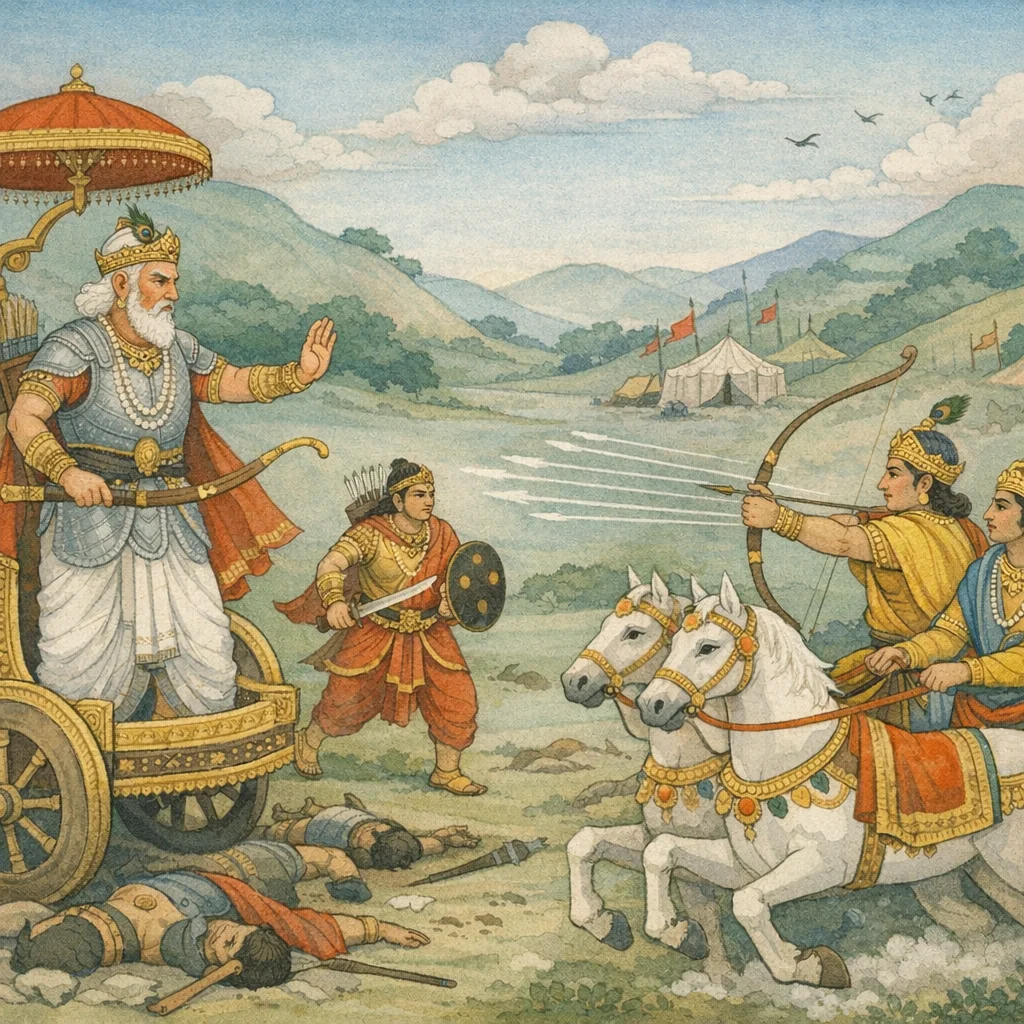
Chapter Arc: संजय धृतराष्ट्र को रणभूमि का दृश्य सुनाते हैं—शिखण्डी को सामने पाकर गंगानन्दन भीष्म की दृष्टि क्रोध से दहक उठती है, पर वही दृष्टि एक पुराने व्रत की सीमा भी पहचानती है। → भीष्म शिखण्डी को देखते हुए भी उसके ‘स्त्रीत्व’ (पूर्व-स्त्री-भाव) का स्मरण कर उस पर प्रहार नहीं करते; शिखण्डी इस संयम को नहीं समझता और आगे बढ़ता है। इसी बीच कौरव-पक्ष में दुःशासन का अद्भुत पराक्रम उभरता है—वह अर्जुन से भिड़ते हुए भी पितामह की रक्षा-रेखा बनकर खड़ा रहता है, अनेक रथियों को रथहीन करता है और पाण्डवों में उसे रोक पाने की सामर्थ्य घटती दिखती है। → धनंजय दिव्यास्त्रों का संधान कर महावेग बाण-वर्षा करते हैं; दसवें दिन के पूर्वाह्न में वे धूमरहित अग्नि की भाँति प्रज्वलित होकर महारथियों को पराजित करते हुए भीष्म की ओर बढ़ते हैं। भीष्म भी दिव्यास्त्र प्रकट कर सब धनुर्धरों के देखते-देखते अर्जुन पर धावा बोलते हैं; तभी कवचधारी शिखण्डी आगे आकर भीष्म पर आक्रमण करता है और भीष्म, उसे सामने देखकर, अपने अस्त्र-प्रयोग को रोक/समेट लेते हैं—इसी क्षण अर्जुन के बाणों से भीष्म मूर्च्छित/अचेत-से हो उठते हैं। → रण में यह स्पष्ट हो जाता है कि भीष्म का धर्म-नियम (शिखण्डी पर प्रहार न करना) कौरव-सेना की ढाल में एक छिद्र बन गया है; अर्जुन उसी छिद्र से पितामह को दबाते हैं। दुःशासन का शौर्य भी उजागर होता है, पर अर्जुन की ज्वाला के आगे कौरव-पंक्ति डगमगाती है। → भीष्म शिखण्डी के सामने अस्त्र समेटते हैं—अब प्रश्न यह है कि क्या पितामह इसी धर्म-संकोच में रहकर युद्ध का भार संभाल पाएँगे, या अगले प्रहार में उनका पतन निश्चित हो जाएगा?
Shlokas
Verse 1
भी्नआ+ज (2) आमने सप्तदशाधिकशततमो< ध्याय: उभय पक्षकी सेनाओंका युद्ध, दःशासनका पराक्रम तथा अर्जुनके द्वारा भीष्मका मूर्च्छित होना संजय उवाच शिखण्डी तु रणे भीष्ममासाद्य पुरुषर्षभम् | दशभिर्निशितैर्भल्लैराजघान स्तनान्तरे,संजय कहते हैं--महाराज! शिखण्डीने रणक्षेत्रमें पुरुषरत्न भीष्मजीके सामने पहुँचकर उनकी छातीमें दस तीखे भल्ल नामक बाण मारे
Sañjaya said: O King, in the thick of battle Śikhaṇḍī advanced to face Bhīṣma, the foremost of men, and struck him in the chest with ten razor‑sharp bhalla arrows.
Verse 2
शिखण्डिनं तु गाड्भेय: क्रोधदीप्तेन चक्षुषा । सम्प्रैक्षत कटाक्षेण निर्दहन्निव भारत,भारत! गंगानन्दन भीष्मने क्रोधसे प्रज्वलित हुई दृष्टि एवं कनखियोंसे शिखण्डीकी ओर इस प्रकार देखा, मानो वे उसे भस्म कर डालेंगे
Sañjaya said: But Bhīṣma, the son of the Gaṅgā, looked toward Śikhaṇḍin with eyes blazing in anger; with a sidelong glance he seemed, O Bhārata, as though he would burn him to ashes.
Verse 3
स्त्रीत्वं तस्यप स्मरन् राजन् सर्वलोकस्य पश्यत: । नाजघान रणे भीष्म: स च तन्नावबुद्धवान्,राजन! किंतु उसके स्त्रीत्वका विचार करके भीष्मजीने युद्धस्थलमें उसपर कोई आघात नहीं किया। इस बातको सब लोगोंने देखा; पर शिखण्डी इस बातको नहीं समझ सका
Sañjaya said: O King, remembering that Śikhaṇḍin was of womanhood, and while the whole host looked on, Bhīṣma did not strike him in battle. Yet Śikhaṇḍin, O King, did not understand the reason for this.
Verse 4
अर्जुनस्तु महाराज शिखण्डिनमभाषत । अभिवद्रवस्व त्वरितं जहि चैनं पितामहम्,महाराज! उस समय अर्जुनने शिखण्डीसे कहा--“वीर! तुम झटपट आगे बढ़ो और इन पितामह भीष्मका वध कर डालो
Sañjaya said: O King, Arjuna addressed Śikhaṇḍī: ‘Advance swiftly and rush forward; strike down this grandsire Bhīṣma.’
Verse 5
कि ते विवक्षया वीर जहि भीष्मं महारथम् । न हान्यमनुपश्यामि कज्चिद् यौधिष्ठिरे बले,“वीर! इस विषयमें बार-बार विचारने या संदेह निवारणके लिये कुछ कहनेकी आवश्यकता नहीं है। तुम महारथी भीष्मको शीघ्र मार डालो। युधिष्ठिरकी सेनामें तुम्हारे सिवा दूसरे किसीको ऐसा नहीं देखता, जो समरभूमिमें भीष्मका सामना कर सके। पुरुषसिंह! मैं तुमसे यह सच्ची बात कह रहा हूँ
Sañjaya said: “O hero, what more is there to be said or deliberated? Strike down Bhīṣma, that great chariot-warrior. For in Yudhiṣṭhira’s army I do not see anyone else who can truly stand against Bhīṣma on the battlefield.”
Verse 6
यः शक्तः समरे भीष्म॑ प्रतियोद्धुमिहाहवे । ऋते त्वां पुरुषव्याप्र सत्यमेतद् ब्रवीमि ते,“वीर! इस विषयमें बार-बार विचारने या संदेह निवारणके लिये कुछ कहनेकी आवश्यकता नहीं है। तुम महारथी भीष्मको शीघ्र मार डालो। युधिष्ठिरकी सेनामें तुम्हारे सिवा दूसरे किसीको ऐसा नहीं देखता, जो समरभूमिमें भीष्मका सामना कर सके। पुरुषसिंह! मैं तुमसे यह सच्ची बात कह रहा हूँ
Sañjaya said: “Who in this battle, here on this field of war, is capable of standing against Bhīṣma in single combat—except you? O tiger among men, I tell you this as the truth.”
Verse 7
एवमुक्तस्तु पार्थेन शिखण्डी भरतर्षभ | शरैर्नानाविधैस्तूर्ण पितामहमवाकिरत्,भरतश्रेष्ठ! अर्जुनके ऐसा कहनेपर शिखण्डी तुरंत ही पितामह भीष्मपर नाना प्रकारके बाणोंकी वर्षा करने लगा
Sañjaya said: Thus addressed by Pārtha (Arjuna), Śikhaṇḍī—O bull among the Bharatas—at once showered the grandsire Bhīṣma with a swift rain of arrows of many kinds.
Verse 8
अचिन्तयित्वा तान् बाणान् पिता देवब्रतस्तव । अर्जुन समरे क़रुद्धं वारयामास सायकै:,परंतु आपके पितृतुल्य देवव्रतने उन बाणोंकी कुछ भी परवा न करके समरमें कुपित हुए अर्जुनको अपने बाणोंद्वारा रोक दिया
Sañjaya said: Your father-like elder, Devavrata (Bhīṣma), disregarding those arrows, checked Arjuna—who had grown wrathful in the thick of battle—by means of his own shafts.
Verse 9
तथैव च चमूं सर्वा पाण्डवानां महारथ: । अप्रैषीत् स शरैस्तीक्ष्प: परलोकाय मारिष,आर्य! इसी प्रकार महारथी भीष्मने पाण्डवोंकी उस सारी सेनाको (जो उनके सामने मौजूद थी) अपने तीखे बाणोंद्वारा मारकर परलोक भेज दिया
Sañjaya said: In the same manner, that great chariot-warrior sent the entire Pandava host before him to the next world, dispatching them with his sharp arrows—O venerable one.
Verse 10
तथैव पाण्डवा राजन् सैन्येन महता वृता: । भीष्म संछादयामासुर्मेघा इव दिवाकरम्,राजन! फिर विशाल सेनासे घिरे हुए पाण्डवोंने अपने बाणोंद्वारा भीष्मको उसी प्रकार ढक दिया, जैसे बादल सूर्यदेवको आच्छादित कर देते हैं
Sañjaya said: “O King, in the same manner, the Pāṇḍavas—surrounded by their vast host—covered Bhīṣma with a dense shower of arrows, as clouds veil the sun.”
Verse 11
स समन्तात् परिवृतों भारतो भरतर्षभ । निर्ददाह रणे शूरान् वने वह्निरिव ज्वलन्,भरतभूषण! उस रणक्षेत्रमें सब ओरसे घिरे हुए भीष्म वनमें प्रज्वलित हुए दावानलके समान शूरवीरोंको दग्ध करने लगे
Sañjaya said: “O bull among the Bharatas, though surrounded on every side, Bhīṣma—scion of the Bharata line—began to scorch the heroes in battle, blazing like a forest-fire in the woods.”
Verse 12
तत्राद्भुतमपश्याम तव पुत्रस्य पौरुषम् । अयोधयच्च यत् पार्थ जुगोप च पितामहम्,उस समय वहाँ हमने आपके पुत्र दुःशासनका अद्भुत पराक्रम देखा! एक तो वह अर्जुनके साथ युद्ध कर रहा था और दूसरे पितामह भीष्मकी रक्षामें भी तत्पर था
There we witnessed the astonishing valor of your son: he fought Arjuna in battle, and at the same time remained vigilant in protecting the grandsire Bhīṣma.
Verse 13
कर्मणा तेन समरे तव पुत्रस्य धन्विन: । दुःशासनस्य तुतुषु: सर्वे लोका महात्मन:,राजन! युद्धमें आपके धनुर्धर महामनस्वी पुत्र दःशासनके उस पराक्रमसे सब लोग बड़े संतुष्ट हुए
Sañjaya said: “O king, in that battle, all people were greatly pleased by that deed of valor performed by your bow-wielding son Duḥśāsana, O noble one.”
Verse 14
यदेक: समरे पार्थान् सार्जुनानू समयोधयत् । न चैनं पाण्डवा युद्धे वारयामासुरुल्बणम्,वह समरभूमिमें अकेला ही अर्जुनसहित समस्त कुन्तीकुमारोंसे युद्ध कर रहा था; वहाँ पाण्डव उस प्रचण्ड पराक्रमी दुःशासनको रोक नहीं पाते थे
Sañjaya said: “How it was that, in the thick of battle, he alone fought against the sons of Pṛthā together with Arjuna, and yet the Pāṇḍavas could not check that fierce warrior in the fight.”
Verse 15
दुःशासनेन समरे रथिनो विरथीकृता: । सादिनश्न महेष्वासा हस्तिनश्व॒ महाबला:
Sañjaya said: In that battle, by Duhśāsana’s onslaught the chariot-warriors were stripped of their chariots; likewise the mighty archers among the cavalry and the powerful elephant-warriors were thrown into disarray. The scene showed how brute force and relentless aggression can overturn the usual protections of rank and equipment in war.
Verse 16
शरातुरास्तथैवान्ये दन्तिनो विद्रुता दिश:,उसके बाणोंसे आतुर होकर बहुत-से दन्तार हाथी भी चारों दिशाओंमें भागने लगे। जैसे आग ईंधन पाकर दहकती हुई लपटोंके साथ प्रचण्ड वेगसे प्रज्वलित हो उठती है, उसी प्रकार पाण्डव-सेनाको दग्ध करता हुआ आपका पुत्र दुःशासन अपने तेजसे प्रज्वलित हो रहा था
Sañjaya said: Tormented by the arrows, many other elephants too fled in all directions. And just as fire, finding fuel, blazes up with flaming tongues and surges in fierce intensity, so your son Duḥśāsana—burning the Pāṇḍava host—seemed to flare up with his own ardor. The scene underscores how martial prowess, when driven by unchecked rage, can become a consuming force rather than a disciplined instrument of dharma.
Verse 17
यथाग्निरिन्धन प्राप्य ज्वलेद् दीप्तार्चिरुल्बणम् | तथा जज्वाल पुत्रस्ते पाण्डुसेनां विनिर्दहन्,उसके बाणोंसे आतुर होकर बहुत-से दन्तार हाथी भी चारों दिशाओंमें भागने लगे। जैसे आग ईंधन पाकर दहकती हुई लपटोंके साथ प्रचण्ड वेगसे प्रज्वलित हो उठती है, उसी प्रकार पाण्डव-सेनाको दग्ध करता हुआ आपका पुत्र दुःशासन अपने तेजसे प्रज्वलित हो रहा था
Sañjaya said: “As fire, on obtaining fuel, blazes forth with fierce force and flaming tongues, so too your son Duhśāsana flared up in prowess, scorching the Pāṇḍava host. Harried by his arrows, many elephant-drivers also fled in all directions.”
Verse 18
ते भारतमहामात्र पाण्डवानां महारथ: । जेतुं नोत्सहते कक्षिन्नाभ्युद्यातुं कंचन
Sañjaya said: “O great minister of the Bharatas, that mighty chariot-warrior does not find the heart to conquer the Pāṇḍavas; indeed, he does not even rise up to challenge anyone.”
Verse 19
स हि तं समरे राजन् निर्जित्य विजयो<र्जुन:
Sañjaya said: O King, for in that battle he indeed overcame him; Arjuna—whose very name is ‘Victory’—stood triumphant. The line underscores how rightful prowess and steadfast resolve in war are measured by the ability to subdue an opponent without wavering from one’s appointed duty.
Verse 20
विजितस्तव पुत्रोडपि भीष्मबाहुव्यपाश्रय:,भीष्मकी भुजाओंके आश्रयमें रहनेवाला आपका मदोन्मत्त पुत्र दुःशासन पराजित होनेपर भी बार-बार सुस्ताकर बड़े वेगसे युद्ध करता था। राजन! अर्जुन उस रफक्षेत्रमें युद्ध करते हुए बड़ी शोभा पा रहे थे
Sanjaya said: Even when defeated, your son—Duhshasana—intoxicated with pride and relying on the mighty arms of Bhishma, repeatedly steadied himself and rushed back into battle with great force. O King, Arjuna, fighting on that battlefield, shone with conspicuous splendour—his prowess standing out amid the clash of arms.
Verse 21
पुन: पुन: समाश्चस्य प्रायुध्यत मदोत्कट: । अर्जुनस्तु रणे राजन् योधयन् संव्यराजत,भीष्मकी भुजाओंके आश्रयमें रहनेवाला आपका मदोन्मत्त पुत्र दुःशासन पराजित होनेपर भी बार-बार सुस्ताकर बड़े वेगसे युद्ध करता था। राजन! अर्जुन उस रफक्षेत्रमें युद्ध करते हुए बड़ी शोभा पा रहे थे
Sanjaya said: Again and again, regaining his nerve, your son Duhshasana—fierce with intoxicated pride—rushed back into battle with renewed force, even after being beaten back. But Arjuna, O King, as he fought on that battlefield, shone conspicuously, displaying mastery and steadiness amid the violence of war.
Verse 22
शिखण्डी तु रणे राजन् विव्याधैव पितामहम् । शरैरशनिसंस्पर्शैस्तथा सर्पविषोपमै:,महाराज! उस समय रणक्षेत्रमें शिखण्डी वज्रके समान स्पर्शवाले तथा सर्पविषके समान भयंकर बाणोंद्वारा पितामह भीष्मको घायल करने लगा
Sanjaya said: O King, in the thick of battle Śikhaṇḍī began to pierce the grandsire Bhīṣma with arrows—striking like the touch of a thunderbolt and dreadful as serpent-poison—showing how, in war, even the most revered elder can be assailed when the tide of strategy and past enmity turns against him.
Verse 23
नच सम ते रुजं चक्रुः पितुस्तव जनेश्वर । स्मयमानस्तु गाजड़ेयस्तान् बाणाञज्जगृहे तदा,परंतु जनेश्वर! उसके चलाये हुए वे बाण आपके ताऊके शरीरमें कोई घाव या वेदना नहीं उत्पन्न कर पाते थे। गंगानन्दन भीष्म उस समय मुसकराते हुए उन बाणोंकी चोट सह रहे थे
Sanjaya said: O lord of men, those arrows of his did not inflict upon your paternal uncle any wound or pain. At that time Bhishma, the son of the Ganga, smiling, calmly received the impact of those shafts.
Verse 24
उष्णातों हि नरो यद्वधज्जलधारा: प्रतीच्छति । तथा जग्राह गाड़ेय: शरधारा: शिखण्डिन:,जैसे गर्मीसे कष्ट पानेवाला मनुष्य अपने ऊपर जलकी धारा ग्रहण करता है, उसी प्रकार गंगानन्दन भीष्म शिखण्डीकी बाणधाराको ग्रहण कर रहे थे
Sanjaya said: Just as a man tormented by heat welcomes streams of water upon himself, so did Bhishma, the son of the Ganga, receive upon his body the continuous showers of arrows released by Shikhandin.
Verse 25
त॑ क्षत्रिया महाराज ददृशुर्घोरमाहवे । भीष्मं दहन्तं सैन्यानि पाण्डवानां महात्मनाम्,महाराज! उस युद्धस्थलमें समस्त क्षत्रियोंने देखा, भयंकर रूपधारी भीष्म महामना पाण्डवोंकी सेनाओंको दग्ध कर रहे थे
Sañjaya said: O King, in that dreadful battle the kṣatriyas beheld Bhīṣma—terrible in his martial aspect—burning down the armies of the great-souled Pāṇḍavas. The scene underscores how, in war, even the most venerable and duty-bound warrior can become an instrument of overwhelming destruction when committed to his chosen side and vow.
Verse 26
ततोअब्रवीत्तव सुतः सर्वसैन्यानि मारिष । अभिद्रवत संग्रामे फाल्गुनं सर्वतो रणे,आर्य! उस समय आपके पुत्रने अपने समस्त सैनिकोंसे कहा--“वीरो! तुमलोग समरभूमिमें अर्जुनपर चारों ओरसे धावा करो
Sañjaya said: Then your son addressed all the troops: “O noble warriors, in this battle rush upon Phālguna (Arjuna) from every side on the field of combat.” The command reflects Duryodhana’s strategic urgency and the moral tension of war: concentrating force to check a single, formidable opponent whose prowess threatens the entire host.
Verse 27
भीष्मो व: समरे सर्वान् पालयिष्यति धर्मवित् | ते भयं सुमहत् त्यक्त्वा पाण्डवान् प्रति युध्यत,“धर्मज्ञ भीष्म समरांगणमें तुम सब लोगोंकी रक्षा करेंगे। अतः तुमलोग महान् भयका परित्याग करके पाण्डवोंके साथ युद्ध करो
Sañjaya said: “Bhīṣma, the knower of dharma, will protect all of you in battle. Therefore, casting aside your great fear, fight against the Pāṇḍavas.” The line frames courage as a duty grounded in trust in a righteous guardian, urging the Kaurava host to act without panic and to uphold their chosen martial obligation.
Verse 28
हेमतालेन महता भीष्मस्तिष्ठति पालयन् | सर्वेषां धार्तराष्ट्राणां समरे शर्म वर्म च,'सुवर्णमय तालचिह्नसे युक्त विशाल ध्वजसे सुशोभित होनेवाले भीष्मजी हम सबकी रक्षा करते हुए युद्धके मैदानमें खड़े हैं। हम सभी धृतराष्ट्रपुत्रोंके लिये ये ही कल्याणकारी आश्रय और कवच हैं
Sañjaya said: “Bhīṣma stands on the battlefield, protecting us beneath a great golden palmyra-banner. For all the sons of Dhṛtarāṣṭra in this war, he is both a refuge that brings safety and a coat of armor.”
Verse 29
त्रिदशा5पि समुद्युक्ता नाल॑ भीष्म॑ं समासितुम् | किमु पार्था महात्मानं मर्त्यभूता महाबला:,“यदि सम्पूर्ण देवता भी एकत्र हो युद्धके लिये उद्योग करें तो वे भी भीष्मका सामना करनेमें समर्थ नहीं हो सकते; फिर कुन्तीके महाबली पुत्र तो मरणधर्मा मनुष्य ही हैं। वे उन महात्मा भीष्मका सामना क्या कर सकते हैं?
Sañjaya said: Even if the gods themselves were to muster and strive together, they would not be able to confront Bhīṣma in battle. How much less, then, can the mighty sons of Pṛthā—mere mortals bound to death—stand against that great-souled Bhīṣma? The remark underscores the moral weight of Bhīṣma’s stature and the daunting imbalance that war can create when virtue, experience, and destiny converge in a single warrior.
Verse 30
तस्माद् द्रवत मा योधा: फाल्गुनं प्राप्प संयुगे । अहमद्य रणे यत्तो योधयिष्यामि पाण्डवम्
Sañjaya said: “Therefore, warriors, do not flee. Having come upon Phālguna (Arjuna) in the thick of battle, I am resolved—today, in this fight, I shall engage the Pāṇḍava.”
Verse 31
तच्छुत्वा तु वचो राजंस्तव पुत्रस्य धन्विन:
Sañjaya said: “O King, having heard those words spoken by your son, the archer—”
Verse 32
सर्वे योधा: सुसंरब्धा बलवन्तो महाबला: । राजन! आपके धरनुर्धर पुत्रकी ये जोशभरी बातें सुनकर वे सभी महाबली और शक्तिशाली योद्धा रोषमें भर गये || ३१ ह ।। ते विदेहा: कलिड्राक्ष॒ दासेरकगणाश्ष ह
Sañjaya said: “O King, hearing these spirited, boastful words of your bow‑wielding son, all the warriors—fierce, strong, and mighty—were inflamed with anger.”
Verse 33
अभिपेतुर्निषादा श्ष सौवीराश्न॒ महारणे | बाह्लीका दरदाश्रैव प्रतीच्योदीच्यमालवा:
Sañjaya said: “In that great battle, the Niṣādas and the Sauvīras charged forward; the Bāhlīkas and the Daradas as well, along with the Mālavas from the western and northern regions.”
Verse 34
अभीषाहा: शूरसेना: शिबयो5थ वसातय: । शाल्वा: शकाल्त्रिगर्ताश्न॒ अम्बष्ठा: केकयै: सह
Sañjaya said: “There were also the Abhīṣāhas, the Śūrasenas, the Śibis, and the Vasātayas; the Śālvas, the Śakas, and the Trigartas; and the Ambaṣṭhas together with the Kekayas.”
Verse 35
अभिपेतू रणे पार्थ पतज्रा इव पावकम् | वे विदेह, कलिंग, दासेरक, निषाद, सौवीर, बाह्लीक, दरद, प्रतीच्य, उदीच्य, मालव, अभीषाह, शूरसेन, शिबि, वसाति, शाल्व, शक, त्रिगर्त, अम्बष्ठ और केकयदेशोंके नरेशगण उस महायुद्धमें कुन्तीकुमार अर्जुनपर उसी प्रकार धावा करने लगे, जैसे पतंग प्रज्वलित आगपर टूटे पड़ते हैं | ३२--३४ ह ।। शलभा इव राजेन्द्र पार्थमप्रतिमं रणे । एतान् सर्वान् सहानीकान् महाराज महारथान्
Sañjaya said: In that battle, O Pārtha, they rushed upon Arjuna like moths plunging into a blazing fire. Kings from Videha, Kaliṅga, Dāseraka, Niṣāda, Sauvīra, Bāhlīka, Darada, the western and northern regions, Mālava, Abhīṣāha, Śūrasena, Śibi, Vasāti, Śālva, Śaka, Trigarta, Ambaṣṭha, and the Kekaya country—together with their divisions and great chariot-warriors—charged at Kuntī’s son in the great war, as if drawn irresistibly to their own destruction.
Verse 36
दिव्यान्यस्त्राणि संचिन्त्य प्रसंधाय धनंजय: । स तैरस्त्रैर्महावेगैर्ददाह सुमहाबल:
Sañjaya said: Having mentally summoned the celestial weapons and then fitting them to his bow, Dhanañjaya (Arjuna)—a warrior of immense might—burned down his foes with those missiles of tremendous force.
Verse 37
शरप्रतापैर्बीभत्सु: पतज्ानिव पावक: । राजेन्द्र! उस रणक्षेत्रमें कुन्तीकुमार अर्जुन अप्रतिम तेजस्वी वीर थे और पूर्वोक्त नरेश उनके सामने पतंगोंके समान दौड़े चले आ रहे थे। महाराज! महाबली धनंजयने दिव्यास्त्रोंका चिन्तन करके उनका धनुषपर संधान किया और उन महावेगशाली अस्त्रोंद्वारा सेनासहित इन समस्त महारथियोंको जलाकर भस्म कर डाला। जैसे आग पतंगोंको जलाती है, उसी प्रकार अर्जुनने अपने बाणोंके प्रतापसे उन सबको दग्ध कर दिया || ३५-३६ ह || तस्य बाणसहस्राणि सृजतो दृढ्धन्विन:
Sañjaya said: “By the might of his arrows, Bibhatsu (Arjuna) was like a blazing fire consuming moths. O king, on that battlefield Kunti’s son Arjuna stood as a hero of incomparable radiance, while the kings previously mentioned rushed toward him like moths drawn to flame. Then the mighty Dhananjaya, having invoked and fixed divine missiles upon his bow, burned those great chariot-warriors together with their forces, reducing them to ashes. As fire scorches moths, so did Arjuna scorch them all by the power of his shafts.”
Verse 38
ते शरार्ता महाराज विप्रकीर्णमहाध्वजा:
Sañjaya said: “O great king, those warriors—wounded and tormented by arrows—had their great banners scattered and broken, their formations thrown into disarray.”
Verse 39
सध्वजा रथिन: पेतुर्हयारोहा हयै:ः सह
Sañjaya said: Chariot-warriors, their standards still raised, fell; and the horsemen too went down together with their horses.
Verse 40
सगजाश्न गजारोहा: किरीटिशरताडिता: । ततोडर्जुनभुजोत्सृष्टरावृता5डसीद् वसुन्धरा
Sanjaya said: The elephants and their riders, struck by the arrows of the diademed Arjuna, were thrown into confusion; and then the earth seemed covered over with those missiles released from Arjuna’s arms—an image of overwhelming martial force and the grave cost of war.
Verse 41
विद्रवद्धिश्व बहुधा बलै राज्ञां समन््ततः । किरीटधारी अर्जुनके बाणोंसे पीड़ित हो रथी अपने ध्वजोंके साथ ही पृथ्वीपर गिर पड़े, घुड़सवार घोड़ोंके साथ ही धराशायी हो गये और हाथियोंसहित हाथीसवार भी ढह गये। अर्जुनकी भुजाओंसे छूटे हुए बाणोंसे एवं अनेक भागोंमें विभक्त होकर चारों ओर भागती हुई राजाओंकी सेनाओंसे वहाँकी सारी पृथ्वी व्याप्त हो रही थी || ३९-४० ई ।। अथ पार्थो महाराज द्रावयित्वा वरूथिनीम्
Sanjaya said: The armies of the kings broke and fled in many directions on every side. Struck and tormented by the arrows of Arjuna, the diadem-wearing hero, chariot-warriors toppled to the earth together with their standards; horsemen fell with their horses; and elephant-riders collapsed along with their elephants. As shafts released from Arjuna’s arms split bodies and formations into many parts, the scattered royal forces ran in all directions, and the whole ground there seemed filled and covered by the rout.
Verse 42
ते तु भित्तवा तव सुतं दःशासनमयोमुखा:
Sanjaya said: But they, iron-faced and relentless, broke through and struck down your son Duḥśāsana. The line underscores the grim moral momentum of war: when violence is chosen as policy, even the mighty and infamous are not spared its consequences.
Verse 43
धरणीं विविशु: सर्वे वल्मीकमिव पन्नगा: । वे समस्त लोहमुख बाण आपके पुत्र दुःशासनको विदीर्ण करके उसी प्रकार धरतीमें समा गये, जैसे सर्प बाँबीमें प्रवेश करते हैं || ४२ हू ।। हयांश्लवास्य ततो जघ्ने सारथिं च न्यपातयत्,तत्पश्चात् शक्तिशाली अर्जुनने दुःशासनके घोड़ों तथा सारथिको भी मार गिराया और विविंशतिको भी बीस बाणोंसे मारकर उसे रथहीन कर दिया। इसके बाद पुनः झुकी हुई गाँठवाले पाँच बाणोंद्वारा उसे अत्यन्त घायल कर दिया
Sanjaya said: All those iron-pointed arrows, after tearing open your son Duḥśāsana, sank into the earth—just as serpents slip into an anthill. The image underscores the ruthless momentum of battle: weapons do their work and vanish, while the moral weight of violence remains with those who chose the path of war.
Verse 44
विविंशतिं च विंशत्या विरथं कृतवान् प्रभु: । आजपघान भृशं चैव पज्चभिननतपर्वभि:,तत्पश्चात् शक्तिशाली अर्जुनने दुःशासनके घोड़ों तथा सारथिको भी मार गिराया और विविंशतिको भी बीस बाणोंसे मारकर उसे रथहीन कर दिया। इसके बाद पुनः झुकी हुई गाँठवाले पाँच बाणोंद्वारा उसे अत्यन्त घायल कर दिया
Sanjaya said: The mighty Arjuna struck Viviṁśati with twenty arrows and made him chariotless. Then, with five arrows whose joints were bent (curved/knotted shafts), he smote him again with great force, grievously wounding him—an episode that underscores the ruthless efficiency of battlefield skill even when directed against a fallen, vulnerable opponent.
Verse 45
कृप॑ं विकर्ण शल्यं च विद्ध्वा बहुभिरायसै: । चकार विरथांश्रैव कौन्तेय: श्वेतवाहन:,तदनन्तर श्वेतवाहन कुन्तीकुमार अर्जुनने कृपाचार्य, विकर्ण तथा शल्यको भी लोहेके बने हुए बहुत-से बाणोंद्वारा रथहीन कर दिया
Sanjaya said: After striking Kripa, Vikarna, and Shalya with many iron-tipped arrows, Arjuna—the son of Kunti, whose chariot bore white horses—deprived them of their chariots, forcing them to fight on foot. The scene underscores the relentless momentum of battle, where prowess is measured not only by killing but by disabling an opponent’s means of combat, shifting the balance of power while still operating within the accepted codes of warfare.
Verse 46
एवं ते विरथा: सर्वे कृप: शल्यश्न मारिष | दुःशासनो विकर्णश्र॒ तथैव च विविंशति:
Sanjaya said: “Thus, all of them were left without their chariots—Kripa and Shalya as well, O venerable one; and likewise Duhshasana, Vikarna, and Vivimshati.” The report underscores the swift reversal of martial fortune: renowned warriors are reduced to vulnerability, reminding the listener that pride in power and rank collapses before the inexorable consequences of battle and conduct.
Verse 47
सम्प्राद्रवन्त समरे निर्जिता: सव्यसाचिना । माननीय नरेश! इस प्रकार रथहीन हुए वे सब महारथी कृपाचार्य, शल्य, विकर्ण, दुःशासन तथा विविंशति अर्जुनसे परास्त हो उस समरभूमिमें इधर-उधर भाग गये ।। ४६३६ || पूर्वाह्न भरतश्रेष्ठ पराजित्य महारथान्
Sanjaya said: O revered king, defeated in battle by Arjuna the ambidextrous archer, those great chariot-warriors—Kripacharya, Shalya, Vikarna, Duhshasana, and Vivimshati—having been left without their chariots, fled in different directions across the battlefield. The scene underscores how prowess joined to righteous resolve can break even celebrated champions, and how pride in mere status collapses when courage and discipline fail under pressure.
Verse 48
तथैव शरवर्षेण भास्करो रश्मिवानिव
So too, amid that shower of arrows, he shone forth like the Sun, radiant with its rays—undaunted and resplendent even in the violence of battle.
Verse 49
अन्यानपि महाराज तापयामास पार्थिवान् | महाराज! इसी प्रकार अंशुमाली सूर्यके समान अन्यान्य राजाओंको भी वे अपने बाणोंकी वर्षासे संतप्त करने लगे || ४८ ह ।। पराड्मुखीकृत्य तथा शरवर्षैरमहारथान्,और भारत! उन सब महारथियोंको बाणवर्षद्वारा विमुख करके अर्जुनने संग्राम भूमिमें कौरव-पाण्डवोंकी सेनाओंके बीच रक्तकी बहुत बड़ी नदी बहा दी
Sanjaya said: O great king, he scorched other rulers as well. Like the radiant sun, he began to torment still more kings with a rain of arrows. Then, O Bharata, by turning even the non–great chariot-warriors away with showers of shafts, and by driving back those great chariot-fighters with an unbroken downpour of arrows, Arjuna caused, on the battlefield between the Kaurava and Pandava armies, a vast river of blood to flow. The passage underscores the terrible moral cost of war: prowess achieves tactical ends, yet it also multiplies suffering on a scale that stains the very ground between kin.
Verse 50
प्रावर्तयत संग्रामे शोणितोदां महानदीम् । मध्येन कुरुसैन्यानां पाण्डवानां च भारत,और भारत! उन सब महारथियोंको बाणवर्षद्वारा विमुख करके अर्जुनने संग्राम भूमिमें कौरव-पाण्डवोंकी सेनाओंके बीच रक्तकी बहुत बड़ी नदी बहा दी
Sañjaya said: In the midst of battle, Arjuna set in motion a mighty river whose waters were blood, flowing between the armies of the Kurus and the Pāṇḍavas, O Bhārata. The image underscores the terrible moral cost of war: even when fought for a righteous end, the field is drenched in suffering, and heroic prowess becomes inseparable from the tragedy it creates.
Verse 51
गजाश्व रथसड्घाश्न बहुधा रथिभिहता: । रथाश्ष निहता नागैहयाश्रैव पदातिभि:,रथियोंद्वारा बहुत-से हाथी तथा रथसमूह नष्ट कर दिये गये। हाथियोंने कितने ही रथ चौपट कर दिये और पैदल सिपाहियोंने सवारोंसहित बहुत-से घोड़े मार गिराये
Sañjaya said: In many ways the masses of elephants, horses, and chariot-formations were cut down by the chariot-warriors. Chariots were smashed by elephants, and foot-soldiers brought down many horses along with their mounted riders—showing how, in the fury of battle, every arm of the army became both hunter and prey.
Verse 52
अन्तराच्छिद्यमानानि शरीराणि शिरांसि च | निपेतुर्दिक्षु सर्वासु गजाश्वरथयोधिनाम्,हाथी, घोड़े तथा रथोंपर बैठकर युद्ध करनेवाले सैनिकोंके शरीर और मस्तक बीच- बीचसे कटकर सब दिशाओंमें गिर रहे थे
Sañjaya said: As the battle raged, the bodies and severed heads of the warriors who fought from elephants, horses, and chariots were being cut apart mid-course and fell in every direction—an image of war’s indiscriminate violence and the terrible cost paid by all who enter it.
Verse 53
छन्नमायोधनं राजन् कुण्डलाड्रदधारिभि: । पतितै: पात्यमानैश्व राजपुत्रैर्महारथै:,राजन! वहाँ गिरे और गिराये जाते हुए कुण्डल और अंगदधारी महारथी राजकुमारोंके मृत शरीरोंसे सारी युद्धभूमि आच्छादित हो रही थी
Sañjaya said: O King, the battlefield was being covered over by the fallen bodies of princely great chariot-warriors—men adorned with earrings and armlets—some already struck down, others still being hurled to the ground. The scene underscores how royal status and martial splendor offer no refuge from the impartial devastation of war.
Verse 54
रथनेमिनिकृत्तैश्न गजैश्वैवावपोथितै: । पादाताक्षाप्यधावन्त साश्षराश्ष हययोधिन:,उनमेंसे कितने ही रथोंके पहियोंसे कट गये थे और कितनोंहीको हाथियोंने अपनी सूँड्रोंस पकड़कर धरतीपर दे मारा था एवं कितने ही पैदल सैनिक तथा अपने अश्वोंसहित घुड़सवार योद्धा वहाँसे भाग गये थे
Sañjaya said: Many were cut down by the rims of chariot-wheels, and many were seized and hurled to the ground by elephants. Foot-soldiers too fled in panic, and horsemen—still armed and with their mounts—also ran from that place. The verse underscores how, when fear overwhelms discipline, the order of battle collapses and violence becomes indiscriminate, sweeping away even the prepared and armed.
Verse 55
गजाश्न रथयोधाश्व परिपेतु: समन्ततः । विकीर्णाश्व रथा भूमौ भग्नचक्रयुगध्वजा:,वहाँ सब ओर हाथी तथा रथयोद्धा धराशायी हो रहे थे। पहिये, जुए और ध्वजोंके छिन्न-भिन्न हो जानेसे बहुसंख्यक रथ धरतीपर बिखरे पड़े थे
Sañjaya said: All around, elephants and chariot-warriors were falling to the ground. On the earth lay countless chariots scattered about—horses and chariots in disarray—because their wheels, yokes, and banners had been shattered. The scene underscores the moral gravity of war: prowess and pride collapse into ruin, and the battlefield reduces all martial display to broken instruments and fallen bodies.
Verse 56
तद् गजाश्वरथौघानां रुधिरेण समुक्षितम् । छन्नमायोधन रेजे रक्ता भ्रमिव शारदम्,हाथी, घोड़े तथा रथियोंके समुदायके रक्तसे ढकी और भीगी हुई वह सारी युद्धभूमि शरद्-ऋतुकी संध्याके लाल बादलोंके समान शोभा पा रही थी
Sañjaya said: Then that battlefield—covered over and drenched with the blood of masses of elephants, horses, and charioteers—shone forth, resembling the crimson clouds that glow at autumn twilight. The image underscores the terrible splendor of war: beauty is perceived, yet it is born from widespread slaughter, reminding the listener of the moral cost that accompanies martial glory.
Verse 57
शध्वान: काकाश्च गृध्राश्च वृका गोमायुभि: सह | प्रणेदुर्भक्ष्यमासाद्य विकृताश्च मृगद्धिजा:,कुत्ते, कौए, गीध, भेड़िये तथा गीदड़ आदि विकराल पशु-पक्षी वहाँ अपना आहार पाकर हर्षनाद करने लगे
Sañjaya said: Jackals, crows, vultures, wolves, and hyenas—along with other grim beasts and bird-creatures—having found their food, raised harsh cries of exultation. The battlefield, strewn with the fallen, became a feast for scavengers, a stark omen of the moral ruin and suffering that war unleashes.
Verse 58
ववुर्बहुविधाश्वैव दिक्षु सर्वासु मारुता: । दृश्यमानेषु रक्ष:सु भूतेषु च नदत्सु च,सम्पूर्ण दिशाओंमें अनेक प्रकारकी वायु प्रवाहित हो रही थी। सब ओर राक्षस और भूतगण गरजते दिखायी देते थे
Sañjaya said: “Winds of many kinds began to blow in every direction. On all sides, rākṣasas and other spirits were seen, roaring aloud—portents that darkened the field and signaled the fearful, unrighteous turbulence surrounding the coming slaughter.”
Verse 59
काउ्चनानि च दामानि पताकाश्न महाधना: । धूयमाना व्यदृश्यन्त सहसा मारुतेरिता:,सोनेके हार बिखरे पड़े थे, बहुमूल्य पताकाएँ सहसा वायुसे प्रेरित होकर फहराती दिखायी देती थीं
Sañjaya said: “Golden garlands and richly valuable banners were seen at once, suddenly set in motion by the wind, fluttering and streaming in the air.”
Verse 60
श्वेतच्छत्रसहस्राणि सध्वजाश्न महारथा: । विकीर्णा: समदृश्यन्त शतशो5थ सहस््रश:,सहस्रों सफेद छत्र इधर-उधर गिरे थे, ध्वजों-सहित सैकड़ों और हजारों महारथी सब ओर बिखरे दिखायी देते थे
Sañjaya said: Thousands of white parasols lay scattered, and great chariot-warriors—still marked by their standards—were seen strewn about in hundreds and in thousands. The battlefield’s splendor had turned into a stark testimony of war’s cost, where rank and honor were reduced to fallen emblems amid widespread ruin.
Verse 61
सपताकाश्च मातज्ा दिशो जग्मु: शरातुरा: । क्षत्रियाश्व मनुष्येन्द्र गदाशक्तिधनुर्धरा:
Sañjaya said: “Elephants, their bodies tormented by arrows, fled in all directions. And the kṣatriya warriors too, O lord of men—bearing maces, spears, and bows—were thrown into confusion and scattered.”
Verse 62
समन्ततश्न दृश्यन्ते पतिता धरणीतले । बाणोंकी वेदनासे आतुर हो पताकाओंसहित बड़े-बड़े हाथी चारों दिशाओंमें चक्कर काट रहे थे। नरेन्द्र! गदा, शक्ति और धनुष धारण किये हुए बहुत-से क्षत्रिय सब ओर पृथ्वीपर पड़े दृष्टिगोचर हो रहे थे || ६१ है ।। ततो भीष्मो महाराज दिव्यमस्त्रमुदीरयन्
Sañjaya said: “On every side, warriors could be seen fallen upon the ground. The battlefield was strewn with the bodies of many kṣatriyas—kings and fighters bearing maces, spears, and bows—revealing the terrible cost of wrath and rivalry when dharma is eclipsed by the compulsion to win.”
Verse 63
तं शिखण्डी रणे यान्तमभ्यद्रवत दंशित:
Sañjaya said: As he advanced on the battlefield, the armored warrior Śikhaṇḍī charged straight at him—an action that underscores the relentless momentum of war and the deliberate targeting of a vulnerable point in Bhīṣma’s moral and martial predicament.
Verse 64
त्वरित: पाण्डवो राजन् मध्यम: श्वेतवाहन: । निजघ्ने तावकं सैन्यं मोहयित्वा पितामहम्,राजन्! इसी बीचमें मध्यम पाण्डव श्वेतवाहन अर्जुन तुरंत ही पितामह भीष्मको मूर्च्छित करके आपकी सेनाका संहार करने लगे
Sañjaya said: “O King, the middle Pāṇḍava—Arjuna of the white steeds—swiftly bewildered the grandsire Bhīṣma and then began to strike down your army. In the moral turbulence of war, even the most venerable elder is momentarily overcome, and the warrior’s duty drives the battle onward despite the weight of kinship and reverence.”
Verse 116
इस प्रकार श्रीमह्याभारत भीष्मपर्वके अन्तर्गत भीष्मवधपर्वमें संकुलयुद्धविषयक एक सौ सोलहवाँ अध्याय पूरा हुआ
Sañjaya said: Thus, in the revered Mahābhārata, within the Bhīṣma Parva, in the section concerning the slaying of Bhīṣma, the one hundred and sixteenth chapter—dealing with the confused and densely entangled fighting—comes to its close. The narration marks a formal pause in the account of war, underscoring how the struggle’s moral weight and disorder are recorded with solemn precision.
Verse 117
इति श्रीमहाभारते भीष्मपर्वणि भीष्मवधपर्वणि संकुलयुद्धे सप्तदशाधिकशततमो<ध्याय:
Thus, in the revered Mahābhārata, within the Bhīṣma Parva—specifically in the section concerning the slaying of Bhīṣma—ends the one-hundred-and-seventeenth chapter, describing the tangled and tumultuous battle. This closing colophon frames the narrative as part of the larger moral crisis of war, where even the fall of a venerable elder becomes an inevitable consequence of conflicting duties and the momentum of adharma-driven conflict.
Verse 153
विनिर्भिन्ना: शरैस्ती4णैनिपितुर्वसुधातले । दुःशासनने वहाँ युद्धके मैदानमें कितने ही रथियोंको रथहीन कर दिया। उसके तीखे बाणोंसे विदीर्ण होकर बहुत-से महाधनुर्धर घुड़सवार और महाबली गजारोही पृथ्वीपर गिर पड़े
Sañjaya said: Pierced through by Duḥśāsana’s sharp arrows, many warriors fell upon the earth. On that battlefield he stripped numerous chariot-fighters of their chariots, and, torn by his keen shafts, many great bowmen—horsemen and mighty elephant-riders—collapsed to the ground. The scene underscores how martial prowess, when unmoored from restraint, turns the field into a spectacle of ruin where status and strength offer no refuge from the consequences of violence.
Verse 186
ऋते महेन्द्रतनयाच्छवेताश्वात् कृष्णसारथे: । कृष्णसारथि, श्वेतवाहन महेन्द्रकुमार अर्जुनको छोड़कर दूसरा कोई भी पाण्डव महारथी भरतकुलके उस महाबली वीरको जीतने या उसके सामने जानेका साहस किसी प्रकार न कर सका
Sañjaya said: Except for Arjuna—the son of Indra, riding the white horses with Kṛṣṇa as his charioteer—no other Pāṇḍava, though a great chariot-warrior, could muster the courage to conquer that mighty hero of Bharata’s line, or even to stand before him. The verse underscores how, in the moral pressure of war, true capacity is measured not only by weapons but by steadiness of heart and the support of righteous counsel.
Verse 193
भीष्ममेवाभिदुद्राव सर्वसैन्यस्थ पश्यत: । राजन्! विजयी अर्जुनने समरभूमिमें दुःशासनको जीतकर समस्त सेनाओंके देखते- देखते भीष्मपर ही आक्रमण किया
Sañjaya said: O King, while the entire army looked on, the victorious Arjuna—having overcome Duḥśāsana on the battlefield—then charged straight at Bhīṣma himself. The moment underscores Arjuna’s resolve to confront the foremost elder-warrior, even under the gaze of all forces, where personal prowess and the demands of war press against the weight of duty and reverence.
Verse 306
सहित: सर्वतो यत्तिर्भवद्धिर्वसुधाधिपै: । “अतः योद्धाओ! युद्धभूमिमें अर्जुनको सामने पाकर पीछे न भागो। मैं स्वयं समरांगणमें प्रयत्नपूर्वक आज पाण्डुकुमार अर्जुनके साथ युद्ध करूँगा। तुम सब नरेश सब ओरसे सावधान होकर मेरे साथ रहो”
Sañjaya said: “Therefore, O warriors and kings of the earth—do not turn back in flight when you find Arjuna before you on the battlefield. Today I myself will strive in the thick of combat to fight with Arjuna, the son of Pāṇḍu. You all, remaining vigilant on every side, stand with me.”
Verse 376
दीप्यमानमिवाकाशे गाण्डीवं समदृश्यत । सुदृढ़ धनुष धारण करनेवाले अर्जुन जब सहस्रों बाणोंकी सृष्टि करने लगे, उस समय उनका गाण्डीव धनुष आकाशमें प्रज्वलित-सा दिखायी देने लगा
Sañjaya said: In the sky, Arjuna’s Gāṇḍīva bow appeared as though it were blazing. As the firm-armed archer began to unleash a creation of thousands of arrows, the bow seemed to flare with fiery brilliance—signaling the righteous warrior’s resolute entry into the battle’s decisive action.
Verse 386
नाभ्यवर्तन्त राजान: सहिता वानरध्वजम् | महाराज! वे सब नरेश बाणोंसे पीड़ित हो गये थे। उनके विशाल ध्वज छिजत्न-भिन्न होकर बिखर गये थे। वे सब राजा एक साथ मिलकर भी कपिध्वज अर्जुनके सामने टिक न सके
Sañjaya said: Even when united together, the kings could not stand their ground before Arjuna, whose banner bore the emblem of the monkey. Struck and harried by his arrows, their great standards were torn and shattered, and their resolve broke in the face of his steadfast prowess.
Verse 416
दुःशासनाय सुबहून् प्रेषयामास सायकान् । महाराज! उस समय अर्जुने आपकी सेनाको भगाकर दुःशासनपर बहुत-से सायकोंका प्रहार किया
Sañjaya said: “Toward Duhshasana he dispatched a great many arrows. O King, at that time Arjuna routed your forces and struck Duhshasana with repeated volleys.”
Verse 476
प्रजज्वाल रणे पार्थो विधूम इव पावक: । भरतश्रेष्ठ) इस प्रकार दसवें दिनके पूर्वाह्नकालमें उन महारथियोंको पराजित करके कुन्तीकुमार अर्जुन रणभूमिमें धूमरहित अग्निके समान प्रकाशित होने लगे
Sañjaya said: In the thick of battle, Pārtha (Arjuna) blazed forth like a smokeless fire. Having subdued those great chariot-warriors in the forenoon before the tenth day, the son of Kuntī shone on the battlefield—his prowess appearing pure and unobstructed, like flame without smoke.
Verse 626
अभ्यधावत कौन्तेयं मिषतां सर्वधन्विनाम् । महाराज! तदनन्तर भीष्मने दिव्य अस्त्र प्रकट करते हुए वहाँ समस्त धनुर्धरोंके देखते- देखते कुन्तीकुमार अर्जुनपर धावा किया
Sañjaya said: “O great king, while all the bowmen looked on, Bhīṣma rushed at the son of Kuntī. Then, revealing celestial weapons, Bhīṣma charged there—openly and unmistakably—against Kuntī’s son Arjuna before the eyes of all the archers.”
Verse 636
ततः समाहरद् भीष्मस्तदस्त्रं पावकोपमम् | उस समय कवचधारी शिखण्डीने युद्धके लिये आगे बढ़ते हुए भीष्मपर आक्रमण किया। शिखण्डीको सामने देख भीष्मने अपने अग्निके समान तेजस्वी उस दिव्यास्त्रको समेट लिया
Sañjaya said: “Then Bhīṣma withdrew and restrained that divine weapon, blazing like fire. Seeing Śikhaṇḍin advancing in armor to strike him, Bhīṣma chose to hold back his fiery missile—an act shaped not merely by tactics, but by his vow-bound sense of propriety amid the brutal demands of war.”