Adhyaya 114
भीष्मस्य शरशय्या-प्राप्तिः (Bhīṣma’s Fall to the Arrow-Bed)
Upa-parva: Bhīṣma-vadha (Śara-śayyā) Episode
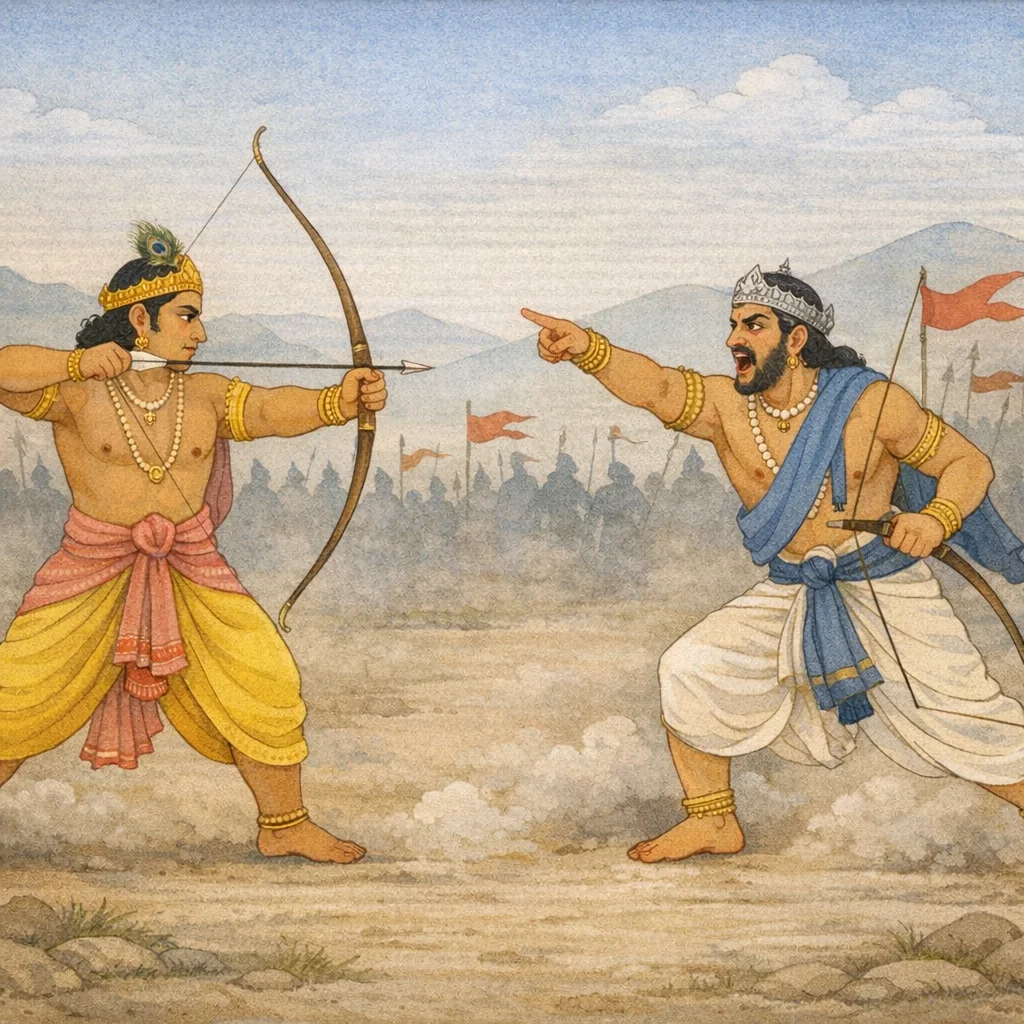
Saṃjaya reports an intensive, multi-weapon engagement in which the Pāṇḍavas and Sṛñjayas surround Bhīṣma, advancing Śikhaṇḍin as the forward attacker while Arjuna provides decisive protection and precision fire. Bhīṣma’s armor is shredded; his bows are repeatedly cut by Arjuna, and his thrown śakti is severed mid-flight. Bhīṣma internally articulates his capacity to destroy the Pāṇḍavas but states two restraints: their effective inviolability under protection and his refusal to fight Śikhaṇḍin due to Śikhaṇḍin’s “strī-bhāva” (female-identity condition in the narrative logic). Celestial witnesses (ṛṣis, Vasus) approve his decision to withdraw his intent from continued direct engagement. The battle crescendos into Bhīṣma’s collapse from his chariot, his body supported by dense shafts so that he does not touch the earth—forming the śara-śayyā. Portents follow (winds, drums, flowers), armies react with shock and acclaim, and Bhīṣma, exercising icchā-mṛtyu, resolves to retain life until uttarāyaṇa, explicitly aligning death with auspicious solar movement and his prior boon.
Chapter Arc: कुरुक्षेत्र में महारथियों के द्वन्द्व-युद्धों का उन्मत्त आरम्भ—एक-एक योद्धा अपने प्रतिद्वन्द्वी को खोजकर मानो नियति के लेख को बाणों से लिखने निकल पड़ता है। → सात्यकि पर राक्षस-तुल्य प्रतिद्वन्द्वी का भीषण प्रहार होता है; दोनों ओर से नव-नव बाण-वर्षा, सिंहनाद और क्रोध की ज्वाला युद्धभूमि को और उग्र करती है। इसी बीच भगदत्त भी सात्यकि को तीव्र शरों से पीड़ित करता है, जैसे महावत अंकुश से गजराज को। अन्य मोर्चों पर विराट अश्वत्थामा को भल्लों से घायल करता है; अनेक द्वन्द्व एक साथ भड़क उठते हैं। → भीमसेन की ओर भूरिश्रवा का तूर्ण आक्रमण—‘तिष्ठ, तिष्ठ’ की गर्जना के साथ वह स्वर्ण-पुङ्ख नाराच से भीम की छाती में प्रहार करता है; भीम उस बाण से वैसे शोभित होते हैं जैसे स्कन्द-शक्ति से विद्ध क्रौञ्च। → घावों और प्रतिघातों के बीच कोई निर्णायक अंत नहीं—योद्धा पीछे नहीं हटते; प्रत्येक द्वन्द्व अगले प्रहार के लिए और अधिक क्रुद्ध, और अधिक दृढ़ हो उठता है। → भीम-भूरिश्रवा का संघर्ष किस ओर मुड़ेगा—क्या भीम इस आघात का प्रत्युत्तर देकर सोमदत्त-पुत्र के अभिमान को तोड़ेंगे, या यह द्वन्द्व और विकराल रूप लेगा?
Shlokas
Verse 1
[दाक्षिणात्य अधिक पाठके १ ६ श्लोक मिलाकर कुल ४९ ६ “लोक हैं।] #द०3८>> हम # एकादशाधिकशततमोब< ध्याय: कौरव-पाण्डवपक्षके प्रमुख महारथियोंके द्वन्द्र-युद्धका वर्णन संजय उवाच सात्यकिं दंशितं युद्धे भीष्मायाभ्युद्यतं रणे । आर्ष्यशज्)िर्महेष्वासो वारयामास संयुगे,संजय कहते हैं--राजन! युद्धस्थलमें कवचधारी सात्यकिको भीष्मसे युद्ध करनेके लिये उद्यत देख महाधनुर्धर राक्षस अलम्बुषने आकर उन्हें रोका
Sanjaya said: O King, seeing the armored Satyaki rise on the battlefield to engage Bhishma in combat, the mighty bowman Alambusha, a rākṣasa, came forward in the thick of the fight and checked him.
Verse 2
माधवस्तु सुसंक्रुद्धो राक्षसं नवभि: शरै: । आजयपघान रणे राजन् प्रहसन्निव भारत,राजन! भरतनन्दन! यह देख सात्यकिने अत्यन्त कुपित हो उस रणक्षेत्रमें राक्षस अलम्बुषको हँसते हुए-से नौ बाण मारे
Sañjaya said: Madhava, inflamed with fierce anger, struck the rākṣasa Alambuṣa in the midst of battle with nine arrows, O King—almost as if smiling, O scion of Bharata.
Verse 3
तथैव राक्षसो राजन् माधवं नवभि: शरै: | अर्दयामास राजेन्द्र संक्रुद्ध: शिनिपुड्रवम्,राजेन्द्र! तब उस राक्षसने भी अत्यन्त कुपित होकर मधुवंशी सात्यकिको नौ बाणोंसे पीड़ित किया
Sañjaya said: In the same manner, O King, that rākṣasa—enraged—assailed Sātyaki, the foremost of the Śini line, and pained him with nine arrows, O best of kings.
Verse 4
शैनेय: शरसंघं तु प्रेषयामास संयुगे । राक्षसाय सुसंक़्रुद्धो माधव: परवीरहा,तब शशत्रुवीरोंका संहार करनेवाले मधुवंशी सात्यकि-का क्रोध बहुत बढ़ गया और समरभूमिमें उन्होंने राक्षसपर बाणसमूहोंकी वर्षा प्रारम्भ कर दी
Sañjaya said: In the thick of battle, Śaineya (Sātyaki), fiercely enraged, loosed a dense volley of arrows at the rākṣasa. A slayer of enemy-heroes, the Yādava warrior set about the destruction of hostile champions, driven by wrath and the demands of war.
Verse 5
ततो रक्षो महाबाहुं सात्यकिं सत्यविक्रमम् । विव्याध विशिखैस्ती क्ष्पै: सिंहनादं ननाद च
Sañjaya said: Then the rākṣasa-warrior struck the mighty-armed Sātyaki—whose valor never fails—with sharp arrows, and also roared a lion-like battle-cry.
Verse 6
तदनन्तर राक्षसने सत्यपराक्रमी महाबाहु सात्यकिको तीखे सायकोंसे बींध डाला और सिंहके समान गर्जना की ।। माधवस्तु भृशं विद्धो राक्षसेन रणे तदा । वार्यमाणश्र तेजस्वी जहास च ननाद च,उस समय राक्षसके द्वारा रणक्षेत्रमें रोके जाने और अत्यन्त घायल होनेपर भी मधुवंशी तेजस्वी सात्यकि हँसने और गर्जना करने लगे
Sañjaya said: Immediately thereafter, the mighty-armed Sātyaki—whose valor never proved false—was pierced by the Rākṣasa with sharp arrows, yet he roared like a lion. Though grievously wounded and even checked on the battlefield by that Rākṣasa, the radiant Yādava warrior did not yield to fear; instead he laughed and thundered aloud, displaying steadfast courage amid the moral trial of war.
Verse 7
भगदत्तस्तत: क्रुद्धो माधवं निशितैः शरै: | ताडयामास समरे तोत्रैरिव महागजम्
Sañjaya said: Then Bhagādattā, enraged, struck Mādhava (Kṛṣṇa) in the battle with sharp arrows—like a mahout prodding a great elephant with a goad. The simile underscores the ferocity and audacity of the assault, portraying Kṛṣṇa as unshaken and mighty even when deliberately provoked amid the chaos of war.
Verse 8
तब क्रोधमें भरे हुए भगदत्तने पैने बाणोंद्वारा मधुवंशी सात्यकिको समरभूमिमें उसी प्रकार पीड़ित किया, जैसे महावत अंकुशोंद्वारा महान् गजराजको पीड़ा देता है ।। विहाय राक्षसं युद्धे शैनेयो रथिनां वर: । प्राग्ज्योतिषाय चिक्षेप शरान् संनतपर्वण:,तब रथियोंमें श्रेष्ठ सात्यकिने युद्धमें उस राक्षसको छोड़कर प्राग्ज्योतिषपुरनरेश भगदत्तपर झुकी हुई गाँठवाले बहुत-से बाण चलाये
Sanjaya said: Then Bhagadatta, filled with anger, tormented Satyaki of the Madhu line on the battlefield with sharp arrows—just as an elephant-driver goads a mighty lord of elephants with the hook. Thereupon the son of Shini, best among charioteers, leaving aside that rākṣasa-like foe in the fight, hurled many arrows with well-bent joints at Bhagadatta, the king of Prāgjyotiṣa. The scene underscores how wrath intensifies violence, while tactical restraint appears in Satyaki’s choice to shift focus to the principal adversary.
Verse 9
तस्य प्राग्ज्योतिषो राजा माधवस्य महद् धनु: । चिच्छेद शतधारेण भल्लेन कृतहस्तवत्,यह देख प्राग्ज्योतिषपुरनरेश भगदत्तने सात्यकिके विशाल धनुषको एक सिद्धहस्त योद्धाकी भाँति सौ धारवाले भल्लके द्वारा काट डाला
Sañjaya said: Then the king of Prāgjyotiṣa, Bhagadatta, cut down Mādhava’s great bow with a broad-headed arrow that had a hundred cutting edges, striking with the practiced precision of a master archer. In the moral atmosphere of the war, the verse highlights how skill and resolve are deployed to break an opponent’s means of action—an act of tactical necessity within the harsh code of battle.
Verse 10
अथान्यद् धनुरादाय वेगवत् परवीरहा । भगदत्तं रणे क्रुद्धं विव्याध निशितै: शरै:,तब शत्रुवीरोंका हनन करनेवाले सात्यकिने दूसरा वेगवान् धनुष लेकर पैने बाणोंद्वारा युद्धमें क्ुद्ध हुए भगदत्तको बींध डाला
Sañjaya said: Then Sātyaki, the slayer of enemy champions, took up another swift bow and, in the thick of battle, pierced the enraged Bhagadatta with sharp arrows. The scene underscores the relentless momentum of war, where prowess and resolve are repeatedly tested, and where anger on the field becomes both a weapon and a peril.
Verse 11
सो<5तिविद्धो महेष्वास: सृक्किणी परिसंलिहन् | शक्ति कनकवैदूर्यभूषितामायसीं दृढाम्
Sañjaya said: Though pierced through and grievously wounded, the great archer licked the corners of his mouth and seized a firm iron śakti-spear, adorned with gold and vaidūrya (cat’s-eye gem). In the heat of battle, even in pain, he steadied himself and readied a decisive counterstroke—an image of relentless martial resolve amid the moral darkness of war.
Verse 12
तामापतन्तीं सहसा तस्य बाहुबलेरिताम्
Sañjaya said: “That (weapon/force), suddenly rushing down, had been hurled by the sheer strength of his arms.”
Verse 13
ततः पपात सहसा महोल्केव हतप्रभा,तब वह शक्ति प्रभाहीन हुई बहुत बड़ी उल्काके समान सहसा भूमिपर गिर पड़ी। प्रजानाथ! भगदत्तकी शक्तिको नष्ट हुई देख आपके पुत्रने विशाल रथसेनाके साथ आकर सात्यकिको रोका
Sañjaya said: Then that weapon, its radiance suddenly extinguished, fell at once to the earth like a great meteor. O lord of men, seeing Bhagadatta’s śakti rendered powerless, your son advanced with a vast force of chariots and checked Sātyaki.
Verse 14
शक्ति विनिहतां दृष्टवा पुत्रस्तव विशाम्पते । महता रथवंशेन वारयामास माधवम्,तब वह शक्ति प्रभाहीन हुई बहुत बड़ी उल्काके समान सहसा भूमिपर गिर पड़ी। प्रजानाथ! भगदत्तकी शक्तिको नष्ट हुई देख आपके पुत्रने विशाल रथसेनाके साथ आकर सात्यकिको रोका
Sañjaya said: O lord of the people, seeing that the śakti-weapon had been rendered powerless, your son moved in with a great mass of chariots and checked Mādhava’s advance.
Verse 15
तथा परिवृतं दृष्ट्वा वार्ष्णेयानां महारथम् । दुर्योधनो भृशं क्रुद्धो भ्रातृन् सर्वानुवाच ह,वृष्णिवंशी महारथी सात्यकिको रथसेनासे घिरा हुआ देख दुर्योधनने अत्यन्त कुपित होकर अपने समस्त भाइयोंसे कहो--
Sañjaya said: Seeing the great chariot-warrior of the Vārṣṇeyas thus surrounded, Duryodhana, inflamed with intense anger, addressed all his brothers.
Verse 16
तथा कुरुत कौरव्या यथा व: सात्यको युधि । न जीवन प्रतिनिर्याति महतो<स्माद् रथव्रजात्,“कौरवो! तुम ऐसा प्रयत्न करो, जिससे इस समरांगणमें आये हुए सात्यकि हमारे इस महान् रथ-समुदायसे जीवित न निकलने पावें
Sañjaya said: “So act, O sons of Kuru, that Sātyaki, engaged in this battle, may not escape alive from this vast host of our chariots.”
Verse 17
तस्मिन् हते हतं मन्ये पाण्डवानां महद् बलम् | तथेति च वचस्तस्य परिगृह महारथा:
Sañjaya said: “When he has been slain, I deem the great strength of the Pāṇḍavas to be as good as destroyed.” Hearing his words, the mighty chariot-warriors accepted them, saying, “So be it.”
Verse 18
(अभिमन्युं तथा5<यान्तं भीष्मस्याभ्युद्यतं वधे ।) काम्बोजराजो बलवान् वारयामास संयुगे,इसी प्रकार भीष्मका वध करनेके लिये उद्यत होकर आते हुए अर्जुनकुमार अभिमन्युको बलवान काम्बोजराजने युद्धके मैदानमें आगे बढ़नेसे रोक दिया
Sañjaya said: As Abhimanyu, Arjuna’s son, advanced in the battle—resolved to strike down Bhīṣma—the mighty king of Kāmboja checked him on the field.
Verse 19
आर्जुनिं नृपतिर्विद्ध्वा शरै: संनतपर्वभि: । पुनरेव चतु:षष्ट्या राजन् विव्याध तं नृप,राजन! नरेश्वर! काम्बोजराजने झुकी हुई गाँठवाले अनेक बाणोंद्वारा अभिमन्युको घायल करके पुन: चौंसठ बाणोंसे मारकर उन्हें गहरी चोट पहुँचायी
Sañjaya said: The king struck Arjuni (Abhimanyu) with arrows whose joints were bent, and then again, O King, he pierced that prince with sixty-four more shafts—deepening the wound in the relentless press of battle.
Verse 20
सुदक्षिणस्तु समरे पुनर्विव्याध पड्चभि: | सारथिं चास्य नवभिरिच्छन् भीष्मस्य जीवितम्,तदनन्तर समरांगणमें भीष्मके जीवनकी रक्षा चाहनेवाले काम्बोजराज सुदक्षिणने अभिमन्युको पुनः पाँच बाण मारे और नौ बाणोंद्वारा उनके सारथिको भी घायल कर दिया
Sañjaya said: In the thick of battle, King Saudakṣiṇa again pierced Abhimanyu with five arrows; and with nine more he struck Abhimanyu’s charioteer as well—acting with the intent of safeguarding Bhīṣma’s life.
Verse 21
तद् युद्धमासीत् सुमहत् तयोस्तत्र समागमे । यदाभ्यधावद् गाड़ेयं शिखण्डी शत्रुकर्शन:,जब शत्रुसूदन शिखण्डीने गंगानन्दन भीष्मपर धावा किया था, उस समय उन दोनों (अभिमन्यु और सुदक्षिण)-के संघर्षमें वहाँ बड़ा भारी युद्ध आरम्भ हो गया
Sañjaya said: At that very meeting of the two armies, a tremendous battle flared up—at the moment when Śikhaṇḍī, crusher of foes, charged straight at Bhīṣma, the son of the Gaṅgā.
Verse 22
विराटद्रुपदौ वृद्धौ वारयन्ती महाचमूम् । भीष्मं च युधि संरब्धावाद्रवन्ती महारथौ,बूढ़े राजा महारथी विराट और ट्रुपद दुर्योधनकी उस विशाल सेनाको रोकते हुए अत्यन्त क्रोधमें भरकर युद्धस्थलमें भीष्मपर चढ़ आये
Sañjaya said: The aged kings Virāṭa and Drupada, striving to check that vast host, rushed forward in the battle—both great chariot-warriors—enraged, and charged toward Bhīṣma.
Verse 23
अश्वत्थामा रणे क्रुद्ध: समायाद्रथसत्तम: । ततः प्रववृते युद्ध तयोस्तस्य च भारत,तब रथियोंमें श्रेष्ठ अश्वत्थामा रणभूमिमें कुपित होकर आया। भारत! फिर अश्व॒त्थामाका विराट और ट्रुपदके साथ भारी युद्ध छिड़ गया
Sañjaya said: Aśvatthāmā, foremost of chariot-warriors, came onto the battlefield in wrath. Then, O Bhārata, a fierce battle broke out between him and those two—Virāṭa and Drupada.
Verse 24
विराटो दशभिर्भल्लैराजघान परंतप । यतमान महेष्वासं द्रौणिमाहवशोभिनम्
Sañjaya said: Virāṭa, scorcher of foes, struck Droṇa’s son (Aśvatthāman)—that great archer who was striving hard and making the battlefield resplendent—with ten sharp bhalla-arrows.
Verse 25
शत्रुओंको संताप देनेवाले नरेश! राजा विराटने संग्राममें शोभा पानेवाले प्रयत्नशील एवं महाधनुर्धर अश्वत्थामाको भल्ल नामक दस बाणोंसे घायल किया ।। द्रुपदश्न त्रिभिर्बाणविव्याथ निशितैस्तदा | गुरुपुत्रं समासाद्य प्रहरन््तो महाबलौ,उस समय ट्रुपदने भी तीन तीखे बाणोंद्वारा अश्वत्थामाको घायल कर दिया। इस प्रकार प्रहार करते हुए उन दोनों महाबली नरेशोंको अश्वत्थामाने अनेक बाणोंद्वारा बींध डाला। विराट और ट्रुपद दोनों वीर भीष्मका वध करनेके लिये उद्यत थे
Sañjaya said: O king who brings torment to his enemies, in the battle King Virāṭa—striving for glory and exerting himself—wounded the mighty bowman Aśvatthāman with ten arrows known as bhallas. Then Drupada too, closing in on the son of the preceptor, struck him with three sharp arrows. As those two powerful kings pressed their attack, Aśvatthāman in turn pierced them both with many shafts. Virāṭa and Drupada, valiant warriors, were intent on the slaying of Bhīṣma.
Verse 26
अश्वत्थामा ततस्तौ तु विव्याध बहुभि: शरै: । विराटद्रुपदौ वीरौ भीष्म प्रति समुझतौ,उस समय ट्रुपदने भी तीन तीखे बाणोंद्वारा अश्वत्थामाको घायल कर दिया। इस प्रकार प्रहार करते हुए उन दोनों महाबली नरेशोंको अश्वत्थामाने अनेक बाणोंद्वारा बींध डाला। विराट और ट्रुपद दोनों वीर भीष्मका वध करनेके लिये उद्यत थे
Sañjaya said: Then Aśvatthāmā pierced those two heroes—Virāṭa and Drupada—with many arrows. The valiant kings Virāṭa and Drupada, intent on advancing against Bhīṣma, pressed forward; yet even as they struck and strove toward their aim, they were themselves brought down by Aśvatthāmā’s counterattack. Thus the harsh reciprocity of battle was revealed: righteous resolve and royal valor alike meet the immediate consequence of armed resistance.
Verse 27
तत्राद्भुतमपश्याम वृद्धयोश्चरितं महत् । यद् द्रौणिसायकान् घोरान् प्रत्यवारयतां युधि,राजन! वहाँ उन दोनों बूढ़े नरेशोंका हमने अद्भुत एवं महान् पराक्रम यह देखा कि वे युद्धमें अश्वत्थामाके भयंकर बाणोंका निवारण करते जा रहे थे
Sañjaya said: “There, O King, we beheld a wondrous and truly great feat of those two aged kings: in the thick of battle they kept turning back the dreadful arrows shot by Droṇa’s son (Aśvatthāmā).”
Verse 28
सहदेवं तथा यान्तं कृप: शारद्वतो5भ्ययात् । यथा नागो वने नागं मत्तो मत्तमुपाद्रवत्
Sañjaya said: As Sahadeva advanced, Kṛpa Śāradvata moved to confront him—just as, in the forest, a rut-maddened elephant charges another maddened elephant.
Verse 29
इसी प्रकार भीष्मपर चढ़ाई करनेवाले सहदेवको शरद्वानके पुत्र कृपाचार्यने सामने आकर रोका, मानो वनमें किसी मतवाले हाथीपर मदोनन््मत्त गजराजने आक्रमण किया हो ।। कृपश्च समरे शूरो माद्रीपुत्रं महारथम् । आजयपघान शरैस्तूर्ण सप्तत्या रुक्मभूषणै:,शूरवीर कृपाचार्यने समरभूमिमें महारथी माद्रीकुमार सहदेवको सुवर्णभूषित सत्तर बाणोंसे तुरंत घायल कर दिया
Sañjaya said: Thus, as Sahadeva pressed forward to assail Bhīṣma, Kṛpācārya—the son of Śaradvat—came up to face him and checked his advance, like a mighty rutting elephant charging an intoxicated elephant in the forest. Then the valiant Kṛpa, in the thick of battle, swiftly struck the great chariot-warrior Sahadeva, Mādrī’s son, with seventy arrows adorned with gold—wounding him and halting his momentum in the contest of arms.
Verse 30
तस्य माद्रीसुतश्चापं द्विधा चिच्छेद सायकै: । अथैनं छिन्नथन्वानं विव्याध नवभि: शरै:,तब माद्रीकुमार सहदेवने भी अपने सायकोंद्वारा उनके धनुषके दो टुकड़े कर दिये और धनुष कट जानेपर उन्हें नौ बाणोंसे घायल कर दिया
Sañjaya said: Then Mādrī’s son (Sahadeva) cut his bow into two with his arrows; and when the warrior stood with his bow severed, Sahadeva pierced him again with nine shafts. The scene underscores the relentless mechanics of battle—disarming first, then wounding—where skill and resolve are used to neutralize an opponent’s capacity to fight.
Verse 31
सोअन्यत् कार्मुकमादाय समरे भारसाधनम् | माद्रीपुत्रं सुसंहृष्टो दशभिर्निशितै: शरै:
Sañjaya said: Then, taking up another bow—an instrument fit to bear the strain of battle—he, exultant, struck the son of Mādrī with ten razor-sharp arrows.
Verse 32
तथैव पाण्डवो राजज्छारद्वतममर्षणम्,राजन! इसी प्रकार पाण्डुकुमार सहदेवने भी कुपित हो भीष्मके वधकी इच्छासे अमर्षशील कृपाचार्यकी छातीमें अपने बाणोंद्वारा प्रहार किया। उन दोनोंका वह युद्ध अत्यन्त घोर एवं भयंकर हो चला
Sañjaya said: “In the same way, O King, the Pāṇḍava Sahadeva—angered and intent on Bhīṣma’s death—struck the long-suffering Kṛpācārya, the son of Śaradvat, in the chest with his arrows. The combat between those two then became exceedingly fierce and terrifying.”
Verse 33
आजपघानोरसि क्ुद्धो भीष्मस्य वधकाडुक्षया । तयोरयुद्धं समभवद् घोररूपं भयावहम्,राजन! इसी प्रकार पाण्डुकुमार सहदेवने भी कुपित हो भीष्मके वधकी इच्छासे अमर्षशील कृपाचार्यकी छातीमें अपने बाणोंद्वारा प्रहार किया। उन दोनोंका वह युद्ध अत्यन्त घोर एवं भयंकर हो चला
Sañjaya said: In the same way, O King, Sahadeva, the son of Pāṇḍu—angered and intent on Bhīṣma’s death—struck Kṛpācārya, the son of Śaradvat, in the chest with his arrows. Their combat grew exceedingly fierce and terrifying.
Verse 34
नकुलं तु रणे क्रुद्धो विकर्ण: शत्रुतापन: । विव्याध सायकै: षष्ट्या रक्षन् भीष्मं महाबलम्,दूसरी ओर क्रोधमें भरे हुए शत्रुसंतापी विकर्णने युद्धके मैदानमें महाबली भीष्मकी रक्षामें तत्पर हो साठ बाणोंद्वारा नकुलको घायल कर दिया
Sañjaya said: Enraged in the thick of battle, Vikarṇa—scorcher of foes—struck Nakula with sixty arrows, acting with vigilant resolve to protect the mighty Bhīṣma.
Verse 35
नकुलो<पि भृशं विद्धस्तव पुत्रेण धीमता । विकर्ण सप्तसप्तत्या निर्बिभेद शिलीमुखै:,आपके बुद्धिमान पुत्र विकर्णद्वारा अत्यन्त घायल होकर नकुलने भी सतहत्तर बाणोंसे विकर्णको क्षत-विक्षत कर दिया
Sañjaya said: Though grievously wounded by your intelligent son, Nakula in turn pierced Vikarṇa with seventy-seven sharp arrows.
Verse 36
तत्र तौ नरशार्दूलौ भीष्महेतो: परंतपौ | अन्योन्यं जध्नतुर्वीरो गोष्ठे गोवृषभाविव,जैसे गोशालामें दो साँड़ आपसमें लड़ते हों, उसी प्रकार शत्रुओंको संताप देनेवाले दोनों पुरुषसिंह वीर विकर्ण और नकुल भीष्मकी रक्षाके लिये एक-दूसरेपर घातक प्रहार कर रहे थे
Sañjaya said: There, those two tiger-like men—both tormentors of their foes—fought for Bhīṣma’s sake, striking each other with deadly blows, like two bulls battling in a cattle-pen. The scene shows how loyalty to one’s commander and duty to one’s faction can drive even kinsmen into ruthless combat on the battlefield.
Verse 37
घटोत्कचं रणे यान्तं निघ्नन्तं तव वाहिनीम् । दुर्मुख: समरे प्रायाद् भीष्महेतो: पराक्रमी,उसी समय पराक्रमी दुर्मुखने समरभूमिमें भीष्मकी रक्षाके लिये राक्षस घटोत्कचपर आक्रमण किया, जो युद्धके मैदानमें आपकी सेनाका संहार करता हुआ आगे बढ़ रहा था
Sañjaya said: “Seeing Ghaṭotkaca advancing in the battle, cutting down your forces, the valiant Durmukha rushed into the fight against him—for the sake of Bhīṣma’s protection. Thus, amid the chaos of war, personal prowess is directed by loyalty and duty to one’s commander, even when the opponent is a formidable, destructive force.”
Verse 38
हैडिम्बस्तु रणे राजन् दुर्मुखं शत्रुतापनम् । आजपघानोरसि क़्ुद्ध: शरेणानतपर्वणा,राजन्! उस समय शत्रुओंको संताप देनेवाले दुर्मुखको क्रोधमें भरे हुए हिडिम्बाकुमारने झुकी हुई गाँठवाले बाणसे उसकी छातीमें चोट पहुँचायी
Sañjaya said: O King, in the thick of battle the son of Hiḍimbā, inflamed with wrath, struck Durmukha—scorcher of foes—on the chest with an arrow whose joints were bent. The episode shows how, in war, anger sharpens violence and swiftly turns prowess into injury, bringing immediate and tangible consequences.
Verse 39
भीमसेनसुतं चापि दुर्मुख: सुमुखै: शरैः । षष्ट्या वीरो नदन् हृष्टो विव्याध रणमूर्थनि,तब वीर दुर्मुखने हर्षपूर्वक गर्जना करते हुए अपने तीखी नोकवाले बाणोंद्वारा भीमसेनके पुत्र घटोत्कचको युद्धके मुहानेपर साठ बाणोंसे बींध डाला
Sañjaya said: Then the valiant Durmukha, exultant and roaring aloud, struck Bhīmasena’s son Ghaṭotkaca at the very forefront of the battle, piercing him with sixty well-aimed arrows. The scene underscores the war’s relentless escalation, where prowess and fierce resolve drive warriors to press the fight at the battle’s edge, regardless of kinship or consequence.
Verse 40
धृष्टय्युम्नं तथा5<यान्तं भीष्मस्य वधकाड्क्षिणम् । हार्दिक्यो वारयामास रथश्रेष्ठं महारथ:,इसी प्रकार भीष्मके वधकी इच्छासे आते हुए रथियोंमें श्रेष्ठ धृष्टद्युम्नको महारथी कृतवर्माने रोक दिया
Sañjaya said: As Dhṛṣṭadyumna—the finest among chariot-warriors—advanced with the intent to bring about Bhīṣma’s death, the great warrior Kṛtavarmā, known as Hārdikya, moved to check and restrain him. The scene underscores how, amid the moral strain of war, each side treats the protection or removal of a pivotal elder as a decisive duty, and valor is expressed as loyal intervention on behalf of one’s cause.
Verse 41
हार्दिक्य: पार्षत॑ चापि विद्ध्वा पठचभिरायसै: । पुन: पञ्चाशता तूर्ण तिष्ठ तिछेति चाब्रवीत्,कृतव्मनि ट्रुपदकुमारको लोहेके बने हुए पाँच बाणोंसे बींधकर फिर तुरंत ही पचास बाणोंसे घायल किया और कहा--'खड़ा रह, खड़ा रह”
Sañjaya said: Hārdikya (Kṛtavarman), having pierced Pārṣata (Dhṛṣṭadyumna) with five iron-shafted arrows, swiftly struck him again with fifty more and cried, “Stand firm—stand firm!”
Verse 42
आजघान महाबाहु: पार्षतं त॑ं महारथम् । त॑ चैव पार्षतो राजन हार्दिक्यं नवभि: शरै:
Sañjaya said: The mighty-armed warrior struck that great chariot-fighter, the son of Pṛṣata (Dhṛṣṭadyumna). And in return, O King, the son of Pṛṣata struck Hārdikya (Kṛtavarman) with nine arrows.
Verse 43
तयो: समभवद् युद्ध भीष्महेतोर्महाहवे
Sañjaya said: In that great battle, a fierce engagement arose between the two, brought about on account of Bhīṣma—his presence and leadership becoming the immediate cause that set the clash in motion.
Verse 44
अन्योन्यातिशये युक्त यथा वृत्रमहेन्द्रयो: । उस समय भीष्मजीके निमित्त उस महान संग्राममें वृत्रासुर और इन्द्रके समान उन दोनों वीरोंका घोर युद्ध होने लगा, जिसमें वे एक-दूसरेसे आगे बढ़ जानेके प्रयत्नमें लगे थे ।। ४३ क्र भीमसेनं तथा<<यान्तं भीष्म प्रति महारथम्
Sañjaya said: Striving to outdo one another, those two heroes entered into a fierce combat—like Vṛtra and the great Indra—each intent on surpassing the other in that mighty battle.
Verse 45
सौमदत्तिरथो भीममाजघान स्तनान्तरे
Sañjaya said: The chariot-warrior, son of Somadatta, struck Bhīma (Bhīmasena) in the region of the chest.
Verse 46
उरःस्थेन बभौ तेन भीमसेन: प्रतापवान्
Sañjaya said: With that (weapon/impact) lodged upon his chest, the mighty and valorous Bhīmasena still shone forth—his courage undiminished even under direct assault, embodying steadfastness amid the brutal demands of war.
Verse 47
तौ शरान् सूर्यसंकाशान् कर्मारपरिमार्जितान्
Sañjaya said: “Those two arrows—gleaming like the sun and finely burnished by the smith’s careful polishing—were readied, radiant and deadly, as the battle’s craft and intent converged.”
Verse 48
अन्योन्यस्य रणे क्रुद्धौ चिक्षिपाते नरर्षभौ । क्रोधमें भरे हुए वे दोनों नरश्रेष्ठ युद्धमें एक-दूसरेपर लोहारके द्वारा माँजकर साफ किये हुए सूर्यके समान तेजस्वी बाणोंका प्रहार कर रहे थे || ४७ ई ।। भीमो भीष्मवधाकाड्क्षी सौमदत्ति महारथम्,भीमसेन भीष्मके वधकी इच्छा रखकर महारथी भूरिश्रवापर चोट करते थे और भूरिश्रवा भीष्मकी विजय चाहता हुआ पाण्डुकुमार भीमसेनपर प्रहार करता था। वे दोनों युद्धमें एक-दूसरेके अस्त्रोंका प्रतीकार करते हुए लड़ रहे थे
Sanjaya said: In the fury of battle, those two bull-like heroes hurled their weapons at one another, striking with arrows that flashed like the sun newly burnished by a smith. Bhima, intent on Bhishma’s death, attacked the great chariot-warrior Saumadatti (Bhūrishravā); and Bhūrishravā, seeking Bhishma’s victory, struck back at Bhima, the son of Pandu. Thus, each countering the other’s missiles, they fought on—personal vows and loyalties driving their violence within the larger, morally fraught duty of war.
Verse 49
तथा भीष्मजये गृध्नु: सौमदत्तिस्तु पाण्डवम् । कृतप्रतिकृते यत्ती योधयामासतू रणे,भीमसेन भीष्मके वधकी इच्छा रखकर महारथी भूरिश्रवापर चोट करते थे और भूरिश्रवा भीष्मकी विजय चाहता हुआ पाण्डुकुमार भीमसेनपर प्रहार करता था। वे दोनों युद्धमें एक-दूसरेके अस्त्रोंका प्रतीकार करते हुए लड़ रहे थे
Sañjaya said: In the same way, Bhūriśravā, the son of Somadatta, eager for Bhīṣma’s victory, struck at the Pāṇḍava (Bhīmasena). The two, intent on giving blow for blow, fought on the battlefield, each countering the other’s weapons—driven by partisan loyalty and the relentless reciprocity of violence that war breeds.
Verse 50
युधिष्ठिरं तु कौन्तेयं महत्या सेनया वृतम् । भीष्माभिमुखमायान्तं भारद्वाजो न्यवारयत्,(तत्र युद्धमभूद् घोरं तयो: पुरुषसिंहयो: ।) दूसरी ओर कुन्तीनन्दन युधिष्ठिरको विशाल सेनाके साथ भीष्मके सम्मुख आते देख द्रोणाचार्यने रोक दिया; वहाँ उन दोनों पुरुषसिंहोंमें घोर युद्ध हुआ
Sañjaya said: Seeing Kuntī’s son Yudhiṣṭhira, surrounded by a vast army, advancing straight toward Bhīṣma, Droṇācārya (the son of Bharadvāja) checked his advance. There, between those two lion-like men, a fierce battle arose—an encounter that underscores how, in war, even the most dharma-minded are compelled into violent confrontation by duty and circumstance.
Verse 51
द्रोणस्य रथनिर्घोषं पर्जन्यनिनदोपमम् । श्रुत्वा प्रभद्रका राजन् समकम्पन्त मारिष,राजन! द्रोणाचार्यके रथकी घरघराहट मेघकी गर्जनाके समान जान पड़ती थी। आर्य! उसे सुनकर प्रभद्रक वीर काँप उठे
Sañjaya said: “O King, the thunderous roar of Droṇa’s chariot—like the rumbling of rain-bearing clouds—was heard; and on hearing it, the Prabhadraka warriors trembled, O venerable one.”
Verse 52
सा सेना महती राजन् पाण्डुपुत्रस्य संयुगे । द्रोणेन वारिता यत्ता न चचाल पदात् पदम्,महाराज! उस युद्धस्थलमें पाण्डुपुत्र युधिष्ठिरकी वह विशाल सेना द्रोणके द्वारा जब रोक दी गयी, तब प्रयत्न करनेपर भी वह एक पग भी आगे न बढ़ सकी
Sañjaya said: “O King, in that battle the vast army of the son of Pāṇḍu—though striving—was checked by Droṇa and could not advance even a single step.”
Verse 53
चेकितानं रणे यत्तं भीष्म प्रति जनेश्वर । चित्रसेनस्तव सुतः क्रुद्धसर्पमवारयत्,जनेश्वर! दूसरी ओर भीष्मके प्रति प्रयत्नपूर्वक आक्रमण करनेवाले क्रोधमें भरे हुए चेकितानको रणभूमिमें आपके पुत्र चित्रसेनने रोक दिया
Sañjaya said: “O lord of men, when Cekitāna, straining in battle, pressed forward to attack Bhīṣma, your son Citrasena checked him on the battlefield—like restraining an enraged serpent.”
Verse 54
भीष्महेतो: पराक्रान्तश्रित्रसेन: पराक्रमी । चेकितानं परं शक्त्या योधयामास भारत,पराक्रमी चित्रसेन भीष्मकी रक्षाके लिये पराक्रम दिखा रहा था। भारत! उसने पूरी शक्ति लगाकर चेकितानके साथ युद्ध किया। इसी प्रकार चेकितानने भी चित्रसेनकी गति रोक दी। उन दोनोंकी मुठभेड़में वहाँ महान् युद्ध होने लगा
Sañjaya said: “For Bhīṣma’s sake, the valiant Citrāsena—himself a mighty warrior—advanced with great prowess. O Bhārata, he engaged Cekitāna with his full strength, and a fierce clash arose between the two champions on the battlefield.”
Verse 55
तथैव चेकितानो<पि चित्रसेनमवारयत् | तद् युद्धमासीत् सुमहत् तयोस्तत्र समागमे,पराक्रमी चित्रसेन भीष्मकी रक्षाके लिये पराक्रम दिखा रहा था। भारत! उसने पूरी शक्ति लगाकर चेकितानके साथ युद्ध किया। इसी प्रकार चेकितानने भी चित्रसेनकी गति रोक दी। उन दोनोंकी मुठभेड़में वहाँ महान् युद्ध होने लगा
Sañjaya said: “In the same way, Cekitāna too checked Citrasena. When the two met there, a very great battle arose between them—each striving with full might to restrain the other’s advance and uphold his own side’s protection.”
Verse 56
अर्जुनो वार्यमाणस्तु बहुशस्तत्र भारत | विमुखीकृत्य पुत्र ते सेनां तव ममर्द ह,भरतनन्दन! वहाँ बारंबार रोके जानेपर भी अर्जुनने आपके पुत्रको युद्धसे विमुख करके आपकी सेनाको रौंद डाला
Sañjaya said: O Bhārata, though checked there again and again, Arjuna—turning your son away from the fight—crushed your army.
Verse 57
दुःशासनो5पि परया शक्त्या पार्थमवारयत् | कथं भीष्म॑ न नो हन्यादिति निश्चित्य भारत,भारत! उस समय दुःशासन भी यह निश्चय करके कि ये किसी प्रकार हमारे भीष्मको मार न सकें, पूरी शक्ति लगाकर अर्जुनको रोकनेका प्रयत्न करता रहा
Sañjaya said: Even Duḥśāsana, resolved—“How may our Bhīṣma not be slain?”—strove with all his might to check Pārtha (Arjuna).
Verse 58
(पार्थोडपि समरे राजन् दुःशासनमताडयत् | ताडिते बहुधा पुत्रे पार्थबाणैरजिद्दागै: ।। बभूव व्यथिता सेना दृष्ट्वा पार्थपराक्रमम् | पुनश्न ताडिता तेन पार्थेनामिततेजसा ।।) राजन! अर्जुनने भी समरमें दुःशासनको अपने बाणोंसे बहुत घायल किया। सीधे जानेवाले अर्जुनके बाणोंसे आपके पुत्रके बार-बार घायल होनेपर पार्थके उस पराक्रमको देखकर आपकी सारी सेना व्यथित हो उठी। अमित तेजस्वी अर्जुनने उसे बारंबार पीड़ित किया। सा वध्यमाना समरे पुत्रस्य तव वाहिनी । लोड्यते रथिभ्रि: श्रेष्ठैस्तत्र तत्रैव भारत,भरतनन्दन! उस संग्राममें आपके पुत्रकी सारी सेनाको जहाँ-तहाँ श्रेष्ठ रथियोंने बाणोंसे विद्ध करके मथ डाला था
Sañjaya said: “O King, Arjuna too, in the battle, struck Duḥśāsana, grievously wounding him with his straight-flying arrows. As your son was pierced again and again by Arjuna’s shafts, the whole army grew distressed on witnessing Pārtha’s prowess. That immeasurably radiant Arjuna kept tormenting him repeatedly. And as your son’s host was being cut down in the fight, O Bhārata, it was battered and scattered here and there by the foremost chariot-warriors.”
Verse 110
इस प्रकार श्रीमह्याभारत भीष्मपर्वके अन्तर्गत भीष्मवधपर्वमें अजुन और दुःशासनका युद्धविषयक एक सौ दसवाँ अध्याय पूरा हुआ
Sañjaya said: Thus, in the revered Mahābhārata, within the Bhīṣma Parva—specifically in the section concerning the slaying of Bhīṣma—the one hundred and tenth chapter, dealing with the battle between Arjuna and Duḥśāsana, is concluded.
Verse 111
इति श्रीमहाभारते भीष्मपर्वणि भीष्मवधपर्वणि दन्डयुद्धे एकादशाधिकशततमो< ध्याय:,इस प्रकार श्रीमह्ााभारत भीष्मपर्वके अन्तर्गत भीष्मवधपर्वमें दन्धयुद्धविषयक एक सौ ग्यारहवाँ अध्याय पूरा हुआ
Thus, in the Śrī Mahābhārata, within the Bhīṣma Parva—specifically in the section concerning Bhīṣma’s fall—this concludes the one-hundred-and-eleventh chapter on the episode of combat with staves/clubs.
Verse 116
यमदण्डोपमां घोरां चिक्षेप परमाहवे । इस प्रकार अत्यन्त घायल होनेपर महाधनुर्धर भगदत्त अपने मुँहके दोनों कोने चाटने लगे। फिर उन्होंने उस महायुद्धमें कनक और वैदूर्य मणियोंसे विभूषित लोहेकी बनी हुई सुदृढ़ एवं यमदण्डके समान भयंकर शक्ति चलायी
Sañjaya said: In that supreme clash he hurled a dreadful weapon, like Yama’s staff of punishment. Though grievously wounded, the great bowman Bhagadatta licked the two corners of his mouth—a fierce sign that his resolve had not diminished. Then, in that great battle, he launched a terrible śakti-spear, forged of iron, exceedingly firm, and adorned with gold and vaidūrya gems, fearsome as Yama’s rod.
Verse 126
सात्यकि: समरे राजन् द्विधा चिच्छेद सायकै: । उनके बाहुबलसे प्रेरित होकर समरभूमिमें सहसा अपने ऊपर गिरती हुई उस शक्तिके सात्यकिने बाणों-द्वारा दो ठुकड़े कर दिये
Sañjaya said: O King, in the thick of battle Sātyaki, with his arrows, cut the onrushing missile into two. Driven by the enemy’s arm-strength and hurled swiftly upon him, that weapon was shattered mid-flight.
Verse 176
शैनेयं योधयामासुर्भष्मायाभ्युद्यतं रणे । 'सात्यकिके मारे जानेपर मैं पाण्डवोंकी विशाल सेनाको मरी हुई ही मानता हूँ।' दुर्योधनकी इस बातको मानकर कौरव महारथियोंने रणभूमिमें भीष्मका सामना करनेके लिये उद्यत हुए सात्यकिसे युद्ध आरम्भ किया
Sañjaya said: The Kaurava warriors set upon Śaineya (Sātyaki) in battle, as he advanced in the fray with the resolve to reduce his foes to ashes. Taking Duryodhana’s judgment as decisive—“If Sātyaki is slain, I count the vast Pāṇḍava host as already dead”—the Kaurava mahārathas began fighting Sātyaki, who had risen to confront Bhīṣma on the battlefield.
Verse 316
आजपघानोरससि क्रुद्ध इच्छन् भीष्मस्य जीवितम् । तदनन्तर भीष्मके जीवनकी रक्षा चाहनेवाले कृपाचार्यने समरांगणमें भार सहन करनेमें समर्थ दूसरा धनुष लेकर अत्यन्त हर्षके साथ सहदेवकी छातीमें क्रोधपूर्वक दस तीखे बाण मारे
Sañjaya said: Burning with anger and intent on taking Bhīṣma’s life, he pressed the attack. Then Kṛpācārya—desiring to protect Bhīṣma’s life—took up another bow able to bear the strain of battle, and with fierce wrath yet exultant resolve, struck Sahadeva in the chest with ten sharp arrows.
Verse 426
विव्याध निशितैस्तीक्ष्गैः कड्कपत्रैरजिद्ागै: । इस प्रकार महाबाहु कृतवर्माने महारथी धृष्टद्युम्नको गहरी चोट पहुँचायी। राजन्! तब धष्टद्युम्नने भी कंकपत्रविभूषित सीधे जानेवाले तीखे एवं पैने नौ बाणोंसे कृतवर्माको क्षत- विक्षत कर दिया
Sañjaya said: With sharp, keen arrows, fletched with vulture-plumes and flying straight, the mighty-armed great chariot-warrior Kṛtavarmā struck Dhṛṣṭadyumna and inflicted a grievous wound. Then, O King, Dhṛṣṭadyumna in return, with nine straight-flying, razor-edged arrows similarly fletched, tore and lacerated Kṛtavarmā.
Verse 446
भूरिश्रवाभ्ययात् तूर्ण तिष्ठ तिषछ्ेति चाब्रवीत् | इसी तरह महारथी भीष्मकी ओर आते हुए भीमसेनपर भूरिश्रवाने तुरंत आक्रमण किया और कहा--'खड़ा रह, खड़ा रह”
Sañjaya said: Bhūriśravā, rushing forward at great speed, attacked Bhīmasena and cried, “Stand! Stand!”—a battlefield challenge that signals immediate engagement and the warrior’s resolve to confront an opponent directly amid the larger clash of champions.
Verse 456
नाराचेन सुतीक्ष्णेन रुक्मपुड्खेन संयुगे | तदनन्तर सोमदत्तकुमारने युद्धस्थलमें सुवर्णमय पंखसे युक्त अत्यन्त तीखे नाराचद्वारा भीमसेनकी छातीमें प्रहार किया
Sanjaya said: Then, in the thick of battle, Somadatta’s son struck Bhimasena on the chest with a razor-sharp nārāca arrow, fitted with a golden feathered shaft. The episode underscores the relentless precision of warfare, where prowess is measured by control and aim, even as the violence tests the warriors’ adherence to kṣatriya-duty amid escalating enmity.
Verse 4636
स्कन्दशक््त्या यथा क्रौज्च: पुरा नृपतिसत्तम । नृपश्रेष्ठ छातीमें लगे हुए उस बाणसे प्रतापी भीमसेन वैसे ही सुशोभित हुए, जैसे पूर्वकालमें कार्तिकेयकी शक्तिसे आविद्ध होनेपर क्रौंच पर्वतकी शोभा हुई थी
Sanjaya said: O best of kings, Bhimasena, though struck in the chest by that arrow, appeared all the more resplendent—just as in ancient times Mount Krauncha shone when it was pierced by Skanda’s spear. The simile underscores a warrior’s steadfastness: even when wounded, he does not abandon his duty in battle, but bears the blow with unwavering resolve.
Frequently Asked Questions
Bhīṣma acknowledges full martial capability yet chooses restraint, citing prohibitions linked to identity-status (Śikhaṇḍin’s strī-bhāva condition as treated by the narrative) and the larger framework of protected inviolability around the Pāṇḍavas. The dilemma is the conflict between maximal battlefield efficacy and vow-governed ethical limits.
The chapter presents agency as bounded: skill and power do not automatically authorize action when higher commitments (vows, dharma-constraints, and cosmological timing) govern conduct. It also frames leadership as accountable to restraint, not merely to victory.
Rather than an explicit phalaśruti formula, the chapter provides interpretive meta-signals through portents and celestial approval, marking Bhīṣma’s decision and transition to śara-śayyā as cosmically legible. This functions as an embedded validation device within the epic’s moral-historiographic style.