Adhyaya 136
Adhyāya 136: Yavakrī–Bharadvāja Saṃvāda and the Bāladhī–Dhanuṣākṣa Gāthā (Arrogance, Boons, and Nimitta)
Upa-parva: Yavakrī Upākhyāna (Episode on Yavakrī, Raibhya, and the ethics of acquired boons)
This chapter is structured as a didactic dialogue framed by Lomāśa’s narration. Yavakrī asserts that the Vedas will become manifest to him and his father, claiming superiority due to boons obtained. Bharadvāja responds with a clinical warning: boons that inflate pride lead to swift ruin. To substantiate the warning, Bharadvāja cites an older gāthā: the sage Bāladhī, distressed by grief, performs severe tapas seeking an ‘immortal’ son. The devas grant a constrained boon—no mortal is truly immortal; instead the child’s lifespan will depend on a nimitta (an external condition). Bāladhī requests that the condition be as enduring as mountains. The son is born intelligent yet perpetually irascible; emboldened by the boon, he disrespects sages. He encounters the powerful thinker Dhanuṣākṣa, who, observing that the youth does not turn to ash under a curse, destroys the nimitta by having buffaloes breach mountains; with the condition destroyed, the child dies suddenly. The concluding gāthā generalizes the lesson: boons coupled with arrogance precipitate rapid destruction; Bharadvāja urges Yavakrī not to provoke Raibhya, described as capable, ascetic, medically skilled, and quick to anger. Yavakrī replies with outward deference, yet Lomāśa notes that he proceeds fearlessly, continuing to antagonize other sages with evident delight—reinforcing the chapter’s cautionary trajectory.
Chapter Arc: लोमश ऋषि युधिष्ठिर को तीर्थ-यात्रा के क्रम में ‘विनशन’ तीर्थ का माहात्म्य सुनाते हैं—जहाँ देव-इतिहास और ऋषि-चरित दोनों एक साथ धर्म का संकेत देते हैं। → कथा-धारा इन्द्र के वृत्रवध के बाद ‘अलक्ष्मी’ (श्री-हीनता) और पाप-भार से ग्रस्त होने की ओर मुड़ती है; शुद्धि-प्राप्ति के लिए तीर्थ/समुद्र-स्नान का संकेत मिलता है। साथ ही, भरद्वाज–रैभ्य की मित्रता और उनके आश्रम-परिसर में यवक्रीत का उग्र तप, फिर उसका उद्दंड स्वभाव उभरता है—जो ऋषि-समाज के लिए अशांति का बीज बनता है। → यवक्रीत तप-बल और विद्या के मद में ‘मुनियों को सताने’ के उद्देश्य से विचरता है और एक ब्राह्मण-देवता (पुल बाँधने में रत) को देखकर उपहास/कटु वचन करता है—यहीं से उसके अधर्म-आचरण का निर्णायक प्रकटीकरण होता है। → लोमश युधिष्ठिर को संकेत देते हैं कि तप और ज्ञान तभी शोभते हैं जब विनय और लोक-कल्याण से संयुक्त हों; तीर्थ-परंपरा का सार ‘पाप-क्षालन’ नहीं, ‘अहं-क्षालन’ भी है। कथा यवक्रीत-उपाख्यान की आगे की परिणति की ओर बढ़ने के लिए मंच तैयार करती है। → यवक्रीत के उपहास और ऋषि-समाज को पीड़ा पहुँचाने की प्रवृत्ति का फल क्या होगा—और रैभ्य/अन्य मुनि किस प्रकार प्रत्युत्तर देंगे—यह अगले प्रसंग में तीव्र रूप से उभरने वाला है।
Shlokas
Verse 1
ह... “+(>) #:६-3 #2६.० - यहाँ अष्टावक्रजीने परोक्षरूपमें ही प्रश्नका उत्तर दिया है। भाव यह है कि दो तत्त्व, जिनको वैदिक भाषामें रयि और प्राणके नामसे कहा है (देखिये प्रश्नोपनिषद् १।४) एवं अंग्रेजीमें जिनको पोजिटिव (अनुलोम) और निगेटिव (प्रतिलोम) कहते हैं, स्वभावसे ही संयुक्त रहनेवाले हैं। इनका ही व्यक्त रूप विद्युत-शक्ति है। उसे गर्भकी भाँति मेघ धारण किये रहता है। संघर्षसे वह प्रकट होती है और आकर्षण होनेपर बाजकी भाँति गिरती है। जहाँ गिरती है वहाँ सबको भस्म कर देती है; इसलिये यह कहा गया कि वह कभी आपके शत्रुओंके घरपर भी न पड़े। इन दो तत्त्वोंकी संयुक्त शक्तिसे ही मेघकी उत्पत्ति होती है। इसलिये यह कहा गया कि उस मेघरूप गर्भको ये उत्पन्न करते हैं। $- ब्रह्मचर्य, गार्हस्थ्य, वानप्रस्थ और संन्यास। २- ब्राह्मण, क्षत्रिय, वैश्य और शूद्र। ३- पूर्व, दक्षिण, पश्चिम तथा उत्तर। ४- हस्व, दीर्घ, प्लुत और हल्। ५- परा, पश्यन्ती मध्यमा और वैखरी--ये वाणीके चार पैर हैं। ६- आठ-आठ अक्षरके पाँच पादोंसे पंक्तिछन्दकी सिद्धि होती है। ७- त्वचा, श्रोत्र, नेत्र, रसना और नासिका--ये पाँच ज्ञानेन्द्रियाँ हैं। ८- पंचचूड़ा अप्सराका उल्लेख महाभारतके अनुशासनपर्वमें ३८वें अध्यायमें भी आया है। ९- विपाशा (व्यास), इरावती (रावी), वितस्ता (झेलम), चन्द्रभागा (चिनाव) और शतद्रू (शतलज) ये ही पञ्चनद प्रदेशकी पाँच नदियाँ हैं। ३- हिरन, शूकर, खरगोश, गीदड़ आदि जन्तुओंका ग्रहण मृग नामसे ही हो जाता है। २- सप्तर्षि ये हैं-- मरीचिरड्िराश्षात्रि: पुलस्त्य: पुलह: क्रतु: । वसिष्ठ इति सप्तैते मानसा निर्मिता हि ते ।। (महा० शान्ति० ३४०।६९) “(भगवानने स्वयं ब्रह्माजीसे कहा है कि) मरीचि, अंगिरा, अत्रि, पुलस्त्य, पुलह, क्रतु और वसिष्ठ--ये सातों महर्षि तुम्हारे (ब्रह्माजीके) द्वारा ही अपने मनसे रचे हुए हैं।' 3- धरो ध्रुवश्च सोमश्न अहश्वैवानिलोडनल: । प्रत्यूषश्न प्रभासश्व॒ वसवोडष्टौ प्रकीर्तिता: ।। (महा० आदि० ६६।१८) “धर, ध्रुव, सोम, अह, अनिल, अनल, प्रत्यूष और प्रभास--ये आठ वसु कहे गये हैं।' ४- यथा रोगी, दरिद्र, शोकार्त्त, राजदण्डित, शठ, खल, वृत्तिसे वंचित, उन्मत्त, ई्ष्यापरायण और कामी >-ये दस निन्दक होते हैं। जैसा कि निम्नांकित श्लोकसे सिद्ध होता है--“आमयी दुर्मतः शोकी दण्डितश्न शठ: खल: । नष्टवृत्तिर्मदी चेष्यीं कामी च दश निन्दका: ॥। ” (इति नीतिशास्त्रोक्ति:) ५- उन दसों अवस्थाओंके नाम इस प्रकार हैं--गर्भवास, जन्म, बाल्य, कौमार, पौगण्ड, कैशोर, यौवन, प्रौद़, वार्द्धक्य तथा मृत्यु। ६- अध्यापक, पिता, ज्येष्ठ भ्राता, राजा, मामा, श्वशुर, नाना, दादा, अपनेसे बड़ी अवस्थावाले कुट॒म्बी तथा पितृव्य (चाचा-ताऊ)--ये दस पूजनीय पुरुष माने गये हैं। जैसा कि कूर्मपुराणका वचन है--उपाध्याय: पिता ज्येष्ठश्राता चैव महीपति: । मातुल: श्वशुरश्वैव मातामहपितामहौ ।। बन्धुर्जेष्ठ: पितृव्यश्न पुंस्येते गुरवो मता: ।। ३- वाक्य बोलना, ग्रहण करना, चलना-फिरना, मलत्याग करना और मैथुनजनित सुखका अनुभव करना--ये पाँच कर्मेन्द्रियोंके विषय हैं। शब्द, स्पर्श, रूप, रस और गन्ध--ये पाँच ज्ञानेन्द्रियोंके विषय हैं और इन सबका मनन--मनका विषय है। इस प्रकार कुल मिलाकर ग्यारह विषय हैं। २- काम-क्रोध, लोभ-मोह, मद-मत्सर, हर्ष-शोक, राग-द्वेष और अहंकार--ये ग्यारह विकार होते हैं। 3- एकादश रुद्र ये हैं-- मृगव्याधश्च सर्पश्च निर्क्रतिश्ष महायशा: । अजैकपादहिर्बु धन्य: पिनाकी च परंतप: ।। दहनोअथेश्वरश्वैव कपाली च महाद्युति: । स्थाणुर्भवश्च भगवान् रुद्रा एकादश स्मृता: ।। (महाभारत आदि० ६६।२-३) “मृगव्याध, सर्प, महायशस्वी निर्क्रति, अजैकपाद, अहिर्बुध्न्य, शत्रु-संतापन पिनाकी, दहन, ईश्वर, परमकान्तिमान् कपाली, स्थाणु और भगवान् भव--ये ग्यारह रुद्र माने गये हैं।' ४- द्वादश आदित्य ये हैं-- धाता मित्रोडर्यमा शक्रो वरुणस्त्वंश एव च । भगो विवस्वान् पूषा च सविता दशमस्तथा ।। एकादशस्तथा त्वष्टा द्वादशो विष्णुरुच्यते । (महा० आदि० ६५।१५-१६) “धाता, मित्र, अर्यमा, इन्द्र, वरुण, अंश, भग, विवस्वान्, पूषा, दसवें सविता, ग्यारहवें त्वष्टा और बारहवें विष्णु कहे गये हैं।' ५- नृसिंहपुराणमें यही बात कही गयी है--“युयुधे विष्णुना सार्ध त्रयोदश दिनान्यसौ ।” > उक्थ नाम यज्ञविशेषमें गाये जानेयोग्य सामको औक्थ्य कहते हैं। पजञ्चत्रिशदधिकशततमो< ध्याय: कर्दमिलक्षेत्र आदि तीर्थोंकी महिमा, रैभ्य एवं भरद्वाजपुत्र यवक्रीत मुनिकी कथा तथा ऋषियोंका अनिष्ट करनेके कारण मेधावीकी मृत्यु लोगश उवाच एषा मधुविला राजन् समड्जा सम्प्रकाशते । एतत् कर्दमिलं नाम भरतस्याभिषेचनम्,लोमशजी कहते हैं--राजन्! यह मधुविला नदी प्रकाशित हो रही है। इसीका दूसरा नाम समंगा है और यह कर्दमिल नामक क्षेत्र है, जहाँ राजा भरतका अभिषेक किया गया था
Lomaśa said: “O King, this river called Madhuvilā is now coming into view; it is also known as Samaṅgā. This is the sacred region named Kardamila, the very place where King Bharata was consecrated.”
Verse 2
अलक्ष्म्या किल संयुक्तो वृत्रं हत्वा शचीपति: । आप्लुत: सर्वपापेभ्य: समज्ायां व्यमुच्यत,कहते हैं, वृत्रासुरका वध करके जब शचीपति इन्द्र श्रीहीन हो गये थे, उस समय उस समंगा नदीमें गोता लगाकर ही वे अपने सब पापोंसे छुटकारा पा सके थे
It is said that Śacī’s lord, Indra, after slaying Vṛtra, became afflicted with misfortune and taint. Yet by plunging into the river Samajā, he was released from all sins. The narrative underscores that even a mighty deed like the defeat of a great enemy can carry moral and ritual consequence, and that purification and accountability remain necessary for restoring order and auspiciousness.
Verse 3
एतदू् विनशनं कुक्षौ मैनाकस्य नरर्षभ । अदितिर्य॑त्र पुत्रार्थ तदन्नमपचत् पुरा,नरश्रेष्ठ) मैनाक पर्वतके कुक्षिभागमें यह विनशन नामक तीर्थ है, जहाँ पूर्वकालमें अदिति देवीने पुत्र-प्राप्तिके लिये साध्य देवताओंके उद्देश्यसे अन्न- तैयार किया था
Lomaśa said: “O bull among men, here within the mountain Maināka lies the sacred ford called Vinaśana. It was here, in ancient times, that the goddess Aditi cooked food with the hope of obtaining a son, preparing that offering for the Sādhya deities.”
Verse 4
एनं॑ पर्वतराजानमारुह्म भरतर्षभा: । अयशस्यामसंशब्द्यामलक्ष्मीं व्यपनोत्स्यथ,भरतवंशके श्रेष्ठ पुरुषो! इस पर्वतराज हिमालयपर आरूढ़ होकर तुम सब अयश फैलानेवाली और नाम लेनेके अयोग्य अपनी श्रीहीनताको शीघ्र ही दूर भगा दोगे
“O bulls among the Bharatas! By ascending this king of mountains, you will swiftly drive away that misfortune which breeds ill-fame, is unfit even to be spoken of by name, and is devoid of prosperity.”
Verse 5
एते कनखला राजन्नृषीणां दयिता नगा: । एषा प्रकाशते गड़ा युधिष्ठिर महानदी,युधिष्ठिर! ये कनखलकी पर्वत-मालाएँ हैं जो ऋषियोंको बहुत प्रिय लगती हैं। ये महानदी गंगा सुशोभित हो रही हैं
Lomaśa said: “O King, these are the Kanakhala mountain-ridges, beloved of the sages. And here the great river Gaṅgā shines forth, O Yudhiṣṭhira.”
Verse 6
सनत्कुमारो भगवानत्र सिद्धिमगात् पुरा । आजमीढावगाहौनां सर्वपापै: प्रमोक्ष्यसे,यहीं पूर्वकालमें भगवान् सनत्कुमारने सिद्धि प्राप्त की थी। अजमीढनन्दन! इस गंगामें स्नान करके तुम सब पापोंसे छुटकारा पा जाओगे
Here, in ancient times, the Blessed sage Sanatkumāra attained spiritual perfection. O descendant of Ajamīḍha, by bathing in this Gaṅgā you will be released from all sins—thus the sacred ford is praised as a place of purification and moral renewal.
Verse 7
अपां हदं च पुण्याख्यं भृगुतुड़ूं च पर्वतम् । उष्णीगज़े च कौन्तेय सामात्य: समुपस्पृश,कुन्तीकुमार! जलके इस पुण्य सरोवर, भृगुतुंग पर्वतपर तथा “उष्णीगंग” नामक तीर्थमें जाकर तुम अपने मन्त्रियोंसहित स्नान और आचमन करो
Lomaśa said: “O son of Kuntī, go to the sacred lake renowned for its holiness, and to Mount Bhṛgutūṅga; and also to the tīrtha called Uṣṇīgāṅgā. There, together with your ministers and attendants, perform the purifying rites of bathing and sipping water (ācamana).” The instruction frames pilgrimage as disciplined self-purification and reverent conduct, emphasizing that leaders should undertake sacred observances with their retinue in an orderly, dharmic manner.
Verse 8
आश्रम: स्थूलशिरसो रमणीय: प्रकाशते । अत्र मानं च कौन्तेय क्रोधं चैव विवर्जय,यह स्थूलशिरा मुनिका रमणीय आश्रम शोभा पा रहा है। कुन्तीनन्दन! यहाँ अहंकार और क्रोधको त्याग दो
Lomaśa said: “The delightful hermitage of the sage Sthūlaśiras shines beautifully here. O son of Kuntī, in this sacred place set aside pride and also abandon anger.”
Verse 9
एष रैभ्याश्रम: श्रीमान् पाण्डवेय प्रकाशते । भारद्वाजो यत्र कविर्यवक्रीतो व्यनश्यत,पाण्डुनन्दन! यह रैभ्यका सुन्दर आश्रम प्रकाशित हो रहा है, जहाँ विद्वान् भरद्वाजपुत्र यवक्रीत नष्ट हो गये थे
“O son of Pāṇḍu, behold this splendid hermitage of Raibhya that now comes into view. It is here that the sage Yavakrīta, son of Bharadvāja—though learned—met his destruction.” The line recalls a moral warning: learning without restraint and humility can lead to ruin, even for the gifted.
Verse 10
युधिछिर उवाच कथं युक्तो5भवदृषिर्भरद्वाज: प्रतापवान् | किमर्थ च यवक्रीत: पुत्रोडनश्यत वै मुनेः,युधिष्ठिरने पूछा--ब्रह्मन्! प्रतापी भरद्वाज मुनि कैसे योगयुक्त हुए थे और उनके पुत्र यवक्रीत किसलिये नष्ट हो गये थे?
Yudhiṣṭhira said: “How did the mighty sage Bharadvāja come to be established in yoga (spiritual discipline)? And for what reason did his son Yavakrīta, O sage, meet with destruction?”
Verse 11
एतत् सर्व यथावृत्तं श्रोतुमिच्छामि तत्त्वतः । कर्मभिददेवकल्पानां कीर्त्यमानैर्भृशं रमे,ये सब बातें मैं यथार्थरूपसे ठीक-ठीक सुनना चाहता हूँ। उन देवोपम मुनियोंके चरित्रोंका वर्णन सुनकर मेरे मनको बड़ा सुख मिलता है
Yudhiṣṭhira said: “I wish to hear all this exactly as it happened, in its true detail. I take great delight when the deeds of those godlike sages are recounted.”
Verse 12
लोमश उवाच भरद्वाजश्न रैभ्यश्व सखायौ सम्बभूवतु: । तावूषतुरिहात्यन्तं प्रीयमाणावनन्तरम्,लोमशजीने कहा--राजन्! भरद्वाज तथा रैभ्य दोनों एक-दूसरेके सखा थे और निरन्तर इसी आश्रममें बड़े प्रेमसे रहा करते थे
Lomaśa said: “O King, Bharadvāja and Raibhya became close friends. Thereafter, dwelling here in this very hermitage, they lived together for a long time, mutually affectionate and pleased with one another.”
Verse 13
रैभ्यस्य तु सुतावास्तामर्वावसुपरावसू । आसीद्ू यवक्री: पुत्रस्तु भरद्वाजस्य भारत,रैभ्यके दो पुत्र थे--अर्वावसु और परावसु। भारत! भरद्वाजके पुत्रका नाम “यवक्री' अथवा “यवक्रीत' था
Lomaśa said: Raibhya had two sons, Arvāvasu and Parāvasu. And, O Bhārata, Bharadvāja’s son was named Yavakrī (also known as Yavakrīta).
Verse 14
रैभ्यो विद्वान् सहापत्यस्तपस्वी चेतरो5भवत् | तयाश्षाप्यतुला कीर्तिबल्यात् प्रभृति भारत,भारत! पुत्रोंसहित रैभ्य बड़े विद्वान थे, परंतु भरद्वाज केवल तपस्यामें संलग्न रहते थे। युधिष्ठिर! बाल्यावस्थासे ही इन दोनों महात्माओंकी अनुपम कीर्ति सब ओर फैल रही थी
Verse 15
यवक्री: पितरं दृष्टवा तपस्विनमसत्कृतम् । दृष्टवा च सत्कृतं विप्रै रैभ्यं पुत्रै: सहानघ,निष्पाप युधिष्ठिर! यवक्रीतने देखा, मेरे तपस्वी पिताका लोग सत्कार नहीं करते हैं; परंतु पुत्रोंसहित रैभ्यका ब्राह्मणोंद्वारा बड़ा आदर होता है
Lomaśa said: “O sinless Yudhiṣṭhira, when Yavakrī saw that his own father—an ascetic—was not shown due honor, yet Raibhya, together with his sons, was highly respected by the brāhmaṇas, a painful resentment arose in him. From this contrast of honor and neglect, the seed of rivalry and misguided striving was sown.”
Verse 16
पर्यतप्यत तेजस्वी मन्युनाभिपरिप्लुत: । तपस्तेपे ततो घोरं वेदज्ञानाय पाण्डव,यह देख तेजस्वी यवक्रीतको बड़ा संताप हुआ। पाण्डुनन्दन! वे क्रोधसे आविष्ट हो वेदोंका ज्ञान प्राप्त करनेके लिये घोर तपस्यामें लग गये
Lomaśa said: “Burning inwardly, the radiant one—overwhelmed by anger—then undertook a fierce austerity, O Pāṇḍava, seeking the knowledge of the Vedas.” The verse frames a moral tension: intense resentment is redirected into ascetic effort, showing how a powerful emotion can drive spiritual striving, even as its ethical purity remains questionable.
Verse 17
स समिद्धे महत्यग्नौ शरीरमुपतापयन् । जनयामास संतापमिन्द्रस्य सुमहातपा:
Lomaśa said: As he heated his body in a great, blazing fire, that mighty ascetic generated intense anguish in Indra—his austerity becoming a force that disturbed even the lord of the gods. The episode underscores how tapas, when pursued with unwavering resolve, acquires moral and cosmic potency, compelling the powerful to reckon with the ascetic’s purpose and restraint.
Verse 18
उन महातपस्वीने अत्यन्त प्रज्ज्वलित अग्निमें अपने शरीरको तपाते हुए इन्द्रके मनमें संताप उत्पन्न कर दिया ।। तत इन्द्रो यवक्रीतमुपगम्य युधिष्िर । अब्रवीत् कस्य हेतोस्त्वमास्थितस्तप उत्तमम्,युधिष्ठिर! तब इन्द्र यवक्रीतके पास आकर बोले--“तुम किसलिये यह उच्चकोटिकी तपस्या कर रहे हो?”
Lomaśa said: That great ascetic, heating his own body in a fiercely blazing fire, stirred anguish in Indra’s mind. Then Indra approached Yavakrīta and said, “O Yudhiṣṭhira, for what reason have you undertaken this highest austerity?” Thus Indra, coming near Yavakrīta, asked him, “Why are you performing such supreme penance?”
Verse 19
यवक्रीत उवाच द्विजानामनधीता वै वेदा: सुरगणार्चित । प्रतिभान्त्विति तप्येडहमिदं परमकं तप:,यवक्रीतने कहा--देववृन्दपूजित महेन्द्र! मैं यह उच्चकोटिकी तपस्या इसलिये करता हूँ कि द्विजातियोंको बिना पढ़े ही सब वेदोंका ज्ञान हो जाय
Yavakrīta said: “O Indra, revered by the hosts of gods, I undertake this supreme austerity with the resolve that the Vedas may become manifest to the twice-born even without formal study.”
Verse 20
स्वाध्यायार्थ समारम्भो ममायं पाकशासन | तपसा ज्ञातुमिच्छामि सर्वज्ञानानि कौशिक,पाकशासन! मेरा यह आयोजन स्वाध्यायके लिये ही है। कौशिक! मैं तपस्याद्वारा सब बातोंका ज्ञान प्राप्त करना चाहता हूँ
Yavakrīta said: “O Pākaśāsana (Indra), this undertaking of mine is meant solely for sacred study. O Kauśika, I wish—through austerity—to gain knowledge of all things.”
Verse 21
कालेन महता वेदा: शक््या गुरुमुखाद् विभो । प्राप्तुं तस्मादयं यत्न: परमो मे समास्थित:,प्रभो! गुरुके मुखसे दीर्घकालके पश्चात् वेदोंका ज्ञान हो सकता है। अतः मेरा यह महान् प्रयत्न शीघ्र ही सम्पूर्ण वेदोंका ज्ञान प्राप्त करनेके लिये है
Yavakrīta said: “O mighty one, the Vedas can indeed be obtained from the mouth of a teacher—but only after a very long time. Therefore I have undertaken this supreme effort of mine, seeking to gain complete knowledge of the Vedas quickly.”
Verse 22
इन्द्र उवाच अमार्ग एष विदप्रर्षे येन त्वं यातुमिच्छसि । कि विघातेन ते विप्र गच्छाधीहि गुरोर्मुखात्,इन्द्र बोले--विप्ररषे! तुम जिस राहसे जाना चाहते हो, वह अध्ययनका मार्ग नहीं है। स्वाध्यायके समुचित मार्गको नष्ट करनेसे तुम्हें क्या लाभ होगा? अतः: जाओ गुरुके मुखसे ही अध्ययन करो
Indra said: “O learned seer, the way by which you wish to proceed is not the proper path of study. What gain will there be for you, O brāhmaṇa, by disrupting (or destroying) the right course of sacred learning? Go—learn directly from the mouth of your teacher.”
Verse 23
लोमश उवाच एवमुक्त्वा गत: शक्रो यवक्रीरपि भारत । भूय एवाकरोदू यत्नं तपस्यमितविक्रम:,लोमशजी कहते हैं--युधिष्ठिर! ऐसा कहकर इन्द्र चले गये; तब अत्यन्त पराक्रमी यवक्रीतने भी पुनः तपस्याके लिये ही घोर प्रयास आरम्भ कर दिया
Lomaśa said: “Having spoken thus, Indra departed. Then Yavakrī too, O Bhārata (Yudhiṣṭhira), a man of immeasurable prowess, once again undertook strenuous effort for austerity.” The verse underscores how determination in tapas can persist even after divine counsel or intervention, raising the ethical question of whether one’s striving is guided by humility and dharma or by sheer will and ambition.
Verse 24
घोरेण तपसा राजंस्तप्यमानो महत् तपः । संतापयामास भृशं देवेन्द्रमिति नः श्रुतम्,राजन! उसने घोर तपस्याद्वारा महान् तपका संचय करते हुए देवराज इन्द्रको अत्यन्त संतप्त कर दिया; यह बात हमारे सुननेमें आयी है
Lomaśa said: “O King, we have heard that by undertaking a fierce austerity and steadily enduring it—accumulating a great store of tapas—he severely distressed even Devendra (Indra).”
Verse 25
त॑ तथा तप्यमानं तु तपस्तीव्रं महामुनिम् । उपेत्य बलभिद् देवो वारयामास वै पुन:,महामुनि यवक्रीतको इस प्रकार तपस्या करते देख इन्द्रने उनके पास जाकर पुनः मना किया और कहा--'मुने! तुमने ऐसे कार्यका आरम्भ किया है जिसकी सिद्धि होनी असम्भव है। तुम्हारा यह (द्विजमात्रके लिये बिना पढ़े वेदका ज्ञान होनेका) आयोजन बुद्धि-संगत नहीं है; किंतु केवल तुमको और तुम्हारे पिताको ही वेदोंका ज्ञान होगा”
Lomaśa said: Seeing that great sage engaged in such severe austerities, the god Indra—slayer of Bala—approached him and again tried to restrain him. Indra’s intervention frames an ethical warning: spiritual power and sacred knowledge are not to be seized through forceful shortcuts that bypass discipline and rightful transmission; even divine authority steps in to prevent an undertaking judged improper or impossible in its intended form.
Verse 26
अशक्योडर्थ: समारब्धो नैतद् बुद्धिकृतं तव । प्रतिभास्यन्ति वै वेदास्तव चैव पितुश्न ते,महामुनि यवक्रीतको इस प्रकार तपस्या करते देख इन्द्रने उनके पास जाकर पुनः मना किया और कहा--'मुने! तुमने ऐसे कार्यका आरम्भ किया है जिसकी सिद्धि होनी असम्भव है। तुम्हारा यह (द्विजमात्रके लिये बिना पढ़े वेदका ज्ञान होनेका) आयोजन बुद्धि-संगत नहीं है; किंतु केवल तुमको और तुम्हारे पिताको ही वेदोंका ज्ञान होगा”
Lomaśa said: “You have undertaken an aim that cannot be accomplished. This plan of yours is not guided by sound reason. The Vedas will indeed become manifest—but only to you and to your father.” In context, Indra discourages Yavakrīta’s extreme austerity aimed at gaining Vedic knowledge without the traditional discipline of study, warning that such a shortcut violates prudent order and will not yield the universal result he seeks.
Verse 27
यवक्रीत उवाच न चैतदेवं क्रियते देवराज ममेप्सितम् । महता नियमेनाहं तप्स्ये घोरतरं तप:,यवक्रीतने कहा--देवराज! यदि इस प्रकार आप मेरे इष्ट मनोरथकी सिद्धि नहीं करते हैं तो मैं और भी कठोर नियम लेकर अत्यन्त भयंकर तपस्यामें लग जाऊँगा
Yavakrīta said: “O king of the gods, if you will not grant my desired boon in this manner, then I shall undertake an even more dreadful austerity, binding myself with a greater vow.” In the ethical frame of the episode, his words reveal a will to force divine assent through intensified tapas rather than to align desire with restraint and right conduct.
Verse 28
समिद्धेडग्नावुपकृत्याड्रमड़ूं होष्यामि वा मघवंस्तन्निबोध । यद्येतदेवं न करोषि काम॑ ममेप्सितं देवराजेह सर्वम्,देवराज इन्द्र! यदि आप यहाँ मेरी सारी मनोवांछित कामना पूरी नहीं करते हैं तो मैं प्रज्वलित अग्निमें अपने एक-एक अंगको होम दूँगा। इस बातको आप अच्छी तरह समझ लें
Yavakrīta said: “Know this well, O Maghavan. If you do not grant here and now the entire boon I desire, then, having kindled the fire, I will offer my own body into it limb by limb.” The verse frames a morally fraught act of coercion: a seeker attempts to force a divine power through self-harm, highlighting how desire, when ungoverned by dharma, turns austerity into intimidation rather than reverent devotion.
Verse 29
लोगश उवाच निश्चयं तमभिज्ञाय मुनेस्तस्य महात्मन: । प्रतिवारणहेत्वर्थ बुद्धया संचिन्त्य बुद्धिमान्,लोमशजी कहते हैं--युधिष्ठिर! उन महामुनिके उस निश्चयको जानकर बुद्धिमान् इन्द्रने उन्हें रोकनेके लिये बुद्धिपूर्वक कुछ विचार किया और एक ऐसे तपस्वी ब्राह्मणका रूप धारण कर लिया जिसकी उम्र कई सौ वर्षोकी थी, तथा जो यक्ष्माका रोगी और दुर्बल दिखायी देता था
Lomaśa said: Having understood the firm resolve of that great-souled sage, the wise Indra reflected carefully, seeking a means to restrain him, and assumed the guise of an ascetic brāhmaṇa—appearing many hundreds of years old, consumptive with disease, and physically weak. The episode underscores how even divine power chooses prudence and nonviolent restraint over force when confronting intense ascetic determination.
Verse 30
तत इन्द्रोडकरोद् रूपं ब्राह्मणस्य तपस्विन: । अनेकशतवर्षस्य दुर्बलस्यथ सयक्ष्मण:,लोमशजी कहते हैं--युधिष्ठिर! उन महामुनिके उस निश्चयको जानकर बुद्धिमान् इन्द्रने उन्हें रोकनेके लिये बुद्धिपूर्वक कुछ विचार किया और एक ऐसे तपस्वी ब्राह्मणका रूप धारण कर लिया जिसकी उम्र कई सौ वर्षोकी थी, तथा जो यक्ष्माका रोगी और दुर्बल दिखायी देता था
Then Indra, having understood the sage’s firm resolve, thoughtfully devised a way to restrain him. Assuming the guise of an ascetic brāhmaṇa—one who appeared many hundreds of years old, weak, and afflicted with consumption—he approached in order to test and turn him back. The episode underscores how even divine intervention may take humble, suffering forms to examine steadfastness and guide action toward dharma.
Verse 31
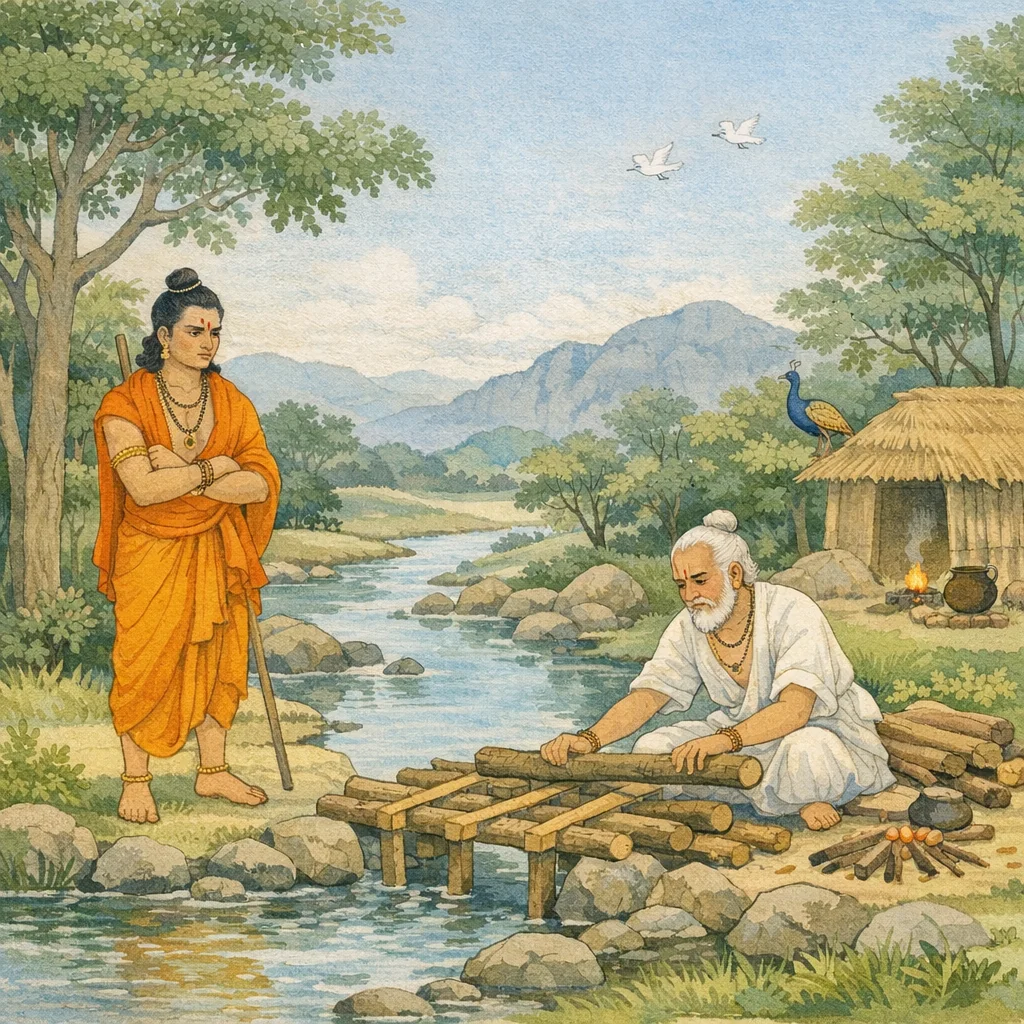
यवक्रीतस्य यत् तीर्थमुचितं शौचकर्मणि । भागीर थ्यां तत्र सेतुं वालुकाभिश्चवकार स:,गंगाके जिस तीर्थमें यवक्रीत मुनि स्नान आदि किया करते थे, उसीमें वे ब्राह्मण देवता बालूद्वारा पुल बनाने लगे
Lomaśa said: At the ford of the Bhāgīrathī (Gaṅgā) that was proper for Yavakrīta’s rites of purification, he constructed there a small causeway, piling up sand. The act underscores reverence for sacred places and the disciplined observance of purity-rites, even through simple, humble means.
Verse 32
यदास्य वदतो वाक्य न स चक्रे द्विजोत्तम: | वालुकाभिस्तत: शक्रो गड़ां समभिपूरयन्,द्विजश्रेष्ठ यवक्रीतने जब इन्द्रका कहना नहीं माना, तब वे बालूसे गंगाजीको भरने लगे
When the excellent brāhmaṇa did not comply with the words spoken to him, Śakra (Indra) then began filling a water-pot with sand—an act meant to thwart and test him, showing how divine power may obstruct one’s aim when humility and right conduct are not upheld.
Verse 33
वालुकामुष्टिमनिशं भागीरथ्यां व्यसर्जयत् । सेतुमभ्यारभच्छक्रो यवक्रीतं निदर्शयन्,वे निरन्तर एक-एक मुट्ठी बालू गंगाजीमें छोड़ते थे और इस प्रकार उन्होंने यवक्रीतको दिखाकर पुल बाँधनेका कार्य आरम्भ कर दिया
Lośa said: “Indra (Śakra) kept casting, without pause, handful after handful of sand into the Bhāgīrathī (Gaṅgā). In this way, by pointing out Yavakrīta as an example, he began the work of building a causeway.” The episode underscores that even seemingly small, repeated acts—when guided by resolve and a worthy model—can initiate great undertakings.
Verse 34
त॑ं ददर्श यवक्रीतो यत्नवन्तं निबन्धने । प्रहसंश्चाब्रवीद् वाक्यमिदं स मुनिपुड्गभवः,मुनिवर यवक्रीतने देखा, ब्राह्मण देवता पुल बाँधनेके लिये बड़े यत्नशील हैं, तब उन्होंने हँसते हुए इस प्रकार कहा--
Yavakrīta saw him exerting himself in the act of binding. Then that foremost of sages, smiling with a hint of derision, spoke these words—setting the scene for a moral tension between outward ritual effort and the inner discipline expected of a brahmin-sage.
Verse 35
किमिदं वर्तते ब्रह्मन् कि च ते ह चिकीर्षितम् | अतीव हि महान् यत्न: क्रियतेडयं निरर्थक:
Lomaśa said: “O Brahmin, what is this that is going on here, and what indeed do you intend to do? For this is an exceedingly great effort being undertaken—yet it seems purposeless.”
Verse 36
“ब्रह्म! यह क्या है? आप क्या करना चाहते हैं? आप प्रयत्न तो महान् कर रहे हैं, परंतु यह व्यर्थ है! ।। इन्द्र रवाच बन्धिष्ये सेतुना गड़ां सुख: पन्था भविष्यति | क्लिश्यते हि जनस्तात तरमाण: पुन: पुन:,इन्द्र बोले--तात! मैं गंगाजीपर पुल बाँधूँगा। इससे पार जानेके लिये सुखद मार्ग बन जायगा; क्योंकि पुलके न होनेसे इधर आने-जानेवाले लोगोंको बार-बार तैरनेका कष्ट उठाना पड़ता है
Indra said: “Dear one, I shall bind the Gaṅgā with a bridge. Then there will be an easy path for crossing; for without a bridge, people suffer hardship again and again, forced to swim each time they go back and forth.”
Verse 37
यवक्रीत उवाच नायं शक््यस्त्वया बद्धुं महानोघस्तपोधन । अशक्याद विनिवर्तस्व शक््यमर्थ समारभ,यवक्रीतने कहा--तपोधन! यहाँ अगाध जलराशि भरी है; अतः तुम पुल बाँधनेमें सफल नहीं हो सकोगे। इसलिये इस असम्भव कार्यसे मुँह मोड़ लो और ऐसे कार्यमें हाथ डालो जो तुमसे हो सके
Verse 38
इन्द्र रवाच यथैव भवता चेदं तपो वेदाथमुद्यतम् । अशक्यं तद्वदस्माभिरयं भार: समाहित:,इन्द्र बोले--मुने! जैसे आपने बिना पढ़े वेदोंका ज्ञान प्राप्त करनेके लिये यह तपस्या प्रारम्भ की है जिसकी सफलता असम्भव है, उसी प्रकार मैंने भी यह पुल बाँधनेका भार उठाया है
Indra said: “O sage, just as you have undertaken this austerity to obtain the knowledge of the Veda without study—an effort whose success is impossible—so too have I taken upon myself this burden of building the bridge.”
Verse 39
यवक्रीत उवाच यथा तव निरथोंडयमारम्भस्त्रिदशेश्वर । तथा यदि ममापीदं मन्यसे पाकशासन,यवक्रीतने कहा--देवेश्वर पाकशासन! जैसे आपका यह पुल बाँधनेका आयोजन व्यर्थ है, उसी प्रकार यदि मेरी इस तपस्याको भी आप निरर्थक मानते हैं तो वही कार्य कीजिये जो सम्भव हो, मुझे ऐसे उत्तम वर प्रदान कीजिये, जिनके द्वारा मैं दूसरोंसे बढ़- चढ़कर प्रतिष्ठा प्राप्त कर सकूँ
Yavakrīta said: “O lord of the gods! Just as this undertaking of yours is futile, so too—if you judge my austerity to be futile, O Pākaśāsana—then do what is within your power: grant me such excellent boons by which I may gain renown and standing surpassing others.”
Verse 40
क्रियतां यद् भवेच्छक्यं त्वया सुरगणेश्वर । वरांश्व मे प्रयच्छान्यान् यैरन्यान् भवितास्म्यति,यवक्रीतने कहा--देवेश्वर पाकशासन! जैसे आपका यह पुल बाँधनेका आयोजन व्यर्थ है, उसी प्रकार यदि मेरी इस तपस्याको भी आप निरर्थक मानते हैं तो वही कार्य कीजिये जो सम्भव हो, मुझे ऐसे उत्तम वर प्रदान कीजिये, जिनके द्वारा मैं दूसरोंसे बढ़- चढ़कर प्रतिष्ठा प्राप्त कर सकूँ
Yavakrīta said: “O Lord of the hosts of the gods! Do whatever is possible for you to do. And grant me other boons as well—excellent boons—by which I may surpass others and attain pre-eminent renown.”
Verse 41
लोगश उवाच तस्मै प्रादाद् वरानिन्द्र उक्तवान् यान् महातपा: । प्रतिभास्यन्ति ते वेदा: पित्रा सह यथेप्सिता:,लोमशजी कहते हैं--राजन्! तब इन्द्रने महातपस्वी यवक्रीतके कथनानुसार उन्हें वर देते हुए कहा--“यवक्रीत! तुम्हारे पितासहित तुम्हें वेदोंका यथेष्ट ज्ञान प्राप्त हो जायगा। साथ ही और भी जो तुम्हारी कामना हो, वह पूर्ण हो जायगी। अब तुम तपस्या छोड़कर अपने आश्रमको लौट जाओ।' इस प्रकार पूर्णकाम होकर, यवक्रीत अपने पिताके पास गये और इस प्रकार बोले
Lomaśa said: Then Indra granted him the boons requested by that great ascetic and declared, “The Vedas will become manifest to you, together with your father, exactly as you desire. Moreover, whatever else you wish shall also be fulfilled. Now give up this austerity and return to your hermitage.” Thus, having attained his aim, Yavakrīta went to his father and spoke accordingly.
Verse 42
यच्चान्यत् काडुक्षसे काम॑ यवक्रीर्गम्यतामिति । स लब्धकाम: पितरं समेत्याथेदमब्रवीत्,लोमशजी कहते हैं--राजन्! तब इन्द्रने महातपस्वी यवक्रीतके कथनानुसार उन्हें वर देते हुए कहा--“यवक्रीत! तुम्हारे पितासहित तुम्हें वेदोंका यथेष्ट ज्ञान प्राप्त हो जायगा। साथ ही और भी जो तुम्हारी कामना हो, वह पूर्ण हो जायगी। अब तुम तपस्या छोड़कर अपने आश्रमको लौट जाओ।' इस प्रकार पूर्णकाम होकर, यवक्रीत अपने पिताके पास गये और इस प्रकार बोले
Lomaśa said: “O King, then Indra, granting a boon in accordance with the words of the great ascetic Yavakrī, declared: ‘Yavakrī, you shall obtain, together with your father, the knowledge of the Vedas as fully as you desire. And whatever other wish you cherish shall also be fulfilled. Now abandon this austerity and return to your hermitage.’ Thus, his desire accomplished, Yavakrī went to his father and spoke as follows.”
Verse 43
यवक्रीत उवाच प्रतिभास्यन्ति वै वेदा मम तातस्य चोभयो: । अति चान्यान् भविष्यावो वरा लब्धास्तदा मया,यवक्रीतने कहा--पिताजी! आपको और मुझे दोनोंको ही सम्पूर्ण वेदोंका ज्ञान हो जायगा। साथ ही हम दोनों दूसरोंसे ऊँची स्थितिमें हो जायँगे--ऐसा वर मैंने प्राप्त किया है
Verse 44
भरद्वाज उवाच दर्पस्ते भविता तात वरॉल्लब्ध्वा यथेप्सितान् । स दर्पपूर्ण: कृपण: क्षिप्रमेव विनड्क्ष्यसि,भरद्वाज बोले--तात! इस तरह मनोवाञ्छित वर प्राप्त करनेके कारण तुम्हारे मनमें अहंकार उत्पन्न हो जायगा और अहंकारसे युक्त होनेपर तुम कृपण होकर शीघ्र ही नष्ट हो जाओगे
Bharadvāja said: “My son, once you obtain from the boon whatever you desire, pride will arise in you. Filled with that pride, you will become mean-spirited, and you will quickly come to ruin.”
Verse 45
अत्राप्युदाहरन्तीमा गाथा देवैरुदाह्वता: । मुनिरासीत् पुरा पुत्र बालधिनाम वीर्यवान्,इस विषयमें विज्ञजन देवताओंकी कही हुई यह गाथा सुनाया करते हैं--प्राचीनकालमें बालधि नामसे प्रसिद्ध एक शक्तिशाली मुनि थे
“Here too, my son, the learned recount a traditional verse that was once uttered by the gods. In ancient times there lived a powerful sage known by the name Bāladhī.”
Verse 46
स पुत्रशोकादुद्धिग्नस्तपस्तेपे सुदुष्करम् । भवेन्मम सुतोअमर्त्य इति तं लब्धवांक्ष सः,उन्होंने पुत्रशोकसे संतप्त होकर अत्यन्त कठोर तपस्या की। तपस्याका उद्देश्य यह था कि मुझे देवोपम पुत्र प्राप्त हो। अपनी उस अभिलाषाके अनुसार बालधिको एक पुत्र प्राप्त हुआ
Verse 47
तस्य प्रसादो वै देवै: कृतो न त्वमरै: सम: । नामर्त्यों विद्यते मर्त्यों निमित्तायुर्भविष्यति,देवताओंने उनपर कृपा अवश्य की, परंतु उनके पुत्रको देवतुल्य नहीं बनाया और वरदान देते हुए यह कहा “कि मरणधर्मा मनुष्य कभी देवताके समान अमर नहीं हो सकता। अतः उसकी आयु निमित्त (कारण)-के अधीन होगी”
Bharadvāja said: “The gods indeed showed him their favor; yet they did not make his son equal to the immortals. For no mortal human can become deathless like a god. Therefore, his lifespan will be contingent—dependent upon a determining cause.”
Verse 48
बालधिरुवाच यथेमे पर्वता: शश्वत् तिष्ठन्ति सुरसत्तमा: । अक्षयास्तन्निमित्तं मे सुतस्यायुर्भविष्यति,बालधि बोले--देववरो! जैसे ये पर्वत सदा अक्षयभावसे खड़े रहते हैं, वैसे ही मेरा पुत्र भी सदा अक्षय बना रहे। ये पर्वत ही उसकी आयुके निमित्त होंगे अर्थात् जबतक ये पर्वत यहाँ बने रहें तबतक मेरा पुत्र भी जीवित रहे
Bāladhi said: “O best of the gods! Just as these mountains stand forever, enduring and imperishable, so too may my son remain unharmed and unspent. Let these mountains be the very condition of his lifespan—so long as they endure here, so long shall my son live.”
Verse 49
भरद्वाज उवाच तस्य पुत्रस्तदा जज्ञे मेधावी क्रोधनस्तदा । स तच्छुत्वाकरोद् दर्पमृषींश्चैवावमन्यत,भरद्वाज कहते हैं--यवक्रीत! तदनन्तर बालधिके पुत्रका जन्म हुआ, जो मेधायुक्त होनेके कारण मेधावी नामसे विख्यात था। वह स्वभावका बड़ा क्रोधी था। अपनी आयुके विषयमें देवताओंके वरदानकी बात सुनकर मेधावी घमण्डमें भर गया और ऋषियोंका अपमान करने लगा
Bharadvāja said: “Then a son was born to him—intelligent, and at the same time fierce-tempered. On hearing about the boon granted by the gods concerning his lifespan, Medhāvī became swollen with pride and began to slight and insult the sages.”
Verse 50
विकुर्वाणो मुनीनां च व्यचरत् स महीमिमाम् | आससाद महावीर धनुषाक्षं मनीषिणम्,इतना ही नहीं, वह ऋषि-मुनियोंको सतानेके उद्देश्यसे ही इस पृथ्वीपर सब ओर विचरा करता था। एक दिन मेधावी महान् शक्तिशाली एवं मनीषी धनुषाक्षके पास जा पहुँचा
Assuming deceptive forms and harassing the sages, he roamed about this earth in every direction. In the course of his wandering, he came upon Dhanuṣākṣa—wise and great-souled, a mighty hero.
Verse 51
तस्यापचक्रे मेधावी तं शशाप स वीर्यवान् । भव भस्मेति चोक्त: स न भस्म समपद्यत,और उनका तिरस्कार करने लगा। तब तपोबल-सम्पन्न ऋषि धनुषाक्षने उसे शाप देते हुए कहा--'अरे, तू जलकर भस्म हो जा।” परंतु उनके कहनेपर भी वह भस्म नहीं हुआ
Seeing him act with contempt, the wise and powerful sage pronounced a curse: “Become ashes!” Yet, even after these words were spoken, the man did not turn to ashes. The episode underscores that mere utterance of a curse does not automatically prevail when other forces—such as prior boons, protections, or the complex workings of karma—stand in the way, and it highlights the ethical gravity of arrogance toward the spiritually accomplished.
Verse 52
धनुषाक्षस्तु तं दृष्टयवा मेधाविनमनामयम् । निमित्तमस्य महिषैभेंदयामास वीर्यवान्,शक्तिशाली धनुषाक्षने ध्यानमें देखा कि मेधावी रोग एवं मृत्युसे रहित है। तब उसकी आयुके निमित्तभूत पर्वतोंको उन्होंने भैंसोंद्वारा विदीर्ण करा दिया
Bharadvāja said: Seeing that Medhāvin was free from illness and beyond the reach of death, the mighty and powerful Dhanuṣākṣa, seeking a means to bring about his end, had the mountains that served as the cause of his longevity split apart by buffaloes.
Verse 53
स निमित्ते विनष्टे तु ममार सहसा शिशु: । त॑ मृतं पुत्रमादाय विललाप ततः पिता,निमित्तका नाश होते ही उस मुनिकुमारकी सहसा मृत्यु हो गयी। तदनन्तर पिता उस मरे हुए पुत्रको लेकर अत्यन्त विलाप करने लगे
When the omen (that had been sustaining his life) was destroyed, the child suddenly died. Then the father, taking up his dead son, broke into bitter lamentation—an image of how fragile life becomes when its protecting conditions are undone, and how grief follows the collapse of hope.
Verse 54
लालप्यमानं तं दृष्टवा मुनय:ः परमार्तवत् । ऊचुर्वेदविद: सर्वे गाथां यां तां निबोध मे,अधिक पीड़ित मनुष्योंकी भाँति उन्हें विलाप करते देख वहाँके समस्त वेदवेत्ता मुनिगण एकत्र हो जिस गाथाको गाने लगे, उसे बताता हूँ, सुनो
Seeing him lamenting like one in extreme distress, all the sages—masters of the Vedas—gathered and spoke. “Listen to me,” they said, “and understand that very gāthā (solemn verse) which they began to chant.”
Verse 55
न दिष्टमर्थमत्येतुमीशो मर्त्य: कथंचन । महिषैभेंदयामास धनुषाक्षो महीधरान्,“मरणधर्मा मनुष्य किसी तरह दैवके विधानका उल्लंघन नहीं कर सकता, तभी तो धनुषाक्षने उस बालककी आयुके निमित्तभूत पर्वतोंका भैंसोंद्वारा भेदन करा दिया”
Bharadvāja said: “No mortal, however powerful, can in any way overstep what has been ordained by destiny. Therefore Dhanuṣākṣa had mountains—those that served as the very cause determining that boy’s allotted lifespan—pierced through by buffaloes.”
Verse 56
एवं लब्ध्वा वरान् बाला दर्पपूर्णास्तपस्विन: । क्षिप्रमेव विनश्यन्ति यथा न स्थात् तथा भवान्,इस प्रकार बालक तपस्वी वर पाकर घमण्डमें भर जाते हैं और (अपने दुर्व्यवहारोंके कारण) शीघ्र ही नष्ट हो जाते हैं। तुम्हारी भी यही अवस्था न हो (इसलिये सावधान किये देता हूँ)
Verse 57
एष रैभ्यो महावीर्य: पुत्रो चास्य तथाविधौ । त॑ यथा पुत्र नाभ्येषि तथा कुर्यास्त्वतन्द्रित:,ये रैभ्यमुनि महान् शक्तिशाली हैं। इनके दोनों पुत्र भी इन्हींके समान हैं। बेटा! तुम उन रैभ्यमुनिके पास कदापि न जाना और आलस्य छोड़कर इसके लिये सदा प्रयत्नशील रहना
Bharadvāja said: “This Raibhya is a man of great power, and his sons too are of the same formidable kind. Therefore, my son, do not go near the sage Raibhya; remain vigilant and, casting off indolence, strive constantly to act in a way that keeps you away from him.”
Verse 58
स हि क्रुद्धः समर्थस्त्वां पुत्र पीडयितुं रुषा । रैभ्यश्वापि तपस्वी च कोपनश्च महानृषि:,बेटा! तुम्हें सावधान करनेका कारण यह है कि शक्तिशाली तपस्वी महर्षि रैभ्य बड़े क्रोधी हैं। वे कुपित होकर रोषसे तुम्हें पीड़ा दे सकते हैं
For, when angered, he is capable—my son—of afflicting you in his wrath. Raibhya too is a great sage, an ascetic of formidable power, and quick to anger. Therefore I warn you to be cautious: do not provoke one whose tapas and temper together can turn into harm.
Verse 59
यवक्रीत उवाच एवं करिष्ये मा ताप॑ं तात कार्षी: कथंचन । यथा हि मे भवान् मान्यस्तथा रैभ्य: पिता मम,यवक्रीत बोले--पिताजी! मैं ऐसा ही करूँगा, आप किसी तरह मनमें संताप न करें। जैसे आप मेरे माननीय हैं, वैसे रैभ्यमुनि मेरे लिये पिताके समान हैं
Yavakrīta said, “I will do exactly so. Father, do not feel any distress at all. For just as you are worthy of my reverence, so too is the sage Raibhya—he is like a father to me.”
Verse 60
लोगश उवाच उक्त्वा स पितरं श्लक्ष्णं यवक्रीरकुतो भय: । विप्रकुर्वनूषीनन्यानतुष्यत् परया मुदा,लोमशजी कहते हैं--युधिष्ठि! पितासे यह मीठी बातें कहकर यवक्रीत निर्भय विचरने लगे। दूसरे ऋषियोंको सतानेमें उन्हें अधिक सुख मिलता था। वैसा करके वे बहुत संतुष्ट रहते थे
Verse 134
इस प्रकार श्रीमह़्ा भारत वनपव्वके अन्तर्गत तीर्थयात्रापरवमें लोमशती र्थयात्राके प्रसंगें अष्टावक्रीयोपाख्यानविषयक एक सौ चौंतीसवाँ अध्याय पूरा हुआ
Thus ends the one hundred and thirty-fourth chapter of the Aṣṭāvakra episode, occurring within the pilgrimage section of the Vana Parva of the Śrī Mahābhārata, in the context of Lomāśa’s narration of sacred journeys. The colophon signals the close of this unit, framing the episode as part of a larger ethical itinerary: learning through tīrthas, exemplars, and remembered teachings rather than through battle alone.
Verse 135
इति श्रीमहाभारते वनपर्वणि तीर्थयात्रापर्वणि लोमशतीर्थयात्रायां यवक्रीतोपाख्याने पज्चत्रिंशदधिकशततमो<ध्याय:
Thus ends the one-hundred-and-thirty-sixth chapter of the Vana Parva of the Śrī Mahābhārata, within the section on pilgrimage (Tīrtha-yātrā Parva), in the account of Lomaśa’s pilgrimage, in the episode concerning Yavakrīta. This closing colophon signals the completion of a narrative unit meant to frame ethical reflection through sacred travel and exemplary stories.
Frequently Asked Questions
The dilemma is how to handle extraordinary acquisition (boons/knowledge): whether one converts it into disciplined conduct and reverence for ṛṣis, or into self-exalting behavior that violates social-ethical restraints.
Boons and learning do not nullify moral causality; conditionality (nimitta) and the limits of fate remain operative, so humility and non-provocation toward powerful ascetics are presented as rational safeguards.
No explicit phalaśruti is stated; the meta-commentary operates through the gāthā’s generalization (that pride after boons leads to swift destruction) and Lomāśa’s closing observation that Yavakrī’s behavior contradicts the counsel.