Adhyaya 107
Bhāgīratha’s Tapas and the Petition to Gaṅgā (गङ्गावतरण-प्रसङ्गः)
Upa-parva: Tīrtha-yātrā Upaparva (Lomāśa’s Pilgrimage Narratives; Bhāgīratha–Gaṅgā Legend)
Lomāśa describes a universal monarch renowned for martial capacity and public esteem who learns from the sage Kapila of a catastrophic ancestral fate: the sixty-thousand sons of Sagara, destroyed upon encountering Kapila’s fiery potency, remain without access to heaven until their bodies are sanctified by Gaṅgā’s waters. Grief-stricken, the king entrusts the kingdom to ministers and undertakes severe tapas near Himavat, seeking to propitiate Gaṅgā. The chapter offers an extended topographic-poetic depiction of Himālaya—its peaks, ores, rivers, caves, fauna, and semi-divine residents—framing ascetic practice within a sacralized ecology. After a thousand years, Gaṅgā appears embodied and grants a boon. The king requests the conveyance of his ancestors to heaven through her waters. Gaṅgā consents but specifies a cosmological constraint: her descent’s force is unbearable to the worlds unless Mahādeva (Nīlakaṇṭha Śiva) bears her upon his head. Bhāgīratha therefore proceeds to Kailāsa, performs austerities to please Śaṅkara, and obtains the necessary boon—Śiva’s acceptance of Gaṅgā—explicitly oriented to the ancestral goal of svarga-vāsa.
Chapter Arc: लोमश ऋषि तीर्थयात्रा के प्रसंग में सगरवंश की अद्भुत कथा उठाते हैं—कैसे एक राजा ने बीजों को घृत-पूर्ण कुम्भों में रखकर असंख्य पुत्रों की उत्पत्ति कराई, और कैसे वही पुत्र आगे चलकर विनाश की ओर बढ़े। → सगर अपने पुत्रों की रक्षा हेतु पृथक्-पृथक् धात्रियाँ नियुक्त करते हैं; समय बीतते ही वे महाबली पुत्र उग्र स्वभाव के साथ बढ़ते हैं। देवगण संकेत करते हैं कि ‘स्वकृत कर्म’ से शीघ्र ही सगरपुत्रों का घोर क्षय होगा—अपराध का बीज अब फल देने को है। → कपिल मुनि—जिन्हें वासुदेव-विष्णु-स्वरूप कहा गया—अपने तेज से सगर के मन्दबुद्धि पुत्रों को क्रोधाग्नि में भस्म कर देते हैं; साठ हजार का एक साथ नाश वंश-गौरव को शोक में बदल देता है। → पुत्रनिधन से व्याकुल सगर स्थाणु (शिव) के वचन पर मनन कर स्वयं को संभालते हैं; असमञ्जस के परित्याग/निर्वासन का निर्णय होता है और अंशुमान को बुलाकर आगे की खोज-यात्रा/कार्य का भार सौंपा जाता है—राजधर्म अब शोक के ऊपर उठकर वंश-उद्धार की दिशा पकड़ता है। → अंशुमान को जो आज्ञा दी गई, उसके पालन में आगे कौन-सा तीर्थ-मार्ग, कौन-सा दिव्य साक्षात्कार और कौन-सा वंश-उद्धार घटेगा—यह अगली कड़ी के लिए कथा को अधर में छोड़ देता है।
Shlokas
Verse 1
हि >> मय न () है ० सप्ताधिकशततमो< ध्याय: सगरके पुत्रोंकी उत्पत्ति, साठ हजार सगरपुत्रोंका कपिलकी क्रोधाग्निसे भस्म होना, असमञ्जसका परित्याग, अंशुमानके प्रयत्नसे सगरके यज्ञकी पूर्ति, अंशुमानसे दिलीपको और दिलीपसे भगीरथको राज्यकी प्राप्ति लोगश उवाच एतच्छुत्वान्तरिक्षाच्च स राजा राजसत्तम: | यथोक्त तच्चकाराथ श्रद्दधद् भरतर्षभ,लोमशजी कहते हैं--भरतश्रेष्ठ. यह आकाशवाणी सुनकर भूपालशिरोमणि राजा सगरने उसपर विश्वास करके उसके कथनानुसार सब कार्य किया
Lomaśa said: “O bull among the Bharatas, having heard that heavenly voice from the sky, King Sagara—foremost among kings—placed faith in it and then carried out everything exactly as it had been spoken.”
Verse 2
एकैकशस्तत: कृत्वा बीजं बीज॑ नराधिप: । घृतपूर्णेषु कुम्भेषु तान् भागान् विदधे ततः,नरेशने एक-एक बीजको अलग करके उन सबको घीसे भरे हुए घड़ोंमें रखा
Then the king, separating each seed one by one, carefully apportioned them and placed those portions into pots filled with ghee—an act of deliberate preservation and orderly distribution, reflecting prudent foresight and disciplined management of resources.
Verse 3
धात्रीश्चैकेकश: प्रादात् पुत्ररक्षणतत्पर: । ततः कालेन महता समुत्तस्थुर्महाबला:,फिर पुत्रोंकी रक्षाके लिये तत्पर हो सबके लिये पृथक्-पृथक् धायें नियुक्त कर दीं। तदनन्तर दीर्घकालके पश्चात् उस अनुपम तेजस्वी नरेशके साठ हजार महाबली पुत्र उन घड़ोंमेंसे निकल आये। युधिष्छिर! राजर्षि सगरके वे सभी पुत्र भगवान् शिवकी कृपासे ही उत्पन्न हुए थे
Intent on safeguarding the children, he appointed wet-nurses for each one separately. Then, after a long passage of time, the mighty sons arose (came forth) in due course—marking the fulfillment of the king’s resolve to protect and nurture his offspring.
Verse 4
षष्टि: पुत्रसहस्राणि तस्याप्रतिमतेजस: । रुद्रप्रसादाद् राजर्षे: समजायन्त पार्थिव,फिर पुत्रोंकी रक्षाके लिये तत्पर हो सबके लिये पृथक्-पृथक् धायें नियुक्त कर दीं। तदनन्तर दीर्घकालके पश्चात् उस अनुपम तेजस्वी नरेशके साठ हजार महाबली पुत्र उन घड़ोंमेंसे निकल आये। युधिष्छिर! राजर्षि सगरके वे सभी पुत्र भगवान् शिवकी कृपासे ही उत्पन्न हुए थे
O king, in due course sixty thousand sons were born to that royal sage of incomparable splendor. Their birth came about through the grace of Rudra (Śiva), underscoring that even royal power and lineage ultimately depend upon divine favor and the merit that invites it.
Verse 5
ते घोरा: क्रूरकर्माण आकाशपरिसर्पिण: । बहुत्वाच्चावजानन्त:सर्वाललोकान् सहामरान्,वे सब-के-सब भयंकर स्वभाववाले और क्रूरकर्मा थे। आकाशमें भी सब ओर घूम- फिर सकते थे। उनकी संख्या अधिक होनेके कारण वे देवताओंसहित सम्पूर्ण लोकोंकी अवहेलना करते थे
They were all terrifying in nature and ruthless in their deeds. They could roam everywhere through the sky, and, emboldened by their great numbers, they held in contempt all the worlds—even those protected by the gods. Ethically, the verse highlights how sheer power and numerical strength can breed arrogance, leading beings to disregard cosmic order and the rightful authority of dharma upheld by the devas.
Verse 6
त्रिदशांश्षाप्पबाधन्त तथा गन्धर्वराक्षसान् | सर्वाणि चैव भूतानि शूरा: समरशालिन:,समरभूमिमें शोभा पानेवाले वे शूरवीर राजकुमार देवताओं, गन्धर्वों, राक्षसों तथा सम्पूर्ण प्राणियोंको कष्ट दिया करते थे
Those heroic princes—splendid on the battlefield—were so fierce that they harassed even the gods, as well as Gandharvas and Rākṣasas; indeed, they caused suffering to all classes of beings. The verse underscores how martial prowess, when unrestrained by dharma, turns into oppression that violates the moral order and harms the wider world.
Verse 7
वध्यमानास्ततो लोका:ः सागरैर्मन्दबुद्धिभि: । ब्रह्माणं शरणं जग्मु: सहिता: सर्वदेवतै:,मन्दबुद्धि सगरपुत्रोंद्वारा सताये हुए सब लोग सम्पूर्ण देवताओंके साथ ब्रह्माजीकी शरणमें गये
Then the people, being harassed and oppressed by the dull-witted sons of Sagara, sought refuge in Brahmā, approaching him together with all the gods. Ethically, the verse frames a community’s recourse to higher authority when power is abused and ordinary life is endangered.
Verse 8
तानुवाच महाभाग: सर्वलोकपितामह: । गच्छध्वं त्रिदशा: सर्वे लोकै: सार्ध यथागतम्,उस समय सर्वलोकपितामह महाभाग ब्रह्माने उनसे कहा--“देवताओ! तुम सभी इन सब लोगोंके साथ जैसे आये हो, वैसे लौट जाओ
Then the illustrious Brahmā, the grandsire of all worlds, addressed them: “O gods, all of you—return together with these beings, just as you came.” The command restores cosmic order: the divine assembly is dismissed without excess, and each returns to their proper sphere in accordance with right procedure.
Verse 9
नातिदीर्घेण कालेन सागराणां क्षयो महान् | भविष्यति महाघोर: स्वकृतै: कर्मभि: सुरा:,“अब थोड़े ही दिनोंमें अपने ही किये हुए अपराधोंद्वारा इन सगरपुत्रोंका अत्यन्त घोर और महान् संहार होगा”
Lośa said: “Before long, a vast destruction of the sons of Sagara will occur—terrible and dreadful—brought about by their own deeds.” The verse underscores a moral causality: ruin is not random, but the ripening of one’s own wrongdoing.
Verse 10
एवमुक्तास्तु ते देवा लोकाश्न मनुजेश्वर । पितामहमनुज्ञाप्य विप्रजग्मुर्यथागतम्,नरेश्वर! उनके ऐसा कहनेपर सब देवता तथा अन्य लोग ब्रह्माजीकी आज्ञा ले जैसे आये थे वैसे लौट गये
When they had spoken thus, O lord of men, all those gods and the other beings, having obtained the permission of Pitāmaha (Brahmā), departed and returned the very way they had come. The verse underscores proper conduct in divine and royal assemblies: even exalted beings act with decorum, seeking the elder’s assent before withdrawing.
Verse 11
ततः काले बहुतिथे व्यतीते भरतर्षभ । दीक्षित: सगरो राजा हयमेधेन वीर्यवान्,भरतश्रेष्ठ] तदनन्तर बहुत समय बीत जानेपर पराक्रमी राजा सगरने अश्वमेधयज्ञकी दीक्षा ली
After a long span of time had passed, O bull among the Bharatas, the valiant King Sagara undertook the consecratory initiation for the Aśvamedha sacrifice. The narrative underscores royal responsibility: a king, after due time and preparation, seeks to affirm righteous sovereignty through a solemn Vedic rite rather than through mere force.
Verse 12
तस्याश्वो व्यचरद् भूमिं पुत्र: स परिरक्षित: । (सर्वरेव महोत्साहै: स्वच्छन्दप्रचरो नृप ।) समुद्रं स समासाद्य निस्तोयं भीमदर्शनम्,(ससमुद्रवनद्वीपां विचरन्तो वसुन्धराम् ।) राजन्! उनका यज्ञिय अश्व उनके अत्यन्त उत्साही सभी पुत्रोंद्वारा सुरक्षित हो स्वच्छन्दगतिसे पृथ्वीपर विचरने लगा। जब वह अश्व भयंकर दिखायी देनेवाले जलशून्य समुद्रके तटपर आया, तब प्रयत्नपूर्वक रक्षित होनेपर भी वहाँ सहसा अदृश्य हो गया। तात! तब उस उत्तम अश्वको अपहृत जानकर सगरपुत्रोंने पिताके पास आकर कहा--/हमारे यज्ञिय अश्वको किसीने चुरा लिया, अब वह दिखायी नहीं देता।/ यह सुनकर राजा सगरने कहा--“तुम सब लोग समुद्र, वन और द्वीपोंसहित सारी पृथ्वीपर विचरते हुए सम्पूर्ण दिशाओंमें जाकर उस अश्वका पता लगाओ”
Lośa said: His sacrificial horse ranged freely over the earth, guarded by his sons—men of great energy—yet moving at its own will, O king. When that horse reached the shore of the sea, a fearsome expanse appearing as though devoid of water, it suddenly vanished there, despite vigilant protection. Taking it to have been stolen, the sons of Sagara returned to their father and reported, “Our consecrated horse has been taken; it is no longer seen.” Hearing this, King Sagara commanded them to search for it in every direction, roaming the whole earth together with its seas, forests, and islands—an insistence that duty to a vowed rite must be pursued with unwavering resolve, yet also a warning that zeal without discernment can drive one into ever-widening conflict.
Verse 13
रक्ष्यमाण: प्रयत्नेन तत्रैवान्तरधीयत । ततस्ते सागरास्तात हतं मत्वा हयोत्तमम्,(ससमुद्रवनद्वीपां विचरन्तो वसुन्धराम् ।) राजन्! उनका यज्ञिय अश्व उनके अत्यन्त उत्साही सभी पुत्रोंद्वारा सुरक्षित हो स्वच्छन्दगतिसे पृथ्वीपर विचरने लगा। जब वह अश्व भयंकर दिखायी देनेवाले जलशून्य समुद्रके तटपर आया, तब प्रयत्नपूर्वक रक्षित होनेपर भी वहाँ सहसा अदृश्य हो गया। तात! तब उस उत्तम अश्वको अपहृत जानकर सगरपुत्रोंने पिताके पास आकर कहा--/हमारे यज्ञिय अश्वको किसीने चुरा लिया, अब वह दिखायी नहीं देता।/ यह सुनकर राजा सगरने कहा--“तुम सब लोग समुद्र, वन और द्वीपोंसहित सारी पृथ्वीपर विचरते हुए सम्पूर्ण दिशाओंमें जाकर उस अश्वका पता लगाओ”
Though guarded with utmost effort, the sacrificial horse vanished on that very spot. Then, O dear one, the sons of Sagara, believing that the excellent horse had been taken away, set out to roam the earth—together with its seas, forests, and islands—seeking it in every direction. The episode underscores a king’s duty to protect the integrity of a consecrated rite and the sons’ obligation to carry out the father’s command with diligence when a sacred trust appears violated.
Verse 14
आगम्य पितुराचख्युरदृश्यं तुरगं हृतम् । तेनोक्ता दिक्षु सर्वासु सर्वे मार्गत वाजिनम्,(ससमुद्रवनद्वीपां विचरन्तो वसुन्धराम् ।) राजन्! उनका यज्ञिय अश्व उनके अत्यन्त उत्साही सभी पुत्रोंद्वारा सुरक्षित हो स्वच्छन्दगतिसे पृथ्वीपर विचरने लगा। जब वह अश्व भयंकर दिखायी देनेवाले जलशून्य समुद्रके तटपर आया, तब प्रयत्नपूर्वक रक्षित होनेपर भी वहाँ सहसा अदृश्य हो गया। तात! तब उस उत्तम अश्वको अपहृत जानकर सगरपुत्रोंने पिताके पास आकर कहा--/हमारे यज्ञिय अश्वको किसीने चुरा लिया, अब वह दिखायी नहीं देता।/ यह सुनकर राजा सगरने कहा--“तुम सब लोग समुद्र, वन और द्वीपोंसहित सारी पृथ्वीपर विचरते हुए सम्पूर्ण दिशाओंमें जाकर उस अश्वका पता लगाओ”
Returning to their father, the sons reported that the sacrificial horse had been stolen and had vanished from sight. Hearing this, King Sagara commanded them to search for the horse in every direction, roaming the entire earth—together with its seas, forests, and islands. The episode underscores a ruler’s duty to protect the integrity of sacred rites and the responsibility of heirs to act with vigilance and perseverance when a public, dharmic undertaking is threatened.
Verse 15
ततस्ते पितुराज्ञाय दिक्षु सर्वासु तं हयम् । अमार्गन्त महाराज सर्व च पृथिवीतलम्,महाराज! तदनन्तर वे पिताकी आज्ञा ले इस सम्पूर्ण भूतलमें सभी दिशाओंमें अश्वकी खोज करने लगे। खोजते-खोजते सभी सगरपुत्र एक-दूसरेसे मिले, परंतु वे अश्व तथा अश्वहर्ताका पता न लगा सके
Then, obeying their father’s command, they searched for that horse in every direction, O great king, ranging over the whole surface of the earth. Yet, even after meeting one another in the course of their search, the sons of Sagara could not discover either the sacrificial horse or the one who had taken it—showing how zeal without clear discernment and right means can still fail to reach its goal.
Verse 16
ततस्ते सागरा: सर्वे समुपेत्य परस्परम् । नाध्यगच्छन्त तुरगमश्च॒हर्तारमेव च,महाराज! तदनन्तर वे पिताकी आज्ञा ले इस सम्पूर्ण भूतलमें सभी दिशाओंमें अश्वकी खोज करने लगे। खोजते-खोजते सभी सगरपुत्र एक-दूसरेसे मिले, परंतु वे अश्व तथा अश्वहर्ताका पता न लगा सके
Then all the sons of Sagara, coming together and meeting one another, could not discover either the sacrificial horse or the very thief who had taken it, O King. The episode underscores how zeal in executing a royal command can still be thwarted by ignorance of the true facts, and how unchecked pursuit without clear knowledge may lead to further error and harm.
Verse 17
आगम्य पितरं चोचुस्तत: प्राउजजलयोडग्रत: । ससमुद्रवनद्वीपा सनदीनदकन्दरा,तब वे पिताके पास आकर उनके आगे हाथ जोड़कर बोले--'“महाराज! हमने आपकी आज्ञासे समुद्र, वन, द्वीप, नदी, नद, कन्दरा, पर्वत और वन्य प्रदेशोंसहित सारी पृथ्वी खोज डाली, परंतु हमें न तो अश्व मिला न उसका चुरानेवाला ही।” युधिष्ठिर![ उनकी यह बात सुनकर राजा सगर क्रोधसे मूर्च्छित हो उठे और उस समय दैववश उन सबसे इस प्रकार बोले--“'जाओ, लौटकर न आना। पुनः घोड़ेका पता लगाओ। पुत्रो! उस यज्ञके अश्वको लिये बिना वापस न आना।” पिताका वह संदेश शिरोधार्य करके सगरपुत्रोंने फिर सारी पृथ्वीपर अश्वको ढूँढ़ना आरम्भ किया। तदनन्तर उन वीरोंने एक स्थानपर पृथ्वीमें दरार पड़ी हुई देखी
Having come to their father, they spoke before him with hands joined in reverence: “O King, by your command we have searched the whole earth—together with its seas, forests, islands, rivers and streams, and its caves and ravines—yet we have found neither the sacrificial horse nor the one who stole it.” The scene underscores the sons’ dutiful obedience and truthful report, set against the king’s intense insistence on completing the rite and recovering what has been taken.
Verse 18
सपर्वतवनोद्देशा निखिलेन मही नृप । अस्माभिविंचिता राजज्छासनात् तव पार्थिव,तब वे पिताके पास आकर उनके आगे हाथ जोड़कर बोले--'“महाराज! हमने आपकी आज्ञासे समुद्र, वन, द्वीप, नदी, नद, कन्दरा, पर्वत और वन्य प्रदेशोंसहित सारी पृथ्वी खोज डाली, परंतु हमें न तो अश्व मिला न उसका चुरानेवाला ही।” युधिष्ठिर![ उनकी यह बात सुनकर राजा सगर क्रोधसे मूर्च्छित हो उठे और उस समय दैववश उन सबसे इस प्रकार बोले--“'जाओ, लौटकर न आना। पुनः घोड़ेका पता लगाओ। पुत्रो! उस यज्ञके अश्वको लिये बिना वापस न आना।” पिताका वह संदेश शिरोधार्य करके सगरपुत्रोंने फिर सारी पृथ्वीपर अश्वको ढूँढ़ना आरम्भ किया। तदनन्तर उन वीरोंने एक स्थानपर पृथ्वीमें दरार पड़ी हुई देखी
Lomaśa said: “O king, this entire earth—together with its mountains and forest-tracts—has been searched by us in full, in obedience to your royal command, O sovereign.” (In context, the speakers report to King Sagara that despite searching seas, forests, islands, rivers, caves, mountains, and wilderness, they have found neither the sacrificial horse nor the thief; hearing this, Sagara, overcome by anger, orders his sons to search again and not return without the horse—highlighting the tension between royal resolve and the ethical peril of anger-driven command.)
Verse 19
नचाश्वमधिगच्छामो नाश्रृहर्तारमेव च । श्रुत्वा तु वचन तेषां स राजा क्रोधमूर्च्छित:,तब वे पिताके पास आकर उनके आगे हाथ जोड़कर बोले--'“महाराज! हमने आपकी आज्ञासे समुद्र, वन, द्वीप, नदी, नद, कन्दरा, पर्वत और वन्य प्रदेशोंसहित सारी पृथ्वी खोज डाली, परंतु हमें न तो अश्व मिला न उसका चुरानेवाला ही।” युधिष्ठिर![ उनकी यह बात सुनकर राजा सगर क्रोधसे मूर्च्छित हो उठे और उस समय दैववश उन सबसे इस प्रकार बोले--“'जाओ, लौटकर न आना। पुनः घोड़ेका पता लगाओ। पुत्रो! उस यज्ञके अश्वको लिये बिना वापस न आना।” पिताका वह संदेश शिरोधार्य करके सगरपुत्रोंने फिर सारी पृथ्वीपर अश्वको ढूँढ़ना आरम्भ किया। तदनन्तर उन वीरोंने एक स्थानपर पृथ्वीमें दरार पड़ी हुई देखी
“We have not found the sacrificial horse, nor have we found the thief who took it.” Hearing these words from his sons, King Sagara was overcome by a swoon of anger. The episode underscores a ruler’s intense attachment to the success of a vowed rite and the peril of letting wrath govern judgment: the king’s resolve to complete the sacrifice hardens into a command that drives his sons onward, regardless of risk.
Verse 20
उवाच वचन सर्वास्तदा दैववशान्नूप । अनागमाय गच्छथ्वं भूयो मार्गत वाजिनम्,तब वे पिताके पास आकर उनके आगे हाथ जोड़कर बोले--'“महाराज! हमने आपकी आज्ञासे समुद्र, वन, द्वीप, नदी, नद, कन्दरा, पर्वत और वन्य प्रदेशोंसहित सारी पृथ्वी खोज डाली, परंतु हमें न तो अश्व मिला न उसका चुरानेवाला ही।” युधिष्ठिर![ उनकी यह बात सुनकर राजा सगर क्रोधसे मूर्च्छित हो उठे और उस समय दैववश उन सबसे इस प्रकार बोले--“'जाओ, लौटकर न आना। पुनः घोड़ेका पता लगाओ। पुत्रो! उस यज्ञके अश्वको लिये बिना वापस न आना।” पिताका वह संदेश शिरोधार्य करके सगरपुत्रोंने फिर सारी पृथ्वीपर अश्वको ढूँढ़ना आरम्भ किया। तदनन्तर उन वीरोंने एक स्थानपर पृथ्वीमें दरार पड़ी हुई देखी
Lokāśa said: Then, O king, being driven by the force of fate, he addressed them all: “Go—do not return. Search again for the sacrificial horse. Sons, do not come back without bringing that yajña-horse.” The command underscores the king’s uncompromising insistence on completing the rite and recovering what has been lost, even at the cost of harshness toward his own sons.
Verse 21
यज्ञियं तं विना हाश्वं नागन्तव्यं हि पुत्रका: । प्रतिगृहा तु संदेशं पितुस्ते सगरात्मजा:,तब वे पिताके पास आकर उनके आगे हाथ जोड़कर बोले--'“महाराज! हमने आपकी आज्ञासे समुद्र, वन, द्वीप, नदी, नद, कन्दरा, पर्वत और वन्य प्रदेशोंसहित सारी पृथ्वी खोज डाली, परंतु हमें न तो अश्व मिला न उसका चुरानेवाला ही।” युधिष्ठिर![ उनकी यह बात सुनकर राजा सगर क्रोधसे मूर्च्छित हो उठे और उस समय दैववश उन सबसे इस प्रकार बोले--“'जाओ, लौटकर न आना। पुनः घोड़ेका पता लगाओ। पुत्रो! उस यज्ञके अश्वको लिये बिना वापस न आना।” पिताका वह संदेश शिरोधार्य करके सगरपुत्रोंने फिर सारी पृथ्वीपर अश्वको ढूँढ़ना आरम्भ किया। तदनन्तर उन वीरोंने एक स्थानपर पृथ्वीमें दरार पड़ी हुई देखी
“My sons, you must not return without that sacrificial horse. Take to heart your father’s command, O sons of Sagara.” Thus the king’s message presses upon them as a binding duty: the rite’s integrity and the father’s word must be upheld, even at the cost of renewed hardship and relentless search.
Verse 22
भूय एव महीं कृत्स्नां विचेतुमुपचक्रमु: । अथापश्यन्त ते वीरा: पृथिवीमवदारिताम्,तब वे पिताके पास आकर उनके आगे हाथ जोड़कर बोले--'“महाराज! हमने आपकी आज्ञासे समुद्र, वन, द्वीप, नदी, नद, कन्दरा, पर्वत और वन्य प्रदेशोंसहित सारी पृथ्वी खोज डाली, परंतु हमें न तो अश्व मिला न उसका चुरानेवाला ही।” युधिष्ठिर![ उनकी यह बात सुनकर राजा सगर क्रोधसे मूर्च्छित हो उठे और उस समय दैववश उन सबसे इस प्रकार बोले--“'जाओ, लौटकर न आना। पुनः घोड़ेका पता लगाओ। पुत्रो! उस यज्ञके अश्वको लिये बिना वापस न आना।” पिताका वह संदेश शिरोधार्य करके सगरपुत्रोंने फिर सारी पृथ्वीपर अश्वको ढूँढ़ना आरम्भ किया। तदनन्तर उन वीरोंने एक स्थानपर पृथ्वीमें दरार पड़ी हुई देखी
Once again they set out to search the entire earth. Then those heroic men beheld the ground split open—an ominous sign that their relentless quest for the sacrificial horse was driving them beyond ordinary bounds, toward a deeper, fated discovery.
Verse 23
समासाद्य बिलं तच्चाप्यखनन् सगरात्मजा: । कुद्दालै हैं षुकै श्वैव समुद्र यत्नमास्थिता:
Having reached that burrow, the sons of Sagara began to dig it out as well. With spades and other implements, they set themselves with determined effort to reach the ocean—driven by their resolve to complete their father’s command and to pursue their quest without turning back.
Verse 24
उस बिलके पास पहुँचकर सगरपुत्रोंने कुदालों और फावड़ोंसे समुद्रको प्रयत्नपूर्वक खोदना आरम्भ किया ।। स खन््यमान: सहितै: सागरैर्वरुणालय: । अगच्छत् परमामार्ति दीर्यमाण: समन्ततः,एक साथ लगे हुए सगरकुमारोंके खोदनेपर सब ओरसे विदीर्ण होनेवाले समुद्रको बड़ी पीड़ाका अनुभव होता था। सगरपुत्रोंके हाथों मारे जाते हुए असुर, नाग, राक्षस और नाना प्रकारके जन्तु बड़े जोरसे आर्तनाद करते थे
Reaching the mouth of the cavern, the sons of Sagara began to dig at the ocean with spades and shovels, exerting themselves with relentless effort. As the ocean—Varuṇa’s abode—was cut and torn on every side by the united digging of the Sagara princes, it seemed to suffer intense agony. Struck down by their hands, asuras, nāgas, rākṣasas, and many kinds of creatures cried out loudly in distress—an image of how unchecked zeal and royal power can turn a single-minded quest into widespread harm to living beings.
Verse 25
असुरोरगरक्षांसि सत्त्वानि विविधानि च । आर्तनादमकुर्वन्त वध्यमानानि सागरै:,एक साथ लगे हुए सगरकुमारोंके खोदनेपर सब ओरसे विदीर्ण होनेवाले समुद्रको बड़ी पीड़ाका अनुभव होता था। सगरपुत्रोंके हाथों मारे जाते हुए असुर, नाग, राक्षस और नाना प्रकारके जन्तु बड़े जोरसे आर्तनाद करते थे
As the sons of Sagara pressed on with their violent digging, the beings dwelling below—Asuras, Nāgas, Rākṣasas, and many other kinds of creatures—were struck down and, in their suffering, raised loud cries of distress. The scene underscores how unchecked zeal and wrath, even when driven by a royal purpose, can spill into indiscriminate harm against countless lives.
Verse 26
छिन्नशीर्षा विदेहाश्न भिन्नत्वगस्थिसंधय: । प्राणिन: समदृश्यन्त शतशो5थ सहस्रश:,सैकड़ों और हजारों ऐसे प्राणी दिखायी देने लगे जिनके मस्तक कट गये थे, शरीर छिन्न-भिन्न हो गये थे, चमड़े छिल गये थे तथा हड्डियोंके जोड़ टूट गये थे
Lomaśa said: “Then, by the hundreds and by the thousands, living beings came into view—some with heads severed, some with bodies torn apart, some with skin flayed, and some with the joints of their bones broken.” The scene underscores the moral weight of violence and the fearful consequences that follow when beings are subjected to extreme suffering.
Verse 27
एवं हि खनतां तेषां समुद्रं वरुणालयम् । व्यतीत: सुमहान् कालो न चाश्व:ः समदृश्यत,इस प्रकार वरुणके निवासभूत समुद्रकी खुदाई करते-करते उनका बहुत समय बीत गया, परंतु वह अश्व कहीं दिखायी नहीं दिया
As they continued digging into the ocean—Varuṇa’s own abode—a very long time passed; yet the horse was nowhere to be seen. The episode underscores how relentless effort, when misdirected or driven by impatience, can consume time without yielding the sought result, inviting reflection on discernment and right means (dharma) in pursuit.
Verse 28
ततः पूर्वोत्तरे देशे समुद्रस्य महीपते । विदार्य पातालमथ संक्रुद्धा: सगरात्मजा:,राजन! तदनन्तर क्रोधमें भरे हुए सगरपुत्रोंने समुद्रके पूर्वोत्तर प्रदेशमें पाताल फोड़कर प्रवेश किया और वहाँ उस यज्ञिय अश्वको पृथ्वीपर विचरते देखा। वहीं तेजकी परम उत्तम राशि महात्मा कपिल बैठे थे, जो अपने दिव्य तेजसे उसी प्रकार उद्धासित हो रहे थे, जैसे लपटोंसे अग्नि
Then, O king, in the north‑eastern region of the ocean, the sons of Sagara—enraged—split open the netherworld and forced their way in. Their wrath drives them to violate boundaries of place and order, setting the stage for the moral consequence that uncontrolled anger and sacrilegious suspicion can bring even upon the powerful.
Verse 29
अपश्यन्त हयं तत्र विचरन्तं महीतले । कपिलं च महात्मानं तेजोराशिमनुत्तमम् | तेजसा दीप्यमानं तु ज्वालाभिरिव पावकम्,राजन! तदनन्तर क्रोधमें भरे हुए सगरपुत्रोंने समुद्रके पूर्वोत्तर प्रदेशमें पाताल फोड़कर प्रवेश किया और वहाँ उस यज्ञिय अश्वको पृथ्वीपर विचरते देखा। वहीं तेजकी परम उत्तम राशि महात्मा कपिल बैठे थे, जो अपने दिव्य तेजसे उसी प्रकार उद्धासित हो रहे थे, जैसे लपटोंसे अग्नि
They saw the sacrificial horse roaming there upon the earth, and also the great-souled Kapila—an unsurpassed mass of radiance—blazing with spiritual splendor like fire wreathed in flames. In the ethical frame of the episode, the contrast is sharp: the sons of Sagara, driven by anger and suspicion, confront a sage whose very presence embodies tapas (austerity) and inner power, foreshadowing the peril of approaching holiness with aggression rather than humility.
Verse 30
ते तं दृष्टवा हयं राजन् सम्प्रहृष्टतनूरुहा: । अनादृत्य महात्मानं कपिलं कालचोदिता:,राजन्! उस अश्वको देखकर उनके शरीरमें हर्षजनित रोमाज्च हो आया। वे कालसे प्रेरित हो क्रोधमें भरकर महात्मा कपिलका अनादर करके उस अश्व॒को पकड़नेके, लिये दौड़े। महाराज! तब मुनिश्रेष्ठ कपिल कुपित हो उठे
O King, on seeing that horse, their bodies thrilled with bristling hair. Driven on by fate, they disregarded the great-souled sage Kapila and, inflamed with anger, rushed forward to seize the horse.
Verse 31
संक्रुद्धा: सम्प्रधावन्त अश्वग्रहणकाड्क्षिण: । ततः क्रुद्धो महाराज कपिलो मुनिसत्तम:,राजन्! उस अश्वको देखकर उनके शरीरमें हर्षजनित रोमाज्च हो आया। वे कालसे प्रेरित हो क्रोधमें भरकर महात्मा कपिलका अनादर करके उस अश्व॒को पकड़नेके, लिये दौड़े। महाराज! तब मुनिश्रेष्ठ कपिल कुपित हो उठे
Inflamed with anger and eager to seize the sacrificial horse, they rushed forward. Then, O great king, the foremost of sages, Kapila, became enraged—setting the stage for the grave consequence that follows when arrogance and disrespect toward a holy ascetic override restraint and discernment.
Verse 32
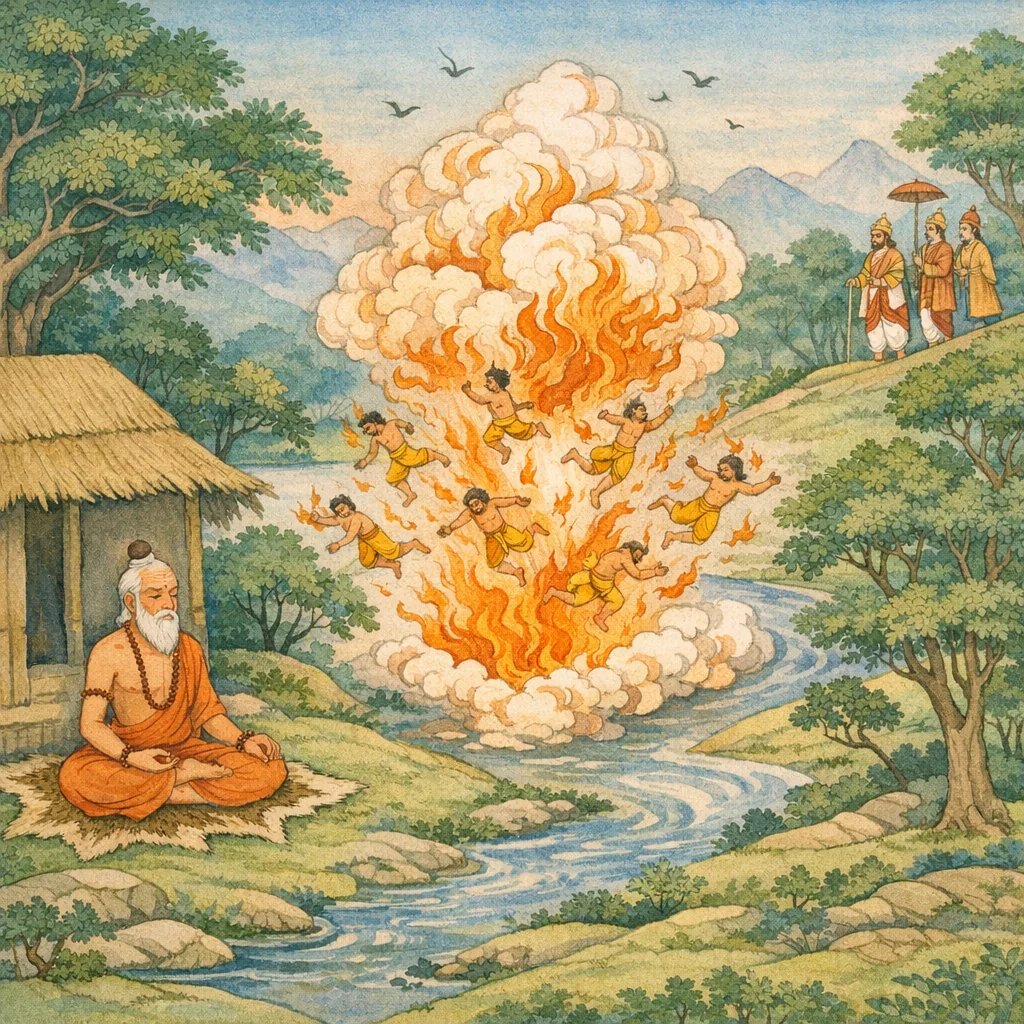
महर्षि कपिलकी क्रोधाग्निमें सगरपुत्रोंका भस्म होना महर्षि अगस्त्यका समुद्रपान वासुदेवेति य॑ प्राहु: कपिल मुनिपुड्भवम् । स चक्षुविकृतं कृत्वा तेजस्तेषु समुत्सूजन्
Lomaśa said: “They speak of Vāsudeva as the very source of the sage Kapila—of that Kapila whose wrath-fire reduced the sons of Sagara to ashes, and in whose age the sage Agastya drank up the ocean. Fixing his gaze in a dreadful, altered way, he released his blazing energy upon them.”
Verse 33
तान् दृष्टवा भस्मसाद् भूतान् नारद: सुमहातपा:,उन्हें भस्म हुआ देख महातपस्वी नारदजी राजा सगरके समीप आये और उनसे सब समाचार निवेदित किया। मुनिके मुखसे निकले हुए इस घोर वचनको सुनकर राजा सगर दो घड़ीतक अनमने हो महादेवजीके कथनपर विचार करते रहे। पुत्रकी मृत्युजनित वेदनासे अत्यन्त दुखी हो स्वयं ही अपने-आपको सान्त्वना दे उन्होंने अश्वको ही दूँढ़नेका विचार किया। भरतश्रेष्ठ] तदनन्तर असमञ्जसके पुत्र अपने पौत्र अंशुमान्को बुलाकर यह बात कही--“तात! मेरे अमिततेजस्वी साठ हजार पुत्र मेरे ही लिये महर्षि कपिलकी क्रोधाग्निमें पड़कर नष्ट हो गये। अनघ! पुरवासियोंके हितकी रक्षा रखकर धर्मकी रक्षा करते हुए मैंने तुम्हारे पिताको भी त्याग दिया है”
Seeing them reduced to ashes, the great ascetic Nārada approached King Sagara and reported the whole matter. Hearing the dreadful words that issued from the sage’s mouth, Sagara sat for a time in stunned reflection, turning over in his mind what had been declared in connection with Mahādeva. Tormented by the pain of his sons’ death, he steadied himself and resolved that the sacrificial horse must be sought out. Then he summoned Aṃśumān, the grandson of Asamañjasa, and said: “My child, for my sake my sixty thousand sons of immeasurable prowess have perished, consumed by the fire of the sage Kapila’s wrath. Blameless one, intent on protecting the welfare of the city and upholding dharma, I even cast aside your father.”
Verse 34
सगरान्तिकमागच्छत् तच्च तस्मै न््यवेदयत् । स ० कद वचो घोरं राजा मुनिमुखोद्गतम्,उन्हें भस्म हुआ देख महातपस्वी नारदजी राजा सगरके समीप आये और उनसे सब समाचार निवेदित किया। मुनिके मुखसे निकले हुए इस घोर वचनको सुनकर राजा सगर दो घड़ीतक अनमने हो महादेवजीके कथनपर विचार करते रहे। पुत्रकी मृत्युजनित वेदनासे अत्यन्त दुखी हो स्वयं ही अपने-आपको सान्त्वना दे उन्होंने अश्वको ही दूँढ़नेका विचार किया। भरतश्रेष्ठ] तदनन्तर असमञ्जसके पुत्र अपने पौत्र अंशुमान्को बुलाकर यह बात कही--“तात! मेरे अमिततेजस्वी साठ हजार पुत्र मेरे ही लिये महर्षि कपिलकी क्रोधाग्निमें पड़कर नष्ट हो गये। अनघ! पुरवासियोंके हितकी रक्षा रखकर धर्मकी रक्षा करते हुए मैंने तुम्हारे पिताको भी त्याग दिया है”
Seeing them reduced to ashes, the great ascetic Nārada came to King Sagara and reported the entire matter. Hearing this dreadful pronouncement that had issued from the sage’s mouth, the king sat for a time in stunned silence, reflecting on the import of Mahādeva’s words. Tormented by the pain of his sons’ death, he tried to steady himself and resolved to continue the search for the sacrificial horse. Then Sagara summoned Aṁśumān, the son of Asamañjasa and his own grandson, and said: “My child, for my sake my sixty thousand sons—men of immeasurable prowess—have perished, consumed by the fire of the sage Kapila’s wrath. Blameless one, in order to protect the welfare of the city and uphold dharma, I even cast aside your father.”
Verse 35
मुहूर्त भूत्वा स्थाणोर्वाक्यमचिन्तयत् । (स पुत्रनिधनोद््भूतदु:ःखेन समभिप्लुत: । आत्मानमात्मना55श्वास्य हयमेवान्वचिन्तयत् ।।) अंशुमन्तं समाहुय असमञ्ज:सुतं तदा,उन्हें भस्म हुआ देख महातपस्वी नारदजी राजा सगरके समीप आये और उनसे सब समाचार निवेदित किया। मुनिके मुखसे निकले हुए इस घोर वचनको सुनकर राजा सगर दो घड़ीतक अनमने हो महादेवजीके कथनपर विचार करते रहे। पुत्रकी मृत्युजनित वेदनासे अत्यन्त दुखी हो स्वयं ही अपने-आपको सान्त्वना दे उन्होंने अश्वको ही दूँढ़नेका विचार किया। भरतश्रेष्ठ] तदनन्तर असमञ्जसके पुत्र अपने पौत्र अंशुमान्को बुलाकर यह बात कही--“तात! मेरे अमिततेजस्वी साठ हजार पुत्र मेरे ही लिये महर्षि कपिलकी क्रोधाग्निमें पड़कर नष्ट हो गये। अनघ! पुरवासियोंके हितकी रक्षा रखकर धर्मकी रक्षा करते हुए मैंने तुम्हारे पिताको भी त्याग दिया है”
For a while, King Sagara reflected on the words spoken by Sthāṇu (Śiva). Overwhelmed by the grief that arose from the death of his sons, he steadied himself by his own resolve and turned his mind again to the very purpose of the rite—seeking the sacrificial horse. Then he summoned Aṃśumān, the son of Asamañjas, and addressed him, setting before him the burden of duty: the king’s personal sorrow must not derail the protection of the people and the maintenance of dharma, even when the cost is borne within one’s own family.
Verse 36
पौत्रं भरतशार्दूल इदं वचनमतब्रवीत् । षष्टिस्तानि सहस््राणि पुत्रणाममितौजसाम्,उन्हें भस्म हुआ देख महातपस्वी नारदजी राजा सगरके समीप आये और उनसे सब समाचार निवेदित किया। मुनिके मुखसे निकले हुए इस घोर वचनको सुनकर राजा सगर दो घड़ीतक अनमने हो महादेवजीके कथनपर विचार करते रहे। पुत्रकी मृत्युजनित वेदनासे अत्यन्त दुखी हो स्वयं ही अपने-आपको सान्त्वना दे उन्होंने अश्वको ही दूँढ़नेका विचार किया। भरतश्रेष्ठ] तदनन्तर असमञ्जसके पुत्र अपने पौत्र अंशुमान्को बुलाकर यह बात कही--“तात! मेरे अमिततेजस्वी साठ हजार पुत्र मेरे ही लिये महर्षि कपिलकी क्रोधाग्निमें पड़कर नष्ट हो गये। अनघ! पुरवासियोंके हितकी रक्षा रखकर धर्मकी रक्षा करते हुए मैंने तुम्हारे पिताको भी त्याग दिया है”
O tiger among the Bharatas, he spoke these words: “Those sixty thousand sons of mine, of immeasurable prowess—seeing them reduced to ashes, the great ascetic Nārada came to King Sagara and reported the entire matter. Hearing that dreadful utterance that issued from the sage’s mouth, King Sagara sat for a while, stunned, turning over in his mind the import of Mahādeva’s pronouncement. Tormented by the pain of his sons’ death, he steadied himself and resolved that the sacrificial horse must be sought out. Then he summoned his grandson Aṃśumān, the son of Asamañjasa, and said: ‘My child, for my sake alone my sixty thousand radiant sons fell into the fire of the sage Kapila’s wrath and perished. Blameless one, to safeguard dharma and protect the welfare of the city’s people, I even abandoned your father.’”
Verse 37
कापिलं तेज आसाद्य मत्कृते निधनं गता: । तव चापि पिता तात परित्यक्तो मयानघ । धर्म संरक्षमाणेन पौरणां हितमिच्छता,उन्हें भस्म हुआ देख महातपस्वी नारदजी राजा सगरके समीप आये और उनसे सब समाचार निवेदित किया। मुनिके मुखसे निकले हुए इस घोर वचनको सुनकर राजा सगर दो घड़ीतक अनमने हो महादेवजीके कथनपर विचार करते रहे। पुत्रकी मृत्युजनित वेदनासे अत्यन्त दुखी हो स्वयं ही अपने-आपको सान्त्वना दे उन्होंने अश्वको ही दूँढ़नेका विचार किया। भरतश्रेष्ठ] तदनन्तर असमञ्जसके पुत्र अपने पौत्र अंशुमान्को बुलाकर यह बात कही--“तात! मेरे अमिततेजस्वी साठ हजार पुत्र मेरे ही लिये महर्षि कपिलकी क्रोधाग्निमें पड़कर नष्ट हो गये। अनघ! पुरवासियोंके हितकी रक्षा रखकर धर्मकी रक्षा करते हुए मैंने तुम्हारे पिताको भी त्याग दिया है”
“Having encountered the fiery power of Kapila, they met their death because of me. And you too, dear child—your father was abandoned by me, blameless one. For, while striving to safeguard dharma and seeking the welfare of the citizens, I made that choice.”
Verse 38
युधिछिर उवाच किमर्थ राजशार्दूल: सगर: पुत्रमात्मजम् | त्यक्तवान् दुस्त्यजं वीरं तन्मे ब्रूहि तपोधन,युधिष्ठिरने पूछा--तपोधन! नृपश्रेष्ठ सगरने किसलिये अपने दुस्त्यज वीर पुत्रका त्याग किया था, यह मुझे बताइये
Yudhiṣṭhira said: “For what reason did King Sagara—tiger among kings—abandon his own son, that heroic one so hard to renounce? O ascetic rich in austerity, tell me this.”
Verse 39
लोगमश उवाच असमज्जा इति ख्यात: सगरस्य सुतो हाभूत् | यं शैब्या जनयामास पौराणां स हि दारकान्,लोमशजीने कहा--राजन्! सगरका वह पुत्र जिसे रानी शैब्याने उत्पन्न किया था, असमज्जसके नामसे विख्यात हुआ। वह जहाँ-तहाँ खेल-कूदमें लगे हुए पुरवासियोंके दुर्बल बालकोंके समीप सहसा पहुँच जाता और चीखते-चिल्लाते रहनेपर भी उनका गला पकड़कर उन्हें नदीमें फेंक देता था। तब समस्त पुरवासी भय और शोकमें मग्न हो राजा सगरके पास आये और हाथ जोड़े खड़े हो इस प्रकार कहने लगे--“महाराज! आप शत्रुसेना आदिके भयसे हमारी रक्षा करनेवाले हैं
Lomaśa said: ‘Sagara had a son who became known by the name Asamañjā, born of queen Śaibyā. He used to suddenly come upon the townspeople’s weak little children and, even as they cried out, seize them by the throat and throw them into the river.’
Verse 40
(क्रीडत: सहसा55साद्य तत्र तत्र महीपते ।) गलेषु क्रोशतो गृहा नद्यां चिक्षेप दुर्बलान् ततः पौरा: समाजम्मुर्भयशोकपरिप्लुता:,लोमशजीने कहा--राजन्! सगरका वह पुत्र जिसे रानी शैब्याने उत्पन्न किया था, असमज्जसके नामसे विख्यात हुआ। वह जहाँ-तहाँ खेल-कूदमें लगे हुए पुरवासियोंके दुर्बल बालकोंके समीप सहसा पहुँच जाता और चीखते-चिल्लाते रहनेपर भी उनका गला पकड़कर उन्हें नदीमें फेंक देता था। तब समस्त पुरवासी भय और शोकमें मग्न हो राजा सगरके पास आये और हाथ जोड़े खड़े हो इस प्रकार कहने लगे--“महाराज! आप शत्रुसेना आदिके भयसे हमारी रक्षा करनेवाले हैं
Lomaśa said: “O king, while the townspeople’s children were playing here and there, he would suddenly rush up to the weak ones. Even as they cried out, he would seize them by the throat and fling them into the river. Then the citizens, overwhelmed by fear and grief, gathered together and came (to the king).” Ethically, the passage highlights the collapse of protection within the realm when the powerful (especially one connected to the royal house) prey upon the vulnerable; it also frames the citizens’ appeal to the king as a dharmic demand for the ruler’s duty of safeguarding subjects.
Verse 41
सगरं चाभ्यभाषन्त सर्वे प्राजजलय: स्थिता: । त्वं नस्त्राता महाराज परचक्रादिभिभ्भयात्,लोमशजीने कहा--राजन्! सगरका वह पुत्र जिसे रानी शैब्याने उत्पन्न किया था, असमज्जसके नामसे विख्यात हुआ। वह जहाँ-तहाँ खेल-कूदमें लगे हुए पुरवासियोंके दुर्बल बालकोंके समीप सहसा पहुँच जाता और चीखते-चिल्लाते रहनेपर भी उनका गला पकड़कर उन्हें नदीमें फेंक देता था। तब समस्त पुरवासी भय और शोकमें मग्न हो राजा सगरके पास आये और हाथ जोड़े खड़े हो इस प्रकार कहने लगे--“महाराज! आप शत्रुसेना आदिके भयसे हमारी रक्षा करनेवाले हैं
Lomaśa said: Then all the townspeople, standing with folded hands, addressed King Sagara: “O great king, you are our protector—saving us from the fear of enemy forces and other dangers.” In ethical terms, they appeal to the king’s rājadharma: the duty to safeguard subjects not only from external threats but also from internal harm that destroys the weak and innocent.
Verse 42
असमजग्जोभयाद् घोरात् ततो नस्त्रातुमरहसि । पौराणां वचन श्रुत्वा घोरं नृपतिसत्तम:,“अत: असमंजसके घोर भयसे आप हमारी रक्षा करें!” पुरवासियोंका यह भयंकर वचन सुनकर नृपश्रेष्ठ सगर दो घड़ीतक अनमने होकर बैठे रहे। फिर मन्त्रियोंसे इस प्रकार बोले--'आज मेरे पुत्र असमंजसको मेरे घरसे बाहर निकाल दो”
Lomasha said: “From this dreadful fear caused by Asamañjasa, you ought to protect us.” Hearing these terrifying words of the townspeople, King Sagara—the best of rulers—sat for a while in troubled indecision. Then he addressed his ministers: “Today, drive my son Asamañjasa out of my house.”
Verse 43
मुहुर्त विमना भूत्वा सचिवानिदमब्रवीत् । असमज्जा: पुरादद्य सुतो मे विप्रवास्यताम्,“अत: असमंजसके घोर भयसे आप हमारी रक्षा करें!” पुरवासियोंका यह भयंकर वचन सुनकर नृपश्रेष्ठ सगर दो घड़ीतक अनमने होकर बैठे रहे। फिर मन्त्रियोंसे इस प्रकार बोले--'आज मेरे पुत्र असमंजसको मेरे घरसे बाहर निकाल दो”
Lomāśa said: After sitting for a while in dejection, King Sagara addressed his ministers: “Today, let my son Asamañja be expelled from the city.” Having heard the townspeople’s dreadful plea—“Because of Asamañja we are in terrible fear; protect us!”—the king, though pained and hesitant, chose the safety of his subjects over paternal attachment, ordering his son’s banishment as an act of royal responsibility.
Verse 44
यदि वो मत्प्रियं कार्यमेतच्छीघ्रं विधीयताम् । एवमुक्ता नरेन्द्रेण सचिवास्ते नराधिप,“यदि तुम्हें मेरा प्रिय कार्य करना है तो मेरी इस आज्ञाका शीघ्र पालन होना चाहिये।” राजन्! महाराज सगरके ऐसा कहनेपर मन्त्रियोंने शीघ्र वैसा ही किया, जैसा उनका आदेश था। युधिष्छिर! पुरवासियोंके हित चाहनेवाले महात्मा सगरने जिस प्रकार अपने पुत्रको निर्वासित किया था, वह सब प्रसंग मैंने तुमसे कह सुनाया। अब महाधनुर्धर अंशुमानसे राजा सगरने जो कुछ कहा, वह सब तुम्हें बता रहा हूँ, मेरे मुखसे सुनो
Lomāśa said: “If you wish to do what is dear to me, let this be carried out at once.” Thus addressed by the king, O lord of men, his ministers promptly executed exactly what he had commanded. In this way, O Yudhiṣṭhira, I have related to you the entire episode of how the great-souled King Sagara—intent on what he believed to be the welfare of his people—banished his own son. Now listen as I tell you what King Sagara said to the mighty bowman Aṃśumān.
Verse 45
यथोक्तं त्वरिताश्षक्रुर्यथथा55ज्ञापितवान् नृप: । एतत् ते सर्वमाख्यातं यथा पुत्रो महात्मना,“यदि तुम्हें मेरा प्रिय कार्य करना है तो मेरी इस आज्ञाका शीघ्र पालन होना चाहिये।” राजन्! महाराज सगरके ऐसा कहनेपर मन्त्रियोंने शीघ्र वैसा ही किया, जैसा उनका आदेश था। युधिष्छिर! पुरवासियोंके हित चाहनेवाले महात्मा सगरने जिस प्रकार अपने पुत्रको निर्वासित किया था, वह सब प्रसंग मैंने तुमसे कह सुनाया। अब महाधनुर्धर अंशुमानसे राजा सगरने जो कुछ कहा, वह सब तुम्हें बता रहा हूँ, मेरे मुखसे सुनो
Lomasha said: “Just as he had spoken, they acted swiftly, exactly as the king had commanded. I have now told you the whole account—how the great-souled Sagara, seeking the welfare of his people, banished his son. Now I shall relate to you everything that King Sagara said to the mighty archer Aṁśumān; listen from my mouth.”
Verse 46
पौराणां हितकामेन सगरेण विवासित: । अंशुमांस्तु महेष्वासो यदुक्त: सगरेण हि | तत् ते सर्व प्रवक्ष्यामि कीर्त्यमानं निबोध मे,“यदि तुम्हें मेरा प्रिय कार्य करना है तो मेरी इस आज्ञाका शीघ्र पालन होना चाहिये।” राजन्! महाराज सगरके ऐसा कहनेपर मन्त्रियोंने शीघ्र वैसा ही किया, जैसा उनका आदेश था। युधिष्छिर! पुरवासियोंके हित चाहनेवाले महात्मा सगरने जिस प्रकार अपने पुत्रको निर्वासित किया था, वह सब प्रसंग मैंने तुमसे कह सुनाया। अब महाधनुर्धर अंशुमानसे राजा सगरने जो कुछ कहा, वह सब तुम्हें बता रहा हूँ, मेरे मुखसे सुनो
Lomasha said: “For the welfare of the citizens, King Sagara—intent on their good—banished his son. Now I shall tell you in full what Sagara said to Aṁśumān, that great archer. Listen attentively as I recount it.”
Verse 47
सगर उवाच पितुश्न ते5हं त्यागेन पुत्राणां निधनेन च | अलाभेन तथाश्व॒स्य परितप्यामि पुत्रक,सगर बोले--बेटा! तुम्हारे पिताको त्याग देनेसे, अन्य पुत्रोंकी मृत्यु हो जानेसे तथा यज्ञसम्बन्धी अश्वके न मिलनेसे मैं सर्वथा संतप्त हो रहा हूँ
Sagara said: “My child, I am utterly distressed—because your father was abandoned, because my other sons have perished, and because the sacrificial horse has not been recovered. These losses weigh on me without respite.”
Verse 48
तस्माद् दुःखाभिसंतप्तं यज्ञविघ्नाच्च मोहितम् | हयस्यानयनात् पौत्र नरकान्मां समुद्धर,अतः पौत्र! यज्ञमें विघ्न पड़ जानेसे मैं मोहित और दु:खसे संतप्त हूँ। तुम अश्वको ले आकर नरकसे मेरा उद्धार करो
Therefore, my grandson, I am bewildered and scorched by grief because my sacrifice has been obstructed. So, bring back the sacrificial horse; by retrieving it, deliver me from hell—restore the rite and rescue my honor and spiritual fate.
Verse 49
अंशुमानेवमुक्तस्तु सगरेण महात्मना | जगाम दु:खात् तं देशं यत्र वै दारिता मही,महात्मा सगरके ऐसा कहनेपर अंशुमान् बड़े दुःखसे उस स्थानपर गये जहाँ पृथ्वी विदीर्ण की गयी थी
Thus addressed by the great-souled Sagara, Aṁśumān—heavy with sorrow—went to that very place where the earth had been torn open. The verse underscores dutiful obedience to an elder’s command and the resolve to pursue a difficult task despite grief.
Verse 50
स तु तेनैव मार्गेण समुद्र प्रविवेश ह । अपश्यच्च महात्मानं कपिल॑ तुरगं च तम्,उन्होंने उसी मार्गसे समुद्रमें प्रवेश किया और महात्मा कपिल तथा यज्ञिय अश्वको देखा
Following that very route, he entered the ocean and there beheld the great-souled sage Kapila, along with that sacrificial horse. The moment frames a moral turning point: the seeker’s persistence leads to a direct encounter with ascetic power and the sacred object at the center of the royal rite, demanding restraint and discernment rather than rash accusation.
Verse 51
स दृष्टवा तेजसो राशिं पुराणमृषिसत्तमम् | प्रणम्य शिरसा भूमौ कार्यमस्मै न्यवेदयत्,तेजोराशि मुनिप्रवर पुराणपुरुष कपिलजीका दर्शन करके अंशुमानने धरतीपर माथा टेककर प्रणाम किया और उनसे अपना कार्य बताया
Seeing that ancient, supreme sage—like a very mass of radiance—he bowed with his head to the ground in reverence and then submitted to him the purpose of his quest. The scene underscores the ethic of approaching spiritual authority with humility and truthful disclosure of one’s aim.
Verse 52
ततः प्रीतो महाराज कपिलों5शुमतो5भवत् | उवाच चैन धर्मात्मा वरदो5स्मीति भारत,भरतवंशी महाराज! इससे धर्मात्मा कपिलजी अंशुमानपर प्रसन्न हो गये और बोले -- मैं तुम्हें वर देनेको उद्यत हूँ
Then the sage Kapila, pleased, became gracious toward Aṁśumān. The righteous one addressed him: “O Bhārata, I am ready to grant you a boon.” The moment underscores that sincere approach and humility before a dharmic authority can elicit compassionate favor, and that boons are framed as moral gifts rather than mere rewards.
Verse 53
स वत्रे तुरगं तत्र प्रथमं यज्ञकारणात् । द्वितीयं वरक॑ वत्रे पितृणां पावनेच्छया,अंशुमानने पहले तो यज्ञकार्यकी सिद्धिके लिये वहाँ उस अश्वके लिये प्रार्थना की और दूसरा वर अपने पितरोंको पवित्र करनेकी इच्छासे माँगा
Sagara said: “There I first asked for the horse, for the sake of completing the sacrifice. As a second boon, moved by the desire to purify my forefathers, I asked for their sanctification.” The verse frames kingship as accountable to ritual duty and to ancestral responsibility: the ruler seeks not private gain, but the restoration of a disrupted rite and the moral-spiritual uplift of his lineage.
Verse 54
तमुवाच महातेजा: कपिलो मुनिपुड्भव: । ददानि तव भद्र ते यद् यत् प्रार्थयसेडनघ,तब मुनिश्रेष्ठ महातेजस्वी कपिलने अंशुमान्से कहा--“अनघ! तुम्हारा कल्याण हो। तुम जो कुछ माँगते हो वह सब तुम्हें दूँगा। तुममें क्षमा, धर्म और सत्य सब कुछ प्रतिष्ठित है। तुम-जैसे पौत्रको पाकर राजा सगर कृतार्थ हैं और तुम्हारे पिता तुम्हींसे वस्तुतः पुत्रवान् हैं
Then the mighty Kapila, foremost among sages, addressed him: “Blessings upon you, O sinless one. Whatever you ask of me, I shall grant.” In this exchange, the sage’s assurance highlights the ethical worth of the petitioner—one established in forbearance, dharma, and truth—so that the boon is framed not as mere favor but as a response to proven virtue and rightful intent.
Verse 55
त्वयि क्षमा च धर्मश्न सत्यं चापि प्रतिक्ठितम् । त्वया कृतार्थ: सगर: पुत्रवांश्व त्वया पिता,तब मुनिश्रेष्ठ महातेजस्वी कपिलने अंशुमान्से कहा--“अनघ! तुम्हारा कल्याण हो। तुम जो कुछ माँगते हो वह सब तुम्हें दूँगा। तुममें क्षमा, धर्म और सत्य सब कुछ प्रतिष्ठित है। तुम-जैसे पौत्रको पाकर राजा सगर कृतार्थ हैं और तुम्हारे पिता तुम्हींसे वस्तुतः पुत्रवान् हैं
In you are firmly established forbearance, righteousness, and truth. Through you King Sagara has found fulfillment; and through you, your father is truly blessed with a worthy son. The verse praises the ethical stature of the descendant, presenting him as the living support of dharma and the source of honor and completion for his lineage.
Verse 56
तव चैव प्रभावेण स्वर्ग यास्यन्ति सागरा: । (शलभत्वं गता होते मम क्रोधहुताशने ।) पौत्रश्न ते त्रिपथगां त्रिदिवादानयिष्यति,“तुम्हारे ही प्रभावसे सगरके सारे पुत्र जो मेरी क्रोधाग्निमें शलभकी भाँति भस्म हो गये हैं, स्वर्गलोकमें चले जायँगे। तुम्हारा पौत्र भगवान् शंकरको संतुष्ट करके सगरपुत्रोंकों पवित्र करनेके लिये स्वर्गलोकसे यहाँ गंगाजीको ले आयेगा। नरश्रेष्ठ! तुम्हारा भला हो। तुम इस यज्ञिय अश्वको ले जाओ
Sagara said: “By the power of your merit, the sons of Sagara—who were burned to ashes like moths in the fire of my wrath—will attain heaven. And your grandson will bring down the Three-pathed River, Gaṅgā, from the celestial world, thereby purifying the sons of Sagara.” The passage underscores a moral arc: uncontrolled anger destroys, yet the fruits of austerity and righteous effort can restore what was lost and secure liberation for others.
Verse 57
पावनार्थ सागराणां तोषयित्वा महेश्वरम् । हयं नयस्व भद्ठ ते यज्ञियं नरपुड़व,“तुम्हारे ही प्रभावसे सगरके सारे पुत्र जो मेरी क्रोधाग्निमें शलभकी भाँति भस्म हो गये हैं, स्वर्गलोकमें चले जायँगे। तुम्हारा पौत्र भगवान् शंकरको संतुष्ट करके सगरपुत्रोंकों पवित्र करनेके लिये स्वर्गलोकसे यहाँ गंगाजीको ले आयेगा। नरश्रेष्ठ! तुम्हारा भला हो। तुम इस यज्ञिय अश्वको ले जाओ
Sagara said: “For the sake of purifying the sons of Sagara, your descendant will please Maheśvara (Śiva) and bring the river Gaṅgā down from heaven to this world, thereby sanctifying them. O best of men, may good befall you—now take back this sacrificial horse and proceed with the rite.”
Verse 58
यज्ञ: समाप्यतां तात सगरस्य महात्मन: । अंशुमानेवमुक्तस्तु कपिलेन महात्मना,“तात! महात्मा सगरका यज्ञ पूर्ण करो।” महात्मा कपिलके ऐसा कहनेपर अंशुमान् उस अश्वको लेकर महामना सगरके यज्ञमण्डपमें आये और उनके चरणोंमें प्रणाम करके उनसे सब समाचार निवेदन किया। सगरने भी स्नेहसे अंशुमान्का मस्तक सूँघा। अंशुमानने सगर- पुत्रोंका विनाश जैसा देखा और सुना था, वह सब बताया, साथ ही यह भी कहा कि *यज्ञिय अश्व यज्ञममण्डपमें आ गया है।” यह सुनकर राजा सगरने पुत्रोंके मरनेका दुःख त्याग दिया
Kapila, the great sage, said to Aṃśumān: “Dear child, let the sacrifice of the noble King Sagara be brought to completion.” Having been thus instructed by the venerable Kapila, Aṃśumān took the sacrificial horse and returned to Sagara’s ritual enclosure. Bowing at the king’s feet, he reported all that had occurred—how Sagara’s sons had perished and how the consecrated horse had now been recovered and brought back to the yajña. Hearing this, King Sagara set aside his grief over the death of his sons, choosing instead to uphold the completion of the rite and the kingly duty bound to it.
Verse 59
आजगाम हयं गृह यज्ञवार्ट महात्मन: । सो5भिवाद्य तत: पादौ सगरस्य महात्मन:,“तात! महात्मा सगरका यज्ञ पूर्ण करो।” महात्मा कपिलके ऐसा कहनेपर अंशुमान् उस अश्वको लेकर महामना सगरके यज्ञमण्डपमें आये और उनके चरणोंमें प्रणाम करके उनसे सब समाचार निवेदन किया। सगरने भी स्नेहसे अंशुमान्का मस्तक सूँघा। अंशुमानने सगर- पुत्रोंका विनाश जैसा देखा और सुना था, वह सब बताया, साथ ही यह भी कहा कि *यज्ञिय अश्व यज्ञममण्डपमें आ गया है।” यह सुनकर राजा सगरने पुत्रोंके मरनेका दुःख त्याग दिया
The sacrificial horse returned to the great king’s ritual enclosure. Having arrived, Aṁśumān bowed in reverence at the feet of the noble King Sagara and reported all that had occurred—how Sagara’s sons had perished and how the consecrated horse had been recovered and brought back to the yajña. Hearing that the rite could now be completed, Sagara set aside his grief for his sons, steadied by the higher duty of fulfilling the sacrifice and the larger good bound up with it.
Verse 60
मूर्थ्नि तेनाप्युपाप्रातस्तस्मै सर्व न्यवेदयत् । यथा दृष्ट॑ श्रुते चापि सागराणां क्षयं तथा,“तात! महात्मा सगरका यज्ञ पूर्ण करो।” महात्मा कपिलके ऐसा कहनेपर अंशुमान् उस अश्वको लेकर महामना सगरके यज्ञमण्डपमें आये और उनके चरणोंमें प्रणाम करके उनसे सब समाचार निवेदन किया। सगरने भी स्नेहसे अंशुमान्का मस्तक सूँघा। अंशुमानने सगर- पुत्रोंका विनाश जैसा देखा और सुना था, वह सब बताया, साथ ही यह भी कहा कि *यज्ञिय अश्व यज्ञममण्डपमें आ गया है।” यह सुनकर राजा सगरने पुत्रोंके मरनेका दुःख त्याग दिया
Having come to him, he bowed his head and reported everything in full. He recounted, exactly as he had seen and heard, the destruction of Sagara’s sons. He also conveyed that the sacrificial horse had been recovered and brought back to the place of the rite—so that Sagara might complete the yajña. Hearing this, King Sagara set aside his grief for his sons and turned his mind to the completion of the sacred duty.
Verse 61
त॑ चास्मै हयमाचष्ट यज्ञवाटमुपागतम् । तच्छुत्वा सगरो राजा पुत्र॒जं दुःखमत्यजत्,“तात! महात्मा सगरका यज्ञ पूर्ण करो।” महात्मा कपिलके ऐसा कहनेपर अंशुमान् उस अश्वको लेकर महामना सगरके यज्ञमण्डपमें आये और उनके चरणोंमें प्रणाम करके उनसे सब समाचार निवेदन किया। सगरने भी स्नेहसे अंशुमान्का मस्तक सूँघा। अंशुमानने सगर- पुत्रोंका विनाश जैसा देखा और सुना था, वह सब बताया, साथ ही यह भी कहा कि *यज्ञिय अश्व यज्ञममण्डपमें आ गया है।” यह सुनकर राजा सगरने पुत्रोंके मरनेका दुःख त्याग दिया
He reported to him that the sacrificial horse had returned and reached the enclosure of the yajña. Hearing this, King Sagara set aside the grief born of his sons’ destruction—his mind turning from personal sorrow to the completion of the sacred rite and the larger duty of kingship.
Verse 62
अंशुमन्तं च सम्पूज्य समापयत त॑ क्रतुम् | समाप्तयज्ञ: सगरो देवै: सर्व: सभाजित:,और अंशुमानकी प्रशंसा करते हुए अपने उस यज्ञको पूर्ण किया। यज्ञ पूर्ण हो जानेपर सब देवताओंने सगरका बड़ा सत्कार किया
Sagara, having duly honored Aṁśumān, brought that sacrificial rite to its completion. When the sacrifice was finished, all the gods together paid Sagara great respect. Ethically, the verse highlights that rightful completion of a vowed rite (kratu) is joined with gratitude and public honoring of merit—both toward the worthy helper (Aṁśumān) and toward the sacrificer who fulfills his commitment.
Verse 63
पुत्रत्वे कल्पयामास समुद्रं वरुणालयम् | प्रशास्य सुचिरं काल॑ राज्यं राजीवलोचन:,कमलके समान नेत्रोंवाले सगरने वरुणालय समुद्रको अपना पुत्र माना और दीर्घकालतक राज्यशासन करके अन्तमें अपने पौत्र अंशुमानूपर राज्यका सारा भार रखकर वे स्वर्गलेकको चले गये। महाराज! धर्मात्मा अंशुमान् भी अपने पितामहसगरके समान ही समुद्रसे घिरी हुई इस वसुधाका पालन करते रहे। उनके एक पुत्र हुआ जिसका नाम दिलीप था। वह भी धर्मका ज्ञाता था
Sagara said: “The lotus-eyed king regarded the ocean—Varuṇa’s abode—as his own son. After ruling the kingdom for a very long time, he finally entrusted the entire burden of sovereignty to his grandson Aṃśumān and departed for heaven. O King, the righteous Aṃśumān too, like his grandfather Sagara, continued to protect this earth encircled by the sea. He had a son named Dilīpa, who was also a knower of dharma.”
Verse 64
पौत्रे भारं समावेश्य जगाम त्रिदिवं तदा | अंशुमानपि धर्मात्मा महीं सागरमेखलाम्,कमलके समान नेत्रोंवाले सगरने वरुणालय समुद्रको अपना पुत्र माना और दीर्घकालतक राज्यशासन करके अन्तमें अपने पौत्र अंशुमानूपर राज्यका सारा भार रखकर वे स्वर्गलेकको चले गये। महाराज! धर्मात्मा अंशुमान् भी अपने पितामहसगरके समान ही समुद्रसे घिरी हुई इस वसुधाका पालन करते रहे। उनके एक पुत्र हुआ जिसका नाम दिलीप था। वह भी धर्मका ज्ञाता था
Having entrusted the burden of kingship to his grandson, Sagara then departed for the heavenly world. His grandson Aṃśumān too, a righteous-souled ruler, protected the earth girdled by the ocean—continuing the royal duty in the same spirit of dharma and responsible governance.
Verse 65
प्रशशास महाराज यथैवास्य पितामह: । तस्य पुत्र: समभवद् दिलीपो नाम धर्मवित्,कमलके समान नेत्रोंवाले सगरने वरुणालय समुद्रको अपना पुत्र माना और दीर्घकालतक राज्यशासन करके अन्तमें अपने पौत्र अंशुमानूपर राज्यका सारा भार रखकर वे स्वर्गलेकको चले गये। महाराज! धर्मात्मा अंशुमान् भी अपने पितामहसगरके समान ही समुद्रसे घिरी हुई इस वसुधाका पालन करते रहे। उनके एक पुत्र हुआ जिसका नाम दिलीप था। वह भी धर्मका ज्ञाता था
O great king, he ruled just as his grandfather had ruled. To him was born a son named Dilīpa, a knower of dharma—one who understood righteous conduct and the duties of kingship.
Verse 66
तस्मै राज्यं समाधाय अंशुमानपि संस्थित: । दिलीपस्तु ततः श्रुत्वा पितृणां निधनं महत्,दिलीपको राज्य देकर अंशुमान् भी परलोक-वासी हुए। दिलीपने जब अपने पितरोंके महान् संहारका समाचार सुना, तब वे दुःखसे संतप्त हो उठे और उनकी सद्गतिका उपाय सोचने लगे। राजा दिलीपने गंगाजीको इस भूतलपर उतारनेके लिये महान प्रयत्न किया
Having duly entrusted the kingdom to him, Aṃśumān too passed away. Then Dilīpa, on hearing of the great destruction of his forefathers, was overwhelmed with grief and began to consider the means for securing their blessed passage—therefore he undertook mighty efforts to bring the river Gaṅgā down upon the earth.
Verse 67
पर्यतप्यत दुःखेन तेषां गतिमचिन्तयत् । गड्भावतरणे यत्नं सुमहच्चाकरोन्नूप:,दिलीपको राज्य देकर अंशुमान् भी परलोक-वासी हुए। दिलीपने जब अपने पितरोंके महान् संहारका समाचार सुना, तब वे दुःखसे संतप्त हो उठे और उनकी सद्गतिका उपाय सोचने लगे। राजा दिलीपने गंगाजीको इस भूतलपर उतारनेके लिये महान प्रयत्न किया
Sagara said: Tormented by grief, he pondered the means to secure their blessed passage. The king then undertook a very great effort to bring the river Gaṅgā down to the earth—so that the fallen ancestors might attain purification and a rightful destiny.
Verse 68
न चावतारयामास चेष्टमानो यथाबलम् | तस्य पुत्र: समभवच्छीमान् धर्मपरायण:,(भगीरथं महात्मानं सत्यधर्मपरायणम् ।) यथाशक्ति चेष्टा करनेपर भी वे गंगाको पृथ्वीपर उतार न सके। दिलीपके भगीरथ नामसे विख्यात एक पुत्र हुआ जो परम कान्तिमान्, धर्मपरायण, सत्यवादी और अदोषदर्शी था। सत्यधर्मपरायण महात्मा भगीरथका राज्याभिषेक करके दिलीप वनमें चले गये
Yet, despite striving to the best of his ability, he could not bring the Gaṅgā down to the earth. Then a son was born to him—illustrious and steadfast in dharma: the great-souled Bhagīratha, renowned for devotion to truth and righteousness. Having installed that truth-and-dharma–devoted Bhagīratha on the throne, Dilīpa departed for the forest.
Verse 69
भगीरथ इति ख्यात: सत्यवागनसूयक: । अभिषिच्य तु तं राज्ये दिलीपो वनमाश्रित:,(भगीरथं महात्मानं सत्यधर्मपरायणम् ।) यथाशक्ति चेष्टा करनेपर भी वे गंगाको पृथ्वीपर उतार न सके। दिलीपके भगीरथ नामसे विख्यात एक पुत्र हुआ जो परम कान्तिमान्, धर्मपरायण, सत्यवादी और अदोषदर्शी था। सत्यधर्मपरायण महात्मा भगीरथका राज्याभिषेक करके दिलीप वनमें चले गये
“He became renowned by the name Bhagiratha—truthful in speech and free from malice. Having duly consecrated him to the kingship, Dilipa withdrew to the forest.” The verse highlights an ethical ideal of rulership: a king marked by truthfulness and non-enviousness is installed, while the elder renounces power and embraces forest-life, modeling restraint and dharma.
Verse 70
तपःसिद्धिसमायोगात् स राजा भरतर्षभ । वनाज्जगाम त्रिदिवं कालयोगेन भारत,भरतश्रेष्ठ] राजा दिलीप तपस्याजनक सिद्धिसे संयुक्त हो अन्तकाल आनेपर वनसे स्वर्गलोकको चले गये
O bull among the Bharatas, that king—having attained the fruition born of austerities—departed from the forest to the heavenly world when the destined time arrived. The passage underscores that disciplined tapas, when perfected, becomes a legitimate path to an auspicious end, and that even royal life finds its completion in renunciation aligned with time and order.
Verse 106
इस प्रकार श्रीमहाभारत वनपर्वके अन्तर्गत तीर्थयात्रापर्चमें लोमशती र्थयात्राके प्रसड्रमें सगरसंततिवर्णनविषयक एक सौ छठाँ अध्याय पूरा हुआ
Thus, in the Śrī Mahābhārata, within the Vana Parva—specifically in the Tīrtha-yātrā section—during the account of Lomāśa’s pilgrimage, the one hundred and sixth chapter, dealing with the description of King Sagara’s lineage, comes to an end.
Verse 107
इति श्रीमहाभारते वनपर्वणि तीर्थयात्रापर्वणि लोमशतीर्थयात्रायामगस्त्यमाहात्म्यकथने सप्ताधिकशततमो< ध्याय:,इस प्रकार श्रीमहाभारत वनपर्वके अन्तर्गत तीर्थयात्रापर्वमें लोमशती र्थयात्राके प्रसंगमें अगस्त्यमाहात्म्यवर्णणविषयक एक सौ सातवाँ अध्याय पूरा हुआ
Verse 323
ददाह सुमहातेजा मन्दबुद्धीन् स सागरान् | मुनिप्रवर कपिल वे ही भगवान् विष्णु हैं जिन्हें वासुदेव कहते हैं। उन महातेजस्वीने विकराल आँखें करके अपना तेज उनपर छोड़ दिया और मन्दबुद्धि सगरपुत्रोंकी जला दिया
Lomasha said: The exceedingly radiant sage Kapila—foremost among ascetics, and indeed identified with Lord Viṣṇu, whom people call Vāsudeva—fixed his terrible gaze and released his fiery splendor upon them. Thus he burned the dull-witted sons of Sagara to ashes, showing how reckless aggression against a realized sage brings swift ruin and how divine power protects dharma through uncompromising consequence.
Frequently Asked Questions
The dilemma is how a ruler should respond to inherited ancestral catastrophe: whether political duties or salvific responsibility takes priority, and how to pursue the latter without violating cosmic constraints.
Legitimate ends require disciplined means: sustained tapas and humility align personal intent with dharmic order, while recognition of limits (Gaṅgā’s force) necessitates appropriate mediation (Śiva).
No explicit phalaśruti is stated here; the implied meta-teaching is that tīrtha, sacred waters, and austerity operate within a structured cosmology where boons are conditional and ethically purposed (pitṛ-hita).