Adhyaya 16
आयोधनदर्शनम् (Viewing the Battlefield of Kurukṣetra)
Upa-parva: Kurukṣetra-āyodhana-darśana (The Women’s Viewing of the Battlefield)
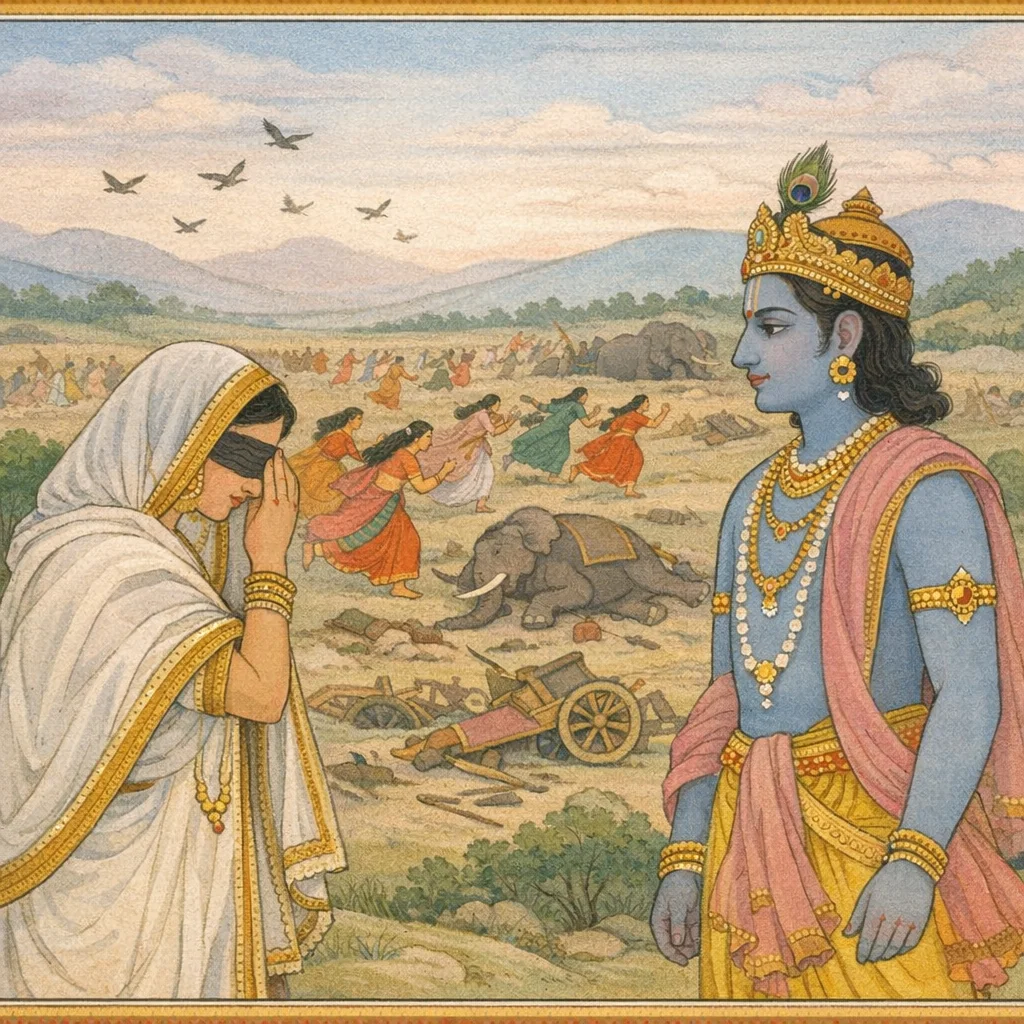
Vaiśaṃpāyana narrates how Gāndhārī, described as pativratā and disciplined in vows, receives a boon-linked capacity for divya perception and surveys the battlefield as if near at hand. The chapter offers an inventory-like depiction of Kurukṣetra after the conflict: terrain strewn with bones, hair, weapons, ornaments, severed limbs, and bodies of warriors and animals; scavengers and nocturnal beings move through the field, emphasizing the collapse of martial order into exposure and decay. Under Vyāsa’s authorization, Dhṛtarāṣṭra, the Pāṇḍavas, and Kṛṣṇa lead the Kuru women to the site, where they discover slain sons, brothers, fathers, and husbands. Gāndhārī addresses Kṛṣṇa directly, pointing to the widows’ condition and naming prominent fallen figures (e.g., Bhīṣma, Karṇa, Droṇa, Abhimanyu), framing their deaths as nearly unthinkable. Her lament contrasts former royal comforts with present vulnerability, and repeatedly returns to the theme that anger and alignment under Duryodhana culminated in irreversible ruin. The chapter closes with Gāndhārī’s self-accusatory karmic reflection and her sighting of her dead son.
Chapter Arc: व्यास-वरदान से दिव्यदृष्टि प्राप्त गान्धारी युद्धभूमि की ओर दृष्टि डालती हैं—जहाँ विजय का कोई उत्सव नहीं, केवल करुणा का अथाह समुद्र है। → दिव्यज्ञान-बल से सम्पन्न गान्धारी रणक्षेत्र के दृश्य देखती हैं: हाथी-घोड़े, नर-नारी के आर्तनाद, शृगाल-काक-गिद्धों का मण्डल, और स्त्रियाँ जो पति-पुत्र-पिता-भ्राता को खोजती हुई अलग-अलग दिशाओं में दौड़ती हैं। स्मृतियाँ और पहचान की व्याकुलता शोक को तीव्र करती जाती है। → गान्धारी कृष्ण से कह उठती हैं कि इस दृश्य से बढ़कर दुःख क्या होगा—जब कुलवधुओं का उच्च-नीच रुदन समस्त दिशाओं को भर रहा है; और वे अपने पूर्वजन्मों के पाप का आरोप स्वयं पर रखती हैं कि उन्हें पुत्र-पौत्र-भ्रातृगण का वध देखना पड़ रहा है। → कृष्ण को संबोधित करती हुई, पुत्रशोक से आर्त गान्धारी अंततः अपने निहत पुत्र (दुर्योधन) को देखती हैं—दिव्यदृष्टि का वरदान उन्हें सत्य दिखाता है, पर शोक का भार कम नहीं करता। → गान्धारी के भीतर उठता प्रतिशोध/शाप का बीज अभी स्पष्ट रूप से फूटता नहीं—पर कृष्ण के सामने यह शोक आगे किस निर्णय में बदलेगा, यह तनाव बना रहता है।
Shlokas
Verse 1
नफमशा (0) आस औ अत न (स्त्रीविलापपर्व) घोडशो< ध्याय: वेदव्यासजीके वरदानसे दिव्य दृष्टिसम्पन्न हुई गान्धारीका युद्धस्थलमें मारे गये योद्धाओं तथा रोती हुई बहुओंको देखकर श्रीकृष्णके सम्मुख विलाप वैशम्पायन उवाच एवमुकक््त्वा तु गान्धारी कुरूणामवकर्तनम् | अपश्यत्तत्र तिष्ठन्ती सर्व दिव्येन चक्षुषा,वैशम्पायनजी कहते हैं--जनमेजय! ऐसा कहकर गान्धारी देवीने वहीं खड़ी रहकर अपनी दिव्य दृष्टिसे कौरवोंका वह सारा विनाशस्थल देखा
Vaiśampāyana said: Having spoken thus, Gāndhārī, standing there, beheld with her divine sight the entire scene of destruction—the slaughter and ruin of the Kurus. The verse frames the aftermath of war as a moral catastrophe witnessed not through ordinary perception but through a granted, heightened vision, intensifying the ethical weight of grief and accountability.
Verse 2
पतिव्रता महाभागा समानव्रतचारिणी । उग्रेण तपसा युक्ता सततं सत्यवादिनी,गान्धारी बड़ी ही पतिव्रता, परम सौभाग्यवती, पतिके समान व्रतका पालन करनेवाली, उग्र तपस्यासे युक्त तथा सदा सत्य बोलनेवाली थीं
Vaiśampāyana said: Gāndhārī was a supremely devoted wife, greatly fortunate and noble in spirit. She observed vows in harmony with her husband’s discipline, was steadfast in severe austerity, and was unfailingly committed to speaking the truth—qualities that frame her grief and moral authority in the aftermath of the war.
Verse 3
वरदानेन कृष्णस्य महर्षे: पुण्यकर्मण: । दिव्यज्ञानबलोपेता विविध पर्यदेवयत्,पुण्यात्मा महर्षि व्यासके वरदानसे वे दिव्य ज्ञान-बलसे सम्पन्न हो गयी थीं; अतः रणभूमिका दृश्य देखकर अनेक प्रकारसे विलाप करने लगीं
Vaiśampāyana said: By the boon of the righteous sage Kṛṣṇa (Vyāsa), she became endowed with divine knowledge and strength; and on beholding the scene of the battlefield, she began to lament in many different ways. The verse underscores how extraordinary insight does not cancel grief—rather, it makes the moral weight of destruction more vividly felt.
Verse 4
ददर्श सा बुद्धिमती दूरादपि यथान्तिके । रणाजिरं नृवीराणामद्भुतं लोमहर्षणम्,बुद्धिमती गान्धारीने नरवीरोंके उस अद्भुत एवं रोमांचकारी समरांगणको दूरसे भी उसी तरह देखा, जैसे निकटसे देखा जाता है
Vaiśampāyana said: The wise Gāndhārī beheld the battlefield of heroic men—marvellous and hair-raising—and she saw it from afar as clearly as if it were right before her. The verse underscores the extraordinary, almost superhuman clarity of her perception amid the moral shock of war’s aftermath.
Verse 5
अस्थिकेशवसाकीर्ण शोणितौघपरिप्लुतम् । शरीरैर्बहुसाहसरविनिकीर्ण समन्ततः,वह रणक्षेत्र हड्डियों, केशों और चर्बियोंसे भरा था, रक्तके प्रवाहसे आप्लावित हो रहा था, कई हजार लाशें वहाँ चारों ओर बिखरी हुई थीं
Vaiśampāyana said: The battlefield was strewn with bones, hair, and clotted fat; it was flooded by torrents of blood, and all around it lay scattered the bodies of many thousands. The scene underscores the moral cost of war—how the pursuit of victory culminates in pervasive suffering and the stark aftermath that confronts survivors with grief and responsibility.
Verse 6
गजाश्वरथयोधानामावृतं रुधिराविलै: । शरीरैरशिरस्कैश्न विदेहैश्षन शिरोगणै:,हाथीसवार, घुड़सवार तथा रथी योद्धाओंके रक्तसे मलिन हुए बिना सिरके अगणित धड़ और बिना धड़के असंख्य मस्तक उस रणभूमिको ढँके हुए थे
Vaiśampāyana said: The battlefield was covered over—fouled with blood—by the warriors of elephants, horses, and chariots: countless headless trunks and, apart from them, heaps of severed heads. The scene underscores the moral cost of war, where valor and victory are inseparable from widespread, dehumanizing slaughter.
Verse 7
गजाश्चनरनारीणां निःस्वनैरभिसंवृतम् | शृगालबककाकोलकड्ककाकनिषेवितम्,हाथियों, घोड़ों, मनुष्यों और स्त्रियोंके आर्तनादसे वह सारा युद्धस्थल गूँज रहा था। सियार, बगुले, काले कौए, कंक और काक उस भूमिका सेवन करते थे
Vaiśampāyana said: The entire battlefield was filled and enclosed by the cries and tumult of elephants and of men and women. It was being frequented by jackals, herons, black crows, kites, and crows—an ominous sign of the war’s aftermath and the moral desolation that follows mass slaughter.
Verse 8
रक्षसां पुरुषादानां मोदनं कुरराकुलम् । अशिवाभि: शिवाभिश्च नादितं गृभ्रसेवितम्
Vaiśaṃpāyana said: “It was a place of delight for man-eating rākṣasas, filled with the cries of kurarī-birds; it resounded with inauspicious and ominous sounds, and was frequented by vultures.”
Verse 9
वह स्थान नरभक्षी राक्षसरोंको आनन्द दे रहा था। वहाँ सब ओर कुरर पक्षी छा रहे थे। अमंगलमयी गीदड़ियाँ अपनी बोली बोल रही थीं, गीध सब ओर बैठे हुए थे ।। ततो व्यासाभ्यनुज्ञातो धृतराष्ट्रो महीपति: । पाण्डुपुत्राश्न ते सर्वे युधिष्ठिरपुरोगमा:,उस समय भगवान् व्यासकी आज्ञा पाकर राजा धुृतराष्ट्र तथा युधिष्ठिर आदि समस्त पाण्डव रणभूमिकी ओर चले
That place delighted the man-eating hosts of rākṣasas. Everywhere it was overcast with kurara-birds; ill-omened jackals cried out their calls, and vultures sat all around. Then, with Vyāsa’s permission, King Dhṛtarāṣṭra, and all the sons of Pāṇḍu led by Yudhiṣṭhira, set out toward the battlefield—moving into a landscape that itself proclaimed the moral ruin and aftermath of war.
Verse 10
वासुदेवं पुरस्कृत्य हतबन्धुं च पार्थिवम् । कुरुस्त्रिय: समासाद्य जग्मुरायोधनं प्रति,जिनके बन्धु-बान्धव मारे गये थे, उन राजा धृतराष्ट्र तथा भगवान् श्रीकृष्णको आगे करके कुरुकुलकी स्त्रियोंको साथ ले वे सब लोग युद्धस्थलमें गये
Vaiśaṃpāyana said: Placing Vāsudeva (Kṛṣṇa) at the forefront, and taking with them the king whose kinsmen had been slain, the women of the Kuru house gathered together and went toward the battlefield. The verse underscores the moral weight of war’s aftermath: the bereaved move not in triumph but in grief, seeking to confront the consequences of violence and to perform the duties owed to the dead.
Verse 11
समासाद्य कुरुक्षेत्रं ता: स्त्रियो निहतेश्वरा: । अपश्यन्त हतांस्तत्र पुत्रान् भ्रातृन् पितृन् पतीन्,कुरुक्षेत्रमें पहुँचकर उन अनाथ स्त्रियोंने वहाँ मारे गये अपने पुत्रों, भाइयों, पिताओं तथा पतियोंके शरीरोंको देखा, जिन्हें मांसभक्षी जीव-जन्तु, गीदड़समूह, कौए, भूत, पिशाच, राक्षस और नाना प्रकारके निशाचर नोच-नोचकर खा रहे थे
Vaiśampāyana said: Having reached Kurukṣetra, those women—now bereft of their lords and protectors—beheld there their slain sons, brothers, fathers, and husbands. The scene lays bare the moral cost of war: when rulers fall, the vulnerable are left to confront grief and the desecration of the dead, and the triumph of victory is eclipsed by the suffering of families.
Verse 12
क्रव्यादैर्भक्ष्यमाणान् वै गोमायुबलवायसै: । भूतै: पिशाचै रक्षोभिविविधैश्वष निशाचरै:,कुरुक्षेत्रमें पहुँचकर उन अनाथ स्त्रियोंने वहाँ मारे गये अपने पुत्रों, भाइयों, पिताओं तथा पतियोंके शरीरोंको देखा, जिन्हें मांसभक्षी जीव-जन्तु, गीदड़समूह, कौए, भूत, पिशाच, राक्षस और नाना प्रकारके निशाचर नोच-नोचकर खा रहे थे
Vaiśampāyana said: On the field of Kurukṣetra, those bereft women beheld the bodies of their sons, brothers, fathers, and husbands who had been slain there—now being torn apart and devoured by flesh-eating creatures: packs of jackals, crows, and various night-roaming beings such as bhūtas, piśācas, and rākṣasas. The scene lays bare the moral aftermath of war: beyond victory and defeat, violence culminates in the stripping away of human dignity and the deepening of grief for those left without protection.
Verse 13
रुद्राक्रीडनिभं दृष्टवा तदा विशसन स्त्रिय: । महाहें भ्यो5थ यानेभ्यो विक्रोशन्त्यो निपेतिरे,रुद्रकी क्रीडास्थलीके समान उस रणभूमिको देखकर वे स्त्रियाँ अपने बहुमूल्य रथोंसे क्रन्दन करती हुई नीचे गिर पड़ी
Vaiśampāyana said: Seeing that battlefield, resembling Rudra’s own playground of destruction, the women—wailing aloud—fell down from their great elephants and other conveyances. The scene underscores the moral aftermath of war: when dharma collapses into slaughter, grief spreads beyond the warriors to the innocent and the householders who must bear its consequences.
Verse 14
अदृष्टपूर्व पश्यन्त्यो दुःखार्ता भरतस्त्रिय: । शरीरेष्वस्खलन्नन्या: पतन्त्यश्चापरा भुवि,जिसे कभी देखा नहीं था, उस अद्भुत रणक्षेत्रको देखकर भरतकुलकी कुछ स्त्रियाँ दुःखसे आतुर हो लाशोंपर गिर पड़ीं और दूसरी बहुत-सी स्त्रियाँ धरतीपर गिर गयीं
Vaiśampāyana said: Beholding that battlefield—something they had never seen before—the women of the Bharata line, overwhelmed by grief, stumbled among the bodies; some collapsed upon the corpses, while many others fell down upon the earth. The verse underscores the human cost of war: beyond victory and defeat, it leaves families shattered and society burdened with sorrow.
Verse 15
श्रान्तानां चाप्यनाथानां नासीत् काचन चेतना । पाज्चालकुरुयोषाणां कृपणं तदभून्महत्,उन थकी-माँदी और अनाथ हुई पांचालों तथा कौरवोंकी स्त्रियोंको वहाँ चेत नहीं रह गया था। उन सबकी बड़ी दयनीय दशा हो गयी थी
Vaiśampāyana said: Exhausted and left without protectors, the women had no awareness remaining. The plight of the women of the Pāñcālas and the Kurus became profoundly pitiable—an image of war’s aftermath where strength and status collapse into helpless suffering.
Verse 16
दुःखोपहतचित्ताभि: समन्तादनुनादितम् । दृष्टवा<5योधनमत्युग्रं धर्मज्ञा सुबलात्मजा,दुःखसे व्याकुलचित्त हुई युवतियोंके करुण-क्रन्दनसे वह अत्यन्त भयंकर युद्धस्थल सब ओरसे गूँज उठा। यह देखकर धर्मको जाननेवाली सुबलपुत्री गान्धारीने कमलनयन श्रीकृष्णको सम्बोधित करके कौरवोंके उस विनाशपर दृष्टिपात करते हुए कहा - इति श्रीमहाभारते स्त्रीपर्वणि स्त्रीविलापपर्वणि आयोधनदर्शने षोडशो<ध्याय: ।। २६ || इस प्रकार श्रीमहाभारत स्त्रीपर्वके अन्तर्गत स्त्रीविलापपर्वमें युद्धदर्शनविषयक सोलहवाँ अध्याय पूरा हुआ
Vaiśampāyana said: Struck by grief, the women’s hearts were overwhelmed, and their lamentations resounded on every side. Seeing that exceedingly dreadful battlefield, Gandhārī—wise in dharma, the daughter of Subala—looked upon the ruin of the Kauravas and, addressing lotus-eyed Śrī Kṛṣṇa, spoke. Thus ends the sixteenth chapter, “The Viewing of the Battlefield,” in the Strīvilāpa section of the Strī Parva of the Mahābhārata.
Verse 17
ततः सा पुण्डरीकाक्षमामन्त्र्य पुरुषोत्तमम् । कुरूणां वैशसं दृष्टवा इदं वचनमब्रवीत्,दुःखसे व्याकुलचित्त हुई युवतियोंके करुण-क्रन्दनसे वह अत्यन्त भयंकर युद्धस्थल सब ओरसे गूँज उठा। यह देखकर धर्मको जाननेवाली सुबलपुत्री गान्धारीने कमलनयन श्रीकृष्णको सम्बोधित करके कौरवोंके उस विनाशपर दृष्टिपात करते हुए कहा -
Then she—Gāndhārī, the daughter of Subala—addressed lotus-eyed Kṛṣṇa, the Supreme Person. Seeing the dreadful slaughter of the Kurus, she spoke these words, her mind shaken by grief as the battlefield resounded on every side with the pitiful wailing of the young women. The scene of ruin compelled her, a knower of dharma, to speak in moral anguish at the destruction of her lineage.
Verse 18
पश्यैता: पुण्डरीकाक्ष स्नुषा मे निहतेश्वरा: । प्रकीर्णकेशा: क्रोशन्ती: कुररीरिव माधव,“कमलनयन माधव! मेरी इन विधवा पुत्रवधुओंकी ओर देखो, जो केश बिखराये कुररीकी भाँति विलाप कर रही हैं
Vaiśampāyana said: “O lotus-eyed Mādhava, look at these daughters-in-law of mine—now widowed, their lords slain. With their hair dishevelled they cry out, wailing like kurarī-birds.” The verse foregrounds the moral aftermath of war: beyond victory and defeat, the true cost is borne by the bereaved, whose public lament becomes an ethical indictment of violence and a call to compassionate witnessing.
Verse 19
अमूस्त्वभिसमागम्य स्मरन्त्यो भर्तृजान् गुणान् । पृथगेवाभ्यधावन्त्य: पुत्रान् भ्रातृून् पितृून् पतीन्,“वे अपने पतियोंके गुणोंका स्मरण करती हुई उनकी लाशोंके पास जा रही हैं और पतियों, भाइयों, पिताओं तथा पुत्रोंके शरीरोंकी ओर पृथक्-पृथक् दौड़ रही हैं
Verse 20
वीरसूभिम्महाराज हतपुत्राभिरावृतम् । क्वचिच्च वीरपत्नीभि्हतवीराभिरावृतम्,“महाराज! कहीं तो जिनके पुत्र मारे गये हैं उन वीरप्रसविनी माताओंसे और कहीं जिनके पति वीरगतिको प्राप्त हो गये हैं, उन वीरपत्नियोंसे यह युद्धस्थल घिर गया है
Vaiśampāyana said: “O King, the battlefield was enveloped—here by heroic mothers whose sons had been slain, and there by the wives of heroes whose husbands had met a warrior’s death. The scene was crowded with grief-stricken women, making the cost of war visible in the bodies and voices of those left behind.”
Verse 21
शोभितं पुरुषव्यात्रै: कर्णभीष्माभिमन्युभि: | द्रोणद्रुपदशल्यैश्व ज्वलद्धिरिव पावकैः,'पुरुषसिंह कर्ण, भीष्म, अभिमन्यु, द्रोण, द्रुपद और शल्य-जैसे वीरोंसे, जो प्रज्वलित अग्निके समान तेजस्वी थे, यह रणभूमि सुशोभित है
Vaiśampāyana said: The battlefield was made splendid by tiger-like men—Karna, Bhīṣma, and Abhimanyu—along with Droṇa, Drupada, and Śalya, who blazed like living fires. The verse underscores the tragic grandeur of war: even the most radiant heroism, when turned to slaughter, becomes a fearful brilliance rather than a true good.
Verse 22
काउ्चनै: कवचैरनिष्किर्मणिभिश्न महात्मनाम् । अड्डदै्हस्तकेयूरै: स्रग्भिश्न॒ समलड्कृतम्,“उन महामनस्वी वीरोंके सुवर्णमय कवचों, निष्कों, मणियों, अंगदों, केयूरों और हारोंसे समरांगण विभूषित दिखायी देता है
Vaiśampāyana said: The battlefield appeared adorned with the golden cuirasses of those great-souled heroes—along with their neck-ornaments and gems, their armlets and hand-ornaments, and their garlands—so that even amid slaughter it bore the grim splendor of royal finery, underscoring how war consumes the very signs of honor and worldly glory.
Verse 23
वीरबाहुविसृष्टाभि: शक्तिभि: परिघैरपि । खड्गैश्न विविधैस्तीक्ष्ण: सशरैश्वन शरासनै:,“कहीं वीरोंकी भुजाओंसे छोड़ी गयी शक्तियाँ पड़ी हैं, कहीं परिघ, नाना प्रकारके तीखे खड्ग और बाणसहित घनुष गिरे हुए हैं। कहीं झुंड-के-झुंड मांसभक्षी जीव-जन्तु आनन्दमग्न होकर एक साथ खड़े हैं, कहीं वे खेल रहे हैं और कहीं दूसरे-दूसरे जन्तु सोये पड़े हैं। वीर! प्रभो! इस प्रकार इन सबसे भरे हुए युद्धस्थलको देखो। जनार्दन! मैं तो इसे देखकर शोकसे दग्ध हुई जाती हूँ
Vaiśampāyana said: “Here lie spears hurled by the mighty arms of heroes; here, iron clubs as well. Here are sharp swords of many kinds, and bows fallen to the ground with arrows still upon them. Behold, O hero, O lord—this battlefield, crowded with such weapons and the signs of slaughter. O Janārdana, seeing it, I am consumed and scorched by grief.”
Verse 24
क्रव्यादसंघैर्मुदितैस्तिष्ठद्धि: सहितैः क्वचित् । क्वचिदाक्रीडमानैश्न शयानैश्लापरै: क्वचित्,“कहीं वीरोंकी भुजाओंसे छोड़ी गयी शक्तियाँ पड़ी हैं, कहीं परिघ, नाना प्रकारके तीखे खड्ग और बाणसहित घनुष गिरे हुए हैं। कहीं झुंड-के-झुंड मांसभक्षी जीव-जन्तु आनन्दमग्न होकर एक साथ खड़े हैं, कहीं वे खेल रहे हैं और कहीं दूसरे-दूसरे जन्तु सोये पड़े हैं। वीर! प्रभो! इस प्रकार इन सबसे भरे हुए युद्धस्थलको देखो। जनार्दन! मैं तो इसे देखकर शोकसे दग्ध हुई जाती हूँ
Vaiśampāyana said: “In some places, delighted packs of flesh-eating creatures stand together, their mouths gaping; in other places they sport about, and elsewhere other beasts lie asleep. Thus the battlefield is filled with such sights.”
Verse 25
एतदेवंविधं वीर सम्पश्यायोधनं विभो । पश्यमाना हि दह्यामि शोकेनाहं जनार्दन,“कहीं वीरोंकी भुजाओंसे छोड़ी गयी शक्तियाँ पड़ी हैं, कहीं परिघ, नाना प्रकारके तीखे खड्ग और बाणसहित घनुष गिरे हुए हैं। कहीं झुंड-के-झुंड मांसभक्षी जीव-जन्तु आनन्दमग्न होकर एक साथ खड़े हैं, कहीं वे खेल रहे हैं और कहीं दूसरे-दूसरे जन्तु सोये पड़े हैं। वीर! प्रभो! इस प्रकार इन सबसे भरे हुए युद्धस्थलको देखो। जनार्दन! मैं तो इसे देखकर शोकसे दग्ध हुई जाती हूँ
“O hero, O mighty one—look upon this battlefield, so filled with such sights. As I behold it, O Janārdana, I am consumed and scorched by grief.”
Verse 26
पज्चालानां कुरूणां च विनाशे मधुसूदन । पञ्चानामपि भूतानामहं वधमचिन्तयम्,“मधुसूदन! इन पांचाल और कौरववीरोंके मारे जानेसे तो मेरे मनमें यह धारणा हो रही है कि पाँचों भूतोंका ही विनाश हो गया
Vaiśampāyana said: “O Madhusūdana, seeing the destruction of the Pāñcālas and the Kurus, a thought arose in me as though the very five great elements themselves had been slain. Such is the moral shock of this slaughter—when the foremost of men fall, the world seems to lose its very foundations.”
Verse 27
तान् सुपर्णश्न गृध्राश्न॒ कर्षयन्त्यसृगुक्षिता: । विगृहा चरणैर्गुध्रा भक्षयन्ति सहस्रश:,“उन वीरोंको खूनसे भीगे हुए गरुड़ और गीध इधर-उधर खींच रहे हैं। सहस्रों गीध उनके पैर पकड़-पकड़कर खा रहे हैं
Vaiśampāyana said: “Those heroes, drenched in blood, are being dragged about by great birds and vultures. Seizing them by the feet, vultures in their thousands are devouring them.” In the ethical atmosphere of the Strī-parvan, the image underscores the utter collapse of worldly glory after war: valor and lineage end in the same fate, intensifying the women’s grief and the poem’s warning about the catastrophic cost of adharma-driven conflict.
Verse 28
जयद्रथस्य कर्णस्य तथैव द्रोणभीष्मयो: । अभिमन्योर्विनाशं च कश्चिन्तयितुमहति,“इस युद्धमें जयद्रथ, कर्ण, द्रोणाचार्य, भीष्म और अभिमन्यु-जैसे वीरोंका विनाश हो जायगा, यह कौन सोच सकता था?
Vaiśampāyana said: Who could ever have imagined that in this war the destruction of heroes such as Jayadratha, Karṇa, Droṇa, Bhīṣma, and Abhimanyu would come to pass? The verse underscores the war’s shocking reversal of human expectations and the grim moral weight of a conflict in which even the greatest warriors are not spared.
Verse 29
अवध्यकल्पान् निहतान् गतसत्त्वानचेतस: । गृधप्रकडुकवटश्येनश्वशृूगालादनीकृतान्,“जो अवध्य समझे जाते थे, वे भी मारे गये और अचेत एवं प्राणशून्य होकर यहाँ पड़े हैं। गीध, कंक, बटेर, बाज, कुत्ते और सियार उन्हें अपना आहार बना रहे हैं
Vaiśampāyana said: “Those who were thought to be virtually invincible have been slain. Now senseless and bereft of life, they lie here, made into prey—food for vultures, herons, quails, hawks, dogs, and jackals.”
Verse 30
अमर्षवशमापचन्नान् दुर्योधनवशे स्थितान् । पश्येमान् पुरुषव्याप्रान् संशान्तान्ू पावकानिव,“दुर्योधनके अधीन रहकर अमर्षके वशीभूत हो ये पुरुषसिंह वीरगण बुझी हुई आगके समान शान्त हो गये हैं। इनकी ओर दृष्टिपात तो करो
Vaiśaṃpāyana said: “Look at these tiger-like men—mighty warriors—who, having fallen under the sway of resentment and remaining under Duryodhana’s control, have now grown quiet, like fires that have died down.” The verse underscores how anger and submission to an unrighteous leader can suppress true strength and judgment, leaving even the powerful inwardly extinguished.
Verse 31
शयाना ये पुरा सर्वे मृदूनि शयनानि च । विपन्नास्तेडद्य वसुधां विवृतामधिशेरते,“जो लोग पहले कोमल बिछौनोंपर सोया करते थे, वे सभी आज मरकर नंगी भूमिपर सो रहे हैं
Vaiśampāyana said: “Those who once lay upon soft beds—indeed all of them—have now perished, and today they lie upon the bare earth, uncovered and exposed. The verse underscores the moral shock of war: worldly comfort and status collapse into the same fate, urging reflection on impermanence and the cost of violence.”
Verse 32
बन्दिभि: सतत काले स्तुवद्धिरभिनन्दिता: । शिवानामशिवा घोरा: शृण्वन्ति विविधा गिर:,“जिन्हें सदा ही समय-समयपर स्तुति करनेवाले बन्दीजन अपने वचनोंद्वारा आनन्दित करते थे, वे ही अब सियारिनोंकी अमंगलसूचक भाँति-भाँतिकी बोलियाँ सुन रहे हैं
Vaiśampāyana said: Those who were once continually gladdened at all times by bards praising them now hear instead the dreadful, inauspicious cries of jackals—varied calls that foretell evil. The verse underscores the moral reversal brought by war: worldly honor and celebration collapse into omens of ruin when adharma and violence have borne their fruit.
Verse 33
ये पुरा शेरते वीरा: शयनेषु यशस्विन: । चन्दनागुरुदिग्धाड्जास्तेड्द्य पांसुषु शेरते,“जो यशस्वी वीर पहले अपने अंगोंमें चन्दन और अगुरुचूर्णसे चर्चित हो सुखदायिनी शय्याओंपर सोते थे, वे ही आज धूलमें लोट रहे हैं
Vaiśampāyana said: “Those renowned heroes who once lay upon pleasant beds, their bodies anointed with sandalwood and aloe-wood paste, now lie today in the dust.” The verse underscores the moral shock of war: worldly splendor and honor collapse into the same earth, reminding the listener of impermanence and the grievous cost of violence.
Verse 34
तेषामाभरणान्येते गृध्रगोमायुवायसा: । आशक्षिपन्ति शिवा घोरा विनदन्त्य: पुन: पुन:,“उनके आभूषणोंको ये गीध, गीदड़, कौए और भयानक गीदड़ियाँ बारंबार चिल्लाती हुई इधर-उधर फेंकती हैं
Vaiśampāyana said: “These vultures, jackals, and crows are snatching away their ornaments; and the dreadful female jackals, crying out again and again, toss them about here and there.” The scene underscores the moral collapse that follows war: even the marks of dignity and household honor—ornaments—become prey amid death and disorder.
Verse 35
बाणान् विनिशितान् पीतान् निस्त्रिंशान् विमला गदा: । युद्धाभिमानिन: सर्वे जीवन्त इव बिभ्रति,'ये सभी युद्धाभिमानी वीर जीवित पुरुषोंकी भाँति इस समय भी तीखे बाण, पानीदार तलवार और चमकीली गदाएँ हाथोंमें लिये हुए हैं
Vaiśampāyana said: “All those warriors, proud of battle, still seem as though alive—bearing in their hands keenly whetted arrows, gleaming swords, and spotless, shining maces.” The line underscores the tragic irony of war: even in death, the instruments of violence remain poised, as if the fighters’ martial pride and readiness outlast their very lives.
Verse 36
सुरूपवर्णा बहव: क्रव्यादैरवघट्टिता: । ऋषभप्रतिरूपाश्न शेरते हरितस्रज:,“सुन्दर रूप और कान्तिवाले, साँड़ोंके समान हृष्ट-पुष्ट तथा हरे रंगके हार पहने हुए बहुत-से योद्धा यहाँ सोये पड़े हैं और मांसभक्षी जन्तु इन्हें उलट-पलट रहे हैं
Vaiśampāyana said: Many warriors of handsome form and radiant complexion—bull-like in their robust strength and wearing green garlands—lie here fallen, while flesh-eating creatures jostle and turn their bodies over. The scene exposes the moral cost of war: splendor and prowess end in helplessness, and the battlefield reduces all pride to a grim equality before death.
Verse 37
अपरे पुनरालिड्ग्य गदा: परिघबाहव: । शेरतेडभिमुखा: शूरा दयिता इव योषित:,“परिघके समान मोटी बाँहोंवाले दूसरे शूरवीर प्रेयसी युवतियोंकी भाँति गदाओंका आलिंगन करके सम्मुख सो रहे हैं
Vaiśampāyana said: Others—heroes with arms thick like iron clubs—lie facing forward, clasping their maces in an embrace, as though the weapons were beloved women. The scene underscores the grim intimacy of war: even in death or exhausted sleep, the warrior’s bond is with his instrument of violence, revealing both steadfast valor and the tragic distortion of affection wrought by battle.
Verse 38
बिभ्रत: कवचान्यन्ये विमलान्यायुधानि च । न धर्षयन्ति क्रव्यादा जीवन्तीति जनार्दन,“जनार्दन! बहुत-से योद्धा चमकीले कवच और आयुध धारण किये हुए हैं, जिससे उन्हें जीवित समझकर मांसभक्षी जन्तु उनपर आक्रमण नहीं करते हैं
Vaiśampāyana said: “O Janārdana, many warriors still bear bright armor and spotless weapons. Seeing them thus equipped, the flesh-eating creatures do not dare to attack them, thinking that they are still alive.”
Verse 39
क्रव्यादै: कृष्पमाणानामपरेषां महात्मनाम् | शातकौम्भ्य: सत्रजनश्चित्रा विप्रकीर्णा: समन्ततः,“दूसरे महामनस्वी वीरोंको मांसाहारी जीव इधर-उधर खींच रहे हैं, जिससे सोनेकी बनी हुई उनकी विचित्र मालाएँ सब ओर बिखर गयी हैं
Vaiśampāyana said: “Other great-souled warriors are being dragged about by flesh-eating creatures; as they are pulled, their wondrous garlands made of gold have been scattered in all directions.”
Verse 40
एते गोमायवो भीमा निहतानां यशस्विनाम् । कण्ठान्तरगतान् हारानाक्षिपन्ति सहस्रश:,“यहाँ मारे गये यशस्वी वीरोंके कण्ठमें पड़े हुए हारोंको ये सहस्रों भयानक गीदड़ खींचते और झटकते हैं
Vaiśampāyana said: “Here, thousands of terrifying jackals tug and jerk at the garlands lodged around the throats of the fallen, illustrious warriors.” The scene underscores the moral aftermath of war: even the honored dead are left exposed to indignity, revealing the stark impermanence of worldly glory and the grievous cost of adharma-driven conflict.
Verse 41
सर्वेष्वपररात्रेषु याननन्दन्त बन्दिन: । स्तुतिभिश्न पराधघ्याभिरुपचारैश्व शिक्षिता:,'वृष्णिसिंह! प्राय: प्रत्येक रात्रिके पिछले पहरमें सुशिक्षित बन्दीजन उत्तम स्तुतियों और उपचाोरोंद्वारा जिन्हें आनन्दित करते थे, उन्हींके पास आज ये दुःख और शोकसे अत्यन्त पीड़ित हुई सुन्दरी युवतियाँ करुण विलाप कर रही हैं
Vaiśampāyana said: “O lion among the Vṛṣṇis! Those very persons whom, on former nights, well-trained bards used to delight in the last watch with excellent praises and refined courtesies—beside them today these beautiful young women, overwhelmed by grief and sorrow, are wailing in pitiful lament.”
Verse 42
तानिमा: परिदेवन्ति दुःखार्ता: परमाड़ना: । कृपणं वृष्णिशार्दूल दुःखशोकार्दिता भूशम्,'वृष्णिसिंह! प्राय: प्रत्येक रात्रिके पिछले पहरमें सुशिक्षित बन्दीजन उत्तम स्तुतियों और उपचाोरोंद्वारा जिन्हें आनन्दित करते थे, उन्हींके पास आज ये दुःख और शोकसे अत्यन्त पीड़ित हुई सुन्दरी युवतियाँ करुण विलाप कर रही हैं
Vaiśampāyana said: “Those women, crushed by grief and utterly tormented, now lament piteously. O tiger among the Vṛṣṇis, overwhelmed by sorrow and anguish, they wail aloud.”
Verse 43
रक्तोत्पलवनानीव विभान्ति रुचिराणि च | मुखानि परमस्त्रीणां परिशुष्काणि केशव,“केशव! इन सुन्दरियोंके सूखे हुए सुन्दर मुख लाल कमलोंके समूहकी भाँति शोभा पा रहे हैं
Vaiśampāyana said: “O Keśava, the faces of those noble women—now dried and withered—still appear strikingly beautiful, like groves of red lotuses.” The line underscores the tragic aftermath of war: even dignity and beauty remain, yet are marked by grief, exhaustion, and loss.
Verse 44
रुदिताद विरता होता ध्यायन्त्य: सपरिच्छदा: । कुरुस्त्रियो&भिगच्छन्ति तेन तेनैव दु:खिता:,'ये कुरुकुलकी स्त्रियाँ रोना बंद करके स्वजनोंका चिन्तन करती हुई परिजनोंसहित उन्हींकी खोजमें जाती और दुःखी होकर उन-उन व्यक्तियोंसे मिल रही हैं
Vaiśampāyana said: Having ceased from weeping, the women of the Kuru house—still grieving—began to contemplate their own dear ones. With their attendants and belongings, they went searching in every direction, and in sorrow they came upon this one and that one, meeting each person as they found them.
Verse 45
एतान्यादित्यवर्णानि तपनीयनिभानि च । रोषरोदनताम्राणि वक्त्राणि कुरुयोषिताम्
Vaiśampāyana said: “These faces of the Kuru women—radiant like the sun, gleaming like gold—had turned copper-red from anger and from weeping.”
Verse 46
“कौरववंशकी युवतियोंके ये सूर्य और सुवर्णके समान कान्तिमान् मुख रोष और रोदनसे ताम्रवर्णके हो गये हैं ।। श्यामानां वरवर्णानां गौरीणामेकवाससाम् | दुर्योधनवरस्त्रीणां पश्य वृन्दानि केशव,“केशव! सुन्दर कान्तिसे सम्पन्न, एकवस्त्रधारिणी तथा श्याम-गौरवर्णवाली दुर्योधनकी इन सुन्दरी स्त्रियोंकी टोलियोंको देखो
Vaiśampāyana said: “The faces of the young women of the Kuru line—once radiant like the sun and like gold—have now turned coppery from anger and incessant weeping. O Keśava, behold these groups of Duryodhana’s noble women: some dark-complexioned, some fair, all of exquisite beauty, now clad in a single garment—gathered in grief after the ruin brought by war.”
Verse 47
आसामपरिपूर्णार्थ निशम्य परिदेवितम् | इतरेतरसंक्रन्दान्न विजानन्ति योषित:
Vaiśampāyana said: Hearing the lamentations of those women—words broken and incomplete in meaning—while they cried out to one another, the women could scarcely understand what was being said.
Verse 48
“एक-दूसरीकी रोदन-ध्वनिसे मिल जानेके कारण इनके विलापका अर्थ पूर्णरूपसे समझमें नहीं आता, उसे सुनकर अन्य स्त्रियाँ भी कुछ नहीं समझ पाती हैं ।। एता दीर्घमिवोच्छवस्य विक्रुश्य च विलप्य च । विस्पन्दमाना दु:ःखेन वीरा जहति जीवितम्,'ये वीर वनिताएँ लंबी साँस खींचकर स्वजनोंको पुकार-पुकारकर करुण विलाप करके दुःखसे छटपटाती हुई अपने प्राण त्याग देना चाहती हैं
Vaiśampāyana said: Because the cries of many women blend into one another, the meaning of their lament cannot be fully made out; even other women who hear it cannot discern what is being said. These heroic women, drawing long breaths, calling out to their own people again and again, and wailing piteously—trembling under the weight of grief—seem ready to abandon life itself. The scene underscores how war’s aftermath dissolves individual voices into a single, overwhelming sound of bereavement, revealing the ethical cost borne by those left behind.
Verse 49
बह्दयो दृष्टवा शरीराणि क्रोशन्ति विलपन्ति च । पाणिभिश्चापरा घ्नन्ति शिरांसि मृुदुपाणय:
Seeing many lifeless bodies, some women cry out aloud and lament; others, with tender hands, strike their own heads in grief—an anguished outpouring that lays bare the human cost of war and the collapse of familial protection after slaughter.
Verse 50
“बहुत-सी स्त्रियाँ स््वजनोंकी लाशोंको देखकर रोती, चिललाती और विलाप करती हैं। कितनी ही कोमल हाथोंवाली कामिनियाँ अपने हाथोंसे सिर पीट रही हैं ।। शिरोभि: पतितैहस्तै: स्ज्लिर्यूथश: कृतैः: । इतरेतरसम्पृक्तैराकीर्णा भाति मेदिनी
Vaiśampāyana said: The earth appears strewn and choked with clusters of women—some fallen with their heads bowed, others with hands cast down—intermingled with one another in helpless grief. In the aftermath of war, the scene is not of victory but of moral ruin: bereavement overwhelms the living, and the cost of violence is measured in shattered families and public lamentation.
Verse 51
“कटकर गिरे हुए मस्तकों, हाथों और सम्पूर्ण अंगोंके ढेर लगे हैं। वे सभी एकके ऊपर एक करके पड़े हैं। उनसे यहाँकी सारी पृथ्वी ढँकी हुई जान पड़ती है ।। विशिरस्कानथो कायान् दृष्टवा होताननिन्दितान् | मुहान्त्यनुगता नार्यो विदेहानि शिरांसि च,“इन बिना मस्तकके सुन्दर धड़ों और बिना धड़के मस्तकोंको देख-देखकर ये अनुगामिनी स्त्रियाँ मूर्छित-सी हो रही हैं
Vaiśampāyana said: Seeing the headless bodies—those blameless warriors now slain—and also the severed heads lying apart from their bodies, the women who had followed after them were overcome with bewilderment and repeatedly fainted. The earth seemed covered by heaps of fallen limbs and heads, piled one upon another, making the devastation of war unmistakable and morally sobering.
Verse 52
शिर: कायेन संधाय प्रेक्षमाणा विचेतस: । अपश्यन्त्यो5परं तत्र नेदमस्येति दु:खिता:,“कितनी ही अचेत-सी होकर स्वजनोंकी खोज करनेवाली स्त्रियाँ एक मस्तकको निकटवर्ती धड़के साथ जोड़ करके देखती हैं और जब वह मस्तक उससे नहीं जुड़ता तथा दूसरा कोई मस्तक वहाँ देखनेमें नहीं आता तो वे दुःखी होकर कहने लगती हैं कि यह तो उनका सिर नहीं है
Vaiśampāyana said: Bewildered and out of their senses, the women—searching for their own—lifted a severed head and tried to fit it to a nearby trunk, peering closely. When it did not match, and when they could find no other head there, they grieved and cried, “This is not his.” The scene lays bare the moral wreckage of war: kinship reduced to fragments, and love forced into the cruel work of recognition amid slaughter.
Verse 53
बाहूरुचरणानन्यान् विशिखोन्मथितान् पृथक् । संदधत्यो5सुखाविष्टा मूर्च्छन्त्येता: पुन: पुन:,“बाणोंसे कट-कटकर अलग हुई बाँहों, जाँघों और पैरोंको जोड़ती हुई ये दुःखी अबलाएँ बारंबार मूर्च्छित हो जाती हैं
Vaiśampāyana said: Stricken with grief, these helpless women try to fit together—each separately—the arms, thighs, and feet that have been severed and torn apart by arrows; and again and again they faint, overwhelmed by sorrow amid the aftermath of war.
Verse 54
उत्कृत्तशिरस श्षान्यान् विजग्धान् मृगपक्षिभि: । दृष्टवा काश्चिन्न जानन्ति भर्तुन् भरतयोषितः,“कितनी ही लाशोंके सिर कटकर गायब हो गये हैं, कितनोंको मांसभक्षी पशुओं और पक्षियोंने खा डाला है; अतः: उनको देखकर भी ये हमारे ही पति हैं, इस रूपमें भरतकुलकी स्त्रियाँ पहचान नहीं पाती हैं
Verse 55
पाणिभिश्चापरा घ्नन्ति शिरांसि मधुसूदन । प्रेक्ष्य भ्रातृन् पितृन् पुत्रान् पतींक्ष निहतान् परै:,“मधुसूदन! देखो, बहुत-सी स्त्रियाँ शत्रुओंद्वारा मारे गये भाइयों, पिताओं, पुत्रों और पतियोंको देखकर अपने हाथोंसे सिर पीट रही हैं
Vaiśampāyana said: “O Madhusūdana, seeing their brothers, fathers, sons, and husbands slain by the enemy, many women are striking their own heads with their hands.”
Verse 56
बाहुभिश्न सखड्गैश्न शिरोभिश्व सकुण्डलै: । अगम्यकल्पा पृथिवी मांसशोणितकर्दमा,“खड्गयुक्त भुजाओं और कुण्डलोंसहित मस्तकोंसे ढँकी हुई इस पृथ्वीपर चलना- फिरना असम्भव हो गया है। यहाँ मांस और रक्तकी कीच जम गयी है
Vaiśampāyana said: “With arms still bearing swords and with severed heads adorned with earrings strewn everywhere, the earth has become impossible to traverse. It is churned into a mire of flesh and blood.”
Verse 57
न दुःखेषूचिता: पूर्व दुःखं गाहन्त्यनिन्दिता: । भ्रातृभि: पतिशि: पुत्रैरुपाकीर्णा वसुंधरा,'ये सती साध्वी सुन्दरी स्त्रियाँ पहले कभी ऐसे दुःखमें नहीं पड़ी थीं; किंतु आज दुःखके समुद्रमें डूब रही हैं। यह सारी पृथ्वी इनके भाइयों, पतियों और पुत्रोंसे ढेंक गयी है
Verse 58
यूथानीव किशोरीणां सुकेशीनां जनार्दन । स््नुषाणां धृतराष्ट्रस्य पश्य वृन्दान्यनेकश:,“जनार्दन! देखो, महाराज धृतराष्ट्रकी सुन्दर केशोंवाली पुत्रवधुओंकी ये कई टोलियाँ बछेड़ियोंके झुंडके समान दिखायी दे रही हैं
Vaiśaṃpāyana said: “O Janārdana, look—these many groups of Dhṛtarāṣṭra’s daughters-in-law, with beautiful hair, appear like herds of young heifers.”
Verse 59
इतो दुःखतरं कि नु केशव प्रतिभाति मे । यदिमा: कुर्वते सर्वा रवमुच्चावचं स्त्रिय:,“केशव! मेरे लिये इससे बढ़कर महान् दुःख और क्या होगा कि ये सारी बहुएँ यहाँ आकर अनेक प्रकारसे आर्तनाद कर रही हैं
Vaiśaṃpāyana said: “O Keśava, what grief could be more crushing than this appears to me—that all these women, gathered here, are raising cries of lamentation in many different tones?” The verse underscores the moral aftermath of war: beyond victory and loss, the deepest suffering is the collective, irreparable sorrow borne by families, voiced through the widows’ and mothers’ wailing.
Verse 60
नूनमाचरितं पापं मया पूर्वेषु जन्मसु । या पश्यामि हतानू पुत्रान् पौत्रान् भ्रातृश्ष माधव,“माधव! निश्चय ही मैंने पूर्वजन्मोंमें कोई बड़ा भारी पाप किया है, जिससे आज अपने पुत्रों, पौत्रों और भाइयोंको यहाँ मारा गया देख रही हूँ”
Surely, in former births I must have committed some grievous sin, O Mādhava; for now I behold my sons, my grandsons, and my brothers lying slain. The speaker interprets the catastrophe not merely as the outcome of war, but as a moral reckoning—an anguished attempt to find ethical meaning in overwhelming loss.
Verse 61
एवमार्ता विलपती समाभाष्य जनार्दनम् | गान्धारी पुत्रशोकार्ता ददर्श निहतं सुतम्,भगवान् श्रीकृष्णको सम्बोधित करके पुत्रशोकसे व्याकुल हो इस प्रकार आर्तविलाप करती हुई गान्धारीने युद्धमें मारे गये अपने पुत्र दुर्योधनको देखा
Vaiśaṃpāyana said: Thus, overwhelmed with anguish and lamenting aloud after addressing Janārdana (Kṛṣṇa), Gāndhārī—tormented by grief for her sons—beheld her son lying slain. The scene underscores the moral aftermath of war: even royal power and kinship culminate in irreversible loss when adharma and wrath are allowed to govern action.
Frequently Asked Questions
The dilemma is interpretive and ethical: how to reconcile royal duty and strategic choices with the visible consequences—mass death, social rupture, and the suffering of non-combatants—when the battlefield becomes evidence against prior justifications.
Direct witnessing functions as a corrective to abstraction: decisions made under anger, factional loyalty, or pride must be evaluated against their human aftermath; grief becomes a vehicle for ethical clarity about karma and responsibility.
No explicit phalaśruti is stated here; the meta-function is archival and didactic—preserving a detailed post-conflict tableau that grounds later reflections on dharma, governance, and reconciliation in concrete consequences.