Adhyaya 65
Adhyāya 65: Dawn Assembly, Makara–Śyena Vyūhas, and Commander Engagements
Upa-parva: Bhīṣma-vadha-prastāva / Vyūha-nirdeśa (Strategic Formations and Early Engagements)
Saṃjaya reports that at daybreak both armies converge for battle and advance in disciplined ranks across chariots, infantry, elephants, and cavalry. Bhīṣma protects and deploys the makara-vyūha, while the Pāṇḍavas counter with the śyena-vyūha, explicitly mapping leaders to anatomical positions of the formation: Bhīma at the front, Śikhaṇḍī and Dhṛṣṭadyumna as the ‘eyes,’ Sātyaki as the ‘head,’ and Arjuna at the ‘neck,’ with Drupada anchoring a flank and Yudhiṣṭhira positioned to the rear with brothers. A concentrated exchange follows: Bhīma penetrates toward Bhīṣma; Bhīṣma employs major weapons to disorient the Pāṇḍava array; Arjuna responds with a dense arrow-volley and re-stabilizes his wing. Duryodhana then addresses Droṇa, invoking prior losses and urging decisive action; Droṇa breaks into the Pāṇḍava line, checked by Sātyaki, while Bhīma intervenes to protect him. As Bhīṣma, Droṇa, and Śalya concentrate fire on Bhīma, Abhimanyu and the Draupadeyas counterattack. Śikhaṇḍī confronts Bhīṣma with rapid archery; Bhīṣma refrains from full engagement, prompting Droṇa—pressed by Duryodhana—to move against Śikhaṇḍī. The chapter closes by characterizing the engagement as exceptionally severe, likened to cosmic-scale conflict, with both sides seeking victory and renown.
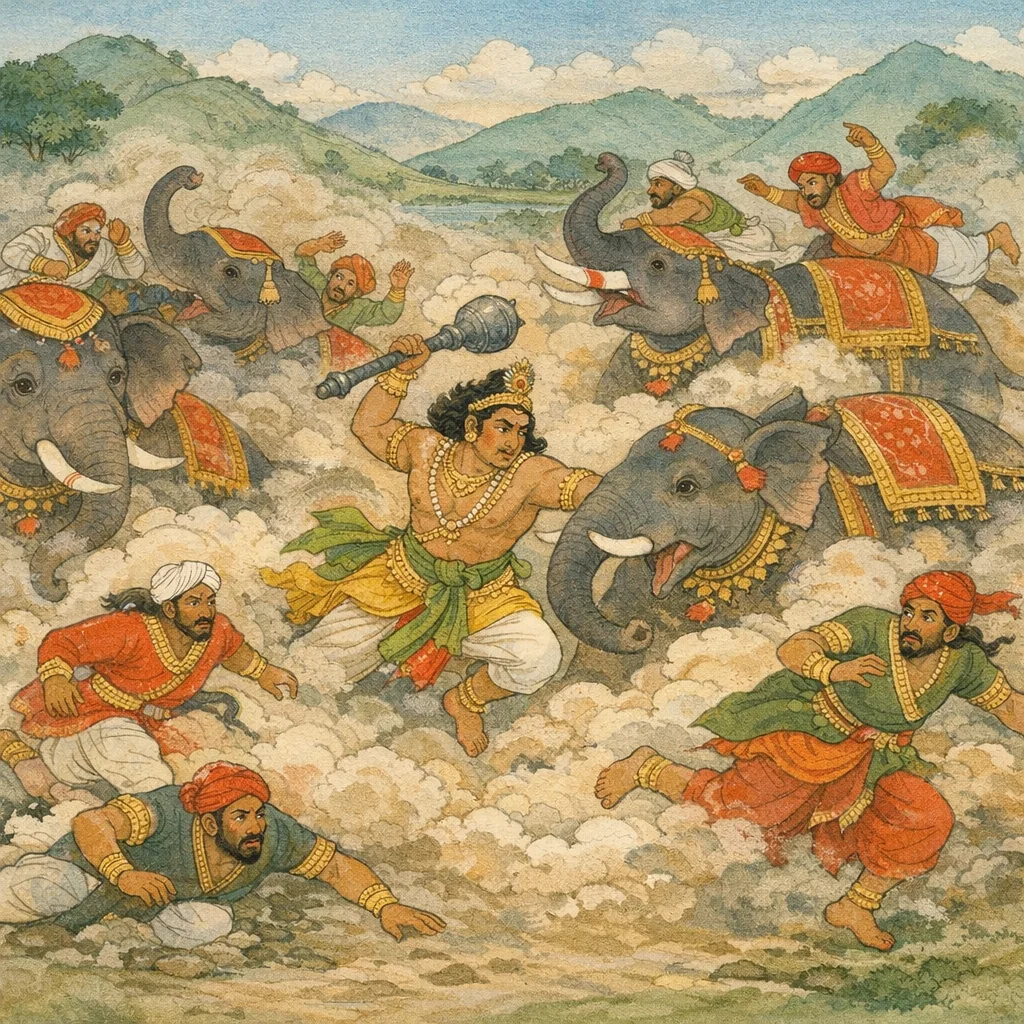
Chapter Arc: धृतराष्ट्र संजय पर खिन्न होकर कहता है—तुम नित्य मेरे ही सैनिकों के मारे जाने का वृत्तांत सुनाते हो और पाण्डवों की प्रसन्नता का वर्णन करते हो; क्या मेरे पुत्रों का पुरुषार्थ क्षीण हो गया है? → संजय रणभूमि का दृश्य खोलता है—धृष्टद्युम्न, शल्य आदि के नेतृत्व में दोनों पक्षों के वीर भिड़ते हैं। कौरव-वीर (दुर्योधन, विकर्ण, दुःशासन, विविंशति, दुर्मर्षण, दुःसह, चित्रसेन, दुर्मुख) एक साथ मोर्चा सँभालते हैं, पर पाण्डव-सेना में भीम का प्रचण्ड वेग हाथी-दलों पर टूट पड़ता है। → भीम लोहे की विशाल गदा लेकर ‘मुँह बाये काल’ की भाँति गजानीक में घुसता है; रक्त से सनी गदा और हाथियों के शोणित से भीगा उसका रौद्र रूप रण को श्मशान-सा बना देता है—जैसे महावात बादलों को छिन्न-भिन्न कर दे, वैसे ही वह वारणों को विध्वस्त कर रण में अडिग खड़ा रहता है। → कौरव-पक्ष भी प्रत्युत्तर देता है—कई योद्धा अपने-अपने बाण-प्रहारों से पाण्डव-सेना को रोकने का यत्न करते हैं; उधर अभिमन्यु सत्यव्रत और पुरुमित्र को दस-दस बाणों से पीड़ित करता है, और नकुल-सहदेव अपने मामा शल्य को तीक्ष्ण शरों से घायल कर देते हैं। युद्ध का प्रवाह एक ही नायक पर नहीं टिकता—अनेक मोर्चों पर एक साथ उग्रता फैलती है। → धृतराष्ट्र की आशंका बनी रहती है—भीम की गदा-लीला और पाण्डवों की बढ़त के बीच कौरव-वीरों का संयुक्त प्रतिरोध आगे किस ओर पलटेगा?
Shlokas
Verse 1
[दाक्षिणात्य अधिक पाठका ह श्लोक मिलाकर कुल ३६६ “लोक हैं।] जी श््न बाग द्विषष्टितमो5 ध्याय: धृष्टद्युम्न और शल्य आदि दोनों पक्षके वीरोंका युद्ध तथा भीमसेनके द्वारा गजसेनाका संहार धृतराष्ट उवाच दैवमेव परं मन्ये पौरुषादपि संजय । यत् सैन्यं मम पुत्रस्य पाण्डुसैन्येन बाध्यते,धृतराष्ट्र बोले--संजय! मैं पुरुषार्थकी अपेक्षा भी दैवको ही प्रधान मानता हूँ, जिससे मेरे पुत्र दुर्योधनकी सेना पाण्डवोंकी सेनासे पीड़ित हो रही है इस प्रकार श्रीमह्ाभारत भीष्मपर्वके अन्तर्गत भीष्मवधपर्वमें चौथे दिन भीमसेनका युद्धविषयक बासठवाँ अध्याय पूरा हुआ ॥/ ६२ ॥ ऑपनआक्रात बा अं त्रेषष्टितमो<्ध्याय: युद्धस्थलमें प्रचण्ड पराक्रमकारी भीमसेनका भीष्मके साथ युद्ध तथा सात्यकि और भूरिश्रवाकी मुठभेड़ संजय उवाच हते तस्मिन् गजानीके पुत्रो दुर्योधनस्तव । भीमसेन घ्नतेत्येवं सर्वसैन्यान्यचोदयत्
Dhṛtarāṣṭra said: “Sañjaya, I regard fate alone as supreme—even above human effort—since the army of my son is being hard-pressed by the army of the Pāṇḍavas.”
Verse 2
नित्यं हि मामकांस्तात हतानेव हि शंससि । अव्यग्रांश्न प्रह्ष्टांक्ष नित्यं शंससि पाण्डवान्,तात! तुम प्रतिदिन मेरे ही सैनिकोंके मारे जानेकी बात कहते हो और पाण्डवोंको सदा व्यग्रतासे रहित तथा हर्षोल्लाससे परिपूर्ण बताते हो
Dhṛtarāṣṭra said: “My son, you always report my own men as though already slain. And you continually describe the Pāṇḍavas as untroubled and bright-eyed with joy.”
Verse 3
हीनान् पुरुषकारेण मामकानद्य संजय । पातितान् पात्यमानांश्व हतानेव च शंससि,संजय! आजकल मेरे पुत्र और सैनिक पुरुषार्थसे हीन हो रहे हैं और शत्रुओंने उन्हें धराशायी किया एवं मार डाला है। प्रतिदिन वे शत्रुओंके हाथसे मारे ही जा रहे हैं। उनके सम्बन्धमें तुम सदा ऐसे ही समाचार देते हो
Dhṛtarāṣṭra said: “Sañjaya, today you report my sons’ men as lacking in manly effort. You speak of them as already struck down, being struck down, and as good as slain. Day after day they are being killed at the enemy’s hands—and you keep bringing me the same grim tidings.”
Verse 4
युध्यमानान् यथाशक्ति घटमानाज्जयं प्रति । पाण्डवा हि जयन्त्येव जीयन्ते चैव मामका:,मेरे बेटे विजयके लिये यथाशक्ति चेष्टा करते और लड़ते हैं, तो भी पाण्डव ही विजयी होते और मेरे पुत्रोंकी ही पराजय होती है
Dhṛtarāṣṭra said: “Even though my sons strive with all their strength and fight with the aim of victory, it is the Pāṇḍavas alone who keep prevailing, and it is my own side that is repeatedly defeated.”
Verse 5
सो<हं तीव्राणि दुःखानि दुर्योधनकृतानि च । श्रोष्यामि सततं तात दुःसहानि बहूनि च,तात! ऐसा जान पड़ता है कि मुझे दुर्योधनके कारण सदा अत्यन्त दुःसह एवं तीव्र दुःखकी ही बहुत-सी बातें सुननी पड़ेंगी
Dhṛtarāṣṭra said: “Alas, it seems I must continually hear, my son, many unbearable and piercing sorrows—sorrows brought about by Duryodhana’s own deeds.”
Verse 6
तमुपायं न पश्यामि जीयेरन् येन पाण्डवा: । मामका विजयं युद्धे प्राप्तुयुर्येन संजय,संजय! मैं ऐसा कोई उपाय नहीं देखता, जिससे पाण्डव हार जायाँ और मेरे पुत्रोंको युद्धमें विजय प्राप्त हो
Dhṛtarāṣṭra said: “I see no strategy by which the Pāṇḍavas might be defeated and by which my own sons could attain victory in this war, O Sañjaya.”
Verse 7
संजय उवाच क्षयं मनुष्यदेहानां गजवाजिरथक्षयम् । शृणु राजन् स्थिरो भूत्वा तवैवापनयो महान्,संजयने कहा--राजन्! उस युद्धमें मानवशरीरोंका भारी संहार हुआ है। हाथी, घोड़े और रथोंका भी विनाश देखा गया है। वह सब आप स्थिर होकर सुनिये। यह आपके ही महान् अन्यायका फल है
Verse 8
धृष्टद्युम्नस्तु शल्येन पीडितो नवभि: शरै: । पीडयामास संक्रुद्धो मद्राधिपतिमायसै:,शल्यके बाणोंसे पीड़ित होकर धृष्टद्युम्न अत्यन्त कुपित हो उठे और उन्होंने लोहेके बने हुए नौ बाणोंसे मद्रराज शल्यको गहरी पीड़ा पहुँचायी
Sañjaya said: Struck and pained by Śalya’s arrows, Dhṛṣṭadyumna flared up in wrath and, with nine iron-shafted arrows, inflicted sharp suffering upon Śalya, the lord of Madra—showing how, in the heat of battle, injury quickly turns into retaliatory violence.
Verse 9
तत्राद्भुतमपश्याम पार्षतस्य पराक्रमम् | न्यवारयत यस्तूर्ण शल्यं समितिशोभनम्,वहाँ हमलोगोंने धृष्टद्युम्मनका यह पराक्रम देखा कि उन्होंने संग्रामभूमिमें शोभा पानेवाले राजा शल्यको तुरंत ही आगे बढ़नेसे रोक दिया
Sanjaya said: There we witnessed the astonishing valor of Dhrishtadyumna, the son of Drupada: he swiftly checked King Shalya—who shone in the assembly of battle—preventing his advance. In the moral atmosphere of the war, this moment highlights disciplined courage: prowess is shown not merely by striking, but by restraining a formidable opponent at the decisive instant.
Verse 10
नान्तरं दृश्यते तत्र तयोश्व रथिनोस्तदा । मुहूर्तमिव तद् युद्ध तयो: सममिवाभवत्,उस समय उन दोनों महारथियोंमें पराक्रमकी दृष्टिसे कोई अन्तर नहीं दिखायी देता था। दो घड़ीतक दोनोंमें समान-सा युद्ध होता रहा
Sañjaya said: “At that time, no difference in prowess could be seen between those two chariot-warriors. For a while, their combat appeared evenly matched—each meeting the other without yielding.”
Verse 11
तत: शल्यो महाराज धृष्टद्युम्नस्य संयुगे । धनुश्चिच्छेद भल्लेन पीतेन निशितेन च,महाराज! तदनन्तर राजा शल्यने युद्धसस््थलमें शाणपर तीक्ष्ण किये हुए पीले रंगके भल्ल नामक बाणसे धृष्टद्युम्नका धनुष काट दिया
Sañjaya said: Then, O great king, in the thick of battle Śalya severed Dhṛṣṭadyumna’s bow with a sharp, yellow-hued bhalla arrow. The episode underscores the ruthless precision of war, where disabling an opponent’s weapon is a strategic act that shifts the balance without immediately taking life.
Verse 12
अथैनं शरवर्षेण च्छादयामास संयुगे | गिरिं जलागमे यद्धज्जलदा जलवृष्टिभि:,इसके बाद जैसे बादल बरसातमें पर्वतपर जलकी वर्षा करते हैं, उसी प्रकार उन्होंने धृष्टद्युम्नपर रणभूमिमें बाणोंकी वर्षा करके उन्हें सब ओरसे ढक दिया
Sañjaya said: Then, in the thick of battle, he covered him with a rain of arrows—just as, at the coming of the rains, clouds drench a mountain with torrents of water. The image underscores the impersonal, overwhelming force of warfare, where prowess is measured by endurance amid relentless assault.
Verse 13
अभिमन्युस्तत: क्रुद्धो धृष्टद्युम्ने च पीडिते । अभिदुद्राव वेगेन मद्रराजरथं प्रति,तदनन्तर धृष्टद्युम्नके पीड़ित होनेपर क्रोधमें भरे हुए अभिमन्युने मद्रराज शल्यके रथपर बड़े वेगसे आक्रमण किया
Sañjaya said: When Dhṛṣṭadyumna was being hard-pressed, Abhimanyu, inflamed with anger, charged at full speed toward the chariot of the Madra king Śalya. The scene highlights the warrior’s duty to protect an ally under distress, even as anger and urgency surge amid the chaos of battle.
Verse 14
ततो मद्राधिपरथं कार्ष्णि: प्राप्पातिकोपन: । आर्तायनिममेयात्मा विव्याध निशितै: शरै:,मद्रराजके रथके निकट पहुँचकर अत्यन्त क्रोधमें भरे हुए अनन्त आत्मबलसे सम्पन्न अर्जुनकुमारने अपने पैने बाणोंद्वारा ऋतायनपुत्र राजा शल्यको घायल कर दिया
Sanjaya said: Then Kārṣṇi, his spirit immeasurable and inflamed with fierce wrath, drew near the chariot of the lord of Madra and struck Ārtāyani (Śalya) with sharp arrows. In the unfolding of the war, anger and prowess drive the assault, while the narrative underscores the relentless escalation of violence among renowned warriors.
Verse 15
ततस्तु तावका राजन् परीप्सन्तोडर््जुनिं रणे । मद्रराजरथं तूर्ण परिवार्यावतस्थिरे,राजन्! तब आपके पुत्र रणभूमिमें अभिमन्युको बन्दी बनानेकी इच्छासे तुरंत वहाँ आये और मद्रराज शल्यके रथको चारों ओरसे घेरकर युद्धके लिये खड़े हो गये
Sañjaya said: Then, O King, your warriors—seeking to seize Arjuna in the battle—swiftly surrounded the chariot of the Madra king (Śalya) and took their stand, ready for combat. The scene underscores the strategic intent to capture a principal hero rather than merely strike him down, revealing how war-policy and expediency can press against the ideals of open, righteous fighting.
Verse 16
दुर्योधनो विकर्णश्र द:ःशासनविविंशती । दुर्मर्षणो दुःसहश्न चित्रसेनो5थ दुर्मुख:,भारत! आपका भला हो। दुर्योधन, विकर्ण, दुःशासन, विविंशति, दुर्मर्षण, दुःसह, चित्रसेन, दुर्मुख, सत्यव्रत तथा पुरुमित्र--ये आपके पुत्र मद्रराजके रथकी रक्षा करते हुए युद्धभूमिमें डटे हुए थे
Verse 17
सत्यव्रतश्न भद्रें ते पुरुमित्रश्न भारत । एते मद्राधिपरथं पालयन्त: स्थिता रणे,भारत! आपका भला हो। दुर्योधन, विकर्ण, दुःशासन, विविंशति, दुर्मर्षण, दुःसह, चित्रसेन, दुर्मुख, सत्यव्रत तथा पुरुमित्र--ये आपके पुत्र मद्रराजके रथकी रक्षा करते हुए युद्धभूमिमें डटे हुए थे
Verse 18
तान् भीमसेन: संक्रुद्धों धृष्टद्युम्नश्व॒ पार्षत: । द्रौपदेयाइभिमन्युश्न माद्रीपुत्रो च पाण्डवी,आपके इन दस महारथी पुत्रोंको क्रोधमें भरे हुए भीमसेन, ट्रुपदपुत्र धृष्टद्युम्न, माद्रीकुमार पाण्डुपुत्र नकुल-सहदेव, पाँचों भाई द्रौपदीकुमार और अभिमन्यु--इन दस ही महारथियोंने रोका। प्रजानाथ! ये सब लोग नाना प्रकारके अस्त्र-शस्त्रोंका प्रहार कर रहे थे
Sañjaya said: Those warriors were checked by Bhīmasena, blazing with anger, and by Dhṛṣṭadyumna, the son of Pārṣata (Drupada), along with the sons of Draupadī, Abhimanyu, and the Pāṇḍava born of Mādrī. O lord of men, these heroes were striking in many ways with their weapons and missiles, standing as a disciplined barrier against the opposing champions in the press of battle.
Verse 19
धार्तराष्ट्रानू दश रथान् दशैव प्रत्यवारयन् । नानारूपाणि शस्त्राणि विसृजन्तो विशाम्पते,आपके इन दस महारथी पुत्रोंको क्रोधमें भरे हुए भीमसेन, ट्रुपदपुत्र धृष्टद्युम्न, माद्रीकुमार पाण्डुपुत्र नकुल-सहदेव, पाँचों भाई द्रौपदीकुमार और अभिमन्यु--इन दस ही महारथियोंने रोका। प्रजानाथ! ये सब लोग नाना प्रकारके अस्त्र-शस्त्रोंका प्रहार कर रहे थे
Sañjaya said: O lord of the people, those ten chariots of the Dhārtarāṣṭras were checked by precisely ten warriors on the Pāṇḍava side, who—hurling weapons of many kinds—held them back: the wrathful Bhīmasena; Dhṛṣṭadyumna, son of Drupada; the twin sons of Mādrī, Nakula and Sahadeva; the five sons of Draupadī; and Abhimanyu. In the press of battle, each met force with force, restraining the enemy through disciplined martial skill rather than yielding to fear or disorder.
Verse 20
अभ्यवर्तन्त संद्ृष्टा: परस्परवधैषिण: । ते वै समेयु: संग्रामे राजन् दुर्मन्त्रिते तव,राजन! ये सब एक-दूसरेके वधकी इच्छा रखकर हर्ष और उत्साहके साथ क्षत्रियोंका सामना करते थे। आपकी कुमन्त्रणाके फलस्वरूप ही इन सब योद्धाओंकी आपसमें भिड़न्त हुई थी
Sañjaya said: Having come into one another’s sight, intent on mutual slaughter, they pressed forward. Indeed, O King, they converged in battle—an encounter brought about by your ill counsel, whose consequence was this warriors’ clash.
Verse 21
तस्मिन् दशर थे क्रुद्धे वर्तमाने महाभये । तावकानां परेषां वा प्रेक्षका रथिनो5भवन्
Sañjaya said: When that ten-horsed chariot was in furious motion amid the great terror of battle, the chariot-warriors—whether of your side or the enemy’s—became mere spectators, their attention fixed on that awe-inspiring encounter.
Verse 22
जिस समय ये दसों महारथी क्रोधमें भरकर अत्यन्त भयंकर युद्धमें लगे हुए थे, उस समय आपकी और पाण्डवोंकी सेनाके दूसरे रथी दर्शक होकर देखते थे ।। शस्त्राण्यनेकरूपाणि विसृजन्तो महारथा: । अन्योन्यमभिनर्दन्त: सम्प्रहारं प्रचक्रिरे,किंतु आपके और पाण्डवोंके वे महारथी वीर एक-दूसरेपर अनेक प्रकारके अस्त्र- शस्त्रोंकी वर्षा करते हुए गर्जते और युद्ध करते थे
Sañjaya said: The great chariot-warriors, hurling weapons of many kinds, roared at one another and set the battle fully in motion—each striving to overpower the other in the fierce clash of arms.
Verse 23
ते तदा जातसंरम्भा: सर्वेडन्योन्यं जिघांसव: । अन्योन्यमभिमर्दन्त: स्पर्धमाना: परस्परम्,उस समय उन सबमें क्रोध भरा हुआ था। सभी एक दूसरेके वधकी इच्छा रखते थे। सबमें परस्पर लाग-डाँट थी और सभी सबको कुचलनेकी चेष्टा करते थे
Sañjaya said: Then all of them, seized by sudden fury, longed to slay one another. Pressing against each other and crushing one another in close combat, they strove in rivalry, each against the other—an image of war where anger eclipses restraint and the will to dominate overwhelms humane limits.
Verse 24
अन्योन्यस्पर्धया राजन् ज्ञातय: सड्भता मिथ: । महास्त्राणि विमुञज्चन्त: समापेतुरमर्षिण:,महाराज! वे सब आपसमें कुटुम्बी--भाई-बन्धु थे, परंतु परस्पर स्पर्धा रखनेके कारण लड़ रहे थे। एक दूसरेके प्रति अमर्षमें भरकर बड़े-बड़े अस्त्रोंका प्रहार करते हुए आक्रमण- प्रत्याक्रमण करते थे
Sañjaya said: O King, though they were kinsmen gathered together, driven by rivalry they closed upon one another. Inflamed with resentment, they hurled mighty weapons, pressing forward and countering each assault in the fury of battle.
Verse 25
दुर्योधनस्तु संक्रुद्धों धृष्टद्ुम्नं महारणे । विव्याध निशितैर्बाणैश्षतुर्भि: समरे द्रुतम्
Sañjaya said: Enraged, Duryodhana swiftly struck Dhṛṣṭadyumna in the great battle, piercing him in the fight with four sharp arrows. The scene underscores how wrath (krodha) drives warriors to immediate violence, tightening the spiral of retaliation that sustains the war.
Verse 26
दुर्योधनने कुपित होकर उस महासंग्राममें अपने चार तीखे बाणोंद्वारा तुरंत ही धृष्टद्युम्नको बींध दिया ।। दुर्मर्षणश्न विंशत्या चित्रसेनश्व॒ पठचभि: । दुर्मुखो नवभिर्बाणैर्द:सहश्वापि सप्तभि:,एकैकं पज्चविंशत्या दर्शयन् पाणिलाघवम् | दुर्मषणने बीस, चित्रसेनने पाँच, दुर्मुखने नौ, दुःसहने सात, विविंशतिने पाँच तथा दुःशासनने तीन बाणोंसे उन सबको बींध डाला। राजेन्द्र! तब शत्रुओंको संताप देनेवाले धष्टद्युम्नने अपने हाथोंकी फुर्ती दिखाते हुए दुर्योधन आदिमेंसे प्रत्येकको पचीस-पचीस बाणोंसे घायल किया
Sañjaya said: Enraged in that great clash, Duryodhana at once pierced Dhṛṣṭadyumna with four sharp arrows. Durmarṣaṇa struck with twenty, Citrasena with five, Durmukha with nine arrows, and Duḥsaha with seven; Vivimśati with five and Duḥśāsana with three also pierced their foe. Then Dhṛṣṭadyumna—one who scorches enemies—displaying swift mastery of hand and weapon, wounded each of them in turn with twenty-five arrows apiece. The passage highlights the war’s relentless reciprocity: anger fuels violence, yet skill and resolve answer it in kind, tightening the moral pressure of battle where prowess often eclipses restraint.
Verse 27
विविंशति: पड्चभि श्र त्रिभिर्द:शासनस्तथा । तान् प्रत्यविध्यद् राजेन्द्र पार्षत: शत्रुतापन:
Sañjaya said: O king, Duryodhana too, with twenty-five and then with three (arrows), struck back at him. Thereupon the son of Pṛṣat—scorcher of foes—counter-pierced them, continuing the fierce exchange of missiles in the righteous yet terrible duty of war.
Verse 28
सत्यव्रतं च समरे पुरुमित्रं च भारत
O Bhārata, in the midst of battle he is also one who is steadfast in truth and a friend to many—marked by fidelity to his vow and broad goodwill even amid war.
Verse 29
माद्रीपुत्रो तु समरे मातुलं मातृनन्दनौ
Sañjaya said: In the midst of battle, the son of Mādrī confronted his maternal uncle, and the two sons dear to their mother as well.
Verse 30
तत: शल्यो महाराज स्वस््त्रीयौ रथिनां वरौ,महाराज! तदनन्तर शल्यने किये हुए प्रहारका बदला चुकानेकी इच्छा रखनेवाले रथियोंमें श्रेष्ठ अपने दोनों भानजोंको अनेक बाणोंसे पीड़ित किया। उनके बाणोंसे आच्छादित होनेपर भी नकुल-सहदेव विचलित नहीं हुए
Sañjaya said: Then, O King, Śalya struck his two sister’s sons—those foremost of chariot-warriors. Thereafter, the best among the chariot-fighters, eager to repay the blow dealt by Śalya, tormented his two nephews with many arrows. Yet, though covered by those shafts, Nakula and Sahadeva did not waver.
Verse 31
शरैर्बहुभिरानर्च्छत् कृतप्रतिकृतैषिणौ । छाद्यमानौ ततस्तौ तु माद्रीपुत्री न चेलतु:,महाराज! तदनन्तर शल्यने किये हुए प्रहारका बदला चुकानेकी इच्छा रखनेवाले रथियोंमें श्रेष्ठ अपने दोनों भानजोंको अनेक बाणोंसे पीड़ित किया। उनके बाणोंसे आच्छादित होनेपर भी नकुल-सहदेव विचलित नहीं हुए
Sañjaya said: O King, then Śalya, intent on repaying the blows dealt to him, struck his two nephews—Nakula and Sahadeva—with many arrows. Though covered and pressed by that shower of shafts, the sons of Mādrī did not waver.
Verse 32
अथ दुर्योधन दृष्टवा भीमसेनो महाबल: । विधित्सु: कलहस्यान्तं गदां जग्राह पाण्डव:,तदनन्तर महाबली पाण्डुपुत्र भीमसेनने दुर्योधनको देखकर झगड़ेका अन्त कर डालनेकी इच्छासे गदा उठा ली
Sañjaya said: Then, seeing Duryodhana, the mighty Bhīmasena—intent on bringing the quarrel to its end—took up his mace. The moment signals a decisive turn in the conflict: personal enmity and long-standing injustice are about to be settled through the harsh, duty-bound logic of war, where resolution comes not by words but by force.
Verse 33
तमुद्यतगद दृष्टवा कैलासमिव शृज्िणम् । भीमसेनं महाबाहें पुत्रास्ते प्राद्रवन्ू भयात्,गदा उठाये हुए महाबाहु भीमसेनको एक शिखरसे युक्त कैलास पर्वतके समान उपस्थित देख आपके सभी पुत्र भयके मारे भाग गये
Sañjaya said: Seeing mighty Bhīmasena with his mace raised—like Mount Kailāsa crowned with peaks—your sons, O strong-armed king, fled in fear. The image underscores how sheer strength and righteous fury on the battlefield can shatter the courage of those who rely only on numbers or pride, revealing the moral weight of valor in war.
Verse 34
दुर्योधनस्तु संक्ुद्धो मागधं समचोदयत् | अनीकं दशसाहस्र॑ कुज्जराणां तरस्विनाम्,तब दुर्योधनने कुपित होकर मगधदेशीय दस हजार हाथियोंकी वेगशाली सेनाको युद्धके लिये प्रेरित किया
Sañjaya said: Enraged, Duryodhana urged on the Magadhan contingent—an array of ten thousand powerful, swift elephants—driving them forward for battle. The scene underscores how anger and pride can become commanders in war, turning living strength into instruments of escalation rather than restraint.
Verse 35
गजानीकेन सहितस्तेन राजा सुयोधन: । मागधं पुरत: कृत्वा भीमसेनं समभ्ययात्,उस गजसेनाके साथ मागधको आगे करके दुर्योधनने भीमसेनपर आक्रमण किया
Sañjaya said: King Suyodhana, supported by an elephant-corps, advanced to attack Bhīmasena, placing the Māgadha warrior in the forefront. The scene underscores the hardening of resolve in battle—strategy and force are marshalled to strike a chosen rival, even as the moral weight of aggression and personal enmity intensifies the conflict.
Verse 36
आपततन्तं च त॑ दृष्टवा गजानीक॑ वृकोदर: । गदापाणिरवारोहदू रथात् सिंह इवोन्नदन्,उस गजसेनाको आते देख भीमसेन हाथमें गदा लेकर सिंहके समान गर्जना करते हुए रथसे उतर पड़े
Sañjaya said: Seeing that elephant-corps rushing upon them, Vṛkodara (Bhīma), mace in hand, leapt down from his chariot, roaring like a lion—an image of fearless resolve as the battle’s duty presses him to meet force with force.
Verse 37
अद्विसारमयी गुर्वी प्रगृह्ा महतीं गदाम् । अभ्यधावद् गजानीकं व्यादितास्य इवान्तक:,लोहेकी उस विशाल एवं भारी गदाको लेकर वे मुँह बाये हुए कालके समान उस गजसेनाकी ओर दौड़े
Sañjaya said: Lifting a massive, heavy iron mace, he charged straight toward the elephant-corps, like Death itself with jaws agape. The verse heightens the battlefield’s moral pressure: valor and ferocity are displayed at their extreme, while the looming presence of ‘Antaka’ (Death) reminds the listener that war consumes all—heroism and life alike.
Verse 38
स गजान् गदया निध्नन् व्यचरत् समरे बली । भीमसेनो महाबाहु: सवज्ञ इव वासव:,बलवान् महाबाहु भीमसेन वज्रधारी इन्द्रके समान गदासे हाथियोंका संहार करते हुए समरांगणमें विचरने लगे
Sañjaya said: Mighty, long-armed Bhīmasena moved about the battlefield, striking down elephants with his mace, appearing—like Vāsava (Indra)—as one who knows exactly where and how to smite. The verse highlights disciplined force in war: power is shown not as blind rage, but as effective, directed action within the grim duties of battle.
Verse 39
तस्य नादेन महता मनोहृदयकम्पिना । व्यत्यचेष्टन्त संहत्य गजा भीमस्य गर्जत:,मन और हृदयको कँपा देनेवाली गर्जते हुए भीमसेनकी उस भीषण गर्जनासे सब हाथी एकत्र हो भयके मारे निश्चेष्ट एवं अचेत-से हो गये
Sañjaya said: Shaken in mind and heart by that mighty, thunderous roar of Bhīmasena, the elephants, crowding together, became helpless—stunned and motionless in fear. The scene underscores how sheer force and terror can paralyze even the powerful in war, where courage and steadiness of heart become decisive virtues.
Verse 40
ततस्तु द्रौपदीपुत्रा: सौभद्रश्न महारथ: । नकुल: सहदेवश्व धृष्टद्युम्नश्व॒ पार्षत:,तत्पश्चात् द्रौपदीके पाँचों पुत्र, महारथी अभिमन्यु, नकुल-सहदेव तथा द्रुपदपुत्र धष्टद्युम्न--ये सब लोग भीमसेनके पृष्ठभागकी रक्षा करते हुए हाथियोंपर उसी प्रकार दौड़ दौड़कर बाण-वर्षा करने लगे, जैसे बादल पर्वतोंपर पानीकी बूँदें बरसाते हैं
Sañjaya said: Then the sons of Draupadī, and the great chariot-warrior Abhimanyu (son of Subhadrā), along with Nakula and Sahadeva, and Dhṛṣṭadyumna the son of Pṛṣata, all began to protect Bhīmasena’s rear. Mounted on elephants, they rushed about and showered arrows, like clouds pouring down raindrops upon mountains—an image of coordinated valor and loyal duty amid the chaos of war.
Verse 41
पृष्ठ भीमस्य रक्षन्त: शरवर्षेण वारणान् । अभ्यवर्षन्त धावन्तो मेघा इव गिरीन् यथा,तत्पश्चात् द्रौपदीके पाँचों पुत्र, महारथी अभिमन्यु, नकुल-सहदेव तथा द्रुपदपुत्र धष्टद्युम्न--ये सब लोग भीमसेनके पृष्ठभागकी रक्षा करते हुए हाथियोंपर उसी प्रकार दौड़ दौड़कर बाण-वर्षा करने लगे, जैसे बादल पर्वतोंपर पानीकी बूँदें बरसाते हैं
Sañjaya said: Guarding Bhīmasena’s rear, they ran forward and showered the elephants with a rain of arrows—just as clouds, moving swiftly, pour down rain upon mountains. The scene underscores disciplined comradeship in war: protecting one’s ally while striking the enemy with coordinated force.
Verse 42
क्षुरै: क्षुरप्रैर्भल्लैश्व पीतैश्वाउजलिकै: शितै: । व्यहरन्नुत्तमाज़ानि पाण्डवा गजयोधिनाम्,पाण्डव रथी क्षुर, क्षुरप्र, पीले रंगके भलल्ल तथा तीखे आंजलिक नामक बाणोंद्वारा हाथीसवार योद्धाओंके मस्तक काट-काटकर गिराने लगे
Sañjaya said: With razor-edged shafts, kṣurapra arrows, yellow-hued bhalla darts, and sharp āñjalika missiles, the Pāṇḍava warriors struck down the foremost parts—severing the heads—of the elephant-mounted fighters. The scene underscores the grim ethic of battlefield duty: in the press of war, skill and resolve are turned toward decisive, lethal blows, even as the narrator records the terrible cost of kṣatriya conflict.
Verse 43
शिरोभि: प्रपतद्धिश्व बाहुभिश्व विभूषितै: । अभ्मवृष्टिरिवाभाति पाणिभिश्न सहाड्कुशै:
Sañjaya said: “With heads falling in every direction, and with severed arms—still adorned with their ornaments—scattering about, the battlefield appears like a rainstorm from dark clouds, as hands too drop down, some still clutching goads.”
Verse 44
उनके शिरों, बाजूबन्दविभूषित भुजाओं और अंकुशोंसहित हाथोंके गिरनेसे ऐसा जान पड़ता था, मानो आकाशसे ओले और पत्थरोंकी वर्षा हो रही हो ।। ह्वतोत्तमाड़ा: स्कन्धेषु गजानां गजयोधिन: । अदृश्यन्ताचलाग्रेषु द्रमा भग्नशिखा इव,मस्तक कट जानेपर भी हाथियोंकी पीठपर टिके हुए गजारोही योद्धाओंके धड़ पर्वतके शिखरोंपर स्थित हुए शिखाहीन वृक्षोंके समान दृष्टिगोचर हो रहे थे
Sañjaya said: As the warriors’ heads and arms—adorned with armlets—and even the elephant-goads in their hands fell away, it looked as though hail and stones were raining down from the sky. And the elephant-fighters, though their heads had been severed, were still seen propped upon the shoulders of their elephants—like trees on mountain peaks whose tops have been broken off. The scene underscores the terrible momentum of battle, where bodily prowess and martial ornamentation are rendered meaningless, and yet the force of habit, training, and fate makes even the headless appear to persist for a moment—an image of war’s dehumanizing inevitability.
Verse 45
धृष्टद्युम्नहतानन्यानपश्याम महागजान् | पततः पात्यमानांश्व पार्षतेन महात्मना,हमलोगोंने धृष्टद्युम्नके द्वारा मारे गये बहुत-से हाथियोंको देखा, महामना ट्रुपदकुमारकी मार खाकर बहुत-से हाथी गिरे और गिराये जा रहे थे
Sañjaya said: We saw many great war-elephants lying slain by Dhṛṣṭadyumna. Struck by that high-souled son of Pārṣata (Drupada), many elephants were falling, and many more were being brought down as the battle raged on.
Verse 46
मागधो5थ महीपालो गजमैरावणोपमम् । प्रेषयामास समरे सौभद्रस्य रथं प्रति,इसी समय मगधदेशीय भूपालने युद्धस्थलमें अभिमन्युके रथकी ओर ऐरावतके समान एक विशाल हाथीको प्रेरित किया
Sañjaya said: Then the king from Magadha, in the midst of battle, sent forward a huge elephant—comparable to Airāvata—charging toward the chariot of Saubhadra (Abhimanyu). The scene underscores how, in war, power and intimidation are deployed to overwhelm a lone hero by sheer force rather than by equal contest.
Verse 47
तमापततन्तं सम्प्रेक्ष्य मागधस्य महागजम् । जघानैकेषुणा वीर: सौभद्र: परवीरहा,मगधनरेशके उस विशाल गजको आते देख शत्रुवीरोंका नाश करनेवाले वीर सुभद्राकुमारने उसे एक ही बाणसे मार डाला
Sañjaya said: Seeing the mighty elephant of the king of Magadha charging straight at him, the valiant son of Subhadrā—slayer of enemy-heroes—struck it down with a single arrow. In the moral atmosphere of the battle, the verse highlights alertness, precision, and the warrior’s duty to neutralize a grave threat swiftly, even when it comes in the formidable form of a war-elephant.
Verse 48
तस्यावर्जितनागस्य कार्ष्णि: परपुरंजय: । राज्ञो रजतपुड्खेन भल्लेनापाहरच्छिर:,फिर शत्रु-नगरीपर विजय पानेवाले अर्जुनपुत्र अभिमन्युने मरनेपर भी हाथीको न छोड़नेवाले मगधराजका मस्तक रजतमय पंखवाले भल््लके द्वारा काट गिराया
Sañjaya said: Then Kārṣṇi—conqueror of enemy strongholds—severed the head of that king who would not abandon his elephant even in the face of death, striking with a bhalla arrow fitted with silver feathers. The scene underscores the relentless ferocity of battle, where steadfastness can appear as valor yet also leads to fatal consequence when bound to pride and martial obsession.
Verse 49
विगाहा[ तद् गजानीकं॑ भीमसेनो5पि पाण्डव: । व्यचरत् समरे मृद्नन् गजानिन्द्रो गिरीनिव,उधर पाण्डुनन्दन भीमसेन भी गजसेनामें घुसकर पर्वतोंको विदीर्ण करनेवाले देवेन्द्रके समान हाथियोंको रौंदते हुए समरांगणमें विचरने लगे
Sañjaya said: Plunging into that massed elephant-corps, Bhīmasena too—the Pāṇḍava—moved about on the battlefield, trampling down the elephants, like Indra who shatters mountains. The verse highlights Bhīma’s fearless, overwhelming force in war, portraying martial prowess as a decisive instrument in the dharmic struggle rather than mere cruelty.
Verse 50
एकप्रहारनिहतान् भीमसेनेन दन्तिन: । अपश्याम रणे तस्मिन् गिरीन् वज़हतानिव,महाराज! उस युद्धस्थलमें हमने वज्रके मारे हुए पर्वतोंकी भाँति भीमसेनके एक ही प्रहारसे दन्तार हाथियोंको भी मरते देखा था
Sañjaya said: O King, on that battlefield we saw tusked elephants struck down by Bhīmasena with a single blow, lying like mountains shattered by a thunderbolt—an awe-inspiring display of force amid the grim ethics of war.
Verse 51
भग्नदन्तान् भग्नकरान् भग्नसक्थांश्व वारणान् । भग्नपृष्ठत्रिकानन्यान् निहतान् पर्वतोपमान्,किन्हींके दाँत टूट गये, किन्हींकी सूँड़ कट गयी, कितनोंकी जाँघें टूट गयीं, किन्हींकी पीठ टूट गयी और कितने ही पर्वतोंके समान विशालकाय गजराज मारे गये, कुछ चिग्घाड़ रहे थे, कुछ कष्टसे कराह रहे थे, कुछ युद्धभूमिसे विमुख होकर भागने लगे थे और कुछ भयसे व्याकुल होकर मल-मूत्र कर रहे थे। इन सबको मैंने अपनी आँखों देखा था
Sañjaya said: “I saw elephants with broken tusks, with their trunks shattered, and with their thighs crushed; others had their backs and spines broken, and many mighty lordly elephants—huge as mountains—lay slain. The battlefield was filled with the raw consequences of violence: some still cried out, some groaned in agony, some turned away and fled from the fight, and some, overwhelmed by fear, lost control of their bodies. All this I witnessed with my own eyes.”
Verse 52
नदत: सीदतकश्चान्यान् विमुखान् समरे गतान् । विद्रुतान् भयसंविग्नांस्तथा विशकृतो5परान्,किन्हींके दाँत टूट गये, किन्हींकी सूँड़ कट गयी, कितनोंकी जाँघें टूट गयीं, किन्हींकी पीठ टूट गयी और कितने ही पर्वतोंके समान विशालकाय गजराज मारे गये, कुछ चिग्घाड़ रहे थे, कुछ कष्टसे कराह रहे थे, कुछ युद्धभूमिसे विमुख होकर भागने लगे थे और कुछ भयसे व्याकुल होकर मल-मूत्र कर रहे थे। इन सबको मैंने अपनी आँखों देखा था
Sañjaya said: “I saw with my own eyes some elephants trumpeting, others collapsing in exhaustion; some, having turned away, retreating from the battle; some fleeing in panic; and others so terrified that they voided their bowels and urine. Such was the dreadful spectacle of war that unfolded before me.”
Verse 53
4000 (६ ५ २ है कं हि १% ४ के है शक / 8 | ४ ५ शी 2४ | प्रथा * ९१०७, ५ |, भीमसेनस्यथ मार्गेषु पतितान् पर्वतोपमान् | अपश्यं निहतान् नागान् राजन् निष्ठीवतो5परान्,भीमसेनके मार्गोमें उनके द्वारा मारे गये पर्वतोपम हाथी पड़े दिखायी दिये। राजन! अन्य बहुत-से हाथियोंको मैंने मुँहसे फेन फेंकते देखा था
Sanjaya said: Along the paths where Bhimasena advanced, I saw elephants—huge as mountains—lying fallen, slain. And, O King, I also saw many other elephants, struck down, still spewing foam from their mouths—an image of the war’s brutal force and the terror it spreads among even the mightiest creatures.
Verse 54
वमन्तो रुधिरं चान्ये भिन्नकुम्भा महागजा: | विह्वलन्तो गता भूमिं शैला इव धरातले,कितने ही विशालकाय हाथी खून उगल रहे थे और उनके कुम्भस्थल फट गये थे। बहुत-से व्याकुल होकर इस भूतलपर पर्वतोंके समान पड़े थे
Sañjaya said: Many great elephants, their frontal globes split open, were vomiting blood; reeling in agony, they collapsed upon the earth like mountains fallen on the ground. The scene underscores the brutal cost of war, where even the mightiest creatures are reduced to suffering and ruin, reminding the listener of the grave ethical weight borne by those who choose battle.
Verse 55
मेदोरुधिरदिग्धाड़ो वसामज्जासमुक्षित: । व्यचरत् समरे भीमो दण्डपाणिरिवान्तक:,भीमसेनका सारा शरीर मेदा तथा रक्तसे लिए हो रहा था। वे वसा और मज्जासे नहा गये थे और हाथमें गदा लिये दण्डपाणि यमराजके समान उस युद्धभूमिमें विचर रहे थे
Sañjaya said: Smeared with fat and blood, drenched as though bathed in marrow and grease, Bhīma moved about the battlefield—mace in hand—like Antaka, the bringer of death, wielding the rod of punishment. The verse heightens the moral gravity of war: when dharma collapses into slaughter, the warrior becomes an instrument of retribution, terrifying in form and consequence.
Verse 56
गजानां रुधिरक्लिन्नां गदां बिभ्रद् वृकोदर: । घोर: प्रतिभयश्वासीत् पिनाकीव पिनाकधृक्,हाथियोंके खूनसे भीगी हुई गदा धारण किये भीमसेन पिनाकधारी भगवान् रुद्रके समान घोर एवं भयंकर दिखायी देते थे
Sañjaya said: Bearing a mace drenched in the blood of elephants, Vṛkodara (Bhīma) appeared dreadful and terrifying—like the wielder of the Pināka bow, Lord Rudra himself. The image underscores the ferocity unleashed in righteous war, where even a dharmic cause is carried out through fearsome, consequential violence.
Verse 57
सम्मथ्यमाना: क्रुद्धेन भीमसेनेन दन्तिन: । सहसा प्राद्रवन् क्लिष्टा मृदूनन्तस्तव वाहिनीम्,क्रोधमें भरे हुए भीमसेन हाथियोंको मथे डालते थे; अतः वे उनके द्वारा अत्यन्त क्लेश पाकर आपकी सेनाको कुचलते हुए सहसा युद्धस्थलसे भाग चले
Sañjaya said: The elephants, being violently churned and battered by Bhīmasena in his wrath, were suddenly driven into distress; and, crushing your army as they went, they fled at once from the battlefield. The scene underscores how uncontrolled fury in war can turn even mighty war-beasts into instruments of panic, spreading harm indiscriminately through one’s own ranks.
Verse 58
तं हि वीरं महेष्वासं सौभद्रप्रमुखा रथा: । पर्यरक्षन्त युध्यन्तं वजायुधमिवामरा:,जैसे देवता वज्रधारी इन्द्रकी रक्षा करते हैं, उसी प्रकार सुभद्राकुमार आदि पाण्डव योद्धा युद्धमें तत्पर हुए महाधनुर्धर वीर भीमसेनकी सब ओरसे रक्षा करते थे
Sañjaya said: As the immortals guard Indra, wielder of the thunderbolt, so did the chariot-warriors led by Saubhadra surround and protect that heroic, mighty archer as he fought on. The scene underscores a warrior-ethic of loyal protection: comrades do not merely seek personal glory, but uphold their duty by shielding the foremost fighter in the press of battle.
Verse 59
शोणिताक्तां गदां बिशभ्रदुक्षितां गजशोणितै: । कृतान्त इव रौद्रात्मा भीमसेनो व्यदृश्यत,खूनमें सनी तथा हाथियोंके रक्तसे भीगी हुई गदा लिये रौद्ररूपधारी भीमसेन यमराजके समान दिखायी देते थे
Sañjaya said: Bhīmasena was seen bearing his mace smeared with blood and drenched with the blood of elephants; fierce in spirit, he appeared like Kṛtānta (Death itself). The image underscores the terrible momentum of battle, where righteous wrath in war can resemble the impartial finality of death, even when wielded in the service of one’s duty.
Verse 60
व्यायच्छमानं गदया दिक्षु सर्वासु भारत । अपश्याम रणे भीम॑ नृत्यन्तमिव शंकरम्,भारत! भीमसेन गदा लेकर सम्पूर्ण दिशाओंमें व्यायाम-सा कर रहे थे। समरभूमिमें भीमको हमलोगोंने ताण्डव-नृत्य करते हुए भगवान् शंकरके समान देखा था
Sañjaya said: “O Bhārata, wielding his mace as though in vigorous exercise, Bhīma ranged in every direction. On that battlefield we saw Bhīma as if he were Śaṅkara himself, dancing his terrible dance—an image of overwhelming, righteous force unleashed in war.”
Verse 61
यमदण्डोपमां गुर्वीमिन्द्राशनिसमस्वनाम् । अपश्याम महाराज रौद्रां विशसनीं गदाम्,महाराज! भीमसेनकी भारी और भयंकर गदा सबका संहार करनेवाली है। हमें तो वह यमदण्डके समान दिखायी देती थी। प्रहार करनेपर उससे इन्द्रके वज़्की गड़गड़ाहटके समान आवाज होती थी
Sañjaya said: “O King, we beheld a massive mace—fierce and slaughter-dealing—like Yama’s staff itself. When it struck, it resounded with a roar like Indra’s thunderbolt.”
Verse 62
विमिश्रां केशमज्जाभि: प्रदिग्धां रुधिरेण च । पिनाकमिव रुद्रस्य क्रुद्धस्याभिघ्नत: पशून्,रक्तसे भीगी तथा केश और मज्जासे मिली हुई उस गदाको हमने प्रलयकालनमें क्रोधसे भरकर समस्त पशुओं (जीवों)-का संहार करनेवाले रुद्रदेवके पिनाकके समान समझा था इति श्रीमहाभारते भीष्मपर्वणि भीष्मवधपर्वणि चतुर्थदिवसे भीमयुद्धे द्विषष्टितमो5 ध्याय:
Sañjaya said: “Smeared with blood and matted with a mixture of hair and marrow, that mace appeared to us like the Pināka bow of wrathful Rudra, striking down living beings. In the moral horror of battle, the weapon is seen not merely as an instrument of victory but as a sign of destruction unleashed—an image that underscores how anger and violence can resemble cosmic ruin.”
Verse 63
यथा पशाूनां संघातं यष्ट्या पाल: प्रकालयेत् । तभा भीमो गजानीकं गदया समकालयत्,जैसे चरवाहा पशुओंके झुंडको डंडेसे हाँकता है, उसी प्रकार भीमसेन हाथियोंके समूहको अपनी गदासे हाँक रहे थे
Sañjaya said: Just as a herdsman drives a mass of cattle with his staff, so Bhīma, with his mace, was driving back and scattering the elephant-corps. The image underscores the brutal asymmetry of battlefield power: disciplined force, when wielded without hesitation, can turn even mighty war-elephants into a panicked herd—an ethically sobering reminder of how war reduces living beings to instruments and targets.
Verse 64
गदया वध्यमानास्ते मार्गणैश्न॒ समन््ततः । स्वान्यनीकानि मृद्नन्तः प्राद्रवन् कुड्जरास्तव,महाराज! चारों ओरसे गदा और बाणोंकी मार पड़नेपर आपकी सेनाके वे समस्त हाथी अपने ही सैनिकोंको कुचलते हुए भाग रहे थे
Sañjaya said: “Struck on every side by mace-blows and by volleys of arrows, those elephants of your army, O great king, fled in panic—trampling down even their own battle-formations.”
Verse 65
महावात इवाशभ्राणि विधमित्वा स वारणान् | अतिष्ठत् तुमुले भीम: श्मशान इव शूलभृत्,जैसे आँधी बादलोंको छिन्न-भिन्न करके उड़ा देती है, उसी प्रकार भीमसेन उस भयंकर युद्धमें हाथियोंकी सेनाको नष्ट करके श्मशानभूमिमें त्रिशूलधारी भगवान् शंकरके समान खड़े थे
Sañjaya said: Like a mighty gale that shreds and scatters the clouds, Bhīma—having crushed the ranks of elephants—stood firm amid that dreadful tumult of battle, resembling Śiva, the trident-bearer, standing in a cremation ground. The image underscores the terrifying, world-upturning power unleashed in war, where valor can appear godlike even as it moves through scenes of death.
Verse 276
एकैकं पज्चविंशत्या दर्शयन् पाणिलाघवम् | दुर्मषणने बीस, चित्रसेनने पाँच, दुर्मुखने नौ, दुःसहने सात, विविंशतिने पाँच तथा दुःशासनने तीन बाणोंसे उन सबको बींध डाला। राजेन्द्र! तब शत्रुओंको संताप देनेवाले धष्टद्युम्नने अपने हाथोंकी फुर्ती दिखाते हुए दुर्योधन आदिमेंसे प्रत्येकको पचीस-पचीस बाणोंसे घायल किया
Sañjaya said: Displaying remarkable dexterity of hand, Dhṛṣṭadyumna pierced them all with arrows—twenty at Durmarṣaṇa, five at Citrasena, nine at Durmukha, seven at Duḥsaha, five at Viviṃśati, and three at Duḥśāsana. O best of kings, then that Dhṛṣṭadyumna, a tormentor of foes, showed his swift skill by wounding each of Duryodhana and the others with twenty-five arrows apiece. The passage highlights the disciplined, almost measured application of force in battle—skill directed toward a martial objective rather than uncontrolled rage.
Verse 286
अभिमन्युरविध्यत् तु दशभिर्दशभि: शरै: । भारत! अभिमन्युने समरभूमिमें सत्यव्रत और पुरुमित्रको दस-दस बाणोंसे पीड़ित किया
Sañjaya said: Then Abhimanyu struck them with arrows—ten and ten. O descendant of Bharata, on the battlefield Abhimanyu pained Satyavrata and Purumitra, each with ten shafts, pressing the fight forward with disciplined martial resolve.
Verse 296
अविध्येतां शरैस्ती3्ष्णैस्तदद्धभुतमिवाभवत् । माताको आनन्दित करनेवाले माद्रीकुमार नकुल और सहदेवने अपने मामा शल्यको पैने बाणोंसे घायल कर दिया। यह अद्भुत-सी बात हुई
Sañjaya said: Nakula and Sahadeva—sons of Mādrī and a source of joy to their mother—pierced their maternal uncle Śalya with sharp arrows. It seemed a wondrous turn of events, for in the upheaval of war even close kin are driven into violent opposition, revealing the tragic tension between familial bonds and the demands of allegiance.
Frequently Asked Questions
A duty-based tension appears in Bhīṣma’s conduct toward Śikhaṇḍī: he moderates engagement due to remembered gender history, illustrating how personal vows and social-ethical constraints can override purely tactical incentives.
The chapter emphasizes that outcomes in complex systems depend on disciplined coordination and ethical constraints: strategy (vyūha) can amplify force, yet leadership choices and remembered obligations shape what actions are considered permissible.
No explicit phalaśruti is stated; the meta-function is archival and analytical—Saṃjaya’s structured reporting of formations and command decisions positions the episode as a case study in rāja-nīti and kṣātra conduct within the wider war narrative.