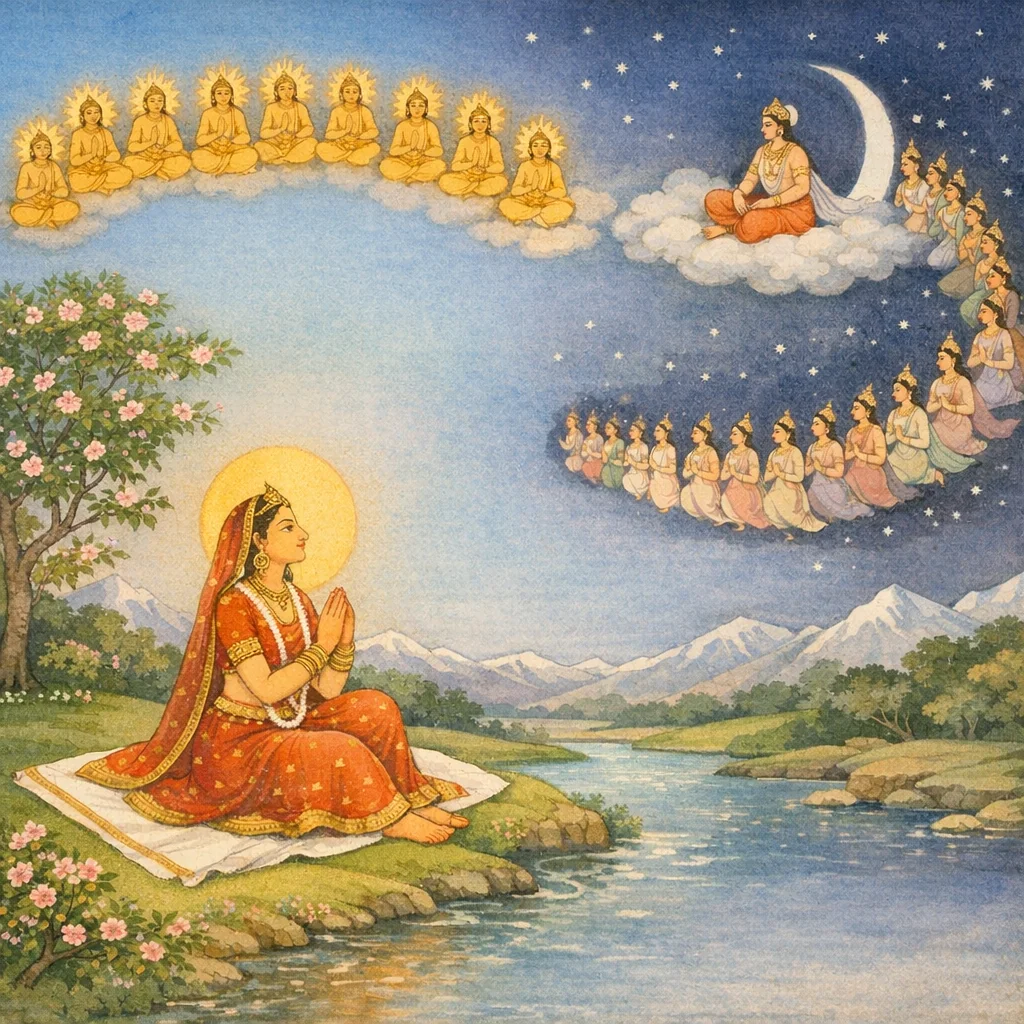
Aditi’s Progeny and the Twelve Ādityas (Manvantara Genealogy)
This Adhyāya is framed as Sūta’s narration to Śaunaka. Sūta first enumerates Kaśyapa’s wives and related lines—Aditi, Diti, Surasā, Iḷā/Ilā, Danu, Surabhi, Vinatā, Tāmrā, Krodhavaśā, and others—and then turns to their progeny within earlier manvantara settings. The chapter’s core theme is the manvantara-based reappearance and functional reclassification of divine beings: the Tuṣitas gather for the welfare of the worlds and enter Aditi to be born in a later cycle, becoming the canonical twelve Ādityas. It lists the principal Ādityas—Viṣṇu, Śakra (Indra), Aryamā, Dhātā, Tvaṣṭā, Pūṣā, Vivasvān, Savitā, Mitra, Varuṇa, Aṃśa, and Bhaga—linking genealogy with cosmic administration (solar powers, order, sovereignty, prosperity). It also mentions Soma’s twenty-seven wives and their radiant offspring, widening the scope to astral and calendrical theology. Esoterically, the Adhyāya models how cyclical time preserves divine functions while names and forms shift, a key Purāṇic means of harmonizing doctrine with cosmic periodicity.
Shlokas
Verse 1
सूत उवाच । अदितिर्दितिश्च सुरसारिष्टेला दनुरेव च । सुरभिर्विनता चेला ताम्रा क्रोधवशा तथा
Sūta said: Aditi and Diti; Surasā, Ariṣṭā, Ilā, and Danu; Surabhi, Vinatā, Celā, Tāmrā, and also Krodhavaśā—these are spoken of in due order.
Verse 2
कदूर्मुनिश्च विप्रेन्द्र तास्वपत्यानि मे शृणु । पूर्वमन्वंतरे श्रेष्ठे द्वादशासन्सुरोत्तमाः
O best of Brahmins, hear from me of the offspring born from them. In the excellent former Manvantara, there were twelve—foremost among the gods.
Verse 3
तुषिता नाम तेऽन्योन्यमूचुर्वैवस्वतेंतरे । उपस्थिते सुयशसश्चाक्षुषस्यांतरे मनोः
Then the deities known as the Tuṣitas spoke among themselves: “In the Vaivasvata Manvantara, when the virtuous and renowned Manu of the Cākṣuṣa Manvantara had come to be present again in the divine assembly…”
Verse 4
हिताय सर्वलोकानां समागम्य परस्परम् । आगच्छतस्तु तानूचुरदितिं च प्रविश्य वै
For the welfare of all the worlds, they gathered together and took counsel with one another. Then, as they set forth, they spoke—and indeed entered into Aditi, their mother.
Verse 5
मन्वंतरे प्रसूयामस्सतां श्रेयो भविष्यति । एवमुक्तास्तु ते सर्वे चाक्षुषस्यान्तरे मनोः
“In the coming Manvantara we shall be born; it will become a cause of welfare for the righteous.” Thus addressed, all of them resolved so during the Manvantara of Manu Cākṣuṣa.
Verse 6
मारीचात्कश्यपाज्जातास्तेऽदित्यां दक्षकन्यया । तत्र विष्णुश्च शक्रश्च जज्ञाते पुनरेव हि
From Marīci, Kaśyapa was born; and from Kaśyapa, through Aditi—the daughter of Dakṣa—those divine beings were born. In that very lineage, Viṣṇu and Śakra (Indra) were indeed born again.
Verse 7
अर्यमा चैव धाता च त्वष्टा पूषा तथैव च । विवस्वान्सविता चैव मित्रावरुण एव च
Aryaman, Dhātā, Tvaṣṭṛ, Pūṣan; Vivasvān, Savitṛ; and also Mitra and Varuṇa—these are to be understood as divine manifestations praised in this sacred account.
Verse 8
अंशो भगश्चातितेजा आदित्या द्वादश स्मृताः । पूर्वमासन्ये तुषितास्सुराः
Aṁśa, Bhaga, and Atitejas—these are remembered among the twelve Ādityas. In former times, those gods known as the Tuṣitas also existed.
Verse 9
पुरैव तस्यांतरे तु आदित्या द्वादश स्मृताः । इति प्रोक्तानि क्रमशोऽदित्यपत्यानि शौनक
O Śaunaka, earlier in that very account it has been remembered that the Ādityas are twelve; thus the sons of Aditi have been stated in due order.
Verse 10
सप्तविंशति याः प्रोक्तास्सोमपत्न्योऽथ सुव्रताः । तासामपत्यान्यभवन्दीप्तयोऽमिततेजसः
The twenty-seven virtuous wives of Soma, already spoken of—those of noble vows—bore children radiant, endowed with immeasurable splendor.
Verse 11
अरिष्टनेमिपत्नीनामपत्यानीह षोडश । बहुपुत्रस्य विदुषश्चतस्रो यास्सुताः स्मृताः
Here it is said that the wives of Ariṣṭanemi had sixteen children. And of the wise Bahuputra, four daughters are remembered in the tradition.
Verse 12
कृशाश्वस्य तु देवर्षे देवप्रहरणाः स्मृताः । भार्म्यायामर्चिषि मुने धूम्रकेशस्तथैव च
O divine seer Kṛśāśva, these are remembered as the celestial weapons. And likewise, O sage, they are known in Bhārmyā, in Arciṣi, and also by the name Dhūmrakeśa.
Verse 13
स्वधा सती च द्वे पत्न्यौ स्वधा ज्येष्ठा सती परा । स्वधासूत पितॄन्वेदमथर्वाङ्गिरसं सती
Svadhā and Satī were his two wives—Svadhā the elder, and Satī the other. From Svadhā were born the Pitṛs, the ancestral deities; and from Satī was born the Atharvāṅgirasa Veda, the Atharva tradition.
Verse 14
एते युगसहस्रांते जायंते पुनरेव हि । सर्वदेवनिकायाश्च त्रयस्त्रिंशत्तु कामजाः
At the close of a thousand yugas, these beings are indeed born again. And the entire host of gods—the thirty-three—are said to arise from will, from desire.
Verse 15
यथा सूर्य्यस्य नित्यं हि उदयास्तमयाविह । एवं देवानिकास्ते च संभवंति युगेयुगे
Just as the sun unfailingly rises and sets each day, so too those hosts of gods repeatedly come into manifestation, age after age, according to the Lord’s cosmic order.
Verse 16
दित्यां बभूवतुः पुत्रौ कश्यपादिति नः श्रुतम् । हिरण्यकशिपुश्चैव हिरण्याक्षश्च वीर्यवान्
We have heard that from Diti, by Kaśyapa, two sons were born—Hiraṇyakaśipu and the mighty Hiraṇyākṣa.
Verse 17
सिंहिका ह्यभवत्कन्या विप्रचित्तेः परिग्रहः । हिरण्यकशिपोः पुत्राश्चत्वारः प्रथितौजसः
Siṃhikā was born as a daughter (in that line) and was accepted as the consort of Vipracitti. And Hiraṇyakaśipu had four sons, renowned for their mighty power.
Verse 18
अनुह्रादश्च ह्रादश्च संह्रादश्चैव वीर्यवान् । प्रह्रादश्चानुजस्तत्र विष्णुभक्तिविचारधीः
In that lineage were Anuhrāda, Hrāda, and Saṃhrāda as well, all mighty in prowess; and Prahrāda too—the younger brother—whose intellect was devoted to contemplating devotion to Lord Viṣṇu.
Verse 19
अनुह्रादस्य सूर्यायां पुलोमा महिषस्तथा । ह्रादस्य धमनिर्भार्यासूत वातापिमिल्वलम्
From Anuhrāda, by Sūryā, Pulomā gave birth to Mahiṣa. And Hrāda’s wife Dhamanī gave birth to Vātāpi and Ilvala.
Verse 20
संह्रादस्य कृतिर्भार्यासूतः पंचजनं ततः । विरोचनस्तु प्राह्रादिर्देव्यास्तस्याभवद्बलिः
Saṃhrāda’s wife, Kṛti, then gave birth to Pañcajana. And Virocana—born of Prahrāda—had a wife named Devī; from her, Bali was born.
Verse 21
बलेः पुत्रशतं त्वासीदशनायां मुनीश्वर । बलिरासीन्महाशैवः शिवभक्तिपरायणः
O lordly sage, Bali had a hundred sons from Aśanā. Bali himself was a great Śaiva, steadfastly devoted to Śiva in worship and loving bhakti.
Verse 22
दानशील उदारश्च पुण्यकीर्ति तपाः स्मृतः । तत्पुत्रो बाणनामा यत्सोऽषि शैववरस्सुधीः । यस्संतोष्य शिवं सम्यग्गाणपत्यमवाप ह
He was remembered as Tapāḥ—charitable, generous, and famed for meritorious renown and austerity. His son was named Bāṇa; wise and noble-minded, an excellent Śaiva devotee. Having rightly and fully pleased Lord Śiva, he attained the rank of Gaṇapati, a leader among Śiva’s gaṇas.
Verse 23
सा कथा श्रुतपूर्वा ते बाणस्य हि महात्मनः । कृष्णं यस्समरे वीरस्सुप्रसन्नं चकार ह
Have you already heard that account of the great-souled Bāṇa—the heroic one who, in battle, made Kṛṣṇa fully pleased?
Verse 24
हिरण्याक्षसुताः पंच पंडितास्तु महाबलाः । कुकुरः शकुनिश्चैव भूतसंतापनस्तथा
There were five sons of Hiraṇyākṣa, learned and exceedingly mighty: Kukura, Śakuni, Bhūtasaṃtāpana, and the others among those five.
Verse 25
महानादश्च विक्रांतः कालनाभस्तथैव च । इत्युक्ता दितिपुत्राश्च दनोः पुत्रान्मुने शृणु
“Mahānāda, Vikrānta, and likewise Kālanābha—these have been named as the sons of Diti. Now, O sage, listen to the sons of Danu.”
Verse 26
अभवन्दनुपुत्राश्च शतं तीव्रपराक्रमाः । अयोमुखश्शंबरश्च कपोलो वामनस्तथा
There were also a hundred sons of Danu, possessed of fierce valor—Ayomukha, Śambara, Kapola, and likewise Vāmana.
Verse 27
वैश्वानरः पुलोमा च विद्रावणमहाशिरौ । स्वर्भानुर्वृषपर्वा च विप्रचित्तिश्च वीर्यवान्
Also (there were) Vaiśvānara, Pulomā, Vidrāvaṇa, Mahāśiras, Svarbhānu, Vṛṣaparvā, and the mighty Vipracitti.
Verse 28
एते सर्वे दनोः पुत्राः कश्यपादनुजज्ञिरे । एषां पुत्राञ्च्छृणु मुने प्रसंगाद्वच्मि तेऽनघ
All these were the sons of Danu, born from Kaśyapa. Now, O sage—sinless one—listen to the sons of these; I shall tell you of them in due course, as the occasion arises.
Verse 29
स्वभार्नोस्तु प्रभा कन्या पुलोम्नस्तु शची सुता । उपदानवी हयशिरा शर्म्मिष्ठा वार्षपर्वणी
From Svabhānu was born the maiden Prabhā; from Puloman was born his daughter Śacī. From Upadānavī was born Hayaśirā; and, from another lineage, Śarmiṣṭhā, the daughter of Vṛṣaparvan.
Verse 30
पुलोमा पुलोमिका चैव वैश्वानरसुते उभे । बह्वपत्ये महावीर्य्ये मारीचेस्तु परिग्रहः
Pulomā and Pulomikā—both daughters of Vaiśvānara—were blessed with many offspring and great vigor; they became the consorts of Marīci.
Verse 31
तयोः पुत्रसहस्राणि षष्टिर्दानवनन्दनाः । मरीचिर्जनयामास महता तपसान्वितः
Endowed with intense austerity, Marīci begot for them sixty thousand sons—mighty descendants among the Dānavas.
Verse 32
इति श्रीशिवमहापुराणे पञ्चम्या मुमासंहितायां कश्यपवंशवर्णनं नाम द्वात्रिंशोऽध्यायः
Thus, in the Śrī Śiva Mahāpurāṇa, in the Fifth Book—the Umāsaṃhitā—ends the thirty-second chapter entitled “The Description of Kaśyapa’s Lineage.”
Verse 33
पितामहप्रसादेन ये हताः सव्यसाचिना । सिंहिकायामथोत्पन्ना विप्रचित्तेस्सुतास्तथा
By the grace of the Grandfather (Brahmā), those who had been slain by Savyasācin (Arjuna) were born again—arising from Siṁhikā, and likewise as sons of Vipracitti.
Verse 34
दैत्यदानवसंयोगाज्जातास्तीव्रपराक्रमाः । सैंहिकेया इति ख्यातास्त्रयोदश महाबलाः
From the union of the Daityas and the Dānavas were born thirteen beings of fierce valor and great might, renowned by the name “Saiṃhikeyas.”
Verse 35
राहुः शल्यो सुबलिनो बलश्चैव महाबलः । वातापिर्नमुचिश्चैवाथेल्वलः स्वसृपस्तथा
Rāhu, Śalya, Subalī, Bala, and Mahābala; Vātāpi and Namuci; and then Elvala, as well as Svasṛpa—these form the host being enumerated.
Verse 36
अजिको नरकश्चैव कालनाभस्तथैव च । शरमाणश्शरकल्पश्च एते वंशविवर्द्धनाः
Ajika, Naraka, Kālanābha, Śaramāṇa, and Śarakalpa—these indeed were the increasers and sustainers of the lineage, causing the family line to flourish.
Verse 37
एषां पुत्राश्च पौत्राश्च दनुवंशविवर्द्धनाः । बहवश्च समुद्भूता विस्तरत्वान्न वर्णिताः
From them were born many sons and grandsons who increased the lineage of Danu. They arose in great numbers; because the account would become too extensive, they are not described in detail.
Verse 38
संह्रादस्य तु दैतेया निवातकवचाः कुले । उत्पन्ना मरुतस्तस्मिंस्तपसा भावितात्मनः
From Saṃhrāda indeed, in the lineage of the Daityas, were born the Nivātakavaca-s; and from that ascetic, whose inner being was refined by tapas, the Maruts came forth.
Verse 39
षण्मुखाद्या महासत्त्वास्ताम्रायाः परिकीर्तिताः । काकी श्येनी च भासी च सुग्रीवी च शुकी तथा
The great beings beginning with Ṣaṇmukha are declared to be born of Tāmrā—namely Kākī, Śyenī, Bhāsī, Sugrīvī, and also Śukī.
Verse 40
गृद्ध्रिकाश्वी ह्युलूकी च ताम्रा कन्याः प्रकीर्तिताः । काकी काकानजनयदुलूकी प्रत्युलूककान्
Gṛddhrikāśvī, Ulūkī, and Tāmrā are proclaimed as her daughters. Kākī gave birth to crows, and Ulūkī gave birth to the pratyulūkas, a class of owls.
Verse 41
श्येनी श्येनांस्तथा भासी भासा न्गृद्धी तु गृध्रकान् । शुकी शुकानजनयत्सुग्रीवी शुभपक्षिणः
The female hawk gave birth to hawks; likewise the bhāsī produced bhāsa-birds. The gṛddhī (vulture) bore vultures. The female parrot gave birth to parrots, and the sugrīvī produced auspicious-winged birds.
Verse 42
अश्वानुष्ट्रान्गर्दभांश्च ताम्रा च कश्यपप्रिया । जनयामास चेत्येवं ताम्रावंशाः प्रकीर्तिताः
Tāmra, beloved of Kaśyapa, gave birth to horses, camels, and donkeys. Thus, in this manner, the lineages descended from Tāmra are declared.
Verse 43
विनतायाश्च पुत्रौ द्वावरुणो गरुडस्तथा । सुपर्णः पततां श्रेष्ठो नारुणस्स्वेन कर्मणा
Vinatā had two sons—Aruṇa and also Garuḍa. Garuḍa, called Suparṇa, is the foremost among all who fly; Aruṇa is renowned for his appointed function (as the charioteer of the Sun).
Verse 44
सुरसायास्सहस्रं तु सर्पाणाममितौजसाम् । अनेकशिरसां तेषां खेचराणां महात्मनाम्
Indeed, Surasā had a thousand mighty serpents of immeasurable power—great-souled beings who roam the sky, many of them many-headed.
Verse 45
येषां प्रधाना राजानः शेषवासुकितक्षकाः । ऐरावतो महापद्मः कंबलाश्वतरावुभौ
Among them, the foremost serpent-kings are Śeṣa, Vāsuki, and Takṣaka; also Airāvata, Mahāpadma, and the two—Kambala and Aśvatara.
Verse 46
ऐलापुत्रस्तथा पद्मः कर्कोटकधनंजयौ । महानीलमहाकर्णौ धृतराष्ट्रो बलाहकः
Ailāputra and Padma; Karkoṭaka and Dhanañjaya; Mahānīla and Mahākarṇa; and also Dhṛtarāṣṭra and Balāhaka—these are the named serpents, renowned in the sacred account.
Verse 47
कुहरः पुष्पदन्तश्च दुर्मुखास्सुमुखस्तथा । बहुशः खररोमा च पाणिरित्येवमादयः
“Kuhara, Puṣpadanta, Durmukha, and also Sumukha; likewise Bahuśa, Khararomā, and Pāṇi—these and others besides.”
Verse 48
गणाः क्रोधवशायाश्च तस्यास्सर्वे च दंष्ट्रिणः । अंडजाः पक्षिणोऽब्जाश्च वराह्याः पशवो मताः
All the gaṇas belonging to her were under the sway of wrath, and all of them were tusked. They were regarded as Varāhī’s beasts—egg-born creatures, birds, and also those born from the waters.
Verse 49
अनायुषायाः पुत्राश्च पंचाशच्च महाबलाः । अभवन्बलवृक्षौ च विक्षरोऽथ बृहंस्तथा
From Anāyuṣā were born fifty sons, all exceedingly mighty. Among them were the renowned ones named Balavṛkṣa, Vikṣara, and also Bṛhaṃs.
Verse 50
शशांस्तु जनयामास सुररभिर्महिषांस्तथा । इला वृक्षांल्लता वल्लीस्तृणजातीस्तु सर्वशः
The celestial Cow Surabhi brought forth the rabbits, and likewise the buffaloes. From Ilā arose trees, creepers, vines, and every kind of grass—spread everywhere.
Verse 51
खशा तु यक्षरक्षांसि मुनिरप्सरसस्तथा । अरिष्टासूत सर्पांश्च प्रभावैर्मानवोत्तमान्
The Khaśas, the Yakṣas and Rākṣasas, the sages and the Apsarases as well—together with the serpents born of Ariṣṭā—by their respective powers, all became excellent among men.
Verse 52
एते कश्यपदायादाः कीर्तितास्ते मुनीश्वर । येषां पुत्राश्च पौत्राश्च शतशोऽथ सहस्रशः
O lord among sages, these descendants of Kaśyapa have been duly recounted to you—those whose sons and grandsons are numbered in hundreds and even in thousands.
Frequently Asked Questions
The chapter argues through narrative genealogy that divine offices persist across manvantara cycles: the Tuṣitas convene for lokahita, enter Aditi, and are reborn as the twelve Ādityas—linking cosmic administration to cyclical rebirth rather than one-time creation.
Genealogy functions as a symbolic map of cosmic law: Aditi represents an ordering matrix for devas, the Ādityas signify solar governance (ṛta/dharma, sovereignty, prosperity), and the Soma-wives gesture to calendrical/astral structuring—time itself as a theological instrument.
No distinct Śiva/Umā form is foregrounded in the sampled verses; the chapter is primarily cosmological and genealogical. Its Śaiva contribution is contextual: it embeds pan-Indic deities (e.g., Viṣṇu, Indra, Ādityas) within the Śiva Purāṇa’s larger Śaiva interpretive frame.