Adhyaya 10: Pṛthu, Vena, and the ‘Milking of the Earth’: Etymologies of Pṛthivī and Gauḥ; Restoration of Kingship and Prosperity
पृथुवेनसंवादः — पृथिवीनामनिरुक्तिः तथा भूमिदोहनकथा
Speaker: Ṛṣis, Sūta
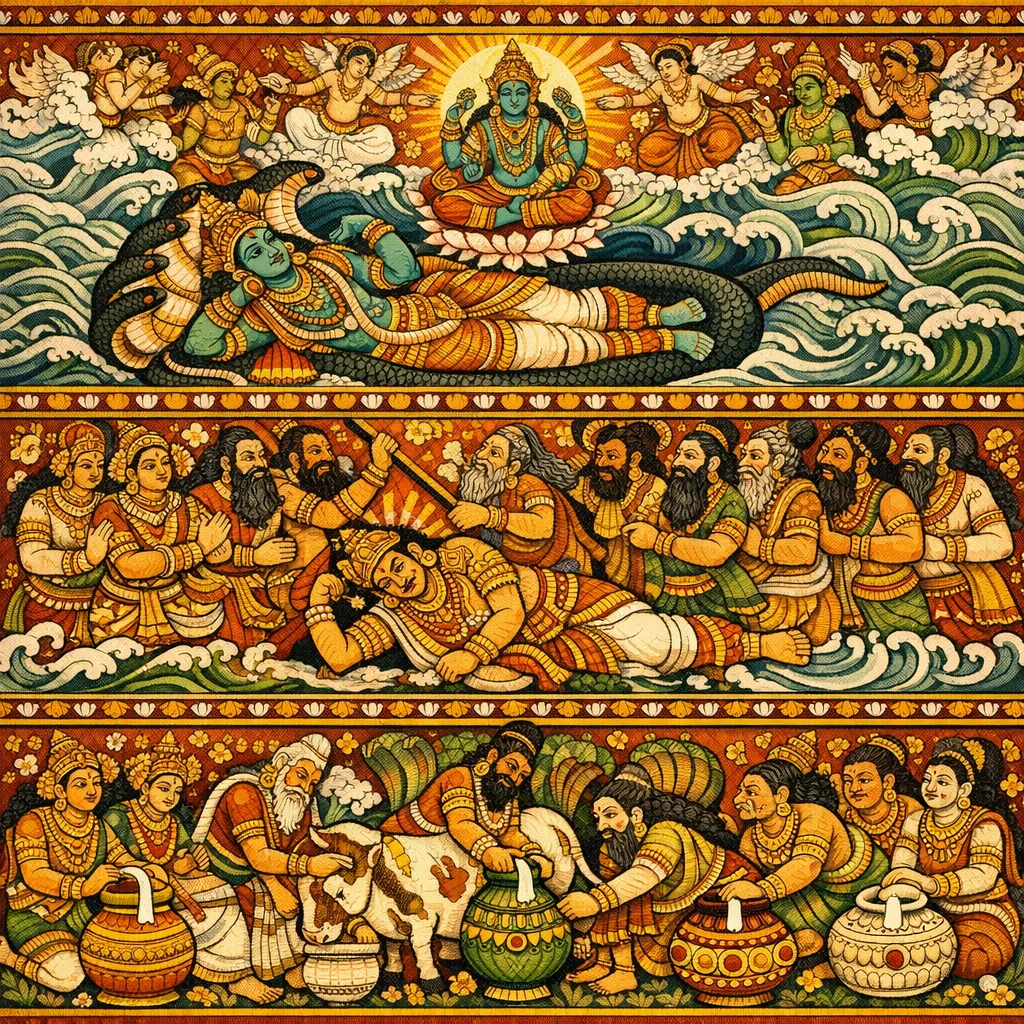
After recalling cyclical dissolution and Viṣṇu-sāyujya, the Ṛṣis ask Sūta why Earth is so named and how kingship is justified—how rulers are “lords of earth,” and what grounds Earth’s belonging and her names Bhūmi and Gauḥ. Sūta recounts Svāyambhuva Manu’s line: Prajāpati Aṅga marries Sunīthā, daughter of Mṛtyu, and begets Vena, a mighty yet unrighteous king. Seeking to uphold dharma-ācāra, the sages curse-slay Vena; when kinglessness brings calamity, they churn his body, from which mleccha tribes arise, and then the radiant warrior Pṛthu manifests from the right hand. Consecrated, Pṛthu performs severe tapas, and by Viṣṇu’s boon sovereignty is restored. Seeing Earth bereft of svādhyāya and vaṣaṭ rites, Pṛthu in anger threatens to burn her; Earth flees as a cow. Pṛthu compels her to yield nourishment and order: different beings milk different essences with prescribed calves, milkers, and vessels. Pṛthu’s reign brings universal welfare, and he levels the land for settlements. The chapter ends with the etymology that Earth is called Pṛthivī because of her filial bond and affection toward King Pṛthu.
Key Concepts
Shlokas in Adhyaya 10
Verse 1
एते युगसहस्रान्ते विनश्यन्ति पुनः पुनः ब्रह्माद्या विष्णुसायुज्यं याता यास्यन्ति वै द्विजाः // मत्स्९।३९ *ऋषय ऊचुः बहुभिर् धारिणी भुक्ता भूपालैः श्रूयते पुरा पार्थिवाः पृथिवीयोगात् पृथिवी कस्य योगतः //
At the end of each thousandfold yuga-cycle, all these are dissolved again and again; even Brahmā and the rest—O twice-born—have attained, and will attain, union with Viṣṇu. The Ṛṣis said: “It is heard of old that the Earth, the Sustainer, has been enjoyed and ruled by many kings. Those rulers are ‘lords of the earth’ by their connection with the Earth—yet by whose connection (or right) does the Earth herself belong to anyone?”
Verse 2
किम् अर्थं च कृता संज्ञा भूमेः किं पारिभाषिकी गौर् इतीयं च विख्याता सूत कस्माद्ब्रवीहि नः //
For what reason was this designation for the Earth established, and what is its technical (traditional) definition? And why is she renowned by the name ‘Gauḥ’ (“Cow”)? O Sūta, tell us the reason.
Verse 3
*सूत उवाच वंशे स्वायम्भुवस्यासीद् अङ्गो नाम प्रजापतिः मृत्योस्तु दुहिता तेन परिणीता सुदुर्मुखा //
Sūta said: In the lineage of Svāyambhuva (Manu) there was a Prajāpati named Aṅga. He married Sudurmukhā, the daughter of Mṛtyu (Death).
Verse 4
सुनीथा नाम तस्यास्तु वेनो नाम सुतः पुरा अधर्मनिरतश्चासीद् बलवान् वसुधाधिपः //
Her name was Sunīthā; and in former times her son was named Vena. He was devoted to unrighteousness, yet powerful as a lord of the earth.
Verse 5
लोके ऽप्यधर्मकृज्जातः परभार्यापहारकः धर्माचारस्य सिद्ध्यर्थं जगतो ऽथ महर्षिभिः //
Even in the world there arises one who commits unrighteousness—one who abducts another man’s wife; therefore, for the effective establishment of right conduct (dharma-ācāra) in the world, the great sages (maharṣis) set it forth.
Verse 6
अनुनीतो ऽपि न ददाव् अनुज्ञां स यदा ततः शापेन मारयित्वैनम् अराजकमयार्दिताः //
Though repeatedly entreated, he still did not grant permission; then, having slain him by a curse, they were afflicted by the calamity of being without a king (arājakatā).
Verse 7
ममन्थुर् ब्राह्मणास्तस्य बलाद्देहमकल्मषाः तत्कायान्मथ्यमानात्तु निपेतुर्म्लेच्छजातयः //
Then those stainless Brahmins, by the force of their rite, churned his body; and as that body was being churned, the tribes called Mlecchas fell forth (came into being) from it.
Verse 8
शरीरे मातुरंशेन कृष्णाञ्जनसमप्रभाः पितुरंशस्य चांशेन धार्मिको धर्मचारिणः //
In bodily appearance, by the mother’s portion they shine like dark añjana (collyrium); and by the father’s portion they become righteous, conducting themselves as followers of dharma.
Verse 9
उत्पन्नो दक्षिणाद्धस्तात् सधनुः सशरो गदी दिव्यतेजोमयवपुः सरत्नकवचाङ्गदः //
From the right hand there manifested a radiant warrior of divine body, formed of tejas; bearing bow, arrows, and a mace, adorned with jeweled armor and armlets.
Verse 10
पृथोरेवाभवद्यत्नात् ततः पृथुरजायत स विप्रैरभिषिक्तो ऽपि तपः कृत्वा सुदारुणम् //
Through Pṛthu’s own determined effort the accomplishment came to be; thereafter Pṛthu was born. And though consecrated by the Brahmins through abhiṣeka, he still undertook exceedingly severe austerity (tapas).
Verse 11
विष्णोर्वरेण सर्वस्य प्रभुत्वम् अगमत् पुनः निःस्वाध्यायवषट्कारं निर्धर्मं वीक्ष्य भूतलम् //
By the boon and grace of Viṣṇu, sovereignty over all returned once again; for He beheld the earth bereft of Vedic study and of the vaṣaṭ sacrificial rites, and fallen into adharma.
Verse 12
दग्धुमेवोद्यतः कोपाच् छरेणामितविक्रमः ततो गोरूपमास्थाय भूः पलायितुम् उद्यता //
In wrath, that hero of immeasurable prowess raised his arrow, intent only on burning her. Then the Earth, assuming the form of a cow, prepared to flee.
Verse 13
पृष्ठतो ऽनुगतस्तस्याः पृथुर्दीप्तशरासनः ततः स्थित्वैकदेशे तु किं करोमीति चाब्रवीत् //
Following behind her, Pṛthu—his bow blazing with brilliance—stopped at a certain spot and said, “What am I to do?”
Verse 14
पृथुर् अप्यवदद् वाक्यम् ईप्सितं देहि सुव्रते सर्वस्य जगतः शीघ्रं स्थावरस्य चरस्य च //
Pṛthu too spoke these words: “O virtuous one, quickly grant what is desired—for the sake of the entire world, of all that is stationary and all that moves.”
Verse 15
तथैव साब्रवीद् भूमिर् दुदोह स नराधिपः स्वके पाणौ पृथुर्वत्सं कृत्वा स्वायम्भुवं मनुम् //
So too did the Earth speak. Then that lord of men milked her, having made Svāyambhuva Manu the calf, and taking Pṛthu as the milker in his own hand (as the instrument of milking).
Verse 16
तदन्नमभवच्छुद्धं प्रजा जीवन्ति येन वै ततस्तु ऋषिभिर्दुग्धा वत्सः सोमस्तदाभवत् //
That (substance) became pure food, by which beings indeed live. Then it was milked by the Ṛṣis, and its calf at that time became Soma.
Verse 17
दोग्धा बृहस्पतिरभूत् पात्रं वेदस्तपो रसः देवैश्च वसुधा दुग्धा दोग्धा मित्रस्तदाभवत् //
Bṛhaspati became the milker, and the vessel was the Veda—its essence being the rasa born of tapas (austerity). Thus the gods milked the Earth; and at that time Mitra also became the milker.
Verse 18
इन्द्रो वत्सः समभवत् क्षीरमूर्जस्करं बलम् देवानां काञ्चनं पात्रं पितॄणां राजतं तथा //
Indra became the calf; the milk was strength that brings forth vigor. For the gods the vessel was of gold, and likewise for the Pitṛs (ancestors) it was of silver.
Verse 19
अन्तकश्चाभवद्दोग्धा यमो वत्सः स्वधा रसः अलाबुपात्रं नागानां तक्षको वत्सको ऽभवत् //
Antaka became the milker, Yama the calf, and Svadhā the flowing essence. For the Nāgas, the vessel was a gourd-bowl, and Takṣaka became their calf.
Verse 20
विषं क्षीरं ततो दोग्धा धृतराष्ट्रो ऽभवत्पुनः असुरैरपि दुग्धेयम् आयसे शक्रपीडिनीम् //
Then poison and milk were drawn forth. Thereafter, Dhṛtarāṣṭra again became the agent of milking (the churning-calf). Even by the Asuras it was milked—into an iron vessel—(that substance) which torments Śakra (Indra).
Verse 21
पात्रे मायाम् अभूद् वत्सः प्राह्लादिस् तु विरोचनः दोग्धा द्विमूर्धा तत्रासीन् माया येन प्रवर्तिता //
In the vessel, Māyā became the calf; and Virocana, son of Prahlāda, was counted as the milker. There, the two-headed one sat as the cowherd—by whom this Māyā was set in motion.
Verse 22
यक्षैश्च वसुधा दुग्धा पुरान्तर्धानम् ईप्सुभिः कृत्वा वैश्रवणं वत्सम् आमपात्रे महीपते //
O king, the Yakṣas once milked the Earth, desiring the power of disappearance (invisibility); having made Vaiśravaṇa (Kubera) the calf, they drew it into an unbaked earthen vessel.
Verse 23
प्रेतरक्षोगणैर्दुग्धा धरा रुधिरमुल्बणम् रौप्यनाभो ऽभवद्दोग्धा सुमाली वत्स एव तु //
Then the Earth was ‘milked’ by hosts of Pretas and Rākṣasas, and what flowed forth was thick, abundant blood. Raupyanābha became the milker, and Sumālī indeed was the calf.
Verse 24
गन्धर्वैश्च पुरा दुग्धा वसुधा साप्सरोगणैः वत्सं चैत्ररथं कृत्वा गन्धान्पद्मदले तथा //
In ancient times, the Earth was ‘milked’ by the Gandharvas along with the hosts of Apsarases; taking Citraratha as the calf, they drew forth fragrances, collecting them likewise upon lotus-petals.
Verse 25
दोग्धा वररुचिर्नाम नाट्यवेदस्य पारगः गिरिभिर्वसुधा दुग्धा रत्नानि विविधानि च //
Vararuci, famed as the ‘milker’ and a master of the Nāṭya-veda (the science of dramaturgy), milked the Earth; and by means of the mountains the Earth yielded many kinds of precious gems.
Verse 26
औषधानि च दिव्यानि दोग्धा मेरुर्महाचलः वत्सो ऽभूद्धिमवांस् तत्र पात्रं शैलमयं पुनः //
And divine medicinal herbs were obtained: the great mountain Meru became the milker, Himavān served as the calf, and the vessel there was again made of stone.
Verse 27
वृक्षैश्च वसुधा दुग्धा क्षीरं छिन्नप्ररोहणम् पालाशपात्रे दोग्धा तु शालः पुष्पलताकुलः //
And by the trees the Earth was ‘milked’: the milk was a sap-like essence that sprouts again even when cut. The vessel was a palāśa-leaf cup, and the milker was the śāla tree, abundant with flowers and creepers.
Verse 28
प्लक्षो ऽभवत्ततो वत्सः सर्ववृक्षो धनाधिपः एवमन्यैश्च वसुधा तदा दुग्धा यथेप्सितम् //
Then the plakṣa-tree became the calf, and Kubera, lord of wealth, became the milker; thus, by various others as well, the Earth was milked at that time to yield whatever was desired.
Verse 29
आयुर् धनानि सौख्यं च पृथौ राज्यं प्रशासति न दरिद्रस्तदा कश्चिन् न रोगी न च पापकृत् //
When Pṛthu governed the kingdom, life-span, wealth, and happiness flourished; at that time there was no one who was poor, none who was diseased, and none who lived as a doer of sin.
Verse 30
नोपसर्गभयं किंचित् पृथौ राजनि शासति नित्यं प्रमुदिता लोका दुःखशोकविवर्जिताः //
When King Pṛthu ruled, there was no fear of any calamity at all; the people were ever cheerful, free from suffering and grief.
Verse 31
धनुष्कोट्या च शैलेन्द्रान् उत्सार्य स महाबलः भुवस्तलं समं चक्रे लोकानां हितकाम्यया //
With the tip of his bow, that mighty one thrust the great mountains aside and made the surface of the earth level, desiring the welfare of all beings.
Verse 32
न पुरग्रामदुर्गाणि न चायुधधरा नराः क्षयातिशयदुःखं च नार्थशास्त्रस्य चादरः //
There are no properly established cities, villages, or forts; nor are there men bearing arms. There is only the excessive misery of decline and loss, and no respect at all for the science of polity and wealth (Arthaśāstra).
Verse 33
धर्मैकवासना लोकाः पृथौ राज्यं प्रशासति कथितानि च पात्राणि यत्क्षीरं च मया तव //
When Pṛthu governed the kingdom, the people were devoted solely to dharma. And I have also told you of the vessels, together with the matter of milk, insofar as it pertains to you.
Verse 34
येषां यत्र रुचिस्तत्तद् देयं तेभ्यो विजानता यज्ञश्राद्धेषु सर्वेषु मया तुभ्यं निवेदितम् //
Whatever each person prefers in a given context, let that be offered to them by one who understands. This principle, applicable in all sacrifices (yajña) and all śrāddha rites, has been explained by me to you.
Verse 35
दुहितृत्वं गता यस्मात् पृथोर्धर्मवतो मही तदानुरागयोगाच्च पृथिवी विश्रुता बुधैः //
Because the Earth (mahī) came to be regarded as the daughter of the righteous King Pṛthu, and because of the bond of affection that arose thereby, she became renowned among the wise as “Pṛthivī.”
Frequently Asked Questions
The chapter teaches that legitimate kingship exists to restore dharma and welfare, not mere possession. When Vena’s adharmic rule collapses into arājakatā (kinglessness), the sages generate Pṛthu, who re-establishes ritual order (svādhyāya and vaṣaṭ rites), secures food for all through the ‘milking of the Earth,’ and creates stable conditions for settlements by leveling the land. The Earth-as-cow episode encodes a dharmic model of governance: resources must be drawn responsibly, for the benefit of all beings (sthāvara and cara).
Genealogy: Svāyambhuva Manu’s line through Aṅga, Sunīthā, Vena, and the manifestation of Pṛthu. Dharma/Rajadharma: the problem of adharmic rulership, the sages’ corrective authority, arājakatā, and Pṛthu’s welfare-oriented reign (no poverty, disease, or pervasive sin). Creation/resource cosmology: Earth as Gauḥ and the multi-group ‘milking’ schema (devas, ṛṣis, pitṛs, nāgas, asuras, yakṣas, rākṣasas, gandharvas, mountains, trees). Proto-Vastu/state formation: leveling the earth and implying the necessity of organized settlements (cities, villages, forts) under righteous rule.
Because the Earth assumes the form of a cow when fleeing Pṛthu’s wrath, and then becomes the source that is ‘milked’ to yield food, strength, ritual essences, medicines, gems, fragrances, sap, and other desired substances for different beings. ‘Gauḥ’ functions as an allegory of Earth’s nurturing productivity and the regulated extraction of resources under dharmic sovereignty.
The text states that Earth (mahī) became regarded as the daughter of the righteous King Pṛthu; through the affectionate bond (anurāga-yoga) arising from that relationship, she became renowned among the wise as “Pṛthivī.”