Adhyaya 299
Ajñātavāsa-saṅkalpaḥ — Yudhiṣṭhira’s Resolve and Dhaumya’s Exempla on Concealment
Upa-parva: Ajñātavāsa-prastāna (Preparation for the Thirteenth-Year Concealment)
Vaiśaṃpāyana reports that the Pandavas, having been permitted (abhyanujñāta) in accordance with dharma, sit together with firm vows to announce their intent to undertake the thirteenth year in concealment. They address the forest-dwelling brāhmaṇas and ascetics who are devoted to them, explaining the background of dispossession by the Dhārtarāṣṭras and the necessity of remaining hidden lest hostile rivals (Suyodhana, Karṇa, Śakuni) exploit knowledge of their whereabouts. Yudhiṣṭhira, overwhelmed by grief, briefly loses composure; the brāhmaṇas and brothers console him. Dhaumya then delivers a stabilizing instruction: even great beings have faced adversity and acted in concealment to restrain adversaries, citing exemplary precedents (e.g., Indra’s hidden residence; Viṣṇu’s concealed strategies including Vāmana; other mythic instances of covert action). The counsel reframes concealment as dharmically compatible when used for protection and lawful completion of vows. Bhīma follows by affirming disciplined obedience and readiness, noting the restraint previously exercised despite capability. The brāhmaṇas offer blessings and depart; the Pandavas, with Dhaumya and Draupadī, set out and begin technical deliberation—seated separately as experts in śāstra and counsel, attentive to timing of alliance and conflict (saṃdhi-vigraha-kāla).
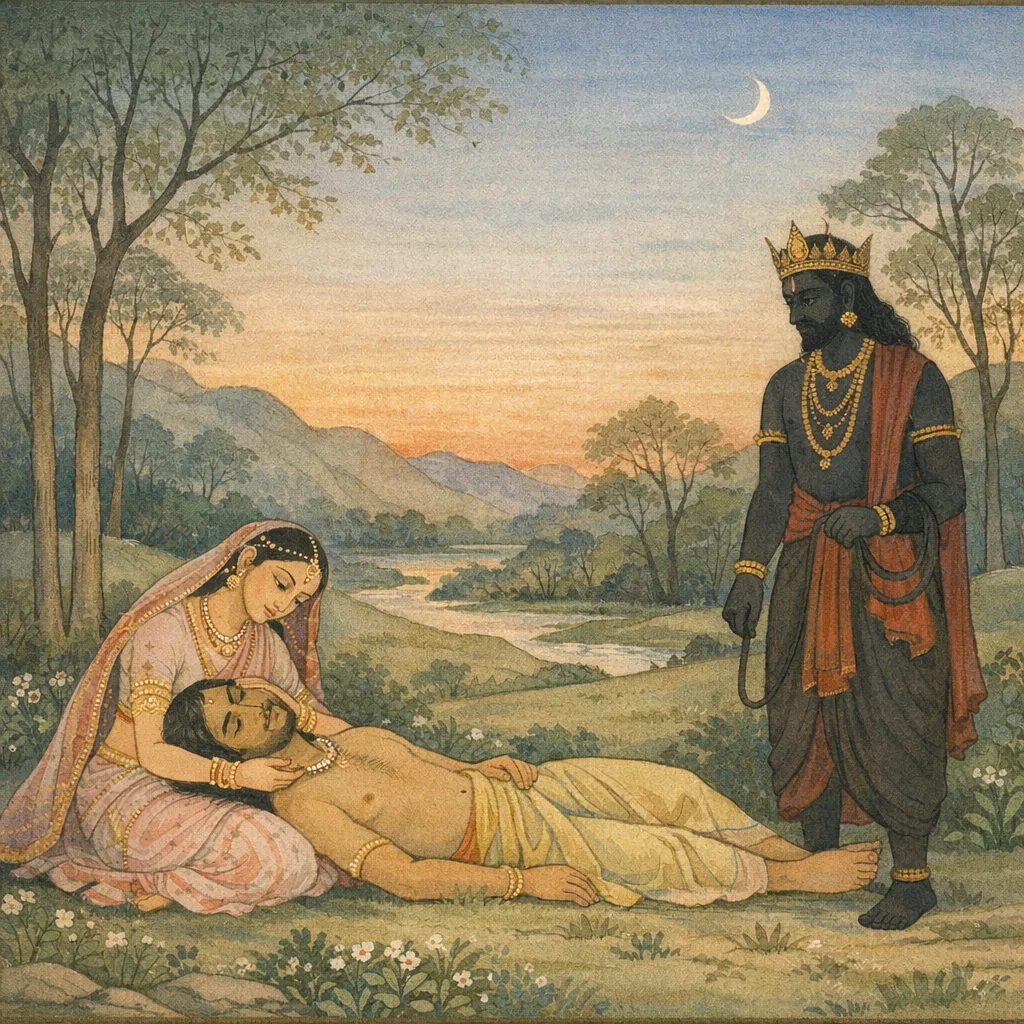
Chapter Arc: वन के श्रम में सत्यवान के शरीर पर अचानक विपत्ति उतरती है—लकड़ी चीरते-चीरते पसीना, थकान और सिर में तीव्र वेदना; सावित्री के लिए यह वही घड़ी है जिसकी छाया वह पहले से पहचानती है। → सत्यवान की पीड़ा बढ़ती है; सावित्री दौड़कर आती है, पति का सिर अपनी गोद में रखकर धरती पर बैठ जाती है। जीवन की डोर ढीली पड़ती दिखती है और वन का सन्नाटा मृत्यु की आहट बन जाता है। यमराज प्रकट होकर सावित्री को लौट जाने और और्ध्वदेहिक कर्म करने का आदेश देते हैं—पर सावित्री का धैर्य और वाक्-शक्ति पीछे नहीं हटती। → यम के दिए वरदानों की शर्तों को सावित्री अपने सत्य-वचन और बुद्धि से जीवन-दान में बदल देती है—‘आपने मुझे शतपुत्रता का वर दिया है; पति के बिना वह असंभव है; अतः सत्यवान जीवित हों।’ यम का वचन सत्य सिद्ध होता है और मृत्यु का निर्णय पलट जाता है। → यम संतुष्ट होकर सत्यवान को जीवन लौटाते हैं और सावित्री को अनेक वरदान देकर विदा करते हैं। रात्रि गहराती है; सावित्री सत्यवान से कहती है कि प्रातः सब यथावृत्त बताएगी। सत्यवान का सिर-दर्द उतरता है, वह माता-पिता से मिलने की इच्छा प्रकट करता है और समय से पहले घर लौटने की चिंता करता है। → रात भर वन में ठहरने और भोर में लौटने का संकेत—सत्यवान के माता-पिता को क्या ज्ञात होगा, और सावित्री कल किस प्रकार समस्त घटना सुनाएगी—यह अगले प्रसंग पर टिका रहता है।
Shlokas
Verse 1
#:73:.8 #::3:.7 (0) हि २ 7 सप्तनवर्त्याधिकद्विशततमो< ध्याय: सावित्री और यमका संवाद, यमराजका संतुष्ट होकर सावित्रीको अनेक वरदान देते हुए मरे हुए सत्यवान्को भी जीवित कर देना तथा सत्यवान् और सावित्रीका वार्तालाप एवं आश्रमकी ओर प्रस्थान मार्कण्डेय उवाच अथ भार्यासहाय: स फलान्यादाय वीर्यवान् । कठिन पूरयामास तत: काष्ठान्यपाटयत्,मार्कण्डेयजी कहते हैं--तदनन्तर पत्नीसहित शक्तिशाली सत्यवानने फल चुनकर एक काठकी टोकरी भर ली। तत्पश्चात् वे लकड़ी चीरने लगे
Mārkaṇḍeya said: Then Satyavān, strong and resolute, with his wife as his companion, gathered fruits and filled a sturdy basket. After that, he set about splitting firewood. The scene quietly foregrounds household duty and mutual companionship—ordinary acts through which steadfastness and dharma are lived, just before the larger moral trial of the Savitrī–Yama episode unfolds.
Verse 2
तस्य पाटयत: काष्ठ स्वेदो वै समजायत । व्यायामेन च तेनास्य जज्ञे शिरसि वेदना
As he kept splitting the wood, sweat indeed broke out on him; and from that exertion he developed pain in his head. The narration underscores how relentless labor and strain naturally yield bodily suffering, hinting at the ethical need for measured effort and mindful endurance.
Verse 3
सत्यवानुवाच व्यायामेन ममानेन जाता शिरसि वेदना,सत्यवानने कहा--सावित्री! आज लकड़ी काटनेके परिश्रमसे मेरे सिरमें दर्द होने लगा है, सारे अंगोंमें पीड़ा हो रही है और हृदय दग्ध-सा होता जान पड़ता है। मितभाषिणी प्रिये! मैं अपने-आपको अस्वस्थ-सा देख रहा हूँ। ऐसा जान पड़ता है, कोई शूलोंसे मेरे सिरको छेद रहा है। कल्याणि! अब मैं सोना चाहता हूँ। मुझमें खड़े रहनेकी शक्ति नहीं रह गयी है
Satyavān said: “From today’s exertion in cutting wood, a pain has arisen in my head. My whole body aches, and my heart feels as though it were burning. O gentle-spoken beloved, I find myself unwell. It seems as if someone were piercing my head with sharp spikes. O auspicious one, I wish to sleep now; I no longer have the strength to stand.”
Verse 4
अड्जनि चैव सावित्रि हृदयं दूयतीव च । अस्वस्थमिव चात्मानं॑ लक्षये मितभाषिणि,सत्यवानने कहा--सावित्री! आज लकड़ी काटनेके परिश्रमसे मेरे सिरमें दर्द होने लगा है, सारे अंगोंमें पीड़ा हो रही है और हृदय दग्ध-सा होता जान पड़ता है। मितभाषिणी प्रिये! मैं अपने-आपको अस्वस्थ-सा देख रहा हूँ। ऐसा जान पड़ता है, कोई शूलोंसे मेरे सिरको छेद रहा है। कल्याणि! अब मैं सोना चाहता हूँ। मुझमें खड़े रहनेकी शक्ति नहीं रह गयी है
Mārkaṇḍeya said: “Today, O Sāvitrī, my heart feels as though it is burning, and I perceive myself to be unwell, O gentle-spoken one.” (In the narrative context, Satyavān then tells Sāvitrī that from the toil of cutting wood his head aches, his limbs are in pain, his heart feels scorched, and he wishes to lie down, lacking the strength to stand—foreshadowing the crisis that will test Sāvitrī’s steadfast dharma and devotion.)
Verse 5
शूलैरिव शिरो विद्धमिदं संलक्षयाम्यहम् । तत् स्वप्तुमिच्छे कल्याणि न स्थातु शक्तिरस्ति मे,सत्यवानने कहा--सावित्री! आज लकड़ी काटनेके परिश्रमसे मेरे सिरमें दर्द होने लगा है, सारे अंगोंमें पीड़ा हो रही है और हृदय दग्ध-सा होता जान पड़ता है। मितभाषिणी प्रिये! मैं अपने-आपको अस्वस्थ-सा देख रहा हूँ। ऐसा जान पड़ता है, कोई शूलोंसे मेरे सिरको छेद रहा है। कल्याणि! अब मैं सोना चाहता हूँ। मुझमें खड़े रहनेकी शक्ति नहीं रह गयी है
“I feel as though my head has been pierced by sharp spikes. Seeing this condition in myself, O auspicious one, I wish to lie down and sleep; I no longer have the strength to remain standing.”
Verse 6
सा समासाद्य सावित्री भर्तारमुपगम्य च । उत्सड्रेडस्य शिर: कृत्वा निषसाद महीतले,यह सुनकर सावित्री शीघ्र अपने पतिके पास आयी और उनका सिर गोदीमें लेकर पृथ्वीपर बैठ गयी
Hearing this, Sāvitrī quickly reached her husband. Drawing near, she placed his head upon her lap and sat down on the ground—an act of steadfast care and wifely devotion in the face of impending loss.
Verse 7
ततः सा नारदवचो विमृशन्ती तपस्विनी । त॑ मुहूर्त क्षणं वेलां दिवसं च युयोज ह,फिर वह तपस्विनी राजकन्या नारदजीकी बात याद करके उस मुहूर्त, क्षण, समय और दिनका योग मिलाने लगी
Then that ascetic maiden, reflecting on Nārada’s words, began to calculate and align the auspicious moment—measuring the muhūrta, the instant, the proper time, and the day—so that her next act might accord with right timing and disciplined resolve.
Verse 8
मुहूतदिव चापश्यत् पुरुष॑ रक्तवाससम् । बद्धमौलिं वपुष्मन्तमादित्यसमतेजसम्,दो ही घड़ीमें उसने देखा, एक दिव्य पुरुष प्रकट हुए हैं, जिनके शरीरपर लाल रंगका वस्त्र शोभा पा रहा है। सिरपर मुकुट बँधा हुआ है। सूर्यके समान तेजस्वी होनेके कारण वे मूर्तिमान् सूर्य ही जान पड़ते हैं। उनका शरीर श्याम एवं उज्ज्वल प्रभासे उदभासित है, नेत्र लाल हैं। उनके हाथमें पाश है। उनका स्वरूप डरावना है। वे सत्यवानके पास खड़े हैं और बार-बार उन्हींकी ओर देख रहे हैं
Mārkaṇḍeya said: “After what seemed like only a moment, she saw a divine man appear—clad in red garments, his head bound with a crown-like headdress, possessed of a powerful form and blazing with a radiance equal to the sun.”
Verse 9
श्यामावदातं रक्ताक्ष॑ं पाशहस्तं भयावहम् । स्थितं सत्यवत: पारश्व निरीक्षन्तं तमेव च,दो ही घड़ीमें उसने देखा, एक दिव्य पुरुष प्रकट हुए हैं, जिनके शरीरपर लाल रंगका वस्त्र शोभा पा रहा है। सिरपर मुकुट बँधा हुआ है। सूर्यके समान तेजस्वी होनेके कारण वे मूर्तिमान् सूर्य ही जान पड़ते हैं। उनका शरीर श्याम एवं उज्ज्वल प्रभासे उदभासित है, नेत्र लाल हैं। उनके हाथमें पाश है। उनका स्वरूप डरावना है। वे सत्यवानके पास खड़े हैं और बार-बार उन्हींकी ओर देख रहे हैं
Mārkaṇḍeya said: “She saw a fearsome divine figure standing beside Satyavān—his form dark yet radiant, his eyes red, and a noose held in his hand—gazing again and again at Satyavān.”
Verse 10
त॑ दृष्टवा सहसोत्थाय भर्तुन्यस्य शनै: शिर: । कृताञ्जलिर्वाचार्ता हृदयेन प्रवेपती,उन्हें देखते ही सावित्रीने धीरेसे पतिका मस्तक भूमिपर रख दिया और सहसा खड़ी हो हाथ जोड़कर काँपते हुए हृदयसे वह आर्त वाणीमें बोली
Seeing him, Sāvitrī rose at once. Gently she set her husband’s head down, and with palms joined in reverence she spoke in a voice choked by anguish, her heart trembling.
Verse 11
सावित्रयुवाच दैवतं त्वाभिजानामि वपुरेतद्धयमानुषम् | कामया ब्रूहि देवेश कस्त्वं कि चिकीर्षसि,सावित्रीने कहा--मैं समझती हूँ, आप कोई देवता हैं; क्योंकि आपका यह शरीर मनुष्यों-जैसा नहीं है। देवेश्वर! यदि आपकी इच्छा हो तो बताइये आप कौन हैं और क्या करना चाहते हैं
Sāvitrī said: “I know you are a deity, for this form is not human. O Lord of the gods, if it pleases you, tell me: who are you, and what do you intend to do?”
Verse 12
यम उवाच पतिव्रतासि सावित्रि तथैव च तपो<न्विता । अतस्त्वामभिभाषामि विद्धि मां त्वं शुभे यमम्,यमराज बोले--सावित्री! तू पतिव्रता और तपस्विनी है, इसलिये मैं तुझसे वार्तालाप कर सकता हूँ। शुभे! तू मुझे यमराज जान
Yama said: “Sāvitrī, you are steadfast in wifely fidelity and equally endowed with ascetic power. Therefore I may speak with you. O auspicious one, know me to be Yama, the Lord of Death.”
Verse 13
अयं ते सत्यवान् भर्ता क्षीणायु: पार्थिवात्मज: । नेष्यामि तमहं बद्ध्वा विद्धयेतन्मे चिकीर्षितम्,तेरे पति इस राजकुमार सत्यवानकी आयु समाप्त हो गयी है, अतः मैं इसे बाँधकर ले जाऊँगा। बस, मैं यही करना चाहता हूँ
“This Satyavān—your husband, the king’s son—has reached the end of his allotted span of life. I shall bind him and take him away. Know that this is what I intend to do.”
Verse 14
सावित्रयुवाच श्रूयते भगवन् दूतास्तवागच्छन्ति मानवान् । नेतुं किल भवान् कस्मादागतो<सि स्वयं प्रभो,सावित्रीने पूछा--भगवन्! मैंने तो सुना है कि मनुष्योंको ले जानेके लिये आपके दूत आया करते हैं। प्रभो! आप स्वयं यहाँ कैसे चले आये?
Sāvitrī said: “O Blessed Lord, it is heard that your messengers come to carry human beings away. Why, then, have you yourself come here, O Sovereign?”
Verse 15
मार्कण्डेय उवाच इत्युक्त: पितृराजस्तां भगवान् स्वचिकीर्षितम् | यथावत् सर्वमाख्यातुं तत्प्रियार्थ प्रचक्रमे,मार्कण्डेयजी कहते हैं--युधिष्ठिर! सावित्रीके इस प्रकार पूछनेपर पितृराज भगवान् यमने उसका प्रिय करनेके लिये अपना सारा अभिप्राय यथार्थरूपसे बताना आरम्भ किया
Markandeya said: Thus addressed, the blessed Lord Yama, king of the departed, began to explain—truthfully and in full—his entire intention, in order to grant her what was dear to her.
Verse 16
अयं च धर्मसंयुक्तो रूपवान् गुणसागर: । नाहों मत्पुरुषैनेतुमतो5स्मि स्वयमागत:,“यह सत्यवान् धर्मात्मा, रूपवान् और गुणोंका समुद्र है। मेरे दूतोंद्वारा ले जाया जाने योग्य नहीं है। इसीलिये मैं स्वयं आया हूँ”
“This man is endowed with dharma—handsome, and an ocean of virtues. He is not fit to be carried away by my attendants; therefore I have come here myself.”
Verse 17
ततः सत्यवत: कायात् पाशबद्ध॑ वशं गतम् । अड्गुष्ठमात्रं पुरुषं निश्चकर्ष यमो बलात्,तदनन्तर यमराजने सत्यवानके शरीरसे पाशमें बँधे हुए अंगुष्ठमात्र परिमाणवाले विवश हुए जीवको बलपूर्वक खींचकर निकाला
Then Yama, by sheer force, drew from Satyavān’s body the thumb-sized Person—the bound, helpless life-principle caught in his noose. The sight laid bare Death’s stark dominion over embodied life, even as it prepared the moral counterpoint of steadfast righteousness and devoted resolve that would dare to confront this seeming inevitability.
Verse 18
ततः: समुद्धृतप्राणं गतश्वासं हतप्रभम् । निर्विचेष्ट शरीरं तद् बभूवाप्रियदर्शनम्,फिर तो प्राण निकल जानेसे उसकी साँस बंद हो गयी--अंगकान्ति फीकी पड़ गयी और शरीर निश्रेष्ट होकर अपरूप दिखायी देने लगा
Then, as life was drawn out of him, his breathing ceased and his radiance was quenched. That body, now motionless and bereft of vitality, became a grievous sight—showing how swiftly embodied splendor collapses when the life-force departs.
Verse 19
यमस्तु त॑ं ततो बद्ध्वा प्रयातो दक्षिणामुख: । सावित्री चैव दुःखार्ता यममेवान्वगच्छत । नियमव्रतसंसिद्धा महाभागा पतिव्रता,यमराज उस जीवको बाँधकर साथ लिये दक्षिण दिशाकी ओर चल दिये। सावित्री दुःखसे आतुर हो यमराजके ही पीछे-पीछे चल पड़ी। वह परम सौभाग्यवती पतित्रता राजकन्या नियमपूर्वक व्रतोंके पालनसे पूर्णतः सिद्ध हो चुकी थी। (अतः निर्बाध गतिसे सर्वत्र आने-जानेमें समर्थ थी)
Mārkaṇḍeya said: Yama, having bound that soul, set out facing south, leading it away. Sāvitrī, stricken with grief, followed Yama himself step by step. That supremely fortunate princess—steadfast in wifely fidelity (pativratā)—had been perfected through disciplined observances and vows, and thus could proceed unhindered wherever she chose.
Verse 20
यम उवाच निवर्त गच्छ सावित्रि कुरुष्वास्यौर्ध्वदेहिकम् कृतं भर्तुस्त्वया5<नृण्यं यावद् गम्यं गतं त्वया,यमराज बोले--सावित्री! अब तू लौट जा, सत्यवानका अन्त्येष्टि-संस्कार कर। अब तू पतिके ऋणसे उऋण हो गयी। पतिके पीछे तुझे जहाँतक आना चाहिये था, तू वहाँतक आ चुकी
Yama said: “Turn back, Sāvitrī. Perform for him the rites due after death (antyeṣṭi). You have now discharged the debt you owed to your husband; you have accompanied him as far as a wife is bound to go.”
Verse 21
सावित्रयुवाच यत्र मे नीयते भर्ता स्वयं वा यत्र गच्छति । मया च तत्र गन्तव्यमेष धर्म: सनातन:,सावित्रीने कहा--जहाँ मेरे पति ले जाये जाते हैं अथवा ये स्वयं जहाँ जा रहे हैं, वहीं मुझे भी जाना चाहिये; यही सनातन धर्म है
Sāvitrī said: “Wherever my husband is being led, or wherever he goes of his own accord, there I too must go. This is the eternal law of dharma.”
Verse 22
तपसा गुरुभवत्या च भर्तुः स्नेहाद् ब्रतेन च । तव चैव प्रसादेन न मे प्रतिहता गति:,तपस्या, गुरुभक्ति, पतिप्रेम, व्रतपालन तथा आपकी कृपासे मेरी गति कहीं भी रुक नहीं सकती
Yama said: “By your austerity, by your reverent service to elders, by your love for your husband, and by your faithful observance of vows—and also by your gracious favor—my course cannot be obstructed anywhere.”
Verse 23
प्राहु: साप्तपदं मैत्रं बुधास्तत्त्वार्थदर्शिन: । मित्रतां च पुरस्कृत्य किज्चिद् वक्ष्यामि तच्छुणु,तत्त्वार्थदर्शी विद्वान ऐसा कहते हैं कि सात पग साथ चलनेमात्रसे मैत्री-सम्बन्ध स्थापित हो जाता है, उसी मित्रताको सामने रखकर मैं आपसे कुछ निवेदन करूँगी, उसे सुनिये
The wise who behold the truth declare: “By walking together but seven steps, friendship is established.” Keeping that friendship foremost, I shall say something to you—listen.
Verse 24
नानात्मवन्तस्तु वने चरन्ति धर्म च वासं च परिश्रमं च । विज्ञानतो धर्ममुदाहरन्ति तस्मात् सन््तो धर्ममाहु: प्रधानम्,जिन्होंने अपने मन और इन्द्रियोंको वशमें नहीं किया है, वे वनमें रहकर धर्मपालन, गुरुकुलवास तथा कष्टसहनरूप तपस्या नहीं कर सकते हैं। जितेन्द्रिय पुरुष ही यह सब कुछ करनेमें समर्थ हैं। महात्मालोग विवेक-विचारसे ही धर्म-प्राप्ति बताते हैं, अतः सभी सत्पुरुष धर्मको ही श्रेष्ठ मानते हैं
Yama said: “Those whose inner self is scattered—who have not mastered mind and senses—cannot truly sustain life in the forest: neither righteous conduct, nor disciplined residence (as in a teacher’s house), nor the austerity of enduring hardship. It is the self-controlled who are capable of these. The wise, through discerning understanding, declare what dharma is; therefore the good and noble regard dharma as the highest principle.”
Verse 25
एकस्य धर्मेण सता मतेन सर्वे सम त॑ मार्गमनुप्रपन्ना: । मा वै द्वितीयं मा तृतीयं च वाउ्छे तस्मात् सन््तो धर्ममाहु: प्रधानम्,अपने एक ही वर्णके सत्पुरुष-सम्मत धर्मका पालन करनेसे सभी लोग उस विज्ञान- मार्गपर पहुँच जाते हैं, जो सबका लक्ष्य है। अतः दूसरे या तीसरे वर्णकी इच्छा नहीं रखनी चाहिये। इसलिये साधु पुरुष केवल वर्ण-धर्मको ही प्रधानता देते हैं
Yama said: “By adhering to the single dharma approved by the good and held to be right, all people reach the same path—the path of true understanding that is the common goal. Therefore one should not hanker after a ‘second’ or a ‘third’ status. For this reason, the virtuous declare dharma to be paramount.”
Verse 26
सो$भिगम्य प्रियां भार्यामुवाच श्रमपीडित: । लकड़ी चीरते समय परिश्रमके कारण उनके शरीरसे पसीना निकल आया और उसी परिश्रमसे उनके सिरमें दर्द होने लगा। तब वे श्रमसे पीड़ित हो अपनी प्यारी पत्नीके पास जाकर बोले--,यम उवाच निवर्त तुष्टोडस्मि तवानया गिरा स्वराक्षरव्यज्जनहेतुयुक्तया । वरं वृणीष्वेह विनास्य जीवितं ददानि ते सर्वमनिन्दिते वरम् यमराज बोले--अनिन्दिते! तू लौट जा। स्वर, अक्षर, व्यंजन एवं युक्तियोंसे युक्त तेरी इन बातोंसे मैं बहुत प्रसन्न हूँ। तू यहाँ मुझसे कोई वर माँग ले। सत्यवानके जीवनके सिवा मैं और सब कुछ तुझे दे सकता हूँ
Worn out by exertion, he went to his beloved wife and spoke. Then Yama said: “Return, blameless one. I am greatly pleased with your speech—well-formed in vowels, syllables, consonants, and sound reasoning. Ask a boon of me here; except for Satyavān’s life, I will grant you anything, O faultless lady.”
Verse 27
सावित्रयुवाच च्युत: स्वराज्याद् वनवासमाश्रितो विनष्टचक्षु: श्वशुरो ममाश्रमे । स लब्धचक्षुर्बलवान् भवेन्नूप- स्तव प्रसादाज्ज्वलनार्कसंनिभ:,सावित्री बोली--भगवन! मेरे श्वशुर अपने राज्यसे भ्रष्ट होकर वनमें रहते हैं। उनकी आँखें भी नष्ट हो गयी हैं। मैं चाहती हूँ, आपकी कृपासे उन महाराजको उनकी आँखें मिल जायूँ और वे बलवान् तथा अग्नि एवं सूर्यके समान तेजस्वी हो जायेँ
Sāvitrī said: “Blessed Lord, my father-in-law, having fallen from his own kingdom, has taken refuge in forest-dwelling and lives in my hermitage. His eyesight has been destroyed. By your grace, may that king regain his sight and become strong, radiant like fire and the sun.”
Verse 28
यम उवाच ददानि ते5हं तमनिन्दिते वरं यथा त्वयोक्तंभविता च तत् तथा । तवाध्वना ग्लानिमिवोपलक्षये निवर्त गच्छस्व न ते श्रमो भवेत्,यमराज बोले--अनिन्दिते! मैं तुझे वर देता हूँ। तूने जैसा कहा है, वह सब वैसा ही होगा। मैं देखता हूँ, तू राह चलनेके कारण बहुत थक गयी है। अब लौट जा, जिससे तुझे अधिक परिश्रम न हो
Yama said: “Blameless one, I grant you that boon. Exactly as you have spoken, so shall it come to pass. I can see, as it were, the weariness brought on by your journey. Turn back and go—so that no further strain may befall you.”
Verse 29
सावित्रयुवाच श्रम: कुतो भर्त्समीपतो हि मे यतो हि भर्ता मम सा गतिर्धुवा । यतः पतिं नेष्यसि तत्र मे गति: सुरेश भूयश्व वचो निबोध मे,सावित्री बोली--स्वामीके समीप रहते हुए मुझे श्रम हो ही कैसे सकता है। जहाँ मेरे पतिदेव रहेंगे, वहीं मेरी भी गति निश्चित है। आप जहाँ मेरे प्राणनाथको ले जायँगे, वहीं मेरा जाना भी अवश्यम्भावी है। देवेश्वर! आप फिर मेरी बात सुनिये
Sāvitrī said: “How could there be any fatigue for me when I am close to my husband? Wherever my husband is, that alone is my certain course and destiny. To whatever place you lead my lord, to that very place my going is inevitable as well. O Lord of the gods, listen once more to my words.”
Verse 30
सतां सकृत्संगतमीप्सितं परं ततः परं मित्रमिति प्रचक्षते । न चाफल सत्पुरुषेण सड़तं ततः सतां सन्निवसेत् समागमे,सत्पुरुषोंका एक बारका समागम भी अत्यन्त अभीष्ट होता है। उनके साथ मित्रता हो जाना उससे भी बढ़कर बताया गया है। साधु पुरुषका संग कभी निष्फल नहीं होता; अतः सदा सत्पुरुषोंके ही समीप रहना चाहिये
Yama said: “Even a single encounter with the virtuous is supremely desirable; and greater still, they say, is to gain the virtuous as a friend. Association with a good person never goes fruitless; therefore one should dwell near the virtuous and remain in their company.”
Verse 31
यम उवाच मनो<नुकूलं बुधबुद्धिवर्धनं त्वया यदुक्तं वचन हिताश्रयम् । विना पुन: सत्यवतो<स्य जीवितं वरं द्वितीयं वरयस्व भामिनि,यमराज बोले--भामिनी! तूने जो सबके हितकी बात कही है, वह मेरे मनके अनुकूल है तथा विद्वानोंकी भी बुद्धिको बढ़ानेवाली है; अतः इस सत्यवानके जीवनको छोड़कर तू दूसरा कोई वर और माँग ले
Yama said: “The words you have spoken are pleasing to my mind, grounded in the welfare of all, and they even deepen the understanding of the wise. Therefore, O noble lady, choose a second boon—yet choose it without asking for the life of this Satyavān.”
Verse 32
सावित्रयुवाच ह्वतं पुरा मे श्वशुरस्य धीमतः स्वमेव राज्यं लभतां स पार्थिव: । जह्यात् स्वधर्म न च मे गुरुर्यथा द्वितीयमेतद् वरयामि ते वरम्,सावित्री बोली--मेरे बुद्धिमान् श्वशुरका राज्य, जो पहले उनसे छीन लिया गया है, उसे वे महराज पुनः प्राप्त कर लें तथा वे मेरे पूज्य गुरु महाराज द्युमत्सेन कभी अपना धर्म न छोड़ें; यही दूसरा वर मैं आपसे माँगती हूँ
Sāvitrī said: “My wise father-in-law, whose own kingdom was taken from him long ago, should regain that very sovereignty. And may my revered elder—my guru—never abandon his dharma. This is the second boon I choose from you.”
Verse 33
यम उवाच स्वमेव राज्यं प्रतिपत्स्यते5चिरा- न्नच स्वधर्मात् परिहास्यते नृपः । कृतेन कामेन मया नृपात्मजे निवर्त गच्छस्व न ते श्रमो भवेत्,यमराज बोले--राजा झ्युमत्सेन शीघ्र एवं अनायास ही अपना राज्य प्राप्त कर लेंगे और वे कभी अपने धर्मका भी परित्याग नहीं करेंगे। राजकुमारी! मेरेद्वारा अब तेरी इच्छा पूरी हो गयी। तू लौट जा, जिससे तुझे परिश्रम न हो
Yama said: “After a long time, the king will indeed regain his own kingdom, and he will never deviate from his rightful duty (dharma). Princess, by me your wish has now been fulfilled. Turn back and go, so that no hardship may befall you.”
Verse 34
सावित्रयुवाच प्रजास्त्वयैता नियमेन संयता नियम्य चैता नयसे निकामया । ततो यमत्वं तव देव विश्रुतं निबोध चेमां गिरमीरितां मया,सावित्री बोली--देव! इस सारी प्रजाको आप नियमसे संयममें रखते हैं और उसका नियमन करके आप अपनी इच्छाके अनुसार उसे विभिन्न लोकोंमें ले जाते हैं। इसीलिये आपका “यम” नाम सर्वत्र विख्यात है। मैं जो बात कहती हूँ, उसे सुनिये
Savitri said: “O god, you keep these beings restrained by law and discipline; having regulated them, you lead them onward according to your will to their respective realms. Therefore your state as ‘Yama’—the Regulator—has become renowned everywhere. Now listen to these words that I speak.”
Verse 35
अद्रोह: सर्वभूतेषु कर्मणा मनसा गिरा । अनुग्रहश्न दानं च सतां धर्म: सनातन:,मन, वाणी और क्रियाद्वारा किसी भी प्राणीसे द्रोह न करना, सबपर दयाभाव बनाये रखना और दान देना यह साधु पुरुषोंका सनातन धर्म है
Yama declares that the timeless dharma of the virtuous is this: to bear no malice toward any living being—whether in deed, in thought, or in speech—and to maintain a spirit of compassion and active benevolence, expressed especially through generosity and giving.
Verse 36
एवंप्रायश्न॒ लोको<यं मनुष्या: शक्तिपेशला: । सन्तस्त्वेवाप्यमित्रेषु दयां प्राप्तेषु कुर्वते,प्राय: इस संसारके लोग अल्पायु होते हैं, मनुष्योंकी शक्तिहीनता तो प्रसिद्ध ही है। आप-जैसे संत-महात्मा तो अपनी शरणमें आये हुए शत्रुओंपर भी दया करते हैं। (फिर हम- जैसे दीन मनुष्योंपर दया क्यों न करेंगे?)
“Such, for the most part, is this world: human beings are short-lived, and their frailty is well known. Yet the truly good—even toward enemies—show compassion to those who come seeking refuge. How then would we not show compassion to humble people like you?”
Verse 37
यम उवाच पिपासितस्येव भवेद् यथा पय- स्तथा त्वया वाक्यमिदं समीरितम् | विना पुन: सत्यवतो<स्य जीवितं वरं वृणीष्वेह शुभे यदिच्छसि,यमराज बोले--शुभे! जैसे प्यासे मनुष्यको प्राप्त हुआ जल आनन्ददायक होता है, उसी प्रकार तेरी कही हुई यह बात मुझे अत्यन्त सुख दे रही है। अतः तू सत्यवानके जीवनके सिवा और कोई वर, जिसे तू लेना चाहे, माँग ले
Yama said: “O auspicious lady, just as water delights one parched with thirst, so have your words spoken here given me profound satisfaction. Therefore, apart from Satyavān’s life, choose any other boon here—whatever you desire.”
Verse 38
सावित्रयुवाच ममानपत्य: पृथिवीपति: पिता भवेत् पितु: पुत्रशतं तथौरसम् | कुलस्य सन््तानकरं च यद् भवेत् तृतीयमेतद् वरयामि ते वरम्,सावित्रीने कहा--भगवन्! मेरे पिता महाराज अभश्वपति पुत्रहीन हैं; उन्हें सौ ऐसे औरस पुत्र प्राप्त हों, जो उनके कुलकी संतानपरम्पराको चलानेवाले हों। मैं आपसे यही तीसरा वर माँगती हूँ
Savitri said: “Bless my father, the king of the earth, who is without a child, to obtain a hundred sons—true-born heirs—so that our lineage may be continued. This is the third boon I choose from you.”
Verse 39
यम उवाच कुलस्य सन्तानकरं सुवर्चसं शतं सुतानां पितुरस्तु ते शुभे । कृतेन कामेन नराधिपात्मजे निवर्त दूरं हि पथस्त्वमागता,यमराज बोले--शुभे! तेरे पिताके कुलकी संतान-परम्पराको चलानेवाले सौ तेजस्वी पुत्र होंगे। राजकुमारी! तेरी यह कामना भी पूरी हुई। अब लौट जा, तू रास्तेसे बड़ी दूर चली आयी है
Yama said: “O auspicious princess, may your father have a hundred radiant sons who will carry forward the lineage. Your wish has been fulfilled, O daughter of a king. Now turn back—indeed you have come far away from the path.”
Verse 40
सावित्रयुवाच न दूरमेतन्मम भर्तूसंनिधौ मनो हि मे दूरतरं प्रधावति । अथ व्रजन्नेव गिरं समुद्यतां मयोच्यमानां शृणु भूय एव च,सावित्रीने कहा--भगवन्! मैं अपने स्वामीके समीप हूँ। इसलिये यह स्थान मेरे लिये दूर नहीं है। मेरा मन तो और भी दूरतक दौड़ लगाता है। आप चलते-चलते ही मेरी कही हुई ये प्रस्तुत बातें पुन: सुनें
Savitri said: “This is not far for me, for I am near my husband. Indeed, my mind runs even farther still. Therefore, even as you go on your way, listen once again to the words I am about to speak.”
Verse 41
विवस्वतस्त्वं तनय: प्रतापवां- स्ततो हि वैवस्वत उच्यसे बुध: । समेन धर्मेण चरन्ति ता: प्रजा- स्ततस्तवेहेश्वर धर्मराजता,देवेश्वरर आप विवस्वान् (सूर्य)-के प्रतापी पुत्र हैं; इसलिये विद्वान् पुरुष आपको वैवस्वत कहते हैं। आप समस्त प्रजाके साथ समतापूर्वक धर्मानुसार आचरण करते हैं, इसलिये आप धर्मराज कहलाते हैं
Yama said: “You are the mighty son of Vivasvān (the Sun); therefore the wise call you ‘Vaivasvata’. Because you move among all beings with an even-handed commitment to dharma—treating subjects impartially according to righteousness—therefore, O Lord, you are known here as Dharmarāja, the king and judge of dharma.”
Verse 42
आत्मन्यपि न विश्वासस्तथा भवति सत्सु यः । तस्मात् सत्सु विशेषेण सर्व: प्रणयमिच्छति,मनुष्यको अपने-आपपर भी उतना विश्वास नहीं होता है, जितना संतोंपर होता है। इसलिये सब लोग संतोंसे विशेष प्रेम करना चाहते हैं
Even in oneself, such trust does not arise as the trust one places in the truly good and saintly. Therefore, everyone especially seeks affectionate regard and loving attachment toward the virtuous, for their integrity becomes a refuge for others.
Verse 43
सौद्दात् सर्वभूतानां विश्वासो नाम जायते । तस्मात् सत्सु विशेषेण विश्वासं कुरुते जन:,सौहार्दसे ही समस्त प्राणियोंका एक-दूसरेके प्रति विश्वास उत्पन्न होता है। संतोंमें सौहार्द होनेके कारण ही सब लोग उनपर अधिक विश्वास करते हैं
From goodwill and cordiality there arises what is called trust among all living beings. Therefore people place trust—especially and more firmly—in the virtuous, because harmony and benevolence are found in them.
Verse 44
यम उवाच उदादह्वतं ते वचन यदड्ने शुभे न तादृक् त्वदते श्रुतं मया । अनेन तुष्टो5स्मि विनास्य जीवितं वरं चतुर्थ वरयस्व गच्छ च,यमराज बोले--कल्याणि! तूने जैसी बात कही है, वैसी मैंने तेरे सिवा किसी दूसरेके मुखसे नहीं सुनी है। शुभे! तेरी इस बातसे मैं बहुत संतुष्ट हूँ; तू सत्यवानके जीवनके सिवा और कोई चौथा वर माँग ले और यहाँसे लौट जा
Yama said: “Auspicious lady, the words you have spoken today are such as I have never heard from anyone else but you. I am greatly pleased by this. Choose a fourth boon—anything except the life of Satyavān—and then depart from here.”
Verse 45
सावित्रयुवाच ममात्मजं सत्यवतस्तथौरसं भवेदुभाभ्यामिह यत् कुलोद्वहम् । शतं सुतानां बलवीर्यशालिना- मिदं चतुर्थ वरयामि ते वरम्,सावित्रीने कहा--मेरे और सत्यवान्--दोनोंके संयोगसे कुलकी वृद्धि करनेवाले, बल और पराक्रमसे सुशोभित सौ औरस पुत्र हों। यह मैं आपसे चौथा वर माँगती हूँ
Sāvitrī said: “May I and Satyavān beget here a true-born son—indeed, a hundred sons—who will uphold and expand our lineage, endowed with strength and heroic vigor. This is the fourth boon that I choose from you.”
Verse 46
यम उवाच शतं सुतानां बलवीर्यशालिनां भविष्यति प्रीतिकरं तवाबले । परिश्रमस्ते न भवन्नपात्मजे निवर्त दूरं हि पथस्त्वमागता,यमराज बोले--अबले! तुझे बल और पराक्रमसे सम्पन्न सौ पुत्र प्राप्त होंगे; जो तेरी प्रसन्नताको बढ़ानेवाले होंगे। राजकुमारी! अब तू लौट जा, जिससे तुझे थकावट न हो। तू रास्तेसे बहुत दूर चली आयी है
Yama said: “O gentle one, you shall have a hundred sons, endowed with strength and heroic prowess—sons who will be a source of joy to you. O princess, turn back now, so that you do not become exhausted; you have come far off the proper path.”
Verse 47
सावित्रयुवाच सतां सदा शाश्चवतधर्मवृत्ति: सन््तो न सीदन्ति न च व्यथन्ति । सतां सद्भि्नाफल: सड़मो<स्ति सद्धभयो भयं नानुवर्तन्ति सन्त:,सावित्रीने कहा--सत्पुरुषोंकी वृत्ति निरन्तर धर्ममें ही लगी रहती है। श्रेष्ठ पुरुष कभी दुःखी या व्यथित नहीं होते। सत्पुरुषोंका संतोंके साथ जो समागम होता है, वह कभी निष्फल नहीं होता है। श्रेष्ठ पुरुष संतोंसे कभी भय नहीं मानते हैं
Savitri said: “The conduct of the truly good is ever and unwaveringly rooted in dharma. Such noble people neither sink into dejection nor are they shaken by distress. For the virtuous, association with the virtuous is never fruitless; and the good do not follow fear when they are in the presence of the good.”
Verse 48
सन््तो हि सत्येन नयन्ति सूर्य सन््तो भूमिं तपसा धारयन्ति | सन््तो गतिर्भूतभव्यस्य राजन् सतां मध्ये नावसीदन्ति सन्त:,श्रेष्ठ पुरुष सत्यके बलसे सूर्यका संचालन करते हैं। संत-महात्मा अपनी तपस्यासे इस पृथ्वीको धारण करते हैं। राजन! सत्पुरुष ही भूत, वर्तमान और भविष्यके आश्रय हैं। श्रेष्ठ पुरुष संतोंके बीचमें रहकर कभी दु:ख नहीं उठाते हैं
Yama said: “For it is the good and holy who, by truth, guide the course of the sun; it is the good who, by austerity, uphold the earth. O king, the righteous are the refuge and guiding way for what has been and what is yet to be. Dwelling among the virtuous, the virtuous themselves do not sink into sorrow.”
Verse 49
आर्यजुष्टमिदं वृत्तमिति विज्ञाय शाश्वतम् | सन्त: परार्थ कुर्वाणा नावेक्षन्ति परस्परम्,यह सनातन सदाचार सत्पुरुषोंद्वारा सेवित है। यह जानकर सभी श्रेष्ठ पुरुष परोपकार करते हैं और आपसमें एक-दूसरेकी ओर स्वार्थकी दृष्टिसे कभी नहीं देखते हैं
Yama said: “Knowing that this is the eternal conduct approved and practiced by the noble, the good engage in actions for the sake of others; they do not look upon one another with self-interest, nor do they measure their dealings by personal gain.”
Verse 50
न च प्रसाद: सत्पुरुषेषु मोघो न चाप्यर्थो नश्यति नापि मान: । यस्मादेतन्नियतं सत्सु नित्यं तस्मात् सन््तो रक्षितारों भवन्ति,सत्पुरुषोंका प्रसाद कभी व्यर्थ नहीं जाता। वहाँ किसीको स्वार्थकी हानि नहीं उठानी पड़ती है और न मान-सम्मान ही नष्ट होता है। ये तीनों (प्रसाद, अर्थ और मान) संतोंमें नित्य-निरन्तर बने रहते हैं; इसलिये वे सम्पूर्ण जगत्के रक्षक होते हैं
Yama said: “Among the truly good, no act of gracious favor is ever wasted; neither does one’s rightful gain perish, nor is one’s honor diminished. Since these three—grace, benefit, and honor—abide unfailingly among the virtuous, the good become protectors of the whole world.”
Verse 51
यम उवाच यथा यथा भाषसि धर्मसंहितं मनोअ<नुकूलं सुपद॑ महार्थवत् | तथा तथा मे त्वयि भक्तिरुत्तमा वरं वृणीष्वाप्रतिमं पतिव्रते,यमराज बोले--पतिव्रते! जैसे-जैसे तू गम्भीर अर्थसे युक्त और सुन्दर पदोंसे विभूषित, मनके अनुकूल धर्मसंगत बातें मुझे सुनाती जा रही है, वैसे-ही-वैसे तेरे प्रति मेरी उत्तम भक्ति बढ़ती जाती है; अतः तू मुझसे कोई अनुपम वर माँग ले
Yama said: “O faithful wife devoted to her husband! The more you speak to me words that accord with dharma—pleasing to the mind, adorned with well-chosen expressions, and rich in profound meaning—the more my highest goodwill and devotion toward you increases. Therefore, choose from me an incomparable boon.”
Verse 52
सावित्रयुवाच न ते5पवर्ग: सुकृताद् विनाकृत- स्तथा यथान्येषु वरेषु मानद । वरं वृणे जीवतु सत्यवानयं यथा मृता होवमहं पतिं विना,सावित्रीने कहा--मानद! आपने मुझे जो पुत्र-प्राप्तिका वर दिया है, वह पुण्यमय दाम्पत्य-संयोगके बिना सफल नहीं हो सकता। अन्य वरोंकी जैसी स्थिति है, वैसी इस अन्तिम वरकी नहीं है। इसलिये मैं पुनः: यह वर माँगती हूँ कि ये सत्यवान् जीवित हो जायाँ; क्योंकि इन पतिदेवताके बिना मैं मरी हुईके ही समान हूँ
Sāvitrī said: “O giver of honor, the boon you granted—offspring—cannot bear fruit without the meritorious bond of a righteous marriage. This final boon is not like the others. Therefore I choose this boon again: let Satyavān live. For without my lord, I am as good as dead.”
Verse 53
न कामये भर्तृविनाकृता सुखं न कामये भर्त॒विनाकृता दिवम् । न कामये भर्तविनाकृता श्रियं न भर्तहीना व्यवसामि जीवितुम्,पतिके बिना यदि कोई सुख मिलता है तो वह मुझे नहीं चाहिये। पतिदेवके बिना मैं स्वर्गलोकमें भी जानेकी इच्छा नहीं रखती। पतिके बिना मुझे धन-सम्पत्तिकी भी इच्छा नहीं है। अधिक क्या कहूँ, मैं पतिके बिना जीवित रहना भी नहीं चाहती
She said: “I do not desire happiness if it is obtained without my husband. I do not desire even heaven if it is reached without my husband. I do not desire prosperity if it is enjoyed without my husband. Indeed, without my husband I do not resolve even to go on living.”
Verse 54
वरातिसर्ग: शतपुत्रता मम त्वयैव दत्तो ह्वियते च मे पति: । वरं वृणे जीवतु सत्यवानयं तवैव सत्यं वचनं भविष्यति,आपने ही मुझे सौ पुत्र होनेका वर दिया है और आप ही मेरे पतिको अन्यत्र लिये जा रहे हैं; अतः मैं वही वर माँगती हूँ कि ये सत्यवान् जीवित हो जायूँ, इससे आपका ही वचन सत्य होगा
“You yourself granted me the boon of a hundred sons, and you yourself are taking my husband away elsewhere. Therefore I ask this boon: let Satyavān live—so that your own word will be made true.”
Verse 55
मार्कण्डेय उदाच तथेत्युक्त्वा तु तं पाश मुक्त्वा वैवस्वतो यम: । धर्मराज: प्रह्ृष्टात्मा सावित्रीमिदमब्रवीत्
Mārkaṇḍeya said: Having said, “So be it,” Vaivasvata Yama released him from the noose. Then Dharmarāja Yama, his heart filled with gladness, spoke these words to Sāvitrī.
Verse 56
मार्कण्डेयजी कहते हैं--युधिष्ठिर! तदनन्तर “तथास्तु” कहकर सूर्यपुत्र धर्मराज यमने सत्यवानका बन्धन खोल दिया और प्रसन्नचित्त होकर सावित्रीसे इस प्रकार कहा-- एष भटद्रे मया मुक्तो भर्ता ते कुलनन्दिनि । (तोषितो<हं त्वया साध्थवि वाक्यैर्थर्मार्थसंहितै: ।) अरोगस्तव नेयश्न सिद्धार्थ: स भविष्यति,// 'भद्रे! यह ले, मैंने तेरे पतिको छोड़ दिया। कुलनन्दिनी! तूने अपने धर्मार्थियुक्त वचनोंद्वारा मुझे पूर्ण संतुष्ट कर दिया है। साध्वी! यह सत्यवान् नीरोग, सफल-मनोरथ तथा तेरे द्वारा ले जानेयोग्य हो गया
Mārkaṇḍeya said: “Yudhiṣṭhira, then, saying ‘So be it,’ Yama—the son of the Sun and lord of Dharma—released Satyavān from his bonds. With a pleased heart he addressed Sāvitrī: ‘Noble lady, your husband has been set free by me. O delight of your lineage, I am fully satisfied by your words, which were joined to dharma and right purpose. Satyavān will be free from illness, his aims fulfilled, and he will be fit for you to lead back.’”
Verse 57
चतुर्वर्षशतायुश्च त्वया सार्धमवाप्स्यति । इष्ट्वा यज्जैश्व धर्मेण ख्यातिं लोके गमिष्यति,“यह तेरे साथ रहकर चार सौ वर्षोकी आयु प्राप्त करेगा। यज्ञोंद्वारा भगवानका यजन करके यह अपने धर्माचरणके द्वारा सम्पूर्ण विश्वमें विख्यात होगा
Yama said: “Living in your company, he will attain a lifespan of four hundred years. Having worshipped the Lord through sacrifices and by steadfast practice of dharma, he will go forth as one renowned throughout the world.”
Verse 58
त्वयि पुत्रशतं चैव सत्यवान् जनयिष्यति । ते चापि सर्वे राजान: क्षत्रिया: पुत्रपौत्रिण:,'सत्यवान् तेरे गर्भसे सौ पुत्र उत्पन्न करेगा और वे सभी राजकुमार राजा होनेके साथ ही पुत्र-पौत्रोंसे सम्पन्न होंगे
Yama said: “Through you, Satyavān will beget a hundred sons. All of them will be Kṣatriyas and kings, and each will be blessed with sons and grandsons.”
Verse 59
ख्यातास्त्वन्नामधेयाश्व॒ भविष्यन्तीह शाश्वृता: । पितुश्न ते पुत्रशतं भविता तव मातरि,“तेरे ही नामसे उनकी सदा ख्याति होगी अर्थात् वे सावित्र नामसे प्रसिद्ध होंगे। तेरे पिताके भी तेरी माताके ही गर्भसे सौ पुत्र होंगे
Yama said: “Here in this world, those (sons) bearing your name will become renowned forever. Moreover, from your father, a hundred sons will be born in your mother’s womb.”
Verse 60
मालव्यां मालवा नाम शाश्रचताः पुत्रपौत्रिण: । भ्रातरस्ते भविष्यन्ति क्षत्रियास्त्रिदशोपमा:,यम-सावित्री “वे तेरी माता मालवीसे उत्पन्न होनेके कारण मालव नामसे विख्यात होंगे। तेरे भाई मालव क्षत्रिय पुत्र-पौत्रोंसे सम्पन्न तथा देवताओंके समान तेजस्वी होंगे”
Yama said: “Born of your mother Mālavī, they will be known forever by the name ‘Mālava’. Your brothers will be Kṣatriyas, blessed with sons and grandsons, radiant in splendor like the gods.”
Verse 61
एवं तस्यै वरं दत्त्वा धर्मराज: प्रतापवान् । निवर्तयित्वा सावित्रीं सस््वमेव भवनं ययौ,सावित्रीको इस प्रकार वरदान दे प्रतापी धर्मराज उसे लौटाकर अपने लोकको चले गये
Thus, after granting Savitrī the boon, the mighty Dharmarāja (Yama) caused her to turn back from following him and then departed to his own abode.
Verse 62
सावित्र्यपि यमे याते भर्तारें प्रतिलभ्य च । जगाम तत्र यत्रास्या भर्तु: शावं कलेवरम्,यमराजके चले जानेपर सावित्री अपने पतिको पाकर उसी स्थानपर गयी; जहाँ पतिका मृत शरीर पड़ा था
When Yama had departed, Sāvitrī, having regained her husband, went back to the very place where her husband’s lifeless body lay.
Verse 63
सा भूमौ प्रेक्ष्य भर्तारमुपसुत्योपगृह च । उत्सड़े शिर आरोप्य भूमावुपविवेश ह,वह पृथ्वीपर अपने पतिको पड़ा देख उनके पास गयी और पृथ्वीपर बैठ गयी, फिर पतिको उठाकर उसने उनके मस्तकको गोदीमें रख लिया
Seeing her husband lying on the ground, she hurried to him and embraced him. Then, placing his head upon her lap, she sat down on the earth.
Verse 64
संज्ञां चस पुनर्लब्ध्वा सावित्रीम भ्यभाषत । प्रोष्यागत इव प्रेम्णा पुन: पुनरुदीक्ष्य वै,तदनन्तर पुनः चेतना प्राप्त करके सत्यवान् परदेशमें रहकर लौटे हुए पुरुषकी भाँति बार-बार प्रेमपूर्वक सावित्रीकी ओर देखते हुए उससे बोले
Having regained consciousness, he addressed Sāvitrī. Like a man returned after a long absence, he looked at her again and again with affectionate love, and then spoke.
Verse 65
सत्यवानुवाच सुचिरं बत सुप्तो5स्मि किमर्थ नावबोधित: । क्व चासौ पुरुष: श्यामो यो5सौ मां संचकर्ष ह,सत्यवानने कहा--प्रिये! खेद है कि मैं बहुत देरतक सोता रह गया। तुमने मुझे जगा क्यों नहीं दिया? वे श्यामवर्णके पुरुष कहाँ हैं जिन्होंने मुझे खींचा था?
Satyavān said, “Alas, I have slept for a long time. Why was I not awakened? And where is that dark-hued man—the one who dragged me away?”
Verse 66
सावित्रयुवाच सुचिरं त्वं प्रसुप्तोडसि ममाड्के पुरुषर्षभ । गत: स भगवान् देव: प्रजासंयमनो यम:,सावित्री बोली--नरश्रेष्ठ] आप मेरी गोदमें बहुत देरतक सोते रह गये। वे श्यामवर्णके पुरुष प्रजाको संयममें रखनेवाले साक्षात् भगवान् यम थे, जो अब चले गये हैं
Sāvitrī said: “O best of men, you have slept for a long time upon my lap. That dark-hued divine Lord—Yama, the restrainer and regulator of living beings—has now departed.”
Verse 67
विश्रान्तोडसि महाभाग विनिद्रश्न नृपात्मज । यदि शकक््यं समुन्तिष्ठ विगाढां पश्य शर्वरीम्,महाभाग! आपने विश्राम कर लिया। राजकुमार! अब आपकी नींद भी टूट चुकी है। यदि शक्ति हो तो उठिये; देखिये, प्रगाढ़ अन्धकारसे युक्त रात्रि हो गयी है
Yama said: “O fortunate prince, you have rested, and your sleep has also passed. If you are able, rise now and look—night has grown deep and densely dark.”
Verse 68
मार्कण्डेय उदाच उपलभ्य तत: संज्ञां सुखसुप्त इवोत्थित: । दिश: सर्वा वनान्तांश्व निरीक्ष्योवाच सत्यवान्,मार्कण्डेयजी कहते हैं--युधिष्ठिर! तब होशमें आकर सत्यवान् सुखपूर्वक सोये हुए पुरुषकी भाँति उठकर सम्पूर्ण दिशाओं तथा वनप्रान््तकी ओर दृष्टि डालकर बोले --'सुमध्यमे! मैं फल लानेके लिये तुम्हारे साथ घरसे निकला था, फिर लकड़ी चीरते समय मेरे सिरमें जोर-जोरसे दर्द होने लगा था
Mārkaṇḍeya said: “Then, regaining consciousness, Satyavān rose as though he had been sleeping peacefully. Looking all around—toward every direction and the edges of the forest—he spoke…”
Verse 69
फलाहारो<स्मि निष्क्रान्तस्त्वया सह सुमध्यमे । ततः पाटयत: काष्ठं शिरसो मे रुजाभवत्,मार्कण्डेयजी कहते हैं--युधिष्ठिर! तब होशमें आकर सत्यवान् सुखपूर्वक सोये हुए पुरुषकी भाँति उठकर सम्पूर्ण दिशाओं तथा वनप्रान््तकी ओर दृष्टि डालकर बोले --'सुमध्यमे! मैं फल लानेके लिये तुम्हारे साथ घरसे निकला था, फिर लकड़ी चीरते समय मेरे सिरमें जोर-जोरसे दर्द होने लगा था
“O slender-waisted one, I had set out from home with you to gather fruits. Then, while splitting wood, a severe pain arose in my head.”
Verse 70
शिरोऊ5भितापसंतप्त: स्थातुं चिरमशवनुवन् । तवोत्सज्ले प्रसुप्तो5स्मि इति सर्व स्मरे शुभे,'शुभे! मस्तककी उस पीड़ासे संतप्त हो मैं देरतक खड़ा रहनेमें असमर्थ हो गया और तुम्हारी गोदमें सिर रखकर सो रहा। ये सारी बातें मुझे क्रमश: याद आ रही हैं
“Tormented by the burning pain in my head, I could not remain standing for long. ‘I have fallen asleep with my head resting in your lap’—all of this, O auspicious lady, I now remember clearly, step by step.”
Verse 71
त्वयोपगूढस्य च मे निद्रयापहतं मन: । ततो<पश्यं तमो घोर पुरुषं च महौजसम्,“तुम्हारे अंगोंका स्पर्श होनेसे मेरा मन नींदमें खो गया। तत्पश्चात् मुझे घोर अंधकार दिखायी दिया। साथ ही एक महातेजस्वी दिव्य पुरुषका दर्शन हुआ
“When you embraced me, my mind was overcome by sleep. Then I beheld a dreadful darkness, and also a mighty, radiant Person.”
Verse 72
तद् यदि त्वं विजानासि किं तद् ब्रूहि सुमध्यमे । स्वप्लो मे यदि वा दृष्टो यदि वा सत्यमेव तत्,'सुमध्यमे! यदि तुम जानती हो तो बताओ; वह सब क्या था? मैंने जो कुछ देखा है वह स्वप्न तो नहीं था? अथवा वह सब सत्य ही था”
Yama said: “If you truly understand it, O fair‑waisted lady, then tell me—what was that? Was what I saw merely a dream, or was it indeed the truth?”
Verse 73
तमुवाचाथ सावित्री रजनी व्यवगाहते । श्वस्ते सर्व यथावृत्तमाख्यास्यामि नृपात्मज,तब सावित्री उनसे बोली--राजकुमार! रात बढ़ती जा रही है। कल सबेरे मैं आपसे सब बातें ठीक-ठीक बताऊँगी
Then Sāvitrī said to him: “O prince, the night is passing on. Tomorrow morning I shall recount to you, exactly as it happened, everything in full.”
Verse 74
उत्तिष्ठोत्तिष्ठ भद्रं ते पितरौ पश्य सुव्रत । विगाढा रजनी चेयं निवृत्तश्न दिवाकर:,'सुत्रत! उठिये, उठिये, आपका कल्याण हो। आप चलकर माता-पिताका दर्शन तो कीजिये। सूर्य डूब गये तथा रात घनी हो गयी है
Yama said: “Rise, rise—may good befall you, O steadfast in vow. Go and behold your parents. The night has grown deep, and the sun has withdrawn.”
Verse 75
नक्तंचराश्नरन्त्येते हृष्ट: क्रराभिभाषिण: । श्रूयन्ते पर्णशब्दाश्व॒ मृगाणां चरतां वने,ये क्रूर बोली बोलनेवाले निशाचर यहाँ प्रसन्नतापूर्वक विचर रहे हैं। वनमें घूमते हुए मृगोंके पैरोंसे लगकर पत्तोंके मर्मर शब्द सुनायी पड़ते हैं
Yama said: “These night-roaming beings move about here in high spirits, speaking harshly. And in this forest one can hear the rustling of leaves, stirred by the feet of deer as they wander.”
Verse 76
एता घोरं शिवा नादान् दिशं दक्षिणपश्चिमाम् । आस्थाय विरुवन्त्युग्रा: कम्पयन्त्यो मनो मम,“दक्षिण और पश्चिमके कोणकी दिशामें जाकर ये उग्र सियारिनें भयंकर शब्द कर रही हैं, जिससे मेरा हृदय काँप उठता है
“These fierce she-jackals, having taken their station in the south‑western quarter, are raising dreadful cries; their ominous howling makes my mind tremble.”
Verse 77
सत्यवानुवाच वन॑ प्रतिभयाकारं घनेन तमसा55वृतम् । न विज्ञास्यसि पन्थानं गन्तुं चैव न शक्ष्यसि,सत्यवान् बोले--प्रिये! यह वन गाढ अंधकारसे आच्छादित होकर अत्यन्त भयंकर दिखायी दे रहा है। इस समय न तो तुम्हें रास्ता सूझेगा और न तुम चल ही सकोगी
Satyavān said: “Beloved, this forest appears truly terrifying, shrouded in dense darkness. At such a time you will not be able to discern the path, nor will you be able to proceed.”
Verse 78
सावित्रयुवाच अस्मिन्नद्य वने दग्धे शुष्कवृक्ष: स्थितो ज्वलन् । वायुना धम्यमानोजअत्र दृश्यतेडग्नि: क्वचित् क्वचित्,सावित्रीने कहा--आज इस वनमें आग लगी थी। इसमें एक सूखा वृक्ष खड़ा है, जो जल रहा है। हवा लगनेसे उसमें कहीं-कहीं आग दिखायी देती है
Sāvitrī said: “Today this forest has been scorched by fire. Here stands a dry tree, still burning; fanned by the wind, fire can be seen flickering in it here and there.”
Verse 79
ततो<ग्निमानयित्वेह ज्वालयिष्यामि सर्वतः । काष्ठानीमानि सन्तीह जहि सन््तापमात्मन:,वहींसे आग ले आकर मैं सब ओर लकड़ियाँ जलाऊँगी। यहाँ बहुत-से काठ-कबाड़ पड़े हैं। आप मनसे चिन्ता निकाल दीजिये
“Then, bringing fire here, I shall kindle it on every side. There is plenty of firewood lying here; cast away the burning anxiety from your heart.”
Verse 80
यदि नोत्सहसे गन्तुं सरुज॑ त्वां हि लक्षये । न च ज्ञास्यसि पन्थानं तमसा संवृते वने,परंतु मैं आपको रुग्ण देख रही हूँ। ऐसी दशामें यदि आपके मनमें चलनेका उत्साह न हो अथवा इस तिमिराच्छन्न वनमें यदि आपको रास्तेका ज्ञान न हो सके तो आपकी अनुमति होनेपर हम दोनों कल सबेरे, जब वनकी हर एक वस्तु स्पष्ट दीखने लगे, घर चलेंगे। अनघ! यदि आपकी रुचि हो तो एक रात हमलोग यहीं निवास करें
Yama said: “If you do not have the strength to go on—for I can see that you are in pain—and if, in this forest veiled in darkness, you cannot even discern the path, then, with your consent, let us both set out for home tomorrow at dawn, when every object in the woods becomes clearly visible. O blameless one, if it pleases you, let us stay here for a single night.”
Verse 81
श्वः प्रभाते वने दृश्ये यास्थावो 5नुमते तव। वसावेह क्षपामेकां रुचितं यदि तेडनघ,परंतु मैं आपको रुग्ण देख रही हूँ। ऐसी दशामें यदि आपके मनमें चलनेका उत्साह न हो अथवा इस तिमिराच्छन्न वनमें यदि आपको रास्तेका ज्ञान न हो सके तो आपकी अनुमति होनेपर हम दोनों कल सबेरे, जब वनकी हर एक वस्तु स्पष्ट दीखने लगे, घर चलेंगे। अनघ! यदि आपकी रुचि हो तो एक रात हमलोग यहीं निवास करें
Yama said: “Tomorrow at dawn, when the forest becomes clearly visible, we shall go—if you permit it. If it pleases you, O blameless one, let us stay here for a single night.”
Verse 82
सत्यवानुवाच शिरोरुजा निवृत्ता मे स्वस्थान्यज्राननि लक्षये | मातापितृभ्यामिच्छामि संगम त्वत्प्रसादजम्,सत्यवानने कहा-्रिये! मेरे सिरका दर्द दूर हो गया है। मुझे अपने सब अंग स्वस्थ दिखायी देते हैं। अब तुम्हारे कृपाप्रसादसे मैं अपने माता-पितासे मिलना चाहता हूँ
Satyavan said, “Beloved, the pain in my head has passed. I see all my limbs restored to their proper strength. Now, by the grace of your favor, I wish to meet my mother and father.”
Verse 83
न कदाचिद् विकालं हि गतपूर्वो मया55श्रम: । अनागतायां सन्ध्यायां माता मे प्ररुणद्धि माम्
Yama said, “Never before have I gone to the hermitage at an improper time. Yet now, before twilight has even arrived, my mother restrains me.”
Frequently Asked Questions
Whether concealment can remain consistent with dharma: the Pandavas must balance truthfulness and openness against the lawful requirement of secrecy to complete the exile terms and prevent adversarial exploitation.
Adversity does not negate righteous identity; disciplined secrecy, when oath-bound and oriented to protection rather than harm, can be an ethically valid means to preserve dharma and enable future restoration.
Rather than a formal phalaśruti, the chapter supplies a justificatory frame: exempla from divine and exemplary figures function as interpretive guidance, positioning ajñātavāsa as a sanctioned method within the epic’s broader dharma discourse.