Adhyaya 234
चित्रसेन-समागमः / The Engagement with Citrasena and the Gandharvas
Upa-parva: Gandharva-Yuddha (Encounter with the Gandharvas; Citrasena episode)
Vaiśaṃpāyana describes a large Gandharva contingent encircling the Pāṇḍavas with flaming arrows. Despite being outnumbered, the four Pāṇḍava warriors respond with sustained missile counterfire: Bhīma and the twin sons of Mādrī strike down opponents in large numbers while Arjuna initiates higher-grade divine weaponry. The Gandharvas attempt aerial withdrawal while carrying away Dhṛtarāṣṭra’s sons; Arjuna blocks their ascent with a dense net of arrows, likened to birds trapped in a cage. The Gandharvas retaliate with mace-, spear-, and sword-showers; Arjuna neutralizes these and intensifies pressure, producing a scene compared to a rain of stones and severed limbs, generating fear among adversaries. Arjuna cycles multiple astras (including Āgneya and Saura) to constrain movement and compel collapse of resistance. Gandharva-king Citrasena charges with an iron mace; Arjuna severs it into seven parts with arrows. Citrasena employs concealment through māyā; Arjuna counters with sound-targeting and anti-concealment measures. When Citrasena reveals himself as a dear associate, Arjuna withdraws the deployed weapon. The Pāṇḍavas collect their equipment and exchange formal inquiries, remaining stationed on their chariots, signaling controlled termination of conflict.
Chapter Arc: जनमेजय के समक्ष वैशम्पायन उस अंतरंग प्रसंग को उठाते हैं जहाँ द्रौपदी और कृष्ण-पत्नी सत्यभामा हँसते-हँसते, स्नेहपूर्वक साथ बैठती हैं और स्त्री-धर्म तथा गृह-धर्म की सूक्ष्म बातें छिड़ जाती हैं। → कुरु और यादव कुलों की विचित्र कथाएँ चलते-चलते सत्यभामा द्रौपदी से पूछती है कि वह कैसे अपने पतियों के प्रिय-हित में निरन्तर रत रहती है—और द्रौपदी परोक्ष रूप से यह दिखाती है कि प्रेम केवल भाव नहीं, सतत अनुशासन और प्रबन्ध भी है। → द्रौपदी अपने ‘नित्यकालमतन्द्रिता’ गृह-धर्म का कठोर, व्यावहारिक रूप खोलती है—सास-ससुर, कुटुम्ब-धर्म, सेवा-शुचिता, तथा घर-राज्य के आय-व्यय, भोग-वस्त्र, सेवक-सेविकाओं और व्यवस्था तक का सूक्ष्म ज्ञान; और यह भी कि पति जिन वस्तुओं का त्याग करते हैं, वह भी वही त्याग देती है। → संवाद का निष्कर्ष यह बनता है कि ‘सती स्त्री’ का कर्तव्य केवल व्रत-उपवास नहीं, बल्कि परिवार-राज्य की मर्यादा, संयम, परिश्रम, और पति-हित में बुद्धिमत्ता से चलाया गया जीवन है—जिससे गृहस्थाश्रम की कीर्ति और स्थिरता टिकती है। → सत्यभामा के मन में द्रौपदी के इस आदर्श-व्यवहार को अपनाने की जिज्ञासा और भी तीव्र होती है—आगे वह इस शिक्षा को अपने जीवन में कैसे उतारेगी, यह संकेत रूप में छोड़ दिया जाता है।
Shlokas
Verse 1
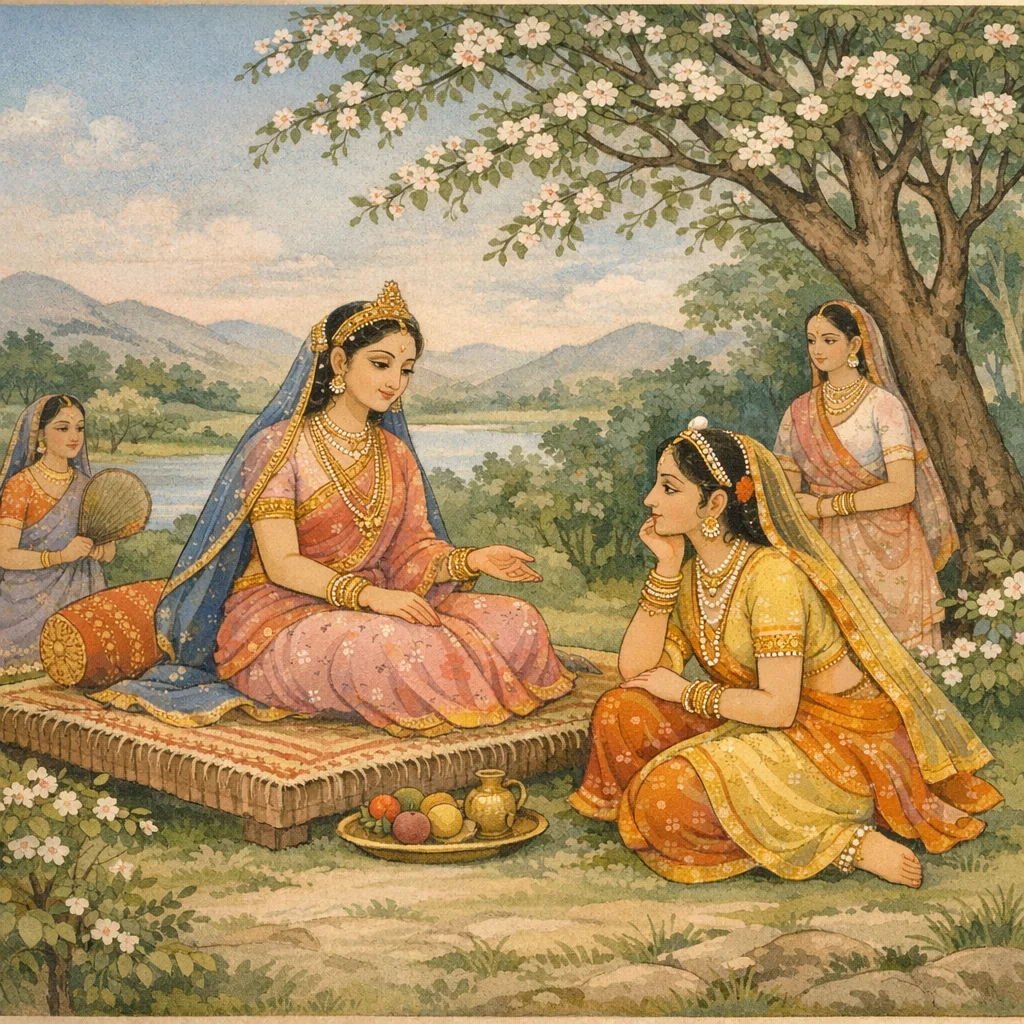
अऑरड..2 #23. () हि २ (ट्रोपदीसत्यभामासंवादपर्व) त्रयस्त्रिंशयदधिकद्धिशततमो ध्याय: द्रौपदीका सत्यभामाको सती स्त्रीके कर्तव्यकी शिक्षा देना वैशम्पायन उवाच उपासीनेषु विप्रेषु पाण्डवेषु महात्मसु । द्रौपदी सत्यभामा च विविशाते तदा समम्,वैशम्पायनजी कहते हैं--जनमेजय! जब महात्मा पाण्डव तथा ब्राह्मगणलोग आस- पास बैठकर धर्मचर्चा कर रहे थे, उसी समय द्रौपदी और सत्यभामा भी एक ओर जाकर एक ही साथ सुखपूर्वक बैठीं और अत्यन्त प्रसन्नतापूर्वक परस्पर हास्य-विनोद करने लगीं। राजेन्द्र! दोनोंने एक-दूसरीको बहुत दिनों बाद देखा था, इसलिये परस्पर प्रिय लगनेवाली बातें करती हुई वहाँ सुखपूर्वक बैठी रहीं
Vaiśampāyana said: When the Brahmins and the great-souled Pāṇḍavas were seated nearby, engaged in discourse on dharma, Draupadī and Satyabhāmā withdrew to one side and sat down together. Delighted at meeting after a long time, they began to exchange affectionate, light-hearted words—setting the scene for counsel on a virtuous woman’s conduct.
Verse 2
जाहस्यमाने सुप्रीते सुखं तत्र निषीदतु: । चिरस्य दृष्ट्वा राजेन्द्र तेडन्योन्यस्य प्रियंवदे,वैशम्पायनजी कहते हैं--जनमेजय! जब महात्मा पाण्डव तथा ब्राह्मगणलोग आस- पास बैठकर धर्मचर्चा कर रहे थे, उसी समय द्रौपदी और सत्यभामा भी एक ओर जाकर एक ही साथ सुखपूर्वक बैठीं और अत्यन्त प्रसन्नतापूर्वक परस्पर हास्य-विनोद करने लगीं। राजेन्द्र! दोनोंने एक-दूसरीको बहुत दिनों बाद देखा था, इसलिये परस्पर प्रिय लगनेवाली बातें करती हुई वहाँ सुखपूर्वक बैठी रहीं
Vaiśampāyana said: “O king, the two ladies, delighted and cheerful, sat down there at ease, exchanging playful laughter. Having met after a long time, they spoke to one another in affectionate, pleasing words.”
Verse 3
कथयामासत्ुतश्रित्रा: कथा: कुरुयदूत्थिता: । अथाब्रवीत् सत्यभामा कृष्णस्य महिषी प्रिया,कुरुकुल और यदुकुलसे सम्बन्ध रखनेवाली अनेक विचित्र बातें उनकी चर्चाकी विषय थीं। भगवान् श्रीकृष्णकी प्यारी पटरानी सत्राजितकुमारी सुन्दरी सत्यभामाने एकान्तमें द्रौपदीसे इस प्रकार पूछा--'शुभे! ट्रुपदकुमारि! किस बर्तावसे तुम हृष्ट-पुष्ट अंगोंवाले तथा लोकपालोंके समान वीर पाण्डवोंके हृदयपर अधिकार रखती हो? किस प्रकार तुम्हारे वशमें रहते हुए वे कभी तुमपर कुपित नहीं होते?
Vaiśampāyana said: There, many striking tales connected with the Kurus and the Yadus became the subject of conversation. Then Satyabhāmā—Kṛṣṇa’s beloved chief queen—spoke privately, turning to Draupadī with a pointed question about the conduct by which a wife wins and steadies the hearts of heroic husbands without provoking their anger. The scene frames an ethical inquiry into marital duty, self-restraint, and the arts of harmony within household life.
Verse 4
सात्राजिती याज्ञसेनीं रहसीदं सुमध्यमा । केन द्रौपदि वृत्तेन पाण्डवानधितिष्ठसि,कुरुकुल और यदुकुलसे सम्बन्ध रखनेवाली अनेक विचित्र बातें उनकी चर्चाकी विषय थीं। भगवान् श्रीकृष्णकी प्यारी पटरानी सत्राजितकुमारी सुन्दरी सत्यभामाने एकान्तमें द्रौपदीसे इस प्रकार पूछा--'शुभे! ट्रुपदकुमारि! किस बर्तावसे तुम हृष्ट-पुष्ट अंगोंवाले तथा लोकपालोंके समान वीर पाण्डवोंके हृदयपर अधिकार रखती हो? किस प्रकार तुम्हारे वशमें रहते हुए वे कभी तुमपर कुपित नहीं होते?
Vaiśampāyana said: Satyabhāmā, the daughter of Satrājit, spoke privately to Yājñasenī (Draupadī), the slender-waisted lady: “O Draupadī, by what conduct do you hold sway over the Pāṇḍavas? By what manner of living do those heroic men—strong-limbed and like the guardians of the world—remain under your influence, never growing angry with you?”
Verse 5
लोकपालोपमान् वीरान् पुन: परमसंहतान् । कथं च वशगास्तुभ्यं न कुप्यन्ति च ते शुभे,कुरुकुल और यदुकुलसे सम्बन्ध रखनेवाली अनेक विचित्र बातें उनकी चर्चाकी विषय थीं। भगवान् श्रीकृष्णकी प्यारी पटरानी सत्राजितकुमारी सुन्दरी सत्यभामाने एकान्तमें द्रौपदीसे इस प्रकार पूछा--'शुभे! ट्रुपदकुमारि! किस बर्तावसे तुम हृष्ट-पुष्ट अंगोंवाले तथा लोकपालोंके समान वीर पाण्डवोंके हृदयपर अधिकार रखती हो? किस प्रकार तुम्हारे वशमें रहते हुए वे कभी तुमपर कुपित नहीं होते?
Vaiśampāyana said: “O auspicious lady, how is it that those heroes—like the guardians of the worlds, and again most powerfully built—remain under your influence, and yet never grow angry with you?”
Verse 6
तव वश्या हि सततं पाण्डवा: प्रियदर्शने । मुखप्रेक्षाश्न ते सर्वे तत्त्वमेतद् ब्रवीहि मे,'प्रियदर्शने! क्या कारण है कि पाण्डव सदा तुम्हारे अधीन रहते हैं और सब-के-सब तुम्हारे मुंठकी ओर देखते रहते हैं? इसका यथार्थ रहस्य मुझे बताओ
Vaiśaṃpāyana said: “O fair-faced one, the Pāṇḍavas are always under your influence, and all of them keep their eyes fixed upon your face, as if awaiting your word. Tell me the true reason for this—what is the real secret behind their constant deference to you?”
Verse 7
व्रतचर्या तपो वापि स्नानमन्त्रौषधानि वा । विद्यावीर्य मूलवीर्य जपहोमागदास्तथा,“पाज्चालकुमारी कृष्णे! आज मुझे भी कोई ऐसा व्रत, तप, स्नान, मन्त्र, औषध, विद्या-शक्ति, मूल-शक्ति (जड़ी-बूटीका प्रभाव) जप, होम या दवा बताओ, जो यश और सौभाग्यकी वृद्धि करनेवाला हो तथा जिससे श्यामसुन्दर सदा मेरे अधीन रहें”
Vaiśaṃpāyana said: “Whether it be a vow with its disciplined observance, austerity, ritual bathing, mantras, medicinal herbs, the power of sacred knowledge, the potency of roots, or practices such as japa and homa, and likewise remedies—tell me of something among these that increases fame and good fortune, and by which the dark-hued beloved may ever remain under my influence.”
Verse 8
ममाद्याचक्ष्व पाज्चालि यशस्यं भगदैवतम् | येन कृष्णे भवेन्नित्यं मम कृष्णो वशानुग:,“पाज्चालकुमारी कृष्णे! आज मुझे भी कोई ऐसा व्रत, तप, स्नान, मन्त्र, औषध, विद्या-शक्ति, मूल-शक्ति (जड़ी-बूटीका प्रभाव) जप, होम या दवा बताओ, जो यश और सौभाग्यकी वृद्धि करनेवाला हो तथा जिससे श्यामसुन्दर सदा मेरे अधीन रहें”
Vaiśampāyana said: “O Pāñcālī, tell me today of a renowned sacred observance—one grounded in divine power—that increases fame and good fortune, and by which my Kṛṣṇa may ever remain devoted and compliant to my will.”
Verse 9
एवमुक्क्त्वा सत्यभामा विरराम यशस्विनी । पतिव्रता महाभागा द्रौपदी प्रत्युवाच ताम्,ऐसा कहकर यशस्विनी सत्यभामा चुप हो गयी। तब पतिपरायणा महाभागा द्रौपदीने उसे इस प्रकार उत्तर दिया--
Having spoken thus, the illustrious Satyabhāmā fell silent. Then Draupadī—noble and steadfast in wifely devotion—replied to her in return, preparing to set forth her own understanding of a wife’s duty and conduct within dharma.
Verse 10
असत्स्त्रीणां समाचारं सत्ये मामनुपृच्छसि । असदाचरिते मार्गे कथं स्थादनुकीर्तनम्,'सत्ये! तुम मुझसे जिसके विषयमें पूछ रही हो, वह साध्वी स्त्रियोंका नहीं, दुराचारिणी और कुलटा स्त्रियोंका आचरण है। जिस मार्मका दुराचारिणी स्त्रियोंने अवलम्बन किया है उसके विषयमें हमलोग कोई चर्चा कैसे कर सकती हैं?
Vaiśampāyana said: “O Satya, you ask me about the conduct of immoral women. Such behavior does not belong to virtuous women; it is the way of the corrupt and unchaste. How could we even speak in detail of a path founded on wrongful conduct?”
Verse 11
अनुप्रश्न: संशयो वा नैतत् त्वय्युपपद्यते | तथा हापेता बुद्धया त्वं कृष्णस्य महिषी प्रिया,“इस प्रकारका प्रश्न अथवा स्वामीके स्नेहमें संदेह करना तुम्हारे-जैसी साध्वी स्त्रीके लिये कदापि उचित नहीं है; चूँकि तुम बुद्धिमती होनेके साथ ही श्यामसुन्दरकी प्रियतमा पटरानी हो
Vaiśampāyana said: “Such questioning—or any doubt that suspects a husband’s affection—does not befit you. You are not lacking in discernment; indeed, you are Kṛṣṇa’s beloved queen. Therefore it is not right for a virtuous woman like you to entertain such suspicion.”
Verse 12
यदैव भर्ता जानीयान्मन्त्रमूलपरां स्त्रियम् । उद्विजेत तदैवास्या: सर्पाद् वेश्मगतादिव,“जब पतिको यह मालूम हो जाय कि उसकी पत्नी उसे वशमें करनेके लिये किसी मन्त्र-तन्त्र अथवा जड़ी-बूटीका प्रयोग कर रही है तो वह उससे उसी प्रकार उद्विग्न हो उठता है जैसे अपने घरमें घुसे हुए सर्पसे लोग शंकित रहते हैं”
Vaiśampāyana said: “The very moment a husband learns that his wife is resorting to spells, rites, or herb-born charms to bring him under her sway, he is at once alarmed by her—just as people are frightened when a snake has entered their house.”
Verse 13
उद्विग्नस्य कुत: शान्तिरशान्तस्य कुतः सुखम् । न जातु वशगो भर्ता स्त्रिया: स्यान्मन्त्रकर्मणा,“उद्विग्नको शान्ति कैसी? और अशान्तको सुख कहाँ? अतः मन्त्र-तन्त्र करनेसे पति अपनी पत्नीके वशमें कदापि नहीं हो सकता
Vaiśampāyana said: “How can one who is agitated find peace, and how can one who lacks peace find happiness? Therefore, by spells and ritual contrivances a husband can never truly be brought under a wife’s control.”
Verse 14
अमित्रप्रहितांश्वापि गदान् परमदारुणान् | मूलप्रचारैहिं विषं प्रयच्छन्ति जिघांसव:,“इसके सिवा, ऐसे अवसरोंपर धोखेसे शत्रुओं-द्वारा भेजी हुई ओषधियोंको खिलाकर कितनी ही स्त्रियाँ अपने पतियोंको अत्यन्त भयंकर रोगोंका शिकार बना देती हैं। किसीको मारनेकी इच्छावाले मनुष्य उसकी स्त्रीके हाथमें यह प्रचार करते हुए विष दे देते हैं कि “यह पतिको वशमें करनेवाली जड़ी-बूटी है”
Vaiśampāyana said: “Enemies, too, send calamities of dreadful disease. Those intent on killing administer poison under the pretext of ‘roots and herbs’: spreading the claim that it is a remedy, they place the poison into another’s hands (often through the wife), and thus bring about grave harm.”
Verse 15
जिह्दया यानि पुरुषस्त्वचा वाप्युपसेवते । तत्र चूर्णानि दत्तानि हन्यु: क्षिप्रमसंशयम्,“उनके दिये हुए चूर्ण ऐसे होते हैं कि उन्हें पति यदि जिह्ला अथवा त्वचासे भी स्पर्श कर ले, तो वे नि:ःसंदेह उसी क्षण उसके प्राण ले लें
Vaiśampāyana said: “Those powders—whether a man takes them in by the tongue or even through contact with the skin—are so lethal that, once administered, they would kill him swiftly, without any doubt.”
Verse 16
जलोदरसमायुक्ता: श्वित्रिण: पलितास्तथा । अपुमांस: कृताः स्त्रीभिर्जडान्धबधिरास्तथा,“कितनी ही स्त्रियोंने अपने पतियोंको (वशमें करनेकी आशासे हानिकारक दवाएँ खिलाकर उन्हें) जलोदर और कोढ़का रोगी, असमयमें ही वृद्ध, नपुंसक, अंधा, गूँगा और बहरा बना दिया है
Vaiśaṃpāyana said: “Many men have been made sufferers of dropsy, afflicted with leucoderma, prematurely grey, and even rendered impotent—made dull-witted, blind, and deaf as well—through the actions of women who, hoping to bring their husbands under control, administer harmful drugs.”
Verse 17
पापानुगास्तु पापास्ता: पतीनुपसृजन्त्युत । न जातु विप्रियं भर्तु: स्त्रिया कार्य कथंचन,“इस प्रकार पापियोंका अनुसरण करनेवाली वे पापिनी स्त्रियाँ अपने पतियोंको अनेक प्रकारकी विपत्तियोंमें डाल देती हैं। अतः साध्वी स्त्रीको चाहिये कि वह कभी किसी प्रकार भी पतिका अप्रिय न करे
Vaiśampāyana said: “Those sinful women who follow after sin bring their husbands into manifold calamities. Therefore a virtuous wife should never, in any way whatsoever, do what is displeasing to her husband.”
Verse 18
वर्ताम्यहं तु यां वृत्ति पाण्डवेषु महात्मसु । तां सर्वा शृणु मे सत्यां सत्यभामे यशस्विनि,“यशस्विनी सत्यभामे! मैं स्वयं महात्मा पाण्डवोंके साथ जैसा बर्ताव करती हूँ, वह सब सच-सच सुनाती हूँ; सुनो
Vaiśampāyana said: “O illustrious Satyabhāmā, listen to the full truth from me: I will tell you honestly how I conduct myself—what my manner of living and behavior is—toward the great-souled Pāṇḍavas.”
Verse 19
अहंकार विहायाहं कामक्रोधौ च सर्वदा । सदारान् पाण्डवान् नित्यं प्रयतोपचराम्पहम्,“मैं अहंकार और काम-क्रोधको छोड़कर सदा पूरी सावधानीके साथ सब पाण्डवोंकी और उनकी अन्यान्य स्त्रियोंकी भी सेवा करती हूँ
Vaiśaṃpāyana said: “Casting aside pride, and ever abandoning desire and anger, I constantly and with careful diligence attend upon the Pāṇḍavas—together with their wives—rendering them devoted service.”
Verse 20
प्रणयं प्रतिसंहृत्य निधायात्मानमात्मनि । शुश्रूषुर्निरहंमाना पतीनां चित्तरक्षिणी,अपनी इच्छाओंका दमन करके मनको अपने-आपमें ही समेटे हुए केवल सेवाकी इच्छासे ही अपने पतियोंका मन रखती हूँ। अहंकार और अभिमानको अपने पास नहीं फटकने देती
Vaiśampāyana said: “Having restrained my personal desires and gathered my mind back into the Self, I remain intent only on service—free from ego and self-importance—guarding and sustaining the hearts of my husbands.”
Verse 21
दुर्व्याह्वताच्छड्कमाना दुःस्थितादू दुरवेक्षितात् । दुरासिताद् दुर्वजितादिद्धिताध्यासितादपि,“कभी मेरे मुखसे कोई बुरी बात न निकल जाय, इसकी आशंकासे सदा सावधान रहती हूँ। असभ्यकी भाँति कहीं खड़ी नहीं होती। निर्लज्जकी तरह सब ओर दृष्टि नहीं डालती। बुरी जगहपर नहीं बैठती। दुराचारसे बचती तथा चलने-फिरनेमें भी असभ्यता न हो जाय, इसके लिये सतत सावधान रहती हूँ। पतियोंके अभिप्रायपूर्ण संकेतका सदैव अनुसरण करती हूँ
Vaiśampāyana said: “Fearing that some ill-spoken word might slip from my mouth, I remain constantly vigilant. I do not stand about in an uncouth manner; I do not cast shameless glances in all directions. I do not sit in improper places; I avoid misconduct; and even in my walking and moving about I stay alert lest any breach of decorum occur. I always follow the meaningful signs and intentions of my husbands.”
Verse 22
सूर्यवैश्वानरसमान् सोमकल्पान् महारथात् । सेवे चक्षुर्हण: पार्थननुग्रवीर्यप्रतापिन:,“कुन्तीदेवीके पाँचों पुत्र ही मेरे पति हैं। वे सूर्य और अग्निके समान तेजस्वी, चन्द्रमाके समान आह्ाद प्रदान करनेवाले, महारथी, दृष्टिमात्रसे ही शत्रुओंको मारनेकी शक्ति रखनेवाले तथा भयंकर बल-पराक्रम एवं प्रतापसे युक्त हैं। मैं सदा उन्हींकी सेवामें लगी रहती हूँ
Vaiśampāyana said: “I serve the Pārthas—mighty chariot-warriors—radiant like the Sun and the sacred Fire, and soothing like the Moon. They can strike down enemies by mere glance, endowed with fierce strength, valor, and splendor. I remain ever engaged in their service.”
Verse 23
देवो मनुष्यो गन्धर्वो युवा चापि स्वलंकृतः । द्रव्यवानभिरूपो वा न मेडन्य: पुरुषो मत:,“देवता, मनुष्य, गन्धर्व, युवक, बड़ी सजधजवाला धनवान् अथवा परम सुन्दर कैसा ही पुरुष क्यों न हो, मेरा मन पाण्डवोंके सिवा और कहीं नहीं जाता
Vaiśampāyana said: “Whether he be a god, a man, a Gandharva, a youthful hero, or one richly adorned; whether wealthy or exceedingly handsome—no other man is acceptable to my mind. My heart does not turn anywhere except toward the Pāṇḍavas.”
Verse 24
नाभुक्तवति नास्नाते नासंविष्टे च भर्तरि । न संविशामि नाश्नामि सदा कर्मकरेष्वपि,“पतियों और उनके सेवकोंको भोजन कराये बिना मैं कभी भोजन नहीं करती, उन्हें नहलाये बिना कभी नहाती नहीं हूँ तथा पतिदेव जबतक शयन न करें, तबतक मैं सोती भी नहीं हूँ
Vaiśampāyana said: “So long as my husband has not eaten, I do not eat; so long as he has not bathed, I do not bathe; and so long as he has not lain down to rest, I do not lie down. This is my constant rule—even with respect to those who serve and work in the household.”
Verse 25
क्षेत्राद् वनाद् वा ग्रामाद् वा भर्तारें गृहमागतम् | अभ्युत्थायाभिनन्दामि आसनेनोदकेन च,“खेतसे, वनसे अथवा गाँवसे जब कभी मेरे पति घर पधारते हैं, उस समय मैं खड़ी होकर उनका अभिनन्दन करती हूँ; तथा आसन और जल अर्पण करके उनके स्वागत- सत्कारमें लग जाती हूँ
Vaiśaṃpāyana said: “Whether he returns home from the fields, the forest, or the village, when my husband arrives I rise to greet him with respect; and I attend to his welcome by offering him a seat and water.”
Verse 26
प्रमृष्टभाण्डा मृष्टान्ना काले भोजनदायिनी । संयता गुप्तधान्या च सुसम्मृष्टनिवेशना,“मैं घरके बर्तनोंको माँज-धोकर साफ रखती हूँ। शुद्ध एवं स्वादिष्ट रसोई तैयार करके सबको ठीक समयपर भोजन कराती हूँ। मन और इन्द्रियोंको संयममें रखकर घरमें गुप्तरूपसे अनाजका संचय रखती हूँ और घरको झाड़-बुहार, लीप-पोतकर सदा स्वच्छ एवं पवित्र बनाये रखती हूँ
Vaiśaṃpāyana said: “I keep the household vessels scrubbed and clean. I prepare pure, well-cooked food and serve meals to everyone at the proper time. With my mind and senses restrained, I discreetly store up grain within the home, and I keep the dwelling thoroughly swept, plastered, and maintained—always clean and sanctified.”
Verse 27
अतिरस्कृतसम्भाषा दुःस्त्रियो नानुसेवती | अनुकूलवती नित्यं भवाम्यनलसा सदा,“मैं कोई ऐसी बात मुँहसे नहीं निकालती, जिससे किसीका तिरस्कार होता हो। दुष्ट स्त्रियोंके सम्पर्कसे सदा दूर रहती हूँ। आलस्यको कभी पास नहीं आने देती और सदा पतियोंके अनुकूल बर्ताव करती हूँ
I never utter a word that would bring contempt upon another. I keep myself ever apart from the company of wicked women. I do not let idleness come near, and I always conduct myself in a manner pleasing to my husbands.
Verse 28
अनर्म चापि हसित द्वारि स्थानमभीक्ष्णश: । अवस्करे चिरस्थानं निष्कुटेषु च वर्जये,“पतिके किये हुए परिहासके सिवा अन्य समयमें मैं नहीं हँसा करती, दरवाजेपर बार- बार नहीं खड़ी होती, जहाँ कूड़े-करकट फेंके जाते हों, ऐसे गंदे स्थानोंमें देरतक नहीं ठहरती और बगीचोंमें भी बहुत देरतक अकेली नहीं घूमती हूँ
Except for playful jest with my husband, I do not laugh at other times. I do not stand repeatedly at the doorway. I do not linger long in filthy places where refuse is thrown, and I also avoid wandering alone for long in secluded garden-groves.
Verse 29
(अन्त्यालापमसंतोषं परव्यापारसंकथाम् | अतिहासातिरोषौ च क्रोधस्थानं च वर्जये । निरताहं सदा सत्ये भर्तृणामुपसेवने,“नीच पुरुषोंसे बात नहीं करती, मनमें असंतोषको स्थान नहीं देती और परायी चर्चासे दूर रहती हूँ। न अधिक हँसती हूँ और न अधिक क्रोध करती हूँ। क्रोधका अवसर ही नहीं आने देती। सदा सत्य बोलती और पतियोंकी सेवामें लगी रहती हूँ
I avoid idle and improper talk, give no place to discontent in my heart, and keep away from gossip about others’ affairs. I neither laugh excessively nor give way to excessive anger; indeed, I shun even the occasions that might become a seat of wrath. I am ever devoted to truth and remain engaged in serving my husbands.
Verse 30
सर्वथा भर्तरहितं न ममेष्टं कथंचन । यदा प्रवसते भर्ता कुट॒म्बार्थेन केनचित्
In no way is it ever agreeable to me to be without my husband. Whenever my husband must go away on some errand for the sake of the household, the state of being separated from him is not something I can accept.
Verse 31
सुमनोवर्णकापेता भवामि व्रतचारिणी । “पतिदेवके बिना किसी भी स्थानमें अकेली रहना मुझे बिलकुल पसंद नहीं है। मेरे स्वामी जब कभी कुटुम्बके कार्यसे कभी परदेश चले जाते हैं, उन दिनों मैं फ़ूलोंका शृंगार नहीं धारण करती, अंगराग नहीं लगाती और निरन्तर ब्रह्मचर्यव्रतका पालन करती हूँ || ३० न्् यच्च भर्ता न पिबति यच्च भर्ता न सेवते
When my husband is away, I abandon adornments and become a strict observer of vows. I do not wear floral ornaments, I do not apply unguents, and I maintain continence. Moreover, whatever my husband does not drink and whatever he does not partake of, I too refrain from.
Verse 32
यथोपदेशं नियता वर्तमाना वराड़ने,(अनुतिष्ठामि तत् सर्व नित्यकालमतन्द्रिता ।।) 'सुन्दरी! शास्त्रोंमें स्त्रियोंके लिये जिन कर्तव्योंका उपदेश किया गया है, उन सबका मैं नियमपूर्वक पालन करती हूँ। अपने अंगोंको वस्त्राभूषणोंसे विभूषित रखकर पूरी सावधानीके साथ मैं पतिके प्रिय एवं हित-साधनमें संलग्न रहती हूँ। मेरी सासने अपने परिवारके लोगोंके साथ बर्तावमें लानेयोग्य जो धर्म पहले मुझे बताये थे, उन सबका मैं निरन्तर आलस्यरहित होकर पालन करती हूँ
Vaiśampāyana said: “O fair-limbed lady, I live in disciplined accordance with the instructions given in the śāstras. I carry out, at all times and without negligence, every duty enjoined for women—keeping my body adorned with garments and ornaments, remaining carefully engaged in what is pleasing and beneficial to my husband. Whatever codes of conduct my mother-in-law earlier taught me for proper dealings with the members of the household, I continually observe them, free from sloth.”
Verse 33
स्वलंकृता सुप्रयता भर्तुः प्रियहिते रता । ये च धर्मा: कुट॒म्बेषु श्वश्वा मे कथिता: पुरा,(अनुतिष्ठामि तत् सर्व नित्यकालमतन्द्रिता ।।) 'सुन्दरी! शास्त्रोंमें स्त्रियोंके लिये जिन कर्तव्योंका उपदेश किया गया है, उन सबका मैं नियमपूर्वक पालन करती हूँ। अपने अंगोंको वस्त्राभूषणोंसे विभूषित रखकर पूरी सावधानीके साथ मैं पतिके प्रिय एवं हित-साधनमें संलग्न रहती हूँ। मेरी सासने अपने परिवारके लोगोंके साथ बर्तावमें लानेयोग्य जो धर्म पहले मुझे बताये थे, उन सबका मैं निरन्तर आलस्यरहित होकर पालन करती हूँ
Vaiśampāyana said: “Adorned and well-prepared, I remain devoted to what is pleasing and beneficial to my husband. And whatever household duties my mother-in-law taught me long ago for conduct within the family, all of that I practice at all times, tirelessly.”
Verse 34
भिक्षाबलिश्राद्धमिति स्थालीपाकाश्न पर्वसु | मान्यानां मानसत्कारा ये चान्ये विदिता मम,“मैं दिन-रात आलस्य त्यागकर भिक्षा-दान, बलिवैश्वदेव, श्राद्ध, पर्वकालोचित स्थालीपाकयज्ञ, मान्य पुरुषोंका आदर-सत्कार, विनय, नियम तथा अन्य जो-जो धर्म मुझे ज्ञात हैं, उन सबका सब प्रकारसे उद्यत होकर पालन करती हूँ
Vaiśampāyana said: “I diligently observe all the duties known to me—begging for sustenance when required, making the bali offering (vaiśvadeva), performing śrāddha rites, and, on festival days, offering the sthālīpāka sacrifice. I also render heartfelt honor and hospitality to those worthy of respect, along with the other disciplines of dharma that I know—practising them all with constant readiness, casting off idleness day and night.”
Verse 35
तान् सर्वाननुवर्ते5हं दिवारात्रमतन्द्रिता । विनयान् नियमांश्वैव सदा सर्वात्मना श्रिता,“मैं दिन-रात आलस्य त्यागकर भिक्षा-दान, बलिवैश्वदेव, श्राद्ध, पर्वकालोचित स्थालीपाकयज्ञ, मान्य पुरुषोंका आदर-सत्कार, विनय, नियम तथा अन्य जो-जो धर्म मुझे ज्ञात हैं, उन सबका सब प्रकारसे उद्यत होकर पालन करती हूँ
Vaiśampāyana said: “Untiringly, I follow all those duties day and night. Ever taking refuge in them with my whole being, I constantly uphold humility and self-restraint (and the other disciplines that sustain righteous living).”
Verse 36
मृदून् सतः सत्यशीलान् सत्यधर्मानुपालिन: । आशीविषानिव क्रुद्धान् पतीन् परिचराम्यहम्,“मेरे पति बड़े ही सज्जन और मृदुल स्वभावके हैं। सत्यवादी तथा सत्यधर्मका निरन्तर पालन करनेवाले हैं; तथापि क्रोधमें भरे हुए विषैले सर्पोंसे जिस प्रकार लोग डरते हैं, उसी प्रकार मैं अपने पतियोंसे डरती हुई उनकी सेवा करती हूँ
Vaiśampāyana said: “My husbands are truly gentle and virtuous—steadfast in truthfulness and constant in upholding the dharma of truth. Yet, when they are inflamed with anger, they become like venomous serpents; and so, fearing them as one fears such snakes, I continue to attend upon and serve my husbands.”
Verse 37
पत्याश्रयो हि मे धर्मो मतः स्त्रीणां सनातन: । स देव: सा गतिर्नान्या तस्य का विप्रियं चरेत्,“मैं यह मानती हूँ कि पतिके आश्रयमें रहना ही स्त्रियोंका सनातन धर्म है। पति ही उनका देवता है और पति ही उनकी गति है। पतिके सिवा नारीका दूसरा कोई सहारा नहीं है, ऐसे पतिदेवताका भला कौन स्त्री अप्रिय करेगी?
For I hold that a woman’s eternal dharma is to live under the protection and guidance of her husband. He is her deity; he is her highest refuge—there is no other. If such is the husband, what woman would ever act in a way that displeases him?
Verse 38
अहं पतीन् नातिशये नात्यश्रे नातिभूषये | नापि श्रश्रृं परिवदे सर्वदा परियन्त्रिता,“पतियोंके शयन करनेसे पहले मैं कभी शयन नहीं करती, उनसे पहले भोजन नहीं करती, उनकी इच्छाके विरुद्ध कोई आभूषण नहीं पहनती, अपनी सासकी कभी निन्दा नहीं करती और अपने-आपको सदा नियमन्त्रणमें रखती हूँ
Vaiśampāyana said: “I do not overstep my husbands, nor do I act with excessive pride; I do not adorn myself against their wishes. I never speak ill of my mother-in-law, and I keep myself always under discipline and restraint.”
Verse 39
अवधानेन सुभगे नित्योत्थिततयैव च । भर्तारो वशगा महां गुरुशुश्रूषयैव च,'सौभाग्यशालिनी सत्यभामे! मैं सावधानीसे सर्वदा सबेरे उठकर समुचित सेवाके लिये सन्नद्ध रहती हूँ। गुरुजनोंकी सेवा-शुश्रूषासे ही मेरे पति मेरे अनुकूल रहते हैं
Vaiśampāyana said: “O fortunate one, by being attentive and by rising early every day, and above all by devoted service to the elders and teachers, husbands are kept well-disposed and responsive.”
Verse 40
नित्यमार्यामहं कुन्तीं वीरसूं सत्यवादिनीम् । स्वयं परिचराम्येतां पानाच्छादनभोजनै:,“मैं वीरजननी सत्यवादिनी आर्या कुन्तीदेवीकी भोजन, वस्त्र और जल आदिसे सदा स्वयं सेवा करती रहती हूँ
Vaiśampāyana said: “I constantly attend upon the noble Kuntī—mother of heroes and a speaker of truth—personally serving her with water, clothing, and food.”
Verse 41
नैतामतिशये जातु वस्त्र भूषणभोजनै: । नापि परिवदे चाहं तां पृथां पृथिवीसमाम्,“वस्त्र, आभूषण और भोजन आदिमें मैं कभी सासकी अपेक्षा अपने लिये कोई विशेषता नहीं रखती। मेरी सास कुन्तीदेवी पृथ्वीके समान क्षमाशील हैं। मैं कभी उनकी निन््दा नहीं करती
Never do I claim any special privilege over my mother-in-law in matters such as clothing, ornaments, or food. Nor do I ever speak ill of her—of Pṛthā (Kuntī), who is as forbearing as the earth.
Verse 42
अष्टागग्रे ब्राह्मणानां सहस््राणि सम नित्यदा । भुज्जते रुक्मपात्रीषु युधिष्ठिरनिवेशने,“पहले महाराज युधिष्ठिरके महलमें प्रतिदिन आठ हजार ब्राह्मण सोनेकी थालियोंमें भोजन किया करते थे
Vaiśampāyana said: In former days, at King Yudhiṣṭhira’s residence, a full eight thousand brāhmaṇas would eat there every day, served in golden vessels.
Verse 43
अष्टाशीतिसहस्राणि स्नातका गृहमेधिन: । त्रिंशद्दासीक एकैको यान् बिभर्ति युधिष्ठिर:,“महाराज युधिष्ठिरके यहाँ अद्बासी हजार ऐसे स्नातक गृहस्थ थे, जिनका वे भरण- पोषण करते थे। उनमेंसे प्रत्येककी सेवामें तीस-तीस दासियाँ रहती थीं
Vaiśampāyana said: In King Yudhiṣṭhira’s household there were eighty-eight thousand learned householders—graduates of sacred study—whom he maintained. And for each of them, thirty maidservants were assigned for service.
Verse 44
दशान्यानि सहस्राणि येषामन्न॑ सुसंस्कृतम् हियते रुक्मपात्रीभिययतीनामूर्ध्वरेतसाम्,“इनके सिवा दूसरे दस हजार और ऊर्ध्वरेता यति उनके यहाँ रहते थे, जिनके लिये सुन्दर ढंगसे तैयार किया हुआ अन्न सोनेकी थालियोंमें परोसकर पहुँचाया जाता था
Vaiśampāyana said: “Besides these, there were another ten thousand ascetic mendicants—men of continence—residing there as well. For them, carefully prepared food was regularly served, being brought and offered in golden dishes.”
Verse 45
तान् सर्वानग्रहारेण ब्राह्मणान् वेदवादिन: । यथा पूजयामि सम पानाच्छादनभोजनै:,“मैं उन सब वेदवादी ब्राह्मणोंको अग्रहार (बलिवैश्वदेवके अन्तमें अतिथिको दिये जानेवाले प्रथम अन्न)-का अर्पण करके भोजन, वस्त्र और जलके द्वारा उनकी यथायोग्य पूजा करती थी
“All those brāhmaṇas, proclaimers of the Veda, I honored by first offering the agrahāra—the foremost portion of food given to a guest at the close of the bali-vaiśvadeva rite—and I worshiped them as was fitting with water, garments, and meals.”
Verse 46
शतं दासीसहस््राणि कौन्तेयस्य महात्मन: । कम्बुकेयूरधारिण्यो निष्ककण्ठ्यः: स्वलड्कृता:,“कुन्तीनन्दन महात्मा युधिष्ठिरके एक लाख दासियाँ थीं, जो हाथोंमें शंखकी चूड़ियाँ, भुजाओंमें बाजूबंद और कण्ठमें सुवर्णके हार पहनकर बड़ी सजधजके साथ रहती थीं
Vaiśampāyana said: The high-souled son of Kuntī possessed hundreds of thousands of maidservants—adorned with conch-shell bangles, wearing armlets, and with golden necklaces at their throats—beautifully dressed and richly ornamented.
Verse 47
महार्हमाल्याभरणा: सुवर्णश्रिन्दनो क्षिता: । मणीन् हेम च बिश्रत्यो नृत्यगीतविशारदा:,“उनकी मालाएँ तथा आभूषण बहुमूल्य थे, अंगकान्ति बड़ी सुन्दर थी। वे चन्दनमिश्रित जलसे स्नान करती और चन्दनका ही अंगराग लगाती थीं, मणि तथा सुवर्णके गहने पहना करती थीं। नृत्य और गीतकी कलामें उनका कौशल देखने ही योग्य था
Vaiśampāyana said: They wore garlands and ornaments of great value; their bodies were anointed with sandal and adorned with the splendor of gold. Bearing gems and gold as their jewelry, they were accomplished—indeed expert—in dance and song.
Verse 48
तासां नाम च रूपं च भोजनाच्छादनानि च । सर्वासामेव वेदाहं कर्म चैव कृताकृतम्,“उन सबके नाम, रूप तथा भोजन-आच्छादन आदि सभी बातोंकी मुझे जानकारी रहती थी। किसने क्या काम किया और क्या नहीं किया? यह बात भी मुझसे छिपी नहीं रहती थी”
Vaiśampāyana said: “I knew the names and appearances of them all, as well as their food and clothing and every such detail. Nor was it hidden from me what each had done and what each had left undone.”
Verse 49
शतं दासीसहस्राणि कुन्तीपुत्रस्य धीमत: । पात्रीहस्ता दिवारात्रमतिथीन् भोजयन्त्युत,“बुद्धिमान् कुन्तीनन्दन युधिष्ठिरकी पूर्वोक्त एक लाख दासियाँ हाथोंमें (भोजनसे भरी हुई) थाली लिये दिन-रात अतिथियोंको भोजन कराती थीं
Vaiśampāyana said: A hundred thousand maidservants of the wise son of Kuntī stood with serving-plates in hand, feeding guests day and night—an image of Yudhiṣṭhira’s famed hospitality and the dharmic duty of honoring the atithi without interruption.
Verse 50
शतमश्वसहस्राणि दशनागायुतानि च । युधिष्ठिरस्यानुयात्रमिन्द्रप्रस्थनिवासिन:,“जिन दिनों महाराज युधिष्छिर इन्द्रप्रस्थमें रहकर इस पृथ्वीका पालन करते थे, उस समय प्रत्येक यात्रामें उनके साथ एक लाख घोड़े और एक लाख हाथी चलते थे। मैं ही उनकी गणना करती, आवश्यक वस्तुएँ देती और उनकी आवश्यकताएँ सुनती थी
Vaiśampāyana said: “A hundred thousand horses and ten thousand elephants, too, used to accompany Yudhiṣṭhira on his royal progresses—those who dwelt in Indraprastha following in his train.” The verse evokes the scale of righteous kingship: prosperity and orderly retinue gathered around a ruler whose governance was recognized and supported by his people.
Verse 51
एतदासीत् तदा राज्ञो यन्महीं पर्यपालयत् । येषां संख्याविधिं चैव प्रदिशामि शूणोमि च,“जिन दिनों महाराज युधिष्छिर इन्द्रप्रस्थमें रहकर इस पृथ्वीका पालन करते थे, उस समय प्रत्येक यात्रामें उनके साथ एक लाख घोड़े और एक लाख हाथी चलते थे। मैं ही उनकी गणना करती, आवश्यक वस्तुएँ देती और उनकी आवश्यकताएँ सुनती थी
Vaiśampāyana said: “Such was the state of affairs when the king was ruling and protecting the earth. For those (royal retinues and journeys), I both set down the proper reckoning of their numbers and also assign what is needed and hear their requirements.”
Verse 52
अन्त:पुराणां सर्वेषां भृत्यानां चैव सर्वश: । आगोपालाविपालेभ्य: सर्व वेद कृताकृतम्,“अन्तः:पुरके, नौकरोंके तथा ग्वालों और गड़रियोंसे लेकर समस्त सेवकोंके सभी कार्योकी देखभाल मैं ही करती थी और किसने कया काम किया अथवा कौन काम अधूरा रह गया--इन सब बातोंकी जानकारी भी रखती थी
Vaiśampāyana said: “I personally supervised all the work of the women’s quarters and of every servant without exception. From the cowherds and shepherds upward, I kept full account of what had been done and what remained unfinished.”
Verse 53
सर्व राज्ञ: समुदयमायं च व्ययमेव च । एकाहं वेझि कल्याणि पाण्डवानां यशस्विनि,“कल्याणी एवं यशस्विनी सत्यभामे! महाराज तथा अन्य पाण्डवोंको जो कुछ आय, व्यय और बचत होती थी, उस सबका हिसाब मैं अकेली ही रखती और जानती थी
Vaiśampāyana said: “O auspicious lady, O renowned one, I alone know in full the entire financial state of the Pāṇḍavas—their total receipts and income, and likewise their expenditures.”
Verse 54
मयि सर्व समासज्य कुटुम्बं भरतर्षभा: । उपासनरता: सर्वे घटयन्ति वरानने,“वरानने! भरतश्रेष्ठ पाण्डव कुटुम्बका सारा भार मुझपर ही रखकर उपासनामें लगे रहते और तदनुरूप चेष्टा करते थे
Vaiśampāyana said: “O fair-faced lady, the best of the Bharatas would place the entire burden of the household upon me, and all of them—devoted to acts of reverent service—would remain engaged in worshipful duties and strive accordingly.”
Verse 55
तमहं भारमासक्तमनाधृष्य॑ दुरात्मभि: । सुखं सर्व परित्यज्य रात्र्यहानि घटामि वै,“मुझपर जो भार रखा गया था, उसे दुष्ट स्वभावके स्त्री-पुरुष नहीं उठा सकते थे। परंतु मैं सब प्रकारका सुख-भोग छोड़कर रात-दिन उस दुर्वह भारको वहन करनेकी चेष्टा किया करती थी
“The burden that had been laid upon me was one that wicked-minded men and women could not have borne. Yet, renouncing every kind of comfort and pleasure, I strove day and night to carry that grievous load.”
Verse 56
अधृष्यं वरुणस्येव निधिपूर्णमिवोदधिम् | एकाहं वेझि कोशं वै पतीनां धर्मचारिणाम्,“मेरे धर्मात्मा पतियोंका भरा-पूरा खजाना वरुणके भण्डार और परिपूर्ण महासागरके समान अक्षय एवं अगम्य था। केवल मैं ही उनके विषयकी ठीक जानकारी रखती थी
Vaiśampāyana said: “Like Varuṇa’s own inviolable storehouse, like an ocean brimming with treasure, the wealth of my righteous husbands was inexhaustible and beyond the reach of others. I alone knew its true measure and whereabouts.”
Verse 57
अनिशायां निशायां च सहा या क्षुत्पिपासयो: । आराधयन्त्या: कौरव्यांस्तुल्या रात्रिरहश्न मे,'रात हो या दिन, मैं सदा भूख-प्यासके कष्ट सहन करके निरन्तर कुरुकुलरत्न पाण्डवोंकी आराधनामें लगी रहती थी। इससे मेरे लिये दिन और रात समान हो गये थे
Vaiśaṃpāyana said: “Whether it was an untimely hour or the depth of night, I endured hunger and thirst and remained constantly engaged in serving the Kuru-born Pāṇḍavas. Because of that unwavering service amid hardship, day and night became the same to me.”
Verse 58
प्रथमं प्रतिबुध्यामि चरमं संविशामि च । नित्यकालमहं सत्ये एतत् संवननं मम,'सत्ये! मैं प्रतेदिन सबसे पहले उठती और सबसे पीछे सोती थी। यह पतिभक्ति और सेवा ही मेरा वशीकरण मन्त्र है
Vaiśaṃpāyana said: “O Satya, I always rise first and I lie down last. Constantly, O Satya, this is my means of winning over my husband: steadfast devotion expressed through service.”
Verse 59
एतज्जानाम्यहं कर्तु भर्त॒संवननं महत् | असत्स्त्रीणां समाचार नाहं कुर्या न कामये,“पतिको वशमें करनेका यही सबसे महत्त्वपूर्ण उपाय मैं जानती हूँ। दुराचारिणी स्त्रियाँ जिन उपायोंका अवलम्बन करती हैं, उन्हें न तो मैं करती हूँ और न चाहती ही हूँ”
Vaiśaṃpāyana said: “This, indeed, I know to be the great means of winning over one’s husband. But the practices resorted to by immoral women—I neither adopt them nor do I desire them.”
Verse 60
वैशम्पायन उवाच तच्छुत्वा धर्मसहितं व्याह्नतं कृष्णया तदा । उवाच सत्या सत्कृत्य पाज्चालीं धर्मचारिणीम्,वैशम्पायनजी कहते हैं--जनमेजय! द्रौपदीकी ये धर्मयुक्त बातें सुनकर सत्यभामाने उस धर्मपरायणा पाज्चालीका समादर करते हुए कहा--'पाञज्चालराजकुमारी! याज्ञसेनी! मैं तुम्हारी शरणमें आयी हूँ; (मैंने जो अनुचित प्रश्न किया है), उसके लिये मुझे क्षमा कर दो। सखियोंमें परस्पर स्वेच्छापूर्वक ऐसी हास-परिहासकी बातें हो जाया करती हैं!
Vaiśaṃpāyana said: Hearing those words—spoken then by Kṛṣṇā (Draupadī) and grounded in dharma—Satyā (Satyabhāmā), honoring the dharma-practising Pāñcālī, replied with respect. In an ethical tone, she sought pardon for an improper question, acknowledging that among friends such playful teasing can arise by mutual ease.
Verse 61
अभिपन्नास्मि पाञज्चालि याज्ञसेनि क्षमस्व मे । कामकार: सखीनां हि सोपहासं प्रभाषितम्,वैशम्पायनजी कहते हैं--जनमेजय! द्रौपदीकी ये धर्मयुक्त बातें सुनकर सत्यभामाने उस धर्मपरायणा पाज्चालीका समादर करते हुए कहा--'पाञज्चालराजकुमारी! याज्ञसेनी! मैं तुम्हारी शरणमें आयी हूँ; (मैंने जो अनुचित प्रश्न किया है), उसके लिये मुझे क्षमा कर दो। सखियोंमें परस्पर स्वेच्छापूर्वक ऐसी हास-परिहासकी बातें हो जाया करती हैं!
Satyabhāmā, having heard Draupadī’s dharma-grounded words, respectfully addressed that devoted Pāñcālī: “O princess of Pāñcāla, Yājñasenī, I have come to you for refuge—please forgive me for my improper question. Among friends, such playful, joking speech is often uttered freely, with laughter.”
Verse 232
इस प्रकार श्रीमह्याभारत वनपर्वके अन्तर्गत मार्कण्डेयसमास्यापर्वमें आंगिरसोपाख्यानके प्रसंगर्में कार्तिकेयस्घुतिविषयक दो सौ बत्तीसवाँ अध्याय पूरा हुआ
Thus, in the Śrī Mahābhārata’s Vana Parva, within the Markandeya Summary Section, in the context of the Āṅgirasa episode, the 232nd chapter—concerning the hymn of praise to Kārtikeya—comes to its conclusion.
Verse 233
इति श्रीमहाभारते वनपर्वणि द्रौपदीसत्यभामासंवादपर्वणि त्रयस्त्रिंशयदधिकद्वधिशततमो< ध्याय:,इस प्रकार श्रीमहाभारत वनपर्वके अन्तर्गत द्रौपदीसत्यभामा-संवादपर्वमें दो सौ तैतीसवाँ अध्याय पूरा हुआ
Thus ends the two-hundred and thirty-third chapter in the Vana Parva of the Śrī Mahābhārata, within the section known as the Dialogue between Draupadī and Satyabhāmā.
Verse 316
यच्च नाक्षाति मे भर्ता सर्व तद् वर्जयाम्यहम् । “मेरे पतिदेव जिस चीजको नहीं खाते, नहीं पीते अथवा नहीं सेवन करते, वह सब मैं भी त्याग देती हूँ
“Whatever my husband does not eat, I too renounce entirely.”
Frequently Asked Questions
Whether to pursue maximal destruction against a retreating opponent versus applying measured force; the dilemma is resolved when recognition of Citrasena as a friendly associate triggers immediate weapon withdrawal and de-escalation.
Competence must be paired with control: mastery of astras is presented alongside the capacity to neutralize, retract, and stop violence when new information (identity, relationship, context) changes the ethical status of the engagement.
No explicit phalaśruti appears in the provided passage; the chapter’s meta-function is narrative-ethical—demonstrating astra-discipline and recognition-based restraint as integral to kṣatriya conduct.