Adhyaya 31
गदायुद्धप्रतिज्ञा — The Vow and Terms of the Mace Duel
Upa-parva: Gadāyuddha-prastāva (Prelude to the Mace Duel)
Dhṛtarāṣṭra queries Sañjaya about Duryodhana’s response while being taunted, emphasizing the prince’s prior royal esteem and the shock of public derision. Sañjaya reports Duryodhana’s condition—injured, in water, separated from supports—and his rhetorical turn: he demands a fair, one-on-one engagement rather than many against one, framing this as proper wartime procedure. He declares fearlessness, asserts commitment to dharma and kīrti, and vows to discharge his “debt” to fallen allies by decisive combat. Yudhiṣṭhira replies with conditional approval of single combat, praising Duryodhana’s stated adherence to kṣātra-dharma, yet later challenges Duryodhana’s fairness-claim by referencing the collective killing of Abhimanyu. Duryodhana chooses the gadā and calls for a foot-combat mace duel; he then arms himself with armor and helmet. The chapter culminates in a vivid re-entry tableau: Duryodhana rises from the water bearing a heavy, ornamented mace, likened to a mountain or a deity with weapon in hand, and renews the challenge to the Pāṇḍavas to meet him individually in gadāyuddha.
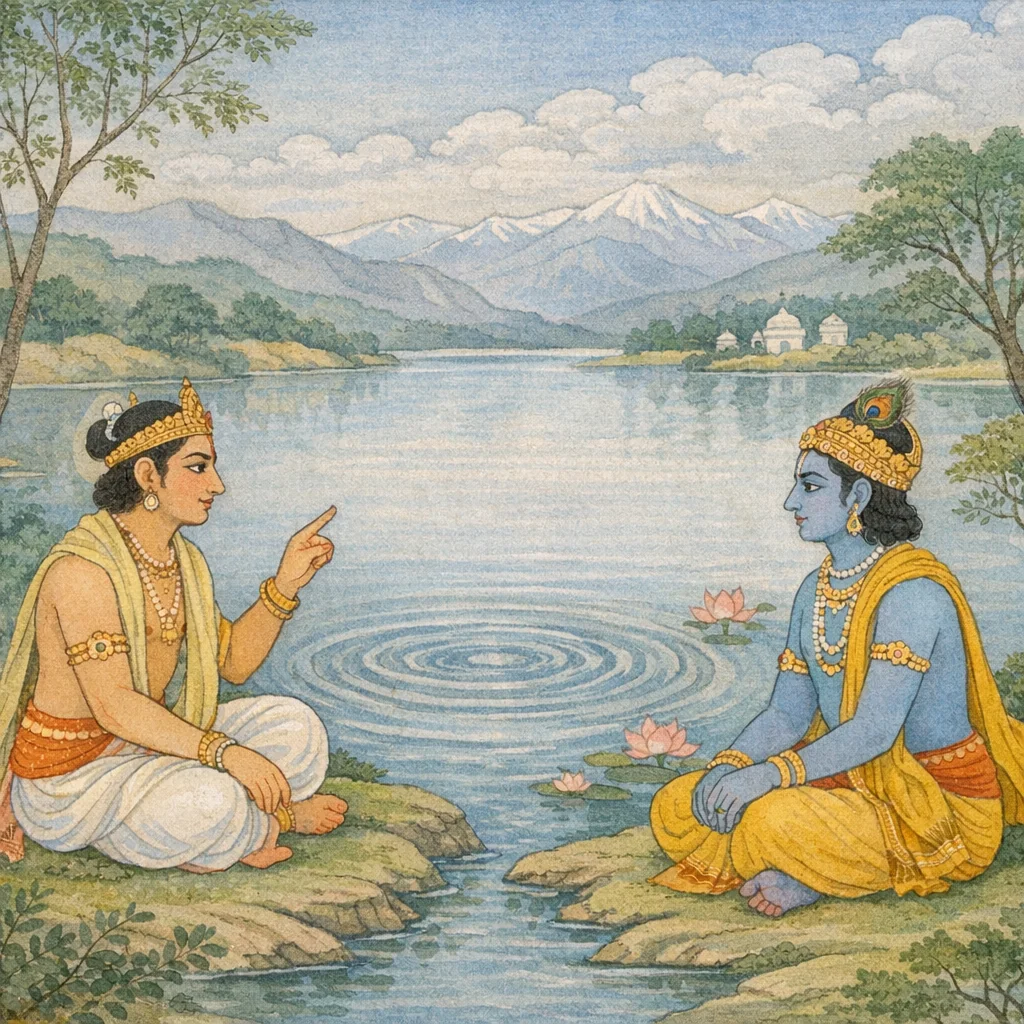
Chapter Arc: रणभूमि की धूल से हटकर कथा द्वैपायन-सरोवर के तट पर आती है—जहाँ पाण्डव युधिष्ठिर के साथ पहुँचते हैं और देखते हैं कि जलाशय किसी अदृश्य माया से स्तब्ध-सा है; भीतर दुर्योधन जल में छिपा बैठा है। → युधिष्ठिर वासुदेव से कहते हैं कि यह धार्तराष्ट्र की ‘माया’ है—जल में छिपकर बचने की युक्ति। वे दुर्योधन को करुण किन्तु कठोर वाणी में ललकारते हैं: छल, विष, जल-प्रवेश और राज्य-हरण जैसे पुराने अपराधों की स्मृति दिलाकर उसे सामने आने को कहते हैं। साथ ही ‘क्रियाभ्युपाय’—कार्य-कौशल और उपाय-नीति—की महत्ता पर तर्क चलता है, मानो युद्ध से पहले नीति-युद्ध। → युधिष्ठिर का निर्णायक आह्वान: ‘या तो हमें जीतकर पृथ्वी का शासन करो, या हमारे हाथों मारे जाकर उत्तम लोकों को जाओ’—दुर्योधन के लिए अब जल में छिपे रहना अपमान और धर्म-भंग बन जाता है। → दुर्योधन के ‘पृथ्वी त्याग’ जैसे असंगत दावों/वचनों को युधिष्ठिर तर्क से काटते हैं—जो पहले सुई की नोक भर भूमि न देता था, वह अब समस्त पृथ्वी कैसे दे सकता है; और अब तो जीवन बचाकर भूमि देने की इच्छा भी व्यर्थ है। संवाद का निष्कर्ष यह कि निर्णय केवल रण-न्याय से होगा। → दुर्योधन के जल से बाहर आने और निर्णायक द्वंद्व (गदा-युद्ध) की अनिवार्यता स्थापित हो जाती है—अगला क्षण उसी टकराव की देहरी पर रुकता है।
Shlokas
Verse 1
ऑपन--माजल बछ। अकाल एकत्रिशो< ध्याय: पाण्डवोंका द्वैवायनसरोवरपर जाना, वहाँ युधिष्ठचिर और श्रीकृष्णकी बातचीत तथा तालाबमें छिपे हुए दुर्योधनके साथ युधिषछिरका संवाद संजय उवाच ततस्तेष्वपयातेषु रथेषु त्रिषु पाण्डवा: । ते हृदं प्रत्यपद्यन्त यत्र दुर्योधनो5 भवत्,संजय कहते हैं--महाराज! उन तीनों रथियोंके हट जानेपर पाण्डव उस सरोवरके तटपर आये, जिसमें दुर्योधन छिपा हुआ था
Sañjaya said: O King, when those three chariot-warriors had withdrawn, the Pāṇḍavas made their way to the lake—toward the very waters where Duryodhana was hiding.
Verse 2
आसाद्य च कुरुश्रेष्ठ तदा द्वैपायनं हृदम् । स्तम्भितं धार्तराष्ट्रेण दृष्टयवा तं सलिलाशयम्,कुरुश्रेष्ठ! द्वैपायन-कुण्डपर पहुँचकर युधिष्ठिरने देखा कि दुर्योधनने इस जलाशयके जलको स्तम्भित कर दिया है। यह देखकर कुरुनन्दन युधिष्ठिरने भगवान् वासुदेवसे इस प्रकार कहा--'प्रभो! देखिये तो सही, दुर्योधनने जलके भीतर इस मायाका कैसा प्रयोग किया है?
Sañjaya said: Then, O best of the Kurus, having reached the lake called Dvaipāyana, (Yudhiṣṭhira) saw that Dhārtarāṣṭra (Duryodhana) had immobilized the reservoir, holding its waters fast. Seeing the lake thus constrained, the Kuru prince understood that Duryodhana was relying on māyā rather than open combat, and he turned to Vāsudeva to point it out.
Verse 3
वासुदेवमिदं वाक्यमब्रवीत् कुरुनन्दन: । पश्येमां धार्तराष्ट्रेण मायामप्सु प्रयोजिताम्,कुरुश्रेष्ठ! द्वैपायन-कुण्डपर पहुँचकर युधिष्ठिरने देखा कि दुर्योधनने इस जलाशयके जलको स्तम्भित कर दिया है। यह देखकर कुरुनन्दन युधिष्ठिरने भगवान् वासुदेवसे इस प्रकार कहा--'प्रभो! देखिये तो सही, दुर्योधनने जलके भीतर इस मायाका कैसा प्रयोग किया है?
Sañjaya said: Then Kuru’s delight (Yudhiṣṭhira) spoke these words to Vāsudeva: “Look at this—see what kind of māyā Duryodhana, the son of Dhṛtarāṣṭra, has employed within the waters.”
Verse 4
विष्टभ्य सलिलं शेते नास्य मानुषतो भयम् । दैवीं मायामिमां कृत्वा सलिलान्तर्गतो हायम्
Sañjaya said: “Propping himself up, he lies upon the water; he has no fear from any human agency. Having assumed this divine māyā, he has gone down into the midst of the waters.”
Verse 5
“यह पानीको रोककर सो रहा है। इसे यहाँ मनुष्यसे किसी प्रकारका भय नहीं है; क्योंकि यह इस दैवी मायाका प्रयोग करके जलके भीतर निवास करता है ।। निकृत्या निकृतिप्रज्ञो न मे जीवन् विमोक्ष्यते । यद्यस्य समरे साहां कुरुते वज्रभृत् स्वयम्
Sañjaya said: “Skilled in deceit through deceit, he shall not escape me alive—even if Indra himself, the bearer of the Vajra, were to aid him in battle.”
Verse 6
वायुदेव उवाच मायाविन इमां मायां मायया जहि भारत
Vāyudeva said: “O master of illusion, destroy this illusion with your own counter-illusion, O Bhārata.”
Verse 7
क्रियाभ्युपायैर्बहुभि्मायामप्सु प्रयोज्य च
“By employing many practical means and stratagems, and by deploying illusion upon the waters as well…”
Verse 8
क्रियाभ्युपायैरिन्द्रेण निहता दैत्यदानवा:,रचनात्मक उपायोंसे ही इन्द्रने बहुत-से दैत्य और दानवोंका संहार किया, नाना प्रकारके रचनात्मक उपायोंसे ही महात्मा श्रीहरिने बलिको बाँधा और बहुसंख्यक रचनात्मक उपायोंसे ही उन्होंने महान् असुर हिरण्याक्षका वध किया था
“By practical measures and well-wrought stratagems, Indra destroyed many daityas and dānavas; by diverse contrivances the great-souled Śrī Hari bound Bali; and by countless purposeful means he slew the mighty asura Hiraṇyākṣa.”
Verse 9
क्रियाभ्युपायैर्बहुभिर्बलियंद्धो महात्मना । क्रियाभ्युपायैर्बहुभिर्हिरिण्याक्षो महासुर:,रचनात्मक उपायोंसे ही इन्द्रने बहुत-से दैत्य और दानवोंका संहार किया, नाना प्रकारके रचनात्मक उपायोंसे ही महात्मा श्रीहरिने बलिको बाँधा और बहुसंख्यक रचनात्मक उपायोंसे ही उन्होंने महान् असुर हिरण्याक्षका वध किया था
Vāyu said: “By many well-devised, practical stratagems, the great-souled Lord once bound Bali; and by numerous such purposeful measures, the mighty asura Hiraṇyākṣa was also slain. In the same way, Indra too destroyed many daityas and dānavas through a variety of constructive, intelligent means.”
Verse 10
हिरण्यकशिपुश्चैव क्रिययैव निषूदितौ । वृत्रश्न निहतो राजन् क्रिययैव न संशय:,क्रियात्मक प्रयत्नके द्वारा ही भगवानने हिरण्यकशिपु-को भी मारा था। राजन! वृत्रासुरका वध भी क्रियात्मक उपायसे ही हुआ था, इसमें संशय नहीं है
Hiraṇyakaśipu too was slain only through decisive action. And Vṛtra as well was killed, O king, by action alone—of this there is no doubt. The teaching is that even when divine will is involved, outcomes in the world are accomplished through concrete, purposeful effort rather than mere intention or words.
Verse 11
तथा पौलस्त्यतनयो रावणो नाम राक्षस: । रामेण निहतो राजन् सानुबन्ध: सहानुग:
Likewise, O King, the rākṣasa named Rāvaṇa, of Pulastya’s line, was slain by Rāma—together with his allies, followers, and the entire chain of those bound to his cause. The statement underscores a moral pattern: when adharma is pursued with pride and violence, its consequences extend beyond the individual to the whole supporting network, and righteous force ultimately brings comprehensive accountability.
Verse 12
क्रियाभ्युपायैर्निहती मया राजन् पुरातनौ
Vāyu said: “O King, by means of decisive actions and strategic measures, I once brought down the two ancient ones.”
Verse 13
वातापिरिल्वलश्नैव त्रिशिराश्न तथा विभो,प्रभो! वातापि, इल्वल, त्रिशिरा तथा सुन्द-उपसुन्द नामक असुर भी कार्यकौशलसे ही मारे गये हैं। क्रियात्मक उपायोंसे ही इन्द्र स्वर्गका राज्य भोगते हैं
Vāyu said: “O mighty lord! Vātāpi and Ilvala, Triśiras as well, and even the demons named Sunda and Upasunda were brought down only through skillful, practical means. Indeed, it is by effective action and well-chosen strategies that Indra continues to enjoy sovereignty in heaven.”
Verse 14
सुन्दोपसुन्दावसुरौ क्रिययैव निषूदितौ | क्रियाभ्युपायैरिन्द्रेण त्रिदिवं भुज्यते विभो,प्रभो! वातापि, इल्वल, त्रिशिरा तथा सुन्द-उपसुन्द नामक असुर भी कार्यकौशलसे ही मारे गये हैं। क्रियात्मक उपायोंसे ही इन्द्र स्वर्गका राज्य भोगते हैं
Vāyu said: “The asura brothers Sunda and Upasunda were slain solely through strategic action. Indeed, by practical and well-devised means Indra enjoys and maintains sovereignty in heaven. Thus, O mighty lord, it is not mere strength but intelligent, timely action that secures victory and rule.”
Verse 15
क्रिया बलवती राजन् नान्यत् किंचिद् युधिष्ठिर । दैत्याश्ष दानवाश्षैव राक्षसा: पार्थिवास्तथा
Vāyu said: “O King Yudhiṣṭhira, action—rightly undertaken—is powerful; nothing else truly prevails. So it is with the Daityas and Dānavas, with the Rākṣasas, and likewise with earthly kings as well.”
Verse 16
संजय उवाच इत्युक्तो वासुदेवेन पाण्डव: संशितव्रत:,संजय कहते हैं--महाराज! भरतनन्दन! भगवान् श्रीकृष्णके ऐसा कहनेपर उत्तम एवं कठोर व्रतका पालन करनेवाले पाण्डुकुमार कुन्तीनन्दन युधिष्ठिरने जलमें स्थित हुए आपके महाबली पुत्रसे हँसते हुए-से कहा--
Sañjaya said: Thus addressed by Vāsudeva (Kṛṣṇa), the Pāṇḍava—steadfast in his austere vows—responded, as if with a smile, to your mighty son who was standing in the water.
Verse 17
जलस्थं तं महाराज तव पुत्र महाबलम् | अभ्यभाषत कौन्तेय: प्रहसन्निव भारत,संजय कहते हैं--महाराज! भरतनन्दन! भगवान् श्रीकृष्णके ऐसा कहनेपर उत्तम एवं कठोर व्रतका पालन करनेवाले पाण्डुकुमार कुन्तीनन्दन युधिष्ठिरने जलमें स्थित हुए आपके महाबली पुत्रसे हँसते हुए-से कहा--
Sañjaya said: O great king, your mighty son was standing in the water; then Kuntī’s son addressed him, as if smiling, O scion of Bharata.
Verse 18
सुयोधन किमर्थो5यमारम्भो<प्सु कृतस्त्वया । सर्व क्षत्रं घातयित्वा स्वकुलं च विशाम्पते,'प्रजानाथ सुयोधन! तुमने किसलिये पानीमें यह अनुष्ठान आरम्भ किया है। सम्पूर्ण क्षत्रियों तथा अपने कुलका संहार कराकर आज अपनी जान बचानेकी इच्छासे तुम जलाशयमें घुसे बैठे हो। राजा सुयोधन! उठो और हम लोगोंके साथ युद्ध करो
Sañjaya said: “O Suyodhana, for what purpose have you begun this undertaking in the waters? After causing the destruction of the entire warrior order and even your own lineage, O lord of the people, you now sit hidden in the lake, seeking to save your own life. Rise, King Suyodhana, and fight with us.”
Verse 19
जलाशगयं प्रविष्टोडद्य वाउ्छड्जीवितमात्मन: । उत्तिष्ठ राजन् युध्यस्व सहास्माभि: सुयोधन,'प्रजानाथ सुयोधन! तुमने किसलिये पानीमें यह अनुष्ठान आरम्भ किया है। सम्पूर्ण क्षत्रियों तथा अपने कुलका संहार कराकर आज अपनी जान बचानेकी इच्छासे तुम जलाशयमें घुसे बैठे हो। राजा सुयोधन! उठो और हम लोगोंके साथ युद्ध करो
Sañjaya said: “Today you have entered the lake, desiring to preserve your own life. After bringing about the destruction of all the kṣatriyas and of your own lineage, why have you begun this act in the water? Rise, O king Suyodhana, and fight together with us.”
Verse 20
स ते दर्पो नरश्रेष्ठ स च मान: क्व ते गत: । यस्त्वं संस्तभ्य सलिलं भीतो राजन् व्यवस्थित:,“राजन! नरश्रेष्ठ! तुम्हारा वह पहलेका दर्प और अभिमान कहाँ चला गया, जो डरके मारे जलका स्तम्भन करके यहाँ छिपे हुए हो?
Sanjaya said: “O best of men, where has that former arrogance and pride of yours gone? For now, O king, frightened, you stand here after holding back the waters, hiding yourself.”
Verse 21
सर्वे त्वां शूर इत्येवं जना जल्पन्ति संसदि | व्यर्थ तद् भवतो मन्ये शौर्य सलिलशायिन:,“सभामें सब लोग तुम्हें शूरवीर कहा करते हैं। जब तुम भयभीत होकर पानीमें सो रहे हो, तब तुम्हारे उस तथाकथित शौर्यको मैं व्यर्थ समझता हूँ
Sañjaya said: “In the assembly, everyone talks of you as a ‘hero’—so they say. But I deem that ‘valor’ of yours pointless, when you lie asleep in water out of fear.”
Verse 22
उत्तिष्ठ राजन् युध्यस्व क्षत्रियोडसि कुलोद्धव: । कौरवेयो विशेषेण कुलं जन्म च संस्मर,“राजन! उठो, युद्ध करो; क्योंकि तुम कुलीन क्षत्रिय हो, विशेषतः कुरुकुलकी संतान हो। अपने कुल और जन्मका स्मरण तो करो
Sanjaya said: “Rise up, O King, and fight. You are a kṣatriya, born of a noble line; indeed, you are especially a descendant of the Kuru house. Remember your lineage and your birth, and act accordingly.”
Verse 23
स कथं कौरवे वंशे प्रशंसन् जन्म चात्मन: । युद्धाद् भीतस्ततस्तोयं प्रविश्य प्रतितिष्ठसि,“तुम तो कौरववंशमें उत्पन्न होनेके कारण अपने जन्मकी प्रशंसा करते थे। फिर आज युद्धसे डरकर पानीके भीतर कैसे घुसे बैठे हो?
Sanjaya said: “How is it that you, who used to boast of your birth in the Kuru line and praise your own lineage, now—frightened of battle—have slipped into the water and remain hidden there?”
Verse 24
अयुद्धमव्यवस्थानं नैष धर्म: सनातन: । अनार्यजुष्टमस्वर्ग्य रणे राजन् पलायनम्,“नरेश्वर! युद्ध न करना अथवा युद्धमें स्थिर न रहकर वहाँसे पीठ दिखाकर भागना यह सनातन धर्म नहीं है। नीच पुरुष ही ऐसे कुमार्गका आश्रय लेते हैं। इससे स्वर्गकी प्राप्ति नहीं होती
Sanjaya said: “O king, to refrain from battle, or to fail to stand firm and flee from the field, is not the eternal dharma. It is a path embraced by the ignoble, and flight in war does not lead to heaven.”
Verse 25
कथं पारमगत्वा हि युद्धे त्वं वै जिजीविषु: । इमान् निपतितान दृष्ट्वा पुत्रान् भ्रातृन् पितूंस्तथा,'युद्धसे पार पाये बिना ही तुम्हें जीवित रहनेकी इच्छा कैसे हो गयी? तात! रणभूमिमें गिरे हुए इन पुत्रों, भाइयों और चाचे-ताउओंको देखकर सम्बन्धियों, मित्रों, मामाओं और बन्धु-बान्धवोंका वध कराकर इस समय तालाबमें क्यों छिपे बैठे हो?
Sañjaya said: “How is it that, without reaching the far shore—without seeing the battle through to its end—you have now become intent on preserving your life? Seeing these sons, brothers, and elders fallen on the field, how can you still cling to survival?”
Verse 26
सम्बन्धिनो वयस्यांश्व मातुलान् बान्धवांस्तथा । घातयित्वा कथं तात हदे तिष्ठसि साम्प्रतम्,'युद्धसे पार पाये बिना ही तुम्हें जीवित रहनेकी इच्छा कैसे हो गयी? तात! रणभूमिमें गिरे हुए इन पुत्रों, भाइयों और चाचे-ताउओंको देखकर सम्बन्धियों, मित्रों, मामाओं और बन्धु-बान्धवोंका वध कराकर इस समय तालाबमें क्यों छिपे बैठे हो?
Sañjaya said: “After having caused the killing of your own relations, companions, maternal uncles, and kinsmen as well—how, dear one, do you now remain in a pond? With no refuge left, how has the desire to go on living arisen in you? Seeing these sons, brothers, and paternal uncles fallen on the battlefield, why do you hide in the water after bringing about the slaughter of relatives, friends, maternal kin, and family?”
Verse 27
शूरमानी न शूरस्त्वं मृषा वदसि भारत । शूरो5हमिति दुर्बुद्धे सर्वलोकस्य शृण्वत:,“तुम अपनेको शूर तो मानते हो, परंतु शूर हो नहीं। भरतवंशके खोटी बुद्धिवाले नरेश! तुम सब लोगोंके सुनते हुए व्यर्थ ही कहा करते हो कि “मैं शूरवीर हूँ”
Sañjaya said: “You only imagine yourself to be a hero, but you are not truly heroic. O Bhārata, O king of perverted judgment—before all the people who hear you, you speak falsely when you proclaim, ‘I am a warrior-hero.’”
Verse 28
न हि शूरा: पलायन्ते शत्रून् दृष्टया कथठ्चन । ब्रृहि वा त्वं यया वृत्त्या शूर त्यजसि संगरम्,जो वास्तवमें शूरवीर हैं, वे शत्रुओंको देखकर किसी तरह भागते नहीं हैं। अपनेको शूर कहनेवाले सुयोधन! बताओ तो सही, तुम किस वृत्तिका आश्रय लेकर युद्ध छोड़ रहे हो
Sañjaya said: “True heroes do not flee in any manner upon seeing the enemy. Tell me, then—by what pretext or course of conduct do you, who call yourself a hero, abandon the battle?”
Verse 29
स त्वमुत्तिष्ठ युध्यस्व विनीय भयमात्मन: । घातयित्वा सर्वसैन्यं भ्रातृश्वैव सुयोधन,“अतः तुम अपना भय दूर करके उठो और युद्ध करो। सुयोधन! भाइयों तथा सम्पूर्ण सेनाको मरवाकर क्षत्रियधर्मका आश्रय लिये हुए तुम्हारे-जैसे पुरुषको धर्मसम्पादनकी इच्छासे इस समय केवल अपनी जान बचानेका विचार नहीं करना चाहिये
Sañjaya said: “Therefore, rise up and fight, having cast away fear from your own heart. O Suyodhana, after causing the slaughter of your brothers and the entire host, it is not fitting for a man like you—who has taken refuge in the kṣatriya code—to think now only of saving your life under the pretext of ‘doing what is right.’”
Verse 30
इस प्रकार श्रीमहाभारत शल्यपर्वके अन्तर्गत गदापव॑रमें तीसवाँ अध्याय पूरा हुआ,नेदानीं जीविते बुद्धि: कार्या धर्मचिकीर्षया । क्षत्रधर्ममुपाश्रित्य त्वद्विधेन सुयोधन “अतः तुम अपना भय दूर करके उठो और युद्ध करो। सुयोधन! भाइयों तथा सम्पूर्ण सेनाको मरवाकर क्षत्रियधर्मका आश्रय लिये हुए तुम्हारे-जैसे पुरुषको धर्मसम्पादनकी इच्छासे इस समय केवल अपनी जान बचानेका विचार नहीं करना चाहिये
Sañjaya said: “Now is not the time to set your mind merely on preserving life, when your aim is to accomplish what you take to be dharma. Taking refuge in the warrior’s code, O Suyodhana—one such as you, who has already caused brothers and the whole army to be slain while standing upon kṣatriya-duty—should not, at this moment, think only of saving his own life. Therefore cast off fear, rise up, and fight.”
Verse 31
यत् तु कर्णमुपाश्रित्य शकुनिं चापि सौबलम् । अमर्त्य इव सम्मोहात् त्वमात्मानं न बुद्धवान्,“तुम जो कर्ण और सुबलपुत्र शकुनिका सहारा लेकर मोहवश अपने-आपको अजर- अमर-सा मान बैठे थे, अपनेको मनुष्य समझते ही नहीं थे, वह महान् पाप करके अब युद्ध क्यों नहीं करते? भारत! उठो, हमारे साथ युद्ध करो। तुम्हारे-जैसा वीर पुरुष मोहवश पीठ दिखाकर भागना कैसे पसंद करेगा? इति श्रीमहाभारते शल्यपर्वान्तर्गतगदापर्वणि सुयोधनयुधिष्ठिरसंवादे एकत्रिंशो5ध्याय:
Sañjaya said: “But you—having taken refuge in Karṇa and also in Śakuni, the son of Subala—through delusion regarded yourself as though deathless, failing to understand your own true condition. That very arrogance, born of infatuation and dependence on those allies, has now led you into grievous wrongdoing and ruin.”
Verse 32
तत् पापं सुमहत् कृत्वा प्रतियुद्धयस्व भारत । कथं हि त्वद्विधो मोहादू रोचयेत पलायनम्,“तुम जो कर्ण और सुबलपुत्र शकुनिका सहारा लेकर मोहवश अपने-आपको अजर- अमर-सा मान बैठे थे, अपनेको मनुष्य समझते ही नहीं थे, वह महान् पाप करके अब युद्ध क्यों नहीं करते? भारत! उठो, हमारे साथ युद्ध करो। तुम्हारे-जैसा वीर पुरुष मोहवश पीठ दिखाकर भागना कैसे पसंद करेगा?
Sañjaya said: “Having committed that exceedingly grave sin, now fight back, O Bhārata. For how could a man like you, deluded by infatuation, ever approve of fleeing from battle and turning his back?”
Verse 33
क्व ते तत् पौरुषं यातं क्व च मान: सुयोधन । क्व च विक्रान्तता याता कक््व च विस्फूर्जितं महत्,'सुयोधन! तुम्हारा वह पौरुष कहाँ चला गया? कहाँ है वह तुम्हारा अभिमान? कहाँ गया पराक्रम? कहाँ है वह महान् गर्जन-तर्जन? और कहाँ गया वह अस्त्रविद्याका ज्ञान? इस समय इस तालाबमें तुम्हें कैसे नींद आ रही है? भारत! उठो और क्षत्रियधर्मके अनुसार युद्ध करो
Sañjaya said: “O Suyodhana, where has that manly valor of yours gone? Where is your pride now? Where has your heroism departed, and where is that great roaring and bluster? (And where has your knowledge of weapons gone?) How can you be sleeping in this lake at such a time? O scion of Bharata, rise and fight in accordance with the duty of a kṣatriya.”
Verse 34
क्व ते कृतास्त्रता याता किज्च शेषे जलाशये । स त्वमुत्तिष्ठ युध्यस्व क्षत्रधर्मेण भारत,'सुयोधन! तुम्हारा वह पौरुष कहाँ चला गया? कहाँ है वह तुम्हारा अभिमान? कहाँ गया पराक्रम? कहाँ है वह महान् गर्जन-तर्जन? और कहाँ गया वह अस्त्रविद्याका ज्ञान? इस समय इस तालाबमें तुम्हें कैसे नींद आ रही है? भारत! उठो और क्षत्रियधर्मके अनुसार युद्ध करो
Sañjaya said: “Where has your mastery of weapons gone, and why do you lie remaining in this pool? Rise, O Bhārata, and fight in accordance with the kṣatriya’s duty.”
Verse 35
अस्मांस्तु वा पराजित्य प्रशाधि पृथिवीमिमाम् । अथवा निहतोअस्माभिभर्भूमौ स्वप्स्यसि भारत,“भरतनन्दन! हम सब लोगोंको परास्त करके इस पृथ्वीका शासन करो अथवा हमारे हाथों मारे जाकर सदाके लिये रणभूमिमें सो जाओ
Sañjaya said: “Either defeat us and rule this earth, or else, slain by us, you will lie asleep upon the battlefield forever, O Bhārata.”
Verse 36
एष ते परमो धर्म: सृष्टो धात्रा महात्मना | तं॑ कुरुष्व यथातथ्यं राजा भव महारथ,“भगवान् ब्रह्माने तुम्हारे लिये यही उत्तम धर्म बनाया है। उस धर्मका यथार्थरूपसे पालन करो। महारथी वीर! वास्तवमें राजा बनो (राजोचित पराक्रम प्रकट करो)”
Sañjaya said: “This is your highest duty, ordained for you by the great Creator. Therefore practice it in its true spirit. O great chariot-warrior—be a king in reality, displaying the courage and conduct worthy of kingship.”
Verse 37
संजय उवाच एवमुक्तो महाराज धर्मपुत्रेण धीमता । सलिलस्थस्तव सुत इदं वचनमत्रवीत्,संजय कहते हैं--महाराज! बुद्धिमान् धर्मपुत्र युधिष्ठिरके ऐसा कहनेपर जलके भीतर स्थित हुए तुम्हारे पुत्रने यह बात कही
Sañjaya said: “O King, when the wise Dharmaputra (Yudhiṣṭhira) had spoken thus, your son—remaining within the water—replied with these words.”
Verse 38
दुर्योधन उवाच नैतच्चित्रं महाराज यद्धी: प्राणिनमाविशेत् । न च प्राणभयाद् भीतो व्यपयातो5स्मि भारत,दुर्योधन बोला--महाराज! किसी भी प्राणीके मनमें भय समा जाय, यह आश्वर्यकी बात नहीं है; परंतु भरत-नन्दन! मैं प्राणोंक भयसे भागकर यहाँ नहीं आया हूँ
Duryodhana said: “O great king, it is no wonder if fear enters the mind of a living being. But, O scion of Bharata, I have not withdrawn and come here out of fear for my life.”
Verse 39
अरथश्षानिषज्जी च निहतः पार्ष्णिसारथि: | एकश्चाप्यगण: संख्ये प्रत्याश्चासमरोचयम्,मेरे पास न तो रथ है और न तरकस। मेरे पार्श्वरक्षक भी मारे जा चुके हैं। मेरी सेना नष्ट हो गयी और मैं युद्धस्थलमें अकेला रह गया था; इस दशामें मुझे कुछ देरतक विश्राम करनेकी इच्छा हुई
“I had neither chariot nor quiver; my charioteer and my flank-guards had been slain. My army was destroyed, and I was left alone upon the battlefield; in that condition, I desired to rest for a little while.”
Verse 40
न प्राणहेतोर्न भयान्न विषादाद विशाम्पते । इदमम्भ: प्रविष्टो5स्मि श्रमात् व्विदमनुछितम्,प्रजानाथ! मैं न तो प्राणोंकी रक्षाके लिये, न किसी भयसे और न विषादके ही कारण इस जलमें आ घुसा हूँ। केवल थक जानेके कारण मैंने ऐसा किया है
Duryodhana said: “O lord of the people, I have entered this water not to save my life, nor out of fear, nor because of despair. I have done this—though it is unbecoming—only because I was exhausted.”
Verse 41
त्वं चाश्वसिहि कौन्तेय ये चाप्यनुगतास्तव । अहमुत्थाय व: सर्वान् प्रतियोत्स्यामि संयुगे,कुन्तीकुमार! तुम भी कुछ देरतक विश्राम कर लो। तुम्हारे अनुगामी सेवक भी सुस्ता लें। फिर मैं उठकर समरांगणमें तुम सब लोगोंके साथ युद्ध करूँगा
Duryodhana said: “You too, O son of Kuntī, take a brief rest—and let those attendants who follow you also recover their breath. Then I shall rise and, on the battlefield, engage all of you in combat.”
Verse 42
युधिषछ्िर उवाच आश्चस्ता एव सर्वे सम चिरं त्वां मृगयामहे । तदिदानीं समुत्तिष्ठ युध्यस्वेह सुयोधन,युधिष्ठिरने कहा--सुयोधन! हम सब लोग तो सुस्ता ही चुके हैं और बहुत देरसे तुम्हें खोज रहे हैं; इसलिये अब तुम उठो और यहीं युद्ध करो
Yudhiṣṭhira said: “We have all taken our rest, and for a long time we have been searching for you. Therefore, now rise up and fight here, O Suyodhana.”
Verse 43
हत्वा वा समरे पार्थान् स्फीतं राज्यमवाप्रुहि । निहतो वा रणे<स्माभिवीरलोकमवाप्स्यसि,संग्राममें समस्त पाण्डवोंको मारकर समृद्धिशाली राज्य प्राप्त करो अथवा रणभूमिमें हमारे हाथों मारे जाकर वीरोंको मिलनेयोग्य पुण्यलोकोंमें चले जाओ
“Either slay the Pārthas in combat and obtain a flourishing kingdom, or, if you are slain by us on the battlefield, you will attain the blessed worlds reserved for heroes.”
Verse 44
दुर्योधन उवाच यदर्थ राज्यमिच्छामि कुरूणां कुरुनन्दन । त इमे निहता:ः सर्वे भ्रातरो मे जनेश्वर,दुर्योधन बोला--कुरुनन्दन नरेश्वर! मैं जिनके लिये कौरवोंका राज्य चाहता था, वे मेरे सभी भाई मारे जा चुके हैं। भूमण्डलके सभी क्षत्रियशिरोमणियोंका संहार हो गया है। यहाँके सभी रत्न नष्ट हो गये हैं; अतः विधवा स्त्रीके समान श्रीहीन हुई इस पृथ्वीका उपभोग करनेके लिये मेरे मनमें तनिक भी उत्साह नहीं है
Duryodhana said: “O delight of the Kurus, O lord among men! For the sake of whom I desired the sovereignty of the Kurus—those very brothers of mine have all been slain.”
Verse 45
क्षीणरत्नां च पृथिवीं हतक्षत्रियपुड्रवाम् । न हात्सहाम्यहं भोक्तुं विधवामिव योषितम्,दुर्योधन बोला--कुरुनन्दन नरेश्वर! मैं जिनके लिये कौरवोंका राज्य चाहता था, वे मेरे सभी भाई मारे जा चुके हैं। भूमण्डलके सभी क्षत्रियशिरोमणियोंका संहार हो गया है। यहाँके सभी रत्न नष्ट हो गये हैं; अतः विधवा स्त्रीके समान श्रीहीन हुई इस पृथ्वीका उपभोग करनेके लिये मेरे मनमें तनिक भी उत्साह नहीं है
Duryodhana said: “This earth has been stripped of her treasures, and her foremost kṣatriyas have been slain. I cannot bear to enjoy her—like a woman made a widow—bereft of splendor and protection.”
Verse 46
अद्यापि त्वहमाशंसे त्वां विजेतुं युधिष्ठिर । भड़्क्त्वा पाज्चालपाण्डूनामुत्साहं भरतर्षभ,भरतश्रेष्ठ युधिष्ठि!! मैं आज भी पांचालों और पाण्डवोंका उत्साह भंग करके तुम्हें जीतनेका हौसला रखता हूँ
Duryodhana said: “Even today I still cherish the hope of defeating you, O Yudhiṣṭhira. Having broken the spirit and fighting ardor of the Pāñcālas and the Pāṇḍavas, O bull among the Bhāratas, I keep the resolve to conquer you.”
Verse 47
न वत्विदानीमहं मन्ये कार्य युद्धेन कर्हिचित् । द्रोणे कर्णे च संशान्ते निहते च पितामहे,किंतु जब द्रोण और कर्ण शान्त हो गये तथा पितामह भीष्म मार डाले गये तो अब मेरी रायमें कभी भी इस युद्धकी कोई आवश्यकता नहीं रही
Duryodhana said: “Now I do not think there is any purpose to be served by this war at any time. When Droṇa and Karṇa have been brought to silence, and when the grandsire has been slain, what need remains for continuing this conflict?”
Verse 48
अस्त्विदानीमियं राजन् केवला पृथिवी तव । असहायो हि को राजा राज्यमिच्छेत् प्रशासितुम्,राजन्! अब यह सूनी पृथ्वी तुम्हारी ही रहे। कौन राजा सहायकोंसे रहित होकर राज्य- शासनकी इच्छा करेगा?
“Let this earth now remain yours alone, O King. For what king, bereft of allies and support, would wish to govern a kingdom?”
Verse 49
सुहृदस्तादृशान् हित्वा पुत्रान् भ्रातृन् पितृनपि । भवद्धिश्व ह्वते राज्ये को नु जीवेत मादृश:,वैसे हितैषी सुहृदों, पुत्रों, भाइयों और पिताओंको छोड़कर तुमलोगोंके द्वारा राज्यका अपहरण हो जानेपर कौन मेरे-जैसा पुरुष जीवित रहेगा?
Duryodhana said: “Abandoning such well-wishing friends—along with sons, brothers, and even fathers—if the kingdom is taken away by you, who would remain alive, a man like me?”
Verse 50
अहं वनं गमिष्यामि हाजिनै: प्रतिवासित:ः । रतिर्हि नास्ति मे राज्ये हतपक्षस्थ भारत,भरतनन्दन! मैं मृगचर्म धारण करके वनमें चला जाऊँगा। अपने पक्षके लोगोंके मारे जानेसे अब इस राज्यमें मेरा तनिक भी अनुराग नहीं है
Duryodhana said: “I will go to the forest, living clad in deer-skins. For, O Bhārata, now that the men of my own side have been slain, I have no delight left in this kingdom.”
Verse 51
हतबान्धवभूयिष्ठा हताश्वा हतकुञ्जरा । एषा ते पृथिवी राजन् भुड्क्ष्वैनां विगतज्वर:,राजन! यह पृथ्वी, जहाँ मेरे अधिक-से-अधिक भाई-बन्धु, घोड़े और हाथी मारे गये हैं, अब तुम्हारे ही अधिकारमें रहे। तुम निश्चिन््त होकर इसका उपभोग करो
Duryodhana said: “O King, this earth—where most of my kinsmen have been slain, and where horses and elephants have been destroyed—now belongs to you. Enjoy it without anxiety, free from feverish care.”
Verse 52
वनमेव गमिष्यामि वसानो मृगचर्मणी । न हि मे निर्जनस्यास्ति जीवितेडद्य स्पृहा विभो,प्रभो! मैं तो दो मृगछाला धारण करके वनमें ही चला जाऊँगा, जब मेरे स्वजन ही नहीं रहे, तब मुझे भी इस जीवनको सुरक्षित रखनेकी इच्छा नहीं है
Duryodhana said: “I will go to the forest alone, wearing deerskins. For now that I am bereft of my own people, I have no desire to cling to life.”
Verse 53
तथाप्येन॑ ह्वतं युद्धे लोका द्रक्ष्यन्ति माधव । “माधव! यद्यपि यह छल-कपटकी विद्यामें बड़ा चतुर है, तथापि कपट करके मेरे हाथसे जीवित नहीं छूट सकता। यदि समरांगणमें साक्षात् वज्रधारी इन्द्र इसकी सहायता करें तो भी युद्धमें इसे सब लोग मरा हुआ ही देखेंगे”,गच्छ त्वं भुड्क्ष्व राजेन्द्र पृथिवीं निहतेश्वराम् । हतयोधां नष्टरत्नां क्षीणवृत्ति्यथासुखम् राजेन्द्र! जाओ, जिसके स्वामीका नाश हो गया है, योद्धा मारे गये हैं और सारे रत्न नष्ट हो गये हैं, उस पृथ्वीका आनन्दपूर्वक उपभोग करो; क्योंकि तुम्हारी जीविका क्षीण हो गयी थी
Sañjaya said: “Even so, O Mādhava, people will see him struck down in battle. ‘Mādhava! Though he is exceedingly clever in the arts of deceit and trickery, he will not escape alive from my hands by resorting to fraud. Even if Indra himself, the wielder of the thunderbolt, were to aid him on the battlefield, still all men will behold him slain in war.’ ‘Go then, O king; enjoy the earth whose lord has been destroyed—its warriors slain and its treasures lost—according to your diminished means, as best you can.’”
Verse 54
संजय उवाच दुर्योधनं तव सुतं सलिलस्थं महायशा: । श्रुत्वा तु करुणं वाक्यमभाषत युधिषिर:,संजय कहते हैं--राजन्! महायशस्वी युधिष्ठिरने वह करुणायुक्त वचन सुनकर पानीमें स्थित हुए आपके पुत्र दुर्योधनसे इस प्रकार कहा
Sanjaya said: O King, the illustrious Yudhiṣṭhira, having heard those words filled with pathos, then addressed your son Duryodhana, who was standing in the water.
Verse 55
युधिछिर उवाच आर्तप्रलापान्मा तात सलिलस्थ: प्रभाषिथा: । नैतन्मनसि मे राजन् वाशितं शकुनेरिव,युधिष्ठिर बोले--नरेश्वर! तुम जलमें स्थित होकर आर्त पुरुषोंके समान प्रलाप न करो। तात! चिड़ियोंके चहचहानेके समान तुम्हारी यह बात मेरे मनमें कोई अर्थ नहीं रखती है
Yudhiṣṭhira said: “Do not, dear one, speak from the water with the incoherent lament of the distressed. O king, these words do not settle in my mind with any meaning—like the chirping of birds.”
Verse 56
यदि वापि समर्थ: स्यास्त्वं दानाय सुयोधन । नाहमिच्छेयमवर्निं त्वया दत्तां प्रशासितुम्
Yudhiṣṭhira said: “Even if you were capable of giving it away, O Suyodhana, I would not wish to govern a kingdom granted by you.”
Verse 57
सुयोधन! यदि तुम इसे देनेमें समर्थ होते तो भी मैं तुम्हारी दी हुई इस पृथ्वीपर शासन करनेकी इच्छा नहीं रखता ।। अधर्मेण न गृलह्नीयां त्वया दत्तां महीमिमाम् | न हि धर्म: स्मृतो राजन क्षत्रियस्य प्रतिग्रह:,राजन! तुम्हारी दी हुई इस भूमिको मैं अधर्मपूर्वक नहीं ले सकता; क्षत्रियके लिये दान लेना धर्म नहीं बताया गया है
Yudhiṣṭhira said: “O Suyodhana, even if you were capable of granting it, I have no desire to rule this earth as a gift from you. I cannot accept this land from you through unrighteous means; for a kṣatriya, accepting a donation is not remembered as dharma, O king.”
Verse 58
त्वया दत्तां न चेच्छेयं पृथिवीमखिलामहम् । त्वां तु युद्धे विनिर्जित्य भोक्तास्मि वसुधामिमाम्,तुम्हारे देनेपर इस सम्पूर्ण पृथ्वीको भी मैं नहीं लेना चाहता। तुम्हें युद्धमें परास्त करके ही इस वसुधाका उपभोग करूँगा
Yudhiṣṭhira declares that he does not wish to accept even the entire earth as a gift from his opponent. He insists that he will enjoy and rule this land only after defeating him in battle—affirming that sovereignty must be earned through rightful victory, not received as a concession that would compromise honor and dharma in the midst of war.
Verse 59
अनीश्वरश्व पृथिवीं कथं त्वं दातुमिच्छसि । त्वयेयं पृथिवी राजन् किन्न दत्ता तदैव हि
Yudhiṣṭhira said: “If you are not the sovereign owner of the earth, how can you wish to give it away? O king, if this earth truly belonged to you, why was it not given at that very time?”
Verse 60
वा्ष्णेयं प्रथमं राजन् प्रत्याख्याय महाबलम्
Yudhiṣṭhira said: “O King, having first rejected the Vārṣṇeya—mighty in strength—…”
Verse 61
अभियुक्तस्तु को राजा दातुमिच्छेद्धि मेदिनीम्,जो शत्रुओंसे आक्रान्त हो, ऐसा कौन राजा किसीको भूमि देनेकी इच्छा करेगा? कौरवनन्दन नरेश! अब न तो तुम किसीको पृथ्वी दे सकते हो और न बलपूर्वक उसे छीन ही सकते हो। ऐसी दशामें तुम्हें भूमि देनेकी इच्छा कैसे हो गयी?
Yudhiṣṭhira said: “What king, when hard-pressed and overrun by enemies, would even wish to give away the earth? O descendant of the Kurus, O king—now you can neither grant the kingdom to anyone, nor can you seize it by force. In such a condition, how has the desire to ‘give land’ arisen in you at all?”
Verse 62
न त्वमद्य महीं दातुमीश: कौरवनन्दन । आच्छेत्तुं वा बलादू राजन् स कथं दातुमिच्छसि,जो शत्रुओंसे आक्रान्त हो, ऐसा कौन राजा किसीको भूमि देनेकी इच्छा करेगा? कौरवनन्दन नरेश! अब न तो तुम किसीको पृथ्वी दे सकते हो और न बलपूर्वक उसे छीन ही सकते हो। ऐसी दशामें तुम्हें भूमि देनेकी इच्छा कैसे हो गयी?
Yudhiṣṭhira said: “O son of the Kuru line, today you have no power to grant land, nor to seize it by force. A king who is himself assailed by enemies—what ruler in such a condition would even think of giving territory to another? O Kaurava prince, since you can neither bestow the earth nor wrest it away, how has this desire to give land arisen in you now?”
Verse 63
मां तु निर्जित्य संग्रामे पालयेमां वसुन्धराम् । सूच्यग्रेणापि यद् भूमेरपि भिद्येत भारत,मुझे संग्राममें जीतकर इस पृथ्वीका पालन करो। भारत! पहले तो तुम सूईकी नोकसे जितना छिद सके, भूमिका उतना-सा भाग भी मुझे नहीं दे रहे थे। प्रजानाथ! फिर आज यह सारी पृथ्वी कैसे दे रहे हो?
Yudhiṣṭhira said: “Conquer me in battle and then rule this earth. O Bhārata, earlier you would not grant me even so much of the land as could be pierced by the tip of a needle; and yet today, O lord of the people, how is it that you offer me the whole earth?”
Verse 64
तन्मात्रमपि तन्महां न ददाति पुरा भवान् | स कथं पृथिवीमेतां प्रददासि विशाम्पते,मुझे संग्राममें जीतकर इस पृथ्वीका पालन करो। भारत! पहले तो तुम सूईकी नोकसे जितना छिद सके, भूमिका उतना-सा भाग भी मुझे नहीं दे रहे थे। प्रजानाथ! फिर आज यह सारी पृथ्वी कैसे दे रहे हो?
Yudhiṣṭhira said: “Formerly, though you were so great, you would not grant me even that much—so small a portion. O lord of the people, how is it that today you offer to give away this entire earth?”
Verse 65
सूच्यग्रं नात्यज: पूर्व स कथं त्यजसि क्षितिम् | एवमैश्वर्यमासाद्य प्रशास्यथ पृथिवीमिमाम्
Yudhiṣṭhira said: “Formerly you would not abandon even the tip of a needle; how then can you now abandon the earth itself? Having attained such sovereignty, you should govern and protect this very world.”
Verse 66
मायावी मायया वध्य: सत्यमेतद् युधिष्ठिर । भगवान् श्रीकृष्णने कहा--भारत! मायावी दुर्योधनकी इस मायाको आप मायाद्वारा ही नष्ट कर डालिये! युधिष्ठिर! मायावीका वध मायासे ही करना चाहिये, यह सच्ची नीति है,त्वं तु केवलमौख्येण विमूढो नावबुद्धयसे
Vāyu said: “O Yudhiṣṭhira, it is truly so: one who fights through māyā—craft, stratagem, and concealment—is to be overcome by counter-māyā. Yet you, deluded by mere straightforwardness, do not grasp this. When an opponent relies on māyā, ethical statecraft permits meeting that tactic with an answering stratagem to protect dharma and avert greater harm.”
Verse 67
अस्मान् वा त्वं पराजित्य प्रशाधि पृथिवीमिमाम्
Yudhiṣṭhira said: “If you can defeat us, then rule this very earth and govern it as you will.”
Verse 68
आवयोर्जीवतो राजन् मयि च त्वयि च ध्रुवम्
O king, as long as we both live—both I and you—this is certain and unshakable.
Verse 69
संशय: सर्वभूतानां विजये नौ भविष्यति । राजन! मेरे और तुम्हारे दोनोंके जीते-जी हमारी विजयके विषयमें समस्त प्राणियोंको संदेह बना रहेगा ।। जीवितं तव दुष्प्रज्ञ मयि सम्प्रति वर्तते
Yudhiṣṭhira said: “O King, as long as both you and I remain alive, all beings will continue to doubt which side truly holds victory. Foolish one, your very life now depends upon me.”
Verse 70
जीवयेयमहं काम॑ न तु त्वं जीवितुं क्षम: । दुर्मते! इस समय तुम्हारा जीवन मेरे हाथपमें है। मैं इच्छानुसार तुम्हें जीवनदान दे सकता हूँ; परंतु तुम स्वेच्छापूर्वक जीवित रहनेमें समर्थ नहीं हो || ६९ ई ।। दहने हि कृतो यत्नस्त्वयास्मासु विशेषत:
Yudhiṣṭhira said: “I may live if I choose; but you are not capable of living. O evil-minded one, at this moment your life lies in my hands. If I wish, I can grant you life; but you cannot preserve your life by your own will. For you have indeed made a deliberate effort—especially against us—to bring about our destruction.”
Verse 71
आशीविषैरविषिश्षापि जले चापि प्रवेशनै: । त्वया विनिकृता राजन् राज्यस्य हरणेन च
Yudhiṣṭhira said: “O King, you have wronged me—by means as deadly as venomous serpents, even by forcing entry into the waters, and also by the seizure of my kingdom. Your acts have been like poison in their effect, stripping me of what was rightfully mine and driving me into peril.”
Verse 72
अप्रियाणां च वचनैद्रौपद्या: कर्षणेन च । एतस्मात् कारणात् पाप जीवितं ते न विद्यते
Yudhiṣṭhira said: “Because of your harsh and offensive words, and because you dragged Draupadī by force, O sinner—on account of these deeds, life will not remain for you.”
Verse 73
उत्तिषवीत्तिष्ठ युध्यस्व युद्धे श्रेयो भविष्यति । याद है न, तुमने हमलोगोंको जला डालनेके लिये विशेष प्रयत्न किया था। भीमको विषधर सर्पोंसे डसवाया, विष खिलाकर उन्हें पानीमें डुबाया, हमलोगोंका राज्य छीनकर हमें अपने कपटजालका शिकार बनाया, द्रौपदीको कठु वचन सुनाये और उसके केश खींचे। पापी! इन सब कारणोंसे तुम्हारा जीवन नष्ट-सा हो चुका है। उठो-उठो, युद्ध करो; इसीसे तुम्हारा कल्याण होगा || ७०--७२ $ ।। एवं तु विविधा वाचो जययुक्ता: पुनः पुनः । कीर्तयन्ति सम ते वीरास्तत्र तत्र जनाधिप,नरेश्वर! वे विजयी वीर पाण्डव इस प्रकार वहाँ बारंबार नाना प्रकारकी बातें कहने लगे
Yudhiṣṭhira said: “Rise, hero—stand up and fight. In battle, that alone will be better for you. You once strove with special effort to burn us alive; you had Bhīma bitten by venomous serpents, fed him poison and cast him into the water; you seized our kingdom and ensnared us in your web of deceit; you hurled harsh words at Draupadī and dragged her by the hair. Sinner! For these reasons your life is as good as destroyed. Rise, rise—fight; by that alone will your welfare be served.”
Verse 76
जहि त्वं भरतश्रेष्ठ मायात्मानं सुयोधनम् । भरतश्रेष्ठ] आप बहुत-से रचनात्मक उपायोंद्वारा जलमें मायाका प्रयोग करके मायामय दुर्योधनका वध कीजिये
Vāyu said: “O best of the Bharatas, strike down Suyodhana—Duryodhana—whose very nature is deceit and illusion. Use discerning strategy to overcome his māyā; for in war dharma must not be surrendered to trickery—rather, deception that violates dharma is to be checked so that justice may prevail.”
Verse 116
क्रियया योगमास्थाय तथा त्वमपि विक्रम । राजन! पुलस्त्यकुमार विश्रवाका पुत्र रावण नामक राक्षस श्रीरामचन्द्रजीके द्वारा क्रियात्मक उपाय और युक्तिकौशलके सहारे ही सम्बन्धियों और सेवकोंसहित मारा गया, उसी प्रकार आप भी पराक्रम प्रकट करें
Vāyu said: “Taking refuge in disciplined action and practical strategy, you too, O Vikrama. O King, the rākṣasa named Rāvaṇa—son of Viśravas, descendant of Pulastya—was slain by Śrī Rāmacandra through effective means and skillful tactics, together with his kinsmen and attendants. In the same way, you also should manifest your valor.”
Verse 126
तारकश्न महादैत्यो विप्रचित्तिश्न वीर्यवान् नरेश्वर! पूर्वकालके महादैत्य तारक और पराक्रमी विप्रचित्तिको मैंने क्रियात्मक उपायोंसे ही मारा था
Vāyu said: “O king, in former times I slew the great demons Tāraka and the mighty Vipracitti by practical, action-based means alone.”
Verse 153
क्रियाभ्युपायैर्निहता: क्रियां तस्मात् समाचर । राजन! कार्यकौशल ही बलवान है, दूसरी कोई वस्तु नहीं। युधिष्ठिर! दैत्य, दानव, राक्षस तथा बहुत-से भूपाल क्रियात्मक उपायोंसे ही मारे गये हैं; अतः आप भी क्रियात्मक उपायका ही आश्रय लें
Vāyu said: “Many have been brought down by practical, well-applied measures; therefore, O king, take to decisive action. Skill in accomplishing what must be done is what truly has strength—nothing else. O Yudhiṣṭhira, demons, Dānavas, Rākṣasas, and many kings have been slain by effective stratagem and execution; so you too should rely on practical means.”
Verse 593
धर्मतो याचमानानां प्रशमार्थ कुलस्य न: । अब तो तुम स्वयं ही इस पृथ्वीके स्वामी नहीं रहे; फिर इसका दान कैसे करना चाहते हो? राजन! जब हम लोग कुलमें शान्ति बनाये रखनेके लिये पहले धर्मके अनुसार अपना ही राज्य माँग रहे थे, उसी समय तुमने हमें यह पृथ्वी क्यों नहीं दे दी
Yudhiṣṭhira said: “When we were asking, in accordance with dharma, for our own rightful share—seeking only to restore peace within our lineage—why did you not grant us this land then? Today you are no longer even the sovereign of the earth; how, then, do you wish to make a ‘gift’ of it? O king, when we first petitioned for our own kingdom to preserve the family’s harmony, why did you refuse us the earth at that time?”
Verse 603
किमिदानीं ददासि त्वं को हि ते चित्तविभ्रम: । नरेश्वर! पहले महाबली भगवान् श्रीकृष्णको हमारे लिये राज्य देनेसे इनकार करके इस समय क्यों दे रहे हो? तुम्हारे चित्तमें यह कैसा भ्रम छा रहा है?
Yudhiṣṭhira said: “Why are you offering it now? What confusion has seized your mind, O king? Earlier, the mighty Lord Śrī Kṛṣṇa refused to grant us a kingdom; why do you now propose to give it? What kind of delusion has come over your heart?”
Verse 653
को हि मूढो व्यवस्यथेत शत्रोर्दातुं वसुन्धराम् । पहले तो तुम सूईकी नोक बराबर भी भूमि नहीं छोड़ रहे थे, अब सारी पृथ्वी कैसे त्याग रहे हो? इस प्रकार ऐश्वर्य पाकर इस वसुधाका शासन करके कौन मूर्ख शत्रुके हाथमें अपनी भूमि देना चाहेगा?
Yudhiṣṭhira said: “Who, being deluded, would resolve to hand over the earth to an enemy? Earlier you would not yield even land equal to the tip of a needle; how is it that now you speak of abandoning the whole world? Having attained sovereignty and ruled this earth, what fool would wish to place his own realm into the hands of a foe?”
Verse 666
पृथिवीं दातुकामो5पि जीवितेन विमोक्ष्यसे । तुम तो केवल मूर्खतावश विवेक खो बैठे हो; इसीलिये यह नहीं समझते कि आज भूमि देनेकी इच्छा करनेपर भी तुम्हें अपने जीवनसे हाथ धोना पड़ेगा
Yudhiṣṭhira said: “Even if you now wish to give away the earth, you will have to pay for it with your life. In your folly you have lost discernment; therefore you do not understand that, even with the intention of granting land today, you cannot escape the forfeiture of your own life.”
Verse 673
अथवा निहतोअस्माभिव्रज लोकाननुत्तमान् | या तो हमलोगोंको परास्त करके तुम्हीं इस पृथ्वीका शासन करो या हमारे हाथों मारे जाकर परम उत्तम लोकोंमें चले जाओ
“Or else, if slain by us, go to the unsurpassed worlds. Otherwise, having defeated us, you yourself rule this earth.” Thus Yudhiṣṭhira frames the encounter as a stark ethical choice within kṣatriya-dharma: victory entails responsibility for just governance, while death in righteous battle is presented as a passage to exalted realms.
Frequently Asked Questions
Whether appeals to “fair combat” (one versus one) retain authority when the war’s history includes prior violations of similar norms—raised explicitly through Yudhiṣṭhira’s counter-reference to Abhimanyu’s death.
Norms and reputations are negotiated under pressure: dharma-language can function both as genuine ethical commitment and as a strategic claim to legitimacy, especially when actors seek to restore agency after defeat.
No explicit phalaśruti is stated here; the chapter’s meta-function is narrative and ethical framing—preparing the audience to interpret the impending duel through contested standards of dharma and nyāya.