Adhyaya 25
भीमसेनस्य कौरवसुतवधः तथा श्रुतर्वावधः (Slaying of Kaurava princes and the fall of Śrutarvā)
Upa-parva: Bhīmasena-vadha-prakaraṇa (strategic engagements against Dhṛtarāṣṭra’s sons)
Saṃjaya reports that after the elephant-corps segment is broken by the Pāṇḍava side and Bhīmasena continues to press the engagement, Dhṛtarāṣṭra’s surviving sons—named groups including Durmarṣaṇa, Śrutānta, Jayatsena, Jaitra, Bhūribala, Ravi, Durvimocana, Duṣpradharṣa, Sujāta, and Durviṣaha—converge to surround Bhīma while Duryodhana is not seen on the field. Bhīma remounts his chariot posture and executes a sequence of precise missile strikes, repeatedly dropping opponents from their cars and describing their fall through seasonal and arboreal similes. Śrutarvā, enraged by the sight of fallen brothers, advances with intensified archery; the duel escalates with dense arrow-exchange imagery likened to Yama’s staff. After Bhīma’s bow is cut, he re-arms and counters; when Śrutarvā is rendered chariotless, he draws sword and shield, but Bhīma’s kṣurapra (razor-headed arrow) severs his head, and his body collapses from the chariot with a resonant impact. The narrative closes with Kaurava remnants attempting renewed assault, only to be suppressed; Bhīma’s continued slaughter—hundreds of chariot-warriors, elephant units, infantry, and horses—is reported as producing widespread fear, dispersal, and the near-ruination of the Kaurava host in this sector.
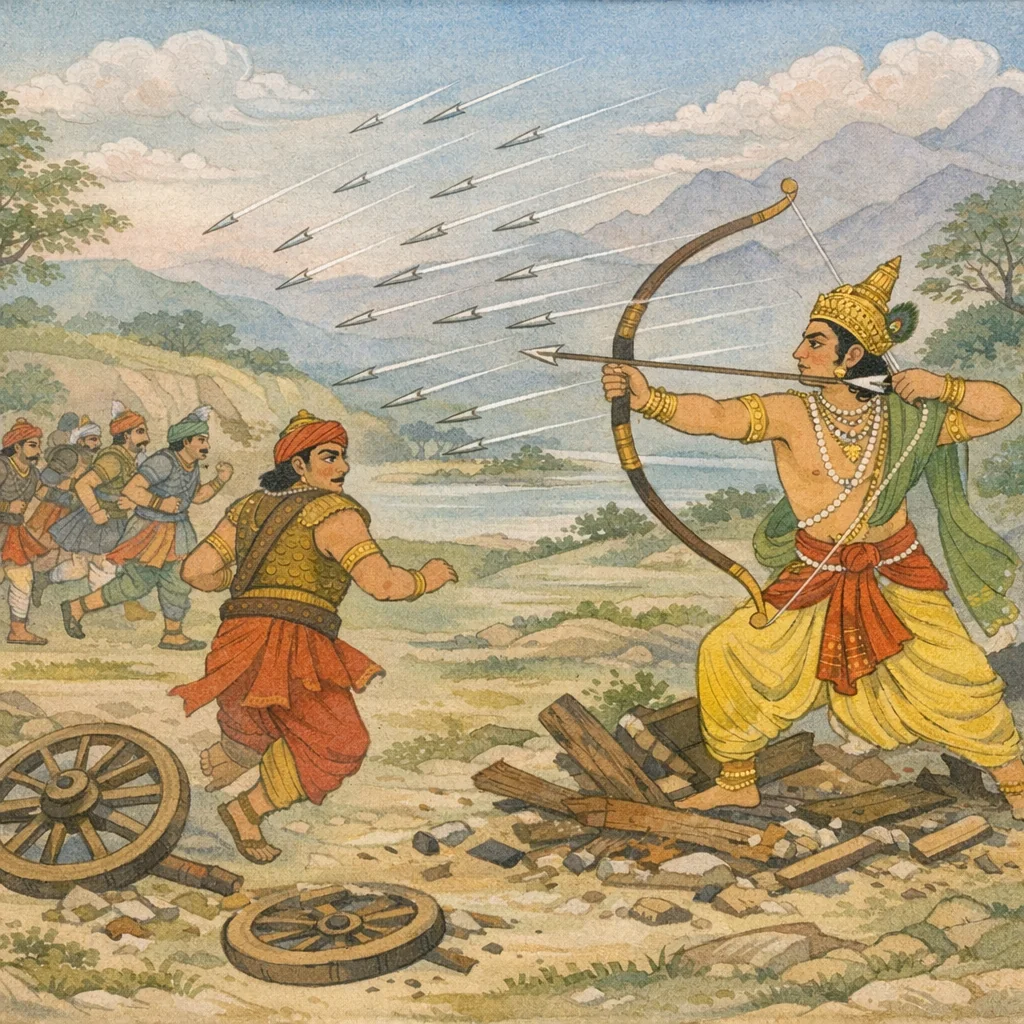
Chapter Arc: रणभूमि में किरीटधारी अर्जुन मेघ-सा बाण-वर्षा करता दिखाई देता है—इन्द्राशनि-स्पर्श बाणों की धाराएँ मानो आकाश से टूट पड़ती हैं। → अर्जुन और भीमसेन कौरवों की रथसेना और गजसेना का संहार करते हैं; टूटे अक्ष-युग-चक्र, क्षीण तरकश, बाणपीड़ित योद्धा—सेना का अनुशासन बिखरने लगता है। इसी बीच अश्वत्थामा आदि दुर्योधन की खोज में भटकते हैं और कौरव दल में घबराहट फैलती है। → किरिटधारी के वध से बची-खुची कौरव सेना दुर्योधन के देखते-देखते संग्राम से भाग खड़ी होती है; उधर धृष्टद्युम्न दुर्योधन को पराजित कर उसके पलायन पर उसे घेरने/मारने की उत्कंठा से आगे बढ़ता है, और सात्यकि रथों के समूह सहित प्रचण्ड वेग से आ धमकता है—युद्ध का केंद्र दुर्योधन की ओर सिमट जाता है। → कौरव पक्ष में ‘राजा कहाँ है’ की अफरातफरी और पलायन का क्रम चलता है; कुछ लोग कहते हैं कि सारथि के मारे जाने पर दुर्योधन ने पांचालराज की दुर्धर्ष सेना को छोड़कर अन्यत्र शरण ली। दूसरी ओर पाण्डव पक्ष में थके योद्धा जलपान कर, घोड़ों को विश्राम देकर, फिर कवच धारण कर पुनः युद्ध के लिए प्रस्तुत होते हैं—युद्ध-यंत्रणा के बीच पुनर्संगठन। → दुर्योधन की वास्तविक स्थिति/ठिकाना अनिश्चित रहता है—खोज जारी है और अगला संघर्ष उसी के इर्द-गिर्द सघन होने को है।
Shlokas
Verse 1
अफ्-#-रात पञ्चविशो< ध्याय: अर्जुन और भीमसेनद्वारा कौरवोंकी रथसेना एवं गजसेनाका संहार, अश्चवृत्थामा आदिके द्वारा दुर्योधनकी खोज, कौरवसेनाका पलायन तथा सात्यकिद्वारा संजयका पकड़ा जाना संजय उवाच पश्यतां यतमानानां शूराणामनिवर्तिनाम् । संकल्पमकरोन्मोघं गाण्डीवेन धनंजय:,संजय कहते हैं--महाराज! यद्यपि कौरवयोद्धा युद्धसे पीछे न हटनेवाले शूरवीर थे और विजयके लिये पूरा प्रयत्न कर रहे थे तो भी उनके देखते-देखते अर्जुनने गाण्डीव धनुषसे उनके संकल्पको व्यर्थ कर दिया
Sañjaya said: O King, even as those heroes—striving with all their might and refusing to turn back—looked on, Dhanañjaya (Arjuna) made their resolve come to nothing with the Gāṇḍīva bow.
Verse 2
इन्द्राशनिसमस्पर्शानविषह्मान्ू महौजस: । विसृजन् दृश्यते बाणान् धारा मुज्चन्निवाम्बुद:,जैसे बादल पानीकी धारा गिराता है, उसी प्रकार वे बाणोंकी वर्षा करते दिखायी देते थे। उन बाणोंका स्पर्श इन्द्रके वज्ोकी भाँति कठोर था। वे बाण असहा एवं महान् शक्तिशाली थे
He was seen to loose his arrows like a cloud releasing sheets of rain. The touch of those shafts was hard as Indra’s thunderbolt; they were unbearable and charged with mighty power.
Verse 3
तत् सैन्यं भरतश्रेष्ठ वध्यमानं किरीटिना । सम्प्रदुद्राव संग्रामात् तव पुत्रस्य पश्यत:,भरतश्रेष्ठ! किरीटधारी अर्जुनकी मार खाकर वह बची हुई सेना आपके पुत्रके देखते- देखते रणभूमिसे भाग चली
Sañjaya said: O best of the Bharatas, that army—cut down by the diademed warrior (Arjuna)—broke and fled from the battlefield, even as your son looked on.
Verse 4
पितृन् भ्रातृन् परित्यज्य वयस्यानपि चापरे । हतधुर्या रथा: केचिद्धतसूतास्तथा परे,कुछ लोग अपने पिता और भाइयोंको छोड़कर भागे तो दूसरे लोग मित्रोंको। कितने ही रथोंके घोड़े मारे गये थे और कितनोंके सारथि
Sañjaya said: Some, abandoning their fathers and brothers, fled; others even left their companions. Of the chariots, some had their yokes and teams struck down, and others had their charioteers slain—so the battlefield was filled with panic, disarray, and the collapse of martial order.
Verse 5
भग्नाक्षयुगचक्रेषा: केचिदासन् विशाम्पते | अन्येषां सायका: क्षीणास्तथान्ये बाणपीडिता:
Sañjaya said: O lord of the people, some warriors found their chariots crippled—axles, yokes, and wheels shattered. Others had exhausted their missiles, and still others were wracked with pain from arrow-wounds.
Verse 6
प्रजानाथ! किन््हींके रथोंके जूए, धुरे, पहिये और हरसे भी टूट गये थे, दूसरे योद्धाओंके बाण नष्ट हो गये और अन्य योद्धा अर्जुनके बाणोंसे पीड़ित हो गये थे ।। अक्षता युगपत् केचित् प्राद्रवनू भयपीडिता: । केचित् पुत्रानुपादाय हतभूयिष्ठबान्धवा:,कुछ लोग घायल न होनेपर भी भयसे पीड़ित हो एक साथ ही भागने लगे और कुछ लोग अधिकांश बन्धु-बान्धवोंके मारे जानेपर पुत्रोंकोी साथ लेकर भागे
Sañjaya said: O lord of men, in that turmoil some warriors found the yokes, axles, wheels, and other fittings of their chariots shattered; others had their arrows spent or destroyed; and still others were wracked by Arjuna’s shafts. Though unhurt, some fled all at once, driven by fear; and some—having lost most of their kinsmen—ran off taking their sons with them.
Verse 7
विचुक्रुशुः पितृंस्त्वन्ये सहायानपरे पुनः । बान्धवांश्व नरव्याप्र भ्रातृन् सम्बन्धिनस्तथा,नरव्याप्र! कोई पिताको पुकारते थे, कोई सहायकोंको। प्रजानाथ! कुछ लोग अपने भाई-बन्धुओं और सगे-सम्बन्धियोंको जहाँ-के-तहाँ छोड़कर भाग गये। बहुत-से महारथी पार्थके बाणोंसे अत्यन्त घायल हो मूर्च्छित हो रहे थे
Sañjaya said: Some cried out for their fathers, while others called for their comrades. O tiger among men, they also called for their kinsmen—brothers and other relations. In the chaos of battle, many, abandoning their own people where they lay, fled; and many great chariot-warriors, grievously wounded by Pārtha’s arrows, were falling into swoons.
Verse 8
दुद्रुवु: केचिदुत्सृज्य तत्र तत्र विशाम्पते । बहवोऊत्र भृशं विद्धा मुहामाना महारथा:,नरव्याप्र! कोई पिताको पुकारते थे, कोई सहायकोंको। प्रजानाथ! कुछ लोग अपने भाई-बन्धुओं और सगे-सम्बन्धियोंको जहाँ-के-तहाँ छोड़कर भाग गये। बहुत-से महारथी पार्थके बाणोंसे अत्यन्त घायल हो मूर्च्छित हो रहे थे
Sañjaya said: “O lord of the people, some fled in panic, abandoning their posts here and there. Many great chariot-warriors, grievously pierced, were losing consciousness—overwhelmed by the shock of Arjuna’s arrows. The scene shows how, when fear and pain seize the mind, even the mighty may forget duty and scatter, leaving comrades behind.”
Verse 9
निःश्वसन्ति सम दृश्यन्ते पार्थबाणहता नरा: । तानन्ये रथमारोप्य ह्वाश्वास्य च मुहूर्तकम्
Sañjaya said: “The men struck down by Arjuna’s arrows were seen lying there, breathing hard and faintly. Others lifted those wounded warriors onto chariots and, after giving them water and a brief moment to recover, tried to revive them for a short while—an image of war’s relentless churn, where compassion appears only in hurried intervals amid continuing violence.”
Verse 10
तानपास्य गता: केचित् पुनरेव युयुत्सव:
Sañjaya said: “Casting them aside, some withdrew; yet others, still eager to fight, returned again. The line underscores the wavering of resolve in war—some abandon the field when overwhelmed, while others, driven by duty, pride, or desperation, re-enter the struggle.”
Verse 11
कुर्वन्तस्तव पुत्रस्य शासन युद्धदुर्मदा: । रणभूमिमें उन््मत्त होकर लड़नेवाले कितने ही युद्धाभिलाषी योद्धा उन घायलोंको वैसे ही छोड़कर आपके पुत्रकी आज्ञाका पालन करते हुए पुनः युद्धके लिये चल देते थे || १०६ || पानीयमपरे पीत्वा पर्याश्वास्य च वाहनम्,पुत्रानन्ये पितृनन्ये पुनर्युद्धभरोचयन् । भरतश्रेष्ठ! दूसरे लोग स्वयं पानी पीकर घोड़ोंकी भी थकावट दूर करते। उसके बाद कवच धारण करके लड़नेके लिये जाते थे। अन्य बहुत-से सैनिक अपने घायल बन्धुओं, पुत्रों और पिताओंको आश्वासन दे उन्हें शिविरमें रख आते। उसके बाद युद्धमें मन लगाते थे
Sañjaya said: “Intoxicated by the frenzy of battle, your son’s men carried out his command. Many warriors, eager for combat, fought on the field as if mad; leaving the wounded just as they were, they obeyed your son’s order and moved again toward battle. Others drank water and let their mounts recover; then, taking up their gear, they returned to fight. Many soldiers reassured their injured kinsmen—sons and fathers—left them in the camp, and then set their minds once more on the burden of war.”
Verse 12
वर्माणि च समारोप्य केचिद् भरतसत्तम | समाश्चास्यापरे भ्रातृन् निक्षिप्य शिबिरेडपि च
Sañjaya said: “O best of the Bharatas, some of them put on their armor; others, having gathered up their brothers, laid them down even within the camp.”
Verse 13
सज्जयित्वा रथान् केचिद् यथामुख्यं विशाम्पते
Sañjaya said: “O lord of the people, some, after duly making the chariots ready, arranged them according to rank and precedence.”
Verse 14
आप्लुत्य पाण्डवानीकं पुनर्युद्धमरोचयन् । प्रजानाथ! कुछ लोग अपने रथकी रणसामग्रीसे सुसज्जित करके पाण्डव-सेनापर चढ़ आते और अपनी प्रधानताके अनुसार किसी श्रेष्ठ वीरके साथ जूझना पसंद करते थे ।। ते शूरा: किड्किणीजालै: समाच्छज्ना बभासिरे
Sañjaya said: Having surged upon the Pāṇḍava host, they again chose battle. Those heroes, their chariots outfitted with martial equipment and adorned with nets of tinkling bells, shone forth—each seeking, according to his rank and prowess, to engage a foremost warrior.
Verse 15
त्रैलोक्यविजये युक्ता यथा दैतेयदानवा: । वे शूरवीर कौरव-सैनिक रथमें लगे हुए किंकिणी-समूहसे आच्छादित हो तीनों लोकोंपर विजय पानेके लिये उद्यत हुए दैत्यों और दानवोंके समान सुशोभित होते थे ।। आगम्य सहसा केचिद् रथै: स्वर्णविभूषितै:
Sañjaya said: The heroic Kaurava soldiers, their chariots covered with clusters of tinkling bells, looked splendid—like Daityas and Dānavas poised to conquer the three worlds. And suddenly, some of them came forward in chariots adorned with gold.
Verse 16
पाण्डवानामनीकेषु धृष्टद्युम्मनमयो धयन् । कुछ लोग अपने सुवर्णभूषित रथोंके द्वारा सहसा आकर पाण्डवसेनाओंमें धृष्टद्युम्नके साथ युद्ध करने लगे ।। धृष्टद्युम्नोडपि पाञज्चाल्य: शिखण्डी च महारथ:
Sañjaya said: In the battle-formations of the Pāṇḍavas, some warriors, suddenly rushing in with their chariots adorned in gold, began to fight amid the Pāṇḍava ranks against Dhṛṣṭadyumna. Dhṛṣṭadyumna of the Pāñcālas, and Śikhaṇḍin too—both great chariot-warriors—were engaged in that fierce clash.
Verse 17
पाज्चाल्यस्तु ततः क्रुद्ध: सैन्येन महता55वृत:
Sañjaya said: Then the Pāñcālya, enraged, stood surrounded by a great host of troops.
Verse 18
ततस्त्वापततस्तस्य तव पुत्रो जनाधिप
Sañjaya said: “Then, as he rushed upon him in attack, your son, O lord of men, …”
Verse 19
बाणसंघाननेकान् वै प्रेषयामास भारत । नरेश्वर! भरतनन्दन! उस समय आपके पुत्रने आक्रमण करनेवाले धृष्टद्युम्मपर बहुत-से बाणसमूहोंका प्रहार किया ।। धृष्टद्युम्नस्ततो राजंस्तव पुत्रेण धन्विना,अश्वांश्व चतुरो हत्वा बाह्दोरुरसि चार्पित: । राजन्! आपके धनुर्धर पुत्रने बहुत-से नाराच, अर्ध-नाराच, शीघ्रकारी वत्सदन्त और कारीगरद्वारा साफ किये हुए बाणोंसे धृष्टद्युम्नके चारों घोड़ोंको मारकर उनकी दोनों भुजाओं और छातीमें भी चोट पहुँचायी
Sañjaya said: O Bhārata, O lord of men, O delight of the Bharatas—at that time your son loosed many volleys of arrows, striking at the advancing Dhṛṣṭadyumna. Then, O king, your bowman son slew Dhṛṣṭadyumna’s four horses and also drove arrows into his arms and chest.
Verse 20
नाराचैरर्धनाराचैर्बहुभि: क्षिप्रकारिभि: । वत्सदन्तैश्न बाणैश्ल कर्मारपरिमार्जिति:
Sañjaya said: “With many swift-acting arrows—nārācas and half-nārācas—and with ‘calf-tooth’ shafts, all carefully polished by the smith, the warriors pressed the fight forward.”
Verse 21
दुर्योधनके प्रहारसे अत्यन्त घायल हुए महाथधनुर्धर धृष्टद्युम्न अंकुशसे पीड़ित हुए हाथीके समान कुपित हो उठे और उन्होंने अपने बाणोंद्वारा उसके चारों घोड़ोंको मौतके हवाले कर दिया तथा एक भल्लसे उसके सारथिका भी सिर धड़से काट लिया
Sañjaya said: Struck hard by Duryodhana, the great archer Dhṛṣṭadyumna—though grievously wounded—flared up in wrath like an elephant tormented by the goad. With his arrows he sent Duryodhana’s four horses to their death, and with a single broad-headed shaft he severed the charioteer’s head from the body.
Verse 22
तस्याश्चांश्वतुरो बाणै: प्रेषयामास मृत्यवे । सारथेश्षास्यथ भल्लेन शिर: कायादपाहरत्,दुर्योधनके प्रहारसे अत्यन्त घायल हुए महाथधनुर्धर धृष्टद्युम्न अंकुशसे पीड़ित हुए हाथीके समान कुपित हो उठे और उन्होंने अपने बाणोंद्वारा उसके चारों घोड़ोंको मौतके हवाले कर दिया तथा एक भल्लसे उसके सारथिका भी सिर धड़से काट लिया
Sañjaya said: With his arrows he sent his opponent’s four horses to death; then, with a broad-headed shaft, he severed the charioteer’s head from the body.
Verse 23
ततो दुर्योधनो राजा पृष्ठमारुह्म वाजिन: । अपाक्रामद्धतरथो नातिदूरमरिंदम:,इस प्रकार रथके नष्ट हो जानेपर शत्रुदमन राजा दुर्योधन एक घोड़ेकी पीठपर सवार हो वहाँसे कुछ दूर हट गया
Sañjaya said: Then King Duryodhana—his chariot destroyed—mounted the back of a horse and withdrew from that spot, not going very far. It was a tactical retreat amid the battle’s chaos, showing that even a proud ruler must yield to circumstance when his means of fighting are lost.
Verse 24
दृष्टवा तु हतविक्रान्तं स््वमनीक॑ महाबल: । तव पुत्रो महाराज प्रययौ यत्र सौबल:,महाराज! अपनी सेनाका पराक्रम नष्ट हुआ देख आपका महाबली पुत्र दुर्योधन वहीं चला गया, जहाँ सुबलपुत्र शकुनि खड़ा था
Sañjaya said: Seeing his own battle-array robbed of its former prowess, your mighty son, O King, went to the place where Saubala (Śakuni) was standing. The verse marks a retreat to seek counsel: when force falters, the leader turns to the architect of policy and intrigue, revealing the Kauravas’ reliance on calculated advice rather than steadfast dharmic resolve.
Verse 25
ततो रथेषु भग्नेषु त्रिसाहस््रा महाद्विपा: । पाण्डवान् रथिन: सर्वान् समन्तात् पर्यवारयन्,वे धृष्टद्यम्मका सामना करना छोड़कर जहाँ शकुनि था, वहाँ चले गये। वर्तमान नरसंहारमें राजा दुर्योधनको न देखनेके कारण वे उद्विग्न हो उठे थे ।। इति श्रीमहा भारते शल्यपर्वणि दुर्योधनापयाने पठचरविंशो5ध्याय:
Sanjaya said: Then, when the chariots had been shattered, three thousand great war-elephants surrounded all the Pandava chariot-warriors on every side. The scene lays bare the brutal mechanics of battle: when mobility and protection—the chariot—fail, massed force closes in to isolate and overwhelm even the foremost fighters, turning the field into a tightening ring of violence rather than a contest of single champions.
Verse 26
रथसेनाके भंग हो जानेपर तीन हजार विशालकाय गजराजोंने समस्त पाण्डवरथियोंको चारों ओरसे घेर लिया ।। ते वृताः समरे पजच गजानीकेन भारत । अशोभनत महाराज ग्रहा व्याप्ता घनैरिव,भरतनन्दन! महाराज! समरांगणमें गजसेनासे घिरे हुए पाँचों पाण्डव मेघोंसे आवृत हुए पाँच ग्रहोंके समान शोभा पाते थे
Sañjaya said: When the chariot-host had been broken, three thousand massive lordly elephants surrounded all the Pandava chariot-warriors on every side. Thus enclosed in battle by an elephant-corps, O Bharata, O King, the five Pandavas appeared like five planets veiled by dense clouds. The image underscores the grim pressure of war: even the righteous are not spared encirclement, yet their steadfastness shines through the obscuring storm of violence and fate.
Verse 27
ततोडर्जुनो महाराज लब्धलक्ष्यो महाभुज: । विनिर्ययौ रथेनैव श्वेताश्वः कृष्णसारथि:,राजेन्द्र! तब भगवान् श्रीकृष्ण जिनके सारथि हैं, वे श्वेतवाहन महाबाहु अर्जुन अपने बाणोंका लक्ष्य पाकर रथके द्वारा आगे बढ़े
Sañjaya said: Then, O king, mighty-armed Arjuna—his aim now secured—drove forward in his chariot. His horses were white, and Bhagavān Śrī Kṛṣṇa himself served as his charioteer, showing that Arjuna’s martial resolve moved in concert with divine guidance amid the demands of war.
Verse 28
तैः समन्तात् परिवृत: कुज्जरै: पर्वतोपमै: । नाराचैविंमलैस्तीक्ष्ग्णजानीकमयोधयत्,उन्हें चारों ओरसे पर्वताकार हाथियोंने घेर रखा था। वे तीखी धारवाले निर्मल नाराचोंद्वारा उस गजसेनाके साथ युद्ध करने लगे
Sañjaya said: Surrounded on every side by elephant-warriors towering like mountains, he fought back against that elephant corps, striking with spotless, razor-sharp nārāca arrows. The scene underscores the relentless pressure of battle and the warrior’s resolve to meet overwhelming force with disciplined skill rather than panic.
Verse 29
तत्रैकबाणनिहतानपश्याम महागजान् । पतितान् पात्यमानांश्व निर्भिनज्नान् सव्यसाचिना,वहाँ हमने देखा कि सव्यसाची अर्जुके एक ही बाणकी चोट खाकर बड़े-बड़े हाथियोंके शरीर विदीर्ण होकर गिर गये हैं और लगातार गिराये जा रहे हैं
Sañjaya said: “There we saw mighty elephants struck down by a single arrow—some already fallen, others being continually brought down—while their bodies were torn open by Savyasācin (Arjuna).” The verse underscores the terrifying efficiency of martial skill on the battlefield, where power and life are undone in an instant, reminding the listener of war’s grave moral weight even when fought in the name of duty.
Verse 30
भीमसेनस्तु तान् दृष्टवा नागान् मत्तगजोपम: । करेणादाय महतीं गदाम भ्यपतद् बली
Sañjaya said: Seeing those mighty warriors—likened to elephants in their force—Bhīmasena, himself like an intoxicated elephant in battle-fury, seized a massive mace in his hand and charged forward with irresistible strength. The verse highlights the surge of martial resolve in the midst of war, where personal valor and disciplined aggression are turned toward the immediate demands of duty on the battlefield.
Verse 31
अथाप्लुत्य रथात् तूर्ण दण्डपाणिरिवान्तक: । मतवाले हाथीके समान पराक्रमी बलवान् भीमसेन उन गजराजोंको आते देख तुरंत ही रथसे कूदकर हाथमें विशाल गदा लिये दण्डधारी यमराजके समान उनपर टूट पड़े ।। ३०३ || तमुद्यतगदं दृष्टवा पाण्डवानां महारथम्
Sañjaya said: Then Bhīmasena—mighty in strength and prowess, like a rut-maddened elephant—leapt swiftly down from his chariot. Grasping a huge mace in his hand, he rushed upon those lordly elephants like Death himself bearing the rod of punishment. Seeing that great chariot-warrior of the Pāṇḍavas with mace upraised…
Verse 32
आविग्नं च बल॑ सर्व गदाहस्ते वृकोदरे,भीमसेनके गदा हाथमें लेते ही सारी कौरवसेना उद्दविग्न हो उठी। हमने देखा, भीमसेनकी गदासे उन धूलिधूसर पर्वताकार हाथियोंके कुम्भस्थल फट गये हैं और वे इधर- उधर भाग रहे हैं
Sanjaya said: When Vṛkodara took the mace in his hand, the entire Kaurava host became alarmed. We saw that, struck by Bhīmasena’s mace, the frontal globes of those dust-covered, mountain-like elephants were split open, and the beasts fled in all directions. The scene underscores how a single warrior’s resolute force can shatter even the mightiest instruments of war, turning pride and massed power into panic.
Verse 33
गदया भीमसेनेन भिन्नकुम्भान् रजस्वलान् । धावमानानपश्याम कुग्जरान् पर्वतोपमान्,भीमसेनके गदा हाथमें लेते ही सारी कौरवसेना उद्दविग्न हो उठी। हमने देखा, भीमसेनकी गदासे उन धूलिधूसर पर्वताकार हाथियोंके कुम्भस्थल फट गये हैं और वे इधर- उधर भाग रहे हैं
Sañjaya said: We saw war-elephants, huge as mountains, their temples split by Bhīmasena’s mace—dust-smeared and bleeding—fleeing in panic as they ran. The moment Bhīmasena took up his mace, the whole Kaurava host was thrown into alarm; and before our eyes those mountain-like elephants, their temples burst open, scattered in flight.
Verse 34
प्राद्रवन् कुज्जरास्ते तु भीमसेनगदाहता: । पेतुरार्तस्वरं कृत्वा छिन्नपक्षा इवाद्रय:,भीमसेनकी गदासे घायल हो वे हाथी भाग चले और आर्तनाद करके पंख कटे हुए पर्वतोंके समान पृथ्वीपर गिर पड़े
Sañjaya said: Those elephants, struck by Bhīmasena’s mace, fled in panic; then, crying out in anguish, they collapsed upon the earth like mountains whose wings have been cut away.
Verse 35
प्रभिन्नकुम्भांस्तु बहून् द्रवरमाणानितस्तत: । पतमानांश्व सम्प्रेक्ष्य वित्रेसुस्तव सैनिका:,कुम्भस्थल फट जानेके कारण इधर-उधर भागते और गिरते हुए बहुत-से हाथियोंको देखकर आपके सैनिक संत्रस्त हो उठे
Sañjaya said: Seeing many elephants with their temples split open, fleeing in all directions and collapsing as they ran, your soldiers were seized with terror.
Verse 36
युधिष्ठिरो5पि संक्रुद्धो माद्रीपुत्रौ च पाण्डवौ । गार्ध्रपत्रै:शितैर्बाणैरनिन्युवैं यमसादनम्,युधिष्ठिर तथा माद्रीकुमार पाण्डुपुत्र नकुल-सहदेव भी अत्यन्त कुपित हो गीधकी पाँखोंसे युक्त पैने बाणोंद्वारा उन हाथियोंको यमलोक भेजने लगे
Sañjaya said: Yudhiṣṭhira too, inflamed with anger, and the two Pāṇḍava sons of Mādrī—Nakula and Sahadeva—using sharp arrows fletched with vulture-feathers, began sending their foes to the abode of Yama.
Verse 37
धृष्टद्युम्नस्तु समरे पराजित्य नराधिपम् | अपक्रान्ते तव सुते हयपृष्ठं समाश्रिते,पुत्र: पाउ्चालराजस्य जिधघांसु: कुञज्जरान् ययौ | उधर धृष्टद्युम्नने समरांगणमें राजा दुर्योधनको पराजित कर दिया था। महाराज! जब आपका पुत्र घोड़ेकी पीठपर सवार हो वहाँसे भाग गया, तब समस्त पाण्डवोंको हाथियोंसे घिरा हुआ देखकर धृष्टद्युम्नने सहसा उस गजसेनापर धावा किया। पांचालराजके पुत्र धृष्टद्यम्न उन हाथियोंको मार डालनेके लिये वहाँसे चल दिये
Sañjaya said: In the battle, Dhṛṣṭadyumna, having defeated the king (Duryodhana), saw your son retreating, taking refuge upon the back of a horse. Then the son of the king of Pāñcāla, intent on slaying the elephants, swiftly advanced against that elephant-force.
Verse 38
दृष्टवा च पाण्डवान् सर्वान् कुछ्जरै: परिवारितान् | धृष्टद्युम्नो महाराज सहसा समुपाद्रवत्
Sañjaya said: Seeing all the Pāṇḍavas surrounded by elephants, Dhṛṣṭadyumna, O King, at once rushed forward.
Verse 39
अदृष्टवा तु रथानीके दुर्योधनमरिंदमम्
Sañjaya said: But when they did not see Duryodhana—the tamer of foes—within the battle-array of chariots, a grave unease arose.
Verse 40
अश्वत्थामा कृपश्चैव कृतवर्मा च सात्वत: । अपृच्छन क्षत्रियांस्तत्र क्व नु दुर्योधनो गत:
Sañjaya said: Aśvatthāmā, Kṛpa, and Kṛtavarmā of the Sātvata line questioned the kṣatriya warriors there, asking, “Where indeed has Duryodhana gone?”
Verse 41
इधर रथसेनामें शत्रुदमन दुर्योधनको न देखकर अश्व॒त्थामा, कृपाचार्य और सात्वतवंशी कृतवर्माने समस्त क्षत्रियोंसे पूछा--“राजा दुर्योधन कहाँ चले गये? ।। तेड5पश्यमाना राजानं वर्तमाने जनक्षये । मन्वाना निहतं तत्र तव पुत्र महारथा:
Sañjaya said: Not seeing Duryodhana—the subduer of foes—there in the chariot-host, Aśvatthāmā, Kr̥pa the preceptor, and Kṛtavarmā of the Sātvata line questioned all the kṣatriyas: “Where has King Duryodhana gone?” Unable to find the king amid the ongoing slaughter, those great chariot-warriors began to suspect that your son had been slain there.
Verse 42
आहुः केचिद्धते सूते प्रयातो यत्र सौबल:
Sañjaya said: Some reported that, once the charioteer had been slain, the son of Subala (Śakuni) departed for the place where he had gone.
Verse 43
अपरे त्वब्रुव॑स्तत्र क्षत्रिया भृशविक्षता:,दूसरे अत्यन्त घायल हुए क्षत्रिय वहाँ इस प्रकार कहने लगे--“अरे! दुर्योधनसे यहाँ क्या काम है? यदि वे जीवित होंगे तो तुम सब लोग उन्हें देख ही लोगे। इस समय तो सब लोग एक साथ होकर केवल युद्ध करो। राजा तुम्हारी क्या (सहायता) करेंगे”
There, certain kṣatriyas, grievously wounded, spoke thus: “What use is Duryodhana here? If he yet lives, you will see him soon enough. Now, all of you together—fight on. What aid can your king render you in this hour?”
Verse 44
दुर्योधनेन कि कार्य द्रक्ष्यध्वं यदि जीवति । युद्धयध्वं सहिता: सर्वे कि वो राजा करिष्यति,दूसरे अत्यन्त घायल हुए क्षत्रिय वहाँ इस प्रकार कहने लगे--“अरे! दुर्योधनसे यहाँ क्या काम है? यदि वे जीवित होंगे तो तुम सब लोग उन्हें देख ही लोगे। इस समय तो सब लोग एक साथ होकर केवल युद्ध करो। राजा तुम्हारी क्या (सहायता) करेंगे”
Sañjaya said: “What use is Duryodhana here? If he is still alive, you will see him soon enough. For now, all of you—united—fight on. What help can your king render you in this moment?”
Verse 45
ते क्षत्रिया: क्षतैगत्रिहत भूयिष्ठवाहना: । शरै: सम्पीड्यमानास्तु नातिव्यक्तमथाब्रुवन्,वहाँ जो क्षत्रिय युद्ध कर रहे थे, उनके अधिकांश वाहन नष्ट हो गये थे। शरीर क्षत- विक्षत हो रहे थे। वे बाणोंसे पीड़ित होकर कुछ अस्पष्ट वाणीमें बोले--“हमलोग जिससे घिरे हैं, इस सारी सेनाको मार डालें। ये सारे पाण्डव गजसेनाका संहार करके हमारे समीप चले आ रहे हैं'
Sañjaya said: Those kṣatriyas— their limbs torn and wounded, and with most of their mounts and vehicles destroyed—were being hard-pressed by arrows. In voices not clearly articulated, they spoke: “Let us cut down this entire force that has surrounded us. All the Pāṇḍavas, having slaughtered the elephant-corps, are now advancing close upon us.”
Verse 46
इदं सर्व बल॑ हन्मो येन सम परिवारिता: । एते सर्वे गजान् हत्वा उपयान्ति सम पाण्डवा:,वहाँ जो क्षत्रिय युद्ध कर रहे थे, उनके अधिकांश वाहन नष्ट हो गये थे। शरीर क्षत- विक्षत हो रहे थे। वे बाणोंसे पीड़ित होकर कुछ अस्पष्ट वाणीमें बोले--“हमलोग जिससे घिरे हैं, इस सारी सेनाको मार डालें। ये सारे पाण्डव गजसेनाका संहार करके हमारे समीप चले आ रहे हैं'
Sañjaya said: “Let us strike down this entire host by which we are surrounded. For the Pāṇḍavas, having slaughtered all the elephants, are now advancing toward us.”
Verse 47
श्रुत्वा तु वचन तेषामश्चत्थामा महाबल: । भित्त्वा पाउ्चालराजस्य तदनीकं दुरुत्सहम्,उनकी बात सुनकर महाबली अअश्वत्थामा, कृपाचार्य और कृतवर्मा-ये सभी दृढ़ धनुर्धर शूरवीर पांचालराजकी उस दु:सह सेनाका व्यूह तोड़कर, रथसेनाका परित्याग करके जहाँ शकुनि था, वहीं जा पहुँचे
Hearing their words, Aśvatthāmā, mighty in strength, broke through the hard-to-withstand battle-array of the king of the Pañcālas; then, leaving the chariot-host, he made his way to where Śakuni stood.
Verse 48
कृपश्च कृतवर्मा च प्रययौ यत्र सौबल: । रथानीकं परित्यज्य शूरा: सुदृढ्धन्विन:,उनकी बात सुनकर महाबली अअश्वत्थामा, कृपाचार्य और कृतवर्मा-ये सभी दृढ़ धनुर्धर शूरवीर पांचालराजकी उस दु:सह सेनाका व्यूह तोड़कर, रथसेनाका परित्याग करके जहाँ शकुनि था, वहीं जा पहुँचे
Sañjaya said: Kṛpa and Kṛtavarmā—heroic warriors of unbending bows—abandoned the chariot-division and went to the place where Saubala (Śakuni) was. In the rush of battle, this signaled a tactical withdrawal from one formation to regroup with a key leader—an act compelled by war’s necessity rather than personal glory, reflecting the grim pragmatism that rules the war’s late hours.
Verse 49
ततस्तेषु प्रयातेषु धृष्टद्युम्नपुरस्कृता: । आययु: पाण्डवा राजन् विनिध्नन्त: सम तावकम्
Sañjaya said: When those warriors had moved off, the Pāṇḍavas—led in the van by Dhṛṣṭadyumna—advanced, O King, striking down your forces. The verse underscores the battle’s relentless momentum: a leader at the front kindles coordinated action, while war’s moral tension remains implicit as victory is pursued through necessary violence within the accepted code of the field.
Verse 50
राजन्! उन सबके आगे बढ़ जानेपर धृष्टद्युम्म आदि पाण्डव आपकी सेनाका संहार करते हुए वहाँ आ पहुँचे ।। दृष्टवा तु तानापततः सम्प्रहृष्टानू महारथान् । पराक्रान्तास्ततो वीरा निराशा जीविते तदा,हर्ष और उत्साहमें भरे हुए उन महारथियोंको आक्रमण करते देख आपके पराक्रमी वीर उस समय जीवनसे निराश हो गये
Sañjaya said: “O King, after those warriors had surged ahead, Dhṛṣṭadyumna and the other Pāṇḍavas arrived there, cutting down your army. Seeing those great chariot-fighters rushing in—exultant and aflame with zeal—your valiant men, despite their prowess, at that moment lost hope of life.”
Verse 51
विवर्णमुख भूयिष्ठम भवत् तावकं बलम् । परिक्षीणायुधान् दृष्टवा तानहं परिवारितान्,आपकी सेनाके अधिकांश योद्धाओंका मुख उदास हो गया। उन सबके आयुध नष्ट हो गये थे और वे चारों ओरसे घिर गये थे। राजन! उन सबकी वैसी अवस्था देख मैं जीवनका मोह छोड़कर अन्य चार महारथियोंको साथ ले हाथी और घोड़े दो अंगोंवाली सेनासे मिलकर धृष्टद्युम्नकी सेनाके साथ युद्ध करने लगा
Sañjaya said: Most of your army became downcast, their faces drained of color. Seeing them with their weapons spent and hemmed in on every side, I—casting off attachment to life—joined with four other great chariot-warriors and, together with the elephant-and-horse divisions, engaged in battle against the forces led by Dhṛṣṭadyumna. The scene shows how despair and encirclement can break an army’s morale, yet how warriors bound by loyalty and duty press on even when survival seems unlikely.
Verse 52
राजन् बलेन द्वयड्रेन त्यक्त्वा जीवितमात्मन: । आत्मना पज्चमो<्युद्धयं पाउ्चालस्य बलेन ह,आपकी सेनाके अधिकांश योद्धाओंका मुख उदास हो गया। उन सबके आयुध नष्ट हो गये थे और वे चारों ओरसे घिर गये थे। राजन! उन सबकी वैसी अवस्था देख मैं जीवनका मोह छोड़कर अन्य चार महारथियोंको साथ ले हाथी और घोड़े दो अंगोंवाली सेनासे मिलकर धृष्टद्युम्नकी सेनाके साथ युद्ध करने लगा
Sañjaya said: O King, having cast aside concern for my own life, I—together with four other great chariot-warriors as the fifth—joined battle against the Pāñcāla host, even though our force was only two-limbed (elephants and horses). Seeing most of your warriors downcast, their weapons destroyed and themselves surrounded on all sides, I entered the fight resolved to place duty and loyalty above self-preservation.
Verse 53
तस्मिन् देशे व्यवस्थाय यत्र शारद्वतः स्थित: । सम्प्रद्रुता वयं पजच किरीटिशरपीडिता:,मैं उसी स्थानमें स्थित होकर युद्ध कर रहा था, जहाँ कृपाचार्य मौजूद थे; परंतु किरीटधारी अर्जुनके बाणोंसे पीड़ित होकर हम पाँचों वहाँसे भागकर महाभयंकर धष्टद्युम्नके पास जा पहुँचे। वहाँ उनके साथ हमलोगोंका बड़ा भारी युद्ध हुआ। उन्होंने हम सबको परास्त कर दिया। तब हम वहाँसे भी भाग निकले
Sañjaya said: “In that very sector of the field where Śāradvata (Kṛpa) was stationed, we five kept fighting; but, tormented by the arrows of Arjuna of the diadem, we fled from there. Driven by fear, we reached the exceedingly formidable Dhṛṣṭadyumna, and there a fierce engagement arose. He overcame us all, and we were forced to withdraw again.”
Verse 54
धृष्टय्युम्नं महारौद्रं तत्र नो5 भूदू रणो महान् । जितास्तेन वयं सर्वे व्यपयाम रणात् तत:,मैं उसी स्थानमें स्थित होकर युद्ध कर रहा था, जहाँ कृपाचार्य मौजूद थे; परंतु किरीटधारी अर्जुनके बाणोंसे पीड़ित होकर हम पाँचों वहाँसे भागकर महाभयंकर धष्टद्युम्नके पास जा पहुँचे। वहाँ उनके साथ हमलोगोंका बड़ा भारी युद्ध हुआ। उन्होंने हम सबको परास्त कर दिया। तब हम वहाँसे भी भाग निकले
Sañjaya said: “With the fiercely formidable Dhṛṣṭadyumna, a great battle then arose for us. He overcame all of us, and thereafter we withdrew from that fight.”
Verse 55
अथापश्यं॑ सात्यकिं तमुपायान्तं महारथम् । रथैश्नतुःशतैर्वीरों मामभ्यद्रवदाहवे,इतनेमें ही मैंने महारथी सात्यकिको अपने पास आते देखा। वीर सात्यकिने युद्धस्थलमें चार सौ रथियोंके साथ मुझपर धावा किया
Sañjaya said: “Just then I saw that great chariot-warrior Sātyaki approaching. That heroic fighter, accompanied by four hundred chariot-warriors, charged straight at me on the battlefield.”
Verse 56
धृष्टद्युम्नादहं मुक्त: कथंचिच्छान्तवाहनात् । पतितो माधवानीकं दुष्कृती नरकं॑ यथा,थके हुए वाहनोंवाले धृष्टद्युम्नसे किसी प्रकार छूटा तो मैं सात्यकिकी सेनामें आ फँसा; जैसे कोई पापी नरकमें गिर गया हो
Sañjaya said: “Somehow I slipped free from Dhṛṣṭadyumna, whose mounts were spent and weary; but then I fell into the army of Mādhava (Kṛṣṇa)—like a sinner plunging into hell.”
Verse 57
तत्र युद्धम भूद् घोरं मुहूर्तमतिदारुणम् । सात्यकिस्तु महाबाहुर्मम हत्वा परिच्छदम्
Sañjaya said: “There, the battle became terrifying—exceedingly dreadful for a brief while. Then Sātyaki, the mighty-armed warrior, having struck down my protective covering (my armour and accoutrements), pressed the attack.”
Verse 58
ततो मुहूर्तादिव तद् गजानीकमवध्यत
Sañjaya said: Then, as though within a mere moment, that elephant-corps was struck down and rendered ineffective—an image of how swiftly massed power collapses when met by decisive force in the chaos of war.
Verse 59
गदया भीमसेनेन नाराचैरर्जुनेन च । तदनन्तर दो ही घड़ीमें भीमसेनने गदासे और अर्जुनने नाराचोंसे उस गज-सेनाका संहार कर डाला ।। अभिपिष्टमहानागै: समन्तात् पर्वतोपमै:
Sañjaya said: With his mace Bhīmasena, and with his iron arrows Arjuna, in the very next short while, utterly destroyed that elephant-corps. All around, huge elephants—mountain-like in bulk—were crushed and trampled, as the battle’s violence surged without restraint.
Verse 60
नातिप्रसिद्धेव गति: पाण्डवानामजायत । चारों ओर पर्वताकार विशालकाय हाथी पड़े थे, जो भीमसेन और अर्जुनके आघातोंसे पिस गये थे। उनके कारण पाण्डवोंका आगे बढ़ना अत्यन्त दुष्कर हो गया था ।। रथमार्ग ततश्षुक्रे भीमसेनो महाबल:
Sañjaya said: The Pāṇḍavas’ advance became as though uncertain and obstructed. All around lay huge, mountain-like elephants, crushed under the blows of Bhīmasena and Arjuna; because of them, moving forward became exceedingly difficult. Then the mighty Bhīmasena cleared a path for the chariots.
Verse 61
पाण्डवानां महाराज व्यपाकर्षन्महागजान् । महाराज! तब महाबली भीमसेनने बड़े-बड़े हाथियोंको खींचकर हटाया और पाण्डवोंके लिये रथ जानेका मार्ग बनाया ।। ६० ह || अश्वत्थामा कृपश्चैव कृतवर्मा च सात्वत:,इधर अअश्वत्थामा, कृपाचार्य और सात्वतवंशी कृतवर्मा--ये रथ-सेनामें आपके महारथी पुत्र शत्रुदमन राजा दुर्योधनको न देखकर उसकी खोज करने लगे
Sañjaya said: “O King, the mighty Bhīmasena dragged away the great elephants that were obstructing the Pāṇḍavas, clearing a passage so their chariots could move forward. Meanwhile, Aśvatthāmā, Kṛpa, and Kṛtavarmā of the Sātvata line, not seeing your great chariot-warrior son—King Duryodhana, the subduer of foes—among the chariot forces, began searching for him.”
Verse 62
अपश्यन्तो रथानीके दुर्योधनमरिंदमम् । राजानं मृगयामासुस्तव पुत्र महारथम्,इधर अअश्वत्थामा, कृपाचार्य और सात्वतवंशी कृतवर्मा--ये रथ-सेनामें आपके महारथी पुत्र शत्रुदमन राजा दुर्योधनको न देखकर उसकी खोज करने लगे
Sañjaya said: Not seeing Duryodhana—the king, the mighty subduer of foes—within the massed chariot-formations, your great chariot-warriors began to search for your son. In the moral haze of war, the verse underscores how the army’s cohesion and purpose hinge upon the visible presence of its leader, and how anxiety and disorder arise when that leadership is suddenly absent.
Verse 63
परित्यज्य च पाज्चाल्यं प्रयाता यत्र सौबल: । राज्ञो5दर्शनसंविग्ना वर्तमाने जनक्षये
Sañjaya said: Leaving behind the Pāñcāla prince, she went to where Saubala was. Distressed at the king’s disappearance, and with the slaughter of men continuing all around, she moved in anxious haste.
Verse 96
विश्रान्ताश्व वितृष्णाश्ष पुनर्युद्धाय जम्मिरे । अर्जुनके बाणोंसे आहत हो कितने ही मनुष्य रणभूमिमें ही पड़े-पड़े उच्छवास लेते दिखायी देते थे। उन्हें दूसरे लोग अपने रथपर बिठाकर घड़ी-दो-बड़ी आश्वासन दे स्वयं भी विश्राम करके प्यास बुझाकर पुनः युद्धके लिये जाते थे
With the horses rested and their thirst quenched, they readied themselves once more for battle. Many men, struck by Arjuna’s arrows, lay on the very field of war, seeming still to draw faint, gasping breaths. Others lifted them onto their chariots, offered a moment or two of reassurance; then, taking rest themselves and slaking their thirst, they returned again to the fight.
Verse 163
नाकुलिस्तु शतानीको रथानीकमयोधयन् । पांचालराजपुत्र धृष्टद्युम्न, महारथी शिखण्डी और नकुलपुत्र शतानीक--ये आपकी रथसेनाके साथ युद्ध कर रहे थे
Sañjaya said: Nakula’s son Śatānīka was engaging the chariot-division in battle. Along with him, Dhṛṣṭadyumna—the son of the king of the Pāñcālas—and the great chariot-warrior Śikhaṇḍī were fighting against your chariot forces.
Verse 173
अभ्यद्रवत् सुसंक्रुद्धस्तावकान् हन्तुमुद्यतः | तदनन्तर आपके सैनिकोंका वध करनेके लिये उद्यत हो विशाल सेनासे घिरे हुए धृष्टद्युम्नने अत्यन्त क्रोधपूर्वक आक्रमण किया
Sañjaya said: Burning with fierce anger and intent on slaying your warriors, he charged forward. Thereafter, Dhṛṣṭadyumna—surrounded by a vast host—launched an assault with extreme wrath.
Verse 203
अश्वांश्व चतुरो हत्वा बाह्दोरुरसि चार्पित: । राजन्! आपके धनुर्धर पुत्रने बहुत-से नाराच, अर्ध-नाराच, शीघ्रकारी वत्सदन्त और कारीगरद्वारा साफ किये हुए बाणोंसे धृष्टद्युम्नके चारों घोड़ोंको मारकर उनकी दोनों भुजाओं और छातीमें भी चोट पहुँचायी
Sañjaya said: O King, your bowman son, loosing many iron-headed arrows—full-length and half-length shafts, swift-flying ‘calf-tooth’ points, and expertly polished missiles—slew the four horses of Dhṛṣṭadyumna and also struck his arms and chest.
Verse 231
सो5तिविद्धो महेष्वासस्तोत्रार्दित इव द्विप:
Sañjaya said: Though a mighty archer, he was pierced through and through, reeling like an elephant tormented by the goad—showing that in war even the strongest are brought low when violence strikes both body and resolve.
Verse 316
वित्रेसुस्तावका: सैन्या: शकृन्मूत्रे च सुखु॒वुः पाण्डव-महारथी भीमसेनको गदा उठाये देख आपके सैनिक भयसे थर्रा उठे और मल- मूत्र करने लगे
Sañjaya said: Seeing Bhimasena—the great chariot-warrior of the Pandavas—raise his mace, your troops were seized by panic. Overwhelmed by fear, they trembled and even lost control of themselves, voiding excrement and urine, showing how terror can shatter discipline and dignity before overwhelming force.
Verse 386
पुत्र: पाउ्चालराजस्य जिधघांसु: कुञज्जरान् ययौ | उधर धृष्टद्युम्नने समरांगणमें राजा दुर्योधनको पराजित कर दिया था। महाराज! जब आपका पुत्र घोड़ेकी पीठपर सवार हो वहाँसे भाग गया, तब समस्त पाण्डवोंको हाथियोंसे घिरा हुआ देखकर धृष्टद्युम्नने सहसा उस गजसेनापर धावा किया। पांचालराजके पुत्र धृष्टद्यम्न उन हाथियोंको मार डालनेके लिये वहाँसे चल दिये
Sañjaya said: The son of the king of the Pāñcālas, intent on slaying the elephants, advanced against them. Seeing Duryodhana flee on horseback and the Pāṇḍavas hemmed in by an elephant-corps, Dhṛṣṭadyumna swiftly charged that formation, to protect his allies and break the oppressive encirclement.
Verse 413
विवर्णवदना भूत्वा पर्यपृच्छन्त ते सुतम् वर्तमान जनसंहारमें राजाको न देखकर वे महारथी आपके पुत्रको मारा गया मान बैठे और मुँह उदास करके सबसे आपके पुत्रका पता पूछने लगे
Sañjaya said: Their faces turned pale and downcast. Amid the ongoing slaughter, not seeing the king, those great chariot-warriors assumed your son had been slain, and with sorrowful looks began asking everywhere for news of him.
Verse 423
हित्वा पाड्चालराजस्य तदनीकं दुरुत्सहम् | कुछ लोगोंने कहा--'सारथिके मारे जानेपर पांचालराजकी उस दुःसह सेनाको त्यागकर राजा दुर्योधन वहीं गये हैं, जहाँ शकुनि हैं”
Sañjaya said: Abandoning the formidable battle-array of the king of the Pāñcālas, some reported that King Duryodhana—after his charioteer had been slain—withdrew from that front and went to where Śakuni was.
Verse 573
जीवग्राहमगृलह्नान्मां मूर्च्छितं पतितं भुवि । वहाँ दो घड़ीतक बड़ा भयंकर एवं घोर युद्ध हुआ। महाबाहु सात्यकिने मेरी सारी युद्धसामग्री नष्ट कर दी और जब मैं मूर्च्छित होकर पृथ्वीपर गिर पड़ा, तब मुझे जीवित ही पकड़ लिया
Sañjaya said: “They seized me alive—taking me as a living captive—when I had fainted and fallen upon the earth. For a while a dreadful and fierce battle raged there; the mighty-armed Sātyaki destroyed all my implements of war, and when I collapsed senseless to the ground, he captured me without killing me.”
Verse 1263
पुत्रानन्ये पितृनन्ये पुनर्युद्धभरोचयन् । भरतश्रेष्ठ! दूसरे लोग स्वयं पानी पीकर घोड़ोंकी भी थकावट दूर करते। उसके बाद कवच धारण करके लड़नेके लिये जाते थे। अन्य बहुत-से सैनिक अपने घायल बन्धुओं, पुत्रों और पिताओंको आश्वासन दे उन्हें शिविरमें रख आते। उसके बाद युद्धमें मन लगाते थे
Sañjaya said: “O best of the Bharatas, some men turned their attention again to the burden of battle—some thinking of their sons, others of their fathers. Others, after drinking water themselves, also relieved the weariness of their horses; then, donning their armor, they went forth to fight. Many soldiers, having comforted their wounded kinsmen—brothers, sons, and fathers—left them safely in the camp, and only then fixed their minds upon the battle.”
Frequently Asked Questions
The chapter implicitly stages the tension between duty-bound combat and vengeance-driven excess: Bhīma’s actions are framed as kṣatriya obligation within war, yet the scale and sequencing of killings foreground the ethical ambiguity of retributive momentum once restraint and negotiated alternatives have vanished.
The narration emphasizes that tactical excellence and personal valor can decisively shape local outcomes, but cannot reverse the broader moral and causal trajectory already set by prior choices—illustrating karma as cumulative and war as an accelerant of irreversible loss.
No explicit phalaśruti is presented in this adhyāya; its meta-significance is conveyed narratively through similes, casualty accounting, and morale collapse, functioning as an exemplum of late-war inevitability rather than a stated salvific or ritual benefit.