Adhyaya 18
शल्यवधे कौरवसेनाभङ्गः, भीमस्य गदायुद्धं, दुर्योधनस्य समाह्वानम् (Rout after Śalya’s fall; Bhīma’s mace engagement; Duryodhana’s rally)
Upa-parva: Śalya-vadha-anantara-saṃjñā (Aftermath of Śalya’s fall: rout, pursuit, and Duryodhana’s rally)
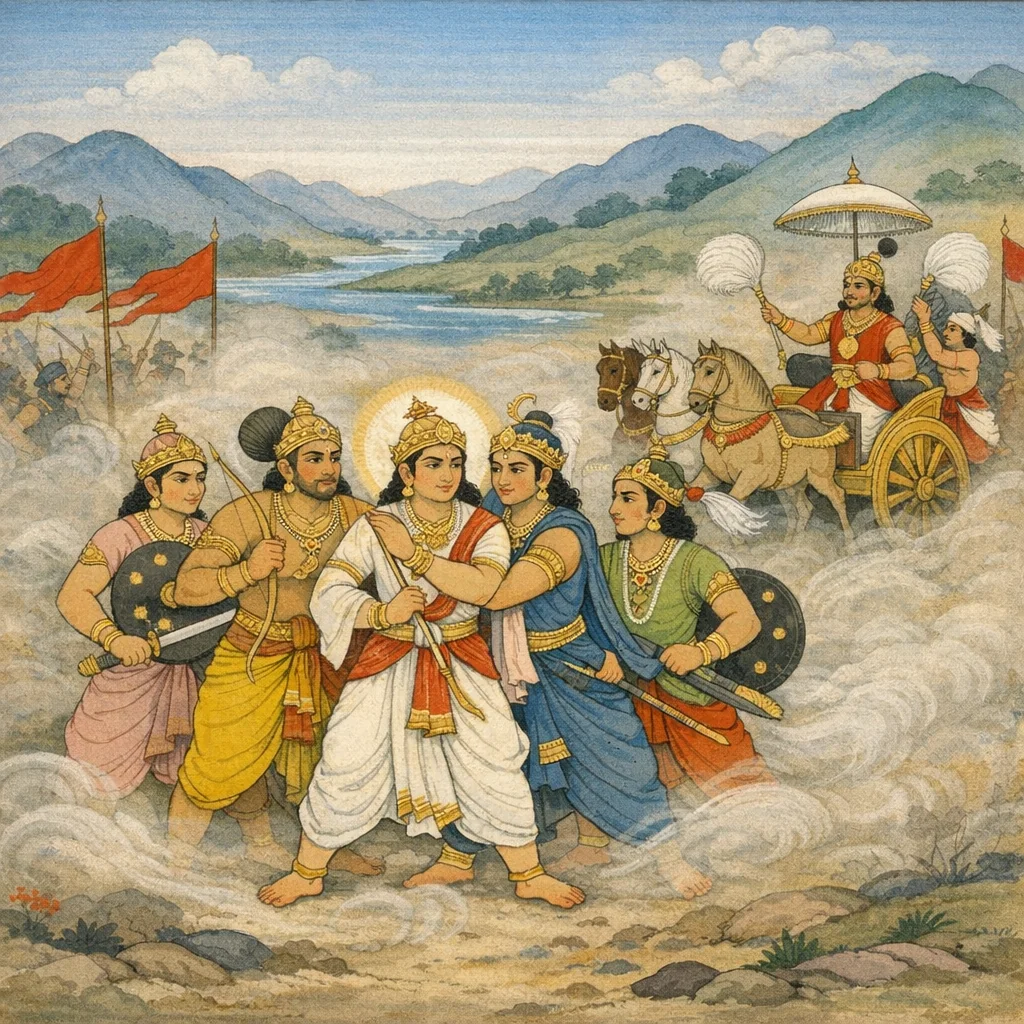
Saṃjaya reports that upon the fall of Śalya, the Kaurava host largely turns away in disarray, likened to merchants seeking shore after a shipwreck and to leaderless animals seeking protection. The Pandavas and Pañcālas, perceiving the rout, pursue with renewed confidence and proclaim the day’s reversal of fortune. A concentrated infantry force confronts Bhīma; he dismounts, seizes a heavy, gold-adorned gadā, and breaks the massed foot-soldiers, producing a vivid battlefield tableau of fallen, ornamented bodies and shattered standards. Meanwhile Duryodhana, not yet far withdrawn, addresses his charioteer and troops: he asserts that Arjuna will not overrun him from the rear, urges controlled repositioning, and argues that dispersion invites destruction. He reframes the moment through kṣatriya-dharma—death is universal, and a disciplined stand is preferable to flight—thereby prompting the kings and warriors to turn back and re-engage as the Pandava forces advance.
Chapter Arc: शल्य-वध के बाद रणभूमि पर धूल, रथ-खंड, गिरे अश्व और कबन्धों का उठना—युद्ध का दृश्य मानो स्वयं मृत्यु का उत्सव बन जाता है। → दुर्योधन पर्वत-सम दीप्त रथ पर छत्र-चामर से सेवित होकर आगे बढ़ता है; मद्रदेशीय वीर उसे बार-बार रोकते हैं—“न गन्तव्यं”—पर वह नहीं रुकता। उधर पाण्डव-ध्वजिनी आँधी से क्षुब्ध नदी-सी उफनती है और युधिष्ठिर के चारों ओर पाण्डव-श्रेष्ठ घेरा बनाकर शत्रु-सेना को समुद्र में मकरों-सा मथने लगते हैं। → रण का उन्माद चरम पर: सर्वत्र कबन्ध उठते दिखते हैं; टूटे रथ, जुए-धुरे, मरे महारथी और धराशायी अश्वों से पृथ्वी ढक जाती है। घोड़े जुए में बँधे रथों को वायु-वेग से इधर-उधर घसीटते हैं, कुछ आधे रथ लेकर दिशाओं में भटकते हैं—व्यवस्था टूटकर अराजकता बन जाती है। → दोनों पक्षों की सेनाएँ भारी क्षति के बीच भी भिड़ी रहती हैं; शत्रु-सैनिकों में क्षणिक हर्ष-कोलाहल उठता है, पर रणभूमि का वास्तविक निष्कर्ष ‘विजय’ नहीं—केवल बढ़ती हुई विनाश-छाया है। → दुर्योधन के अडिग आगे बढ़ने और पाण्डवों के संगठित घेराव के बीच अगला निर्णायक टकराव आसन्न रहता है।
Shlokas
Verse 1
इस प्रकार श्रीमह्याभारत शल्यपर्वमें शल्यका वधविषयक सत्रहवाँ अध्याय पूरा हुआ ॥/ १७ ॥। (दाक्षिणात्य अधिक पाठके ३ श्लोक मिलाकर कुल ९४ श्लोक हैं।) ऑपन-आक्रात छा 2 अष्टादशो< ध्याय: मद्रराजके अनुचरोंका वध और कौरव-सेनाका पलायन संजय उवाच शल्ये5थ निहते राजन् मद्रराजपदानुगा: । रथा: सप्तशता वीरा निर्ययुर्महतो बलात्
Sañjaya said: “O King, when Śalya had been slain, seven hundred heroic chariot-warriors—followers of the lord of Madra—rode forth, driven on by the force of their great army.”
Verse 2
दुर्योधनस्तु द्विदमारुह्माचलसंनिभम् । छत्रेण प्रियमाणेन वीज्यमानश्न चामरै:
Sañjaya said: Duryodhana, however, mounted a mighty elephant that looked like a mountain. He was honored with a royal parasol held over him and was fanned with yak-tail whisks—an image of kingly pride and outward splendor set against the grim moral weight of the war.
Verse 3
न गन्तव्यं न गन्तव्यमिति मद्रानवारयत् । दुर्योधनेन ते वीरा वार्यमाणा: पुनः पुनः
Sañjaya said: Weeping, the women of Madra cried, “You must not go—do not go!” and tried to restrain them. Yet those heroes, though checked again and again by Duryodhana, still pressed on—laying bare the strain between urgent martial resolve and the human bonds that plead for restraint.
Verse 4
युधिष्ठिरं जिघांसन्त: पाण्डूनां प्राविशन् बलम् । संजय कहते हैं--राजन! मद्रराज शल्यके मारे जानेपर उनके अनुगामी सात सौ वीर रथी विशाल कौरव-सेनासे निकल पड़े। उस समय दुर्योधन पर्वताकार हाथीपर आरूढ़ हो सिरपर छत्र धारण किये चामरोंसे वीजित होता हुआ वहाँ आया और “न जाओ, न जाओ! ऐसा कहकर उन मद्रदेशीय वीरोंको रोकने लगा; परंतु दुर्योधनके बारंबार रोकनेपर भी वे वीर योद्धा युधिष्ठिरके वधकी इच्छासे पाण्डवोंकी सेनामें जा घुसे || १--३ $ ।। ते तु शूरा महाराज कृतचित्ताश्न योधने
Sañjaya said: “O King, intent on killing Yudhiṣṭhira, they forced their way into the Pāṇḍavas’ army. Those heroes, O great king, their minds firmly set upon battle, pressed on—driven by loyalty to their fallen leader and by the grim momentum of war, even when restraint was urged.”
Verse 5
श्रुत्वा च निहतं शल्यं धर्मपुत्रं च पीडितम्,पूरयन् रथघोषेण दिश: सर्वा महारथ: । शल्य मारे गये और मद्रराजका प्रिय करनेमें लगे हुए मद्रदेशीय महारथियोंने धर्मपुत्र युधिष्ठिरको पीड़ित कर रखा है; यह सुनकर कुन्तीपुत्र महारथी अर्जुन गाण्डीव धनुषकी टंकार करते और रथके गम्भीर घोषसे सम्पूर्ण दिशाओंको परिपूर्ण करते हुए वहाँ आ पहुँचे
Sañjaya said: Hearing that Śalya had been slain and that Dharmaputra (Yudhiṣṭhira) was being hard-pressed, the great chariot-warrior Arjuna—Kuntī’s son—came there, filling all directions with the deep roar of his chariot and the resounding twang of the Gāṇḍīva, intent on supporting dharma amid the crisis of war.
Verse 6
मद्रराजप्रिये युक्तैर्मद्रकाणां महारथै: । आजगाम ततः: पार्थों गाण्डीवं विक्षिपन् धनु:
Sañjaya said: Then Pārtha (Arjuna) advanced, accompanied by the great chariot-warriors of the Madras who were devoted to their king; as he came on, he brandished his bow Gāṇḍīva—signaling resolve and readiness in the face of the moral weight of battle.
Verse 7
ततोड्र्जुनश्व भीमश्न माद्रीपुत्री च पाण्डवी
Then Arjuna and Bhīma, and the Pāṇḍava princess born of Mādrī as well, came forward—so Sañjaya continues to recount the shifting movements of the war, drawing attention to the principal champions among the Pāṇḍavas.
Verse 8
सात्यकिश्न नरव्याप्रो द्रौपदेयाश्व॒ सर्वश: । धृष्टद्युम्न: शिखण्डी च पञ्चाला: सह सोमकै:
Sañjaya said: Sātyaki—the tiger among men—together with all the sons of Draupadī, and also Dhṛṣṭadyumna and Śikhaṇḍin, along with the Pāñcālas and the Somakas, stood there, gathered as a single united force amid the war.
Verse 9
युधिष्ठिरं परीप्सन्त: समन्तात् पर्यवारयन् । तदनन्तर अर्जुन, भीमसेन, माद्रीपुत्र पाण्डुकुमार नकुल, सहदेव, पुरुषसिंह सात्यकि, द्रौपदीके पाँचों पुत्र, धृष्टद्युम्म, शिखण्डी, पांचाल और सोमक वीर--इन सबने युधिष्ठिरकी रक्षाके लिये उन्हें चारों ओरसे घेर लिया || ७-८ ई ।। ते समन्तात् परिवृता: पाण्डवा: पुरुषर्षभा:
Sañjaya said: Seeking to seize Yudhiṣṭhira, the enemy forces closed in on him from every side. Then Arjuna, Bhīmasena, the sons of Mādrī—Nakula and Sahadeva—Sātyaki the lion among men, Draupadī’s five sons, Dhṛṣṭadyumna, Śikhaṇḍī, and the valiant warriors of the Pāñcālas and Somakas—all of them formed a protective ring around Yudhiṣṭhira, guarding him on all sides. Thus surrounded, the Pāṇḍavas—bulls among men—stood firm.
Verse 10
वृक्षानिव महावाता: कम्पयन्ति सम तावकान्,जैसे महावायु (आँधी) वृक्षोंको हिला देती है, उसी प्रकार पाण्डववीरोंने आपके सैनिकोंको कम्पित कर दिया। राजन! जैसे पूर्वी हवा महानदी गंगाको क्षुब्ध कर देती है, उसी प्रकार उन सैनिकोंने पाण्डवोंकी सेनामें भी हलचल मचा दी
As a mighty gale shakes the trees, so the Pāṇḍava heroes made your soldiers tremble. O King, as the easterly wind churns the great river Gaṅgā into turmoil, so those warriors stirred commotion even within the Pāṇḍavas’ host.
Verse 11
पुरोवातेन गड़ेव क्षोभ्यमाणा महानदी । अक्षोभ्यत तदा राजन् पाण्डूनां ध्वजिनी ततः,जैसे महावायु (आँधी) वृक्षोंको हिला देती है, उसी प्रकार पाण्डववीरोंने आपके सैनिकोंको कम्पित कर दिया। राजन! जैसे पूर्वी हवा महानदी गंगाको क्षुब्ध कर देती है, उसी प्रकार उन सैनिकोंने पाण्डवोंकी सेनामें भी हलचल मचा दी
Sañjaya said: O King, just as a great river is churned into turbulence by the easterly wind, so at that time the Pāṇḍavas’ army was thrown into agitation.
Verse 12
प्रस्कन्द्य सेनां महतीं महात्मानो महारथा: । बहवश्नुक्रुशुस्तत्र क्व स राजा युधिष्ठिर:
Sañjaya said: Having charged into the vast army, those great-souled, mighty chariot-warriors cried out repeatedly there, “Where is that king, Yudhiṣṭhira?”
Verse 13
धृष्टद्ुम्नो5थ शैनेयो द्रौपदेयाश्व॒ सर्वश:
Sañjaya said: Then Dhṛṣṭadyumna, Śaineya, and all the sons of Draupadī—every one of them—moved as one, showing the Pāṇḍava side’s coordinated resolve amid the war’s decisive turns.
Verse 14
पज्चालाक्ष महावीर्या: शिखण्डी च महारथ: । *धृष्टद्युम्न, सात्यकि, द्रौपदीके सभी पुत्र, महापराक्रमी पांचाल और महारथी शिखण्डी --ये सब कहाँ हैं?' ।। एवं तान् वादिन: शूरान् द्रौपदेया महारथा:
Sañjaya said: “Where are those mighty heroes of the Pañcālas—Śikhaṇḍī, the great chariot-warrior; Dhṛṣṭadyumna; Sātyaki; and the Draupadeyas, the great chariot-fighters, the sons of Draupadī?” Thus he speaks of those valiant warriors—Draupadī’s sons—revealing the grievous uncertainty and moral weight of war, where even renowned champions can vanish into the battle’s chaos and fate.
Verse 15
चक्रै्विमथितै: केचित् केचिच्छिन्नैर्महाध्वजै:
Sañjaya said: Some were crushed and mangled by the wheels of chariots, while others were cut down amid the great standards—an image of the battlefield’s relentless violence, where pride and display offer no shelter from war’s consequences.
Verse 16
आलोक्य पाण्डवान् युद्धे योधा राजन् समन्ततः
Sañjaya said: O King, the warriors, looking upon the Pāṇḍavas in the midst of battle, on every side…
Verse 17
दुर्योधनश्न तान् वीरान् वारयामास सान्त्वयन्
Sañjaya said: Duryodhana, seeking to steady their resolve, tried to restrain those warriors and pacify them with conciliatory words—an attempt to hold the army together through persuasion rather than letting anger or rashness dictate action.
Verse 18
ततो गान्धारराजस्य पुत्र: शकुनिरब्रवीत्,इति श्रीमहा भारते शल्यपर्वणि संकुलयुद्धे अष्टादशो5ध्याय:
Then Śakuni, the son of the king of Gāndhāra, spoke. Thus ends the eighteenth chapter of the Śalya Parva of the Śrī Mahābhārata, in the section describing the confused and densely entangled fighting.
Verse 19
दुर्योधनं महाराज वचन वचनक्षम: । महाराज! तब प्रवचनपटु गान्धारराजपुत्र शकुनिने दुर्योधनसे यह बात कही-- ।। १८ *॥ कि नः सम्प्रेक्षमाणानां मद्राणां हन्यते बलम्
Sañjaya said: O King, then Śakuni—the eloquent son of the Gandhāra ruler, skilled in speech and counter-speech—addressed Duryodhana: “While we stand here watching, is the strength of the Madras to be destroyed?”
Verse 20
सहितैश्नापि योद्धव्यमित्येष समय: कृत:
Sañjaya said: “It has been agreed as a settled compact that they must fight even in close formation, standing together.”
Verse 21
अथ कस्मात् परानेव घ्नतो मर्षयसे नृप । “यह शपथ ली जा चुकी है कि “हम सब लोग एक साथ होकर लड़ें।” नरेश्वर! ऐसी दशामें शत्रुओंको अपनी सेनाका संहार करते देखकर भी तुम क्यों सहन करते हो?” ।। २० ई | दुर्योधन उवाच वार्यमाणा मया पूर्व नैते चक्रुर्वचो मम
Śakuni said: “Why, O king, do you endure this—seeing the enemy strike down our men? Has not the oath already been taken: ‘We shall all fight united’?” Duryodhana said: “Earlier I tried to restrain them, but they did not follow my words.”
Verse 22
एते विनिहता: सर्वे प्रस्कन्ना: पाण्डवाहिनीम् । दुर्योधनने कहा--मैंने पहले ही इन्हें बहुत मना किया था, परंतु इन लोगोंने मेरी बात नहीं मानी और पाण्डवसेनामें घुसकर ये प्राय: सब-के-सब मारे गये ।। शकुनिरुवाच न भर्तु: शासन वीरा रणे कुर्वन्त्यमर्षिता:
Duryodhana said: “All these have been slain—having rashly plunged into the Pāṇḍava host. I had already warned them strongly, but they did not heed my counsel; entering the enemy ranks, they have been almost entirely cut down.”
Verse 23
अलं क्रोद्धुमथैतेषां नायं काल उपेक्षितुम् । याम: सर्वे च सम्भूय सवाजिरथकुज्जरा:
Duryodhana said: “Enough of anger toward them; this is no time to stand indifferent. Let us all set out together—with our horses, chariots, and elephants.”
Verse 24
परित्रातुं महेष्वासान् मद्रराजपदानुगान् । अन्योन्यं परिरक्षामो यत्नेन महता नूप
Duryodhana said: “O king, to safeguard the great bowmen who follow the command of the king of Madra, let us protect one another with great and vigilant effort.”
Verse 25
शकुनि बोला--नरेश्वर! युद्धस्थलमें रोषामर्षके वशीभूत हुए वीर स्वामीकी आज्ञाका पालन नहीं करते हैं; वैसी दशामें इनपर क्रोध करना उचित नहीं है। यह इनकी उपेक्षा करनेका समय नहीं है। हम सब लोग एक साथ हो मद्रराजके महाधनुर्धर सेवकोंकी रक्षाके लिये हाथी, घोड़े और रथसहित चलें तथा महान् प्रयत्नपूर्वक एक-दूसरेकी रक्षा करें || २२ ++२४ ।। संजय उवाच एवं सर्वेडनुसंचिन्त्य प्रययुर्यत्र सैनिका: । एवमुक्तस्तदा राजा बलेन महता वृत:
Sanjaya said: Having thus reflected together, they all set out toward where the troops were. And the king, so addressed, was at that time surrounded by a great force.
Verse 26
हत विद्धयत गृह्नलीत प्रहरध्वं निकृन्तत
Sanjaya said: “Strike down the fallen; pierce them; seize them; assault them; cut them to pieces.”
Verse 27
पाण्डवास्तु रणे दृष्टवा मद्रराजपदानुगान्
Sanjaya said: But the Pandavas, seeing on the battlefield those who were following in the footsteps of the king of Madra, took note of them.
Verse 28
ते मुहूर्ताद रणे वीरा हस्ताहस्ति विशाम्पते
Sañjaya said: From that very moment, O lord of the people, the heroes on the battlefield closed in upon one another and grappled hand to hand—an image of war’s grim immediacy, where valor is tested not by distance or device but by direct encounter.
Verse 29
निहताः: प्रत्यदृश्यन्त मद्रराजपदानुगा: । प्रजानाथ! वे मद्रराजके अनुगामी वीर रणभूमिमें दो ही घड़ीके भीतर हाथों-हाथ मारे गये दिखायी दिये ।। ततो नः सम्प्रयातानां हता मद्रास्तरस्विन:
Sañjaya said: “O lord of the people, the warriors who followed in the footsteps of the king of Madra were seen lying slain. Those brave adherents of the Madra king, on the battlefield, appeared to have been cut down swiftly—within a very short time—struck down in close combat. Thus, as our forces advanced, the impetuous Madras were killed.”
Verse 30
उत्थितानि कबन्धानि समदृश्यन्त सर्वश:
Sañjaya said: On every side, headless trunks were seen rising up—an appalling vision of the battlefield’s ruin, where the violence of war reduces living bodies to mere remnants.
Verse 31
पपात महती चोल्का मध्येनादित्यमण्डलम् । सब ओर कबन्ध खड़े दिखायी दे रहे थे और सूर्यमण्डलके बीचसे वहाँ बड़ी भारी उल्का गिरी ।। रथैर्भग्नैर्युगाक्षैश्न निहतैश्व महारथै:
Sañjaya said: A great meteor fell, seeming to pass through the very middle of the sun’s orb. On every side, headless trunks were seen standing, and through the center of the solar disc a massive fiery portent descended there. The field was strewn with shattered chariots, broken yokes and axles, and with mighty warriors struck down—an ominous sign intensifying the moral darkness of the war’s climax.
Verse 32
वातायमानैस्तुरगैर्युगासक्तैस्ततस्तत:
Sañjaya said: Then, with horses harnessed to the yoke and surging forward as if driven by the wind, they sped on from place to place—an image of relentless motion amid the press of war.
Verse 33
भग्नचक्रान् रथान् केचिदहरंस्तुरगा रणे
Sañjaya said: In the midst of battle, some horses dragged away chariots whose wheels had been shattered—an image of war’s relentless violence, where even the instruments of combat collapse and are carried off amid the chaos.
Verse 34
तत्र तत्र व्यदृश्यन्त योक्त्रै: श्लिष्टा: सम वाजिन:
Sañjaya said: Here and there, horses were seen—still held fast by their reins—standing in tense, even ranks amid the turmoil of battle. The image underscores how, in war, disciplined control and readiness persist even as destruction spreads around them.
Verse 35
रथिन: पतमानाश्ष दृश्यने सम नरोत्तमा: | गगनात् प्रच्युता: सिद्धा: पुण्यानामिव संक्षये
Sañjaya said: “Those foremost of men, the great chariot-warriors, were seen falling—like perfected beings (siddhas) dropping from the sky when their store of merit is exhausted.”
Verse 36
जहाँ-तहाँ जोतोंसे जुड़े हुए घोड़े और नरश्रेष्ठ रथी गिरते दिखायी दे रहे थे, मानो सिद्ध (पुण्यात्मा) पुरुष पुण्यक्षय होनेपर आकाशसे पृथ्वीपर गिर पड़े हों ।। निहतेषु च शूरेषु मद्रराजानुगेषु वै अस्मानापततकश्चापि दृष्टवा पार्था महारथा:,मद्रराजके उन शूरवीर सैनिकोंके मारे जानेपर हमें आक्रमण करते देख विजयकी अभिलाषा रखनेवाले महारथी पाण्डवयोद्धा शंखध्वनिके साथ बाणोंकी सनसनाहट फैलाते हुए हमारा सामना करनेके लिये बड़े वेगसे आये
Sañjaya said: Here and there were seen horses still harnessed to their trappings and foremost chariot-warriors fallen—like meritorious perfected beings who, when their store of merit is exhausted, drop from the sky to the earth. And when the brave followers of the king of Madra had been slain, the great chariot-fighters among the sons of Pāṇḍu, seeing us advancing, came swiftly to meet us—eager for victory, raising the blare of conches and spreading the whirring roar of their arrows.
Verse 37
अभ्यवर्तन्त वेगेन जयगृद्धा: प्रहारिण: । बाणशब्दरवान् कृत्वा विमिश्रान् शड्खनिः:स्वनै:,मद्रराजके उन शूरवीर सैनिकोंके मारे जानेपर हमें आक्रमण करते देख विजयकी अभिलाषा रखनेवाले महारथी पाण्डवयोद्धा शंखध्वनिके साथ बाणोंकी सनसनाहट फैलाते हुए हमारा सामना करनेके लिये बड़े वेगसे आये
Sañjaya said: Eager for victory and fierce in assault, the Pandava champions surged forward at great speed to meet us. As they advanced, the hiss and roar of their arrows spread through the air, mingled with the resounding blasts of conches—an onrush that proclaimed both their resolve and the relentless ethic of battle in which each side strives for triumph after heavy losses.
Verse 38
अस्मांस्तु पुनरासाद्य लब्धलक्ष्यप्रहारिण: । शरासनानि धुन्वाना: सिंहनादान प्रचुक्तुशु:,हमारे पास पहुँचकर लक्ष्य वेधनेमें सफल और प्रहारकुशल पाण्डव-सैनिक अपने धनुष हिलाते हुए जोर-जोरसे सिंहनाद करने लगे
Sañjaya said: Closing in upon us once more, the Pāṇḍava warriors—sure of their aim and skilled in striking—shook their bows and raised loud lion-roars.
Verse 39
ततो हतमभिप्रेक्ष्य मद्रराजबलं महत् । मद्रराजं च समरे दृष्टवा शूरं निपातितम्
Sañjaya said: Then, seeing the great army of the king of Madra slain, and seeing in that battle the heroic king of Madra himself struck down…
Verse 40
दुर्योधनबलं सर्व पुनरासीत् पराड्मुखम् | मद्रराजकजी वह विशाल सेना मारी गयी तथा शूरवीर मद्रराज शल्य पहले ही समरभूमिमें धराशायी किये जा चुके हैं, यह सब अपनी आँखों देखकर दुर्योधनकी सारी सेना पुनः पीठ दिखाकर भाग चली ।। वध्यमानं महाराज पाण्डवैर्जितकाशिभि: । दिशो भेजे5थ सम्भ्रान्तं भ्रामितं दृढ्धन्विभि:,महाराज! विजयसे उल्लसित होनेवाले दृढ़ धनुर्धर पाण्डवोंकी मार खाकर कौरव-सेना घबरा उठी और भ्रान्त-सी होकर सम्पूर्ण दिशाओंमें भागने लगी
Sañjaya said: O King, Duryodhana’s entire host once again turned its back in flight. Struck by the Pāṇḍavas—firm-bowed warriors exulting in victory—the Kaurava army, seized by panic and confusion, scattered and fled in all directions.
Verse 43
धनु:शब्दं महत् कृत्वा सहायुध्यन्त पाण्डवै: । महाराज! उन शूरवीरोंने युद्ध करनेका दृढ़ निश्चय कर लिया था, अतः धनुषकी गम्भीर टंकार करके पाण्डवोंके साथ संग्राम आरम्भ कर दिया
Sañjaya said: O King, raising a great sound with their bows, those heroic warriors—firmly resolved to fight—began the battle alongside the Pāṇḍavas.
Verse 63
पूरयन् रथघोषेण दिश: सर्वा महारथ: । शल्य मारे गये और मद्रराजका प्रिय करनेमें लगे हुए मद्रदेशीय महारथियोंने धर्मपुत्र युधिष्ठिरको पीड़ित कर रखा है; यह सुनकर कुन्तीपुत्र महारथी अर्जुन गाण्डीव धनुषकी टंकार करते और रथके गम्भीर घोषसे सम्पूर्ण दिशाओंको परिपूर्ण करते हुए वहाँ आ पहुँचे
Sañjaya said: Filling all the quarters with the thunder of his chariot, the great warrior Arjuna arrived there. For when Śalya had fallen, the mighty fighters of Madra—eager to gratify their king—had been pressing hard upon Dharmaputra Yudhiṣṭhira. Hearing of this distress, Kuntī’s son Arjuna, twanging the Gāṇḍīva and making the directions resound with the deep roar of his car, hastened to the spot.
Verse 96
क्षोभयन्ति सम तां सेनां मकरा: सागरं यथा | युधिष्ठिरको सब ओरसे घेरकर खड़े हुए पुरुषप्रवर पाण्डव उस सेनाको उसी प्रकार क्षुब्ध करने लगे, जैसे मगर समुद्रको
Sañjaya said: The Pāṇḍavas, foremost among men, having surrounded that army on every side, began to throw it into turmoil, as makaras churn and agitate the ocean.
Verse 123
भ्रातरो वास्य ते शूरा दृश्यने नेह केन च । वे बहुसंख्यक महामनस्वी मद्रमहारथी विशाल पाण्डव-सेनाको मथकर जोर-जोरसे पुकार-पुकारकर कहने लगे--“कहाँ है वह राजा युधिष्ठिर? अथवा उसके वे शूरवीर भाई? वे सब यहाँ दिखायी क्यों नहीं देते?
Sañjaya said: “Your heroic brothers are not seen here at all.” After churning through the vast Pāṇḍava host, the high-souled great chariot-warrior of Madra, surrounded by many, began to shout again and again with force: “Where is King Yudhiṣṭhira? And where are his valiant brothers? Why are they all not visible here?”
Verse 143
अभ्यघ्नन् युयुधानश्न मद्रराजपदानुगान् । ऐसी बातें कहते हुए उन मद्रराजके अनुगामी वीर योद्धाओंको द्रौपदीके महारथी पुत्रों और सात्यकिने मारना आरम्भ किया
Sañjaya said: Yuyudhāna (Sātyaki) began to strike down the warriors who followed in the footsteps of the king of Madra. In that same surge of battle, Draupadī’s mighty chariot-fighting sons, together with Sātyaki, set about slaying those Madra-aligned heroes.
Verse 156
ते दृश्यन्तेडपि समरे तावका निहताः परै: । समरांगणमें आपके वे सैनिक शत्रुओंद्वारा मारे जाने लगे। कुछ योद्धा छिन्न-भिन्न हुए रथके पहियों और कुछ कटे हुए विशाल ध्वजोंके साथ ही धराशायी होते दिखायी देने लगे
Sañjaya said: Even as they were seen on the battlefield, your own warriors were being struck down by the enemy. In the turmoil of combat, some fell shattered amid broken chariot-wheels, and others collapsed together with their great banners cut down.
Verse 163
वार्यमाणा ययुर्वेगात् पुत्रेण तव भारत । राजन्! भरतनन्दन! वे योद्धा युद्धमें सब ओर फैले हुए पाण्डवोंको देखकर आपके पुत्रके मना करनेपर भी वेगपूर्वक आगे बढ़ गये
Sañjaya said: O Bhārata, though restrained by your son, those warriors surged forward with force. O King, delight of the Bharatas—seeing the Pāṇḍavas spread out on all sides in the battle, they advanced impetuously despite your son’s attempts to hold them back, driven by the momentum of war rather than prudent restraint.
Verse 176
न चास्य शासन केचित्तत्र चक्रुर्महारथा: । दुर्योधनने उन वीरोंको सान्त्वना देते हुए बहुत मना किया, किंतु वहाँ किन्हीं महारथियोंने उसकी इस आज्ञाका पालन नहीं किया
Sañjaya said: Yet none of the great chariot-warriors there carried out his command. Though Duryodhana strove mightily to restrain and console those heroes, they did not comply—showing how, in the heat of war, personal resolve and martial pride can override even a king’s directive.
Verse 193
न युक्तमेतत् समरे त्वयि तिष्ठति भारत । “भारत! हमलोगोंके देखते-देखते मद्रदेशकी यह सेना क्यों मारी जाती है? तुम्हारे रहते ऐसा कदापि नहीं होना चाहिये
Sañjaya said: “This is not proper—while you, O Bhārata, stand firm in the battle. How can the army of Madra be cut down before our very eyes? With you present, such a thing should never be allowed to happen.”
Verse 253
प्रययौँ सिंहनादेन कम्पयन्निव मेदिनीम् | संजय कहते हैं--राजन्! ऐसा विचारकर सब लोग वहीं गये, जहाँ वे सैनिक मौजूद थे। शकुनिके वैसा कहनेपर राजा दुर्योधन विशाल सेनाके साथ सिंहनाद करता और पृथ्वीको कँपाता हुआ-सा आगे बढ़ा
Sañjaya said: “O King, having reflected thus, they all went to the place where their troops were stationed. And when Śakuni spoke in that manner, King Duryodhana advanced with his vast host, roaring like a lion, as though making the earth itself tremble.”
Verse 263
इत्यासीत् तुमुल: शब्दस्तव सैन्यस्य भारत । भारत! उस समय आपकी सेनामें “मार डालो, घायल करो, पकड़ लो, प्रहार करो और टुकड़े-टुकड़े कर डालो” यह भयंकर शब्द गूँज रहा था
Sañjaya said: “Thus there arose a tumultuous roar within your army, O Bhārata—an awful chorus of war-cries: ‘Kill! Wound! Seize! Strike! Cut to pieces!’”
Verse 273
सहितानभ्यवर्तन्त गुल्ममास्थाय मध्यमम् | रणभूमिमें मद्रराजके सेवकोंको एक साथ धावा करते देख पाण्डवोंने मध्यम गुल्म (सेना)-का आश्रय ले उनका सामना किया
Sañjaya said: Seeing on the battlefield the attendants of the king of Madra charging together in a single mass, the Pāṇḍavas took shelter in their central battle-formation and met that assault head-on—holding their ground with disciplined order amid the press of war.
Verse 296
हृष्ा: किलकिलाशब्दमकुर्वन् सहिता: परे । वहाँ हमारे पहुँचते ही मद्रदेशके वे वेगशाली वीर कालके गालमें चले गये और शत्रुसैनिक अत्यन्त प्रसन्न हो एक साथ किलकारियाँ भरने लगे
Sañjaya said: The opposing warriors, delighted, raised a united cry of exultation—shouting loud war-whoops together. In the narrative flow, this marks the enemy’s surge of confidence and morale at a critical moment of battle, where collective rejoicing becomes a weapon of intimidation as well as a sign of their perceived advantage.
Verse 313
अश्वैर्निपतितैश्वैव संछन्नाभूद् वसुन्धरा । टूटे-फूटे रथों, जूओं और धुरोंसे, मारे गये महारथियोंसे तथा धराशायी हुए घोड़ोंसे भूमि ढक गयी थी
Sañjaya said: The earth was completely covered with fallen horses. The battlefield lay blanketed with the wreckage of war—broken chariots, yokes and axles—and with the bodies of slain great chariot-warriors, showing how the violence of battle reduces both men and their proud instruments to ruin.
Verse 326
अदृश्यन्त महाराज योधास्तत्र रणाजिरे | महाराज! वहाँ समरांगणमें बहुत-से योद्धा जूएमें बँधे हुए वायुके समान वेगशाली घोड़ोंद्वारा इधर-उधर ले जाये जाते दिखायी देते थे
Sañjaya said: “O King, on that battlefield many warriors were seen being dragged here and there by horses swift as the wind, bound fast by the yoke and harness.” The scene underscores the war’s grim mechanics: even the mighty are reduced to being carried helplessly by the momentum of steeds and chariots, revealing how violence strips agency and dignity amid the chaos of battle.
Verse 333
रथार्ध केचिदादाय दिशो दश विबशभ्रमु: । कुछ घोड़े रणभूमिमें टूटे पहियोंवाले रथोंको लिये जा रहे थे और कितने ही अश्व आधे ही रथको लेकर दसों दिशाओंमें चक्कर लगाते थे
Sañjaya said: Some horses, having taken only half a chariot, wandered in circles through all ten directions. The battlefield was in such disarray that broken, wheel-less chariots were being dragged about, showing how war reduces ordered martial skill to chaotic ruin.
Frequently Asked Questions
The tension is between survival-driven flight and duty-bound steadiness: whether warriors should disperse to avoid immediate danger or remain disciplined, accepting risk as part of kṣatriya obligation and collective responsibility.
He argues that cohesion and resolve are strategically and ethically superior to panic: since death is inevitable for all, a controlled stand aligned with kṣatra-dharma preserves honor, reduces vulnerability, and can restore tactical initiative.
No explicit phalaśruti is stated here; the chapter functions as narrative-ethical commentary by depicting how leadership rhetoric and disciplined action shape outcomes within the epic’s broader dharma framework.