Adhyaya 111
Adhyāya 111 (Book 6): Daśama-dina-saṃgrāma—Bhīṣma’s Counsel to Yudhiṣṭhira and the Śikhaṇḍin-Led Advance
Upa-parva: Daśama-dina-yuddha (Tenth-Day Engagement: Bhīṣma–Arjuna Confrontation and the Shikhaṇḍin Strategy)
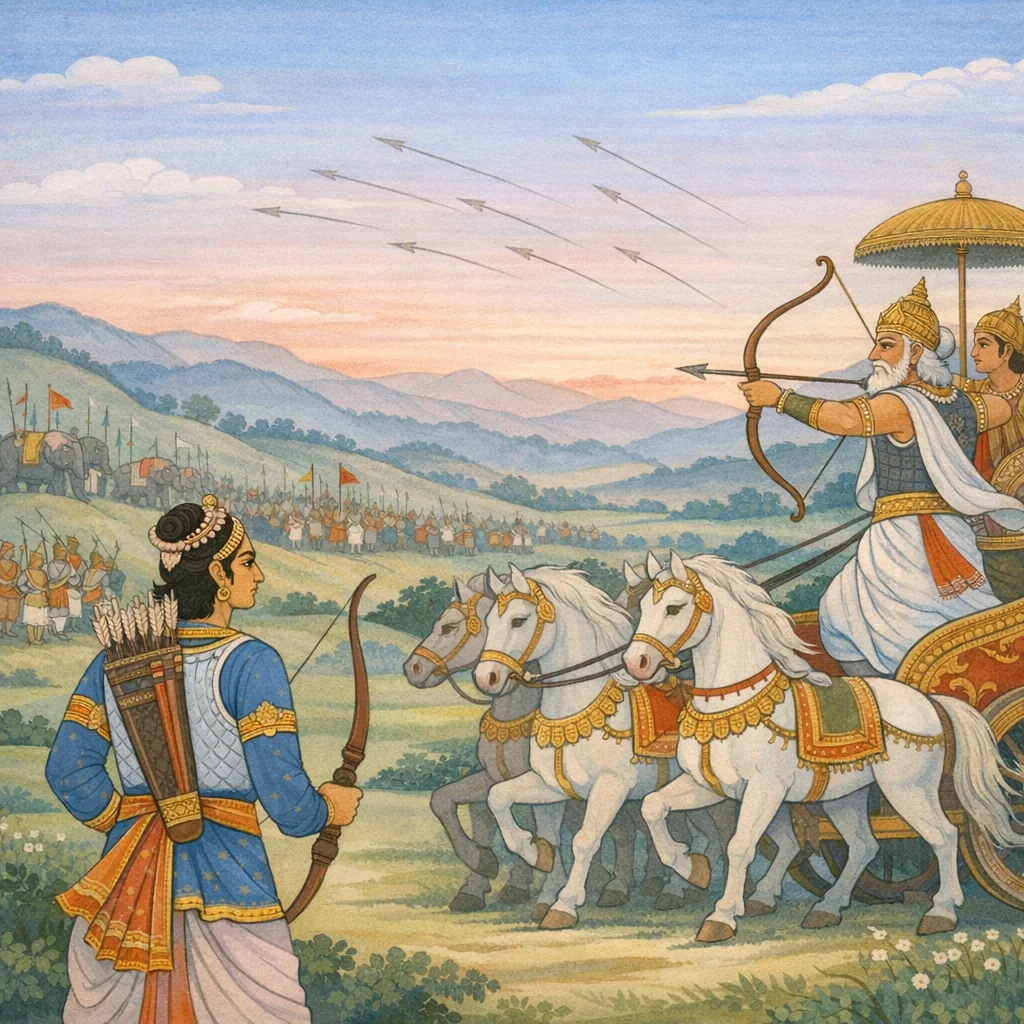
Dhṛtarāṣṭra asks Saṃjaya to explain how Bhīṣma fought on the tenth day and how the Kauravas checked the Pandavas. Saṃjaya reports sustained attrition inflicted by Arjuna’s superior weapons and Bhīṣma’s continued capacity to cause extensive losses, creating public uncertainty when the two principal chariot-warriors face one another. The narration emphasizes the day’s intensity and the anonymity of many fallen warriors, underscoring war’s scale beyond named heroes. After ten days of exertion, Bhīṣma expresses weariness with embodied life and seeks his own death, stating a reluctance to kill opponents who stand openly before him; he approaches Yudhiṣṭhira and advises a concentrated effort to bring about his fall, placing Arjuna at the forefront along with the Pañcālas and Sṛñjayas. Yudhiṣṭhira and Dhṛṣṭadyumna then rally the forces, promising protection under Arjuna and Bhīma, and commit to a plan to defeat Bhīṣma by advancing with Śikhaṇḍin positioned ahead. The Kauravas, under Duryodhana’s direction, respond by deploying multiple allied kings and commanders—Drona and his son among them—to protect Bhīṣma and engage the Pandava spearhead. The chapter closes with a panoramic description of formations colliding, the soundscape of instruments and animals, dust-clouds and weapon-flash, and close-quarters clashes among chariots, cavalry, elephants, and infantry, presenting the engagement as system-wide and mutually escalatory.
Chapter Arc: सूर्योदय के साथ रणभेरियाँ, मृदंग और शंख एक साथ गूँज उठते हैं; पाण्डव-सेना शिखण्डी को अग्रभाग में रखकर युद्धभूमि की ओर बढ़ती है—आज का दिन निर्णायक संकेतों से भरा है। → युधिष्ठिर नकुल-सहदेव सहित सिंहनाद करता हुआ अग्रसर होता है; केकय-पंचक और धृष्टकेतु पीछे की रक्षा सँभालते हैं। उधर भीष्म अपने तीक्ष्ण नाराचों से पाण्डव, पाञ्चाल और सृंजयों पर बाण-वर्षा कर रण को उग्र बनाते हैं, और शिखण्डी का भीष्म के सम्मुख आना टकराव को अपरिहार्य कर देता है। → शिखण्डी भीष्म के सामने अडिग होकर ललकारता है—‘आप चाहें तो प्रहार करें या न करें, मैं जीवन-त्याग से पीछे नहीं हटूँगा; आज इस समर में आपका सामना निश्चित है।’ यह वचन-प्रहार और भीष्म की प्रतिज्ञा-छाया मिलकर अध्याय का शिखर बनते हैं। → भीष्म के बाणों से पाण्डव-पक्ष पर दबाव बढ़ता है; अनेक हाथी-घोड़े और योद्धा अस्त्र-वृष्टि में गिरते हैं। पाण्डव-वीर थकान और क्षोभ के बीच भीष्म की ओर दृष्टि टिकाए रहते हैं—रण का प्रवाह अभी भी भीष्म के पक्ष में झुकता दिखता है। → शिखण्डी के अग्रणी होने से भीष्म-वध की योजना का द्वार खुलता है, पर क्या भीष्म शिखण्डी पर शस्त्र उठाएँगे—और क्या इसी संकोच का लाभ लेकर पाण्डव निर्णायक प्रहार कर पाएँगे?
Shlokas
Verse 1
[दाक्षिणात्य अधिक पाठके ७ ६ “लोक मिलाकर कुल ११४ ६ “लोक हैं।] #<०3८६>> | ब । बी जम अष्टाधिकशततमोब<् ध्याय: दसवें दिन उभयपक्षकी सेनाका रणके लिये प्रस्थान तथा भीष्म और शिखण्डीका समागम 4 शिखण्डीको भीष्मका वध करनेके लिये करना धृतराष्ट उवाच कथं शिखण्डी गाड्रेयमभ्यवर्तत संयुगे । पाण्डवांक्ष कथं भीष्मस्तन्ममाचक्ष्व संजय,धृतराष्ट्रने पूछा--संजय! शिखण्डीने युद्धमें गंगानन्दन भीष्मपर किस प्रकार आक्रमण किया और भीष्मने भी पाण्डवॉपर किस तरह चढ़ाई की? यह सब मुझे बताओ
Dhṛtarāṣṭra said: “Tell me, Sañjaya—how did Śikhaṇḍī advance against Bhīṣma, the son of the Gaṅgā, in the thick of battle? And how did Bhīṣma in turn press his attack upon the Pāṇḍavas? Describe it all to me.”
Verse 2
संजय उवाच ततस्ते पाण्डवा:ः सर्वे सूर्यस्योदयनं प्रति । ताड्यमानासु भेरीषु मृदड्भेष्वानकेषु च,संजयने कहा--राजन्! तदनन्तर सूर्योदय होनेपर रणभेरियाँ बज उठीं, मृदंग और ढोल पीटे जाने लगे, दहीके समान श्वेतवर्णवाले शंख सब ओर बजाये जाने लगे। उस समय समस्त पाण्डव शिखण्डीको आगे करके युद्धके लिये शिविरसे बाहर निकले
Sañjaya said: Then all the Pāṇḍavas, facing the sunrise, advanced as the great war-drums were being beaten—kettledrums and mṛdaṅgas and other battle-instruments resounding. The scene signaled the solemn commencement of combat: not a private quarrel, but a public, ordered engagement where duty and resolve were announced through ritualized martial sound.
Verse 3
ध्मायत्सु दधिवर्णेषु जलजेषु समन्तत: । शिखण्डिनं पुरस्कृत्य निर्याता: पाण्डवा युधि,संजयने कहा--राजन्! तदनन्तर सूर्योदय होनेपर रणभेरियाँ बज उठीं, मृदंग और ढोल पीटे जाने लगे, दहीके समान श्वेतवर्णवाले शंख सब ओर बजाये जाने लगे। उस समय समस्त पाण्डव शिखण्डीको आगे करके युद्धके लिये शिविरसे बाहर निकले
Sañjaya said: “O King, then at sunrise the battle-instruments resounded. Conch-shells, white as curd, were blown on every side. With Śikhaṇḍin placed in the forefront, the Pāṇḍavas marched out from their camp to engage in war.”
Verse 4
कृत्वा व्यूहं महाराज सर्वशत्रुनिबर्हणम् । शिखण्डी सर्वसैन्यानामग्र आसीद् विशाम्पते,महाराज! प्रजानाथ! उस दिन शिखण्डी समस्त शत्रुओंका संहार करनेवाले व्यूहका निर्माण करके स्वयं सब सेनाके सामने खड़ा हुआ
Sañjaya said: “O great king, after forming a battle-array meant to crush all enemies, Śikhaṇḍī stood at the very front of the entire host, O lord of the people.”
Verse 5
चक्ररक्षौ ततस्तस्य भीमसेनधनंजयौ । पृष्ठतो द्रौपदेयाश्व सौभद्रश्चैव वीर्यवान्,उस समय भीमसेन और अर्जुन शिखण्डीके रथके पहियोंके रक्षक बन गये। द्रौपदीके पाँचों पुत्र और पराक्रमी सुभद्राकुमार अभिमन्युने उसके पृष्ठभागकी रक्षाका कार्य सँभाला
Sañjaya said: Then Bhīmasena and Dhanañjaya (Arjuna) took up the duty of guarding the wheels of his chariot, while behind him the five sons of Draupadī and the valiant son of Subhadrā, Abhimanyu, assumed the task of protecting his rear.
Verse 6
सात्यकिश्नेकितानश्न तेषां गोप्ता महारथ: । धृष्टद्युम्नस्तत: पश्चात् पञ्चालैरभिरक्षित:,सात्यकि और चेकितान भी उन्हींके साथ थे। पांचाल वीरोंसे सुरक्षित महारथी धृष्टद्युम्न उन सबके पीछे रहकर सबकी रक्षा करते रहे
Sañjaya said: Sātyaki and Cekitāna were also with them. Behind them marched the great chariot-warrior Dhṛṣṭadyumna, himself protected by the Pāñcālas, and from that rear position he guarded the whole formation.
Verse 7
ततो युधिष्ठटिरो राजा यमाभ्यां सहित: प्रभु: । प्रययौँ सिंहनादेन नादयन् भरतर्षभ,भरतश्रेष्ठ] तदनन्तर राजा युधिष्ठिर नकुल-सहदेवके साथ अपने सिंहनादसे सम्पूर्ण दिशाओंको प्रतिध्वनित करते हुए युद्धके लिये चले
Then King Yudhiṣṭhira, the sovereign lord, accompanied by the two sons of Yama (Nakula and Sahadeva), set forth for battle. With a lion-like roar he made the quarters resound.
Verse 8
विराटस्तु ततः पश्चात् स्वेन सैन्येन संवृतः । द्रुपदश्च महाबाहो ततः पश्चादुपाद्रवत्,उनके पीछे अपनी सेनाके साथ राजा विराट चलने लगे। महाबाहो! विराटके पीछे द्रपदने धावा किया
Sañjaya said: Thereafter King Virāṭa advanced, surrounded by his own troops. And behind Virāṭa, O mighty-armed (Dhṛtarāṣṭra), King Drupada then charged forward.
Verse 9
केकया भ्रातर: पज्च धृष्टकेतुश्न वीर्यवान् | जघनं पालयामासु: पाण्डुसैन्यस्थ भारत,भारत! इसके बाद पाँचों भाई केकय तथा पराक्रमी धृष्टकेतु--ये पाण्डवसेनाके जघनभागकी रक्षा करने लगे
Sañjaya said: The five Kekaya brothers, along with the valiant Dhṛṣṭaketu, took up the duty of guarding the rear of the Pāṇḍava army, O Bhārata.
Verse 10
एवं व्यूह्ू महासैन्यं पाण्डवास्तव वाहिनीम् | अभ्यद्रवन्त संग्रामे त्यक्त्वा जीवितमात्मन:,इस प्रकार पाण्डवोंने अपनी विशाल सेनाके व्यूहका निर्माण करके संग्राममें अपने जीवनका मोह छोड़कर आपकी सेनापर धावा किया
Sañjaya said: Thus, having arrayed their vast host in battle-formation, the Pāṇḍavas charged against your army in the thick of combat, casting aside attachment to their own lives.
Verse 11
तथैव कुरवो राजन् भीष्मं कृत्वा महारथम् | अग्रतः सर्वसैन्यानां प्रययु: पाण्डवान् प्रति,राजन्! इसी प्रकार कौरवोंने भी महारथी भीष्मको सब सेनाओंके आगे करके पाण्डवोंपर चढ़ाई की
Sañjaya said: “In the same manner, O King, the Kurus too advanced against the Pāṇḍavas, placing Bhīṣma—the great chariot-warrior—at the very front of all their forces.”
Verse 12
पुत्रैस्तव दुराधर्षो रक्षित: सुमहाबलै: । (प्रययौ पाण्डवानीकं भीष्म: शान्तनुनन्दन: ।) ततो द्रोणो महेष्वास: पुत्रश्चास्य महाबल:,दुर्धर्ष वीर शान्तनुनन्दन भीष्म आपके महाबली पुत्रोंसे सुरक्षित हो पाण्डवोंकी सेनाकी ओर बढ़े। उनके पीछे महाधनुर्धर द्रोणाचार्य और महाबली अश्वत्थामा चले
Sañjaya said: Guarded by your sons, all of them exceedingly mighty and hard to assail, Bhīṣma—the son of Śāntanu—advanced toward the Pāṇḍava host. After him followed Droṇa, the great archer, and his son Aśvatthāmā, a warrior of immense strength.
Verse 13
भगदत्तस्तत: पश्चाद् गजानीकेन संवृतः । कृपश्च कृतवर्मा च भगदत्तमनुव्रतो,इन दोनोंके पीछे हाथियोंकी विशाल सेनासे घिरे हुए राजा भगदत्त चले। कृपाचार्य और कृतवर्माने भगदत्तका अनुसरण किया
Sañjaya said: Thereafter, King Bhagadatta advanced, surrounded by a great division of elephants. Following close behind Bhagadatta came Kṛpa and Kṛtavarmā, steadfast in their allegiance.
Verse 14
काम्बोजराजो बलवांस्तत: पश्चात् सुदक्षिण: । मागधश्न जयत्सेन: सौबलश्न बृहदूबल:,तत्पश्चात् बलवान् काम्बोजराज सुदक्षिण, मगध-देशीय जयत्सेन तथा सुबलपुत्र बृहदूबल चले
Sañjaya said: “After them came the mighty king of Kāmboja, Sudakṣiṇa; and Jayatsena of Magadha; and Bṛhadbala, the Saubala prince.”
Verse 15
तथैवान्ये महेष्वासा: सुशर्मप्रमुखा नृपा: । जघनं पालयामासुस्तव सैन्यस्य भारत,भारत! इसी प्रकार सुशर्मा आदि अन्य महाधनुर्धर राजाओंने आपकी सेनाके जघनभागकी रक्षाका कार्य सँभाला
Sañjaya said: “In the same way, other great bowmen—kings led by Suśarmā—took up the duty of guarding the rear of your army, O Bhārata.”
Verse 16
दिवसे दिवसे प्राप्ते भीष्म: शान्तनवो युधि । आसुरानकरोद् व्यूहान् पैशाचानथ राक्षसान्,शान्तनुनन्दन भीष्म युद्धमें प्रतेदिन असुर, पिशाच तथा राक्षसव्यूहोंका निर्माण किया करते थे
Sañjaya said: “As each day of battle arrived, Bhīṣma, the son of Śāntanu, would arrange the army in ever-new battle-formations—now in the manner of the Asuras, now of the Piśācas, and then of the Rākṣasas—terrifying and forceful arrays meant to overwhelm the foe.”
Verse 17
ततः प्रववृते युद्ध तव तेषां च भारत । अन्योन्यं निध्नतां राजन् यमराष्ट्रविवर्धनम्,भारत! (उस दिन भी व्यूह-रचनाके बाद) आपके और पाण्डवोंकी सेनामें युद्ध आरम्भ हुआ। राजन! परस्पर घातक प्रहार करनेवाले उन वीरोंका युद्ध यमराजके राज्यकी वृद्धि करनेवाला था
Sañjaya said: “Then, O Bhārata, the battle commenced between your forces and theirs. O King, as those warriors struck one another down, that combat became an augmenter of Yama’s realm—swelling the dominion of Death through mutual slaughter.”
Verse 18
अर्जुनप्रमुखा: पार्था: पुरस्कृत्य शिखण्डिनम् । भीष्म युद्धे3 भ्यवर्तन्त किरन्तो विविधाउछरान्,अर्जुन आदि कुन्तीकुमारोंने शिखण्डीको आगे करके युद्धमें नाना प्रकारके बाणोंकी वर्षा करते हुए वहाँ भीष्मपर चढ़ाई की
Sañjaya said: “With Arjuna at their head, the sons of Pṛthā advanced in battle against Bhīṣma, placing Śikhaṇḍin in front and showering a varied rain of arrows.”
Verse 19
तत्र भारत भीमेन ताडितास्तावका: शरै: | रुधिरौघपरिक्लिन्ना: परलोक॑ ययुस्तदा
Sañjaya said: “There, O descendant of Bharata, the Kaurava warriors, struck down by Bhīma’s arrows and drenched in torrents of blood, departed at that time to the next world.”
Verse 20
भारत! वहाँ भीमसेनके द्वारा बाणोंसे ताड़ित हुए आपके सैनिक खूनसे लथपथ होकर परलोकगामी होने लगे ।। नकुलः सहदेवश्व सात्यकिश्न महारथ: । तव सैन्यं समासाद्य पीडयामासुरोजसा,नकुल, सहदेव और महारथी सात्यकिने आपकी सेनापर धावा करके उसे बलपूर्वक पीड़ित किया
Sañjaya said: O Bhārata, there too your soldiers, struck by Bhīmasena’s arrows, were drenched in blood and began to depart for the next world. Nakula, Sahadeva, and the great chariot-warrior Sātyaki charged into your army and, with sheer force, pressed it hard.
Verse 21
ते वध्यमाना: समरे तावका भरतर्षभ | नाशवनुवन् वारयितुं पाण्डवानां महद् बलम्,भरतश्रेष्ठी] आपके सैनिक समरभूमिमें मारे जाने लगे। वे पाण्डवोंकी विशाल सेनाको रोक न सके
Sañjaya said: O bull among the Bharatas, as your warriors were being cut down on the battlefield, they proved unable to check the mighty force of the Pāṇḍavas.
Verse 22
ततस्तु तावकं सैन्यं वध्यमानं समन्ततः । सुसम्प्राप्तं दश दिश: काल्यमानं महारथै:,उन महारथी वीरोंद्वारा सब ओरसे मारी और खदेड़ी जाती हुई आपकी सेना सब दिशाओंमें भाग खड़ी हुई
Sañjaya said: Then your army, being slain on every side, was thrown into utter confusion; pressed hard by the great chariot-warriors, it scattered and fled toward the ten directions.
Verse 23
त्रातारं नाध्यगच्छन्त तावका भरतर्षभ । वध्यमाना: शितैर्बाणै: पाण्डवै: सहसूंजयै:,भरतश्रेष्ठ! पाण्डवों और सूंजयोंके तीखे बाणोंसे घायल होनेवाले आपके सैनिकोंको कोई रक्षक नहीं मिलता था
Sañjaya said: O bull among the Bharatas, your warriors could find no protector, as they were being cut down by the sharp arrows of the Pāṇḍavas together with the Sūñjayas.
Verse 24
धृतराष्ट्र रवाच पीड्यमानं बल दृष्ट््वा पार्थर्भीष्म: पराक्रमी । यदकार्षीद् रणे क्रुद्धस्तन्ममाचक्ष्व संजय,धृतराष्ट्रने पूछा--संजय! कुन्तीकुमारोंके द्वारा अपनी सेनाको पीड़ित हुई देख युद्धमें क्रुद्ध हुए पराक्रमी भीष्मने क्या किया? यह मुझे बताओ
Dhṛtarāṣṭra asked: Sañjaya, when the mighty Bhīṣma saw my army being hard-pressed by Kuntī’s sons (the Pāṇḍavas) and, angered in battle, what did he do? Tell me.
Verse 25
कथं वा पाण्डवान् युद्धे प्रत्युद्यात: परंतप: । विनिधघ्नन् सोमकान् वीरस्तदाचक्ष्व ममानघ,अनघ! शत्रुओंको संताप देनेवाले वीरवर भीष्मने युद्धस्थलमें सोमकोंका संहार करते हुए उस समय पाण्डवोंपर किस प्रकार आक्रमण किया? वह सब भी मुझे बताओ
Sañjaya said: “And how did that hero, the scorcher of foes, advance in battle against the Pāṇḍavas? While he was striking down the Somakas on the field, tell me—O sinless one—how he then launched his assault upon the Pāṇḍavas.”
Verse 26
संजय उवाच आचक्षे ते महाराज यदकार्षीत् पिता तव । पीडिते तव पुत्रस्य सैन्ये पाण्डवसूंजयै:,संजयने कहा--महाराज! पाण्डवों तथा सूंजयों-द्वारा आपके पुत्रकी सेनाके पीड़ित होनेपर आपके ताऊ भीष्मने जो कुछ किया था, वह सब आपको बता रहा हूँ
Sañjaya said: “O great king, I shall relate to you what your revered elder, Bhīṣma, did when your son’s army was being hard-pressed by the Pāṇḍavas and the Sṛñjayas.”
Verse 27
प्रहृष्मनस: शूरा: पाण्डवा: पाण्डुपूर्वज । अभ्यवर्तन्त निध्नन्तस्तव पुत्रस्य वाहिनीम्,पाण्डुके बड़े भैया! शूरवीर पाण्डव मनमें हर्ष और उत्साह भरकर आपके पुत्रकी सेनाका संहार करते हुए आगे बढ़े
Sañjaya said: “The heroic Pāṇḍavas, O elder brother of Pāṇḍu, their hearts uplifted with exhilaration, pressed forward, striking down the army of your son.”
Verse 28
त॑ विनाशं मनुष्येन्द्र नरवारणवाजिनाम् । नामृष्यत तदा भीष्म: सैन्यघातं रणे परै:,नरेन्द्र! उस समय मनुष्यों, हाथियों और घोड़ोंक उस विनाशको--रणक्षेत्रमें शत्रुओंद्वारा किये जानेवाले अपनी सेनाके संहारको भीष्मजी नहीं सह सके
Sañjaya said: “O lord of men, at that time Bhīṣma could not endure the devastation of men, elephants, and horses—the slaughter of his own army on the battlefield by the enemy.”
Verse 29
स पाण्डवान् महेष्वास: पज्चालांश्चैव सूंजयान् । नाराचैर्वत्सदन्तैश्व शितैरञर्जलिकैस्तथा
Sañjaya said: “That mighty archer assailed the Pāṇḍavas, the Pāñcālas, and the Sṛñjayas with keen arrows—some shaped like a calf’s tooth and others of the añjalika type—driving the battle forward through relentless, skillful missile-play.”
Verse 30
अभ्यवर्षत दुर्धर्षस्त्यक्त्वा जीवितमात्मन: । वे महाधनुर्धर दुर्धर्ष वीर भीष्म अपने जीवनका मोह छोड़कर पाण्डवों, पांचालों तथा सृंजयोंपर तीखे नाराच, वत्सदन्त और अंजलिक आदि बाणोंकी वर्षा करने लगे || २९६ || स पाण्डवानां प्रवरान् पज्च राजन् महारथान्
Sañjaya said: The unconquerable Bhīṣma, casting aside all clinging to his own life, began to shower the Pāṇḍavas, the Pāñcālas, and the Śṛñjayas with a fierce rain of arrows—nārācas, vatsa-dantas, añjalikas, and other shafts. Then, O King, he turned his assault toward the five foremost great chariot-warriors among the Pāṇḍavas.
Verse 31
आत्तशस्त्रो रणे यत्नाद् वारयामास सायकै: । राजन! वे अस्त्र-शस्त्र लेकर पाण्डवपक्षके पाँच श्रेष्ठ महारथियोंका रफणक्षेत्रमें बाणोंद्वारा यत्नपूर्वक निवारण करने लगे ।। ३० ड ।। नानाशत्त्रास्त्रवर्षैस्तान् वीर्यामर्षप्रवेरितै:
Sañjaya said: Taking up his weapons, O King, he strove on the battlefield to check them with volleys of arrows. Driven by valor and fierce indignation, he rained down diverse weapons and missiles to restrain those warriors.
Verse 32
रथिनो5पातयद् राजन् रथेभ्य: पुरुषर्षभ:,राजन! पुरुषश्रेष्ठ भीष्मने कितने ही रथियोंको रथोंसे, घुड़सवारोंको घोड़ोंकी पीठोंसे, शत्रुओंपर विजय पानेवाले हाथीसवारोंको हाथियोंसे तथा सामने आये हुए पैदल सिपाहियोंको भी मार गिराया
Sañjaya said: O King, that bull among men struck down many chariot-warriors from their chariots. In the same surge of battle, he unseated horsemen from their mounts, brought down elephant-riders—those famed for overcoming foes—from their elephants, and felled even the foot-soldiers who came before him.
Verse 33
सादिनश्चाश्वपृछ्ठेभ्य: पादातांक्ष समागतान् | गजारोहान् गजेभ्यश्व॒ परेषां जयकारिण:,राजन! पुरुषश्रेष्ठ भीष्मने कितने ही रथियोंको रथोंसे, घुड़सवारोंको घोड़ोंकी पीठोंसे, शत्रुओंपर विजय पानेवाले हाथीसवारोंको हाथियोंसे तथा सामने आये हुए पैदल सिपाहियोंको भी मार गिराया
Sañjaya said: O King, Bhīṣma—foremost among men—struck down many: horsemen from their horses’ backs, foot-soldiers who had come up close, and elephant-riders—those who had been winning victories over the enemy—from their elephants.
Verse 34
तमेक॑ समरे भीष्म त्वरमाणं महारथम् | पाण्डवा: समवर्तन्त वजहस्तमिवासुरा:,समरभूमिमें फुर्ती दिखानेवाले एकमात्र महारथी भीष्मपर समस्त पाण्डवोंने उसी प्रकार धावा किया, जैसे असुर वज्रधारी इन्द्रपर आक्रमण करते हैं
Sañjaya said: In that battle, seeing Bhīṣma—the lone great chariot-warrior pressing forward with speed—the Pāṇḍavas all surged against him together, just as the Asuras once rushed to assail Indra, the wielder of the thunderbolt.
Verse 35
शक्राशनिसमस्पर्शान् विमुज्चन् निशिताउछरान् | दिक्ष्वदृश्यत सर्वासु घोरं संधारयन् वपु:,भीष्म इन्द्रके वज़के समान दुःसह स्पर्शवाले पैने बाणोंकी वर्षा कर रहे थे और सम्पूर्ण दिशाओंमें भयंकर स्वरूप धारण किये दिखायी देते थे
Sañjaya said: Releasing sharp arrows whose touch was as unbearable as Indra’s thunderbolt, Bhīṣma appeared in every direction, assuming a terrifying form.
Verse 36
मण्डली भूतमेवास्य नित्यं धनुरदृश्यत । संग्रामे युद्धायमानस्य शक्रचापोपमं महत्
Sañjaya said: In battle, as he fought without pause, his bow was continually seen moving in a circular sweep—vast and radiant like Indra’s rainbow.
Verse 37
संग्रामभूमिमें युद्ध करते हुए भीष्मका इन्द्रधनुषके समान विशाल धनुष सदा मण्डलाकार ही दिखायी देता था ।। तद् दृष्टवा समरे कर्म पुत्रास्तव विशाम्पते । विस्मयं परमं गत्वा पितामहमपूजयन्,प्रजानाथ! रणक्षेत्रमें आपके पुत्र पितामहके उस कर्मको देखकर अत्यन्त आश्षर्यमें पड़ गये और उनकी भूरि-भूरि प्रशंसा करने लगे
Sañjaya said: On the battlefield, even while he fought, Bhīṣma’s great bow—vast like Indra’s rainbow—seemed always to move in a perfect circle. Seeing that feat in the clash of arms, your sons, O lord of the people, were struck with the highest astonishment and began to extol and honor the Grandsire again and again.
Verse 38
पार्था विमनसो भूत्वा प्रैक्षन्त पितरं तव
Sañjaya said: The sons of Pṛthā, their hearts cast down, kept looking toward your father.
Verse 39
न चैनं॑ वारयामासुर्व्यात्ताननममिवान्तकम्,वे मुँह फैलाये हुए कालके समान भीष्मको रोक न सके। दसवाँ दिन आनेपर भीष्म जैसे दावाग्नि वनको जला देती है, उसी प्रकार शिखण्डीकी रथसेनाको तीखे बाणोंकी आगमें भस्म करने लगे
Sañjaya said: They could not restrain Bhīṣma—like Death itself with gaping jaws. Even as the tenth day arrived, Bhīṣma began to reduce Śikhaṇḍī’s chariot-troops to ashes with the blazing fire of his sharp arrows, just as a forest-fire consumes a woodland.
Verse 40
दशमे5हनि सम्प्राप्ते रथानीकं शिखण्डिन: । अदहन्निशितैर्बाणै: कृष्णवर्त्मेव काननम्,वे मुँह फैलाये हुए कालके समान भीष्मको रोक न सके। दसवाँ दिन आनेपर भीष्म जैसे दावाग्नि वनको जला देती है, उसी प्रकार शिखण्डीकी रथसेनाको तीखे बाणोंकी आगमें भस्म करने लगे
Sañjaya said: When the tenth day arrived, Bhīṣma, with volleys of razor-sharp arrows, set Śikhaṇḍin’s chariot-host ablaze—consuming it as a forest is consumed by a wildfire.
Verse 41
त॑ं शिखण्डी त्रिभिबाणिरभ्यविध्यत् स्तनान्तरे । आशीविषमिव क्रुद्धं कालसृष्टमिवान्तकम्,तब शिखण्डीने तीन बाणोंसे भीष्मकी छातीमें प्रहार किया। उस समय वे कालप्रेरित मृत्यु तथा क्रोधमें भरे हुए विषधर सर्पके समान जान पड़ते थे
Sañjaya said: Then Śikhaṇḍī struck Bhīṣma between the breasts with three arrows. At that moment Bhīṣma seemed like an enraged venomous serpent, and like Death itself—sent forth by Time.
Verse 42
स तेनातिभशं विद्ध: प्रेक्ष्य भीष्म: शिखण्डिनम् । अनिच्छन्निव संक्रुद्ध: प्रहसन्निदमब्रवीत्,शिखण्डीके द्वारा अत्यन्त घायल हो भीष्म उसकी ओर देखकर अत्यन्त कुपित हो बिना इच्छाके ही हँसते हुए इस प्रकार बोले--
Sorely wounded by that attack, Bhīṣma looked toward Śikhaṇḍin. Though as if unwilling, he became fiercely enraged; yet with a grim, derisive smile he spoke these words—
Verse 43
काममभ्यस वा मा वा न त्वां योत्स्ये कथंचन । यैव हि त्वं कृता धात्रा सैव हि त्वं शिखण्डिनी,“अरे, तू इच्छानुसार प्रहार कर या न कर। मैं तेरे साथ किसी तरह युद्ध नहीं करूँगा। विधाताने जिस रूपमें तुझे उत्पन्न किया था, तू वही शिखण्डिनी है”
Sañjaya said: “Strike if you wish, or do not strike at all; I will not fight with you in any way. For the very form in which the Creator fashioned you—that indeed you are: Śikhaṇḍinī.”
Verse 44
तस्य तद् वचन श्रुत्वा शिखण्डी क्रो धमूर्च्छित: । उवाचैनं तथा भीष्मं सृक्किणी परिसंलिहन्,उनकी यह बात सुनकर शिखण्डी क्रोधसे मूर्च्छित-सा हो गया और अपने मुँहके कोनोंको चाटता हुआ भीष्मसे इस प्रकार बोला--
Hearing those words, Śikhaṇḍī was as though overcome by a swoon of rage. Licking the corners of his mouth, he addressed Bhīṣma in this manner—
Verse 45
जानामि त्वां महाबाहो क्षत्रियाणां क्षयंकर । मया श्रुतं च ते युद्धं जामदग्न्येन वै सह,'क्षत्रियोंका विनाश करनेवाले महाबाहु भीष्म! मैं भी आपको जानता हूँ। मैंने सुना है कि आपने जमदग्निनन्दन परशुरामजीके साथ युद्ध किया था
Sañjaya said: “I know you, O mighty-armed one—O Bhishma, the bringer of destruction to the Kshatriyas. I have also heard of your battle, fought indeed against Jamadagni’s son, Parashurama.”
Verse 46
दिव्यश्व ते प्रभावो5यं मया च बहुश: श्रुतः । जानन्नपि प्रभावं ते योत्स्येड्द्याहं त्वया सह,“आपका यह दिव्य प्रभाव बहुत बार मेरे सुननेमें आया है। आपके उस प्रभावको जानकर भी मैं आज आपके साथ युद्ध करूँगा
Sañjaya said: “This is your divine, extraordinary power—something I too have heard of many times. Yet, even knowing the measure of your might, I will fight with you today.”
Verse 47
पाण्डवानां प्रियं कुर्वन्नात्मनश्न नरोत्तम | अद्य त्वां योधयिष्यामि रणे पुरुषसत्तम,“नरश्रेष्ठ) पुरुषप्रवर! आज पाण्डवोंका और अपना भी प्रिय करनेके लिये रणक्षेत्रमें खूब डटकर आपका सामना करूँगा
Sañjaya said: “O best of men, seeking to do what is dear to the Pāṇḍavas—and also to myself—today, O foremost among warriors, I shall engage you in battle on the field.”
Verse 48
ध्रुवं च त्वां हनिष्यामि शपे सत्येन तेडग्रत: । एतच्छुत्वा च मद्वाक््यं यत् कृत्यं तत् समाचर,“मैं आपके सामने सत्यकी शपथ खाकर कहता हूँ कि आज आपको निश्चय ही मार डालूँगा। मेरी यह बात सुनकर आपको जो कुछ करना हो, वह कीजिये
Sañjaya said: “And I shall surely slay you—before you I swear it by truth itself. Having heard these words of mine, do whatever you deem must be done.”
Verse 49
काममभ्यस वा मा वा न मे जीवन प्रमोक्ष्यसे । सुदृष्ट: क्रियतां भीष्म लोको5यं समितिंजय,'युद्धविजयी भीष्मजी! आप मुझपर इच्छानुसार प्रहार कीजिये या न कीजिये; परंतु आज आप मेरे हाथसे जीवित नहीं छूट सकेंगे। अब इस संसारको अच्छी तरह देख लीजिये'
Sañjaya said: “Strike me as you wish—or do not strike at all; yet you shall not escape me alive today. Look well upon this world, O Bhīṣma, conqueror in battle.”
Verse 50
संजय उवाच एवमुक्क्त्वा ततो भीष्म॑ पञठ्चभिनर्नतपर्वभि: । अविध्यत रणे भीष्म प्रणुन्नं वाक्यसायकै:,संजय कहते हैं--राजन! ऐसा कहकर शिखण्डीने जिन्हें पहले वचनरूपी बाणोंसे पीड़ित किया था, उन्हीं भीष्मको झुकी हुई गाँठवाले पाँच सायकोंद्वारा घायल कर दिया
Sañjaya said: “O King, having spoken thus, Śikhaṇḍin then struck Bhīṣma in the battle with five arrows whose joints were bent. That very Bhīṣma—already driven and pained by the ‘arrow-like’ force of words—was now wounded by actual shafts in the fight.”
Verse 51
तस्य तद् वचन श्रुत्वा सव्यसाची महारथ: । कालो<यमिति संचिन्त्य शिखण्डिनमचोदयत्,उसके उस कथनको सुनकर महारथी सव्यसाची अर्जुनने यह सोचकर कि यही इसके उत्साह बढ़ानेका अवसर है, शिखण्डीसे इस प्रकार कहा--
Hearing those words, Arjuna—the great chariot-warrior famed as Savyasācī—reflected, “This is the moment,” and then urged Śikhaṇḍin forward.
Verse 52
अहं त्वामनुयास्यामि परान् विद्रावय5शरै: । अभिद्रव सुसंरब्धो भीष्म॑ भीमपराक्रमम्,“वीर! मैं बाणोंद्वारा शत्रुओंकोी भगाता हुआ सदा तुम्हारा साथ दूँगा। अत: तुम भयंकर पराक्रमी भीष्मपर रोषपूर्वक आक्रमण करो
“O warrior! I will follow close behind you, driving the enemy ranks into flight with my arrows. Therefore charge forward with fierce resolve against Bhīṣma, whose might is terrible.”
Verse 53
नहि ते संयुगे पीडां शक्त: कर्तु महाबल: । तस्मादद्य महाबाहो यत्नाद् भीष्ममभिद्रव
“That mighty warrior is not capable of causing you distress in battle. Therefore, O strong-armed one, today make a determined effort and charge against Bhīṣma.”
Verse 54
भीष्मजीका शिखण्डीसे युद्ध न करनेकी इच्छा प्रकट करना “महाबाहो! युद्धमें महाबली भीष्म तुम्हें पीड़ा नहीं दे सकते, इसलिये आज यत्नपूर्वक इनके ऊपर धावा करो ।। अहत्वा समरे भीष्म यदि यास्यसि मारिष । अवहास्यो5स्य लोकस्य भविष्यसि मया सह,“आर्य! यदि समरभूमिमें भीष्मको मारे बिना लौट जाओगे तो मेरे सहित तुम इस लोकमें उपहासके पात्र बन जाओगे
Sañjaya said: “O mighty-armed one! In battle the greatly powerful Bhīṣma will not be able to harm you; therefore, today attack him with deliberate effort. If, dear one, you withdraw from the battlefield without slaying Bhīṣma, then you—together with me—will become an object of ridicule in this world.”
Verse 55
नावहास्या यथा वीर भवेम परमाहवे । तथा कुरु रणे यत्नं साधयस्व पितामहम्,“वीर! इस महायुद्धमें जैसे भी हमलोग हँसीके पात्र न बनें, वैसा प्रयत्न करो। रणक्षेत्रमें पितामह भीष्मको अवश्य मार डालो
Sañjaya said: “O hero, act so that in this supreme battle we do not become an object of ridicule. Therefore strive on the battlefield and bring down the Grandsire (Bhīṣma).”
Verse 56
अहं ते रक्षणं युद्धे करिष्यामि महाबल । वारयन् रथिन: सर्वान् साधयस्व पितामहम्,“महाबली वीर! इस युद्धमें मैं सब रथियोंको रोककर सदा तुम्हारी रक्षा करता रहूँगा। तुम पितामहको मारनेका कार्य सिद्ध कर लो
Sañjaya said: “O mighty one, in this battle I shall protect you, holding back all the chariot-warriors. You, meanwhile, accomplish your task against the Grandsire (Bhīṣma).”
Verse 57
द्रोणं च द्रोणपुत्रं च कृपं चाथ सुयोधनम् । चित्रसेनं विकर्ण च सैन्धवं च जयद्रथम्
Sañjaya said: “(He beheld) Droṇa, Droṇa’s son, and Kṛpa; and also Suyodhana; as well as Citrasena and Vikarṇa; and the Sindhu prince Jayadratha.”
Verse 58
विन्दानुविन्दावावन्त्यौ काम्बोजं च सुदक्षिणम् । भगदत्तं तथा शूरं मागधं च महाबलम्
Sañjaya said: “(There were) Vindā and Anuvindā of Avanti, and Sudakṣiṇa of Kāmboja; and likewise the valiant Bhagadatta, and the mighty king of Magadha.”
Verse 59
सौमदत्तिं तथा शूरमार्ष्यशुद्धिं च राक्षसम् त्रिगर्तराजं च रणे सह सर्वैर्महारथै:
Sañjaya said: “And (there was) Saumadatti, that valiant warrior; and the Rākṣasa Ārṣyaśuddhi; and the king of the Trigartas—each present in the battle together with all their great chariot-fighters.”
Verse 60
अहमावारयिष्यामि वेलेव मकरालयम् । “मैं द्रोणाचार्य, द्रोणपुत्र अश्वत्थामा, कृपाचार्य, दुर्योधन, चित्रसेन, विकर्ण, सिन्धुराज जयद्रथ, अवन्तीके राजकुमार विन्द-अनुविन्द, काम्बोजराज सुदक्षिण, शूरवीर भगदत्त, महाबली मगधराज, सोमदत्तपुत्र भूरिश्रवा, राक्षस अलम्बुष तथा त्रिगर्तराज सुशर्माको रणक्षेत्रमें सब महारथियोंके साथ उसी प्रकार रोक रखूँगा, जैसे तटभूमि समुद्रको आगे बढ़ने नहीं देती है । ५७--५९ ई ।। कुरूंश्व॒ सहितान् सर्वान् युध्यमानान् महाबलान् | निवारयिष्यामि रणे साधयस्व पितामहम्,'युद्धमें एक साथ लगे हुए समस्त महाबली कौरवोंको भी मैं युद्धस्थलमें आगे बढ़नेसे रोक दूँगा। तुम पितामह भीष्मके वधका कार्य सिद्ध करो”
Sañjaya said: “I shall hold them back—like the shoreline that restrains the ocean, the abode of makaras. Even all the mighty Kauravas, fighting together, I will check on the battlefield. You, meanwhile, accomplish the task concerning the grandsire Bhīṣma.”
Verse 108
इति श्रीमहाभारते भीष्मपर्वणि भीष्मवधपर्वणि भीष्मशिखण्डीसमागमे अष्टाधिकशततमो<ध्याय:
Thus, in the Śrī Mahābhārata, within the Bhīṣma Parva, in the section concerning the slaying of Bhīṣma, at the episode of the encounter between Bhīṣma and Śikhaṇḍī, ends the one-hundred-and-eighth chapter.
Verse 316
निजघ्ने समरे क्रुद्धो हस्त्यश्व॑ चामितं बहु । उन्होंने बल और क्रोधसे चलाये हुए नाना प्रकारके अस्त्र-शस्त्रोंकी वर्षद्वारा समरांगणमें उन पाँचों महारथियोंको मार डाला और कुपित होकर असंख्य हाथी-घोड़ोंका भी संहार कर डाला
Sañjaya said: Enraged in the thick of battle, he struck down a vast, immeasurable host of elephants and horses. Driven by strength and wrath, he poured forth a storm of diverse weapons, cutting down the opposing champions and their forces.
Verse 386
युध्यमानं रणे शूरं विप्रचित्तिमिवामरा: । उस समय कुन्तीके पुत्र खिन्नचित्त होकर रणक्षेत्रमें युद्ध करते हुए आपके ताऊ शूरवीर भीष्मकी ओर उसी प्रकार देखने लगे, जैसे देवता विप्रचित्ति नामक दानवको देखते हैं
Sañjaya said: “As he fought on the battlefield—valiant and unyielding—he appeared like the demon Vipracitti confronting the gods.”
Frequently Asked Questions
Bhīṣma frames a conflict between continued effectiveness in battle and ethical reluctance to kill worthy opponents who confront him directly; he seeks a death that resolves his vow-bound role without extending indiscriminate harm, prompting him to counsel the adversary on how to end his participation.
The chapter models how strategic decisions in high-stakes governance and conflict are negotiated through a blend of duty, constraint, and foresight: even decisive outcomes are pursued through recognized norms, and leadership includes acknowledging limits, fatigue, and the ethical costs of prolonged action.
No explicit phalaśruti appears in the provided passage; the meta-significance is implicit—this chapter functions as a narrative and ethical pivot that explains why Bhīṣma’s fall becomes both strategically necessary and narratively sanctioned within the war’s moral framework.