Adhyaya 36
Vyāsa’s Boon-Offer and Dhṛtarāṣṭra’s Remorse in the Forest Assembly (आश्रमवासिक पर्व, अध्याय ३६)
Upa-parva: Vyāsa–Samāgama (The Assembly of Vyāsa, Ṛṣis, and Gandharvas in the Forest)
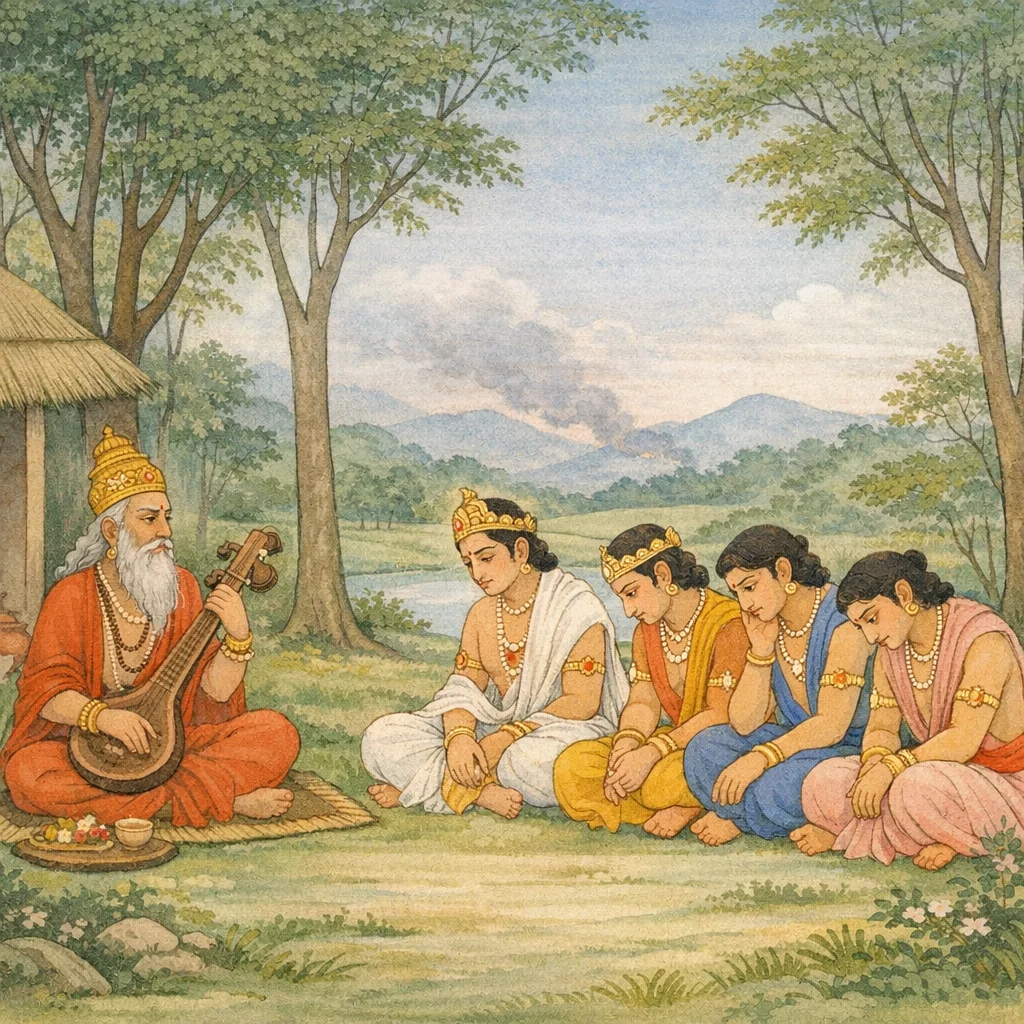
Janamejaya asks about the Pāṇḍavas’ forest residence alongside Dhṛtarāṣṭra, Gāndhārī, and Kuntī, including duration and provisions. Vaiśaṃpāyana reports that, with Dhṛtarāṣṭra’s permission, the Pāṇḍavas dwell for a month in the forest āśrama with attendants, enjoying permitted food and rest. Vyāsa arrives, and other sages and gandharvas (including Nārada, Parvata, Devala, Viśvāvasu, Tumburu, and Citraseṇa) assemble; Yudhiṣṭhira performs proper honors. After elevated discourse, Vyāsa states he knows the grief in Dhṛtarāṣṭra’s heart—also that of Gāndhārī, Kuntī, Draupadī, and Subhadrā—and declares he has come to remove doubt. Displaying ascetic potency, Vyāsa offers to grant a desired boon. Dhṛtarāṣṭra responds with reverence, stating that the sages’ presence purifies him and lessens fear of the afterlife, yet his mind remains scorched by remembrance of his son’s misconduct and the destruction it caused: the deception of the blameless Pāṇḍavas, the deaths of many kings, and the fall of revered elders such as Bhīṣma and Droṇa. He asks, in essence, about the post-mortem fate (gati) of those slain—both allies who died for friendship and his own sons and grandsons—because unresolved sorrow prevents peace.
Chapter Arc: दीर्घकाल बाद देवर्षि नारद का आगमन होता है; युधिष्ठिर उन्हें आदरपूर्वक पूजकर आसन देते हैं और कुशल-क्षेम पूछते हैं—पर भीतर ही भीतर आशंका काँपती है कि वनवासी वृद्धों का समाचार क्या होगा। → नारद धृतराष्ट्र, गान्धारी और कुन्ती के तपोवन-जीवन तथा कठोर तपस्या का वृत्तान्त सुनाते हैं—वैराग्य, व्रत और वन की निष्ठुरता के बीच यह संकेत गहराता जाता है कि उनका अंत निकट और असाधारण रहा होगा। → नारद निर्णायक समाचार देते हैं: धृतराष्ट्र, गान्धारी और कुन्ती—तीनों ने स्वयं अग्नि-संयोग प्राप्त किया; दावानल/अग्नि में उनका देहांत हुआ। यह सुनते ही पाण्डवों और अंतःपुर में महान् शोक और आर्तनाद उठता है। → युधिष्ठिर और पाण्डव शोक में डूबते हुए भी ऋषि-वचन से यह समझते हैं कि वृद्धों का अंत तपोबल और संन्यास-धर्म के अनुरूप हुआ; नगर और परिवार में शोक-प्रसार का वर्णन अध्याय को शांत, भारी विराम देता है। → शोक के बाद आगे क्या कर्तव्य—श्राद्ध, प्रायश्चित्त, और पाण्डवों का अगला निर्णय—इस प्रश्न के साथ कथा अगले अध्याय की ओर धकेलती है।
Shlokas
Verse 1
न२््च्स््््तसाि्य्सि हु £:-/शप्ट (नारदागमनपर्व) सप्तत्रिशो<ध्याय: नारदजीसे धृतराष्ट्र आदिके दावानलमें दग्ध हो जानेका हाल जानकर युधिष्ठिर आदिका शोक करना वैशम्पायन उवाच द्विवर्षोपनिवृत्तेषु पाण्डवेषु यदृच्छया । देवर्षिनरिदो राजन्नाजगाम युधिष्ठिरम्,वैशम्पायनजी कहते हैं--जनमेजय! पाण्डवोंको तपोवनसे आये जब दो वर्ष व्यतीत हो गये, तब एक दिन देवर्षि नारद दैवेच्छासे घूमते-घामते राजा युधिष्ठिरके यहाँ आ पहुँचे
Vaiśampāyana said: “O King (Janamejaya), when two years had passed since the Pāṇḍavas had returned (from the forest-āśrama life), the divine seer Nārada, wandering by chance, came to King Yudhiṣṭhira.”
Verse 2
तमभ्यर्च्य महाबाहु: कुरुराजो युधिष्ठिर: । आसीन परिविश्वुस्तं प्रोवाच वदतां वर:,महाबाहु कुरुराज युधिष्ठिरने नारदजीकी पूजा करके उन्हें आसनपर बिठाया। जब वे आसनपर बैठकर थोड़ी देर विश्राम कर चुके, तब वक्ताओंमें श्रेष्ठ युधिष्ठिरे उनसे इस प्रकार पूछा
The mighty-armed Kuru king Yudhiṣṭhira worshiped Nārada and seated him upon a proper seat. When Nārada had sat and rested for a moment, Yudhiṣṭhira—foremost among speakers—addressed him with this question.
Verse 3
चिरात्तु नानुपश्यामि भगवन्तमुपस्थितम् । कच्चित् ते कुशल विप्र शुभं वा प्रत्युपस्थितम्,“भगवन्! इधर दीर्घकालसे मैं आपकी उपस्थिति यहाँ नहीं देखता हूँ। ब्रह्म! कुशल तो है न? अथवा आपको शुभकी ही प्राप्ति होती है न?
“Revered sir, for a long time I have not seen you present here. O brāhmaṇa, are you well? Or has some auspicious good fortune come to you?”
Verse 4
के देशा: परिदृष्टास्ते कि च कार्य करोमि ते । तद् ब्रूहि द्विजमुख्य त्वं त्वं हुस्माकं परा गति:,“विप्रवर! इस समय आपने किन-किन देशोंका निरीक्षण किया है? बताइये मैं आपकी क्या सेवा करूँ? क्योंकि आप हमलोगोंकी परम गति हैं'
Vaiśampāyana said: “Which regions have you surveyed, and what service may I render to you? Tell me, O foremost of the twice-born; for you are indeed our highest refuge and guiding end.”
Verse 5
नारद उवाच चिरदृष्टोडसि मेत्येवमागतो5हं तपोवनात् । परिदृष्टानि तीर्थानि गड़ा चैव मया नूप,नारदजीने कहा--नरेश्वर! बहुत दिन पहले मैंने तुम्हें देखा था, इसीलिये मैं तपोवनसे सीधे यहाँ चला आ रहा हूँ। रास्तेमें मैंने बहुत-से तीर्थों और गड़ाजीका भी दर्शन किया है
Narada said: “It has been a long time since I last saw you; remembering this, I have come here straight from the forest of austerities. On the way, O king, I have visited many sacred fords, and I have also seen the mace.”
Verse 6
युधिछिर उवाच वदन्ति पुरुषा मेउद्य गड्जातीरनिवासिन: । धृतराष्ट्र महात्मानमास्थितं परमं तप:
Yudhiṣṭhira said: “Today, men who dwell along the banks of the Gaṅgā tell me that the great-souled Dhṛtarāṣṭra has undertaken the highest austerity.”
Verse 7
युधिष्ठिर बोले--भगवान्! गड्जाके किनारे रहनेवाले मनुष्य मेरे पास आकर कहा करते हैं कि महामनस्वी महाराज धुृतराष्ट्र इन दिनों बड़ी कठोर तपस्यामें लगे हुए हैं ।। अपि दृष्टस्त्वया तत्र कुशली स कुरूद्वह: । गान्धारी च पृथा चैव सूतपुत्रश्न संजय:,क्या आपने भी उन्हें देखा है? वे कुरुश्रेष्ठ वहाँ कुशलसे तो हैं न? गान्धारी, कुन्ती तथा सूतपुत्र संजय भी सकुशल हैं न?
Yudhiṣṭhira said: “Have you seen him there—Dhṛtarāṣṭra, the foremost of the Kurus? Is he well? And are Gāndhārī and Pṛthā (Kuntī) also safe and in good health, and Sañjaya, the son of a charioteer?”
Verse 8
कथं च वर्तते चाद्य पिता मम स पार्थिव: । श्रोतुमिच्छामि भगवन् यदि दृष्टस्त्वया नृप:,आजकल मेरे ताऊ राजा धुृतराष्ट्र कैसे रहते हैं? भगवन्! यदि आपने उन्हें देखा हो तो मैं उनका समाचार सुनना चाहता हूँ
Yudhiṣṭhira said: “And how, at present, does that king—my father—live? O venerable one, if you have seen the monarch, I wish to hear news of him.”
Verse 9
नारद उवाच स्थिरीभूय महाराज शृणु वृत्तं यथातथम् । यथा श्रुतं च दृष्टं च मया तस्मिंस्तपोवने,नारदजीने कहा--महाराज! मैंने उस तपोवनमें जो कुछ देखा और सुना है, वह सारा वृत्तान्त ठीक-ठीक बतला रहा हूँ। तुम स्थिरचित्त होकर सुनो
Narada said: “O great king, compose yourself and listen to the account exactly as it happened. I shall relate, from that forest of austerities, what I myself heard and what I myself saw.”
Verse 10
वनवासनिवृत्तेषु भवत्सु कुरुनन्दन । कुरुक्षेत्रात् पिता तुभ्यं गड़गाद्वारं ययौ नृप,कुरुकुलको आनन्दित करनेवाले नरेश! जब तुमलोग वनसे लौट आये, तब तुम्हारे बुद्धिमान् ताऊ राजा धुृतराष्ट्र गान्धारी, बहू कुन्ती, सूत संजय, अग्निहोत्र और पुरोहितके साथ कुरुक्षेत्रसे गड़ाद्वार (हरिद्वार)-को चले गये
Narada said: “O joy of the Kurus, when you had returned from your forest-dwelling, your father (the elder of your line) departed from Kurukṣetra for Gaṅgādvāra (Haridwar).”
Verse 11
गान्धार्या सहितो धीमान् वध्वा कुन्त्या समन्वित: । संजयेन च सूतेन साग्निहोत्र: सयाजक:,कुरुकुलको आनन्दित करनेवाले नरेश! जब तुमलोग वनसे लौट आये, तब तुम्हारे बुद्धिमान् ताऊ राजा धुृतराष्ट्र गान्धारी, बहू कुन्ती, सूत संजय, अग्निहोत्र और पुरोहितके साथ कुरुक्षेत्रसे गड़ाद्वार (हरिद्वार)-को चले गये
Narada said: “O king who brings joy to the Kuru line! When you all returned from the forest, your wise uncle King Dhritarashtra—accompanied by Gandhari, his daughter-in-law Kunti, the charioteer Sanjaya, and attended by the sacred Agnihotra and the officiating priest—set out from Kurukshetra toward Gadadvara (Haridwar).”
Verse 12
आततस्थे स तपस्तीव्रं पिता तव तपोधन: । वीटां मुखे समाधाय वायुभक्षो5भवन्मुनि:,वहाँ जाकर तपस्याके धनी तुम्हारे ताऊने कठोर तपस्या आरम्भ की। वे मुँहमें पत्थरका टुकड़ा रखकर वायुका आहार करते और मौन रहते थे
Nārada said: “There, your father—rich in ascetic power—undertook a severe austerity. Placing a small stone in his mouth, the sage lived only on air and maintained silence.”
Verse 13
वने स मुनिशि: सर्व: पूज्यमानो महातपा: । त्वगस्थिमात्रशेष: स षण्मासानभवन्नूप:,उस वनमें जितने ऋषि रहते थे, वे लोग उनका विशेष सम्मान करने लगे। महातपस्वी धृतराष्ट्रके शरीरपर चमड़ेसे ढकी हुई हड्डियोंका ढाँचामात्र रह गया था। उस अवस्थामें उन्होंने छः महीने व्यतीत किये
Nārada said: “In that forest, all the sages who dwelt there began to honor him with special reverence. The great ascetic Dhṛtarāṣṭra was reduced to little more than a framework of bones covered by skin; in that condition he passed six months.”
Verse 14
गान्धारी तु जलाहारी कुन्ती मासोपवासिनी । संजय: षष्ठभूक्तेन वर्तयामास भारत,भारत! गान्धारी केवल जल पीकर रहने लगीं। कुन्तीदेवी एक महीनेतक उपवास करके एक दिन भोजन करती थीं और संजय छठे समय अर्थात् दो दिन उपवास करके तीसरे दिन संध्याको आहार ग्रहण करते थे
Nārada said: Gāndhārī lived only on water. Kuntī observed a month-long fast, taking food only once after the month had passed. Sañjaya, O Bhārata, sustained himself by eating at the sixth interval—fasting for two days and taking his meal on the evening of the third. The passage highlights their austere discipline and deliberate restraint as a dharmic response to grief, renunciation, and the forest life of late years.
Verse 15
अग्नींस्तु याजकास्तत्र जुह॒वुर्विधिवत् प्रभो । दृश्यतो<दृश्यतश्वचैव वने तस्मिन् नृपस्य वै,प्रभो! राजा धृतराष्ट्र उस वनमें कभी दिखायी देते और कभी अदृश्य हो जाते थे। यज्ञ करानेवाले ब्राह्मण वहाँ उनके द्वारा स्थापित की हुई अग्निमें विधिवत् हवन करते रहते थे
O lord, there the Brahmin priests duly poured oblations into the sacred fires that the king had established. And in that forest, King Dhṛtarāṣṭra would at times be seen and at other times vanish from sight.
Verse 16
अनिकेतो5थ राजा स बभूव वनगोचर: । ते चापि सहिते देव्यौ संजयश्न तमन्वयु:
Then that king became without a fixed abode, moving about in the forest. The two queens also, together with Sañjaya, followed him—sharing his austere path and choosing fidelity to duty over the comforts of royal life.
Verse 17
अब राजाका कोई निश्चित स्थान नहीं रह गया। वे वनमें सब ओर विचरते रहते थे। गान्धारी और कुन्ती ये दोनों देवियाँ साथ रहकर राजाके पीछे-पीछे लगी रहती थीं। संजय भी उन्हींका अनुसरण करते थे ।। संजयो नृपतेर्नेता समेषु विषमेषु च । गान्धार्याश्व पृथा चैव चक्षुरासीदनिन्दिता,ऊँची-नीची भूमि आ जानेपर संजय ही राजा धृतराष्ट्रको चलाते थे और अनिन्दिता सती-साध्वी कुन्ती गान्धारीके लिये नेत्र बनी हुई थीं
Nārada said: Sañjaya served as the guide of the king, leading him alike on level ground and on uneven paths. And for Gāndhārī, Pṛthā (Kuntī)—the blameless, virtuous lady—became as eyes. Thus, in their forest life, the blind Dhṛtarāṣṭra was supported in movement by Sañjaya, while the blindfolded Gāndhārī was supported in sight by Kuntī—an image of mutual service, restraint, and dharma after the ruin of war.
Verse 18
ततः कदाचिद् गड़ाया: कच्छे स नृपसत्तम: | गड़ायामाप्लुतो धीमानाश्रमाभिमुखो5भवत्,तदनन्तर एक दिनकी बात है, बुद्धिमान् नृपश्रेष्ठ धृतराष्ट्रने गड़ाके कछारमें जाकर उनके जलमें डुबकी लगायी और स्नानके पश्चात् वे अपने आश्रमकी ओर चल पड़े
Then, on one occasion, that best of kings—wise Dhṛtarāṣṭra—went to the river Gaḍā’s sandy bank, immersed himself in its waters for a bath, and afterward set out again toward his forest hermitage. The scene underscores the king’s austere, disciplined life in retirement, marked by simplicity and self-restraint rather than royal comfort.
Verse 19
अथ वायु: समुद्भूतो दावाग्निरभवन्महान् | ददाह तद् वन सर्व परिगृह् समनन््ततः
Nārada said: Then a wind arose, and from it a great forest-fire sprang up. Enveloping the woodland on every side, it burned the entire forest—an ominous turn that shows how swiftly worldly supports are consumed when time and circumstance turn adverse.
Verse 20
इतनेहीमें वहाँ बड़े जोरकी हवा चली। जिससे उस वनमें बड़ी भारी दावाग्नि प्रज्वलित हो उठी। उसने चारों ओरसे उस सारे वनको जलाना आरम्भ किया ।। दहात्सु मगयूथेषु द्विजिल्दवेषु समन्ततः । वराहाणां च यूथेषु संश्रयत्सु जलाशयान्,सब ओर मृगोंके झुंड और सर्प दग्ध होने लगे। वनैले सूअर भाग-भागकर जलाशयोंकी शरण लेने लगे
Narada said: Just then a fierce wind began to blow there, and in that forest a terrible wildfire flared up. It started consuming the entire woodland from every side. As herds of deer and serpents were scorched all around, bands of wild boars, in panic, ran and ran, seeking refuge in the water-reservoirs—showing how swiftly unbridled forces can overwhelm all beings, and how, in calamity, even the strong flee to whatever shelter can be found.
Verse 21
समाविद्धे वने तस्मिन् प्राप्ते व्यसन उत्तमे । निराहारतया राजन् मन्दप्राणविचेष्टित:
Nārada said: “O King, when that forest was ablaze and the gravest calamity had come upon them, he—deprived of food—moved only with faint, failing breaths.”
Verse 22
ततः स नृपतिर्दूष्टवा वह्निमायान्तमन्तिकात्
Then the king, seeing the fire approaching close by, became alert to the grave turn of events—an ominous moment in which the consequences of past deeds and the inevitability of time press in upon even the mighty.
Verse 23
गच्छ संजय यत्राग्निर्न त्वां दहति करह्िचित्
Nārada said: “Go, Sañjaya, to that place where the fire will never burn you.” In the narrative, this is a protective instruction—directing Sañjaya toward a divinely safeguarded space, emphasizing that spiritual authority can grant refuge from physical peril and that obedience to wise counsel is itself dharmic conduct.
Verse 24
तमुवाच किलोद्विग्न: संजयो वदतां वर:,तब वक्ताओंमें श्रेष्ठ संजयने अत्यन्त उद्विग्न होकर कहा--“राजन्! इस लौकिक अग्निसे आपकी मृत्यु होना ठीक नहीं है, (आपके शरीरका दाह-संस्कार तो आहवनीय अग्निमें होना चाहिये।) किंतु इस समय इस दावानलसे छुटकारा पानेका कोई उपाय भी मुझे नहीं दिखायी देता
Nārada said: Then Sañjaya—foremost among speakers—deeply shaken, addressed the king: “O King, it is not fitting that you should meet your end by this ordinary, worldly fire; your cremation ought to be in the consecrated āhavanīya fire. Yet at this moment I see no means at all to escape this raging forest-conflagration.”
Verse 25
राजन मृत्युरनिष्टोडयं भविता ते वृथाग्निना । न चोपायं प्रपश्यामि मोक्षणे जातवेदस:,तब वक्ताओंमें श्रेष्ठ संजयने अत्यन्त उद्विग्न होकर कहा--“राजन्! इस लौकिक अग्निसे आपकी मृत्यु होना ठीक नहीं है, (आपके शरीरका दाह-संस्कार तो आहवनीय अग्निमें होना चाहिये।) किंतु इस समय इस दावानलसे छुटकारा पानेका कोई उपाय भी मुझे नहीं दिखायी देता
Nārada said: “O King, it would be unfitting for you to meet death by this mere forest-fire. Yet I do not see any means of escape from this blazing fire (Jātavedas).”
Verse 26
यदत्रानन्तरं कार्य तद् भवान् वक्तुमर्हति । इत्युक्त: संजयेनेदं पुनराह स पार्थिव:,“अब इसके बाद क्या करना चाहिये--यह बतानेकी कृपा करें।” संजयके ऐसा कहनेपर राजाने फिर कहा--
“What should be done next in this matter—please be so kind as to tell.” When Saṃjaya spoke thus, the king again replied. The exchange underscores a dharmic posture of seeking right guidance before acting, placing deliberation and counsel ahead of impulse.
Verse 27
नैष मृत्युरनिष्टो नो निःसृतानां गृहात् स्वयम् । जलमग्निस्तथा वायुरथवापि विकर्षणम्
Nārada said: “For us who have of our own accord gone forth from the household life, this kind of death is not to be regarded as undesirable. Whether it comes through water, through fire, through wind, or even by being dragged away—none of these ends is blameworthy for those who have renounced and are steadfast in their chosen path.”
Verse 28
इत्युक्त्वा संजयं राजा समाधाय मनस्तथा
Having spoken thus, the king then composed his mind in steady resolve and turned his attention to Saṃjaya—signaling a deliberate, self-controlled transition from speech to purposeful action.
Verse 29
संजयस्तं तथा दृष्टवा प्रदक्षिणमथाकरोत्
Seeing him in that condition, Sañjaya reverently circumambulated him, performing the rite of respect that acknowledges spiritual and moral authority.
Verse 30
ऋषिपुत्रो मनीषी स राजा चक्रेडस्य तद् वच:
Nārada said: That wise king, the son of a sage, then spoke those words to Cakredasa, framing his counsel with discernment and royal responsibility.
Verse 31
5 कक पल ! श है कक 82 कं ै न - 4-7. 5४:६<८६८७०७ 7240. 8 क ध पलक बुत 3 7/ है” के पु /ट 6 / >> गान्धारी च महाभागा जननी च पृथा तव,इसके बाद महाभागा गान्धारी, तुम्हारी माता कुन्ती तथा तुम्हारे ताऊ राजा धृतराष्ट्र-- ये तीनों ही दावाग्निमें जलकर भस्म हो गये; परंतु महामात्य संजय उस दावाग्निसे जीवित बच गये हैं
Nārada said: The noble Gāndhārī, your mother Pṛthā (Kuntī), and your elder Dhṛtarāṣṭra—these three were consumed and reduced to ashes in the forest conflagration. But Sañjaya, the great minister, survived that wildfire.
Verse 32
दावाग्निना समायुक्ते स च राजा पिता तव । संजयस्तु महामात्रस्तस्माद् दावादमुच्यत,इसके बाद महाभागा गान्धारी, तुम्हारी माता कुन्ती तथा तुम्हारे ताऊ राजा धृतराष्ट्र-- ये तीनों ही दावाग्निमें जलकर भस्म हो गये; परंतु महामात्य संजय उस दावाग्निसे जीवित बच गये हैं
When the forest fire raged, that king—your elder—was caught up in its flames; but Sañjaya, the great minister, was delivered from that conflagration.
Verse 33
गड्ाकूले मया दृष्टस्तापसै: परिवारित: । स तानामन्त्रय तेजस्वी निवेद्यैतच्च सर्वश:
Nārada said: “I saw him on the bank of the Gaḍā, surrounded by ascetics. That radiant one then took leave of them, and after fully communicating this entire matter, he proceeded accordingly.”
Verse 34
प्रययौ संजयो धीमान् हिमवन्तं महीधरम् | मैंने संजयको गंगातटपर तापसोंसे घिरा देखा है। बुद्धिमान् और तेजस्वी संजय तापसोंको यह सब समाचार बताकर उनसे विदा ले हिमालयपर्वतपर चले गये ।। ३३ $ ।। एवं स निधन प्राप्त: कुरुराजो महामना:
Nārada said: The wise Sañjaya set out for Himavān, the great mountain. Thus did the noble-minded king of the Kurus meet his end. The passage underscores the quiet aftermath of the great war: a faithful witness withdraws to the Himalayas, and even a mighty ruler’s life concludes—reminding that power and sovereignty are transient, while truthfulness, restraint, and renunciation endure.
Verse 35
गान्धारी च पृथा चैव जनन्यौ ते विशाम्पते । प्रजानाथ! इस प्रकार महामनस्वी कुरुराज धुृतराष्ट्र तथा तुम्हारी दोनों माताएँ गान्धारी और कुन्ती मृत्युको प्राप्त हो गयीं ।। ३४ $ ।। यदृच्छयानुव्रजता मया राज्ञ: कलेवरम्
Nārada said: “O lord of the people, O ruler among men, your two mothers—Gāndhārī and Pṛthā (Kuntī)—have also met with death. As I happened to be following along, I witnessed the king’s mortal remains.”
Verse 36
इस प्रकार श्रीमह्याभारत आश्रमवासिकपर्वके अन्तर्गत पृत्रदर्शनपर्वमें युधिष्ठिरका प्रत्यागगनविषयक छत्तीसवाँ अध्याय पूरा हुआ,ततस्तपोवने तस्मिन् समाजग्मुस्तपोधना:
Thus, in the Śrī Mahābhārata, within the Āśramavāsika Parva, in the section called the Pitṛdarśana Parva, the thirty-sixth chapter—concerning Yudhiṣṭhira’s return—comes to an end. Thereafter, in that forest of austerities, the ascetics rich in spiritual merit assembled together.
Verse 37
तत्राश्रौषमहं सर्वमेतत् पुरुषसत्तम,इति श्रीमहाभारते आश्रमवासिके पर्वणि नारदागमनपर्वणि दावाग्निना धृतराष्ट्रादिदाहे सप्तत्रिंशो5ध्याय:
There I heard all of this in full, O best of men. Thus, in the Śrī Mahābhārata, in the Āśramavāsika Parva, in the section concerning Nārada’s arrival, in the account of the forest-fire that burned Dhṛtarāṣṭra and the others, ends the thirty-seventh chapter.
Verse 38
न शोचिततव्यं राजेन्द्र स्वतः स पृथिवीपति:
Nārada said: “O best of kings, you should not grieve. That lord of the earth met his end by his own course of action (and destiny), not through any fault of yours.”
Verse 39
वैशम्पायन उवाच एतच्छुत्वा च सर्वेषां पाण्डवानां महात्मनाम्
Vaiśampāyana said: Having heard this, all the great-souled Pāṇḍavas were deeply moved; and the tale turns to their response, in the wake of the elders’ words and the demands of dharma in the forest-dwelling stage.
Verse 40
अन्तःपुराणां च तदा महानार्तस्वरो5भवत्
Vaiśampāyana said: And then, from within the royal women’s quarters, there arose a great cry of anguish—an outburst of grief that signaled the inner household’s sudden confrontation with suffering and loss.
Verse 41
अहो धिगिति राजा तु विक्रुश्य भृशदु:खित:
Vaiśampāyana said: “Alas! Fie upon it!”—thus the king cried out, wailing in anguish, overwhelmed by intense sorrow. The utterance conveys moral revulsion and self-reproach, a moment where grief turns into an ethical judgment upon what has occurred.
Verse 42
ऊर्ध्वबाहु: स्मरन् मातु: प्ररुरोद युधिष्ठिर: । “अहो! धिक््कार है!' इस प्रकार अपनी निन्दा करके राजा युधिष्ठिर बहुत दुःखी हो गये तथा दोनों भुजाएँ ऊपर उठाकर अपनी माताको याद करके फूट-फूटकर रोने लगे ।। ४१६ || भीमसेनपुरोगाश्च भ्रातर: सर्व एव ते,भीमसेन आदि सभी भाई रोने लगे। महाराज! कुन्तीकी वैसी दशा सुनकर अन्तःपुरमें भी रोने-बिलखनेका महान् शब्द सुनायी देने लगा
Vaiśampāyana said: Remembering his mother, King Yudhiṣṭhira raised his arms aloft and burst into loud weeping. Crying out in self-reproach—“Alas, shame upon me!”—he was overwhelmed with grief. Seeing this, all his brothers, led by Bhīmasena, also began to weep. And, O King, when Kuntī’s condition was heard of, a great sound of lamentation arose even from within the inner apartments.
Verse 43
अन्त:पुरेषु च तदा सुमहान् रुदितस्वन: । प्रादुरासीन्महाराज पृथां श्रुत्वा तथागताम्,भीमसेन आदि सभी भाई रोने लगे। महाराज! कुन्तीकी वैसी दशा सुनकर अन्तःपुरमें भी रोने-बिलखनेका महान् शब्द सुनायी देने लगा
Vaiśampāyana said: “Then, O great king, a very loud sound of weeping arose within the inner apartments. Hearing of Pṛthā (Kuntī) having come to such a state, the palace women too broke into lamentation.”
Verse 44
तं च वृद्ध तथा दग्धं हतपुत्र॑ं नराधिपम् । अन्वशोचन्त ते सर्वे गान्धारीं च तपस्विनीम्,पुत्रहीन बूढ़े राजा धृतराष्ट्र तथा तपस्विनी गान्धारी-देवीको इस प्रकार दग्ध हुई सुनकर सब लोग बारंबार शोक करने लगे
Vaiśampāyana said: Hearing that the aged king—bereft of his sons—had been burned, and that the ascetic queen Gāndhārī too had perished in the fire, all those present repeatedly lamented for them.
Verse 45
तस्मिन्नुपरते शब्दे मुहूर्तादिव भारत । निगृहा बाष्पं धैर्येण धर्मराजो5ब्रवीदिदम्,भरतनन्दन! दो घड़ी बाद जब रोने-धोनेकी आवाज बंद हुई, तब धर्मराज युधिष्ठिर धैर्यपूर्वक अपने आँसू पोंछकर नारदजीसे इस प्रकार कहने लगे
When that sound of lamentation had subsided, O Bhārata, after about a moment, King Dharmarāja—restraining his tears with steadfast composure—spoke these words.
Verse 216
असमर्थो5पसरणे सुकृशे मातरौ च ते । राजन्! सारा वन आगसे घिर गया और उन लोगोंपर बड़ा भारी संकट आ गया। उपवास करनेसे प्राणशक्ति क्षीण हो जानेके कारण राजा धृतराष्ट्र वहाँसे भागनेमें असमर्थ थे, तुम्हारी दोनों माताएँ भी अत्यन्त दुर्बल हो गयी थीं; अतः वे भी भागनेमें असमर्थ थीं
Nārada said: “O King, he was unable to flee; and your two mothers too, being extremely emaciated, could not withdraw. Their strength had been drained by fasting, and when a grave calamity arose in the forest, they were left without the power to escape.”
Verse 226
इदमाह तत: सूतं संजयं जयतां वर: । तदनन्तर विजयी पुरुषोंमें श्रेष्ठ राजा धृतराष्ट्रने उस अग्निको निकट आती जान सूत संजयसे इस प्रकार कहा--
Nārada said: Then the foremost among the victorious addressed Sūta Sañjaya. After that, King Dhṛtarāṣṭra—best among men—perceiving the fire drawing near, spoke to Sañjaya in these words.
Verse 236
वयमत्राग्निना युक्ता गमिष्याम: परां गतिम् । “संजय! तुम किसी ऐसे स्थानमें भाग जाओ, जहाँ यह दावाग्नि तुम्हें कदापि जला न सके। हमलोग तो अब यहीं अपनेको अग्निमें होम कर परम गति प्राप्त करेंगे”
Nārada said: “Here we are resolved to unite ourselves with the fire and depart to the highest state. Sanjaya, you should flee to some place where this forest-conflagration can never burn you. As for us, we shall offer ourselves into the fire here and attain the supreme goal.”
Verse 273
तापसानां प्रशस्यन्ते गच्छ संजय मा चिरम् | “संजय! हमलोग स्वयं गृहस्थाश्रमका परित्याग करके चले आये हैं, अतः हमारे लिये इस तरहकी मृत्यु अनिष्टकारक नहीं हो सकती। जल, अग्नि तथा वायुके संयोगसे अथवा उपवास करके प्राण त्यागना तपस्वियोंके लिये प्रशंसनीय माना गया है; इसलिये अब तुम शीघ्र यहाँसे चले जाओ। विलम्ब न करो”
Nārada said: “For ascetics, such ways of relinquishing life are held to be praiseworthy. Therefore, Saṃjaya, depart from here at once—do not delay.”
Verse 283
प्राडमुख: सह गान्धार्या कुन्त्या चोपाविशत् तदा । संजयसे ऐसा कहकर राजा धृतराष्ट्रने मनको एकाग्र किया और गान्धारी तथा कुन्तीके साथ वे पूर्वांभिमुख होकर बैठ गये
Nārada said: Then King Dhṛtarāṣṭra, having steadied and focused his mind after addressing Sañjaya, sat down facing east together with Gāndhārī and Kuntī.
Verse 293
उवाच चैनं मेधावी युड्क्ष्वात्मानमिति प्रभो । उन्हें उस अवस्थामें देख मेधावी संजयने उनकी परिक्रमा की और कहा--“महाराज! अब अपनेको योगयुक्त कीजिये
Nārada said: Seeing him in that condition, the wise Sañjaya respectfully circumambulated him and said, “O lord, yoke your own self—compose your mind in Yoga.”
Verse 306
सन्निरुध्येन्द्रियग्राममासीत् काष्ठोपमस्तदा । महर्षि व्यासके पुत्र मनीषी राजा धृतराष्ट्रने संजयकी वह बात मान ली। वे इन्द्रियसमुदायको रोककर काष्ठकी भाँति निश्वेष्ट हो गये
Nārada said: “Then, having restrained the entire host of his senses, the wise King Dhṛtarāṣṭra became motionless—like a piece of wood. Thus he accepted Sañjaya’s counsel and entered disciplined self-control.”
Verse 353
तयोश्व देव्योरुभयोर्मया दृष्टानि भारत । भरतनन्दन! वनमें घूमते समय अकस्मात् राजा धृतराष्ट्र तथा उन देवियोंके मृत शरीर मेरी दृष्टिमें पड़े थे
Nārada said: “O Bhārata, O joy of the Bharatas—while I was wandering in the forest, I suddenly came upon the dead bodies of King Dhṛtarāṣṭra and of both those noble ladies. They fell before my eyes unexpectedly.”
Verse 363
श्र॒त्वा राज्ञस्तदा निष्ठां न त्वशोचन् गतीश्व ते । तदनन्तर राजाकी मृत्युका समाचार सुनकर बहुत-से तपोधन उस तपोवनमें आये। उन्होंने उनके लिये कोई शोक नहीं किया; क्योंकि उन तीनोंकी सदगतिके विषयमें उनके मनमें संशय नहीं था
Nārada said: Hearing of the king’s steadfast end, those sages did not grieve for him, for they were certain of his blessed destiny. Thereafter, on hearing the news of the king’s death, many ascetics rich in austerity came to that hermitage-grove. They did not lament for the departed, because no doubt remained in their minds regarding the good course attained by those three.
Verse 373
यथा च नृपतिर्दग्धो देव्यौ ते चेति पाण्डव । पुरुषप्रवर पाण्डव! जिस प्रकार राजा धृतराष्ट्र तथा उन दोनों देवियोंका दाह हुआ है, यह सारा समाचार मैंने वहीं सुना था
Nārada said: “O Pāṇḍava, foremost among men—just as the king was burned, and those two royal ladies as well—this entire account of how King Dhṛtarāṣṭra and the two queens met their end in the fire, I heard there itself. I report it to you as reliable testimony, so that you may accept the event with steadiness and discernment, without being shaken by grief.”
Verse 383
प्राप्तवानग्निसंयोगं गान्धारी जननी च ते । राजेन्द्र! राजा धृतराष्ट्र गान्धारी और तुम्हारी माता कुन्ती--तीनोंने स्वतः अग्निसंयोग प्राप्त किया था; अतः उनके लिये तुम्हें शोक नहीं करना चाहिये
Nārada said: “Gāndhārī and your mother have attained union with fire. O best of kings, King Dhṛtarāṣṭra, Gāndhārī, and your mother Kuntī—these three entered the fire of their own accord. Therefore you should not grieve for them.”
Verse 393
निर्याणं धृतराष्ट्स्य शोक: समभवन्महान् | वैशम्पायनजी कहते हैं--जनमेजय! राजा धृतराष्ट्रका यह परलोकगमनका समाचार सुनकर उन सभी महामना पाण्डवोंको बड़ा शोक हुआ
Vaiśampāyana said: “O Janamejaya, when the news was heard that King Dhṛtarāṣṭra had departed for the next world, a great sorrow arose. All those noble-minded Pāṇḍavas were overwhelmed with deep grief.”
Verse 403
पौराणां च महाराज श्रुत्वा राज्ञस्तदा गतिम् । महाराज! उनके अन्तःपुरमें उस समय महान् आर्तनाद होने लगा। राजाकी वैसी गति सुनकर पुरवासियोंमें भी हाहाकार मच गया
Vaiśampāyana said: “O great king, when the townspeople heard of the king’s fate at that time, a great wail arose—first within the royal inner apartments, and then a cry of lamentation spread among the citizens as well.”
Frequently Asked Questions
Dhṛtarāṣṭra confronts the dilemma of irreparable consequence: how to live with responsibility for a chain of harms initiated by attachment to his son, and whether knowledge of the dead’s gati can ethically relieve grief without denying culpability.
The chapter frames legitimate consolation as truth-oriented: purification comes through respectful association with ethical authorities, honest articulation of remorse, and inquiry into dharma/karma rather than through self-justifying narratives of victory or lineage.
No explicit phalaśruti is stated here; the meta-function is narrative and doctrinal—positioning Vyāsa’s tapas-backed boon as the mechanism by which doubt about death, destiny, and moral residue will be addressed in the ensuing discourse.