Adhyaya 173
कल्माषपाद-शाप-कारणम् (Cause of Kalmāṣapāda’s Niyoga under a Curse)
Upa-parva: Sambhava Parva (Genealogical-Exempla Cycle: Kalmāṣapāda–Vasiṣṭha Episode)
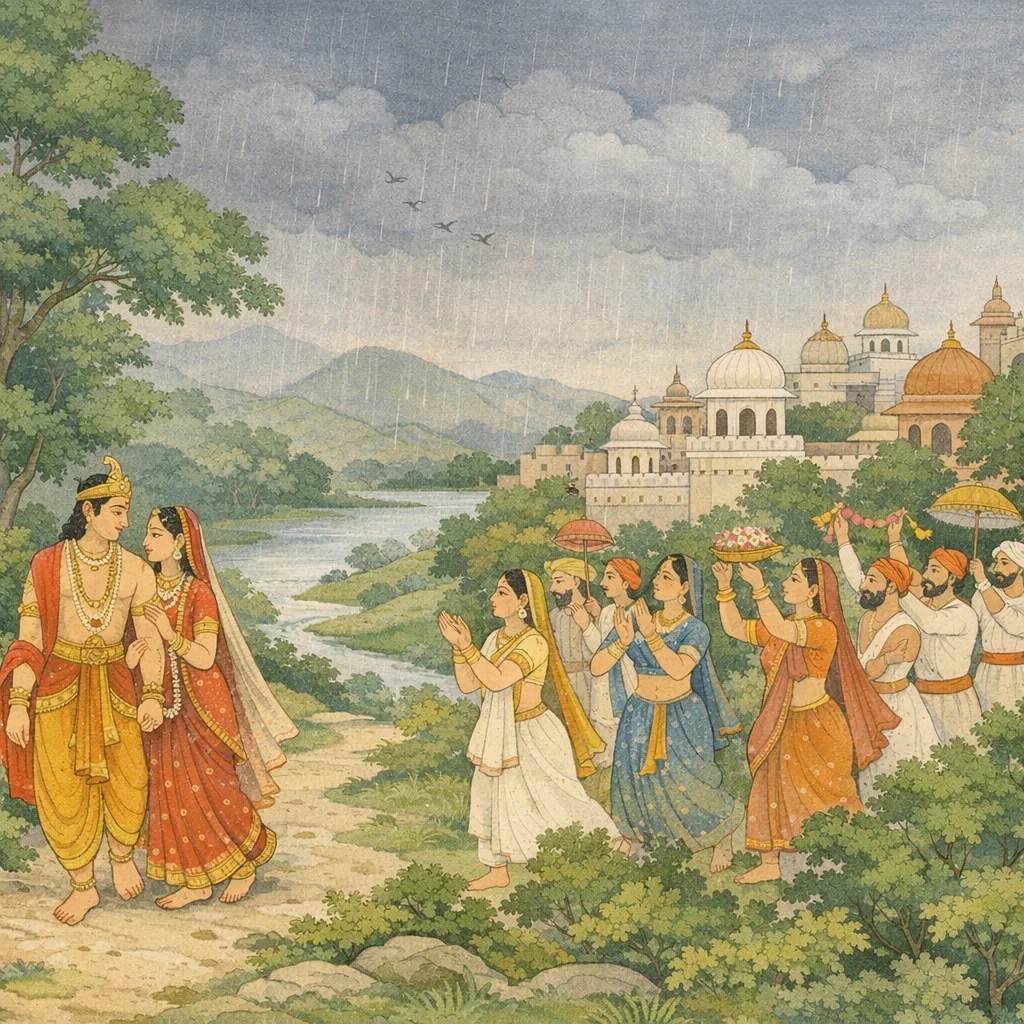
Arjuna asks why King Kalmāṣapāda, despite knowing dharma, caused his wife to be appointed to Ṛṣi Vasiṣṭha, and why Vasiṣṭha engaged in an otherwise prohibited approach (agamyāgamanam) (1–2). A Gandharva replies by recounting the king’s earlier curse context and subsequent conduct: the curse renders the king wrathful and restless, driving him with his queen into a frightening forest (3–7). There, hungry and searching for prey, he encounters a Brahmin couple engaged in lawful conjugal union near a forest stream; when they flee, the king forcibly seizes the Brahmin husband (8–9). The Brahmin wife appeals to the king’s lineage and reputation for dharma and guru-service, warning that even under a curse he should not commit wrongdoing, and notes the ṛtu context and her desire for offspring (10–13). The king nevertheless consumes the Brahmin like a predator (14). Her grief and anger manifest as a destructive fire-like force, and she curses the king: upon approaching his own wife during her ṛtu, he will immediately lose his life (15–18). She further declares that since he destroyed Vasiṣṭha’s sons, his wife will bear a lineage-continuing son through union with Vasiṣṭha (19). After uttering the curse, she enters fire (20). Vasiṣṭha, through knowledge and tapas, witnesses these events (21). Later, when the king is freed from the earlier curse and attempts conjugal approach, Queen Madayantī restrains him; only then does he recall the Brahmin woman’s curse and suffer remorse (22–23). The Gandharva concludes that this is the reason the king appointed Vasiṣṭha for niyoga with his wife—an expedient shaped by curse-imposed constraint and dynastic necessity (24).
Chapter Arc: गन्धर्व जनमेजय/अर्जुन-श्रवणकर्ता को बताता है कि सूर्यकन्या तपती और राजा संवरण का अद्भुत संयोग कैसे हुआ—और कैसे एक राजा अचानक वन में लुप्त-सा हो गया। → संवरण तपती-विरह/आकर्षण में राज्य-कर्तव्य से कटकर महावन में जा पड़ता है। मंत्री-सेना उसे खोजते हैं और उसे पृथ्वी पर गिरा हुआ, तेजहीन-सा पाते हैं—मानो समय पाकर गिरा हुआ इन्द्रध्वज। उधर प्रजा भूख-भय से व्याकुल होकर घर-बार छोड़ दिशाओं में भटकने लगती है; राज्य पर अनावृष्टि और अव्यवस्था का संकट छा जाता है। → वसिष्ठ (राजपुरोहित) की सहायता से संवरण को तपती की प्राप्ति होती है; तपती सहित राजा का नगर में पुनः प्रवेश होते ही सहस्राक्ष इन्द्र प्रसन्न होकर वर्षा करता है और सस्य-समृद्धि लौट आती है—राज्य का भाग्य एक क्षण में पलट जाता है। → तपती-सम्वरण का विवाह/संयोग स्थिर होता है; राज्य-व्यवस्था पुनर्स्थापित होती है। तपती के गर्भ से कुरु का जन्म होता है—जिससे कुरुवंश की वंश-रेखा और ‘तापत्य’ परंपरा का आधार स्थापित होता है।
Shlokas
Verse 1
है अर छा | अ-क्राछ द्विसप्तत्याधिकशततमो< ध्याय: वसिष्ठदजीकी सहायतासे राजा संवरणको तपतीकी प्राप्ति गन्धर्व उवाच एवमुक्त्वा ततस्तूर्ण जगामोर्ध्वमनिन्दिता । सतु राजा पुनर्भूमौ तत्रैव निपपात ह,गन्धर्व कहता है--अर्जुन! यों कहकर वह अनिन्द्यसुन्दी तपती तत्काल ऊपर (आकाशमें) चली गयी और वे राजा संवरण फिर वहीं (मूर्च्छिंत हो) पृथ्वीपर गिर पड़े
The Gandharva said: “Having spoken thus, the blameless Tapati swiftly rose upward into the sky. King Saṃvaraṇa, left behind on the earth, collapsed there again, overcome and senseless.”
Verse 2
अन्वेषमाण: सबलस्तं राजानं नृपोत्तमम् | अमात्य: सानुयात्रश्न तं ददर्श महावने,इधर उनके मन्त्री सेना और अनुचरोंको साथ लिये उन श्रेष्ठ नरेशको खोजते हुए आ रहे थे। उस महान् वनमें पहुँचकर मन्त्रीने राजाको देखा
Searching for that best of kings, the minister—accompanied by troops and attendants—came upon him in the great forest.
Verse 3
क्षितौ निपतितं काले शक्रध्वजमिवोच्छितम् । तं हि दृष्टवा महेष्वासं निरस्तं पतितं भुवि,वे समय पाकर गिरे हुए ऊँचे इन्द्रध्वजकी भाँति पृथ्वीपर पड़े थे। तपतीसे विमुक्त उन महान् धनुर्धर महाराजको इस प्रकार पृथ्वीपर पड़ा देख राजमन्त्री ऐसे व्याकुल हो उठे मानो उनके शरीरमें आग लग गयी हो। वे तुरंत उनके पास जा पहुँचे। स्नेहवश उनके हृदयमें घबराहट पैदा हो गयी थी
He lay fallen upon the earth, like Indra’s lofty banner brought down in due time. Seeing that great archer cast aside and lying on the ground, the onlookers were shaken with anguish, as if their very bodies had caught fire, and they hurried toward him, their hearts trembling with affectionate concern.
Verse 4
बभूव सो<स्य सचिव: सम्प्रदीप्त इवाग्निना । त्वरया चोपसंगम्य स्नेहादागतसम्भ्रम:,वे समय पाकर गिरे हुए ऊँचे इन्द्रध्वजकी भाँति पृथ्वीपर पड़े थे। तपतीसे विमुक्त उन महान् धनुर्धर महाराजको इस प्रकार पृथ्वीपर पड़ा देख राजमन्त्री ऐसे व्याकुल हो उठे मानो उनके शरीरमें आग लग गयी हो। वे तुरंत उनके पास जा पहुँचे। स्नेहवश उनके हृदयमें घबराहट पैदा हो गयी थी
His minister became as if set ablaze by fire. Hastening at once, he went up to him; out of affection his heart was seized by anxious agitation on seeing the great bow-bearing king lying fallen upon the earth—like a lofty Indra-banner toppled down in due course.
Verse 5
त॑ समुत्थापयामास नृपतिं काममोहितम् | भूतलाद भूमिपालेशं पितेव पतितं सुतम्,राजमन्त्री अवस्थामें तो बड़े-बूढ़े थे ही, बुद्धि, कीर्ति और नीतिमें भी बढ़े-चढ़े थे। उन्होंने जैसे पिता अपने गिरे हुए पुत्रको धरतीसे उठा ले, उसी प्रकार कामवेदनासे मूर्च्छित हुए भूमिपालोंके भी स्वामी महाराज संवरणको शीतघ्रतापूर्वक पृथ्वीपरसे उठा लिया। राजाको उठाकर और उन्हें जीवित पाकर उनकी चिन्ता दूर हो गयी
The Gandharva raised up the king, who had been deluded by desire. Lifting the lord of the earth from the ground, he did so as a father would lift up his own fallen son—restoring him from his swoon of passion and relieving the anxious concern of those around him.
Verse 6
प्रज्ञया वयसा चैव वृद्धः कीर्त्या नयेन च । अमात्यस्तं समुत्थाप्य बभूव विगतज्वर:,राजमन्त्री अवस्थामें तो बड़े-बूढ़े थे ही, बुद्धि, कीर्ति और नीतिमें भी बढ़े-चढ़े थे। उन्होंने जैसे पिता अपने गिरे हुए पुत्रको धरतीसे उठा ले, उसी प्रकार कामवेदनासे मूर्च्छित हुए भूमिपालोंके भी स्वामी महाराज संवरणको शीतघ्रतापूर्वक पृथ्वीपरसे उठा लिया। राजाको उठाकर और उन्हें जीवित पाकर उनकी चिन्ता दूर हो गयी
The minister—mature in years, and eminent in wisdom, reputation, and statecraft—raised the king up. Having lifted him, the minister’s feverish anxiety subsided, for the ruler had been restored.
Verse 7
उवाच चैनं कल्याण्या वाचा मधुरयोत्थितम् । मा भैर्मनुजशार्दूल भद्गरमस्तु तवानघ,वे उठकर बैठे हुए महाराजसे कल्याणमयी मधुर वाणीमें बोले--“नरश्रेष्ठ। आप डरें नहीं। अनघ! आपका कल्याण हो”
The Gandharva addressed him in a gentle, auspicious, and sweet voice as he rose: “Do not be afraid, tiger among men. O sinless one, may good fortune be yours.”
Verse 8
क्षुत्पिपासापरिश्रान्तं तर्कयामास वै नृपम् । पतितं पातनं संख्ये शात्रवाणां महीतले,युद्धमें शत्रुदलको पृथ्वीपर गिरा देनेवाले नरेशको भूमिपर गिरा देख मन्त्रीने यह अनुमान लगाया कि ये भूख-प्याससे पीड़ित एवं थके-माँदे हैं
Seeing the king lying fallen upon the earth—he who in battle had cast down the ranks of enemies—the Gandharva inferred that the ruler was now spent, worn out by hunger and thirst. Thus the verse teaches that even the mighty are brought low by bodily need, and that careful observation yields a humane, ethically mindful judgment rather than contempt for a fallen foe.
Verse 9
वारिणा च सुशीतेन शिरस्तस्याभ्यषेचयत् । अस्फुटन्मुकुटं राज्ञ: पुण्डरीकसुगन्धिना,गिरनेपर राजाका मुकुट छिन्न-भिन्न नहीं हुआ था (इससे अनुमान होता था कि राजा युद्धमें घायल नहीं हुए हैं)। मन्त्रीने राजाके मस्तकको कमलकी सुगन्धसे युक्त ठंडे जलसे सींचा
The Gandharva said: “He sprinkled the king’s head with very cool water, fragrant with the scent of lotus. The king’s diadem was neither cracked nor shattered—showing that he had not been wounded in battle.”
Verse 10
ततः प्रत्यागतप्राणस्तद् बल॑ बलवान् नृपः । सर्व विसर्जयामास तमेकं॑ सचिवं विना,उससे राजाको चेत हो आया। बलवान नरेशने एकमात्र अपने मन्त्रीके सिवा सारी सेनाको लौटा दिया
Then the king, his life-breath and composure restored, dismissed that entire force. Though powerful, he sent everyone back—keeping only a single minister with him—hinting at a deliberate turn from public display of might to restrained action guided by counsel.
Verse 11
ततस्तस्याज्ञया राज्ञो विप्रतस्थे महद् बलम् | स तु राजा गिरिप्रस्थे तस्मिन् पुनरुपाविशत्,महाराजकी आज्ञासे तुरंत वह विशाल सेना राजधानीकी ओर चल दी; परंतु वे राजा संवरण फिर उसी पर्वत-शिखरपर जा बैठे
Then, at the king’s command, a great army set out at once. But King Saṃvaraṇa himself returned again to that same mountain-peak at Giriprastha and sat there, withdrawing from the bustle of the capital—hinting at an inward struggle between outward power and inward resolve.
Verse 12
ततस्तस्मिन् गिरिवरे शुचिर्भूत्वा कृताउ्जलि: । आरिराधयिषु: सूर्य तस्थावूर्ध्वमुख: क्षितौ,तदनन्तर उस श्रेष्ठ पर्वतपर स्नानादिसे पवित्र हो भगवान् सूर्यकी आराधना करनेके लिये हाथ जोड़ ऊपरकी ओर मुँह किये वे भूमिपर खड़े हो गये
Then, on that excellent mountain, having purified himself through bathing and the proper rites, he stood upon the ground with hands joined in reverence, his face lifted upward, intent on worshipping Sūrya, the Sun. The scene underscores disciplined devotion—purification, humility, and focused prayer before seeking divine aid.
Verse 13
जगाम मनसा चैव वसिष्ठमृषिसत्तमम् | पुरोहितममित्रघ्नस्तदा संवरणो नृप:,उस समय शत्रुओंका नाश करनेवाले राजा संवरणने अपने पुरोहित मुनिवर वसिष्ठका मन-ही-मन स्मरण किया
Then King Saṃvaraṇa, famed as a destroyer of foes, turned in his mind to Vasiṣṭha—the foremost of sages—his royal priest.
Verse 14
नक्तं दिनमथैकत्र स्थिते तस्मिउजनाधिपे । अथाजगाम विप्रर्षिस्तदा द्वादशमे5हनि,वे रात-दिन एक ही जगह खड़े होकर तपस्यामें लगे रहे। तब बारहवें दिन महर्षि वसिष्ठका (वहाँ) शुभागमन हुआ
That lord of men remained standing in one place, observing austerity through both night and day. Then, on the twelfth day, the brahmin-sage Vasiṣṭha arrived there, his coming deemed auspicious.
Verse 15
स विदित्वैव नृपतिं तपत्या हृतमानसम् | दिव्येन विधिना ज्ञात्वा भावितात्मा महानृषि:,विशुद्ध अन्तःकरणवाले महर्षि वसिष्ठ दिव्यज्ञानसे पहले ही जान गये कि सूर्यकन्या तपतीने राजाका चित्त चुरा लिया है
The great sage, whose inner being was purified and disciplined, already knew—by divine insight and method—that the king’s mind had been captivated by Tapatī, the daughter of the Sun.
Verse 16
तथा तु नियतात्मानं त॑ नृपं मुनिसत्तम: | आबभाषे स धर्मात्मा तस्यैवार्थचिकीर्षया,इस प्रकार मन और इन्द्रियोंको संयममें रखकर तपस्यामें लगे हुए उक्त नरेशसे धर्मात्मा मुनिवर वसिष्ठने उन्हींकी कार्यसिद्धिके लिये कुछ बातचीत की
Seeing the king steadfast in self-restraint—his mind and senses disciplined and his austerity firmly undertaken—the foremost of sages, the righteous Vasiṣṭha, addressed him, intent only on helping him accomplish his rightful purpose.
Verse 17
स तस्य मनुजेन्द्रस्य पश्यतो भगवानृषि: । ऊर्ध्वमाचक्रमे द्रष्ट भास्करं भास्करद्युति:,उक्त महाराजके देखते-देखते सूर्यके समान तेजस्वी भगवान् वसिष्ठ मुनि सूर्यदेवसे मिलनेके लिये ऊपरको गये
As that lord of men looked on, the blessed seer—radiant like the Sun—rose upward to behold Bhāskara, the Sun-god.
Verse 18
सहस्रांशुं ततो विप्र: कृताञज्जलिरुपस्थित: । वसिष्ठो5हमिति प्रीत्या स चात्मानं न्यवेदयत्,ब्रह्मर्षि वसिष्ठ दोनों हाथ जोड़कर सहस्रों किरणोंसे सुशोभित भगवान् सूर्यदेवके समीप गये और 'मैं वसिष्ठ हूँ” यों कहकर उन्होंने बड़ी प्रसन्नतासे अपना समाचार निवेदित किया
Then the brahmin Vasiṣṭha, with hands joined in reverence, approached the Sun-god radiant with a thousand rays. With gladness he introduced himself, saying, “I am Vasiṣṭha,” and thus made his identity known.
Verse 19
(वसिष्ठ उवाच अजाय लोकत्रयपावनाय भूतात्मने गोपतये वृषाय । सूर्याय सर्गप्रलयालयाय नमो महाकारुणिकोत्तमाय ।। विवस्वते ज्ञानभृदन्तरात्मने जगत्प्रदीपाय जगद्धितैषिणे | स्वयम्भुवे दीप्तसहस्नचक्षुषे सुरोत्तमायामिततेजसे नम: ।। नम: सवित्रे जगदेकचक्षुषे जगत्प्रसूतिस्थितिनाशहेतवे । त्रयीमयाय त्रिगुणात्मधारिणे विरिज्चिनारायणशड्करात्मने ।।) फिर वसिष्ठजी बोले--जो अजन्मा, तीनों लोकोंको पवित्र करनेवाले, समस्त प्राणियोंके अन्तर्यामी, किरणोंके अधिपति, धर्मस्वरूप, सृष्टि और प्रलयके अधिष्ठान तथा परम दयालु देवताओंमें सर्वश्रेष्ठ हैं, उन भगवान् सूर्यको नमस्कार है। जो ज्ञानियोंके अन्तरात्मा, जगत्को प्रकाशित करनेवाले, संसारके हितैषी, स्वयम्भू तथा सहस्रों उद्दीप्त नेत्रोंसे सुशोभित हैं, उन अमिततेजस्वी सुरश्रेष्ठ भगवन् सूर्यको नमस्कार है। जो जगत्के एकमात्र नेत्र हैं, संसारकी सृष्टि, पालन और संहारके हेतु हैं, तीनों वेद जिनके स्वरूप हैं, जो त्रिगुणात्मक स्वरूप धारण करके ब्रह्मा, विष्णु और शिव नामसे प्रसिद्ध हैं, उन भगवान् सविताको नमस्कार है। तमुवाच महातेजा विवस्वान् मुनिसत्तमम् | महर्षे स्वागतं ते5स्तु कथयस्व यथेप्सितम्,तब महातेजस्वी भगवान् सूर्यने मुनिवर वसिष्ठसे कहा--“महर्षे! तुम्हारा स्वागत है! तुम्हारी जो अभिलाषा हो, उसे कहो
Vasiṣṭha said: “Salutations to the Sun—unborn, purifier of the three worlds, the inner Self of all beings, lord of the rays, the very form of righteousness, the ground in which creation and dissolution abide, and the most compassionate among the gods. Salutations to Vivasvān, the inner soul of the wise, the lamp of the universe, the well-wisher of the world, self-born, radiant with a thousand blazing eyes, the foremost of the celestials, of immeasurable splendor. Salutations to Savitṛ, the single eye of the world, the cause of the world’s birth, continuance, and destruction; whose essence is the three Vedas; who, bearing the nature of the three guṇas, is known as Brahmā, Viṣṇu (Nārāyaṇa), and Śiva (Śaṅkara).” Then the mighty Vivasvān addressed the best of sages, Vasiṣṭha: “Great seer, welcome to you. Speak whatever you desire.”
Verse 20
यदिच्छसि महाभाग मत्त: प्रवदतां वर । तत् ते दद्यामभिप्रेतं यद्यपि स्यात् सुदुष्करम्,“वक्ताओंमें श्रेष्ठ महाभाग! तुम मुझसे जो कुछ चाहते हो, तुम्हारी वह अभीष्ट वस्तु कितनी ही दुर्लभ क्यों न हो, तुम्हें अवश्य दूँगा
“O fortunate one, best among speakers, if you desire anything from me, speak it. I will grant you that wished-for boon, even if it be exceedingly difficult to obtain.”
Verse 21
(स्तुतो5स्मि वरदस्ते5हं वरं वरय सुव्रत । स्तुतिस्त्वयोक्ता भक्तानां जप्येयं वरदो<5स्म्यहम् ।।) “उत्तम व्रतका पालन करनेवाले महर्षे! तुमने जो मेरा स्तवन किया है, इसके लिये मैं तुम्हें वर देनेको उद्यत हूँ, कोई वर माँगो। तुम्हारे द्वारा कही हुई वह स्तुति भक्तोंके लिये निरन्तर जप करनेयोग्य है। मैं तुम्हें वर देना चाहता हूँ। एवमुक्त: स तेनर्षिवसिष्ठ: प्रत्यभाषत । प्रणिपत्य विवस्वन्तं भानुमन्तं महातपा:,उनके यों कहनेपर महातपस्वी मुनिवर वसिष्ठ मरीचि-माली भगवान् भास्करको प्रणाम करके इस प्रकार बोले
“I am praised, and I am ready to grant you a boon. O sage of excellent vows, choose whatever boon you desire. The hymn you have uttered is fit to be continually recited by devotees. I am indeed a giver of boons.” Thus addressed, the great ascetic Vasiṣṭha—having bowed down to the radiant Sun, Vivasvān—prepared to reply.
Verse 22
वसिष्ठ उवाच यैषा ते तपती नाम सावित्र्यवरजा सुता । तां त्वां संवरणस्यार्थे वरयामि विभावसो,वसिष्ठजीने कहा--विभावसो! यह जो आपकी तपती नामकी पुत्री एवं सावित्रीकी छोटी बहिन है, इसे मैं आपसे राजा संवरणके लिये माँगता हूँ
Vasiṣṭha said: “O Vibhāvasu, your daughter named Tapatī, the younger sister of Sāvitrī—her I ask of you, to be given in marriage to King Saṃvaraṇa.”
Verse 23
स हि राजा बृहत्कीर्तिर्थर्मार्थविदुदारधी: । युक्त: संवरणो भर्ता दुहितुस्ते विहंगम,उस राजाकी कीर्ति बहुत दूरतक फैली हुई है। वे धर्म और अर्थके ज्ञाता तथा उदार बुद्धिवाले हैं; अतः आकाशचारी सूर्यदेव! महाराज संवरण आपकी पुत्रीके लिये सुयोग्य पति होंगे
Vasiṣṭha said: “That king Saṃvaraṇa is renowned far and wide. He understands dharma and artha and is noble-minded. Therefore, O sky-ranging one (Sun-god), Saṃvaraṇa is a fitting husband for your daughter.”
Verse 24
इत्युक्त: स तदा तेन ददानीत्येव निश्चित: । प्रत्यभाषत त॑ विप्रं प्रतिनन्द्य दिवाकर:,वसिष्ठजीके यों कहनेपर अपनी कन्या देनेका निश्चय करके भगवान् सूर्यने ब्रह्मर्षिका अभिनन्दन किया और इस प्रकार कहा--
Thus addressed, the Sun-god (Divākara), having firmly resolved, “I shall give (my daughter),” welcomed the brahmarṣi and replied with words of honor.
Verse 25
वर: संवरणो राज्ञां त्वमृषीणां वरो मुने । तपती योषितां श्रेष्ठा किमन्न्यदपवर्जनात्,“मुने! संवरण राजाओंमें श्रेष्ठ हैं, आप महर्षियोंमें उत्तम हैं और तपती युवतियोंमें सर्वश्रेष्ठ है; अतः उसके दानसे श्रेष्ठ और क्या हो सकता है”
Vasiṣṭha said: “Saṃvaraṇa is the foremost among kings; you, O sage, are the foremost among seers; and Tapatī is the best among maidens. What gift could be greater than granting her in marriage?”
Verse 26
ततः सर्वानिवद्याज़ीं तपतीं तपन: स्वयम् । ददौ संवरणस्यार्थ वसिष्ठाय महात्मने,तदनन्तर साक्षात् भगवान् सूर्यने अनिन्द्यसुन्दरी तपतीको राजा संवरणकी पत्नी होनेके लिये महात्मा वसिष्ठको अर्पित कर दिया
Then Tapana (the Sun-god) himself, presenting the wholly blameless and radiant Tapatī, entrusted her to the great-souled Vasiṣṭha so that she might become the wife of King Saṃvaraṇa.
Verse 27
प्रतिजग्राह तां कन्यां महर्षिस्तपतीं तदा । वसिष्ठो5थ विसृष्टस्तु पुनरेवाजगाम ह,ब्रह्मर्षि वसिष्ठने उस कन्याको ग्रहण किया और वहाँसे विदा होकर वे तपतीके साथ पुनः उस स्थानपर आये, जहाँ विख्यातकीर्ति, कुरुवंशियोंमें श्रेष्ठ राजा संवरण कामके वशीभूत हो मन-ही-मन तपतीका चिन्तन करते हुए बैठे थे
Then the great seer Vasiṣṭha accepted that maiden Tapatī. Having been duly dismissed, he returned again with her to the very place where King Saṃvaraṇa—renowned in fame and foremost among the Kurus—sat, overcome by desire, silently dwelling in his mind upon Tapatī.
Verse 28
यत्र विख्यातकीर्ति: स कुरूणामृषभो5भवत् । स राजा मन्मथाविष्टस्तद्गतेनान्तरात्मना,ब्रह्मर्षि वसिष्ठने उस कन्याको ग्रहण किया और वहाँसे विदा होकर वे तपतीके साथ पुनः उस स्थानपर आये, जहाँ विख्यातकीर्ति, कुरुवंशियोंमें श्रेष्ठ राजा संवरण कामके वशीभूत हो मन-ही-मन तपतीका चिन्तन करते हुए बैठे थे
Vasiṣṭha said: “There, that king—of renowned fame, the foremost of the Kurus—sat overwhelmed by the power of desire, his inner self wholly absorbed in Tapati.”
Verse 29
दृष्टवा च देवकन्यां तां तपतीं चारुहासिनीम् । वसिष्ठेन सहायान्तीं संहृष्टो 5भ्यधिकं बभौ,मनोहर मुसकानवाली देवकन्या तपतीको वसिष्ठजीके साथ आती देख राजा संवरण अत्यन्त हर्षोल्लाससे युक्त हो अधिक शोभा पाने लगे
Seeing the celestial maiden Tapatī—smiling sweetly—approaching together with Vasiṣṭha, King Saṃvaraṇa became exceedingly delighted and appeared all the more radiant.
Verse 30
रुरुचे साधिकं सुभ्रूरापतन्ती नभस्तलात् | सौदामिनीव विजश्रष्टा द्योतयन्ती दिशस्त्विषा,सुन्दर भौंहोंवाली तपती आकाशसे पृथ्वीपर आते समय गिरी हुई बिजलीके समान सम्पूर्ण दिशाओंको अपनी प्रभासे प्रकाशित करती हुई अधिक सुशोभित हो रही थी
Vasiṣṭha said: The fair-browed maiden, descending from the expanse of the sky, shone with surpassing brilliance. Like a lightning-flash fallen from the clouds, she illuminated all directions with her radiance—her beauty appearing all the more resplendent as she came down to earth.
Verse 31
कृच्छाद् द्वादशरात्रे तु तस्य राज्ञ: समाहिते । आजगाम विशुद्धात्मा वसिष्ठो भगवानृषि:,राजाने क्लेश सहन करते हुए बारह राततक एकाग्रचित्त होकर ध्यान लगाया था। तब विशुद्ध अन्त:ः:करणवाले भगवान् वसिष्ठ मुनि राजाके पास आये थे
After the king, enduring hardship, had remained collected and intent in concentrated observance for twelve nights, the blessed sage Vasiṣṭha—pure in inner being—came to him.
Verse 32
तपसाड<<राध्य वरदं देवं गोपतिमी श्वरम् । लेभे संवरणो भार्या वसिष्ठस्यैव तेजसा,सबके अधीश्वर वरदायक देवशिरोमणि भगवान् सूर्यको तपस्याद्वारा प्रसन्न करके महाराज संवरणने वसिष्ठजीके ही तेजसे तपतीको पत्नीरूपमें प्राप्त किया
Having propitiated through austerity the boon-giving god—the Lord, protector and sovereign—King Saṁvaraṇa obtained Tapatī as his wife, by the very spiritual power (tejas) of Vasiṣṭha.
Verse 33
ततस्तस्मिन् गिरिश्रेष्ठे देवगन्धर्वसेविते । जग्राह विधिवत् पार्णिं तपत्या: स नरर्षभ:,तदनन्तर उन नरश्रेष्ठने देवताओं और गन्धर्वोंसे सेवित उस उत्तम पर्वतपर विधिपूर्वक तपतीका पाणिग्रहण किया
Then, upon that excellent mountain frequented by the gods and Gandharvas, that bull among men duly performed the rite of taking Tapati’s hand in marriage, in accordance with prescribed custom and dharma.
Verse 34
वसिष्ठेनाभ्यनुज्ञातस्तस्मिन्नेव धराधरे । सो5कामयत राजर्षिविंहतु सह भार्यया,उसके बाद वसिष्ठजीकी आज्ञा लेकर राजर्षि संवरणने उसी पर्वतपर अपनी पत्नीके साथ विहार करनेकी इच्छा की
Granted permission by Vasiṣṭha, the royal sage Saṃvaraṇa then wished, on that very mountain, to spend time in pleasant companionship together with his wife.
Verse 35
ततः पुरे च राष्ट्र च वनेषूपवनेषु च । आदिदेश महीपालस्तमेव सचिवं तदा,उन दिनों भूपालने नगर, राष्ट्र वन तथा उपवनोंकी देखभाल एवं रक्षाके लिये मन्त्रीको ही आदेश देकर विदा किया
Then the king ordered that very minister to oversee and safeguard the city and the realm—likewise the forests and the pleasure-groves—and, having entrusted him with this responsibility, dismissed him.
Verse 36
नृपतिं त्वभ्यनुज्ञाप्य वसिष्ठो<थापचक्रमे । सो<थ राजा गिरौ तस्मिन् विजहारामरो यथा,वसिष्ठजी भी राजासे विदा ले अपने स्थानको चले गये। तदनन्तर राजा संवरण उस पर्वतपर देवताकी भाँति विहार करने लगे
Having obtained the king’s permission, Vasiṣṭha then withdrew and departed for his own abode. Thereafter King Saṃvaraṇa sported and dwelt upon that mountain like a god.
Verse 37
ततो द्वादश वर्षाणि काननेषु वनेषु च । रेमे तस्मिन् गिरौ राजा तथैव सह भार्यया,वे उसी पर्वतके वनों और काननोंमें अपनी पत्नीके साथ उसी प्रकार बारह वर्षोंतक रमण करते रहे
Then, for twelve years, the king continued to dwell in the forest-groves and woods upon that mountain, living there as before, enjoying a quiet life together with his wife.
Verse 38
तस्य राज्ञ: पुरे तस्मिन् समा द्वादश सत्तम | न ववर्ष सहस्राक्षो राष्ट्रे चैवास्य भारत,अर्जुन! उन दिनों महाराज संवरणके राज्य और नगरमें इन्द्रने बारह वर्षोतक वर्षा नहीं की
Vasiṣṭha said: “In that king’s city, for twelve consecutive years, Sahasrākṣa (Indra) did not send rain; and throughout his realm as well, O Bhārata—O Arjuna—there was no rainfall.”
Verse 39
ततस्तस्यामनावृष्ट्यां प्रवृत्तायामरिंदम । प्रजा: क्षयमुपाजग्मु: सर्वा: सस्थाणुजड़मा:,शत्रुसूदन! उस अनावृष्टिके समय प्राय: स्थावर एवं जंगम सभी प्रकारकी प्रजाका क्षय होने लगा
Then, when that drought had set in, O subduer of foes, all living beings began to fall into ruin—both the immobile and the moving—becoming as if inert and stupefied.
Verse 40
तस्मिंस्तथाविधे काले वर्तमाने सुदारुणे । नावश्याय: पपातोर्व्या तत: सस्यानि नारुहन्,ऐसे भयंकर समयमें पृथ्वीपर ओसकी एक बूँदतक न गिरी। परिणाम यह हुआ कि खेती उगती ही नहीं थी
Vasiṣṭha said: “When such a time—so dreadful and oppressive—had set in, not even a single drop of dew fell upon the earth. As a result, the crops did not sprout at all.”
Verse 41
ततो विश्रान्तमनसो जना: क्षुद्धयपीडिता: । गृहाणि सम्परित्यज्य बश्रमु: प्रदिशो दिश:,तब सभी लोगोंका चित्त व्याकुल हो उठा। मनुष्य भूखके भयसे पीड़ित हो घरोंको छोड़कर दिशा-विदिशाओंमें मारे-मारे फिरने लगे
Then the people, their minds no longer at ease and oppressed by hunger, abandoned their homes and wandered about in every direction and sub-direction.
Verse 42
ततस्तस्मिन् पुरे राष्ट्र त्यक्तदारपरिग्रहा: । परस्परममर्यादा: क्षुधार्ता जध्निरे जना:,फिर तो उस नगर और राष्ट्रके लोग क्षुधासे पीड़ित हो सनातन मर्यादाको छोड़कर स्त्री, पुत्र एवं परिवार आदिका त्याग करके परस्पर एक-दूसरेको मारने और लूटने-खसोटने लगे। राजाका नगर ऐसे लोगोंसे भर गया, जो भूखसे आतुर हो उपवास करते-करते मुर्दोंके समान हो रहे थे। उन नर-कंकालोंसे परिपूर्ण वह नगर प्रेतोंसे घिरे हुए यमराजके निवासस्थान-सा जान पड़ता था
Then, in that city and throughout the kingdom, people—tormented by hunger—cast aside their wives and household ties. Abandoning all accepted bounds of conduct, they turned upon one another, killing each other and descending into plunder. Thus the king’s city became filled with men wasted by fasting and starvation, like living corpses; crowded with such human skeletons, it appeared like the abode of Yama, ringed about by spirits.
Verse 43
तत् क्षुधार्तर्निरासहारै: शवभूतैस्तथा नरैः । अभवत् प्रेतराजस्य पुरं प्रेतेरिवावृतम्,फिर तो उस नगर और राष्ट्रके लोग क्षुधासे पीड़ित हो सनातन मर्यादाको छोड़कर स्त्री, पुत्र एवं परिवार आदिका त्याग करके परस्पर एक-दूसरेको मारने और लूटने-खसोटने लगे। राजाका नगर ऐसे लोगोंसे भर गया, जो भूखसे आतुर हो उपवास करते-करते मुर्दोंके समान हो रहे थे। उन नर-कंकालोंसे परिपूर्ण वह नगर प्रेतोंसे घिरे हुए यमराजके निवासस्थान-सा जान पड़ता था
Then that city became filled with men tormented by hunger—without food, reduced to the state of corpses. Crowded with such living skeletons, it appeared like the city of Yama, the lord of the departed, as though surrounded by spirits.
Verse 44
ततस्तत् तादृशं दृष्टवा स एव भगवानृषि: । अभ्यवर्षत धर्मात्मा वसिष्ठो मुनिसत्तम:,प्रजाकी ऐसी दुरवस्था देख धर्मात्मा मुनिश्रेष्ठ भगवान् वसिष्ठने ही (अपने तपोबलसे) उस राज्यमें वर्षा की
Seeing the people fallen into such distress, that very blessed seer—Vasiṣṭha, the righteous-souled and foremost of sages—caused rain to fall upon the kingdom by the power of his austerities.
Verse 45
त॑ च पार्थिवशार्टूलमानयामास तत् पुरम् । तपत्या सहित राजन व्युषितं शाश्वती: समा: । ततः प्रवृष्टस्तत्रासीदू् यथापूर्व सुरारिहा,साथ ही वे नृपश्रेष्ठ संवरणको, जो बहुत वर्षोंसे प्रवासी हो रहे थे, तपतीके साथ नगरमें ले आये। उनके आनेपर दैत्यहन्ता देवराज इन्द्र वहाँ पूर्ववत् वर्षा करने लगे
Then he brought that tiger among kings, King Saṁvaraṇa, back to the city, together with Tapatī, O king, after he had lived away for many long years. Upon his return, Indra—the slayer of the foes of the gods—again caused the rains to fall there as before.
Verse 46
तस्मिन् नृपतिशार्टूले प्रविष्टे नगरं पुनः । प्रववर्ष सहस्राक्ष: सस्यानि जनयन् प्रभु:,उन श्रेष्ठ राजाके नगरमें प्रवेश करनेपर भगवान् इन्द्रने वहाँ अन्नका उत्पादन बढ़ानेके लिये पुनः अच्छी वर्षा की
When that tiger among kings entered the city again, the mighty Indra, the thousand-eyed lord, sent down rain once more, causing the crops to flourish.
Verse 47
ततः सराष्ट्रं मुमुदे तत् पुरं परया मुदा । तेन पार्थिवमुख्येन भावितं भावितात्मना,तबसे शुद्ध अन्तःकरणवाले नृपश्रेष्ठ संवरणके द्वारा पालित सब लोग प्रसन्न रहने लगे। उस राज्य और नगरमें बड़ा आनन्द छा गया
Then the entire kingdom rejoiced, and that city was filled with the highest delight. For it was nurtured and guided by that foremost of kings—Saṃvaraṇa—whose inner self was purified and disciplined by austerity; therefore the people, protected by him, lived contentedly.
Verse 48
ततो द्वादश वर्षाणि पुनरीजे नराधिप: । तपत्या सहित: पत्न्या यथा शच्या मरुत्पति:,तदनन्तर तपतीके सहित महाराज संवरणने शचीके साथ इन्द्रके समान सुशोभित होते हुए बारह वर्षोतक यज्ञ किया
Then the king once more performed sacrificial rites for twelve years, accompanied by his wife Tapatī—shining in her company as the lord of the Maruts, Indra, shines with Śacī.
Verse 49
गन्धर्व उवाच एवमासीन्महाभागा तपती नाम पौर्विकी । तव वैवस्वती पार्थ तापत्यस्त्वं यया मत:,गन्धर्व कहता है--कुन्तीनन्दन! इस प्रकार भगवान् सूर्यकी पुत्री महाभागा तपती आपके पूर्वपुरुष संवरणकी पत्नी हुई थी, जिससे मैंने आपको तपतीनन्दन माना है
The Gandharva said: “So it was: the illustrious lady named Tapatī, of ancient lineage, became the wife of your forefather Saṃvaraṇa. She was the daughter of Vivasvān, the Sun. Therefore, O son of Pṛthā, you are regarded as ‘Tāpatya’—a descendant of Tapatī.”
Verse 50
तस्यां संजनयामास कुरुं संवरणो नृपः । तपत्यां तपतां श्रेष्ठ तापत्यस्त्वं ततोडर्जुन,तपस्वीजनोंमें श्रेष्ठ अर्जुन! महाराज संवरणने तपतीके गर्भसे कुरुको उत्पन्न किया था; अतः उसी वंशमें जन्म लेनेके कारण आपलोग तापत्य हुए
King Saṃvaraṇa begot Kuru upon Tapatī. Therefore, O Arjuna—best among ascetics—since you are born in that very lineage, you are called a Tāpatya, a descendant of Tapatī.
Verse 171
इस प्रकार श्रीमहाभारत आदिपव॑के अन्तर्गत चैत्ररथपर्वमें तपती-उपाख्यानविषयक एक सौ इकद्ठत्तरवाँ अध्याय पूरा हुआ
Thus ends the one hundred and seventy-first chapter of the Tapatī episode, within the Caitraratha section of the Ādi Parva of the Śrī Mahābhārata.
Verse 172
(कुरूद्धवा यतो यूयं कौरवा: कुरवस्तथा । पौरवा आजमीढाक्ष भारता भरतर्षभ || तापत्यमखिल प्रोक्तं वृत्तान्तं तव पूर्वकम् । पुरोहितमुखा यूय॑ भुड्ग्ध्वं वै पृथिवीमिमाम् ।।) भरतश्रेष्ठ उन्हीं कुरुसे उत्पन्न होनेके कारण आप सब लोग “कौरव” तथा “कुरुवंशी' कहलाते हैं। इसी प्रकार पुरुसे उत्पन्न होनेके कारण “पौरव”, अजमीढकुलमें जन्म लेनेसे “आजमीढ' तथा भरतकुलमें उत्पन्न होनेसे भारत” कहलाते हैं। इस प्रकार आपलोगोंकी वंशजननी तपतीका सारा पुरातन वृत्तान्त मैंने बता दिया। अब आपलोग पुरोहितको आगे रखकर इस पृथ्वीका पालन एवं उपभोग करें। इति श्रीमहाभारते आदिपर्वणि चैत्ररथपर्वणि तपत्युपाख्यानसमाप्तौ द्विसप्तत्यधिकशततमो<ध्याय:
The Gandharva said: “Since you have arisen from Kuru, you are called ‘Kauravas’ and also ‘Kuruvanshins’. Likewise, because you descend from Puru you are ‘Pauravas’; because you were born in the line of Ajamīḍha you are ‘Ājamīḍhas’; and because you are born in Bharata’s lineage you are ‘Bhāratas’, O bull among the Bhāratas. Thus I have fully related to you the ancient account of Tapatī, your foremother. Now, placing your family priest at the forefront, protect and duly enjoy this earth.”
Frequently Asked Questions
The chapter stages a dharma-conflict between royal appetite/coercion and the protected moral order of household life: whether a king, even under curse-driven impairment, may violate social-ritual boundaries and thereby incur binding ethical sanctions.
Power does not suspend accountability: adharma committed under agitation still produces enforceable consequences, and social order in the epic is maintained through the countervailing authority of dharma articulated by ascetic and household agents.
No explicit phalaśruti is stated; the chapter functions as etiological commentary, explaining a lineage-preserving niyoga as a consequence of curse-structured causality within the broader genealogical narrative.