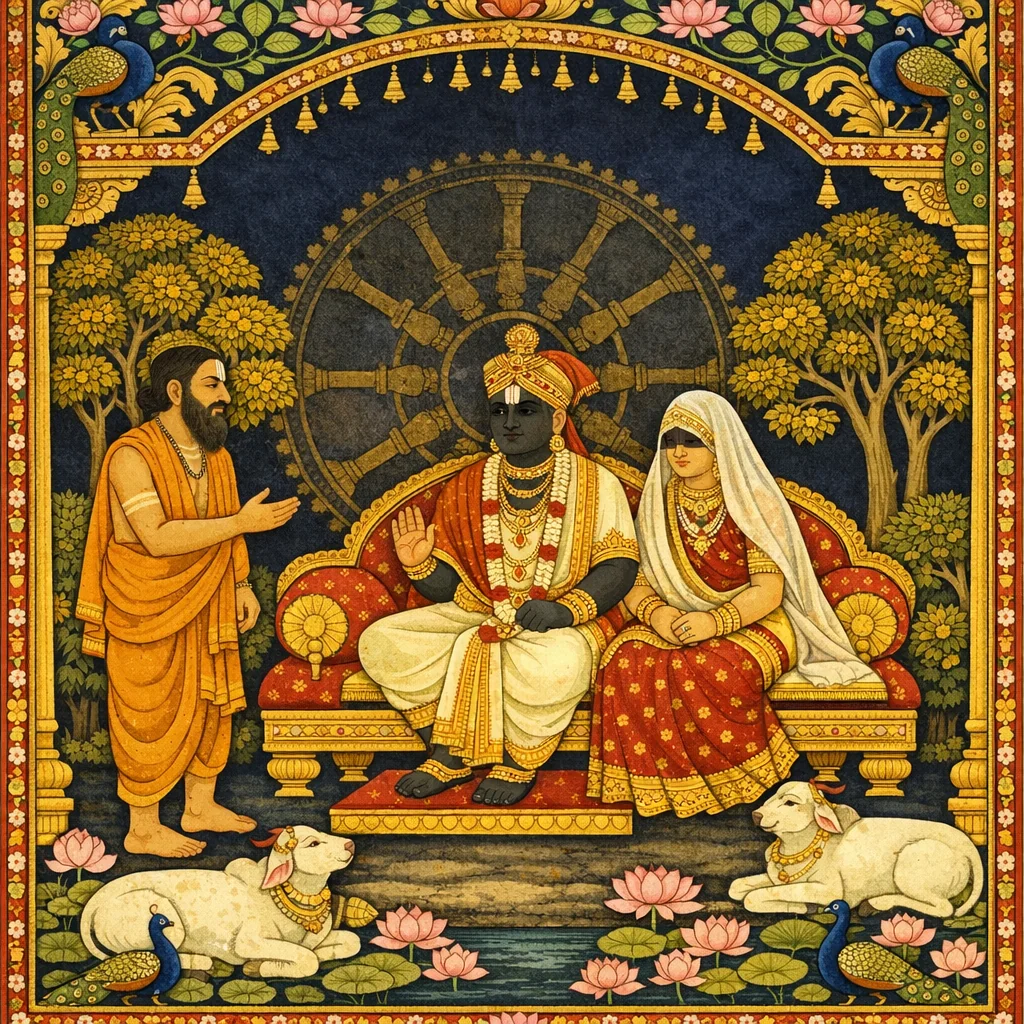
Adhyaya 13
Vidura’s Return; Dhṛtarāṣṭra’s Departure; Nārada’s Instruction on Kāla and Detachment
Returning from tīrtha-yātrā, Vidura comes to Hastināpura bearing transcendental knowledge received from Maitreya, and is warmly welcomed by Yudhiṣṭhira, the Pāṇḍavas, and the palace elders. Yudhiṣṭhira asks about Vidura’s travels and pointedly about Dvārakā, but Vidura, out of compassion, withholds the news of the impending destruction of the Yadus to spare them untimely grief. Seeing the peril of attachment and the advance of kāla (time), Vidura confronts Dhṛtarāṣṭra with hard truths—bodily decline, dependence, and the disgrace of clinging to life in another’s home—and urges him to withdraw at once to the North for spiritual practice. Dhṛtarāṣṭra agrees, secretly departs with Gāndhārī, and at Saptasrota undertakes austerity and aṣṭāṅga-yoga. When Yudhiṣṭhira discovers their absence, anxiety rises until Devarṣi Nārada arrives, teaching that separation is illusory under the Supreme Lord’s control. Nārada reveals their whereabouts and foretells Dhṛtarāṣṭra’s imminent yogic death and Gāndhārī’s self-immolation, dissolving Yudhiṣṭhira’s lament and carrying the narrative toward the Lord’s impending withdrawal and the world’s transition into a new moral phase.
Shlokas
Verse 1
सूत उवाच विदुरस्तीर्थयात्रायां मैत्रेयादात्मनो गतिम् । ज्ञात्वागाद्धास्तिनपुरं तयावाप्तविवित्सित: ॥ १ ॥
Śrī Sūta Gosvāmī said: While on pilgrimage, Vidura learned from the great sage Maitreya the ultimate destination of the self; having gained the understanding he sought, he returned to Hastināpura.
Verse 2
यावत: कृतवान् प्रश्नान् क्षत्ता कौषारवाग्रत: । जातैकभक्तिर्गोविन्दे तेभ्यश्चोपरराम ह ॥ २ ॥
After putting many questions before Kausārava (Maitreya) and becoming firmly established in single-minded bhakti to Govinda, Vidura ceased further inquiry.
Verse 3
तं बन्धुमागतं दृष्ट्वा धर्मपुत्र: सहानुज: । धृतराष्ट्रो युयुत्सुश्च सूत: शारद्वत: पृथा ॥ ३ ॥ गान्धारी द्रौपदी ब्रह्मन् सुभद्रा चोत्तरा कृपी । अन्याश्च जामय: पाण्डोर्ज्ञातय: ससुता: स्त्रिय: ॥ ४ ॥
Seeing their kinsman Vidura return, Dharmaputra Yudhiṣṭhira with his younger brothers—along with Dhṛtarāṣṭra, Yuyutsu, Sañjaya, Kṛpācārya, Kuntī, Gāndhārī, Draupadī, Subhadrā, Uttarā, Kṛpī, and many other ladies with their children—rushed to him in great joy; it seemed as though, after a long time, they had regained their very consciousness.
Verse 4
तं बन्धुमागतं दृष्ट्वा धर्मपुत्र: सहानुज: । धृतराष्ट्रो युयुत्सुश्च सूत: शारद्वत: पृथा ॥ ३ ॥ गान्धारी द्रौपदी ब्रह्मन् सुभद्रा चोत्तरा कृपी । अन्याश्च जामय: पाण्डोर्ज्ञातय: ससुता: स्त्रिय: ॥ ४ ॥
When they saw their kinsman Vidura return to the palace, Dharmaputra Yudhiṣṭhira with his younger brothers, along with Dhṛtarāṣṭra, Yuyutsu, Sañjaya, Kṛpācārya, Kuntī, Gāndhārī, Draupadī, Subhadrā, Uttarā, Kṛpī, and many other wives and ladies with children, all rushed to him in great joy; it seemed as though, after a long separation, their very consciousness had returned.
Verse 5
प्रत्युज्जग्मु: प्रहर्षेण प्राणं तन्व इवागतम् । अभिसङ्गम्य विधिवत् परिष्वङ्गाभिवादनै: ॥ ५ ॥
All of them went forth in great jubilation to meet him, as if life itself had returned to their bodies. Meeting properly according to custom, they exchanged obeisances and welcomed one another with embraces.
Verse 6
मुमुचु: प्रेमबाष्पौघं विरहौत्कण्ठ्यकातरा: । राजा तमर्हयाञ्चक्रे कृतासनपरिग्रहम् ॥ ६ ॥
Distressed by the longing born of long separation, they all released a flood of tears of love. Then King Yudhiṣṭhira arranged proper seating and offered him a respectful reception.
Verse 7
तं भुक्तवन्तं विश्रान्तमासीनं सुखमासने । प्रश्रयावनतो राजा प्राह तेषां च शृण्वताम् ॥ ७ ॥
After Vidura had eaten well, rested sufficiently, and was seated comfortably, the King, bowing with deference—while all present listened—began to speak to him.
Verse 8
युधिष्ठिर उवाच अपि स्मरथ नो युष्मत्पक्षच्छायासमेधितान् । विपद्गणाद्विषाग्न्यादेर्मोचिता यत्समातृका: ॥ ८ ॥
Mahārāja Yudhiṣṭhira said: My uncle, do you remember how you always sheltered us—together with our mother—from every kind of calamity? Your protective favor, like the shade of a bird’s wings, delivered us from poisoning and from the fire of the house of lac.
Verse 9
कया वृत्त्या वर्तितं वश्चरद्भि: क्षितिमण्डलम् । तीर्थानि क्षेत्रमुख्यानि सेवितानीह भूतले ॥ ९ ॥
While journeying over the earth, by what means did you sustain your livelihood? And at which holy tīrthas and foremost sacred kṣetras did you render service?
Verse 10
भवद्विधा भागवतास्तीर्थभूता: स्वयं विभो । तीर्थीकुर्वन्ति तीर्थानि स्वान्त:स्थेन गदाभृता ॥ १० ॥
My Lord, bhāgavata devotees like you are themselves holy places personified. Because Gadhādhara, the Supreme Lord, dwells within your heart, you sanctify every place into a tīrtha.
Verse 11
अपि न: सुहृदस्तात बान्धवा: कृष्णदेवता: । दृष्टा: श्रुता वा यदव: स्वपुर्यां सुखमासते ॥ ११ ॥
My uncle, did you see—or at least hear of—our friends and kinsmen, the Yadus who worship Lord Śrī Kṛṣṇa as their very Deity, in their own city of Dvārakā? Are they all living happily in their homes?
Verse 12
इत्युक्तो धर्मराजेन सर्वं तत् समवर्णयत् । यथानुभूतं क्रमशो विना यदुकुलक्षयम् ॥ १२ ॥
Thus questioned by Dharmarāja Yudhiṣṭhira, Mahātmā Vidura gradually recounted all that he had personally experienced—except the tidings of the destruction of the Yadu dynasty.
Verse 13
नन्वप्रियं दुर्विषहं नृणां स्वयमुपस्थितम् । नावेदयत् सकरुणो दु:खितान् द्रष्टुमक्षम: ॥ १३ ॥
That event was most unpalatable and unbearable for men, and it had come of its own accord. Compassionate Vidura could not bear to see the Pāṇḍavas in distress, and therefore he did not disclose it.
Verse 14
कञ्चित्कालमथावात्सीत्सत्कृतो देववत्सुखम् । भ्रातुर्ज्येष्ठस्य श्रेयस्कृत्सर्वेषां सुखमावहन् ॥ १४ ॥
Thus Mahātmā Vidura, honored by his kinsmen as one honors a godly person, stayed there for some time, to set right the mind of his eldest brother and thereby bring happiness to all.
Verse 15
अबिभ्रदर्यमा दण्डं यथावदघकारिषु । यावद्दधार शूद्रत्वं शापाद्वर्षशतं यम: ॥ १५ ॥
So long as Yama, cursed by Maṇḍūka Muni, bore the role of a śūdra for one hundred years, Aryamā held the post of Yamarāja, duly punishing those who committed sinful deeds.
Verse 16
युधिष्ठिरो लब्धराज्यो दृष्ट्वा पौत्रं कुलन्धरम् । भ्रातृभिर्लोकपालाभैर्मुमुदे परया श्रिया ॥ १६ ॥
Having regained his kingdom and seen the birth of a grandson fit to uphold his family’s noble tradition, Mahārāja Yudhiṣṭhira ruled in peace and rejoiced in uncommon opulence, together with his younger brothers, who governed the people like expert guardians.
Verse 17
एवं गृहेषु सक्तानां प्रमत्तानां तदीहया । अत्यक्रामदविज्ञात: काल: परमदुस्तर: ॥ १७ ॥
Thus, imperceptibly, insurmountable Time overcomes those who are overly attached to household affairs and remain intoxicated by such preoccupations.
Verse 18
विदुरस्तदभिप्रेत्य धृतराष्ट्रमभाषत । राजन्निर्गम्यतां शीघ्रं पश्येदं भयमागतम् ॥ १८ ॥
Knowing this well, Vidura addressed Dhṛtarāṣṭra: “O King, leave this place at once; do not delay. Just see—fear has already come upon you.”
Verse 19
प्रतिक्रिया न यस्येह कुतश्चित्कर्हिचित्प्रभो । स एष भगवान् काल: सर्वेषां न: समागत: ॥ १९ ॥
My lord, no one in this material world can remedy this fearful condition. It is Bhagavān Himself, as Kāla—eternal time—who has approached us all.
Verse 20
येन चैवाभिपन्नोऽयं प्राणै: प्रियतमैरपि । जन: सद्यो वियुज्येत किमुतान्यैर्धनादिभि: ॥ २० ॥
One who falls under the sway of supreme Kāla must at once surrender even his dearest life; what then to speak of wealth, honor, children, land, and home?
Verse 21
पितृभ्रातृसुहृत्पुत्रा हतास्ते विगतं वयम् । आत्मा च जरया ग्रस्त: परगेहमुपाससे ॥ २१ ॥
Your father, brother, well-wishers, and sons have all died and passed on. You too have spent the greater part of your life; your body is seized by old age, and you live in another’s home.
Verse 22
अन्ध: पुरैव वधिरो मन्दप्रज्ञाश्च साम्प्रतम् । विशीर्णदन्तो मन्दाग्नि: सराग: कफमुद्वहन् ॥ २२ ॥
You have been blind since birth, and lately you have also become hard of hearing. Your memory has shortened and your intelligence is disturbed. Your teeth are loose, your digestive fire is weak, and you cough up mucus.
Verse 23
अहो महीयसी जन्तोर्जीविताशा यथा भवान् । भीमापवर्जितं पिण्डमादत्ते गृहपालवत् ॥ २३ ॥
Alas, how powerful is a living being’s hope to go on living! Truly, you live like a household dog, eating the remnants of food given by Bhīma.
Verse 24
अग्निर्निसृष्टो दत्तश्च गरो दाराश्च दूषिता: । हृतं क्षेत्रं धनं येषां तद्दत्तैरसुभि: कियत् ॥ २४ ॥
There is no need to live a degraded life and subsist on the charity of those whom you tried to kill by arson and poisoning. You also insulted their married wife and usurped their kingdom and wealth.
Verse 25
तस्यापि तव देहोऽयं कृपणस्य जिजीविषो: । परैत्यनिच्छतो जीर्णो जरया वाससी इव ॥ २५ ॥
Despite your unwillingness to die and your desire to live even at the cost of honor and prestige, your miserly body will certainly dwindle and deteriorate like an old garment.
Verse 26
गतस्वार्थमिमं देहं विरक्तो मुक्तबन्धन: । अविज्ञातगतिर्जह्यात् स वै धीर उदाहृत: ॥ २६ ॥
He is called undisturbed who goes to an unknown, remote place and, freed from all obligations, quits his material body when it has become useless.
Verse 27
य: स्वकात्परतो वेह जातनिर्वेद आत्मवान् । हृदि कृत्वा हरिं गेहात्प्रव्रजेत्स नरोत्तम: ॥ २७ ॥
He is certainly a first-class man who awakens and understands, either by himself or from others, the falsity and misery of this material world and thus leaves home and depends fully on the Personality of Godhead residing within his heart.
Verse 28
अथोदीचीं दिशं यातु स्वैरज्ञातगतिर्भवान् । इतोऽर्वाक्प्रायश: काल: पुंसां गुणविकर्षण: ॥ २८ ॥
Please, therefore, leave for the North immediately, without letting your relatives know, for soon that time will approach which will diminish the good qualities of men.
Verse 29
एवं राजा विदुरेणानुजेन प्रज्ञाचक्षुर्बोधित आजमीढ: । छित्त्वा स्वेषु स्नेहपाशान्द्रढिम्नो निश्चक्राम भ्रातृसन्दर्शिताध्वा ॥ २९ ॥
Thus Mahārāja Dhṛtarāṣṭra, born in the line of Ajamīḍha, awakened by his younger brother Vidura through the eye of inner wisdom (prajñā), cut through the hard net of family affection with firm resolve and at once left home, setting out on the path of liberation shown by his brother.
Verse 30
पतिं प्रयान्तं सुबलस्य पुत्री पतिव्रता चानुजगाम साध्वी । हिमालयं न्यस्तदण्डप्रहर्षं मनस्विनामिव सत्सम्प्रहार: ॥ ३० ॥
Seeing her husband depart for the Himalayas, the gentle and chaste Gāndhārī, daughter of King Subala, followed him as a faithful wife. The Himalayas delight those who have accepted the staff of renunciation, as a true blow from an enemy steels the hearts of the high-minded.
Verse 31
अजातशत्रु: कृतमैत्रो हुताग्नि- र्विप्रान्नत्वा तिलगोभूमिरुक्मै: । गृहं प्रविष्टो गुरुवन्दनाय न चापश्यत्पितरौ सौबलीं च ॥ ३१ ॥
Mahārāja Yudhiṣṭhira, to whom no enemy was ever born, performed his morning duties and the agnihotra, bowed to the brāhmaṇas and honored them with sesame, grains, cows, land, and gold. Then he entered the palace to offer respects to the elders, but he did not see Dhṛtarāṣṭra or Gāndhārī, the daughter of Subala.
Verse 32
तत्र सञ्जयमासीनं पप्रच्छोद्विग्नमानस: । गावल्गणे क्व नस्तातो वृद्धो हीनश्च नेत्रयो: ॥ ३२ ॥
Anxious at heart, Yudhiṣṭhira asked Sañjaya, who was seated there: “O Sañjaya, son of Gavalgaṇa, where is our uncle—old and bereft of sight?”
Verse 33
अम्बा च हतपुत्रार्ता पितृव्य: क्व गत: सुहृत् । अपि मय्यकृतप्रज्ञे हतबन्धु: स भार्यया । आशंसमान: शमलं गङ्गायां दु:खितोऽपतत् ॥ ३३ ॥
And where is Mother Gāndhārī, tormented by the death of her sons? Where has our well-wisher, Uncle Vidura, gone? Am I so ungrateful and lacking in discernment? Did Dhṛtarāṣṭra, bereft of sons and kinsmen, take my faults as grave offenses and, in sorrow, cast himself into the Gaṅgā together with his wife?
Verse 34
पितर्युपरते पाण्डौ सर्वान्न: सुहृद: शिशून् । अरक्षतां व्यसनत: पितृव्यौ क्व गतावित: ॥ ३४ ॥
When my father Pāṇḍu passed away and we were all but children, those two uncles protected us from every calamity. They were ever our true well-wishers. Alas, where have they gone from here?
Verse 35
सूत उवाच कृपया स्नेडहवैक्लव्यात्सूतो विरहकर्शित: । आत्मेश्वरमचक्षाणो न प्रत्याहातिपीडित: ॥ ३५ ॥
Sūta Gosvāmī said: Moved by compassion and shaken in mind, Sañjaya—tormented by separation—could not see his own master Dhṛtarāṣṭra. Deeply distressed, he was unable to reply properly to Mahārāja Yudhiṣṭhira.
Verse 36
विमृज्याश्रूणि पाणिभ्यां विष्टभ्यात्मानमात्मना । अजातशत्रुं प्रत्यूचे प्रभो: पादावनुस्मरन् ॥ ३६ ॥
He wiped away his tears with his hands and, by intelligence, gradually steadied his mind. Remembering the feet of his master Dhṛtarāṣṭra, he began to reply to Ajātaśatru, Mahārāja Yudhiṣṭhira.
Verse 37
सञ्जय उवाच नाहं वेद व्यवसितं पित्रोर्व: कुलनन्दन । गान्धार्या वा महाबाहो मुषितोऽस्मि महात्मभि: ॥ ३७ ॥
Sañjaya said: O joy of the Kuru line, O mighty-armed King, I know nothing of the resolve of your two uncles, nor of Gāndhārī. O ruler, I have been deceived by those great souls.
Verse 38
अथाजगाम भगवान् नारद: सहतुम्बुरु: । प्रत्युत्थायाभिवाद्याह सानुजोऽभ्यर्चयन्मुनिम् ॥ ३८ ॥
As Sañjaya spoke, Śrī Nārada—the Lord’s powerful devotee—appeared there, bearing his tumburu. Mahārāja Yudhiṣṭhira and his brothers rose from their seats, offered obeisances, and properly honored the sage.
Verse 39
युधिष्ठिर उवाच नाहं वेद गतिं पित्रोर्भगवन् क्व गतावित: । अम्बा वा हतपुत्रार्ता क्व गता च तपस्विनी ॥ ३९ ॥
Mahārāja Yudhiṣṭhira said: O Bhagavān, I do not know where my two uncles have gone. Nor can I find my ascetic aunt, stricken with grief at the loss of all her sons.
Verse 40
कर्णधार इवापारे भगवान् पारदर्शक: । अथाबभाषे भगवान् नारदो मुनिसत्तम: ॥ ४० ॥
You are like the captain of a ship upon the vast ocean, able to guide us to our destination. Thus addressed, the godly Devarṣi Nārada, greatest among the sage‑devotees, began to speak.
Verse 41
नारद उवाच मा कञ्चन शुचो राजन् यदीश्वरवशं जगत् । लोका: सपाला यस्येमे वहन्ति बलिमीशितु: । स संयुनक्ति भूतानि स एव वियुनक्ति च ॥ ४१ ॥
Śrī Nārada said: O pious King, do not lament for anyone, for the whole world is under the Supreme Lord’s control. Therefore all beings, along with their rulers, offer worship for protection. He alone brings them together, and He alone disperses them.
Verse 42
यथा गावो नसि प्रोतास्तन्त्यां बद्धाश्च दामभि: । वाक्तन्त्यां नामभिर्बद्धा वहन्ति बलिमीशितु: ॥ ४२ ॥
As a cow, bound through the nose by a long rope, is kept under control, so human beings are bound by various Vedic injunctions and by names, and thus they obey the orders of the Supreme Lord.
Verse 43
यथा क्रीडोपस्कराणां संयोगविगमाविह । इच्छया क्रीडितु: स्यातां तथैवेशेच्छया नृणाम् ॥ ४३ ॥
As a player arranges and then disperses his playthings according to his own sweet will, so by the Lord’s supreme will men are brought together and then separated.
Verse 44
यन्मन्यसे ध्रुवं लोकमध्रुवं वा न चोभयम् । सर्वथा न हि शोच्यास्ते स्नेहादन्यत्र मोहजात् ॥ ४४ ॥
O King, whether you deem the soul eternal, the body perishable, all as one in the impersonal Absolute, or an inexplicable blend of matter and spirit—in every case, sorrow of separation arises only from illusory, attachment-born affection, and nothing more.
Verse 45
तस्माज्जह्यङ्ग वैक्लव्यमज्ञानकृतमात्मन: । कथं त्वनाथा: कृपणा वर्तेरंस्ते च मां विना ॥ ४५ ॥
Therefore, O King, abandon this distress born of ignorance of the self. Do not brood, “How will those poor, helpless ones live without me?”—their true shelter is Bhagavān.
Verse 46
कालकर्मगुणाधीनो देहोऽयं पाञ्चभौतिक: । कथमन्यांस्तु गोपायेत्सर्पग्रस्तो यथा परम् ॥ ४६ ॥
This gross body of five elements is already ruled by kāla (time), karma, and the guṇas. How can it—already in the serpent’s jaws—protect anyone else?
Verse 47
अहस्तानि सहस्तानामपदानि चतुष्पदाम् । फल्गूनि तत्र महतां जीवो जीवस्य जीवनम् ॥ ४७ ॥
The handless are prey to the handed; the legless are prey to the four-legged. The weak sustain the strong—such is the common law that one living being becomes the life (food) of another.
Verse 48
तदिदं भगवान् राजन्नेक आत्मात्मनां स्वदृक् । अन्तरोऽनन्तरो भाति पश्य तं माययोरुधा ॥ ४८ ॥
Therefore, O King, look only to the Supreme Lord—one without a second, the Ātman of all ātmās, self-revealed. He shines within and without, and by His manifold māyā-energies He appears in diverse ways.
Verse 49
सोऽयमद्य महाराज भगवान् भूतभावन: । कालरूपोऽवतीर्णोऽस्यामभावाय सुरद्विषाम् ॥ ४९ ॥
O King, that very Bhagavān Śrī Kṛṣṇa, the benefactor of all beings, has now descended to the earth in the form of all-devouring Time (kāla-rūpa) to destroy the envious enemies of the devas.
Verse 50
निष्पादितं देवकृत्यमवशेषं प्रतीक्षते । तावद् यूयमवेक्षध्वं भवेद् यावदिहेश्वर: ॥ ५० ॥
The Lord has already fulfilled His duty for the devas and now awaits what remains. O Pāṇḍavas, wait as long as the Īśvara stays here upon the earth.
Verse 51
धृतराष्ट्र: सह भ्रात्रा गान्धार्या च स्वभार्यया । दक्षिणेन हिमवत ऋषीणामाश्रमं गत: ॥ ५१ ॥
O King, your uncle Dhṛtarāṣṭra, along with his brother Vidura and his wife Gāndhārī, has gone to the southern side of the Himalayas, to the āśramas of the great ṛṣis.
Verse 52
स्रोतोभि: सप्तभिर्या वै स्वर्धुनी सप्तधा व्यधात् । सप्तानां प्रीतये नाना सप्तस्रोत: प्रचक्षते ॥ ५२ ॥
That place is called Saptasrota, for there the sacred Gaṅgā was divided into seven streams. This was done to please the seven great ṛṣis.
Verse 53
स्नात्वानुसवनं तस्मिन्हुत्वा चाग्नीन्यथाविधि । अब्भक्ष उपशान्तात्मा स आस्ते विगतैषण: ॥ ५३ ॥
On the banks of Saptasrota, Dhṛtarāṣṭra bathes three times daily—morning, noon, and evening—performs the agni-hotra according to rule, subsists only on water, calms his mind, and remains free from desires and familial attachment.
Verse 54
जितासनो जितश्वास: प्रत्याहृतषडिन्द्रिय: । हरिभावनया ध्वस्तरज:सत्त्वतमोमल: ॥ ५४ ॥
One who has conquered posture and breath, and by pratyāhāra draws the six senses inward, by contemplation of Hari destroys the stains of rajas, sattva, and tamas.
Verse 55
विज्ञानात्मनि संयोज्य क्षेत्रज्ञे प्रविलाप्य तम् । ब्रह्मण्यात्मानमाधारे घटाम्बरमिवाम्बरे ॥ ५५ ॥
He will join his awareness to the self illumined by realized knowledge, and then dissolve the knower of the field into Brahman—like the space within a pot merging into the vast sky.
Verse 56
ध्वस्तमायागुणोदर्को निरुद्धकरणाशय: । निवर्तिताखिलाहार आस्ते स्थाणुरिवाचल: । तस्यान्तरायो मैवाभू: सन्न्यस्ताखिलकर्मण: ॥ ५६ ॥
With the surge of māyā’s guṇas destroyed, he will restrain senses and mind, cease all intake of food, and sit unmoving like a mountain. May no obstacle arise for one who has renounced all actions.
Verse 57
स वा अद्यतनाद् राजन् परत: पञ्चमेऽहनि । कलेवरं हास्यति स्वं तच्च भस्मीभविष्यति ॥ ५७ ॥
O King, on the fifth day from today he will abandon his body, and that body will be reduced to ashes.
Verse 58
दह्यमानेऽग्निभिर्देहे पत्यु: पत्नी सहोटजे । बहि: स्थिता पतिं साध्वी तमग्निमनु वेक्ष्यति ॥ ५८ ॥
As her husband’s body burns in the fire of yogic power along with his thatched hut, his chaste wife, standing outside and gazing upon him with single-pointed attention, will enter that fire.
Verse 59
विदुरस्तु तदाश्चर्यं निशाम्य कुरुनन्दन । हर्षशोकयुतस्तस्माद् गन्ता तीर्थनिषेवक: ॥ ५९ ॥
O Kurunandana, hearing that wondrous matter, Vidura—touched by both joy and grief—departed from that sacred place of pilgrimage to pursue the service of the holy tīrthas.
Verse 60
इत्युक्त्वाथारुहत् स्वर्गं नारद: सहतुम्बुरु: । युधिष्ठिरो वचस्तस्य हृदि कृत्वाजहाच्छुच: ॥ ६० ॥
Having spoken thus, the great sage Nārada, with Tumburu, ascended through the sky to the heavenly realms. Yudhiṣṭhira held his words within his heart and cast away all lamentation.
Frequently Asked Questions
Vidura withholds the Yadu-vināśa out of compassion and pastoral wisdom: he knows calamities arise by kāla without invitation, and premature disclosure would intensify the Pāṇḍavas’ grief without offering any practical remedy. This restraint exemplifies a sādhūnām ethic—speaking truth in a way that serves spiritual welfare—while also preserving narrative progression toward the later revelation of Kṛṣṇa’s departure.
Vidura diagnoses Dhṛtarāṣṭra’s condition—old age, dependence, and the humiliation of clinging to household security—and connects it to the universal force of kāla. He then prescribes decisive withdrawal from familial entanglement to pursue liberation, aligning with the Vedic trajectory of reducing obligations and cultivating God-dependence. The chapter portrays renunciation not as escapism but as timely realism grounded in self-knowledge and accountability.
Aryamā is an Āditya (solar deity) who temporarily assumes the function of Yamarāja during the period when Vidura—under Maṇḍūka Muni’s curse—enacts a śūdra role on earth. The mention clarifies cosmic administration (sthāna) and reinforces that even exalted offices operate through delegated order under the Supreme, paralleling Nārada’s later emphasis that all beings move under divine control.
Saptasrota is a sacred Himalayan region where the Gaṅgā divides into seven streams for the satisfaction of seven ṛṣis. In the chapter it serves as an archetypal tīrtha: a setting conducive to austerity, sense control, and meditation. Its sanctity underscores the Bhāgavata principle that holy geography supports inner transformation when paired with discipline and sincere renunciation.
Nārada reframes separation as a product of moha (illusory affection) by asserting that meeting and parting occur by the Supreme Lord’s will, with all beings bound by kāla, karma, and guṇa. By shifting Yudhiṣṭhira from a protector-centered anxiety (“how will they live without me?”) to God-centered intelligence (“all are maintained by Him”), Nārada restores spiritual equilibrium and prepares the king for the Bhāgavata’s unfolding account of divine withdrawal and worldly transition.