Adhyaya 10
Śrī Rāmacandra-avatāra — Vow, Exile, Laṅkā-vijaya, and Rāma-rājya (Concise Bhāgavata Account)
Continuing the Solar dynasty (Sūrya-vaṁśa), Śukadeva links Raghu’s line to Aja and Daśaratha and introduces Bhagavān’s descent—petitioned by the devas—as four brothers, with Rāma and His expansions. Since Parīkṣit has often heard Rāma-kathā, the account becomes a swift theological synopsis: Rāma upholds His father’s vow by renouncing the throne and entering forest life with Sītā and Lakṣmaṇa; He protects Viśvāmitra’s yajña, wins Sītā by breaking Śiva’s bow, and humbles Paraśurāma. The narrative then hastens through Śūrpaṇakhā’s disfigurement, the destruction of Khara’s forces, Sītā’s abduction by Rāvaṇa through the golden-deer ruse, and the Lord’s grief-like search that teaches by example. Alliance with the vānaras, Vāli’s fall, the ocean’s submission, and the bridge to Laṅkā lead to war and Rāvaṇa’s death. After recovering Sītā and crowning Vibhīṣaṇa, Rāma returns to Ayodhyā, is anointed, and inaugurates Rāma-rājya—an ideal reign of prosperity, dharma, and relief from suffering—preparing the dynastic continuation beyond His rule.
Shlokas
Verse 1
श्रीशुक उवाच खट्वाङ्गाद् दीर्घबाहुश्च रघुस्तस्मात् पृथुश्रवा: । अजस्ततो महाराजस्तस्माद् दशरथोऽभवत् ॥ १ ॥
Śukadeva Gosvāmī said: The son of King Khaṭvāṅga was Dīrghabāhu, whose son was the celebrated King Raghu. From Raghu came Aja, and from Aja was born the great King Daśaratha.
Verse 2
तस्यापि भगवानेष साक्षाद् ब्रह्ममयो हरि: । अंशांशेन चतुर्धागात् पुत्रत्वं प्रार्थित: सुरै: । रामलक्ष्मणभरतशत्रुघ्ना इति संज्ञया ॥ २ ॥
Prayed to by the demigods, Bhagavān Hari—the Absolute Truth, Brahman Himself—appeared directly with His expansions as four sons, bearing the holy names Rāma, Lakṣmaṇa, Bharata, and Śatrughna.
Verse 3
तस्यानुचरितं राजन्नृषिभिस्तत्त्वदर्शिभि: । श्रुतं हि वर्णितं भूरि त्वया सीतापतेर्मुहु: ॥ ३ ॥
O King, the truth-seeing sages have described Lord Rāmacandra’s transcendental deeds at length. Since you have heard again and again of Rāma, Sītā’s lord, I shall speak only briefly—please listen.
Verse 4
गुर्वर्थे त्यक्तराज्यो व्यचरदनुवनं पद्मपद्भ्यां प्रियाया: पाणिस्पर्शाक्षमाभ्यां मृजितपथरुजो यो हरीन्द्रानुजाभ्याम् । वैरूप्याच्छूर्पणख्या: प्रियविरहरुषारोपितभ्रूविजृम्भ- त्रस्ताब्धिर्बद्धसेतु: खलदवदहन: कोसलेन्द्रोऽवतान्न: ॥ ४ ॥
To uphold His father’s vow and fulfill His duty to the guru, Lord Rāmacandra at once renounced the throne and wandered from forest to forest with His beloved Sītā upon lotus feet so tender they seemed unable to bear even the touch of her palms; the monkey-king and His younger brother Lakṣmaṇa relieved His weariness. After disfiguring Śūrpaṇakhā by cutting off her nose and ears, and angered by separation from Sītā, He merely arched His brows and terrified the ocean, which then allowed a bridge to be built; thereafter He consumed Rāvaṇa’s realm like a fire devouring a forest. May Śrī Rāmacandra, lord of Kosala, protect us all.
Verse 5
विश्वामित्राध्वरे येन मारीचाद्या निशाचरा: । पश्यतो लक्ष्मणस्यैव हता नैर्ऋतपुङ्गवा: ॥ ५ ॥
In the arena of the sacrifice performed by Viśvāmitra, Lord Rāmacandra killed many demons in the presence of Lakṣmaṇa.
Verse 6
यो लोकवीरसमितौ धनुरैशमुग्रं सीतास्वयंवरगृहे त्रिशतोपनीतम् । आदाय बालगजलील इवेक्षुयष्टिं सज्ज्यीकृतं नृप विकृष्य बभञ्ज मध्ये ॥ ६ ॥ जित्वानुरूपगुणशीलवयोऽङ्गरूपां सीताभिधां श्रियमुरस्यभिलब्धमानाम् । मार्गे व्रजन् भृगुपतेर्व्यनयत् प्ररूढं दर्पं महीमकृत यस्त्रिरराजबीजाम् ॥ ७ ॥
O King, in the assembly of Sītā, Lord Rāma broke the bow of Śiva just as a baby elephant breaks a stick of sugarcane.
Verse 7
यो लोकवीरसमितौ धनुरैशमुग्रं सीतास्वयंवरगृहे त्रिशतोपनीतम् । आदाय बालगजलील इवेक्षुयष्टिं सज्ज्यीकृतं नृप विकृष्य बभञ्ज मध्ये ॥ ६ ॥ जित्वानुरूपगुणशीलवयोऽङ्गरूपां सीताभिधां श्रियमुरस्यभिलब्धमानाम् । मार्गे व्रजन् भृगुपतेर्व्यनयत् प्ररूढं दर्पं महीमकृत यस्त्रिरराजबीजाम् ॥ ७ ॥
Returning with Sītā, Lord Rāma defeated the pride of Paraśurāma, who had rid the earth of the royal order twenty-one times.
Verse 8
य: सत्यपाशपरिवीतपितुर्निदेशं स्त्रैणस्य चापि शिरसा जगृहे सभार्य: । राज्यं श्रियं प्रणयिन: सुहृदो निवासं त्यक्त्वा ययौ वनमसूनिव मुक्तसङ्ग: ॥ ८ ॥
Carrying out the order of His father, Lord Rāma left His kingdom like a liberated soul and went to the forest.
Verse 9
रक्ष:स्वसुर्व्यकृत रूपमशुद्धबुद्धे- स्तस्या: खरत्रिशिरदूषणमुख्यबन्धून् । जघ्ने चतुर्दशसहस्रमपारणीय- कोदण्डपाणिरटमान उवास कृच्छ्रम् ॥ ९ ॥
While wandering in the forest, Lord Rāma deformed Rāvaṇa’s sister and killed fourteen thousand Rākṣasas headed by Khara and Dūṣaṇa.
Verse 10
सीताकथाश्रवणदीपितहृच्छयेन सृष्टं विलोक्य नृपते दशकन्धरेण । जघ्नेऽद्भुतैणवपुषाश्रमतोऽपकृष्टो मारीचमाशु विशिखेन यथा कमुग्र: ॥ १० ॥
O King Parikshit, hearing of Sita's beauty, Ravana was agitated by lust. To distract Lord Rama, he sent Maricha as a golden deer. Rama chased the deer and killed it with a sharp arrow, just as Lord Shiva killed Daksha.
Verse 11
रक्षोऽधमेन वृकवद् विपिनेऽसमक्षं वैदेहराजदुहितर्यपयापितायाम् । भ्रात्रा वने कृपणवत् प्रियया वियुक्त: स्त्रीसङ्गिनां गतिमिति प्रथयंश्चचार ॥ ११ ॥
In the absence of Rama and Lakshmana, Ravana kidnapped Sita like a wolf taking a sheep. Rama wandered the forest acting distressed by separation, thus showing the fate of those attached to women.
Verse 12
दग्ध्वात्मकृत्यहतकृत्यमहन् कबन्धं सख्यं विधाय कपिभिर्दयितागतिं तै: । बुद्ध्वाथ वालिनि हते प्लवगेन्द्रसैन्यै- र्वेलामगात् स मनुजोऽजभवार्चिताङ्घ्रि: ॥ १२ ॥
Lord Rama, worshiped by Brahma and Shiva, performed Jatayu's funeral. He killed Kabandha, befriended the monkeys, and killed Vali. Arranging for the search of Sita, He went to the ocean beach.
Verse 13
यद्रोषविभ्रमविवृत्तकटाक्षपात- सम्भ्रान्तनक्रमकरो भयगीर्णघोष: । सिन्धु: शिरस्यर्हणं परिगृह्य रूपी पादारविन्दमुपगम्य बभाष एतत् ॥ १३ ॥
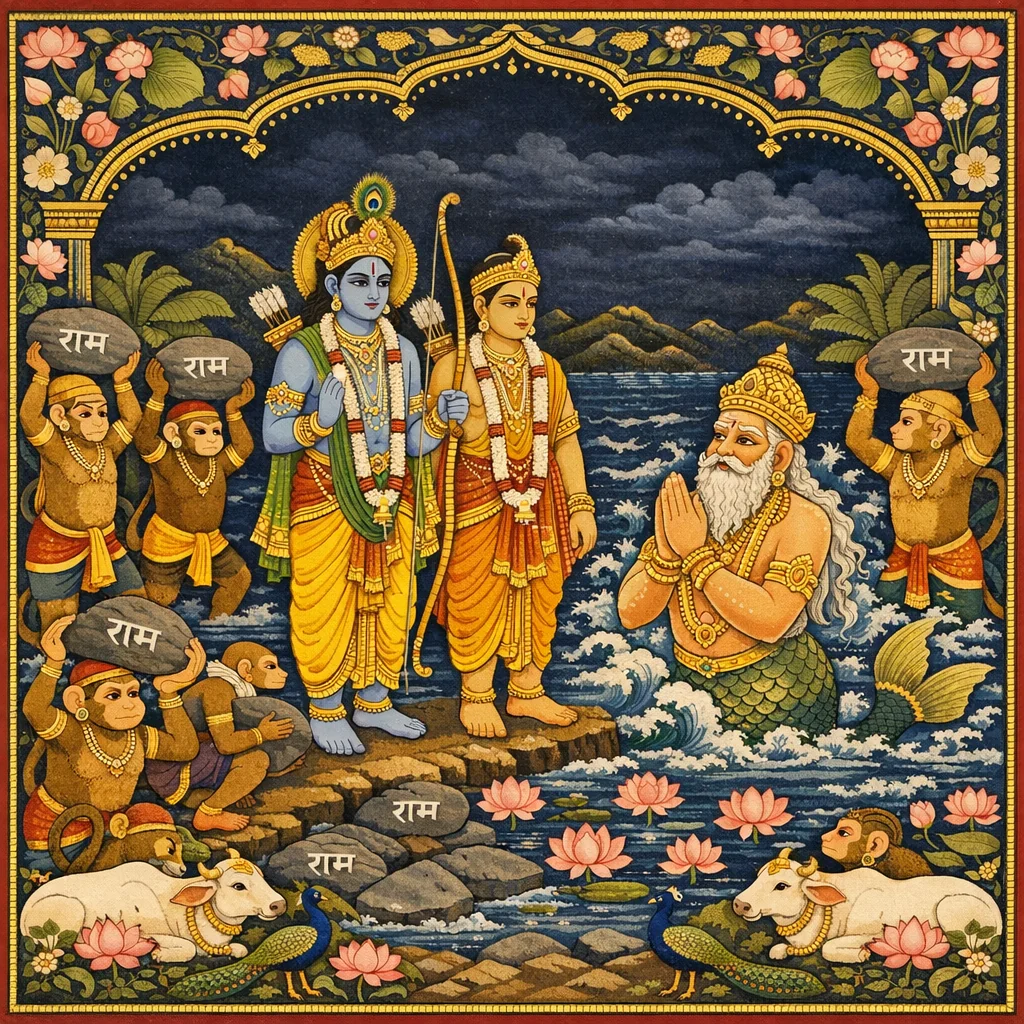
When the ocean did not appear, Rama exhibited anger. His glance terrified the marine creatures. Then the personified ocean fearfully approached with offerings, falling at Rama's feet to pray.
Verse 14
न त्वां वयं जडधियो नु विदाम भूमन् कूटस्थमादिपुरुषं जगतामधीशम् । यत्सत्त्वत: सुरगणा रजस: प्रजेशा मन्योश्च भूतपतय: स भवान् गुणेश: ॥ १४ ॥
O All-pervading Supreme Person, we are dull-minded and did not know You. You are the Master of the universe. The demigods are in goodness, Prajapatis in passion, and Shiva in ignorance, but You are the master of all these qualities.
Verse 15
कामं प्रयाहि जहि विश्रवसोऽवमेहं त्रैलोक्यरावणमवाप्नुहि वीर पत्नीम् । बध्नीहि सेतुमिह ते यशसो वितत्यै गायन्ति दिग्विजयिनो यमुपेत्य भूपा: ॥ १५ ॥
O Lord, use my waters as You wish. Cross over to Rāvaṇa, the tormentor of the three worlds, the son of Viśravā yet most contemptible; slay him and regain Sītādevī. Though my waters do not obstruct Your way to Laṅkā, still build a bridge here to spread Your transcendental fame, so that future kings and heroes will sing of this wondrous deed.
Verse 16
बद्ध्वोदधौ रघुपतिर्विविधाद्रिकूटै: सेतुं कपीन्द्रकरकम्पितभूरुहाङ्गै: । सुग्रीवनीलहनुमत्प्रमुखैरनीकै- र्लङ्कां विभीषणदृशाविशदग्रदग्धाम् ॥ १६ ॥
Śukadeva Gosvāmī said: After Raghupati built a bridge across the ocean by casting into the waters mountain peaks whose trees were shaken by the hands of mighty monkeys, the Lord marched to Laṅkā to free Sītādevī from Rāvaṇa. Guided and aided by Vibhīṣaṇa, He entered Rāvaṇa’s Laṅkā—previously burned by Hanumān—together with the monkey host led by Sugrīva, Nīla, and Hanumān.
Verse 17
सा वानरेन्द्रबलरुद्धविहारकोष्ठ- श्रीद्वारगोपुरसदोवलभीविटङ्का । निर्भज्यमानधिषणध्वजहेमकुम्भ- शृङ्गाटका गजकुलैर्ह्रदिनीव घूर्णा ॥ १७ ॥
After entering Laṅkā, the monkey warriors seized the pleasure houses, granaries, treasuries, palace doorways, city gates, assembly halls, palace fronts, and even the resting places of pigeons. When the crossroads, platforms, banners, and golden waterpots upon the domes were smashed, all of Laṅkā looked like a river churned by a herd of elephants.
Verse 18
रक्ष:पतिस्तदवलोक्य निकुम्भकुम्भ- धूम्राक्षदुर्मुखसुरान्तकनरान्तकादीन् । पुत्रं प्रहस्तमतिकायविकम्पनादीन् सर्वानुगान् समहिनोदथ कुम्भकर्णम् ॥ १८ ॥
Seeing the turmoil caused by the monkey soldiers, Rāvaṇa, lord of the rākṣasas, summoned Nikumbha, Kumbha, Dhūmrākṣa, Durmukha, Surāntaka, Narāntaka and others, along with his son Indrajit. Then he called Prahasta, Atikāya, Vikampana, and finally Kumbhakarṇa, urging all his followers to wage war against the enemy.
Verse 19
तां यातुधानपृतनामसिशूलचाप- प्रासर्ष्टिशक्तिशरतोमरखड्गदुर्गाम् । सुग्रीवलक्ष्मणमरुत्सुतगन्धमाद- नीलाङ्गदर्क्षपनसादिभिरन्वितोऽगात् ॥ १९ ॥
To assault the rākṣasa army, fully armed with formidable weapons—swords, tridents, bows, prāsas, ṛṣṭis, śakti arrows, shafts, tomaras, and khaḍgas—Lord Rāmacandra advanced, surrounded by Lakṣmaṇa and monkey heroes such as Sugrīva, Hanumān, Gandhamāda, Nīla, Aṅgada, Jāmbavān, Panasa, and others.
Verse 20
तेऽनीकपा रघुपतेरभिपत्य सर्वे द्वन्द्वं वरूथमिभपत्तिरथाश्वयोधै: । जघ्नुर्द्रुमैर्गिरिगदेषुभिरङ्गदाद्या: सीताभिमर्षहतमङ्गलरावणेशान् ॥ २० ॥
Aṅgada and the other vānara commanders, fighting for Raghu-pati, charged the enemy’s elephants, infantry, horses, and chariots, hurling great trees, mountain peaks, clubs, and arrows. Thus Lord Rāmacandra’s army slew Rāvaṇa’s soldiers, whose good fortune had been destroyed by the curse born of Mother Sītā’s wrath.
Verse 21
रक्ष:पति: स्वबलनष्टिमवेक्ष्य रुष्ट आरुह्य यानकमथाभिससार रामम् । स्व:स्यन्दने द्युमति मातलिनोपनीते विभ्राजमानमहनन्निशितै: क्षुरप्रै: ॥ २१ ॥
Thereafter Rāvaṇa, lord of the rākṣasas, seeing his forces destroyed, blazed with anger. Mounting his flower-adorned aerial car, he rushed toward Lord Rāmacandra, who sat upon the radiant chariot brought by Mātali, Indra’s charioteer. Then Rāvaṇa struck at Rāma with razor-sharp arrows.
Verse 22
रामस्तमाह पुरुषादपुरीष यन्न: कान्तासमक्षमसतापहृता श्ववत् ते । त्यक्तत्रपस्य फलमद्य जुगुप्सितस्य यच्छामि काल इव कर्तुरलङ्घ्यवीर्य: ॥ २२ ॥
Lord Rāmacandra said to Rāvaṇa: “O most loathsome of man-eaters—like their very filth! You are like a dog: as a dog steals food from the kitchen when the master is away, so in My absence you kidnapped My wife, Sītādevī. Therefore today, as Yamarāja punishes the sinful, I shall punish you; you are vile, sinful, and shameless, and My power is irresistible and My resolve never fails.”
Verse 23
एवं क्षिपन् धनुषि संधितमुत्ससर्ज बाणं स वज्रमिव तद्धृदयं बिभेद । सोऽसृग् वमन् दशमुखैर्न्यपतद् विमाना- द्धाहेति जल्पति जने सुकृतीव रिक्त: ॥ २३ ॥
After rebuking Rāvaṇa in this way, Lord Rāmacandra set an arrow upon His bow, took aim, and released it; like a thunderbolt it pierced Rāvaṇa’s heart. Vomiting blood from his ten mouths, Rāvaṇa fell from his aerial car. Seeing this, his followers cried out in tumult, “Alas! Alas!”—as a pious man falls from heaven when the fruits of his merit are exhausted.
Verse 24
ततो निष्क्रम्य लङ्काया यातुधान्य: सहस्रश: । मन्दोदर्या समं तत्र प्ररुदन्त्य उपाद्रवन् ॥ २४ ॥
Thereafter, thousands of rākṣasī women came out from Laṅkā. With Mandodarī, Rāvaṇa’s wife, at their head, they wept without cease and rushed toward the lifeless bodies of Rāvaṇa and the other rākṣasas—their husbands fallen in battle.
Verse 25
स्वान् स्वान् बन्धून् परिष्वज्य लक्ष्मणेषुभिरर्दितान् । रुरुदु: सुस्वरं दीना घ्नन्त्य आत्मानमात्मना ॥ २५ ॥
Striking their breasts in affliction because their husbands had been killed by the arrows of Lakṣmaṇa, the women embraced their respective husbands and cried piteously in voices appealing to everyone.
Verse 26
हा हता: स्म वयं नाथ लोकरावण रावण । कं यायाच्छरणं लङ्का त्वद्विहीना परार्दिता ॥ २६ ॥
O my lord, O master! You epitomized trouble for others, and therefore you were called Rāvaṇa. But now that you have been defeated, we also are defeated, for without you the state of Laṅkā has been conquered by the enemy. To whom will it go for shelter?
Verse 27
न वै वेद महाभाग भवान् कामवशं गत: । तेजोऽनुभावं सीताया येन नीतो दशामिमाम् ॥ २७ ॥
O greatly fortunate one, you came under the influence of lusty desires, and therefore you could not understand the influence of mother Sītā. Now, because of her curse, you have been reduced to this state, having been killed by Lord Rāmacandra.
Verse 28
कृतैषा विधवा लङ्का वयं च कुलनन्दन । देह: कृतोऽन्नं गृध्राणामात्मा नरकहेतवे ॥ २८ ॥
O pleasure of the Rākṣasa dynasty, because of you the state of Laṅkā and also we ourselves now have no protector. By your deeds you have made your body fit to be eaten by vultures and your soul fit to go to hell.
Verse 29
श्रीशुक उवाच स्वानां विभीषणश्चक्रे कोसलेन्द्रानुमोदित: । पितृमेधविधानेन यदुक्तं साम्परायिकम् ॥ २९ ॥
Śrī Śukadeva Gosvāmī said: Vibhīṣaṇa, the pious brother of Rāvaṇa and devotee of Lord Rāmacandra, received approval from Lord Rāmacandra, the King of Kosala. Then he performed the prescribed funeral ceremonies for his family members to save them from the path to hell.
Verse 30
ततो ददर्श भगवानशोकवनिकाश्रमे । क्षामां स्वविरहव्याधिं शिंशपामूलमाश्रिताम् ॥ ३० ॥
Thereafter, Bhagavān Śrī Rāmacandra beheld Sītādevī in the hermitage within the Aśoka grove, seated beneath the Siṁśapā tree, emaciated by the affliction of separation from Him.
Verse 31
राम: प्रियतमां भार्यां दीनां वीक्ष्यान्वकम्पत । आत्मसन्दर्शनाह्लादविकसन्मुखपङ्कजाम् ॥ ३१ ॥
Seeing His dearest wife in such a forlorn state, Lord Rāma trembled with compassion. As He came before her, joy at beholding her beloved made her lotuslike face bloom.
Verse 32
आरोप्यारुरुहे यानं भ्रातृभ्यां हनुमद्युत: । विभीषणाय भगवान् दत्त्वा रक्षोगणेशताम् । लङ्कामायुश्च कल्पान्तं ययौ चीर्णव्रत: पुरीम् ॥ ३२ ॥
After granting Vibhīṣaṇa sovereignty over the rākṣasas of Laṅkā until the end of a kalpa, Bhagavān Śrī Rāmacandra placed Sītādevī upon a flower-adorned vimāna and boarded it Himself with His brothers and Hanumān; His forest vow fulfilled, He returned to Ayodhyā.
Verse 33
अवकीर्यमाण: सुकुसुमैर्लोकपालार्पितै: पथि । उपगीयमानचरित: शतधृत्यादिभिर्मुदा ॥ ३३ ॥
Along the way, the guardians of the worlds showered Him with fragrant, lovely flowers, while Brahmā and other devas joyfully sang the glory of the Lord’s deeds; thus He returned to Ayodhyā.
Verse 34
गोमूत्रयावकं श्रुत्वा भ्रातरं वल्कलाम्बरम् । महाकारुणिकोऽतप्यज्जटिलं स्थण्डिलेशयम् ॥ ३४ ॥
Upon reaching Ayodhyā, Rāma heard that in His absence Bharata ate barley cooked in cow’s urine, wore garments of bark, kept matted locks, and lay upon a bed of kuśa grass. The supremely compassionate Lord grieved deeply.
Verse 35
भरत: प्राप्तमाकर्ण्य पौरामात्यपुरोहितै: । पादुके शिरसि न्यस्य रामं प्रत्युद्यतोऽग्रजम् ॥ ३५ ॥ नन्दिग्रामात् स्वशिबिराद् गीतवादित्रनि:स्वनै: । ब्रह्मघोषेण च मुहु: पठद्भिर्ब्रह्मवादिभि: ॥ ३६ ॥ स्वर्णकक्षपताकाभिर्हैमैश्चित्रध्वजै रथै: । सदश्वै रुक्मसन्नाहैर्भटै: पुरटवर्मभि: ॥ ३७ ॥ श्रेणीभिर्वारमुख्याभिर्भृत्यैश्चैव पदानुगै: । पारमेष्ठ्यान्युपादाय पण्यान्युच्चावचानि च । पादयोर्न्यपतत् प्रेम्णा प्रक्लिन्नहृदयेक्षण: ॥ ३८ ॥
Hearing that Lord Rāmacandra was returning to Ayodhyā, Bharata placed the Lord’s wooden sandals upon his head and, from his camp at Nandigrāma, went forth with ministers, priests, and honored citizens to welcome his elder brother.
Verse 36
भरत: प्राप्तमाकर्ण्य पौरामात्यपुरोहितै: । पादुके शिरसि न्यस्य रामं प्रत्युद्यतोऽग्रजम् ॥ ३५ ॥ नन्दिग्रामात् स्वशिबिराद् गीतवादित्रनि:स्वनै: । ब्रह्मघोषेण च मुहु: पठद्भिर्ब्रह्मवादिभि: ॥ ३६ ॥ स्वर्णकक्षपताकाभिर्हैमैश्चित्रध्वजै रथै: । सदश्वै रुक्मसन्नाहैर्भटै: पुरटवर्मभि: ॥ ३७ ॥ श्रेणीभिर्वारमुख्याभिर्भृत्यैश्चैव पदानुगै: । पारमेष्ठ्यान्युपादाय पण्यान्युच्चावचानि च । पादयोर्न्यपतत् प्रेम्णा प्रक्लिन्नहृदयेक्षण: ॥ ३८ ॥
From his camp at Nandigrāma, Bharata set out amid the pleasing sounds of song and instruments, while learned brāhmaṇas again and again loudly chanted Vedic hymns in brahma-ghoṣa.
Verse 37
भरत: प्राप्तमाकर्ण्य पौरामात्यपुरोहितै: । पादुके शिरसि न्यस्य रामं प्रत्युद्यतोऽग्रजम् ॥ ३५ ॥ नन्दिग्रामात् स्वशिबिराद् गीतवादित्रनि:स्वनै: । ब्रह्मघोषेण च मुहु: पठद्भिर्ब्रह्मवादिभि: ॥ ३६ ॥ स्वर्णकक्षपताकाभिर्हैमैश्चित्रध्वजै रथै: । सदश्वै रुक्मसन्नाहैर्भटै: पुरटवर्मभि: ॥ ३७ ॥ श्रेणीभिर्वारमुख्याभिर्भृत्यैश्चैव पदानुगै: । पारमेष्ठ्यान्युपादाय पण्यान्युच्चावचानि च । पादयोर्न्यपतत् प्रेम्णा प्रक्लिन्नहृदयेक्षण: ॥ ३८ ॥
In the procession came chariots drawn by splendid horses with harnesses of golden rope, adorned with gold-embroidered banners and many flags of varied designs, while soldiers marched in shining golden armor.
Verse 38
भरत: प्राप्तमाकर्ण्य पौरामात्यपुरोहितै: । पादुके शिरसि न्यस्य रामं प्रत्युद्यतोऽग्रजम् ॥ ३५ ॥ नन्दिग्रामात् स्वशिबिराद् गीतवादित्रनि:स्वनै: । ब्रह्मघोषेण च मुहु: पठद्भिर्ब्रह्मवादिभि: ॥ ३६ ॥ स्वर्णकक्षपताकाभिर्हैमैश्चित्रध्वजै रथै: । सदश्वै रुक्मसन्नाहैर्भटै: पुरटवर्मभि: ॥ ३७ ॥ श्रेणीभिर्वारमुख्याभिर्भृत्यैश्चैव पदानुगै: । पारमेष्ठ्यान्युपादाय पण्यान्युच्चावचानि च । पादयोर्न्यपतत् प्रेम्णा प्रक्लिन्नहृदयेक्षण: ॥ ३८ ॥
There were also renowned courtesans, servants, and many attendants on foot, bearing a royal umbrella, whisks, precious jewels of various grades, and other gifts fit for a kingly reception. Thus Bharata’s heart melted, his eyes filled with tears, and in great love he fell at Lord Rāmacandra’s lotus feet.
Verse 39
पादुके न्यस्य पुरत: प्राञ्जलिर्बाष्पलोचन: । तमाश्लिष्य चिरं दोर्भ्यां स्नापयन् नेत्रजैर्जलै: ॥ ३९ ॥ रामो लक्ष्मणसीताभ्यां विप्रेभ्यो येऽर्हसत्तमा: । तेभ्य: स्वयं नमश्चक्रे प्रजाभिश्च नमस्कृत: ॥ ४० ॥
Placing the wooden sandals before Lord Rāmacandra, Bharata stood with folded hands, his eyes brimming with tears; and Rāma embraced him for a long time with both arms, bathing him in His own tears. Then, accompanied by Sītā and Lakṣmaṇa, Lord Rāma offered obeisances to the learned brāhmaṇas and the elders of the family, and all the citizens of Ayodhyā bowed to the Lord.
Verse 40
पादुके न्यस्य पुरत: प्राञ्जलिर्बाष्पलोचन: । तमाश्लिष्य चिरं दोर्भ्यां स्नापयन् नेत्रजैर्जलै: ॥ ३९ ॥ रामो लक्ष्मणसीताभ्यां विप्रेभ्यो येऽर्हसत्तमा: । तेभ्य: स्वयं नमश्चक्रे प्रजाभिश्च नमस्कृत: ॥ ४० ॥
Bharata placed Lord Rāmacandra’s wooden sandals before Him and stood with folded hands, his eyes brimming with tears. Rāma embraced him for a long time with both arms and bathed Bharata with His own tears. Then, accompanied by Sītā and Lakṣmaṇa, Lord Rāma offered respectful obeisances to the learned brāhmaṇas and the elders of the dynasty, and all the citizens of Ayodhyā bowed down to the Lord.
Verse 41
धुन्वन्त उत्तरासङ्गान् पतिं वीक्ष्य चिरागतम् । उत्तरा: कोसला माल्यै: किरन्तो ननृतुर्मुदा ॥ ४१ ॥
Seeing their king return after a long absence, the citizens of Ayodhyā overflowed with joy. They waved their upper cloths, offered flower garlands, and danced in jubilation.
Verse 42
पादुके भरतोऽगृह्णाच्चामरव्यजनोत्तमे । विभीषण: ससुग्रीव: श्वेतच्छत्रं मरुत्सुत: ॥ ४२ ॥ धनुर्निषङ्गाञ्छत्रुघ्न: सीता तीर्थकमण्डलुम् । अबिभ्रदङ्गद: खड्गं हैमं चर्मर्क्षराण्नृप ॥ ४३ ॥
O King, Bharata carried Lord Rāmacandra’s wooden sandals. Sugrīva and Vibhīṣaṇa bore a cāmara whisk and an excellent fan, and Hanumān, son of the Wind, held a white umbrella. Śatrughna carried the bow and two quivers, Sītādevī carried a kamandalu filled with water from holy places, Aṅgada carried a sword, and Jāmbavān, king of the ṛkṣas, carried a golden shield.
Verse 43
पादुके भरतोऽगृह्णाच्चामरव्यजनोत्तमे । विभीषण: ससुग्रीव: श्वेतच्छत्रं मरुत्सुत: ॥ ४२ ॥ धनुर्निषङ्गाञ्छत्रुघ्न: सीता तीर्थकमण्डलुम् । अबिभ्रदङ्गद: खड्गं हैमं चर्मर्क्षराण्नृप ॥ ४३ ॥
O King, Bharata carried Lord Rāmacandra’s wooden sandals. Sugrīva and Vibhīṣaṇa bore a cāmara whisk and an excellent fan, and Hanumān, son of the Wind, held a white umbrella. Śatrughna carried the bow and two quivers, Sītādevī carried a kamandalu filled with water from holy places, Aṅgada carried a sword, and Jāmbavān, king of the ṛkṣas, carried a golden shield.
Verse 44
पुष्पकस्थो नुत: स्त्रीभि: स्तूयमानश्च वन्दिभि: । विरेजे भगवान् राजन् ग्रहैश्चन्द्र इवोदित: ॥ ४४ ॥
O King Parīkṣit, seated upon the flower-adorned Puṣpaka-vimāna, the Lord—praised by women in prayer and glorified by reciters—shone like the rising moon attended by stars and planets.
Verse 45
भ्रात्राभिनन्दित: सोऽथ सोत्सवां प्राविशत् पुरीम् । प्रविश्य राजभवनं गुरुपत्नी: स्वमातरम् ॥ ४५ ॥ गुरून् वयस्यावरजान् पूजित: प्रत्यपूजयत् । वैदेही लक्ष्मणश्चैव यथावत् समुपेयतु: ॥ ४६ ॥
Thereafter, welcomed by His brother Bharata, Lord Rāmacandra entered Ayodhyā amid festive celebration. Entering the royal palace, He offered obeisances to all the mothers—Kaikeyī and the other queens of Daśaratha—especially to His own mother, Kauśalyā, and He also bowed to the spiritual preceptors such as Vasiṣṭha. Friends of His own age and younger worshiped Him, and He returned their respects; Vaidehī Sītā and Lakṣmaṇa likewise did so, and thus they all entered the palace.
Verse 46
भ्रात्राभिनन्दित: सोऽथ सोत्सवां प्राविशत् पुरीम् । प्रविश्य राजभवनं गुरुपत्नी: स्वमातरम् ॥ ४५ ॥ गुरून् वयस्यावरजान् पूजित: प्रत्यपूजयत् । वैदेही लक्ष्मणश्चैव यथावत् समुपेयतु: ॥ ४६ ॥
Thereafter, as the gurus such as Vasiṣṭha and the friends of His own age and younger honored Him, Rāma duly returned their reverences. Vaidehī Sītā and Lakṣmaṇa also offered respects according to proper etiquette, and together they entered the royal palace.
Verse 47
पुत्रान् स्वमातरस्तास्तु प्राणांस्तन्व इवोत्थिता: । आरोप्याङ्केऽभिषिञ्चन्त्यो बाष्पौघैर्विजहु: शुच: ॥ ४७ ॥
Seeing their sons, the mothers at once rose up, as if life had returned to their bodies. They lifted them onto their laps and bathed them in streams of tears, thus casting off the sorrow born of long separation.
Verse 48
जटा निर्मुच्य विधिवत् कुलवृद्धै: समं गुरु: । अभ्यषिञ्चद् यथैवेन्द्रं चतु:सिन्धुजलादिभि: ॥ ४८ ॥
Then the spiritual master Vasiṣṭha, with the elders of the dynasty assisting, duly removed Lord Rāma’s matted locks and purified His head. Thereafter he performed Rāma’s abhiṣeka with water from the four seas and other sacred substances, just as the consecration is performed for King Indra.
Verse 49
एवं कृतशिर:स्नान: सुवासा: स्रग्व्यलङ्कृत: । स्वलङ्कृतै: सुवासोभिर्भ्रातृभिर्भार्यया बभौ ॥ ४९ ॥
Thus, having bathed and purified His head, Lord Rāma donned splendid garments and was adorned with a garland and ornaments. Surrounded by His brothers and His wife, similarly dressed and decorated, He shone with radiant majesty.
Verse 50
अग्रहीदासनं भ्रात्रा प्रणिपत्य प्रसादित: । प्रजा: स्वधर्मनिरता वर्णाश्रमगुणान्विता: । जुगोप पितृवद् रामो मेनिरे पितरं च तम् ॥ ५० ॥
Pleased by Bharata’s full surrender and obeisance, Lord Rāmacandra accepted the royal throne. He protected the citizens like a father, and the people—steadfast in the duties of varṇa and āśrama—regarded Him as their father.
Verse 51
त्रेतायां वर्तमानायां काल: कृतसमोऽभवत् । रामे राजनि धर्मज्ञे सर्वभूतसुखावहे ॥ ५१ ॥
Although Lord Rāmacandra ruled during Tretā-yuga, by His dharma-wise governance the age became like Satya-yuga. Everyone was righteous and wholly happy.
Verse 52
वनानि नद्यो गिरयो वर्षाणि द्वीपसिन्धव: । सर्वे कामदुघा आसन् प्रजानां भरतर्षभ ॥ ५२ ॥
O Mahārāja Parīkṣit, best of the Bharatas, during Lord Rāmacandra’s reign the forests, rivers, mountains, kingdoms, the seven islands and the seven seas all became like wish-fulfilling cows, supplying the necessities of life for every being.
Verse 53
नाधिव्याधिजराग्लानिदु:खशोकभयक्लमा: । मृत्युश्चानिच्छतां नासीद् रामे राजन्यधोक्षजे ॥ ५३ ॥
When Lord Rāmacandra, the Adhokṣaja Supreme Lord, ruled this world, bodily and mental misery—disease, old age, weakness, sorrow, lamentation, fear, and fatigue—were absent. Even death did not come to those who did not desire it.
Verse 54
एकपत्नीव्रतधरो राजर्षिचरित: शुचि: । स्वधर्मं गृहमेधीयं शिक्षयन् स्वयमाचरत् ॥ ५४ ॥
Lord Rāmacandra observed the vow of one wife only, having no connection with other women. A pure and saintly king, He taught proper conduct—especially for householders—according to varṇāśrama-dharma, and instructed the world by His own example.
Verse 55
प्रेम्णानुवृत्त्या शीलेन प्रश्रयावनता सती । भिया ह्रिया च भावज्ञा भर्तु: सीताहरन्मन: ॥ ५५ ॥
Mother Sītā was submissive, faithful, shy and chaste, ever understanding her husband’s mood. By her character, love, and service, she completely captivated the Lord’s mind.
Frequently Asked Questions
The phrasing underscores avatāra-tattva: Bhagavān manifests in multiple personal forms for līlā and governance. Rāma is presented as the Supreme Lord, with Lakṣmaṇa as a principal expansion (commonly aligned with Śeṣa-tattva), and Bharata and Śatrughna as further expansions. The point is theological: the Lord’s one divinity can appear in plural forms without diminishing His absoluteness.
Bhāgavata 9.10 frames the exile as pitṛ-vākya-paripālana—protecting the father’s promise—revealing dharma grounded in truthfulness and self-restraint. The Lord’s renunciation of kingdom, comfort, and social support models detachment and duty, showing that righteous conduct is superior to immediate political entitlement, and that ideal kingship begins with personal integrity.
The ocean is depicted as personified (Sāgara-devatā) who initially does not appear despite Rāma’s fasting. When the Lord displays anger and threatens the oceanic domain, the ocean recognizes Rāma as the master of the guṇas and the universe, then submits and requests that Rāma build a bridge to magnify His fame—linking cosmic order to divine sovereignty.
The text explicitly states this is didactic: by acting “as if distressed,” the Lord demonstrates the condition of one attached to a spouse, thereby teaching the audience about the binding power of worldly attachment and the need for regulated dharma and devotion. The līlā educates without compromising the Lord’s transcendence.
Rāma-rājya is portrayed as dharma-saturated governance: citizens perform varṇa-āśrama duties, nature supplies necessities, and suffering—disease, grief, fear, even unwanted death—is absent. The emphasis is not utopian politics alone but the theological claim that when the Supreme Lord rules (directly or through dharmic kings), creation’s moral and material ecology becomes harmonious.