Adhyaya 13
Dhruva-vaṁśa Continuation: Utkala’s Renunciation, Aṅga’s Sacrifice, and the Birth of Vena (Prelude to Pṛthu)
After Dhruva Mahārāja departs for Viṣṇu’s abode, Vidura, stirred by bhakti, asks Maitreya about the Pracetās and Nārada’s praise of Dhruva, linking Dhruva’s personal devotion to the wider story of the royal lineage. Maitreya recounts the succession: Utkala refuses the throne, absorbed in Brahman-realization and bhakti-yoga, seeming mad to worldly eyes; thus Vatsara becomes king and the dynasty continues through descendants to Cākṣuṣa Manu’s line, culminating in Aṅga and the birth of Vena. The narrative then turns from genealogy to crisis: Aṅga’s aśvamedha fails because the demigods do not accept the offerings, exposing a karmic obstacle—Aṅga has no son. When the priests direct the sacrifice to Hari (Viṣṇu), they receive divine prasāda that produces a son, yet Vena grows cruel and irreligious, driving Aṅga to renounce kingdom and home. The people’s grief and the sages’ assembly set the immediate stage for Vena’s reign, his clash with the brāhmaṇas, and the eventual emergence of Pṛthu in the next sequence.
Shlokas
Verse 1
सूत उवाच निशम्य कौषारविणोपवर्णितंध्रुवस्य वैकुण्ठपदाधिरोहणम् । प्ररूढभावो भगवत्यधोक्षजेप्रष्टुं पुनस्तं विदुर: प्रचक्रमे ॥ १ ॥
Sūta said: After hearing Maitreya Ṛṣi, the son of Kuṣārava, describe Dhruva Mahārāja’s ascent to the abode of Vaikuṇṭha, Vidura’s devotional emotion toward Bhagavān Adhokṣaja became deeply awakened. Then he again began to question Maitreya as follows.
Verse 2
विदुर उवाच के ते प्रचेतसो नाम कस्यापत्यानि सुव्रत । कस्यान्ववाये प्रख्याता: कुत्र वा सत्रमासत ॥ २ ॥
Vidura inquired: O you of excellent vows, who were the Pracetās? Whose sons were they, in what lineage were they renowned, and where did they perform the great satra sacrifice?
Verse 3
मन्ये महाभागवतं नारदं देवदर्शनम् । येन प्रोक्त: क्रियायोग: परिचर्याविधिर्हरे: ॥ ३ ॥
Vidura said: I consider Nārada the great mahā-bhāgavata, one who has directly beheld the Lord. He taught the pāñcarātra method and kriyā-yoga—the sacred procedure for devotional service to Hari.
Verse 4
स्वधर्मशीलै: पुरुषैर्भगवान् यज्ञपूरुष: । इज्यमानो भक्तिमता नारदेनेरित: किल ॥ ४ ॥
As the devotees, faithful to their prescribed duties, worshiped Bhagavān—the Yajña-Puruṣa—through sacrificial rites for His pleasure, the sage Nārada glorified the transcendental qualities of Dhruva Mahārāja.
Verse 5
यास्ता देवर्षिणा तत्र वर्णिता भगवत्कथा: । मह्यं शुश्रूषवे ब्रह्मन् कार्त्स्न्येनाचष्टुमर्हसि ॥ ५ ॥
O brāhmaṇa, what narrations of the Lord did Devarṣi Nārada speak there, and how did he glorify Him? I am eager to hear; please describe that praise of the Lord in full.
Verse 6
मैत्रेय उवाच ध्रुवस्य चोत्कल: पुत्र: पितरि प्रस्थिते वनम् । सार्वभौमश्रियं नैच्छदधिराजासनं पितु: ॥ ६ ॥
Maitreya replied: Dear Vidura, when Mahārāja Dhruva departed for the forest, his son Utkala did not wish to accept his father’s opulent throne, meant for the sovereign ruler of all the lands of this world.
Verse 7
स जन्मनोपशान्तात्मा नि:सङ्ग: समदर्शन: । ददर्श लोके विततमात्मानं लोकमात्मनि ॥ ७ ॥
From birth, Utkala was serene, unattached, and equal in vision. He saw the Paramātmā spread throughout the world, and he saw the whole world resting within the Paramātmā.
Verse 8
आत्मानं ब्रह्म निर्वाणं प्रत्यस्तमितविग्रहम् । अवबोधरसैकात्म्यमानन्दमनुसन्ततम् ॥ ८ ॥ अव्यवच्छिन्नयोगाग्निदग्धकर्ममलाशय: । स्वरूपमवरुन्धानो नात्मनोऽन्यं तदैक्षत ॥ ९ ॥
By expansion of his knowledge of the Supreme Brahman, he had already attained liberation from the bondage of the body. This liberation is known as nirvāṇa. He was situated in transcendental bliss, and he continued always in that blissful existence, which expanded more and more. This was possible for him by continual practice of bhakti-yoga, which is compared to fire because it burns away all dirty, material things. He was always situated in his constitutional position of self-realization, and he could not see anything else but the Supreme Lord and himself engaged in discharging devotional service.
Verse 9
आत्मानं ब्रह्म निर्वाणं प्रत्यस्तमितविग्रहम् । अवबोधरसैकात्म्यमानन्दमनुसन्ततम् ॥ ८ ॥ अव्यवच्छिन्नयोगाग्निदग्धकर्ममलाशय: । स्वरूपमवरुन्धानो नात्मनोऽन्यं तदैक्षत ॥ ९ ॥
By expansion of his knowledge of the Supreme Brahman, he had already attained liberation from the bondage of the body. This liberation is known as nirvāṇa. He was situated in transcendental bliss, and he continued always in that blissful existence, which expanded more and more. This was possible for him by continual practice of bhakti-yoga, which is compared to fire because it burns away all dirty, material things. He was always situated in his constitutional position of self-realization, and he could not see anything else but the Supreme Lord and himself engaged in discharging devotional service.
Verse 10
जडान्धबधिरोन्मत्तमूकाकृतिरतन्मति: । लक्षित: पथि बालानां प्रशान्तार्चिरिवानल: ॥ १० ॥
Utkala appeared to the less intelligent persons on the road to be foolish, blind, dumb, deaf and mad, although actually he was not so. He remained like fire covered with ashes, without blazing flames.
Verse 11
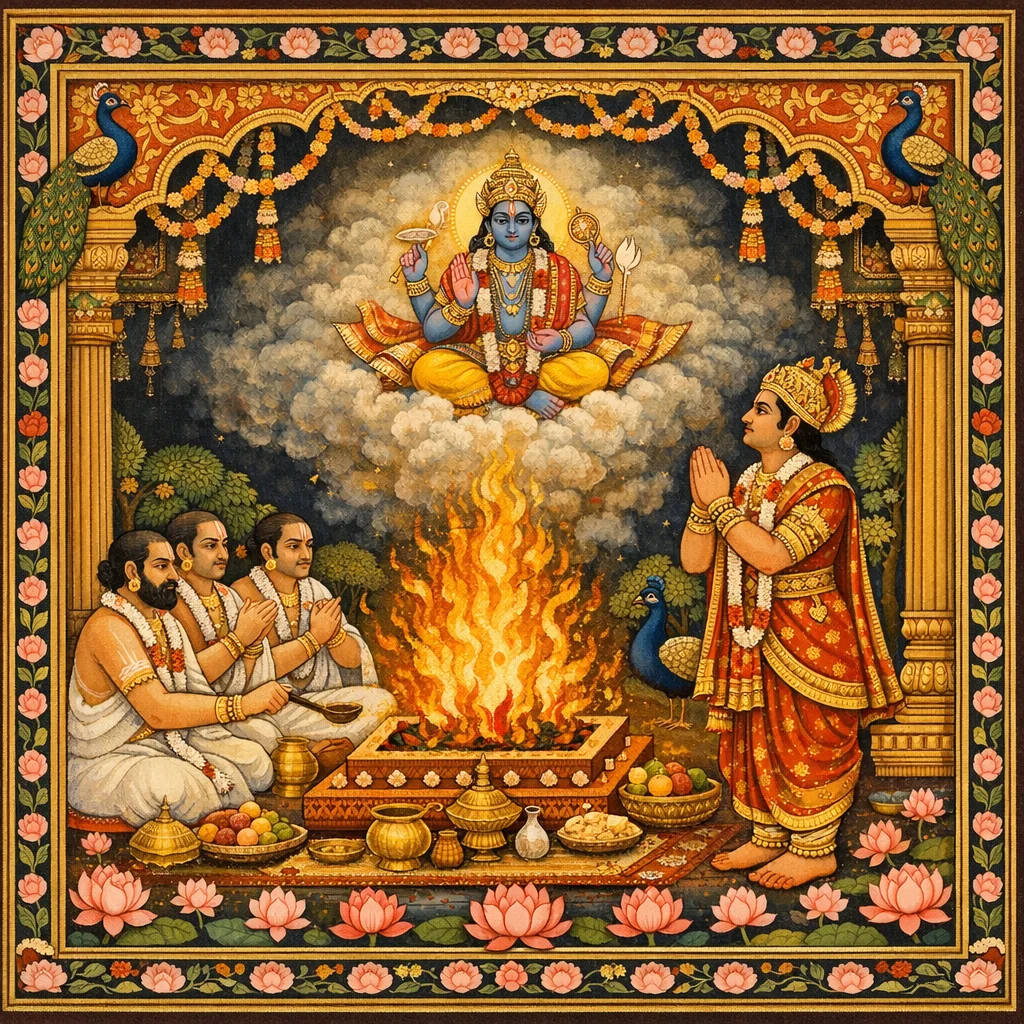
मत्वा तं जडमुन्मत्तं कुलवृद्धा: समन्त्रिण: । वत्सरं भूपतिं चक्रुर्यवीयांसं भ्रमे: सुतम् ॥ ११ ॥
For this reason the ministers and all the elderly members of the family thought Utkala to be without intelligence and, in fact, mad. Thus his younger brother, named Vatsara, the son of Bhrami, was elevated to the royal throne, and he became king of the world.
Verse 12
स्वर्वीथिर्वत्सरस्येष्टा भार्यासूत षडात्मजान् । पुष्पार्णं तिग्मकेतुं च इषमूर्जं वसुं जयम् ॥ १२ ॥
King Vatsara had a very dear wife whose name was Svarvīthi, and she gave birth to six sons, named Puṣpārṇa, Tigmaketu, Iṣa, Ūrja, Vasu and Jaya.
Verse 13
पुष्पार्णस्य प्रभा भार्या दोषा च द्वे बभूवतु: । प्रातर्मध्यन्दिनं सायमिति ह्यासन् प्रभासुता: ॥ १३ ॥
Puṣpārṇa had two wives, Prabhā and Doṣā. From Prabhā were born three sons—Prātar, Madhyandinam, and Sāyam.
Verse 14
प्रदोषो निशिथो व्युष्ट इति दोषासुतास्त्रय: । व्युष्ट: सुतं पुष्करिण्यां सर्वतेजसमादधे ॥ १४ ॥
Doṣā bore three sons—Pradoṣa, Niśitha, and Vyuṣṭa. Vyuṣṭa’s wife Puṣkariṇī gave birth to a greatly powerful son named Sarvatejā.
Verse 15
स चक्षु: सुतमाकूत्यां पत्न्यां मनुमवाप ह । मनोरसूत महिषी विरजान्नड्वला सुतान् ॥ १५ ॥ पुरुं कुत्सं त्रितं द्युम्नं सत्यवन्तमृतं व्रतम् । अग्निष्टोममतीरात्रं प्रद्युम्नं शिबिमुल्मुकम् ॥ १६ ॥
Sarvatejā, by his wife Ākūti, begot a son named Cākṣuṣa, who at the close of the manvantara became the sixth Manu. Cākṣuṣa Manu’s queen Naḍvalā (Virajā) bore faultless sons—Puru, Kutsa, Trita, Dyumna, Satyavān, Ṛta, Vrata, Agniṣṭoma, Atīrātra, Pradyumna, Śibi, and Ulmuka.
Verse 16
स चक्षु: सुतमाकूत्यां पत्न्यां मनुमवाप ह । मनोरसूत महिषी विरजान्नड्वला सुतान् ॥ १५ ॥ पुरुं कुत्सं त्रितं द्युम्नं सत्यवन्तमृतं व्रतम् । अग्निष्टोममतीरात्रं प्रद्युम्नं शिबिमुल्मुकम् ॥ १६ ॥
Sarvatejā, by his wife Ākūti, begot a son named Cākṣuṣa, who at the close of the manvantara became the sixth Manu. Cākṣuṣa Manu’s queen Naḍvalā (Virajā) bore faultless sons—Puru, Kutsa, Trita, Dyumna, Satyavān, Ṛta, Vrata, Agniṣṭoma, Atīrātra, Pradyumna, Śibi, and Ulmuka.
Verse 17
उल्मुकोऽजनयत्पुत्रान्पुष्करिण्यां षडुत्तमान् । अङ्गं सुमनसं ख्यातिं क्रतुमङ्गिरसं गयम् ॥ १७ ॥
Ulmuka, by his wife Puṣkariṇī, begot six excellent sons: Aṅga, Sumanā, Khyāti, Kratu, Aṅgirā, and Gaya.
Verse 18
सुनीथाङ्गस्य या पत्नी सुषुवे वेनमुल्बणम् । यद्दौ:शील्यात्स राजर्षिर्निर्विण्णो निरगात्पुरात् ॥ १८ ॥
Sunīthā, the wife of Aṅga, gave birth to a son named Vena, fierce and crooked in nature. Seeing Vena’s wicked character, the saintly King Aṅga became disheartened, abandoned city and kingdom, and departed for the forest.
Verse 19
यमङ्ग शेपु: कुपिता वाग्वज्रा मुनय: किल । गतासोस्तस्य भूयस्ते ममन्थुर्दक्षिणं करम् ॥ १९ ॥ अराजके तदा लोके दस्युभि: पीडिता: प्रजा: । जातो नारायणांशेन पृथुराद्य: क्षितीश्वर: ॥ २० ॥
O Vidura, the curse spoken by great sages is irresistible, like a thunderbolt. Thus, when in anger they cursed King Vena, he died. After his death, with no king, thieves and rogues flourished; the realm fell into disorder and the people suffered greatly. Seeing this, the sages churned Vena’s right hand as a churning rod, and from that churning Lord Viṣṇu, as an aṁśa of Nārāyaṇa, manifested as King Pṛthu, the first emperor of the world.
Verse 20
यमङ्ग शेपु: कुपिता वाग्वज्रा मुनय: किल । गतासोस्तस्य भूयस्ते ममन्थुर्दक्षिणं करम् ॥ १९ ॥ अराजके तदा लोके दस्युभि: पीडिता: प्रजा: । जातो नारायणांशेन पृथुराद्य: क्षितीश्वर: ॥ २० ॥
With no king, rogues and thieves oppressed the people; the realm lost all order and everyone suffered. Therefore the sages churned Vena’s right hand, and Lord Viṣṇu, as an aṁśa of Nārāyaṇa, manifested as King Pṛthu, the first ruler of the earth.
Verse 21
विदुर उवाच तस्य शीलनिधे: साधोर्ब्रह्मण्यस्य महात्मन: । राज्ञ: कथमभूद्दुष्टा प्रजा यद्विमना ययौ ॥ २१ ॥
Vidura asked: O saintly brāhmaṇa, treasure of virtue and lover of brahminical culture, how did the gentle King Aṅga obtain a wicked son like Vena, because of whom he became indifferent and left his kingdom?
Verse 22
किं वांहो वेन उद्दिश्य ब्रह्मदण्डमयूयुजन् । दण्डव्रतधरे राज्ञि मुनयो धर्मकोविदा: ॥ २२ ॥
Vidura also asked: What was it about Vena that the sages, fully learned in dharma, desired to impose upon King Vena—who himself wielded the rod of punishment—the brahma-daṇḍa, the supreme chastisement in the form of a curse?
Verse 23
नावध्येय: प्रजापाल: प्रजाभिरघवानपि । यदसौ लोकपालानां बिभर्त्योज: स्वतेजसा ॥ २३ ॥
Citizens should never insult the king, even if he sometimes seems to act sinfully, for by his own prowess and splendor the king bears greater influence than all other rulers.
Verse 24
एतदाख्याहि मे ब्रह्मन् सुनीथात्मजचेष्टितम् । श्रद्दधानाय भक्ताय त्वं परावरवित्तम: ॥ २४ ॥
O brāhmaṇa, please tell me of the deeds of Vena, the son of Sunīthā. You know all matters, past and future; I am a faithful devotee, so kindly explain them to me.
Verse 25
मैत्रेय उवाच अङ्गोऽश्वमेधं राजर्षिराजहार महाक्रतुम् । नाजग्मुर्देवतास्तस्मिन्नाहूता ब्रह्मवादिभि: ॥ २५ ॥
Śrī Maitreya replied: O Vidura, once the rāja-ṛṣi King Aṅga arranged the great aśvamedha sacrifice. Though the learned brāhmaṇas invoked the demigods, none of them came or manifested there, despite every effort.
Verse 26
तमूचुर्विस्मितास्तत्र यजमानमथर्त्विज: । हवींषि हूयमानानि न ते गृह्णन्ति देवता: ॥ २६ ॥
The priests at the sacrifice, astonished, told King Aṅga, the sponsor: “O King, we are offering the havis, such as clarified butter, in proper rite, yet the demigods do not accept it.”
Verse 27
राजन् हवींष्यदुष्टानि श्रद्धयासादितानि ते । छन्दांस्ययातयामानि योजितानि धृतव्रतै: ॥ २७ ॥
O King, the sacrificial paraphernalia you have gathered with faith are pure and untainted. And the Vedic meters are chanted as ayātayāma—without any flaw—by the brāhmaṇas of firm vows, in proper order.
Verse 28
न विदामेह देवानां हेलनं वयमण्वपि । यन्न गृह्णन्ति भागान् स्वान् ये देवा: कर्मसाक्षिण: ॥ २८ ॥
O King, we see not even the slightest cause for the devas to feel insulted or neglected; yet the devas, witnesses of the sacrifice, do not accept their allotted shares. Why this is so, we do not know.
Verse 29
मैत्रेय उवाच अङ्गो द्विजवच: श्रुत्वा यजमान: सुदुर्मना: । तत्प्रष्टुं व्यसृजद्वाचं सदस्यांस्तदनुज्ञया ॥ २९ ॥
Maitreya said: King Aṅga, the sponsor of the sacrifice, upon hearing the priests’ words, became greatly distressed. Then, with their permission, he broke his silence and questioned all the priests assembled in the sacrificial arena.
Verse 30
नागच्छन्त्याहुता देवा न गृह्णन्ति ग्रहानिह । सदसस्पतयो ब्रूत किमवद्यं मया कृतम् ॥ ३० ॥
King Aṅga said: Though invited, the devas do not come, nor do they accept here the shares due to them. O leaders of the assembly, tell me—what offense have I committed?
Verse 31
सदसस्पतय ऊचु: नरदेवेह भवतो नाघं तावन् मनाक्स्थितम् । अस्त्येकं प्राक्तनमघं यदिहेदृक् त्वमप्रज: ॥ ३१ ॥
The chief priests said: O king among men, in this life we see no sin in you—not even within your mind; you are not offensive in the least. Yet there is one sin from a previous life, by which, though fully qualified, you have no son.
Verse 32
तथा साधय भद्रं ते आत्मानं सुप्रजं नृप । इष्टस्ते पुत्रकामस्य पुत्रं दास्यति यज्ञभुक् ॥ ३२ ॥
Therefore, O King, may auspiciousness be yours. At once take the means to become blessed with a worthy son. If you perform the sacrifice with the desire for a son, the Supreme Lord—the enjoyer of all yajña—will be pleased and grant you a son.
Verse 33
तथा स्वभागधेयानि ग्रहीष्यन्ति दिवौकस: । यद्यज्ञपुरुष: साक्षादपत्याय हरिर्वृत: ॥ ३३ ॥
When Hari Himself—the Yajña-puruṣa, the supreme enjoyer of all sacrifices—is invited to grant you a son, all the demigods come with Him and receive their respective shares in the sacrifice.
Verse 34
तांस्तान् कामान् हरिर्दद्याद्यान् यान् कामयते जन: । आराधितो यथैवैष तथा पुंसां फलोदय: ॥ ३४ ॥
Whatever desires a person longs for, Hari—when worshiped—bestows them; according to the manner of worship, so the fruit arises for men.
Verse 35
इति व्यवसिता विप्रास्तस्य राज्ञ: प्रजातये । पुरोडाशं निरवपन् शिपिविष्टाय विष्णवे ॥ ३५ ॥
Thus the brāhmaṇas, resolved to obtain progeny for King Aṅga, offered the puroḍāśa oblation to Viṣṇu Śipiviṣṭa, who dwells within the hearts of all living beings.
Verse 36
तस्मात्पुरुष उत्तस्थौ हेममाल्यमलाम्बर: । हिरण्मयेन पात्रेण सिद्धमादाय पायसम् ॥ ३६ ॥
As soon as the oblation was poured into the fire, a person rose from the fire altar, wearing a golden garland and white garments, carrying a golden vessel filled with pāyasa—rice cooked in milk.
Verse 37
स विप्रानुमतो राजा गृहीत्वाञ्जलिनौदनम् । अवघ्राय मुदा युक्त: प्रादात्पत्न्या उदारधी: ॥ ३७ ॥
With the priests’ permission, the generous-minded King took the sacred preparation in his joined palms, smelled it with joy, and offered a portion to his wife.
Verse 38
सा तत्पुंसवनं राज्ञी प्राश्य वै पत्युरादधे । गर्भं काल उपावृत्ते कुमारं सुषुवेऽप्रजा ॥ ३८ ॥
Although the Queen had no son, after eating that food, which had the power to produce a male child, she became pregnant by her husband, and in due course of time she gave birth to a son.
Verse 39
स बाल एव पुरुषो मातामहमनुव्रत: । अधर्मांशोद्भवं मृत्युं तेनाभवदधार्मिक: ॥ ३९ ॥
That boy was born partially in the dynasty of irreligion. His grandfather was death personified, and the boy grew up as his follower; he became a greatly irreligious person.
Verse 40
स शरासनमुद्यम्य मृगयुर्वनगोचर: । हन्त्यसाधुर्मृगान् दीनान् वेनोऽसावित्यरौज्जन: ॥ ४० ॥
After fixing his bow and arrow, the cruel boy used to go to the forest and unnecessarily kill innocent deer, and as soon as he came all the people would cry, “Here comes cruel Vena! Here comes cruel Vena!”
Verse 41
आक्रीडे क्रीडतो बालान् वयस्यानतिदारुण: । प्रसह्य निरनुक्रोश: पशुमारममारयत् ॥ ४१ ॥
The boy was so cruel that while playing with young boys of his age he would kill them very mercilessly, as if they were animals meant for slaughter.
Verse 42
तं विचक्ष्य खलं पुत्रं शासनैर्विविधैर्नृप: । यदा न शासितुं कल्पो भृशमासीत्सुदुर्मना: ॥ ४२ ॥
After seeing the cruel and merciless behavior of his son, Vena, King Aṅga punished him in different ways to reform him, but was unable to bring him to the path of gentleness. He thus became greatly aggrieved.
Verse 43
प्रायेणाभ्यर्चितो देवो येऽप्रजा गृहमेधिन: । कदपत्यभृतं दु:खं ये न विन्दन्ति दुर्भरम् ॥ ४३ ॥
The King reflected within himself: Those who have no son are surely blessed. They must have worshiped the Lord in former lives, and thus they do not suffer the unbearable misery brought by a wicked son.
Verse 44
यत: पापीयसी कीर्तिरधर्मश्च महान्नृणाम् । यतो विरोध: सर्वेषां यत आधिरनन्तक: ॥ ४४ ॥
A sinful son makes one’s good name vanish. His irreligious conduct at home spreads adharma and quarrel among all, and from it arises only endless anxiety.
Verse 45
कस्तं प्रजापदेशं वै मोहबन्धनमात्मन: । पण्डितो बहु मन्येत यदर्था: क्लेशदा गृहा: ॥ ४५ ॥
Who, if thoughtful and intelligent, would desire such a worthless son? Such a son is only a bond of illusion for the soul, and he makes one’s home a place of misery.
Verse 46
कदपत्यं वरं मन्ये सदपत्याच्छुचां पदात् । निर्विद्येत गृहान्मर्त्यो यत्क्लेशनिवहा गृहा: ॥ ४६ ॥
Then the King thought: A bad son is better than a good son, for a good son increases attachment to home, whereas a bad son does not. A bad son makes the home like hell, and thus an intelligent man naturally becomes detached from it.
Verse 47
एवं स निर्विण्णमना नृपो गृहा- न्निशीथ उत्थाय महोदयोदयात् । अलब्धनिद्रोऽनुपलक्षितो नृभि- र्हित्वा गतो वेनसुवं प्रसुप्ताम् ॥ ४७ ॥
Thus thinking, King Aṅga could not sleep at night and became wholly indifferent to household life. Once, in the dead of night, he rose from his bed, left Vena’s mother (his wife) fast asleep, renounced all attachment to his greatly opulent kingdom, and—unseen by anyone—quietly departed his home and went toward the forest.
Verse 48
विज्ञाय निर्विद्य गतं पतिं प्रजा: पुरोहितामात्यसुहृद्गणादय: । विचिक्युरुर्व्यामतिशोककातरा यथा निगूढं पुरुषं कुयोगिन: ॥ ४८ ॥
When it became known that the King had left home in detachment, the citizens—priests, ministers, friends, and all others—were overwhelmed with grief. They searched for him throughout the world, like an unskilled yogī seeking the hidden Paramātmā within.
Verse 49
अलक्षयन्त: पदवीं प्रजापते- र्हतोद्यमा: प्रत्युपसृत्य ते पुरीम् । ऋषीन् समेतानभिवन्द्य साश्रवो न्यवेदयन् पौरव भर्तृविप्लवम् ॥ ४९ ॥
Unable to find any trace of the King despite searching everywhere, the citizens lost heart and returned to the city, where the great sages had assembled because of his absence. With tears in their eyes, they bowed respectfully and reported in full that the King could not be found anywhere.
Frequently Asked Questions
Vidura’s question introduces the next major narrative arc (the Pracetās and their devotional achievements). The Bhāgavata uses this inquiry as a hinge: from Dhruva’s concluded episode to the continuation of dynastic history that will intersect with the Pracetās, Nārada, and the restoration of dharma through exemplary rulers.
The text presents Utkala as internally fixed in self-realization—seeing the Supersoul in all and all in the Supersoul—while externally indifferent to social performance. Like “fire covered with ashes,” his spiritual potency is concealed; worldly observers misread his nonconformity as incapacity, illustrating how transcendence can be misunderstood when judged by material norms.
The priests diagnose no present offense in Aṅga’s conduct or ritual execution, but identify a prior-life karmic impediment manifesting as childlessness. Since yajña is meant for Hari as the ultimate enjoyer, they redirect the sacrifice toward Viṣṇu; when Hari is properly worshiped, the demigods—being His empowered administrators—naturally receive their shares.
Bhāgavata theology allows for complex karmic inheritance and the autonomy of the jīva: a virtuous parent may receive a difficult progeny due to residual karma and the incoming soul’s dispositions. The narrative uses this to teach detachment, the limits of material arrangements, and the need for divine-centered dharma rather than mere social respectability.
Aṅga’s renunciation is triggered by grief and disillusionment with Vena’s incorrigible cruelty, revealing how adharma in leadership corrodes the very purpose of rulership. His disappearance creates a power vacuum, leading to social disorder and the sages’ intervention—setting up Vena’s later actions, his punishment, and the eventual advent of Pṛthu as dharma-restorer.