Adhyaya 27
प्रद्युम्न-अपहरणम्, मत्स्य-उद्धारः, मायावती-शिक्षा, शम्बरवधः, रुक्मिणी-पुत्र-संगमः
Answering Maitreya, Parashara narrates that on the sixth day after birth, Pradyumna was abducted by Shambara and thrown into the ocean, where a fish swallowed him. Mayavati found the baby in the fish's belly and raised him per Narada's command. In his youth, she revealed the truth and taught him magic (Maya). Pradyumna killed Shambara and returned to Dwaraka with Mayavati. Narada clarified to Rukmini that he is her son (Kama) and Mayavati is Rati, bringing joy to all.
Shlokas
Verse 1
शम्बरेण हृतो वीरः प्रद्युम्नः स कथं मुने शम्बरश् च महावीर्यः प्रद्युम्नेन कथं हतः
O sage, how was the hero Pradyumna carried off by Śambara? And how was Śambara, mighty in power, slain by Pradyumna?
Verse 2
षष्ठे ऽह्नि जातमात्रं तु प्रद्युम्नं सूतिकागृहात् ममैष हन्तेति मुने हृतवान् कालशम्बरः
O sage, on the sixth day after his birth, the newborn Pradyumna was taken from the lying-in chamber. Kālaśambara carried him off, thinking, “This one will be my slayer.”
Verse 3
हृत्वा चिक्षेप चैवैनं ग्राहोग्रे लवणार्णवे कल्लोलजनितावर्ते सुघोरे मकरालये
Having seized him, Śambara hurled him into the salt ocean—into a dreadful whirlpool raised by the waves, the fearsome abode of the makaras.
Verse 4
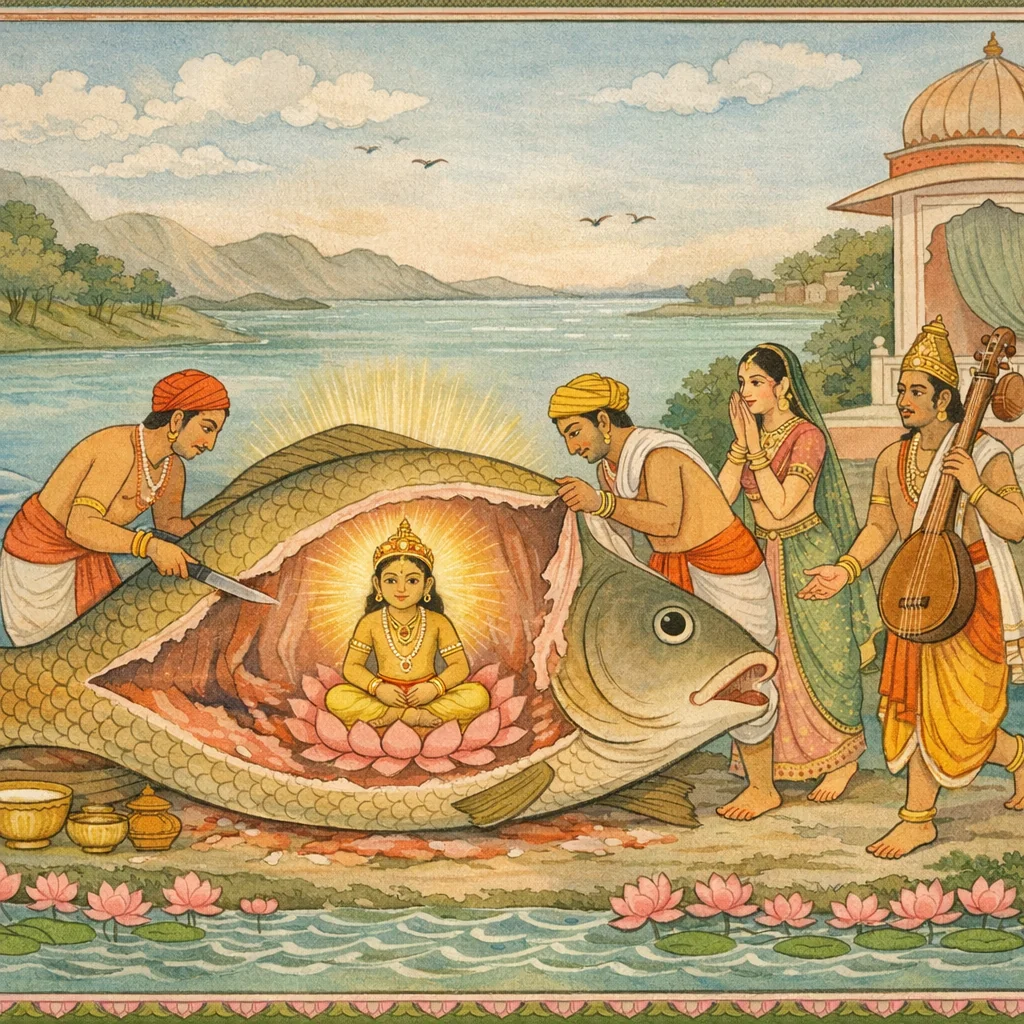
पतितं तत्र चैवैको मत्स्यो जग्राह बालकम् न ममार च तस्यापि जठरानलदीपितः
There, as he fell, a single fish swallowed the boy; yet he did not die—though the fire in the fish’s belly flared, it could not consume him.
Verse 5
मत्स्यबन्धैश् च मत्स्यो ऽसौ मत्स्यैर् अन्यैः सह द्विज घातितो ऽसुरवर्याय शम्बराय निवेदितः
O Brāhmaṇa, that fish—caught by the fishermen together with other fish—was slain, and then presented as an offering to Śambara, foremost among the Asuras.
Verse 6
तस्य मायावती नाम पत्नी सर्वगृहेश्वरी कारयाम् आस सूदानाम् आधिपत्यम् अनिन्दिता
His wife, named Māyāvatī—blameless and mistress of the entire household—caused the office of overlordship among the Sūdas (servitors) to be duly administered.
Verse 7
दारिते मत्स्यजठरे ददृशे सातिशोभनम् कुमारं मन्मथतरोर् दग्धस्य प्रथमाङ्कुरम्
When the belly of the fish was split open, there appeared a most radiant boy—like the very first tender shoot of the love-god’s tree, rising anew even after it had been burned.
Verse 8
को ऽयं कथम् अयं मत्स्यजठरं समुपागतः इत्य् एवं कौतुकाविष्टां तां तन्वीं प्राह नारदः
When the slender maiden, seized by wonder, kept asking, “Who is he—and how has he come to be within the belly of a fish?”—Nārada spoke to her.
Verse 9
अयं समस्तजगतः सूतिसंहारकर्मणः शम्बरेण हृतो विष्णोस् तनयः सूतिकागृहात्
This child is the son of Viṣṇu; Śambara carried him off from the lying-in chamber. In time, this very child will become the cause of Śambara’s destruction—Śambara who works ruin upon all beings.
Verse 10
क्षिप्तः समुद्रे मत्स्येन निगीर्णस् ते वशं गतः नररत्नम् इदं सुभ्रु विस्रब्धा परिपालय
Cast into the ocean and swallowed by a fish, he has now come under your power. O fair-browed one, this jewel among men stands before you—guard him well, with calm confidence.
Verse 11
नारदेनैवम् उक्ता सा पालयाम् आस तं शिशुम् बाल्याद् एवातिरागेण रूपातिशयमोहिता
Thus instructed by Nārada, she continued to nurture and protect that child—enchanted by his extraordinary beauty and bound to him from his very infancy with an overwhelming affection.
Verse 12
स यदा यौवनाभोगभूषितो ऽभून् महामुने साभिलाषा तदा सा तु बभूव गजगामिनी
O great sage, when he became adorned with the enjoyments and splendor of youth, then she too—filled with longing—became a woman of majestic, elephant-like gait.
Verse 13
मायावती ददौ चास्मै मायाः सर्वा महात्मने प्रद्युम्नायानुरागान्धा तन्न्यस्तहृदयेक्षणा
Māyāvatī, her heart and gaze wholly fixed upon him—blinded, as it were, by love—bestowed upon that great-souled Pradyumna all the arts of māyā (mystic and strategic devices) that she possessed.
Verse 14
प्रसज्जन्तीं तु ताम् आह स कार्ष्णिः कमलेक्षणाम् मातृभावाम् अपाहाय किम् एवं वर्तसे ऽन्यथा
Seeing her thus overcome by feeling, Kārṣṇi spoke to the lotus‑eyed lady: “Casting aside the attitude of a mother, why do you conduct yourself in this other manner?”
Verse 15
सा चास्मै कथयाम् आस न पुत्रस् त्वं ममेति वै तनयं त्वाम् अयं विष्णोर् हृतवान् कालशम्बरः
She then told him, “Truly, you are not my son. You are Vishnu’s son; it was this Kāla-Śambara who stole you away.”
Verse 16
क्षिप्तः समुद्रे मत्स्यस्य संप्राप्तो जठरान् मया सा तु रोदिति ते माता कान्ताद्याप्य् अतिवत्सला
Cast into the sea, you came to the belly of a fish—so it happened through me. Yet your mother, even now, is tenderness beyond measure; beloved, she still weeps for you.
Verse 17
इत्य् उक्तः शम्बरं युद्धे प्रद्युम्नः स समाह्वयत् क्रोधाकुलीकृतमना युयुधे च महाबलः
Thus addressed, Pradyumna challenged Śambara on the battlefield. His mind, churned by wrath, that mighty hero engaged him in combat.
Verse 18
हत्वा सैन्यम् अशेषं तु तस्य दैत्यस्य माधविः सप्तमाया व्यतिक्रम्य मायां संयुयुजे ऽष्टमीम्
Having utterly destroyed the entire army of that Daitya, Mādhava—surpassing even the seventh māyā—then employed the eighth māyā.
Verse 19
तया जघान तं दैत्यं मायया कालशम्बरम् उत्पत्य च तया सार्धम् आजगाम पितुर् गृहम्
By that māyā-power he struck down the demon Kāla-Śambara. Then, rising up together with her, he came to his father’s home.
Verse 20
अन्तःपुरे निपतितं मायावत्या समन्वितम् तं दृष्ट्वा कृष्णसंकल्पा बभूवुः कृष्णयोषितः
Within the inner palace they found him fallen, with Māyāvatī attending him; and seeing him so, Kṛṣṇa’s women—whose minds were fixed on Kṛṣṇa alone—became one in a single, Kṛṣṇa-centered resolve.
Verse 21
रुक्मिणी चावदत् प्रेम्णा सास्रदृष्टिर् अनिन्दिता धन्याया खल्व् अयं पुत्रो वर्तते नवयौवने
Then Rukmiṇī—blameless—spoke in love, her eyes brimming with tears: “Truly blessed is that mother whose son abides in the full bloom of fresh youth.”
Verse 22
अस्मिन् वयसि पुत्रो मे प्रद्युम्नो यदि जीवति सभाग्या जननी वत्स त्वया कापि विभूषिता
“If at this very age my son Pradyumna still lives, then, dear child, his mother is truly most fortunate—by some extraordinary grace of yours she has been adorned and blessed.”
Verse 23
अथवा यादृशः स्नेहो मम यादृग् वपुस् तव हरेर् अपत्यं सुव्यक्तं भवान् वत्स भविष्यति
“Or else—by the measure of my affection and by the likeness of your very form—you, dear child, will plainly become the offspring of Hari (Viṣṇu) Himself.”
Verse 24
एतस्मिन्न् अन्तरे प्राप्तः सह कृष्णेन नारदः अन्तःपुरचरां देवीं रुक्मिणीं प्राह हर्षयन्
Just then Nārada arrived in Kṛṣṇa’s company; and, gladdening the heart of the goddess Rukmiṇī within the inner apartments, he addressed her.
Verse 25
एष ते तनयः सुभ्रु हत्वा शम्बरम् आगतः हृतो येनाभवद् बालो भवत्याः सूतिकागृहात्
O fair-browed lady, this is your own son, returned after slaying Śambara. He is the child once stolen from your lying-in chamber; now, by destiny and by his own valor, he stands before you again.
Verse 26
इयं मायावती भार्या तनयस्यास्य ते सती शम्बरस्य न भार्येयं श्रूयताम् अत्र कारणम्
This virtuous Māyāvatī is the wife ordained for your son. She is not, in truth, Śambara’s wife—hear now the reason for this.
Verse 27
मन्मथे तु गते नाशं तदुद्भवपरायणा शम्बरं मोहयाम् आस मायारूपेण रूपिणी
But when Manmatha met his ruin, she—intent upon what was born of him—bewildered Śambara, assuming a form of māyā though herself truly embodied.
Verse 28
विहाराद्युपभोगेषु रूपं मायामयं शुभम् दर्शयाम् आस दैत्यस्य तस्येयं मदिरेक्षणा
Amid sport and enjoyment, this woman of wine-like eyes displayed to that Daitya a beautiful, auspicious form fashioned of māyā, ensnaring his mind.
Verse 29
कामो ऽवतीर्णः पुत्रस् ते तस्येयं दयिता रतिः विशङ्का नात्र कर्तव्या स्नुषेयं तव शोभना
This son of yours is Kāma himself, descended upon the earth; and this is his beloved Rati. Have no doubt—this radiant one is your fair daughter-in-law.
Verse 30
ततो हर्षसमाविष्टा रुक्मिणी केशवस् तथा नगरी च समस्ता सा साधु साध्व् इत्य् अभाषत
Then Rukmiṇī, overcome with joy—and Keśava as well—while the whole city looked on, voiced acclaim again and again, crying, “Well done! Well done!”
Verse 31
चिरनष्टेन पुत्रेण संगतां प्रेक्ष्य रुक्मिणीम् अवाप विस्मयं सर्वो द्वारवत्यां जनस् तदा
Then all the people of Dvāravatī were filled with wonder on seeing Rukmiṇī reunited with her son, who had been lost for so long.
Frequently Asked Questions
It functions as a providential ‘rakṣaṇa’ motif: despite being cast into the ocean, the child is preserved, transferred through unlikely means, and re-established—highlighting Bhagavān’s protection operating through nature and circumstance.
It signals graded, strategic deployment of power—māyā as both occult capability and divine sovereignty—culminating in decisive Lord-backed victory over an asuric master of sorcery.
Nārada’s identification resolves narrative ambiguity: Pradyumna is described as ‘madanāṃśa’ (aspect/incarnation of Kāma), and Mayāvatī is explained as Rati’s continuity, entering Shambara’s household through māyā to reunite with Kāma’s descent.