Adhyaya 6
मानवसर्गः, चातुर्वर्ण्य-गुणकर्म, यज्ञ-प्रतिपादनम्, आश्रमधर्म-फल, नरकवर्णनम्
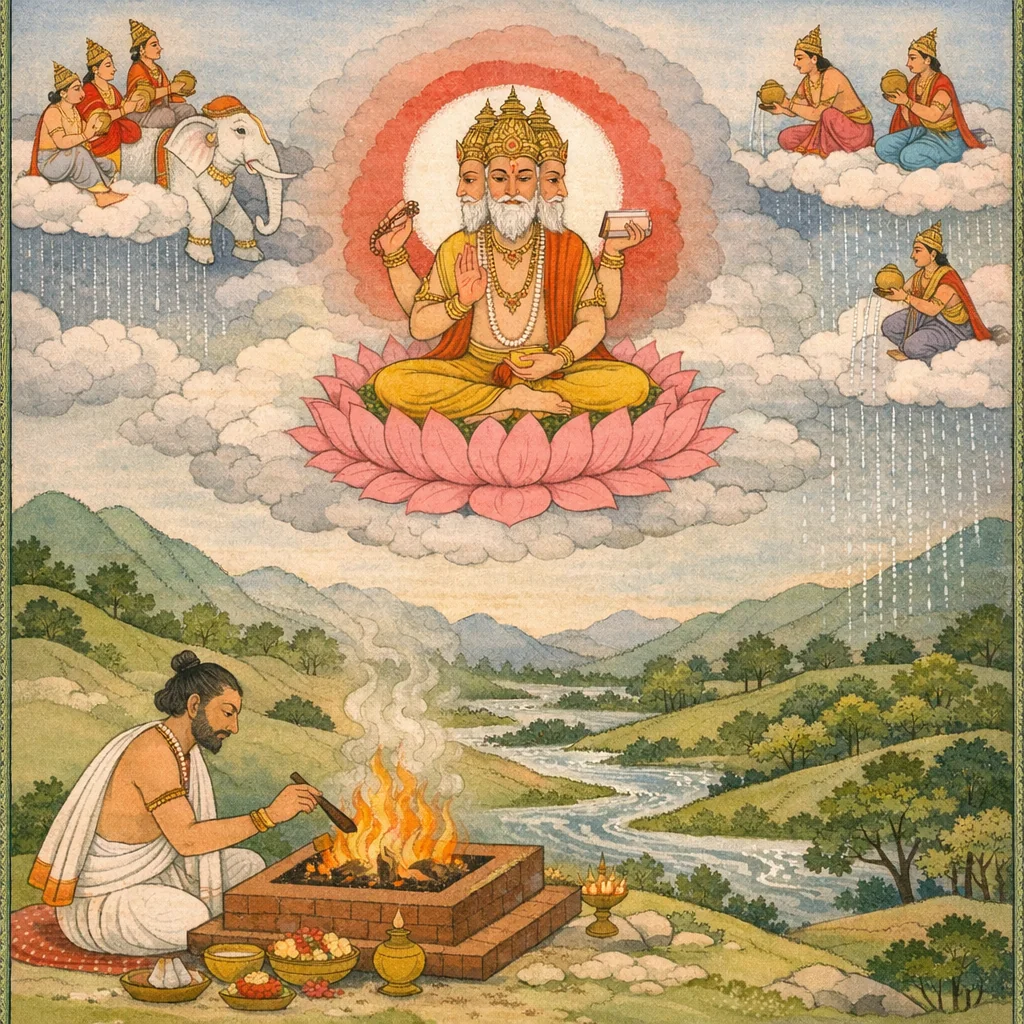
Maitreya asks for details of the human (arvāksrotas) creation—how Brahmā produced mankind, the four varṇas, their guṇa-marks, and their appointed duties. Parāśara explains that from Brahmā’s body, according to guṇa predominance, arose cāturvarṇya—brāhmaṇa, kṣatriya, vaiśya, śūdra—meant to accomplish yajña, the sustaining exchange by which the devas are nourished, rain falls, and beings are supported. Humans alone can attain svarga or apavarga; through purified conduct and cultivated disposition, when Hari is established in the cleansed mind, Viṣṇu-realization dawns. He then describes moral decline: adharma-seeds born of tamas and greed, suffering under dualities, the growth of forts, towns, homes, and livelihoods, and lists of grains, pulses, and sacrificial plants that uphold yajña. Those who revile the Veda and obstruct sacrifice are condemned as disruptors of the pravṛtti path. Finally, he outlines destinations according to dharma (realms of Prajāpati, Indra, Māruta, Gandharvas), higher stations for āśrama-dwellers and yogins, and hells for Veda-slanderers and dharma-abandoners.
Shlokas
Verse 1
अर्वाक्स्रोतस् तु कथितो भवता यस् तु मानुषः ब्रह्मन् विस्तरतो ब्रूहि ब्रह्मा तम् असृजद् यथा
O Brahman, you have spoken of the ‘downward-current’ creation—the human order. Now tell me in full: in what manner did Brahmā bring mankind into being?
Verse 2
यथा च वर्णान् असृजद् यद्गुणांश् च महामुने यच् च तेषां स्मृतं कर्म विप्रादीनां तद् उच्यताम्
And how, O great sage, were the social orders (varṇas) brought forth, with what distinguishing qualities (guṇas)? And what duties are remembered for them—beginning with the brāhmaṇas? Speak all this clearly.
Verse 3
सत्याभिध्यायिनः पूर्वं सिसृक्षोर् ब्रह्मणो जगत् अजायन्त द्विजश्रेष्ठ सत्त्वोद्रिक्ता मुखात् प्रजाः
O best of the twice-born, when Brahmā, intent on bringing forth the universe, first fixed his contemplation upon Truth, there arose from his mouth progeny in whom sattva predominated.
Verse 4
वक्षसो रजसोद्रिक्तास् तथान्या ब्रह्मणो ऽभवन् रजसा तमसा चैव समुद्रिक्तास् तथोरुतः
From Brahmā’s chest arose those in whom rajas predominated; and from another part of Brahmā likewise came beings marked chiefly by rajas. From his thigh, too, were manifested those in whom rajas and tamas were jointly intensified.
Verse 5
पद्भ्याम् अन्याः प्रजा ब्रह्मा ससर्ज द्विजसत्तम तमःप्रधानास् ताः सर्वाश् चातुर्वर्ण्यम् इदं ततः
O best of the twice-born, from the feet Brahmā brought forth other beings, in whom tamas predominated; from that very differentiation arose the fourfold order, the cāturvarṇya.
Verse 6
ब्राह्मणाः क्षत्रिया वैश्याः शूद्राश् च द्विजसत्तम पादोरुवक्षःस्थलतो मुखतश् च समुद्गताः
O best of the twice-born, the Brāhmaṇas, Kṣatriyas, Vaiśyas, and Śūdras arose from the cosmic form— from the feet, the thighs, the chest, and the mouth.
Verse 7
यज्ञनिष्पत्तये सर्वम् एतद् ब्रह्मा चकार वै चातुर्वर्ण्यं महाभाग यज्ञसाधनम् उत्तमम्
For the full accomplishment of yajña, Brahmā fashioned all this, O noble one, and established the cāturvarṇya as the highest means by which sacrifice is upheld and brought to fruition.
Verse 8
यज्ञैर् आप्यायिता देवा वृष्ट्युत्सर्गेण वै प्रजाः आप्याययन्ते धर्मज्ञ यज्ञाः कल्याणहेतवः
By yajñas the gods are nourished; and by the gods’ release of rain, the beings of the world are sustained. Thus, O knower of dharma, yajñas are the cause of welfare.
Verse 9
निष्पाद्यन्ते नरैस् तैस् तु स्वकर्माभिरतैः सदा विशुद्धाचरणोपेतैः सद्भिः सन्मार्गगामिभिः
Yet these ends are truly accomplished by those who are ever devoted to their own rightful duties (svakarma)—good people of purified conduct, endowed with blameless practice, who steadily walk the righteous path.
Verse 10
स्वर्गापवर्गौ मानुष्यात् प्राप्नुवन्ति नरा मुने यद् वाभिरुचितं स्थानं तद् यान्ति मनुजा द्विज
O sage, it is from the human condition that men attain either heaven or final release. O twice-born, to the station a person has chosen and cherished within—toward that very abode he goes.
Verse 11
प्रजास् ता ब्रह्मणा सृष्टाश् चातुर्वर्ण्यव्यवस्थितौ सम्यक्छ्रद्धाः समाचारप्रवणा मुनिसत्तम
Those creatures, brought forth by Brahmā, were duly arranged within the fourfold order. O best of sages, endowed with right faith and inclined to proper conduct, they lived in harmony with the discipline of dharma.
Verse 12
यथेच्छावासनिरताः सर्वबाधाविवर्जिताः शुद्धान्तःकरणाः शुद्धाः सर्वानुष्ठाननिर्मलाः
They abided in desire only as it accords with dharma, untouched by any obstruction or affliction. Pure in their inmost mind, they were stainless—made immaculate by every sacred observance and discipline.
Verse 13
शुद्धे च तासां मनसि शुद्धे ऽन्तःसंस्थिते हरौ शुद्धज्ञानं प्रपश्यन्ति विष्ण्वाख्यं येन तत् पदम्
And when their minds are purified—when Hari, Himself pure, is established within—then they behold stainless knowledge, by which that supreme state is attained, the state known as Viṣṇu.
Verse 14
ततः कालात्मको यो ऽसौ स चांशः कथितो हरेः स पातयत्य् अघं घोरम् अल्पम् अल्पाल्पसारवत्
Therefore, that principle whose very nature is Time (Kāla) is declared to be a portion of Hari. Through it, even dreadful sin falls away—little by little—like a substance of scant essence, reduced to ever smaller remnants.
Verse 15
अधर्मबीजम् उद्भूतं तमोलोभसमुद्भवम् प्रजासु तासु मैत्रेय रागादिकम् असाधकम्
O Maitreya, among those people there springs up the very seed of adharma, born of darkness and greed; it stirs passion and the like, making them unfit for righteous and worthy deeds.
Verse 16
ततः सा सहजा सिद्धिस् तेषां नातीव जायते रसोल्लासादयश् चान्याः सिद्धयो ऽष्टौ भवन्ति याः
Thereafter, their innate perfection scarcely arises; instead, eight other attainments appear, beginning with rasollāsa (exalted relish). Yet these are ancillary powers, not the Supreme consummation realized in Lord Viṣṇu.
Verse 17
तासु क्षीणास्व् अशेषासु वर्धमाने च पातके द्वन्द्वाभिभवदुःखार्तास् ता भवन्ति ततः प्रजाः
When those (virtues and righteous restraints) are utterly exhausted and sin keeps increasing, the people then become oppressed by the blows of the pairs of opposites, afflicted with sorrow and distress.
Verse 18
ततो दुर्गाणि ताश् चक्रुर् वार्क्षं पार्वतम् औदकम् कृत्रिमं च तथा दुर्गं पुरखर्वटकादि यत्
Thereafter they constructed fortresses—those of forest, those secured by mountains, those protected by waters, and also artificial strongholds—along with towns, market-villages, and other settlements.
Verse 19
गृहाणि च यथान्यायं तेषु चक्रुः पुरादिषु शीतातपादिबाधानां प्रशमाय महामते
And in those towns and other settlements they built dwellings in due measure, O great-minded one, to soothe the afflictions of cold, heat, and the like.
Verse 20
प्रतीकारम् इमं कृत्वा शीतादेस् ताः प्रजाः पुनः वार्तोपायं ततश् चक्रुर् हस्तसिद्धिं च कर्मजाम्
Thus, having made this countermeasure against the afflictions of cold and the like, the people became steady again in the ordered rhythm of life; then they set in motion the means of livelihood, establishing crafts of the hand and the attainments born of disciplined karma.
Verse 21
व्रीहयश् च यवाश् चैव गोधूमा अणवस् तिलाः प्रियंगवो ह्य् उदाराश् च कोरदूषाः सतीनकाः
Rice and barley, wheat, millet (aṇu) and sesame; together with priyaṅgu, the nourishing udāra grain, koradūṣa, and satīnaka—these are reckoned among the sustaining crops by which beings are upheld in the ordered world.
Verse 22
माषा मुद्गा मसूराश् च निष्पावाः सकुलत्थकाः आढक्यश् चणकाश् चैव शणाः सप्तदश स्मृताः
Black gram (māṣa), green gram (mudga), and lentils (masūra); flat beans (niṣpāva) and kulattha; pigeon-pea (āḍhakī), chickpea (caṇaka), and śaṇa seed (hemp/flax): these are remembered in tradition as the seventeen varieties of pulses and seeds.
Verse 23
इत्य् एता ओषधीनां तु ग्राम्यानां जातयो मुने ओषध्यो यज्ञियाश् चैव ग्राम्यारण्याश् चतुर्दश
Thus, O sage, these are the classes of cultivated plants. And among the sacred herbs used in yajña—whether found in settlements or in the wild—there are fourteen kinds in all.
Verse 24
व्रीहयः सयवा माषा गोधूमा अणवस् तिलाः प्रियंगुसप्तमा ह्य् एता अष्टमास् तु कुलत्थकाः
Rice, barley, māṣa (black gram), wheat, aṇu (panic-seed), and sesame are declared in order; the seventh is priyaṅgu, and the eighth is kulattha. In creation these are counted as the principal kinds, and by the grace of the Supreme Lord Viṣṇu the world is sustained through them.
Verse 25
श्यामाकास् त्व् अथ नीवारा जर्तिलाः सगवेधुकाः तथा वेणुयवाः प्रोक्तास् तद्वन् मर्कटका मुने
Then are named the grains and wild cereals called śyāmāka, nīvāra, jartilā, and those known as sagavedhukā; likewise the veṇu-yava are spoken of—so too, O sage, are the markaṭaka.
Verse 26
ग्राम्यारण्याः स्मृता ह्य् एता ओषध्यस् तु चतुर्दश यज्ञनिष्पत्तये यज्ञस् तथासां हेतुर् उत्तमः
These herbs are remembered as twofold—of the village and of the forest—fourteen in all. They bring yajña to its full accomplishment; and yajña, in turn, is their highest and noblest cause (their supreme purpose).
Verse 27
एताश् च सह यज्ञेन प्रजानां कारणं परम् परावरविदः प्राज्ञास् ततो यज्ञान् वितन्वते
Together with yajña, these are declared the supreme cause of the flourishing of beings; therefore the wise—who discern the higher and the lower (para and apara)—extend and uphold the performance of yajñas.
Verse 28
अहन्य् अहन्य् अनुष्ठानं यज्ञानां मुनिसत्तम उपकारकरं पुंसां क्रियमाणाघशान्तिदम्
O best of sages, the day-by-day performance of yajña rites is a true benefaction to humankind; when carried out, it pacifies and removes the sins incurred in the course of living.
Verse 29
येषां तु कालसृष्टो ऽसौ पापबिन्दुर् महामते चेतःसु ववृधे चक्रुस् ते न यज्ञेषु मानसम्
But those, O great-minded one, in whose hearts there grows that speck of sin brought forth by Time itself, no longer set their mind upon yajñas; their inward resolve turns away from yajña.
Verse 30
वेदवादांस् तथा वेदान् यज्ञकर्मादिकं च यत् तत् सर्वं निन्दमानास् ते यज्ञव्यासेधकारिणः
Those who revile the Vedic teachings—who disparage the Vedas themselves and the rites beginning with yajña—become makers of obstruction, blocking the course of sacred sacrifice.
Verse 31
प्रवृत्तिमार्गव्युच्छित्तिकारिणो वेदनिन्दकाः दुरात्मानो दुराचारा बभूवुः कुटिलाशयाः
They arose as cutters-off of the path of pravṛtti, revilers of the Veda—evil-souled, corrupt in conduct, and crooked in intent.
Verse 32
संसिद्धायां तु वार्तायां प्रजाः सृष्ट्वा प्रजापतिः मर्यादां स्थापयाम् आस यथास्थानं यथागुणम्
When the ordering of worldly life was duly set in motion, Prajāpati—having created the beings—established the bounds of right order, assigning each its place according to its nature and qualities.
Verse 33
वर्णानाम् आश्रमाणां च धर्मान् धर्मभृतां वर लोकांश् च सर्ववर्णानां सम्यग्धर्मानुपालिनाम्
O best among the upholders of dharma, I shall declare the duties of the varṇas and the āśramas, and the worlds attained by all who rightly preserve dharma.
Verse 34
प्राजापत्यं ब्राह्मणानां स्मृतं स्थानं क्रियावताम् स्थानम् ऐन्द्रं क्षत्रियाणां संग्रामेष्व् अनिवर्तिनाम्
For Brahmins steadfast in sacred rites, the realm of Prajāpati is declared their destined station; and for Kshatriyas who do not turn back in battle, the realm of Indra is ordained as their abode.
Verse 35
वैश्यानां मारुतं स्थानं स्वधर्मनिरतात्मनाम् गान्धर्वं शूद्रजातीनां परिचर्यानुवर्तिनाम्
For the Vaiśyas, whose minds are steadfast in their own svadharma, the region of Māruta is declared as their station; and for those born as Śūdras, who live by devoted attendance and faithful service, the Gandharva realm is appointed as their destined abode.
Verse 36
अष्टाशीतिसहस्राणि मुनीनाम् ऊर्ध्वरेतसाम् स्मृतं तेषां तु यत् स्थानं तद् एव गुरुवासिनाम्
Eighty-eight thousand sages, of uplifted seed and established in continence, are said to abide there; and that very region is also the abode of those who dwell with their spiritual preceptors.
Verse 37
सप्तर्षीणां तु यत् स्थानं स्मृतं तद् वै वनौकसाम् प्राजापत्यं गृहस्थानां ब्राह्मं संन्यासिनां स्मृतम्
The realm remembered as belonging to the Seven Sages is indeed declared to be the destined station of forest-dwellers; for householders the Prajāpatya sphere is taught as their attainment, and for renunciants the Brahma-realm is remembered as their goal.
Verse 38
योगिनाम् अमृतं स्थानं यद् विष्णोः परमं पदम्
For yogins, the deathless realm is that very highest station: Viṣṇu’s supreme abode, the Parama-pada.
Verse 39
एकान्तिनः सदा ब्रह्मध्यायिनो योगिनो हि ये तेषां तत् परमं स्थानं यद् वै पश्यन्ति सूरयः
Those yogins who are single-minded, ever absorbed in contemplation of Brahman, attain that highest abode—the supreme state which the wise truly behold.
Verse 40
गत्वा गत्वा निवर्तन्ते चन्द्रसूर्यादयो ग्रहाः अद्यापि न निवर्तन्ते द्वादशाक्षरचिन्तकाः
Again and again the Moon, the Sun, and the other heavenly bodies go forth and return to their courses; but those who contemplate Vishnu’s Twelve‑Syllabled Name do not return—they move toward the Supreme, beyond all turning back.
Verse 41
तामिस्रम् अन्धतामिस्रं महारौरवरौरवौ असिपत्रवनं घोरं कालसूत्रम् अवीचिमत्
There are the hells named Tāmisra and Andhatāmisra; Mahāraurava and Raurava; the dreadful sword‑leaf forest, Asipatravana; Kālasūtra; and Avīcimat—terrifying realms.
Verse 42
विनिन्दकानां वेदस्य यज्ञव्यासेधकारिणाम् स्थानम् एतत् समाख्यातं स्वधर्मत्यागिनश् च ये
This realm is declared to be the appointed station for those who revile the Veda, who obstruct the spread and performance of sacrifice, and who abandon the duties of their own dharma.
Frequently Asked Questions
It states that Brahmā established the fourfold order for the ‘accomplishment of sacrifice’ (yajña-niṣpatti), making social differentiation functional to sustaining cosmic order through ritual and duty rather than merely genealogical.
It teaches that from human existence one can attain either svarga (heaven) or apavarga (liberation), and that purification culminating in Hari’s presence in the mind yields Viṣṇu-knowledge leading to the supreme state (Viṣṇu’s paramam padam).
Those who revile the Veda, obstruct yajña and its dissemination, and abandon their own dharma (veda-nindakāḥ, yajña-vyāsedha-kāriṇaḥ, svadharma-tyāginaḥ) are described as destined for such hell-realms.