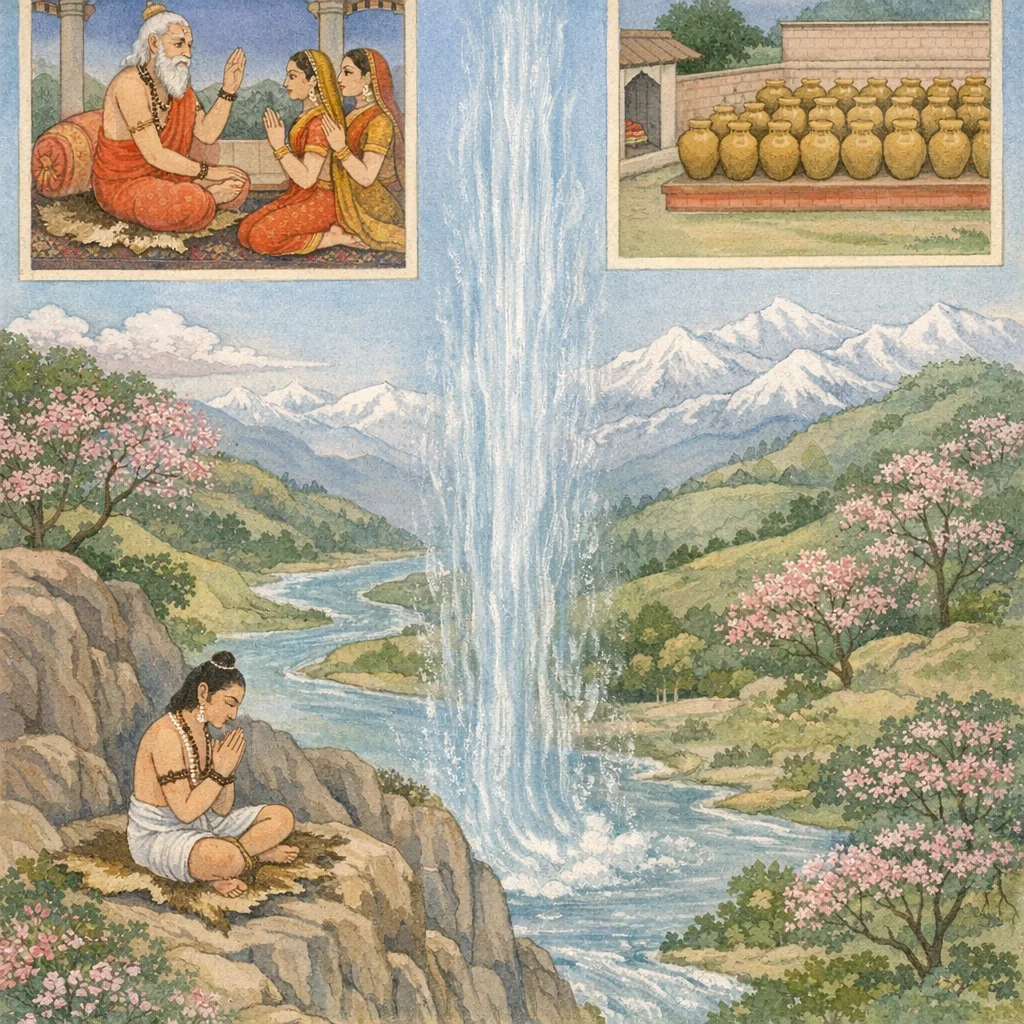
Sagara-vaṃśa-prasavaḥ — The Birth of Sagara’s Sons and the Bhāgīratha Lineage
Adhyāya 39 unfolds as a question–answer dialogue: Śaunaka asks about the origin and extraordinary might of King Sagara’s famed sixty-thousand sons, and Sūta replies with a concise account of lineage and causation. Sagara’s two queens receive boons from the sage Aurva—one seeks sixty-thousand heroic sons, the other a single heir to uphold the dynasty. An unusual birth motif is described: the seed/embryo is set apart in a vessel, and the sons mature in jars filled with ghee, reflecting Purāṇic notions of tapas-born vitality and non-ordinary gestation. The narrative then alludes to the sons’ destruction by Kapila’s fiery energy, while a royal successor (Pañcajana) survives and the line continues through Aṃśumān, Dilīpa, and Bhāgīratha. Bhāgīratha’s pivotal deed—bringing Gaṅgā down to earth and joining her to the ocean as its “daughter”—is presented as the dynasty’s sacred restoration. The chapter closes by tracing further succession (Śrutasena, Nābhāga, Ambarīṣa, Siṃdhudvīpa, Ayutājit), linking dharmic authority, tapas, and holy geography (the Gaṅgā–Sāgara confluence) within a Śaiva-Purāṇic historiography.
Shlokas
Verse 1
शौनक उवाच । सगरस्यात्मजा वीराः कथं जाता महाबलाः । विक्रांताः षष्टिसाहस्रा विधना केन वा वद
Śaunaka said: “How were the heroic sons of Sagara born—those sixty thousand mighty and valiant warriors? By what ordinance of fate and divine arrangement did this come to be? Tell me.”
Verse 2
सूत उवाच । द्वे पत्न्यो सगरस्यास्तां तपसा दग्धकिल्विषे । और्वस्तयोर्वरं प्रादात्तोषितो मुनिसत्तमः
Sūta said: King Sagara had two wives, whose sins had been burnt away by austerity. Pleased with them, the foremost sage Aurva granted those two a boon.
Verse 3
षष्टिपुत्रसहस्राणि एका वव्रे तरस्विनाम् । एकं वंशकरं त्वेका यथेष्टं वरशालिनी
One of them chose sixty thousand vigorous sons; another chose a single son who would continue the lineage. Thus the lady endowed with boons selected her desired blessings as she wished.
Verse 4
तत्रैवागत्य तां लब्ध्वा पुत्राञ्शूरान्बहूंस्तदा । सा चैव सुषुवे तुम्बं बीजपूर्वं पृथक्कृतम्
Returning there again and obtaining her, he then begot many heroic sons. In due course she also gave birth to a gourd-fruit (tumba), whose seed had been separated beforehand.
Verse 5
ते सर्वे हि स्वधात्रीभिर्ववृधुश्च यथाक्रमम् । घृतपूर्णेषु कुम्भेषु कुमाराः प्रीतिवर्द्धनाः
Indeed, all those boys grew up in due order under the care of their own nurses; nurtured in pots filled with ghee (ghṛta), the young princes became a cause of ever-increasing joy.
Verse 6
कपिलाग्निप्रदग्धानां तेषां तत्र महात्मनाम् । एकः पंचजनो नाम पुत्रो राजा बभूव ह
Of those great-souled ones who were burned there by the fire of Kapila, a single son—named Pañcajana—became king.
Verse 7
ततः पंचजनस्यासीदंशुमान्नाम वीर्यवान् । दिलीपस्तनयस्तस्य पुत्रो यस्य भगीरथः
Then, from Pañcajana was born the valiant Aṁśumān. His son was Dilīpa, and Dilīpa’s son was Bhagīratha—renowned in the sacred lineage remembered in the Purāṇas.
Verse 8
यस्तु गंगा सरिच्छ्रेष्ठामवातारयतः प्रभु । समुद्रमानयच्चेमां दुहितृत्वमकल्पयत्
That Lord—who caused Gaṅgā, the foremost of rivers, to descend, who led her to the ocean, and who established her as his own daughter—is to be revered as the supreme master.
Verse 9
भगीरथसुतो राजा श्रुतसेनः इति श्रुतः । नाभागस्तु सुतस्तस्य पुत्रः परमधार्मिकः
Bhagīratha’s son was the king renowned by the name Śrutasena. His son, Nābhāga, was a supremely righteous prince.
Verse 10
अंबरीषस्तु नाभागिस्सिंधुद्वीपस्ततोऽभवत् । अयुताजित्तु दायादस्सिंधुद्वीपस्य वीर्यवान्
From Nābhāga was born Ambarīṣa; and from him arose Sindhudvīpa. Then Ayutājit, a valiant heir, was born as the successor of Sindhudvīpa.
Verse 11
आयुताजित्सुतस्त्वासीदृतुपर्णो महायशाः । दिव्याक्षहृदयज्ञोऽसौ राजा नलसखोऽभवत्
The illustrious King Ṛtuparṇa, son of Āyutājit, was famed for his great glory. Knowing the very heart of the divine science of dice, he became a close friend of King Nala.
Verse 12
ऋतुपर्णसुतस्त्वासीदनुपर्णो महाद्युतिः । तस्य कल्माषपादो वै नाम्ना मित्रसहस्तथा
Anuparṇa, the greatly radiant son of Ṛtuparṇa, was born. His son was indeed Kalmāṣapāda, also known by the name Mitrasaha.
Verse 13
कल्माषपादस्य सुतस्सर्वकर्मेति विश्रुतः । अनरण्यस्तु पुत्रोऽभूद्विश्रुतस्सर्वशर्मणः
Kalmāṣapāda had a son renowned by the name Sarvakarma. And Sarvaśarman, also widely celebrated, had a son named Anaraṇya.
Verse 15
येन स्वर्गादिहागत्य मुहूर्तं प्राप्य जीवितम् । त्रयोऽपि संचिता लोका बुद्ध्या सत्येन चानघ
O sinless one, by him who came here from heaven and gained life even for a moment, one may, through discerning wisdom and truthfulness, secure the fruits of all the three worlds.
Verse 16
दीर्घबाहुस्सुतस्तस्य रघुस्तस्याभवत्सुतः । अजस्तस्य तु पुत्रोऽभूत्तस्माद्दशरथोऽभवत्
From him was born Dīrghabāhu; his son was Raghu. Raghu’s son was Aja, and from Aja was born Daśaratha.
Verse 17
रामो दशरथाज्जज्ञे धर्मात्मा यो महायशाः । स विष्ण्वंशो महाशैवः पौलस्त्यो येन घातितः
Rama—righteous-souled and greatly renowned—was born of Dasharatha. Though of Vishnu’s lineage, he was a great devotee of Shiva; by him the Paulastya, Ravana of Pulastya’s line, was slain.
Verse 18
तच्चरितं च बहुधा पुराणेषु प्रवर्णितम् । रामायणे प्रसिद्धं हि नातः प्रोक्तं तु विस्तरात्
That sacred account has been told in many ways throughout the Purāṇas. It is also well known from the Rāmāyaṇa; therefore it is not narrated here in elaborate detail.
Verse 19
रामस्य तनयो जज्ञे कुश इत्यपि विश्रुतः । अतिथिस्तु कुशाज्जज्ञे निषधस्तस्य चात्मजः
From Rāma was born a son famed by the name Kuśa. From Kuśa, in turn, was born Atithi, and Niṣadha was his son.
Verse 20
निषधस्य नलः पुत्रो नभाः पुत्रो नलस्य तु । नभसः पुंडरीकश्च क्षेमधन्वा ततस्मृतः
Niṣadha had a son named Nala; Nala, in turn, had a son named Nabhā. From Nabhā was born Puṇḍarīka, and thereafter was born Kṣemadhanvā—thus it is remembered.
Verse 21
क्षेमधन्वसुतस्त्वासीद्देवानीकः प्रतापवान् । आसीदहीनगुर्नाम देवानीकात्मजः प्रभुः
The valiant Devānīka, radiant in prowess, was the son of Kṣemadhanvan. And Devānīka’s son was the lordly one named Ahīnagu.
Verse 22
अहीनगोस्तु दायादस्सहस्वान्नाम वीर्यवान् । वीरसेनात्मजस्तस्य यश्चैक्ष्वाकुकुलोद्भवः
From Ahīnaga arose a worthy heir—Sahasvān, energetic and valiant. He was the son of Vīrasena and was born in the illustrious lineage of Ikṣvāku.
Verse 23
वीरसेनस्य दायादः पारियात्रो बभूव ह । ततो बलाख्यस्तनयस्स्थलस्तस्मादभूत्सुतः
Vīrasena’s heir was indeed Pāriyātra. From him was born a son named Bala; and from Bala, a son named Sthala was born.
Verse 24
अर्कांशसंभवस्तस्मात्पुत्रो यक्षः प्रतापवान् । तत्सुतस्त्वगुणस्त्वासीत्तस्माद्विधृतिरात्मजः
From him was born Yakṣa, a son sprung from a portion of Arka (the Sun), mighty in splendour. Yakṣa’s son was Aguna; and from Aguna, Vidhṛti was born as his offspring.
Verse 25
हिरण्यनाभस्तत्पुत्रो योगाचार्य्यो बभूव ह । स शिष्यो जैमिनिमुनेर्ह्यात्मविद्याविशारदः
Hiraṇyanābha’s son indeed became a great teacher of Yoga. He was a disciple of the sage Jaimini and was highly accomplished in the knowledge of the Self (ātma-vidyā).
Verse 26
कौशिल्यो याज्ञवल्क्योथ योगमध्यात्म्यसंज्ञकम् । यतोऽध्यगान्नृपवराद्धृदयग्रंथिभेदनम्
Then Kauśilya Yājñavalkya learned from that excellent king the yoga known as the inner spiritual path—by which the knot of the heart is cut asunder.
Verse 27
तत्सुतो पुष्पनामा हि ध्रुवसंज्ञस्तदात्मजः । अग्निवर्णस्सुतस्तस्य शीघ्रनामा सुतस्ततः
His son indeed was named Puṣpanāma; and his own son was called Dhruvasaṃjña. Dhruvasaṃjña’s son was Agnivarṇa, and from him was born a son named Śīghranāma.
Verse 28
मरुन्नामा सुतस्तस्य योगसिद्धो बभूव ह । असावास्तेऽद्यापि प्रभुः कलापग्रामसंज्ञके
His son, named Maru, indeed became perfected in yoga. That lordly sage still dwells even today in the place known as Kalāpa-grāma.
Verse 29
तद्वासिभिश्च मुनिभिः कलेरंते स एव हि । पुनर्भावयिता नष्टं सूर्यवंशं विशेषतः
And he indeed—together with the sages dwelling there—will act at the close of the Kali age; in particular, he will restore and re-establish the Solar Dynasty that had fallen into ruin.
Verse 30
पृथुश्रुतश्च तत्पुत्रस्संधिस्तस्य सुतः स्मृतः । अमर्षणस्सुतस्तस्य मरुत्वांस्तत्सुतोऽभवत्
Pṛthuśruta was his son; Saṃdhi is remembered as Pṛthuśruta’s son. From Saṃdhi was born Amarṣaṇa, and from Amarṣaṇa was born Marutvān.
Verse 31
विश्वसाह्वस्सुतस्तस्य तत्सुतोऽ भूत्प्रसेनजित् । तक्षकस्तस्य तनयस्तत्सुतो हि बृहद्बलः
Viśvasāhva was his son; and his son was Prasenajit. Prasenajit’s son was Takṣaka, and Takṣaka’s son indeed was Bṛhadbala.
Verse 32
एत इक्ष्वाकुवंशीया अतीताः संप्रकीर्तिताः । शृणु तानागतान्भूतांस्तद्वंश्यान्धर्मवित्तमान्
Thus, the kings of the Ikṣvāku lineage of the past have been duly recounted. Now listen to those who are to come—those born in that same dynasty—knowers of dharma.
Verse 33
बृहद्बलस्य तनयो भविता हि बृहद्रणः । बृहद्रणसुतस्तस्योरुक्रियो हि भविष्यति
From Bṛhadbala, a son will indeed be born named Bṛhadraṇa; and the son of Bṛhadraṇa will in turn be named Urukriya.
Verse 34
वत्सवृद्धस्सुतस्तस्य प्रतिव्योमसुतस्ततः । भानुस्तत्तनयो भावी दिवाको वाहिनीपतिः
From him was born Vatsavṛddha; from Vatsavṛddha, in due course, was born Prativyoma. His son was Bhānu, who is destined to become Divāka, the lord of the celestial host.
Verse 35
सहदेवस्सुतस्तस्य महावीरो भवि ष्यति । तत्सुतो बृहदश्वो हि भानुमांस्तत्सुतो बली
From him a son named Sahadeva will be born, and he shall become a great hero. His son will indeed be Bṛhadaśva; Bṛhadaśva’s son will be Bhānumān; and Bhānumān’s son will be Balī.
Verse 36
सुतो भानुमतो भावी प्रतीकाश्वश्च वीर्यवान् । सुप्रतीकस्सुतस्तस्य भविष्यति नृपोत्तमः
In time to come, Bhānumat will have a son named Pratīkāśva, a man of great valor. His son Supratīka shall thereafter become an excellent king among men.
Verse 37
मरुदेवस्सुतस्तस्य सुनक्षत्रो भविष्यति । तत्सुतः पुष्करस्तस्यांतरिक्षस्तत्सुतो द्विजाः
O twice-born sages, Marudeva’s son shall be Sunakṣatra; his son shall be Puṣkara, and Puṣkara’s son shall be Antarikṣa.
Verse 38
सुतपास्तत्सुतो वीरो मित्रचित्तस्य चात्मजः । बृहद्भाजस्सुतस्तस्य बर्हिनामा तदात्मजः
From him was born the valiant Sutapā. Sutapā’s son was the hero Mitracitta. Mitracitta’s son was Bṛhadbhājas, and Bṛhadbhājas’s son was Barhināmā.
Verse 39
इति श्रीशिवमहापुराणे पञ्चम्यामुमासंहितायां वैवस्वतवंशोद्भवराजवर्णनं नामैकोनचत्वारिंशोऽध्यायः
Thus, in the Śrī Śiva Mahāpurāṇa, in the Fifth Book called the Umāsaṃhitā, ends the thirty-ninth chapter entitled “Description of the kings born in the Vaivasvata lineage.”
Verse 40
शुद्धोदस्तनयस्तस्य लांगलस्तु तदात्मजः । तस्य प्रसेनजित्पुत्रस्तत्सुतः शूद्रकाह्वयः
His son was Śuddhodas, and his son was Lāṅgala. Lāṅgala’s son was Prasenajit, and Prasenajit’s son was known as Śūdraka.
Verse 41
रुणको भविता तस्य सुरथस्तत्सुतः स्मृतः । सुमित्रस्तत्सुतो भावी वंशनिष्ठांत एव हि
From him will be born Ruṇaka; his son is remembered as Suratha. Suratha’s son will be Sumitra—indeed, with him the lineage comes to its conclusion.
Verse 42
सुमित्रांतोन्वयोऽयं वै इक्ष्वाकूणां भविष्यति । राज्ञां वैचित्रवीर्य्याणां धर्म्मिष्ठानां सुकर्म्मणाम्
This lineage—ending with Sumitrā—will indeed belong to the Ikṣvāku dynasty: kings of wondrous valor, firmly established in dharma, and devoted to righteous deeds.
Verse 43
सुमित्रं प्राप्य राजानं तद्वंशश्शुभः कलौ । संस्थां प्राप्स्यति तद्ब्राह्मे वर्द्धिष्यति पुनः कृते
Having attained King Sumitrā, that auspicious royal lineage will become established in the Kali age; in the Brāhma age it will attain firm stability, and in the Kṛta age it will again flourish and increase.
Verse 44
एतद्वैवस्वते वंशे राजानो भूरिदक्षिणाः । इक्ष्वाकुवंशप्रभवाः प्राधान्येन प्रकीर्तिताः
In this Vaivasvata lineage, the kings renowned for abundant gifts (given in sacrifice and charity)—chiefly those born in the Ikṣvāku dynasty—are especially celebrated as foremost.
Verse 45
पुण्येयं परमा सृष्टिरादित्यस्य विवस्वतः । श्राद्धदेवस्य देवस्य प्रजानां पुष्टिदस्य च
This is a supremely meritorious and exalted creation—of Vivasvān, the Āditya, the Sun-god; and also of the divine Śrāddhadeva (Manu), who nourishes and sustains all beings.
Verse 46
पठञ्छृण्वन्निमां सृष्टिमादित्यस्य च मानवः । प्रजावानेति सायुज्यमिह भुक्त्वा सुखं परम्
A person who reads or listens to this account of the Sun-god’s creation is blessed with progeny; and, having enjoyed supreme happiness in this world, he ultimately attains sāyujya—union and nearness with the Divine.
Verse 114
अनरण्यसुतो राजा विद्वान्मुंडिद्रुहोऽभवत् । निषधस्तस्य तनयो रतिः खट्वाङ्ग इत्यपि
From Anaraṇya was born a learned king named Muṇḍidruha. His son was Niṣadha, who was also known as Rati and (also) as Khaṭvāṅga.
Frequently Asked Questions
It narrates the boons granted to Sagara’s queens by Aurva, the extraordinary birth and maturation of the sixty-thousand sons, their destruction by Kapila’s fiery power, and the restoration of the dynasty through successors culminating in Bhāgīratha’s descent of Gaṅgā.
The ghee-filled jars and non-standard gestation symbolize tapas-transformed vitality and the ‘cultivation’ of embodied power through ritualized nourishment; Kapila’s fire functions as ascetic sovereignty (tejas) that enforces moral boundaries; Gaṅgā’s descent encodes the conversion of cosmic purity into terrestrial, ritually accessible salvation geography.
No distinct Śiva/Gaurī form is foregrounded in the sampled passage; the chapter operates primarily as a dynastic and tīrtha-etiology unit within the Śaiva Purāṇic frame, where Śiva-tattva remains implicit rather than iconographically specified.