Adhyaya 20: The Kauśika Descendants: Śrāddha, Karma-Exhaustion Across Births, and the Path to Yoga
कौशिकपुत्राणां कर्मक्षय-जन्मसम्बन्ध-श्राद्धोपाख्यानम्
Speaker: Rishis, Suta
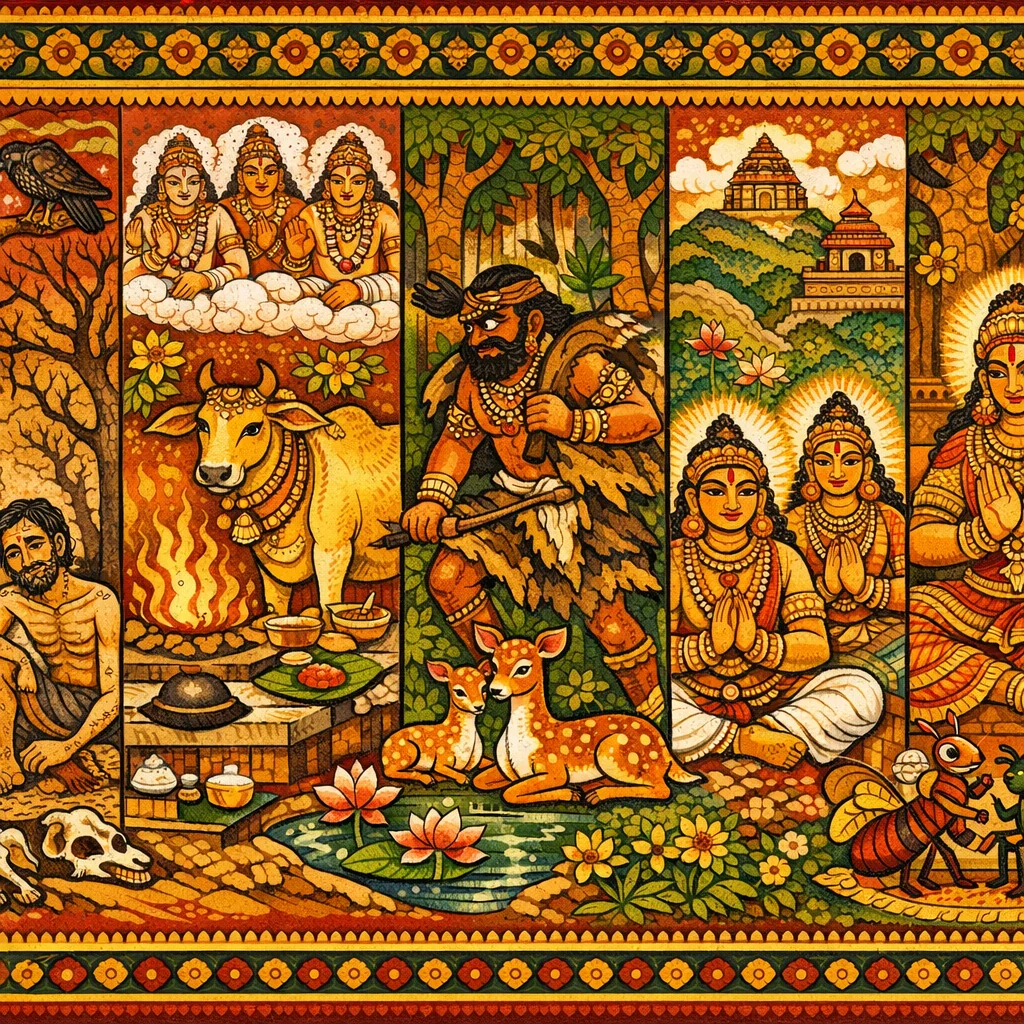
The sages ask (1) how Kauśika’s lineage attained uttama-yoga and (2) how karma is exhausted through links spanning five births. Sūta replies with a narrative: Kauśika’s seven sons (disciples of Garga) are struck by famine and kill and eat the Kapilā cow. Laghu urges that the unavoidable killing be placed within a śrāddha rite; Pitṛvartī performs it, allotting portions to the devas and the Pitṛs. They then deceive their guru by offering the calf and claiming a tiger killed the cow. Karma ripens: they are reborn as hunters, yet become jātismaras (rememberers of past lives) through Pitṛ-mahātmyā and pitṛ-bhāva; they develop vairāgya and practice fasting. In the next birth they are seven deer on Kālañjara, again jātismaras, and relinquish life by anśana at a tīrtha. From mānasa-sṛṣṭi they become seven yogins called Cakravākas, named and praised as yoga-pāragas, though three fall and drift toward worldly spectacle. The tale then turns to Pañcāla: Brahmadatta’s consecration, his wife Saṃnati (formerly Kapilā), and a marvel of insects speaking in a lovers’ quarrel—leading Brahmadatta to wonder at Viṣṇu (Cakrapāṇi), who knows the cries of all beings.
Key Concepts
Shlokas in Adhyaya 20
Verse 1
*ऋषय ऊचुः कथं कौशिकदायादाः प्राप्तास्ते योगमुत्तमम् पञ्चभिर्जन्मसम्बन्धैः कथं कर्मक्षयो भवेत् //
The sages said: “How did those descendants of Kauśika attain that supreme Yoga? And how, through connections spanning five births, does the exhaustion (destruction) of karma come to be?”
Verse 2
*सूत उवाच कौशिको नाम धर्मात्मा कुरुक्षेत्रे महानृषिः नामतः कर्मतस्तस्य सुतान्सप्त निबोधत //
Sūta said: In Kurukṣetra there was a great sage named Kauśika, righteous in spirit. Now learn about his seven sons—both by their names and by their deeds.
Verse 3
श्वसृपः क्रोधनो हिंस्रः पिशुनः कविरेव च वाग्दुष्टः पितृवर्ती च गर्गशिष्यास्तदाभवन् //
Śvasṛpa, Krodhana, Hiṃsra, Piśuna, and also Kavi—together with Vāgduṣṭa and Pitṛvartī—were, at that time, the disciples of Garga.
Verse 4
पितर्युपरते तेषाम् अभूद्दुर्भिक्षमुल्बणम् अनावृष्टिश्च महती सर्वलोकभयंकरी //
When their father had passed away, a fierce famine arose among them, and there was also a great drought—one that spread fear throughout all the worlds.
Verse 5
गर्गादेशाद्वने दोग्ध्रीं रक्षन्तस्ते तपोधनाः खादामः कपिलामेतां वयं क्षुत्पीडिता भृशम् //
“By Garga’s command, those ascetics—rich in austerity—were guarding the milch-cow in the forest. But we, being fiercely tormented by hunger, are eating this Kapilā (cow).”
Verse 6
इति चिन्तयतां पापं लघुः प्राह तदानुजः यद्यवश्यमियं वध्या श्राद्धरूपेण योज्यताम् //
As they were pondering over the sin involved, the younger brother Laghu spoke: “If indeed this one must inevitably be put to death, then let it be arranged in the form of a śrāddha-rite.”
Verse 7
श्राद्धे नियोज्यमानेयं पापात्त्रास्यति नो ध्रुवम् एव कुर्वित्यनुज्ञातः पितृवर्ती तदानुजैः //
“When this rite is duly enjoined in the śrāddha, it will surely rescue us from sin. Therefore do it indeed.” Thus, with the permission of his younger kinsmen, he—obedient to the Pitṛs (ancestral fathers)—proceeded to perform it.
Verse 8
चक्रे समाहितः श्राद्धम् उपयुज्य च तां पुनः द्वौ दैवे भ्रातरौ कृत्वा पित्रे त्रीनप्यनुक्रमात् //
Composed and attentive, he performed the Śrāddha; then, using that prepared offering again, he first allotted two portions to the divine recipients, and thereafter, in due order, three portions to the Pitṛs (ancestral fathers).
Verse 9
तथैकमतिथिं कृत्वा श्राद्धदः स्वयमेव तु चकार मन्त्रवच्छ्राद्धं स्मरन्पितृपरायणः //
Thus, having fixed a single proper tithi, the performer of the Śrāddha himself carried it out in accordance with the mantras, remembering the ancestors and devoted to the Pitṛs.
Verse 10
विना गवा वत्सको ऽपि गुरवे विनिवेदितः व्याघ्रेण निहता धेनुर् वत्सो ऽयं प्रतिगृह्यताम् //
Even without the cow, the calf has been presented to the teacher: the milch-cow was slain by a tiger—please accept this calf.
Verse 11
एवं सा भक्षिता धेनुः सप्तभिस्तैस्तपोधनैः वैदिकं बलमाश्रित्य क्रूरे कर्मणि निर्भयाः //
Thus that cow was eaten by those seven ascetic sages, rich in austerity (tapodhana); relying upon the power of the Veda, they were fearless even in that cruel deed.
Verse 12
ततः कालावकृष्टास्ते व्याधा दाशपुरे ऽभवन् जातिस्मरत्वं प्राप्तास्ते पितृभावेन भाविताः //
Then, carried along by the force of time, they became hunters in Daśapura; and, being imbued with a fatherly disposition, they attained the power of remembering their former births (jātismaratva).
Verse 13
यत्कृतं क्रूरकर्मापि श्राद्धरूपेण तैस्तदा तेन ते भवने जाता व्याधानां क्रूरकर्मिणाम् //
Whatever cruel deed they performed at that time under the guise of a śrāddha, because of that very act they were born in the households of hunters—men engaged in ruthless deeds.
Verse 14
पितॄणां चैव माहात्म्याज् जाता जातिस्मरास्तु ते ते तु वैराग्ययोगेन आस्थायानशनं पुनः //
And by the very greatness of the Pitṛs, they were born as jātismaras, remembering their former lives. Then, established in the discipline of dispassion (vairāgya), they again undertook fasting, abstaining from food.
Verse 15
जातिस्मराः सप्त जाता मृगाः कालञ्जरे गिरौ नीलकण्ठस्य पुरतः पितृभावानुभाविताः //
On Mount Kālañjara, seven deer were born as jātismaras, remembering their former births; and, in the presence of Nīlakaṇṭha, they were stirred and transformed by the felt power of a father’s affection.
Verse 16
तत्रापि ज्ञानवैराग्यात् प्राणानुत्सृज्य धर्मतः लोकैर् अवेक्ष्यमाणास्ते तीर्थान्ते ऽनशनेन तु //
There too, through spiritual knowledge and dispassion (vairāgya), they righteously relinquished their life-breath; watched by the people, they departed at the end of the tīrtha by fasting (unto death).
Verse 17
मानसे चक्रवाकास्ते संजाताः सप्त योगिनः नामतः कर्मतः सर्वाञ् छृणुध्वं द्विजसत्तमाः //
From the mind-born creation (mānasa), those seven yogins came into being, known by the name Cakravāka. Hear from me, O best of the twice-born (dvijasattama), all of them—by their names and by their functions.
Verse 18
सुमनाः कुमुदः शुद्धश् छिद्रदर्शी सुनेत्रकः सुनेत्रश्चांशुमांश्चैव सप्तैते योगपारगाः //
Sumanā, Kumuda, Śuddha, Chidradarśī, Sunetraka, Sunetra, and Aṃśumān—these seven are masters who have reached the far shore of Yoga.
Verse 19
योगभ्रष्टास्त्रयस्तेषां बभ्रमुश् चाल्पचेतनाः दृष्ट्वा विभ्राजमानं तम् उद्याने स्त्रीभिरन्वितम् //
Three among them—fallen from yoga and of little discernment—began to wander about; and on seeing him shining brilliantly in the garden, attended by women, they were drawn toward that spectacle.
Verse 20
क्रीडन्तं विविधैर्भावैर् महाबलपराक्रमम् पञ्चालान्वयसम्भूतं प्रभूतबलवाहनम् //
Sporting in many moods and exploits, he was possessed of great strength and heroic valor—born in the lineage of the Pañcālas, and endowed with abundant forces and conveyances (mounts/chariots).
Verse 21
राज्यकामो ऽभवच्चैकस् तेषां मध्ये जलौकसाम् पितृवर्ती च यो विप्रः श्राद्धकृत् पितृवत्सलः //
Among those water-dwelling beings, one alone became desirous of sovereignty; and there was also a brāhmaṇa—devoted to the ways of the Fathers—who performed śrāddha and was affectionate toward the Pitṛs.
Verse 22
अपरौ मन्त्रिणौ दृष्ट्वा प्रभूतबलवाहनौ मन्त्रित्वे चक्रतुश्चेच्छाम् अस्मिन्मर्त्ये द्विजोत्तमाः //
Seeing two other ministers, possessed of abundant forces and conveyances, the best of the twice-born (brāhmaṇas) expressed their wish to take up ministerial office in this mortal realm.
Verse 23
तन्मध्ये ये तु निष्कामास् ते बभूवुर् द्विजोत्तमाः विभ्राजपुत्रस्त्वेको ऽभूद् ब्रह्मदत्त इति स्मृतः //
Among them, those who were free from selfish desire became the foremost of the dvijas (the twice-born). And among the sons of Vibhrāja, one was renowned and remembered by the name Brahmadatta.
Verse 24
मन्त्रिपुत्रौ तथा चोभौ कण्डरीकसुबालकौ ब्रह्मदत्तो ऽभिषिक्तः सन् पुरोहितविपश्चिता //
Likewise, both Kaṇḍarīka and Subālaka, the minister’s sons, were present. Brahmadatta, having received the abhiṣeka (royal consecration), was installed by the wise purohita (royal priest).
Verse 25
पञ्चालराजो विक्रान्तः सर्वशास्त्रविशारदः योगवित्सर्वजन्तूनां रुतवेत्ताभवत्तदा //
At that time the king of Pāñcāla was valiant, well-versed in all the śāstras, a knower of yoga, and one who understood the cries and calls of all living beings.
Verse 26
तस्य राज्ञो ऽभवद्भार्या देवलस्यात्मजा शुभा संनतिर्नाम विख्याता कपिला याभवत्पुरा //
That king had a wife—an auspicious daughter of Devala—renowned by the name Saṃnati, who in former times was also known as Kapilā.
Verse 27
पितृकार्ये नियुक्तत्वाद् अभवद्ब्रह्मवादिनी तया चकार सहितः स राज्यं राजनन्दनः //
Because she was appointed to the pitr̥kārya (rites owed to the ancestors), she became a Brahmavādinī, devoted to sacred discipline and Vedic counsel. Along with her, that prince—the king’s delight—administered the kingdom.
Verse 28
कदाचिदुद्यानगतस् तया सह स पार्थिवः ददर्श कीटमिथुनम् अनङ्गकलहाकुलम् //
Once, when the king went with her to the pleasure-garden, he beheld a pair of insects, stirred and unsettled by the quarrel of Kāma—love’s impassioned desire.
Verse 29
पिपीलिकामनुनयन् परितः कीटकामुकः पञ्चबाणाभितप्ताङ्गः सगद्गदमुवाच ह //
Soothing the little ant as it wandered about, that insect-like lover—his limbs scorched by Kāma’s five arrows—spoke with a trembling voice, choked by emotion.
Verse 30
न त्वया सदृशी लोके कामिनी विद्यते क्वचित् मध्यक्षामातिजघना बृहद्वक्षो ऽभिगामिनी //
In this world there is nowhere a desirable woman equal to you—slender of waist, full of hips, broad of breast, and wholly captivating in your approach.
Verse 31
सुवर्णवर्णा सुश्रोणी मञ्जूक्ता चारुहासिनी सुलक्ष्यनेत्ररसना गुडशर्करवत्सला //
Golden-hued, fair-hipped, adorned with charming ornaments, and sweetly smiling—her eyes are beautiful and auspiciously marked, her speech and tongue are pleasing; she is fond of jaggery and sugar.
Verse 32
भोक्ष्यसे मयि भुक्ते त्वं स्नासि स्नाते तथा मयि प्रोषिते सति दीना त्वं क्रुद्धे ऽपि भयचञ्चला //
When I have eaten, you eat; when I have bathed, you bathe likewise. When I am away, you grow dejected; even when I am angry, you tremble, wavering with fear.
Verse 33
किमर्थं वद कल्याणि सरोषवदना स्थिता सा तमाह सकोपा तु किम् आलपसि मां शठ //
“Tell me—why is it so, O auspicious lady?” Standing there with an angered face, she replied to him in wrath: “You deceitful man—why do you speak to me at all?”
Verse 34
त्वया मोदकचूर्णं तु मां विहाय विनेष्यता प्रदत्तं समतिक्रान्ते दिने ऽन्यस्याः समन्मथ //
“You gave that sweet powder of modaka to me—yet leaving me behind, you seek to destroy me. When the day had passed, you became enamoured of another woman.”
Verse 35
*पिपीलिक उवाच त्वत्सादृश्यान्मया दत्तम् अन्यस्यै वरवर्णिनि तदेकमपराधं मे क्षन्तुमर्हसि भामिनि //
Pipīlikā said: “O fair-complexioned lady, because she resembled you, I gave it to another. For that single offence of mine, O passionate one, you ought to forgive me.”
Verse 36
नैतदेवं करिष्यामि पुनः क्वापीह सुव्रते स्पृशामि पादौ सत्येन प्रसीद प्रणतस्य मे //
“I will not do this in such a way again—ever, anywhere here, O noble-vowed one. I touch your feet; by the power of truth, be gracious to me who bows down in submission.”
Verse 37
*सूत उवाच इति तद्वचनं श्रुत्वा सा प्रसन्नाभवत्ततः आत्मानम् अर्पयामास मोहनाय पिपीलिका //
Sūta said: Hearing those words, she became pleased; and then the ant (Pipīlikā) offered herself completely to Mohana.
Verse 38
ब्रह्मदत्तो ऽप्यशेषं तं ज्ञात्वा विस्मयम् आगमत् सर्वसत्त्वरुतज्ञत्वात् प्रसादाच् चक्रपाणिनः //
Even Brahmadatta, having understood all of that without remainder, was struck with wonder—because (the Lord) knows the cries and calls of every living being, and because this came to pass by the gracious favor of Cakrapāṇi (Viṣṇu, bearer of the discus).
Frequently Asked Questions
The chapter teaches that actions cannot be fully purified by mere ritual framing: the famine-driven killing of a protected cow, even performed “as śrāddha,” produces karmic consequences (rebirth among hunters). Yet intention oriented to Pitṛs, subsequent vairāgya, tapas, and righteous renunciation (anśana at a tīrtha) can redirect the karmic stream toward yoga. It presents karma-kṣaya as gradual, unfolding across linked births, combining moral causality with the possibility of grace and transformation.
This adhyāya is primarily Dharma-oriented rather than Vāstu: it focuses on Pitṛ-dharma (śrāddha), ethical dilemmas under distress (āpaddharma tensions), karma theory across multiple births, and yogic ascent/decline. It also contains genealogical and royal elements (Pañcāla lineage, Brahmadatta, ministers, Devala’s daughter Saṃnati) and a theological motif of Viṣṇu’s omniscience and favor.
No. The narrative shows that labeling a harmful act as ritual does not erase its ethical weight: the protagonists still reap a harsh rebirth (as hunters) because the deed was intrinsically cruel and involved deception. The text uses the episode to illustrate both karmic accountability and the later corrective power of repentance, dispassion, and disciplined renunciation.