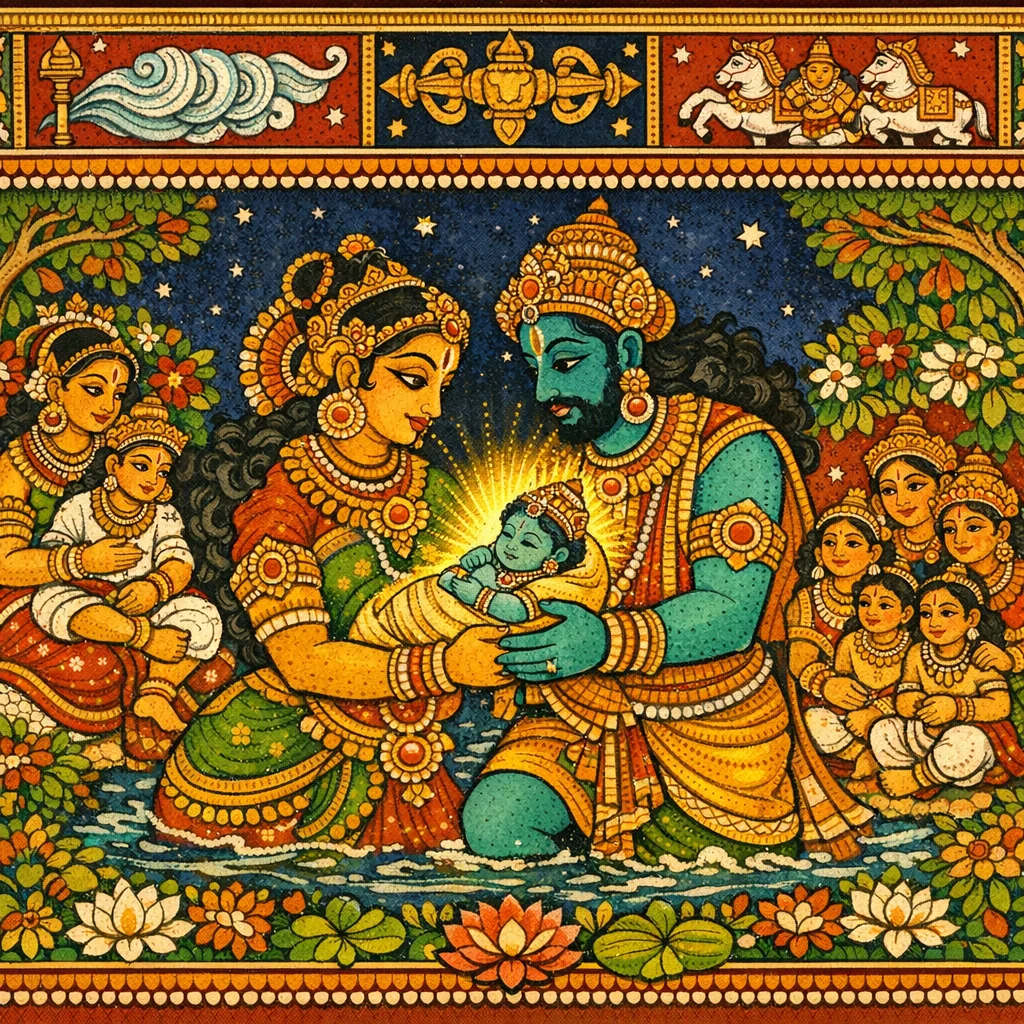
Adhyaya 46: Genealogy of the Śūra–Vasudeva (Ānakadundubhi) Line and the Advent of Kṛṣṇa
शौरिवंशवर्णनम् (आनकदुन्दुभेः सन्तानकथनम्)
Speaker: Sūta
Sūta continues the vamśa account: from Aikṣvākī arise Śūra and the Bhoja sons. Vasudeva is identified with the earlier epithet Ānakadundubhi, and the lineage proceeds through Devamārga and Devaśravā. The chapter names notable figures (Anādhṛṣṭi, Śini, Nanda, Sasṛñjaya, Śyāma, Śamīka, Saṃyūpa) and five principal wives (Śrutakīrti, Pṛthā/Kuntī, Śrutādevī, Śrutaśravā, Rājādhidevī) with their offspring. Kuntī’s adoption by Kuntibhoja and her marriage to Pāṇḍu lead to the divine births of the Pāṇḍavas; Mādrī bears Nakula and Sahadeva by the Aśvins. Rohiṇī’s sons (including Rāma/Balarāma) are enumerated; Devakī’s sons are listed with the note that Kaṃsa slew them. Kṛṣṇa’s birth is linked to the annual amāvāsyā observance; Subhadrā is named; further wives and sons are cataloged. The adhyāya ends with the phalaśruti: constant recitation or hearing of Kṛṣṇa’s birth-advent frees one from sins.
Key Concepts
Shlokas in Adhyaya 46
Verse 1
*सूत उवाच ऐक्ष्वाकी सुषुवे शूरं ख्यातमद्भुतमीढुषम् पौरुषाज्जज्ञिरे शूराद् भोजायां पुत्रका दश //
Sūta said: Aikṣvākī gave birth to Śūra, renowned and wondrous, worthy of praise. From Śūra—through Pauruṣā—ten sons were born in Bhojā.
Verse 2
वसुदेवो महाबाहुः पूर्वमानकदुन्दुभिः देवमार्गस्ततो जज्ञे ततो देवश्रवाः पुनः //
Earlier, the mighty-armed Vasudeva was known as Ānakadundubhi. From him was born Devamārga, and from Devamārga in turn was born Devaśravā.
Verse 3
अनाधृष्टिः शिनिश्चैव नन्दश्चैव ससृञ्जयः श्यामः शमीकः संयूपः पञ्च चास्य वराङ्गनाः //
Anādhṛṣṭi, Śini, Nanda, and Sasṛñjaya; likewise Śyāma, Śamīka, and Saṃyūpa—these are named, and it is said that he also had five noble wives.
Verse 4
श्रुतकीर्तिः पृथा चैव श्रुतादेवी श्रुतश्रवाः राजाधिदेवी च तथा पञ्चैता वीरमातरः //
Śrutakīrti, and also Pṛthā; Śrutādevī, Śrutaśravā, and likewise Rājādhidevī—these five are renowned as the mothers of heroic men.
Verse 5
कृतस्य तु श्रुतादेवी सुग्रीवं सुषुवे सुतम् कैकेय्यां श्रुतकीर्त्यां तु जज्ञे सो ऽनुव्रतो नृपः //
To Kṛta, Śrutādevī bore a son named Sugrīva; and by Kaikeyī, Śrutakīrti gave birth to the king Anuvrata.
Verse 6
श्रुतश्रवसि चैद्यस्य सुनीथः समपद्यत बहुशो धर्मचारी स संबभूवारिमर्दनः //
From Śrutaśravas, the Caidya king of Chedi, arose Sunītha—one who repeatedly practiced dharma and became a crusher of enemies.
Verse 7
अथ सख्येन वृद्धे ऽसौ कुन्तिभोजे सुतां ददौ एवं कुन्ती समाख्याता वसुदेवस्वसा पृथा //
Then, out of friendship, that aged man gave his daughter to Kuntibhoja; thus she became known as Kuntī—Pṛthā, the sister of Vasudeva.
Verse 8
वसुदेवेन सा दत्ता पाण्डोर्भार्या ह्य् अनिन्दिता पाण्डोरर्थेन सा जज्ञे देवपुत्रान् महारथान् //
Given by Vasudeva, that blameless lady became the wife of Pāṇḍu; and for Pāṇḍu’s sake she bore divine sons—great chariot-warriors.
Verse 9
धर्माद्युधिष्ठिरो जज्ञे वायोर्जज्ञे वृकादेरः इन्द्राद्धनंजयश् चैव शक्रतुल्यपराक्रमः //
From Dharma, Yudhiṣṭhira was born; from Vāyu, Vṛkodara (Bhīma) was born; and from Indra, Dhanaṃjaya (Arjuna) was born—whose prowess was equal to Śakra (Indra) himself.
Verse 10
माद्रवत्यां तु जनिताव् अश्विभ्याभिति शुश्रुम नकुलः सहदेवश्च रूपशीलगुणान्वितौ //
We have heard that, in Mādravatī, Nakula and Sahadeva were begotten by the twin Aśvins; both were endowed with beauty, good conduct, and noble qualities.
Verse 11
रोहिणी पौरवी नाम भार्या ह्य् आनकदुन्दुभेः लेभे ज्येष्ठं सुतं रामं सारणं च सुतं प्रियम् //
Rohiṇī, known as Pauravī, the wife of Ānakadundubhi, bore his eldest son Rāma, and also the beloved son Sāraṇa.
Verse 12
दुर्दमं दमनं सुभ्रुं पिण्डारकमहाहनू चित्राक्ष्यौ द्वे कुमार्यौ तु रोहिण्यां जज्ञिरे तदा //
Then, to Rohiṇī were born Durdama and Damana, Subhru, Piṇḍāraka and Mahāhanū; and also two daughters, a pair called Citrākṣī.
Verse 13
देवक्यां जज्ञिरे शौरेः सुषेणः कीर्तिमानपि उदासी भद्रसेनश्च ऋषिवासस्तथैव च षष्ठो भद्रविदेहश्च कंसः सर्वानघातयत् //
From Devakī were born to Śauri: Suṣeṇa and the renowned Kīrtimān; Udāsī, Bhadrasena, and likewise Ṛṣivāsa; and the sixth, Bhadravideha—whom Kaṃsa slew, all of them.
Verse 14
प्रथमा या अमावास्या वार्षिकी तु भविष्यति तस्यां जज्ञे महाबाहुः पूर्वं कृष्णः प्रजापतिः //
That new-moon day (amāvāsyā) which becomes the first annual observance—on that very occasion, in ancient times, the mighty-armed Prajāpati known as Kṛṣṇa was born.
Verse 15
अनुजा त्व् अभवत्कृष्णा सुभद्रा भद्रभाषिणी देवक्यां तु महातेजा जज्ञे शूरो महायशाः //
His younger sister was Kṛṣṇā—Subhadrā, the sweet-spoken one. And from Devakī was born a man of great splendor: Śūra, of great renown.
Verse 16
सहदेवस्तु ताम्रायां जज्ञे शौरिः कुलोद्वहः उपासङ्गधरं लेभे तनयं देवरक्षिता एकां कन्यां च सुभगां कंसस्ताम् अभ्यघातयत् //
From Tāmrā was born Sahadeva—Śauri, the illustrious upholder of his lineage. Devarakṣitā bore a son named Upāsaṅgadhara, and also a beautiful daughter; her, Kaṃsa struck down.
Verse 17
विजयं रोचमानं च वर्धमानं तु देवलम् एते सर्वे महात्मानो ह्य् उपदेव्यां प्रजज्ञिरे //
Vijaya, Rochamāna, Vardhamāna, and Devala—these all were great-souled ones, indeed, born of Upadevā.
Verse 18
अवगाहो महात्मा च वृकदेव्यामजायत वृकदेव्यां स्वयं जज्ञे नन्दको नाम नामतः //
And the great-souled Avagāha was born of Vṛkadevī; from Vṛkadevī herself there was born a son—Nandaka by name.
Verse 19
सप्तमं देवकीपुत्रं मदनं सुषुवे नृप गवेषणं महाभागं संग्रामेष्वपराजितम् //
O King, as her seventh son Devakī bore Madana—Gaveṣaṇa—noble-souled and unconquered in battles.
Verse 20
श्रद्धादेव्या विहारे तु वने हि विचरन्पुरा वैश्यायामदधाच्छौरिः पुत्रं कौशिकमग्रजम् //
Formerly, while roaming in a forest pleasure-grove together with Śraddhādevī, Śauri begot—upon a Vaiśyā woman—his elder son named Kauśika.
Verse 21
सुतनू रथराजी च शौरेरास्तां परिग्रहौ पुण्ड्रश्च कपिलश्चैव वसुदेवात्मजौ बलौ //
Sutanū and Ratharājī were the two consorts of Śauri; and Puṇḍra and Kapila were the mighty sons of Vasudeva.
Verse 22
जरा नाम निषादो ऽभूत् प्रथमः स धनुर्धरः सौभद्रश्च भवश्चैव महासत्त्वौ बभूवतुः //
There was a Niṣāda (forest-dwelling hunter) named Jarā—the first of them—who bore the bow. And Saubhadra and Bhava likewise became men of great prowess.
Verse 23
देवभागसुतश्चापि नाम्नासाव् उद्धवः स्मृतः पण्डितं प्रथमं प्राहुर् देवश्रवःसमुद्भवम् //
And Devabhāga’s son, too, was remembered by the name Uddhava. They declare the foremost of the learned to be the one born from Devaśravas.
Verse 24
ऐक्ष्वाक्यलभतापत्यम् अनाधृष्टेर्यशस्विनी निधूतसत्त्वं शत्रुघ्नं श्राद्धस्तस्मादजायत //
From Anādhṛṣṭi, the illustrious Yaśasvinī bore a son in the Ikṣvāku lineage; and from him was born Śrāddha—also known as Śatrughna—pure in nature and a destroyer of foes.
Verse 25
करूषायानपत्याय कृष्णस्तुष्टः सुतं ददौ सुचन्द्रं तु महाभागं वीर्यवन्तं महाबलम् //
Pleased, Kṛṣṇa granted to the descendant of Karūṣāyana a son—Sucandra—most fortunate, endowed with valor and great strength.
Verse 26
जाम्बवत्याः सुताव् एतौ द्वौ च सत्कृतलक्षणौ चारुदेष्णश्च साम्बश्च वीर्यवन्तौ महाबलौ //
These two were the sons of Jāmbavatī—Cārudeṣṇa and Sāmba—both marked by auspicious, well-regarded signs, endowed with valor and great strength.
Verse 27
तन्तिपालश्च तन्तिश्च नन्दनस्य सुताव् उभौ शमीकपुत्राश् चत्वारो विक्रान्ताः सुमहाबलाः विराजश्च धनुश्चैव श्यामश्च सृञ्जयस्तथा //
Tantipāla and Tanti—both were the two sons of Nandana. And the four sons of Śamīka, valiant and of great might, were Virāja, Dhanu, Śyāma, and likewise Sṛñjaya.
Verse 28
अनपत्यो ऽभवच्छ्यामः शमीकस्तु वनं ययौ जुगुप्समानो भोजत्वं राजर्षित्वमवाप्तवान् //
Śyāma remained without offspring; but Śamīka went to the forest. Disdaining worldly power, he attained the status of a Bhoja ruler and the state of a royal sage (rājarṣi).
Verse 29
कृष्णस्य जन्माभ्युदयं यः कीर्तयति नित्यशः शृणोति मानवो नित्यं सर्वपापैः प्रमुच्यते //
Whoever continually proclaims the auspicious advent of Kṛṣṇa—and whoever, as a human being, constantly listens to it—is freed from all sins.
Frequently Asked Questions
The chapter’s main instruction is twofold: (1) it preserves authoritative Puranic genealogy—naming key ancestors, wives, and offspring to anchor epic-era dharma lineages; and (2) it ends with a clear phalaśruti that continual proclamation and listening to Kṛṣṇa’s birth-advent (janma-abhyudaya) frees a person from sins.
Adhyāya 46 is primarily Genealogy (vamśa): Śūra/Bhoja descent, Vasudeva (Ānakadundubhi), Rohiṇī and Devakī’s children, and related branches. It also touches Dharma through lineage-legitimation and through the Pāṇḍavas’ divine births (linking kingship to cosmic order). Vāstu/architecture and temple dimensions are not discussed in this chapter.
It states that Sunītha’s daughter is given to Kuntibhoja and thus becomes known as Kuntī (Pṛthā), identified as Vasudeva’s sister. Given by Vasudeva, she becomes Pāṇḍu’s wife and bears divine sons for Pāṇḍu: Yudhiṣṭhira from Dharma, Bhīma from Vāyu, and Arjuna from Indra; while in Mādrī, Nakula and Sahadeva are begotten by the Aśvins.
It lists multiple sons born to Śauri (Vasudeva) from Devakī—naming them in sequence—and explicitly notes that Kaṃsa killed them. This frames the genealogical record within the well-known persecution motif surrounding Kṛṣṇa’s advent.
The text links Kṛṣṇa’s birth to the new-moon day (amāvāsyā) that becomes the first annual observance (vārṣikī prathamā). It uses this calendrical note to sanctify the remembrance of Kṛṣṇa’s advent and supports the closing claim that hearing/reciting this birth narrative is spiritually purifying.