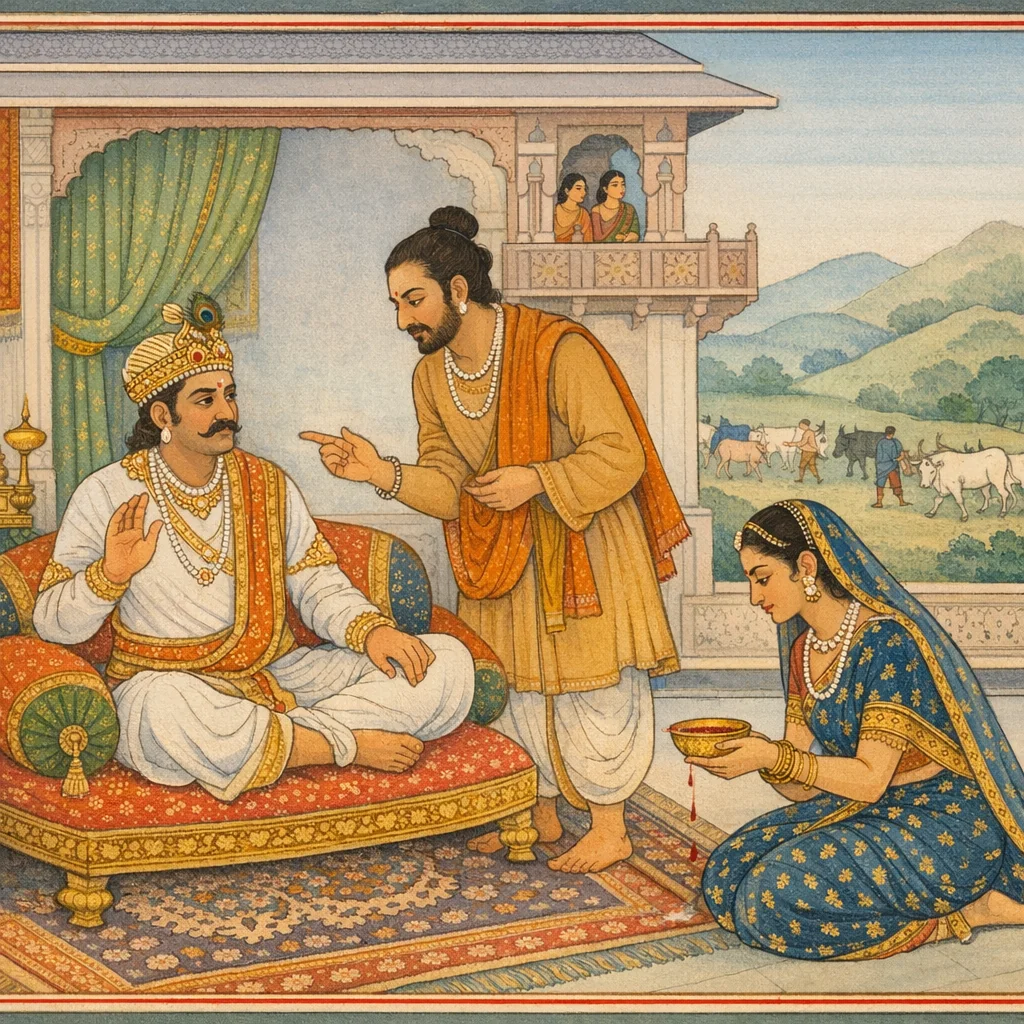
Adhyaya 68
Chapter Arc: त्रिगर्तों को पराजित कर और समस्त गोधन छुड़ाकर उत्तर (अर्जुन-सह-उत्तर) विजयी वैराटनगर लौटता है; नगर में जय-ध्वनि है, पर राजसभा के भीतर विराट के मन में उत्तर के विषय में गहरी चिन्ता और उत्सुकता उमड़ती है। → विराट सिंहासनारूढ़ होकर सभासदों से घिरते हैं; युधिष्ठिर (कंक) से पाण्डवों के विषय में प्रश्न उठते हैं—क्या उसने युधिष्ठिर को देखा/सुना है, और वे भ्राताओं सहित कहाँ हैं? इसी बीच कीचक-वध के बाद की दबी हुई आशंका और द्रौपदी (सैरन्ध्री) पर हुए अपमान की स्मृति भी वातावरण को तना रखती है; द्रौपदी की चोट (नाक से रक्त) का प्रसंग संकेत देता है कि यह विजय केवल बाहरी नहीं, भीतर की आग भी है। → युधिष्ठिर विराट को निर्णायक आश्वासन देता है—जिस रथ का सारथी बृहन्नला हो, उसकी विजय ध्रुव है; वह बृहन्नला को इन्द्र के मातलि और कृष्ण के सारथ्य के समकक्ष ठहराकर उत्तर की विजय का रहस्य-गौरव स्थापित करता है। → विराट का भय और संशय शान्त होता है; उत्तर की प्रशंसा, गोधन-वापसी का उत्सव, और राजसभा में पाण्डवों के प्रति आदर का भाव दृढ़ होता है—यद्यपि उनके वास्तविक परिचय का आवरण अभी बना रहता है। → विराट के मन में पाण्डवों को पहचानने/सम्मानित करने की चाह और राजकीय निर्णय की दिशा बनती है—पर यह रहस्य कब और कैसे खुलेगा, यही अगला तनाव बनकर रह जाता है।
Shlokas
Verse 1
[दाक्षिणात्य अधिक पाठके २ श्लोक मिलाकर कुल २५ “लोक हैं।] हम () ऑिजआ अप अष्टषष्टितमो< ध्याय: राजा विराटकी उत्तरके विषयमें चिन्ता, विजयी उत्तरका नगरमें प्रवेश, प्रजाओंद्वारा उनका स्वागत, विरादद्वारा युधिछ्िरका तिरस्कार और क्षमा-प्रार्थना एवं उत्तरसे युद्धका समाचार पूछना वैशम्पायन उवाच धनं चापि विजित्याशु विराटो वाहिनीपति: । विवेश नगर हृष्ट भ्वतुर्भि: पाण्डवै: सह,वैशम्पायनजी कहते हैं--जनमेजय! सेनाओंके स्वामी राजा विराटने (दक्षिण गोष्ठकी) गौओंको जीतकर शीघ्र ही चारों पाण्डवोंके साथ अत्यन्त प्रसन्नतापूर्वक नगरमें प्रवेश किया इस प्रकार श्रीमह्ा भारत विराटपवकेि अन्तर्गत गोहरणपर्वमें विराट-उत्तर-संवादविषयक अड़सठवाँ अध्याय पूरा हुआ ॥/ ६८ ॥। (दाक्षिणात्य अधिक पाठके ३ श्लोक मिलाकर कुल ७९ श्लोक हैं।) #::73:.8 #::3-...7 () हि २ 7 एकोनसप्ततितमो<ध्याय: राजा विराट और उत्तरकी विजयके विषयमें बातचीत उत्तर उवाच न मया निर्जिता गावो न मया निर्जिता: परे । कृतं तत् सकल तेन देवपुत्रेण केनचित्
Vaiśampāyana said: “O Janamejaya, King Virāṭa, commander of the host, having swiftly won back the wealth as well, entered the city in high spirits together with the four Pāṇḍavas.”
Verse 2
जित्वा त्रिगर्तान् संग्रामे गाश्नैवादाय सर्वशः । अशोभत महाराज सहपार्थ: श्रिया वृत:,महाराज! संग्राममें त्रिगर्तोॉंको हराकर सम्पूर्ण गौएँ वापस ले विजयलक्ष्मीसे सम्पन्न महाराज विराट कुन्तीपुत्रोंके साथ बड़ी शोभा पाने लगे
Vaiśampāyana said: Having defeated the Trigartas in battle and recovered all the cattle, King Virāṭa—accompanied by the Pārthas—shone forth, surrounded by the splendor of victory.
Verse 3
तमासनगत वीर सुहृदां हर्षवर्धनम् । उपासाउ्चक्रिरे सर्वे सह पार्थ: परंतपा:,मित्रोंका आनन्द बढ़ानेवाले वीरवर विराट राजसिंहासनपर विराजमान हुए। उस समय शत्रुओंको संताप देनेवाले सब शूरवीर कुन्तीपुत्रोंक साथ राजाकी सेवाके लिये उनके पास बैठे
Vaiśampāyana said: The heroic Virāṭa, who increased the joy of his well-wishers, took his seat upon the royal throne. Then all the valiant men—together with Pārtha, the scorcher of foes—sat near him to attend upon the king.
Verse 4
उपतस्थु: प्रकृतयः समस्ता ब्राह्मणै:ः सह । सभाजित: ससैन्यस्तु प्रतिनन्द्याथ मत्स्यराट्,फिर ब्राह्मणोंसहित समस्त प्रजावर्गके लोग उपस्थित हुए। सबने सेनासहित मत्स्यराजका अभिनन्दन एवं स्वागत-सत्कार किया
Vaiśampāyana said: All the subjects of the realm, together with the brāhmaṇas, came forward to attend upon the king. The Matsya ruler—surrounded by his forces—was greeted with acclaim and duly honored.
Verse 5
विसर्जयामास तदा द्विजांश्व॒ प्रकृतीस्तथा । तथा स राजा मत्स्यानां विराटो वाहिनीपति:,तदनन्तर मत्स्यदेशके राजा सेनाओंके स्वामी विराटने ब्राह्मणों तथा प्रजावर्गके लोगोंको विदा कर दिया और (अन्तःपुरमें जाकर) उत्तरके विषयमें पूछा--'राजकुमार उत्तर कहाँ गये हैं?” तब घरमें रहनेवाली स्त्रियों और कन्याओंने उनसे सब बातें बनायीं --
Vaiśampāyana said: Then King Virāṭa, the commander of the Matsya forces, dismissed the brāhmaṇas and also his own subjects. After that, he went within and inquired about Uttara—“Where has Prince Uttara gone?” Then the women and maidens of the household related to him everything that had occurred.
Verse 6
उत्तरं परिपप्रच्छ क्व यात इति चाब्रवीत् । आचरख्युस्तस्य तत् सर्व स्त्रिय: कन्याश्व वेश्मनि,तदनन्तर मत्स्यदेशके राजा सेनाओंके स्वामी विराटने ब्राह्मणों तथा प्रजावर्गके लोगोंको विदा कर दिया और (अन्तःपुरमें जाकर) उत्तरके विषयमें पूछा--'राजकुमार उत्तर कहाँ गये हैं?” तब घरमें रहनेवाली स्त्रियों और कन्याओंने उनसे सब बातें बनायीं --
Vaiśampāyana said: The king Virāṭa, having dismissed the brāhmaṇas and the townspeople, went within and asked about Uttara, saying, “Where has Uttara gone?” Then the women and maidens dwelling in the palace related to him the whole matter.
Verse 7
अन्त:पुरचराश्नैव कुरुभिगों धनं हृतम् । विजेतुमभिसंरब्ध एक एवातिसाहसात् | बृहन्नलासहायश्न निर्गतः पृथिवीज्जय:,“इसी प्रकार अन्तःपुरमें रहनेवाली स्त्रियोंने भी बताया कि कौरवोंने हमारे गोष्ठका गोधन हर लिया है, अतः कुमार भूमिंजय अत्यन्त साहसके कारण क्रोधमें भरकर अकेले ही उन गौओंको जीत लानेके लिये बृहन्नलाके साथ निकले हैं
Vaiśampāyana said: “The women of the inner palace also reported that the Kauravas had carried off our herd-wealth. Therefore Prince Pṛthivījaya, fired with anger and relying on sheer daring, set out alone to win those cattle back, taking Bṛhannalā as his companion.”
Verse 8
उपयातानतिरथान् भीष्मं शान्तनवं कृपम् कर्ण दुर्योधन द्रोणं द्रोणपुत्रं च घड् रथान्,'सुना है, शान्तनुनन्दन भीष्म, कृपाचार्य, कर्ण, दुर्योधन, द्रोणाचार्य तथा द्रोणपुत्र अश्वत्थामा--ये छः अतिरथी वीर युद्धके लिये आये हैं'
Vaiśampāyana said: “It is reported that six mighty warriors of the highest chariot-rank have arrived for battle—Bhīṣma, son of Śāntanu; Kṛpa; Karṇa; Duryodhana; Droṇa; and Droṇa’s son Aśvatthāmā.”
Verse 9
वैशम्पायन उवाच राजा विराटो5थ भृशाभितप्त: श्रुत्वा सुतं त्वेकरथेन यातम् । बृहन्नलासारथिमाजिवर्धनं प्रोवाच सर्वानथ मन्त्रिमुख्यान्
Vaiśampāyana said: King Virāṭa, deeply distressed on hearing that his son had gone forth with only a single chariot, then addressed all his chief ministers. He spoke of Ājivardhana (Uttara), who had set out with Bṛhannalā as his charioteer.
Verse 10
वैशम्पायनजी कहते हैं--जनमेजय! युद्धमें आगे बढ़नेवाले अपने पुत्रको बृहन्नला सारथिके साथ एकमात्र रथकी सहायतासे कौरवोंका सामना करनेके लिये गया हुआ सुनकर राजा विराटको बड़ा संताप हुआ। उन्होंने (अपने) सभी प्रधान मन्त्रियोंसे कहा -- ९ || सर्वथा कुरवस्ते हि ये चान्ये वसुधाधिपा: । त्रिगर्तान् 68268 3 त्वा न स्थास्यन्ति कदाचन,“कौरव हों या दूसरे कोई राजा, जब वे सुनेंगे कि त्रिगर्त लोग युद्धमें पीठ दिखाकर भाग गये हैं, तब वे कदापि यहाँ ठहर नहीं सकेंगे”
Vaiśampāyana said: “O Janamejaya, when King Virāṭa heard that his son—eager to advance into battle—had gone to confront the Kauravas with Bṛhannalā as his charioteer, relying on a single chariot alone, he was seized by deep anguish. He addressed his chief ministers: ‘Whether the Kauravas or any other kings, once they learn that the Trigartas have turned their backs and fled from the fight, they will not be able to hold their ground here at all.’”
Verse 11
तस्माद् गच्छन्तु मे योधा बलेन महता वृता: । उत्तरस्य परीप्सार्थ ये त्रिगर्तैरविक्षता:
Vaiśampāyana said: “Therefore, let my warriors, surrounded by a great force, set out—those who remain unshaken by the Trigartas—in order to secure and protect Uttara.”
Verse 12
“अतः मेरे सैनिकोंमेंसे जो लोग त्रिगर्तोंके साथ होनेवाले युद्धमें घायल नहीं हुए हों, वे सब विशाल सेनाके साथ राजकुमार उत्तरकी रक्षाके लिये जाये ।। हयांश्न नागांश्व रथांश्व शीघ्र पदातिसड्घांश्व॒ ततः प्रवीरान् | प्रस्थापयामास सुतस्य हेतो- विंचित्रशस्त्राभरणोपपन्नान्,तत्पश्चात् उन्होंने पुत्रकी रक्षाके लिये विचित्र-विचित्र आयुधों और आशभूषणोंसे विभूषित घुड़सवारों, हाथीसवारों, रथारोहियों तथा पैदल योद्धाओंके समूहोंको, जो बड़े शूरवीर थे, भेजा
Vaiśampāyana said: “Therefore, let all those among my soldiers who have not been wounded in the battle with the Trigartas go at once, accompanied by a great force, to protect Prince Uttara.” Then, for the sake of safeguarding his son, he promptly dispatched valiant contingents—horsemen, elephant-riders, charioteers, and companies of infantry—equipped with varied weapons and adorned with distinctive armor and ornaments.
Verse 13
एवं स राजा मत्स्यानां विराटो वाहिनीपति: । व्यादिदेशाथ तां क्षिप्रं वाहिनीं चतुरस्धिणीम्,इस प्रकार सेनाओंके स्वामी मत्स्यनरेश विराटने अपनी उस चतुरंगिणी सेनाको शीघ्र आदेश दिया, “जाओ, शीघ्र पता लगाओ। कुमार जीवित हैं या नहीं। एक हिजड़ा जिसका सारथि बनकर गया है, वह मेरी समझसे तो अब जीवित नहीं होगा”
Vaiśampāyana said: Thus King Virāṭa of the Matsyas, commander of the host, promptly issued orders to that fourfold army. He told them to go quickly and ascertain whether the prince was alive or not—adding, with a harsh presumption, that a prince who had gone with a eunuch as his charioteer would, in his view, hardly still be living.
Verse 14
कुमारमाशु जानीत यदि जीवति वा न वा | यस्य यन्ता गत: षण्ढो मन्ये5हं स न जीवति,इस प्रकार सेनाओंके स्वामी मत्स्यनरेश विराटने अपनी उस चतुरंगिणी सेनाको शीघ्र आदेश दिया, “जाओ, शीघ्र पता लगाओ। कुमार जीवित हैं या नहीं। एक हिजड़ा जिसका सारथि बनकर गया है, वह मेरी समझसे तो अब जीवित नहीं होगा”
Vaiśampāyana said: King Virāṭa, lord of the Matsyas and commander of his fourfold army, issued a swift command: “Go at once and find out whether the young prince is alive or not. As for the one who went with a eunuch as his charioteer—by my reckoning, he cannot still be living.”
Verse 15
वैशम्पायन उवाच तमब्रवीद् धर्मराजो विहस्य विराटराजं तु भृशाभितप्तम् । बृहन्नला सारथिक्षेन्नरेन्द्र परे न नेष्यन्ति तवाद्य गास्ता:,वैशम्पायनजी कहते हैं--जनमेजय! राजा विराटको बहुत दुःखी देखकर धर्मराज युधिष्ठिरने उनसे हँसकर कहा--“नरेन्द्र! यदि बृहन्नला सारथि है, तो यह विश्वास कीजिये कि शत्रु आज आपकी वे गौएँ नहीं ले जा सकेंगे। उस हितैषी सारथिके सहयोगसे सब कार्य ठीक-ठीक कर लेनेपर आपका पुत्र युद्धमें समस्त राजाओं तथा संगठित होकर आये हुए कौरवोंकी तो बात ही क्या, देवता, असुर, सिद्ध और यक्षोंपर भी निश्चय ही विजय पा सकता है'
Vaiśampāyana said: Seeing King Virāṭa deeply distressed, Dharmarāja Yudhiṣṭhira spoke to him with a smile: “O king, if Bṛhannalā is the charioteer, be assured—your cows will not be carried off by the enemy today.”
Verse 16
सर्वान् महीपान् सहितान् कुरंनश्न तथैव देवासुरसिद्धयक्षान् । अलं विजेतुं समरे सुतस्ते स्वनुछित: सारथिना हि तेन,वैशम्पायनजी कहते हैं--जनमेजय! राजा विराटको बहुत दुःखी देखकर धर्मराज युधिष्ठिरने उनसे हँसकर कहा--“नरेन्द्र! यदि बृहन्नला सारथि है, तो यह विश्वास कीजिये कि शत्रु आज आपकी वे गौएँ नहीं ले जा सकेंगे। उस हितैषी सारथिके सहयोगसे सब कार्य ठीक-ठीक कर लेनेपर आपका पुत्र युद्धमें समस्त राजाओं तथा संगठित होकर आये हुए कौरवोंकी तो बात ही क्या, देवता, असुर, सिद्ध और यक्षोंपर भी निश्चय ही विजय पा सकता है'
Vaiśampāyana said: “O Janamejaya, with that charioteer at his side, your son is fully capable in battle of conquering all the assembled kings—indeed even the Kauravas gathered together—and, beyond them, the gods, asuras, siddhas, and yakṣas as well. Such is the decisive advantage granted by a loyal and skilled charioteer, by whose support every task can be brought to its proper completion.”
Verse 17
वैशम्पायन उवाच अभथीोत्तरेण प्रहिता दूतास्ते शीघ्रगामिन: । विराटनगरं प्राप्प विजयं समवेदयन्,वैशम्पायनजी कहते हैं--राजन! इसी समय उत्तरके भेजे हुए शीघ्रगामी दूतोंने विराटनगरमें आकर विजयकी सूचना दी
Vaiśampāyana said: Then the swift messengers dispatched by Uttara reached the city of Virāṭa and reported the news of victory.
Verse 18
राज्ञस्तत् सर्वमाचख्यौ मन्त्री विजयमुत्तमम् । पराजयं कुरूणां चाप्युपायान्तं तथोत्तरम्,मन्त्रीने वह सब समाचार महाराजसे कह सुनाया। अपने पक्षकी उत्तम विजय और कौरवोंकी करारी हार हुई है। राजकुमार उत्तर नगरमें आ रहे हैं। समस्त गौएँ जीत ली गयीं तथा कौरव परास्त होकर भाग गये। शत्रुओंको संताप देनेवाले कुमार उत्तर सारथिसहित सकुशल हैं
Vaiśampāyana said: The minister reported all of this to the king—how their side had won a splendid victory and how the Kurus had suffered defeat. He also announced that Prince Uttara was now returning, having recovered the cattle and driven the enemy into flight, safe and sound together with his charioteer.
Verse 19
सर्वा विनिर्जिता गाव: कुरवश्व पराजिता: । उत्तर: सह सूतेन कुशली च परंतप:,मन्त्रीने वह सब समाचार महाराजसे कह सुनाया। अपने पक्षकी उत्तम विजय और कौरवोंकी करारी हार हुई है। राजकुमार उत्तर नगरमें आ रहे हैं। समस्त गौएँ जीत ली गयीं तथा कौरव परास्त होकर भाग गये। शत्रुओंको संताप देनेवाले कुमार उत्तर सारथिसहित सकुशल हैं
Vaiśampāyana said: “All the cattle have been completely recovered, and the Kurus have been defeated. Prince Uttara, together with his charioteer, is safe and is returning to the city—having brought distress to the enemy.”
Verse 20
युधिछिर उवाच दिष्ट्या विनिर्जिता गाव: कुरवश्व पलायिता: । नादभुतं त्वेव मन्ये5हं यत् ते पुत्रोडजयत् कुरून्
Yudhiṣṭhira said: “By good fortune the cattle have been recovered, and the Kurus too have been put to flight. Yet I do not regard it as any marvel that your son has defeated the Kurus.”
Verse 21
वैशम्पायन उवाच ततो विराटो नृपति: सम्प्रहृष्टतनुरुह:,वैशम्पायनजी कहते हैं--जनमेजय! अपने अमित-पराक्रमी कुमारकी विजयका समाचार सुनकर राजा विराट बड़े प्रसन्न हुए। उनके शरीरमें रोमांच हो आया। उन्होंने वस्त्र और आशभूषणोंसे उन दूतोंका सत्कार किया और मन्त्रीको आज्ञा दी--
Vaiśampāyana said: Then King Virāṭa, thrilled with joy and his hairs standing on end, heard the news of victory won by his son of immeasurable prowess. Overcome with delight, he honored the messengers with garments and ornaments and then issued instructions to his minister—showing how a ruler, upon receiving good tidings, should respond with gratitude, generosity, and orderly governance rather than reckless celebration.
Verse 22
श्रुत्वा स विजयं तस्य कुमारस्यामितौजस: । आच्छादयित्वा दूतांस्तान् मन्त्रिणं सो5भ्यचोदयत्,वैशम्पायनजी कहते हैं--जनमेजय! अपने अमित-पराक्रमी कुमारकी विजयका समाचार सुनकर राजा विराट बड़े प्रसन्न हुए। उनके शरीरमें रोमांच हो आया। उन्होंने वस्त्र और आशभूषणोंसे उन दूतोंका सत्कार किया और मन्त्रीको आज्ञा दी--
Vaiśampāyana said: “O Janamejaya, when King Virāṭa heard the report of victory won by his son of immeasurable prowess, he was filled with joy and his body thrilled with exhilaration. He honored those messengers by presenting garments and ornaments, and then urged his minister to act—issuing the next command in response to the good news.”
Verse 23
राजमार्गाः क्रियन्तां मे पताकाभिरलंकृता: । पुष्पोपहारैररच्यन्तां देवताश्चापि सर्वश:
Vaiśampāyana said: “Let the royal roads be prepared for me and adorned with banners. Let offerings of flowers be arranged, and let the deities too be worshipped everywhere.”
Verse 24
कुमारा योधमुख्याश्च गणिकाश्न स्वलंकृता: । वादित्राणि च सर्वाणि प्रत्युद्यान्तु सुतं मम
Vaiśampāyana said: “Let the princes and foremost warriors, and the courtesans adorned in fine attire, along with every kind of musical instrument, go forth to welcome my son.”
Verse 25
“मेरे नगरकी सड़कोंको पताकाओंसे अलंकृत किया जाय। फूलों तथा नाना प्रकारके उपहारोंसे सब देवताओंकी पूजा होनी चाहिये। कुमार, मुख्य-मुख्य योद्धा, शृंगारसे सुशोभित वारांगनाएँ और सब प्रकारके बाजे-गाजे मेरे पुत्रकी अगवानीमें भेजे जाय ।। घण्टावान् मानव: शीघ्र मत्तमारुह्य वारणम् । शृज्भाटकेषु सर्वेषु आख्यातु विजयं मम
Vaiśampāyana said: “Let the streets of my city be adorned with banners. Let all the gods be worshipped with flowers and with many kinds of offerings. Let princes, foremost warriors, courtesans beautified with ornaments, and every kind of music and drum be sent out to welcome my son. Let a bell-bearing herald quickly mount a rutting elephant and proclaim my victory at every crossroads.”
Verse 26
उत्तरा च कुमारीभिर्बह्वीभि: परिवारिता । शृंगारवेषाभरणा प्रत्युद्यातु सुतं मम
Vaiśampāyana said: “And Uttarā, surrounded by many young maidens, adorned in festive dress and ornaments, should go forth to welcome my son.”
Verse 27
“एक मनुष्य शीघ्र ही हाथमें घण्टा लिये मतवाले गजराजपर बैठ जाय और नगरके समस्त चौराहोंपर हमारी विजयका संवाद सुनावे। राजकुमारी उत्तरा भी उत्तम शुड्भधार और सुन्दर वेष-भूषासे सुशोभित हो अन्य राजकुमारियोंके साथ मेरे पुत्रकी अगवानीमें जाय ।। वैशम्पायन उवाच श्रुत्वा चेद॑ वचन॑ पार्थिवस्य सर्व पुरं स्वस्तिकपाणि भूतम् । भेयश्व॒ तूर्याणि च वारिजाश्न वेषै: परार्घ्य: प्रमदा: शुभाश्न,वैशम्पायनजी कहते हैं--राजन्! राजाकी इस आज्ञाको सुनकर बहुमूल्य वेशभूषासे सुशोभित सौभाग्यवती तरुणी स्त्रियों, सूत, मागध और बंदीजनोंसहित समस्त पुरवासी, हाथोंमें मांगलिक वस्तुएँ लेकर भेरी, तूर्य, शंख तथा पणव आदि मांगलिक बाजे साथ लिये महाबली विराटके अनन्त पराक्रमी पुत्र उत्तरकी अगवानी करनेके लिये नगरसे बाहर गये
Vaiśampāyana said: Hearing the king’s command, the entire city set out with auspicious emblems in their hands. With kettledrums, trumpets, conches, and other festive instruments resounding, and with young married women adorned in costly garments and fine ornaments, along with charioteers, heralds, and bards, the townspeople went outside the gates to welcome the mighty prince Uttara.
Verse 28
तथैव सूतै: सह मागधैश्न नान्दीवाद्या: पणवास्तूर्यवाद्या: । पुराद् विराटस्य महाबलस्य प्रत्युद्ययु: पुत्रमनन्तवीर्यम्,वैशम्पायनजी कहते हैं--राजन्! राजाकी इस आज्ञाको सुनकर बहुमूल्य वेशभूषासे सुशोभित सौभाग्यवती तरुणी स्त्रियों, सूत, मागध और बंदीजनोंसहित समस्त पुरवासी, हाथोंमें मांगलिक वस्तुएँ लेकर भेरी, तूर्य, शंख तथा पणव आदि मांगलिक बाजे साथ लिये महाबली विराटके अनन्त पराक्रमी पुत्र उत्तरकी अगवानी करनेके लिये नगरसे बाहर गये
Vaiśampāyana said: In the same manner, together with the sūtas and the Māgadhas, with auspicious instruments—paṇavas and other tūrya-musical sounds—people went out from the city of the mighty King Virāṭa to welcome his son Uttara, whose valor was said to be without end.
Verse 29
प्रस्थाप्य सेनां कन्याश्न गणिकाश्न स्वलड्कृता: । मत्स्यराजो महाप्राज्ञ: प्रहष्ट इदमब्रवीत्
Having dispatched the army, and also the maidens and courtesans—adorned in their finest—King Matsya, a man of great discernment, delighted at heart, spoke these words.
Verse 30
राजन! तदनन्तर सेना, सुन्दर वस्त्राभूषणोंसे विभूषित कनन््याओं और वारांगनाओंको भेजकर परम बुद्धिमान मत्स्यनरेश हर्षोल्लासमें भरकर इस प्रकार बोले-- ।। अक्षानाहर सैरन्ध्रि कड़क द्यूतं प्रवर्तताम् । त॑ तथावादिनं दृष्टवा पाण्डव: प्रत्यभाषत,'सैरन्ध्री! जा, पासे ले आ। कंक! जूआ प्रारम्भ हो। “उन्हें ऐसा कहते देख पाण्डुनन्दन युधिष्ठिर बोले---
Vaiśampāyana said: “O King! Thereafter, the supremely intelligent ruler of Matsya—having sent for the assembly, along with maidens and courtesans adorned in fine garments and ornaments—spoke in exuberant delight: ‘Sairandhrī, bring the dice; let the fierce game of gambling begin!’ Seeing him speak thus, the Pāṇḍava (Yudhiṣṭhira), maintaining composure, replied: ‘Sairandhrī, go and fetch the dice. Kaṅka, let the game commence.’”
Verse 31
न देवितव्यं हृष्टेन कितवेनेति न: श्रुतम् त॑ त्वामद्य मुदा युक्त नाहं देवितुमुत्सहे । प्रियं तु ते चिकीर्षामि वर्ततां यदि मन्यसे,“राजन! मैंने सुना है, जब चालाक जुआरी अत्यन्त हर्षमें भरा हो, तो उसके साथ जूआ नहीं खेलना चाहिये। आज आप भी बड़े आनन्दमें मग्न हैं; अतः आपके साथ जूआ खेलनेका साहस नहीं होता, तथापि आपका प्रिय कार्य तो करना ही चाहता हूँ, अतः यदि आपकी इच्छा हो, तो खेल शुरू हो सकता है”
Vaiśampāyana said: “We have heard that one should not gamble with a crafty gambler when he is flushed with delight. Today you too are buoyant with joy; therefore I do not dare to play dice with you. Yet I wish to do what is pleasing to you—so if you think fit, let the game proceed.”
Verse 32
विराट उवाच स्त्रियो गावो हिरण्यं च यच्चान्यद् वसु किउचन । न मे किज्चित् त्वया रक्ष्यमन्तरेणापि देवितुम्,विराटने कहा--्त्रियाँ, गौएँ, सुवर्ण तथा अन्य जो कोई भी धन सुरक्षित रखा जाता है, बिना जूएके वह सब मुझे कुछ नहीं चाहिये। (मुझे तो जूआ ही सबसे अधिक प्रिय है)
Virāṭa said: “Women, cattle, gold, and whatever other wealth is kept in store—without gambling I care for none of it. Dice-play is what I love most.”
Verse 33
कड़क उवाच किं ते द्यूतेन राजेन्द्र बहुदोषेण मानद | देवने बहवो दोषास्तस्मात् तत् परिवर्जयेत्,कंक बोले--सबको मान देनेवाले महाराज! आपको जूएसे क्या लेना है? इसमें तो बहुत-से दोष हैं। जूआ खेलनेमें अनेक दोष होते हैं, इसलिये इसे त्याग देना चाहिये
Kaḍaka said: “O king of kings, bestower of honor, what need have you of gambling—an act laden with many faults? In the very practice of gaming there are numerous evils; therefore one should renounce it.”
Verse 34
श्रुतस्ते यदि वा दृष्ट: पाण्डवेयो युधिष्ठिर: । सराष्ट्रं सुमहत् स्फीतं भ्रातृश्च त्रिदशोपमान्,आपने पाण्डुपुत्र युधिष्ठिरको देखा होगा अथवा उनका नाम तो अवश्य सुना होगा। वे अपने अत्यन्त समृद्धिशाली राष्ट्रको, देवताओंके समान तेजस्वी भाइयोंको तथा समूचे राज्यको भी जूएमें हार गये थे। अतः मैं जूएको पसंद नहीं करता। नाना प्रकारके रत्नों और धनको हार जानेके कारण अब वे जुआरी युधिष्छिर निश्चय ही पश्चात्ताप करते होंगे। इस जूएमें आसक्त होनेपर राज्यका नाश होता है, फिर जुआरी एक दूसरेके प्रति कटु वचनोंका प्रयोग करते हैं। जूआ एक ही दिनमें महान् धनराशिका नाश करनेवाला है। अतः विद्वान् पुरुषोंको इस (धोखा देनेवाले जूए) पर कभी विश्वास नहीं करना चाहिये। राजन्! तो भी यदि आपकी रुचि और आग्रह हो, तो हम खेलेंगे ही
“You must have heard of, or perhaps even seen, Yudhiṣṭhira of the Pāṇḍavas. He lost in dice his vast and flourishing kingdom, along with his brothers—radiant like the gods themselves.”
Verse 35
राज्यं हारितवान् सर्व तस्माद् द्यूत॑ न रोचये । (नि:संशयं स कितव: पश्चात् तप्यति पाण्डव: ।। विविधानां च रत्नानां धनानां च पराजये । अस्मिन् क्षितिविनाशश्न वाक्पारुष्यमनन्तरम् ।। अविदश्वास्यं बुधर्नित्यमेकाद्वा द्रव्यनाशनम् ।) अथवा मन्यसे राजन् दीव्याम यदि रोचते,आपने पाण्डुपुत्र युधिष्ठिरको देखा होगा अथवा उनका नाम तो अवश्य सुना होगा। वे अपने अत्यन्त समृद्धिशाली राष्ट्रको, देवताओंके समान तेजस्वी भाइयोंको तथा समूचे राज्यको भी जूएमें हार गये थे। अतः मैं जूएको पसंद नहीं करता। नाना प्रकारके रत्नों और धनको हार जानेके कारण अब वे जुआरी युधिष्छिर निश्चय ही पश्चात्ताप करते होंगे। इस जूएमें आसक्त होनेपर राज्यका नाश होता है, फिर जुआरी एक दूसरेके प्रति कटु वचनोंका प्रयोग करते हैं। जूआ एक ही दिनमें महान् धनराशिका नाश करनेवाला है। अतः विद्वान् पुरुषोंको इस (धोखा देनेवाले जूए) पर कभी विश्वास नहीं करना चाहिये। राजन्! तो भी यदि आपकी रुचि और आग्रह हो, तो हम खेलेंगे ही
Kaḍaka said: “He lost his entire kingdom; therefore I do not approve of gambling. That Pāṇḍava—surely that gambler—must, beyond doubt, be burning with regret afterward. When various jewels and wealth are lost in such defeat, this vice brings ruin to the realm, and then harsh speech follows between players. Gambling is untrustworthy in the eyes of the wise, for it can destroy great riches in a single day. Therefore learned men should never place confidence in this deceitful game. Still, O King, if you think it right and it pleases you, then we shall play.”
Verse 36
वैशम्पायन उवाच प्रवर्तमाने द्यूते तु मत्स्य: पाण्डवमब्रवीत् । पश्य पुत्रेण मे युद्धे तादशा: कुरवो जिता:,वैशम्पायनजी कहते हैं--जनमेजय! जूएका खेल आस्मभ हो गया। खेलते-खेलते मत्स्यराजने पाण्डुनन्दनसे कहा--'देखो, आज मेरे बेटेने युद्धमें उन प्रसिद्ध कौरवोंपर विजय पायी है'
Vaiśampāyana said: As the dice-game was getting underway, the king of Matsya addressed the Pāṇḍava: “Look—by my son, in battle, even those renowned Kurus have been defeated.”
Verse 37
ततो<ब्रवीन्महात्मा स एन॑ राजा युधिष्ठिर: । बृहनज्नला यस्य यन्ता कथं स न जयेद् युधि,तब महात्मा राजा युधिष्ठिरने विराटसे कहा--“बृहन्नला जिसका सारथि हो, वह युद्धमें कैसे नहीं जीतेगा?”
Then the high-souled king Yudhiṣṭhira said to him: “How could he fail to be victorious in battle, when Bṛhannalā is his charioteer?”
Verse 38
इत्युक्त: कुपितो राजा मत्स्य: पाण्डवमब्रवीत् | समं॑ पुत्रेण मे षण्ढं ब्रह्म॒ुबन्धो प्रशंससि,यह सुनते ही मत्स्यनरेश कुपित हो उठे और पाण्डुनन्दनसे बोले--'अधम ब्राह्मण! तू मेरे पुत्रके समान एक हिजड़ेकी प्रशंसा करता है!
Hearing these words, King Matsya flared up in anger and addressed the son of Pāṇḍu: “You base-born Brāhmaṇa! You praise that eunuch as though he were equal to my own son!”
Verse 39
वाच्यावाच्यं न जानीषे नूनं मामवमन्यसे । भीष्मद्रोणमुखान् सर्वान् कस्मान्न स विजेष्यति,“क्या कहना चाहिये और क्या नहीं, इसका तुझे ज्ञान नहीं है। निश्चय ही तू अपनी बातोंसे मेरा अपमान कर रहा है। भला, मेरा पुत्र भीष्म-द्रोण आदि समस्त वीरोंको क्यों नहीं जीत लेगा? ब्रह्मन! मित्र होनेके नाते ही मैं तुम्हारे इस अपराधको क्षमा करता हूँ। यदि जीनेकी इच्छा हो, तो फिर ऐसी बात न करना”
“You do not know what ought to be said and what ought not to be said; surely you are slighting me with your words. Why should my son not conquer all those warriors—Bhīṣma, Droṇa, and the rest—who stand at the forefront?”
Verse 40
वयस्यत्वात् तु ते ब्रह्मन्नपराधमिमं क्षमे । नेदृशं तु पुनर्वाच्यं यदि जीवितुमिच्छसि,“क्या कहना चाहिये और क्या नहीं, इसका तुझे ज्ञान नहीं है। निश्चय ही तू अपनी बातोंसे मेरा अपमान कर रहा है। भला, मेरा पुत्र भीष्म-द्रोण आदि समस्त वीरोंको क्यों नहीं जीत लेगा? ब्रह्मन! मित्र होनेके नाते ही मैं तुम्हारे इस अपराधको क्षमा करता हूँ। यदि जीनेकी इच्छा हो, तो फिर ऐसी बात न करना”
“O Brāhmaṇa, because of our friendship of long standing, I forgive you this offence. But if you wish to live, do not speak such words again.”
Verse 41
युधिछिर उवाच यत्र द्रोणस्तथा भीष्मो द्रौणि्वैकर्तन: कृप: । दुर्योधनश्न राजेन्द्रस्तथान्ये च महारथा:,युधिष्ठिर बोले--जहाँ द्रोणाचार्य, भीष्म, अश्वत्थामा, कर्ण, कृपाचार्य राजा दुर्योधन तथा अन्य महारथी उपस्थित हों, वहाँ बृहन्नलाके सिवा दूसरा कौन पुरुष चाहे वह देवताओंसे घिरा हुआ साक्षात् देवराज इन्द्र ही क्यों न हो, उन सब संगठित वीरोंका सामना कर सकता है?
Yudhiṣṭhira said: “Where Droṇa and Bhīṣma stand, and Aśvatthāmā, Karṇa (Vaikarṭana), and Kṛpa; where King Duryodhana too is present, O best of kings, along with other great chariot-warriors—who, other than Bṛhannalā, could confront that united host of heroes, even if he were Indra himself surrounded by the gods?”
Verse 42
मरुद्गणै: परिवृत:ः साक्षादपि मरुत्पति: । को<न्यो बृहन्नलायास्तान् प्रतियुध्येत सड़तान्,युधिष्ठिर बोले--जहाँ द्रोणाचार्य, भीष्म, अश्वत्थामा, कर्ण, कृपाचार्य राजा दुर्योधन तथा अन्य महारथी उपस्थित हों, वहाँ बृहन्नलाके सिवा दूसरा कौन पुरुष चाहे वह देवताओंसे घिरा हुआ साक्षात् देवराज इन्द्र ही क्यों न हो, उन सब संगठित वीरोंका सामना कर सकता है?
Yudhiṣṭhira said: “Even if the very lord of the Maruts—Indra himself—were surrounded by the hosts of the wind-gods, who else but Bṛhannalā could stand and fight those warriors when they are united in formation?”
Verse 43
यस्य बाहुबले तुल्यो न भूतो न भविष्यति । अतीव समर दृष्टवा हर्षो यस्योपजायते,बाहुबलमें जिसकी समानता करनेवाला न कोई हुआ है और न होगा ही, युद्धका अवसर आया देखकर जिसे अत्यन्त हर्ष होता है, जिसने युद्धमें एकत्र हुए देवता, असुर और मनुष्य--सबको जीत लिया है, वैसे बृहत्नला--जैसे सहायकके होनेपर राजकुमार उत्तर विजयी क्यों न होंगे?
Yudhiṣṭhira said: “He whose strength of arms has had no equal in the past and will have none in the future—he who, on merely seeing the prospect of battle, is filled with intense joy—when such a helper as Bṛhannalā stands with Prince Uttara, how could Uttara not be victorious?”
Verse 44
यो5जयत् सड़तान् सर्वान् ससुरासुरमानवान् | तादृशेन सहायेन कस्मात् स न विजेष्यते,बाहुबलमें जिसकी समानता करनेवाला न कोई हुआ है और न होगा ही, युद्धका अवसर आया देखकर जिसे अत्यन्त हर्ष होता है, जिसने युद्धमें एकत्र हुए देवता, असुर और मनुष्य--सबको जीत लिया है, वैसे बृहत्नला--जैसे सहायकके होनेपर राजकुमार उत्तर विजयी क्यों न होंगे?
Yudhiṣṭhira said: “He who has conquered hundreds—gods, demons, and men alike—how could Prince Uttara fail to be victorious when aided by such a companion? Seeing the chance for battle, that helper rejoices greatly; with such strength and spirit beside him, victory is only natural.”
Verse 45
विराट उवाच बहुश: प्रतिषिद्धोडसि न च वाचं नियच्छसि । नियन्ता चेन्न विद्येत न कश्चिद् धर्ममाचरेत्,विराटने कहा--कंक! मैंने बहुत बार मना किया, तो भी तू अपनी जबान नहीं बंद कर रहा है। सच है, यदि शासन करनेवाला राजा न हो, तो कोई भी धर्मका आचरण नहीं कर सकता
Virāṭa said: “Though I have forbidden you many times, you still do not restrain your speech. Indeed, if there were no ruler to enforce order, no one would be able to practice dharma.”
Verse 46
वैशम्पायन उवाच ततः प्रकुपितो राजा तमक्षेणाहनद् भृशम् । मुखे युधिष्ठिरं कोपान्नैवमित्येव भर्त्सयन्,वैशम्पायनजी कहते हैं--जनमेजय! इतना कहकर कोपमें भरे हुए राजा विराटने वह पासा युधिष्ठिरके मुखपर जोरसे दे मारा तथा रोषपूर्वक डाँटते हुए उनसे कहा--“फिर कभी ऐसी बात न कहना”
Vaiśampāyana said: Then King Virāṭa, inflamed with anger, struck Yudhiṣṭhira hard in the face with a die. Scolding him in wrath, he said, “Do not ever speak like that again.”
Verse 47
बलवत् प्रतिविद्धस्य नस्त: शोणितमावहत् | तदप्राप्तं महीं पार्थ: पाणिश्यां प्रत्यगृह्नत,पासेका आघात जोरसे लगा था, अतः: उनकी नाकसे रक्तकी धारा बह चली। किंतु धर्मात्मा युधिष्ठिरने उस रक्तको पृथ्वीपर गिरनेसे पहले ही अपने दोनों हाथोंमें रोक लिया और पास ही खड़ी हुई द्रौपदीकी ओर देखा। द्रौपदी अपने स्वामीके मनके अधीन रहनेवाली और उनकी अनुगामिनी थी। उस सती-साध्वी देवीने उनका अभिप्राय समझ लिया; अत: जलसे भरा हुआ सुवर्णमय पात्र ले आकर युधिष्ठिरकी नाकसे जो रक्त बहता था, वह सब उसमें ले लिया
Vaiśampāyana said: Struck with great force, blood began to flow from his nose. But before it could fall upon the earth, the righteous Pārtha (Yudhiṣṭhira) caught it in his hands.
Verse 48
अवैक्षत स धर्मात्मा द्रौपदी पार्श्वत: स्थिताम् । सा ज्ञात्वा तमभिप्रायं भर्तृशच्चित्तवतशानुगा,पासेका आघात जोरसे लगा था, अतः: उनकी नाकसे रक्तकी धारा बह चली। किंतु धर्मात्मा युधिष्ठिरने उस रक्तको पृथ्वीपर गिरनेसे पहले ही अपने दोनों हाथोंमें रोक लिया और पास ही खड़ी हुई द्रौपदीकी ओर देखा। द्रौपदी अपने स्वामीके मनके अधीन रहनेवाली और उनकी अनुगामिनी थी। उस सती-साध्वी देवीने उनका अभिप्राय समझ लिया; अत: जलसे भरा हुआ सुवर्णमय पात्र ले आकर युधिष्ठिरकी नाकसे जो रक्त बहता था, वह सब उसमें ले लिया
Vaiśampāyana said: The righteous-souled Yudhiṣṭhira glanced toward Draupadī standing at his side. She—ever governed by her husband’s intention and devotedly following his will—understood what he meant.
Verse 49
पात्र गृहीत्वा सौवर्ण जलपूर्णमनिन्दिता । तच्छोणितं प्रत्यगृह्नाद् यत् प्रसुस्राव नस्ततः,पासेका आघात जोरसे लगा था, अतः: उनकी नाकसे रक्तकी धारा बह चली। किंतु धर्मात्मा युधिष्ठिरने उस रक्तको पृथ्वीपर गिरनेसे पहले ही अपने दोनों हाथोंमें रोक लिया और पास ही खड़ी हुई द्रौपदीकी ओर देखा। द्रौपदी अपने स्वामीके मनके अधीन रहनेवाली और उनकी अनुगामिनी थी। उस सती-साध्वी देवीने उनका अभिप्राय समझ लिया; अत: जलसे भरा हुआ सुवर्णमय पात्र ले आकर युधिष्ठिरकी नाकसे जो रक्त बहता था, वह सब उसमें ले लिया
Vaiśampāyana said: The blameless lady brought a golden vessel filled with water and received into it the blood that was flowing from his nose, preventing it from falling to the ground.
Verse 50
अथोत्तर: शुभैर्गन्धैर्माल्यैश्व विविधैस्तथा । अवकीर्यमाण: संद्ृष्टो नगरं स्वैरमागत:
Vaiśampāyana said: Then Uttara was seen returning to the city at his ease, being showered with auspicious perfumes and with garlands of many kinds.
Verse 51
इसी समय राजकुमार उत्तर बड़े हर्षके साथ स्वच्छन्दतापूर्वक नगरमें आये। मार्ममें उनके ऊपर उत्तम गन्ध और भाँति-भाँतिके पुष्पहार बरसाये जा रहे थे ।। सभाज्यमान: पौरैश्व स्त्रीभिर्जानपदैस्तथा । आसाद्य भवनद्वारं पित्रे सम्प्रत्यवेदयत्,मत्स्यदेशके लोगों, पुरवासियों तथा सुन्दरी स्त्रियोंने उनका स्वागत किया; फिर राजभवनके द्वारपर पहुँचकर उन्होंने पिताको अपने आगमनकी सूचना करवायी
Vaiśampāyana said: Honoured and welcomed by the townsmen, by the women, and by the people of the countryside as well, Uttara reached the gate of the royal palace and had his arrival announced to his father. The scene underscores the public recognition of princely duty and the decorum of reporting oneself to the king, even amid festive acclaim.
Verse 52
ततो द्वाःस्थ: प्रविश्यैव विराटमिदमब्रवीत् | बृहन्नलासहायकश्न पुत्रो द्वार्युत्तर: स्थित:,तब द्वारपालने भीतर जाकर महाराज विराटसे कहा--'प्रभो! बृहन्नलाके साथ राजकुमार उत्तर द्वारपर खड़े हैं!
Then the palace doorkeeper entered and said to King Virāṭa: “My lord, Prince Uttara is standing at the gate, accompanied by Bṛhannalā.” The report signals an urgent audience request, setting in motion the king’s response to a developing crisis and highlighting the court’s protocol—access to the ruler is mediated, yet necessity can press through formal boundaries.
Verse 53
ततो हृष्टो मत्स्यराज: क्षत्तारमिदमब्रवीत् । प्रवेश्यतामुभौ तूर्ण दर्शनेप्सुरहं तयो:,इस समाचारसे प्रसन्न होकर मत्स्यरयाज अपने सेवकसे बोले--“मैं उन दोनोंसे मिलना चाहता हूँ; अतः उन्हें शीघ्र भीतर ले आओ”
Then the king of the Matsyas, delighted by this news, said to his chamberlain: “Bring both of them in at once. I wish to see them.”
Verse 54
क्षत्तारं कुरुराजस्तु शनै: कर्ण उपाजपत् । उत्तर: प्रविशत्वेको न प्रवेश्या बृहन्नला,तब जाते हुए सेवकके कानमें युधिष्ठिरने धीरेसे कहा--“पहले अकेले राजकुमार उत्तर ही यहाँ आवें। बृहन्नलाको साथमें न ले आना”
Vaiśampāyana said: The Kuru king (Yudhiṣṭhira), speaking softly, addressed Karṇa, the attendant. “Let Prince Uttara enter here alone; do not bring Bṛhannalā in with him.” The instruction is cautious and ethically deliberate—Yudhiṣṭhira seeks to manage appearances and timing, protecting both the disguise of the Pāṇḍavas and the dignity and safety of those involved, while ensuring the next step is taken with minimal risk and maximum propriety.
Verse 55
एतस्य हि महाबाहो व्रतमेतत् समाहितम् । यो ममाड़े व्रणं कुर्याच्छोणितं वापि दर्शयेत् । अन्यत्र संग्रामगतान्न स जीवेत् कथठ्चन,“महाबाहो! बृहन्नलाका यह निश्चित व्रत है कि जो युद्धभूमिके सिवा अन्य किसी स्थानमें मेरे शरीरमें घाव कर दे या रक्त बहता दिखा दे, वह किसी प्रकार जीवित न रहने पाये
Vaiśaṃpāyana said: “Mighty-armed one, this is the firm vow that has been undertaken: whoever, anywhere other than on the field of battle, wounds my body or causes blood to be seen—such a person shall not, in any way, be allowed to live.” The statement frames a strict boundary between violence sanctioned by warfare and violence committed outside it, presenting the latter as an intolerable breach of conduct.
Verse 56
न मृष्याद् भूशसंक्रुद्धो मां दृष्टया तु सशोणितम् । विराटमिह सामात्यं हन््यात् सबलवाहनम्
Vaiśampāyana said: “If, on seeing me here bloodied, he were to blaze with fierce wrath and be unable to endure it, he might slay King Virāṭa on the spot—together with his ministers, his forces, and his chariots and mounts.”
Verse 57
“मेरे शरीरमें रक्त देखकर वह अत्यन्त कुपित हो उठेगा और इस अपराधको क्षमा नहीं करेगा एवं राजा विराटको मन्त्री, सेना और वाहनोंसहित यहीं मार डालेगा” ।। वैशम्पायन उवाच ततो राज्ञ: सुतो ज्येष्ठ: प्राविशत् पृथिवीज्जय: । सो5भिवाद्य पितु: पादौ कड़क॑ चाप्युपतिछठत,वैशम्पायनजी कहते हैं--जनमेजय! तदनन्तर राजा विराटके ज्येष्ठ पुत्र कुमार भूमिंजय (उत्तर) ने भीतर प्रवेश किया और पिताके दोनों चरणोंमें प्रणाम करके कंकको भी मस्तक झुकाया
Vaiśampāyana said: Then the king’s eldest son, Pṛthivījaya (Uttara), entered within. Having bowed to his father’s feet, he also respectfully greeted Kaṅka (Yudhiṣṭhira in disguise) and stood by in attendance.
Verse 58
ततो रुधिरसंयुक्तमनेकाग्रमनागसम् | भूमावासीनमेकान्ते सैरन्ध्र्या प्रत्युपस्थितम्,उसने देखा, कंक एकान्तमें भूमिपर बैठे हैं। सैरन्ध्री उनकी सेवामें उपस्थित है। उनका मन एकाग्र नहीं है और वे निरपराध हैं, तो भी उनके शरीरसे रक्त बह रहा है
Then he saw Kaṅka sitting on the ground in a secluded place, his body smeared with blood. The Sairandhrī stood near him in attendance. Though he was innocent and undeserving of harm, his mind was not fixed in one point—his wounded state revealing the injustice done to one who had committed no fault.
Verse 59
ततः पप्रच्छ पितरं त्वरमाण इवोत्तर: | केनायं ताडितो राजन् केन पापमिदं कृतम्,तब उत्तरने बड़ी उतावलीके साथ अपने पितासे पूछा--“राजन्! किसने इन्हें मारा है? किसने यह पाप किया है?”
Then Uttara, as if in great haste, questioned his father: “O King, by whom has this person been struck? Who has committed this sinful deed?”
Verse 60
विराट उवाच मयायं ताडितो जिह्यो न चाप्येतावदर्हति । प्रशस्यमाने यच्छूरे त्वयि षण्ढं प्रशंसति,विराटने कहा--बेटा! मैंने ही इस कुटिलको मारा है। यह इतने सम्मानके योग्य कदापि नहीं है। देखो न, जब मैं तुम्हारे शौर्यकी प्रशंसा करता हूँ, तब यह उस हिजड़ेकी बड़ाई करने लगता है
Virāṭa said: “My son, I myself struck this deceitful man; he does not deserve such honor. Look—when I praise your valor, he turns and extols that eunuch.”
Verse 61
उत्तर उवाच अकार्य ते कृतं राजन क्षिप्रमेव प्रसाद्यताम् । मा त्वां ब्रह्मविषं घोरं समूलमिह निर्दहेत्,उत्तर बोले--राजन्! आपने इन्हें मारकर बड़ा अनुचित कार्य किया है। शीघ्र ही इनको मनाइये; अन्यथा ब्राह्मणका भयंकर क्रोधविष आपको यहाँ जड़-मूलसहित भस्म कर डालेगा
Uttara said: “O King, you have done what should not be done in striking them down. Quickly appease them and seek their favor; otherwise the dreadful poison of a brāhmaṇa’s wrath will burn you here, root and all.”
Verse 62
वैशम्पायन उवाच स पुत्रस्य वच: श्रुत्वा विराटो राष्ट्रवर्धन: । क्षमयामास कौन्तेयं भस्मच्छन्नमिवानलम्,वैशम्पायनजी कहते हैं--राजन! पुत्रकी यह बात सुनकर अपने राष्ट्रकी वृद्धि करनेवाले महाराज विराटने राखमें छिपी हुई अग्निकी भाँति तेजस्वी कुन्तीनन्दन युधिष्ठिरसे क्षमा माँगी
Vaiśampāyana said: Hearing his son’s words, King Virāṭa—renowned as an increaser of his realm—sought forgiveness from the Kuntī-born Yudhiṣṭhira, who, though outwardly concealed, blazed with inner power like fire hidden beneath ashes.
Verse 63
क्षमयन्तं तु राजानं पाण्डव: प्रत्यभाषत । चिरं क्षान्तमिदं राजन न मन्युर्विद्यते मम,राजाको क्षमा माँगते देख पाण्डुनन्दन युधिष्ठिरने कहा--'राजन्! मैंने चिरकालसे क्षमाका व्रत ले रखा है, अत: आपका यह अपराध क्षमा हो चुका है। मुझे आपपर जरा भी क्रोध नहीं है
As the king sought forgiveness, the Pāṇḍava (Yudhiṣṭhira) replied, “O King, this has long since been forgiven. I have embraced forbearance for a long time; no anger exists in me toward you.”
Verse 64
यदि होतत् पतेद् भूमौ रुधिरं मम नस्ततः । सराष्ट्रस्त्वं महाराज विनश्येथा न संशय:,“महाराज! यदि मेरी नाकसे बहनेवाला यह रक्त धरतीपर गिर जाता, तो आप सारे राष्ट्रके साथ नष्ट हो जाते; इसमें कोई संशय नहीं है
“O great king, if this blood flowing from my nose had fallen upon the ground, then you—together with your entire realm—would have perished. Of this there is no doubt.”
Verse 65
न दूषयामि ते राजन् यद् वै हन्याददूषकम् | बलवन्तं प्रभुं राजन् क्षिप्रं दारुणमाप्तुयात्
Vaiśampāyana said: “O King, I do not fault you for this; yet whoever strikes one who is without blame, O King, quickly incurs a dreadful consequence from a powerful and rightful lord—justice itself.”
Verse 66
'राजन्! जो किसीकी निन्दा या अपराध न करे, उसे मार देना अन्याय है, तथापि मैं आपके इस कार्यकी निन्दा नहीं करता; क्योंकि बलवान् राजाको प्राय: शीघ्र ही ऐसे कठोर कर्म करनेका अवसर प्राप्त हो जाता है' ।। वैशम्पायन उवाच शोणिते तु व्यतिक्रान्ते प्रविवेश बृहन्नला । अभिवाद्य विराट तु कड़॒कं चाप्युपतिछ्तत,वैशम्पायनजी कहते हैं--राजन्! जब युधिष्ठिरकी नाकसे रक्त बहना बंद हो गया, उस समय बृहन्नलाने राजसभामें प्रवेश किया। उसने विराटको नमस्कार करके कंकको भी प्रणाम किया
Vaiśampāyana said: When the bleeding had ceased, Bṛhannalā entered the royal assembly. Having paid her respects to King Virāṭa, she also approached and saluted Kaṅka. The scene underscores courtly decorum and restraint after a moment of injury and tension, returning the narrative to orderly conduct within the king’s hall.
Verse 67
क्षामयित्वा तु कौरव्यं रणादुत्तरमागतम् । प्रशशंस ततो मत्स्य: शृण्वतः सव्यसाचिन:,इधर मत्स्यनरेश कुरुनन्दन युधिष्ठिरसे क्षमा माँगकर सव्यसाची अर्जुनके सुनते हुए ही रणभूमिसे आये हुए उत्तरकी प्रशंसा करने लगे--
Vaiśampāyana said: After seeking forgiveness from the Kuru prince (Yudhiṣṭhira), King Virāṭa then praised Uttara, who had returned from the battlefield—doing so while Arjuna, the ambidextrous archer, listened. The scene underscores a king’s duty to restore harmony through apology and to encourage valor publicly, even when the true agent of victory remains unclaimed.
Verse 68
त्वया दायादवानस्मि कैकेयीनन्दिवर्धन । त्वया मे सदृशः पुत्रो न भूतो न भविष्यति,“कैकेयीनन्दन! तुम्हें पाकर मैं वास्तवमें पुत्रवान् हूँ। तुम्हारे समान मेरा दूसरा कोई पुत्र न हुआ है; न होगा ही इति श्रीमहाभारते विराटपर्वणि गोहरणपर्वणि विराटोत्तरसंवादे अष्टषष्टितमो 5 ध्याय:
Vaiśampāyana said: “O Kaikeyī’s joy and increaser of her fame, through you I truly count myself blessed with an heir. No son equal to you has ever been born to me, nor will one ever be.”
Verse 69
पदं पदसहस्रेण यश्चरन् नापराध्नुयात् । तेन कर्णेन ते तात कथमासीत् समागम:,तात! जो एक ही लक्ष्यके साथ-साथ सहस्रों लक्ष्योंका वेध करनेके लिये बाण चलाता है और कहीं भी चूकता नहीं है, उस कर्णके साथ तुम्हारा युद्ध किस प्रकार हुआ? बेटा! सारे मनुष्यलोकमें जिनकी समानता करनेवाला कोई नहीं है, उन भीष्मजीके साथ तुम्हारी भिड़न्त किस प्रकार हुई?
Vaiśampāyana said: “Dear child, how did your encounter come to pass with Karṇa—he who, while advancing, can loose arrows to strike a thousand targets at once and yet never miss? And how did your clash occur with Bhīṣma, unequalled by anyone in the whole world of men?”
Verse 70
मनुष्यलोके सकले यस्य तुल्यो न विद्यते | तेन भीष्मेण ते तात कथमासीत् समागम:,तात! जो एक ही लक्ष्यके साथ-साथ सहस्रों लक्ष्योंका वेध करनेके लिये बाण चलाता है और कहीं भी चूकता नहीं है, उस कर्णके साथ तुम्हारा युद्ध किस प्रकार हुआ? बेटा! सारे मनुष्यलोकमें जिनकी समानता करनेवाला कोई नहीं है, उन भीष्मजीके साथ तुम्हारी भिड़न्त किस प्रकार हुई?
Vaiśampāyana said: “Dear child, how did you come into direct encounter with Bhīṣma—he whose equal is not found anywhere in the whole world of men?”
Verse 71
आचार्यो वृष्णिवीराणां कौरवाणां च यो द्विज: । सर्वक्षत्रस्य चाचार्य: सर्वशस्त्रभूृतां वर: । तेन द्रोणेन ते तात कथमासीत् समागम:
Vaiśampāyana said: “That Brahmin Droṇa—preceptor of the Vṛṣṇi heroes and of the Kauravas, teacher of all the kṣatriya houses, and foremost among all who bear weapons—how, dear one, did your meeting with him come about?”
Verse 72
“तात! जो वृष्णि वीरों और कौरवों दोनोंके आचार्य हैं अथवा दोनोंके ही नहीं, सम्पूर्ण क्षत्रियोंके आचार्य हैं, समस्त शस्त्रधारियोंमें जिनका सबसे ऊँचा स्थान है, उन द्रोणाचार्यके साथ तुम्हारा संग्राम किस प्रकार हुआ? ।। आचार्य पुत्रो यः शूर: सर्वशस्त्रभृतामपि | अश्वत्थामेति विख्यातस्तेनासीत् संगर: कथम्,“आचार्यके जो शूरवीर पुत्र सम्पूर्ण शस्त्रधारियोंमें श्रेष्ठ हैं, जिनकी अश्वत्थामा नामसे ख्याति है, उनके साथ तुम्हारी लड़ाई कैसे हुई?
Vaiśampāyana said: “Dear child, how did your battle unfold with Droṇācārya—held to be the preceptor of both the Vṛṣṇi heroes and the Kauravas (indeed, as it were, of all kṣatriyas), and ranked foremost among all who bear arms? And how did the fight go with that valiant son of the teacher, renowned as Aśvatthāmā, counted the best among weapon-bearers?”
Verse 73
रणे यं प्रेक्ष्य सीदन्ति हृतस्वा वणिजो यथा । कृपेण तेन ते तात कथमासीत् समागम:,“बेटा! जैसे वणिक् अपना धन छिन जानेपर दु:खी होते हैं, उसी प्रकार युद्धमें जिन्हें देखकर बड़े-बड़े योद्धा शिथिल हो जाते हैं, उन कृपाचार्यके साथ तुम्हारा संग्राम किस प्रकार हुआ?
“Dear child, as merchants grieve when their wealth is stolen away, so on the battlefield, at the very sight of Kṛpācārya even mighty warriors grow faint—how did your encounter with that Kṛpa come to pass?”
Verse 74
पर्वतं योडभिविध्येत राजपुत्रो महेषुभि: । दुर्योधनेन ते तात कथमासीत् समागम:,“तात! जो राजपुत्र अपने महान् बाणोंसे पर्वतको भी विदीर्ण कर सकता है, उस दुर्योधनके साथ तुम्हारी मुठभेड़ कैसे हुई?
Vaiśampāyana said: “Dear one, how did you come to a direct encounter with Duryodhana—he, the prince whose mighty arrows could even pierce a mountain?”
Verse 75
अवगाढा द्विषन्तो मे सुखो वातो5भिवाति माम् | यस्त्वं धनमथाजैषी: कुरुभिग्रस्तमाहवे,“बेटा! कौरवोंने जिस गोधनको संग्राममें हड़प लिया था, उसे तुम जीतकर ले आये, यह बहुत अच्छा हुआ। आज हमारे शत्रु परास्त हो गये, इसलिये आजकी वायु मुझे बड़ी सुखदायिनी प्रतीत हो रही है
“My child, the cattle that the Kauravas had seized in battle—you conquered them and brought it back; that is most good. Today our enemies have been brought low, and so the very wind of this day seems to me exceedingly pleasant.”
Verse 76
तेषां भयाभिपन्नानां सर्वेषां बलशालिनाम् । नूनं प्रकाल्य तान् सर्वास्त्वया युधि नरर्षभ । आच्चिन्नं गोधनं सर्व शार्टूलेनामिषं यथा,“नरश्रेष्ठ) तुमने उन समस्त शत्रुओंको युद्धमें जीतकर उन्हें भयमें डाल दिया है और उन समस्त बलशालियोंके हाथसे अपने सारे गोधनको इस प्रकार छीन लिया है, जैसे सिंह दूसरे जन्तुओंके हाथसे मांस छीन लेता है
Vaiśampāyana said: “Those mighty men, all of them, were seized by fear. Surely, O bull among men, after crushing them all in battle, you have recovered the entire herd of cattle from their hands—just as a tiger snatches meat away from other creatures.”
Verse 203
ध्रुव एव जयस्तस्य यस्य यन्ता बृहन्नला । (देवेन्द्रसारथिश्नैव मातलिलल॑घुविक्रम: । कृष्णस्य सारथिश्नैव न बृहन्नलया समौ ।।) युधिष्ठिरने कहा--महाराज! सौभाग्यकी बात है कि गौएँ जीत ली गयीं और कौरव भाग गये। आपके पुत्रने कौरवोंपर जो विजय पायी है, उसे मैं कोई आश्वर्यकी बात नहीं मानता। जिसका सारथि बृहन्नला हो, उसकी विजय तो निश्चित ही है। देवराज इन्द्रका शीघ्रगामी सारथि मातलि तथा श्रीकृष्णका सारथि दारुक--ये दोनों बृहन्नलाकी समानता नहीं कर सकते
Yudhiṣṭhira said: “Victory is assured for the one whose charioteer is Bṛhannalā. Even Mātali, the swift charioteer of Indra, and Dāruka, the charioteer of Kṛṣṇa, are not equal to Bṛhannalā. Therefore, O king, it is no wonder that your son has defeated the Kauravas and recovered the cattle; with such guidance at the reins, success becomes certain.”