Adhyaya 32
Dharma-śaṅkā-nivāraṇa: Yudhiṣṭhira’s Response on Karma-Phala and Trust in Dharma
Upa-parva: Dharma-śaṅkā-nivāraṇa (Yudhiṣṭhira–Draupadī Saṃvāda) — within Āraṇyaka Parva
Chapter 32 records Yudhiṣṭhira’s sustained reply to Draupadī after she speaks in an elegant but skeptical register. He asserts that he does not pursue dharma as a bargain for rewards; he gives and performs sacrifice because these are prescribed obligations, executed to the extent possible in exile. He distinguishes steadfast dharma from a utilitarian attempt to extract results, arguing that one who tries to 'milk' dharma or who doubts it after acting does not attain its fruit. The discourse critiques excessive suspicion (ati-śaṅkā) and frames it as socially and spiritually corrosive, contrasting it with reliance on āgama (scriptural tradition) and the observed authority of accomplished sages (e.g., Mārkaṇḍeya, Vyāsa, Vasiṣṭha, Nārada). Yudhiṣṭhira adds a practical-theological defense: if dharma were fruitless, disciplined life, austerity, study, and generosity would collapse, and even divine and sage communities would lack rationale for adherence. He concludes by urging the abandonment of nāstikya, affirming the existence of karma-phala, and recommending reverence toward the cosmic regulator (Dhātṛ/Īśvara).
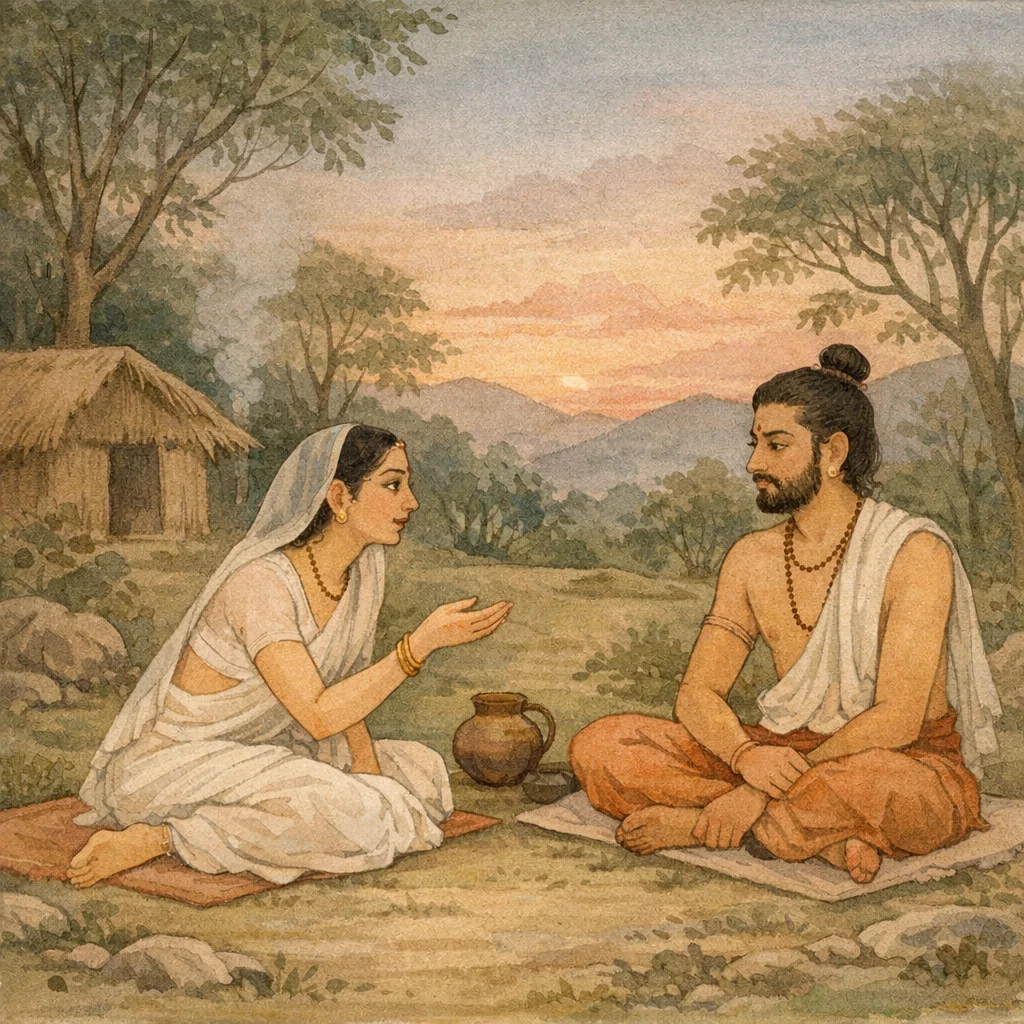
Chapter Arc: वनवास की धूल-धूसरित संध्या में द्रौपदी युधिष्ठिर से कह उठती है—“मैं शोक से प्रलाप नहीं कर रही; सुनो, मैं तुम्हें कर्म का सत्य स्मरण करा रही हूँ।” → वह धर्मराज की ‘क्षमा’ और ‘धैर्य’ की मर्यादा को चुनौती नहीं देती, पर उसे निष्क्रियता का आवरण मानकर झकझोरती है: ज्ञानी को भी कर्म करना चाहिए; अकर्मण्यता तो स्थावरों का धर्म है, मनुष्यों का नहीं। वह प्रत्यक्ष फल देने वाले पुरुषार्थ, उत्थान और पराक्रम की बात रखती है—देश-काल देखकर सावधान कर्म ही नीति है। → द्रौपदी का तीखा निष्कर्ष—यदि पर्वत-सा संकट (सिन्धु-गिरि जैसा) आ पड़े, यदि निर्वासन और व्यसन का भय हो, तब भी मनुष्य-धर्म यही है कि पराक्रम से उपाय करे; ‘पराक्रम ही उपदेशक’ है—यही क्षण युधिष्ठिर के सामने धर्म बनाम पुरुषार्थ का सबसे कठोर प्रश्न रख देता है। → अपने कथन को वह निजी स्मृति से पुष्ट करती है: पिता के घर ठहरे विद्वान ब्राह्मण से सुनी बृहस्पति-प्रोक्त नीति का उल्लेख कर बताती है कि यह आवेग नहीं, शास्त्र-सम्मत राजधर्म है—कर्मयोग, सतर्कता और अवसरानुकूल निर्णय। → युधिष्ठिर इस नीति-वाणी का उत्तर कैसे देंगे—क्या वे द्रौपदी के आग्रह को राजधर्म का संकेत मानकर सक्रिय उपाय करेंगे, या धर्म-निष्ठा को ही सर्वोपरि रखेंगे?
Shlokas
Verse 1
हि () हल मय द्वात्रिशोड्थ्याय: द्रौोपदीका पुरुषार्थको प्रधान मानकर पुरुषार्थ करनेके लिये जोर देना द्रौपहुुवाच नावमन्ये न गहें च धर्म पार्थ कथंचन । ईश्वरं कुत एवाहमवमंस्ये प्रजापतिम्,द्रौपदी बोली--कुन्तीनन्दन! मैं धर्मकी अवहेलना तथा निन्दा किसी प्रकार नहीं कर सकती। फिर समस्त प्रजाओंका पालन करनेवाले परमेश्वरकी अवहेलना तो कर ही कैसे सकती हूँ
Draupadī said: “O son of Kuntī, I cannot in any way disregard dharma or speak ill of it. How then could I ever slight the Lord—the Prajāpati, the divine protector and sustainer of all beings?”
Verse 2
आर्तईहं प्रलपामीदमिति मां विद्धि भारत । भूयश्व विलपिष्यामि सुमनास्त्वं निबोध मे,भारत! आप ऐसा समझ लें कि मैं शोकसे आर्त होकर प्रलाप कर रही हूँ। मैं इतनेसे ही चुप नहीं रहूँगी और भी विलाप करूँगी। आप प्रसन्नचित्त होकर मेरी बात सुनिये
Know me, O Bhārata, as one distressed and speaking in lamentation. I shall lament still more; therefore, with a calm and kindly mind, listen to what I say.
Verse 3
कर्म खल्विह कर्तव्यं जानतामित्रकर्शन । अकर्माणो हि जीवन्ति स्थावरा नेतरे जना:,शत्रुनाशन! ज्ञानी पुरुषको भी इस संसारमें कर्म अवश्य करना चाहिये। पर्वत और वृक्ष आदि स्थावर भूत ही बिना कर्म किये जी सकते हैं, दूसरे लोग नहीं
Yudhiṣṭhira said: “Indeed, in this world action must be performed by those who know what is right, O subduer of foes. For only the immobile beings—like mountains and trees—can live without acting; other people cannot.”
Verse 4
यावद्गोस्तनपानाच्च यावच्छायोपसेवनात् | जन्तव: कर्मणा वृत्तिमाप्रुवन्ति युधिष्ठिर,महाराज युधिष्ठिर! गौओंके बछड़े भी माताका दूध पीते और छायामें जाकर विश्राम करते हैं। इस प्रकार सभी जीव कर्म करके ही जीवन-निर्वाह करते हैं
Yudhiṣṭhira said: “From the time a calf drinks its mother cow’s milk to the time it seeks rest in the shade, living beings sustain their livelihood through activity. In this world, life is maintained by effort and work; none can remain without action.”
Verse 5
जड़मेषु विशेषेण मनुष्या भरतर्षभ । इच्छन्ति कर्मणा वृत्तिमवाप्तु प्रेत्य चेह च,भरतश्रेष्ठ! जंगम जीवोंमें विशेषरूपसे मनुष्य कर्मके द्वारा ही हहलोक और परलोकमें जीविका प्राप्त करना चाहते हैं
Yudhiṣṭhira said: “O bull among the Bharatas, among all beings—especially those that are inert—humans uniquely seek to secure their livelihood through action (karma), both here in this world and after death in the next.”
Verse 6
उत्थानमभिजानन्ति सर्वभूतानि भारत | प्रत्यक्ष फलमश्रन्ति कर्मणां लोकसाक्षिकम्,भारत! सभी प्राणी अपने उत्थानको समझते हैं और कर्मोंके प्रत्यक्ष फलका उपभोग करते हैं,जिसका साक्षी सारा जगत् है
Yudhiṣṭhira said: “O Bhārata, all beings recognize what leads to their rise and welfare, and they themselves partake of the visible results of their actions—results for which the whole world stands as witness.”
Verse 7
सर्वे हि स्वं समुत्थानमुपजीवन्ति जन्तव: । अपि धाता विधाता च यथायमुदके बक:,यह जलके समीप जो बगुला बैठकर (मछलीके लिये) ध्यान लगा रहा है, उसीके समान ये सभी प्राणी अपने उद्योगका आश्रय लेकर जीवन धारण करते हैं। धाता और विधाता भी सदा सृष्टिपालनके उद्योगमें लगे रहते हैं
All creatures, indeed, live by relying on their own rising up and exertion. Just as the heron (baka) sits near the water, intent in still concentration to seize a fish, so do all beings sustain themselves by taking refuge in enterprise. Even Dhātā and Vidhātā are ever engaged in the labor of preserving the creation.
Verse 8
अकर्मणां वै भूतानां वृत्ति: स्यान्न हि काचन | तदेवाभिप्रपद्येत न विहन्यात् कदाचन,कर्म न करनेवाले प्राणियोंकी कोई जीविका भी सिद्ध नहीं होती। अतः: (प्रारब्धका भरोसा करके) कभी कर्मका परित्याग न करे। सदा कर्मका ही आश्रय ले
For beings who do not act, no livelihood can truly come to be. Therefore one should never abandon action by relying on fate alone; rather, one should continually take refuge in purposeful work.
Verse 9
स्वकर्म कुरु मा ग्लासी: कर्मणा भव दंशित: । कृतं हि योडभिजानाति सहस्ने सो5स्ति नास्ति च,अतः आप अपना कर्म करें। उसमें ग्लानि न करें, कर्मका कवच पहने रहें। जो कर्म करना अच्छी तरह जानता है, ऐसा मनुष्य हजारोंमें एक भी है या नहीं? यह बताना कठिन है
Do your own appointed duty; do not sink into self-reproach. Be armed and protected by steadfast action itself. For one who truly understands what is to be done and what has been done—such a person, among thousands, is scarcely to be found; indeed, it is hard to say whether he exists at all.
Verse 10
तस्य चापि भवेत् कार्य विवृद्धौ रक्षणे तथा । भक्ष्यमाणो हानादानात् क्षीयेत हिमवानपि,धनकी वृद्धि और रक्षाके लिये भी कर्मकी आवश्यकता है। यदि धनका उपभोग (व्यय) होता रहे और आय न हो तो हिमालय-जैसी धनराशिका भी क्षय हो सकता है
Even for wealth, effort is required—both to increase it and to protect it. If it is continually consumed through expenditure while no income is taken in, even a store as vast as the Himālaya can be worn away.
Verse 11
उत्सीदेरन् प्रजा: सर्वा न कुर्यु: कर्म चेद् भुवि । तथा होता न वर्धेरन् कर्म चेदफलं भवेत्,यदि समस्त प्रजा इस भूतलपर कर्म करना छोड़ दे तो सबका संहार हो जाय। यदि कर्मका कुछ फल न हो तो इन प्रजाओंकी वृद्धि ही न हो
If all people on this earth were to abandon action, the whole population would sink into ruin. Likewise, if action were fruitless, the sustaining order of sacrifice (yajña) and the growth and prosperity of beings would not increase.
Verse 12
अपि चाप्यफल कर्म पश्याम: कुर्वतो जनान् | नान्यथा हाूपि गच्छन्ति वृत्ति लोका: कथंचन,हम देखती हैं कि लोग व्यर्थ कर्ममें भी लगे रहते हैं, कर्म न करनेपर तो लोगोंकी किसी प्रकार जीविका ही नहीं चल सकती
Yudhiṣṭhira said: “And indeed we see people engaged even in actions that yield no visible fruit. For in no other way, in any circumstance, can people carry on their livelihood at all.”
Verse 13
यश्न दिष्टपरो लोके यश्चापि हठवादिक: । उभावपि शठावेतौ कर्मबुद्धि: प्रशस्यते,संसारमें जो केवल भाग्यके भरोसे कर्म नहीं करता अर्थात् जो ऐसा मानता है कि पहले जैसा किया है वैसा ही फल अपने-आप ही प्राप्त होगा तथा जो हठवादी है--बिना किसी युक्तिके हठपूर्वक यह मानता है कि कर्म करना अनावश्यक है, जो कुछ मिलना होगा, अपने-आप मिल जायगा, वे दोनों ही मूर्ख हैं। जिसकी बुद्धि कर्म (पुरुषार्थ)-में रुचि रखती है, वही प्रशंसाका पात्र है
Yudhiṣṭhira said: “In this world, both the man who relies solely on fate and the man who is obstinately dogmatic are misguided. One thinks, ‘Whatever I did before will automatically yield its result, so there is no need to act now’; the other, without sound reasoning, insists that effort is unnecessary and that whatever is to be obtained will come of itself. Both are deluded. The person whose understanding is oriented toward action—toward purposeful human effort—is the one worthy of praise.”
Verse 14
यो हि दिष्टमुपासीनो निर्विचिष्ट:सुखं शयेत् । अवसीदेत् स दुर्बुद्धिरामो घट इवोदके,जो खोटी बुद्धिवाला मनुष्य प्रारब्ध (भाग्य)-का भरोसा रखकर उद्योगसे मुँह मोड़ लेता और सुखसे सोता रहता है, उसका जलमें रखे हुए कच्चे घड़ेकी भाँति विनाश हो जाता है
Yudhiṣṭhira said: “For the man who sits clinging to ‘fate’ alone, making no discerning effort, and lies down at ease—such a foolish person sinks to ruin, like an unbaked earthen pot placed in water.”
Verse 15
तथैव हठदुर्बुद्धिः शक्तः कर्मण्यकर्मकृत् । आसीत न चिरं जीवेदनाथ इव दुर्बल:,इसी प्रकार जो हठी और दुर्बुद्धि मानव कर्म करनेमें समर्थ होकर भी कर्म नहीं करता, बैठा रहता है, वह दुर्बल एवं अनाथकी भाँति दीर्घजीवी नहीं होता
“Likewise, a stubborn and misguided man—though capable of acting—who instead refuses to do his duty and merely sits idle, does not live long; he perishes like a weak person without support or protection.”
Verse 16
अकस्मादिह य: कश्रिदर्थ प्राप्नोति पूरुष: । त॑ हठेनेति मन्यन्ते स हि यत्नो न कस्यचित्,जो कोई पुरुष इस जगतमें अकस्मात् कहींसे धन पा लेता है, उसे लोग हठसे मिला हुआ मान लेते हैं; क्योंकि उसके लिये किसीके द्वारा प्रयत्न किया हुआ नहीं दीखता
Yudhiṣṭhira said: “If some man in this world suddenly comes into wealth from nowhere, people insist on calling it ‘won by sheer force’—for no one’s deliberate effort is seen to have brought it about.”
Verse 17
यच्चापि किंचित् पुरुषो दिष्टं नाम भजत्युत । दैवेन विधिना पार्थ तद् दैवमिति निश्चितम्,कुन्तीनन्दन! मनुष्य जो कुछ भी देवाराधनकी विधिसे अपने भाग्यके अनुसार पाता है, उसे निश्चितरूपसे दैव (प्रारब्ध) कहा गया है
Yudhiṣṭhira said: “Whatever a person comes to possess as his allotted share—obtained according to the divine ordinance, O Pārtha—this is certainly determined to be ‘daiva’, the force of destiny (one’s apportioned lot).”
Verse 18
यत् स्वयं कर्मणा किंचित् फलमाप्रोति पूरुष: । प्रत्यक्षमेतल्लोकेषु तत् पौरुषमिति श्रुतम्,तथा मनुष्य स्वयं कर्म करके जो कुछ फल प्राप्त करता है, उसे पुरुषार्थ कहते हैं। यह सब लोगोंको प्रत्यक्ष दिखायी देता है
Yudhiṣṭhira said: “Whatever result a person attains by his own action is seen directly in this world; therefore it is heard and understood as ‘human effort’ (pauruṣa)—the fruit that arises from one’s personal endeavor.”
Verse 19
स्वभावतः: प्रवृत्तो यः प्राप्रोत्यर्थ न कारणात् । तत् स्वभावात्मकं विद्धि फलं पुरुषसत्तम,नरश्रेष्ठ)ी जो स्वभावसे ही कर्ममें प्रवृत्त होकर धन प्राप्त करता है, किसी कारणवश नहीं, उसके उस धनको स्वाभाविक फल समझना चाहिये
Yudhiṣṭhira said: “That person who, moved simply by his own nature, engages in work and thereby obtains wealth—not due to some external inducement or special cause—know that gain, O best of men, to be a ‘natural’ result, arising from one’s inherent disposition.”
Verse 20
एवं हठाच्च दैवाच्च स्वभावात् कर्मणस्तथा । यानि प्राप्रोति पुरुषस्तत् फल पूर्वकर्मणाम्,इस प्रकार हठ, दैव, स्वभाव तथा कर्मसे मनुष्य जिन-जिन वस्तुओंको पाता है, वे सब उसके पूर्वकर्मोके ही फल हैं
Yudhiṣṭhira said: “Whatever a person comes to possess—whether it seems to arise from sheer insistence, from fate, from one’s innate disposition, or from one’s present actions—should be understood as the fruition of deeds done in the past.”
Verse 21
धातापि हि स्वकर्मव तैस्तैहेंतुभिरी श्वर: । विदधाति विभज्येह फल पूर्वकृतं नृणाम्,जगदाधार परमेश्वर भी उपर्युक्त हठ आदि हेतुओंसे जीवोंके अपने-अपने कर्मको ही विभक्त करके मनुष्योंको उनके पूर्वजन्ममें किये हुए कर्मके फलरूपसे यहाँ प्राप्त कराता है
Yudhiṣṭhira said: Even the Creator—God, the Lord—by those various causes, apportions each person’s own deeds and, in this world, dispenses to human beings the results of actions performed in a former time. Thus what one experiences is not random, but the ethically ordered fruition of one’s own karma under the governance of the Supreme.
Verse 22
यद्धायं पुरुष: किंचित् कुरुते वै शुभाशुभम् । तद् धातृविहितं विद्धि पूर्वकर्मफलोदयम्,पुरुष यहाँ जो कुछ भी शुभ-अशुभ कर्म करता है, उसे ईश्वरद्वारा विहित उसके पूर्वकर्मोके फलका उदय समझिये
Yudhiṣṭhira said: “Whatever a person does—auspicious or inauspicious—know it to be ordained by the Disposer, the ripening of the fruit of former deeds. Present conduct moves within moral causality: outcomes are not chance, but mature according to prior merit and fault.”
Verse 23
कारणं तस्य देहो<यं धातु: कर्मणि वर्तते । स यथा प्रेरयत्येनं तथायं कुरुतेडवश:,यह मानव-शरीर जो कर्ममें प्रवृत्त होता है, वह ईश्वरके कर्मफलसम्पादन-कार्यका साधन है। वे इसे जैसी प्रेरणा देते हैं, यह विवश होकर (स्वेच्छा--प्रारब्धभोगके लिये) वैसा ही करता है
This body is the instrument of that higher agency; made of elements, it moves within the sphere of action. As the Lord impels a person, so—lacking full autonomy—does he act, compelled to undergo what prior deeds have set in motion.
Verse 24
तेषु तेषु हि कृत्येषु विनियोक्ता महेश्वर: | सर्वभूतानि कौन्तेय कारयत्यवशान्यपि,कुन्तीनन्दन! परमेश्वर ही समस्त प्राणियोंको विभिन्न कार्योमें लगाते और स्वभावके परवश हुए उन प्राणियोंसे कर्म कराते हैं
Yudhiṣṭhira said: “In every undertaking, it is the Great Lord who appoints and directs. O son of Kuntī, He sets all beings to their several tasks and makes even those helplessly bound by their own nature perform action.”
Verse 25
मनसार्थान् विनिश्ित्य पश्चात् प्राप्रोति कर्मणा । बुद्धिपूर्व स्वयं वीर पुरुषस्तत्र कारणम्,किंतु वीर! मनसे अभीष्ट वस्तुओंका निश्चय करके फिर कर्मद्वारा मनुष्य स्वयं बुद्धिपूर्वक उन्हें प्राप्त करता है। अतः पुरुष ही उसमें कारण है
Yudhiṣṭhira said: “Having first determined the desired aims in the mind, a person later attains them through action. O hero, acting with deliberation and intelligence, the person himself is the decisive cause in that matter.”
Verse 26
संख्यातुं नैव शक््यानि कर्माणि पुरुषर्षभ । अगारनगराणां हि सिद्धि: पुरुषहैतुकी,नरश्रेष्ठ कर्मोीकी गणना नहीं की जा सकती। गृह एवं नगर आदि सभीकी प्राप्तिमें पुरुष ही कारण है। विद्वान पुरुष पहले बुद्धिद्वारा यह निश्चय करे कि तिलमें तेल है, गायके भीतर दूध है और काषप्ठमें अग्नि है, तत्पश्चात् उसकी सिद्धिके उपायका निश्चय करे
Yudhiṣṭhira said: “O bull among men, a man’s undertakings cannot truly be counted. For the attainment and establishment of homes and cities—and such worldly accomplishments—depend upon human effort as their cause.”
Verse 27
तिले तैलं गवि क्षीरं काछ्ठे पावकमन्तत: । धिया धीरो विजानीयादुपायं चास्य सिद्धये,नरश्रेष्ठ कर्मोीकी गणना नहीं की जा सकती। गृह एवं नगर आदि सभीकी प्राप्तिमें पुरुष ही कारण है। विद्वान पुरुष पहले बुद्धिद्वारा यह निश्चय करे कि तिलमें तेल है, गायके भीतर दूध है और काषप्ठमें अग्नि है, तत्पश्चात् उसकी सिद्धिके उपायका निश्चय करे
Yudhiṣṭhira said: “Oil lies hidden within the sesame seed, milk within the cow, and fire within the wood. A wise and steady-minded person should first discern this truth by understanding, and then determine the proper means by which that latent potential may be brought to fulfillment.”
Verse 28
ततः प्रवर्तते पश्चात् कारणैस्तस्य सिद्धये । तां सिद्धिमुपजीवन्ति कर्मजामिह जन्तवः,तदनन्तर उन्हीं उपायोंद्वारा उस कार्यकी सिद्धिके लिये प्रवृत्त होना चाहिये। सभी प्राणी इस जगतमें उस कर्मजनित सिद्धिका सहारा लेते हैं
“Thereafter, one should set oneself in motion—using the appropriate means—for the accomplishment of that objective. For in this world, living beings sustain themselves by relying upon the success that arises from their own actions.”
Verse 29
कुशलेन कृतं कर्म कर्त्रा साधु स्वनुछ्ितम् । इदं त्वकुशलेनेति विशेषादुपलभ्यते,योग्य कर्ताके द्वारा किया गया कर्म अच्छे ढंगसे सम्पादित होता है। यह कार्य किसी अयोग्य कततकि द्वारा किया गया है, यह बात कार्यकी विशेषतासे अर्थात् परिणामसे जानी जाती है
A task performed by one who is skilled is carried out well, for the doer has rightly ordered it. But that a task was done by one unskilled is known distinctly from the work’s very character—above all, from its outcome.
Verse 30
इष्टापूर्तफलं न स्यान्न शिष्यो न गुरुर्भवेत् । पुरुष: कर्मसाध्येषु स्याच्चेदयमकारणम्,यदि कर्मसाध्य फलोंमें पुरुष (एवं उसका प्रयत्न) कारण न होता अर्थात् वह कर्ता नहीं बनता तो किसीको यज्ञ और कूपनिर्माण आदि कर्मोंका फल नहीं मिलता। फिर तो न कोई किसीका शिष्य होता और न गुरु ही
Yudhiṣṭhira said: “If, in actions whose results are produced by effort, the person (and his striving) were not a cause—if he did not become an agent—then there would be no fruit of sacrifices and public works such as digging wells. In that case, no one would be anyone’s disciple, and no one would be a teacher either.”
Verse 31
कर्तृत्वादेव पुरुष: कर्मसिद्धौ प्रशस्यते । असिद्धौ निन्द्यते चापि कर्मनाशात् कथं त्विह,कर्ता होनेके कारण ही कार्यकी सिद्धिमें पुरुषकी प्रशंसा की जाती है और जब कार्यकी सिद्धि नहीं होती, तब उसकी निन्दा की जाती है। यदि कर्मका सर्वथा नाश ही हो जाय, तो यहाँ कार्यकी सिद्धि ही कैसे हो
Yudhiṣṭhira said: It is precisely because a man is regarded as an agent that he is praised when an undertaking succeeds; and when it fails, he is blamed as well. But if action itself were to be utterly annulled, how could there be any accomplishment here at all?
Verse 32
सर्वमेव हठेनैके दैवेनैके वदन्त्युत । पुंस: प्रयत्नजं केचित्त्रैधमेतन्निरुच्यते,कोई तो सब कार्योंको हठसे ही सिद्ध होनेवाला बतलाते हैं। कुछ लोग दैवसे कार्यकी सिद्धिका प्रतिपादन करते हैं तथा कुछ लोग पुरुषार्थको ही कार्यसिद्धिका कारण बताते हैं। इस तरह ये तीन प्रकारके कारण बताये जाते हैं इति श्रीमहाभारते वनपर्वणि अर्जुनाभिगमनपर्वणि द्रौपदीवाक्ये द्वात्रिंशो5ध्याय: ।। ३२ || इस प्रकार श्रीमह्याभारत वनपर्वके अन्तर्गत अजुनाभिगमनपर्वमें द्रौपदीवाक्यविषयक बत्तीसवाँ अध्याय पूरा हुआ
Yudhiṣṭhira said: “Some declare that every outcome is achieved solely by sheer force and obstinate striving; others say it is accomplished by fate alone; and still others maintain that human endeavor (puruṣārtha) is the true cause of success. Thus, these causes are explained as threefold.”
Verse 33
न चैवैतावता कार्य मन्यन्त इति चापरे | अस्ति सर्वमदृश्यं तु दिष्टं चैव तथा हठ:,दूसरे लोगोंकी मान्यता इस प्रकार है कि मनुष्यके प्रयत्नकी कोई आवश्यकता नहीं है। अदृश्य दैव (प्रारब्ध) तथा हठ--ये दो ही सब कार्योंके कारण हैं
And others, again, hold that no human effort is needed at all. They say that everything comes about only through the unseen—fate (what is ordained)—and through sheer obstinacy or force of will; these alone, they claim, are the causes behind all actions.
Verse 34
दृश्यते हि हठाच्चैव दिष्टाच्चार्थस्य संतति: । किंचिद् दैवाद्धठात् किंचित् किंचिदेव स्वभावत:,क्योंकि यह देखा जाता है कि हठ तथा दैवसे सब कार्योकी धारावाहिक रूपसे सिद्धि हो रही है। जो लोग तत्त्वज्ञ एवं कुशल हैं, वे प्रतिज्ञापूर्वक कहते हैं कि मनुष्य कुछ फल दैवसे, कुछ हठसे और कुछ स्वभावसे प्राप्त करता है। इस विषयमें इन तीनोंके सिवा कोई चौथा कारण नहीं है
Yudhiṣṭhira said: “For it is indeed seen that the course of events and the attainment of results proceed sometimes from sheer human insistence and sometimes from what is ordained by destiny. A person gains some outcomes through the divine dispensation (daiva), some through determined effort, and some simply from one’s own nature. Beyond these three, there is no fourth cause to be found in this matter.”
Verse 35
पुरुष: फलमाप्रोति चतुर्थ नात्र कारणम् | कुशला: प्रतिजानन्ति ये वै तत्त्वविदो जना:,क्योंकि यह देखा जाता है कि हठ तथा दैवसे सब कार्योकी धारावाहिक रूपसे सिद्धि हो रही है। जो लोग तत्त्वज्ञ एवं कुशल हैं, वे प्रतिज्ञापूर्वक कहते हैं कि मनुष्य कुछ फल दैवसे, कुछ हठसे और कुछ स्वभावसे प्राप्त करता है। इस विषयमें इन तीनोंके सिवा कोई चौथा कारण नहीं है
Yudhiṣṭhira said: A person attains results, and in this matter there is no fourth cause. Those who are skilled and truly know reality declare with certainty that a human being gains some outcomes through fate, some through forceful effort, and some through one’s own nature.
Verse 36
तथैव धाता भूतानामिष्टानिष्टफलप्रद: । यदि न स्यान्न भूतानां कृषपणो नाम कश्नन,क्योंकि यदि ईश्वर सब प्राणियोंको इष्ट-अनिष्टरूप फल नहीं देते तो उन प्राणियोंमेंसे कोई भी दीन नहीं होता
Yudhiṣṭhira said: “So too the Ordainer (Dhātā) of beings is the giver of results—both desirable and undesirable. If He were not so, then among creatures there would be no one at all who could be called wretched or destitute; for it is precisely the allotment of mixed outcomes that makes some fall into hardship.”
Verse 37
य॑ यमर्थमभिप्रेप्सु: कुरुते कर्म पूरुष: । तत्तत् सफलमेव स्याद् यदि न स्यात् पुरा कृतम्,यदि पूर्वकृत प्रारब्धकर्म प्रभाव डालनेवाला न होता तो मनुष्य जिस-जिस प्रयोजनके अभिप्रायसे कर्म करता, वह सब सफल ही हो जाता
Yudhiṣṭhira said: If the force of what was done in the past did not already exist, then whatever aim a person pursued and for that purpose undertook action—each such effort would surely bear fruit. But because prior deeds exert their influence, human striving does not always reach the result it intends.
Verse 38
त्रिद्वारामर्थसिद्धि तु नानुपश्यन्ति ये नरा: । तथैवानर्थसिद्धिं च यथा लोकास्तथैव ते,अत: जो लोग अर्थसिद्धि तथा अनर्थकी प्राप्तिमें देव, हठ और स्वभाव--इन तीनोंको कारण नहीं समझते, वे वैसे ही हैं, जैसे कि साधारण अज्ञ लोग होते हैं
Yudhiṣṭhira said: Those men who do not discern the threefold gateway by which success in worldly aims is attained—and likewise the threefold gateway by which misfortune is incurred—are no different from the unthinking multitude. They live as ordinary, ignorant people do, failing to recognize the true causes behind gain and loss.
Verse 39
कर्तव्यमेव कर्मेति मनोरेष विनिश्चय: । एकान्तेन हानीहो5यं पराभवति पूरुष:,किंतु मनुका यह सिद्धान्त है कि कर्म करना ही चाहिये, जो बिलकुल कर्म छोड़कर निश्वेष्ट हो बैठ रहता है, वह पुरुष पराभवको प्राप्त होता है
Yudhiṣṭhira said: “This is the settled conviction of Manu: one must indeed do what ought to be done. A man who wholly abandons action and sits idle, doing nothing, comes to ruin and defeat.”
Verse 40
कुर्वतों हि भवत्येव प्रायेणेह युधिष्ठिर । एकान्तफलसिद्धि तु न विन्दत्यलस: क्वचित्,(इसलिये मेरा तो कहना यह है कि) महाराज युधिष्ठिर! कर्म करनेवाले पुरुषको यहाँ प्राय: फलकी सिद्धि प्राप्त होती ही है। परंतु जो आलसी है, जिससे ठीक-ठीक कर्तव्यका पालन नहीं हो पाता, उसे कभी फलकी सिद्धि नहीं प्राप्त होती
O Yudhiṣṭhira, in this world success in results generally comes to the one who acts. But the lazy person—who fails to carry out duty as it should be—never attains the sure accomplishment of the desired fruit.
Verse 41
असम्भवे त्वस्य हेतु: प्रायश्ित्तं तु लक्षयेत् | कृते कर्मणि राजेन्द्र तथानृण्यमवाप्नुते,यदि कर्म करनेपर भी फलकी उत्पत्ति न हो तो कोई-न-कोई कारण है; ऐसा मानकर प्रायश्चित्त (उसके दोषके समाधान)-पर दृष्टि डाले। राजेन्द्र! कर्मको सांगोपांग कर लेनेपर कर्ता उऋण (निर्दोष) हो जाता है
If, despite performing an act, its expected result does not arise, one should assume that there is some obstructing cause and then turn one’s attention to expiation—removing the fault. O best of kings, when an action has been carried out in full accordance with its requirements, the doer becomes free from liability (blameless), even if the visible fruit is delayed or absent.
Verse 42
अलक्ष्मीराविशत्येने शयानमलसं नरम् | नि:संशयं फल॑ लब्ध्वा दक्षो भूतिमुपाश्ुुते,जो मनुष्य आलस्यके वशमें पड़कर सोता रहता है, उसे दरिद्रता प्राप्त होती है और कार्यकुशल मानव निश्चय ही अभीष्ट फल पाकर ऐश्वर्यका उपभोग करता है
Yudhiṣṭhira said: Misfortune surely enters the man who lies asleep in idleness. But the capable and diligent person, having certainly obtained the desired result, enjoys prosperity. The teaching underscores that laziness invites poverty, while steady effort aligned with duty leads to success and well-being.
Verse 43
अनर्था: संशयावस्था: सिद्धयन्ते मुक्तसंशया: । धीरा नरा: कर्मरता ननु नि:संशया: क्वचित्,कर्मका फल होगा या नहीं, इस संशयमें पड़े हुए मनुष्य अर्थसिद्धिसे वंचित रह जाते हैं और जो संशयरहित हैं, उन्हें सिद्धि प्राप्त होती है। कर्मपरायण और संशयरहित धीर मनुष्य निश्चय ही कहीं बिरले देखे जाते हैं
Yudhiṣṭhira said: Those who remain stuck in a state of doubt come to misfortune and are deprived of success; but those who are freed from doubt attain accomplishment. Yet men who are steady-minded, devoted to action, and truly without hesitation are, indeed, rarely seen anywhere.
Verse 44
एकान्तेन हाानर्थो<यं वर्तते5स्मासु साम्प्रतम् । स तु नि:संशयं न स्यात् त्वयि कर्मण्यवस्थिते,इस समय हमलोगोंपर राज्यापहरणरूप भारी विपद् आ पड़ी है, यदि आप कर्म (पुरुषार्थ)-में तत्परतासे लग जाय॑ँ तो निश्चय ही यह आपत्ति टल सकती है
Yudhiṣṭhira said: “A grave calamity—our loss and ruin—has, beyond doubt, fallen upon us at this very time. Yet it need not remain so: if you stand firmly established in action, in purposeful effort, then without any uncertainty this misfortune can be averted.”
Verse 45
अथवा सिद्धिरेव स्यादभिमानं तदेव ते । वृकोदरस्य बीभत्सोर्भ्रोत्रोश्न यमयोरपि,अथवा यदि कार्यकी सिद्धि ही हो जाय, तो वह आपके, भीमसेन और अर्जुनके तथा नकुल-सहदेवके लिये भी विशेष गौरवकी बात होगी
Yudhiṣṭhira said: “Or else, if success alone is achieved, that very success will be your honour—an achievement that will also stand as a special glory for Vṛkodara (Bhīma), for Bībhatsu (Arjuna), and for the twin brothers, the sons of Yama (Nakula and Sahadeva).”
Verse 46
अन्येषां कर्म सफलमस्माकमपि वा पुन: । विप्रकर्षेण बुध्येत कृतकर्मा यथाफलम्,कर्मोके कर लेनेपर अन्तमें कर्ताको जैसा फल मिलता है, उसके अनुसार ही यह जाना जा सकता है कि दूसरोंका कर्म सफल हुआ है या हमारा
Yudhiṣṭhira said: “Whether another’s action has borne fruit—or ours as well—can be understood only after some interval, when the deed is completed and its outcome becomes evident. For a doer is finally known by the result that accrues from what has been done.”
Verse 47
पृथिवीं लाड्रलेनेह भित्त्वा बीज॑ वपत्युत । आस्ते<थ कर्षकस्तूष्णीं पर्जन्यस्तत्र कारणम्,किसान हलसे पृथ्वीको चीरकर उसमें बीज बोता है और फिर चुपचाप बैठा रहता है; क्योंकि उसे सफल बनानेमें मेघ कारण हैं। यदि वृष्टिने अनुग्रह नहीं किया तो उसमें किसानका कोई दोष नहीं है। वह किसान मन-ही-मन यह सोचता है कि दूसरे लोग जोतने- बोनेका जो सफल कार्य जैसे करते हैं, वह सब मैंने भी किया है। उस दशामें यदि मुझे ऐसा प्रतिकूल फल मिला तो इसमें मेरा कोई अपराध नहीं है--ऐसा विचार करके उस असफलताके लिये वह बुद्धिमान् किसान अपनी निन्दा नहीं करता
Yudhiṣṭhira said: “Here a farmer breaks open the earth with the plough and sows the seed. Then he sits quietly, for the rain-cloud is the decisive cause there. If the rain does not show favor, the farmer is not at fault. Reflecting, ‘I too have done the same successful work that others do—ploughing and sowing,’ if an adverse result comes to me, it is not my wrongdoing. Thinking thus, the wise farmer does not condemn himself for that failure.”
Verse 48
वृष्टिश्रेन्नानुगृह्लीयादनेनास्तत्र कर्षक: । यदन्य: पुरुष: कुर्यात् तत् कृतं सफलं मया,किसान हलसे पृथ्वीको चीरकर उसमें बीज बोता है और फिर चुपचाप बैठा रहता है; क्योंकि उसे सफल बनानेमें मेघ कारण हैं। यदि वृष्टिने अनुग्रह नहीं किया तो उसमें किसानका कोई दोष नहीं है। वह किसान मन-ही-मन यह सोचता है कि दूसरे लोग जोतने- बोनेका जो सफल कार्य जैसे करते हैं, वह सब मैंने भी किया है। उस दशामें यदि मुझे ऐसा प्रतिकूल फल मिला तो इसमें मेरा कोई अपराध नहीं है--ऐसा विचार करके उस असफलताके लिये वह बुद्धिमान् किसान अपनी निन्दा नहीं करता
Yudhiṣṭhira said: “If the rain does not show favor, the farmer is not to be blamed in that matter. For he has done all that any other man would do—ploughing and sowing—so he may rightly think, ‘I have performed the proper work; if the result turns adverse, the fault is not mine.’ Thus the wise farmer does not condemn himself for an outcome that depends on forces beyond his control.”
Verse 49
तच्चेदं फलमस्माकमपराधो न मे क्वचित् | इति धीरो<न्ववेक्ष्यैव नात्मानं तत्र गरहयेत्,किसान हलसे पृथ्वीको चीरकर उसमें बीज बोता है और फिर चुपचाप बैठा रहता है; क्योंकि उसे सफल बनानेमें मेघ कारण हैं। यदि वृष्टिने अनुग्रह नहीं किया तो उसमें किसानका कोई दोष नहीं है। वह किसान मन-ही-मन यह सोचता है कि दूसरे लोग जोतने- बोनेका जो सफल कार्य जैसे करते हैं, वह सब मैंने भी किया है। उस दशामें यदि मुझे ऐसा प्रतिकूल फल मिला तो इसमें मेरा कोई अपराध नहीं है--ऐसा विचार करके उस असफलताके लिये वह बुद्धिमान् किसान अपनी निन्दा नहीं करता
Yudhiṣṭhira said: “If this is the outcome that has come to us, there is no fault of mine anywhere in it. Reflecting in this steady way, a wise person should not blame himself for that result.”
Verse 50
कुर्वतो नार्थसिद्धिर्मे भवतीति ह भारत । निर्वेदो नात्र कर्तव्यो द्वावन्यौ हात्र कारणम्,भारत! पुरुषार्थ करनेपर भी यदि अपनेको सिद्धि न प्राप्त हो तो इस बातको लेकर मन-ही-मन खिन्न नहीं होना चाहिये; क्योंकि फलकी सिद्धिमें पुरुषार्थके सिवा दो और भी कारण हैं--प्रारब्ध और ईश्वरकृपा
Yudhiṣṭhira said: “O Bhārata, even when one exerts oneself, if success in one’s intended aim does not come, one should not sink into inner dejection over it. For in the attainment of results there are, besides human effort, two other causes as well.”
Verse 51
सिद्धिर्वाप्पथवासिद्धिरप्रवृत्तिरतोडन्यथा । बहूनां समवाये हि भावानां कर्म सिद्धाति,महाराज! कार्यमें सिद्धि प्राप्त होगी या असिद्धि, ऐसा संदेह मनमें लेकर आप कर्ममें प्रवृत्त ही न हों, यह उचित नहीं है; क्योंकि बहुत-से कारण एकत्र होनेपर ही कर्ममें सफलता मिलती है
Yudhiṣṭhira said: “Whether there is success or failure, it is not right to refrain from action out of such doubt. For the accomplishment of a deed comes to pass only when many factors converge.”
Verse 52
गुणाभावे फल न्यूनं भवत्यफलमेव च । अनारम्भे हि न फलं न गुणो दृश्यते क्वचित्,कर्मोमें किसी अंगकी कमी रह जानेपर थोड़ा फल हो सकता है। यह भी सम्भव है कि फल हो ही नहीं। परंतु कर्मका आरम्भ ही न किया जाय तब तो न कहीं फल दिखायी देगा और न कर्ताका कोई गुण (शौर्य आदि) ही दृष्टिगोचर होगा
Yudhiṣṭhira said: “When an undertaking lacks the requisite qualities or components, its result may be diminished—or it may yield no result at all. But if one does not even begin the action, then nowhere is any fruit seen, nor does any excellence of the doer—such as valor—become manifest.”
Verse 53
देशकालावुपायांश्व मड्लं स्वस्तिवृद्धये । युनक्ति मेधया धीरो यथाशक्ति यथाबलम्,धीर मनुष्य मंगलमय कल्याणकी वृद्धिके लिये अपनी बुद्धिके द्वारा शक्ति तथा बलका विचार करते हुए देश-कालके अनुसार साम-दाम आदि उपायोंका प्रयोग करे
Yudhiṣṭhira said: “For the increase of well-being and auspicious prosperity, a wise and steady person applies appropriate means in accordance with place and time—employing his intelligence while weighing his capacity and strength.”
Verse 54
अप्रमत्तेन तत् कार्यमुपदेष्टा पराक्रम: । भूयिष्ठं कर्मयोगेषु दृष्ट एव पराक्रम:,सावधान होकर देश-कालके अनुरूप कार्य करे। इसमें पराक्रम ही उपदेशक (प्रधान) है। कार्यकी समस्त युक्तियोंमें पराक्रम ही सबसे श्रेष्ठ समझा गया है
“That task should be carried out with vigilant care; in such matters, valor itself is the chief instructor. Indeed, among the many practical strategies for accomplishing action, valor is seen as the foremost.”
Verse 55
यत्र धीमानवेक्षेत श्रेयांसं बहुभिगुणै: । साम्नैवार्थ ततो लिप्सेत् कर्म चास्मै प्रयोजयेत्,जहाँ बुद्धिमान् पुरुष शत्रुको अनेक गुणोंसे श्रेष्ठ देखे, वहाँ सामनीतिसे ही काम बनानेकी इच्छा करे और उसके लिये जो सन्धि आदि आवश्यक कर्तव्य हो, करे
Yudhiṣṭhira said: “Where a wise man perceives another to be superior by many virtues, there he should seek to accomplish his purpose through conciliation alone; and for that end he should undertake the necessary duties—such as making peace or allied measures—appropriate to the situation.”
Verse 56
व्यसन वास्य काड्क्षेत विवासं वा युधिष्ठिर । अपि सिन्धोगिरिर्वापि किं पुनर्मर्त्यधर्मिण:,महाराज युधिष्ठिर! अथवा शत्रुपर कोई भारी संकट आने या देशसे उसके निकाले जानेकी प्रतीक्षा करे; क्योंकि अपना विरोधी यदि समुद्र अथवा पर्वत हो तो उसपर भी विपत्ति लानेकी इच्छा रखनी चाहिये, फिर जो मरणधर्मा मनुष्य है, उसके लिये तो कहना ही क्या है?
Yudhiṣṭhira said: “One should even look for an adversary’s calamity or exile. If the opponent were the ocean or a mountain, one should still wish to bring misfortune upon it—how much more, then, in the case of a mortal human being, bound by death.”
Verse 57
उत्थानयुक्त: सततं परेषामन्तरैषणे । आनृण्यमाप्रोति नर: परस्यात्मन एव च,शत्रुओंके छिद्रका अन्वेषण करनेके लिये सदा प्रयत्नशील रहे। ऐसा करनेसे वह अपनी और दूसरे लोगोंकी दृष्टिमें भी निर्दोष होता है
Yudhiṣṭhira said: “A man should remain constantly energetic and vigilant in seeking out the vulnerabilities of opponents. By such sustained alertness and effort, he becomes free from blame—both in the eyes of others and in his own conscience—having done what duty requires.”
Verse 58
न त्वेवात्मावमन्तव्य: पुरुषेण कदाचन । न हाात्मपरिभूतस्य भूतिर्भवति शोभना,मनुष्य कभी अपने-आपका अनादर न करे--अपने-आपको छोटा न समझे। जो स्वयं ही अपना अनादर करता है, उसे उत्तम ऐश्वर्यकी प्राप्ति नहीं होती
Yudhiṣṭhira said: “A person should never despise his own self, nor regard himself as insignificant. For one who has himself become contemptuous of his own worth, no truly splendid prosperity or well-being can arise.”
Verse 59
एवं संस्थितिका सिद्धिरियं लोकस्य भारत | तत्र सिद्धिर्गति: प्रोक्ता कालावस्थाविभागत:,भारत! लोकको इसी प्रकार कार्यसिद्धि प्राप्त होती है--कार्यसिद्धिकी यही व्यवस्था है। काल और अवस्थाके विभागके अनुसार शत्रुकी दुर्बलताके अन्वेषणका प्रयत्न ही सिद्धिका मूल कारण है
O Bhārata, thus does the world attain success in its undertakings—such is the order of achievement. According to the divisions of time and circumstance, the very effort to seek out an enemy’s weakness is declared the root cause of success.
Verse 60
ब्राह्म॒णं मे पिता पूर्व वासयामास पण्डितम् । सो<पि सर्वामिमां प्राह पित्रे मे भरतर्षभ,भरतमश्रेष्ठ! पूर्वकालमें मेरे पिताजीने अपने घरपर एक दविद्दान् ब्राह्मणको ठहराया था। उन्होंने ही पिताजीसे बृहस्पतिजीकी बतायी हुई इस सम्पूर्ण नीतिका प्रतिपादन किया था और मेरे भाइयोंको भी इसीकी शिक्षा दी थी। उस समय अपने भाइयोंके निकट रहकर घरमें ही मैंने भी उस नीतिको सुना था
Yudhiṣṭhira said: “Formerly my father kept in his house a learned Brāhmaṇa. He expounded to my father this entire teaching on right conduct—said to have been taught by Bṛhaspati—and he instructed my brothers in it as well. Staying near my brothers at home in those days, I too heard that counsel.”
Verse 61
नीतिं बृहस्पतिप्रोक्तां भ्रातृन् मे5ग्राहयत् पुरा । तेषां सकाशादश्रौषमहमेतां तदा गृहे,भरतमश्रेष्ठ! पूर्वकालमें मेरे पिताजीने अपने घरपर एक दविद्दान् ब्राह्मणको ठहराया था। उन्होंने ही पिताजीसे बृहस्पतिजीकी बतायी हुई इस सम्पूर्ण नीतिका प्रतिपादन किया था और मेरे भाइयोंको भी इसीकी शिक्षा दी थी। उस समय अपने भाइयोंके निकट रहकर घरमें ही मैंने भी उस नीतिको सुना था
Yudhiṣṭhira said: “Formerly, my brothers were instructed in the code of conduct taught by Bṛhaspati. Staying near them, I too heard that teaching at home at that time, O best of the Bharatas.”
Verse 62
स मां राजन् कर्मवतीमागतामाह सान्त्वयन् । शुश्रूषमाणामासीनां पितुरड्के युधिछ्िर,महाराज युधिष्ठिर! मैं उस समय किसी कार्यसे पिताके पास आयी थी और यह सब सुननेकी इच्छासे उनकी गोदमें बैठ गयी थी। तभी उन ब्राह्मण देवताने मुझे सान्त्वना देते हुए इस नीतिका उपदेश किया था
O great king Yudhiṣṭhira! At that time I came to my father on some business, and, wishing to hear everything, I sat upon his lap. Then that brāhmaṇa, like a god, consoled me and instructed me in this teaching of nīti.
Frequently Asked Questions
The dilemma concerns whether dharma should be trusted and practiced when its results are not immediately visible—i.e., whether skepticism (nāstikya/ati-śaṅkā) is justified under suffering and delayed outcomes.
Perform prescribed duties without reducing dharma to a transaction; stabilize conduct through āgama and the example of the wise, and avoid corrosive suspicion that undermines both ethical life and one’s capacity for long-term flourishing.
There is no formal phalaśruti formula; however, the chapter contains an explicit meta-assertion that karma has results (karmaṇāṃ phalam asti) and that steadfast, non-doubting adherence to dharma leads to auspicious post-mortem outcomes, while persistent doubt is portrayed as spiritually obstructive.