Adhyaya 162
इन्द्रस्य पाण्डवैः समागमः (Indra’s Meeting with the Pāṇḍavas)
Upa-parva: Indra–Pāṇḍava-samāgama (Divine Visitation and Validation Episode)
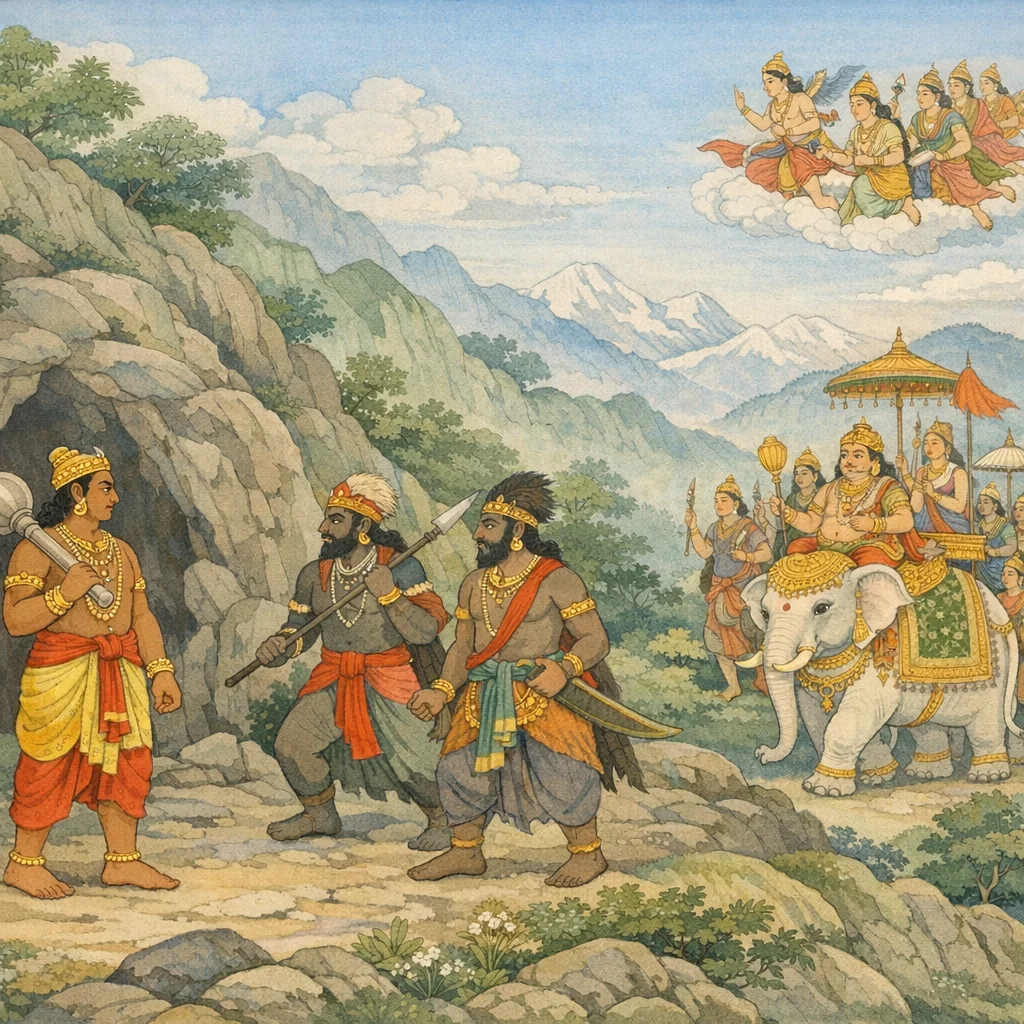
Vaiśaṃpāyana reports a sudden, all-encompassing celestial soundscape—music, chariot-wheels, bells, and the cries of animals and birds—signaling the approach of divine presences. Gandharvas and Apsarases accompany Indra in sun-bright aerial vehicles. Indra arrives in a splendid chariot, dismounts, and is approached by Yudhiṣṭhira with his brothers. Yudhiṣṭhira performs respectful worship according to prescribed procedure and with generous offerings. Arjuna (Dhanaṃjaya) bows and stands near Indra with pronounced humility. Yudhiṣṭhira, seeing Arjuna’s disciplined demeanor and ascetic condition, is filled with joy. Indra addresses Yudhiṣṭhira with auspicious assurance: he will later govern the earth and should return safely to the Kāmyaka hermitage. Indra explicitly validates that Arjuna has obtained all astras from him through effort, expresses satisfaction with Arjuna, and declares him unconquerable by the three worlds—an idiom of supreme martial capacity rather than a literal census. Indra then departs joyfully to heaven, praised by great seers. The chapter closes with a phalaśruti: a learned, attentive reciter of this meeting, living with disciplined vows (brahmacarya) for a year, is said to enjoy freedom from affliction and long, comfortable life.
Chapter Arc: गन्धमादन पर्वत की गुफाओं में नाना प्रकार के शब्द गूँजते हैं; पाण्डव-परिवार को भीमसेन का पता नहीं चलता और अनिष्ट की आशंका से सबका मन डोल उठता है। → धौम्य, द्रौपदी, विप्र और सुहृद्-जन व्याकुल होकर भीम को खोजते हैं; द्रौपदी को ऋषियों की देख-रेख में सौंपकर शस्त्रधारी पाण्डव पर्वत-मार्ग पर चढ़ते हैं। उधर भीम का यक्ष-राक्षसों से संघर्ष कुबेर के क्षेत्र में ‘राजद्वेष/राजद्रोह’ के रूप में देखा जाने लगता है—देवाधिपति के अधिकार-क्षेत्र में बल-प्रयोग का दोष उभरता है। → कुबेर के सेवक-समूह और यक्ष-राक्षसों की सूचना से यक्षाधिपति का क्रोध भड़क उठता है—‘भीम ने दूसरा अपराध किया’ कहकर वह युद्ध-आज्ञा देता है; उसी समय घायल होने पर भी भीम की ग्लानि नहीं, और कुबेर के साक्षात् दर्शन के सामने भी उसका तेज बना रहता है। → कुबेर के भवन की ओर बचे हुए राक्षस एकत्र होकर लौटते हैं; देव-गन्धर्वों की स्तुति और विजय-सूचक अश्व-हिनहिनाहट के बीच कुबेर का वैभव, अनुशासन और दण्ड-व्यवस्था स्थापित होती है—भीम के कृत्य का लेखा-जोखा देव-राज्य की दृष्टि से तय होने लगता है। → कुबेर के क्रोध और ‘युज्यताम्’ (युद्ध/दण्ड की तैयारी) की आज्ञा के बाद यह प्रश्न अधर में रहता है कि भीमसेन को दण्ड मिलेगा या देवाधिपति उसकी वीरता को किसी उच्चतर धर्म-प्रयोजन में रूपान्तरित करेगा।
Shlokas
Verse 1
#ट्डज #लइ (9) #:5- #:+- एकषष्ट्यधिकशततमो< ध्याय: कुबेरका गन्धमादन पर्वतपर आगमन और युधिष्छिरसे उनकी भेंट वैशम्पायन उवाच श्र॒त्वा बहुविधै: शब्दैर्नाद्यमानां गिरेगुहाम् । अजातशत्रुः कौन्तेयो माद्रीपुत्रावुभावपि,वैशम्पायनजी कहते हैं--जनमेजय! उस समय उस पर्वतकी गुफा नाना प्रकारके शब्दोंसे प्रतिध्वनित हो रही थी। वह प्रतिध्वनि सुनकर अजातशत्रु कुन्तीकुमार युधिष्ठिर, दोनों माद्री-पुत्र नकुल-सहदेव, पुरोहित धौम्य, द्रौपदी और समस्त ब्राह्मण तथा सुहृद--ये सभी भीमसेनको न देखनेके कारण बहुत उदास हो गये
Vaiśampāyana said: Hearing the mountain-cave resounding with many kinds of sounds, Ajātaśatru—Yudhiṣṭhira, the son of Kuntī—together with both sons of Mādrī (Nakula and Sahadeva), as well as the priest Dhaumya, Draupadī, and the assembled brāhmaṇas and well-wishers, became deeply dejected, for they could not see Bhīmasena.
Verse 2
धौम्य: कृष्णा च विप्राश्व सर्वे च सुहददस्तथा । भीमसेनमपश्यन्त: सर्वे विममसो5भवन्,वैशम्पायनजी कहते हैं--जनमेजय! उस समय उस पर्वतकी गुफा नाना प्रकारके शब्दोंसे प्रतिध्वनित हो रही थी। वह प्रतिध्वनि सुनकर अजातशत्रु कुन्तीकुमार युधिष्ठिर, दोनों माद्री-पुत्र नकुल-सहदेव, पुरोहित धौम्य, द्रौपदी और समस्त ब्राह्मण तथा सुहृद--ये सभी भीमसेनको न देखनेके कारण बहुत उदास हो गये
Vaiśampāyana said: Dhaumya, Kṛṣṇā (Draupadī), the brāhmaṇas, and all their well-wishers—seeing Bhīmasena nowhere—were all cast into deep dejection.
Verse 3
द्रौपदीमार्शिषिणाय सम्प्रधार्य महारथा: । सहिता: सायुधा: शूरा: शैलमारुरुहुस्तदा,तब वे महारथी शूर-वीर द्रौपदीको आर्टिषिणकी देख-रेखमें सौंपकर हाथोंमें अस्त्र-शस्त्र लिये एक साथ पर्वतपर चढ़ गये
Vaiśampāyana said: Having entrusted Draupadī to the care of the ascetic woman, those heroic great chariot-warriors, united and fully armed, then climbed up the mountain together.
Verse 4
तत: सम्प्राप्य शैलाग्रं वीक्षमाणा महारथा: । ददृशुस्ते महेष्वासा भीमसेनमरिंदमा:,तदनन्तर शत्रुओंका दमन करनेवाले वे महाधनुर्धर एवं महारथी वीर उस पर्वतके शिखरपर पहुँचकर जब इधर-उधर दृष्टिपात करने लगे, तब उन्हें भीमसेन दिखायी दिये
Then, having reached the mountain’s summit, those great chariot-warriors—mighty archers and subduers of foes—looked about in all directions, and there they beheld Bhīmasena.
Verse 5
स्फुरतश्न महाकायान् गतसत्त्वांश्व॒ राक्षसान् महाबलान् महासत्त्वान् भीमसेनेन पातितान्,साथ ही उन्होंने भीमसेनके द्वारा मार गिराये हुए महान् शक्तिशाली तथा परम उत्साही विशालकाय राक्षस भी देखे, जिनमेंसे कुछ छटपटा रहे थे और कुछ मरे पड़े थे
Vaiśampāyana said: They also saw the huge-bodied rākṣasas—some still twitching, others already lifeless—mighty in strength and fierce in spirit, all struck down by Bhīmasena. The scene lays bare the grim aftermath of violence: prowess has consequences, and the line between valor and destruction stands revealed in the fallen bodies.
Verse 6
शुशुभे स महाबाहुर्गदाखड््गधनुर्धर: । निहत्य समरे सर्वान् दानवान् मघवानिव,उस समय गदा, खड़्ग और धनुष धारण किये महाबाहु भीमसेन समरभूमिमें सम्पूर्ण दानवोंका संहार करके खड़े हुए देवराज इन्द्रके समान शोभा पा रहे थे
Vaiśampāyana said: Then the mighty-armed Bhīmasena—bearing mace, sword, and bow—stood resplendent on the battlefield, having slain all the Dānavas in combat, shining like Maghavān (Indra). The verse casts his prowess as a power that restores order by subduing destructive forces, praising disciplined strength used to protect dharma.
Verse 7
ततस्ते भ्रातरं दृष्टवा परिष्वज्य महारथा: । तत्रोपविविशु: पार्था: प्राप्ता गतिमनुत्तमाम्,तब वे उत्तम आश्रयको प्राप्त हुए महारथी पाण्डव भाई भीमसेनको हृदयसे लगाकर उनके पास ही बैठ गये
Then, on seeing their brother, the mighty chariot-warriors embraced him warmly. Thereupon the Pārthas sat down there beside him, having attained a most excellent refuge and state of safety—signaling fraternal solidarity and the relief of finding secure support amid hardship.
Verse 8
तैश्नतुर्भिमहेष्वासैर्गिरिशुड्रमशो भत । लोकपालैर्महाभागैर्दिवं देववरैरिव,जैसे महान् भाग्यशाली देवश्रेष्ठ इन्द्र आदि लोकपालोंके द्वारा स्वर्गलोककी शोभा होती है, उसी प्रकार उन चार महाधनुर्धर बन्धुओंसे उस समय वह पर्वत-शिखर सुशोभित हो रहा था
Vaiśampāyana said: That mountain-peak then shone in beauty because of those four mighty bowmen—just as heaven is adorned by the illustrious guardians of the worlds, the foremost among the gods. The verse underscores how true excellence and disciplined prowess can lend splendor to a place, when borne with dignity rather than arrogance.
Verse 9
कुबेरसदन दृष्ट्वा राक्षसांश्व निपातितान् । भ्राता भ्रातरमासीनमत्रवीत् पृथिवीपति:,राजा युधिष्ठिरने कुबेरका भवन देखकर और मारे गये राक्षसोंकी ओर दृष्टिपात करके अपने पास बैठे हुए भाई भीमसेनसे कहा
Vaiśampāyana said: Seeing Kubera’s dwelling and also the rākṣasas who had been struck down, the lord of the earth—King Yudhiṣṭhira—addressed his brother Bhīmasena, who was seated nearby. The scene underscores a dharmic ruler’s reflective response to violence: even when force has been used, the king pauses to observe the consequences and then speaks with deliberation to his kin.
Verse 10
युधिछिर उवाच साहसाद् यदि वा मोहाद् भीम पापमिदं कृतम् | नैतत् ते सदृशं वीर मुनेरिव मृषा वध:,युधिष्ठिर बोले--वीर भीमसेन! तुमने दुःसाहसवश अथवा मोहके कारण जो यह पापकर्म किया है, वह मुनिवृत्तिसे रहनेवाले तुम्हारे अनुरूप नहीं है। राक्षसोंका यह संहार व्यर्थ ही किया गया है
Yudhiṣṭhira said: “O hero Bhīmasena, this sinful deed you have done—whether out of rash daring or out of delusion—is not worthy of you; like a muni who lives by sacred restraint, you should not commit a futile killing. This slaughter of the rākṣasas has been in vain.”
Verse 11
राजद्विष्टं न कर्तव्यमिति धर्मविदो विदु: । त्रिदशानामिदं द्विष्टं भीमसेन त्वया कृतम्,भीमसेन! धर्मज्ञ पुरुष यह जानते और मानते हैं कि राजद्रोहका कार्य नहीं करना चाहिये; परन्तु तुमने तो न केवल राजद्रोहका अपितु देवताओंके भी द्रोहका कार्य किया है
Yudhiṣṭhira said: “Those who know dharma hold that one must not commit an act that is hateful to the king—an act of treason. But you, Bhīmasena, have done what is hateful not only to the king; you have also committed an offense that is hateful to the gods.”
Verse 12
अर्थधर्मावनादृत्य यः पापे कुरुते मन: । कर्मणां पार्थ पापानां स फल विन््दते ध्रुवम् । पुनरेवं न कर्तव्यं मम चेदिच्छसि प्रियम्,पार्थ! जो अर्थ और धर्मका अनादर करके पापमें मन लगाता है उसे पापकर्मोका फल अवश्य प्राप्त होता है। यदि तुम वही कार्य करना चाहते हो जो मुझे प्रिय लगे तो आजसे फिर कभी ऐसा काम तुम्हें नहीं करना चाहिये
Yudhiṣṭhira said: “O Pārtha, the one who disregards both material welfare and dharma, and turns his mind toward sin, surely receives the fruit of sinful deeds. If you wish to do what is pleasing to me, then from today onward you must never do such a thing again.”
Verse 13
वैशम्पायन उवाच एवमुकक््त्वा स धर्मात्मा भ्राता भ्रातरमच्युतम् । अर्थतत्त्वविभागज्ञ: कुन्तीपुत्रो युधिष्ठिर:
Vaiśampāyana said: Having spoken thus, that righteous-souled one—Yudhiṣṭhira, Kuntī’s son—who understood the true distinctions of purpose and principle, addressed his brother, the unfailing one, with the gravity of a brother instructing a brother in what is right.
Verse 14
ततस्ते हतशिष्टा ये भीमसेनेन राक्षसा:
Vaiśampāyana said: Then those rākṣasas who remained after the slaughter—survivors of Bhīmasena’s onslaught—stood on as the remnant of the defeated host.
Verse 15
ते जवेन महावेगा: प्राप्य वैश्रवणालयम्,वे महान् वेगशाली तो थे ही, तीव्र गतिसे धनाध्यक्षके महलमें पहुँचकर भयंकर आर्तनाद करने लगे। भीमसेनका भय उस समय भी उन्हें पीड़ा दे रहा था। वे अपने अस्त्र- शस्त्र छोड़ चुके थे एवं थके हुए थे। उनके कवच खूनसे लथपथ हो गये थे
They were swift and driven by a mighty rush. Reaching the palace of Vaiśravaṇa (Kubera, lord of wealth) at great speed, they began to utter a dreadful cry of distress. Even then the fear of Bhīmasena tormented them. They had cast aside their weapons and were exhausted; their bodies and armor were smeared with blood.
Verse 16
भीममार्तस्वरं चक्रुर्भीमसेनभयार्दिता: । न्यस्तशस्त्रायुधा: क्लान्ता: शोणिताक्ततनुच्छदा:,वे महान् वेगशाली तो थे ही, तीव्र गतिसे धनाध्यक्षके महलमें पहुँचकर भयंकर आर्तनाद करने लगे। भीमसेनका भय उस समय भी उन्हें पीड़ा दे रहा था। वे अपने अस्त्र- शस्त्र छोड़ चुके थे एवं थके हुए थे। उनके कवच खूनसे लथपथ हो गये थे
Vaiśampāyana said: Stricken by fear of Bhīmasena, they raised a dreadful cry of distress. Exhausted and having cast aside their weapons, their bodies and armor were smeared with blood.
Verse 17
प्रकीर्णमूर्थजा राजन् यक्षाधिपतिमन्रुवन् गदापरिघनिस्त्रिंशतोमरप्रासयोधिन:
Vaiśampāyana said: O King, with their hair dishevelled and in confusion, they approached the lord of the Yakṣas—armed for battle with maces, iron clubs, swords, javelins, and spears.
Verse 18
राक्षसा निहता: सर्वे तव देव पुर:सरा: | राजन्! अपने सिरके बाल बिखेरे हुए वे राक्षस यक्षराज कुबेरसे इस प्रकार बोले --देव! आपके भी सभी राक्षस, जो युद्धमें सदा आगे रहते और गदा, परिघ, खड़्ग, तोमर तथा प्रास आदिके युद्धमें कुशल थे, मार डाले गये ।। १७३ प्रमृद्य तरसा शैलं मानुषेण धनेश्वर
Vaiśampāyana said: “O King, all those rākṣasas of yours—O Lord—who used to lead from the front have been slain.” With their hair dishevelled in grief and shock, the rākṣasas addressed Kubera, the king of the Yakṣas: “O god, your rākṣasas too—ever foremost in battle and skilled with mace, iron club, sword, javelin, and spear—have been killed. O Lord of wealth, a mere human, in a surge of force, has crushed even a mountain.”
Verse 19
प्रवरा राक्षसेन्द्राणां यक्षाणां च नराधिप,“नरेश्वर! राक्षसों और यक्षोंमें जो प्रमुख वीर थे, वे आज उत्साहशून्य तथा निष्प्राण होकर रणभूमिमें सो रहे हैं। हमलोग उसके कृपा-प्रसादसे छूट गये हैं; परंतु आपके सखा राक्षस मणिमान् मार डाले गये हैं
Vaiśampāyana said: “O lord of men, O king! Those foremost heroes among the Rākṣasas and the Yakṣas now lie on the battlefield, bereft of spirit and life, as though asleep. By the grace and favor of that mighty one we have been spared; yet your companion, the Rākṣasa Maṇimān, has been slain.”
Verse 20
शेरते निहता देव गतसत्त्वा: परासव: । लब्धशेषा वयं मुक्ता मणिमांस्ते सखा हत:,“नरेश्वर! राक्षसों और यक्षोंमें जो प्रमुख वीर थे, वे आज उत्साहशून्य तथा निष्प्राण होकर रणभूमिमें सो रहे हैं। हमलोग उसके कृपा-प्रसादसे छूट गये हैं; परंतु आपके सखा राक्षस मणिमान् मार डाले गये हैं
Vaiśampāyana said: “O king, those foremost heroes among the Rākṣasas and Yakṣas now lie slain upon the battlefield—bereft of spirit and life. By his gracious favor we have been spared and left alive; yet your companion, the Rākṣasa Maṇimān, has been killed.”
Verse 21
मानुषेण कृतं कर्म विधत्स्व यदनन्तरम् । स तच्छुत्वा तु संक़रुद्धः सर्ववक्षणणाधिप:
Vaiśampāyana said: “Having done a deed by human effort, now set in order what should follow next.” Hearing those words, the lord who commanded all forces grew enraged—his anger rising at the implication that mere human action could dictate the course of events, and that the next step must be weighed in light of responsibility and consequence.
Verse 22
द्वितीयमपराध्यन्तं भीम॑ श्रुत्वा धनेश्वर:
Vaiśampāyana said: Hearing that Bhīma had committed a second offence, the lord of wealth responded—signalling that repeated wrongdoing, not merely a single lapse, draws sharper moral scrutiny and consequences.
Verse 23
अथाभ्रघनसंकाशं गिरिशृज्भमिवोच्छितम्,फिर तो सेवकोंने सुनहरे बादलोंकी घटाके सदृश विशाल पर्वतशिखरके समान ऊँचा रथ जोतकर तैयार किया। उसमें सुवर्णमालाओंसे विभूषित गन्धर्वदेशीय घोड़े जुते हुए थे। वे सर्वगुणसम्पन्न उत्तम अश्व तेजस्वी, बलवान् और अश्वोचित गुणोंसे युक्त थे। उनकी आँखें निर्मल थीं और उन्हें नाना प्रकारके रत्नमय आभूषण पहनाये गये थे। रथमें जुते हुए वे शोभाशाली अभश्व शीघ्रगामी थे। उन्हें देखकर ऐसा जान पड़ता था, मानो वे अभी सब कुछ लाँघ जायँगे
Vaiśaṃpāyana said: Then the attendants yoked and made ready a chariot, lofty like a mountain-peak and darkly resplendent like a mass of golden rain-clouds. To it were harnessed horses of Gandharva breed, adorned with golden garlands—excellent steeds, radiant and strong, endowed with every fitting equine virtue. Their eyes were clear, and they were decked with ornaments set with many kinds of gems. Harnessed to the chariot, those splendid, swift-moving horses appeared, on being seen, as though they would leap across anything in their path—an image of power disciplined into service.
Verse 24
रथं संयोजयामासुर्गन्धर्वै्हिममालिभि: । तस्य सर्वगुणोपेता विमलाक्षा हयोत्तमा:,फिर तो सेवकोंने सुनहरे बादलोंकी घटाके सदृश विशाल पर्वतशिखरके समान ऊँचा रथ जोतकर तैयार किया। उसमें सुवर्णमालाओंसे विभूषित गन्धर्वदेशीय घोड़े जुते हुए थे। वे सर्वगुणसम्पन्न उत्तम अश्व तेजस्वी, बलवान् और अश्वोचित गुणोंसे युक्त थे। उनकी आँखें निर्मल थीं और उन्हें नाना प्रकारके रत्नमय आभूषण पहनाये गये थे। रथमें जुते हुए वे शोभाशाली अभश्व शीघ्रगामी थे। उन्हें देखकर ऐसा जान पड़ता था, मानो वे अभी सब कुछ लाँघ जायँगे
Vaiśaṃpāyana said: The attendants harnessed the chariot, yoking it with Gandharva-bred steeds adorned with garlands like clusters of snow-white blossoms. Those excellent horses, endowed with every fine quality and bright with clear, spotless eyes, made the chariot ready for swift and splendid movement—an image of disciplined power and refined craftsmanship rather than mere display.
Verse 25
तेजोबलगुणोपेता नानारत्नविभूषिता: । शोभमाना रथे युक्तास्तरिष्यन्त इवाशुगा:,फिर तो सेवकोंने सुनहरे बादलोंकी घटाके सदृश विशाल पर्वतशिखरके समान ऊँचा रथ जोतकर तैयार किया। उसमें सुवर्णमालाओंसे विभूषित गन्धर्वदेशीय घोड़े जुते हुए थे। वे सर्वगुणसम्पन्न उत्तम अश्व तेजस्वी, बलवान् और अश्वोचित गुणोंसे युक्त थे। उनकी आँखें निर्मल थीं और उन्हें नाना प्रकारके रत्नमय आभूषण पहनाये गये थे। रथमें जुते हुए वे शोभाशाली अभश्व शीघ्रगामी थे। उन्हें देखकर ऐसा जान पड़ता था, मानो वे अभी सब कुछ लाँघ जायँगे
Vaiśampāyana said: Endowed with radiant energy, strength, and excellence, and adorned with many kinds of jeweled ornaments, the swift horses—harnessed to the chariot—shone brilliantly, as though they were about to leap across and surmount everything in their path. The scene underscores royal preparedness and disciplined service: power is presented not as mere display, but as an organized, purposeful readiness for the task at hand.
Verse 26
ह्रेषयामासुरन्योन्यं हेषितैर्विजयावहै: । स तमास्थाय भगवान् राजराजो महारथम्
Vaiśaṃpāyana said: They urged one another on with triumphant neighs that promised victory. Then the divine King of kings mounted that great chariot, taking his place as the action moved toward its fateful outcome.
Verse 27
त॑ प्रयान्तं महात्मानं सर्वे यक्षा धनाधिपम्,धनाध्यक्ष महामना कुबेरके प्रस्थान करनेपर समस्त यक्ष भी उनके साथ चले
Vaiśaṃpāyana said: As the great-souled Kubera—the lord of wealth and overseer of riches—set out on his journey, all the Yakṣas accompanied him. The scene underscores the natural order of loyalty and service: attendants follow their rightful leader when he undertakes an important departure.
Verse 28
रक्ताक्षा हेमसंकाशा महाकाया महाबला: । सायुधा बद्धनिस्त्रिंशा यक्षा दशशतावरा:,उन सबके नेत्र लाल थे। शरीरकी कान्ति सुवर्णके समान थी। वे सभी महाकाय और महाबली थे। वे सब तलवार बाँधे अस्त्र-शस्त्रोंस सुसज्जित थे। उनकी संख्या एक हजारसे कम नहीं थी
Vaiśaṃpāyana said: “Their eyes were red, and their bodies shone like gold. They were huge of frame and mighty in strength. Armed and girded with swords, those Yakṣas stood fully equipped with weapons; their number was not less than a thousand.”
Verse 29
ते जवेन महावेगा: प्लवमाना विहायसा । गन्धमादनमाजम्मु: प्रकर्षन्त इवाम्बरम्,वे महान् वेगशाली यक्ष आकाशमें उड़ते हुए गन्धमादन पर्वतपर आये, मानो समूचे आकाशमण्डल-को खींचे ले रहे हों
Vaiśampāyana said: Driven by speed and mighty momentum, they coursed through the sky and reached Mount Gandhamādana, as though they were dragging the very vault of heaven along with them. The image underscores irresistible force in motion—power that, when unchecked, can overwhelm the world it passes through, and thus implicitly calls for restraint and right purpose (dharma) to govern strength.
Verse 30
तत् केसरिमहाजालं धनाधिपतिपालितम् । कुबेरं च महात्मानं यक्षरक्षोगणावृतम्,धनाध्यक्ष कुबेरके द्वारा पालित घोड़ोंके उस महा समुदायको तथा यक्ष-राक्षसोंसे घिरे हुए प्रियदर्शन महामना कुबेरको भी पाण्डवोंने देखा। देखकर उनके अंगोंमें रोमाउ्च हो आया। इधर कुबेर भी धनुष और तलवार लिये शक्तिशाली महारथी पाण्डुपुत्रोंकी देखकर बड़े प्रसन्न हुए। कुबेर देवताओंका कार्य सिद्ध करना चाहते थे, इसलिये मन-ही-मन पाण्डवोंसे बहुत संतुष्ट हुए
Vaiśampāyana said: The Pāṇḍavas beheld that vast assemblage of horses—like a lion’s mighty net—guarded by Kubera, the lord of wealth; and they also saw the great-souled Kubera himself, surrounded by hosts of Yakṣas and Rākṣasas. The sight filled them with awe and reverent exhilaration, for they were encountering not mere riches but a divinely protected trust. Kubera, intent on furthering the gods’ purpose, was inwardly pleased at the Pāṇḍavas’ strength and worthiness, seeing in them instruments of righteous ends rather than seekers of plunder.
Verse 31
ददृशुर््डष्टरोमाण: पाण्डवा: प्रियदर्शनम् । कुबेरस्तु महासत्त्वान् पाण्डो: पुत्रान् महारथान्,धनाध्यक्ष कुबेरके द्वारा पालित घोड़ोंके उस महा समुदायको तथा यक्ष-राक्षसोंसे घिरे हुए प्रियदर्शन महामना कुबेरको भी पाण्डवोंने देखा। देखकर उनके अंगोंमें रोमाउ्च हो आया। इधर कुबेर भी धनुष और तलवार लिये शक्तिशाली महारथी पाण्डुपुत्रोंकी देखकर बड़े प्रसन्न हुए। कुबेर देवताओंका कार्य सिद्ध करना चाहते थे, इसलिये मन-ही-मन पाण्डवोंसे बहुत संतुष्ट हुए
Vaiśampāyana said: The Pāṇḍavas beheld the illustrious Kubera, pleasing to look upon; and at the sight, their bodies thrilled with bristling hair. Kubera too, seeing the mighty, great chariot-warriors—the sons of Pāṇḍu—was filled with joy, inwardly approving them, for he sought the fulfillment of the gods’ purpose.
Verse 32
आत्तकार्मुकनिस्त्रिंशान् दृष्टवा प्रीतो5भवत् तदा । देवकार्य चिकीर्षन् स हृदयेन तुतोष ह,धनाध्यक्ष कुबेरके द्वारा पालित घोड़ोंके उस महा समुदायको तथा यक्ष-राक्षसोंसे घिरे हुए प्रियदर्शन महामना कुबेरको भी पाण्डवोंने देखा। देखकर उनके अंगोंमें रोमाउ्च हो आया। इधर कुबेर भी धनुष और तलवार लिये शक्तिशाली महारथी पाण्डुपुत्रोंकी देखकर बड़े प्रसन्न हुए। कुबेर देवताओंका कार्य सिद्ध करना चाहते थे, इसलिये मन-ही-मन पाण्डवोंसे बहुत संतुष्ट हुए
Vaiśampāyana said: Then, on seeing those warriors bearing bows and swords, Kubera became delighted. Intending to accomplish a task for the gods, he felt deep inner satisfaction toward the Pāṇḍavas.
Verse 33
ते पक्षिण इवापेतुर्गिरिशुड्धं महाजवा: । तस्थुस्तेषां समभ्याशे धनेश्वरपुर:सरा:,वे कुबेर आदि तीव्र वेगशाली यक्ष-राक्षस पक्षीकी तरह उड़कर गन्धमादन पर्वतके शिखरपर आये और पाण्डवोंके समीप खड़े हो गये
Vaiśampāyana said: Swift as birds, they flew up to the mountain’s pure summit and, led by the Lord of Wealth, stood close by the Pāṇḍavas.
Verse 34
ततस्तं हृष्टमनसं पाण्डवान् प्रति भारत । समीक्ष्य यक्षगन्धर्वा निर्विकारमवस्थिता:,जनमेजय! पाण्डवोंके प्रति कुबेरका मन प्रसन्न देखकर यक्ष और गन्धर्व निर्विकारभावसे खड़े रहे
Then, O Bhārata, seeing Kubera’s mind pleased toward the Pāṇḍavas, the Yakṣas and Gandharvas stood by without any change of expression—calm, restrained, and attentive—before King Janamejaya.
Verse 35
पाण्डवाश्न महात्मान: प्रणम्य धनदं प्रभुम् । नकुल: सहदेवश्न धर्मपुत्रश्न धर्मवित्,धर्मज्ञ धर्मपुत्र युधिष्ठि, नकुल और सहदेव--ये महारथी महामना पाण्डव भगवान् कुबेरको प्रणाम करके अपनेको अपराधी-सा मानते हुए उन्हें सब ओरसे घेरकर हाथ जोड़े खड़े रहे
Vaiśampāyana said: The high-souled Pāṇḍavas—Yudhiṣṭhira, the knower of dharma, along with Nakula and Sahadeva—bowed down to Kubera, the lord and giver of wealth. Standing with folded hands, they gathered around him in reverent humility, as if conscious of a fault, and awaited his regard.
Verse 36
अपराद्धमिवात्मानं मनन््यमाना महारथा: । तस्थु: प्राउजलय: सर्वे परिवार्य धनेश्वरम्,धर्मज्ञ धर्मपुत्र युधिष्ठि, नकुल और सहदेव--ये महारथी महामना पाण्डव भगवान् कुबेरको प्रणाम करके अपनेको अपराधी-सा मानते हुए उन्हें सब ओरसे घेरकर हाथ जोड़े खड़े रहे
Vaiśampāyana said: The great chariot-warriors, judging themselves as though they had committed an offence, stood with palms joined. Surrounding the Lord of Wealth (Kubera) on all sides, they remained there in reverent restraint—an ethical posture of humility before a divine authority and a tacit acknowledgement that power must be approached with dharma and self-scrutiny.
Verse 37
स हाासनवरं श्रीमत् पुष्पकं विश्वकर्मणा । विहितं चित्रपर्यन्तमातिछतत धनाधिप:,धनाध्यक्ष कुबेर विश्वकर्माके बनाये हुए सुन्दर एवं श्रेष्ठ विमान पुष्पकपर विराजमान थे। वह विमान विचित्र निर्माणकौशलकी पराकाष्ठा था
Vaiśampāyana said: The lord of wealth, Kubera, was seated upon the splendid and excellent aerial car Puṣpaka—crafted by Viśvakarman—whose workmanship was exquisite in every detail. The verse underscores the ideal of rightful prosperity: wealth and power, when properly obtained and well-ordered, are portrayed as dignified and regulated rather than reckless.
Verse 38
तमासीन॑ महाकाया: शड्कुकर्णा महाजवा: । उपोपविविशुर्यक्षा राक्षसाश्न॒ सहस्रश:,विमानपर बैठे हुए कुबेरके पास कील-जैसी कानवाले तीव्र वेगशशाली विशालकाय सहसौरों यक्ष-राक्षस भी बैठे थे। जैसे देवता इन्द्रको घेरकर खड़े होते हैं, उसी प्रकार सैकड़ों गन्धर्व और अप्सराओंके गण कुबेरको सब ओरसे घेरकर खड़े थे
Vaiśampāyana said: As Kubera sat there, thousands upon thousands of mighty Yakṣas and Rākṣasas—huge-bodied, swift in movement, and with spike-like ears—took their seats near him. And just as the gods stand surrounding Indra, so too did companies of Gandharvas and hosts of Apsarases encircle Kubera on every side, attending upon him in reverent order.
Verse 39
शतशक्षापि गन्धर्वास्तथैवाप्सरसां गणा: । परिवार्योपतिष्ठन्त यथा देवा: शतक्रतुम्,विमानपर बैठे हुए कुबेरके पास कील-जैसी कानवाले तीव्र वेगशशाली विशालकाय सहसौरों यक्ष-राक्षस भी बैठे थे। जैसे देवता इन्द्रको घेरकर खड़े होते हैं, उसी प्रकार सैकड़ों गन्धर्व और अप्सराओंके गण कुबेरको सब ओरसे घेरकर खड़े थे
Vaiśampāyana said: Hundreds of Gandharvas, and likewise companies of Apsarases, stood surrounding Kubera in attendance—just as the gods encircle Śatakratu (Indra). The scene underscores the majesty of rightful sovereignty: celestial beings gather around the lord they acknowledge, offering service and honor in an ordered, harmonious court.
Verse 40
काज्चनीं शिरसा बिशभ्रद् भीमसेन: स्रजं शुभाम् पाशखड््गधनुष्पाणिरुदैक्षत धनाधिपम्,अपने मस्तकपर सुवर्णकी सुन्दर माला धारण किये और हाथोंमें खड्ग, पाश तथा धनुष लिये भीमसेन धनाध्यक्ष कुबेरकी ओर देख रहे थे
Vaiśaṃpāyana said: Bearing upon his head a beautiful golden garland, Bhīmasena—his hands holding a noose, a sword, and a bow—looked toward Kubera, the Lord of Wealth. The scene underscores disciplined readiness: even before the divine guardian of riches, Bhīma stands in alert restraint and purposeful intent, not in greed.
Verse 41
भीमसेनस्य न ग्लानिर्विक्षतस्यापि राक्षसै: । आसीत् तस्यामवस्थायां कुबेरमपि पश्यत:,भीमसेनको राक्षसोंने बहुत घायल कर दिया था। उस अवस्थामें भी कुबेरको देखकर उनके मनमें तनिक भी ग्लानि नहीं होती थी
Vaiśampāyana said: Even though Bhīmasena had been grievously wounded by the rākṣasas, in that condition he felt no shame or dejection at all—not even when he beheld Kubera himself. The verse highlights Bhīma’s steadfast courage: bodily suffering does not make his spirit yield, even before a divine witness.
Verse 42
आददानं शितान् बाणान् योद्धुकाममवस्थितम् | दृष्टवा भीम॑ धर्मसुतमब्रवीन्नरवाहन:,भीमसेन हाथोंमें तीखे बाण लिये उस समय भी युद्धके लिये तैयार खड़े थे। यह देख नरवाहन कुबेरने धर्मपुत्र युधिष्ठिससे कहा--
Vaiśampāyana said: Seeing Bhīma standing ready for battle, taking up sharp arrows with the intent to fight, Naravāhana (Kubera) addressed Dharmasuta Yudhiṣṭhira—signaling a moment when righteous restraint must be weighed against the impulse toward violence.
Verse 43
विदुस्त्वां सर्वभूतानि पार्थ भूतहिते रतम् । निर्भयश्नापि शैलाग्रे वस त्वं भ्रातृभि: सह,“कुन्तीनन्दन! तुम सदा सब प्राणियोंके हितमें तत्पर रहते हो, यह बात सब प्राणी जानते हैं। अतः तुम अपने भाइयोंके साथ इस शैल-शिखरपर निर्भय होकर रहो
Vaiśampāyana said: “O Pārtha, all beings know you as one devoted to the welfare of creatures. Therefore, dwell here without fear upon this mountain-peak, together with your brothers.”
Verse 44
न च मन्युस्त्वया कार्यो भीमसेनस्य पाण्डव | कालेनैते हताः पूर्व निमित्तमनुजस्तव,'पाण्डुनन्दन! तुम्हें भीमसेनपर क्रोध नहीं करना चाहिये। ये यक्ष और राक्षस कालके द्वारा पहले ही मारे गये थे। तुम्हारे भाई तो इसमें निमित्तमात्र हुए हैं
Vaiśampāyana said: “O Pāṇḍava, you should not harbor anger toward Bhīmasena. These Yakṣas and Rākṣasas had already been destined to die by Time; your younger brother was only the instrument in that event.”
Verse 45
व्रीडा चात्र न कर्तव्या साहसं यदिदं कृतम् । दृष्श्नापि सुरै: पूर्व विनाशो यक्षरक्षसाम्,'भीमसेनने जो यह दुःसाहसका कार्य किया है, इसके लिये तुम्हें लज्जित नहीं होना चाहिए; क्योंकि यक्ष तथा राक्षस्रोंका यह विनाश देवताओंको पहले ही प्रत्यक्ष हो चुका था
You should feel no shame here for this daring deed that has been done; for the destruction of the Yakṣas and Rākṣasas had already been witnessed before by the gods themselves.
Verse 46
न भीमसेने कोपो मे प्रीतो5स्मि भरतर्षभ । कर्मणा: भीमसेनस्य मम तुष्टिरभूत् पुरा,“भरतश्रेष्ठ) भीमसेनपर मेरा क्रोध नहीं है। मैं इनपर प्रसन्न हूँ। भीमसेनके कार्यसे मुझे पहले भी प्रसन्नता प्राप्त हो चुकी है”
O bull among the Bharatas, I bear no anger toward Bhīmasena; rather, I am pleased with him. Indeed, even earlier, Bhīmasena’s deeds had already won my satisfaction.
Verse 47
वैशम्पायन उवाच एवमुक्त्वा तु राजानं भीमसेनमभाषत । नैतन्मनसि मे तात वर्तते कुरुसत्तम,वैशम्पायनजी कहते हैं--जनमेजय! राजा युधिष्ठिर्से ऐसा कहकर कुबेरने भीमसेनसे कहा--“तात! कुरुश्रेष्ठ भीम! तुमने द्रौपदीके लिये जो यह साहसपूर्ण कार्य किया है, इसके लिये मेरे मनमें कोई विचार नहीं है। तुमने मेरी तथा देवताओंकी अवहेलना करके अपने बाहुबलके भरोसे यक्षों तथा राक्षसोंका विनाश किया है, इससे तुमपर मैं बहुत प्रसन्न हूँ। वृकोदर! आज मैं एक भयंकर शापसे छूट गया हूँ
Vaiśampāyana said: Having spoken thus to the king, he then addressed Bhīmasena: “Dear child, O best of the Kurus, this does not weigh upon my mind.”
Verse 48
यदिदं साहसं भीम कृष्णार्थे कृतवानसि । मामनादृत्य देवांश्व विनाशं यक्षरक्षसाम्,वैशम्पायनजी कहते हैं--जनमेजय! राजा युधिष्ठिर्से ऐसा कहकर कुबेरने भीमसेनसे कहा--“तात! कुरुश्रेष्ठ भीम! तुमने द्रौपदीके लिये जो यह साहसपूर्ण कार्य किया है, इसके लिये मेरे मनमें कोई विचार नहीं है। तुमने मेरी तथा देवताओंकी अवहेलना करके अपने बाहुबलके भरोसे यक्षों तथा राक्षसोंका विनाश किया है, इससे तुमपर मैं बहुत प्रसन्न हूँ। वृकोदर! आज मैं एक भयंकर शापसे छूट गया हूँ
“O Bhīma, about this daring deed you have done for Kṛṣṇā (Draupadī), I hold no resentment in my heart. Disregarding me and even the gods, relying on the strength of your own arms, you brought about the destruction of the Yakṣas and Rākṣasas; for this I am greatly pleased with you.”
Verse 49
स्वबाहुबलमाश्रित्य तेनाहं प्रीतिमांस्त्वयि । शापादद्य विनिर्मुक्तो घोरादस्मि वृकोदर,वैशम्पायनजी कहते हैं--जनमेजय! राजा युधिष्ठिर्से ऐसा कहकर कुबेरने भीमसेनसे कहा--“तात! कुरुश्रेष्ठ भीम! तुमने द्रौपदीके लिये जो यह साहसपूर्ण कार्य किया है, इसके लिये मेरे मनमें कोई विचार नहीं है। तुमने मेरी तथा देवताओंकी अवहेलना करके अपने बाहुबलके भरोसे यक्षों तथा राक्षसोंका विनाश किया है, इससे तुमपर मैं बहुत प्रसन्न हूँ। वृकोदर! आज मैं एक भयंकर शापसे छूट गया हूँ
Relying on the strength of your own arms, you have acted; therefore my heart is pleased with you. O Vṛkodara, today I have been released from a dreadful curse.
Verse 50
अहं पूर्वमगस्त्येन क्रुद्धेन परमर्षिणा । शप्तो5पराधे कम्मिंश्चित् तस्यैषा निष्कृति: कृता,'पूर्वकालकी बात है, महर्षि अगस्त्यने किसी अपराधपर कुपित हो मुझे शाप दे दिया था; उसका तुम्हारे द्वारा निगाकरण हुआ। पाण्डव-नन्दन! मुझे पूर्वकालसे ही यह दुःख देखना बदा था। इसमें तुम्हारा किसी तरह भी कोई अपराध नहीं है”
Vaiśaṃpāyana said: “Long ago I was cursed by the great sage Agastya, who in anger pronounced a curse upon me because of some offence. That curse has now found its expiation—its remedy has been accomplished through you. O son of the Pāṇḍus, it was destined for me from former times to witness this sorrow; in this matter you bear no fault at all.”
Verse 51
दृष्टो हि मम संक्लेश: पुरा पाण्डवनन्दन । न तवात्रापराधो5स्ति कथंचिदपि पाण्डव,'पूर्वकालकी बात है, महर्षि अगस्त्यने किसी अपराधपर कुपित हो मुझे शाप दे दिया था; उसका तुम्हारे द्वारा निगाकरण हुआ। पाण्डव-नन्दन! मुझे पूर्वकालसे ही यह दुःख देखना बदा था। इसमें तुम्हारा किसी तरह भी कोई अपराध नहीं है”
Vaiśampāyana said: “O delight of the Pāṇḍus, this suffering of mine was foreseen long ago. In this matter, O Pāṇḍava, you bear no fault whatsoever.”
Verse 52
युधिछिर उवाच कथं शप्तो5सि भगवन्नगस्त्येन महात्मना । श्रोतुमिच्छाम्यहं देव तवैतच्छापकारणम्,युधिषछ्िरने पूछा--भगवन्! महात्मा अगस्त्यने आपको कैसे शाप दे दिया? देव! आपको शाप मिलनेका क्या कारण है? यह मैं सुनना चाहता हूँ
Yudhiṣṭhira said: “O venerable one, how did the great-souled sage Agastya come to curse you? O divine being, I wish to hear the reason for this curse of yours.”
Verse 53
इदं चाश्चर्यभूतं मे यत् क्रोधात् तस्य धीमतः । तदैव त्वं न निर्दग्ध: सबल: सपदानुग:,मुझे इस बातके लिये बड़ा आश्चर्य होता है कि उन बुद्धिमान् महर्षिके क्रोधसे आप उसी समय अपने सेवकों और सैनिकोंसहित जलकर भस्म क्यों नहीं हो गये?
Yudhiṣṭhira said: “And this is another thing that fills me with wonder: that when that wise great seer became wrathful, you were not at once burned to ashes—together with your attendants and your armed force.”
Verse 54
धनेश्वर उवाच देवतानामभून्मन्त्र: कुशवत्यां नरेश्वर । वृतस्तत्राहमगमं महापद्मशतैस्त्रिभि:,कुबेर बोले--नरेश्वर! प्राचीन कालमें कुशवतीमें देवताओंकी मन्त्रणा-सभा बैठी थी। उसमें मुझे भी बुलाया गया था। मैं तीन सौ महापद्म यक्षोंके साथ वहाँ गया
Dhaneshvara (Kubera) said: “O king, in ancient times at Kushavati the gods convened a council of deliberation. I too was summoned to that assembly, and I went there accompanied by three hundred Mahāpadma Yakṣas.”
Verse 55
यक्षाणां घोररूपाणां विविधायुधधारिणाम् | अध्वन्यहमथापश्यमगस्त्यमृषिसत्तमम्,वे भयानक यक्ष नाना प्रकारके अस्त्र-शस्त्र लिये हुए थे। रास्तेमें मुझे मुनिश्रेष्ठ अगस्त्यजी दिखायी दिये, जो यमुनाके तटपर कठोर तपस्या कर रहे थे। वह प्रदेश भाँति- भाँतिके पक्षियोंसे व्याप्त और विकसित वृक्षावलियोंसे सुशोभित था
On the road I saw fearsome Yakṣas, bearing many kinds of weapons. Then, as I proceeded, I beheld Agastya—the foremost of sages—engaged in severe austerities on the bank of the Yamunā. The region was filled with birds of many kinds and beautified by flourishing rows of trees.
Verse 56
उग्र॑ तपस्तप्यमानं यमुनातीरमाश्रितम् । नानापक्षिगणाकीर्ण पुष्पितद्रुमशोभितम्,वे भयानक यक्ष नाना प्रकारके अस्त्र-शस्त्र लिये हुए थे। रास्तेमें मुझे मुनिश्रेष्ठ अगस्त्यजी दिखायी दिये, जो यमुनाके तटपर कठोर तपस्या कर रहे थे। वह प्रदेश भाँति- भाँतिके पक्षियोंसे व्याप्त और विकसित वृक्षावलियोंसे सुशोभित था
I saw the venerable sage Agastya engaged in fierce austerities, dwelling on the bank of the Yamunā. That region was alive with flocks of many kinds of birds and was beautified by trees in full bloom.
Verse 57
तमूर्ध्वबाहुं दृष्टवैव सूर्यस्याभिमुखे स्थितम् । तेजोराशिं दीप्यमानं हुताशनमिवैधितम्,महर्षि अगस्त्य अपनी दोनों बाँहें ऊपर उठाये सूर्यकी ओर मुँह करके खड़े थे। वे तेजोराशि महात्मा प्रज्वलित अग्निके समान उद्दीप्त हो रहे थे
I saw the great sage Agastya standing with both arms raised, facing the Sun—blazing as a mass of radiance, like a fire fed with fuel and flaring up.
Verse 58
राक्षसाधिपति: श्रीमान् मणिमान्नाम मे सखा । मौखर्यादज्ञानभावाच्च दर्पान्मोहाच्च पार्थिव,राजन! उन्हें देखकर ही मेरे एक मित्र राक्षसराज श्रीमणिमानने मूर्खता, अज्ञान, अभिमान एवं मोहके कारण आकाशसे उन महर्षिके मस्तकपर थूक दिया। तब वे क्रोधसे मानो सारी दिशाओंको दग्ध करते हुए मुझसे इस प्रकार बोले---
Dhaneshvara said: “O king, there is a splendid lord of the Rakshasas named Maniman (Śrīmaṇimān)—my friend. But out of foolish talk, ignorance, pride, and delusion, the Rakshasa-king, merely upon seeing those great sages, spat from the sky upon the heads of the maharshis. Then, inflamed with anger—as though scorching all the directions—they spoke to me in this manner.”
Verse 59
न्यछीवदाकाशगतो महर्षेस्तस्य मूर्थनि । स कोपान्मामुवाचेदं दिश: सर्वा दहन्निव,राजन! उन्हें देखकर ही मेरे एक मित्र राक्षसराज श्रीमणिमानने मूर्खता, अज्ञान, अभिमान एवं मोहके कारण आकाशसे उन महर्षिके मस्तकपर थूक दिया। तब वे क्रोधसे मानो सारी दिशाओंको दग्ध करते हुए मुझसे इस प्रकार बोले---
O king, seeing those sages, my friend—Śrīmaṇimān, the rākṣasa-king—through folly, ignorance, pride, and delusion, rose into the sky and spat upon the head of that great seer. Enraged, the sage then addressed me, as though his wrath were scorching all the directions.
Verse 60
मामवज्ञाय दुष्टात्मा यस्मादेष सखा तव । धर्षणां कृतवानेतां पश्यतस्ते धनेश्वर
“Because this wicked-souled man—your friend—first slighted me, he went so far as to commit this outrage while you, O Lord of Wealth, looked on.”
Verse 61
तस्मात् सहैभि: सैन्यैस्ते वर्ध प्राप्स्यति मानुषात् । त्वं चाप्येभिह्तै: सैन्य: क्लेशं प्राप्येह दुर्मति: । तमेव मानुषं दृष्टवा किल्बिषाद विप्रमोक्ष्यसे
Therefore, with these forces at your side, you will gain increase and success through a human agency. Yet you too, O misguided one, will meet suffering here when these troops are slain. But when you behold that very man, you will be released from your sin.
Verse 62
'धनेश्वर! तुम्हारे इस दुष्टात्मा सखाने मेरी अवहेलना करके तुम्हारे देखते-देखते जो मेरा इस प्रकार तिरस्कार किया है, उसके फलस्वरूप इन समस्त सैनिकोंके साथ यह एक मनुष्यके हाथसे मारा जायगा। तुम्हारी बुद्धि खोटी हो गयी है, अतः इन सब सैनिकोंके मारे जानेपर उनके लिये दुःख उठानेके पश्चात् तुम फिर उसी मनुष्यका दर्शन करके मेरे शाप एवं पापसे छुटकारा पा सकोगे ।। सैन्यानां तु तवैतेषां पुत्रपौत्रबलान्वितम् । न शापं प्राप्यते घोरं तत् तवाज्ञां करिष्यति,“इन सैनिकोंमेंसे जो तुम्हारी आज्ञाका पालन करेगा, वह पुत्र, पौत्र तथा सेनापर लागू होनेवाले इस भयंकर शापके प्रभावसे अलग रहेगा”
“Dhaneśvara! Your wicked-hearted companion has insulted me in your very presence, disregarding me and treating me with contempt. As the fruit of that act, this man will be slain by the hand of a single person, along with all these soldiers. Your judgment has become perverted; therefore, after you have endured grief for these soldiers when they are killed, you will again behold that very man and be freed from my curse and from sin. Yet among these troops—strengthened by sons, grandsons, and their fighting power—whoever obeys your command will not be touched by this dreadful curse.”
Verse 63
एष शापो मया प्राप्त: प्राक् तस्मादृषिसत्तमात् | स भीमेन महाराज क्षात्रा तव विमोक्षित:,महाराज युधिष्ठिर! पूर्व कालमें उन मुनिश्रेष्ठ अगस्त्यसे यही शाप मुझे प्राप्त हुआ था, जिससे तुम्हारे भाई भीमसेनने छुटकारा दिलाया है
“This very curse had formerly been laid upon me by that foremost of sages. O King, it has now been lifted through your brother Bhīmasena’s kṣatriya prowess—O great king Yudhiṣṭhira.”
Verse 133
विरराम महातेजास्तमेवार्थ विचिन्तयन् । वैशम्पायनजी कहते हैं--जनमेजय! धर्मात्मा भाई महातेजस्वी कुन्तीपुत्र युधिष्ठिर अर्थतत्त्वके विभागको ठीक-ठीक जाननेवाले थे। वे धर्मसे कभी च्युत न होनेवाले अपने भाई भीमसेनसे उपर्युक्त बातें कहकर चुप हो गये और उसी विषयपर बार-बार विचार करने लगे
Vaiśampāyana said: The mighty one fell silent, continuing to ponder that very matter. Having spoken these points to his brother Bhīmasena, the dharma-minded Yudhiṣṭhira—one who understood the proper distinctions in the principles of artha—ceased speaking and repeatedly reflected on the same theme, steadfast in dharma and not swerving from it.
Verse 161
इति श्रीमहाभारते वनपर्वणि यक्षयुद्धपर्वणि कुबेरदर्शने एकषष्ट्यधिकशततमो< ध्याय:,इस प्रकार श्रीमहाभारत वनपर्वके अन्तर्गत यक्षयुद्धपर्वमें कुबेरदर्शनविषयक एक सौ इकसठवाँ अध्याय पूरा हुआ
Thus, in the Śrī Mahābhārata, within the Vana Parva, in the section concerning the battle with the Yakṣas, the chapter on the vision of Kubera—being the one hundred and sixty-first—comes to an end. This colophon marks the completion of the episode, signaling a transition from conflict with divine beings to the moral and spiritual significance of encountering Kubera, lord of wealth and guardian of the northern quarter.
Verse 186
एकेन सहिता: सड्ख्ये रणे क्रोधवशा गणा: । 'धनेश्वर! एक मनुष्यने बलपूर्वक इस पर्वतको रौंद डाला है और युद्धमें क्रोधवश नामक राक्षसगणोंको मार भगाया है
Vaiśampāyana said: In the thick of battle, bands of beings—driven by wrath—stood together as one. The report conveyed to their lord is that a single man, by sheer force, has trampled the mountain stronghold and routed the wrath-maddened rākṣasas, scattering them after striking them down. The episode underscores how uncontrolled anger leads to ruin, while disciplined strength and resolve can overturn even seemingly impregnable power.
Verse 213
कोपसंरक्तनयन: कथमित्यब्रवीद् वच: । “यह सब कार्य एक मनुष्यने किया है। इसके बाद जो करना उचित हो, वह कीजिये।” राक्षसोंकी यह बात सुनकर समस्त यक्षगणोंके स्वामी कुबेर कुपित हो उठे, क्रोधसे उनकी आँखें लाल हो गयीं। वे सहसा बोल उठे। “यह कैसे सम्भव हुआ?”
Vaiśampāyana said: With eyes reddened by anger, he suddenly spoke these words: “How could this have happened?” (This is said in response to the rākṣasas’ report that a single man had accomplished the deed and that what should be done next ought now to be decided—prompting Kubera, lord of the yakṣas, to flare up in wrath.)
Verse 226
चुक्रोध यक्षाधिपतिर्युज्यतामिति चाब्रवीत् । भीमने यह दूसरा अपराध किया है, यह सुनकर धनाध्यक्ष यक्षराजके क्रोधकी सीमा न रही। उन्होंने तुरंत आज्ञा दी, 'रथ जोतकर ले आओ'
Vaiśaṃpāyana said: Hearing that Bhīma had committed yet another offence, the lord of the Yakṣas—guardian of wealth—was overcome with anger. He immediately issued the command, “Harness (the chariot)!”—signaling swift readiness to respond to the wrongdoing and to uphold order.
Verse 266
प्रययौ देवगन्धर्व: स्तूयमानो महाद्युति: । उन अश्वोंके हिनहिनानेकी आवाज विजयकी सूचना देनेवाली थी। उनमेंसे प्रत्येक अश्व स्वयं हिनहिनाकर दूसरेको भी इसके लिये प्रेरणा देता था। उस विशाल रथपर आखरूढ़ हो महातेजस्वी राजाधिराज भगवान् कुबेर देवताओं और गन्धर्वोके मुखसे अपनी स्तुति सुनते हुए चले
Vaiśampāyana said: The radiant lord of the Yakṣas, Kubera—attended by gods and Gandharvas—set forth, while their voices praised him. The neighing of his horses sounded like an omen of victory, each steed neighing in turn and rousing the others, as the great king rode upon his vast chariot, hearing the hymns of the divine hosts.
Verse 1436
सहिता: प्रत्यपद्यन्त कुबेरसदन प्रति । उधर भीमसेनकी मारसे बचे हुए राक्षस एक साथ हो कुबेरके भवनमें गये
Vaiśampāyana said: The rākṣasas who had survived Bhīmasena’s onslaught gathered together and withdrew toward Kubera’s abode. The passage shows how violent wrongdoing collapses before righteous strength, and how the remnant of a defeated force seeks refuge and protection under a higher power.
Frequently Asked Questions
The implicit tension is how exiled rulers maintain rightful conduct and legitimacy without political power; the chapter answers by staging correct ritual reception and disciplined humility as dharmic continuity amid dispossession.
Effortful discipline and proper comportment are presented as prerequisites for both capability (astras) and future sovereignty; power is framed as ethically supervised and socially recognized.
Yes. The closing verses attach recitational merit: a learned person who studies this episode attentively, with regulated vows and a year of brahmacarya, is said to live free from affliction and to enjoy long, comfortable life—an archival device reinforcing listening/recitation culture.