Adhyaya 185
भीष्मस्वप्न-स्मृत्युपाख्यानम् | Bhīṣma’s Dream-Linked Recollection of the Paraśurāma Combat
Upa-parva: Bhīṣma–Paraśurāma Saṃsmaraṇa (Retrospective Combat Narrative)
Bhīṣma reports awakening after a night in which he reflects on a significant dream and experiences profound exhilaration, segueing into a recollection of a formidable duel with Bhārgava Rāma (Paraśurāma). The engagement intensifies through successive exchanges: Paraśurāma unleashes a dense rain of arrows, which Bhīṣma checks with a counter-net of shafts. Paraśurāma, anger renewed, hurls a blazing śakti described with storm- and death-staff imagery; it strikes Bhīṣma at the shoulder, drawing heavy blood. Bhīṣma retaliates with a lethal, venom-like arrow that marks Paraśurāma’s forehead; Paraśurāma answers with a terrible projectile that brings Bhīṣma down, bloodied, before Bhīṣma regains consciousness and casts a radiant śakti into Paraśurāma’s arm-region, causing destabilization. A Brahmin ascetic companion consoles Paraśurāma, who then manifests the supreme Brahmāstra; Bhīṣma counters with the same class of weapon to neutralize it. The convergence of the two Brahmāstras generates pure blazing energy in the sky, inducing distress among beings, sages, gandharvas, and devas; the earth trembles, directions smoke, and the world cries out in alarm. In response to brahmavādin counsel, Bhīṣma resolves to ‘put to sleep’ (prasvāpa) the weapon—signaling that the highest dharmic act in an escalated contest is the deliberate cessation of catastrophic force.
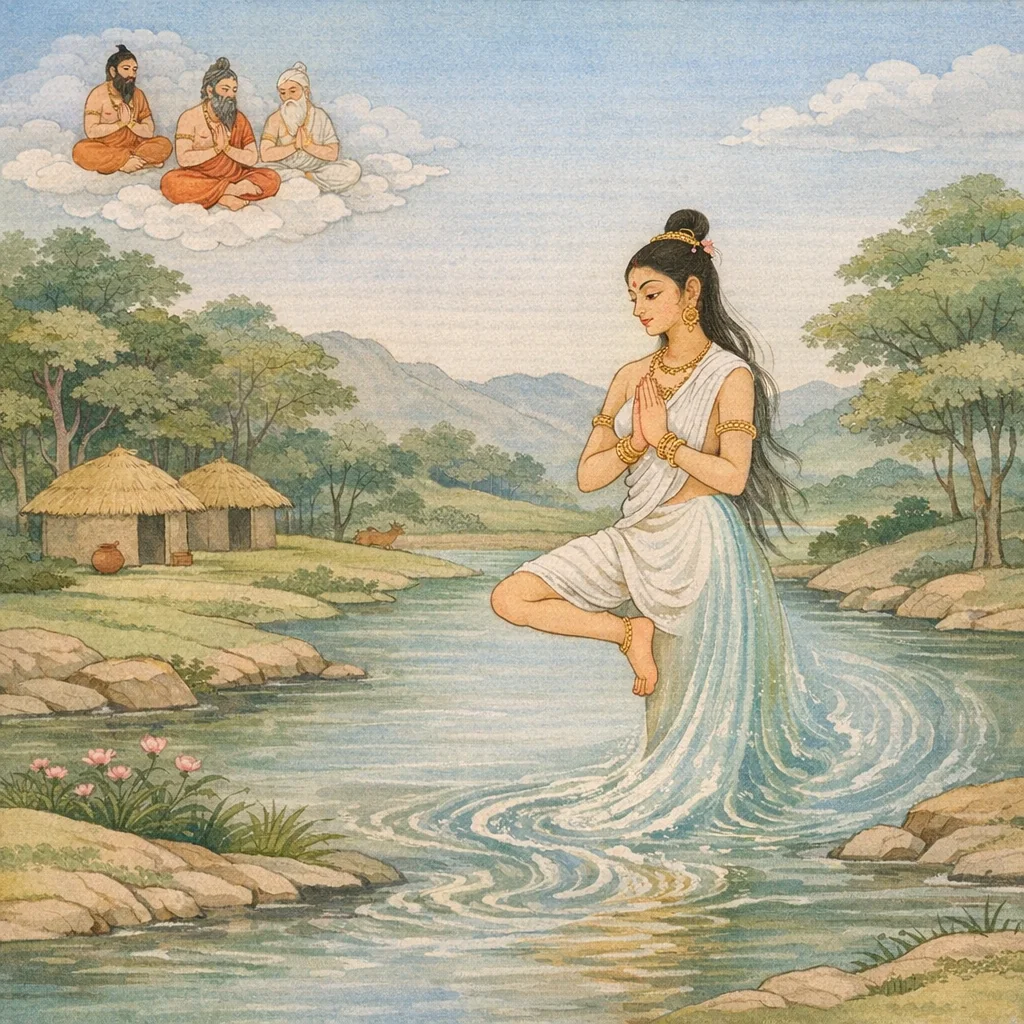
Chapter Arc: भीष्म–परशुराम के महायुद्ध का धुआँ अभी थमा ही है कि नारद के बीच-बचाव के बाद कथा अम्बा की कठोर प्रतिज्ञा पर टिक जाती है—जिसे अपमान ने तपस्या में बदल दिया है। → परशुराम स्वीकार करते हैं कि उत्तमोत्तम अस्त्र दिखाकर भी वे युद्ध में भीष्म पर निर्णायक ‘विशेषता’ सिद्ध नहीं कर सके; अम्बा का क्रोध और अधिक तीव्र होकर देह-त्यागी तप में ढलता है—वह तीर्थ-तीर्थ भटकती, वत्सदेश के आश्रमों में विचरती, एक पर्ण पर निर्वाह करती और पादाङ्गुष्ठाग्र पर स्थिर रहकर वर्ष-पर-वर्ष तप करती है। → तपस्या की पराकाष्ठा पर अम्बा का रूपांतरण घटित होता है—उसके तप के प्रभाव से वह आधे शरीर से ‘अम्बा’ और आधे से ‘नदी’ के रूप में प्रकट होती है; मानो प्रतिशोध स्वयं प्रकृति में उतर आया हो। → अम्बा का तप अब केवल व्यक्तिगत शोक नहीं रहता; वह एक दैवी-नियत संकेत बन जाता है—भीष्म-वध की दिशा में उसकी साधना का फल आकार लेने लगता है, और कथा ‘अम्बोपाख्यान’ के अगले मोड़ के लिए भूमि तैयार करती है। → अम्बा का यह अद्भुत रूपांतरण आगे किस देह/जन्म में भीष्म के विनाश का कारण बनेगा—और किसके माध्यम से—यह प्रश्न अगले अध्यायों में तना रहता है।
Shlokas
Verse 1
ऑपन--#ह< बक। है २ >> भीष्म और परशुरामके युद्धमें नारदजीद्वारा बीच-बचाव षडशीरत्याधेकशततमो< ध्याय: अम्बाकी कठोर तपस्या राम उवाच प्रत्यक्षमेतल्लोकानां सर्वेषामेव भाविनि । यथाशकक््त्या मया युद्ध कृतं वै पौरुषं परम्,परशुराम बोले--भाविनि! यह सब लोगोंने प्रत्यक्ष देखा है कि मैंने (तेरे लिये) पूरी शक्ति लगाकर युद्ध किया और महान् पुरुषार्थ दिखाया है
Rāma (Paraśurāma) said: “O Bhāvini (Ambā), all people have witnessed this directly—that, to the full extent of my power, I fought this battle and displayed the highest measure of manly valor.”
Verse 2
न चैवमपि शक््नोमि भीष्म॑ शस्त्रभूतां वरम् । विशेषयितुमत्यर्थमुत्तमास्त्राणि दर्शयन्,परंतु इस प्रकार उत्तमोत्तम अस्त्र प्रकट करके भी मैं शस्त्रधारियोंमें श्रेष्ठ भीष्मसे अपनी अधिक विशिष्टता नहीं दिखा सका
Rāma said: “Even so, O Bhishma—though I displayed the finest of weapons—I was still unable to establish any marked superiority over you, the foremost among those who bear arms.”
Verse 3
एषा मे परमा शक्तिरेतन्मे परमं बलम् | यथेष्टं गम्यतां भद्गरे किमन््यद् वा करोमि ते,मेरी अधिक-से-अधिक शक्ति, अधिक-से-अधिक बल इतना ही है। भद्रे! अब तेरी जहाँ इच्छा हो, चली जा, अथवा बता, तेरा दूसरा कौन-सा कार्य सिद्ध करूँ?
“This is my highest power; this is my utmost strength. O gentle lady, go wherever you wish. Or else tell me—what other task of yours shall I accomplish?”
Verse 4
भीष्ममेव प्रपद्यस्व न ते5न्या विद्यते गति: । निर्जितो हास्मि भीष्मेण महास्त्राणि प्रमुडचता,अब तू भीष्मकी ही शरण ले। तेरे लिये दूसरी कोई गति नहीं है; क्योंकि महान् अस्त्रोंका प्रयोग करके भीष्मने मुझे जीत लिया है
Rāma said: “Take refuge in Bhīṣma alone; for you there is no other course. I have been defeated by Bhīṣma, even while I was unleashing mighty celestial weapons.”
Verse 5
एवमुक्क्त्वा ततो रामो विनि:श्वस्य महामना: । तूष्णीमासीत् ततः कन्या प्रोवाच भूगुनन्दनम्,ऐसा कहकर महामना परशुराम लंबी साँस खींचते हुए मौन हो गये। तब राजकन्या अम्बाने उन भृगुनन्दनसे कहा--
Having spoken thus, Rāma (Paraśurāma), the high-souled one, heaved a deep sigh and fell silent. Then the maiden—Princess Ambā—addressed Bhṛgu’s descendant.
Verse 6
भगवन्नेवमेवैतद् यथा55ह भगवांस्तथा । अजेयो युधि भीष्मो5यमपि देवैरुदारधी:
Rāma said: “O venerable one, it is exactly so—just as you have declared. This Bhīṣma, noble in understanding, is unconquerable in battle, even by the gods themselves.”
Verse 7
“भगवन्! आपका कहना ठीक है। वास्तवमें ये उदारबुद्धि भीष्म युद्धमें देवताओंके लिये भी अजेय हैं ।। यथाशक्ति यथोत्साहं मम कार्य कृतं॑ त्वया । अनिवार्य रणे वीर्यमस्त्राणि विविधानि च,“आपने अपनी पूरी शक्ति लगाकर पूर्ण उत्साहके साथ मेरा कार्य किया है। युद्धमें ऐसा पराक्रम दिखाया है, जिसे भीष्मके सिवा दूसरा कोई रोक नहीं सकता था। इसी प्रकार आपने नाना प्रकारके दिव्यास्त्र भी प्रकट किये हैं
Rāma said: “Revered one, what you have said is right. In truth, the noble-minded Bhīṣma is unconquerable in battle—even for the gods. With all your strength and with full zeal you have carried out my task. In war you have displayed a valor that none but Bhīṣma could withstand, and you have also brought forth many kinds of divine weapons.”
Verse 8
न चैव शक््यते युद्धे विशेषयितुमन्तत: । न चाहमेनं यास्यामि पुनर्भीष्मं कथंचन,'परंतु अन्ततोगत्वा आप युद्धमें उनकी अपेक्षा अपनी विशेष्यता स्थापित न कर सके। मैं भी अब किसी प्रकार पुनः भीष्मके पास नहीं जाऊँगी
“And in war, in the end, it is not really possible to establish one’s superiority over him decisively. Nor will I, in any way whatsoever, go again to Bhīṣma.”
Verse 9
गमिष्यामि तु तत्राहं यत्र भीष्मं तपोधन । समरे पातयिष्यामि स्वयमेव भृगूद्धह,'भुगुश्रेष्ठ तपोधन! अब मैं वहीं जाऊँगी, जहाँ ऐसी बन सकूँ कि समरभूमिमें स्वयं ही भीष्मको मार गिराऊँ'
Rāma said: “I shall go there—where Bhīṣma is, O ascetic rich in austerity. In the battlefield I will myself cause Bhīṣma to fall.”
Verse 10
एवमुक्त्वा ययौ कन्या रोषव्याकुललोचना । तापस्ये धृतसंकल्पा सा मे चिन्तयती वधम्,ऐसा कहकर रोषभरे नेत्रोंवाली वह राजकन्या मेरे वधके उपायका चिन्तन करती हुई तपस्याके लिये दृढ़ संकल्प लेकर वहाँसे चली गयी
Having spoken thus, the maiden—her eyes agitated with anger—departed from there. Firmly resolved to undertake austerities, she began to contemplate the means of bringing about my death.
Verse 11
ततो महेन्द्र सह तैर्मुनिभिर्भगुसत्तम: । यथा55गतं तथा सो5गान्मामुपामन्त्रय भारत,भारत! तदनन्तर भृगुश्रेष्ठ परशुरामजी उन महर्षियोंके साथ मुझसे विदा ले जैसे आये थे, वैसे ही महेन्द्र पर्वतपर चले गये
Then the foremost of the Bhṛgus, Paraśurāma, together with those sages, took leave of me, O Bhārata. Just as he had come, so he departed again to Mount Mahendra.
Verse 12
ततो रथं समारुह्द स्तूयमानो द्विजातिभि: । प्रविश्य नगरं मात्रे सत्यवत्यै न््यवेदयम्,महाराज! तत्पश्चात् मैंने भी ब्राह्मणके मुखसे अपनी प्रशंसा सुनते हुए रथपर आरूढ़ हो हस्तिनापुरमें आकर माता सत्यवतीसे सब समाचार यथार्थरूपसे निवेदन किया। माताने भी मेरा अभिनन्दन किया। इसके बाद मैंने कुछ बुद्धिमान् पुरुषोंको उस कन्याके वृत्तान्तका पता लगानेके कार्यमें नियुक्त कर दिया
Then, mounting my chariot while the twice-born praised me, I entered the city and reported the whole matter truthfully to my mother Satyavatī, O king. My mother welcomed and commended me. After that, I appointed some intelligent men to investigate the full story concerning that maiden.
Verse 13
यथावृत्तं महाराज सा च मां प्रत्यनन्दत । पुरुषांश्षादिशं प्राज्ञान् कन्यावृत्तान्तकर्मणि,महाराज! तत्पश्चात् मैंने भी ब्राह्मणके मुखसे अपनी प्रशंसा सुनते हुए रथपर आरूढ़ हो हस्तिनापुरमें आकर माता सत्यवतीसे सब समाचार यथार्थरूपसे निवेदन किया। माताने भी मेरा अभिनन्दन किया। इसके बाद मैंने कुछ बुद्धिमान् पुरुषोंको उस कन्याके वृत्तान्तका पता लगानेके कार्यमें नियुक्त कर दिया
O great king, I reported the events exactly as they had occurred, and she too received me with approval. Thereafter I appointed discerning men and instructed them to investigate the maiden’s background and the full account of her conduct, so that the matter might be understood truthfully and handled with due propriety.
Verse 14
दिवसे दिवसे हास्या गतिजल्पितचेष्टितम् । प्रत्याहरंश्न मे युक्ता: स्थिता: प्रियहिते सदा,मेरे लगाये हुए गुप्तचर सदा मेरे प्रिय एवं हितमें संलग्न रहनेवाले थे। वे प्रतिदिन उस कन्याकी गतिविधि, बोलचाल और चेष्टाका समाचार मेरे पास पहुँचाया करते थे
Day after day, my agents—ever devoted to what was dear and beneficial to me—would regularly bring me reports of that maiden’s movements, her speech, and her conduct, even down to her smiles.
Verse 15
यदैव हि वन प्रायात् सा कन्या तपसे धृता । तदैव व्यथितो दीनो गतचेता इवाभवम्,जिस दिन वह कन्या तपस्याका निश्चय करके वनमें गयी, उसी दिन मैं व्यथित, दीन और अचेत-सा हो गया
The very day that maiden, having resolved upon austerities, set out for the forest, that same day I became afflicted and despondent—almost as if bereft of consciousness.
Verse 16
नहिमां क्षत्रिय: कश्चिद् वीर्येण व्यजयद् युधि । ऋते ब्रह्म॒विदस्तात तपसा संशितव्रतात्,तात! जो तपस्याके द्वारा कठोर व्रतका पालन करनेवाले हैं, उन ब्रह्मज्ञ ब्राह्मण परशुरामजीको छोड़कर कोई भी क्षत्रिय अबतक युद्धमें मुझे पराजित नहीं कर सका है
Rāma said: “No kṣatriya has ever defeated me in battle by sheer valor—except, my dear one, that knower of Brahman, the austere brāhmaṇa Paraśurāma, whose vows have been sharpened and perfected through tapas.”
Verse 17
अपि चैतन्मया राजन् नारदे5पि निवेदितम् | व्यासे चैव तथा कार्य तौ चोभौ मामवोचताम्,राजन! मैंने यह वृत्तान्त देवर्षि नारद और महर्षि व्याससे भी निवेदन किया था। उस समय उन दोनोंने मुझसे कहा--“भीष्म! तुम्हें काशिराजकी कनन््याके विषयमें तनिक भी विषाद नहीं करना चाहिये। दैवके विधानको पुरुषार्थके द्वारा कौन टाल सकता है?”
“Moreover, O King, I also reported this very matter to the divine seer Nārada, and likewise it was to be conveyed to Vyāsa. Both of them said to me: ‘O King, you should not grieve in the least regarding the daughter of the King of Kāśī. Who, by human effort, can overturn what destiny has ordained?’”
Verse 18
न विषादस्त्वया कार्यो भीष्म काशिसुतां प्रति । देवं पुरुषकारेण को निवर्तितुमुत्सहेत्,राजन! मैंने यह वृत्तान्त देवर्षि नारद और महर्षि व्याससे भी निवेदन किया था। उस समय उन दोनोंने मुझसे कहा--“भीष्म! तुम्हें काशिराजकी कनन््याके विषयमें तनिक भी विषाद नहीं करना चाहिये। दैवके विधानको पुरुषार्थके द्वारा कौन टाल सकता है?”
Rāma said: “Bhīṣma, you should not give way to sorrow regarding the daughter of the king of Kāśī. Who, by mere human effort, can presume to overturn what the divine has ordained, O king?”
Verse 19
सा कन्या तु महाराज प्रविश्याश्रममण्डलम् | यमुनातीरमाश्रित्य तपस्तेपेडतिमानुषम्,महाराज! फिर उस कन्याने आश्रममण्डलमें पहुँचकर यमुनाके तटका आश्रय ले ऐसी कठोर तपस्या की, जो मानवीय शक्तिसे परे है
O King, that maiden entered the precincts of the hermitage and, taking refuge on the bank of the Yamunā, undertook an austerity so severe that it surpassed ordinary human capacity.
Verse 20
निराहारा कृशा रुक्षा जटिला मलपड़्किनी । षण्मासान् वायुभक्षा च स्थाणुभूता तपोधना,उसने भोजन छोड़ दिया, वह दुबली तथा रुक्ष हो गयी। सिरपर केशोंकी जटा बन गयी। शरीरमें मैल और कीचड़ जम गयी। वह तपोधना कन्या छ: महीनोंतक केवल वायु पीकर दढूँठे काठकी भाँति निश्चलभावसे खड़ी रही
She renounced all food; she became emaciated and dry. Her hair grew into matted locks, and her body was caked with grime and mud. That maiden, rich in ascetic merit, lived for six months on air alone, standing motionless like a tree-stump.
Verse 21
फिर एक वर्षतक यमुनाजीके जलमें घुसकर बिना कुछ खाये-पीये वह भाविनी राजकन्या जलमें ही रहकर तपस्या करती रही
Then that destined princess entered the waters of the Yamunā and, for a full year, remained within the river itself, undertaking austerities without eating or drinking.
Verse 22
शीर्णपर्णेन चैकेन पारयामास सा परम् | संवत्सरं तीव्रकोपा पादाड्गुष्ठाग्रधिछ्ठिता
Rama said: With a single withered leaf alone, she sustained herself and carried her austerity to its utmost limit. Fierce in resolve, she remained for a full year standing poised upon the very tip of her great toe.
Verse 23
यमुनाजलमाश्रित्य संवत्सरमथापरम् | उदवासं निराहारा पारयामास भाविनी,तत्पश्चात् तीव्र क्रोधसे युक्त हुई अम्बाने पैरके अँगूठेके अग्रभागपर खड़ी हो अपने- आप झड़कर गिरा हुआ केवल एक सूखा पत्ता खाकर एक वर्ष व्यतीत किया ।। एवं द्वादश वर्षाणि तापयामास रोदसी । निवर्त्यमानापि च सा ज्ञातिभिनैव शक्यते इस प्रकार बारह वर्षोतक कठोर तपस्यामें संलग्न हो उसने पृथ्वी और आकाशको संतप्त कर दिया। उसके जातिवालोंने आकर उसे उस कठोर व्रतसे निवृत्त करनेकी चेष्टा की; परंतु उन्हें सफलता न मिल सकी
Taking refuge by the waters of the Yamunā, the resolute lady spent yet another full year in austere observance—living in seclusion and fasting. Thereafter, driven by fierce wrath and unwavering resolve, she endured severe penance for twelve years, so intense that it seemed to scorch both earth and sky. Even when her kinsmen came and tried to dissuade her from that harsh vow, they could not succeed.
Verse 24
ततो5गमद् वत्सभूमिं सिद्धचारणसेविताम् । आश्रमं पुण्यशीलानां तापसानां महात्मनाम्
Then he went to Vatsabhūmi, a land frequented by Siddhas and Cāraṇas, and reached the hermitage of great-souled ascetics whose conduct was holy.
Verse 25
तत्र पुण्येषु तीर्थेषु सा55प्लुताड़ी दिवानिशम् व्यचरत् काशिकन्या सा यथाकामविचारिणी
There, at those meritorious sacred fords, the maiden of Kāśī—slender-limbed and free to go as she wished—wandered about day and night, moving from one holy place to another in search of her chosen aim.
Verse 26
तदनन्तर वह सिद्धों और चारणोंद्वारा सेवित वत्सदेशकी भूमिमें गयी और वहाँ पुण्यशील तपस्वी महात्माओंके आश्रमोंमें विचरने लगी। काशिराजकी वह कन्या दिन-रात वहाँके पुण्य तीर्थोमें स्नान करती और अपनी इच्छाके अनुसार सर्वत्र विचरती रहती थी ।। नन्दाश्रमे महाराज तथोलूकाश्रमे शुभे | चवनस्याश्रमे चैव ब्रह्मण: स्थान एव च,महाराज! शुभकारक नन्दाश्रम, उलूकाश्रम, च्यवनाश्रम, ब्रह्मस्थान, देवताओंके यज्ञस्थान प्रयाग, देवारण्य, भोगवती, कौशिकाश्रम, माण्डव्याश्रम, दिलीपाश्रम, रामह्नद और पैलगर्गाश्रम--क्रमश: इन सभी तीर्थोंमें उन दिनों काशिराजकी कन्याने कठोर व्रतका आश्रय ले स्नान किया
After that, attended by Siddhas and Cāraṇas, she went to the land of Vatsa and moved about among the hermitages of holy, austere great sages. The daughter of the king of Kāśī bathed day and night in the sacred fords there, and wandered everywhere as she wished. O king, she bathed in due order—having undertaken a severe vow—at the auspicious Nandā-āśrama, the holy Ulūka-āśrama, Cyavana’s hermitage, the Brahmā-sthāna, at Prayāga (the gods’ sacrificial ground), in Devāraṇya, at Bhogavatī, at Kauśika’s hermitage, Māṇḍavya’s hermitage, Dilīpa’s hermitage, at Rāma-hrada, and at Paila-Garga’s hermitage.
Verse 27
प्रयागे देवयजने देवारण्येषु चैव ह । भोगवत्यां महाराज कौशिकस्याश्रमे तथा,महाराज! शुभकारक नन्दाश्रम, उलूकाश्रम, च्यवनाश्रम, ब्रह्मस्थान, देवताओंके यज्ञस्थान प्रयाग, देवारण्य, भोगवती, कौशिकाश्रम, माण्डव्याश्रम, दिलीपाश्रम, रामह्नद और पैलगर्गाश्रम--क्रमश: इन सभी तीर्थोंमें उन दिनों काशिराजकी कन्याने कठोर व्रतका आश्रय ले स्नान किया
Rāma said: “At Prayāga—the sacred place of the gods’ sacrifices—and likewise in the divine forests; at Bhogavatī too, O great king; and also at the hermitage of Kauśika—at all these holy sites she undertook austere vows and bathed, pursuing merit through disciplined observance.”
Verse 28
माण्डव्यस्याश्रमे राजन् दिलीपस्याश्रमे तथा । रामह्नदे च कौरव्य पैलगर्गस्य चाश्रमे,महाराज! शुभकारक नन्दाश्रम, उलूकाश्रम, च्यवनाश्रम, ब्रह्मस्थान, देवताओंके यज्ञस्थान प्रयाग, देवारण्य, भोगवती, कौशिकाश्रम, माण्डव्याश्रम, दिलीपाश्रम, रामह्नद और पैलगर्गाश्रम--क्रमश: इन सभी तीर्थोंमें उन दिनों काशिराजकी कन्याने कठोर व्रतका आश्रय ले स्नान किया
Rāma said: “O King, she bathed (in due order) at the hermitage of Māṇḍavya, likewise at the hermitage of Dilīpa; and also at Rāma-hrada, O descendant of Kuru, and at the hermitage of Paila-Garga. Thus, moving from one sacred ford to the next, the daughter of the King of Kāśī undertook severe vows and performed purificatory bathing—an act meant to generate auspicious merit and inner steadiness through disciplined observance.”
Verse 29
एतेषु तीर्थेषु तदा काशिकन्या विशाम्पते । आप्लावयत गात्राणि व्रतमास्थाय दुष्करम्,महाराज! शुभकारक नन्दाश्रम, उलूकाश्रम, च्यवनाश्रम, ब्रह्मस्थान, देवताओंके यज्ञस्थान प्रयाग, देवारण्य, भोगवती, कौशिकाश्रम, माण्डव्याश्रम, दिलीपाश्रम, रामह्नद और पैलगर्गाश्रम--क्रमश: इन सभी तीर्थोंमें उन दिनों काशिराजकी कन्याने कठोर व्रतका आश्रय ले स्नान किया
Then, O lord of the people, the maiden of Kāśī bathed her limbs in those sacred fords, having undertaken a difficult vow, O great king. The narrative underscores her austere resolve and the ethical force of a vowed discipline pursued through pilgrimage and ritual purity.
Verse 30
तामब्रवीच्च कौरव्य मम माता जले स्थिता । किमर्थ क्लिश्यसे भद्रे तथ्यमेव वदस्व मे
Rāma said: “O descendant of Kuru, my mother is standing in the water. For what reason do you torment yourself, noble lady? Tell me the truth—speak plainly to me.”
Verse 31
कुरुनन्दन! उस समय मेरी माता गंगाने जलमें प्रकट होकर अम्बासे कहा--*भद्रे! तू किसलिये शरीरको इतना क्लेश देती है। मुझे ठीक-ठीक बता” ।। सैनामथाब्रवीद् राजन् कृताज्जलिरनिन्दिता । भीष्मेण समरे रामो निर्जितश्लारुलोचने,राजन्! तब साध्वी अम्बाने हाथ जोड़कर गंगाजीसे कहा--“चारुलोचने! भीष्मने युद्धमें परशुरामजीको परास्त कर दिया; फिर दूसरा कौन ऐसा राजा है, जो धनुष-बाण लेकर खड़े हुए भीष्मको युद्धमें परास्त कर सके? अतः मैं भीष्मके विनाशके लिये अत्यन्त कठोर तपस्या कर रही हूँ
Rama said: “O joy of the Kurus! At that time my mother Gaṅgā rose up from the waters and said to Ambā, ‘Noble lady, why do you torment your body so severely? Tell me the truth plainly.’ Then the blameless Ambā, with folded hands, replied: ‘O King, O fair-eyed one! Bhīṣma has defeated Rāma (Paraśurāma) in battle. Who else among kings could overcome Bhīṣma when he stands armed with bow and arrows? Therefore, for Bhīṣma’s destruction I am undertaking an exceedingly harsh austerity.’”
Verse 32
कोअन्यस्तमुत्सहेज्जेतुमुद्यतेषुं महीपति: । साहं भीष्मविनाशाय तपस्तप्स्ये सुदारुणम्,राजन्! तब साध्वी अम्बाने हाथ जोड़कर गंगाजीसे कहा--“चारुलोचने! भीष्मने युद्धमें परशुरामजीको परास्त कर दिया; फिर दूसरा कौन ऐसा राजा है, जो धनुष-बाण लेकर खड़े हुए भीष्मको युद्धमें परास्त कर सके? अतः मैं भीष्मके विनाशके लिये अत्यन्त कठोर तपस्या कर रही हूँ
"Who else among kings could dare to defeat him—Bhīṣma—when he stands with bow drawn and arrows ready? Therefore, O King, I shall undertake exceedingly harsh austerities for Bhīṣma’s destruction."
Verse 33
विचरामि महीं देवि यथा हन्यामहं नृपम् । एतद् व्रतफलं देवि परमस्मिन् यथा हि मे,*देवि! मैं इस भूतलपर विभिन्न तीर्थोमें इसीलिये विचर रही हूँ कि योग्य बनकर मैं स्वयं ही भीष्मको मार सकूँ। भगवति! इस जगत्में मेरे व्रत और तपस्याका यही सर्वोत्तम फल है, जैसा मैंने आपको बताया है”
Rama said: “O Goddess, I wander over the earth so that I may become capable of slaying that king. O Devi, this—just as I have told you—is the highest fruit of my vow and austerity in this world: that I myself may bring about his death.”
Verse 34
ततो<ब्रवीत् सागरगा जिह्दां चरसि भाविनि । नैष कामो5नवलद्याड़ि शक््य: प्राप्तुं त्वयाबले
Then Rāma said: “O you who move in the ocean, O tender one—your tongue indeed roams restlessly. Yet this desire cannot be fulfilled; it is not possible for you, weak as you are, to attain it.”
Verse 35
तब सतरगामिनी गंगानदीने उससे कहा--'भाविनि! तू कुटिल आचरण कर रही है। सुन्दर अंगोंवाली अबले! तेरा यह मनोरथ कभी पूर्ण नहीं हो सकता ।। यदि भीष्मविनाशाय काश्ये चरसि वै व्रतम् । व्रतस्था च शरीर त्वं यदि नाम विमोक्ष्यसि
Then she who moved upon the waters said: “O Bhāvinī, you act with crooked intent. O fair-limbed yet weak one—this wish of yours will never be fulfilled. Even if you keep a vow in Kāśī for Bhīṣma’s destruction, and even if, steadfast in that vow, you cast off your body, still your purpose will not be accomplished.”
Verse 36
नदी भविष्यसि शुभे कुटिला वार्षिकोदका । दुस्तीर्था न तु विज्ञेया वार्षिकी नाष्टमासिकी
Rama said: “O auspicious one, you shall become a river—winding in course and filled only with rainwater. You will be hard to ford, and not to be known as a dependable, perennial stream—seasonal, not one that flows through the eight months.”
Verse 37
“काशिराजकन्ये! यदि भीष्मके विनाशके लिये तू प्रयत्न कर रही है और व्रतमें स्थित रहकर ही यदि तू अपना शरीर छोड़ेगी तो शुभे! तुझे टेढ़ी-मेढ़ी नदी होना पड़ेगा। केवल बरसातमें ही तेरे भीतर जल दिखायी देगा। तेरे भीतर तीर्थ या स्नानकी सुविधा बड़ी कठिनाईसे होगी। तू केवल बरसातकी नदी समझी जायगी। शेष आठ महीनोंमें तेरा पता नहीं लगेगा ।। भीमग्राहवती घोरा सर्वभूतभयड्करी । एवमुकक््त्वा ततो राजन् काशिकन्यां न्यवर्तत,“बरसातमें भी भयंकर ग्राहोंसे भरी रहनेके कारण तू समस्त प्राणियोंके लिये अत्यन्त भयंकर और घोरस्वरूपा बनी रहेगी।” राजन! काशिराजकी कन्यासे ऐसा कहकर मेरी परम सौभाग्यशालिनी माता गंगा देवी मुसकराती हुई लौट गयीं। तदनन्तर वह सुन्दरी कन्या पुनः कठोर तपफस्यामें प्रवृत्त हो कभी आठवें और कभी दसवें महीनेतक जल भी नहीं पीती थी
Rama said: “Princess of the King of Kāśī! If you are striving for Bhīṣma’s destruction, and if, remaining fixed in your vow, you intend to abandon your body, then, O auspicious one, you must become a winding river. Only in the rainy season will water be seen within you. Access to a ford or the ease of bathing will be obtained only with great difficulty. You will be known merely as a ‘monsoon river’; for the remaining eight months you will scarcely be traceable. Terrible, filled with fearsome crocodiles, you will become a source of dread to all creatures.” Having spoken thus, O king, my supremely fortunate mother, the goddess Gaṅgā, smiling, withdrew from the daughter of Kāśī. After that, the beautiful maiden again undertook severe austerities, sometimes not even drinking water until the eighth month, and sometimes until the tenth.
Verse 38
माता मम महाभागा स्मयमानेव भाविनी । कदाचिदष्टमे मासि कदाचिद् दशमे तथा । न प्राश्नीतोदकमपि पुन: सा वरवर्णिनी,“बरसातमें भी भयंकर ग्राहोंसे भरी रहनेके कारण तू समस्त प्राणियोंके लिये अत्यन्त भयंकर और घोरस्वरूपा बनी रहेगी।” राजन! काशिराजकी कन्यासे ऐसा कहकर मेरी परम सौभाग्यशालिनी माता गंगा देवी मुसकराती हुई लौट गयीं। तदनन्तर वह सुन्दरी कन्या पुनः कठोर तपफस्यामें प्रवृत्त हो कभी आठवें और कभी दसवें महीनेतक जल भी नहीं पीती थी
My most fortunate mother—ever gracious—smiled as she spoke. At times, even in the eighth month, and at times likewise in the tenth, that fair-complexioned maiden would not drink even water again.
Verse 39
सा वत्सभूमिं कौरव्य तीर्थलोभात् ततस्ततः । पतिता परिधावन्ती पुनः काशिपते: सुता
O Kauravya, driven by a greedy craving for sacred fords and holy places, she ran here and there across the land of Vatsa. Again and again she fell, yet she continued to rush about—she, the daughter of the lord of Kāśī.
Verse 40
कुरुनन्दन! काशिराजकी वह कन्या तीर्थसेवनके लोभसे वत्सदेशकी भूमिपर इधर- उधर दौड़ती फिरती थी ।। सा नदी वत्सभूम्यां तु प्रथिताम्बेति भारत । वार्षिकी ग्राहबहुला दुस्तीर्था कुटिला तथा,भारत! कुछ कालके पश्चात् वह वत्सदेशकी भूमिमें अम्बा नामसे प्रसिद्ध नदी हुई, जो केवल बरसातमें जलसे भरी रहती थी। उसमें बहुत-से ग्राह निवास करते थे। उसके भीतर उतरना और स्नान आदि तीर्थकृत्योंका सम्पादन बहुत ही कठिन था। वह नदी टेढ़ी-मेढ़ी होकर बहती थी
Rama said: “O descendant of Kuru, that maiden of the king of Kāśī, driven by a craving to visit sacred fords, kept running here and there across the land of Vatsa. In time, O Bhārata, she became known in Vatsa as the river ‘Ambā’—a seasonal stream that swelled only in the rains, teeming with crocodiles, difficult to enter for bathing and other rites, and winding in its course.”
Verse 41
सा कन्या तपसा तेन देहार्थेन व्यजायत । नदी च राजन् वत्सेषु कन्या चैवाभवत् तदा,राजन्! राजकन्या अम्बा उस तपस्याके प्रभावसे आधे शरीरसे तो अम्बा नामकी नदी हो गयी और आधे अंगसे वत्सदेशमें ही एक कन्या होकर प्रकट हुई
O King, by the power of that austerity, the maiden was transformed in a wondrous way: with one portion of her body she became a river named Ambā, and with the other portion she manifested again as a maiden in the land of the Vatsas.
Verse 186
इति श्रीमहाभारते उद्योगपर्वणि अम्बोपाख्यानपर्वणि अम्बातपस्यायां षडशीत्यधिकशततमो<ध्याय:
Thus, in the Śrī Mahābhārata, within the Udyoga Parva, in the section known as the “Ambā Episode,” in the sub-episode “Ambā’s Austerities,” ends the one-hundred-and-eighty-sixth chapter.
Frequently Asked Questions
The dilemma is whether to continue escalating to victory when the means—supreme astras—produce indiscriminate, world-affecting harm; the chapter frames restraint and suspension of force as ethically superior to triumph achieved through catastrophic externalities.
Power must be governed by foresight: the legitimacy of martial action depends not only on personal valor but on safeguarding the broader order; when weapon-energy endangers collective well-being, de-escalation becomes a duty.
Rather than a formal phalaśruti, the chapter provides an implicit meta-teaching: brahmavādin counsel and deliberate ‘sleeping’ of the astra model how knowledge traditions function as ethical brakes on violence, guiding action toward preservation of cosmic and social stability.