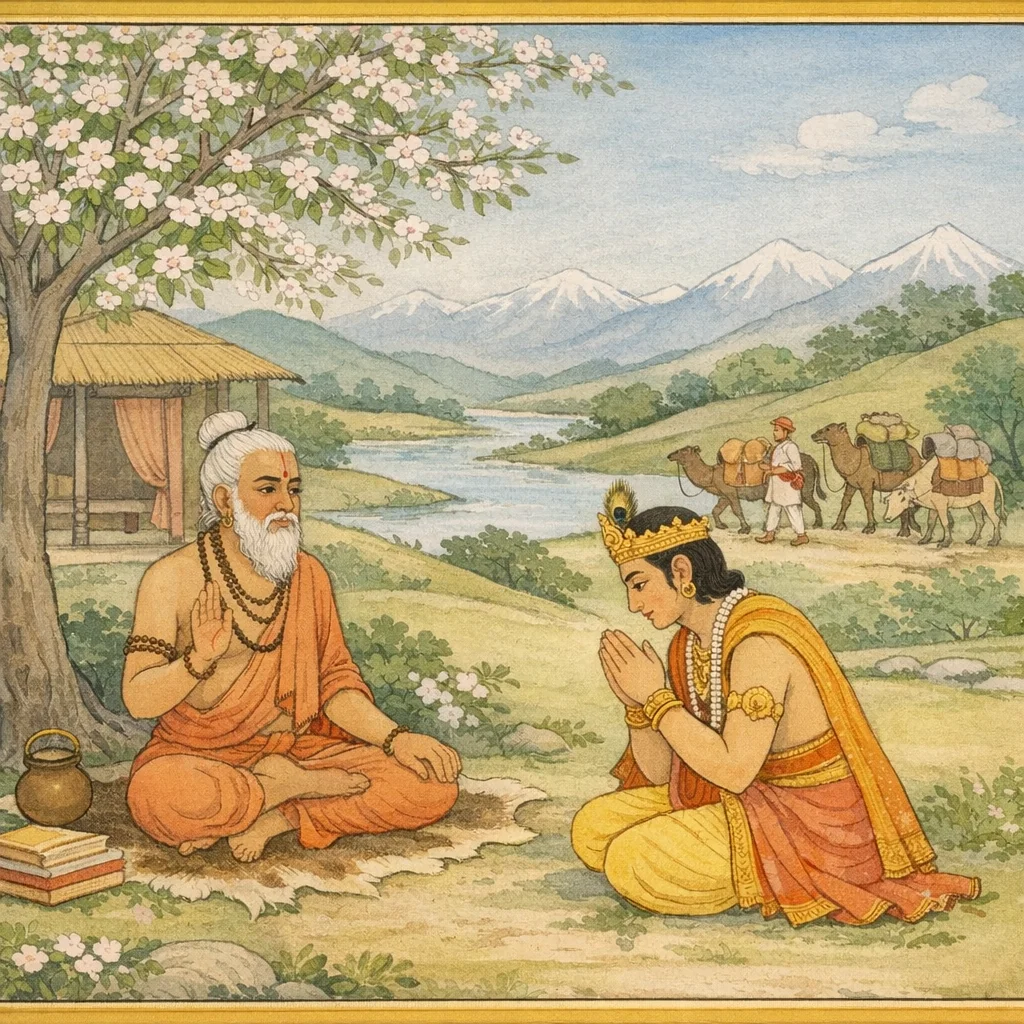
Adhyaya 92
राजधर्मः—प्रमादवर्जनं, दण्डनीतिः, दुर्बलरक्षणम् (Royal Dharma: Vigilance, Just Punishment, Protection of the Vulnerable)
Upa-parva: Rājadharmānuśāsana (Instruction on Royal Dharma) — Utathya–Māndhātṛ Discourse
Chapter 92 presents Utathya’s counsel on the king as the pivotal regulator of social stability. The discourse opens with prosperity markers—timely rains and a dharmic ruler—then uses an analogy of cleansing cloth to define the kṣatriya’s role in removing moral defects and administrative disorder. It outlines differentiated duties across varṇas and asserts that the ‘yuga’ is effectively determined by the ruler’s conduct. The chapter warns that royal negligence collapses cāturvarṇya, Vedic practice, and āśrama disciplines, and that an adharmic king becomes a cause of collective decline affecting even animals and livelihoods. A sustained section argues for protecting the ‘weak’ (abala/durbala), emphasizing that harm to the vulnerable rebounds through severe, quasi-transcendent retribution (daiva-kṛta daṇḍa) and social instability. It critiques corruption among royal agents who extract resources improperly, comparing the kingdom to a great tree whose destruction renders dependents homeless. The latter portion enumerates positive royal virtues: equitable distribution, non-contempt, restraint of the arrogant, truthful conduct, honoring ministers and ritual specialists, balancing punishment and favor, and governing with vigilance (apramāda) and cleanliness (śauca). Bhīṣma closes by stating Māndhātṛ followed this rājadharma and urges Yudhiṣṭhira to emulate it for worldly stability and posthumous merit.
Chapter Arc: भीष्म युधिष्ठिर को उतथ्य-गीत की धारा में ले जाते हैं—जैसे धोबी को वस्त्र-शोधन का ज्ञान होना चाहिए, वैसे ही समाज के प्रत्येक वर्ण को अपने-अपने कर्म का ज्ञान और आचरण चाहिए। → उपदेश क्रमशः वर्ण-व्यवस्था के कर्म-विभाजन से राजधर्म की ओर मुड़ता है: शूद्र की सेवा-परक वृत्ति, वैश्य का कृषि-व्यापार, क्षत्रिय का दण्डनीति-आश्रित शासन, और द्विजों का ब्रह्मचर्य-तप-मन्त्र-सत्य—इन सबके बीच राजा का दायित्व सबसे व्यापक और जोखिमपूर्ण ठहरता है, क्योंकि उसकी चूक से मर्यादा टूटती है और प्रजा असुरक्षित होती है। → राजधर्म का निर्णायक विधान उभरता है—राजा का धर्म वही है जो राष्ट्र की रक्षा करे, दस्युओं का निवारण करे, संग्राम में विजय दिलाए, और व्यापारियों/शरणागतों की पुत्रवत् रक्षा करते हुए मर्यादा न तोड़े; यही शासन का नैतिक शिखर है। → उतथ्य का उपदेश मान्धाता के उदाहरण से पुष्ट होता है: राजर्षि-सेवित आचार अपनाकर उसने निष्कंटक पृथ्वी पाई; भीष्म युधिष्ठिर से कहते हैं कि तुम भी मान्धाता की भाँति धर्मपूर्वक पृथ्वी की रक्षा करो और स्वर्गीय पद पाओ।
Shlokas
Verse 1
इस प्रकार श्रीमह्याभारत शान्तिपर्वके अन्तर्गत राजधमनुशासनपर्वमें उतथ्यगीताविषयक नब्बेवाँ अध्याय पूरा हुआ ॥/ ९० ॥। अपने-आप बछ। आर: एकनवतितमो<ध्याय: उतथ्यके उपदेशमें धर्मांचरणका महत्त्व और राजाके धर्मका वर्णन उतथ्य उवाच कालवर्षी च पर्जन्यो धर्मचारी च पार्थिव: । सम्पद् यदेषा भवति सा बिभर्ति सुखं प्रजा:,उतथ्य कहते हैं--राजन्! राजा धर्मका आचरण करे और मेघ समयपर वर्षा करता रहे। इस प्रकार जो सम्पत्ति बढ़ती है, वह प्रजावर्गका सुखपूर्वक भरण-पोषण करती है
Utathya said: “O king, when the rain-cloud pours in due season and the ruler conducts himself according to dharma, prosperity arises; and that prosperity, in turn, sustains the people in comfort.”
Verse 2
यो न जानाति हर्तु वा वस्त्राणां रजको मलम् | रक्तानां वा शोधयितुं यथा नास्ति तथैव सः,यदि धोबी कपड़ोंकी मैल उतारना नहीं जानता अथवा रौँगे हुए वस्त्रोंको धोकर शुद्ध एवं उज्ज्वल बनानेकी कला उसे नहीं ज्ञात है तो उसका होना न होना बराबर है
Utathya said: “If a washerman does not know how to remove the dirt from garments, or how to cleanse dyed cloth so that it becomes pure and bright again, then his existence and non-existence are the same.”
Verse 3
एवमेतद् द्विजेन्द्राणां क्षत्रियाणां विशां तथा । शूद्रश्नतुर्थो वर्णानां नानाकर्मस्ववस्थित:,इसी प्रकार श्रेष्ठ ब्राह्मण, क्षत्रिय, वैश्य तथा चौथे शूद्र वर्णके मनुष्य यदि अपने-अपने पृथक्-पृथक् कर्मोंको जानकर उनमें संलग्न नहीं रहते हैं, तो उनका होना न होना एक-सा ही है
Utathya said: “So it is for the best of the twice-born, for kṣatriyas, and likewise for vaiśyas; and the śūdra is the fourth among the social orders. When people of these varṇas do not understand their own distinct duties and do not remain engaged in the diverse works assigned to them, their existence becomes as good as non-existence—fruitless in the moral order.”
Verse 4
कर्म शूद्रे कृषिवैंश्ये दण्डनीतिश्न राजनि । ब्रह्मचर्य तपो मन्त्रा: सत्यं चापि द्विजातिषु,शूद्रमें द्विजोंकी सेवा, वैश्यमें कृषि, राजा या क्षत्रियमें दण्डनीति तथा ब्राह्मणोंमें ब्रह्मचर्य, तपस्या, वेदमन्त्र और सत्यकी प्रधानता है
Utathya said: “For the Śūdra, the proper sphere is work and service; for the Vaiśya, agriculture and allied livelihood; for the king (the Kṣatriya), the discipline of governance and punishment in accordance with dharma and law; and for the twice-born, the primacy of celibate discipline, austerity, Vedic mantras, and truth. Thus each social order is upheld by its own defining duties, sustaining moral order in society.”
Verse 5
तेषां यः क्षत्रियो वेद वस्त्राणामिव शोधनम् | शीलदोषान् विनिर्हर्तु स पिता स प्रजापति:,इनमें जो क्षत्रिय वस्त्रोंकी मैल दूर करनेवाले धोबीके समान चरित्रदोषको दूर करना जानता है, वही प्रजावर्गका पिता और वही प्रजाका अधिपति है
Among them, that Kṣatriya who understands how to cleanse—like a washerman removing stains from cloth—how to remove faults of conduct, is truly the father of the people and their lord (Prajāpati). The verse frames kingship as moral purification: authority is justified by the ruler’s capacity to correct character and uphold ethical order.
Verse 6
कृतं त्रेता द्वापरं च कलिश्न भरतर्षभ । राजवृत्तानि सर्वाणि राजैव युगमुच्यते,भरतश्रेष्ठ! सत्ययुग, त्रेता, द्वापर और कलियुग--ये सब-के-सब राजाके आचरणोंमें स्थित हैं। राजा ही युगोंका प्रवर्तक होनेके कारण युग कहलाता है
Utathya said: “O bull among the Bharatas, the ages—Kṛta, Tretā, Dvāpara, and Kali—are all grounded in the conduct of the king. Indeed, it is the king who is called the ‘age’, for by his governance and personal discipline he sets the character and direction of the time.”
Verse 7
चातुर्वर्ण्य तथा वेदाश्षातुराश्रम्यमेव च । सर्व प्रमुहते होतद् यदा राजा प्रमाद्यति,जब राजा प्रमाद करता है, तब चारों वर्ण, चारों वेद और चारों आश्रम सभी मोहमें पड़ जाते हैं
Utathya said: When a king becomes negligent and loses vigilance in governance, the entire social and sacred order falls into confusion—the fourfold system of classes, the Vedas, and the four stages of life all become deluded. The verse underscores that royal responsibility is not merely political: the ruler’s moral alertness safeguards dharma itself, and his carelessness destabilizes both society and spiritual discipline.
Verse 8
अन्नित्रेता त्रयी विद्या यज्ञाश्न॒ सहदक्षिणा: । सर्व एव प्रमाद्यन्ति यदा राजा प्रमाद्यति,जब राजा प्रमादी हो जाता है, तब गार्हपत्य, आहवनीय और दक्षिणाग्नि--ये तीन अग्नि; ऋक्, साम और यजु--ये तीन वेद एवं दक्षिणाओंके साथ सम्पूर्ण यज्ञ भी विकृत हो जाते हैं
Utathya said: “When the king becomes negligent, everything falls into negligence: the three sacred fires, the threefold Vedic learning, and the sacrifices together with their priestly fees all become disordered. For the ruler’s carelessness spreads through the realm, weakening ritual order and, with it, the foundations of dharma.”
Verse 9
राजैव कर्ता भूतानां राजैव च विनाशक: । धर्मात्मा यः स कर्तास्यादधर्मात्मा विनाशक:,राजा ही प्राणियोंका कर्ता (जीवनदाता) और राजा ही उनका विनाश करनेवाला है। जो धर्मात्मा है, वह प्रजाका जीवनदाता है और जो पापात्मा है, वह उसका विनाश करनेवाला है
Utathya said: The king alone is the maker of living beings, and the king alone is also their destroyer. A king devoted to dharma becomes, as it were, the giver and sustainer of his subjects’ lives; but a king devoted to adharma becomes their agent of ruin. Thus kingship is a morally decisive power: the same authority that protects can also devastate, depending on the ruler’s inner alignment with righteousness.
Verse 10
राज्ञो भार्यश्नि पुत्राश्न॒ बान्धवा: सुहृदस्तथा । समेत्य सर्वे शोचन्ति यदा राजा प्रमाद्यति
Utathya said: “When a king becomes negligent and strays into heedlessness, his queen, his sons, and even his kinsmen and well-wishers all gather together and lament.”
Verse 11
जब राजा प्रमाद करने लगता है, तब उसकी स्त्री, पुत्र, बान्धव तथा सुहृद् सब मिलकर शोक करते हैं ।। हस्तिनो<श्वाश्न गावश्चाप्युष्टा श्वतरगर्द भा: । अधर्मभूते नृपतौ सर्वे सीदन्ति जन्तवः,राजाके पापपरायण हो जानेपर उसके हाथी, घोड़े, गौ, ऊँट, खच्चर और गदहे आदि सभी पशु दुःख पाते हैं
Utathya said: When a king becomes established in unrighteousness, the harm does not stop with the court alone. Even the animals of the realm—elephants, horses, cattle, camels, mules, and donkeys—fall into distress; for under an adharma-ridden ruler, all living beings languish.
Verse 12
दुर्बलार्थ बल॑ सृष्टं धात्रा मान्धातरुच्यते । अबलं तु महद्धूतं यस्मिन् सर्व प्रतिष्ठितम्,मान्धाता! कहते हैं कि विधाताने दुर्बल प्राणियोंकी रक्षाके लिये ही बलसम्पन्न राजाकी सृष्टि की है। निर्बल प्राणियोंका महान् समुदाय राजाके बलपर टिका हुआ है
O Māndhātṛ, it is said that the Creator ordained royal power for the sake of the weak—so that those without strength might be protected. For the vast multitude of the powerless rests upon the king’s strength as its support.
Verse 13
यच्च भूतं सम्भजते ये च भूतास्तदन्वया: । अधर्मस्थे हि नृपतौ सर्वे शोचन्ति पार्थिव,भूपाल! राजा जिन प्राणियोंको अन्न आदि देकर उनकी सेवा करता है और जो प्राणी राजासे सम्बन्ध रखते हैं, वे सब-के-सब उस राजाके अधर्मपरायण होनेपर शोक प्रकट करने लगते हैं
Utathya says: “All those beings whom a king supports and serves—by providing food and the like—and all who are connected with them, inevitably grieve when that ruler becomes established in adharma. For when a sovereign turns unrighteous, the sorrow spreads through the entire web of dependents and relations sustained by his rule.”
Verse 14
दुर्बलस्य च यच्चक्षु्मुनेराशीविषस्य च । अविषद्दातमं मन्ये मा सम दुर्बलमासद:,दुर्बल मनुष्य, मुनि और विषधर सर्प--इन सबकी दृष्टिको मैं अत्यन्त दुःसह मानता हूँ; इसलिये तुम किसी दुर्बल प्राणीको न सताना
Utathya said: “The glance of a weak person, of an ascetic, and of a venomous serpent, when provoked, is exceedingly perilous. Therefore, do not harass or oppress any weak being.”
Verse 15
दुर्बलांस्तात बृध्येथा नित्यमेवाविमानितान् । मा त्वां दुर्बलचक्षूंषि प्रदहेयु: सबान्धवम्,तात! तुम दुर्बल प्राणियोंको सदा ही अपमानका पात्र न समझना, दुर्बलोंकी आँखें तुम्हें बन्धु-बान्धवों-सहित जलाकर भस्म न कर डालें, इसके लिये सदा सावधान रहना
Utathya said: “Dear child, always treat the weak with consideration and do not regard them as fit for contempt. Be ever vigilant, lest the gaze of the oppressed and powerless burn you to ashes—together with your kinsmen.”
Verse 16
न हि दुर्बलदग्धस्य कुले किंचित् प्ररोहति । आमूल निर्दहन्त्येव मा सम दुर्बलमासद:,दुर्बल मनुष्य जिसको अपनी क्रोधाग्निसे जला डालते हैं, उसके कुलमें फिर कोई अंकुर नहीं जमता। वे जड़मूलसहित दग्ध कर देते हैं; अतः तुम दुर्बलोंको कभी न सताना
Utathya warns that when a weak person’s wrath burns another, nothing can sprout again in that family line. Such anger scorches them down to the very root; therefore, one should never harass or oppress the weak.
Verse 17
अबलं वै बलाच्छेयो यच्चातिबलवद्धलम् । बलस्याबलदग्धस्य न किंचिदवशिष्यते,निर्बल प्राणी बलवानसे श्रेष्ठ है, क्योंकि जो अत्यन्त बलवान् है, उसके बलसे भी निर्बलका बल अधिक है। निर्बलके द्वारा दग्ध किये गये बलवानका कुछ भी शेष नहीं रह जाता
Utathya said: “The weak is, in truth, superior to the strong; for even what is exceedingly powerful can be overcome by the power that arises from apparent weakness. When the strong is ‘burnt’ by the weak, nothing of that strength remains.”
Verse 18
विमानितो हतः क्रुष्टस्त्रातारं चेन्न विन्दति । अमानुषकृतत्तत्र दण्डो हन्ति नराधिपम्,यदि अपमानित, हताहत तथा गाली-गलौजसे तिरस्कृत होनेवाला दुर्बल मनुष्य राजाको अपने रक्षकके रूपमें नहीं उपलब्ध कर पाता तो वहाँ दैवका दिया हुआ दण्ड राजाको मार डालता है
Utathya said: “If a weak person—humiliated, struck, and reviled—cannot find the king as a protector, then in that very place the divinely ordained punishment will strike down and slay the ruler.”
Verse 19
मा सम तात रणे स्थित्वा भुज्जीथा दुर्बलं जनम् । मा त्वां दुर्बलचक्षूंषि दहन्त्वग्निरिवाश्रयम्,तात! तुम युद्धमें संलग्न होकर दुर्बल मनुष्यको कर लेनेके द्वारा अपने उपभोगका विषय न बनाना। जैसे आग अपने आश्रयभूत काष्ठको जला देती है, उसी प्रकार दुर्बलोंकी दृष्टि तुम्हें दग्ध न कर डाले
Utathya said: “Dear child, do not, while standing in battle, make the weak your prey and turn them into an object of your enjoyment. Beware: the gaze of the helpless can burn you—just as fire consumes the very fuel that shelters it.”
Verse 20
यानि मिथ्याभिशस्तानां पतन्त्यश्रूणि रोदताम् । तानि पुत्रान् पशून् घ्नन्ति तेषां मिथ्याभिशंसनात्,झूठे अपराध लगाये जानेपर रोते हुए दीन-दुर्बल मनुष्योंके नेत्रोंसे जो आँसू गिरते हैं, वे मिथ्या कलंक लगानेके कारण उन अपराधियोंके पुत्रों और पशुओंका नाश कर डालते हैं
Utathya said: “The tears that fall from those who weep after being falsely accused do not fall in vain. By the very act of slander and false imputation, those tears become the cause of ruin—destroying the accusers’ children and their cattle. Thus, false accusation rebounds upon the wrongdoer with grievous consequences.”
Verse 21
यदि नात्मनि पुत्रेषु न चेत् पौत्रेषु नप्तृषु । न हि पापं कृतं कर्म सद्य:ः फलति गौरिव,यदि पापका फल अपनेको नहीं मिला तो वह पुत्रों तथा नाती-पोतोंको अवश्य मिलता है। जैसे पृथ्वीमें बोया हुआ बीज तुरंत फल नहीं देता, उसी प्रकार किया हुआ पाप भी तत्काल फल नहीं देता (समय आनेपर ही उसका फल मिलता है)
Utathya said: “If the fruit of sin does not come upon oneself, then it surely comes upon one’s sons, or else upon grandsons and great-grandsons. For a sinful deed does not yield its result immediately—just as a seed sown in the earth does not bear fruit at once; it ripens only when its time arrives.”
Verse 22
यत्राबलो वध्यमानस्त्रातारं नाधिगच्छति । महान् दैवकृतस्तत्र दण्ड: पतति दारुण:,सताया जानेवाला दुर्बल मनुष्य जहाँ अपने लिये कोई रक्षक नहीं पाता है, वहाँ सतानेवाले पापीको दैवकी ओरसे भयंकर दण्ड प्राप्त होता है
Utathya declares that when a helpless person is being harmed and finds no protector, a great and terrible punishment—ordained by divine law—falls upon the sinful oppressor.
Verse 23
युक्ता यदा जानपदा भिक्षन्ते ब्राह्मणा इव । अभीदक्षणं भिक्षुरूपेण राजानं घ्नन्ति तादृूशा:,जब बाहर गावोंके लोग एक समूह बनाकर भिक्षुकरूपसे ब्राह्मणोंके समान भिक्षा माँगने लगते हैं, तब वैसे लोग एक दिन राजाका विनाश कर डालते हैं
Utathya said: “When the countryfolk, banded together, go about begging like Brahmins, then such men—taking on the guise of mendicants and acting without fear or restraint—ultimately strike down the king.”
Verse 24
राज्ञो यदा जनपदे बहवो राजपूरुषा: | अनयेनोपवर्तन्ते तद् राज्ञ: किल्बिषं महत्,जब राजाके बहुत-से कर्मचारी देशमें अन्यायपूर्ण बर्ताव करने लगते हैं, तब वह महान् पाप राजाको ही लगता है
Utathya said: When, within a king’s realm, many royal officials act by unjust means, the great sin that arises is reckoned as the king’s own. The ruler bears moral responsibility for wrongdoing committed under his authority, especially when it spreads through the administration.
Verse 25
यदा युक््त्या नयेदर्थान् कामादर्थवशेन वा । कृपणं याचमानानां तद् राज्ञो वैशसं महत्,यदि कोई राजा या राजकीय कर्मचारी दीनतापूर्ण याचना करती हुई प्रजाओंकी उस प्रार्थाको ठुकराकर स्वेच्छासे अथवा धनके लोभवश कोई-न-कोई युक्ति करके उनके धनका अपहरण कर ले तो वह राजाके महान् विनाशका सूचक है
Utathya said: When a king, by some contrivance, takes away wealth—whether driven by personal desire or by greed for gain—from wretched subjects who plead in distress, that act is a grave cruelty and a portent of the ruler’s great ruin. It condemns state power that turns predatory against the vulnerable, warning that such exploitation destroys royal legitimacy and invites downfall.
Verse 26
महान् वृक्षो जायते वर्धते च त॑ चैव भूतानि समाश्रयन्ति । यदा वक्षश्छिद्यते दहाते च तदाश्रया अनिकेता भवन्ति,जब कोई महान् वृक्ष पैदा होता और क्रमशः बढ़ता है, तब बहुत-से प्राणी (पक्षी) आकर उसपर बसेरे लेते हैं और जब उस वृक्षको काटा या जला दिया जाता है, तब उसपर रहनेवाले सभी जीव निराश्रय हो जाते हैं
Utathya said: “When a great tree is born and steadily grows, many creatures come and take shelter in it. But when that tree is cut down or burned, all who depended on it become homeless. In the same way, when the support that sustains a community is destroyed, those who relied upon it are left without refuge.”
Verse 27
यदा राष्ट्रे धर्ममग्र्यं चरन्ति संस्कारं वा राजगुणं ब्रुवाणा: । तैरेवाधर्मश्वरितो धर्ममोहात् तूर्ण जह्वात् सुकृतं दुष्कृतं च,जब राज्यमें रहनेवाले लोग राजाके गुणोंका बखान करते हुए वैदिक संस्कारोंके साथ उत्तम धर्मका आचरण करते हैं, उस समय राजा पापमुक्त हो जाता है तथा जब वे ही लोग धर्मके विषयमें मोहित हो जानेके कारण अधर्माचरण करने लगते हैं, उस समय राजा शीघ्र ही पुण्यसे हीन हो जाता है
Utathya said: “When, within a kingdom, the people practice the highest dharma—upholding Vedic rites and praising the kingly virtues—then the king is freed from sin through that very conduct. But when those same people, deluded about dharma, turn to unrighteous behavior, the king quickly loses his store of merit and becomes tainted by demerit as well.”
Verse 28
यत्र पापा ज्ञायमानाक्षरन्ति सतां कलिववंन्दते तत्र राज्ञ: । यदा राजा शास्ति नरानशिष्टां- स्तदा राज्यं वर्धते भूमिपस्य,जहाँ पापी मनुष्य प्रकटरूपसे निर्भय विचरते हैं, वहाँ सत्पुरुषोंकी दृष्टिमें समझा जाता है कि राजाको कलियुगने घेर लिया है; किंतु जब राजा दुष्ट मनुष्योंको दण्ड देता है, तब उसका राज्य सब ओरसे उन्नत होने लगता है
Utathya said: “Where sinners, though clearly recognized as such, move about openly and without fear, the righteous understand that the king there has been surrounded by the spirit of Kali (moral decline). But when a king disciplines and punishes the unruly and wicked, then the realm of that lord of the earth grows and prospers on every side.”
Verse 29
यश्चामात्यान् मानयित्वा यथार्थ मन्त्रे च युद्धे च नृपो नियुञ्ज्यात् | विवर्धते तस्य राष्ट्र नृपस्य भूडुक्ते महीं चाप्यखिलां चिराय,जो राजा अपने मन्त्रियोंका यथार्थरूपसे सम्मान करके उन्हें मन्त्रणा अथवा युद्धके काममें नियुक्त करता है, उसका राज्य दिनोंदिन बढ़ता है और वह चिरकालतक समूची पृथ्वीका राज्य भोगता है
Utatthya said: The king who honors his ministers in a fitting and truthful way, and then appoints them to their proper duties—both in counsel and in war—sees his realm steadily prosper. Such a ruler enjoys sovereignty over the whole earth for a long time, for governance grounded in respect, competence, and right deployment of advisers becomes the cause of enduring stability and expansion.
Verse 30
यच्चापि सुकृतं कर्म वाचं चैव सुभाषिताम् | समीक्ष्य पूजयन् राजा धर्म प्राप्नोत्यनुत्तमम्,जो राजा अपने कर्मचारी अथवा प्रजाका पुण्यकर्म देखकर तथा उनकी सुन्दर वाणी सुनकर उन सबका यथायोग्य सम्मान करता है, वह परम उत्तम धर्मको प्राप्त कर लेता है
A king who carefully observes the meritorious deeds of his servants or subjects, and who also listens to their well-spoken words, and then honors them appropriately, attains the highest form of dharma. The teaching emphasizes that righteous governance includes discerning virtue in others and publicly affirming it through fitting recognition.
Verse 31
संविभज्य यदा भूड्क्ते नामात्यानवमन्यते । निहन्ति बलिन दृप्तं स राज्ञो धर्म उच्यते,राजा जब उसको यथायोग्य विभाग देकर स्वयं उपभोग करता है, मन्त्रियोंका अनादर नहीं करता है और बलके घमंडमें चूर रहनेवाले दुष्ट पुरुष या शत्रुको मार डालता है, तब उसका यह सब कार्य राजधर्म कहलाता है
When a king makes proper distribution and only then enjoys his own share, does not slight his ministers, and strikes down the wicked man or enemy who is arrogant in the pride of strength—then all this is called the king’s dharma (rajadharma).
Verse 32
त्रायते हि यदा सर्व वाचा कायेन कर्मणा । पुत्रस्थापि न मृष्येच्च स राज्ञो धर्म उच्यते,जब वह मन, वाणी और शरीरके द्वारा सबकी रक्षा करता है और पुत्रके भी अपराधको क्षमा नहीं करता, तब उसका वह बर्ताव भी 'राजाका धर्म” कहा जाता है
Utatthya said: When a king protects everyone—through his speech, his bodily conduct, and his actions—and even in the case of his own son does not tolerate wrongdoing, that very mode of conduct is called the king’s dharma. The verse frames royal duty as impartial guardianship: compassion expressed as protection of all, and justice expressed as refusing to excuse crime on grounds of kinship.
Verse 33
संविभज्य यदा भुड्क्ते नृपतिर्दुर्बलान् नरान् । तदा भवन्ति बलिन: स राज्ञो धर्म उच्यते,जब राजा दुर्बल मनुष्योंको यथावश्यक वस्तुएँ देकर पीछे स्वयं भोजन करता है, तब वे दुर्बल मनुष्य बलवान हो जाते हैं। वह त्याग राजाका धर्म कहा गया है
Utatthya said: When a king first distributes provisions to the weak and only then partakes of his own meal, those who were powerless become strong. Such self-restraint and giving is declared to be the king’s dharma.
Verse 34
यदा रक्षति राष्ट्राणि यदा दस्यूनपोहति । यदा जयति संग्रामे स राज्ञो धर्म उच्यते,जब राजा समूचे राष्ट्रकी रक्षा करता है, डाकू और लुटेरोंको मार भगाता है तथा संग्राममें विजयी होता है, तब वह सब राजाका धर्म कहा जाता है
Utathya said: “When a king protects his realms, drives away bandits and marauders, and when he is victorious in battle, these acts are declared to be the king’s dharma.”
Verse 35
पापमाचरतो यत्र कर्मणा व्याहृतेन वा | प्रियस्यापि न मृष्येत स राज्ञो धर्म उच्यते,प्रिय-से-प्रिय व्यक्ति भी यदि क्रिया अथवा वाणीद्वारा पाप करे तो राजाको चाहिये कि उसे भी क्षमा न करे अर्थात् उसे भी यथायोग्य दण्ड दे। जो ऐसा बर्ताव है, वह राजाका धर्म कहलाता है
Wherever a person commits wrongdoing—whether through an act or through spoken words—the king should not overlook it even when the offender is dear to him. Such impartial refusal to excuse sin is declared to be the king’s dharma.
Verse 36
यदा शारणिकानू् राजा पुत्रवत् परिरक्षति । भिनत्ति च न मर्यादां स राज्ञो धर्म उच्यते,जब राजा व्यापारियोंकी पुत्रके समान रक्षा करता है और धर्मकी मर्यादाको भंग नहीं करता, तब वह भी राजाका धर्म कहलाता है
Utathya said: When a king protects those who seek refuge as he would protect his own sons, and does not violate the established bounds of righteousness and lawful order, that conduct is declared to be the king’s dharma.
Verse 37
यदा5>प्तदक्षिणैर्यज्जैर्यजते श्रद्धयान्वित: । कामद्वेषावनादृत्य स राज्ञो धर्म उच्यते,जब वह राग और द्वेषका अनादर करके पर्याप्त दक्षिणावाले यज्ञोंद्वारा श्रद्धापूर्वक यजन करता है, तब वह राजाका धर्म कहा जाता है
When a king performs sacrifices endowed with faith, providing adequate sacrificial fees, and does so while disregarding the impulses of desire and hatred, that conduct is declared to be the king’s dharma.
Verse 38
कृपणानाथवृद्धानां यदाश्रु परिमार्जति । हर्ष संजनयन् नृणां स राज्ञो धर्म उच्यते,जब वह दीन, अनाथ और वृद्धोंके आँसू पोंछता है और इस बर्तावद्वारा सब लोगोंके हृदयमें हर्ष उत्पन्न करता है, तब उसका वह सदभाव राजाका धर्म कहलाता है
Utathya said: When a king wipes away the tears of the destitute, the unprotected, and the aged, and by such conduct awakens joy in the hearts of the people, that benevolent disposition is called the king’s dharma.
Verse 39
विवर्धयति मित्राणि तथारींश्षापि कर्षति । सम्पूजयति साधूंभश्व॒ स राज्ञो धर्म उच्यते,वह जो मित्रोंकी वृद्धि, शत्रुओंका नाश और साधु पुरुषोंका समादर करता है, उसे राजाका धर्म कहते हैं
Utathya said: That is called the king’s dharma—by it he strengthens his friends and allies, subdues and diminishes his enemies, and duly honors the virtuous; thus he sustains order through loyalty, protection, and reverence for the good.
Verse 40
सत्यं पालयति प्रीत्या नित्यं भूमिं प्रयच्छति । पूजयेदतिथीन् भृत्यान् स राज्ञो धर्म उच्यते,राजा जो प्रेमपूर्वक सत्यका पालन करता है, प्रतिदिन भूदान देता है और अतिथियों तथा भरण-पोषणके योग्य व्यक्तियोंका सत्कार करता है, वह राजाका धर्म कहलाता है
Utathya declares that a king’s true dharma is this: with goodwill he upholds truth, he gives land in charity day after day, and he honors guests and those who depend on him for support. Such conduct—truthfulness, generosity, and respectful care for others—is what is called the righteous duty of a ruler.
Verse 41
निग्रहानुग्रहौ चोभौ यत्र स्यातां प्रतिष्ठितौ अस्मिन् लोके परे चैव राजा स प्राप्रुते फलम्,जिसमें निग्रह* और अनुग्रहः दोनों प्रतिष्ठित हों, वह राजा इहलोक और परलोकमें मनोवांछित फल पाता है
Utathya said: The king in whom both restraint (punishment of wrongdoing) and favor (protection and reward of the deserving) are firmly established attains the desired fruits—both in this world and in the next.
Verse 42
यमो राजा धार्मिकाणां मान्धात: परमेश्वर: । संयच्छन् भवति प्राणानसंयच्छंस्तु पातुक:
Utathya said: “Yama is the king of the righteous; Māndhātṛ is a supreme lord. One who exercises restraint becomes a protector of life-breaths; but one who does not restrain himself becomes a destroyer.”
Verse 43
मान्धाता! राजा दुष्टोंको दण्ड देनेके कारण यम तथा धार्मिकोंपर अनुग्रह करनेके कारण उनके लिये परमेश्वरके समान है। जब वह अपनी इन्द्रियोंको संयममें रखता है, तब शासनमें समर्थ होता है और जब संयममें नहीं रखता, तब मर्यादासे नीचे गिर जाता है ।। ऋत्विक्पुरोहिताचार्यान् सत्कृत्यानवमन्य च | यदा सम्यक् प्रगृह्नाति स राज्ञो धर्म उच्यते,जब राजा ऋत्विकू, पुरोहित और आचार्यका बिना अवहेलनाके सत्कार करके उनको उचित बर्तावके साथ अपनाता है, तब वह राजाका धर्म कहलाता है
Utathya said: “O Māndhātā, a king is like Yama to the wicked because he punishes them, and like God to the righteous because he shows them favor. When he keeps his senses under restraint, he is capable of governing; when he does not restrain them, he falls below the bounds of propriety. When a king honors his officiating priests, his royal chaplain, and his teachers—without contempt—and duly accepts their guidance and service with proper conduct, that is called the king’s dharma.”
Verse 44
यमो यच्छति भूतानि सर्वाण्येवाविशेषत: । तथा राज्ञानुकर्तव्यं यन्तव्या विधिवत् प्रजा:,जैसे यमराज सभी प्राणियोंपर समानरूपसे शासन करते हैं, उसी प्रकार राजाको भी बिना किसी भेदभावके समस्त प्रजाओंपर विधिपूर्वक नियन्त्रण रखना चाहिये
As Yama restrains and governs all beings impartially, so should a king do likewise: exercising lawful, disciplined control over all his subjects without discrimination.
Verse 45
सहस्राक्षेण राजा हि सर्वथैवोपमीयते । स पश्यति च यं धर्म स धर्म: पुरुषर्षभ,पुरुषप्रवर! राजाकी उपमा सब प्रकारसे हजार नेत्रोंवाले इन्द्रसे दी जाती है; अतः राजा जिस धर्मको भलीभाँति समझकर निश्चित कर देता है वही श्रेष्ठ धर्म माना गया है
Utathya said: “A king is, in every respect, compared to the thousand‑eyed Indra. Therefore, O best of men, whatever course of dharma the king clearly perceives, understands, and decisively establishes—this is regarded as the foremost dharma.”
Verse 46
अप्रमादेन शिक्षेथा: क्षमां बुद्धिं धृतिं मतिम् भूतानां चैव जिज्ञासा साध्वसाधु च सर्वदा
Utathya said: “Train yourself with constant vigilance—cultivate forbearance, clear understanding, steadfastness, and sound judgment. Also, always seek to know the nature of living beings, and discern at all times what is good and what is not.”
Verse 47
राजन! तुम सावधान होकर क्षमा, विवेक, धृति और बुद्धिकी शिक्षा ग्रहण करो। समस्त प्राणियोंकी शक्ति तथा भलाई-बुराईको भी सदा जाननेकी इच्छा करो ।। संग्रह: सर्वभूतानां दानं च मधुरं वच: । पौरजानपदाश्नैव गोप्तव्यास्ते यथासुखम्,समस्त प्राणियोंको अपने अनुकूल बनाये रखना, दान देना और मीठे वचन बोलना सीखो। नगर और बाहर गाँववाले लोगोंकी तुम्हें इस प्रकार रक्षा करनी चाहिये, जिससे उन्हें सुख मिले
Utathya said: “O King, be vigilant and learn the disciplines of forbearance, discernment, steadfastness, and right understanding. Always desire to know the strength of all living beings, and what is beneficial or harmful for them. In sum: win over all creatures by generosity and gentle speech; and protect both the townspeople and the country folk in such a way that they may live in comfort.”
Verse 48
न जात्वदक्षो नृपति: प्रजा: शक्नोति रक्षितुम् | भारो हि सुमहांस्तात राज्यं नाम सुदुष्करम्,तात! जो दक्ष नहीं है, वह राजा कभी प्रजाकी रक्षा नहीं कर सकता; क्योंकि यह राज्यका संचालनरूप अत्यंत दुष्कर कार्य बहुत बड़ा भार है
Utathya said: “A king who lacks competence can never truly protect his subjects. For the task called ‘kingship’ is exceedingly difficult, my dear one, and it is a very great burden to bear.”
Verse 49
तदण्डविन्नूषप: प्राज्ञ: शूर: शक्नोति रक्षितुम् । न हि शक््यमदण्डेन क्लीबेनाबुद्धिनापि वा,राज्यकी रक्षा तो वही राजा कर सकता है, जो बुद्धिमान् और शूरवीर होनेके साथ ही दण्ड देनेकी नीतिको भी जानता हो। जो दण्ड देनेसे हिचकता हो, वह नपुंसक और बुद्धिहीन नरेश कदापि राज्यकी रक्षा नहीं कर सकता
Utathya said: Only that wise and valiant ruler who understands the proper use of punishment (daṇḍa) is able to protect the kingdom. For a realm cannot be safeguarded by one who is without punishment—nor by a timid, unmanly, or unintelligent king who shrinks from enforcing discipline.
Verse 50
अभिरूपै: कुले जातैर्दक्षेर्भक्तिर्बहुशुतैः । सर्वा बुद्धी: परीक्षेथास्तापसाश्रमिणामपि,तुम्हें रूपवानू, कुलीन, कार्यदक्ष, राजभक्त एवं बहुज्ञ मन्त्रियोंक साथ रहकर तापसों और आश्रम-वासियोंकी भी सम्पूर्ण बुद्धियों (सारे विचारों) की परीक्षा करनी चाहिये
Utathya said: “Associate with ministers who are handsome, well-born, capable in action, devoted to the king, and learned in many branches of knowledge; and, even among ascetics and residents of hermitages, examine thoroughly the whole range of their understanding and intentions.”
Verse 51
अतत्त्व॑ सर्वभूतानां धर्म वेत्स्यसि वै परम् । स्वदेशे परदेशे वा न ते धर्मो विनड्क्ष्यति,ऐसा करनेसे तुमको सम्पूर्ण भूतोंके परम धर्मका ज्ञान हो जायगा; फिर स्वदेशमें रहो या परदेशमें, कहीं भी तुम्हारा धर्म नष्ट नहीं होगा
Utathya said: “By this, you will come to know the highest dharma that underlies all beings. Then, whether you live in your own land or in a foreign land, your dharma will not be lost.”
Verse 52
तस्मादर्थाच्च कामाच्च धर्म एवोत्तरो भवेत् । अस्मिल्लोके परे चैव धर्मात्मा सुखमेधते,इस तरह विचार करनेसे अर्थ और कामकी अपेक्षा धर्म ही श्रेष्ठ सिद्ध होता है। धर्मात्मा पुरुष इहलोकमें और परलोकमें भी सुख भोगता है
Therefore, when one reflects rightly, Dharma alone proves superior to both wealth (artha) and desire (kāma). A person devoted to Dharma flourishes in happiness—here in this world and also in the world beyond.
Verse 53
त्यजन्ति दारान् पुत्रांश्न मनुष्या: परिपूजिता: । संग्रहश्चवैव भूतानां दानं च मधुरा च वाक्ू
Utathya said: “Even honored and well-regarded people abandon wives and sons. Therefore, one should cultivate what truly sustains life: caring support for living beings, generosity, and speech that is sweet and conciliatory.”
Verse 54
अप्रमादश्न शौचं च राज्ञों भूतिकरं महत् | एतेभ्यश्वैव मान्धात: सततं मा प्रमादिथा:
Utathya said: “Vigilance and purity greatly benefit a king, bringing prosperity and well-being. Therefore, O Māndhātṛ, never at any time be negligent of these.”
Verse 55
यदि मनुष्योंका सम्मान किया जाय तो वे सम्मान-दाताके हितके लिये अपने पुत्रों और स्त्रियोंको भी छोड़ देते हैं। समस्त प्राणियोंको अपने पक्षमें मिलाये रखना, दान देना, मीठे वचन बोलना, प्रमादका त्याग करना तथा बाहर और भीतरसे पवित्र रहना--से राजाका ऐश्वर्य बढ़ानेवाले बहुत बड़े साधन हैं। मान्धाता! तुम इन सब बातोंकी ओरसे कभी प्रमाद न करना ।। अप्रमत्तो भवेद् राजा छिद्रदर्शी परात्मनो: । नास्यच्छिद्रं पर: पश्येच्छिद्रेषु परमन्वियात्,राजाको सदा सावधान रहना चाहिये। वह शत्रुका तथा अपना भी छिद्र देखे और यह प्रयत्न करे कि शत्रु मेरा छिद्र अच्छी तरह न देखने पाये; परंतु यदि शत्रुके छिठ्रों (दुर्बलताओं) का पता लग जाय तो वह उसपर चढ़ाई कर दे
Utathya said: “If people are treated with honor, they will even abandon their own sons and wives for the benefit of the one who honors them. Winning all beings to one’s side, giving gifts, speaking sweetly, abandoning negligence, and maintaining purity outwardly and inwardly—these are great means by which a king’s prosperity grows. O Māndhātṛ, never be careless regarding these. A king should always be vigilant, discerning the vulnerabilities of both enemy and self. He should strive that the enemy not clearly perceive his own weak points; but if he discovers the enemy’s weaknesses, he should press upon them without delay.”
Verse 56
एतद् वृत्तं वासवस्य यमस्य वरुणस्य च । राजर्षीणां च सर्वेषां तत् त्वमप्यनुपालय,इन्द्र, यम, वरुण तथा सम्पूर्ण राजर्षियोंका यही बर्ताव है, तुम भी इसका निरन्तर पालन करो
“This is the established conduct of Vāsava (Indra), of Yama, and of Varuṇa—and indeed of all the royal sages. Therefore you too should continually uphold and follow this same standard of conduct.”
Verse 57
तत् कुरुष्व महाराज वृत्तं राजर्षिसेवितम् । आतिष्ठ दिव्यं पन्थानमल्नाय पुरुषर्षभ,पुरुषप्रवर महाराज! राजर्षियोंद्वारा सेवित उस आचारका तुम पालन करो और शीघ्र ही प्रकाशयुक्त दिव्य मार्गका आश्रय लो
Utathya said: “O great king, practice that noble conduct which has been followed and upheld by royal sages. O bull among men, quickly take refuge in the luminous, divine path.”
Verse 58
धर्मवृत्तं हि राजानं प्रेत्य चेह च भारत । देवर्षिपितृगन्धर्वा: कीर्तयन्ति महौजस:,भारत!+ महातेजस्वी देवता, ऋषि, पितर और गन्धर्व इहलोक और परलोकमें भी धर्मपरायण राजाके यशका गान करते रहते हैं
O Bhārata, a king who conducts himself according to dharma is celebrated both here in this world and after death. Devas, divine seers, Pitṛs, and Gandharvas continually sing the fame of such a mighty and righteous ruler.
Verse 59
भीष्म उवाच स एवमुक्तो मान्धाता तेनोतथ्येन भारत । कृतवानविशड्कश्न एक: प्राप च मेदिनीम्,भीष्मजी कहते हैं--भरतनन्दन! उतथ्यके इस प्रकार उपदेश देनेपर मान्धाताने निःशंक होकर उनकी आज्ञाका पालन किया और सारी पृथ्वीका एकछत्र राज्य पा लिया
Bhishma said: “O descendant of Bharata, thus instructed by Utathya, King Māndhātā carried out his command without hesitation; and he alone attained sovereign rule over the whole earth.”
Verse 60
भवानपि तथा सम्यड्मान्धातेव महीपते । धर्म कृत्वा महीं रक्ष स्वर्गे स्थानमवाप्स्यसि,पृथ्वीनाथ! मान्धाताकी ही भाँति तुम भी अच्छी तरह धर्मका पालन करते हुए इस पृथ्वीकी रक्षा करो; फिर तुम भी स्वर्गलोकमें स्थान प्राप्त कर लोगे
Bhishma said: “O king, you too—like Māndhātṛ—should rightly uphold dharma and protect the earth. By performing your royal duty in this way, you will attain a place in heaven, O lord of the land.”
Verse 93
इति श्रीमहाभारते शान्तिपर्वणि राजधर्मानुशासनपर्वणि उतथ्यगीतासु एकनवतितमो<ध्याय:
Thus, in the Śrī Mahābhārata, within the Śānti Parva—specifically in the section on the instruction of royal duty—ends the ninety-first chapter of the Utathya-gītā passages. This colophon marks the close of a doctrinal unit on kingship and dharma, as spoken in Bhīṣma’s authoritative discourse.
Frequently Asked Questions
How a ruler can employ daṇḍa (coercive authority) without sliding into adharmic harm—by aligning enforcement with protection, restraint, and impartial accountability.
Never disregard or injure the vulnerable; failure to protect them invites severe systemic and moral consequences, including destabilization of the polity and retributive ‘daiva-kṛta’ punishment.
Yes: Bhīṣma reports that Māndhātṛ attained success by following Utathya’s rājadharma, and he frames emulation of this conduct as yielding both effective protection of the realm and favorable posthumous attainment.