Adhyaya 166
Chapter Arc: युधिष्ठिर श्रीकृष्ण से पूछते हैं—दुर्वासा के प्रसाद से जो अद्भुत प्रसंग घटा, उसमें भगवान शंकर का माहात्म्य, उनके नाम और उनका महान सौभाग्य क्या है; वे उसे विस्तार से जानना चाहते हैं। → वायुदेव (वक्ता-रूप में) कपर्दी रुद्र को नमस्कार कर उस दिव्य आख्यान का आरम्भ करते हैं: देवगण एक संकट में घिरते हैं, असुर-बल बढ़ता है, और देवताओं की सभा में रुद्र की शरणागति का भाव तीव्र होता जाता है; साथ ही देवताओं के भीतर अहं और ईर्ष्या की रेखाएँ भी उभरती हैं। → इन्द्र ईर्ष्यावश वज्र से प्रहार करना चाहते हैं, पर वह दिव्य बालक/ईश्वर-तत्त्व वज्र को स्तम्भित कर देता है; समस्त देवता और प्रजापति भी उस भुवनेश्वर को पहचान नहीं पाते और विस्मय में डूब जाते हैं—यहीं रुद्र की अचिन्त्य सत्ता का प्रत्यक्ष उद्घाटन होता है। → देवगण रुद्र की सर्वरूपता का स्तवन करते हैं—वह एक भी हैं, दो भी, अनेक भी; शत, सहस्र, शतसहस्र रूपों में व्याप्त हैं। अंततः देवता रुद्र से प्रार्थना करते हैं कि वे दैत्यों का संहार कर लोकों की रक्षा करें और धर्म-व्यवस्था को स्थिर करें। → देवताओं की याचना के बाद रुद्र की प्रत्युत्तर-क्रिया और दैत्यों के विनाश का अगला चरण आगे के प्रसंग की ओर संकेत करता है।
Shlokas
Verse 1
नफमशा+ (0) अमन न षष्टर्याधिकशततमो< ध्याय: श्रीकृष्णद्वारा भगवान् शड्करके माहात्म्यका वर्णन युधिछिर उवाच दुर्वासस: प्रसादात् ते यत् तदा मधुसूदन । अवाप्तमिह विज्ञान तन्मे व्याख्यातुमरहसि,युधिष्ठिरने पूछा--मधुसूदन! उस समय दुर्वासाके प्रसादसे इहलोकमें आपको जो विज्ञान प्राप्त हुआ, उसे विस्तारपूर्वक मुझे बताइये
Yudhiṣṭhira said: “O Madhusūdana, the special insight you obtained here in this world at that time through the grace of Durvāsā—please explain that knowledge to me in detail.”
Verse 2
महाभाग्यं च यत् तस्य नामानि च महात्मन: । तत् त्वत्तो ज्ञातुमिच्छामि सर्व मतिमतां वर,बुद्धिमानोंमें श्रेष्ठ श्रीकृष्प! उन महात्माके महान् सौभाग्यको और उनके नामोंको मैं यथार्थरूपसे जानना चाहता हूँ। वह सब विस्तारपूर्वक बताइये
Yudhiṣṭhira said: “I wish to know from you, O best among the wise, the true measure of that great-souled one’s extraordinary fortune, and also his names. Please explain all of it to me in full.”
Verse 3
वायुदेव उवाच हन्त ते कीर्तयिष्यामि नमस्कृत्य कपर्दिने । यदवाप्तं मया राजन् श्रेयो यच्चार्जितं यश:,भगवान् श्रीकृष्णने कहा--राजन्! मैं जटाजूटधारी भगवान् शंकरको नमस्कार करके प्रसन्नतापूर्वक यह बता रहा हूँ कि मैंने कौन-सा श्रेय प्राप्त किया और किस यशका उपार्जन किया
Vāyudeva said: “Come, O King, I shall recount to you—having first bowed in reverence to Kapardin (Śiva, the matted-haired Lord)—what true good I have attained and what fame I have earned.”
Verse 4
प्रयत: प्रातरुत्थाय यदधीये विशाम्पते । प्राज्जलि: शतरुद्रीयं तन््मे निगदत: शृणु,प्रजानाथ! मैं प्रतिदिन प्रातःकाल उठकर मन और इन्द्रियोंको संयममें रखते हुए हाथ जोड़कर जिस शतरुद्रियका जप एवं पाठ करता हूँ, उसे बता रहा हूँ; सुनो
Vāyu said: “O lord of the people, each day I rise at dawn, disciplined in mind and senses, and with joined palms I recite and study the Śatarudrīya. Listen as I now declare it to you.”
Verse 5
प्रजापतिस्तत् ससृजे तपसो<न्ते महातपा: । शड्करस्त्वसृजत् तात प्रजा: स्थावरजड़मा:,तात! महातपस्वी प्रजापतिने तपस्याके अन्तमें उस शतरुद्रियकी रचना की और शंकरजीने समस्त चराचर प्राणियोंकी सृष्टि की
Vāyu said: “At the culmination of his austerities, the great ascetic Prajāpati brought that (sacred formulation) into being. And then Śaṅkara, dear one, brought forth the creatures of the world—both the immovable and the moving.”
Verse 6
नास्ति किंचित् परं भूतं महादेवाद् विशाम्पते । इह त्रिष्वपि लोकेषु भूतानां प्रभवो हि सः,प्रजानाथ! तीनों लोकोंमें महादेवजीसे बढ़कर दूसरा कोई श्रेष्ठ देवता नहीं है; क्योंकि वे समस्त भूतोंकी उत्पत्तिके कारण हैं
Vāyu said: “O lord of the people, there is no being whatsoever superior to Mahādeva in these three worlds. For he is indeed the source from which all beings arise.”
Verse 7
न चैवोत्सहते स्थातु कश्रिदग्रे महात्मन: । न हि भूतं सम॑ तेन त्रिषु लोकेषु विद्यते,उन महात्मा शंकरके सामने कोई भी खड़ा होनेका साहस नहीं कर सकता। तीनों लोकोंमें कोई भी प्राणी उनकी समता करनेवाला नहीं है
Vāyu said: “No one has the courage to stand before that great-souled one. Indeed, across the three worlds there exists no being equal to him.”
Verse 8
गन्धेनापि हि संग्रामे तस्य क्रुद्धस्य शत्रव:ः । विसंज्ञा हतभूयिष्ठा वेपन्ते च पतन्ति च,संग्राममें जब वे कुपित होते हैं, उस समय उनकी गन्धसे भी सारे शत्रु अचेत और मृतप्राय होकर थर-थर काँपने एवं गिरने लगते हैं
Vāyudeva said: On the battlefield, when he is enraged, even his very scent makes the enemies lose consciousness; they become as though already slain, trembling and collapsing to the ground.
Verse 9
घोरं च निनदं तस्य पर्जन्यनिनदोपमम् | श्रुत्वा विशीर्येद् हृदयं देवानामपि संयुगे,संग्राममें मेघगर्जनाके समान गम्भीर उनका घोर सिंहनाद सुनकर देवताओंका भी हृदय विदीर्ण हो सकता है
“And hearing his dreadful roar—deep like the rumbling of thunderclouds—the heart could be shattered even of the gods themselves amid the clash of battle.”
Verse 10
यांश्व घोरेण रूपेण पश्येत् क्रुद्ध/ पिनाकधृत् | न सुरा नासुरा लोके न गन्धर्वा न पन्नगा:
Whomever the Pināka-bearing Lord—when wrathful—should behold in His terrible form, none in the world can stand before that vision: neither gods nor demons, neither Gandharvas nor serpent-beings.
Verse 11
प्रजापति दक्ष जब यज्ञ कर रहे थे, उस समय उनका यज्ञ आरम्भ होनेपर कुपित हुए भगवान् शंकरने निर्भय होकर उनके यज्ञको अपने बाणोंसे बींध डाला और धनुषसे बाण छोड़कर गम्भीर स्वरमें सिंहनाद किया
Vāyu said: When Prajāpati Dakṣa was conducting a sacrifice, at the very commencement of that rite the Lord Śaṅkara, angered, stood fearless. Piercing the sacrifice with his arrows, he loosed shafts from his bow and, in a deep voice, let out a lion-like roar—signaling the collapse of a ritual that had turned into an affront to divine order and respect.
Verse 12
विव्याध कुपितो यज्ञ निर्भयस्तु भवस्तदा । धनुषा बाणमुत्यज्य सघोषं विननाद च,प्रजापति दक्ष जब यज्ञ कर रहे थे, उस समय उनका यज्ञ आरम्भ होनेपर कुपित हुए भगवान् शंकरने निर्भय होकर उनके यज्ञको अपने बाणोंसे बींध डाला और धनुषसे बाण छोड़कर गम्भीर स्वरमें सिंहनाद किया
Then Bhava, angered yet fearless, pierced the sacrifice with his arrows. Casting a shaft from his bow, he made a thunderous, resounding roar.
Verse 13
प्रजापतेश्व॒ दक्षस्य यजतो वितते क्रतौ,ते न शर्म कुतः शान्तिं विषादं लेभिरे सुरा: | विद्धे च सहसा यज्ञे कुपिते च महेश्वरे इससे देवता बेचैन हो गये, फिर उन्हें शान्ति कैसे मिले। जब यज्ञ सहसा बाणोंसे बिंध गया और महेश्वर कुपित हो गये तब बेचारे देवता विषादमें डूब गये
When Prajāpati Dakṣa was performing that vast, extended sacrifice, the gods found no refuge—how then could they attain peace? But when the rite was suddenly pierced by arrows and Mahēśvara flared in wrath, the hapless devas sank into bitter despondency.
Verse 14
तेन ज्यातलघोषेण सर्वे लोका: समाकुला: । बभूवुरवशा: पार्थ विषेदुश्च सुरसुरा:,पार्थ! उनके धनुषकी प्रत्यंचाके शब्दसे समस्त लोक व्याकुल और विवश हो उठे और सभी देवता एवं असुर विषादमें मग्न हो गये
At the thunderous twang of his bowstring, all the worlds were thrown into turmoil. O Pārtha, beings everywhere became helpless with dread, and even the gods and the asuras sank into despondency—such was the overwhelming force conveyed by that single sound.
Verse 15
आपक्षुक्षुभिरे चैव चकम्पे च वसुन्धरा । व्यद्रवन् गिरयश्चापि द्यौ: पफाल च सर्वश:,समुद्र आदिका जल क्षुब्ध हो उठा, पृथ्वी काँपने लगी, पर्वत पिघलने लगे और आकाश सब ओरसे फटने-सा लगा
The oceans and all waters were violently churned; the earth trembled; even the mountains seemed to melt and rush about; and the sky itself appeared to split in every direction.
Verse 16
अन्धेन तमसा लोका:ः प्रावृता न चकाशिरे । प्रणष्टा ज्योतिषां भाश्व सह सूर्येण भारत,समस्त लोक घोर अन्धकारसे आवृत होनेके कारण प्रकाशित नहीं होते थे। भारत! ग्रहों और नक्षत्रोंका प्रकाश सूर्यके साथ ही नष्ट (अदृश्य) हो गया
All the worlds were enveloped in blinding darkness and no longer shone forth. O Bhārata, the radiant lights of the luminaries—planets and stars—vanished from sight together with the sun.
Verse 17
भृशं भीतास्तत: शान्तिं चक्रुः स्वस्त्ययनानि च । ऋषय: सर्वभूतानामात्मनश्न हितैषिण:,सम्पूर्ण भूतोंका और अपना भी हित चाहनेवाले ऋषि अत्यन्त भयभीत हो शान्ति एवं स्वस्तिवाचन आदि कर्म करने लगे
Greatly frightened, the sages then performed rites of pacification and recited auspicious benedictions. Seeking the welfare of all beings—and their own as well—they undertook these calming acts to avert harm and restore order.
Verse 18
ततः सो<भ्यद्रवद् देवान् रुद्रो रौद्रपराक्रम: । भगस्य नयने क्रुद्धः प्रहारेण व्यशातयत्,तदनन्तर भयानक पराक्रमी रुद्र देवताओंकी ओर दौड़े। उन्होंने क्रोधपूर्वक प्रहार करके भगदेवताके नेत्र नष्ट कर दिये
Then Rudra, whose might was fierce and terrible, rushed upon the gods. In anger he struck with a single blow and destroyed Bhaga’s eyes.
Verse 19
पूषणं चाभिदुद्राव पादेन च रुषान्वित: । पुरोडाशं भक्षयतो दशनान् वै व्यशातयत्,फिर उन्होंने रोषमें भरकर पैदल ही पूषादेवताका पीछा किया और पुरोडाश भक्षण करनेवाले उनके दाँतोंको तोड़ डाला
Then, filled with rage, he ran after the deity Pūṣan on foot. As Pūṣan was eating the sacrificial puroḍāśa, Rudra shattered his teeth.
Verse 20
ततः प्रणेमुर्देवास्ते वेपमाना: सम शड्करम् | पुनश्च संदधे रुद्रो दीप्तं सुनिशितं शरम्,तब सब देवता काँपते हुए वहाँ भगवान् शंकरको प्रणाम करने लगे। इधर रुद्रदेवने पुनः एक प्रज्वलित एवं तीखे बाणका संधान किया
Then those gods, trembling, bowed down before Lord Śaṅkara. Meanwhile Rudra once again fixed to his bow a blazing, razor-sharp arrow.
Verse 21
रुद्रस्य विक्रमं दृष्टवा भीता देवा: सहर्षिभि: । ततः प्रसादयामासु: शर्व ते विबुधोत्तमा:,रुद्रका पराक्रम देखकर ऋषियोंसहित सम्पूर्ण देवता थर्या उठे। फिर उन श्रेष्ठ देवताओंने भगवान् शिवको प्रसन्न किया
Seeing Rudra’s overwhelming prowess, the gods—together with the sages—were struck with fear. Thereupon those foremost among the celestials sought to appease Śarva (Śiva), striving to win his favor.
Verse 22
जेपुश्न शतरुद्रीयं देवा: कृत्वाउ्जलिं तदा । संस्तूयमानस्त्रिदशै: प्रससाद महेश्वर:,उस समय देवतालोग हाथ जोड़कर शतरुद्रियका जप करने लगे। देवताओं के द्वारा अपनी स्तुति की जानेपर महेश्वर प्रसन्न हो गये
Then the gods, joining their hands in reverence, began to recite the Śatarudrīya hymn. As the immortals praised him, Maheśvara became gracious and pleased.
Verse 23
रुद्रस्य भागं यज्ञे च विशिष्ट ते त्वकल्पयन् | भयेन त्रिदशा राजन् शरणं च प्रपेदिरे,राजन! देवतालोग भयके मारे भगवान् शंकरकी शरणमें गये। उन्होंने यज्ञमें रुद्रके लिये विशिष्ट भागकी कल्पना की (यज्ञावशिष्ट सारी सामग्री रुद्रके अधिकारमें दे दी)
Vāyu said: “O King, out of fear the gods sought refuge in Rudra (Śaṅkara). They then assigned him a distinct and eminent share in the sacrifice—setting apart the sacrificial remainder as belonging to Rudra.”
Verse 24
तेन चैव हि तुष्टेन स यज्ञ: संधितो5भवत् । यद् यच्चापद्वतं तत्र तत्तथैवान्वजीवयत्,भगवान् शंकरके संतुष्ट होनेपर वह यज्ञ पुनः पूर्ण हुआ। उसमें जिस-जिस वस्तुको नष्ट किया गया था, उन सबको उन्होंने पुन: पूर्ववत् जीवित कर दिया
When he (Śaṅkara) was thus pleased, that sacrifice was restored and brought to completion. Whatever had been ruined there, he caused all of it to live again exactly as before.
Verse 25
असुराणां पुराण्यासंस्त्रीणि वीर्यवर्तां दिवि । आयसं राजतं चैव सौवर्णमपि चापरम्,पूर्वकालमें बलवान् असुरोंके तीन पुर (विमान) थे; जो आकाशमें विचरते रहते थे। उनमेंसे एक लोहेका, दूसरा चाँदीका और तीसरा सोनेका बना हुआ था
Vāyu said: “In ancient times the mighty Asuras possessed three fortified aerial cities that moved through the sky. One was made of iron, another of silver, and the third of gold.”
Verse 26
नाशकत् तानि मघवा जेतु सर्वायुधैरपि । अथ सर्वेडमरा रुद्रं जग्मु: शरणमर्दिता:,इन्द्र अपने सम्पूर्ण अस्त्र-शस्त्रोंका प्रयोग करके भी उन पुरोंपर विजय न पा सके। तब पीड़ित हुए समस्त देवता रुद्रदेवकी शरणमें गये
Maghavā (Indra) was unable to conquer those cities even after employing all his weapons. Then all the gods, distressed and afflicted, went to Rudra for refuge.
Verse 27
तत ऊचुर्महात्मानो देवा: सर्वे समागता: । रुद्र रौद्रा भविष्यन्ति पशव: सर्वकर्मसु
Then all the gods, great-souled and assembled together, spoke: “O Rudra, in every rite and undertaking, the sacrificial animals will become fierce and unruly.”
Verse 28
स तथोक्तस्तथेत्युक्त्वा कृत्वा विष्णुं शरोत्तमम्,उनके ऐसा कहनेपर भगवान् शिवने “तथास्तु” कहकर उनकी बात मान ली और भगवान् विष्णुको उत्तम बाण, अग्निको उस बाणका शल्य, वैवस्वत यमको पंख, समस्त वेदोंको धनुष, गायत्रीको उत्तम प्रत्यंचा और ब्रह्माको सारथि बनाकर सबको यथावत् रूपसे अपने-अपने कार्योंमें नियुक्त करके तीन पर्व और तीन शल्यवाले उस बाणके द्वारा उन तीनों पुरोंको विदीर्ण कर डाला
Thus addressed, Śiva assented, saying, “So be it.” He then fashioned Viṣṇu as the supreme arrow; made Agni the arrow’s piercing point; appointed Vaivasvata Yama as its feathers; set all the Vedas as the bow; made the Gāyatrī the excellent bowstring; and installed Brahmā as the charioteer. Having duly assigned each to its proper function, with that arrow—endowed with three joints and three barbs—he split apart the three cities and brought them down.
Verse 29
शल्यमरग्निं तथा कृत्वा पुड्खं वैवस्वतं यमम् । वेदान् कृत्वा धनु: सर्वान् ज्यां च सावित्रिमुत्तमाम्,उनके ऐसा कहनेपर भगवान् शिवने “तथास्तु” कहकर उनकी बात मान ली और भगवान् विष्णुको उत्तम बाण, अग्निको उस बाणका शल्य, वैवस्वत यमको पंख, समस्त वेदोंको धनुष, गायत्रीको उत्तम प्रत्यंचा और ब्रह्माको सारथि बनाकर सबको यथावत् रूपसे अपने-अपने कार्योंमें नियुक्त करके तीन पर्व और तीन शल्यवाले उस बाणके द्वारा उन तीनों पुरोंको विदीर्ण कर डाला
Vāyu said: “He appointed Fire as the arrow’s sharp head, and Vaivasvata Yama as its feathers; he made all the Vedas into the bow, and the supreme Sāvitrī (Gāyatrī) into the bowstring. Thus, accepting their request with ‘So be it,’ Śiva assigned each divine power to its proper function and, with that three-jointed, three-bladed missile, pierced and shattered the three cities.”
Verse 30
ब्रहद्माणं सारथिं कृत्वा विनियुज्य च सर्वश:ः । त्रिपर्वणा त्रिशल्येन तेन तानि बिभेद सः,उनके ऐसा कहनेपर भगवान् शिवने “तथास्तु” कहकर उनकी बात मान ली और भगवान् विष्णुको उत्तम बाण, अग्निको उस बाणका शल्य, वैवस्वत यमको पंख, समस्त वेदोंको धनुष, गायत्रीको उत्तम प्रत्यंचा और ब्रह्माको सारथि बनाकर सबको यथावत् रूपसे अपने-अपने कार्योंमें नियुक्त करके तीन पर्व और तीन शल्यवाले उस बाणके द्वारा उन तीनों पुरोंको विदीर्ण कर डाला
Vāyu said: Having appointed Brahmā as the charioteer and duly assigning each power to its proper function, Śiva then used that arrow—fitted with three joints and three barbs—to pierce and shatter those three cities.
Verse 31
शरेणादित्यवर्णेन कालाग्निसमतेजसा । तेडसुरा: सपुरास्तत्र दग्धा रुद्रेण भारत,भारत! वह बाण सूर्यके समान कान्तिमान् और प्रलयाग्निके समान तेजस्वी था। उसके द्वारा रुद्रदेवने उन तीनों पुरोंसहित वहाँके समस्त असुरोंको जलाकर भस्म कर दिया
Vāyu said: “With a single arrow—radiant like the sun and blazing like the fire of cosmic dissolution—Rudra, O Bhārata, burned to ashes the Asuras there, together with their fortified cities.”
Verse 32
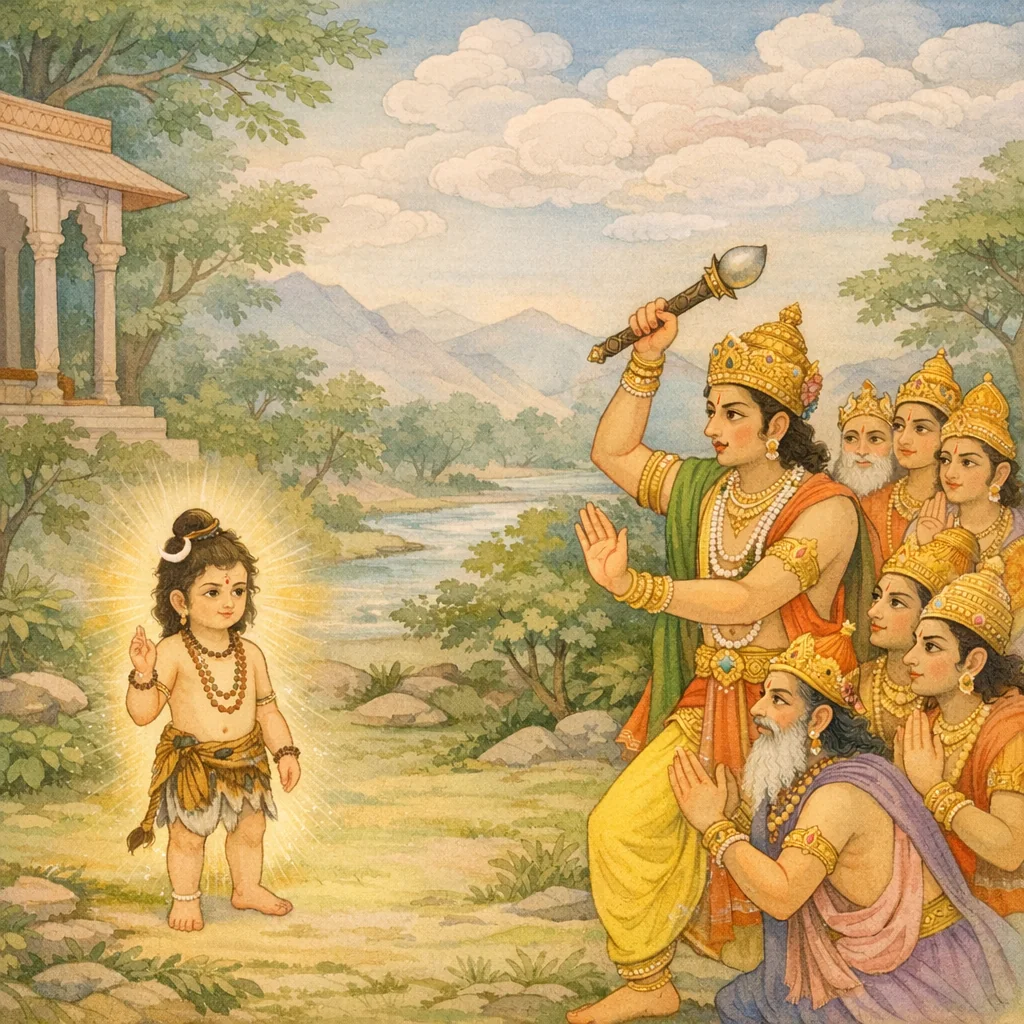
तं चैवाड्कगतं दृष्टवा बालं पजचशिखं पुन: । उमा जिज्ञासमाना वै को<यमित्यब्रवीत् तदा,फिर वे पाँच शिखावाले बालकके रूपमें प्रकट हुए और उमादेवी उन्हें अंकमें लेकर देवताओंसे पूछने लगीं--“पहचानो, ये कौन हैं?”
Seeing him again manifested as a child with five tufts of hair, seated upon her lap, Umā—eager to know the truth—asked the gods at that moment, “Who is this?”
Verse 33
असूयतश्च शक्रस्य वज्ेण प्रहरिष्यत: । स वज्ं स्तम्भयामास त॑ बाहुं परिघोपमम्,उस समय इन्द्रको बड़ी ईर्ष्या हुई। वे वज़से उस बालकपर प्रहार करना ही चाहते थे कि उसने परिघके समान मोटी उनकी उस बाँहको वज्रसहित स्तम्भित कर दिया
Vāyu said: When Śakra (Indra), seized by jealousy, was about to strike with his thunderbolt, the boy immobilized that very thunderbolt-bearing arm of his—thick and formidable like an iron club.
Verse 34
न सम्बुबुधिरे चैव देवास्तं भुवनेश्वरम् । सप्रजापतय: सर्वे तस्मिन् मुमुहुरी श्चरे,समस्त देवता और प्रजापति उन भुवनेश्वर महादेवजीको न पहचान सके। सबको उन ईश्वरके विषयमें मोह छा गया
Vāyu said: Even the gods failed to recognize that Lord of the worlds. All of them—together with the Prajāpatis—became bewildered about him, falling into delusion regarding the true nature of that supreme Lord.
Verse 35
ततो ध्यात्वा च भगवान् ब्रह्मा तममितौजसम् | अयं श्रेष्ठ इति ज्ञात्वा ववन्दे तमुमापतिम्,तब भगवान् ब्रह्माने ध्यान करके उन अमित-तेजस्वी उमापतिको पहचान लिया और 'ये ही सबसे श्रेष्ठ देवता हैं' ऐसा जानकर उन्होंने उनकी वन्दना की
Then the venerable Brahmā, having meditated, recognized that Lord of immeasurable splendor. Knowing, “This one is the highest,” he bowed in reverence to Umā’s consort (Śiva).
Verse 36
ततः प्रसादयामासुरुमां रुद्रं च ते सुरा: । बभूव स तदा बाहुर्बलहन्तुर्यथा पुरा,तत्पश्चात् उन देवताओंने उमादेवी और भगवान् रुद्रको प्रसन्न किया। तब इन्द्रकी वह बाँह पूर्ववत् हो गयी
Then those gods sought to win the favor of Umā and Rudra. By their grace, that arm—once the destroyer of strength—became as it had been before.
Verse 37
स चापि ब्राह्माणो भूत्वा दुर्वासा नाम वीर्यवान् द्वारवत्यां मम गृहे चिरं कालमुपावसत्,वे ही पराक्रमी महादेव दुर्वासा नामक ब्राह्मण बनकर द्वारकापुरीमें मेरे घरके भीतर दीर्घकालतक टिके रहे
And that mighty one—assuming the form of a brāhmaṇa and known as Durvāsā—stayed for a long time within my house in Dvāravatī.
Verse 38
विप्रकारान् प्रयुद्धक्ते सम सुबहून् मम वेश्मनि । तानुदारतया चाहं चक्षमे चातिदुःसहान्,उन्होंने मेरे महलमें मेरे विरुद्ध बहुत-से अपराध किये। वे सभी अत्यन्त दुःसह थे तो भी मैंने उदारतापूर्वक क्षमा किया
Vāyu said: “In my own dwelling, many brahmins committed offenses against me and even acted in hostility. Though their deeds were exceedingly hard to endure, I bore them and forgave them out of magnanimity.”
Verse 39
स वै रुद्र: स च शिव: सो<ग्नि: सर्व: स सर्वजित् | स चैवेन्द्रश्न वायुश्न सोडश्चिनौ स च विद्युत:,वे ही रुद्र हैं, वे ही शिव हैं, वे ही अग्नि हैं, वे ही सर्वस्वरूप और सर्वविजयी हैं। वे ही इन्द्र और वायु हैं, वे ही अश्विनीकुमार और विद्युत् हैं
Vāyu said: He indeed is Rudra; he is also Śiva. He is Agni, the all-pervading reality, and the conqueror of all. He is Indra and he is Vāyu; he is the twin Aśvins, and he is lightning as well.
Verse 40
स चन्द्रमा: स चेशान: स सूर्यो वरुणश्न सः । स काल: सोडन््तको मृत्यु: स यमो रात्र्यहानि च,वे ही चन्द्रमा, वे ही ईशान, वे ही सूर्य, वे ही वरुण, वे ही काल, वे ही अन्तक, वे ही मृत्यु, वे ही यम तथा वे ही रात और दिन हैं
Vāyu-deva declares the all-pervading Lord’s cosmic identity: He is the Moon and Īśāna, the Sun and Varuṇa; He is Time itself, the Ender and Death; He is Yama, and He is also the alternating rhythm of night and day.
Verse 41
मासार्धमासा ऋतव: संध्ये संवत्सरश्न सः । स धाता स विधाता च विश्वकर्मा स सर्ववित्,मास, पक्ष, ऋतु, संध्या और संवत्सर भी वे ही हैं। वे ही धाता, विधाता, विश्वकर्मा और सर्वज्ञ हैं
Vāyu-deva declares that the very measures of time—months, half-months, seasons, the twilight junctions, and the year—are all that Supreme Being alone. He is the Sustainer and the Ordainer, the cosmic Craftsman (Viśvakarman), and the All-knowing.
Verse 42
नक्षत्राणि गृहाश्वैव दिशो5थ प्रदिशस्तथा । विश्वमूर्तिरमेयात्मा भगवान् परमद्युति:,नक्षत्र, गृह, दिशा, विदिशा भी वे ही हैं। वे ही विश्वरूप, अप्रमेयात्मा, षड़्विध ऐश्वर्यसे युक्त एवं परम तेजस्वी हैं
Vāyu said: “He alone is the very stars and the celestial abodes; He is the directions and the intermediate directions as well. That Blessed Lord—whose form is the whole universe, whose Self is immeasurable, and whose splendor is supreme—pervades all these as their inner reality.”
Verse 43
एकधा च द्विधा चैव बहुधा च स एव हि । शतधा सहस्रधा चैव तथा शतसहस्रधा,उनके एक, दो, अनेक, सौ, हजार और लाखों रूप हैं
Vāyu said: “He alone appears in one form, in two forms, and in many forms; likewise in a hundred forms, a thousand forms, and even in a hundred thousand forms.”
Verse 44
ईदृश: स महादेवो भूयश्वष भगवानत: । न हि शक््या गुणा वक्तुमपि वर्षशतैरपि,भगवान् महादेव ऐसे प्रभावशाली हैं, बल्कि इससे भी बढ़कर हैं। सैकड़ों वर्षोमें भी उनके गुणोंका वर्णन नहीं किया जा सकता
Vāyu said: “Such indeed is that Mahādeva; rather, he is even greater than this. His excellences cannot be fully spoken of—even if one were to try for hundreds of years.”
Verse 103
कुपिते सुखमेधन्ते तस्मिन्नपि गुहागता: । पिनाकधारी रुद्र कुपित होकर जिन्हें भयंकररूपसे देख लें, उनके भी हृदयके टुकड़े- टुकड़े हो जायँ। संसारमें भगवान् शंकरके कुपित हो जानेपर देवता, असुर, गन्धर्व और नाग यदि भागकर गुफामें छिप जायूँ तो भी सुखसे नहीं रह सकते
When Rudra, bearer of the Pināka, is enraged and casts his dreadful gaze upon anyone, that being’s heart is shattered into fragments. In this world, when the Lord Śaṅkara grows wrathful, even the gods, asuras, gandharvas, and nāgas—though they flee and hide in caves—cannot dwell in peace.
Verse 159
इस प्रकार श्रीमह्याभारत अनुशासनपर्वके अन्तर्गत दानधर्मपर्वमें दुवासाकी भिक्षा नामक एक सौ उनसठवाँ अध्याय पूरा हुआ
Thus concludes the one hundred and fifty-ninth chapter, titled “Durvāsā’s Alms,” within the Dāna-dharma section of the Anuśāsana Parva of the sacred Mahābhārata.
Verse 160
इति श्रीमहाभारते अनुशासनपर्वणि दानधर्मपर्वणि ईश्वरप्रशंसा नाम षष्ट्यधिकशततमो< ध्याय:,इस प्रकार श्रीमह्याभारत अनुशासनपववके अन्तर्गत दानधर्मपर्वमें ईश्चषरकी प्रशंसा नामक एक सौ साठवाँ अध्याय पूरा हुआ
Thus, in the Śrī Mahābhārata, within the Anuśāsana Parva—specifically in the section on the dharma of giving—ends the one-hundred-and-sixtieth chapter entitled “Praise of the Lord.”
Verse 276
जहि दैत्यान् सह पुरैलोंकांस्त्रायस्व मानद | तदनन्तर वहाँ पधारे हुए सम्पूर्ण महामना देवताओंने रुद्रदेवसे कहा--“भगवन् रुद्र! पशुतुल्य असुर हमारे समस्त कर्मोंके लिये भयंकर हो गये हैं और भविष्यमें भी ये हमें भय देते रहेंगे। अत: मानद! हमारी प्रार्थना है कि आप तीनों पुरोंसहित समस्त दैत्योंका नाश और लोकोंकी रक्षा करें"
Vāyu said: “Slay the Daityas along with their cities; protect the worlds, O bestower of honor.” Thereafter, all the great-minded gods who had arrived there addressed Rudra: “Blessed Rudra! These beast-like Asuras have become a dreadful menace to all our sacred works, and in the future too they will continue to threaten us. Therefore, O noble one, we beseech you: destroy all the Daityas together with their three cities, and safeguard the worlds.”