Adhyaya 272
इन्द्रजिद्-लक्ष्मणयुद्धम् (Indrajit and Lakṣmaṇa: Escalation through Concealment)
Upa-parva: Mārkaṇḍeya-Samvāda (Embedded Rāmāyaṇa/Indrajit Episode)
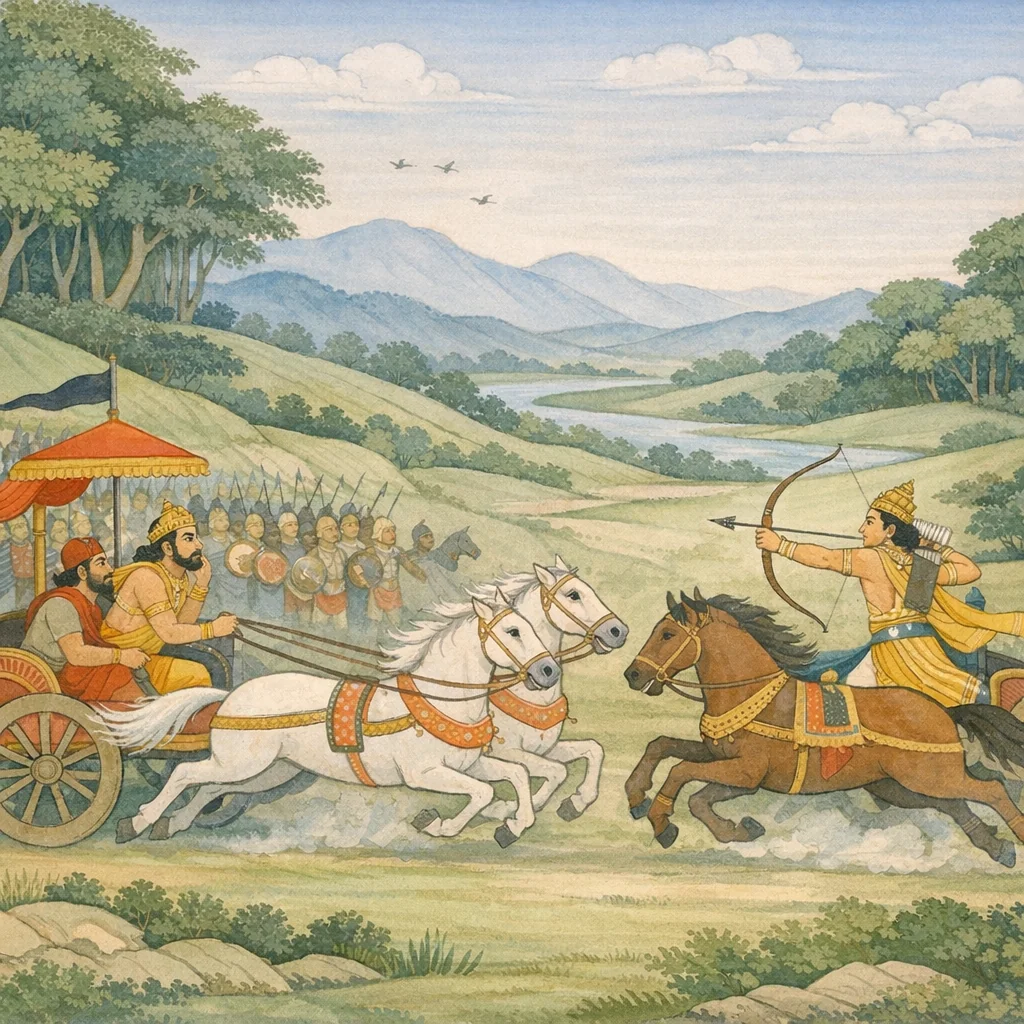
Mārkaṇḍeya reports that after hearing of key battlefield losses (including Kumbhakarṇa and others), Rāvaṇa addresses his son Indrajit, urging him to strike Rāma, Lakṣmaṇa, and Sugrīva, praising Indrajit’s prior martial renown. Indrajit accepts, advances to the battlefield, and openly challenges Lakṣmaṇa. A fierce duel ensues between two expert users of divine missiles; when conventional exchange does not yield advantage, Indrajit intensifies effort, hurling powerful projectiles that Lakṣmaṇa counters. Aṅgada intervenes with a tree-strike; Indrajit retaliates, disabling Aṅgada’s chariot and then employing māyā to disappear. From concealment, Indrajit targets and wounds Rāma and Lakṣmaṇa with boon-granted arrows; both attempt to engage an unseen opponent while the vānaras search the sky with boulders. The chapter culminates with Rāma and Lakṣmaṇa heavily pierced by arrows and falling to the ground, likened to the sun and moon descending—an image emphasizing the crisis point created by concealment and concentrated missile-force.
Chapter Arc: द्रौपदी के अपमान का प्रतिशोध बनकर पाण्डवों का क्रोध रणभूमि में उतरता है; युधिष्ठिर सहित पाँचों भाइयों को आते देख शिबि–सौवीर–सिन्धु की सेनाओं में घोर शब्द और विषाद फैल जाता है। → जयद्रथ के पक्ष की संयुक्त टुकड़ियाँ पाण्डवों को रोकने के लिए घेराबंदी करती हैं—विशेषतः भीम को रथों की विशाल पंक्तियों से कोटिकास्य घेर लेता है; उधर युधिष्ठिर पर त्रिगर्तराज उतरकर आक्रमण करता है, और नकुल के वध हेतु सुरथ उन्मत्त गजराज भेजता है। → पाण्डव-पराक्रम का उफान निर्णायक बनता है—युधिष्ठिर, भीम, अर्जुन, नकुल, सहदेव के समन्वित प्रहार से शिबि, इक्ष्वाकु, त्रिगर्त, सैन्धव आदि के महारथी बाण-गोचर होकर कटते जाते हैं; जयद्रथ की सेना का मनोबल टूटता है और उसका पलायन आरम्भ हो जाता है। → सेना का संहार कर पाण्डव द्रौपदी की रक्षा-प्रतिज्ञा को बल देते हैं; जयद्रथ भयभीत होकर वन की ओर भागता है—उसमें अब केवल भागने का ही ‘पराक्रम’ शेष रह जाता है, और अर्जुन (फाल्गुन) उसका पीछा करते हुए आगे की कार्रवाई का संकेत देता है। → अर्जुन का जयद्रथ के पीछे-पीछे बढ़ना—क्या वह उसे पकड़कर दण्ड देगा, या जयद्रथ किसी शरण/उपाय से बच निकलेगा?
Shlokas
Verse 1
८-० 05० (0) अत हा एकसप्तत्याधिकद्विशततमो< ध्याय: पाण्डवोंद्वारा जयद्रथकी सेनाका संहार, जयद्रथका पलायन, द्रौपदी तथा नकुल-सहदेवके साथ युधिष्ठिरका आश्रमपर लौटना तथा भीम और अर्जुनका वनमें जयद्रथका पीछा करना वैशम्पायन उवाच संतिष्ठत प्रहरत तूर्ण विपरिधावत । इति सम सैन्धवो राजा चोदयामास तान् नृपान्,वैशम्पायनजी कहते हैं--राजन्! तब सिन्धुराज जयद्रथ “ठहरो, मारो, जल्दी दौड़ो कहकर अपने साथ आये हुए राजाओंको युद्धके लिये उत्साहित करने लगा
Vaiśampāyana said: Then the king of Sindhu, Jayadratha, urged on those allied kings, crying, “Stand your ground! Strike! Run swiftly in pursuit!”—stirring them to battle. The scene underscores how a leader’s commands can inflame violence and rally wavering allies, setting the moral tension between righteous restraint and reckless aggression.
Verse 2
ततो घोरतम: शब्दो रणे समभवत् तदा । भीमार्जुनयमान् दृष्टवा सैन्यानां सयुधिष्ठिरान्,उस समय रणभूमिमें युधिष्ठि, भीमसेन, अर्जुन, नकुल और सहदेवको देखकर जयद्रथके सैनिकोंमें बड़ा भयंकर कोलाहल मच गया
Then, at that moment, a most dreadful uproar arose on the battlefield. Seeing Yudhiṣṭhira together with Bhīma and Arjuna, the armies burst into fearful tumult—an instinctive recognition that the righteous Pāṇḍavas had arrived in force, and that adharma would now be challenged openly in war.
Verse 3
शिबिसौवीरसिन्धूनां विषादश्चाप्पजायत । तान् दृष्टवा पुरुषव्याप्रान् व्याप्रानिव बलोत्कटान्,सिंहके समान उत्कट बलवान पुरुषसिंह पाण्डवोंको देखकर शिबि, सौवीर तथा सिन्धुदेशके राजाओंके मनमें भी अत्यन्त विषाद छा गया
Vaiśampāyana said: When the kings of Śibi, Sauvīra, and Sindhu beheld the Pāṇḍavas—those lion-like men, formidable in strength like tigers—they too were seized by deep despondency. The sight of such righteous yet irresistible heroes unsettled their hearts, for power joined to steadfast purpose can shake even seasoned rulers.
Verse 4
हेमचित्रसमुत्सेधां सर्वशैक्यायसीं गदाम् । प्रगृह्मा भ्यद्रवद् भीम: सैन्धवं कालचोदितम्,जिसका ऊपरी भाग स्वर्णपत्रसे जटित होनेके कारण विचित्र शोभा पाता था, जिसका सब कुछ शैक्य नामक लोहेसे बनाया गया था, उस विशाल गदाको हाथमें लेकर भीमसेन कालप्रेरित जयद्रथकी ओर दौड़े
Vaiśampāyana said: Taking up a massive mace—its upper portion adorned with gold-leaf and its whole body forged of the iron called Śaikya—Bhīma, as though driven by Time itself, rushed straight at Jayadratha of Sindhu. The moment frames the moral pressure of the episode: righteous fury and the demand for retribution surge forward under the inexorable force of destiny.
Verse 5
तदन्तरमथावृत्य कोटिकास्यो5 भ्यहारयत् । महता रथवंशेन परिवार्य वृकोदरम्,इतनेमें ही रथोंकी विशाल सेनाके द्वारा भीमसेनको सब ओरसे घेरकर कोटिकास्यने जयद्रथ और भीमसेनके बीचमें भारी व्यवधान डाल दिया
Vaiśampāyana said: In the meantime, Koṭikāsya intervened and advanced. With a great mass of chariots he surrounded Vṛkodara (Bhīma), creating a formidable obstruction between Jayadratha and Bhīmasena—an act of tactical interference that momentarily checked Bhīma’s direct pursuit and altered the immediate balance of the encounter.
Verse 6
शक्तितोमरनाराचैर्वीरबाहुप्रचोदितै: । कीर्यमाणो5पि बहुभिर्न सम भीमो5भ्यकम्पत,उस समय सब योद्धा भीमसेनपर अपनी भुजाओंके द्वारा चलाकर शक्ति, तोमर और नाराच आदि बहुत-से अस्त्र-शस्त्रोंकी वर्षा करने लगे; परंतु भीमसेन इससे तनिक भी विचलित नहीं हुए
Vaiśampāyana said: Though many weapons—spears (śakti), javelins (tomara), and iron arrows (nārāca)—hurled with the full force of warriors’ arms were showered upon him, Bhīma did not waver in the least. His steadiness under assault reflects the kṣatriya ideal of fearlessness and resolve in battle, where endurance and composure are themselves forms of strength.
Verse 7
गजं तु सगजारोहं पदातींश्व चतुर्दश । जघान गदया भीम: सैन्धवध्वजिनीमुखे,उन्होंने जयद्रथकी सेनाके मुहानेपर जाकर अपनी गदाकी चोटसे सवारसहित एक हाथी और चौदह पैदलोंको मार डाला
Vaiśampāyana said: At the very front of Jayadratha’s army, Bhīma struck down with his mace an elephant together with its rider, and fourteen foot-soldiers. The scene underscores Bhīma’s fierce resolve in battle—directed not by cruelty for its own sake, but by the grim necessities of war and the duty to break the enemy’s advance.
Verse 8
पार्थ: पञ्च शतान् शूरान् पर्वतीयान् महारथान् | परीप्समान: सौवीरं जघान ध्वजिनीमुखे,इसी प्रकार अर्जुनने सौवीरराज जयद्रथको पकड़नेकी इच्छा रखकर सेनाके अग्रभागमें स्थित पाँच सौ शूरवीर पर्वतीय महारथियोंको मार डाला
Vaiśampāyana said: Arjuna, intent on seizing the king of Sauvīra (Jayadratha), struck down five hundred valiant mountain-born great chariot-warriors who stood at the very front of the army. The episode frames Arjuna’s fierce action as a focused pursuit of a specific offender, showing how battlefield violence is narrated as purposeful and directed rather than indiscriminate.
Verse 9
राजा स्वयं सुवीराणां प्रवराणां प्रहारिणाम् । निमेषमात्रेण शतं जघान समरे तदा,स्वयं राजा युधिष्ठिरने भी उस समय अपने ऊपर प्रहार करनेवाले सौवीर क्षत्रियोंके सौ प्रमुख वीरोंको पलक मारते-मारते समरांगणमें मार गिराया
Vaiśampāyana said: Then the king himself, in the midst of battle, slew a hundred of the foremost Souvīra warriors—men who were striking at him—within the span of a single blink. The scene underscores the king’s formidable prowess when duty and survival in war compel decisive action.
Verse 10
ददृशे नकुलस्तत्र रथात् प्रस्कन्द्य खड्गधृक् । शिरांसि पादरक्षाणां बीजवत् प्रवपन् मुहुः,महावीर नकुल हाथमें तलवार लिये रथसे कूद पड़े और पादरक्षक सैनिकोंके मस्तक काट-काटकर बीजकी भाँति उन्हें बार-बार धरतीपर बोते दिखायी दिये
Vaiśaṃpāyana said: There, Nakula was seen leaping down from his chariot, sword in hand. Again and again he struck off the heads of the foot-guards, scattering them upon the ground like seeds—an image of relentless battlefield prowess that underscores how martial skill, when unleashed in war, turns living bodies into mere tokens of victory.
Verse 11
सहदेवस्तु संयाय रथेन गजयोधिन: । पातयामास नाराचैट्रैमेभ्य इव बर्हिण:,सहदेव रथद्वारा आगे बढ़कर हाथीसवार योद्धाओंसे भिड़ गये और नाराच नामक बाणोंसे मार-मारकर उन्हें इस प्रकार नीचे गिराने लगे, मानो कोई व्याध वृक्षोंपरसे मोरोंको घायल करके गिरा रहा हो
Vaiśampāyana said: Sahadeva, advancing in his chariot, closed with the warriors mounted on elephants. With his nārāca arrows he struck them down repeatedly, so that they fell like peacocks brought down from the trees by a hunter’s shafts—an image that underscores both the ferocity of battle and the pitiless efficiency of martial skill when dharma is contested by arms.
Verse 12
ततस्त्रिगर्त: सधनुरवतीर्य महारथात् । गदया चतुरो वाहान् राज्ञस्तस्य तदावधीत्,तदनन्तर धनुष हाथमें लिये त्रिगर्तराजने अपने विशाल रथसे उतरकर राजा युधिष्ठिरके चारों घोड़ोंको गदासे मार डाला
Vaiśampāyana said: Then the Trigarta king, bow in hand, descended from his great chariot and, with his mace, struck down the four horses of that king (Yudhiṣṭhira) then and there. In the harsh ethic of battle, disabling an opponent’s mobility becomes a decisive tactic—yet it also heightens the moral tension of war, where victory is pursued through the destruction of the very supports of life and duty.
Verse 13
तमभ्याशगतं राजा पदातिं कुन्तिनन्दन: । अर्धचन्द्रेण बाणेन विव्याधोरसि धर्मराट्,उसे पैदल ही पास आया देख कुन्तीनन्दन धर्मराज युधिष्ठिरने अर्धचन्द्राकार बाणसे उसकी छातीको छेद डाला
Vaiśaṃpāyana said: Seeing that the foot-soldier had come close, King Yudhiṣṭhira—the son of Kuntī, steadfast in dharma—pierced him in the chest with a crescent-shaped arrow. Even in the press of combat, the narrative frames Yudhiṣṭhira’s action as disciplined kingship: force employed decisively to meet an immediate threat, not as cruelty but as duty-bound protection in war.
Verse 14
स भिन्नह्दयो वीरो वक्त्राच्छोणितमुद्धमन् । पपाताभिमुख: पार्थ छिन्नमूल इव द्रुम:
Vaiśampāyana said: The heroic warrior, his heart split asunder, spewing blood from his mouth, fell forward—O Pārtha—like a tree whose roots have been severed. The image underscores the stark finality of violence: when the vital supports are cut, strength and stature collapse at once, reminding the listener of the grave moral weight carried by acts that destroy life.
Verse 15
तब हृदय विदीर्ण हो जानेके कारण वीर त्रिगर्तराज मुखसे रक्त वमन करता हुआ राजा युधिष्ठिरके सामने ही जड़से कटे हुए वृक्षकी भाँति पृथ्वीपर गिर पड़ा ।। इन्द्रसेनद्वितीयस्तु रथात् प्रस्कन्द्य धर्मराट् | हताश्वः सहदेवस्य प्रतिपेदे महारथम्,इधर धर्मराज युधिष्ठिर अपने घोड़े मारे जानेके कारण सारथि इन्द्रसेनके साथ सहदेवके विशाल रथपर जा बैठे
Then, his heart as if torn apart, the valiant king of the Trigartas—vomiting blood from his mouth—collapsed right before King Yudhiṣṭhira, falling to the earth like a tree cut down at the root. Thereupon Indrasena (the second), leaping down from the chariot, escorted Dharmarāja Yudhiṣṭhira—whose horses had been slain—onto Sahadeva’s great chariot. The scene underscores the stark fragility of embodied life amid battle and the immediate duty of protection and support among allies, even as violence brings sudden, irreversible consequences.
Verse 16
नकुलं त्वभिसंधाय क्षेमड्करमहामुखौ । उभावुभयतस्तीकणै: शरवर्षैरवर्षताम्,दूसरी ओर क्षेमंकर और महामुख नामक दो वीर (राजकुमार) नकुलको लक्ष्य करके दोनों ओरसे तीखे बाणोंकी वर्षा करने लगे
Vaiśampāyana said: Aiming at Nakula, the two warriors—Kṣemaṅkara and Mahāmukha—rained down showers of sharp arrows from both sides. The scene underscores the harsh code of battle, where coordinated assault and martial skill are deployed without hesitation against a chosen target.
Verse 17
तोमरैरभिवर्षन्ती जीमूताविव वार्षिकौ । एकैकेन विपाठेन जघ्ने माद्रवतीसुत:,उस समय तोमरोंकी वर्षा करते हुए वे दोनों योद्धा वर्षाऋतुके दो बादलोंके समान जान पड़ते थे। परंतु माद्रीनन्दन नकुलने एक-एक विपाठ नामक बाण मारकर उन दोनोंको धराशायी कर दिया
Vaishampayana said: Showering javelins, the two warriors looked like a pair of rain-season clouds. Yet Nakula, the son of Madri, struck them down—dispatching each with a single Vipāṭha arrow—showing how disciplined precision can overcome even a fierce barrage of weapons.
Verse 18
त्रिगर्तराज: सुरथस्तस्याथ रथधूर्गत: । रथमाक्षेपयामास गजेन गजयानवित्,तदनन्तर हाथीका संचालन करनेमें निपुण त्रिगर्तराज सुरथने नकुलके रथके धुरेके पास पहुँचकर अपने हाथीके द्वारा उनके रथको दूर फेंकवा दिया
Vaiśampāyana said: Then Suratha, the king of the Trigartas, skilled in driving elephants, brought his elephant up to the yoke-pole of that chariot and, with the force of his elephant, hurled the chariot away. The scene underscores how martial skill and brute power can suddenly overturn a warrior’s position in battle, testing steadiness and resolve amid chaos.
Verse 19
नकुलस्त्वपभीस्तस्माद् रथाच्चर्मासिपाणिमान् | उदश्रान्तं स्थानमास्थाय तस्थौ गिरिरिवाचल:,परंतु नकुलको इससे तनिक भी भय नहीं हुआ। वे हाथमें ढाल-तलवार लिये उस रथसे कूद पड़े और एक निरापद स्थानमें आकर पर्वतकी भाँति अविचलभावसे खड़े हो गये
Vaiśampāyana said: Nakula, however, was not in the least frightened by that. With shield and sword in hand, he leapt down from the chariot, took his stand in a secure spot, and remained unmoving—steady like a mountain. The scene highlights the warrior’s composure: courage is shown not as recklessness, but as calm, grounded readiness in the face of danger.
Verse 20
सुरथस्तं गजवरं वधाय नकुलस्य तु । प्रेषयामास सक्रोधमत्युच्छितकरं तत:,तब सुरथने कुपित होकर अत्यन्त ऊँचे सूँड़ उठाये हुए उस गजराजको नकुलका वध करनेके लिये प्रेरित किया
Vaiśampāyana said: Then Suratha, seized by anger, dispatched that excellent elephant—its trunk raised high—ordering it to kill Nakula. The moment underscores how wrath can turn power into a weapon and drive one to commit adharma by directing violence against the righteous.
Verse 21
नकुलस्तस्य नागस्य समीपपरिवर्तिन: । सविषाणं भुजं मूले खड्गेन निरकृन्तत
Vaiśampāyana said: Nakula, circling close to that serpent, cut off at the root with his sword the arm-like limb that bore a horn. The episode underscores swift, disciplined action in the face of danger—courage guided by alertness rather than reckless fury.
Verse 22
परंतु नकुलने खड्गद्वारा अपने निकट आये हुए उस हाथीकी सूँड़को दाँतोंसहित जड़से काट डाला ।। स विनद्य महानादं गज: किड्किणिभूषण: । पतन्नवाक्शिरा भूमौ हस्त्यारोहमपोथयत्,फिर तो घुघुरुओंसे विभूषित वह गजराज बड़े जोरसे चीत्कार करके नीचे मस्तक किये पृथ्वीपर गिर पड़ा। गिरते-गिरते उसने महावतको भी पृथ्वीपर दे मारा
Vaiśampāyana said: But Nakula, using his sword, cut off at the root the elephant’s trunk along with its tusks as it came close to him. Adorned with tinkling bells, the great elephant let out a thunderous cry and, collapsing headlong to the earth, struck down its rider as it fell. The scene underscores the harsh necessities of combat: swift, decisive action taken to avert immediate danger, even when it results in grievous harm.
Verse 23
स तत् कर्म महत् कृत्वा शूरो माद्रवतीसुत: । भीमसेनरयथं प्राप्य शर्म लेभे महारथ:,यह महान पराक्रम प्रकट करके शूरवीर माद्रीनन्दन महारथी नकुल भीमसेनके रथपर चढ़ गये और वहीं पहुँचकर उन्हें शान्ति मिली
Vaiśampāyana said: Having accomplished that great deed, the heroic son of Mādrī—Nakula, a foremost chariot-warrior—reached Bhīmasena’s chariot; and upon arriving there, he found safety and relief. The verse underscores how courageous action, followed by seeking rightful protection among one’s allies, restores composure amid peril.
Verse 24
भीमस्त्वापततो राज्ञ: कोटिकास्यस्य सड़रे । सूतस्य नुदतो वाहान् क्षुरेणापाहरच्छिर:
Vaiśaṃpāyana said: In the midst of battle, as King Koṭikāsya charged forward, Bhīma—seeing the charioteer urging on the horses—swiftly struck off the charioteer’s head with a razor-edged weapon. The act underscores Bhīma’s fierce, decisive style in war: disabling the enemy’s command and mobility by targeting the driver who directs the chariot’s force.
Verse 25
इधर भीमसेनने युद्धमें अपने ऊपर आक्रमण करनेवाले राजा कोटिकास्यके सारथिका, जो उस समय घोड़ोंका संचालन कर रहा था, छुरेसे सिर उड़ा दिया ।। न बुबोध हतं सूतं स राजा बाहुशालिना । तस्याश्चा व्यद्रवन् संख्ये हतसूतास्ततस्तत:,परंतु राजाको यह मालूम न हो सका कि बाहुशाली भीमके द्वारा मेरा सारथि मारा गया है। उसके मारे जानेसे कोटिकास्यके घोड़े रणभूमिमें इधर-उधर भागने लगे
Vaiśampāyana said: Here, in the midst of battle, Bhīmasena struck down with a razor the charioteer of King Koṭikāśya—the driver who at that moment was controlling the horses—severing his head. The king, though attacked, did not realize that his sūta had been slain by the strong-armed Bhīma. Once the charioteer fell, the horses of Koṭikāśya, now without guidance, bolted and scattered across the battlefield in different directions.
Verse 26
विमुखं हतसूतं त॑ भीम: प्रहरतां वर: । जघान तलयुक्तेन प्रासेनाभ्येत्य पाण्डव:,सारथिके नष्ट हो जानेसे कोटिकास्यको रणसे विमुख हुआ देख योद्धाओंमें श्रेष्ठ पाण्डुनन्दन भीमसेनने उसके पास जाकर प्रास नामक मूठदार शणस्त्रसे उसे मार डाला
Vaiśampāyana said: Seeing him turn away from the fight after his charioteer had been slain, Bhīma—foremost among those who strike—advanced upon him and killed him with a prāsa, a spear fitted with a handle. The episode underscores the relentless logic of battlefield dharma: once a warrior breaks formation and becomes vulnerable through the loss of his driver, the opposing champion presses the advantage to end the threat decisively.
Verse 27
द्वादशानां तु सर्वेषां सौवीराणां धनंजय: । चकर्त निशितैर्भल्लैर्धनूंषि च शिरांसि च,अर्जुनने सौवीरदेशके जो बारह राजकुमार थे, उन सबके धनुष और मस्तक अपने भल्ल नामक तीखे बाणोंसे काट गिराये
Vaiśampāyana said: Then Dhanañjaya (Arjuna), with his sharp bhalla arrows, cut down the bows—and even the heads—of all the twelve princes of the Sauvīra country. The passage underscores the terrifying precision of a master archer in battle, where martial skill can swiftly decide fate, and where violence, once unleashed, spares neither weapon nor wielder.
Verse 28
शिबीनिक्ष्वाकुमुख्यां श्व त्रिगर्तान् सैन्धवानपि । जघानातिरथ: संख्ये बाणगोचरमागतान्,उन अतिरथी वीरने युद्धमें बाणोंके लक्ष्य बने हुए शिबि, इक्ष्वाकु, त्रिगर्त और सिन्धुदेशके क्षत्रियोंको भी मार डाला
Vaiśampāyana said: In the thick of battle, that great chariot-warrior (Atiratha) struck down even the foremost among the Śibis and the Ikṣvākus, as well as the Trigartas and the Sindhu men, when they had come within the range of his arrows—becoming targets before him. The verse underscores the grim moral weight of war: lineage and renown offer no protection once one enters the lethal economy of the battlefield.
Verse 29
सादिता: प्रत्यदृश्यन्त बहव: सव्यसाचिना । सपताकाश्न मातज्ा: सध्वजाश्व॒ महारथा:,सव्यसाची अर्जुनके द्वारा मारे या नष्ट किये गये पताकासहित बहुतेरे हाथी और ध्वजायुक्त अनेक विशाल रथ दृष्टिगोचर हो रहे थे
Vaiśampāyana said: Many warriors lay slain, brought down by Arjuna the ambidextrous archer. Elephants with their banners still raised and great chariots—horses and standards intact—were seen strewn about, bearing witness to the overwhelming force of his arms. The scene underscores the grim moral weight of battle: prowess achieves victory, yet it also leaves a visible trail of destruction that demands sober reflection on the costs of violence and the responsibilities of those who wield power.
Verse 30
प्रच्छाद्य पृथिवीं तस्थु: सर्वमायोधन प्रति । शरीराण्यशिरस्कानि विदेहानि शिरांसि च
Vaiśampāyana said: Covering the earth, they stood facing the entire battlefield. There were bodies without heads, and severed heads lying apart from their bodies—an appalling scene that underscores the ruinous cost of violence and the moral gravity of slaughter.
Verse 31
उस समय बिना सिरके धड़ और बिना धड़के सिर समस्त रणभूमिको आच्छादित करके बिखरे पड़े थे ।। श्वगृध्रकड़ककाकोलभासगोमायुवायसा: । अतृप्य॑ंस्तत्र वीराणां हतानां मांसशोणितै:,वहाँ मारे गये वीरोंके मांस तथा रक्तसे कुत्ते, गीध, कंक (सफेद चीलें), काकोल (पहाड़ी कौए) चीलें, गीदड़ और कौए तृप्त हो रहे थे
Vaiśampāyana said: There, dogs, vultures, kaṅkas (white kites), kākolas (mountain crows), bhāsas (kites), jackals, and crows fed without satiety on the flesh and blood of the slain heroes. The battlefield, strewn with severed heads and headless trunks, became a grim witness to the ethical cost of violence—where valor ends in carrion and the fruits of adharma are consumed by beasts and birds.
Verse 32
हतेषु तेषु वीरेषु सिन्धुराजो जयद्रथ: । विमुच्य कृष्णां संत्रस्त: पलायनपरो5भवत्,उन वीरोंके मारे जानेपर सिन्धुराज जयद्रथ भयसे थर्रा उठा और द्रौपदीको वहीं छोड़कर उसने भाग जानेका विचार किया
When those warriors had been slain, Jayadratha, the king of Sindhu, was shaken with fear. Releasing Kṛṣṇā (Draupadī) and abandoning his wrongful seizure, he turned his mind wholly toward flight—choosing self-preservation over facing the consequences of his adharma.
Verse 33
स तस्मिन् संकुले सैन्ये द्रौपदीमवतार्य ताम् प्राणप्रेप्सुरुपाधावद् वनं येन नराधम:,उस तितर-बितर हुई सेनाके बीच उस द्रौपदीको रथसे उतारकर नराधम जयद्रथ अपने प्राण बचानेके लिये वनकी ओर भागा
In that confused and scattered army, the vile Jayadratha set Draupadī down from his chariot and, desperate to save his own life, fled toward the forest. The verse underscores the moral contrast between abducting a helpless woman and then abandoning her when danger arises—cowardice joined to adharma.
Verse 34
द्रौपदी धर्मराजस्तु दृष्टवा धौम्यपुरस्कृताम् माद्रीपुत्रेण वीरेण रथमारोपयत् तदा,धर्मराज युधिष्ठिरने देखा कि द्रौपदी धौम्य मुनिको आगे करके आ रही है, तो उन्होंने वीरवर माद्रीनन्दन सहदेवद्वारा उसे रथपर चढ़वा लिया
Vaiśampāyana said: When Dharmarāja Yudhiṣṭhira saw Draupadī approaching with the sage Dhaumya in front, he at once had the heroic son of Mādrī (Sahadeva) help her up onto the chariot. The scene underscores the king’s protective courtesy and reverence toward both Draupadī and the guiding presence of the family priest, aligning action with dharma through respectful care and proper conduct.
Verse 35
ततस्तद् विद्रुतं सैन्यमपयाते जयद्रथे । आदिदश्यादिश्य नाराचैराजघान वृकोदर:,जयद्रथके भाग जानेपर सारी सेना इधर-उधर भाग चली, परंतु भीमसेन अपने नाराचोंद्वारा नाम बता-बताकर उन सैनिकोंका वध करने लगे
Vaiśampāyana said: When Jayadratha had withdrawn, that routed army scattered in flight. Then Vṛkodara (Bhīma), calling out and identifying his targets, struck them down with nārāca arrows—an act that underscores the grim ethics of battle: once the aggressor retreats, panic spreads, and the warrior’s fury turns into relentless retribution against the fleeing ranks.
Verse 36
सव्यसाची तु तं दृष्टवा पलायन्तं जयद्रथम् । वारयामास निष्नन्तं भीम॑ सैन्धवसैनिकान्,जयद्रथको भागते देख अर्जुनने उसके सैनिकोंके संहारमें लगे हुए भीमसेनको रोका
Vaiśaṃpāyana said: Seeing Jayadratha fleeing, Arjuna (the ambidextrous archer) restrained Bhīma, who was cutting down the Sindhu king’s soldiers—signaling a shift from indiscriminate slaughter toward the higher aim of confronting the principal offender rather than venting wrath on the rank and file.
Verse 37
अजुन उवाच यस्यापचारात् प्राप्तोडयमस्मान् क्लेशो दुरासद: । तमस्मिन् समरोद्देशे न पश्यामि जयद्रथम्,अर्जुन बोले--जिसके अत्याचारसे हमलोगोंको यह दुःसह क्लेश सहन करना पड़ा है, उस जयद्रथको तो मैं इस समरभूमिमें देखता ही नहीं हूँ
Arjuna said: ‘Because of whose wrongdoing this unbearable affliction has come upon us—I do not see that Jayadratha here on this battlefield.’
Verse 38
तमेवान्विष भद्र| ते कि ते योधैर्निपातितै: । अनामिषमिदं कर्म कथं वा मन्यते भवान्,भैया! आपका भला हो, आप जयद्रथकी ही खोज करें, इन (निरीह) सैनिकोंको मारनेसे क्या लाभ? यह कार्य तो निष्फल दिखायी देता है अथवा आप इसे कैसा समझते हैं?
Arjuna said: “Seek only him—Jayadratha—O noble one. What gain is there for you in having these warriors struck down? This deed seems to yield no true fruit; how do you yourself judge it, brother?”
Verse 39
वैशग्पायन उवाच इत्युक्तो भीमसेनस्तु गुडाकेशेन धीमता । युधिष्ठटिरमभिप्रेक्ष्य वाग्मी वचनमत्रवीत्,वैशम्पायनजी कहते हैं-जनमेजय! बुद्धिमान् अर्जुनके ऐसा कहनेपर बातचीतमें कुशल भीमसेनने युधिष्ठिरकी ओर देखकर कहा--
Vaiśampāyana said: Thus addressed by the wise Guḍākeśa (Arjuna), Bhīmasena—skilled in speech—looked toward Yudhiṣṭhira and spoke. The scene frames Bhīma’s response as one offered in the presence of the dharma-centered elder, indicating that counsel and action are to be weighed against righteousness and the king’s judgment.
Verse 40
हतप्रवीरा रिपवो भूयिष्ठं विद्रुता दिश: । गृहीत्वा द्रौपदी राजन् निवर्ततु भवानितः,“राजन! शत्रुओंके प्रमुख वीर मारे जा चुके हैं और बहुत-से सैनिक सब दिशाओंमें भाग गये हैं। अब आप द्रौपदीको साथ लेकर यहाँसे आश्रमको लौटिये
Vaiśaṃpāyana said: “O King, the enemy has been stripped of its foremost heroes, and most of their troops have fled in all directions. Therefore, take Draupadī with you and return from here to the hermitage.”
Verse 41
यमाभ्यां सह राजेन्द्र धौम्येन च महात्मना । प्राप्पाश्रमपदं राजन् द्रौपदी परिसान्त्वय,“महाराज! आप नकुल, सहदेव तथा महात्मा धौम्यके साथ आश्रमपर पहुँचकर द्रौपदीको सान्त्वना दीजिये
Vaiśaṃpāyana said: “O best of kings, together with the two sons of Yamā (Nakula and Sahadeva) and with the great-souled Dhaumya, having reached the hermitage-abode, O king, console Draupadī.” The verse frames a dharmic response to suffering: the immediate duty is compassionate reassurance, offered in the presence of elders and kin, so that grief does not turn into despair or rash action.
Verse 42
नहि मे मोक्ष्यते जीवन् मूढ: सैन्धवको नृप: । पातालतलसंस्थोडपि यदि शक्रोडस्य सारथि:,“मूर्ख सिन्धुराज जयद्रथ यदि पातालमें घुस जाय अथवा इन्द्र भी उसके सारथि या सहायक होकर आ जायेँ तो भी आज वह मेरे हाथसे जीवित नहीं बच सकता”
Vaiśaṃpāyana said: “That deluded king of Sindhu, Jayadratha, will not escape alive from my hands. Even if he were to hide in the very depths of the netherworld, or even if Indra himself were to come as his charioteer and helper, he still would not be saved today.”
Verse 43
युधिछिर उवाच न हन्तव्यो महाबाहो दुरात्मापि स सैन्धव: । दुःशलामभिसंस्मृत्य गान्धारीं च यशस्विनीम्,युधिष्ठिर बोले--महाबाहो! सिन्धुराज जयद्रथ यद्यपि अत्यन्त दुरात्मा है; तथापि बहिन दुःशला और यशस्विनी माता गान्धारीको स्मरण करके उसका वध न करना
Yudhiṣṭhira said: “O mighty-armed one, the Saindhava (Jayadratha) should not be slain—even though he is wicked. Remembering Duḥśalā, our sister, and the illustrious Gāndhārī, refrain from killing him.”
Verse 44
वैशम्पायन उवाच तच्छुत्वा द्रौपदी भीममुवाच व्याकुलेन्द्रिया । कुपिता ह्वीमती प्राज्ञा पती भीमार्जुनावुभी
Vaiśampāyana said: Hearing that, Draupadī—her senses agitated—spoke to Bhīma. Though angered, she was modest and discerning, addressing both her husbands, Bhīma and Arjuna.
Verse 45
वैशम्पायनजी कहते हैं-जनमेजय! युधिष्ठिरकी यह बात सुनकर द्रौपदीकी सारी इन्द्रियाँ व्याकुल हो उठीं। वह लज्जावती और बुद्धिमती होनेपर भी भीमसेन और अर्जुन दोनों पतियोंसे कुपित होकर बोली-- ।। कर्तव्यं चेत् प्रियं महाूं वध्य: स पुरुषाधम: । सैन्धवापसद: पापो दुर्मति: कुलपांसन:,“यदि आप लोगोंको मेरा प्रिय करना है तो उस नराधमको अवश्य मार डालिये। वह पापी दुर्बुद्धि जयद्रथ सिन्धुदेशका कलड्ूक और कुलाज्ार है
Vaiśampāyana said: “O Janamejaya! Hearing Yudhiṣṭhira’s words, all of Draupadī’s senses were thrown into turmoil. Though modest and wise, she became angry with both her husbands—Bhīmasena and Arjuna—and spoke: ‘If you truly wish to do what is dear to me, then that vilest of men must be slain. That sinful wretch of the Sindhu land—of perverse mind, a disgrace to his lineage—must be put to death.’”
Verse 46
भार्यभिहर्ता वैरी यो यश्व राज्यहरो रिपु: | याचमानोडपि संग्रामे न मोक्तव्य: कथंचन,“जो अपनी पत्नीका अपहरण करनेवाला तथा राज्यको हड़प लेनेवाला हो, ऐसे शत्रुको युद्धमें पाकर वह प्राणोंकी भीख माँगे तो भी किसी तरह जीवित नहीं छोड़ना चाहिये”
Vaiśaṃpāyana said: “An enemy who has abducted one’s wife and a foe who has usurped one’s kingdom—when such a man is met in battle, even if he begs for his life, he should not be spared under any circumstances.”
Verse 47
इत्युक्तौ तौ नरव्याप्रौ ययतुर्यत्र सैन्धव: । राजा निववृते कृष्णामादाय सपुरोहित:,द्रौोपदीके ऐसा कहनेपर वे दोनों नरश्रेष्ठ जिस ओर जयद्रथ गया था, उसी ओर चल दिये तथा राजा युधिष्ठिर द्रौपदीको लेकर पुरोहित धौम्यके साथ आश्रमपर चल पड़े
Vaiśaṃpāyana said: When those two tiger-like heroes had been thus addressed, they set out in the direction where the Sindhu prince (Jayadratha) had gone. King Yudhiṣṭhira, however, turned back, taking Kṛṣṇā (Draupadī) with him, together with his family priest Dhaumya, and proceeded toward the hermitage—prioritizing her protection and the order of dharma amid crisis.
Verse 48
स प्रविश्याश्रमपदमपविद्धबूसीमठम् । मार्कण्डेयादिभिर्विप्रैरनुकीर्ण ददर्श ह,उन्होंने आश्रममें प्रवेश करके देखा कि बैठनेके आसन और स्वाध्यायके लिये बनी हुई पर्णशालामें सब वस्तुएँ इधर-उधर बिखरी पड़ी थीं। मार्कण्डेय आदि ब्रह्मर्षि वहाँ इकट्ठे हो रहे थे
Verse 49
द्रौोपदीमनुशोचद्धि्राह्मणैस्तै:ः समाहितैः । समियाय महाप्राज्ञ: सभार्यो भ्रातृमध्यग:,वे सब ब्राह्मण एकाग्रचित्त हो द्रौपदीके लिये ही बार-बार शोक कर रहे थे। इतनेमें ही पत्नीसहित परम बुद्धिमान् युधिष्ठिर अपने भाई नकुल और सहदेवके बीचमें होकर चलते हुए वहाँ आ पहुँचे
Those focused brāhmaṇas were repeatedly lamenting for Draupadī. Just then the great-minded Yudhiṣṭhira arrived there, accompanied by his wife, walking with his brothers around him—positioned between Nakula and Sahadeva.
Verse 50
ते सम त॑ मुदिता दृष्टवा पुनः प्रत्यागतं नृपम् जित्वा तान् सिन्धुसौवीरान् द्रौपदी चाहतां पुन:,सिन्धु और सौवीरदेशके क्षत्रियोंको जीतकर महाराज लौटे हैं और द्रौपदीदेवी भी पुनः आश्रममें आ गयी हैं, यह देखकर उन ऋषियोंको बड़ी प्रसन्नता हुई
Vaiśampāyana said: Seeing the king return once again—having conquered the Kṣatriyas of Sindhu and Sauvīra—and seeing Draupadī brought back again to the hermitage, the assembled sages were filled with great joy. The moment underscores the restoration of order after outrage: rightful strength is used to undo an injustice and to re-establish the safety and dignity of the wronged.
Verse 51
स तै: परिवृतो राजा तत्रैवोपविवेश ह | प्रविवेशा श्रमं कृष्णा यमाभ्यां सह भाविनी,उन ब्राह्मणोंसे घिरे हुए राजा युधिष्ठिर वहीं बैठ गये और भामिनी कृष्णा नकुल- सहदेवके साथ आश्रमके भीतर चली गयी
Surrounded by those brāhmaṇas, King Yudhiṣṭhira sat down right there. Meanwhile, the noble-minded Kṛṣṇā (Draupadī), together with the twin brothers Nakula and Sahadeva, entered the hermitage—an image of disciplined hospitality and restraint amid exile, where conduct (dharma) is maintained through respect for ascetics and orderly reception.
Verse 52
भीमसेनार्जुनौ चापि श्रुत्वा क्रोशगतं रिपुम् । स्वयमश्रांस्तुदन्ती तौ जवेनैवाभ्यधावताम्,इधर भीमसेन और अर्जुनने जब सुना कि हमारा शत्रु जयद्रथ एक कोस आगे निकल गया है, तब वे स्वयं अपने घोड़ोंको हाँकते हुए बड़े वेगसे उसके पीछे दौड़े
Vaiśampāyana said: Hearing that the enemy had gone a krośa ahead, Bhīmasena and Arjuna themselves urged on their horses and, with swift speed, charged after him. The verse highlights their personal resolve and urgency: when a wrongdoer escapes, the righteous do not delay, but act decisively and without shifting responsibility to others.
Verse 53
इदमत्यद्भुतं चात्र चकार पुरुषो<र्जुन: । क्रोशमात्रगतानश्चान् सैन्धवस्य जघान यत्,यहाँ वीर पुरुष अर्जुनने एक अद्भुत पराक्रम दिखाया। यद्यपि जयद्रथके घोड़े एक कोस आगे निकल गये थे, तो भी उन्होंने दिव्यास्त्रोंसे अभिमन्त्रित बाणोंद्वारा उन्हें दूरसे ही मार डाला। अर्जुन दिव्यास्त्रसे सम्पन्न थे। संकटकालमें भी घबराते नहीं थे। इसीलिये उन्होंने वह दुष्कर कर्म कर दिखाया
Vaiśampāyana said: Here Arjuna, that heroic man, performed a deed most wondrous. Though Jayadratha’s horses had already gone a full krośa ahead, Arjuna struck them down from afar with arrows empowered by divine weapons—showing steadiness in crisis and the disciplined mastery that makes even a difficult act achievable.
Verse 54
स हि दिव्यास्त्रसम्पन्न: कृच्छूकाले5प्यसम्भ्रम: । अकरोद् दुष्करं कर्म शरैरस्त्रानुमन्त्रितै:,यहाँ वीर पुरुष अर्जुनने एक अद्भुत पराक्रम दिखाया। यद्यपि जयद्रथके घोड़े एक कोस आगे निकल गये थे, तो भी उन्होंने दिव्यास्त्रोंसे अभिमन्त्रित बाणोंद्वारा उन्हें दूरसे ही मार डाला। अर्जुन दिव्यास्त्रसे सम्पन्न थे। संकटकालमें भी घबराते नहीं थे। इसीलिये उन्होंने वह दुष्कर कर्म कर दिखाया
Vaiśampāyana said: Arjuna, endowed with celestial weapons and unshaken even in moments of crisis, accomplished a deed that is hard to achieve—striking down the fleeing horses from afar with arrows empowered by weapon-mantras. The passage highlights his steadiness under pressure and his disciplined mastery of divine arms, by which he brings a difficult pursuit to its decisive end.
Verse 55
ततो<भ्यधावतां वीरावुभौ भीमधनंजयौ । हताश्व॑ं सैन्धवं भीतमेकं व्याकुलचेतसम्,तत्पश्चात् वे दोनों वीर भीम और अर्जुन जयद्रथके पीछे दौड़े। वह अकेला तो था ही, घोड़ोंके मारे जानेसे अत्यन्त भयभीत भी हो गया था। उसके हृदयमें व्याकुलता छा गयी थी
Vaiśaṃpāyana said: Thereafter the two heroes, Bhīma and Dhanañjaya (Arjuna), rushed in pursuit. Jayadratha of Sindhu, now without his horses, found himself alone and overwhelmed by fear; his mind became agitated and unsteady. The passage underscores how wrongful action and sudden loss of support can swiftly turn confidence into panic, while the pursuers act with resolute purpose to confront the offender.
Verse 56
सैन्धवस्तु हतान् दृष्टवा तथाश्चान् स्वान् सुदुःखित: । अतिविक्रमकर्माणि कुर्वाणं च धनंजयम्,सिन्धुराज अपने घोड़ोंको मारा गया देख और अलौकिक पराक्रम कर दिखानेवाले अर्जुनको आता जान अत्यन्त दुःखी हो गया
Vaiśampāyana said: Seeing his Sindhu horses slain, and likewise his own men struck down, the Saindhava (Jayadratha) was overwhelmed with grief. And as he beheld Dhanañjaya (Arjuna) advancing—one who performs deeds of extraordinary valor—his sorrow deepened, for the consequences of unrighteous aggression were now returning upon him in the form of irresistible retribution.
Verse 57
पलायनकृतोत्साह: प्राद्रवद् येन वै वनम् । सैन्धवं त्वभिसम्प्रेक्ष्य पराक्रान्तं पलायने
Vaiśampāyana said: He, whose resolve had turned wholly toward flight, ran off into the forest. But on seeing the Sindhu prince (Jayadratha) already set in motion to flee, the situation shifted into a pursuit of the cowardly retreat—highlighting how fear-driven escape invites disgrace and retaliation in the moral economy of the epic.
Verse 58
अनेन वीर्येण कथं स्त्रियं प्रार्थथसे बलात्,“राजकुमार! लौटो, तुम्हें पीठ दिखाकर भागना शोभा नहीं देता। अपने सेवकोंको शत्रुओंके बीचमें छोड़कर कैसे भागे जा रहे हो? क्या इसी बलसे तुम दूसरेकी स्त्रीको बलपूर्वक हरकर ले जाना चाहते थे?”
Vaiśampāyana said: “With such ‘valor,’ how can you seek a woman by force? O prince, turn back—flight with your back shown is not becoming. How can you run away, abandoning your own attendants amid the enemies? Was it with this very strength that you meant to seize another man’s wife and carry her off by violence?”
Verse 59
राजपुत्र निवर्तस्व न ते युक्त पलायनम् । कथं हानुचरान् हित्वा शत्रुमध्ये पलायसे,“राजकुमार! लौटो, तुम्हें पीठ दिखाकर भागना शोभा नहीं देता। अपने सेवकोंको शत्रुओंके बीचमें छोड़कर कैसे भागे जा रहे हो? क्या इसी बलसे तुम दूसरेकी स्त्रीको बलपूर्वक हरकर ले जाना चाहते थे?”
Vaiśampāyana said: “Prince, turn back. Flight is not fitting for you. How can you run away after abandoning your attendants in the midst of enemies?” The rebuke underscores the kṣatriya ethic: courage, responsibility toward one’s followers, and the shame of seeking to seize another’s wife by force while lacking the steadfastness to face danger.
Verse 60
इत्युच्यमान: पार्थेन सैन्धवो न न्यवर्तत । तिष्ठ तिछेति तं भीम: सहसाभ्यद्रवद् बली । मा वधीरिति पार्थस्तं दयावान् प्रत्यभाषत,अर्जुनके इस प्रकार ताने देनेपर भी सिन्धुराज नहीं लौटा, तब महाबली भीम “ठहरो, ठहरो” कहते हुए सहसा उसके पीछे दौड़े। उस समय दयालु अर्जुनने उनसे कहा--“भैया! इसकी जान न मारना”
Though thus addressed by Pārtha, the king of Sindhu did not turn back. Then the mighty Bhīma, crying, “Stop! Stop!”, suddenly charged after him. At that moment compassionate Arjuna spoke to Bhīma: “Brother—do not kill him.”
Verse 270
इस प्रकार श्रीमहाभारत वनपववके अन्तर्गत द्रौपदीहरणपर्वमें द्रीपदीवचनविषयक दो सौ सत्तरवाँ अध्याय पूरा हुआ
Thus ends the two-hundred-and-seventieth chapter of the Mahābhārata’s Vana Parva, within the Draupadī-haraṇa section, dealing with Draupadī’s words. The narrator marks the close of this unit, framing Draupadī’s speech as a morally significant testimony within the forest-exile narrative.
Verse 271
इति श्रीमहा भारते वनपर्वणि द्रौपदीहरणपर्वणि जयद्रथपलायने एकसप्तत्यधिकद्वधिशततमो<5ध्याय:
Thus ends, in the revered Mahābhārata, within the Vana Parva, in the section concerning the abduction of Draupadī, the chapter on Jayadratha’s flight—being the two-hundred-and-seventy-second chapter. This colophon marks the close of the episode, underscoring the moral consequence of wrongdoing: the abductor’s act leads not to triumph but to fear, retreat, and disgrace, while the narrative reaffirms the protection of dharma through rightful resistance.
Verse 573
अनुयाय महाबाहु: फाल्गुनो वाक्यमत्रवीत् । अब उसमें केवल भागनेका उत्साह रह गया था, अतः वह वनकी ओर भागा। सिन्धुराजको केवल भागनेमें ही पराक्रम दिखाता देख महाबाहु अर्जुन उसका पीछा करते हुए बोले--
Vaiśampāyana said: The mighty-armed Phālguna (Arjuna), pursuing him, spoke. Seeing the king of Sindhu display his ‘valor’ only in fleeing toward the forest, Arjuna followed after him and addressed him—implying that true kṣatriya prowess is shown by steadfastness and accountability in battle, not by mere escape.
Frequently Asked Questions
The episode problematizes method in conflict: whether concealment and overwhelming force, though effective, align with the expected norms of direct contest and proportional engagement within kṣātra frameworks.
Competence and courage are insufficient without adaptive discernment; when conditions change (e.g., an unseen adversary), resilience requires collective protection, situational awareness, and ethical reflection on means.
No explicit phalaśruti appears in the cited verses; the meta-function is achieved through Mārkaṇḍeya’s exemplary narration, using a crisis narrative to instruct about endurance and the complexity of dharma in extreme conditions.