Adhyaya 264
रामस्य पम्पातीरगमनम्, सुग्रीवसख्यं, वालिवधः, सीतारक्षणवृत्तान्तश्च (Rāma at Pampā; alliance with Sugrīva; Vālin’s fall; Sītā’s guarded captivity)
Upa-parva: Rāmopākhyāna (Narrative of Rāma) — within Āraṇyaka Parva
Mārkaṇḍeya narrates Rāma’s movement to the lotus-filled Pampā while distressed by Sītā’s abduction. Lakṣmaṇa redirects Rāma from lamentation toward purposive action, advising approach to Sugrīva and offering steadfast support as disciple, servant, and ally. After meeting Hanumān and then Sugrīva, Rāma establishes friendship, presents identifying tokens connected to Sītā, and secures Sugrīva’s kingship. Mutual obligations are formalized: Rāma undertakes to neutralize Vālin, while Sugrīva commits to Sītā’s recovery. The narrative proceeds to the confrontation where Vālin and Sugrīva engage in close combat; a distinguishing garland enables Rāma to identify the target, leading to Vālin’s mortal wounding and collapse. In parallel, the chapter shifts to Laṅkā: Sītā is confined near the Aśoka grove under armed rākṣasī surveillance, resists coercion through vows and austerity, and receives consoling counsel from Trijaṭā, who cites protective constraints on Rāvaṇa and reports ominous dreams forecasting his decline and Sītā’s eventual reunion with Rāma.
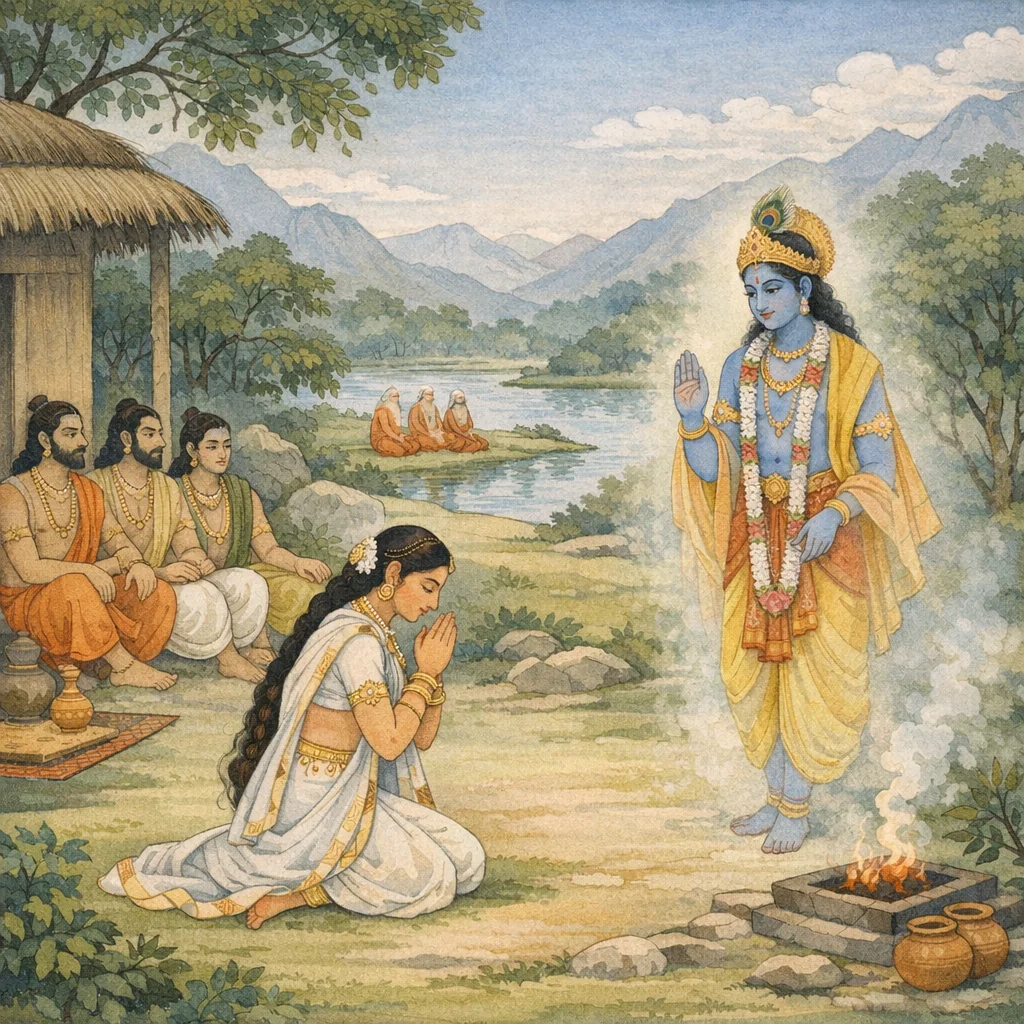
Chapter Arc: वनवास के कठिन दिनों में, अकस्मात् दुर्वासा ऋषि अपने शिष्यों सहित पाण्डव-आश्रम पर अतिथि-रूप में आ पहुँचते हैं—और समय ऐसा कि रसोई का साधन लगभग समाप्त हो चुका है। → युधिष्ठिर अपनी मर्यादा के अनुसार भाइयों सहित अतिथि-सत्कार को आगे बढ़ते हैं, पर भीतर-ही-भीतर संकट बढ़ता है: इतने मुनियों को भोजन कैसे कराया जाए? द्रौपदी, असहाय स्थिति में, भक्तवत्सल जगत्पति को स्तुति करके स्मरण करती है। → द्रौपदी की पुकार सुनकर देवदेव श्रीकृष्ण प्रकट होते हैं; उसके संकट को जानकर ऐसा उपाय करते हैं कि दुर्वासा और समस्त मुनिगण तृप्त हो जाएँ—अतिथि-धर्म की लाज भी रहे और पाण्डवों की प्रतिष्ठा भी। → सहदेव शीघ्रता से स्नानार्थ गए दुर्वासा आदि मुनियों को भोजन के लिए बुलाने जाता है; उधर श्रीकृष्ण के अनुग्रह से वे तृप्त होकर संकट टल जाता है। अंत में श्रीकृष्ण भक्त-हित साधने की प्रेरणा देकर विदा होते हैं और पाण्डव द्रौपदी सहित प्रसन्नचित्त होकर वन-वन विहार करते हैं।
Shlokas
Verse 1
हि >> आय >> (0) हि २ 7 त्रिषष्ट्याधिकद्विशततमो<् ध्याय: दुर्वासाका पाण्डवोंके आश्रमपर असमयमें आतिथ्यके लिये जाना, द्रौपदीके द्वारा स्मरण किये जानेपर भगवान्का प्रकट होना तथा पाण्डवोंको दुर्वासाके भयसे मुक्त करना और उनको आश्वासन देकर द्वारका जाना वैशम्पायन उवाच ततः कदाचिद् दुर्वासा: सुखासीनांस्तु पाण्डवान् | भुक््त्वा चावस्थितां कृष्णां ज्ञात्वा तस्मिन् वने मुनि:
Vaiśampāyana said: Then, on one occasion, the sage Durvāsā, learning that the Pāṇḍavas were living at ease in that forest and that Kṛṣṇā (Draupadī) had already eaten and was resting, came there. The episode sets up a moral crisis: a guest’s arrival at an inopportune time tests the householders’ duty of hospitality (atithi-dharma) and the consequences of a powerful ascetic’s displeasure.
Verse 2
दृष्टवा5<यान्तं तमतिर्थिं स च राजा युधिषिर:,श्रीमान् राजा युधिष्ठिर अतिथिको आते देख भाइयोंसहित उनके सम्मुख गये। वे अपनी मर्यादासे कभी च्युत नहीं होते थे। उन्होंने उन अतिथिदेवताको लाकर श्रेष्ठ आसनपर आदरपूर्वक बैठाया और हाथ जोड़कर प्रणाम किया। फिर विधिपूर्वक पूजा करके उन्हें अतिथिसत्कारके रूपमें निमन्त्रित किया और कहा--“भगवन्! अपना नित्य नियम पूरा करके (भोजनके लिये) शीघ्र पधारिये”
Seeing the guest approaching, the illustrious King Yudhiṣṭhira—ever mindful of the duties of hospitality—went forward with his brothers to receive him. Never straying from propriety, he brought the visitor, regarded as a divine guest, and respectfully seated him on an excellent seat. With folded hands he bowed, then worshipped him according to rule, invited him as part of due guest-honour, and said: “Revered sir, having completed your daily observances, please come quickly for the meal.”
Verse 3
जगामाभिमुख: श्रीमान् सह भ्रातृभिरच्युत: । तस्मै बद्धवाञ्जलिं सम्यगुपवेश्य वरासने,श्रीमान् राजा युधिष्ठिर अतिथिको आते देख भाइयोंसहित उनके सम्मुख गये। वे अपनी मर्यादासे कभी च्युत नहीं होते थे। उन्होंने उन अतिथिदेवताको लाकर श्रेष्ठ आसनपर आदरपूर्वक बैठाया और हाथ जोड़कर प्रणाम किया। फिर विधिपूर्वक पूजा करके उन्हें अतिथिसत्कारके रूपमें निमन्त्रित किया और कहा--“भगवन्! अपना नित्य नियम पूरा करके (भोजनके लिये) शीघ्र पधारिये”
Vaiśampāyana said: The illustrious king, unwavering in propriety, went forward to meet the guest together with his brothers. With hands joined in reverence, he respectfully seated him upon an excellent seat—thus upholding the dharma of hospitality, in which honoring the guest is treated as a sacred duty.
Verse 4
विधिवत् पूजयित्वा तमातिथ्येन न्यमन्त्रयत् । आह्रिकं भगवन् कृत्वा शीघ्रमेहीति चाब्रवीत्,श्रीमान् राजा युधिष्ठिर अतिथिको आते देख भाइयोंसहित उनके सम्मुख गये। वे अपनी मर्यादासे कभी च्युत नहीं होते थे। उन्होंने उन अतिथिदेवताको लाकर श्रेष्ठ आसनपर आदरपूर्वक बैठाया और हाथ जोड़कर प्रणाम किया। फिर विधिपूर्वक पूजा करके उन्हें अतिथिसत्कारके रूपमें निमन्त्रित किया और कहा--“भगवन्! अपना नित्य नियम पूरा करके (भोजनके लिये) शीघ्र पधारिये”
Vaiśaṃpāyana said: Having honored him in due form, the king invited the guest with proper hospitality. He then said, “O venerable sir, after completing your daily rites, please come quickly (to partake of the meal).” The scene underscores Yudhiṣṭhira’s unwavering commitment to dharma: even in hardship, he treats the guest as divine and upholds the ethics of respectful reception.
Verse 5
)/% ४ ॥2///7//“/ >>. जगाम च मुनि: सो5पि स्नातुं शिष्यै: सहानघ: । भोजयेत् सहशिष्यं मां कथमित्यविचिन्तयन्
Vaiśampāyana said: That blameless sage too went to bathe, together with his disciples, without giving a thought to the question, “How will he feed me along with the other students?” The scene underscores the quiet ethic of trust and simplicity in the teacher–student life, where anxiety over provisions is set aside in favor of disciplined routine and reliance on rightful conduct.
Verse 6
एतस्मिन्नन्तरे राजन् द्रौपदी योषितां वरा
Vaiśampāyana said: “Just then, O King, Draupadī—foremost among women—(came/appeared),” introducing her presence at a decisive moment in the unfolding events and signaling her moral and emotional weight in the narrative.
Verse 7
सा चिन्तयन्ती च सदा नान्नहेतुमविन्दत
Vaiśampāyana said: Though she kept reflecting constantly, she could not discover any reason for the lack of food. The line underscores the helplessness that arises when suffering has no clear cause, and it hints at the ethical tension of endurance and inquiry amid hardship.
Verse 8
मनसा चिन्तयामास कृष्णं कंसनिषूदनम् | जब बहुत सोचने-विचारनेपर भी उसे अन्न मिलनेका कोई उपाय नहीं सूझा, तब वह मन-ही-मन कंसनिकन्दन आनन्दकन्द भगवान् श्रीकृष्णचन्द्रका स्मरण करने लगी-- ।। ७ 3] कृष्ण कृष्ण महाबाहो देवकीनन्दनाव्यय,“हे कृष्ण! हे महाबाहु श्रीकृष्ण! हे देवकीनन्दन! हे अविनाशी वासुदेव! चरणोंमें पड़े हुए दुखियोंका दुःख दूर करनेवाले हे जगदीश्वर! तुम्हीं सम्पूर्ण जगत्के आत्मा हो। अविनाशी प्रभो! तुम्हीं इस विश्वकी उत्पत्ति और संहार करनेवाले हो। शरणागतोंकी रक्षा करनेवाले गोपाल! तुम्हीं समस्त प्रजाका पालन करनेवाले परात्पर परमेश्वर हो। आकृति (मन) और चित्ति (बुद्धि)-के प्रेरक परमात्मन! मैं तुम्हें प्रणाम करती हूँ
Vaiśaṃpāyana said: She pondered within her mind upon Kṛṣṇa, the slayer of Kaṃsa—turning inward to the divine protector when no practical means appeared, and seeking refuge through remembrance and prayer.
Verse 9
वासुदेव जगन्नाथ प्रणतार्तिविनाशन । विश्वात्मन् विश्वजनक विश्वहर्त: प्रभोडव्यय,“हे कृष्ण! हे महाबाहु श्रीकृष्ण! हे देवकीनन्दन! हे अविनाशी वासुदेव! चरणोंमें पड़े हुए दुखियोंका दुःख दूर करनेवाले हे जगदीश्वर! तुम्हीं सम्पूर्ण जगत्के आत्मा हो। अविनाशी प्रभो! तुम्हीं इस विश्वकी उत्पत्ति और संहार करनेवाले हो। शरणागतोंकी रक्षा करनेवाले गोपाल! तुम्हीं समस्त प्रजाका पालन करनेवाले परात्पर परमेश्वर हो। आकृति (मन) और चित्ति (बुद्धि)-के प्रेरक परमात्मन! मैं तुम्हें प्रणाम करती हूँ
Vaiśampāyana said: “O Vāsudeva, Lord of the universe, destroyer of the distress of those who bow to you! O Soul of all, begetter of the world, and withdrawer of the world—O imperishable Lord! You are the inner Self of all beings; you alone bring forth this cosmos and you alone draw it back again. You are the refuge and protector of the surrendered, the supreme ruler who sustains all creatures.”
Verse 10
प्रपन्नपाल गोपाल प्रजापाल परात्पर । आकूतीनां च चित्तीनां प्रवर्तक नतास्मि ते,“हे कृष्ण! हे महाबाहु श्रीकृष्ण! हे देवकीनन्दन! हे अविनाशी वासुदेव! चरणोंमें पड़े हुए दुखियोंका दुःख दूर करनेवाले हे जगदीश्वर! तुम्हीं सम्पूर्ण जगत्के आत्मा हो। अविनाशी प्रभो! तुम्हीं इस विश्वकी उत्पत्ति और संहार करनेवाले हो। शरणागतोंकी रक्षा करनेवाले गोपाल! तुम्हीं समस्त प्रजाका पालन करनेवाले परात्पर परमेश्वर हो। आकृति (मन) और चित्ति (बुद्धि)-के प्रेरक परमात्मन! मैं तुम्हें प्रणाम करती हूँ
Vaiśampāyana said: “O protector of those who seek refuge, O Gopāla, O guardian of all creatures, O Supreme beyond the beyond! O impeller of intention (ākūti) and understanding (citti)! I bow to you.” In this praise, Kṛṣṇa is addressed not merely as a heroic person but as the sustaining Lord who relieves the distress of the helpless and guides the inner faculties that shape moral choice.
Verse 11
वरेण्य वरदानन्त अगतीनां गतिर्भव । पुराणपुरुष प्राणमनोवृत्त्याद्यगोचर,“सबके वरण करने योग्य वरदाता अनन्त! आओ। जिन्हें तुम्हारे सिवा दूसरा कोई सहायता देनेवाला नहीं है, उन असहाय भक्तोंकी सहायता करो। पुराणपुरुष! प्राण और मनकी वृत्ति आदि तुम्हारे पासतक नहीं पहुँच सकती। सबके साक्षी परमात्मन्! मैं तुम्हारी शरणमें आयी हूँ। शरणागतवत्सल देव! कृपा करके मुझे बचाओ'
Vaiśampāyana said: “O supremely choice-worthy One, O giver of boons, O Endless Lord—come! Become the refuge of those who have no refuge, for none but you can aid the helpless devotee. O Primeval Person, you lie beyond the reach of the life-breath and the movements of the mind. O Supreme Self, witness of all, I have come to you for shelter. O God who cherishes those who surrender—out of compassion, protect me.”
Verse 12
सर्वाध्यक्ष पराध्यक्ष त्वामहं शरणं गता । पाहि मां कृपया देव शरणागतवत्सल,“सबके वरण करने योग्य वरदाता अनन्त! आओ। जिन्हें तुम्हारे सिवा दूसरा कोई सहायता देनेवाला नहीं है, उन असहाय भक्तोंकी सहायता करो। पुराणपुरुष! प्राण और मनकी वृत्ति आदि तुम्हारे पासतक नहीं पहुँच सकती। सबके साक्षी परमात्मन्! मैं तुम्हारी शरणमें आयी हूँ। शरणागतवत्सल देव! कृपा करके मुझे बचाओ'
“O Overseer of all, O Supreme Lord, I have come to You for refuge. Protect me, O God—You who are tender toward those who seek shelter—save me by Your compassion.”
Verse 13
अभ्यागच्छत् परिवृत: शिष्यैरयुतसम्मितै: । वैशम्पायनजी कहते हैं--जनमेजय! तदनन्तर एक दिन महर्षि दुर्वासा इस बातका पता लगाकर कि पाण्डवलोग भोजन करके सुखपूर्वक बैठे हैं और द्रौपदी भी भोजनसे निवृत्त हो आराम कर रही है, दस हजार शिष्योंसे घिरे हुए उस वनमें आये,नीलोत्पलदलश्याम पद्मगर्भारुणेक्षण । पीताम्बरपरीधान लसत्कौस्तुभभूषण “नीलकमलदलके समान श्यामसुन्दर! कमलपुष्पके भीतरी भागके समान किंचित् लाल नेत्रोंवाले पीताम्बरधारी श्रीकृष्ण! तुम्हारे वक्ष:स्थलपर कौस्तुभभणिमय आभूषण शोभा पाता है। प्रभो! तुम्हीं समस्त प्राणियोंक आदि और अन्त हो। तुम्हीं सबके परम आश्रय हो। तुम्हीं परात्पर, ज्योतिर्मय सर्वात्मा एवं सब ओर मुखवाले परमेश्वर हो
Vaiśampāyana said: Then, on a certain day, the sage Durvāsā arrived in that forest, surrounded by disciples numbering about ten thousand—having learned that the Pāṇḍavas had already eaten and were sitting at ease, and that Draupadī too had finished her meal and was resting. The episode underscores how unforeseen demands placed upon householders can become a test of dharma—especially the duty of hospitality toward guests, even when one’s resources seem exhausted.
Verse 14
त्वमादिरन्तो भूतानां त्वमेव च परायणम् | परात्परतरं ज्योतिर्विश्वात्मा सर्वतोमुख:,“नीलकमलदलके समान श्यामसुन्दर! कमलपुष्पके भीतरी भागके समान किंचित् लाल नेत्रोंवाले पीताम्बरधारी श्रीकृष्ण! तुम्हारे वक्ष:स्थलपर कौस्तुभभणिमय आभूषण शोभा पाता है। प्रभो! तुम्हीं समस्त प्राणियोंक आदि और अन्त हो। तुम्हीं सबके परम आश्रय हो। तुम्हीं परात्पर, ज्योतिर्मय सर्वात्मा एवं सब ओर मुखवाले परमेश्वर हो
Vaiśampāyana said: “You are the beginning and the end of all beings, and you alone are their supreme refuge. You are the Light beyond the highest, the Self of the universe, the Lord who faces all directions.” In the narrative, this is a hymn of devotion that frames Kṛṣṇa not merely as a heroic ally but as the ultimate ground of existence, encouraging surrender, humility, and ethical steadiness amid uncertainty.
Verse 15
त्वामेवाहु: परं बीज॑ निधानं सर्वसम्पदाम् । त्वया नाथेन देवेश सर्वापद्भ्यो भयं न हि,'ज्ञानी पुरुष तुम्हें ही इस जगत्का परम बीज और सम्पूर्ण सम्पदाओंकी निधि बतलाते हैं। देवेश्वर! यदि तुम मेरे रक्षक हो तो मुझपर सारी विपत्तियाँ टूट पड़ें, तो भी मुझे उनसे भय नहीं है!
Verse 16
दुःशासनाद हं पूर्व सभायां मोचिता यथा । तथैव संकटादस्मान्मामुद्धर्तुमिहाहसि,'भगवन्! पहले कौरव-सभामें दुःशासनके हाथसे जैसे तुमने मुझे बचाया था, उसी प्रकार इस वर्तमान संकटसे भी मेरा उद्धार करो”
Vaiśampāyana said: “Just as, in the past, I was rescued in the royal assembly from Duḥśāsana’s grasp, so too you ought now to deliver me—and us—from this present peril.”
Verse 17
वैशग्पायन उवाच एवं स्तुतस्तदा देव: कृष्णया भक्तवत्सल: । द्रौपद्या: संकटं ज्ञात्वा देवदेवो जगत्पति:,वैशम्पायनजी कहते हैं--द्रौपदीके इस प्रकार स्तुति करनेपर अचिन्त्यगति परमेश्वर देवाधिदेव जगन्नाथ भक्तवत्सल भगवान् केशवको यह मालूम हो गया कि द्रौपदीपर कोई संकट आ गया है, फिर तो शय्यापर अपने पास ही सोयी हुई रुक्मिणीको छोड़कर तुरंत वहाँ आ पहुँचे
Vaiśampāyana said: Thus praised by Kṛṣṇā (Draupadī), the Lord—ever tender toward His devotees—understood that Draupadī had fallen into distress. Knowing her peril, the God of gods, the Lord of the world, turned His attention to her plight.
Verse 18
पार्श्वस्थां शयने त्यक्त्वा रुक्मिणीं केशव: प्रभु: । तत्राजगाम त्वरितो हाुचिन्त्यगतिरीश्वर:,वैशम्पायनजी कहते हैं--द्रौपदीके इस प्रकार स्तुति करनेपर अचिन्त्यगति परमेश्वर देवाधिदेव जगन्नाथ भक्तवत्सल भगवान् केशवको यह मालूम हो गया कि द्रौपदीपर कोई संकट आ गया है, फिर तो शय्यापर अपने पास ही सोयी हुई रुक्मिणीको छोड़कर तुरंत वहाँ आ पहुँचे
Vaiśampāyana said: Leaving Rukmiṇī, who lay beside him on the bed, the Lord Keśava hastened at once to that place—He whose movement is beyond comprehension, the sovereign God—having understood that a devotee faced distress. The verse underscores the ethic of divine responsiveness: the protector prioritizes the afflicted over personal comfort.
Verse 19
ततस्तं द्रौपदी दृष्टवा प्रणम्य परया मुदा । अब्रवीद् वासुदेवाय मुनेरागमनादिकम्,भगवानको आया देख द्रौपदीको बड़ा आनन्द हुआ। उसने उन्हें प्रणाम करके दुर्वासा मुनिके आने आदिका सारा समाचार कह सुनाया
Then Draupadī, seeing him, bowed down with great joy and spoke to Vāsudeva, recounting the details of the sage’s arrival and all that had occurred. The scene underscores her reverence toward the divine guest and her truthful, urgent reporting in a moment of moral and practical crisis.
Verse 20
ततस्तामब्रवीत् कृष्ण: क्षुधितो5स्मि भृशातुर: । शीघ्रं भोजय मां कृष्णे पश्चात् सर्व करिष्यसि
Then Kṛṣṇa said to her, “I am hungry and greatly distressed. Feed me quickly, O Kṛṣṇā; afterward you may do everything else.” The line underscores a practical ethic within the narrative: urgent bodily need is to be addressed first, and proper hospitality begins with timely nourishment before other duties are taken up.
Verse 21
निशम्य तद्वच: कृष्णा लज्जिता वाक्यमब्रवीत् । स्थाल्यां भास्करदत्तायामन्नं मद्भोजनावधि
Hearing those words, Kṛṣṇā (Draupadī), overcome with modest embarrassment, replied. She indicated that in the dish given by Bhāskara there was food only up to the limit of her own meal—implying that the supply had been exhausted after she had eaten, and that she could not offer more at that moment.
Verse 22
भुक्तवत्यस्म्यहं देव तस्मादन्न न विद्यते । तब भगवान् श्रीकृष्णने द्रौपदीसे कहा--“कृष्णे! इस समय मुझे बड़ी भूख लगी है; मैं भूखसे अत्यन्त पीड़ित हो रहा हूँ। पहले मुझे जल्दी भोजन करा; फिर सारा प्रबन्ध करती रहना।” उनकी यह बात सुनकर द्रौपदीको बड़ी लज्जा हुई। वह बोली--'भगवन्! सूर्यनारायणकी दी हुई बटलोईसे तभीतक भोजन मिलता है जबतक मैं भोजन न कर लूँ। देव! आज तो मैं भी भोजन कर चुकी हूँ; अतः अब उसमें अन्न नहीं रह गया है” || २०-२१ >॥ ततः प्रोवाच भगवान् कृष्णां कमललोचन:
Draupadī said, “O Lord, I have already eaten; therefore no food remains.” In the ethical tension of hospitality and helplessness, she explains the condition of the divine vessel: it provides food only until she herself has eaten. Having eaten that day, she is ashamed to admit that she cannot immediately feed the hungry guest, even though the duty of honoring a guest is paramount.
Verse 23
कृष्णे न नर्मकालो<यं क्षुच्छुमेणातुरे मयि । शीघ्र गच्छ मम स्थालीमानीय त्वं प्रदर्शय
‘O Kṛṣṇā, this is no time for jesting. I am afflicted by hunger and exhaustion. Go quickly—bring my bowl and show it to me.’
Verse 24
इति निर्बन्धतः स्थालीमानाय्य स यदूद्वह: । स्थाल्या: कण्ठेडथ संलग्नं शाकाजन्नं वीक्ष्य केशव:
Thus, at their insistent urging, the best of the Yadus brought the cooking pot. Then Keśava looked and saw that, stuck to the pot’s neck, there remained a small residue of vegetable-and-rice food—an image that underscores how even what seems negligible can become morally consequential when driven by stubborn intent.
Verse 25
उपयुज्याब्रवीदेनामनेन हरिरी श्वर: । विश्वात्मा प्रीयतां देवस्तुष्टश्चास्त्विति यज्ञभुक्
Having duly offered it, he addressed her with these words: “May Hari, the Supreme Lord—He who is the Soul of all—be pleased. May the God who partakes of sacrifices be satisfied.” The utterance frames the act as worship rather than mere ritual, placing the intention of devotion and rightful offering at the center.
Verse 26
यह सुनकर कमलनयन भगवान् श्रीकृष्णने द्रौपदीसे फिर कहा--“कृष्णे! मैं तो भूख और थकावटसे आतुर हो रहा हूँ और तुझे हँसी सूझती है। यह परिहासका समय नहीं है। जल्दी जा और बटलोई लाकर मुझे दिखा। इस प्रकार हठ करके भगवानने द्रौपदीसे बटलोई मँगवायी। उसके गलेमें जरा-सा साग लगा हुआ था। उसे देखकर श्रीकृष्णने लेकर खा लिया और द्रौपदीसे कहा--“इस सागसे सम्पूर्ण विश्वके आत्मा यज्ञभोक्ता सर्वेश्वर आकारय मुनीन् शीघ्रं भोजनायेति चाब्रवीत् । सहदेवं महाबाहु: कृष्ण: क्लेशविनाशन:,इतना कहकर सबका क्लेश दूर करनेवाले महाबाहु भगवान् श्रीकृष्ण सहदेवसे बोले --तुम शीघ्र जाकर मुनियोंको भोजनके लिये बुला लाओ”
Vaiśaṃpāyana said: Hearing this, the lotus-eyed Lord Śrī Kṛṣṇa spoke again to Draupadī: “Kṛṣṇā! I am distressed by hunger and fatigue, and you can still laugh? This is no time for jesting. Go quickly—bring the cooking pot and show it to me.” Thus insisting, the Lord had Draupadī bring the pot. A tiny bit of vegetable greens was stuck to its neck. Seeing it, Śrī Kṛṣṇa took it and ate it, and said to Draupadī: “By this morsel of greens…” Having spoken thus, the all-pervading Lord—enjoyer of sacrifices, the Self of the universe—addressed Sahadeva: “Summon the sages; tell them to come quickly for their meal.” Then the mighty-armed Kṛṣṇa, remover of distress, said to Sahadeva: “Go at once and invite the sages to eat.”
Verse 27
ततो जगाम त्वरित: सहदेवो महायशा: । आकारितु तु तान् सर्वान् भोजनार्थ नृपोत्तम
Then the illustrious Sahadeva hurried away, in order to summon all of them for the meal, as the best of kings had directed. The passage underscores prompt, disciplined service to rightful authority and the orderly fulfillment of hospitality and household duty.
Verse 28
ते चावतीर्णा: सलिले कृतवन्तोडघमर्षणम्,वे मुनिलोग उस समय जलमें उतरकर अघमर्षण मन्त्रका जप कर रहे थे। सहसा उन्हें पूर्ण तृप्तिका अनुभव हुआ; बार-बार अन्नरससे युक्त डकारें आने लगीं। यह देखकर वे जलसे बाहर निकले और आपसमें एक-दूसरेकी ओर देखने लगे। (सबकी एक-सी अवस्था हो रही थी।) वे सभी मुनि दुर्वालाकी ओर देखकर बोले--“ब्रह्मर्ष! हमलोग राजा युधिष्ठिरको रसोई बनवानेकी आज्ञा देकर स्नान करनेके लिये आये थे, परंतु इस समय इतनी तृप्ति हो रही है कि कण्ठतक अन्न भरा हुआ जान पड़ता है। अब हम कैसे भोजन करेंगे? हमने जो रसोई तैयार करवायी है, वह व्यर्थ होगी। उसके लिये हमें क्या करना चाहिये”
Vaiśaṃpāyana said: Having descended into the water, the sages performed the Aghamarṣaṇa rite. All at once they felt completely satisfied, and again and again belches arose as though they had already consumed rich food and drink. Seeing this, they came out of the water and looked at one another, for the same condition had come upon them all. Then, turning their gaze toward the sage Durvāsas, they said: “O brahmarṣi, we had instructed King Yudhiṣṭhira to have a meal prepared and came here to bathe; yet now we feel so full that it seems our throats are filled with food. How can we eat now? The cooking we ordered will be wasted. What should be done about this?”
Verse 29
दृष्टवोद्गारान् सान्नरसांस्तृप्त्या परमया युता: । उत्तीर्य सलिलात् तस्माद् दृष्टवन्त: परस्परम्,वे मुनिलोग उस समय जलमें उतरकर अघमर्षण मन्त्रका जप कर रहे थे। सहसा उन्हें पूर्ण तृप्तिका अनुभव हुआ; बार-बार अन्नरससे युक्त डकारें आने लगीं। यह देखकर वे जलसे बाहर निकले और आपसमें एक-दूसरेकी ओर देखने लगे। (सबकी एक-सी अवस्था हो रही थी।) वे सभी मुनि दुर्वालाकी ओर देखकर बोले--“ब्रह्मर्ष! हमलोग राजा युधिष्ठिरको रसोई बनवानेकी आज्ञा देकर स्नान करनेके लिये आये थे, परंतु इस समय इतनी तृप्ति हो रही है कि कण्ठतक अन्न भरा हुआ जान पड़ता है। अब हम कैसे भोजन करेंगे? हमने जो रसोई तैयार करवायी है, वह व्यर्थ होगी। उसके लिये हमें क्या करना चाहिये”
Vaiśaṃpāyana said: Having noticed that they were belching with the taste of food and were filled with an extraordinary satisfaction, the sages came up out of that water and looked at one another in amazement. For the same condition had come upon them all. Then, turning their gaze toward Durvāsā, they said: “O brahmarṣi, we had instructed King Yudhiṣṭhira to prepare a meal and came here to bathe; yet now we feel such fullness that it seems our throats are packed with food. How can we eat now? The meal we had arranged will be wasted. What should be done about it?”
Verse 30
दुर्वाससमभिप्रेक्ष्य ते सर्वे मुनयोब्रुवन् । राज्ञा हि कारयित्वान्नं वयं स्नातुं समागता:,वे मुनिलोग उस समय जलमें उतरकर अघमर्षण मन्त्रका जप कर रहे थे। सहसा उन्हें पूर्ण तृप्तिका अनुभव हुआ; बार-बार अन्नरससे युक्त डकारें आने लगीं। यह देखकर वे जलसे बाहर निकले और आपसमें एक-दूसरेकी ओर देखने लगे। (सबकी एक-सी अवस्था हो रही थी।) वे सभी मुनि दुर्वालाकी ओर देखकर बोले--“ब्रह्मर्ष! हमलोग राजा युधिष्ठिरको रसोई बनवानेकी आज्ञा देकर स्नान करनेके लिये आये थे, परंतु इस समय इतनी तृप्ति हो रही है कि कण्ठतक अन्न भरा हुआ जान पड़ता है। अब हम कैसे भोजन करेंगे? हमने जो रसोई तैयार करवायी है, वह व्यर्थ होगी। उसके लिये हमें क्या करना चाहिये”
Vaiśaṃpāyana said: Seeing Durvāsas, all those sages spoke: “After having the king arrange the meal, we have come here to bathe. Yet now we feel an unexpected fullness, as though food has risen to our throats. How, then, can we eat? The meal we had prepared will be wasted—what should be done about it?” In the ethical frame of the episode, the sages’ sudden satiety becomes a test of hospitality (atithi-dharma) and royal responsibility: the king’s duty to feed guests collides with circumstances beyond ordinary control, forcing a search for a dharmic resolution rather than blame or anger.
Verse 31
आकण्तठतृप्ता विप्रर्षे किंस्विद् भुउ्जामहे वयम् । वृथा पाक: कृतो<स्माभिस्तत्र कि करवामहे,वे मुनिलोग उस समय जलमें उतरकर अघमर्षण मन्त्रका जप कर रहे थे। सहसा उन्हें पूर्ण तृप्तिका अनुभव हुआ; बार-बार अन्नरससे युक्त डकारें आने लगीं। यह देखकर वे जलसे बाहर निकले और आपसमें एक-दूसरेकी ओर देखने लगे। (सबकी एक-सी अवस्था हो रही थी।) वे सभी मुनि दुर्वालाकी ओर देखकर बोले--“ब्रह्मर्ष! हमलोग राजा युधिष्ठिरको रसोई बनवानेकी आज्ञा देकर स्नान करनेके लिये आये थे, परंतु इस समय इतनी तृप्ति हो रही है कि कण्ठतक अन्न भरा हुआ जान पड़ता है। अब हम कैसे भोजन करेंगे? हमने जो रसोई तैयार करवायी है, वह व्यर्थ होगी। उसके लिये हमें क्या करना चाहिये”
Vaiśaṃpāyana said: “O brahmarṣi, we are satisfied up to the throat—what indeed are we to eat now? The meal we had prepared has become pointless; what should we do about it?” In context, the ascetics—having gone to bathe and recite the Aghamarṣaṇa mantra—suddenly feel complete satiety, as though already fed. Their question highlights a dharmic concern: how to respond rightly when an unexpected, grace-like fulfillment makes their planned hospitality and cooking seem wasted, and how to act without negligence toward duty, resources, and guests.
Verse 32
दुर्वाया उवाच वृथा पाकेन राजर्षेरपराध: कृतो महान् | मास्मानधाक्षु्दृष्टवैव पाण्डवा: क्रूरचक्षुषा,दुर्वासा बोले--वास्तवमें व्यर्थ ही रसोई बनवाकर हमने राजर्षि युधिष्ठिरका महान् अपराध किया है। कहीं ऐसा न हो कि पाण्डव क्रूर दृष्टिसे देखकर हमें भस्म कर दें। ब्राह्मणो! परम बुद्धिमान् राजा अम्बरीषके प्रभावको याद करके मैं उन भक्तजनोंसे सदा डरता रहता हूँ, जिन्होंने भगवान् श्रीहरिके चरणोंका आश्रय ले रखा है। सब पाण्डव महामना, धर्मपरायण, विद्वान, शूरवीर, व्रतधारी तथा तपस्वी हैं। वे सदा सदाचारपरायण तथा भगवान् वासुदेवको अपना परम आश्रय माननेवाले हैं। पाण्डव कुपित होनेपर हमको उसी प्रकार भस्म कर सकते हैं, जैसे रूईके ढेरको आग। अतः शिष्यो! पाण्डवोंसे बिना पूछे ही तुरंत भाग चलो
Durvāsā said: “In truth, by having food prepared in vain, we have committed a grave offense against the royal sage. May it not happen that the Pāṇḍavas, merely by casting a cruel glance upon us, reduce us to ashes. Remembering the might of the supremely wise King Ambarīṣa, I always fear those devotees who have taken refuge at the feet of Lord Hari. All the Pāṇḍavas are great-souled—devoted to dharma, learned, heroic, observant of vows, and ascetic; ever established in right conduct, they hold Vāsudeva as their highest shelter. If angered, they can burn us up like a heap of cotton in fire. Therefore, disciples—without even asking the Pāṇḍavas—flee at once.”
Verse 33
स्मृत्वानुभावं राजर्षेरम्बरीषस्य धीमत: । बिभेमि सुतरां विप्रा हरिपादाश्रयाज्जनात्,दुर्वासा बोले--वास्तवमें व्यर्थ ही रसोई बनवाकर हमने राजर्षि युधिष्ठिरका महान् अपराध किया है। कहीं ऐसा न हो कि पाण्डव क्रूर दृष्टिसे देखकर हमें भस्म कर दें। ब्राह्मणो! परम बुद्धिमान् राजा अम्बरीषके प्रभावको याद करके मैं उन भक्तजनोंसे सदा डरता रहता हूँ, जिन्होंने भगवान् श्रीहरिके चरणोंका आश्रय ले रखा है। सब पाण्डव महामना, धर्मपरायण, विद्वान, शूरवीर, व्रतधारी तथा तपस्वी हैं। वे सदा सदाचारपरायण तथा भगवान् वासुदेवको अपना परम आश्रय माननेवाले हैं। पाण्डव कुपित होनेपर हमको उसी प्रकार भस्म कर सकते हैं, जैसे रूईके ढेरको आग। अतः शिष्यो! पाण्डवोंसे बिना पूछे ही तुरंत भाग चलो
Durvāsā said: “Recalling the mighty spiritual power of the wise royal sage Ambarīṣa, I am all the more afraid, O brāhmaṇas, of those people who have taken refuge at the feet of Hari. For devotees sheltered in the Lord’s feet are not to be trifled with; their devotion becomes a moral and spiritual force that can bring swift consequences upon the arrogant.”
Verse 34
पाण्डवाश्ष महात्मान: सर्वे धर्मपरायणा: । शूराश्न कृतविद्याश्न व्रतिनस्तपसि स्थिता:,दुर्वासा बोले--वास्तवमें व्यर्थ ही रसोई बनवाकर हमने राजर्षि युधिष्ठिरका महान् अपराध किया है। कहीं ऐसा न हो कि पाण्डव क्रूर दृष्टिसे देखकर हमें भस्म कर दें। ब्राह्मणो! परम बुद्धिमान् राजा अम्बरीषके प्रभावको याद करके मैं उन भक्तजनोंसे सदा डरता रहता हूँ, जिन्होंने भगवान् श्रीहरिके चरणोंका आश्रय ले रखा है। सब पाण्डव महामना, धर्मपरायण, विद्वान, शूरवीर, व्रतधारी तथा तपस्वी हैं। वे सदा सदाचारपरायण तथा भगवान् वासुदेवको अपना परम आश्रय माननेवाले हैं। पाण्डव कुपित होनेपर हमको उसी प्रकार भस्म कर सकते हैं, जैसे रूईके ढेरको आग। अतः शिष्यो! पाण्डवोंसे बिना पूछे ही तुरंत भाग चलो
Durvāsā said: “The Pāṇḍavas are all great-souled, wholly devoted to dharma—valiant, well-trained in learning, observant of vows, and steadfast in austerity. To wrong such men is perilous, for the power born of righteousness and self-restraint protects them and can consume the offender. Therefore, one should fear committing injustice against the dharmic and the disciplined, and instead act with humility and restraint.”
Verse 35
सदाचाररता नित्यं वासुदेवपरायणा: । क्रुद्धास्ते निर्दहियुर्वे तूलराशिमिवानल: । तत एतानपृष्टवैव शिष्या: शीघ्रं पलायत,दुर्वासा बोले--वास्तवमें व्यर्थ ही रसोई बनवाकर हमने राजर्षि युधिष्ठिरका महान् अपराध किया है। कहीं ऐसा न हो कि पाण्डव क्रूर दृष्टिसे देखकर हमें भस्म कर दें। ब्राह्मणो! परम बुद्धिमान् राजा अम्बरीषके प्रभावको याद करके मैं उन भक्तजनोंसे सदा डरता रहता हूँ, जिन्होंने भगवान् श्रीहरिके चरणोंका आश्रय ले रखा है। सब पाण्डव महामना, धर्मपरायण, विद्वान, शूरवीर, व्रतधारी तथा तपस्वी हैं। वे सदा सदाचारपरायण तथा भगवान् वासुदेवको अपना परम आश्रय माननेवाले हैं। पाण्डव कुपित होनेपर हमको उसी प्रकार भस्म कर सकते हैं, जैसे रूईके ढेरको आग। अतः शिष्यो! पाण्डवोंसे बिना पूछे ही तुरंत भाग चलो
Durvāsā said: “They are ever devoted to right conduct and always take Vāsudeva as their highest refuge. If they become enraged, they could burn us to ashes—like fire consuming a heap of cotton. Therefore, disciples, without even asking them, flee at once.”
Verse 36
वैशम्पायन उवाच इत्युक्तास्ते द्विजा: सर्वे मुनिना गुरुणा तदा । पाण्डवेभ्यो भृशं भीता दुद्गुवुस्ते दिशो दश,वैशम्पायनजी कहते हैं--जनमेजय! गुरु दुर्वासा मुनिके ऐसा कहनेपर वे सब ब्राह्मण पाण्डवोंसे अत्यन्त भयभीत हो दसों दिशाओंमें भाग गये
Vaiśampāyana said: When the revered sage (their guru) had spoken thus, all those brāhmaṇas—gripped by intense fear of the Pāṇḍavas—fled at once, scattering into all ten directions. The episode underscores how dread and misunderstanding can drive even the learned to abandon composure and order, turning a sacred setting into hurried flight.
Verse 37
सहदेवो देवनद्यामपश्यन् मुनिसत्तमान् | तीर्थेष्वितस्ततस्तस्या विचचार गवेषयन्,सहदेवने जब देवनदीमें उन श्रेष्ठ मुनियोंको नहीं देखा, तब वे वहाँके तीर्थोंमें इधर-उधर खोजते हुए विचरने लगे
Vaiśampāyana said: When Sahadeva did not see those foremost sages on the river called Devanadī, he began to wander about, searching here and there among its sacred fords—moving with diligence and reverence through the tīrthas in hopes of finding them.
Verse 38
तत्रस्थेभ्यस्तापसेभ्य: श्रुत्वा तांश्वैव विद्रुतान् । युधिषिरमथाभ्येत्य त॑ वृत्तान्तं न््यवेदयत्,वहाँ रहनेवाले तपस्वी मुनियोंके मुखसे उनके भागनेका समाचार सुनकर सहदेव युधिष्ठिरके पास लौट आये और सारा वृत्तान्त उनसे निवेदन कर दिया
Hearing from the ascetic sages who dwelt there that those men had fled in haste, Sahadeva returned to Yudhiṣṭhira and reported the entire course of events. The passage underscores responsible kingship: information must be gathered from reliable witnesses and conveyed truthfully to the rightful leader for dharmic decision-making.
Verse 39
ततस्ते पाण्डवा: सर्वे प्रत्यागमनकाड्क्षिण: । प्रतीक्षन्त: कियत्कालं जितात्मानोडवतस्थिरे,तदनन्तर मनको वशमें करनेवाले सब पाण्डव उनके लौट आनेकी आशासे कुछ देरतक उनकी प्रतीक्षा करते रहे
Then all those Pāṇḍavas, longing for his return, waited for some time. Self-controlled and steady in mind, they remained there, watching and expecting him to come back—restraining impatience and holding to disciplined composure amid uncertainty.
Verse 40
निशी्थे<भ्येत्य चाकस्मादस्मान् स छलयिष्यति । कथं च निस्तरे मास्मात् कृच्छाद् दैवोपसादितात्,पाण्डव सोचने लगे--'दुर्वासा मुनि अकस्मात् आधी रातको आकर हमें छलेंगे। दैववश प्राप्त हुए इस महान् संकटसे हमारा उद्धार कैसे होगा?” इसी चिन्तामें पड़कर वे बारंबार लंबी साँसें खींचने लगे। उनकी यह दशा देखकर भगवान् श्रीकृष्णने युधिष्ठिर आदि अन्य सब पाण्डवोंको प्रत्यक्ष दर्शन देकर कहा
Vaiśampāyana said: “He will come upon us suddenly at midnight and put us to the test. How shall we escape this grievous distress that has befallen us by the force of fate?” Thus, the Pāṇḍavas, sunk in anxious thought, repeatedly heaved long sighs. Seeing their plight, Bhagavān Śrī Kṛṣṇa appeared directly before Yudhiṣṭhira and the other Pāṇḍavas and addressed them.
Verse 41
इति चिन्तापरान् दृष्टवा निःश्वसन्तो मुहुर्मुहु: । उवाच वचन श्रीमान् कृष्ण: प्रत्यक्षतां गत:,पाण्डव सोचने लगे--'दुर्वासा मुनि अकस्मात् आधी रातको आकर हमें छलेंगे। दैववश प्राप्त हुए इस महान् संकटसे हमारा उद्धार कैसे होगा?” इसी चिन्तामें पड़कर वे बारंबार लंबी साँसें खींचने लगे। उनकी यह दशा देखकर भगवान् श्रीकृष्णने युधिष्ठिर आदि अन्य सब पाण्डवोंको प्रत्यक्ष दर्शन देकर कहा
Seeing them wholly absorbed in anxious thought, repeatedly heaving deep sighs, the illustrious Krishna—now appearing before them in person—addressed them with words. The scene underscores how, when the Pandavas are overwhelmed by fear of an impending ethical crisis, divine counsel arrives to steady their minds and guide them toward a dharmic resolution.
Verse 42
श्रीकृष्ण उवाच भवतामापदं ज्ञात्वा ऋषे: परमकोपनात् । द्रौपद्या चिन्तित: पार्था अहं सत्वरमागत:
Śrī Kṛṣṇa said: Knowing that you had fallen into danger because of the sage’s extreme wrath, and being remembered with anxious thought by Draupadī, O Pārtha, I came here at once. The verse highlights swift, compassionate intervention in response to a righteous person’s peril and the moral weight of a sage’s anger when provoked.
Verse 43
न भयं विद्यते तस्मादृषे्दुर्वाससो 5ल््पकम् | तेजसा भवतां भीत: पूर्वमेव पलायित:
“Therefore, O sage, there is no cause for even the slightest fear of Durvāsā. Overawed by the spiritual radiance of you all, he became frightened and fled at once beforehand.”
Verse 44
श्रीकृष्ण बोले--कुन्तीकुमारो! परम क्रोधी महर्षि दुर्वाचासे आपलोगोंपर संकट आता जानकर द्रौपदीने मेरा स्मरण किया था, इसीलिये मैं तुरंत यहाँ आ पहुँचा। अब आपलोगोंको दुर्वासा मुनिसे तनिक भी भय नहीं है। वे आपके तेजसे डरकर पहले ही भाग गये हैं ।। धर्मनित्यास्तु ये केचिन्न ते सीदन्ति कहिचित् । आपूृच्छे वो गमिष्यामि नियतं भद्रमस्तु व:,जो लोग सदा धर्ममें तत्पर रहते हैं, वे कभी कष्टमें नहीं पड़ते। अब मैं आपलोगोंसे जानेके लिये आज्ञा चाहता हूँ। यहाँसे द्वारकापुरीको जाऊँगा। आपलोगोंका निरन्तर कल्याण हो
Śrī Kṛṣṇa said: “O sons of Kuntī! Knowing that the exceedingly wrathful sage Durvāsā was bringing danger upon you, Draupadī remembered me; therefore I have come here at once. Now you need not fear Durvāsā in the least—frightened by your spiritual radiance, he has already fled. Those who are ever steadfast in dharma do not sink into distress at any time. Now I take leave of you; I shall depart for Dvārakā. May abiding welfare be yours.”
Verse 45
वैशम्पायन उवाच श्रुत्वेरितं केशवस्य बभूवु: स्वस्थमानसा: । द्रौपद्या सहिता: पार्थास्तमूचुविंगतज्वरा:,वैशम्पायनजी कहते हैं-जनमेजय! भगवान् श्रीकृष्फा यह कथन सुनकर द्रौोपदीसहित पाण्डवोंका चित्त स्वस्थ हुआ। उनकी सारी चिन्ता दूर हो गयी और वे भगवान्से इस प्रकार बोले--'विभो! गोविन्द! तुम्हें अपना सहायक और संरक्षक पाकर हम बड़ी-बड़ी दुस्तर विपत्तियोंसे उसी प्रकार पार हुए हैं, जैसे महासागरमें डूबते हुए मनुष्य जहाजका सहारा पाकर पार हो जाते हैं
Vaiśampāyana said: Hearing what Keśava had declared, the Pāṇḍavas—together with Draupadī—became calm in mind. Their fever of anxiety subsided, and they addressed the Lord, saying in effect: “O mighty one, O Govinda! Having you as our helper and protector, we have crossed even great and hard-to-cross calamities—just as men sinking in the ocean are carried across when they find the support of a ship.”
Verse 46
त्वया नाथेन गोविन्द दुस्तरामापदं विभो | तीर्णा: प्लवमिवासाद्य मज्जमाना महार्णवे,वैशम्पायनजी कहते हैं-जनमेजय! भगवान् श्रीकृष्फा यह कथन सुनकर द्रौोपदीसहित पाण्डवोंका चित्त स्वस्थ हुआ। उनकी सारी चिन्ता दूर हो गयी और वे भगवान्से इस प्रकार बोले--'विभो! गोविन्द! तुम्हें अपना सहायक और संरक्षक पाकर हम बड़ी-बड़ी दुस्तर विपत्तियोंसे उसी प्रकार पार हुए हैं, जैसे महासागरमें डूबते हुए मनुष्य जहाजका सहारा पाकर पार हो जाते हैं
Vaiśaṃpāyana said: “O Govinda, O all-pervading Lord! With you as our protector, we have crossed calamities that are otherwise impossible to surmount—just as people sinking in the vast ocean are carried across when they find a boat.”
Verse 47
पाण्डवाश्न महाभाग द्रौपद्या सहिता: प्रभो
Vaiśampāyana said: “O lord, the noble Pāṇḍavas too—accompanied by Draupadī—(were there / proceeded onward).” The line underscores their unity in exile and the steadfast companionship that sustains them amid hardship.
Verse 48
इति ते$भिह्ितं राजन् यत् पृष्टोडहमिह त्वया,राजन! यहाँ तुमने मुझसे जो कुछ पूछा था, वह सब मैंने तुम्हें बतला दिया। इस प्रकार दुरात्मा धृतराष्ट्रपुत्रोंने वनवासी पाण्डवोंपर अनेक बार छल-कपटका प्रयोग किया, परंतु वह सब व्यर्थ हो गया
Vaiśaṃpāyana said: “O King, I have now told you here everything that you asked me. Thus, though the wicked sons of Dhṛtarāṣṭra repeatedly resorted to deceit and stratagems against the forest-dwelling Pāṇḍavas, all of it proved futile.”
Verse 49
एवंविधान्यलीकानि धार्त॑राष्ट्रर्दुरात्मभि: । पाण्डवेषु वनस्थेषु प्रयुक्तानि वृथाभवन्,राजन! यहाँ तुमने मुझसे जो कुछ पूछा था, वह सब मैंने तुम्हें बतला दिया। इस प्रकार दुरात्मा धृतराष्ट्रपुत्रोंने वनवासी पाण्डवोंपर अनेक बार छल-कपटका प्रयोग किया, परंतु वह सब व्यर्थ हो गया
Vaiśampāyana said: “O king, such falsehoods and deceptive stratagems, repeatedly employed by the wicked sons of Dhṛtarāṣṭra against the Pāṇḍavas while they dwelt in the forest, proved futile. Thus I have told you all that you asked of me.”
Verse 56
न््यमज्जत् सलिले चापि मुनिसड्घ: समाहित: । यह सुनकर वे निष्पाप मुनि अपने शिष्योंके साथ स्नान करनेके लिये चले गये। उन्होंने इस बातका तनिक भी विचार नहीं किया कि ये इस समय शिष्योंसहित मुझे भोजन कैसे दे सकेंगे। सारी मुनिमण्डलीने जलमें गोता लगाया, फिर सब लोग एकाग्रचित्त होकर ध्यान करने लगे
Vaiśampāyana said: The gathered company of sages, composed and self-controlled, plunged into the water. Hearing this, those sinless ascetics went with their disciples to bathe, giving no thought at all to how, at that very time, they would be able to provide me a meal along with their pupils. After diving into the water, the entire circle of sages became one-pointed in mind and entered meditation—showing how spiritual discipline can eclipse immediate worldly concerns, even the duties of hospitality.
Verse 63
चिन्तामवाप परमामन्नहेतो: पतिव्रता । राजन! इसी समय युवतियोंमें श्रेष्ठ पतिव्रता द्रौपदीको अन्नके लिये बड़ी चिन्ता हुई
Vaiśampāyana said: O King, at that moment Draupadī—foremost among young women and steadfast in wifely fidelity—was seized by intense anxiety, for the sake of obtaining food. The passage underscores how even the most virtuous are tested by the pressures of survival, and how household responsibility becomes a moral burden in adversity.
Verse 262
इस प्रकार श्रीमहाभारत वनपर्वके अन्तर्गत द्रौपदीहरणपर्वमें दुर्वीचाका उपाख्यानविषयक दो सौ बासठवाँ अध्याय पूरा हुआ
Thus ends the two-hundred and sixty-second chapter of the Mahābhārata’s Vana Parva, within the section concerning Draupadī’s abduction, dealing with the episode (upākhyāna) of Durvīcā. The narrator marks the completion of this unit, signaling a transition in the forest narrative and its moral reflections.
Verse 263
इति श्रीमहाभारते वनपर्वणि द्रौपदीहरणपर्वणि दुर्वासउपाख्याने त्रिषष्ट्यधिकद्विशततमो<ध्याय:
Thus, in the Śrī Mahābhārata, within the Forest Book (Vana Parva), in the section concerning the abduction of Draupadī, in the episode (upākhyāna) of Durvāsā, ends the two-hundred-and-sixty-third chapter. This is a concluding colophon marking the close of the chapter and situating the narrative within its larger ethical frame—Draupadī’s peril and the testing of conduct amid hardship, with Durvāsā’s presence often signaling trials of hospitality, restraint, and dharma.
Verse 273
स््नातुं गतान् देवनद्यां दुर्वास: प्रभृतीन् मुनीन् | नृपश्रेष्ठ! तब महायशस्वी सहदेव देवनदीमें स्नानके लिये गये हुए उन दुर्वासा आदि सब मुनियोंको भोजनके निमित्त बुलानेके लिये तुरंत गये
Vaiśaṃpāyana said: “O best of kings, at that time the illustrious Sahadeva quickly went to invite for a meal the sages—Durvāsā and the others—who had gone to the divine river to bathe.” The passage highlights prompt, respectful hospitality toward ascetics as a matter of dharma, especially when powerful guests are involved.
Verse 463
स्वस्ति साधय भद्रं ते इत्याज्ञातो ययौ पुरीम् । “तुम्हारा कल्याण हो। इसी प्रकार भक्तोंका हित-साधन किया करो।” पाण्डवोंके इस प्रकार कहनेपर भगवान् श्रीकृष्ण द्वारकापुरीको चले गये
“May auspiciousness attend you; may good be yours—go and continue to accomplish the welfare of the devoted.” Thus instructed by the Pāṇḍavas, Bhagavān Śrī Kṛṣṇa departed for the city of Dvārakā, carrying forward his role as a protector and benefactor of those who seek refuge.
Verse 4763
ऊषुः प्रह्दषष्मनसो विहरन्तो वनाद् वनम् । महाभाग जनमेजय! तत्पश्चात् द्रौपदीसहित पाण्डव प्रसन्नचित्त हो वहाँ एक वनसे दूसरे वनमें भ्रमण करते हुए सुखसे रहने लगे
Vaiśampāyana said: “O noble Janamejaya, thereafter the Pāṇḍavas, accompanied by Draupadī, became serene and glad at heart. Roaming from one forest to another, they lived there in contentment.”
Frequently Asked Questions
The chapter juxtaposes private grief with public duty: whether lamentation yields to counsel-driven action, and how alliance obligations authorize decisive intervention in a contested succession.
Lakṣmaṇa models grief-governance through strategy and support, while Trijaṭā models reassurance grounded in moral constraint and interpretive signs, sustaining resolve without denying danger.
No explicit phalaśruti is presented here; the chapter functions as narrative instruction, where meaning is carried by exemplified conduct (counsel, vows, alliance-keeping) rather than a stated recitational reward.