Adhyaya 2
Svargārohaṇa-parva Adhyāya 2 — Yudhiṣṭhira’s Inquiry for His Kin and the Vision of a Punitive Realm
Upa-parva: Naraka-darśana (Yudhiṣṭhira’s Descent and Inquiry Episode)
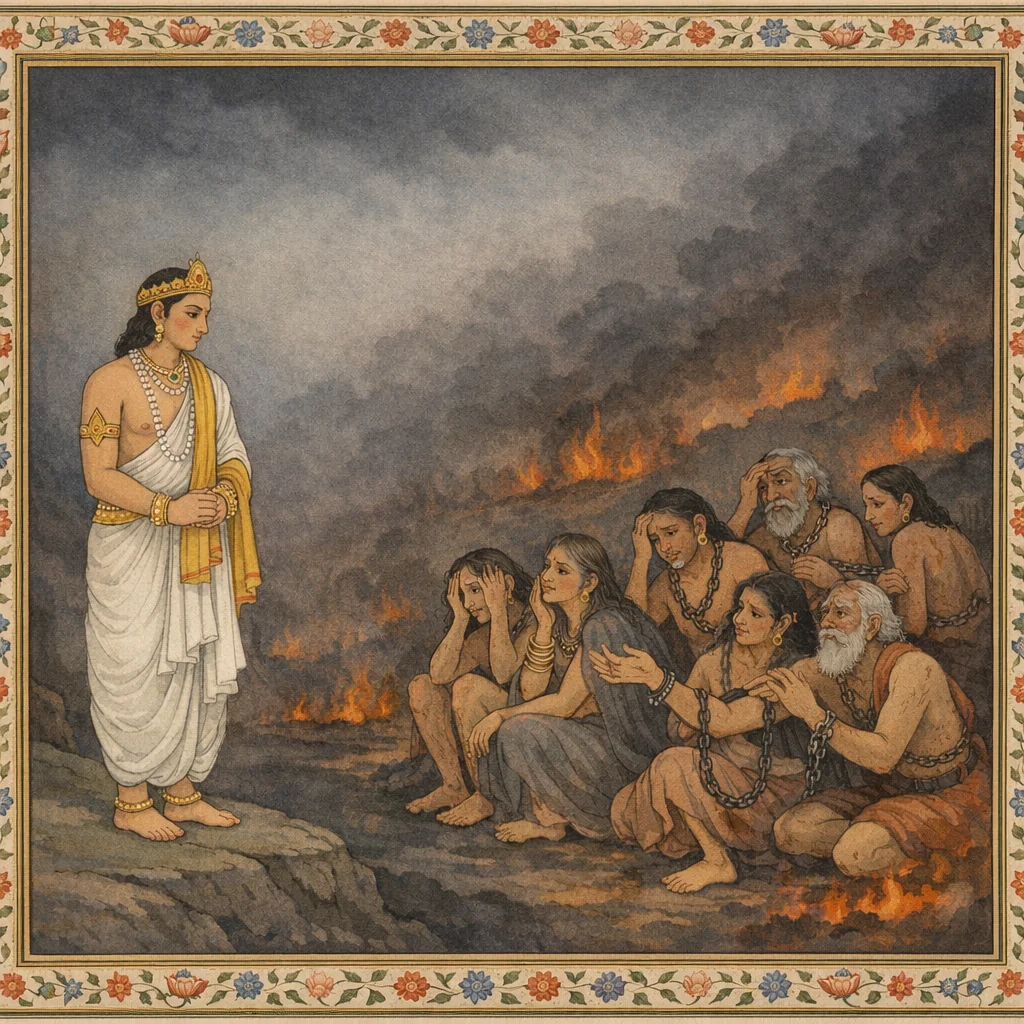
This chapter opens with Yudhiṣṭhira addressing the devas, stating that he does not see Rādheya (Karṇa) nor his brothers and other eminent allies who fell in the war for his sake. He declares that a heaven without them is not ‘his’ heaven, and requests to see them. The devas consent and appoint a divine messenger. Yudhiṣṭhira follows the messenger along a dark, difficult path characterized by foul odors and vivid descriptions of a punitive environment: rivers of hot water, an asipatravana (razor-leaf forest), heated sands and iron stones, boiling oil cauldrons, thorny kūṭaśālmalī trees, and scenes of torment. Overwhelmed, he asks how far they must go and where his brothers are. The messenger indicates the limit of his escort and invites Yudhiṣṭhira to return if fatigued. As Yudhiṣṭhira turns back, he hears afflicted voices requesting him to remain briefly, saying that a purifying breeze follows him and grants them relief. He asks who they are; the voices identify themselves as Karṇa, Bhīma, Arjuna, the twins, Dhṛṣṭadyumna, Draupadī, and the Draupadeyas. Yudhiṣṭhira reflects on the apparent contradiction of their presence there, questions karmic causality and the status of Suyodhana elsewhere, and experiences anger, censuring the devas and dharma as he understands it. He then tells the messenger to return and report that he will not go back, since his presence brings comfort to his kin; the messenger conveys this intent to Indra.
Chapter Arc: स्वर्ग के द्वार पर पहुँचा युधिष्ठिर देवताओं से कह उठता है—“नेह पश्यामि विबुधाः…”—मुझे यहाँ वे नहीं दिखते जिनके बिना स्वर्ग भी सूना है; मेरे भाई, पाञ्चाली, और वे राजर्षि कहाँ हैं जो मेरे कारण रण में गिरे? → देवगण उसे स्मरण कराते हैं कि जिन महारथियों ने ‘रणवल्नल’ में देह की आहुति दी, उन्होंने लोक जीता; पर युधिष्ठिर का मन स्वर्ग-वैभव में नहीं टिकता—वह पाञ्चाली और भीम को देखने की जिद करता है और स्पष्ट कह देता है कि उनके बिना वह यहाँ नहीं रहेगा। → देवदूत उसे नरक-दर्शन कराता है: कटे अंग, रक्त-मेद, दुर्गन्ध, करुण क्रन्दन—और वहीं वे पीड़ित प्राणी युधिष्ठिर की उपस्थिति से क्षणिक शान्ति पाते हैं; उनकी दीन वाणी सुनकर दयावान राजा ठिठक जाता है और निर्णय करता है कि वह उन्हें छोड़कर नहीं जाएगा। → युधिष्ठिर देवदूत से कहलवाता है—“न हाहं तत्र यास्यामि स्थितोऽस्मीति निवेद्यताम्”—मैं यहीं रहूँगा; मेरे आश्रय से ये (और मेरे भाई) सुखी हों—यह संदेश इन्द्र तक पहुँचा दिया जाए। → देवदूत इन्द्र के पास जाकर युधिष्ठिर के निश्चय का निवेदन करता है—अब देवसभा क्या उत्तर देगी, और यह नरक-दर्शन किस सत्य की परीक्षा है?
Shlokas
Verse 1
औपनआक्राा बछ। आर: 2 द्वितीयो&्ध्याय: युधिष्ठिरको नरकका दर्शन कराना तथा करुण-क्रन्दन सुनकर उनका वहीं रहनेका निक्षय करना युधिछिर उवाच नेह पश्यामि विबुधा राधेयममितौजसम् | भ्रातरौ च महात्मानौ युधामन्यूत्तमौजसौ,युधिष्ठिरने पूछा--देवताओ! मैं यहाँ अमित-तेजस्वी राधानन्दन कर्णको क्यों नहीं देख रहा हूँ? दोनों भाई महामनस्वी युधामन्यु और उत्तमौजा कहाँ हैं? वे भी नहीं दिखायी देते
Yudhiṣṭhira said: “O gods, I do not see here Rādheya (Karna), whose might was immeasurable. And where are the two noble brothers, Yudhāmanyu and Uttamaujas? They too are not to be seen.”
Verse 2
जुह॒वुर्ये शरीराणि रणवल्नलौ महारथा: । राजानो राजपुत्राश्न ये मदर्थे हता रणे,जिन महारथियोंने समराग्निमें अपने शरीरोंकी आहुति दे दी, जो राजा और राजकुमार रणभूमिमें मेरे लिये मारे गये वे सिंहके समान पराक्रमी समस्त महारथी वीर कहाँ हैं? क्या उन पुरुषप्रवर वीरोंने भी इस स्वर्गलोकपर विजय पायी है? इति श्रीमहाभारते स्वर्गारोहणपर्वणि युधिष्ठटिरनरकदर्शने द्वितीयो5ध्याय:
Yudhiṣṭhira said: “Where are those lion-like heroes—those great chariot-warriors who poured their very bodies as an offering into the fire of battle? Where are the kings and princes who were slain on the battlefield for my sake? Have those foremost of men, those valiant ones, also won victory in this world of heaven?”
Verse 3
क्व ते महारथा: सर्वे शार्ट्लसमविक्रमा: । तैरप्ययं जितो लोक: कच्चित् पुरुषसत्तमै:,जिन महारथियोंने समराग्निमें अपने शरीरोंकी आहुति दे दी, जो राजा और राजकुमार रणभूमिमें मेरे लिये मारे गये वे सिंहके समान पराक्रमी समस्त महारथी वीर कहाँ हैं? क्या उन पुरुषप्रवर वीरोंने भी इस स्वर्गलोकपर विजय पायी है?
Yudhiṣṭhira said: “Where are all those great chariot-warriors now, whose valor was like that of tigers? Have those best of men—who offered their bodies into the fire of battle—also conquered this heavenly world?”
Verse 4
यदि लोकानिमान_ प्राप्तास्ते च सर्वे महारथा: । स्थितं वित्त हि मां देवा: सहित तैर्महात्मभि:
Yudhiṣṭhira said: “If those great chariot-warriors have indeed attained these worlds, and if all of them are here, then know this for certain: the gods have kept me here together with those great-souled ones.”
Verse 5
देवताओ! यदि वे सम्पूर्ण महारथी इन लोकोंमें आये हैं तो आप समझ लें कि मैं उन महात्माओंके साथ रहूँगा ।। कच्चिन्न तैरवाप्तो<5यं नृपैलोको$क्षय: शुभ: । न तैरहं विना रंस्ये भ्रातृभिज्ञातिभिस्तथा,परंतु यदि उन नरेशोंने यह शुभ एवं अक्षयलोक नहीं प्राप्त किया है तो मैं उन जाति- भाइयोंके बिना यहाँ नहीं रहूँगा
Yudhiṣṭhira said: “O gods! If those complete great chariot-warriors have come to these worlds, then know this— I will remain in the company of those noble souls. But if those kings have not attained this auspicious, imperishable realm, then I will not take delight here without them—without my brothers and my kinsmen. If they have not reached this blessed, undecaying world, I will not stay here apart from those who are my own.”
Verse 6
मातुर्हि वचन श्रुव्वा तदा सलिलकर्मणि । कर्णस्य क्रियतां तोयमिति तप्यामि तेन वै
Yudhiṣṭhira said: “Having heard my mother’s words at the time of the water-offering rites, I am indeed tormented by this: ‘Let water be offered for Karṇa as well.’”
Verse 7
युद्धके बाद जब मैं अपने मृत सम्बन्धियोंको जलाञज्जलि दे रहा था उस समय मेरी माता कुन्तीने कहा था--“बेटा! कर्णको भी जलाञ्जलि देना।” माताकी यह बात सुनकर मुझे मालूम हुआ कि महात्मा कर्ण मेरे ही भाई थे। तबसे मुझे उनके लिये बड़ा दुःख होता है ।। इदं च परितप्यामि पुन: पुनरहं सुरा: । यन्मातु: सदृशौ पादौ तस्याहममितात्मन:,देवताओ! यह सोचकर तो मैं और भी पश्चात्ताप करता रहता हूँ कि “महामना कर्णके दोनों चरणोंको माता कुन्तीके चरणोंके समान देखकर भी मैं क्यों नहीं शत्रुदलमर्दन कर्णका अनुगामी हो गया?” यदि कर्ण हमारे साथ होते तो हमें इन्द्र भी युद्धमें परास्त नहीं कर सकते
Yudhiṣṭhira said: After the war, when I was offering the water-rites to my dead kinsmen, my mother Kuntī said to me, “Son, offer the libation to Karṇa as well.” Hearing this, I learned that the great-souled Karṇa was my own brother. From that moment, grief for him has weighed heavily upon me. And, O gods, I burn with remorse again and again at this thought: though I saw that the feet of that noble, immeasurable-souled man were like my mother Kuntī’s, why did I not become a follower of Karṇa, the crusher of enemy hosts? Had Karṇa stood with us, even Indra could not have defeated us in battle.
Verse 8
दृष्टवैव तौ नानुगतः कर्ण परबलार्दनम् | न हस्मान् कर्णसहितान् जयेच्छक्रोडपि संयुगे,देवताओ! यह सोचकर तो मैं और भी पश्चात्ताप करता रहता हूँ कि “महामना कर्णके दोनों चरणोंको माता कुन्तीके चरणोंके समान देखकर भी मैं क्यों नहीं शत्रुदलमर्दन कर्णका अनुगामी हो गया?” यदि कर्ण हमारे साथ होते तो हमें इन्द्र भी युद्धमें परास्त नहीं कर सकते
Yudhiṣṭhira said: “Even after seeing those two feet—like the feet of Mother Kuntī herself—why did I not become a follower of Karṇa, the crusher of the enemy’s forces? This thought makes my remorse only deeper. Had Karṇa been on our side, even Indra would not have been able to defeat us in battle.”
Verse 9
तमहं यत्र तत्रस्थं द्रष्टमिच्छामि सूर्यजम् । अविज्ञातो मया योडसौ घातित: सव्यसाचिना,ये सूर्यनन्दन कर्ण जहाँ कहीं भी हों मैं उनका दर्शन करना चाहता हूँ; जिन्हें न जाननेके कारण मैंने अर्जुनद्वारा उनका वध करवा दिया
Yudhiṣṭhira said: “Wherever he may be, I wish to behold that son of the Sun. Through my failure to recognize him, I caused him to be slain by Arjuna.”
Verse 10
भीमं च भीमविक्रान्तं प्राणेभ्योडपि प्रियं मम । अर्जुन चेन्द्रसंकाशं यमौ चैव यमोपमौ,मैं अपने प्राणोंसे भी प्रियतम भयंकर पराक्रमी भाई भीमसेनको, इन्द्रतुल्य तेजस्वी अर्जुनको, यमराजके समान अजेय नकुल-सहदेवको तथा धर्मपरायणा देवी द्रौपदीको भी देखना चाहता हूँ। यहाँ रहनेकी मेरी तनिक भी इच्छा नहीं है। मैं आप लोगोंसे यह सच्ची बात कहता हूँ
Yudhiṣṭhira said: “I long to see Bhīma—terrible in might and dearer to me even than my own life—Arjuna, radiant like Indra, and the twin brothers, Nakula and Sahadeva, invincible like Yama. I also wish to behold the dharma-devoted queen Draupadī. I have not the slightest desire to remain here; I speak this truth to you.”
Verse 11
द्रष्टमिच्छामि तां चाहं पाञज्चालीं धर्मचारिणीम् । न चेह स्थातुमिच्छामि सत्यमेवं ब्रवीमि व:,मैं अपने प्राणोंसे भी प्रियतम भयंकर पराक्रमी भाई भीमसेनको, इन्द्रतुल्य तेजस्वी अर्जुनको, यमराजके समान अजेय नकुल-सहदेवको तथा धर्मपरायणा देवी द्रौपदीको भी देखना चाहता हूँ। यहाँ रहनेकी मेरी तनिक भी इच्छा नहीं है। मैं आप लोगोंसे यह सच्ची बात कहता हूँ
Yudhiṣṭhira said: “I wish to see that Pāñcālī, the steadfast follower of dharma. Nor do I wish to remain here. This is the truth I speak to you.”
Verse 12
कि मे भ्रातृविहीनस्य स्वर्गेण सुरसत्तमा: । यत्र ते मम स स्वर्गो नायं स्वर्गो मतो मम,सुरश्रेष्रणण! अपने भाइयोंसे अलग रहकर इस स्वर्गसे भी मुझे क्या लेना है? जहाँ मेरे भाई हैं वहीं मेरा स्वर्ग है। उनके बिना मैं इस लोकको स्वर्ग नहीं मानता
Yudhiṣṭhira said: “O best of the gods, what use is this heaven to me if I must be without my brothers? Wherever they are, that alone is heaven for me. Without them, I do not regard this realm as heaven.”
Verse 13
देवा ऊचु यदि वै तत्र ते श्रद्धा गम्यतां पुत्र मा चिरम् । प्रिये हि तव वर्तामो देवराजस्य शासनात्,देवता बोले--वत्स! यदि उन लोगोंमें तुम्हारी श्रद्धा है तो चलो, विलम्ब न करो। हम लोग देवराजकी आज्ञासे सर्वथा तुम्हारा प्रिय करना चाहते हैं
The gods said: “If indeed your faith is set upon them there, then come—do not delay, dear son. For we are acting for what is pleasing to you, in obedience to the command of the King of the gods.”
Verse 14
वैशम्पायन उवाच इत्युक्त्वा त॑ ततो देवा देवदूतमुपादिशन् । युधिष्ठटिरस्य सुहृदो दर्शयेति परंतप,वैशम्पायनजी कहते हैं--शत्रुओंको संताप देनेवाले जनमेजय! युधिष्ठिरसे ऐसा कहकर देवताओंने देवदूतको आज्ञा दी--'तुम युधिष्ठिरको इनके सुहृदोंका दर्शन कराओ'
Vaiśampāyana said: Having spoken thus, the gods then instructed their divine messenger: “O scorcher of foes, show Yudhiṣṭhira the sight of his dear friends.” The verse underscores a moral reassurance: the righteous are not left in isolation, and divine order responds by granting consoling vision and recognition of loved ones after the trials of life.
Verse 15
ततः कुन्तीसुतो राजा देवदूतश्न जग्मतुः । सहितौ राजशार्दूल यत्र ते पुरुषर्षभा:,नृपश्रेष्ठ! तब कुन्तीपुत्र राजा युधिष्ठिर और देवदूत दोनों साथ-साथ उस स्थानकी ओर चले जहाँ वे पुरुषप्रवर भीमसेन आदि थे
Then the king, Kuntī’s son (Yudhiṣṭhira), went on together with the divine messenger. O tiger among kings, they proceeded to the place where those foremost of men—his heroic brothers such as Bhīmasena—were. The movement underscores Yudhiṣṭhira’s steadfast concern for his companions and his refusal to accept personal elevation without the company of the righteous.
Verse 16
अग्रतो देवदूतश्न ययौ राजा च पृष्ठतः । पन्थानमशुभं दुर्ग सेवितं पापकर्मभि:,आगे-आगे देवदूत जा रहा था और पीछे-पीछे राजा युधिष्छिर। दोनों ऐसे दुर्गम मार्गपर जा पहुँचे जो बहुत ही अशुभ था। पापाचारी मनुष्य ही यातना भोगनेके लिये उसपर आते- जाते थे
Vaiśampāyana said: The divine messenger went ahead, and the king followed behind. They came upon a harsh and difficult path, ominous in nature—one frequented by those of sinful deeds, who pass along it to undergo suffering.
Verse 17
तमसा संवृतं घोरं केशशैवलशाद्वलम् । युक्त पापकृतां गन्धैर्मासशोणितकर्दमम्,वहाँ घोर अन्धकार छा रहा था। केश, सेवार और घास इन्हींसे वह मार्ग भरा हुआ था। वह पापियोंके ही योग्य था। वहाँ दुर्गन्ध फैल रही थी। मांस और रक्तकी कीच जमी हुई थी
Vaiśampāyana said: The path was shrouded in dreadful darkness, strewn with hair, slime-like growth, and grass. It was fit only for evildoers, reeking with foul odors, and caked with mire of flesh and blood—an image of moral ruin made visible as a landscape.
Verse 18
दंशोत्पातकभल्लूकमक्षिकामशकावृतम् । इतश्रेतश्व कुणपै: समन्तात् परिवारितम्,उस रास्तेपर डाँस, मच्छर, मक्खी, उत्पाती जीवजन्तु और भालू आदि फैले हुए थे। इधर-उधर सब ओर सड़े मुर्दे पड़े हुए थे
Vaiśampāyana said: The path was covered with gadflies and other stinging pests, with ominous creatures and bears; it was swarmed by flies and mosquitoes. Here and there, on every side, it was hemmed in by rotting corpses—an image of the moral wreckage left by violence, confronting the travelers with the grim aftermath of adharma and the impermanence of embodied life.
Verse 19
अस्थिकेशसमाकीर्ण कृमिकीटसमाकुलम् । ज्वलनेन प्रदीप्तेन समन्तात् परिवेष्टितम्,हड्डियाँ और केश चारों ओर फैले हुए थे। कृमि और कीटोंसे वह मार्ग भरा हुआ था। उसे चारों ओरसे जलती आगने घेर रखा था
Vaiśampāyana said: The path was strewn everywhere with bones and hair, swarming with worms and insects, and on all sides it was encircled by blazing fire—an image of the dreadful consequences that attend the soul’s passage when it confronts the residues of violence and suffering.
Verse 20
अयोमुखैश्न काकाद्यर्गुप्रैश्ष समभिद्रुतम् । सूचीमुखैस्तथा प्रेतैर्विन्ध्यशैलोपमैर्वृतम्,लोहेकी-सी चोंचवाले कौए और गीध आदि पक्षी मँडरा रहे थे। सूईके समान चुभते हुए मुखोंवाले और विन्ध्यपर्ववके समान विशालकाय प्रेत वहाँ सब ओर घूम रहे थे
Vaiśampāyana said: That place was swarmed by iron-beaked birds—crows and the like, and vultures. It was also surrounded by spirits with needle-like, piercing mouths, huge as the Vindhya mountains, roaming on every side—an image of the grim consequences that follow violence and moral collapse.
Verse 21
मेदोरुधिरयुक्तैश्व च्छिन्ननाहूरुपाणिभि: । निकृत्तोदरपादैश्व तत्र तत्र प्रवेरिते:
Verse 22
वहाँ यत्र-तत्र बहुत-से मुर्दे बिखरे पड़े थे, उनमेंसे किसीके शरीरसे रुधिर और मेद बहते थे, किसीके बाहु, ऊरु, पेट और हाथ-पैर कट गये थे ।। स तत्कुणपतदुर्गन्धमशिवं लोमहर्षणम् । जगाम राजा धर्मात्मा मध्ये बहु विचिन्तयन्,धर्मात्मा राजा युधिष्ठिर मन-ही-मन बहुत चिन्ता करते हुए उसी मार्गके बीचसे होकर निकले जहाँ सड़े मुदोंकी बदबू फैल रही थी और अमंगलकारी बीभत्स दृश्य दिखायी देता था। वह भयंकर मार्ग रोंगटे खड़े कर देनेवाला था
Vaiśaṃpāyana said: The righteous king, Yudhiṣṭhira, moved onward through that very path—reeking with the stench of rotting corpses, ominous and hair-raising—while turning many thoughts over within himself. The scene was gruesome and inauspicious, yet he proceeded, burdened by inward ethical reflection amid the aftermath of violence.
Verse 23
ददर्शोष्णोदकै: पूर्णा नदीं चापि सुदुर्गमाम् । असिपत्रवनं चैव निशितं क्षुरसंवृतम्,आगे जाकर उन्होंने देखा, खौलते हुए पानीसे भरी हुई एक नदी बह रही है, जिसके पार जाना बहुत ही कठिन है। दूसरी ओर तीखी तलवारों या छूरोंके-से पत्तोंसे परिपूर्ण तेज धारवाला असिपत्र नामक वन है
Vaiśampāyana said: He saw a river filled with scalding water, extremely difficult to cross; and also the forest called Asipatravana, sharp and enclosed by razor-like blades. The scene signals the harsh consequences that await those who have fallen into paths of wrongdoing, where the very landscape becomes an instrument of retribution.
Verse 24
करम्भवालुकास्तप्ता आयसीश्व शिला:पृथक् । लोहकुम्भी श्व॒ तैलस्य क्वाथ्यमाना: समन्ततः,कहीं गरम-गरम बालू बिछी है तो कहीं तपाये हुए लोहेकी बड़ी-बड़ी चट्टानें रखी गयी हैं। चारों ओर लोहेके कलशोंमें तेल खौलाया जा रहा है
Vaiśampāyana said: “In some places, heaps of sand mixed with gruel lie scorching hot; elsewhere, massive iron slabs are set apart. And all around, oil is being boiled in iron cauldrons.” The scene intensifies the moral atmosphere of retribution: the path ahead is depicted as a landscape of punitive heat and torment, evoking the consequences that follow adharma and accumulated wrongdoing.
Verse 25
कूटशाल्मलिकं चापि दुःस्पर्श तीक्ष्णकण्टकम् । ददर्श चापि कौन्तेयो यातना: पापकर्मिणाम्,जहाँ-तहाँ पैने काँटोंसे भरे हुए सेमलके वृक्ष हैं, जिनको हाथसे छूना भी कठिन है। कुन्तीनन्दन युधिष्ठिरने यह भी देखा कि वहाँ पापाचारी जीवोंको बड़ी कठोर यातनाएँ दी जा रही हैं
Vaiśampāyana said: The son of Kuntī also beheld the deceptive śālmalī (silk-cotton) trees, hard to touch and bristling with sharp thorns; and he saw as well the severe torments being inflicted there upon those who had committed sinful deeds.
Verse 26
देवदूतका युधिष्ठिरको मायामय नरकका दर्शन कराना स तं दुर्गन्धमालक्ष्य देवदूतमुवाच ह । कियदध्वानमस्माभिर्गन्तव्यमिममीदृशम्,वहाँकी दुर्गन्धका अनुभव करके उन्होंने देवदूतसे पूछा--“भैया! ऐसे रास्तेपर अभी हमलोगोंको कितनी दूर और चलना है? तथा मेरे वे भाई कहाँ हैं? यह तुम्हें मुझे बता देना चाहिये। देवताओंका यह कौन-सा देश है, इस बातको मैं जानना चाहता हूँ”
Vaiśampāyana said: The divine messenger led Yudhiṣṭhira to behold an illusory hell. Sensing the foul stench there, Yudhiṣṭhira asked the messenger, “How much farther must we go along such a path? And where are my brothers? You ought to tell me this. What region of the gods is this? I wish to understand.”
Verse 27
क्व च ते भ्रातरो महां तन्ममाख्यातुमर्हसि । देशो<यं कश्न देवानामेतदिच्छामि वेदितुम्,वहाँकी दुर्गन्धका अनुभव करके उन्होंने देवदूतसे पूछा--“भैया! ऐसे रास्तेपर अभी हमलोगोंको कितनी दूर और चलना है? तथा मेरे वे भाई कहाँ हैं? यह तुम्हें मुझे बता देना चाहिये। देवताओंका यह कौन-सा देश है, इस बातको मैं जानना चाहता हूँ”
Vaiśampāyana said: “And where are your brothers? You ought to tell me that. How much farther must we still go along this path? And what region of the gods is this? I wish to know.” (This is spoken in the context of the travelers’ distress at the foul stench on the way, prompting a direct inquiry about distance, the whereabouts of the brothers, and the nature of the divine realm.)
Verse 28
स संनिववृते श्रुत्वा धर्मराजस्य भाषितम् | देवदूतो<ब्रवीच्चैनमेतावद् गमनं तव,धर्मराजकी यह बात सुनकर देवदूत लौट पड़ा और बोला--“बस, यहींतक आपको आना था
Hearing the words spoken by Dharmarāja, the divine messenger turned back and said to him, “Your journey is only up to this point.” The moment underscores the moral gravity of Yudhiṣṭhira’s speech and marks a divinely set boundary—an ethical threshold beyond which he is not required (or permitted) to proceed.
Verse 29
निवर्तितव्यो हि मया तथास्म्युक्तो दिवौकसै: | यदि श्रान्तो$सि राजेन्द्र त्वमथागन्तुमरहसि,“महाराज! देवताओंने मुझसे कहा है कि जब युधिष्ठिर थक जायेँ तब उन्हें वापस लौटा लाना; अतः अब मुझे आपको लौटा ले चलना है। यदि आप थक गये हों तो मेरे साथ आइये”
Vaiśaṃpāyana said: “I have been instructed by the gods that I must bring you back when Yudhiṣṭhira becomes weary. Therefore I must now lead you back. If you are indeed tired, O best of kings, then you should come with me.”
Verse 30
युधिष्ठिरस्तु निर्विण्णस्तेन गन्धेन मूर्च्छित: । निवर्तने धृतमना: पर्यावर्तत भारत,भरतनन्दन! युधिष्ठिर वहाँकी दुर्गन्न्धसे घबरा गये थे। उन्हें मूर्च्छा-सी आने लगी थी। इसलिये उन्होंने मनमें लौट जानेका ही निश्चय किया और उस निश्चयके अनुसार वे लौट पड़े
Verse 31
स संनिवृत्तो धर्मात्मा दुःखशोकसमाहत: । शुश्राव तत्र वदतां दीना वाच: समन्ततः,दुःख और शोकसे पीड़ित हुए धर्मात्मा युधिष्ठिर ज्यों ही वहाँसे लौटने लगे त्यों ही उन्हें चारों ओरसे पुकारनेवाले आर्त मनुष्योंकी दीन वाणी सुनायी पड़ी--
As the righteous-souled one turned back, struck down by grief and sorrow, he heard there—on every side—the pitiable cries of distressed people calling out.
Verse 32
भो भो धर्मज राजर्षे पुण्याभिजन पाण्डव | अनुग्रहार्थमस्माकं तिष्ठ तावन्मुहूर्तकम्,हे धर्मनन्दन! हे राजर्षे! हे पवित्र कुलमें उत्पन्न पाण्डुपुत्र युधिष्ठिर| आप हमलोगोंपर कृपा करनेके लिये दो घड़ीतक यहीं ठहरिये
Vaiśampāyana said: “O Dharmarāja, O royal sage, O Pāṇḍava of noble and meritorious lineage—out of compassion for us, remain here for just a short while.”
Verse 33
आयाति वत्वयि दुर्धर्षे वाति पुण्य: समीरण: । तव गन्धानुगस्तात येनास्मान् सुखमागमत्,“आप दुर्धर्ष महापुरुषके आते ही परम पवित्र हवा चलने लगी है। तात! वह हवा आपके शरीरकी सुगन्ध लेकर आ रही है जिससे हमलोगोंको बड़ा सुख मिला है
Vaiśampāyana said: “As you arrive, O irresistible one, a supremely pure breeze begins to blow. Dear one, it comes bearing the fragrance of your body, and by that we have been filled with comfort and joy.”
Verse 34
ते वयं पार्थ दीर्घस्य कालस्य पुरुषर्षभ । सुखमासादयिष्यामस्त्वां दृष्टवा राजसत्तम,'पुरुषप्रवर! कुन्तीकुमार! नृपश्रेष्ठ) आज दीर्घकालके पश्चात् आपका दर्शन पाकर हम सुखका अनुभव करेंगे
Vaiśampāyana said: “O Pārtha, bull among men, best of kings—after a long passage of time, on seeing you we shall at last attain comfort and joy.”
Verse 35
संतिष्ठस्व महाबाहो मुहूर्तमपि भारत । त्वयि तिष्ठति कौरव्य यातनास्मान् न बाधते,“महाबाहु भरतनन्दन! हो सके तो दो घड़ी भी ठहर जाइये | कुरुनन्दन! आपके रहनेसे यहाँकी यातना हमें कष्ट नहीं दे रही है”
Vaiśaṃpāyana said: “O mighty-armed one, O Bhārata, stay—if only for a moment. O Kauravya, so long as you remain here, the torment of this place does not afflict us.”
Verse 36
एवं बहुविधा वाच: कृपणा वेदनावताम् । तस्मिन् देशे स शुभ्राव समन्ताद् वदतां नृप,नरेश्वर! इस प्रकार वहाँ कष्ट पानेवाले दुखी प्राणियोंके भाँति-भाँतिके दीन वचन उस प्रदेशमें उन्हें चारों ओरसे सुनायी देने लगे
Vaiśaṃpāyana said: “Thus, in that region, O king, he heard on every side many kinds of pitiable cries—utterances of suffering beings, laden with pain.”
Verse 37
तेषां तु वचन श्रुत्वा दयावान् दीनभाषिणाम् | अहो कृच्छमिति प्राह तस्थौ स च युधिषछिर:,दीनतापूर्ण वचन कहनेवाले उन प्राणियोंकी बातें सुनकर दयालु राजा युधिष्ठिर वहाँ खड़े हो गये। उनके मुँहले सहसा निकल पड़ा--'अहो! इन बेचारोंको बड़ा कष्ट है!
Hearing the words of those who spoke in misery, the compassionate Yudhiṣṭhira halted and exclaimed at once, “Alas, what hardship!”—moved by their suffering and responding with immediate pity.
Verse 38
स ता गिर: पुरस्ताद वै श्रुतपूर्वा पुन: पुन: । ग्लानानां दुःखितानां च नाभ्यजानत पाण्डव:,महान् कष्ट और दु:खमें पड़े हुए प्राणियोंकी वे ही पहलेकी सुनी हुई करुणाजनक बातें सामनेकी ओरसे बारंबार उनके कानोंमें पड़ने लगीं तो भी वे पाण्डुकुमार उन्हें पहचान न सके
Verse 39
अबुध्यमानस्ता वाचो धर्मपुत्रो युधिष्ठिर: । उवाच के भवन्तो वै किमर्थमिह तिष्ठथ,उनकी वे बातें पूर्णएरूपसे न समझकर धर्मपुत्र युधिष्ठिने पूछा--“आपलोग कौन हैं और किसलिये यहाँ रहते हैं?”
Not fully grasping their words, Yudhiṣṭhira—the son of Dharma—asked, “Who indeed are you, and for what purpose do you remain here?”
Verse 40
इत्युक्तास्ते ततः सर्वे समन््तादवभाषिरे | कर्णो5हं भीमसेनो5हमर्जुनो5हमिति प्रभो,उनके इस प्रकार पूछनेपर वे सब चारों ओरसे बोलने लगे--'प्रभो! मैं कर्ण हूँ। मैं भीमसेन हूँ। मैं अर्जुन हूँ। मैं नकुल हूँ। मैं सहदेव हूँ। मैं धृष्टद्युम्न हूँ। मैं द्रौपदी हूँ और हमलोग द्रौपदीके पुत्र हैं।! इस प्रकार वे सब लोग चिल्ला-चिल्लाकर अपना-अपना नाम बताने लगे
Vaiśampāyana said: When they had thus been addressed, all of them began to call out from every side: “O lord, I am Karṇa; I am Bhīmasena; I am Arjuna,” and so on. In the tumult of that moment, each proclaimed his or her own identity—Nakula, Sahadeva, Dhṛṣṭadyumna, Draupadī, and Draupadī’s sons—crying out their names loudly. The scene underscores the urgency of recognition and the human need to be known and accounted for at the threshold of fate.
Verse 41
नकुल: सहदेवोहं धृष्टद्युम्नो5हमित्युत । द्रौपदी द्रौपदेयाश्व इत्येवं ते विचुक्रुशु:ः,उनके इस प्रकार पूछनेपर वे सब चारों ओरसे बोलने लगे--'प्रभो! मैं कर्ण हूँ। मैं भीमसेन हूँ। मैं अर्जुन हूँ। मैं नकुल हूँ। मैं सहदेव हूँ। मैं धृष्टद्युम्न हूँ। मैं द्रौपदी हूँ और हमलोग द्रौपदीके पुत्र हैं।! इस प्रकार वे सब लोग चिल्ला-चिल्लाकर अपना-अपना नाम बताने लगे
Vaiśaṃpāyana said: “(Some cried,) ‘I am Nakula!’ ‘I am Sahadeva!’ and also, ‘I am Dhṛṣṭadyumna!’ Others shouted, ‘I am Draupadī!’ and ‘We are the sons of Draupadī!’—thus they all cried out aloud, each proclaiming his or her own name.” In the ethical shadow of Svargārohaṇa, this frantic self-identification underscores the last human clinging to personal identity and fame even at the threshold of final passage, where truth is tested and attachments are stripped away.
Verse 42
ता वाच: स तदा श्रुत्वा तद्देशसदृशीर्नुप । ततो विममृशे राजा कि त्विदं दैवकारितम्,नरेश्वर! उस देशके अनुरूप उन बातोंको सुनकर राजा युधिष्ठिर मन-ही-मन विचार करने लगे कि दैव-का यह कैसा विधान है
Hearing those words then—words befitting that place—the king began to reflect inwardly: “What kind of ordinance of fate is this?” The verse underscores Yudhiṣṭhira’s ethical bewilderment as he confronts a realm whose conditions seem to invert his expectations of justice and moral order.
Verse 43
कि तु तत् कलुषं कर्म कृतमेभिमहात्मभि: । कर्णेन द्रौपदेयैर्वा पा्चाल्या वा सुमध्यया,“मेरे इन महामना भाइयोंने, कर्णने, द्रौपदीके पाँचों पुत्रोंने अथवा स्वयं सुमध्यमा द्रौोपदीने भी कौन-सा ऐसा पाप किया था जिससे ये लोग इस दुर्गन्धपूर्ण भयंकर स्थानमें निवास करते हैं। इन समस्त पुण्यात्मा पुरुषोंने कभी कोई पाप किया था, इसे मैं नहीं जानता
Vaiśampāyana said: “But what defiling deed was ever done by these great-souled ones—by Karṇa, or by the sons of Draupadī, or by Draupadī herself of slender waist—that they should dwell in this foul, dreadful place? I do not know of any sin committed by these wholly virtuous men.”
Verse 44
य इमे पापगन्धेडस्मिन् देशे सन्ति सुदारुणे । नाहं जानामि सर्वेषां दुष्कृतं पुण्यकर्मणाम्,“मेरे इन महामना भाइयोंने, कर्णने, द्रौपदीके पाँचों पुत्रोंने अथवा स्वयं सुमध्यमा द्रौोपदीने भी कौन-सा ऐसा पाप किया था जिससे ये लोग इस दुर्गन्धपूर्ण भयंकर स्थानमें निवास करते हैं। इन समस्त पुण्यात्मा पुरुषोंने कभी कोई पाप किया था, इसे मैं नहीं जानता
Vaiśaṃpāyana said: “As for these who are here in this foul-smelling, most dreadful region—I do not know what evil deed could belong to them, who are doers of merit. I cannot see what sin these righteous ones ever committed that they should dwell in such a place.”
Verse 45
कि कृत्वा धृतराष्ट्रस्य पुत्रो राजा सुयोधन: । तथा श्रिया युत: पापै: सह सर्व: पदानुगै:,“धृतराष्ट्रका पुत्र राजा सुयोधन कौन-सा पुण्यकर्म करके अपने समस्त पापी सेवकोंके साथ वैसी अद्भुत शोभा और सम्पत्तिसे संयुक्त हुआ है?
Vaiśaṃpāyana said: “By performing what meritorious deed did King Suyodhana, the son of Dhṛtarāṣṭra, become endowed with such splendor and prosperity—together with all his sinful followers and attendants?”
Verse 46
महेन्द्र इव लक्ष्मीवानास्ते परमपूजिता: । कस्येदानीं विकारो5यं य इमे नरकं॑ गता:
Vaiśampāyana said: “He sits in splendor like Mahendra (Indra), honored above all. Whose change of heart is this now—when these very men have gone to hell?”
Verse 47
“वह तो यहाँ अत्यन्त सम्मानित होकर महेन्द्रके समान राजलक्ष्मीसे सम्पन्न हुआ है। इधर यह किस कर्मका फल है कि मेरे सगे-सम्बन्धी नरकमें पड़े हुए हैं? ।। सर्वधर्मविद: शूरा: सत्यागमपरायणा: । क्षत्रधर्मरता: सन््तो यज्वानो भूरिदक्षिणा:,“मेरे भाई सम्पूर्ण धर्मके ज्ञाता, शूरवीर, सत्यवादी तथा शास्त्रके अनुकूल चलनेवाले थे। इन्होंने क्षत्रिय-धर्ममें तत्यर रहकर बड़े-बड़े यज्ञ किये और बहुत-सी दक्षिणाएँ दी हैं (तथापि इनकी ऐसी दुर्गति क्यों हुई)?
He, on the other hand, is here highly honored, endowed with royal fortune like Indra himself. But what deed’s result is this, that my own kinsmen have fallen into hell? My brothers were knowers of all dharma—valiant, truthful, and devoted to conduct in accord with the sacred teachings. Steadfast in the warrior’s duty, they performed great sacrifices and gave abundant gifts; and yet why has such a fate befallen them?
Verse 48
कि नु सुप्तो5स्मि जागर्मि चेतयामि न चेतये । अहो चित्तविकारो<यं स्याद् वा मे चित्तविभ्रम:,'क्या मैं सोता हूँ या जागता हूँ? मुझे चेत है या नहीं? अहो! यह मेरे चित्तका विकार तो नहीं है, अथवा हो सकता है यह मेरे मनका भ्रम हो”
Vaiśampāyana said: “Am I asleep, or am I awake? Do I truly perceive, or do I not perceive at all? Alas—could this be some disturbance of my mind, or perhaps a delusion that has seized my consciousness?”
Verse 49
एवं बहुविधं राजा विममर्श युधिष्ठिर: । दुःखशोकसमाविष्टश्विन्ताव्याकुलितेन्द्रिय:,दुःख और शोकके आवेशसे युक्त हो राजा युधिष्ठिर इस तरह नाना प्रकारसे विचार करने लगे। उस समय उनकी सारी इन्द्रियाँ चिन्तासे व्याकुल हो गयी थीं
Thus King Yudhiṣṭhira pondered in many different ways. Overwhelmed by grief and sorrow, his senses were thrown into agitation by anxious thought.
Verse 50
क्रोधमाहारयच्चैव तीव्र धर्मसुतो नृपः । देवांक्ष गर्हयामास धर्म चैव युधिष्ठिर:,धर्मपुत्र राजा युधिष्ठिरके मनमें तीव्र रोष जाग उठा। वे देवताओं और धर्मको कोसने लगे
Then King Yudhiṣṭhira, the son of Dharma, was seized by intense anger. In that state he began to censure the gods—and even Dharma itself—revealing a moral crisis in which the very principles he had trusted seemed to have failed him.
Verse 51
स तीव्रगन्धसंतप्तो देवदूतमुवाच ह । गम्यतां तत्र येषां त्वं दूतस्तेषामुपान्तिकम्,उन्होंने वहाँकी दुःसह दुर्गन्न्धसे संतप्त होकर देवदूतसे कहा--“तुम जिनके दूत हो उनके पास लौट जाओ । मैं वहाँ नहीं चलूँगा। यहीं ठहर गया हूँ, अपने मालिकोंको इसकी सूचना दे देना। यहाँ ठहरनेका कारण यह है कि मेरे निकट रहनेसे यहाँ मेरे इन दुखी भाई- बन्धुओंको सुख मिलता है”
Tormented by the unbearable stench, he said to the divine messenger: “Go back to those whose envoy you are. I will not go there. I will remain here—inform your masters of this. For by staying near me, these afflicted brothers and kinsmen find some comfort.”
Verse 52
न हाहं तत्र यास्यामि स्थितो<5स्मीति निवेद्यताम् | मत्संश्रयादिमे दूता: सुखिनो भ्रातरो हि मे,उन्होंने वहाँकी दुःसह दुर्गन्न्धसे संतप्त होकर देवदूतसे कहा--“तुम जिनके दूत हो उनके पास लौट जाओ । मैं वहाँ नहीं चलूँगा। यहीं ठहर गया हूँ, अपने मालिकोंको इसकी सूचना दे देना। यहाँ ठहरनेका कारण यह है कि मेरे निकट रहनेसे यहाँ मेरे इन दुखी भाई- बन्धुओंको सुख मिलता है”
Vaiśaṃpāyana said: “No—I will not go there. Report that I have resolved to remain here. For by taking refuge near me, these my brothers—though afflicted—find some measure of comfort.”
Verse 53
इत्युक्तः स तदा दूत: पाण्डुपुत्रेण धीमता । जगाम तत्र यत्रास्ते देवराज: शतक्रतु:ः,बुद्धिमान् पाण्डुपुत्रके ऐसा कहनेपर देवदूत उस समय उस स्थानको चला गया जहाँ सौ यज्ञोंका अनुष्ठान करनेवाले देवराज इन्द्र विराजमान थे
Thus addressed by the wise son of Pāṇḍu, the messenger at that time departed and went to the place where Indra, the king of the gods—renowned as the performer of a hundred sacrifices—was seated. The verse underscores prompt obedience to rightful instruction and the orderly movement of divine agency in response to human resolve.
Verse 54
निवेदयामास च तद् धर्मराजचिकीर्षितम् | यथोक्तं धर्मपुत्रेण सर्वमेव जनाधिप,नरेश्वर! दूतने वहाँ धर्मपुत्र युधिष्ठिरकी कही हुई सारी बातें कह सुनायीं और यह भी निवेदन कर दिया कि वे क्या करना चाहते हैं
Vaiśampāyana said: The messenger reported in full to the king of men exactly what Dharmaputra Yudhiṣṭhira had said, and also conveyed Yudhiṣṭhira’s intended course of action—what the righteous king wished to do—thus placing his resolve before the ruler in accordance with dharma.
Frequently Asked Questions
Yudhiṣṭhira confronts whether he can accept a privileged posthumous state while those he loves and honors appear to suffer; he rejects isolated reward and prioritizes solidarity with the afflicted.
The chapter teaches that dharma is validated by principled compassion even when outcomes appear unjust; ethical commitment is shown by remaining with sufferers rather than pursuing personal comfort.
No explicit phalaśruti is stated here; the meta-function is narrative-theological—demonstrating that final judgment and karmic sequencing can appear counterintuitive, thereby deepening the epic’s mokṣa-oriented frame.