Adhyaya 7
Aśvatthāmā’s Stuti of Rudra and Śiva’s Empowerment (सौप्तिकपर्व, अध्याय ७)
Upa-parva: Aśvatthāmā–Rudrārādhana (Invocation of Rudra and the Bhūta-gaṇas)
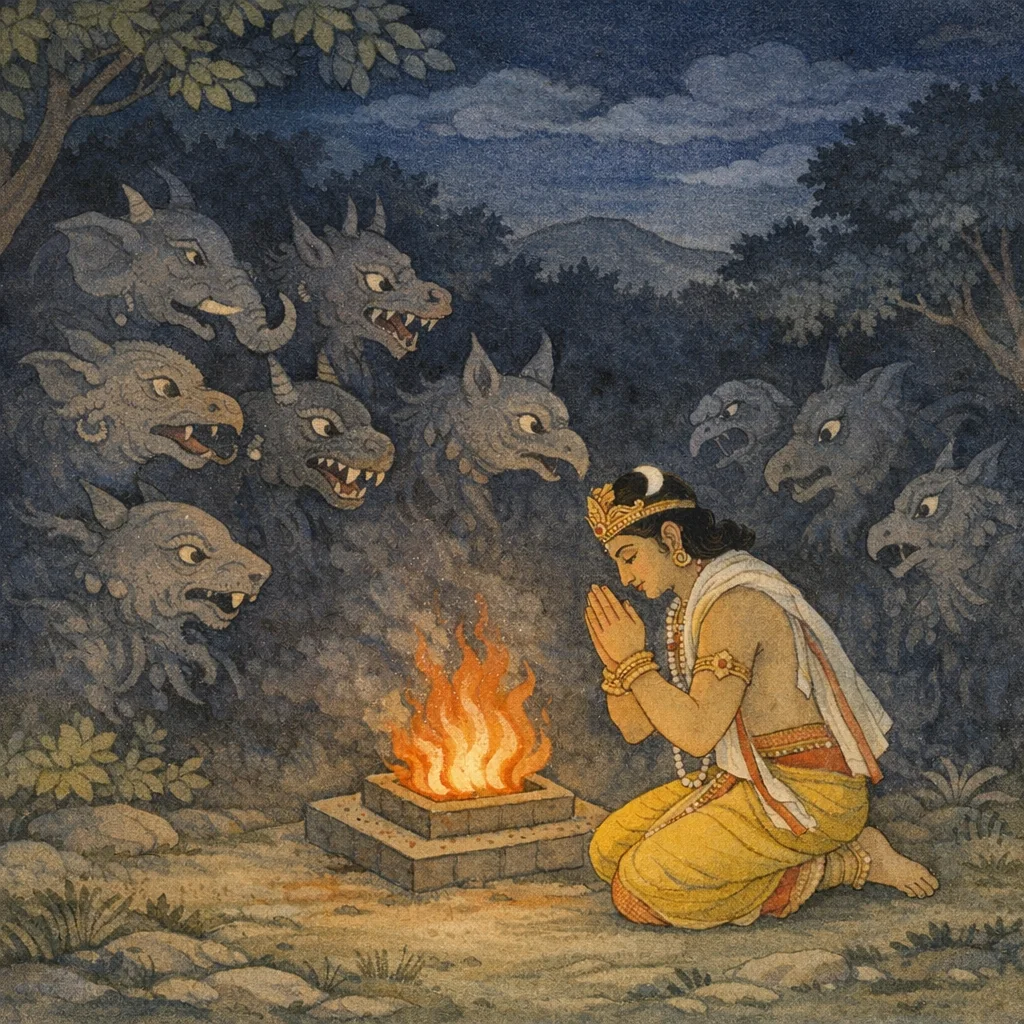
Sañjaya reports that Aśvatthāmā, after deliberation, dismounts and stands in focused resolve. Aśvatthāmā then recites an extended stuti to Rudra/Śiva using a wide range of divine epithets (e.g., Ugra, Sthāṇu, Girīśa, Nīlakaṇṭha, Tryakṣa, Umāpati), combining theological praise with a stated intention to overcome a perilous crisis through worship and offering. A visionary ritual setting unfolds: a golden altar appears, fire manifests, and numerous gaṇas and formidable beings are described in expansive enumerations of forms, faces, weapons, ornaments, and sounds. Aśvatthāmā prepares a self-referential offering (ātma-upahāra), presenting himself as oblation within the ritual logic. Mahādeva appears directly, speaks, and articulates a doctrinal preference for Kṛṣṇa as uniquely dear due to disciplined devotion; he notes prior protective actions concerning the Pāñcālas as part of that regard. Śiva then enters Aśvatthāmā, grants him a spotless superior sword, and Aśvatthāmā becomes further inflamed with divine energy as unseen beings and rākṣasa forces move around the enemy camp, framing the next phase as an empowered nocturnal operation.
Chapter Arc: रात्रि के भयावह सन्नाटे में, युद्ध-विनाश से टूटे अश्वत्थामा का मन एक ही आश्रय खोजता है—महादेव। वह अग्निवेदी के समीप खड़ा होकर शिव की स्तुति आरम्भ करता है। → अश्वत्थामा उग्र, स्थाणु, शिव, रुद्र, शर्व, ईशान, गिरिश, वरद, विश्वरूप, विरूपाक्ष, बहुरूप, उमापति—इन नामों से शिव को पुकारता है। स्तुति के साथ वातावरण बदलता है; अग्निवेदी के सामने भूतगणों/गणों का प्राकट्य होने लगता है—विविध मुखों, विकराल आकृतियों, अस्त्रों और पाशों से युक्त पार्षद, जिनकी गर्जना और वाद्य-ध्वनि विश्व को संत्रस्त करती है। → महागण द्वीपवर्ती पर्वतों-से ऊँचे कद के साथ प्रकट होकर चारों ओर प्रभा फैलाते हैं; उनकी सिंहनाद-गर्जना और भयावह रूपों के बीच अश्वत्थामा स्वयं को महादेव के चरणों में समर्पित करता है—मानो अपनी शेष मानव-सीमा त्यागकर रुद्र-शक्ति की शरण लेता हो। → शिव-परिवार के पार्षदों की उपस्थिति से यह स्थापित होता है कि अश्वत्थामा की आराधना स्वीकार की जा रही है; रात्रि का दृश्य अब केवल युद्ध-शोक नहीं, एक दैवी-भैरव अनुष्ठान बन जाता है, जहाँ शिव-भक्ति और विनाश-शक्ति एक ही धारा में मिलती है। → यह दैवी स्वीकृति आगे किस रूप में फलित होगी—और अश्वत्थामा किस सीमा तक ‘शिव-आश्रित’ होकर कर्म करेगा—यह अगले प्रसंग पर टिका रह जाता है।
Shlokas
Verse 1
न्न्य्स्य््स््रनास्स हज नी नप्प्स सप्तमो<्ध्याय: अश्वत्थामाद्वारा शिवकी स्तुति, उसके सामने एक अग्निवेदी तथा भूतगणोंका प्राकट्य और उसका आत्मसमर्पण करके भगवान् शिवसे खड्ग प्राप्त करना संजय उवाच एवं संचिन्तयित्वा तु द्रोणपुत्रो विशाम्पते । अवतीर्य रथोपस्थाद् देवेशं प्रणतः स्थित:,संजय कहते हैं--प्रजानाथ! ऐसा सोचकर द्रोणपुत्र अश्वत्थामा रथकी बैठकसे उतर पड़ा और देवेश्वर महादेवजीको प्रणाम करके खड़ा हो इस प्रकार स्तुति करने लगा
Sañjaya said: “O lord of the people (Dhṛtarāṣṭra), having reflected thus, Droṇa’s son Aśvatthāmā descended from the seat of his chariot. Bowing low, he stood before the Lord of the gods (Śiva), ready to offer praise.”
Verse 2
द्रीणिस्वाच उम्र॑ स्थाणुं शिवं रुद्रं शर्वमीशानमी श्वरम् | गिरिशं वरदं देवं भवभावनमी श्वरम्,अश्वत्थामा बोला--प्रभो! आप उग्र, स्थाणु, शिव, रुद्र, शर्व, ईशान, ईश्वर और गिरिश आदि नामोंसे प्रसिद्ध वरदायक देवता तथा सम्पूर्ण जगत्को उत्पन्न करनेवाले परमेश्वर हैं। आपके कण्ठमें नील चिह्न है। आप अजन्मा एवं शुद्धात्मा हैं। आपने ही दक्षके यज्ञका विनाश किया है। आप ही संहारकारी हर, विश्वरूप, भयानक नेत्रोंवाले, अनेक रूपधारी तथा उमादेवीके प्राणनाथ हैं। आप श्मशानमें निवास करते हैं। आपको अपनी शक्तिपर गर्व है। आप अपने महान् गणोंके अधिपति, सर्वव्यापी तथा खट्वांगधारी हैं, उपासकोंका दुःख दूर करनेवाले रुद्र हैं, मस्तकपर जटा धारण करनेवाले ब्रह्मचारी हैं। आपने त्रिपुरासुरका विनाश किया है। मैं विशुद्ध हृदयसे अपने-आपकी बलि देकर, जो मन्दमति मानवोंके लिये अति दुष्कर है, आपका यजन करूँगा
Sañjaya said: He (Aśvatthāmā) praised the Lord as the fierce One—immovable and steadfast—auspicious Śiva; as Rudra, Śarva, Īśāna, and the supreme Īśvara; as Giriśa, the mountain-dwelling God, the boon-giver, the divine source who brings all becoming into manifestation. In this invocation, Aśvatthāmā turns from human counsel to divine power, seeking sanction and strength for the grim course of action unfolding in the night after the war—an appeal that frames violence as an act performed under a deity’s terrible sovereignty rather than mere personal revenge.
Verse 3
शितिकण्ठमजं शुक्र दक्षक्रतुहरं हरम् । विश्वरूपं विरूपाक्ष॑ बहुरूपमुमापतिम्,अश्वत्थामा बोला--प्रभो! आप उग्र, स्थाणु, शिव, रुद्र, शर्व, ईशान, ईश्वर और गिरिश आदि नामोंसे प्रसिद्ध वरदायक देवता तथा सम्पूर्ण जगत्को उत्पन्न करनेवाले परमेश्वर हैं। आपके कण्ठमें नील चिह्न है। आप अजन्मा एवं शुद्धात्मा हैं। आपने ही दक्षके यज्ञका विनाश किया है। आप ही संहारकारी हर, विश्वरूप, भयानक नेत्रोंवाले, अनेक रूपधारी तथा उमादेवीके प्राणनाथ हैं। आप श्मशानमें निवास करते हैं। आपको अपनी शक्तिपर गर्व है। आप अपने महान् गणोंके अधिपति, सर्वव्यापी तथा खट्वांगधारी हैं, उपासकोंका दुःख दूर करनेवाले रुद्र हैं, मस्तकपर जटा धारण करनेवाले ब्रह्मचारी हैं। आपने त्रिपुरासुरका विनाश किया है। मैं विशुद्ध हृदयसे अपने-आपकी बलि देकर, जो मन्दमति मानवोंके लिये अति दुष्कर है, आपका यजन करूँगा
Sañjaya said: Aśvatthāmā addressed the Lord—Śiva—praising him as the blue-throated, unborn, pure and radiant one; the destroyer of Dakṣa’s sacrifice; the great Harā who brings dissolution; the all-formed and many-formed deity, the fearsome-eyed one, and the beloved lord of Umā. In the grim aftermath of war, this hymn frames Aśvatthāmā’s turn toward a terrible, power-bestowing divinity, seeking sanction and strength through devotion rather than restraint.
Verse 4
श्मशानवासिन दृप्तं महागणपतिं विभुम् । खट््वाड़धारिणं रुद्रं जटिलं ब्रह्मचारिणम्,अश्वत्थामा बोला--प्रभो! आप उग्र, स्थाणु, शिव, रुद्र, शर्व, ईशान, ईश्वर और गिरिश आदि नामोंसे प्रसिद्ध वरदायक देवता तथा सम्पूर्ण जगत्को उत्पन्न करनेवाले परमेश्वर हैं। आपके कण्ठमें नील चिह्न है। आप अजन्मा एवं शुद्धात्मा हैं। आपने ही दक्षके यज्ञका विनाश किया है। आप ही संहारकारी हर, विश्वरूप, भयानक नेत्रोंवाले, अनेक रूपधारी तथा उमादेवीके प्राणनाथ हैं। आप श्मशानमें निवास करते हैं। आपको अपनी शक्तिपर गर्व है। आप अपने महान् गणोंके अधिपति, सर्वव्यापी तथा खट्वांगधारी हैं, उपासकोंका दुःख दूर करनेवाले रुद्र हैं, मस्तकपर जटा धारण करनेवाले ब्रह्मचारी हैं। आपने त्रिपुरासुरका विनाश किया है। मैं विशुद्ध हृदयसे अपने-आपकी बलि देकर, जो मन्दमति मानवोंके लिये अति दुष्कर है, आपका यजन करूँगा
Sañjaya said: “(Aśvatthāmā beheld and praised) Rudra—dwelling in the cremation-ground, fierce and self-possessed, the mighty lord of the great gaṇas, all-pervading; bearing the khaṭvāṅga staff; matted-haired and living the vow of brahmacarya.” In the ethical atmosphere of the Sauptika episode, this vision frames Aśvatthāmā’s turn toward a terrifying, ascetic divinity—seeking sanction and power at a moment when the boundaries of righteous warfare are collapsing.
Verse 5
मनसा सुविशुद्धेन दुष्करेणाल्पचेतसा । सो5हमात्मोपहारेण यक्ष्ये त्रिपुरघातिनम्,अश्वत्थामा बोला--प्रभो! आप उग्र, स्थाणु, शिव, रुद्र, शर्व, ईशान, ईश्वर और गिरिश आदि नामोंसे प्रसिद्ध वरदायक देवता तथा सम्पूर्ण जगत्को उत्पन्न करनेवाले परमेश्वर हैं। आपके कण्ठमें नील चिह्न है। आप अजन्मा एवं शुद्धात्मा हैं। आपने ही दक्षके यज्ञका विनाश किया है। आप ही संहारकारी हर, विश्वरूप, भयानक नेत्रोंवाले, अनेक रूपधारी तथा उमादेवीके प्राणनाथ हैं। आप श्मशानमें निवास करते हैं। आपको अपनी शक्तिपर गर्व है। आप अपने महान् गणोंके अधिपति, सर्वव्यापी तथा खट्वांगधारी हैं, उपासकोंका दुःख दूर करनेवाले रुद्र हैं, मस्तकपर जटा धारण करनेवाले ब्रह्मचारी हैं। आपने त्रिपुरासुरका विनाश किया है। मैं विशुद्ध हृदयसे अपने-आपकी बलि देकर, जो मन्दमति मानवोंके लिये अति दुष्कर है, आपका यजन करूँगा
Sañjaya said: “With a mind made thoroughly pure—though such a resolve is hard for one of little understanding—I shall worship the Slayer of Tripura by offering my very self.” In the war’s aftermath, the verse frames devotion as an extreme ethical vow: the speaker proposes self-offering as the highest act of surrender to Śiva, seeking divine sanction and power through inner purity rather than mere ritual display.
Verse 6
इस प्रकार श्रीमह्याभारत सौप्तिकपर्वमों अश्वत्थामाकी चिन्ताविषयक छठा अध्याय पूरा हुआ,स्तुतं स्तुत्यं स््तूयमानममोघं कृत्तिवाससम् | विलोहितं नीलकण्ठमसहां दुर्निवारणम् पूर्वकालमें आपकी स्तुति की गयी है, भविष्यमें भी आप स्तुतिके योग्य बने रहेंगे और वर्तमानकालमें भी आपकी स्तुति की जाती है। आपका कोई भी संकल्प या प्रयत्न व्यर्थ नहीं होता। आप व्याप्र-चर्ममय वस्त्र धारण करते हैं, लोहितवर्ण और नीलकण्ठ हैं। आपके वेगको सहन करना असम्भव है और आपको रोकना सर्वथा कठिन है। आप शुद्धस्वरूप ब्रह्म हैं। आपने ही ब्रह्माजीकी सृष्टि की है। आप ब्रह्मचारी, व्रतधारी तथा तपोनिष्ठ हैं, आपका कहीं अन्त नहीं है। आप तपस्वी जनोंके आश्रय, बहुत-से रूप धारण करनेवाले तथा गणपति हैं। आपके तीन नेत्र हैं। अपने पार्षदोंको आप बहुत प्रिय हैं। धनाध्यक्ष कुबेर सदा आपका मुख निहारा करते हैं। आप गौरांगिनी गिरिराजनन्दिनीके हृदय-वल्लभ हैं। कुमार कार्तिकेयके पिता भी आप ही हैं। आपका वर्ण पिंगल है। वृषभ आपका श्रेष्ठ वाहन है। आप अत्यन्त सूक्ष्म वस्त्र धारण करनेवाले और अत्यन्त उग्र हैं। उमादेवीको विभूषित करनेमें तत्पर रहते हैं। ब्रह्मा आदि देवताओंसे श्रेष्ठ और परात्पर हैं। आपसे श्रेष्ठ दूसरा कोई नहीं है। आप उत्तम धनुष धारण करनेवाले, दिगन्तव्यापी तथा सब देशोंके रक्षक हैं। आपके श्रीअंगोंमें सुवर्णमय कवच शोभा पाता है। आपका स्वरूप दिव्य है तथा आप चन्द्रमय मुकुटसे विभूषित होते हैं। मैं अपने चित्तको पूर्णतः एकाग्र करके आप परमेश्वरकी शरणमें आता हूँ
Sañjaya said: You have been praised in the past; you remain ever worthy of praise in the future; and even now you are being praised. None of your resolves or efforts ever proves fruitless. Clad in a garment of hide, reddish in hue and blue-throated, your force is unbearable and your course cannot be checked. (Thus the hymn extols the Lord’s irresistible power and unfailing will, presenting devotion and surrender as the ethical refuge amid the violence and moral collapse of the Sauptika episode.)
Verse 7
शुक्र ब्रह्मसजं ब्रद्यम॒ ब्रह्मचारिणमेव च । व्रतवन्तं तपोनिष्ठमनन्तं तपतां गतिम्,पूर्वकालमें आपकी स्तुति की गयी है, भविष्यमें भी आप स्तुतिके योग्य बने रहेंगे और वर्तमानकालमें भी आपकी स्तुति की जाती है। आपका कोई भी संकल्प या प्रयत्न व्यर्थ नहीं होता। आप व्याप्र-चर्ममय वस्त्र धारण करते हैं, लोहितवर्ण और नीलकण्ठ हैं। आपके वेगको सहन करना असम्भव है और आपको रोकना सर्वथा कठिन है। आप शुद्धस्वरूप ब्रह्म हैं। आपने ही ब्रह्माजीकी सृष्टि की है। आप ब्रह्मचारी, व्रतधारी तथा तपोनिष्ठ हैं, आपका कहीं अन्त नहीं है। आप तपस्वी जनोंके आश्रय, बहुत-से रूप धारण करनेवाले तथा गणपति हैं। आपके तीन नेत्र हैं। अपने पार्षदोंको आप बहुत प्रिय हैं। धनाध्यक्ष कुबेर सदा आपका मुख निहारा करते हैं। आप गौरांगिनी गिरिराजनन्दिनीके हृदय-वल्लभ हैं। कुमार कार्तिकेयके पिता भी आप ही हैं। आपका वर्ण पिंगल है। वृषभ आपका श्रेष्ठ वाहन है। आप अत्यन्त सूक्ष्म वस्त्र धारण करनेवाले और अत्यन्त उग्र हैं। उमादेवीको विभूषित करनेमें तत्पर रहते हैं। ब्रह्मा आदि देवताओंसे श्रेष्ठ और परात्पर हैं। आपसे श्रेष्ठ दूसरा कोई नहीं है। आप उत्तम धनुष धारण करनेवाले, दिगन्तव्यापी तथा सब देशोंके रक्षक हैं। आपके श्रीअंगोंमें सुवर्णमय कवच शोभा पाता है। आपका स्वरूप दिव्य है तथा आप चन्द्रमय मुकुटसे विभूषित होते हैं। मैं अपने चित्तको पूर्णतः एकाग्र करके आप परमेश्वरकी शरणमें आता हूँ इति श्रीमहाभारते सौप्तिकपर्वणि द्रौणिकृतशिवार्चने सप्तमो5ध्याय:
Sañjaya said: “(He praised Śiva as) the radiant one, the source and support of Brahmā, the ever-celibate; steadfast in vows, firmly established in austerity; endless, and the supreme refuge and goal of ascetics.”
Verse 8
बहुरूपं गणाध्यक्ष॑ त्रयक्षं पारिषदप्रियम् | धनाध्यक्षेक्षितमुखं गौरीहृदयवल्लभम्,पूर्वकालमें आपकी स्तुति की गयी है, भविष्यमें भी आप स्तुतिके योग्य बने रहेंगे और वर्तमानकालमें भी आपकी स्तुति की जाती है। आपका कोई भी संकल्प या प्रयत्न व्यर्थ नहीं होता। आप व्याप्र-चर्ममय वस्त्र धारण करते हैं, लोहितवर्ण और नीलकण्ठ हैं। आपके वेगको सहन करना असम्भव है और आपको रोकना सर्वथा कठिन है। आप शुद्धस्वरूप ब्रह्म हैं। आपने ही ब्रह्माजीकी सृष्टि की है। आप ब्रह्मचारी, व्रतधारी तथा तपोनिष्ठ हैं, आपका कहीं अन्त नहीं है। आप तपस्वी जनोंके आश्रय, बहुत-से रूप धारण करनेवाले तथा गणपति हैं। आपके तीन नेत्र हैं। अपने पार्षदोंको आप बहुत प्रिय हैं। धनाध्यक्ष कुबेर सदा आपका मुख निहारा करते हैं। आप गौरांगिनी गिरिराजनन्दिनीके हृदय-वल्लभ हैं। कुमार कार्तिकेयके पिता भी आप ही हैं। आपका वर्ण पिंगल है। वृषभ आपका श्रेष्ठ वाहन है। आप अत्यन्त सूक्ष्म वस्त्र धारण करनेवाले और अत्यन्त उग्र हैं। उमादेवीको विभूषित करनेमें तत्पर रहते हैं। ब्रह्मा आदि देवताओंसे श्रेष्ठ और परात्पर हैं। आपसे श्रेष्ठ दूसरा कोई नहीं है। आप उत्तम धनुष धारण करनेवाले, दिगन्तव्यापी तथा सब देशोंके रक्षक हैं। आपके श्रीअंगोंमें सुवर्णमय कवच शोभा पाता है। आपका स्वरूप दिव्य है तथा आप चन्द्रमय मुकुटसे विभूषित होते हैं। मैं अपने चित्तको पूर्णतः एकाग्र करके आप परमेश्वरकी शरणमें आता हूँ
Sañjaya said: “You are of many forms, the lord of the Gaṇas, the three-eyed one, beloved of your attendants. Even Kubera, the lord of wealth, keeps his gaze fixed upon your face; and you are the heart’s beloved of Gaurī.”
Verse 9
कुमारपितरं पिड़ं गोवृषोत्तमवाहनम् | तनुवाससमत्युग्रमुमा भूषणतत्परम्,पूर्वकालमें आपकी स्तुति की गयी है, भविष्यमें भी आप स्तुतिके योग्य बने रहेंगे और वर्तमानकालमें भी आपकी स्तुति की जाती है। आपका कोई भी संकल्प या प्रयत्न व्यर्थ नहीं होता। आप व्याप्र-चर्ममय वस्त्र धारण करते हैं, लोहितवर्ण और नीलकण्ठ हैं। आपके वेगको सहन करना असम्भव है और आपको रोकना सर्वथा कठिन है। आप शुद्धस्वरूप ब्रह्म हैं। आपने ही ब्रह्माजीकी सृष्टि की है। आप ब्रह्मचारी, व्रतधारी तथा तपोनिष्ठ हैं, आपका कहीं अन्त नहीं है। आप तपस्वी जनोंके आश्रय, बहुत-से रूप धारण करनेवाले तथा गणपति हैं। आपके तीन नेत्र हैं। अपने पार्षदोंको आप बहुत प्रिय हैं। धनाध्यक्ष कुबेर सदा आपका मुख निहारा करते हैं। आप गौरांगिनी गिरिराजनन्दिनीके हृदय-वल्लभ हैं। कुमार कार्तिकेयके पिता भी आप ही हैं। आपका वर्ण पिंगल है। वृषभ आपका श्रेष्ठ वाहन है। आप अत्यन्त सूक्ष्म वस्त्र धारण करनेवाले और अत्यन्त उग्र हैं। उमादेवीको विभूषित करनेमें तत्पर रहते हैं। ब्रह्मा आदि देवताओंसे श्रेष्ठ और परात्पर हैं। आपसे श्रेष्ठ दूसरा कोई नहीं है। आप उत्तम धनुष धारण करनेवाले, दिगन्तव्यापी तथा सब देशोंके रक्षक हैं। आपके श्रीअंगोंमें सुवर्णमय कवच शोभा पाता है। आपका स्वरूप दिव्य है तथा आप चन्द्रमय मुकुटसे विभूषित होते हैं। मैं अपने चित्तको पूर्णतः एकाग्र करके आप परमेश्वरकी शरणमें आता हूँ
Sañjaya said: “(I take refuge in) the Father of Kumāra (Kārttikeya), tawny-hued, whose excellent mount is the bull; who wears the subtlest garment; who is exceedingly fierce in power; and who is ever intent on adorning Umā.” In the wider hymn-context of this passage, Śiva is praised as timelessly worthy of worship—past, present, and future—whose resolve never fails, who is the ascetic refuge of tapasvins, and whose overwhelming force cannot be checked; this devotion frames the moral atmosphere of the Sauptika episode, where uncontrolled violence is contrasted with the ideal of divine order and restraint.
Verse 10
परं परेभ्य: परम॑ परं यस्मान्न विद्यते । इष्वस्त्रोत्तमभर्तारें दिगन्तं देशरक्षिणम्,पूर्वकालमें आपकी स्तुति की गयी है, भविष्यमें भी आप स्तुतिके योग्य बने रहेंगे और वर्तमानकालमें भी आपकी स्तुति की जाती है। आपका कोई भी संकल्प या प्रयत्न व्यर्थ नहीं होता। आप व्याप्र-चर्ममय वस्त्र धारण करते हैं, लोहितवर्ण और नीलकण्ठ हैं। आपके वेगको सहन करना असम्भव है और आपको रोकना सर्वथा कठिन है। आप शुद्धस्वरूप ब्रह्म हैं। आपने ही ब्रह्माजीकी सृष्टि की है। आप ब्रह्मचारी, व्रतधारी तथा तपोनिष्ठ हैं, आपका कहीं अन्त नहीं है। आप तपस्वी जनोंके आश्रय, बहुत-से रूप धारण करनेवाले तथा गणपति हैं। आपके तीन नेत्र हैं। अपने पार्षदोंको आप बहुत प्रिय हैं। धनाध्यक्ष कुबेर सदा आपका मुख निहारा करते हैं। आप गौरांगिनी गिरिराजनन्दिनीके हृदय-वल्लभ हैं। कुमार कार्तिकेयके पिता भी आप ही हैं। आपका वर्ण पिंगल है। वृषभ आपका श्रेष्ठ वाहन है। आप अत्यन्त सूक्ष्म वस्त्र धारण करनेवाले और अत्यन्त उग्र हैं। उमादेवीको विभूषित करनेमें तत्पर रहते हैं। ब्रह्मा आदि देवताओंसे श्रेष्ठ और परात्पर हैं। आपसे श्रेष्ठ दूसरा कोई नहीं है। आप उत्तम धनुष धारण करनेवाले, दिगन्तव्यापी तथा सब देशोंके रक्षक हैं। आपके श्रीअंगोंमें सुवर्णमय कवच शोभा पाता है। आपका स्वरूप दिव्य है तथा आप चन्द्रमय मुकुटसे विभूषित होते हैं। मैं अपने चित्तको पूर्णतः एकाग्र करके आप परमेश्वरकी शरणमें आता हूँ
Sañjaya said: You are the Supreme beyond all that is supreme—than whom nothing higher is known. You are the master of the finest missile-weapons, all-pervading to the ends of the quarters, and the protector of every land. In the past you were praised; in the future too you will remain worthy of praise; and even now you are praised. No resolve or effort of yours ever becomes fruitless. Clad in tiger-skin, red-hued and blue-throated, your force is unbearable and your restraint impossible. You are Brahman in pure essence; you brought forth even Brahmā’s creation. A brahmacārin, vow-bearer, and steadfast in austerity, you are without end. Refuge of ascetics, assuming many forms, lord of the gaṇas, three-eyed, beloved of your attendants—Kubera ever gazes upon your face. You are the heart’s beloved of the fair daughter of the Lord of Mountains, and the father of Kumāra Kārttikeya. Tawny in hue, with the bull as your noble mount, wearing the subtlest garments and yet most fierce, ever intent on adorning Umā—higher than Brahmā and the gods, transcending all. None surpasses you. Bearing the excellent bow, pervading the horizons, guarding all regions—your divine limbs shine with golden armor and a moonlike crest. With my mind wholly gathered, I take refuge in you, the Supreme Lord.
Verse 11
हिरण्यकवचं देवं चन्द्रमौलिवि भूषणम् । प्रपद्ये शरणं देव॑ं परमेण समाधिना,पूर्वकालमें आपकी स्तुति की गयी है, भविष्यमें भी आप स्तुतिके योग्य बने रहेंगे और वर्तमानकालमें भी आपकी स्तुति की जाती है। आपका कोई भी संकल्प या प्रयत्न व्यर्थ नहीं होता। आप व्याप्र-चर्ममय वस्त्र धारण करते हैं, लोहितवर्ण और नीलकण्ठ हैं। आपके वेगको सहन करना असम्भव है और आपको रोकना सर्वथा कठिन है। आप शुद्धस्वरूप ब्रह्म हैं। आपने ही ब्रह्माजीकी सृष्टि की है। आप ब्रह्मचारी, व्रतधारी तथा तपोनिष्ठ हैं, आपका कहीं अन्त नहीं है। आप तपस्वी जनोंके आश्रय, बहुत-से रूप धारण करनेवाले तथा गणपति हैं। आपके तीन नेत्र हैं। अपने पार्षदोंको आप बहुत प्रिय हैं। धनाध्यक्ष कुबेर सदा आपका मुख निहारा करते हैं। आप गौरांगिनी गिरिराजनन्दिनीके हृदय-वल्लभ हैं। कुमार कार्तिकेयके पिता भी आप ही हैं। आपका वर्ण पिंगल है। वृषभ आपका श्रेष्ठ वाहन है। आप अत्यन्त सूक्ष्म वस्त्र धारण करनेवाले और अत्यन्त उग्र हैं। उमादेवीको विभूषित करनेमें तत्पर रहते हैं। ब्रह्मा आदि देवताओंसे श्रेष्ठ और परात्पर हैं। आपसे श्रेष्ठ दूसरा कोई नहीं है। आप उत्तम धनुष धारण करनेवाले, दिगन्तव्यापी तथा सब देशोंके रक्षक हैं। आपके श्रीअंगोंमें सुवर्णमय कवच शोभा पाता है। आपका स्वरूप दिव्य है तथा आप चन्द्रमय मुकुटसे विभूषित होते हैं। मैं अपने चित्तको पूर्णतः एकाग्र करके आप परमेश्वरकी शरणमें आता हूँ
Sañjaya says: “I take refuge in that God who is clad in a golden cuirass and adorned with a moon-crested crown. With the highest concentration of mind, I surrender to the Divine as my sole protection.”
Verse 12
इमां चेदापदं घोरां तराम्यद्य सुदुष्कराम् । सर्वभूतोपहारेण यक्ष्येडहं शुचिना शुचिम्,यदि मैं आज इस अत्यन्त दुष्कर और भयंकर विपत्तिसे पार पा जाऊँ तो मैं सर्वभूतमय पवित्र उपहार समर्पित करके आप परम पावन परमेश्वरकी पूजा करूँगा
Sañjaya said: “If today I can cross beyond this dreadful calamity—so exceedingly hard to overcome—then, with a pure heart, I shall worship the Most Pure Lord, offering a sanctified gift that embraces all beings.”
Verse 13
इति तस्य व्यवसिते ज्ञात्वा योगात् सुकर्मण: । पुरस्तात् काज्चनी वेदी प्रादुरासीन्महात्मन:,इस प्रकार अश्वत्थामाका दृढ़ निश्चय जानकर उसके शुभकर्मके योगसे उस महामनस्वी वीरके आगे एक सुवर्णमयी वेदी प्रकट हुई
Sañjaya said: Knowing that he had formed this firm resolve, and through the potency arising from his meritorious acts, a golden altar suddenly manifested before that great-souled warrior. The scene suggests that decisive intent, when joined to accumulated virtue, can draw forth extraordinary signs—yet such signs do not by themselves certify the moral rightness of what one is about to do.
Verse 14
तस्यां वेद्यां तदा राजंश्रित्रभानुरजायत । स दिशो विदिश: खं च ज्वालाभिरिव पूरयन्,राजन! उस वेदीपर तत्काल ही अग्निदेव प्रकट हो गये, जो अपनी ज्वालाओंसे सम्पूर्ण दिशाओं-विदिशाओं और आकाशको परिपूर्ण-सा कर रहे थे
Sañjaya said: “O King, at that altar, at that very moment, Agni—radiant with bright flames—manifested. With his tongues of fire he seemed to fill the quarters and intermediate directions, and even the whole sky.”
Verse 15
दीप्तास्यनयनाश्षात्र नैकपादशिरोभुजा: । रत्नचित्राज्भदधरा: समुद्यतकरास्तथा
Sañjaya said: “They appeared with blazing faces and eyes, armed with weapons—some with many feet, heads, and arms—wearing garments adorned with jewels, and with their hands raised as if ready to strike.” In the grim aftermath of war, the vision underscores how violence and fear distort perception and how the night becomes a theatre of ominous, otherworldly forces surrounding the unfolding atrocity.
Verse 16
श्ववराहोष्ट्रूपाश्व॒ हयगोमायुगोमुखा:,उनके रूप कुत्ते, सूअर और ऊँटोंके समान थे; मुँह घोड़ों, गीदड़ों और गाय-बैलोंके समान जान पड़ते थे। किन्हींके मुख रीछोंके समान थे तो किन्हींके बिलावोंके समान। कोई बाघोंके समान मुँहवाले थे तो कोई चीतोंके। कितने ही गणोंके मुख कौओं, वानरों, तोतों, बड़े-बड़े अजगरों और हंसोंके समान थे। भारत! कितनोंकी कान्ति भी हंसोंके समान सफेद थी, कितने ही गणोंके मुख कठफोरवा पक्षी और नीलकण्ठके समान थे
Sañjaya said: They appeared in forms like dogs, boars, and camels; and their faces seemed like those of horses, jackals, and cattle. Some had bear-like faces, others cat-like; some had the mouths of tigers, others of leopards. Many hosts bore faces like crows, monkeys, parrots, huge serpents, and swans. O Bhārata, some even shone with a swan-like whiteness; and many had faces like the woodpecker and the blue-throated bird. The scene underscores the ominous, otherworldly terror surrounding the nocturnal slaughter—where adharma’s atmosphere is mirrored in monstrous, mixed forms.
Verse 17
ऋक्षमार्जारवदना व्याप्रद्वीपिमुखास्तथा । काकवकत्रा: प्लवमुखा: शुकवक्त्रास्तथैव च,उनके रूप कुत्ते, सूअर और ऊँटोंके समान थे; मुँह घोड़ों, गीदड़ों और गाय-बैलोंके समान जान पड़ते थे। किन्हींके मुख रीछोंके समान थे तो किन्हींके बिलावोंके समान। कोई बाघोंके समान मुँहवाले थे तो कोई चीतोंके। कितने ही गणोंके मुख कौओं, वानरों, तोतों, बड़े-बड़े अजगरों और हंसोंके समान थे। भारत! कितनोंकी कान्ति भी हंसोंके समान सफेद थी, कितने ही गणोंके मुख कठफोरवा पक्षी और नीलकण्ठके समान थे
Sañjaya said: “Some of those beings had faces like bears and cats; others had the mouths of tigers and leopards. Some were crow-faced; some had the faces of monkeys; and some had parrot-like faces as well.” In the grim aftermath of war, this catalogue of animal-faced forms heightens the sense of dread and moral dislocation: the night is filled with uncanny, predatory imagery, suggesting how violence and adharma distort the world into something feral and terrifying.
Verse 18
महाजगरवक्त्राश्व हंसवक्त्रा: सितप्रभा: । दार्वाघाटमुखाश्नलापि चाषवक्त्राश्न भारत,उनके रूप कुत्ते, सूअर और ऊँटोंके समान थे; मुँह घोड़ों, गीदड़ों और गाय-बैलोंके समान जान पड़ते थे। किन्हींके मुख रीछोंके समान थे तो किन्हींके बिलावोंके समान। कोई बाघोंके समान मुँहवाले थे तो कोई चीतोंके। कितने ही गणोंके मुख कौओं, वानरों, तोतों, बड़े-बड़े अजगरों और हंसोंके समान थे। भारत! कितनोंकी कान्ति भी हंसोंके समान सफेद थी, कितने ही गणोंके मुख कठफोरवा पक्षी और नीलकण्ठके समान थे
Sanjaya said: “O Bhārata, some of those beings had faces like great pythons, horses, and swans, shining with a pale-white radiance. Others had mouths like the dārvāghāṭa-bird, and still others like the cāṣa-bird.” In the Sauptika Parva’s night of terror, this catalogue of animal-faced forms heightens the moral atmosphere: the slaughter carried out in sleep is framed as a descent into the uncanny and the inhuman, where violence appears as a swarm of distorted, predatory embodiments rather than a righteous battle.
Verse 19
कूर्मनक्रमुखा श्वैव शिशुमारमुखास्तथा । महामकरवक्त्राश्ष॒ तिमिवक्त्रास्तथैव च,इसी प्रकार बहुत-से गण कछुए, नाकें, सूँस, बड़े-बड़े मगर, तिमि नामक मत्स्य, मोर, क्रौंच (कुरर), कबूतर, हाथी, परेवा तथा मदगु नामक जलपक्षीके समान मुखवाले थे
Sañjaya said: “There were also many bands whose faces resembled turtles and crocodiles, and likewise those with the faces of śiśumāras (river-dolphins). Some had the gaping mouths of great makaras, and others the mouths of the timi-fish as well.” In context, the verse heightens the atmosphere of dread by portraying ominous, animal-faced beings—an image that mirrors the moral darkness and terror of the night-time violence described in the Sauptika narrative.
Verse 20
हरिवक्त्रा: क्रौड्चमुखा: कपोतेभमुखास्तथा । पारावतमुखाश्वैव मद्गुवक्त्रास्तथैव च,इसी प्रकार बहुत-से गण कछुए, नाकें, सूँस, बड़े-बड़े मगर, तिमि नामक मत्स्य, मोर, क्रौंच (कुरर), कबूतर, हाथी, परेवा तथा मदगु नामक जलपक्षीके समान मुखवाले थे
Sañjaya said: “Some of those bands had faces like lions; some like krauñca-birds; some like pigeons and elephants; others like doves; and still others like the madgu water-bird.” In the grim aftermath of war, the narration underscores the uncanny, many-formed appearance of the night-roaming hosts—an image that heightens the moral darkness of the slaughter to come and the sense of a world thrown out of balance by adharma.
Verse 21
किन्हींके हाथोंमें ही कान थे। कितने ही हजार-हजार नेत्र और लंबे पेटवाले थे। कितनोंके शरीर मांसरहित, हड्ियोंके ढाँचे मात्र थे। भरतनन्दन! कोई कौओंके समान मुखवाले थे तो कोई बाजके समान। राजन! किन्हीं-किन्हींके तो सिर ही नहीं थे। भारत! कोई-कोई भालूके समान मुखवाले थे। उन सबके नेत्र और जिह्लाएँ तेजसे प्रज्वलित हो रही थीं। अंगोंकी कान्ति आगकी ज्वालाके समान जान पड़ती थी
Sanjaya said: Some of those apparitions had ears set upon their hands; some bore thousands upon thousands of eyes and distended bellies. Some were fleshless—mere frameworks of bone. O descendant of Bharata, some had faces like crows, others like hawks; O king, some were even headless. O Bharata, some had faces like bears. The eyes and tongues of them all blazed with fierce radiance, and the sheen of their limbs looked like tongues of fire. In the wake of the night’s slaughter, this vision underscores the moral horror of adharma-driven violence: when restraint collapses, the battlefield becomes a realm of monstrous omens and terror rather than righteous combat.
Verse 22
तथैवाशिरसो राजन्नृक्षवक्त्राश्च॒ भारत । प्रदीप्तनेत्रजिद्वाश्न॒ ज्वालावर्णास्तथैव च,किन्हींके हाथोंमें ही कान थे। कितने ही हजार-हजार नेत्र और लंबे पेटवाले थे। कितनोंके शरीर मांसरहित, हड्ियोंके ढाँचे मात्र थे। भरतनन्दन! कोई कौओंके समान मुखवाले थे तो कोई बाजके समान। राजन! किन्हीं-किन्हींके तो सिर ही नहीं थे। भारत! कोई-कोई भालूके समान मुखवाले थे। उन सबके नेत्र और जिह्लाएँ तेजसे प्रज्वलित हो रही थीं। अंगोंकी कान्ति आगकी ज्वालाके समान जान पड़ती थी
Sañjaya said: “So too, O King—O Bhārata—there appeared beings without heads, and others with faces like bears. Their eyes and tongues blazed with fierce brilliance, and their bodily hue seemed like the very color of flame.”
Verse 23
पाणिकर्णा: सहस्राक्षास्तथैव च महोदरा: । निर्मासा: काकवकत्राश्ष श्येनवक्त्राक्ष भारत,ज्वालाकेशाश्र राजेन्द्र ज्वलद्रोमचतुर्भुजा: । मेषवक्त्रास्तथैवान्ये तथा छागमुखा नृप राजेन्द्र! उनके केश भी अग्नि-शिखाके समान प्रतीत होते थे। उनका रोम-रोम प्रज्वलित हो रहा था। उन सबके चार भुजाएँ थीं। नरेश्वर! कितने ही गणोंके मुख भेड़ों और बकरोंके समान थे
Sañjaya said: “O Bhārata, there were hosts with hands for ears, and others with a thousand eyes, and likewise some with enormous bellies. Some were fleshless; some had faces like crows; some had hawk-like faces and eyes. O king, their hair blazed like tongues of fire; every hair on their bodies seemed aflame. All of them had four arms. And, O ruler, many others had faces like rams, and likewise faces like goats.”
Verse 24
शड्खाभा: शड्खवक्त्राश्न शड्खवर्णास्तथैव च । शड्खमालापरिकरा: शड्खध्वनिसमस्वना:
Sañjaya said: “They appeared like conches; their faces were like conches; their complexion too was conch-white. Adorned with garlands shaped like conches, they resounded with a sound comparable to the reverberation of conch-blasts.”
Verse 25
कितनोंके मुख, वर्ण और कान्ति शंखके सदृश थे। वे शंखकी मालाओंसे अलंकृत थे और उनके मुखसे शंखध्वनिके समान ही शब्द प्रकट होते थे ।। जटाधरा: पञ्चशिखास्तथा मुण्डा: कृशोदरा: । चरतुर्वष्टा श्षतुर्जिह्ना: शड्कुकर्णा: किरीटिन:,कोई समूचे सिरपर जटा धारण करते थे, कोई पाँच शिखाएँ रखते थे और कितने ही मूड़ मुड़ाये रहते थे। बहुतोंके उदर अत्यन्त कृश थे, कितनोंके चार दाढ़ें और चार जिद्वाएँ थीं। किन्हींके कान खूँटीके समान जान पड़ते थे और कितने ही पार्षद अपने मस्तकपर किरीट धारण करते थे
Sañjaya said: Some of those attendants wore matted locks over the whole head; some bore five topknots, while others were shaven. Many were gaunt-bellied. Some had four fangs and four tongues. Some seemed to have ears like pegs, and some wore crowns upon their heads. The description underscores the uncanny, otherworldly character of the beings witnessed in the aftermath of the night’s violence, heightening the moral dread that follows adharma-driven slaughter.
Verse 26
मौज्जीधराश्न राजेन्द्र तथा कुज्चितमूर्थजा: । उष्णीषिणो मुकुटिनश्नारुवक्त्रा: स्वलड्कृता:,राजेन्द्र! कोई मूँजकी मेखला पहने हुए थे, किन्हींके सिरके बाल घूँघराले दिखायी देते थे, कोई पगड़ी धारण किये हुए थे तो कोई मुकुट। कितनोंके मुख बड़े ही मनोहर थे। कितने ही सुन्दर आभूषणोंसे विभूषित थे
Sañjaya said: “O king, some wore girdles of muñja-grass; some had curly hair. Some were wrapped in turbans, while others bore crowns. Many had pleasing, handsome faces, and many were adorned with fine ornaments.”
Verse 27
पद्मोत्पलापीडधरास्तथा मुकुटधारिण: । माहात्म्येन च संयुक्ताः शतशो5थ सहस्रश:
Sañjaya said: “They bore garlands and chaplets of lotuses and blue lotuses, and they wore crowns. Endowed with divine majesty, they appeared in hundreds and in thousands.”
Verse 28
कोई अपने मस्तकपर कमलों और कुमुदोंका किरीट धारण करते थे। बहुतोंने विशुद्ध मुकुट धारण कर रखा था। वे भूतगण सैकड़ों और हजारोंकी संख्यामें थे और सभी अद्भुत माहात्म्यसे सम्पन्न थे ।। शतघ्नीवज्रहस्ताश्व॒ तथा मुसलपाणय: । भुशुण्डीपाशहस्ताश्न दण्डहस्ताश्व॒ भारत,भारत! उनके हाथोंमें शतघ्नी, वज्र, मूसल, भुशुण्डी, पाश और दण्ड शोभा पाते थे
Sañjaya said: O Bhārata, those beings bore in their hands fearsome weapons—śataghnīs, thunderbolts, clubs, bhuśuṇḍīs, nooses, and staffs—each suited to destruction. Arrayed in hundreds and thousands, they appeared wondrous in power, embodying the terrifying momentum of war’s night, where violence multiplies beyond human measure and moral clarity is tested by dread and chaos.
Verse 29
पृष्ठेषु बद्धेषुधयश्चित्रबवाणोत्कटास्तथा । सध्वजा: सपताकाश्न सघण्टा: सपरश्वधा:,उनकी पीठोंपर तरकस बँधे थे। वे विचित्र बाण लिये युद्धके लिये उन्मत्त जान पड़ते थे। उनके पास ध्वजा, पताका, घंटे और फरसे मौजूद थे
Sañjaya said: With quivers fastened upon their backs, they bore strange and formidable arrows, appearing fierce and battle-maddened. They were equipped with standards and banners, with bells and with axes—fully arrayed for the violence of war, their outward splendor masking the grim unrighteousness of the night-raid that is unfolding in this parvan.
Verse 30
महापाशोद्यतकरास्तथा लगुडपाणय: । स्थूणाहस्ता: खड्गहस्ता: सर्पोच्छितकिरीटिन:,उन्होंने अपने हाथोंमें बड़े-बड़े पाश उठा रखे थे, कितनोंके हाथोंमें डंडे, खम्भे और खड्ग शोभा पाते थे तथा कितनोंके मस्तकपर सर्पोके उन्नत किरीट सुशोभित होते थे
Sañjaya said: “Some of them held aloft mighty nooses in their raised hands; others bore clubs, pillars, and swords. Upon the heads of some were lofty, serpent-like crests—terrifying emblems that heightened the dread of the night’s violence.”
Verse 31
महासर्पाज्गभिदधराश्षित्राभरणधारिण: । रजोध्वस्ता: पड्कदिग्धा: सर्वे शुक्लाम्बरस्रज:
Sañjaya said: All of them wore striking ornaments and garlands over white garments; yet they were covered with dust and smeared with mud—like great serpents bearing brilliant hoods. The scene underscores how, in the aftermath of violence, outward marks of rank and refinement are eclipsed by the grime of suffering and the moral disarray that follows slaughter.
Verse 32
कितनोंने बाजूबंदोंके स्थानमें बड़े-बड़े सर्प धारण कर रखे थे। कितने ही विचित्र आभूषणोंसे विभूषित थे, बहुतोंके शरीर धूलि-धूसर हो रहे थे। कितने ही अपने अंगोंमें कीचड़ लपेटे हुए थे। उन सबने श्वेत वस्त्र और श्वेत फ़ूलोंकी माला धारण कर रखी थी ।। नीलाजड़्ा: पिड़लाड्राश्न मुण्डवक्त्रास्तथैव च | भेरीशड्खमृदड्ांश्ष झर्सरानकगोमुखान्,कितनोंके अंग नील और पिंगलवर्णके थे। कितनोंने अपने मस्तकके बाल मुँड़वा दिये। कितने ही सुनहरी प्रभासे प्रकाशित हो रहे थे। वे सभी पार्षद हर्षसे उत्फुल्ल हो भेरी, शंख, मृदंग, झाँझ, ढोल और गोमुख बजा रहे थे। कितने ही गीत गा रहे थे और दूसरे बहुत-से पार्षद नाच रहे थे
Sañjaya said: Some of those attendants had blue matted locks, some had tawny-hued limbs, and some had their heads shaven. Some shone with a golden radiance. Exulting with joy, they sounded kettledrums and conches, beat the mṛdaṅga, and played the jharjhara, ānaka, and gomukha instruments—while some sang and many others danced. The scene conveys a fierce, otherworldly celebration surrounding the night’s grim events, highlighting how the powers invoked in war can appear splendid and terrifying even when the human action is ethically dark.
Verse 33
अवादयन् पारिषदा: प्रह्ृष्ा: कनकप्रभा: । गायमानास्तथैवान्ये नृत्यमानास्तथा परे,कितनोंके अंग नील और पिंगलवर्णके थे। कितनोंने अपने मस्तकके बाल मुँड़वा दिये। कितने ही सुनहरी प्रभासे प्रकाशित हो रहे थे। वे सभी पार्षद हर्षसे उत्फुल्ल हो भेरी, शंख, मृदंग, झाँझ, ढोल और गोमुख बजा रहे थे। कितने ही गीत गा रहे थे और दूसरे बहुत-से पार्षद नाच रहे थे
Sañjaya said: The attendants, delighted and radiant like gold, began to sound their instruments. Some of them sang, while others danced—an exuberant display of celebration that, in the wider wartime setting, underscores how triumph and festivity can arise even amid morally fraught violence.
Verse 34
लड्घन्त: प्लवन्तश्न वल्गन्तश्न॒ महारथा: । धावन्तो जवना मुण्डा: पवनोद्धूतमूर्धजा:,वे महारथी भूतगण उछलते, कूदते और लाँघते हुए बड़े वेगसे दौड़ रहे थे। उनमेंसे कितने तो माथ मुँड़ाये हुए थे और कितनोंके सिरके बाल हवाके झोंकेसे ऊपरकी ओर उठ गये थे
Sañjaya said: The mighty chariot-warriors—like a frenzied host—were leaping over obstacles, springing, and bounding about. They rushed forward at great speed; some had shaven heads, while others’ hair was blown upward by gusts of wind. The scene conveys the terrifying, disorderly momentum of nocturnal violence, where martial prowess turns into a spectacle of fear and moral disintegration.
Verse 35
मत्ता इव महानागा विनदन्तो मुहुर्मुहु: । सुभीमा घोररूपाश्न शूलपट्टिशपाणय:,वे मतवाले गजराजोंके समान बारंबार गर्जना करते थे। उनके हाथोंमें शूल और पट्टिश दिखायी देते थे। वे घोर रूपधारी और भयंकर थे
Sañjaya said: “They roared again and again like intoxicated great elephants. Terrible to behold and of dreadful appearance, they carried spears and battle-axes in their hands.” In the Sauptika context, this imagery heightens the moral darkness of the night-raid: the assailants are portrayed as fearsome, uncontrolled forces, emphasizing the collapse of restraint and the escalation of adharma in war.
Verse 36
नानाविरागवसनाश्षित्रमाल्यानुलेपना: । रत्नचित्राड्भदधरा: समुद्यतकरास्तथा,उनके वस्त्र नाना प्रकारके रंगोंमें रँगे हुए थे। वे विचित्र माला और चन्दनसे अलंकृत थे। उन्होंने रत्ननिर्मित विचित्र अंगद धारण कर रखे थे और उन सबके हाथ ऊपरकी ओर उठे हुए थे
Sañjaya said: They wore garments dyed in many hues. Adorned with variegated garlands and sandal-paste unguents, they bore brilliant armlets inlaid with gems; and all of them held their hands raised aloft—an ominous, otherworldly spectacle amid the aftermath of slaughter, suggesting beings not bound by ordinary human conduct and the moral order shattered by nocturnal violence.
Verse 37
हन्तारो द्विषतां शूरा: प्रसहाासहुविक्रमा: । पातारो5सृग्वसौधानां मांसान्त्रकृतभोजना:,वे शूरवीर पार्षद हठपूर्वक शत्रुओंका वध करनेमें समर्थ थे। उनका पराक्रम असहा था। वे रक्त और वसा पीते तथा आँत और मांस खाते थे
Sañjaya said: “They were heroic slayers of their foes, men of violent and irresistible prowess. They drank the blood and fat of the fallen, and made their food of flesh and entrails.”
Verse 38
चूडाला: कर्णिकाराश्र प्रह्ष्टा: पिठरोदरा: । अतिहस्वातिदीर्घाक्ष प्रलम्बाश्वातिभैरवा:,कितनोंके मस्तकपर शिखाएँ थीं। कितने ही कनेरके फूल धारण करते थे। बहुतेरे पार्षद अत्यन्त हर्षसे खिल उठे थे। कितनोंके पेट बटलोई या कड़ाहीके समान जान पड़ते थे। कोई बहुत नाटे, कोई बहुत मोटे, कोई बहुत लंबे और कोई अत्यन्त भयंकर थे
Sañjaya said: “Some bore topknots; some wore blossoms of the karṇikāra tree. Many of those attendants were exultant, their faces lit with fierce delight. Some had bellies like pots or cauldrons. Some were extremely short, some grotesquely large, some very tall, and some were utterly terrifying in appearance.”
Verse 39
विकटा: काललम्बोष्ठा बृहच्छेफाण्डपिण्डिका: । महार्हनानामुकुटा मुण्डाश्व जटिला: परे,कितनोंके आकार बहुत विकट थे, कितनोंके काले-काले और लंबे ओठ लटक रहे थे, किन्हींके लिंग बड़े थे तो किन्हींके अण्डकोष। किन्हींके मस्तकोंपर नाना प्रकारके बहुमूल्य मुकुट शोभा पाते थे, कुछ लोग मथमुंडे थे और कुछ जटाधारी
Sanjaya said: “Some of those beings appeared utterly grotesque—some with dark, long, hanging lips; some with oversized genitals and swollen testicles. Some wore many kinds of costly crowns upon their heads, while others were clean-shaven, and yet others were matted-haired ascetics in appearance.”
Verse 40
सार्केन्दुग्रहनक्षत्रां द्यां कुर्युस्ते महीतले । उत्सहेरंश्व ये हन्तुं भूतग्रामं चतुर्विधम्,वे सूर्य, चन्द्रमा, ग्रह और नक्षत्रोंसहित सम्पूर्ण आकाश-मण्डलको पृथ्वीपर गिरा सकते थे और चार प्रकारके समस्त प्राणिसमुदायका संहार करनेमें समर्थ थे
Sañjaya said: They were so mighty that they could have brought down the entire vault of heaven—together with the sun, the moon, the planets, and the constellations—onto the earth. They were also capable of annihilating the whole community of living beings in its fourfold classes. The verse heightens the moral tension of the episode: such overwhelming power, when turned loose in the aftermath of war, threatens not only enemies but the very order of life itself.
Verse 41
ये च वीतभया नित्यं हरस्य भ्रुकुटीसहा: । कामकारकरा नित्यं त्रैलोक्यस्येश्वरेश्व॒ुरा:,वे सदा निर्भय होकर भगवान् शंकरके भ्रूभंगको सहन करनेवाले थे। प्रतिदिन इच्छानुसार कार्य करते और तीनों लोकोंके ईश्वरोंपर भी शासन कर सकते थे
Sañjaya said: “And those who were ever free from fear, who could endure even Hara’s frown, who daily acted according to their own will, and who could rule even over the lords of the three worlds—such were they.”
Verse 42
नित्यानन्दप्रमुदिता वागीशा वीतमत्सरा: । प्राप्याष्टगुणमैश्वर्य ये न यास्यन्ति वै स्मयम्,वे पार्षद नित्य आनन्दमें मग्न रहते थे, वाणीपर उनका अधिकार था। उनके मनमें किसीके प्रति ईर्ष्या और द्वेष नहीं रह गये थे। वे अणिमा-महिमा आदि आठ प्रकारके ऐश्वर्यको पाकर भी कभी अभिमान नहीं करते थे
Sañjaya said: Ever rejoicing in constant bliss, masters of speech, and free from envy, they—though attaining the eightfold lordly powers—would never fall into pride or self-conceit.
Verse 43
येषां विस्मयते नित्यं भगवान् कर्मभिह्र: । मनोवाक्कर्मभिय॑क्तिनित्यमाराधितश्न यै:,साक्षात् भगवान् शंकर भी प्रतिदिन उनके कर्मोंको देखकर आश्चर्यचकित हो जाते थे। वे मन, वाणी और क्रियाओंद्वारा सदा सावधान रहकर महादेवजीकी आराधना करते थे
Sañjaya said: “Their deeds were such that the Lord was continually struck with wonder. With disciplined intent, they worshipped—unceasingly and attentively—through mind, speech, and action; indeed, Lord Śaṅkara himself was directly revered by them day after day.”
Verse 44
मनोवाक्कर्मभिर्भक्तान् पाति पुत्रानिवौरसान् | पिबन्तो5सृग्वसाश्रान्ये क्रुद्धा ब्रह्मद्विषां सदा,मन, वाणी और कर्मसे अपने प्रति भक्ति रखनेवाले उन भक्तोंका भगवान् शिव सदा औरस पुत्रोंकी भाँति पालन करते थे। बहुत-से पार्षद रक्त और वसा पीकर रहते थे। वे ब्रह्मद्रोहियोंपर सदा क्रोध प्रकट करते थे
Sañjaya said: By their mind, speech, and deeds, those who were devoted were protected by Lord Śiva—always, as if they were his own legitimate sons. Some of his fierce attendants lived by drinking blood and fat, ever wrathful toward those who are hostile to the Brahmanical order.
Verse 45
चतुर्विधात्मकं सोम॑ ये पिबन्ति च सर्वदा । श्रुतेन ब्रह्मचर्येण तपसा च दमेन च
Sañjaya said: “Those who continually ‘drink’ Soma in its fourfold form do so through sacred learning, through disciplined celibacy, through austerity, and through self-restraint.”
Verse 46
यैरात्मभूतैर्भगवान् पार्वत्या च महेश्वरः
Sañjaya said: “By those who are as his very own self, the Blessed Lord Maheśvara—together with Pārvatī—(is served/attended).”
Verse 47
महाभूतगणैर्भुड्धक्ते भूतभव्यभवत्प्रभु: । वे महाभूतगण भगवान् शिवके आत्मस्वरूप हैं, उनके तथा पार्वतीदेवीके साथ भूत, वर्तमान और भविष्यके स्वामी महेश्वर यज्ञ-भाग ग्रहण करते हैं ।। नानावादित्रहसितक्ष्वेडितोत्क्रुष्टगर्जितै:
Sañjaya said: Surrounded by the hosts of the great elements—who are, in truth, forms of the Blessed Lord Śiva himself—Maheśvara, the sovereign of past, present, and future, receives his rightful share of the sacrifice, together with Goddess Pārvatī. All around resound varied instruments and tumultuous cries—laughter, whistling calls, shouts, and roaring—proclaiming the awe-inspiring presence of the Lord.
Verse 48
संस्तुवन्तो महादेवं भा: कुर्वाणा: सुवर्चस:,भूतोंके वे समूह बड़े भयंकर और तेजस्वी थे तथा सब ओर अपनी प्रभा फैला रहे थे। अश्वत्थामामें कितना तेज है, इस बातको वे जानना चाहते थे और सोते समय जो महान् संहार होनेवाला था, उसे भी देखनेकी इच्छा रखते थे। साथ ही महामनस्वी द्रोणकुमारकी महिमा बढ़ाना चाहते थे; इसीलिये महादेवजीकी स्तुति करते हुए वे चारों ओरसे वहाँ आ पहुँचे। उनके हाथोंमें अत्यन्त भयंकर परिघ, चलते लुआठे, त्रिशूल और पट्टिश शोभा पा रहे थे
Sañjaya said: Praising Mahādeva and radiating their own fierce splendor, terrifying hosts of spirits gathered there, spreading their glow in every direction. They wished to gauge how great Aśvatthāmā’s power was, and they also desired to witness the great slaughter that was about to occur while men slept. Moreover, intent on magnifying the glory of the high-souled son of Droṇa, they arrived from all four quarters while chanting hymns to Mahādeva. In their hands shone dreadful iron clubs, spears, tridents, and battle-axes.
Verse 49
विवर्धयिषवो द्रौणेमहिमानं महात्मन: । जिज्ञासमानास्तत्तेज: सौप्तिकं च दिदृक्षव:,भूतोंके वे समूह बड़े भयंकर और तेजस्वी थे तथा सब ओर अपनी प्रभा फैला रहे थे। अश्वत्थामामें कितना तेज है, इस बातको वे जानना चाहते थे और सोते समय जो महान् संहार होनेवाला था, उसे भी देखनेकी इच्छा रखते थे। साथ ही महामनस्वी द्रोणकुमारकी महिमा बढ़ाना चाहते थे; इसीलिये महादेवजीकी स्तुति करते हुए वे चारों ओरसे वहाँ आ पहुँचे। उनके हाथोंमें अत्यन्त भयंकर परिघ, चलते लुआठे, त्रिशूल और पट्टिश शोभा पा रहे थे
Sañjaya said: Wishing to magnify the glory of the high-souled son of Droṇa (Aśvatthāman), and eager both to ascertain the measure of his fiery power and to witness the slaughter that would occur while the warriors slept, those beings gathered there from all sides. The verse frames the night-raid as an event watched and abetted by fearsome forces, highlighting how the pursuit of violent prowess draws dark, approving attention and deepens the moral shadow over the act.
Verse 50
भीमोग्रपरिघालातशूलपट्टिशपाणय: । घोररूपा: समाजम्मुर्भूतसड्घा: समन्तत:,भूतोंके वे समूह बड़े भयंकर और तेजस्वी थे तथा सब ओर अपनी प्रभा फैला रहे थे। अश्वत्थामामें कितना तेज है, इस बातको वे जानना चाहते थे और सोते समय जो महान् संहार होनेवाला था, उसे भी देखनेकी इच्छा रखते थे। साथ ही महामनस्वी द्रोणकुमारकी महिमा बढ़ाना चाहते थे; इसीलिये महादेवजीकी स्तुति करते हुए वे चारों ओरसे वहाँ आ पहुँचे। उनके हाथोंमें अत्यन्त भयंकर परिघ, चलते लुआठे, त्रिशूल और पट्टिश शोभा पा रहे थे
Sanjaya said: Terrifying hosts of spirits gathered from every side, their hands bearing dreadful weapons—heavy iron clubs, blazing brands, tridents, and battle-axes. Their fierce radiance spread in all directions. They had come to witness the great slaughter that would occur while men slept, to gauge the terrible power present in Aśvatthāmā, and—by praising Mahādeva—to magnify the grim glory of Droṇa’s son.
Verse 51
जनयेयुर्भयं ये सम त्रैलोक्यस्यापि दर्शनात् | तान् प्रेक्षमाणो5पि व्यथां न चकार महाबल:
Sañjaya said: Those sights which, merely by being seen, could have generated fear even in all the three worlds—though he beheld them, the mighty one did not give way to distress. The verse underscores a warrior’s steadiness of mind amid terrifying omens and horrors, presenting fearlessness as a form of inner discipline in the midst of adharma-driven violence.
Verse 52
भगवान् भूतनाथके वे गण दर्शन देनेमात्रसे तीनों लोकोंके मनमें भय उत्पन्न कर सकते थे, तथापि महाबली अअभश्रत्थामा उन्हें देखकर तनिक भी व्यथित नहीं हुआ ।। अथ द्रौणिर्धनुष्पाणिरबद्धगोधाड्गुलित्रवान् । स्वयमेवात्मनात्मानमुपहारमुपाहरत्,तदनन्तर हाथमें धनुष लिये और गोहके चर्मके बने दस्ताने पहने हुए द्रोणकुमारने स्वयं ही अपने-आपको भगवान् शिवके चरणोंमें भेंट चढ़ा दिया
Then Droṇa’s son Aśvatthāmā—bow in hand and wearing an unfastened glove and arm-guard made of cowhide—of his own accord offered himself as an oblation at the feet of Bhagavān Śiva. Though the Lord, the Master of beings, could by a mere manifestation inspire fear in the hearts of the three worlds, the mighty Aśvatthāmā, on seeing Him, was not shaken; instead he chose surrender, placing himself under Śiva’s will at a decisive moment of the war’s moral collapse.
Verse 53
धनूंषि समिधस्तत्र पवित्राणि शिता: शरा: । हविरात्मवतश्चात्मा तस्मिन् भारत कर्मणि,भारत! उस आत्मसमर्पणरूपी यज्ञकर्ममें आत्मबल-सम्पन्न अश्वत्थामाका धनुष ही समिधा, तीखे बाण ही कुशा और शरीर ही हविष्यरूपमें प्रस्तुत हुए
Sanjaya said: “There, in that act—O Bharata—resembling a self-offering sacrifice, the bow became the fuel-sticks, the sharp arrows served as the sacred purifying blades/grass, and the warrior’s own body, empowered by inner resolve, was presented as the oblation.” In ethical tone, the verse frames violent action in the language of yajña, highlighting how war can be rationalized as ‘sacrifice’—a troubling sanctification that invites reflection on the misuse of sacred metaphors to justify destruction.
Verse 54
ततः सौम्येन मन्त्रेण द्रोणपुत्र: प्रतापवान् । उपहारं महामन्युरथात्मानमुपाहरत्,फिर महाक्रोधी प्रतापी द्रोणपुत्रने सोमदेवता-सम्बन्धी मन्त्रके- द्वारा अपने शरीरको ही उपहारके रूपमें अर्पित कर दिया
Sañjaya said: Then, by means of a gentle, Soma-related mantra, the valiant son of Droṇa—though burning with fierce wrath—offered an oblation, presenting his very self as the offering. The narrative underscores how, in the frenzy of war, devotion and ritual can be turned toward destructive resolve, where self-surrender becomes a vehicle for violent intent rather than restraint.
Verse 55
त॑ रुद्रं रौद्रकर्माणं रौद्रै: कर्मभिरच्युतम् । अभिष्टत्य महात्मानमित्युवाच कृताञज्जलि:
Sañjaya said: Having praised that great-souled Rudra—unyielding, whose deeds are fierce and whose actions are of a terrible, awe-inspiring kind—he then spoke with hands joined in reverence. The scene underscores how, amid the moral wreckage of night-war, the warrior turns to divine power with devotional submission, seeking sanction and strength from the very principle of destructive justice.
Verse 56
भयंकर कर्म करनेवाले तथा अपनी महिमासे कभी च्युत न होनेवाले महात्मा रुद्रदेवकी रौद्रकर्मोद्वारा ही स्तुति करके अश्वत्थामा हाथ जोड़कर इस प्रकार बोला ।। द्रौणिस्वाच इममात्मानमपद्याहं जातमाड्रिरसे कुले । स्वग्नौ जुहोमि भगवन् प्रतिगृह्नीष्व मां बलिम्
Sañjaya said: Having praised the great Rudra—whose deeds are terrible and whose glory never wanes—by invoking his fierce acts, Aśvatthāmā, with folded hands, spoke thus. Drauṇi (Aśvatthāmā) said: “Taking refuge in this very self that has been born in the lineage of Āḍrirasa, I offer myself into my own fire. O Blessed Lord, accept me as an oblation.”
Verse 57
अश्वत्थामाने कहा--भगवन्! आज मैं आंगिरस कुलमें उत्पन्न हुए अपने शरीरकी प्रज्वलित अग्निमें आहुति देता हूँ। आप मुझे हविष्यरूपमें ग्रहण कीजिये ।। भवद्धकत्या महादेव परमेण समाधिना । अस्यामापदि विश्वात्मन्नुपाकुर्मि तवाग्रत:
With devotion to you, O Mahādeva, and with the highest concentration, O Universal Self, in this calamity I offer an oblation before you—placing myself as the sacrificial offering. The line frames Aśvatthāmā’s act as a desperate, ethically charged resort to divine power amid the collapse of dharma after the night massacre.
Verse 58
विश्वात्मन्! महादेव! इस आपत्तिके समय आपके प्रति भक्तिभावसे अपने चित्तको पूर्ण एकाग्र करके आपके समक्ष यह भेंट समर्पित करता हूँ (आप इसे स्वीकार करें) ।। त्वयि सर्वाणि भूतानि सर्वभूतेषु चासि वै । गुणानां हि प्रधानानामेकत्वं त्वयि तिष्ठति,प्रभो! सम्पूर्ण भूत आपमें स्थित हैं और आप सम्पूर्ण भूतोंमें स्थित हैं। आपमें ही मुख्य-मुख्य गुणोंकी एकता होती है
O Lord, all beings abide in you, and you in turn abide within all beings. In you alone the foremost qualities find their unity—thus you are the single ground in which the many are held together.
Verse 59
सर्वभूताश्रय विभो हविर्भूतमवस्थितम् । प्रतिगृहाण मां देव यद्यशक्या: परे मया,विभो! आप सम्पूर्ण भूतोंके आश्रय हैं। देव! यदि शत्रुओंका मेरे द्वारा पराभव नहीं हो सकता तो आप हविष्यरूपमें सामने खड़े हुए मुझ अभश्वत्थामाको स्वीकार कीजिये
Sañjaya said: “O all-pervading Lord, refuge of all beings—You stand here as the very oblation. Accept me, O God. If the enemy cannot be overcome by me, then, O Mighty One, receive me as the offering.”
Verse 60
इत्युक्त्वा द्रौणिरास्थाय तां वेदीं दीप्तपावकाम् | संत्यज्यात्मानमारुहय कृष्णवर्त्मन्युपाविशत्,ऐसा कहकर द्रोणकुमार अश्व॒त्थामा प्रज्वलित अग्निसे प्रकाशित हुई उस वेदीपर चढ़ गया और प्राणोंका मोह छोड़कर आगके बीचमें बैठ गया
Sañjaya said: “Having spoken thus, Droṇa’s son Aśvatthāmā mounted that altar, blazing with firelight. Casting off attachment to his own life, he climbed into the dark path of the flames and sat down within the fire.” The verse frames a grim ethical moment: after catastrophic violence, the warrior turns toward self-destruction, suggesting despair and the collapse of discernment rather than a dharmic resolution.
Verse 61
तमूर्ध्वबाहुं निश्चेष्टं दृष्टया हविरुपस्थितम् । अब्रवीद् भगवान् साक्षान्महादेवो हसन्निव,उसे हविष्यरूपसे दोनों बाँहें ऊपर उठाये निश्चेष्ट भावसे बैठे देख साक्षात् भगवान् महादेवने हँसते हुए-से कहा--
Sañjaya said: Seeing him seated like an offering—both arms raised upward and utterly motionless—the Blessed Lord Mahādeva, present there in person, spoke as though with a faint smile. The scene underscores how ritual-like surrender and helplessness can draw a divine response, even amid the moral wreckage of war.
Verse 62
सत्यशौचार्जवत्यागैस्तपसा नियमेन च । क्षान्त्या भक्त्या च धृत्या च बुद्धया च वचसा तथा,“अनायास ही महान् कर्म करनेवाले श्रीकृष्णने सत्य, शौच, सरलता, त्याग, तपस्या, नियम, क्षमा, भक्ति, धैर्य, बुद्धि और वाणीके द्वारा मेरी यथोचित आराधना की है; अतः श्रीकृष्णसे बढ़कर दूसरा कोई मुझे परम प्रिय नहीं है
Sañjaya said: “By truthfulness, purity, straightforwardness, renunciation, austerity, disciplined observance, forbearance, devotion, steadfast resolve, sound understanding, and rightly governed speech, he has duly worshipped me. Therefore, none is dearer to me than Śrī Kṛṣṇa.”
Verse 63
यथावदहमाराद्ध: कृष्णेनाक्लिष्टकर्मणा | तस्मादिष्टतम: कृष्णादन्यो मम न विद्यते,“अनायास ही महान् कर्म करनेवाले श्रीकृष्णने सत्य, शौच, सरलता, त्याग, तपस्या, नियम, क्षमा, भक्ति, धैर्य, बुद्धि और वाणीके द्वारा मेरी यथोचित आराधना की है; अतः श्रीकृष्णसे बढ़कर दूसरा कोई मुझे परम प्रिय नहीं है
Sañjaya said: “In every proper way I have been duly honoured and served by Kṛṣṇa, whose actions are never wearisome. Therefore, for me there is none dearer than Kṛṣṇa—no one surpasses him in my affection.”
Verse 64
कुर्वता तात सम्मान त्वां च जिज्ञासता मया | पज्चाला: सहसा गुप्ता मायाश्र बहुश: कृता:,“तात! उन्हींका सम्मान और तुम्हारी परीक्षा करनेके लिये मैंने पांचालोंकी सहसा रक्षा की है और बारंबार मायाओंका प्रयोग किया है
Sañjaya said: “Dear one, with the aim of honoring you and also testing you, I suddenly kept the Pāñcālas protected and repeatedly employed stratagems.”
Verse 65
कृतस्तस्यैव सम्मान: पज्चालान् रक्षता मया । अभिभूतास्तु कालेन नैषामद्यास्ति जीवितम्,'पांचालोंकी रक्षा करके मैंने श्रीकृष्णका ही सम्मान किया है; परंतु अब वे कालसे पराजित हो गये हैं, अब इनका जीवन शेष नहीं है”
Sañjaya said: “By protecting the Pāñcālas, I have in fact rendered honor to Kṛṣṇa himself. Yet now they have been overcome by Time; today no life remains for them.”
Verse 66
एवमुक््त्वा महात्मानं भगवानात्मनस्तनुम् । आविवेश ददौ चास्मै विमलं खड्गमुत्तमम्
Sañjaya said: Having spoken thus to that great-souled one, the Blessed Lord entered into his own embodied form; and he also bestowed upon him a spotless, excellent sword. In the grim moral atmosphere of the Sauptika episode—where night-violence and retribution dominate—the gift of a pure weapon underscores both divine sanction and the heavy ethical burden that accompanies power used in war.
Verse 67
महामना अभश्वत्थामासे ऐसा कहकर भगवान् शिवने अपने स्वरूपभूत उसके शरीरमें प्रवेश किया और उसे एक निर्मल एवं उत्तम खड्ग प्रदान किया ।। अथाविष्टो भगवता भूयो जज्वाल तेजसा । वेगवांश्वाभवद् युद्धे देवसृष्टेन तेजसा,भगवानका आवेश हो जानेपर अभश्वृत्थामा पुन: अत्यन्त तेजसे प्रज्वलित हो उठा। उस देवप्रदत्त तेजसे सम्पन्न हो वह युद्धमें और भी वेगशाली हो गया
Sañjaya said: Having spoken thus, the Blessed Lord Śiva entered into Aśvatthāmā’s very body—his own manifest form—and bestowed upon him a pure and excellent sword. Possessed by the Lord, Aśvatthāmā blazed forth again with overwhelming radiance; empowered by that divinely granted energy, he became even more impetuous and formidable in battle. The passage underscores how divine empowerment, when joined to a warrior’s intent, can magnify destructive capacity—raising an ethical tension between bestowed power and the responsibility for its use.
Verse 68
तमदृश्यानि भूतानि रक्षांसि च समाद्रवन् | अभित: शत्रुशिबिरं यान्तं साक्षादिवेश्वरम्,साक्षात् महादेवजीके समान शत्रुशिविरकी ओर जाते हुए अश्वत्थामाके साथ-साथ बहुत-से अदृश्य भूत और राक्षस भी दौड़े गये
Sañjaya said: As Aśvatthāmā advanced on every side toward the enemy camp, appearing like the Lord Himself in manifest power, many invisible spirits (bhūtas) and rākṣasas also rushed along with him—an ominous accompaniment that underscores the dreadful, adharma-tinged character of the night assault.
Verse 156
दडीपशैलप्रतीकाशा: प्रादुरासन् महागणा: । वहीं बहुत-से महान् गण प्रकट हो गये, जो द्वीपवर्ती पर्वतोंके समान बहुत ऊँचे कदके थे। उनके मुख और नेत्र दीप्तिसे दमक रहे थे। उन गणोंके पैर, मस्तक और भुजाएँ अनेक थीं। वे अपनी बाहोंमें रत्न-निर्मित विचित्र अंगद धारण किये हुए थे। उन सबने अपने हाथ ऊपर उठा रखे थे
Sañjaya said: Mighty hosts of gaṇas suddenly manifested, towering like island-mountains. Their faces and eyes blazed with radiance; they were many-limbed, with numerous feet, heads, and arms. Adorned with wondrous, jewel-crafted armlets, they all raised their hands aloft—an ominous, otherworldly sign within the night of slaughter, suggesting the eruption of forces beyond human restraint and the moral darkness surrounding the act.
Verse 453
ये समाराध्य शूलाड्कं॑ भवसायुज्यमागता: । अन्न, सोमलताका रस, अमृत और चन्द्रमण्डल--चे चार प्रकारके सोम हैं, वे पार्षदगण इनका सदा पान करते हैं। उन्होंने वेदोंके स्वाध्याय, ब्रह्मचर्यपालन, तपस्या और इन्द्रिय- संयमके द्वारा त्रिशूल-चिह्लित भगवान् शिवकी आराधना करके उनका सायुज्य प्राप्त कर लिया है
Sañjaya said: “Those who have duly worshipped Bhava—Śiva, marked by the trident—have attained union with him (sāyujya). They are his attendants, ever drinking the fourfold Soma: food, the juice of the Soma-creeper, nectar, and the lunar orb. By Vedic study, the observance of brahmacarya, austerity, and restraint of the senses, they won the grace of the trident-bearing Lord and reached his state.”
Verse 473
संत्रासयन्तस्ते विश्वमश्चत्थामानम भ्ययु: । भगवान् शिवके वे पार्षद नाना प्रकारके बाजे बजाने, हँसने, सिंहनाद करने, ललकारने तथा गर्जने आदिके द्वारा सम्पूर्ण विश्वको भयभीत करते हुए अभश्वत्थामाके पास आये
Sanjaya said: Terrifying the whole world, those attendants of the blessed Lord Śiva advanced toward Aśvatthāmā. With many kinds of instruments, with laughter, lion-roars, challenges, and thunderous cries, they filled the quarters with dread as they came near him—an ominous sign that divine forces were now moving within the aftermath of human violence.
Frequently Asked Questions
The chapter juxtaposes devotional purity-language (śauca, tyāga, samādhi) with the instrumental pursuit of power for a retaliatory night operation, raising the question of whether divine empowerment resolves or intensifies moral accountability.
Śiva frames disciplined devotion and integrity of practice as the basis of genuine divine favor, explicitly elevating Kṛṣṇa as uniquely dear due to consistent, untroubled performance of duty and devotion.
A formal phalaśruti is not presented here; instead, the chapter functions as a narrative meta-device that explains causal authorization—how ritual devotion and divine entry (āveśa) are used to account for exceptional efficacy in the ensuing events.