Adhyaya 35
Brahma-vidyā: Satya–Tapas and the Enumeration of Tattvas (Arjuna–Vāsudeva framed dialogue)
Upa-parva: Āśvamedhika Parva — Mokṣa-saṃvāda (Brahma-vidyā / Tattva-kathana episode)
Arjuna requests an explanation of the supreme Brahman, noting his mind’s growing capacity for subtle inquiry through Vāsudeva’s favor. Vāsudeva introduces an ancient mokṣa-oriented dialogue: a student approaches a vow-observant teacher with questions on origins (from where beings arise), sustenance (by what they live), the nature of lifespan, and ethical categories such as satya, tapas, virtues, auspicious paths, happiness, and wrongdoing. The teacher, addressing a qualified and disciplined student, relays an even older consultation in which leading ṛṣis question Brahmā about right action, release from demerit, auspicious paths, and cosmic processes of arising and dissolution. Brahmā’s response grounds cosmogenesis in satya and sustenance in tapas, emphasizing truth as a regulated, multi-charactered principle and as the basis of dharmic practitioners. The discourse then outlines enduring social-religious structures (cāturvidya, varṇas, and four āśramas), presenting a ‘devayāna’ path culminating in adhyātma as the highest station. Finally, it shifts to analytical metaphysics: the principles (tattvas) are enumerated—mahat, avyakta, ahaṃkāra, eleven indriyas, five mahābhūtas, and their specificities—totaling twenty-four, with the claim that correct knowledge of their origination and dissolution dispels delusion and supports liberation from bondage.
Chapter Arc: यज्ञोत्तर शान्ति के बीच अर्जुन के मन में मोक्ष-धर्म की जिज्ञासा उठती है; श्रीकृष्ण उसे गुरु-शिष्य संवाद के रूप में एक प्राचीन उपाख्यान सुनाने लगते हैं—जहाँ वायुदेव स्वयं वक्ता हैं। → वायुदेव एक मेधावी शिष्य के प्रश्न से आरम्भ कराते हैं: ‘किंस्विच्छ्रेयः?’—मनुष्य के लिए परम कल्याण क्या है? उत्तर में गुरु क्रमशः ‘उत्तम पद’ का संकेत देते हुए आश्रम-धर्म, देवतत्त्व, और अध्यात्म-ज्ञान की अनिवार्यता स्थापित करते हैं; साधक के सामने बाह्य कर्म और अन्तर्मुखी ज्ञान के बीच का तनाव तीव्र होता जाता है। → गुरु ‘अध्यात्मं परमं पदम्’ घोषित करते हैं—ब्रह्मचर्य, गृहस्थ, वानप्रस्थ के पार जो चौथा, परम लक्ष्य है; फिर तत्त्वों की उत्पत्ति-लय का यथार्थ ज्ञान और गुण-देवता-सम्बन्ध का बोध ही बन्धन काटने वाला बताया जाता है—यही मोक्ष-मार्ग का निर्णायक उद्घोष बनता है। → तत्त्व-ज्ञान से ‘मोहम्’ का क्षय, पाप का ध्वंस, और बन्धन-मुक्ति का फल स्पष्ट किया जाता है—ऐसा धीर पुरुष सर्वभूतों में समदृष्टि पाता है और निर्मल लोकों/अवस्थाओं को प्राप्त होता है। → देह-वृक्ष रूपक की ओर कथा मुड़ती है—अज्ञान-मूल, बुद्धि-तना, अहंकार-शाखा आदि का वर्णन करते हुए संकेत दिया जाता है कि इसे ‘छित्त्वा’ ही अमरत्व का द्वार है; आगे इसी ‘काटने’ की विधि और साधना का विस्तार अपेक्षित है।
Shlokas
Verse 1
ऑपन-माज बक। डे पजञ्चत्रिशोड्ध्याय: श्रीकृष्णके द्वारा अर्जुनसे मोक्ष-धर्मका वर्णन--गुरु और शिष्यके संवादमे ब्रह्मा और महर्षियोंके प्रश्नोत्तर अजुन उवाच ब्रह्म यत्परमं ज्ञेयं तन््मे व्याख्यातुमरहसि । भवतो हि प्रसादेन सूक्ष्मे मे रमते मति:,अर्जुन बोले--भगवन्! इस समय आपकी कृपासे सूक्ष्म विषयके श्रवणमें मेरी बुद्धि लग रही है, अत: जाननेयोग्य परब्रह्मके स्वरूपकी व्याख्या कीजिये
Arjuna said: “O Lord, please explain to me that Brahman which is the supreme object of knowledge. By your grace, my mind now delights in subtle inquiry; therefore, teach me the nature of the highest Reality that ought to be known.”
Verse 2
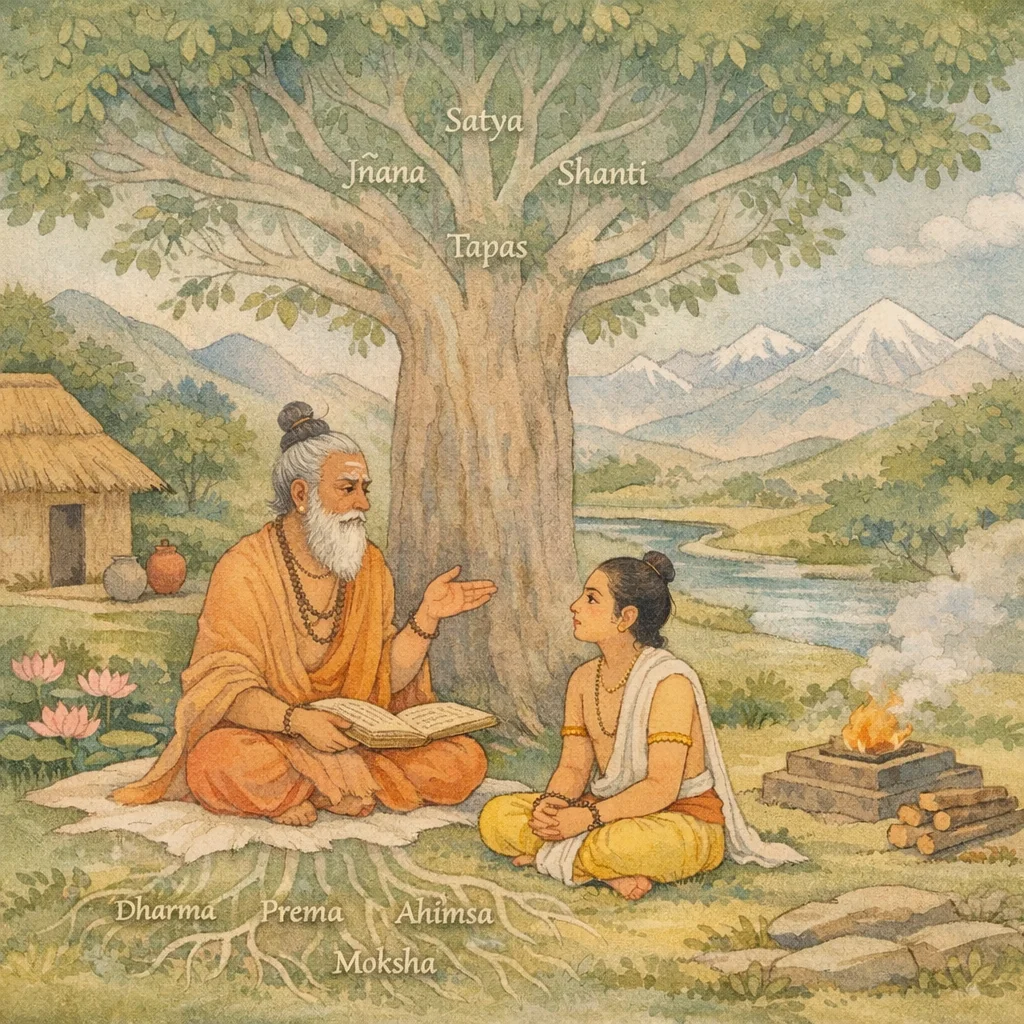
वायुदेव उवाच अत्राप्युदाहरन्तीममितिहासं पुरातनम् । संवादं मोक्षसंयुक्त शिष्यस्य गुरुणा सह,भगवान् श्रीकृष्णने कहा--अर्जुन इस विषयको लेकर गुरु और शिणष्यमें जो मोक्षविषयक संवाद हुआ था, वह प्राचीन इतिहास बतलाया जा रहा है। एक दिन उत्तम व्रतका पालन करनेवाले एक ब्रह्मवेत्ता आचार्य अपने आसनपर विराजमान थे। परंतप! उस समय किसी बुद्धिमान् शिष्यने उनके पास जाकर निवेदन किया--'भगवन्! मैं कल्याणमार्ममें प्रवृत्त होकर आपकी शरणमें आया हूँ और आपके चरणोंमें मस्तक झुकाकर याचना करता हूँ कि मैं जो कुछ पूछूँ; उसका उत्तर दीजिये। मैं जानना चाहता हूँ कि श्रेय क्या है?”
Vāyudeva said: “Here too, they cite an ancient tradition—an old historical account—namely, a dialogue concerned with liberation, held between a disciple and his teacher.”
Verse 3
वश्चिद् ब्राह्मणमासीनमाचार्य संशितव्रतम् । शिष्य: पप्रच्छ मेधावी किंस्विच्छेय: परंतप,भगवान् श्रीकृष्णने कहा--अर्जुन इस विषयको लेकर गुरु और शिणष्यमें जो मोक्षविषयक संवाद हुआ था, वह प्राचीन इतिहास बतलाया जा रहा है। एक दिन उत्तम व्रतका पालन करनेवाले एक ब्रह्मवेत्ता आचार्य अपने आसनपर विराजमान थे। परंतप! उस समय किसी बुद्धिमान् शिष्यने उनके पास जाकर निवेदन किया--'भगवन्! मैं कल्याणमार्ममें प्रवृत्त होकर आपकी शरणमें आया हूँ और आपके चरणोंमें मस्तक झुकाकर याचना करता हूँ कि मैं जो कुछ पूछूँ; उसका उत्तर दीजिये। मैं जानना चाहता हूँ कि श्रेय क्या है?”
Vāyu said: “Once, a Brahmin teacher—steadfast in disciplined vows—was seated in his place. Then a wise disciple approached him and asked, ‘O subduer of foes, what indeed is the highest good (śreyas)?’”
Verse 4
भगवन्तं प्रपन्नो5हं नि:श्रेयसपरायण: । याचे त्वां शिरसा विप्र यद् ब्रूयां ब्रूहि तन्मम,भगवान् श्रीकृष्णने कहा--अर्जुन इस विषयको लेकर गुरु और शिणष्यमें जो मोक्षविषयक संवाद हुआ था, वह प्राचीन इतिहास बतलाया जा रहा है। एक दिन उत्तम व्रतका पालन करनेवाले एक ब्रह्मवेत्ता आचार्य अपने आसनपर विराजमान थे। परंतप! उस समय किसी बुद्धिमान् शिष्यने उनके पास जाकर निवेदन किया--'भगवन्! मैं कल्याणमार्ममें प्रवृत्त होकर आपकी शरणमें आया हूँ और आपके चरणोंमें मस्तक झुकाकर याचना करता हूँ कि मैं जो कुछ पूछूँ; उसका उत्तर दीजिये। मैं जानना चाहता हूँ कि श्रेय क्या है?”
I have taken refuge in you, O venerable one, with my whole being set upon the highest good (final beatitude). O Brahmin-sage, I bow my head and entreat you: whatever I may ask, tell me that—grant me the answer. I wish to understand what truly constitutes ‘the good’ that leads to ultimate welfare and liberation.
Verse 5
87222! 57 0भ 0 छ ज्। " / 68८. «822 373 > ैर डा 9० €/#२-००४+ ऐ ७ 08, ५+: क न ॥। ! न मर ५ 8 अक 2 > द्ब्य <>- |] ; 4 <00 । 4 हु है कि तमेवंवादिन पार्थ शिष्यं गुरुकुवाच ह । सर्व॑ तु ते प्रवक्ष्यामि यत्र वै संशयो द्विज,पार्थ! इस प्रकार कहनेवाले उस शिष्यसे गुरु बोले--“विप्र! तुम्हारा जिस विषयमें संशय है, वह सब मैं तुम्हें बताऊँगा'
Then the teacher addressed that disciple of Pārtha who had spoken in this manner: “O brāhmaṇa, I will explain to you everything about the matter in which you have doubt.” The verse frames an ethical pedagogy: sincere questioning is met not with rebuke but with a complete, clarifying instruction from the guru.
Verse 6
इत्युक्त:ः स कुरुश्रेष्ठ गुरुणा गुरुवत्सल: । प्राउजलि: परिपप्रच्छ यत्तच्छूणु महामते,महाबुद्धिमान् कुरुश्रेष्ठ अर्जुन! गुरुके द्वारा इस प्रकार कहे जानेपर उस गुरुके प्यारे शिष्यने हाथ जोड़कर जो कुछ पूछा, उसे सुनो
Thus addressed by his teacher, that foremost of the Kurus—ever devoted to his guru—folded his hands in reverence and asked further questions. O great-minded one, listen to what he asked.
Verse 7
शिष्य उवाच कुतश्चाहं कुतश्च त्वं तत्सत्यं ब्रूहि यत्परम् । कुतो जातानि भूतानि स्थावराणि चराणि च,शिष्य बोला--विप्रवर! मैं कहाँसे आया हूँ और आप कहाँसे आये हैं? जगत्के चराचर जीव कहाँसे उत्पन्न हुए हैं? जो परमतत्त्व है, उसे आप यशथार्थरूपसे बताइये
The disciple said: “From where have I come, and from where have you come? Tell me truly that supreme reality. From what source have all beings arisen—both the immovable and the moving?”
Verse 8
केन जीवन्ति भूतानि तेषामायुश्च कि परम् । शरज कि सत्यं कि तपो विप्र के गुणा: सद्धिरीरिता:,विप्रवर! सम्पूर्ण जीव किससे जीवन धारण करते हैं? उनकी अधिक-से-अधिक आयु कितनी है? सत्य और तप क्या है? सत्पुरुषोंने किन गुणोंकी प्रशंसा की है?
The disciple said: “O brāhmaṇa, by what do living beings sustain their life? What is the utmost span of their life? What is truth, and what is austerity? And which qualities have the virtuous praised? O best of brāhmaṇas, please tell me.”
Verse 9
के पन्थान: शिवाश्र स्यु: कि सुखं कि च दुष्कृतम् एतान् मे भगवन् प्रश्नान् याथातथ्येन सुव्रत,कौन-कौन-से मार्ग कल्याण करनेवाले हैं? सर्वोत्तम सुख क्या है? और पाप किसे कहते हैं? श्रेष्ठ व्रबरका आचरण करनेवाले गुरुदेव! मेरे इन प्रश्नोंका आप यथार्थरूपसे उत्तर देनेमें समर्थ हैं। धर्मज्ञोंमें श्रेष्ठ विप्रषें! यह सब जाननेके लिये मेरे मनमें बड़ी उत्कण्ठा है। इस विषयमें इन प्रश्नोंका तत्त्वतः यथार्थ उत्तर देनेमें आपसे अतिरिक्त दूसरा कोई समर्थ नहीं है। अत: आप ही बतलाइये; क्योंकि संसारमें मोक्षधर्मोके तत्त्वके ज्ञानममें आप कुशल बताये गये हैं
The disciple said: “Which paths truly lead to auspiciousness and welfare? What is the highest happiness? And what is called wrongdoing (sin)? O Blessed one, O you of excellent vows, you are able to answer these questions of mine exactly as they are in truth. My mind is intensely eager to know this; apart from you, no one seems competent to state the real principle here—therefore, please explain, for you are renowned as skilled in the knowledge of the liberating dharmas.”
Verse 10
वक्तुमर्हसि विप्रर्षे यथावदिह तत्त्वत: । त्वदन्य: कश्नन प्रश्नानेतान् वक्तुमिहाहति,कौन-कौन-से मार्ग कल्याण करनेवाले हैं? सर्वोत्तम सुख क्या है? और पाप किसे कहते हैं? श्रेष्ठ व्रबरका आचरण करनेवाले गुरुदेव! मेरे इन प्रश्नोंका आप यथार्थरूपसे उत्तर देनेमें समर्थ हैं। धर्मज्ञोंमें श्रेष्ठ विप्रषें! यह सब जाननेके लिये मेरे मनमें बड़ी उत्कण्ठा है। इस विषयमें इन प्रश्नोंका तत्त्वतः यथार्थ उत्तर देनेमें आपसे अतिरिक्त दूसरा कोई समर्थ नहीं है। अत: आप ही बतलाइये; क्योंकि संसारमें मोक्षधर्मोके तत्त्वके ज्ञानममें आप कुशल बताये गये हैं
The disciple said: “O best of Brahmin seers, you should explain—here and now, correctly and in accordance with the truth. Other than you, no one is fit in this world to answer these questions. Therefore, please tell me, for I am intensely eager to know: which paths lead to true welfare, what is the highest happiness, and what is called sin. You, revered teacher, are capable of giving a precise answer, being renowned as one skilled in the principles of the dharma that leads to liberation.”
Verse 11
ब्रृहि धर्मविदां श्रेष्ठ परं कौतूहलं मम । मोक्षधर्मार्थकुशलो भवॉल्लोकेषु गीयते,कौन-कौन-से मार्ग कल्याण करनेवाले हैं? सर्वोत्तम सुख क्या है? और पाप किसे कहते हैं? श्रेष्ठ व्रबरका आचरण करनेवाले गुरुदेव! मेरे इन प्रश्नोंका आप यथार्थरूपसे उत्तर देनेमें समर्थ हैं। धर्मज्ञोंमें श्रेष्ठ विप्रषें! यह सब जाननेके लिये मेरे मनमें बड़ी उत्कण्ठा है। इस विषयमें इन प्रश्नोंका तत्त्वतः यथार्थ उत्तर देनेमें आपसे अतिरिक्त दूसरा कोई समर्थ नहीं है। अत: आप ही बतलाइये; क्योंकि संसारमें मोक्षधर्मोके तत्त्वके ज्ञानममें आप कुशल बताये गये हैं
The disciple said: “O best among the knowers of dharma, tell me—my curiosity is profound. You are renowned in the worlds as one skilled in the aims and principles of mokṣa-dharma. Which paths are truly welfare-bringing? What is the highest happiness? And what is called sin? O revered teacher, exemplary in vows and conduct, you alone are capable of answering these questions as they really are. O foremost among the learned brāhmaṇas, I feel great eagerness to know this. On this subject, apart from you there is no one competent to state the truth in its essence. Therefore, you yourself should explain, for you are celebrated as expert in the true knowledge of the dharma that leads to liberation.”
Verse 12
सर्वसंशयरांच्छेत्ता त्ववन्यो न च विद्यते । संसारभीरवश्चलैव मोक्षकामास्तथा वयम्,हम संसारसे भयभीत और मोक्षके इच्छुक हैं। आपके सिवा दूसरा कोई ऐसा नहीं, जो सब प्रकारकी शंकाओंका निवारण कर सके
The disciple said: "You alone are the one who cuts through every doubt; besides you, no other such guide exists. We too are fearful of the cycle of worldly existence and long for liberation."
Verse 13
वायुदेव उवाच तस्मै सम्प्रतिपन्नाय यथावत् परिपृच्छते । शिष्याय गुणयुक्ताय शान्ताय प्रियवर्तिने,भगवान् श्रीकृष्णने कहा--कुरुकुलश्रेष्ठ शत्रुदमन अर्जुन! वह शिष्य सब प्रकारसे गुरुकी शरणमें आया था। यथोचित रीतिसे प्रश्न करता था। गुणवान् और शान्त था। छायाकी भाँति साथ रहकर गुरुका प्रिय करता था तथा जितेन्द्रिय, संयमी और ब्रह्मचारी था। उसके पूछनेपर मेधावी एवं व्रतधारी गुरुने पूर्वोक्त सभी प्रश्नोंका ठीक-ठीक उत्तर दिया
Vāyudeva said: To that disciple—who had fully taken refuge (in his teacher) and who questioned in the proper manner—the teacher responded appropriately. The disciple was endowed with virtues, calm in temperament, and one who acted to please his guru, staying close like a shadow. Thus, when he asked, the wise and vow-observing preceptor gave precise answers to all the questions stated earlier.
Verse 14
छायाभूताय दान्ताय यतते ब्रह्मचारिणे । तान् प्रश्नानब्रवीत् पार्थ मेधावी स धृतव्रत: । गुरु: कुरुकुलश्रेष्ठ सम्यक् सर्वानरिंदम,भगवान् श्रीकृष्णने कहा--कुरुकुलश्रेष्ठ शत्रुदमन अर्जुन! वह शिष्य सब प्रकारसे गुरुकी शरणमें आया था। यथोचित रीतिसे प्रश्न करता था। गुणवान् और शान्त था। छायाकी भाँति साथ रहकर गुरुका प्रिय करता था तथा जितेन्द्रिय, संयमी और ब्रह्मचारी था। उसके पूछनेपर मेधावी एवं व्रतधारी गुरुने पूर्वोक्त सभी प्रश्नोंका ठीक-ठीक उत्तर दिया
O Pārtha (Arjuna), the wise and steadfast teacher replied properly to all those questions. The disciple had approached the guru in complete surrender—calm, self-controlled, disciplined, and devoted to brahmacarya—serving him closely like a shadow and asking his questions in the fitting manner. Thus, the guru, firm in his vows, gave accurate answers to everything that had been asked.
Verse 15
गुरुर्वाच ब्रह्मणोक्तमिदं सर्वमृषिप्रवरसेवितम् । वेदविद्यां समाश्रित्य तत्त्वभूतार्थभावनम्,गुरु बोले--बेटा! ब्रह्माजीने वेद-विद्याका आश्रय लेकर तुम्हारे पूछे हुए इन सभी प्रश्नोंका उत्तर पहलेसे ही दे रखा है तथा प्रधान-प्रधान ऋषियोंने उसका सदा ही सेवन किया है। उन प्रश्नोंके उत्तरमें परमार्थविषयक विचार किया गया है
Vāyudeva said: “The teacher said: ‘My child, Brahmā has already set forth all this—these answers to the questions you have asked—grounded in Vedic knowledge. The foremost sages have continually relied upon and practiced this teaching. In responding to those questions, the reflection is directed toward the highest truth and the ultimate meaning of reality.’”
Verse 16
ज्ञान त्वेव परं विद्य: संन्यासं तप उत्तमम् | यस्तु वेद निराबाधं ज्ञानतत्त्वं विनिश्चयात् । सर्वभूतस्थमात्मानं स सर्वगतिरिष्यते,हम ज्ञानको ही परब्रह्म और संन्यासको उत्तम तप जानते हैं। जो अबाधित ज्ञानतत्त्वको निश्चयपूर्वक जानकर अपनेको सब प्राणियोंके भीतर स्थित देखता है, वह सर्वगति (सर्वव्यापक) माना जाता है
Vāyu said: “Know that true knowledge is the highest attainment, and renunciation is the supreme austerity. Whoever, with firm certainty, understands the unobstructed principle of knowledge and sees the Self as abiding within all beings—such a person is regarded as ‘all-going,’ one whose realization is universal and unconfined.”
Verse 17
यो विद्वान सहसंवासं विवासं चैव पश्यति । तथैवैकत्वनानात्वे स दुःखात् परिमुच्यते,जो विद्वान् संयोग और वियोगको तथा वैसे ही एकत्व और नानात्वको एक साथ तत्त्वतः जानता है, वह दुःखसे मुक्त हो जाता है
Vāyu said: The wise person who truly perceives both association and separation—and likewise understands unity and diversity as they really are—becomes freed from sorrow. Ethically, the verse points to steadiness of insight: by seeing life’s unions and partings, and the play of oneness and multiplicity, without confusion or clinging, one transcends grief.
Verse 18
यो न कामयते किंचिन्न किंचिदभिमन्यते । इहलोकस्थ एवैष ब्रह्म भूयाय कल्पते,जो किसी वस्तुकी कामना नहीं करता तथा जिसके मनमें किसी बातका अभिमान नहीं होता, वह इस लोकमें रहता हुआ ही ब्रह्मभावको प्राप्त हो जाता है
Vāyu said: “One who does not crave anything and who does not entertain pride about anything—such a person, even while living in this very world, becomes fit to attain the state of Brahman.”
Verse 19
प्रधानगुणतत्त्वज्ञ: सर्वभूतविधानवित् | निर्ममो निरहड्कारो मुच्यते नात्र संशय:,जो माया और सत्त्वादि गुणोंके तत्त्वको जानता है, जिसे सब भूतोंके विधानका ज्ञान है और जो ममता तथा अहंकारसे रहित हो गया है, वह मुक्त हो जाता है--इसमें संदेह नहीं है
Vāyu said: “One who truly knows the principles of Pradhāna (primordial nature) and the guṇas such as sattva, who understands the ordering and governance of all beings, and who has become free from possessiveness and egoism—such a person is liberated. Of this there is no doubt.”
Verse 20
अव्यक्तबीजप्रभवो बुद्धिस्कन्धमयो महान् । महाहड्कारविटप इन्द्रियाड्कुरकोटर:,छित्त्वा चामरतां प्राप्प जहाति मृत्युजन्मनी । यह देह एक वृक्षके समान है। अज्ञान इसका मूल अंकुर (जड़) है, बुद्धि स्कनध (तना) है, अहंकार शाखा है, इन्द्रियाँ खोखले हैं, पजच महाभूत उसके विशेष अवयव हैं और उन भूतोंके विशेष भेद उसकी टहनियाँ हैं। इसमें सदा ही संकल्परूपी पत्ते उगते और कर्मरूपी फूल खिलते रहते हैं। शुभाशुभ कर्मोसे प्राप्त होनेवाले सुख-दुःखादि ही उसमें सदा लगे रहनेवाले फल हैं। इस प्रकार ब्रह्मरूपी बीजसे प्रकट होकर प्रवाहरूपसे सदा मौजूद रहनेवाला देहरूपी वृक्ष समस्त प्राणियोंके जीवनका आधार है। जो इसके तत्त्वको भलीभाँति जानकर ज्ञानरूपी उत्तम तलवारसे इसे काट डालता है, वह अमरत्वको प्राप्त होकर जन्म-मृत्युके बन्धनसे छुटकारा पा जाता है
Vāyu said: “This great tree of embodied existence springs from an unmanifest seed. Its trunk is intellect (buddhi), its branches are the great ego-sense (ahaṅkāra), and its hollows are the sense-faculties. When a person truly understands this and cuts it down with the excellent sword of knowledge, he attains immortality and leaves behind the bondage of death and rebirth.”
Verse 21
महाभूतविशेषश्च विशेषप्रतिशाखवान् । सदापर्ण: सदापुष्प: सदा शुभफलोदय:
Vāyu-deva said: “It is a wondrous manifestation of the great elements, distinguished by its unique branching. Ever-leafed and ever-flowering, it continually brings forth auspicious fruits.”
Verse 22
अजीव: सर्वभूतानां ब्रह्मबीज: सनातन: । एतजज्ञात्वा च तत्त्वानि ज्ञानेन परमासिना
Vāyu-deva said: “The imperishable principle is the eternal seed of Brahman within all beings. Knowing this, one should discern the true realities and, with the supreme sword of knowledge, cut through delusion—so that one lives with clarity, restraint, and right understanding.”
Verse 23
भूतभव्यभविष्यादि धर्मकामार्थनि श्चयम् । सिद्धसंघपरिज्ञातं पुराकल्पं सनातनम्,महाप्राज्ञ! जिसमें भूत, वर्तमान और भविष्य आदिके तथा धर्म, अर्थ और कामके स्वरूपका निश्चय किया गया है, जिसको सिद्धोंके समुदायने भलीभाँति जाना है, जिसका पूर्वकालमें निर्णय किया गया था और बुद्धिमान् पुरुष जिसे जानकर सिद्ध हो जाते हैं, उस परम उत्तम सनातन ज्ञानका अब मैं तुमसे वर्णन करता हूँ
Vāyu said: “O great sage, I shall now describe to you that supreme, eternal knowledge—wherein the nature of past, present, and future is decisively understood, and likewise the true measure of dharma, artha, and kāma. It has been well comprehended by the assemblies of perfected beings, was determined in ancient time, and by knowing it the wise attain spiritual fulfillment.”
Verse 24
प्रवक्ष्येडहं महाप्राज्ञ पदमुत्तममद्य ते । बुद्ध्वा यदिह संसिद्धा भवन्तीह मनीषिण:,महाप्राज्ञ! जिसमें भूत, वर्तमान और भविष्य आदिके तथा धर्म, अर्थ और कामके स्वरूपका निश्चय किया गया है, जिसको सिद्धोंके समुदायने भलीभाँति जाना है, जिसका पूर्वकालमें निर्णय किया गया था और बुद्धिमान् पुरुष जिसे जानकर सिद्ध हो जाते हैं, उस परम उत्तम सनातन ज्ञानका अब मैं तुमसे वर्णन करता हूँ
Vāyu said: “O great-minded one, today I shall declare to you that supreme state (or highest truth). Having understood it here in this very life, the wise become perfected here—attaining spiritual fulfillment through clear knowledge rather than mere ritual or speculation.”
Verse 25
उपगम्यर्षय: पूर्व जिज्ञासन्त: परस्परम् । प्रजापतिभरद्वाजी गौतमो भार्गवस्तथा,पहलेकी बात है, प्रजापति दक्ष, भरद्वाज, गौतम, भृगुनन्दन शुक्र, वसिष्ठ, कश्यप, विश्वामित्र और अत्रि आदि महर्षि अपने कर्मोद्वारा समस्त मार्गोमें भटकते-भटकते जब बहुत थक गये, तब एकत्रित हो आपसमें जिज्ञासा करते हुए परम वृद्ध अंगिरा मुनिको आगे करके ब्रह्मलोकमें गये और वहाँ सुखपूर्वक बैठे हुए पापरहित महात्मा ब्रह्माजीका दर्शन करके उन महर्षि ब्राह्मणोंने विनयपूर्वक उन्हें प्रणाम किया। फिर तुम्हारी ही तरह अपने परम कल्याणके विषयमें पूछा--
Vāyu said: In former times, the sages, having approached one another and questioning among themselves, gathered together—Prajāpati Dakṣa, Bharadvāja, Gautama, and the Bhārgava as well. Worn out from wandering through many paths in pursuit of right action and the highest good, they united in inquiry and sought a definitive understanding from the highest source of wisdom.
Verse 26
वसिष्ठ: कश्यपश्चैव विश्वामित्रो<त्रिरेव च | मार्गान् सर्वान् परिक्रम्य परिश्रान्ता: स्वकर्मभि:,पहलेकी बात है, प्रजापति दक्ष, भरद्वाज, गौतम, भृगुनन्दन शुक्र, वसिष्ठ, कश्यप, विश्वामित्र और अत्रि आदि महर्षि अपने कर्मोद्वारा समस्त मार्गोमें भटकते-भटकते जब बहुत थक गये, तब एकत्रित हो आपसमें जिज्ञासा करते हुए परम वृद्ध अंगिरा मुनिको आगे करके ब्रह्मलोकमें गये और वहाँ सुखपूर्वक बैठे हुए पापरहित महात्मा ब्रह्माजीका दर्शन करके उन महर्षि ब्राह्मणोंने विनयपूर्वक उन्हें प्रणाम किया। फिर तुम्हारी ही तरह अपने परम कल्याणके विषयमें पूछा--
Vasiṣṭha, Kaśyapa, Viśvāmitra, and Atri as well—having traversed every path and grown weary through their own appointed works—became exhausted. The verse frames the sages’ fatigue not as failure but as the natural limit of outward striving, preparing the ground for seeking higher guidance and clarity about the supreme good.
Verse 27
ऋषिमाड्िरसं वृद्ध पुरस्कृत्य तु ते द्विजा: । ददृशुर्ब्रह्म भवने ब्रह्माणं वीतकल्मषम्,पहलेकी बात है, प्रजापति दक्ष, भरद्वाज, गौतम, भृगुनन्दन शुक्र, वसिष्ठ, कश्यप, विश्वामित्र और अत्रि आदि महर्षि अपने कर्मोद्वारा समस्त मार्गोमें भटकते-भटकते जब बहुत थक गये, तब एकत्रित हो आपसमें जिज्ञासा करते हुए परम वृद्ध अंगिरा मुनिको आगे करके ब्रह्मलोकमें गये और वहाँ सुखपूर्वक बैठे हुए पापरहित महात्मा ब्रह्माजीका दर्शन करके उन महर्षि ब्राह्मणोंने विनयपूर्वक उन्हें प्रणाम किया। फिर तुम्हारी ही तरह अपने परम कल्याणके विषयमें पूछा--
Placing the aged sage Aṅgiras at their head, those twice-born seers went to Brahmā’s own abode. There, in the dwelling of the Creator, they beheld Brahmā—free from all taint of sin—seated in serenity. The scene frames a moral movement: when even great sages grow weary and uncertain amid the many paths of action, they turn with humility to the highest source of order and insight, seeking guidance for their ultimate welfare.
Verse 28
त॑ प्रणम्य महात्मानं सुखासीनं महर्षय: । पप्रच्छुर्विनयोपेता नै:श्रेयसमिदं परम्,पहलेकी बात है, प्रजापति दक्ष, भरद्वाज, गौतम, भृगुनन्दन शुक्र, वसिष्ठ, कश्यप, विश्वामित्र और अत्रि आदि महर्षि अपने कर्मोद्वारा समस्त मार्गोमें भटकते-भटकते जब बहुत थक गये, तब एकत्रित हो आपसमें जिज्ञासा करते हुए परम वृद्ध अंगिरा मुनिको आगे करके ब्रह्मलोकमें गये और वहाँ सुखपूर्वक बैठे हुए पापरहित महात्मा ब्रह्माजीका दर्शन करके उन महर्षि ब्राह्मणोंने विनयपूर्वक उन्हें प्रणाम किया। फिर तुम्हारी ही तरह अपने परम कल्याणके विषयमें पूछा--
Having bowed to that sinless great-souled one, seated at ease, the sages—endowed with humility—questioned him about this highest good (naiḥśreyasa), the supreme path to ultimate welfare and liberation. The scene frames an ethical inquiry: weary of wandering through many ritual and practical paths, the seers seek clear guidance on what truly leads to the highest human end.
Verse 29
कथं कर्म क्रियात् साधु कथं मुच्येत किल्बिषात् । के नो मार्गा: शिवाश्र स्यु: कि सत्यं कि च दुष्कृतम्,'श्रेष्ठ कर्म किस प्रकार करना चाहिये? मनुष्य पापसे किस प्रकार छूटता है? कौन-से मार्ग हमारे लिये कल्याणकारक हैं? सत्य क्या है? और पाप क्या है?
Vāyu-deva said: “How should one perform action rightly? How does a person become freed from sin? Which paths are auspicious and welfare-bringing for us? What is truth, and what is wrongdoing?”
Verse 30
कौ चोभौ कर्मणां मार्गो प्राप्तुयुर्दक्षिणोत्तरी । प्रलयं चापवर्ग च भूतानां प्रभवाप्ययौं,“तथा कर्मोके वे दो मार्ग कौन-से हैं, जिनसे मनुष्य दक्षिणायन और उत्तरायण गतिको प्राप्त होते हैं? प्रलय और मोक्ष क्या हैं? एवं प्राणियोंके जन्म और मरण कया हैं?”
Vāyu said: “What are the two paths of action by which people attain the southern and the northern courses? What is dissolution, and what is liberation? And what, for living beings, are birth and death—their arising and their passing away?”
Verse 31
इत्युक्त: स मुनिश्रेष्ठीयदाह प्रपितामह: । तत् ते5हं सम्प्रवक्ष्यामि शूणु शिष्य यथागमम्,शिष्य! उन मुनिश्रेष्ठ महर्षियोंके द्वारा इस प्रकार कहे जानेपर उन प्रपितामह ब्रह्माजीने जो कुछ कहा, वह मैं तुम्हें शास्त्रानुसार पूर्णतया बताऊँगा, उसे सुनो
When the foremost of sages had spoken thus, the Prāpitāmaha (Brahmā) replied. That very teaching I shall now recount to you in full, in accordance with the sacred tradition—listen, O disciple. The verse frames the transmission of dharma as a faithful handing-down of authoritative instruction, emphasizing disciplined listening and continuity of revelation.
Verse 32
ब्रह्मोवाच सत्याद् भूतानि जातानि स्थावराणि चराणि च । तपसा तानि जीवन्ति इति तदू वित्त सुव्रता: । स्वां योनिं समतिक्रम्य वर्तन्ते स्वेन कर्मणा,ब्रह्माजीने कहा--उत्तम व्रतका पालन करनेवाले महर्षियो! ऐसा जानो कि चराचर जीव सत्यस्वरूप परमात्मासे उत्पन्न हुए हैं और तपरूप कर्मसे जीवन धारण करते हैं। वे अपने कारणस्वरूप ब्रह्मको भूलकर अपने कर्मोके अनुसार आवागमनके चक्रमें घूमते हैं
Brahmā said: “From Truth (satya) all beings are born—both the immovable and the moving. By tapas (austerity, disciplined effort) they sustain their life; know this well, O you of excellent vows. Yet, overstepping their own source, they proceed according to their own deeds, revolving onward under the momentum of karma.”
Verse 33
सत्यं हि गुणसंयुक्त नियतं पठउचलक्षणम्,क्योंकि गुणोंसे युक्त हुआ सत्य ही पाँच लक्षणोंवाला निश्चित किया गया है
Vāyu said: Truth, when joined with the proper virtues, is indeed determined to be a fixed principle characterized by five defining marks. In ethical terms, truth is not mere factual speech, but a disciplined moral quality shaped by virtues and recognized through clear criteria.
Verse 34
इस प्रकार श्रीमह्याभारत आश्वमेधिकपर्वके अन्तर्गत अनुगीतापर्वमें ब्राह्मणगीताविषयक चौंतीसवाँ अध्याय पूरा हुआ,ब्रह्म सत्यं तप: सत्यं सत्यं चैव प्रजापति: । सत्याद् भूतानि जातानि सत्यं भूतमयं जगत् ब्रह्म सत्य है, तप सत्य है और प्रजापति भी सत्य है। सत्यसे ही सम्पूर्ण भूतोंका जन्म हुआ है। यह भौतिक जगत् सत्यरूप ही है
Arjuna said: “Brahman is truth; austerity is truth; and Prajāpati too is truth. From truth all beings are born, and this world—made up of beings—is itself of the nature of truth.”
Verse 35
तस्मात् सत्यमया विप्रा नित्यं योगपरायणा: । अतीतक्रोधसंतापा नियता धर्मसेविन:,इसलिये सदा योगमें लगे रहनेवाले, क्रोध और संतापसे दूर रहनेवाले तथा नियमोंका पालन करनेवाले धर्मसेवी ब्राह्मण सत्यका आश्रय लेते हैं इति श्रीमहाभारते आश्वमेधिके पर्वणि अनुगीतापर्वणि गुरुशिष्यसंवादे पउ्चत्रिंशो 5 ध्याय: इस प्रकार श्रीमह्ाभारत आश्वमेधिकपर्वके अन्तर्गत अनुगीतापर्वमें गुरु-शिष्य- संवादविषयक पैंतीसवाँ अध्याय पूरा हुआ
Therefore, brahmins who are ever devoted to yoga—disciplined in conduct, free from anger and inner distress, and steadfast in serving dharma—take refuge in truth as their guiding principle.
Verse 36
अन्योन्यनियतान् वैद्यान् धर्मसेतुप्रवर्तकान् | तानहं सम्प्रवक्ष्यामि शाश्वताल्लॉकभावनान्,जो परस्पर एक-दूसरेको नियमके अंदर रखनेवाले, धर्म-मर्यादाके प्रवर्तक और विद्दान् हैं, उन ब्राह्मणोंके प्रति मैं लोक-कल्याणकारी सनातन धर्मोंका उपदेश करूँगा
Verse 37
चातुर्विद्यं तथा वर्णाश्चातुराश्रमिकान् पृथक् । धर्ममेकं चतुष्पादं नित्यमाहुर्मनीषिण:,वैसे ही प्रत्येक वर्ण और आश्रमके लिये पृथक्-पृथक् चार विद्याओंका वर्णन करूँगा। मनीषी विद्वान् चार चरणोंवाले एक धर्मको नित्य बतलाते हैं
Vāyu said: “I shall also describe, separately, the fourfold learning prescribed for each social order and for each of the four stages of life. The wise ever declare that there is one Dharma, standing on four supports.”
Verse 38
पन्थानं व: प्रवक्ष्यामि शिवं क्षेमकरं द्विजा: । नियतं ब्रह्मुभावाय गत पूर्व मनीषिभि:,द्विजवरो! पूर्व कालमें मनीषी पुरुष जिसका सहारा ले चुके हैं और जो ब्रह्मभावकी प्राप्तिका सुनिश्चित साधन है, उस परम मंगलकारी कल्याणमय मार्गका तुमलोगोंके प्रति उपदेश करता हूँ, उसे ध्यान देकर सुनो
Vāyu said: “I shall declare to you, O twice-born ones, a path that is auspicious and brings true security. It is a sure means to attain the state of Brahman, a way already trodden by the sages of old. Listen with attentive minds.”
Verse 39
गदन्तस्तं मयाद्येह पन्थानं दुर्विद परम् । निबोधत महाभागा निखिलेन परं पदम्,सौभाग्यशाली प्रवक्तागण! उस अत्यन्त दुर्विज्ञेग मार्गको, जो कि पूर्णतया परमपदस्वरूप है, यहाँ अब मुझसे सुनो
Vāyu said: “As I speak, listen now from me, here and today, to that supreme path—extremely difficult to discern. O fortunate ones, understand in full the highest state (the supreme goal).”
Verse 40
ब्रह्मचारिकमेवाहुराश्रमं प्रथमं पदम् । गार्हस्थ्यं तु द्वितीयं स्याद् वानप्रस्थमत: परम् | ततः परं तु विज्ञेयमध्यात्मं परमं पदम्,आश्रमोंमें ब्रह्मचर्यको प्रथम आश्रम बताया गया है। गार्हस्थ्य दूसरा और वानप्रस्थ तीसरा आश्रम है, उसके बाद संन्यास आश्रम है। इसमें आत्मज्ञानकी प्रधानता होती है, अतः इसे परमपदस्वरूप समझना चाहिये
Vāyu said: “They declare the brahmacarya (student) discipline to be the first stage of life. Householdership is the second, and after that comes the forest-dweller’s stage. Beyond these, one should understand the supreme station to be the inward path of self-knowledge—renunciation in which realization of the Self is paramount.”
Verse 41
ज्योतिराकाशमादित्यो वायुरिन्द्र: प्रजापति: । नोपैति यावदध्यात्मं तावदेतान् न पश्यति,जबतक अध्यात्मज्ञानकी प्राप्ति नहीं होती, तबतक मनुष्य इन ज्योति, आकाश, वायु, सूर्य, इन्द्र और प्रजापति आदिके यथार्थ तत्त्वको नहीं जानता (आत्मज्ञान होनेपर इनका यथार्थ ज्ञान हो जाता है)
Vāyu said: “Light, space, the Sun, the Wind, Indra, and Prajāpati—so long as one has not attained the knowledge of the inner Self, one does not truly perceive the real nature of these cosmic principles. When Self-knowledge arises, their truth is understood as well.”
Verse 42
तस्योपायं प्रवक्ष्यामि पुरस्तात् तं निबोधत । फलमूलानिलभुजां मुनीनां वसतां वने,अतः पहले उस आत्मज्ञानका उपाय बतलाता हूँ, सब लोग सुनिये। ब्राह्मण, क्षत्रिय और वैश्य--इन तीन द्विजातियोंके लिये वानप्रस्थ आश्रमका विधान है। वनमें रहकर मुनिवृत्तिका सेवन करते हुए फल-मूल और वायुके आहारपर जीवन-निर्वाह करनेसे वानप्रस्थ-धर्मका पालन होता है। गृहस्थ-आश्रमका विधान सभी वर्णोके लिये है
Vāyu said: “I shall now declare beforehand the means to attain that (self-knowledge); understand it attentively. For sages dwelling in the forest, living in the manner of ascetics—sustained by fruits and roots, and even by air as their food—this is the discipline that upholds the forest-dweller’s dharma.”
Verse 43
वानप्रस्थं द्विजातीनां त्रयाणामुपदिश्यते । सर्वेषामेव वर्णानां गार्हस्थ्यं तद् विधीयते,अतः पहले उस आत्मज्ञानका उपाय बतलाता हूँ, सब लोग सुनिये। ब्राह्मण, क्षत्रिय और वैश्य--इन तीन द्विजातियोंके लिये वानप्रस्थ आश्रमका विधान है। वनमें रहकर मुनिवृत्तिका सेवन करते हुए फल-मूल और वायुके आहारपर जीवन-निर्वाह करनेसे वानप्रस्थ-धर्मका पालन होता है। गृहस्थ-आश्रमका विधान सभी वर्णोके लिये है
Vāyu said: “The stage of life called vānaprastha is enjoined for the three ‘twice-born’ orders. For all the social classes, however, the householder’s life is prescribed.” In context, the speaker is outlining a graded discipline of dharma and self-knowledge: certain austerer modes are specifically assigned to those qualified by initiation and Vedic study, while the sustaining ethical framework of society—gārhasthya—remains a universal obligation.
Verse 44
श्रद्धालक्षणमित्येवं धर्म धीरा: प्रचक्षते । इत्येवं देवयाना व: पन्थान: परिकीर्तिता: । सद्धिरध्यासिता धीरै: कर्मभिर्धर्मसेतव:,दिद्वानोंने श्रद्धाको ही धर्मका मुख्य लक्षण बतलाया है। इस प्रकार आपलोगोंके प्रति देवयान मार्गोका वर्णन किया गया है। धैर्यवान् संत-महात्मा अपने कर्मोंसे धर्म-मर्यादाका पालन करते हैं
Vāyu said: “Thus the wise declare that faith (śraddhā) is the defining mark of dharma. In this way, the paths called ‘Devayāna’ have been described to you. Steadfast and discerning saints uphold the boundaries of dharma through their deeds, establishing firm bridges that carry one across to righteousness.”
Verse 45
एतेषां पृथगध्यास्ते यो धर्म संशितव्रत: । कालात् पश्यति भूतानां सदैव प्रभवाप्ययौ,जो मनुष्य उत्तम व्रतका आश्रय लेकर उपर्युक्त धर्मोमेंसे किसीका भी दृढ़तापूर्वक पालन करते हैं, वे कालक्रमसे सम्पूर्ण प्राणियोंक जन्म और मरणको सदा ही प्रत्यक्ष देखते हैं
Vāyu said: “Among these, whichever discipline of dharma a person of sharpened, steadfast vows chooses and firmly abides in, that person, in the course of time, comes to witness directly and continually the arising and passing away—birth and death—of all living beings.”
Verse 46
अतत्तत्त्वानि वक्ष्यामि याथातथ्येन हेतुना । विषयस्थानि सर्वाणि वर्तमानानि भागश:,अब मैं यथार्थ युक्तिके द्वारा पदार्थोमें विभागपूर्वक रहनेवाले सम्पूर्ण तत्त्वोंका वर्णन करता हूँ
Vāyu said: “I shall now explain the principles as they truly are, supported by sound reasoning—showing how all the factors that operate in the fields of experience exist in distinct divisions.”
Verse 47
महानात्मा तथाव्यक्तमहंकारस्तथैव च । इन्द्रियाणि दशैक॑ च महाभूतानि पठच च,अव्यक्त प्रकृति, महत्तत्त्व, अहंकार, दस इन्द्रियाँ,एक मन, पञच महाभूत और उनके शब्द आदि विशेष गुण--यह चौबीस तत्त्वोंका सनातन सर्ग है। तथा एक जीवात्मा-इस प्रकार तत्त्वोंकी संख्या पचीस बतलायी गयी है
Vāyu said: “There is the Unmanifest, and likewise the Great Principle, and also egoity; the ten senses and the one mind; and the five great elements together with their specific qualities such as sound and the rest. This is the eternal emanation of the twenty‑four principles. And when the individual self (jīva) is added, the principles are said to be twenty‑five in number.”
Verse 48
विशेषा: पञ्च भूतानामिति सर्ग: सनातन: । चतुर्विशतिरेका च तत्त्वसंख्या प्रकीर्तिता,अव्यक्त प्रकृति, महत्तत्त्व, अहंकार, दस इन्द्रियाँ,एक मन, पञच महाभूत और उनके शब्द आदि विशेष गुण--यह चौबीस तत्त्वोंका सनातन सर्ग है। तथा एक जीवात्मा-इस प्रकार तत्त्वोंकी संख्या पचीस बतलायी गयी है
Vāyu said: “The five great elements have their distinct particularities; this is the eternal process of manifestation. Thus the enumeration of principles is proclaimed as twenty-four; and when the individual self is added, the total is taught as twenty-five.”
Verse 49
तत्त्वानामथ यो वेद सर्वेषां प्रभवाप्ययौ | स धीर: सर्वभूतेषु न मोहमधिगच्छति,जो इन सब तत्त्वोंकी उत्पत्ति और लयको ठीक-ठीक जानता है, वह सम्पूर्ण प्राणियोंमें धीर है और वह कभी मोहमें नहीं पड़ता
Vāyu said: “Whoever truly knows the origin and dissolution of all the fundamental principles (tattvas) becomes steady-minded among all beings; such a person does not fall into delusion.”
Verse 50
तत्त्वानि यो वेदयते यथातथं गुणांश्व सर्वानखिलांश्व देवता: । विधूतपाप्मा प्रविमुच्य बन्धनं स सर्वलोकानमलान् समश्षुते,जो सम्पूर्ण तत्त्वों, गुणों तथा समस्त देवताओंको यथार्थरूपसे जानता है, उसके पाप धुल जाते हैं और वह बन्धनसे मुक्त होकर सम्पूर्ण दिव्यलोकोंके सुखका अनुभव करता है
Vāyu-deva said: Whoever truly knows, as they really are, the fundamental principles (tattvas), all the qualities (guṇas), and the entire host of deities—his sins are shaken off. Freed from bondage, he comes to partake of the stainless, divine worlds, enjoying their blessedness. The verse commends right knowledge as a purifier that leads from moral entanglement to liberation and higher felicity.
Verse 223
छित्त्वा चामरतां प्राप्प जहाति मृत्युजन्मनी । यह देह एक वृक्षके समान है। अज्ञान इसका मूल अंकुर (जड़) है, बुद्धि स्कनध (तना) है, अहंकार शाखा है, इन्द्रियाँ खोखले हैं, पजच महाभूत उसके विशेष अवयव हैं और उन भूतोंके विशेष भेद उसकी टहनियाँ हैं। इसमें सदा ही संकल्परूपी पत्ते उगते और कर्मरूपी फूल खिलते रहते हैं। शुभाशुभ कर्मोसे प्राप्त होनेवाले सुख-दुःखादि ही उसमें सदा लगे रहनेवाले फल हैं। इस प्रकार ब्रह्मरूपी बीजसे प्रकट होकर प्रवाहरूपसे सदा मौजूद रहनेवाला देहरूपी वृक्ष समस्त प्राणियोंके जीवनका आधार है। जो इसके तत्त्वको भलीभाँति जानकर ज्ञानरूपी उत्तम तलवारसे इसे काट डालता है, वह अमरत्वको प्राप्त होकर जन्म-मृत्युके बन्धनसे छुटकारा पा जाता है
Vāyu said: “Having cut it down, one attains immortality and abandons the cycle of death and birth. This body is like a single tree: ignorance is its root-sprout, intellect its trunk, ego its branch; the senses are its hollows; the five great elements are its distinct limbs, and the further differentiations of those elements are its twigs. Upon it, leaves in the form of intentions continually grow, and flowers in the form of actions continually bloom. The fruits that ever cling to it are the pleasures and pains obtained from auspicious and inauspicious deeds. Thus, arising from the seed that is Brahman and persisting as an unbroken stream, this ‘tree’ of the body supports the life of all beings. Whoever truly understands its nature and cuts it down with the excellent sword of knowledge attains immortality and is freed from the bondage of birth and death.”
Frequently Asked Questions
Arjuna asks for an explicit explanation of the supreme knowable Brahman, prompting a structured teaching that links metaphysical origins, ethical truthfulness, disciplined living, and liberation-oriented knowledge.
Beings arise from satya and are sustained by tapas; aligning conduct with truth and disciplined practice, and understanding the principles (tattvas) and their origination/dissolution, reduces delusion and supports release from bondage.
Yes in doctrinal form: one who knows the tattvas and the arising/dissolution of all entities ‘does not fall into delusion,’ becomes free of impurity, is released from bondage, and attains untainted realms—serving as an implicit mokṣa-oriented phala.