Adhyaya 6
सामवेद–अथर्ववेदशाखाः, पुराणसंहिता, अष्टादशपुराणानि, विद्यास्थानानि (Sāma/Atharvan branches, Purāṇa compendium, 18 Purāṇas, knowledge taxonomy)
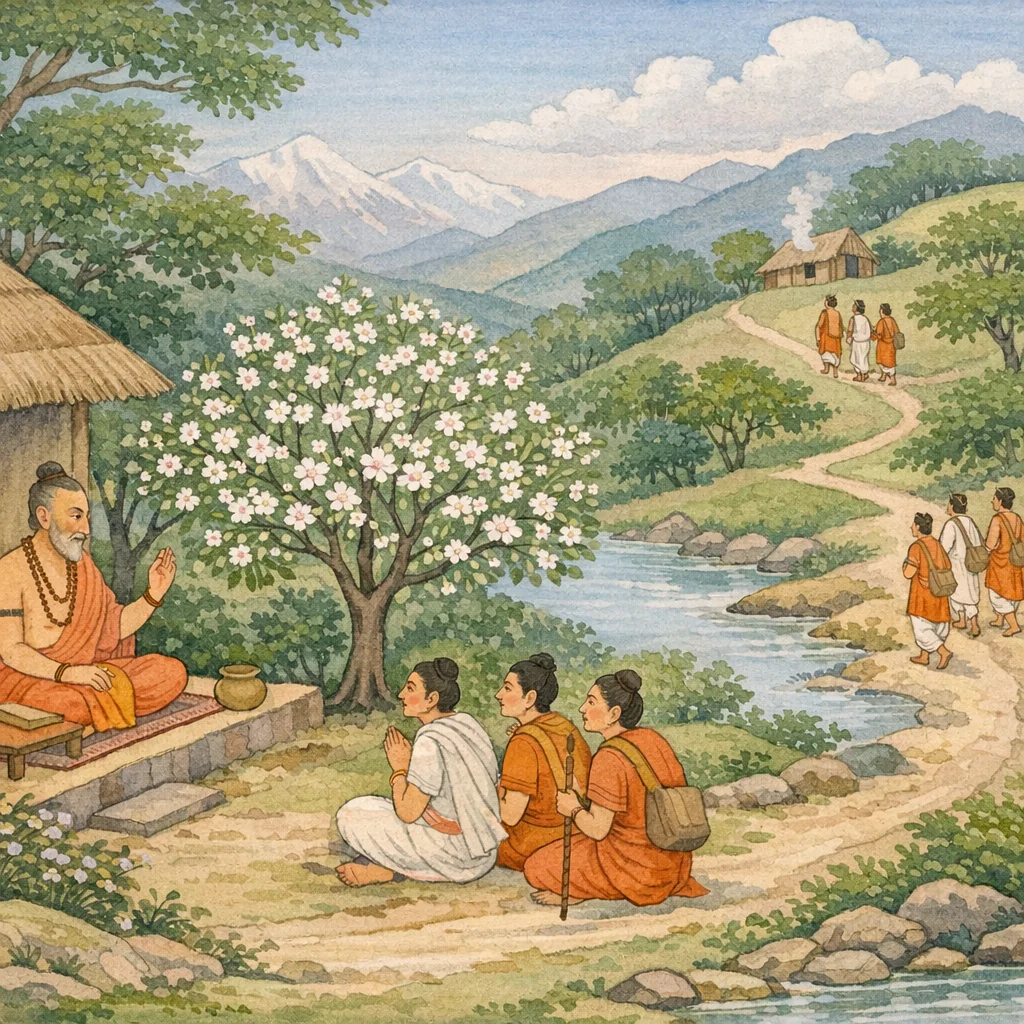
Parāśara continues teaching Maitreyā how Jaimini divided the Sāma Veda. Through Sumantu and Sukarmā the tradition is preserved; Sukarmā’s son expands the saṃhitā into a thousand recensions, received by two great-vowed disciples. Names and regional lines are given—Hiraṇyanābha, Kausalya, Pauṣpiñji, and fifteen Udīcya Sāmagas; from Hiraṇyanābha arise the Prācyasāmaga. Lokākṣi, Kuthumi, Kuṣīdī, and Lāṅgali multiply the recensions, and Kṛti teaches twenty-four saṃhitās. Turning to Atharvan transmission, Sumantu teaches Kabandha, who divides it for Devadarśa and Pathya; Devadarśa’s disciples include Maudga, Brahmabali, Śaulkāyani, and Pippalāda, while Pathya’s line includes Jājali, Kumudādi, and Śaunaka, who transmits to Babhrava and Saindhava (Saṃjñin) and names kalpas such as Āṅgirasa and Śāntikalpa. Parāśara then outlines the Purāṇic compendium entrusted by Vyāsa to Romaharṣaṇa and carried through six disciples, with root saṃhitās linked to Kāśyapa, Sāvarṇi, Śāṃśapāyana, and the Romaharṣaṇikā. The chapter lists the eighteen Purāṇas and the five lakṣaṇas (sarga, pratisarga, vaṃśa, manvantara, vaṃśānucarita), and declares this very narration to be the Vaiṣṇava Purāṇa—proclaiming that in all these subjects it is Bhagavān Viṣṇu alone who is taught, the supreme cause and meaning of cosmic history and sacred knowledge.
Shlokas
Verse 1
सामवेदतरोः शाखा व्यासशिष्यः स जैमिनिः क्रमेण येन मैत्रेय बिभेद शृणु तन् मम
Hear from me, O Maitreya: how Jaimini, the disciple of Vyāsa, in due succession divided the branches of the Sāma Veda, that great tree of sacred song.
Verse 2
सुमन्तुस् तस्य पुत्रो ऽभूत् सुकर्मास्याप्य् अभूत् सुतः अधीतवन्ताव् एकैकां संहितां तौ महामुनी
Sumantu became his son, and Sukarmā became the son of Sumantu. Those two great sages each fully mastered a single Saṃhitā, preserving its living stream through study and transmission.
Verse 3
साहस्रं संहिताभेदं सुकर्मा तत्सुतस् ततः चकार तं च तच्छिष्यौ जगृहाते महाव्रतौ
Thereafter Sukarmā’s son arranged the Saṃhitā into a thousand distinct recensions, and his two disciples—men of great vows—received and preserved that tradition.
Verse 4
हिरण्यनाभः कौसल्यः पौष्पिञ्जिश् च द्विजोत्तम उदीच्याः सामगाः शिष्यास् तस्य पञ्चदश स्मृताः
O best of Brahmins, among them are remembered Hiraṇyanābha, Kausalya, and Pauṣpiñji; and the Udīcya Sāmagas—fifteen disciples in all—are traditionally recorded in his line of instruction.
Verse 5
हिरण्यनाभात् तावत्यः संहिता यैर् द्विजोत्तमैः गृहीतास् ते ऽपि चोच्यन्ते पण्डितैः प्राच्यसामगाः
From Hiraṇyanābha those very Saṃhitās were received and preserved by the foremost of the twice-born; and the learned also speak of them as the Prācyasāmaga, guardians of the eastern Sāman tradition.
Verse 6
लोकाक्षिः कुथुमिश् चैव कुषीदी लाङ्गलिस् तथा पौष्पिञ्जिशिष्यास् तद्भेदैः संहिता बहुलीकृताः
Thus Lokākṣi, Kuthumi, Kuṣīdī, and likewise Lāṅgali—together with the disciples of Pauṣpiñji—by their respective subdivisions, multiplied the Saṃhitās into many recensions.
Verse 7
हिरण्यनाभशिष्यश् च चतुर्विंशतिसंहिताः प्रोवाच कृतिनामासौ शिष्येभ्यः सुमहामतिः
And Kṛti—disciple of Hiraṇyanābha, a sage of vast intelligence—taught his own students the twenty-four Saṃhitās, ensuring the ordered transmission of sacred tradition.
Verse 8
तैश् चापि सामवेदो ऽसौ शाखाभिर् बहुलीकृतः अथर्वणाम् अथो वक्ष्ये संहितानां समुच्चयम् अथर्ववेदं स मुनिः सुमन्तुर् अमितद्युतिः
Thus, through them, the Sāma Veda too was expanded into many branches. Now I shall describe the collected body of Atharvan Saṃhitās: the Atharva Veda—shining with unfailing splendor—was entrusted to the sage Sumantu.
Verse 9
शिष्यम् अध्यापयाम् आस कबन्धं सो ऽपि तं द्विधा कृत्वा तु देवदर्शाय तथा पथ्याय दत्तवान्
He instructed his disciple Kabandha; and Kabandha, in turn, divided that sacred teaching into two parts and handed it down—one portion to Devadarśa and the other to Pathya.
Verse 10
देवदर्शस्य शिष्यास् तु मौद्गो ब्रह्मबलिस् तथा शौल्कायनिः पिप्पलादस् तथान्यो मुनिसत्तम
But the disciples of Devadarśa were Maudga, Brahmabali, Śaulkāyani, and Pippalāda—along with another foremost sage as well.
Verse 11
पथ्यस्यापि त्रयः शिष्याः कृता यैर् द्विज संहिताः जाजलिः कुमुदादिश् च तृतीयः शौनको द्विज
O Brahmin, Pathya too had three disciples, by whom the Brahminical Saṃhitās were composed—Jājali, Kumudādi, and as the third, the twice-born Śaunaka.
Verse 12
शौनकस् तु द्विधा कृत्वा ददाव् एकां तु बभ्रवे द्वितीयां संहितां प्रादात् सैन्धवाय च संज्ञिने
Śaunaka, having divided it into two, gave one recension to Babhrava; and the second Saṃhitā he bestowed upon Saindhava, who was also known by the name Saṃjñin.
Verse 13
सैन्धवान् मुञ्जकेशश् च ऽभिनद् वेदं द्विधा पुनः नक्षत्रकल्पो वेदानां संहितानां तथैव च
Saindhava and Muñjakeśa again divided the Veda into two; and Nakṣatrakalpa likewise made divisions of the Vedas, and so too of their Saṃhitās.
Verse 14
चतुर्थः स्याद् आङ्गिरसः शान्तिकल्पश् च पञ्चमः श्रेष्ठास् त्व् अथर्वणाम् एते संहितानां विकल्पकाः
The fourth recension is said to be the Āṅgirasa; the fifth is the Śāntikalpa. These are the eminent traditions of the Atharvans—distinct arrangements of the Saṃhitās.
Verse 15
आख्यानैश् चाप्य् उपाख्यानैर् गाथाभिः कल्पशुद्धिभिः पुराणसंहितां चक्रे पुराणार्थविशारदः
Skilled in the true import of the Purāṇas, he composed the Purāṇic compendium—structuring it with grand narratives and subsidiary tales, with ancient lays, and with chronologies purified by the ordering of the Kalpas.
Verse 16
प्रख्यातो व्यासशिष्यो ऽभूत् सूतो वै रोमहर्षणः पुराणसंहितां तस्मै ददौ व्यासो महामुनिः
The famed Sūta Romaharṣaṇa became a disciple of Vyāsa; and the great sage Vyāsa entrusted to him the Purāṇic compendium, so that the sacred remembrance of dharma, kings, ages, and the ordinance of the Supreme Lord Viṣṇu might endure through time.
Verse 17
सुमतिश् चाग्निवर्चाश् च मित्रायुः शांशपायनः अकृतव्रणो ऽथ सावर्णिः षट् शिष्यास् तस्य चाभवन्
And he had six disciples—Sumati, Agnivarcā, Mitrāyu, Śāṁśapāyana, Akṛtavraṇa, and then Sāvarṇi—through whom the sacred tradition continued to flow in orderly succession.
Verse 18
काश्यपः संहिताकर्ता सावर्णिः शांशपायनः रोमहर्षणिका चान्या तिसॄणां मूलसंहिता
Kāśyapa became the arranger of a Saṃhitā; likewise Sāvarṇi and Śāṁśapāyana. Another, the Romaharṣaṇikā, too—these are the primal root-compilations of the three traditions.
Verse 19
चतुष्टयेनाप्य् एतेन संहितानाम् इदं मुने
O sage, by this very fourfold division the essential scheme of the Saṃhitās is set forth.
Verse 20
आद्यं सर्वपुराणानां पुराणं ब्राह्मम् उच्यते अष्टादश पुराणानि पुराणज्ञाः प्रचक्षते
Among all the Purāṇas, the foremost is said to be the Brāhma Purāṇa; and the knowers of Purāṇic tradition declare that the Purāṇas are eighteen in number.
Verse 21
ब्राह्मं पाद्मं वैष्णवं च शैवं भागवतं तथा तथान्यं नारदीयं च मार्कण्डेयं च सप्तमम्
The Brāhma, the Pādma, the Vaiṣṇava, and the Śaiva; likewise the Bhāgavata; and then the Nāradiya and the Mārkaṇḍeya—these are counted as the seventh set.
Verse 22
आग्नेयम् अष्टमं चैव भविष्यं नवमं तथा दशमं ब्रह्मवैवर्तं लैङ्गम् एकादशं स्मृतम्
The Āgneya is remembered as the eighth; the Bhaviṣya as the ninth; the Brahmavaivarta as the tenth; and the Laiṅga (Liṅga) is recalled as the eleventh.
Verse 23
वाराहं द्वादशं चैव स्कान्दं चात्र त्रयोदशम् चतुर्दशं वामनं च कौर्मं पञ्चदशं स्मृतम् मात्स्यं च गारुडं चैव ब्रह्माण्डं च ततः परम्
The Vārāha Purāṇa is reckoned as the twelfth; the Skānda here as the thirteenth; the Vāmana as the fourteenth; and the Kaurma is remembered as the fifteenth. Thereafter come the Mātsya, the Gāruḍa, and then the Brahmāṇḍa.
Verse 24
सर्गश् च प्रतिसर्गश् च वंशो मन्वन्तराणि च सर्वेष्व् एतेषु कथ्यन्ते वंशानुचरितं च यत्
Creation and re-creation, the lines of descent, and the cycles of the Manus—within all these are told the chronicles that follow those dynasties as time unfolds.
Verse 25
यद् एतत् तव मैत्रेय पुराणं कथ्यते मया एतद् वैष्णवसंज्ञं वै पाद्मस्य समनन्तरम्
O Maitreya, this Purāṇa that I am recounting to you is known by the name “Vaiṣṇava”; it is to be placed immediately after the Pādma.
Verse 26
सर्गे च प्रतिसर्गे च वंशमन्वन्तरादिषु कथ्यते भगवान् विष्णुर् अशेषेष्व् एव सत्तम
In creation and in dissolution-and-recreation, in dynasties and Manvantara cycles and all such themes, it is Bhagavān Viṣṇu alone who is spoken of in every way—He is the Supreme Reality, O best of the virtuous.
Verse 27
अङ्गानि चतुरो वेदा मीमांसा न्यायविस्तरः पुराणं धर्मशास्त्रं च विद्या ह्य् एताश् चतुर्दश
The Vedāṅgas, the four Vedas, Mīmāṃsā, the extensive tradition of Nyāya, the Purāṇa, and the Dharmaśāstra—these indeed are the fourteen forms of sacred knowledge.
Verse 28
आयुर्वेदो धनुर्वेदो गान्धर्वश् चैव ते त्रयः अर्थशास्त्रं चतुर्थं तु विद्या ह्य् अष्टादशैव ताः
Āyurveda, Dhanurveda, and Gandharvaveda—these are the three; and Arthaśāstra is counted as the fourth. Thus the branches of knowledge are indeed eighteen in all.
Verse 29
ज्ञेया ब्रह्मर्षयः पूर्वं तेभ्यो देवर्षयः पुनः राजर्षयः पुनस् तेभ्य ऋषिप्रकृतयस् त्रयः
Know first the Brahmarṣis; from them are understood the Devarṣis, the divine sages; and from them again the Rājarṣis, the royal sages. Thus the three fundamental classes of Ṛṣis are to be recognized.
Verse 30
इति शाखाः समाख्याताः शाखाभेदास् तथैव च कर्तारश् चैव शाखानां भेदहेतुस् तथोदितः
Thus have the śākhās been duly declared, along with their subdivisions; the founders of those branches have also been stated, as well as the causes by which such differentiations arose.
Verse 31
सर्वमन्वन्तरेष्व् एवं शाखाभेदाः समाः स्मृताः
Thus, in every Manvantara, these divisions of the Vedic branches are remembered as the same, preserved in an unbroken continuity through the cycles of time.
Verse 32
प्राजापत्या श्रुतिर् नित्या तद्विकल्पास् त्व् इमे द्विज
O twice-born one, the Prājāpatya Śruti is eternal; these teachings that follow are only its variant forms and secondary formulations.
Verse 33
एतत् तवोदितं सर्वं यत् पृष्टो ऽहम् इह त्वया मैत्रेय वेदसंबद्धं किम् अन्यत् कथयामि ते
Maitreya, I have told you all that you asked of me here—everything aligned with the Veda. What more, then, shall I relate to you?
Frequently Asked Questions
Sarga (primary creation), Pratisarga (re-creation after dissolution), Vaṃśa (genealogies), Manvantara (cycles of Manus), and Vaṃśānucarita (histories of dynasties and their kings).
Parāśara states that the Purāṇa he is narrating is called “Vaiṣṇava,” placed immediately after the Padma, and that across all its topics it speaks of Bhagavān Viṣṇu alone—centering Viṣṇu as the supreme reality and cause (Jagat-kāraṇa).