सृष्टिविस्तारप्रश्नः (Sṛṣṭi-vistāra-praśnaḥ) — The Detailed Inquiry into Creation
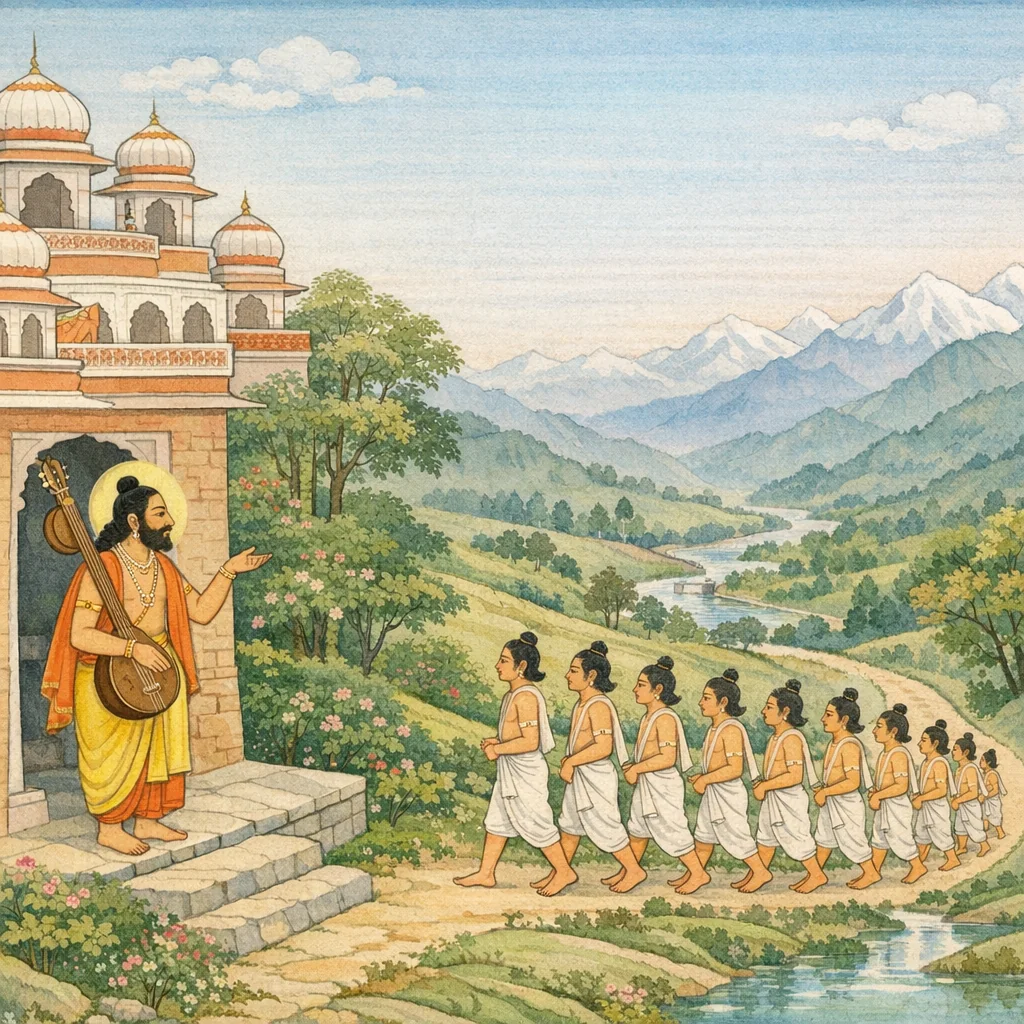
Adhyāya 31 unfolds as a learned dialogue: Śaunaka asks Sūta to explain in fuller detail the origin and differentiation of beings—devas, dānavas, gandharvas, nāgas, and rākṣasas. Sūta replies with a genealogical and cosmogonic account centered on Prajāpati Dakṣa, describing the production of progeny through regulated union (maithuna “according to dharma”). The chapter’s key teaching is Nārada’s intervention: after Dakṣa begets many sons, Nārada questions their fitness to undertake creation without first knowing the world’s “measure/extent” (māna) and its “directions/limits” (diś). Persuaded, the sons depart to comprehend the boundaries of the world and do not return, halting Dakṣa’s work. Dakṣa then produces another set of sons (e.g., five hundred), and Nārada repeats the same critique, exposing the naivety of mere procreative ambition. In its esoteric sense, the narrative teaches that “creation” requires jñāna—discernment of scope, order, and limitation—not only biological productivity; Nārada thus redirects outward expansion toward epistemic maturity and, by implication, a renunciatory orientation.
Shlokas
Verse 1
शौनक उवाच । देवानां दानवानां च गन्धर्वोरगरक्षसाम् । सृष्टिं तु विस्तरेणेमां सूतपुत्र वदाशु मे
Śaunaka said: “O son of Sūta, tell me quickly—and in full detail—about the creation of the gods, the Dānavas, the Gandharvas, the Nāgas, and the Rākṣasas.”
Verse 2
सूत उवाच । यदा न ववृधे सा तु वीरणस्य प्रजापतिः । सुतां सुतपसा युक्तामाह्वयत्सर्गकारणात्
Sūta said: When she did not grow further, that Prajāpati, Vīraṇa—since it was a cause for the continuation of creation—summoned his daughter, who was endowed with excellent austerity.
Verse 3
स मैथुनेन धर्मेण ससर्ज विविधाः प्रजाः । ताः शृणु त्वं महाप्राज्ञ कथयामि समासतः
By the lawful dharma of procreation (maithuna-dharma), he brought forth diverse beings. O greatly wise one, listen—I shall describe them to you in brief.
Verse 4
तस्यां पुत्रसहस्राणि वीरिण्यां पंच वीर्यवान् । आश्रित्य जनयामास दक्ष एव प्रजापतिः
In her—Vīriṇī—the vigorous Prajāpati Dakṣa, relying upon her, begot thousands of sons, and also five mighty ones.
Verse 5
एतान्सृष्टांस्तु तान्दृष्ट्वा नारदः प्राह वै मुनिः । सर्वं स तु समुत्पन्नो नारदः परमेष्ठिनः
Seeing those beings that had been created, the sage Nārada spoke. Indeed, Nārada—who had arisen entirely from Parameṣṭhin (Brahmā)—addressed them.
Verse 6
श्रुतवान्वा कश्यपाद्वै पुंसां सृष्टिर्भविष्यति । दक्षस्येव दुहितृषु तस्मात्तानब्रवीत्तु सः
“Or else, from Kaśyapa there will arise the creation of men, just as it happened through the daughters of Dakṣa.” Therefore, he spoke to them accordingly.
Verse 7
अजानतः कथं सृष्टिं बालिशा वै करिष्यथ । दिशं कांचिदजानंतस्तस्माद्विज्ञाय तां भुवम्
O childish ones, how will you accomplish creation while remaining ignorant? Not even knowing any direction, therefore first understand this world—its order and its nature—and then act.
Verse 8
इत्युक्ताः प्रययुस्सर्वे आशां विज्ञातुमोजसा । तदंतं न हि संप्राप्य न निवृत्ताः पितुर्गृहम्
Thus instructed, they all set out with ardour to ascertain the limit of that direction and its expanse. But, not attaining its end, they did not return to their father’s abode.
Verse 9
तज्ज्ञात्वा जनयामास पुनः पंचशतान्सुतान् । तानुवाच पुनस्सोऽपि नारदस्सर्वदर्शनः
Knowing this, he again begot five hundred sons. Then Nārada too—versed in every doctrine—addressed them once more.
Verse 10
नारद उवाच । भुवो मानमजानंतः कथं सृष्टिं करिष्यथ । सर्वे हि बालिशाः किं हि सृष्टिकर्तुं समुद्यताः
Narada said: “Not knowing the measure and true extent of the worlds, how will you accomplish creation? Indeed, you are all inexperienced—why have you set out to act as creators?”
Verse 11
सूत उवाच । तेऽपि तद्वचनं श्रुत्वा निर्यातास्सर्वतोदिशम् । सुबलाश्वा दक्षसुता हर्यश्वा इव ते पुरा
Sūta said: Hearing those words, they too set out in every direction—those strong and swift ones, the sons of Dakṣa—just as the Haryaśvas had done in former times.
Verse 12
अनंतं पुष्करं प्राप्य गतास्तेऽपि पराभवम् । अद्यापि न निवर्तंते समुद्रेभ्य इवापगाः
Having reached the endless Pushkara, even they met with defeat; and even today they do not return—like rivers that, upon entering the ocean, do not flow back.
Verse 13
तदाप्रभृति वै भ्राता भ्रातुरन्वेषणे रतः । प्रयातो नश्यति मुने तन्न कार्य्यं विपश्चिता
“From that time onward, indeed, the brother remained absorbed in searching for his brother. But one who sets out in that manner is ruined, O sage; therefore, the wise should not undertake such an act.”
Verse 14
तांश्चापि नष्टान्विज्ञाय पुत्रान्दक्षः प्रजापतिः । स च क्रोधा द्ददौ शापं नारदाय महात्मने
When Prajāpati Dakṣa came to know that those sons of his had also vanished (having turned away from worldly propagation), he—overcome with anger—pronounced a curse upon the great-souled sage Nārada.
Verse 15
कुत्रचिन्न लभस्वेति संस्थितिं कलहप्रिय । तव सान्निध्यतो लोके भवेच्च कलहस्सदा
O quarrel-loving one, may you find no abiding place anywhere. For by your very presence among people, quarrel indeed arises in the world, always.
Verse 16
सांत्वितोऽथ विधात्रा हि स दक्षस्तु प्रजापतिः । कन्याः षष्ट्यसृजत्पश्चाद्वीरिण्यामिति नः श्रुतम्
Then Dakṣa, the Prajāpati—having been consoled by the Creator (Brahmā)—later begot sixty daughters in Vīriṇī; thus indeed have we heard.
Verse 17
ददौ स दश धर्माय कश्यपाय त्रयोदश । सप्तविंशति सोमाय चतस्रोऽरिष्टनेमिने
He gave ten (daughters) to Dharma, thirteen to Kaśyapa, twenty-seven to Soma, and four to Ariṣṭanemi.
Verse 18
द्वे चैवं ब्रह्मपुत्राय द्वे चैवाङ्गिरसे तदा । द्वे कृशाश्वाय विदुषे तासां नामानि मे शृणु
Thus, two were given to the son of Brahmā, two likewise then to Aṅgiras, and two to the learned Kṛśāśva. Now hear from me their names.
Verse 19
अरुंधती वसुर्य्यामिर्लम्बा भानुर्मरुत्वती । संकल्पा च मुहूर्ता च संध्या विश्वा च वै मुने
O sage, Arundhatī, Vasur(y)āmī, Lambā, Bhānu, Marutvatī, Saṅkalpā, Muhūrtā, Sandhyā, and Viśvā—these names (divine feminine powers) are also spoken of in this context.
Verse 20
धर्मपत्न्यो मुने त्वेतास्तास्वपत्यानि मे शृणु । विश्वेदेवास्तु विश्वायास्साध्यान्साध्या व्यजायत
O sage, these are the wives of Dharma; now hear of the children born from them. From Viśvā arose the Viśvedevas, and from Sādhyā were born the gods called the Sādhyas.
Verse 21
मरुत्वत्यां मरुत्वंतो वसोस्तु वसवस्तथा । भानोस्तु भानवस्सर्वे मुहूर्तायां मुहूर्तजाः
From Marutvatī were born the Marutvans; from Vasū were likewise born the Vasus. From Bhānu were born all the Bhānavas; and from Muhūrtā were born the deities called Muhūrtajas.
Verse 22
लम्बायाश्चैव घोषोऽथ नागवीथी च यामिजा । पृथिवी विषमस्तस्यामरुन्धत्यामजायत
From Lambā were born Ghoṣa, and also Nāgavīthī and Yāmijā. From Arundhatī, Pṛthivī and Viṣama were born.
Verse 23
संकल्पायास्तु सत्यात्मा जज्ञे संकल्प एव हि । अयादया वसोः पुत्रा अष्टौ ताञ्छृणु शौनक
From Saṅkalpā was born the truthful-souled one—Saṅkalpa indeed. And from Ayā and the rest were born the eight sons of Vasu; hear of them, O Śaunaka.
Verse 24
अयो धुवश्च सोमश्च धरश्चैवानिलोऽनलः । प्रत्यूषश्च प्रभासश्च वसवाऽष्टा च नामतः
They are known by name as the Eight Vasus: Ayo, Dhruva, Soma, Dhara, Anila, Anala, Pratyūṣa, and Prabhāsa.
Verse 25
अयस्य पुत्रो वैतण्डः श्रमः शांतो मुनिस्तथा । ध्रुवस्य पुत्रो भगवान्कालो लोकभावनः
Aya’s son was Vaitaṇḍa; and there were also Śrama, Śānta, and the sage (muni). Dhruva’s son was the revered Kāla, the nourisher and sustainer of the worlds.
Verse 26
सोमस्य भगवान्वर्चा वर्चस्वी येन जायते । धरस्य पुत्रो द्रविणो हुतहव्यवहस्तथा
From Soma arises the divine radiance by which one becomes resplendent; from Dhara is born Draviṇa, and likewise Hutahavyavaha, the bearer of the sacrificial oblations.
Verse 27
मनोहरायाश्शिशिरः प्राणोऽथ रमणस्तथा । अनिलस्य शिवा भार्य्या यस्याः पुत्राः पुरोजवः
For Manoharā, her sons were Śiśira, Prāṇa, and also Ramaṇa. She became the auspicious wife of Anila, the Wind-god, and her sons were the swift Purojavas.
Verse 28
अविज्ञातगतिश्चैव द्वौ पुत्रावनिलस्य तु । अग्निपुत्रः कुमारस्तु शरस्तम्बे श्रियावृते
Two sons of Vāyu, the Wind-god, were indeed of unfathomable course. And Kumāra—born of Agni—was found amid the radiant śara-reeds, in a cluster of reeds adorned with splendor.
Verse 29
तस्य शाखो विशाखश्च नैगमेयश्च पृष्ठतः । अपत्यं कृत्तिकानां तु कार्तिकेय इति स्मृतः
From him were born Śākha and Viśākha, and behind them was born Naigameya. But the child of the Kṛttikās is remembered by the name Kārttikeya.
Verse 30
प्रत्यूषस्य त्वभूत्पुत्र ऋषिर्नाम्ना तु देवलः । द्वौ पुत्रौ देवलस्यापि प्रजावन्तौ मनीषिणौ
Now, Pratyūṣa had a son—a sage named Devala. Devala too had two sons, both wise men and blessed with progeny.
Verse 31
इति श्रीशिवमहापुराणे पञ्चम्यामुमासंहितायां सर्गवर्णनं नामैकऽत्रिंशोध्यायः
Thus, in the Śrī Śiva Mahāpurāṇa, in the Fifth Book—the Umā-saṃhitā—ends the thirty-first chapter entitled “Sarga-varṇana,” the description of cosmic creation.
Verse 32
प्रभासस्य तु सा भार्य्या वसूनामष्टमस्य च । विश्वकर्मा महाभाग तस्य जज्ञे प्रजापतिः
She became the wife of Prabhāsa, the eighth among the Vasus; and from that illustrious one was born the Prajāpati named Viśvakarmā.
Verse 33
कर्ता शिल्पसहस्राणां त्रिदशानां च वार्द्धकिः । भूषणानां च सर्वेषां कर्ता शिल्पवतां वरः
He is the maker of thousands of crafts, the divine architect among the gods; the creator of every kind of ornament—indeed, the foremost among all artisans.
Verse 34
यस्सर्वासां विमानानि देवतानां चकार ह । मनुष्याश्चोपजीवन्ति यस्य शिल्पं महात्मनः
He it was who fashioned the vimānas, the aerial chariots of all the gods; and by the noble craft of that great-souled one, even human beings sustain their livelihood.
Verse 36
सरूपायां प्रसूतस्य स्त्रियां रुद्रश्च कोटिशः । तत्रैकादशमुख्यास्तु तन्नामानि मुने शृणु
From Sarūpā, in the womb of that woman, Rudras were born in countless crores. Among them, however, eleven are regarded as the principal ones—O sage, now listen to their names.
Verse 37
अजैकपादहिर्बुध्न्यस्त्वष्टा रुद्रश्च वीर्यवान् । हरश्च बहुरूपश्च त्र्यम्बकश्चापराजितः
Ajaikapāda and Ahirbudhnya; Tvaṣṭā; and Rudra, mighty in valor; Hara, of many forms; and Tryambaka, the Unconquered—these are His revered manifestations and sacred names.
Verse 38
वृषाकपिश्च शम्भुश्च कपर्दी रैवतस्तथा । एकादशैते कथिता रुद्रास्त्रिभुवनेश्वराः
“Vṛṣākapi, Śambhu, Kapardī, and likewise Raivata—these are declared to be the Eleven Rudras, the sovereign lords of the three worlds.”
Verse 39
शतं त्वेवं समाख्यातं रुद्राणाममितौजसाम् । शृणु कश्यपपत्नीनां नामानि मुनिसत्तम
Thus have I explained to you the hundred Rudras of immeasurable splendor. Now listen, O best of sages, to the names of the wives of Kaśyapa.
Frequently Asked Questions
The chapter presents Dakṣa’s attempt to expand creation through numerous sons, countered by Nārada’s argument that they cannot ‘do creation’ without first understanding the world’s extent and directions. The mythic event is the departure (and non-return) of Dakṣa’s sons after Nārada’s instruction, which halts Dakṣa’s procreative program and reframes creation as knowledge-governed rather than purely generative.
‘Bhuvo māna’ functions as a symbol for epistemic prerequisite: action without comprehension of scope, limits, and order is immature (bāliśa) and destabilizing. In a Śaiva reading aligned with Yoga, it implies that true ‘creation’ (constructive participation in cosmic order) requires discernment, restraint, and orientation—anticipating vairāgya and the subordination of desire to insight.
This chapter’s sampled material is primarily genealogical-cosmogonic and does not foreground a distinct iconographic manifestation (svarūpa) of Śiva or Umā. Its Shaiva relevance is indirect: it situates cosmic order and prajā-sṛṣṭi within a Purāṇic framework that, across the Umāsaṃhitā, is ultimately grounded in Śiva-tattva and Śakti’s enabling power.