दाक्षयज्ञप्रस्थान-प्रश्नः (Satī Inquires about the Departure for Dakṣa’s Sacrifice)
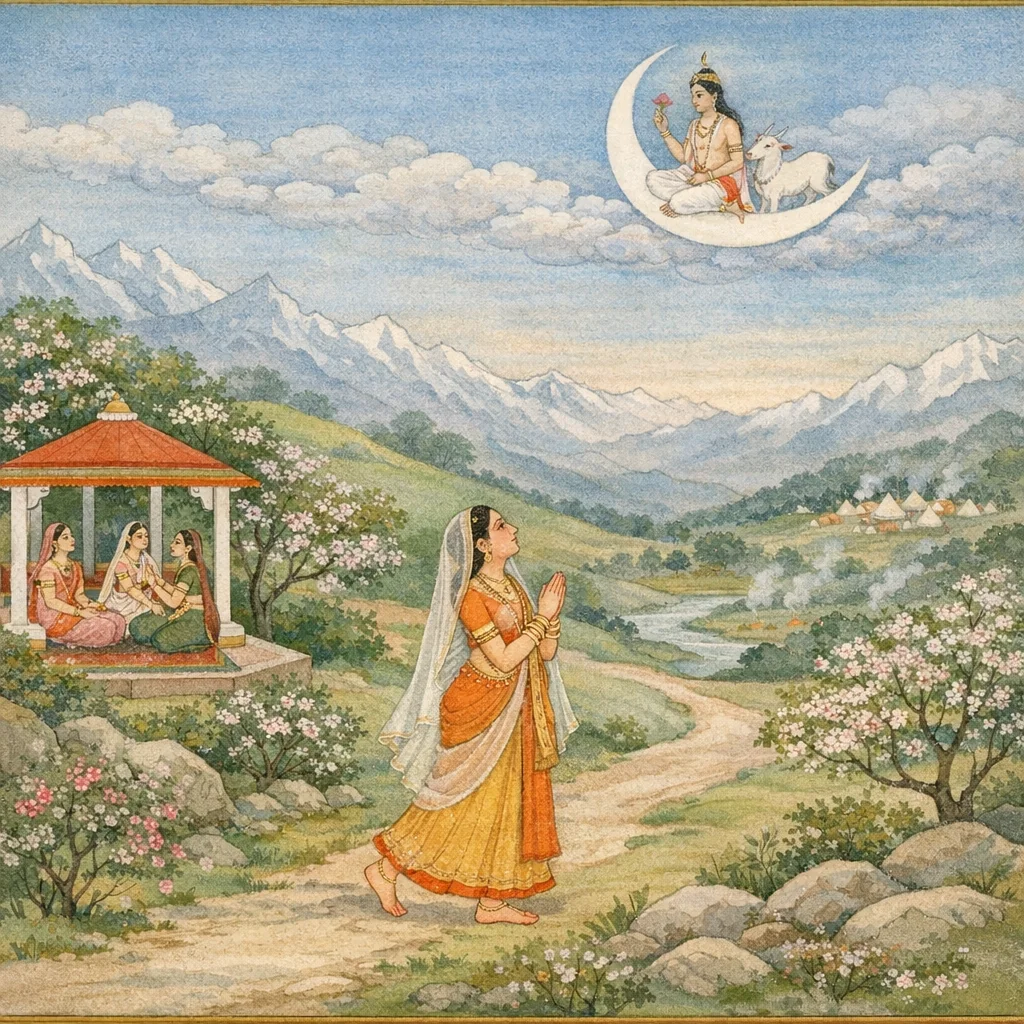
Adhyaya 28 begins with Brahmā’s narration: as the gods and ṛṣis depart for Dakṣa’s sacrificial festival (yajña), Satī remains at Gandhamādana, enjoying leisure and play in a pavilion with her companions. Seeing Candra (the Moon) setting out, she sends her trusted friend Vijayā to ask Rohiṇī where he is going. Vijayā approaches Candra with due courtesy, learns the details of the Dakṣa-yajña and the reason for his journey, and quickly returns to report everything to Satī. Satī (also called Kālikā here) is astonished and reflects: if Dakṣa is her father and Vīriṇī her mother, why has no invitation been sent to her, the beloved daughter? The slight of non-invitation reveals Dakṣa’s disregard and becomes the narrative spark for Satī’s ensuing response, setting up a confrontation between familial-ritual authority and Satī’s dignity and Śaiva allegiance to Śiva.
Shlokas
Verse 1
ब्रह्मोवाच । यदा ययुर्दक्षमखमुत्सवेन सुरर्षयः । तस्मिन्नैवांतरे देवो पर्वते गंधमादने
Brahmā said: When the gods and the divine sages set out, celebrating the festive rite of Dakṣa’s sacrifice, at that very time the Lord was on Mount Gandhamādana.
Verse 2
धारागृहे वितानेन सखीभिः परिवारिता । दाक्षायणी महाक्रीडाश्चकार विविधास्सती
In the rain-house, beneath a canopy and surrounded by her companions, Satī—Dakṣa’s daughter—engaged in many delightful and varied pastimes.
Verse 3
क्रीडासक्ता तदा देवी ददर्शाथ मुदा सती । दक्षयज्ञे प्रयांतं च रोहिण्या पृच्छ्य सत्वरम्
Then the Goddess Satī, absorbed in play, joyfully noticed someone setting out for Dakṣa’s sacrifice; and, having quickly asked Rohiṇī about it, she fixed her mind upon what was taking place.
Verse 4
दृष्ट्वा सीमंतया भूतां विजयां प्राह सा सती । स्वसखीं प्रवरां प्राणप्रियां सा हि हितावहाम्
Seeing Vijayā, adorned with the hair-parting ornament (sīmanta), Satī spoke to her—her foremost companion, dear as the very breath of life, and truly a bringer of auspicious good.
Verse 5
सत्युवाच । हे सखीप्रवरे प्राणप्रिये त्वं विजये मम । क्व गमिष्यति चन्द्रोयं रोहिण्यापृच्छ्य सत्वरम्
Satī said: “O best of friends, dearer to me than life, you are my support in victory. Quickly ask Rohiṇī where this Moon is going.”
Verse 6
ब्रह्मोवाच । तथोक्ता विजया सत्या गत्वा तत्सन्निधौ द्रुतम् । क्व गच्छसीति पप्रच्छ शशिनं तं यथोचितम्
Brahmā said: Thus instructed, the truthful Vijayā quickly went into his presence and, in a fitting manner, asked that Moon-god, “Where are you going?”
Verse 7
विजयोक्तमथाकर्ण्य स्वयात्रां पूर्वमादरात् । कथितं तेन तत्सर्वं दक्षयज्ञोत्सवादिकम्
Hearing what Vijayā had said, (Satī) first set out at once on her own journey with earnest resolve. Then she related to him everything—beginning with the festive sacrificial rite of Dakṣa.
Verse 8
तच्छ्रुत्वा विजया देवीं त्वरिता जातसंभ्रमा । कथयामास तत्सर्वं यदुक्तं शशिना सतीम्
Hearing this, the goddess Vijayā—swift and suddenly stirred with urgency—reported to Satī all that Śaśī (the Moon) had spoken.
Verse 9
तच्छ्रुत्वा कालिका देवी विस्मिताभूत्सती तदा । विमृश्य कारणं तत्राज्ञात्वा चेतस्यचिंतयत्
Hearing those words, Satī, the goddess Kālīkā, was then astonished. She reflected there on the cause, yet not understanding it, she pondered within her heart.
Verse 10
दक्षः पिता मे माता च वीरिणी नौ कुतस्सती । आह्वानं न करोति स्म विस्मृता मां प्रियां सुताम्
“Dakṣa is my father and Vīriṇī my mother—how could I, Satī, be absent? Yet he does not send for me; he has forgotten me, his beloved daughter.”
Verse 11
पृच्छेयं शंकरं तत्र कारणं सर्वमादरात् । चिंतयित्वेति सासीद्वै तत्र गंतुं सुनिश्चया
She thought, “There I shall respectfully ask Śaṅkara about the entire cause behind all this.” Having reflected thus, Satī became firmly resolved to go there.
Verse 12
अथ दाक्षायणी देवी विजयां प्रवरां सखीम् । स्थापयित्वा द्रुतं तत्र समगच्छच्छिवांतिकम्
Then the Goddess Dākṣāyaṇī (Satī), having placed her excellent companion Vijayā there, swiftly went to the presence of Śiva.
Verse 13
ददर्श तं सभामध्ये संस्थितं बहुभिर्गणैः । नंद्यादिभिर्महावीरैः प्रवरैर्यूथयूथपै
She beheld Him seated in the midst of the divine assembly, surrounded by many gaṇas—led by Nandī and other great heroes, the foremost captains and leaders of their hosts.
Verse 14
दृष्ट्वा तं प्रभुमीशानं स्वपतिं साथ दक्षजा । प्रष्टुं तत्कारणं शीघ्रं प्राप शंकरसंनिधिम्
Seeing her own husband—Īśāna, the supreme Lord—Dakṣa’s daughter (Satī) quickly went into Śaṅkara’s presence, intending to ask at once the reason for that matter.
Verse 15
शिवेन स्थापिता स्वांके प्रीतियुक्तेन स्वप्रिया । प्रमोदिता वचोभिस्सा बहुमानपुरस्सरम्
Loving Shiva placed His beloved upon His own lap; and she, honoured with great esteem, was gladdened by His affectionate words.
Verse 16
अथ शंभुर्महालीलस्सर्वेशस्सुखदस्सताम् । सतीमुवाच त्वरितं गणमध्यस्थ आदरात्
Then Śambhu—whose sport is wondrous and vast, the Lord of all, the giver of happiness to the virtuous—while seated amidst his gaṇas, promptly and respectfully spoke to Satī.
Verse 17
शंभुरुवाच । किमर्थमागतात्र त्वं सभामध्ये सविस्मया । कारणं तस्य सुप्रीत्या शीघ्रं वद सुमध्यमे
Śambhu (Lord Śiva) said: “For what purpose have you come here, into the midst of this assembly, with such wonder upon you? Tell Me quickly—dear slender-waisted one—the reason for it, with a heart full of affection.”
Verse 18
ब्रह्मोवाच । एवमुक्ता तदा तेन महेशेन मुनीश्वर । सांजलिस्सुप्रणम्याशु सत्युवाच प्रभुं शिवा
Brahmā said: O best of sages, when she was thus addressed by Mahādeva, Satī at once bowed deeply with folded hands and spoke to her Lord, Śiva.
Verse 19
सत्युवाच । पितुर्मम महान् यज्ञो भवतीति मया श्रुतम् । तत्रोत्सवो महानस्ति समवेतास्सुरर्षयः
Satī said: “I have heard that my father is conducting a great sacrifice. There, a grand festival is being held, where the gods and the sage-seers have assembled together.”
Verse 20
पितुर्मम महायज्ञे कस्मात्तव न रोचते । गमनं देवदेवेश तत्सर्वं कथय प्रभो
At my father’s great sacrifice, why do You not feel inclined to go? O Lord of the gods, tell me all of this, O Master—why is going there not agreeable to You?
Verse 21
सुहृदामेष वै धर्मस्सुहृद्भिस्सह संगतिः । कुर्वंति यन्महादेव सुहृदः प्रीतिवर्द्धिनीम्
This indeed is the dharma of true friends: to keep the company of friends and, O Mahādeva, to act in ways that increase mutual affection and goodwill.
Verse 22
तस्मात्सर्वप्रयत्नेन मयागच्छ सह प्रभो । यज्ञवाटं पितुर्मेद्य स्वामिन् प्रार्थनया मम
Therefore, O Lord, with all earnest effort, please come with me to my father’s sacred sacrificial enclosure. O Master, I beseech You with my prayer.
Verse 23
ब्रह्मोवाच । तस्यास्तद्वचनं श्रुत्वा सत्या देवो महेश्वरः । दक्ष वागिषुहृद्विद्धो बभाषे सूनृतं वचः
Brahmā said: Hearing those words of Satī, Lord Maheśvara—though His heart was pierced by Dakṣa’s arrow-like speech—replied with words that were gentle and true.
Verse 24
महेश्वर उवाच । दक्षस्तव पिता देवी मम द्रोही विशेषतः
Maheśvara said: “O Goddess, your father Dakṣa is—above all—my deliberate adversary.”
Verse 25
यस्य ये मानिनस्सर्वे ससुरर्षिमुखाः परे । ते मूढा यजनं प्राप्ताः पितुस्ते ज्ञानवर्जिताः
All those proud ones—together with the other sages headed by Dakṣa’s party—came to the sacrifice of your father-in-law. Deluded and bereft of true knowledge, they attended that rite without understanding Śiva, the supreme Lord.
Verse 26
अनाहूताश्च ये देवी गच्छंति परमंदिरम् । अवमानं प्राप्नुवंति मरणादधिकं तथा
O Goddess, those who go to another’s supreme residence without being invited incur dishonour—indeed, a humiliation considered worse than death.
Verse 27
परालयं गतोपींद्रो लघुर्भवति तद्विधः । का कथा च परेषां वै रीढा यात्रा हि तद्विधा
Even Indra, having gone to the place of pralaya (cosmic dissolution), becomes insignificant in that state. What then can be said of other beings? Truly, their course and wandering journey are of the same kind—uncertain and ever subject to dissolution.
Verse 28
इति श्रीशिवमहापुराणे द्वितीयायां रुद्रसंहितायां द्वितीये सतीखंडे सतीयात्रावर्णनं नामाष्टविंशोध्यायः
Thus, in the Śrī Śiva Mahāpurāṇa—within the second compilation, the Rudra Saṃhitā, in its second section, the Satī Khaṇḍa—concludes the twenty-eighth chapter called “The Description of Satī’s Journey (Pilgrimage).”
Verse 29
तथारिभिर्न व्यथते ह्यर्दितोपि शरैर्जनः । स्वानांदुरुक्तिभिर्मर्मताडितस्स यथा मतः
So too, a person may remain unshaken even when struck by an enemy’s arrows; but when the harsh words of one’s own pierce the vital spot, he is truly tormented—this is the considered truth.
Verse 30
विद्यादिभिर्गुणैः षड्भिरसदन्यैस्सतां स्मृतौ । हतायां भूयसां धाम न पश्यंति खलाः प्रिये
Beloved, when the remembrance of the virtuous is ruined by six qualities beginning with mere learning—qualities not truly noble—then the wicked fail to behold the higher abode sought by the great.
Verse 31
ब्रह्मोवाच । एवमुक्ता सती तेन महेशेन महात्मना । उवाच रोषसंयुक्ता शिवं वाक्यविदां वरम्
Brahmā said: Thus addressed by that great-souled Maheśa, Satī—filled with indignation—spoke to Śiva, foremost among those who know the right use of words.
Verse 32
सत्युवाच । यज्ञस्स्यात्सफलो येन स त्वं शंभोखिलेश्वर । अनाहूतोसि तेनाद्य पित्रा मे दुष्टकारिणा
Satī said: “O Śambhu, Lord of all, it is by you that a sacrifice becomes truly fruitful. Yet today my father, who acts wickedly, has left you uninvited.”
Verse 33
तत्सर्वं ज्ञातुमिच्छामि भव भावं दुरात्मनः । सुरर्षीणां च सर्वेषामागतानां दुरात्मनाम्
I wish to know all of that, O Bhava—especially the inner intent of those wicked-minded ones, and also of all the divine sages who have arrived, even if their hearts are tainted.
Verse 34
तस्माच्चाद्यैव गच्छामि स्वपितुर्यजनं प्रभो । अनुज्ञां देहि मे नाथ तत्र गंतुं महेश्वर
Therefore, O Lord, today itself I shall go to my father’s sacrifice. Grant me your permission, O Master—O Maheśvara—so that I may go there.
Verse 35
ब्रह्मोवाच । इत्युक्तौ भगवान् रुद्रस्तया देव्या शिवस्स्वयम् । विज्ञाताखिलदृक् द्रष्टा सतीं सूतिकरोऽब्रवीत्
Brahmā said: When the Goddess had spoken thus, the Blessed Lord Rudra—Śiva Himself—who is the all-knowing seer that beholds everything, then spoke to Satī, the daughter of Dakṣa.
Verse 36
शिव उवाच । यद्येवं ते रुचिर्देवि तत्र गंतुमवश्यकम् । सुव्रते वचनान्मे त्वं गच्छ शीघ्रं पितुर्मखम्
Śiva said: “If, O Goddess, such is your wish, then you must indeed go there. O you of excellent vows, following my words, go quickly to your father’s sacrificial rite.”
Verse 37
एतं नंदिनमारुह्य वृषभं सज्जमादरात् । महाराजोपचाराणि कृत्वा बहुगुणान्विता
With reverence she mounted the ready bull, Nandin; and, having received the regal honors due to a great sovereign, she proceeded—adorned with many noble virtues.
Verse 38
भूषितं वृषमारोहेत्युक्ता रुद्रेण सा सती । सुभूषिता सती युक्ता ह्यगमत्पितुमंदिरम्
Thus addressed by Rudra—“Be adorned, O rider of the bull”—Satī, beautifully ornamented and duly prepared, set out for her father’s palace.
Verse 39
महाराजोपचाराणि दत्तानि परमात्मना । सुच्छत्रचामरादीनि सद्वस्त्राभरणानि च
The Supreme Self bestowed royal honors—fine parasols, chowries and the like, along with excellent garments and ornaments.
Verse 40
गणाः षष्टिसहस्राणि रौद्रा जग्मुश्शिवाज्ञया । कुतूहलयुताः प्रीता महोत्सवसमन्विताः
By Śiva’s command, sixty thousand fierce Rudra-gaṇas set out. Filled with eager curiosity and joy, they proceeded as participants in a great sacred festival.
Verse 41
तदोत्सवो महानासीद्यजने तत्र सर्वतः । सत्याश्शिवप्रियायास्तु वामदेवगणैः कृतः
That celebration became a great festival, and in that sacrificial gathering it spread everywhere. It was arranged by the hosts of Vāmadeva in honor of Satyā, the beloved of Lord Śiva.
Verse 42
कुतूहलं गणाश्चक्रुश्शिवयोर्यश उज्जगुः । बालांतः पुप्लुवुः प्रीत्या महावीराश्शिवप्रियाः
Filled with eager wonder, the Gaṇas began to rejoice, singing aloud the glory of Śiva and Satī. Those great heroic attendants—dear to Śiva—leapt about like children, overflowing with delight.
Verse 43
सर्वथासीन्महाशोभा गमने जागदम्बिके । सुखारावस्संबभूव पूरितं भुवनत्रयम्
As Jagadambikā set forth on her journey, there was splendour in every way; a joyous, auspicious acclaim arose, and the three worlds were filled with that sound.
Frequently Asked Questions
The immediate prelude to the Dakṣa-yajña conflict: Satī discovers that the gods are traveling to Dakṣa’s sacrificial festival and realizes she has not been invited.
It functions as a narrative sign of adharmic ritualism—yajña performed for status while excluding/insulting the Śiva-centered principle embodied by Satī—thereby foreshadowing the collapse of sacrificial legitimacy.
Satī is also referred to as Kālikā in the sampled verses, signaling her śakti-identity and the intensity of her response as the narrative moves toward confrontation.