Adhyaya 21: The Tale of Brahmadatta: Past-life Memory, Understanding Animal Speech, and the Greatness of the Pitṛs (Śrāddha)
ब्रह्मदत्तोपाख्यानम् (पितृमाहात्म्यप्रशंसा)
Speaker: Ṛṣis (sages), Sūta, Sudaridra (aged Brāhmaṇa father), Anagha Vaibhrāja (Pāñcāla king), Hari/Nārāyaṇa (Viṣṇu, Hṛṣīkeśa), Saṃnati (queen/consort), Aged Brāhmaṇa messenger/elder
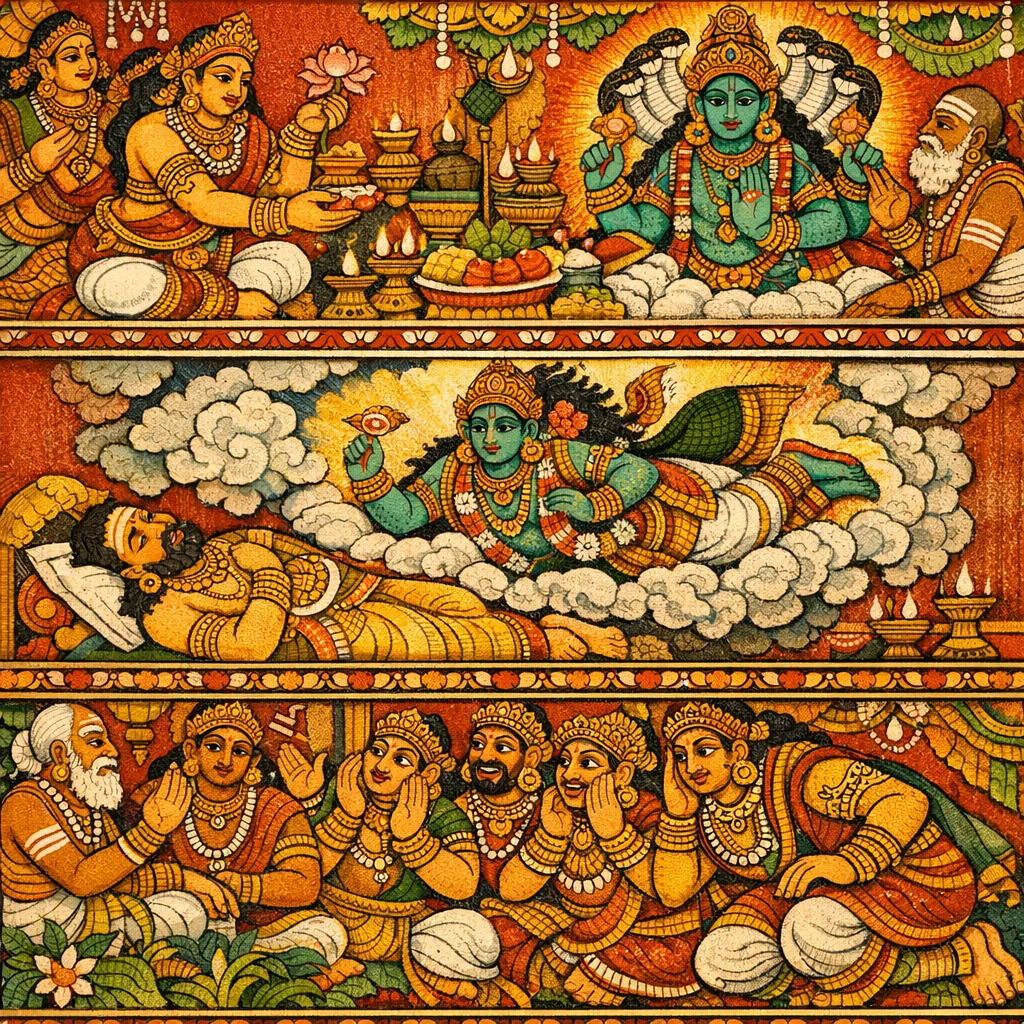
The Ṛṣis ask Sūta how Brahmadatta became sarva-sattva-ruta-jña (knower of all creatures’ speech) and how the cakravāka quartet arose. Sūta tells of jātismara Brāhmaṇas—Dhṛtimān, Tattvadarśī, Vidyācaṇḍa, Tapotsuka—who seek tapas, but their poor father Sudaridra rebukes the plan as adharma if it abandons filial duty, and points them to royal patronage for Vedic recitation. The narrative then turns to King Anagha Vaibhrāja, who worships Hari for a son; Viṣṇu grants Brahmadatta, endowed with yogic power and universal compassion. Brahmadatta’s laughter and his understanding of “ant-speech” prompt Saṃnati’s questions; the king undertakes niyama and receives dream-instruction from Viṣṇu to meet an aged Brāhmaṇa who will reveal all. Hearing the elder’s siddha utterance, the king and ministers regain past-life memory and grieve at having fallen from yoga through desire. The king extols the greatness of śrāddha and the Pitṛs, donates wealth and villages, installs Viṣvaksena as successor, and the yogins gather at Mānas(a), attaining the supreme state through tapas. The chapter concludes that pleased Pitṛs bestow sons and sovereignty, and that recitation or hearing brings vast merit in Brahmaloka.
Key Concepts
Shlokas in Adhyaya 21
Verse 1
*ऋषय ऊचुः कथं सत्त्वरुतज्ञो ऽभूद् ब्रह्मदत्तो धरातले तच्चाभवत्कस्य कुले चक्रवाकचतुष्टयम् //
The sages said: “How did Brahmadatta arise upon the earth as one who understood the voices and cries of living beings? And in whose lineage did that quartet of cakravāka birds come to be?”
Verse 2
*सूत उवाच तस्मिन्नेव पुरे जातास् ते च चक्राह्वयास्तदा वृद्धद्विजस्य दायादा विप्रा जातिस्मराः पुरा //
Sūta said: In that very city, at that time, there were born those Brahmins known as the Cakrāhvayas—heirs of the aged Brahmin—who from former times were jātismara, remembering their past births.
Verse 3
धृतिमांस्तत्त्वदर्शी च विद्याचण्डस् तपोत्सुकः नामतः कर्मतश्चैते सुदरिद्रस्य ते सुताः //
Dhṛtimān, Tattvadarśī, Vidyācaṇḍa, and Tapotsuka—these are the sons of Sudaridra, so called in accordance with their names and also with their deeds.
Verse 4
तपसे बुद्धिरभवत् तदा तेषां द्विजन्मनाम् यास्यामः परमां सिद्धिम् इत्य् ऊचुस् ते द्विजोत्तमाः //
Then, in the minds of those twice-born, a resolve for tapas (austerity) arose; and those foremost of Brahmins said, “By this tapas we shall attain the supreme perfection (siddhi).”
Verse 5
ततस्तद्वचनं श्रुत्वा सुदरिद्रो महातपाः उवाच दीनया वाचा किमेतदिति पुत्रकाः //
Then, hearing those words, Sudaridra—the great ascetic, though exceedingly poor—spoke in a sorrowful voice: “My children, what is this?”
Verse 6
अधर्म एष इति वः पिता तान् अभ्यवारयत् वृद्धं पितरमुत्सृज्य दरिद्रं वनवासिनः //
Saying, “This is unrighteous (adharma),” your father restrained them—for they had abandoned their aged father, leaving him poor and dwelling in the forest.
Verse 7
को नु धर्मो ऽत्र भविता मत्त्यागाद्गतिरेव वा ऊचुस्ते कल्पिता वृत्तिस् तव तात वदस्व तत् //
They said: “What, indeed, will be the dharma here—and what will be the very course of deliverance (gati)—after renouncing me? Dear father, the sages have set forth a prescribed mode of life for you; tell us that.”
Verse 8
वित्तमेतत्पुरो राज्ञः स ते दास्यति पुष्कलम् धनं ग्रामसहस्राणि प्रभाते पठतस्तव //
This wealth lies before the king; he will bestow upon you abundant riches—indeed, thousands of villages—because you recite this sacred text at dawn.
Verse 9
ये विप्रमुख्याः कुरुजाङ्गलेषु दाशास्तथा दाशपुरे मृगाश्च कालञ्जरे सप्त च चक्रवाका ये मानसे ते वयमत्र सिद्धाः //
Those foremost among the Brahmins who dwell in the Kuru-Jāṅgala region; likewise the fisherfolk in Dāśapura; the deer; and the seven cakravāka birds on Mount Kālañjara; and those who are in Mānas(a)—we are here, perfected as siddhas.
Verse 10
इत्युक्त्वा पितरं जग्मुस् ते वनं तपसे पुनः वृद्धो ऽपि राजभवनं जगामात्मार्थसिद्धये //
Having thus spoken to their father, they again went to the forest to perform austerities; and the aged one too went to the royal palace, for the fulfillment of his own purpose.
Verse 11
अनघो नाम वैभ्राजः पाञ्चालाधिपतिः पुरा पुत्रार्थी देवदेवेशं हरिं नारायणं प्रभुम् //
In former times there was a Pāñcāla overlord named Anagha Vaibhrāja; desiring a son, he sought refuge in Hari—Nārāyaṇa, the Sovereign Lord, the God of gods.
Verse 12
आराधयामास विभुं तीव्रव्रतपरायणः ततः कालेन महता तुष्टस्तस्य जनार्दनः //
Steadfast in austere vows, he worshipped the all-powerful Lord; and after a long passage of time, Janārdana became pleased with him.
Verse 13
वरं वृणीष्व भद्रं ते हृदयेनेप्सितं नृप एवमुक्तस्तु देवेन वव्रे स वरमुत्तमम् //
“Choose a boon—may good befall you—whatever your heart desires, O king.” Thus addressed by the Lord, the king chose an excellent boon.
Verse 14
पुत्रं मे देहि देवेश महाबलपराक्रमम् पारगं सर्वशास्त्राणां धार्मिकं योगिनां परम् //
O Lord of the gods, grant me a son—one of great strength and heroic valor, a master of all the śāstras, righteous in conduct, and foremost among yogins.
Verse 15
सर्वसत्त्वरुतज्ञं मे देहि योगिनमात्मजम् एवमस्त्विति विश्वात्मा तमाह परमेश्वरः //
“Grant me a son who is a yogin and who understands the cries and speech of all beings.” Thus addressed, the Supreme Lord—the Soul of the universe—replied, “So be it.”
Verse 16
पश्यतां सर्वदेवानां तत्रैवान्तरधीयत ततः स तस्य पुत्रो ऽभूद् ब्रह्मदत्तः प्रतापवान् //
Before the very eyes of all the gods, he vanished right there. Thereafter, his son was born—Brahmadatta, a man of great splendor and prowess.
Verse 17
सर्वसत्त्वानुकम्पी च सर्वसत्त्वबलाधिकः सर्वसत्त्वरुतज्ञश्च सर्वसत्त्वेश्वरेश्वरः //
He is compassionate toward all beings; He surpasses all beings in strength; He understands the cries and voices of every creature; and He is the supreme Lord even over the rulers of all beings.
Verse 18
अहसत्तेन योगात्मा स पिपीलिकरागतः यत्र तत्कीटमिथुनं रममाणमवस्थितम् //
By the power of yogic subtlety, that yogin entered the state of an ant; and there he saw an insect-pair, stationed together, sporting in mutual delight.
Verse 19
ततः सा संनतिर्दृष्ट्वा तं हसन्तं सुविस्मिता किमप्याशङ्क्य मनसा तमपृच्छन्नरेश्वरम् //
Then Saṃnati, seeing him smiling, was greatly astonished; and, suspecting something in her mind, she questioned that lord of men (the king).
Verse 20
*संनतिरुवाच अकस्मादतिहासस्ते किमर्थमभवन्नृप हास्यहेतुं न जानामि यदकाले कृतं त्वया //
Saṃnati said: “O king, why did this sudden laughter arise in you? I do not know the cause of your mirth—especially since what you did was done at an improper time.”
Verse 21
*सूत उवाच अवदद्राजपुत्रो ऽपि स पिपीलिकभाषितम् रागवाग्भिः समुत्पन्नम् एतद्धास्यं वरानने //
Sūta said: That prince too spoke—uttering an ‘ant-like speech’—and, with words rising from passion, he produced this laughter, O fair-faced one.
Verse 22
न चान्यत्कारणं किंचिद् धास्यहेतौ शुचिस्मिते न सामन्यत् तदा देवी प्राहालीकमिदं वचः //
“There is no other cause whatsoever for this laughter, O pure-smiling one; it is not a trivial matter.” Then the Goddess spoke these words, though they were deceptive.
Verse 23
अहमेवाद्य हसिता न जीविष्ये त्वयाधुना कथं पिपीलिकालापं मर्त्यो वेत्ति विना सुरान् //
“I alone have been laughed at today; now I will not live because of you. How could a mortal understand even the speech of ants, without the gods?”
Verse 24
तस्मात्त्वयाहम् एवेह हसिता किमतः परम् ततो निरुत्तरो राजा जिज्ञासुस्तत्पुरो हरेः //
“Therefore I have indeed been laughed at by you here—what could be more than this?” Thereupon the king fell silent, yet eager to know, standing before Hari.
Verse 25
आस्थाय नियमं तस्थौ सप्तरात्रमकल्मषः स्वप्ने प्राह हृषीकेशः प्रभाते पर्यटन्पुरम् //
Having undertaken a niyama (disciplined observance), the sinless one remained steadfast for seven nights. In a dream Hṛṣīkeśa (Lord Viṣṇu) spoke to him; and at dawn he went about the city.
Verse 26
वृद्धद्विजो यस्तद्वाक्यात् सर्वं ज्ञास्यस्यशेषतः इत्युक्त्वान्तर्दधे विष्णुः प्रभाते ऽथ नृपः पुरात् //
Saying, “By his instruction, that venerable aged Brahmin will cause you to know everything completely, without remainder,” Viṣṇu then vanished. At dawn thereafter, the king (Manu) rose and proceeded as in former times.
Verse 27
निर्गच्छन्मन्त्रिसहितः सभार्यो वृद्धमग्रतः गदन्तं विप्रम् आयान्तं तं वृद्धं संददर्श ह //
As he was setting out, accompanied by his ministers and with his wife, he saw before him an aged Brahmin approaching—speaking as he came—and he beheld that venerable elder.
Verse 28
*ब्राह्मण उवाच ये विप्रमुख्याः कुरुजाङ्गलेषु दाशास्तथा दाशपुरे मृगाश्च कालञ्जरे सप्त च चक्रवाका ये मानसे ते वयमत्र सिद्धाः //
The Brāhmaṇa said: “Those foremost among Brāhmaṇas who dwell in Kuru-jāṅgala, the Dāśas likewise in Dāśapura, and the deer as well; the seven cakravāka birds at Kālañjara; and those who are at Mānasa— we too have here attained siddhi (spiritual accomplishment).”
Verse 29
*सूत उवाच इत्याकर्ण्य वचस्ताभ्यां स पपात शुचा ततः जातिस्मरत्वमगमत् तौ च मन्त्रिवराव् उभौ //
Sūta said: Hearing those words from the two of them, he collapsed in grief. Thereafter he attained jātismaratva (remembrance of former births)—and so did both of those excellent ministers.
Verse 30
कामशास्त्रप्रणेता च बाभ्रव्यस्तु सुबालकः पाञ्चाल इति लोकेषु विश्रुतः सर्वशास्त्रवित् //
And Bābhravya—also known as Subālaka—was the composer of the Kāmaśāstra; he was famed in the world by the name “Pāñcāla,” and was a knower of all branches of learning.
Verse 31
कण्डरीको ऽपि धर्मात्मा वेदशास्त्रप्रवर्तकः भूत्वा जातिस्मरौ शोकात् पतिताव् अग्रतस्तदा //
Even Kaṇḍarīka—righteous-souled and a promulgator of Vedic teaching and sacred disciplines—became one who remembered former births; and, overwhelmed by grief, he fell down then and there, right before them.
Verse 32
हा वयं योगविभ्रष्टाः कामतः कर्मबन्धनाः एवं विलप्य बहुशस् त्रयस्ते योगपारगाः //
“Alas! We have fallen away from Yoga; through desire we have become bound by action (karma).” Thus lamenting again and again, those three—who had once crossed to the far shore of Yoga—(spoke).
Verse 33
विस्मयाच्छ्राद्धमाहात्म्यम् अभिनन्द्य पुनः पुनः ततस्तस्मै धनं दत्त्वा प्रभूतग्रामसंयुतम् //
Amazed, he repeatedly praised the greatness of the śrāddha rite; then, he bestowed wealth upon him—together with many villages.
Verse 34
विसृज्य ब्राह्मणं तं च वृद्धं धनमुदान्वितम् आत्मीयं नृपतिः पुत्रं नृपलक्षणसंयुतम् //
Having dismissed that aged brāhmaṇa—endowed with wealth—the king then set forth his own son, possessed of the marks and qualities of kingship.
Verse 35
विष्वक्सेनाभिधानं तु राजा राज्ये ऽभ्यषेचयत् मानसे मिलिताः सर्वे ततस्ते योगिनां वराः //
Then the king anointed (installed) one named Viṣvaksena to the sovereignty. Thereafter, all those foremost among yogins assembled together at Mānas(a) (the sacred lake/region).
Verse 36
ब्रह्मदत्तादयस्तस्मिन् पितृसक्ता विमत्सराः संनतिश्चाभवद्भ्रष्टा मयैतत्किल कारितम् //
Brahmadatta and the others there became devoted to their forefathers and free from envy; and (yet) the proper order of deference/discipline became disrupted—this, indeed, was brought about by me.
Verse 37
राज्यत्यागफलं सर्वं यदेतद् अभिलष्यते तथेति प्राह राजा तु पुनस्तामभिनन्दयन् //
“All that is desired as the full reward of renouncing the kingdom—so be it,” said the king, once again approving her words with appreciation.
Verse 38
त्वत्प्रसादादिदं सर्वं मयैतत्प्राप्यते फलम् ततस्ते योगमास्थाय सर्व एव वनौकसः //
By your grace, all this fruit has been obtained by me. Therefore, taking refuge in your Yoga (discipline/way), all of us forest-dwellers shall act accordingly.
Verse 39
ब्रह्मरन्ध्रेण परमं पदमापुस्तपोबलात् एवमायुर्धनं विद्यां स्वर्गं मोक्षं सुखानि च //
By the power of austerity, they attained the supreme state through the Brahma-opening (the cranial aperture). In the same way, (one may gain) longevity, wealth, knowledge, heaven, liberation, and various joys.
Verse 40
प्रयच्छन्ति सुतान्राज्यं नृणां प्रीताः पितामहाः य इदं पितृमाहात्म्यं ब्रह्मदत्तस्य च द्विजाः //
Pleased, the Pitṛs (ancestral grandsires) bestow sons and sovereignty upon men. O twice-born sages, this is the proclaimed greatness of the Pitṛs, as taught in the account of Brahmadatta.
Verse 41
द्विजेभ्यः श्रावयेद्यो वा शृणोत्यथ पठेत्तु वा कल्पकोटिशतं साग्रं ब्रह्मलोके महीयते //
Whoever causes it to be recited to the twice-born, or else listens to it, or even recites it—he is honored in Brahmā’s world for a full hundred crores of kalpas (and more).
Frequently Asked Questions
The chapter elevates Pitṛ-māhātmya: when ancestors (Pitṛs) are pleased—implicitly through proper śrāddha and dharmic conduct—they grant tangible worldly goods (sons, kingdom) and support higher aims (siddhi, liberation). The Brahmadatta narrative functions as proof-text, concluding with a clear phalaśruti that hearing/reciting the account brings immense merit.
This adhyāya is primarily Dharma-focused (filial duty, renunciation ethics, śrāddha theology) and Rajadharma-adjacent (abdication and installation of Viṣvaksena). It also includes Puranic genealogy/lineage framing (Pāñcāla king Anagha Vaibhrāja; Brahmadatta’s birth by Viṣṇu’s boon) and yogic doctrine (jātismara, subtle yogic powers, brahma-randhra liberation). Vāstu/architecture is not a core topic in this chapter.
Brahmadatta’s ability is presented as a divinely granted boon: King Anagha Vaibhrāja worships Hari (Nārāyaṇa) with severe vows and asks for a son who is both a yogin and sarva-sattva-ruta-jña. Viṣṇu agrees, and Brahmadatta is born with that innate, grace-bestowed capacity, later illustrated through the ‘ant-speech’ episode.
Jātismaratva appears as both an existing trait (the Cakrāhvaya Brāhmaṇas are said to be jātismara from earlier times) and an awakened state triggered by revelatory speech from the aged Brāhmaṇa, after which the king and ministers regain past-life memory and respond with grief and renewed spiritual urgency.
The text states that one who causes it to be recited to the twice-born, or who listens to it, or recites it, is honored in Brahmā’s world (Brahmaloka) for “a hundred crores of kalpas and more,” presenting the narrative as a meritorious liturgical recitation tied to Pitṛ devotion.