Adhyaya 95
कण्वोपदेशः—नश्वरबलविवेकः तथा मातलिगुणकेश्याः आख्यानारम्भः (Kaṇva’s Counsel on Impermanent Power; Opening of the Mātali–Guṇakeśī Narrative)
Upa-parva: Kāṇva-vākya (Counsel of Ṛṣi Kaṇva) — Court Discourse to Duryodhana
Vaiśaṃpāyana reports that Ṛṣi Kaṇva, after hearing Jāmadagnya’s statement, addresses Duryodhana in the Kuru court. Kaṇva first establishes a metaphysical scale: the imperishable principle is identified with Viṣṇu as the eternal among the Ādityas, and with the revered Nara-Nārāyaṇa ṛṣis; by contrast, cosmic entities (sun, moon, elements, planets, stars) are described as subject to cyclical dissolution and recreation. Human and animal lives are depicted as even more momentary. Kings, despite enjoying prosperity, meet death at life’s end and face the results of merit and demerit. From this premise Kaṇva advances applied counsel: Duryodhana should not presume invincibility, should pursue śama (conciliation) with Dharmaputra, and allow Pāṇḍavas and Kurus to protect the earth jointly. He warns that “strength” is relative—stronger agents exist, and the Pāṇḍavas are portrayed as formidable. To reinforce the counsel, Kaṇva introduces an ancient illustrative narrative: Mātali, Indra’s charioteer, seeks a suitable groom for his exceptionally renowned daughter Guṇakeśī; he reflects on the complexities of lineage and alliance, surveys gods, humans, gandharvas, and ṛṣis without satisfaction, and resolves to go to the Nāga realm, descending into the earth after ritually circling and blessing his family.
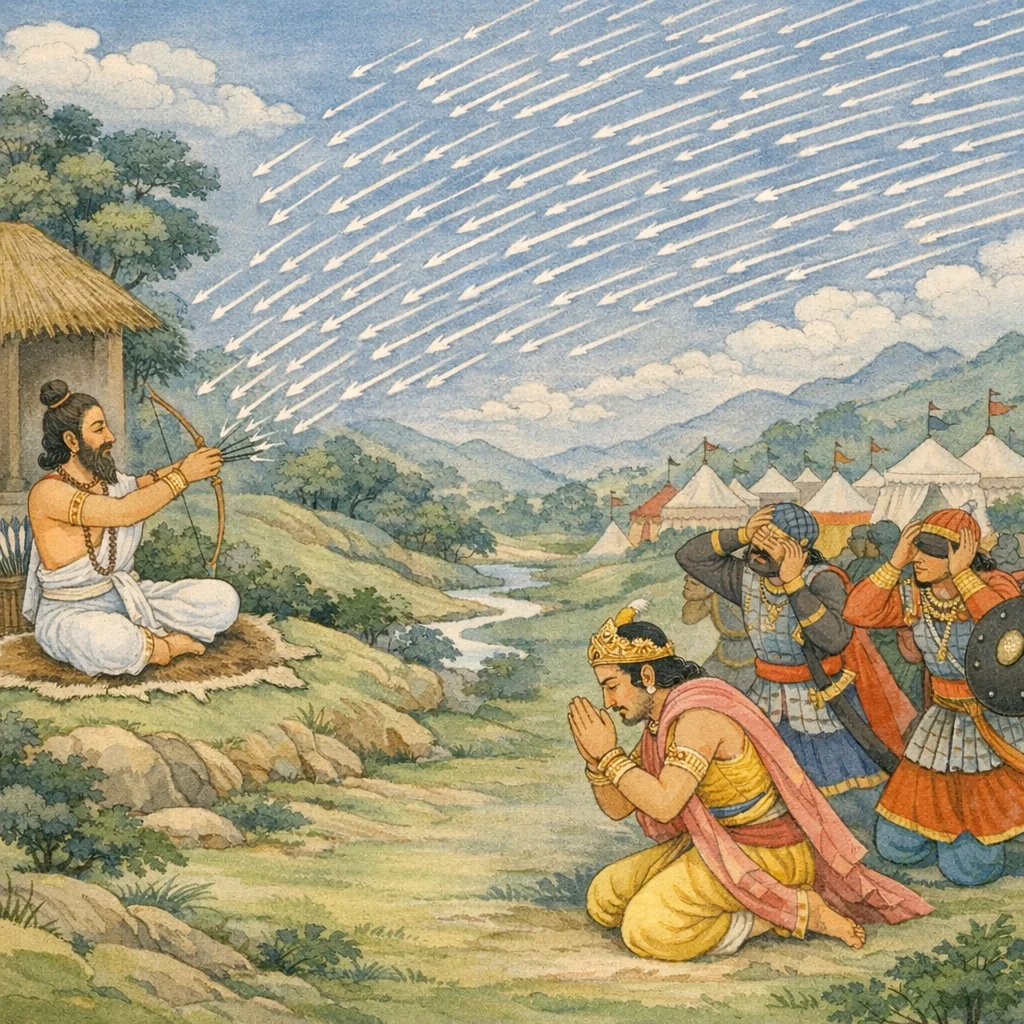
Chapter Arc: कुरुसंसद में राजाओं की सभा—धर्म और करुणा के सूक्ष्म भेदों का उपदेश सुनकर सब भूपाल मन-ही-मन उत्तर खोजते हैं, पर वाणी जैसे रुक जाती है। → सभा के मौन में जामदग्न्य परशुराम वचन उठाते हैं और एक दृष्टान्त सुनाते हैं—दम्भोद्धव नामक राजा तपस्वियों/महात्माओं को युद्ध के लिए ललकारता है; ब्राह्मण-तपस्वी बार-बार क्षमा माँगते हैं, फिर भी राजा का दर्प और आग्रह बढ़ता जाता है। → नर-स्वरूप महात्मा (भगवान् नर) मायिक सींक/तृण-बाणों से लक्ष्यवेध कर दम्भोद्धव की सेना की इन्द्रियों (आँख-कान-नासिका) को पीड़ित कर देता है; आकाश श्वेत-सा भर जाता है और राजा भयभीत होकर चरणों में गिर पड़ता है। → नर राजा को शरण देते हैं और धर्मोपदेश करते हैं—‘ब्रह्मण्य’ बनो, धर्मात्मा बनो, फिर ऐसा मत करना; दर्प-जनित युद्धेच्छा का परित्याग कर ब्राह्मण-हित और शरणागत-रक्षा का व्रत ग्रहण कराया जाता है। → परशुराम अस्त्रों के वास्तविक ‘वधक’ स्वरूप का संकेत करते हैं—काम, क्रोध, लोभ, मोह, मद, मान, मात्सर्य, अहंकार जैसे अंतःशत्रु ही मनुष्यों को मृत्यु की ओर ढकेलते हैं—अब सभा को अपने ही भीतर उत्तर ढूँढना है।
Shlokas
Verse 1
ऑपन-माज बछ। डे ३. दुसरोंको सुख पहुँचानेकी सहज भावनाका नाम “कृपा” है। २. दूसरोंका दुःख देखकर द्रवित होना एवं काँप उठना “अनुकम्पा” कहलाता है। 3. दूसरोंके दुःखको दूर करनेका भाव “करुणा” है। ४. क्रूरताका सर्वथा अभाव 'अनृशंसता” कहलाता है। षण्णवतितमोब< ध्याय: परशुरामजीका दम्भोद्धवकी कथाद्वारा नर-नारायणस्वरूप अर्जुन और श्रीकृष्णका महत्त्व वर्णन करना वैशम्पायन उवाच तस्मिन्नभिहिते वाक्ये केशवेन महात्मना । स्तिमिता हृष्टरोमाण आसन् सर्वे सभासद:,वैशम्पायनजी कहते हैं--जनमेजय! महात्मा श्रीकृष्णके ऐसी बात कहनेपर सम्पूर्ण सभासद् चकित हो गये। उनके अंगोंमें रोमांच हो आया
Vaiśampāyana said: When those words had been spoken by the great-souled Keśava (Kṛṣṇa), all the members of the assembly fell silent in astonishment, their bodies thrilled with awe—an outward sign of being deeply moved by the moral force and significance of what had just been declared.
Verse 2
वक्रिदुत्तरमेतेषां वक्तुं नोत्सहते पुमान् इति सर्वे मनोभिस्ते चिन्तयन्ति सम पार्थिवा:,वे सब भूपाल मन-ही-मन यह सोचने लगे कि भगवान्के इन वचनोंका उत्तर कोई भी मनुष्य नहीं दे सकता है
Vaiśampāyana said: Hearing those words, all the kings reflected inwardly, thinking, “No human being has the courage to frame a fitting reply to these.” The moment underscores how the speaker’s moral and political force silences ordinary argument, leaving the rulers to weigh dharma in their own minds rather than contest it aloud.
Verse 3
तथा तेषु च सर्वेषु तूष्णीम्भूतेषु राजसु । जामदग्न्य इदं वाक्यमब्रवीत् कुरुसंसदि,इस प्रकार उन सब राजाओंके मौन ही रह जानेपर जमदग्निनन्दन परशुरामने कौरवसभामें इस प्रकार कहा--
When all those kings had fallen silent, Jāmadagnya (Paraśurāma), in the assembly of the Kurus, spoke these words—setting the stage for a decisive intervention amid a tense moral and political impasse.
Verse 4
इमां मे सोपमां वाचं शृणु सत्यामशड्कित: । तां श्र॒ुत्वा श्रेय आदत्स्व यदि साध्विति मनन््यसे,“राजन! तुम निःशंक होकर मेरी यह उदाहरणयुक्त बात सुनो। सुनकर यदि इसे कल्याणकारी और उत्तम समझो तो स्वीकार करो
Vaiśampāyana said: “Listen without hesitation to these truthful words of mine, expressed with an illustrative comparison. Having heard them, accept what leads to your highest good—if, upon reflection, you judge them to be sound and beneficial.”
Verse 5
2 परम्कतर राजा दम्भोद्धवो नाम सार्वभौम: पुराभवत् | अखिलां बुभुजे सर्वा पृथिवीमिति न: श्रुतम्,'पूर्वकालकी बात है, दम्भोद्धव नामसे प्रसिद्ध एक सार्वभौम सम्राट् इस सम्पूर्ण अखण्ड भूमण्डलका राज्य भोगते थे; यह हमारे सुननेमें आया है
Vaiśampāyana said: “In former times there was a most eminent king, a universal sovereign named Dambhoddhava. We have heard that he enjoyed and governed the entire earth in its fullness.”
Verse 6
स सम नित्यं निशापाये प्रातरुत्थाय वीर्यवान् | ब्राह्मणान् क्षत्रियांश्वैव पृच्छन्नास्ते महारथ:,“वे महारथी और पराक्रमी नरेश प्रतिदिन रात बीतनेपर प्रातःकाल उठकर ब्राह्मणों और क्षत्रियोंसे इस प्रकार पूछा करते थे--
Vaiśampāyana said: That mighty and heroic great chariot-warrior, when the night had passed, would rise each morning and, seated in inquiry, would question both Brahmins and Kshatriyas—seeking guidance on right conduct and the duties proper to their stations.
Verse 7
अस्ति कश्रिद् विशिष्टो वा मद्विधो वा भवेद् युधि । शूद्रो वैश्य: क्षत्रियो वा ब्राह्मणो वापि शस्त्रभृत्,“क्या इस जगत्में कोई ऐसा शस्त्रधारी शूद्र, वैश्य, क्षत्रिय अथवा ब्राह्मण है, जो युद्धमें मुझसे बढ़कर अथवा मेरे समान भी हो सके?
Vaiśampāyana said: “Is there anyone in this world—whether a Śūdra, Vaiśya, Kṣatriya, or even a Brāhmaṇa—who bears weapons and could be superior to me in battle, or even equal to me?”
Verse 8
इति ब्रुवन्नन्वचचरत् स राजा पृथिवीमिमाम् | दर्पेण महता मत्त: कंचिदन््यमचिन्तयन्,“इसी प्रकार पूछते हुए वे राजा दम्भोद्धव महान् गर्वसे उन्मत्त हो दूसरे किसीको कुछ भी न समझते हुए इस पृथ्वीपर विचरने लगे
Vaiśampāyana said: Speaking thus and continuing to question in that manner, the king roamed about this earth. Intoxicated with immense pride, he gave no thought to anyone else—recognizing no other person as worthy of regard.
Verse 9
तं च वैद्या अकृपणा ब्राह्मणा: सर्वतो5भया: । प्रत्यषेधन्त राजानं श्लाघमानं पुन: पुन:
And those learned, unselfish Brāhmaṇas—fearless on every side—repeatedly restrained the king as he kept praising himself again and again.
Verse 10
“उस समय सर्वथा निर्भय, उदार एवं विद्वान ब्राह्मणोंने बारंबार आत्मप्रशंसा करनेवाले उन नरेशको मना किया ।। निषिध्यमानो5प्यसकृत् पृच्छत्येव स वै द्विजान् । अतिमान श्रिया मत्तं तमूचुरब्राह्मिणास्तदा,“उनके मना करनेपर भी वे ब्राह्मणोंसे बार-बार प्रश्न करते ही रहे। उनका अहंकार बहुत बढ़ गया था। वे धन-वैभवके मदसे मतवाले हो गये थे। राजाको यही (बारंबार) प्रश्न दुहराते देख वेदके सिद्धान्तका साक्षात्कार करनेवाले महामना तपस्वी ब्राह्मण क्रोधसे तमतमा उठे और उनसे इस प्रकार बोले--
Even though he was repeatedly restrained, he kept questioning the Brahmins again and again. Swollen with excessive pride and intoxicated by prosperity, the king would not desist. Seeing him persist in the same inquiry, the great ascetic Brahmins—steadfast in Vedic understanding—grew angry and spoke to him thus, showing that self-praise and arrogance draw moral correction rather than true counsel.
Verse 11
तपस्विनो महात्मानो वेदप्रत्ययदर्शिन: । उदीर्यमाणं राजानं क्रोधदीप्ता द्विजातय:,“उनके मना करनेपर भी वे ब्राह्मणोंसे बार-बार प्रश्न करते ही रहे। उनका अहंकार बहुत बढ़ गया था। वे धन-वैभवके मदसे मतवाले हो गये थे। राजाको यही (बारंबार) प्रश्न दुहराते देख वेदके सिद्धान्तका साक्षात्कार करनेवाले महामना तपस्वी ब्राह्मण क्रोधसे तमतमा उठे और उनसे इस प्रकार बोले--
Vaiśaṃpāyana said: The ascetic, great-souled twice-born sages—those who had direct insight into the certainties of the Veda—became inflamed with anger as the king kept pressing on. Seeing him persist in his questioning despite their restraint, they rose in indignation and prepared to address him, marking the ethical boundary between humble inquiry and arrogant provocation.
Verse 12
अनेकजयिनौ संख्ये यौ वै पुरुषसत्तमौ | तयोस्त्वं न समो राजन् भवितासि कदाचन,“राजन! दो ऐसे पुरुषरत्न हैं, जिन्होंने युद्धमें अनेक योद्धाओंपर विजय पायी है। तुम कभी उनके समान न हो सकोगे”
Vaiśampāyana said: “O King, there are two foremost of men who have won victory over many warriors in battle. You will never, at any time, be their equal.”
Verse 13
एवमुक्त: स राजा तु पुन: पप्रच्छ तान् द्विजान् | क्व तौ वीरौ क्वजन्मानौ किंकर्माणीौ च कौ च तौ,“उनके ऐसा कहनेपर राजाने पुनः उन ब्राह्मणोंसे पूछा--*वे दोनों वीर कहाँ हैं? उनका जन्म किस स्थानमें हुआ है? उनके कर्म कौन-कौन-से हैं और उनके नाम क्या हैं?
Thus addressed, the king again questioned those Brahmins: “Where are those two heroes now? In what place were they born? What deeds and roles are theirs, and what are their names?”
Verse 14
ब्राह्मणा ऊचु. नरो नारायणश्चैव तापसाविति न: श्रुतम् । आयातीौ मानुषे लोके ताभ्यां युध्यस्व पार्थिव,ब्राह्मण बोले--भूपाल! हमने सुना है कि वे नर-नारायण नामवाले तपस्वी हैं और इस समय मनुष्यलोकमें आये हैं। तुम उन्हीं दोनोंके साथ युद्ध करो
The Brahmins said: “O king, we have heard that they are the ascetic sages Nara and Nārāyaṇa. They have now come into the human world; therefore, fight with those two.”
Verse 15
श्रूयेते ती महात्मानी नरनारायणावुभौ । तपो घोरमनिर्देश्यं तप्येते गन्धमादने,सुना है, वे दोनों महात्मा नर और नारायण गन्धमादन पर्वतपर ऐसी घोर तपस्या कर रहे हैं, जिसका वाणीद्वारा वर्णन नहीं हो सकता
Vaiśaṃpāyana said: It is heard that those two great-souled beings, Nara and Nārāyaṇa, are performing on Mount Gandhamādana an awe-inspiring austerity—so extraordinary that it cannot truly be conveyed by speech.
Verse 16
स राजा महतीं सेनां योजयित्वा षडल्धिनीम् । अमृष्यमाण: सम्प्रायाद् यत्र तावपराजितौ,राजाको यह सहन नहीं हुआ। उन्होंने (रथ, हाथी, घोड़े, पैदल, शकट और ऊँट--इन) छः अंगोंसे युक्त विशाल सेनाको सुसज्जित करके उस स्थानकी यात्रा की, जहाँ कभी पराजित न होनेवाले वे दोनों महात्मा विद्यमान थे
Vaiśampāyana said: Unable to endure the affront, the king marshalled a vast army furnished with six divisions and set out for the place where those two great men—deemed unconquered—were staying.
Verse 17
स गत्वा विषमं घोर पर्वतं गन्धमादनम् | मार्गमाणो<न्वगच्छत् तौ तापसौ वनमाश्रितौ,राजा उनकी खोज करते हुए दुर्गम एवं भयंकर गन्धमादन पर्वतपर गये और वनमें स्थित उन तपस्वी महात्माओंके पास जा पहुँचे
Vaiśaṃpāyana said: Having gone to the rugged and fearsome mountain Gandhamādana, the king, while searching, came upon those two ascetic sages who were dwelling in the forest.
Verse 18
तौ दृष्टवा क्षुत्पिपासाभ्यां कृशी धमनिसंततौ । शीतवातातपैश्चैव कर्शितौ पुरुषोत्तमौ,वे दोनों पुरुषरत्न भूख-प्याससे दुर्बल हो गये थे। उनके सारे अंगोंमें फैली हुई नस- नाड़ियाँ स्पष्ट दिखायी देती थीं। वे सर्दी-गरमी और हवाका कष्ट सहते-सहते अत्यन्त कृशकाय हो रहे थे
Seeing those two foremost of men, emaciated by hunger and thirst, with their veins standing out across their bodies, and further worn down by cold, wind, and scorching heat, (Vaiśaṃpāyana narrates that) they had become exceedingly gaunt through enduring these hardships.
Verse 19
अभिगम्योपसंगृहा[ पर्यपृच्छटदनामयम् । तमर्चित्वा मूलफलैरासनेनोदकेन च,निकट जाकर उनके चरणोंमें नमस्कार करके दम्भोद्धवने उन दोनोंका कुशल-समाचार पूछा। तब नर और नारायणने राजाका स्वागत-सत्कार करके आसन, जल और फल-मूल देकर उन्हें भोजनके लिये निमन्त्रित किया। तदनन्तर पूछा कि हम आपकी कया सेवा करें? यह सुनकर उन्होंने अपना सारा वृत्तान्त पुनः अक्षरश: सुना दिया
Vaiśaṃpāyana said: Having approached and respectfully greeted them, he inquired about their well-being. After honoring the visitor with roots and fruits, a seat, and water, Nara and Nārāyaṇa welcomed him with due hospitality and invited him to partake of food. Then they asked, “How may we serve you?” Hearing this, he related his entire account again, word for word.
Verse 20
न्यमन्त्रयेतां राजानं कि कार्य क्रियतामिति । ततस्तामानुपूर्वी स पुनरेवान्वकीर्तयत्,निकट जाकर उनके चरणोंमें नमस्कार करके दम्भोद्धवने उन दोनोंका कुशल-समाचार पूछा। तब नर और नारायणने राजाका स्वागत-सत्कार करके आसन, जल और फल-मूल देकर उन्हें भोजनके लिये निमन्त्रित किया। तदनन्तर पूछा कि हम आपकी कया सेवा करें? यह सुनकर उन्होंने अपना सारा वृत्तान्त पुनः अक्षरश: सुना दिया
Vaiśaṃpāyana said: Nara and Nārāyaṇa invited the king, saying, “What service shall be done for you?” Thereupon he once again recounted, in due order and exactly as it had occurred, the entire account of his mission—how he had approached with reverence, bowed at their feet, and been received with fitting hospitality: offered a seat, water, fruits and roots, and invited to partake of food. The scene affirms the dharma of honoring guests and rulers, and of speaking truthfully and in orderly fashion when seeking counsel.
Verse 21
2242 क्र ० 4 कलर १ ७ रे 2 2 १7 बाहुभ्यां मे जिता भूमिर्निहता: सर्वशत्रव: । भवद्धयां युद्धमाकाड्क्षन्नुपपयातो5स्मि पर्वतम्
Vaiśaṃpāyana said: “By the strength of my own arms the earth has been conquered, and all my enemies have been slain. Yet, desiring to wage war with you, I have come up to the mountain.”
Verse 22
नरनारायणावूचतु: अपेतक्रोधलोभो5यमाश्रमो राजसत्तम,नर-नारायण बोले--नृपश्रेष्ठ] हमारा यह आश्रम क्रोध और लोभसे रहित है। इस आश्रममें कभी युद्ध नहीं होता, फिर अस्त्र-शस्त्र और कुटिल मनोवृत्तिका मनुष्य यहाँ कैसे रह सकता है? इस पृथ्वीपर बहुत-से क्षत्रिय हैं, अतः आप कहीं और जाकर युद्धकी अभिलाषा पूर्ण कीजिये
Nara and Nārāyaṇa said: “O best of kings, this hermitage is free from anger and greed. No warfare ever takes place here. How, then, could a man who bears weapons and harbors a crooked, war-seeking disposition remain in this place? The earth holds many kṣatriyas; therefore go elsewhere and fulfill your desire for battle.”
Verse 23
नहास्मिन्नाश्रमे युद्ध कुत: शस्त्र कुतो5नृजुः । अन्यत्र युद्धमाकाड्क्ष बहव: क्षत्रिया: क्षितौ,नर-नारायण बोले--नृपश्रेष्ठ] हमारा यह आश्रम क्रोध और लोभसे रहित है। इस आश्रममें कभी युद्ध नहीं होता, फिर अस्त्र-शस्त्र और कुटिल मनोवृत्तिका मनुष्य यहाँ कैसे रह सकता है? इस पृथ्वीपर बहुत-से क्षत्रिय हैं, अतः आप कहीं और जाकर युद्धकी अभिलाषा पूर्ण कीजिये
Nara and Nārāyaṇa said: “In this hermitage there is no warfare—so how could weapons, and how could a crooked disposition, have any place here? If you long for battle, seek it elsewhere: on this earth there are many kṣatriyas by whom your desire for war may be met.”
Verse 24
राम उवाच उच्यमानस्तथापि सम भूय एवाभ्यभाषत | पुन: पुन: क्षम्यमाण: सान्त्व्यमानश्व॒ भारत
Rama said: Even while being addressed and admonished, he nevertheless spoke again in the same manner. Again and again—though forgiven and repeatedly consoled—he continued, O Bharata.
Verse 25
ततो नरस्त्विषीकाणां मुष्टिमादाय भारत,(संनहास्व च वर्माणि यानि चान्यानि सन्ति ते ।) अहं हि ते विनेष्यामि युद्धश्रद्धामित: परम् । (यदाद्वयसि दर्पेण ब्राह्मणप्रमुखाउ्जनान् ।। ) भरतनन्दन! तब महात्मा नरने हाथमें एक मुट्ठी सींक लेकर कहा--'युद्ध चाहनेवाले क्षत्रिय! आ, युद्ध कर। अपने सारे अस्त्र-शस्त्र ले ले। सारी सेनाको तैयार कर ले, कवच बाँध ले, तेरे पास और भी जितने साधन हों, उन सबसे सम्पन्न हो जा। तू बड़े घमंडमें आकर ब्राह्मण आदि सभी वर्णके लोगोंको ललकारता फिरता है; इसलिये मैं आजसे तेरे युद्धविषयक निश्चयको दूर किये देता हूँ
Then Rāma, taking a fistful of reeds in his hand, addressed him: “O descendant of Bharata, make yourself ready—strap on whatever armor you have and gather every other means at your disposal. For from this day I shall put an end to your will for war. Since, swollen with pride, you have been challenging people, beginning with the Brahmins, I will strip away your warlike resolve from this moment onward.”
Verse 26
अब्रवीदेहि युद्धयस्व युद्धकामुक क्षत्रिय | सर्वशस्त्राणि चादत्स्व योजयस्व च वाहिनीम्,(संनहास्व च वर्माणि यानि चान्यानि सन्ति ते ।) अहं हि ते विनेष्यामि युद्धश्रद्धामित: परम् । (यदाद्वयसि दर्पेण ब्राह्मणप्रमुखाउ्जनान् ।। ) भरतनन्दन! तब महात्मा नरने हाथमें एक मुट्ठी सींक लेकर कहा--'युद्ध चाहनेवाले क्षत्रिय! आ, युद्ध कर। अपने सारे अस्त्र-शस्त्र ले ले। सारी सेनाको तैयार कर ले, कवच बाँध ले, तेरे पास और भी जितने साधन हों, उन सबसे सम्पन्न हो जा। तू बड़े घमंडमें आकर ब्राह्मण आदि सभी वर्णके लोगोंको ललकारता फिरता है; इसलिये मैं आजसे तेरे युद्धविषयक निश्चयको दूर किये देता हूँ
Rāma said: “Come—fight, O kshatriya intoxicated with the desire for battle. Take up all your weapons; marshal your army; strap on your armor and whatever other resources you possess. For now I shall destroy your very confidence in war. Since, puffed up with pride, you have been challenging people headed by the Brahmins, I will put an end to your warlike resolve from this day onward.”
Verse 27
दग्भोद्भव उवाच यद्येतदस्त्रमस्मासु युक्त तापस मन्यसे
Dagbhodbhava said: “If you, O ascetic, deem this weapon to be rightly employed against us…”
Verse 28
राम उवाच इत्युक्त्वा शरवर्षेण सर्वतः समवाकिरत्
Rāma said: Having spoken thus, he then showered arrows on all sides, completely covering the surroundings.
Verse 29
तस्य तानस्यतो घोरानिषून् परतनुच्छिद:
As he discharged those dreadful arrows—arrows that could cut down even the bodies of foes—the encounter intensified, revealing the grim force of martial skill and the peril that follows when power is loosed without restraint.
Verse 30
ततोअस्मै प्रासूजद्ू घोरमैषीकमपराजित:
Then the unconquered one released upon him a dreadful Aiṣīka weapon.
Verse 31
अस्त्रमप्रतिसंधेयं तदद्भुतमिवा भवत् । तब किसीसे पराजित न होनेवाले महर्षि नरने उनके ऊपर भयंकर ऐषीकास्त्रका प्रयोग किया; जिसका निवारण करना असम्भव था। यह एक अद्भुत-सी घटना हुई ।। ३० ह ।। तेषामक्षीणि कर्णाक्ष नासिकाश्ैव मायया
Rāma said: “That weapon was impossible to counter; it became, as it were, a wondrous occurrence. By the power of illusion, their ears, eyes, and noses were made to vanish.”
Verse 32
स दृष्टवा श्वेतमाकाशमिषीकाभि: समाचितम्
He saw the sky turned white, densely filled with reed-like shafts.
Verse 33
तमब्रवीज्नरो राजन् शरण्य: शरणैषिणाम्
Then that noble man—O king—who is a refuge for those seeking refuge, spoke to him.
Verse 34
नैतादूक् पुरुषो राजन क्षत्रधर्ममनुस्मरन्
Rāma said: “O King, a man who keeps the kṣatriya code of duty in mind does not speak in this manner.”
Verse 35
मनसा नृपशार्दूल भवेत् परपुरंजय: । “नरेश्वर! नृपश्रेष्ठ! शत्रुनगरविजयी वीर पुरुष क्षत्रियधर्मको स्मरण रखते हुए कभी मनसे भी ऐसा व्यवहार नहीं कर सकता, जैसा कि तुमने किया है ।। मा च दर्पसमाविष्ट: क्षेप्सी: कांश्वचित् कथंचन
Rama said: “O tiger among kings, a true conqueror of enemy cities would not, even in thought, act as you have acted. And do not, overcome by arrogance, ever insult or disparage anyone in any manner.”
Verse 36
अल्पीयांसं विशिष्ट वा तत् ते राजन् समाहितम् | “राजन! आजसे फिर कभी घमंडमें आकर अपनेसे बड़े या छोटे किन्हीं राजाओंपर किसी प्रकार भी आक्षेप न करना। इस बातके लिये मैंने तुम्हें सावधान कर दिया ।। कृतप्रज्ञो वीतलोभो निरहंकार आत्मवान्,'भूपाल! तुम विनीतबुद्धि, लोभशूनन््य, अहंकाररहित, मनस्वी, जितेन्द्रिय, क्षमाशील, कोमलस्वभाव और सौम्य होकर प्रजाका पालन करो। फिर कभी दूसरोंके बलाबलको जाने बिना किसीपर आक्षेप न करना
Rama said: “O King, take this well to heart: never again, out of pride, cast reproach upon any ruler—whether lesser than you or greater than you. I have warned you for your own good. Be a man of settled understanding, free from greed, devoid of ego, and self-possessed; govern your people with humility and restraint, and do not fault others without first knowing their true strength and weakness.”
Verse 37
दान्तः क्षान्तो मृदुः सौम्य: प्रजा: पालय पार्थिव । मा सम भूय: क्षिपे: कंचिदविदित्वा बलाबलम्,'भूपाल! तुम विनीतबुद्धि, लोभशूनन््य, अहंकाररहित, मनस्वी, जितेन्द्रिय, क्षमाशील, कोमलस्वभाव और सौम्य होकर प्रजाका पालन करो। फिर कभी दूसरोंके बलाबलको जाने बिना किसीपर आक्षेप न करना
Rama said: “O king, rule and protect your subjects with self-control, forbearance, gentleness, and a calm, benevolent disposition. Never again should you censure or assail anyone without first understanding their true strength and weakness.”
Verse 38
अनुज्ञात: स्वस्ति गच्छ मैवं भूय: समाचरे: । कुशल ब्राह्मणान् पृच्छेरावयोर्वचनाद् भूशम्,“मैंने तुम्हें आज्ञा दे दी, तुम्हारा कल्याण हो, जाओ। फिर ऐसा बर्ताव न करना। विशेषत: हम दोनोंके कहनेसे तुम ब्राह्मणोंसे उनका कुशल-समाचार पूछते रहना”
Rama said: “You are hereby permitted to depart; go in safety and well-being. Do not behave in this manner again. Above all, at our instruction, make it a point to inquire diligently after the welfare of the Brahmins.”
Verse 39
ततो राजा तयो: पादावभिवाद्य महात्मनो: । प्रत्याजगाम स्वपुरं धर्म चैवाचरद् भूशम्,तदनन्तर राजा दम्भोद्भधव उन दोनों महात्माओंके चरणोंमें प्रणाम करके अपनी राजधानीमें लौट आये और विशेषरूपसे धर्मका आचरण करने लगे
Then the king, having bowed at the feet of those two great-souled men, returned to his own capital; thereafter he devoted himself earnestly to the practice of dharma, living with heightened righteousness and restraint.
Verse 40
सुमहच्चापि तत् कर्म तन्नरेण कृत॑ पुरा । ततो गुणै: सुबहुभि: श्रेष्ठ नारायणो5भवत्,इस प्रकार पूर्वकालमें महात्मा नरने वह महान् कर्म किया था। उनसे भी बहुत गुणोंके कारण भगवान् नारायण श्रेष्ठ हैं
That deed, though exceedingly great, was performed long ago by the sage Nara. Yet, by virtue of many superior excellences, Nārāyaṇa proved the greater.
Verse 41
तस्माद् यावद् धनुःश्रेष्ठे गाण्डीवे<स्त्रं न युज्यते । तावत् त्वं मानमुत्सूज्य गच्छ राजन् धनंजयम्,अतः राजन! जबतक श्रेष्ठ धनुष गाण्डीवपर (दिव्य) अस्त्रोंका संधान नहीं किया जाता, तबतक ही तुम अभिमान छोड़कर अर्जुनसे मिल जाओ
Therefore, O king, as long as the divine missiles have not yet been set upon the foremost bow, Gāṇḍīva, you should—before that moment arrives—cast off your pride and go to Dhanañjaya (Arjuna).
Verse 42
काकुदीकं शुक॑ नाकमक्षिसंतर्जनं तथा । संतान॑ नर्तक॑ घोरमास्यमोदकमष्टमम्,काकुदीक (प्रस्वापन), शुक (मोहन), नाक (उन्मादन), अक्षिसंतर्जन (त्रासन), संतान (दैवत), नर्तक (पैशाच), घोर (राक्षस) और आस्यमोदक (याम्य)- --ये आठ प्रकारके अस्त्र हैं
Rāma said: “Kākudīka, Śuka, Nāka, Akṣi-santarjana, Santāna, Nartaka, Ghora, and as the eighth, Āsyamodaka—these are eight distinct kinds of weapons.”
Verse 43
एतैरविंद्धा: सर्व एव मरणं यान्ति मानवा: । कामक्रोधौ लोभमोहौ मदमानौ तथैव च
Rāma said: “All human beings, when pierced and overpowered by these (inner foes), inevitably go to death. Desire and anger, greed and delusion, and likewise intoxication and pride—these are the forces that drive one toward ruin.”
Verse 44
उन्मत्ताश्न विचेष्टन्ते नष्टसंज्ञा विचेतस:,इन अस्त्रोंके प्रयोगसे कुछ लोग उन्मत्त हो जाते हैं और वैसी ही चेष्टाएँ करने लगते हैं। कितनोंको सुध-बुध नहीं रह जाती, वे अचेत हो जाते हैं। कई मनुष्य सोने लगते हैं। कुछ उछलते-कूदते और छींकते हैं। कितने ही मल-मूत्र करने लग जाते हैं और कुछ लोग निरंतर रोते-हँसते रहते हैं
Rāma said: “Under the impact of these weapons’ deployment, some become deranged and behave like madmen. Others lose awareness and clarity of mind, falling into senselessness. Some sink into sleep; some leap about and sneeze; some begin to void urine and feces; and some keep alternately weeping and laughing without restraint.”
Verse 45
स्वपन्ति च प्लवन्ते च छर्दयन्ति च मानवा: । मूत्रयन्ते च सततं रुदन्ति च हसन्ति च,इन अस्त्रोंके प्रयोगसे कुछ लोग उन्मत्त हो जाते हैं और वैसी ही चेष्टाएँ करने लगते हैं। कितनोंको सुध-बुध नहीं रह जाती, वे अचेत हो जाते हैं। कई मनुष्य सोने लगते हैं। कुछ उछलते-कूदते और छींकते हैं। कितने ही मल-मूत्र करने लग जाते हैं और कुछ लोग निरंतर रोते-हँसते रहते हैं
Rāma said: Under the impact of such weapon-operations, people lose their normal awareness and behave in distorted ways—some fall asleep, some leap about, some vomit; some continually pass urine, while others keep weeping and laughing without control. The scene underscores how the misuse of force can shatter human composure and dignity, turning persons into helpless victims of violence rather than responsible moral agents.
Verse 46
निर्माता सर्वलोकानामीश्रवर: सर्वकर्मवित् | यस्य नारायणो बन्धुरजुनो दुःसहो युधि,राजन! सम्पूर्ण लोकोंका निर्माण करनेवाले ईश्वर एवं सब कर्मोके ज्ञाता नारायण जिनके बन्धु (सहायक) हैं, वे नरस्वरूप अर्जुन युद्धमें दुःसह हैं (क्योंकि उन्हें उपर्युक्त सभी अस्त्रोंका अच्छा ज्ञान है)
Rama said: “O King, Arjuna—who appears in human form—is irresistible in battle, for Nārāyaṇa, the Lord who creates all the worlds and knows all actions, stands as his kinsman and ally.”
Verse 47
कस्तमुत्सहते जेतु त्रिषु लोकेषु भारत । वीरं कपिध्वजं जिष्णुं यस्य नास्ति समो युधि
Rama said: “O Bharata, who could possibly dare to conquer, in all the three worlds, that heroic and ever-victorious warrior bearing the monkey-banner—he who has no equal in battle?”
Verse 48
भारत! युद्धभूमिमें जिनकी समानता कोई भी नहीं कर सकता, उन विजयशील वीर कपिध्वज अर्जुनको जीतनेका साहस तीनों लोकोंमें कौन कर सकता है? ।। असंख्येया गुणा: पार्थे तद्विशिष्टो जनार्दन: । त्वमेव भूयो जानासि कुन्तीपुत्र॑ धनंजयम्,महाराज! अर्जुनमें असंख्य गुण हैं एवं भगवान् जनार्दन तो उनसे भी बढ़कर हैं। तुम भी कुन्तीपुत्र अर्जुनको अच्छी तरह जानते हो। जो दोनों महात्मा नर और नारायणके नामसे प्रसिद्ध हैं, वे ही अर्जुन और श्रीकृष्ण हैं। तुम्हें ज्ञात होना चाहिये कि वे दोनों पुरुषरत्न सर्वश्रेष्ठ वीर हैं
O scion of Bharata! Who in the three worlds could muster the courage to defeat Arjuna—the victorious hero with the monkey-banner—whose equal no one can find on the battlefield? In Pārtha there are countless excellences, and Janārdana surpasses even him. You, O great king, know well Dhanañjaya, the son of Kuntī. Indeed, those two great souls famed as Nara and Nārāyaṇa are none other than Arjuna and Śrī Kṛṣṇa. Know, O king, that these two jewel-like men are the foremost of warriors.
Verse 49
नरनारायणौ यौ तौ तावेवार्जुनकेशवौ । विजानीहि महाराज प्रवीरौ पुरुषोत्तमौ,महाराज! अर्जुनमें असंख्य गुण हैं एवं भगवान् जनार्दन तो उनसे भी बढ़कर हैं। तुम भी कुन्तीपुत्र अर्जुनको अच्छी तरह जानते हो। जो दोनों महात्मा नर और नारायणके नामसे प्रसिद्ध हैं, वे ही अर्जुन और श्रीकृष्ण हैं। तुम्हें ज्ञात होना चाहिये कि वे दोनों पुरुषरत्न सर्वश्रेष्ठ वीर हैं
Rāma said: “Those two who are famed as Nara and Nārāyaṇa are none other than Arjuna and Keśava (Kṛṣṇa). Know this well, O great king: they are foremost heroes, the best among men. Arjuna is endowed with countless virtues, and Janārdana surpasses even him; you too know the son of Kuntī thoroughly. Therefore understand that these two are supreme ‘jewels among men’—invincible champions whose presence upholds righteousness and decides the course of the coming conflict.”
Verse 50
यद्येतदेवं जानासि न च मामभिशड्कसे । आर्या मतिं समास्थाय शाम्य भारत पाण्डवै:,भारत! यदि तुम इस बातको इस रूपमें जानते हो और मुझपर तुम्हें तनिक भी संदेह नहीं है तो मेरे कहनेसे श्रेष्ठ बुद्धिका आश्रय लेकर पाण्डवोंके साथ संधि कर लो
If you truly know that it is so, and you harbor no suspicion of me, then, O Bhārata, take refuge in noble, discerning judgment and make peace with the Pāṇḍavas.
Verse 51
अथ चेन्मन्यसे श्रेयो न मे भेदो भवेदिति । प्रशाम्य भरतश्रेष्ठ मा च युद्धे मन: कृथा:
But if you think it better that there be no rupture with me, then, O best of the Bharatas, be calm and do not set your mind upon war.
Verse 52
भरतश्रेष्ठ! यदि तुम्हारी यह इच्छा हो कि हमलोगोंमे फ़ूट न हो और इसीमें तुम अपना कल्याण समझो, तब तो संधि करके शान्त हो जाओ और युद्धमें मन न लगाओ ।। भवतां च कुरुश्रेष्ठ कुलं बहुमतं भुवि । तत् तथैवास्तु भद्रें ते स्वार्थमेवोपचिन्तय,कुरुश्रेष्ठ! तुम्हारा कुल इस पृथ्वीपर बहुत प्रतिष्ठित है। वह उसी प्रकार सम्मानित बना रहे और तुम्हारा कल्याण हो, इसके लिये अपने वास्तविक स्वार्थका ही चिन्तन करो
O best of the Bharatas, if this is truly your wish—that there be no rupture among us, and if you see your welfare in that—then make peace by agreement, be calm, and do not set your mind on war. And, O foremost of the Kurus, your lineage is widely honored on the earth; may it remain honored just so. For your good, reflect on your true self-interest—what genuinely leads to your welfare—rather than pursuing conflict.
Verse 95
इस प्रकार श्रीमह्माभारत उद्योगपर्वके अन्तर्गत भगवद्यानपर्वमें कौरवसभामें श्रीकृष्णवाक्यविषयक पंचानबेवाँ अध्याय पूरा हुआ
Thus ends the ninety-fifth chapter of the Udyoga Parva of the Śrī Mahābhārata, within the section known as the Bhagavad-yāna (the Lord’s embassy), concerning the words spoken by Śrī Kṛṣṇa in the assembly of the Kauravas.
Verse 96
इति श्रीमहाभारते उद्योगपर्वणि भगवद्यानपर्वणि दम्भोद्धवोपाख्याने षण्णवतितमो<ध्याय:
Thus, in the Śrī Mahābhārata, within the Udyoga Parva—specifically in the section concerning the Lord’s mission as an envoy—ends the ninety-sixth chapter, in the episode known as the Dambha–Uddhava narrative.
Verse 216
आतिथ्यं दीयतामेतत् काडक्षितं मे चिरं प्रति । और कहा--'मैंने अपने बाहुबलसे सारी पृथ्वीको जीत लिया है तथा सम्पूर्ण शत्रुओंका संहार कर डाला है। अब आप दोनोंसे युद्ध करनेकी इच्छा लेकर इस पर्वतपर आया हूँ। यही मेरा चिरकालसे अभिलषित मनोरथ है। आप अतिथि-सत्कारके रूपमें इसे ही पूर्ण कर दीजिये
Vaiśaṃpāyana said: “Grant me this hospitality—something I have long desired. By the strength of my arms I have conquered the whole earth and destroyed all my enemies. Now I have come to this mountain with the wish to fight you two. Fulfil this long-cherished aim of mine as the offering due to a guest.”
Verse 246
दम्भोद्धवो युद्धमिच्छन्नाह्वयत्येव तापसौ । परशुरामजी कहते हैं--भारत! उन दोनों महात्माओंने बारंबार ऐसा कहकर राजासे क्षमा माँगी और उन्हें विविध प्रकारसे सान्त्वना दी। तथापि दम्भोद्धव युद्धकी इच्छासे उन दोनों तापसोंको कहते और ललकारते ही रहे
Rāma (Paraśurāma) said: Dambhoddhava, driven by a desire for battle, kept challenging and calling out those two ascetics, even as they repeatedly sought the king’s forgiveness and tried to console him in various ways.
Verse 276
एतेनापि त्वया योत्स्ये युद्धार्थी हहमागत: । दम्भोद्भधवने कहा--तापस! यदि आप यही अस्त्र हमारे लिये उपयुक्त मानते हैं तो मैं इसके होनेपर भी आपके साथ युद्ध अवश्य करूँगा; क्योंकि मैं युद्धके लिये ही यहाँ आया हूँ
Dambhodbhava said: “Even so, I will fight you. I have come here seeking battle. O ascetic, if you judge this weapon to be suitable for us, then even with it in your possession I will certainly engage you in combat—because it is for war alone that I have come.”
Verse 286
दम्भोद्धवस्तापसं तं जिघांसु: सहसैनिक: । परशुरामजी कहते हैं--ऐसा कहकर सैनिकोंसहित दम्भोद्धवने तपस्वी नरको मार डालनेकी इच्छासे सब ओरसे उनपर बाणोंकी वर्षा आरम्भ कर दी
Rāma (Paraśurāma) said: Having spoken thus, Dambhoddhava—accompanied by his troops and intent on killing that ascetic—began to shower arrows upon him from every side.
Verse 296
कदर्थीकृत्य स मुनिरिषीकाभि: समार्पयत् | उनके भयंकर बाण शत्रुके शरीरको छिल्न-भिन्न कर देनेवाले थे; परंतु मुनिने उन बाणोंका प्रहार करनेवाले दम्भोद्भधवकी कोई परवा न करके सींकोंसे ही उनको बींध डाला
Rama said: Having utterly humiliated him, that sage handed him over to the female ascetics. Though the enemy’s arrows were dreadful and capable of tearing bodies apart, the sage, disregarding the attacker’s arrogance, pierced him with mere reeds—showing that spiritual power and self-mastery can render brute violence ineffective.
Verse 316
निमित्तवेधी स मुनिरिषीकाभि: समार्पयत् | इस प्रकार लक्ष्यवेध करनेवाले नर मुनिने मायाद्वारा सींकके बाणोंसे ही दम्भोद्धवके सैनिकोंकी आँखों, कानों और नासिकाओंको बींध डाला
Rama said: “That sage, famed as an unerring marksman, fitted his arrows and, by the power of illusion, pierced the eyes, ears, and noses of the soldiers of Dambhodbhava with nothing more than reed-arrows.”
Verse 326
पादयोर्न्यपतद् राजा स्वस्ति मे$स्त्विति चाब्रवीत् । राजा दम्भोद्धव सींकोंसे भरे हुए समूचे आकाशको श्वेतवर्ण हुआ देखकर मुनिके चरणोंमें गिर पड़े और बोले--“भगवन्! मेरा कल्याण हो'
The king fell at the sage’s feet and said, “May there be well-being for me.”
Verse 336
ब्रह्मण्यो भव धर्मात्मा मा च स्मैवं पुनः कृथा: । “राजन्! शरण चाहनेवालोंको शरण देनेवाले भगवान् नरने उनसे कहा--“आजसे तुम ब्राह्मणहितैषी और धर्मात्मा बनो। फिर कभी ऐसा साहस न करना
Rāma said: “Become a protector of the Brahmins and a righteous-souled man. And never again dare to act in this way.”
Verse 433
मात्सर्याहंकृती चैव क्रमादेव उदाह्वता: । इन अस्त्रोंसे विद्ध होनेपर सभी मनुष्य मृत्युको प्राप्त होते हैं। काम, क्रोध, लोभ, मोह, मद, मान, मात्सर्य और अहंकार--ये क्रमश: आठ दोष बताये गये हैं, जिनके प्रतीकस्वरूप उपयुक्त आठ अस्त्र हैं
Rama said: “Jealousy and egoism are also mentioned in due order. When struck by these ‘weapons,’ every person meets death. Desire, anger, greed, delusion, intoxication, pride, envy, and ego—these are declared to be eight faults in sequence, and the eight weapons spoken of are their symbolic counterparts.”
Frequently Asked Questions
Whether Duryodhana should continue a policy of refusal grounded in pride and perceived strength, or adopt conciliation grounded in rājadharma, acknowledging mortality, karmic consequence, and the comparative strength of opponents.
All embodied power is transient within cyclical time; therefore governance should be guided by restraint, accountability, and negotiated order rather than overconfidence in force or status.
No formal phalaśruti is stated here; the meta-function is didactic—embedding policy counsel within cosmological impermanence and an illustrative itihāsa to shape the listener’s judgment about prudent rulership.