Adhyaya 99
Yuddha-yajña-vyākhyāna (The Battle as Sacrifice): Ambarīṣa–Indra Saṃvāda
Upa-parva: Rājadharmānuśāsana Upa-Parva (राजधर्मानुशासन उपपर्व)
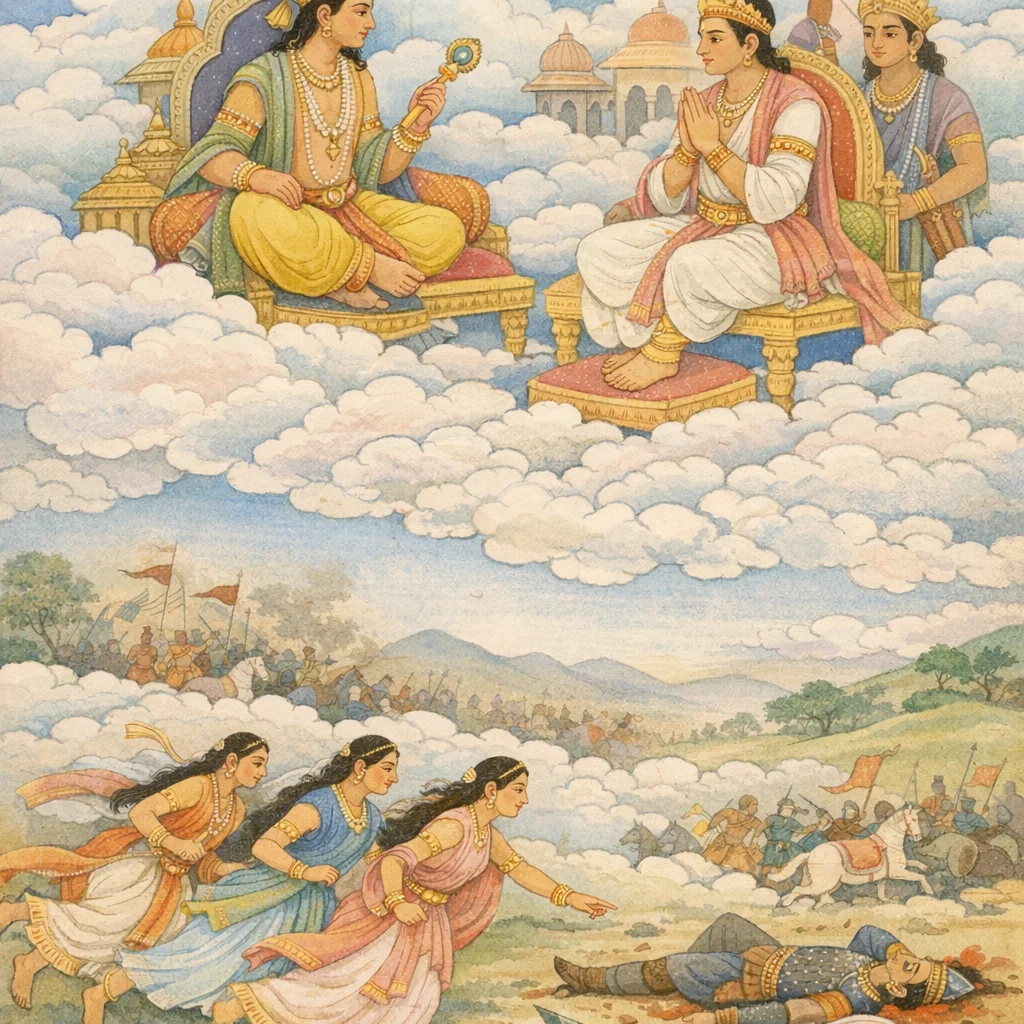
Yudhiṣṭhira asks Bhīṣma to specify the destinations (lokas) attained by courageous, non-retreating warriors who die while engaged. Bhīṣma introduces an ancient precedent: Ambarīṣa (Nābhāga), having reached the difficult-to-attain heaven, observes the exceptional ascent of his former commander Sudeva and questions Indra about the cause. Indra explains by mapping the battlefield onto a sacrificial system (yuddha as yajña): combatants become the consecrated participants, weapons and blood are analogized to ladles and oblations, and battlefield sounds are likened to sāman chants. The text then provides evaluative criteria: one who advances for the leader’s cause without turning back attains Indra-like realms; one who retreats in terror and is slain reaches an unstable hellish state. It also articulates constraints and exclusions—certain protected persons are not to be harmed—while affirming that mourning rites are not framed as obligatory for the fallen steadfast warrior, who is said to be honored in heaven. The chapter closes with Bhīṣma noting Ambarīṣa’s acceptance of the doctrine concerning warriors’ attainment.
Chapter Arc: युधिष्ठिर पितामह भीष्म से पूछते हैं—जो शूरवीर शत्रु के सामने डटकर युद्ध करते हैं और पीठ नहीं दिखाते, वे रणभूमि में मारे जाकर किन लोकों को प्राप्त होते हैं? → भीष्म इस प्रश्न को केवल सिद्धान्त से नहीं, एक पुरातन आख्यान से खोलते हैं—नाभागि अम्बरीष और इन्द्र (शक्र) का संवाद। अम्बरीष दुर्लभ स्वर्ग में जाकर इन्द्र के समीप सेनापति-सहित दिव्य वैभव देखता है और यह जानने को व्याकुल होता है कि यह तेज, ऋद्धि और पद किस कर्म-फल से प्राप्त हुआ। → इन्द्र अम्बरीष को प्रत्यक्ष कर्म-फल का रहस्य सुनाते हैं—धर्मपूर्वक पृथ्वी-पालन, युद्धधर्म का पालन, और रण में अडिग रहकर प्राण देना स्वर्गीय सिद्धि का द्वार है; रणभूमि में गिरे वीरों की ओर अप्सराएँ ‘मम भर्ता भवेत्’ कहकर दौड़ती हैं—यह वीरगति की स्वर्गीय स्वीकृति का चरम चित्र बनता है। → इन्द्र-वचन सुनकर अम्बरीष योद्धाओं की ‘आत्म-सिद्धि’ (वीरगति का फल) को स्वीकार करता है और भीष्म युधिष्ठिर को निष्कर्ष देते हैं कि जो युद्ध में धर्म से स्थित रहकर, भय-त्याग कर, पीठ न दिखाकर प्राण देता है, वह उच्च लोकों को प्राप्त होता है। → युद्धधर्म को ‘तप, पुण्य, सनातनधर्म और चारों आश्रमों के तुल्य’ बताने के बाद यह संकेत रह जाता है कि किन शर्तों में युद्धधर्म अधर्म बन जाता है—और उस सीमा-रेखा का निर्णय आगे के उपदेशों में खुलता है।
Shlokas
Verse 1
युधिष्ठिरने पूछा--पितामह! जो शूरवीर शत्रुके साथ डटकर युद्ध करते हैं और कभी पीठ नहीं दिखाते, वे समरांगणमें मृत्युको प्राप्त होकर किन लोकोंमें जाते हैं, यह मुझे बताइये
Yudhiṣṭhira said: “Grandfather, tell me this: those heroic warriors who stand firm and fight the enemy face to face, never turning their backs—when they meet death on the battlefield, to which worlds do they go?”
Verse 2
भीष्म उवाच अत्राप्युदाहरन्तीममितिहासं पुरातनम् । अम्बरीषस्य संवादमिन्द्रस्थय च युधिष्ठिर,भीष्मजीने कहा--युधिष्ठि!! इस विषयमें अम्बरीष और इन्द्रके संवादरूप एक प्राचीन इतिहासका उदाहरण दिया जाता है
Bhishma said: “Here too, O Yudhishthira, they cite an ancient example—the dialogue between King Ambarisha and Indra.”
Verse 3
अम्बरीषो हि नाभागि: स्वर्ग गत्वा सुदुर्लभम् । ददर्श सुरलोकस्थं शक्रेण सचिवं सह,नाभागपुत्र अम्बरीषने अत्यन्त दुर्लभ स्वर्गलोकमें जाकर देखा कि उनका सेनापति देवलोकमें इन्द्रके साथ विराजमान है
Bhīṣma said: “Ambarīṣa, the son of Nābhāga, having attained the exceedingly hard-to-reach heaven, beheld there—in the world of the gods—his commander seated together with Śakra (Indra).”
Verse 4
सर्वतेजोमयं दिव्यं विमानवरमास्थितम् | उपर्युपरि गच्छन्तं स्वं वै सेनापतिं प्रभुम्,वह सम्पूर्णत: तेजस्वी, दिव्य एवं श्रेष्ठ विमानपर बैठकर ऊपर-ऊपर चला जा रहा था। अपने शक्तिशाली सेनापतिको अपनेसे भी ऊपर होकर जाते देख सुदेवकी उस समृद्धिका प्रत्यक्ष दर्शन करके उदारबुद्धि राजा अम्बरीष आश्चर्यसे चकित हो उठे और इन्द्रदेवसे बोले
Bhīṣma said: “Seated upon a divine, supremely excellent aerial car made wholly of radiance, he—his own lord and commander—was seen moving ever higher and higher above. Beholding his powerful general ascend beyond him in such splendor, King Ambarīṣa, noble in mind, was struck with wonder at that manifest prosperity and addressed Indra.”
Verse 5
स दृष्टवोपरि गच्छन्तं सेनापतिमुदारधी: । ऋद्धि दृष्टवा सुदेवस्य विस्मित: प्राह वासवम्,वह सम्पूर्णत: तेजस्वी, दिव्य एवं श्रेष्ठ विमानपर बैठकर ऊपर-ऊपर चला जा रहा था। अपने शक्तिशाली सेनापतिको अपनेसे भी ऊपर होकर जाते देख सुदेवकी उस समृद्धिका प्रत्यक्ष दर्शन करके उदारबुद्धि राजा अम्बरीष आश्चर्यसे चकित हो उठे और इन्द्रदेवसे बोले
Bhīṣma said: Seeing the noble-minded commander ascending above him, and beholding the extraordinary prosperity and splendor attained by Sudeva, the king—astonished and filled with wonder—addressed Vāsava (Indra).
Verse 6
अमग्बरीष उवाच सागरान्तां महीं कृत्स्नामनुशास्य यथाविधि । चातुर्वण्यें यथाशास्त्र प्रवृत्ती धर्मकाम्यया,अम्बरीषने पूछा--देवराज! मैं समुद्रपर्यन्त सारी पृथ्वीका विधिपूर्वक शासन और संरक्षण करता था। शास्त्रकी आज्ञाके अनुसार धर्मकी कामनासे चारों वर्णोके पालनमें तत्पर रहता था
Ambarīṣa said: “O king of the gods! Having governed and protected the entire earth bounded by the ocean in the proper manner, I remained engaged—according to the injunctions of the śāstras—in the duties of the four social orders, motivated by a desire to uphold dharma.”
Verse 7
ब्रह्मचर्येण घोरेण गुर्वाचारेण सेवया । वेदानधीत्य धर्मेण राजशास्त्रं च केवलम्
Ambarīṣa said: “By rigorous brahmacarya, by proper conduct toward one’s teacher, and by devoted service; having studied the Vedas in accordance with dharma, I also studied the science of kingship (rājaśāstra).”
Verse 8
मैंने घोर ब्रह्मचर्यका पालन करके गुरुके बताये हुए आचार और गुरुकी सेवाके द्वारा धर्मपूर्वक वेदोंका अध्ययन किया तथा राजशास्त्रकी विशेष शिक्षा प्राप्त की ।। अतिथीनन्नपानेन पितृश्न स्वधया तथा । ऋषीन् स्वाध्यायदीक्षाभिददेवान् यज्ैरनुत्तमै:,सदा ही अन्न-पान देकर अतिथियोंका, श्राद्धकर्म करके पितरोंका, स्वाध्यायकी दीक्षा लेकर ऋषियोंका तथा उत्तमोत्तम यज्ञोंका अनुष्ठान करके देवताओंका पूजन किया
Ambarīṣa said: “I observed rigorous brahmacarya, lived by the conduct taught by my teacher, and served my teacher; thus, in accordance with dharma, I studied the Vedas and also received specialized training in the science of kingship. I honored guests by offering food and drink; I satisfied the ancestors through śrāddha rites with the prescribed offerings; I revered the seers by undertaking vows and initiations connected with self-study; and I worshiped the gods by performing the finest sacrifices.”
Verse 9
क्षत्रधर्मे स्थितो भूत्वा यथाशास्त्रं यथाविधि । उदीक्षमाण: पृतनां जयामि युधि वासव,देवेन्द्र! मैं शास्त्रोक्त विधिके अनुसार क्षत्रिय-धर्ममें स्थित होकर सेनाकी देख-भाल करता और युद्धमें शत्रुओंपर विजय पाता था
Ambarīṣa said: “Established in the warrior’s dharma, and acting in accordance with the śāstras and the prescribed rites, I would oversee the army and, in battle, win victory over my foes—O Vāsava, lord of the gods.”
Verse 10
देवराज सुदेवो5यं मम सेनापति: पुरा । आसीदू योध: प्रशान्तात्मा सो5यं कस्मादतीव माम्,देवराज! यह सुदेव पहले मेरा सेनापति था। शान्त स्वभावका एक सैनिक था; फिर यह मुझे लाँचकर कैसे जा रहा है?
Ambarīṣa said: “O king of the gods, this Sudeva was once my commander— a warrior of tranquil mind and disciplined nature. Why, then, does he now abandon me so completely, O Devarāja?”
Verse 11
अनेन क्रतुभिमर्ुख्यै्नेष्टं नापि द्विजातय: । तर्पिता विधिवच्छक्र सोडयं कस्मादतीव माम्,(ऐश्वर्यमीदृशं प्राप्त: सर्वदेवै: सुदुर्लभम् इन्द्रदेव! इसने न तो बड़े-बड़े यज्ञ किये और न विधिपूर्वक ब्राह्मणोंको ही तृप्त किया। वही यह सुदेव आज मुझको लाँधघकर ऊपर-ऊपरसे कैसे जा रहा है? इसे ऐसा ऐश्वर्य कहाँसे प्राप्त हो गया, जो सम्पूर्ण देवताओंके लिये भी अत्यन्त दुर्लभ है?
Ambarīṣa said: “O Indra, this man has not performed the foremost sacrifices, nor has he duly satisfied the twice-born with proper rites. Why then does he now surpass me so greatly, as though passing over my head? From where has he obtained such sovereignty—an eminence exceedingly rare even among all the gods?”
Verse 12
शक्र उवाच यदनेन कृतं कर्म प्रत्यक्ष ते महीपते ।। पुरा पालयत: सम्यक् पृथिवीं धर्मतो नृप । इन्द्रने कहा--पृथ्वीनाथ! नरेश्वर! पूर्वकालमें जब आप धर्मके अनुसार भलीभाँति इस पृथ्वीका पालन कर रहे थे, उस समय सुदेवने जो पराक्रम किया था, उसे आपने प्रत्यक्ष देखा था ।। शत्रवो निर्जिता: सर्वे ये तवाहितकारिण: ।। संयमो वियमश्चैव सुयमश्न महाबल: । राक्षसा दुर्जया लोके त्रयस्ते युद्धदुर्मदा: । पुत्रास्ते शतशुड्गस्य राक्षसस्य महीपते ।। महीपाल! उन दिनों आपके तीन शत्रु थे--संयम, वियम और महाबली सुयम। वे सब- के-सब आपका अहित करनेवाले थे। वे शतशूंग नामक राक्षसके पुत्र थे। लोकोंमें किसीके लिये भी उन तीनों रणदुर्मद राक्षसरोंपर विजय पाना कठिन था। सुदेवने उन सबको परास्त कर दिया था ।। अथ तस्मिन् शुभे काले तव यज्ञ वितन्वत: । अश्वमेधं महायागं देवानां हितकाम्यया । तस्य ते खलु विधघ्नार्थ आगता राक्षसास्त्रय: ।। एक समय जब आप देवताओंके हितकी इच्छासे शुभ मुहूर्तमें अश्वमेध नामक महायज्ञका अनुष्ठान कर रहे थे, उन्हीं दिनों आपके उस यज्ञमें विघ्न डालनेके लिये वे तीनों राक्षस वहाँ आ पहुँचे ।। कोटीशतपरीवारां राक्षसानां महाचमूम् | परिगृह्य तत: सर्वा: प्रजा बन्दीकृतास्तव ।। विह्वलाश्ष प्रजा: सर्वा: सर्वे च तव सैनिका: । उन्होंने सौ करोड़ राक्षसोंकी विशाल सेना साथ लेकर आक्रमण किया और आपकी समस्त प्रजाओंको पकड़कर बंदी बना लिया। उस समय आपकी समस्त प्रजा और सारे सैनिक व्याकुल हो उठे थे ।। निराकृतस्त्वया चासीत् सुदेव: सैन्यनायक: । तत्रामात्यवच: श्र॒ुत्वा निरस्त: सर्वकर्मसु ।। उन दिनों सेनापतिके विरुद्ध मन्त्रीकी बात सुनकर आपने सेनापति सुदेवको अधिकारसे वंचित करके सब कार्योसे अलग कर दिया था ।। श्रुत्वा तेषां वचो भूय: सोपधं वसुधाधिप । सर्वसैन्यसमायुक्त: सुदेव: प्रेरितस्त्वया ।। राक्षसानां वधार्थाय दुर्जयानां नराधिप । पृथ्वीनाथ! नरेश्वर! फिर उन्हीं मन्त्रियोंकी कपटपूर्ण बात सुनकर आपने उन दुर्जय राक्षसोंके वधके लिये सेनासहित सुदेवको युद्धमें जानेकी आज्ञा दे दी ।। नाजित्वा राक्षसीं सेनां पुनरागमनं तव ।। बन्दीमोक्षमकृत्वा च न चागमनमिष्यते । और जाते समय यह कहा--'राक्षसोंकी सेनाको पराजित करके उनके कैदमें पड़ी हुई प्रजा और सैनिकोंका उद्धार किये बिना तुम यहाँ लौटकर मत आना” ।। सुदेवस्तद्वचः श्र॒त्वा प्रसथ्थानमकरोन्नूप ।। सम्प्राप्तश्न स तं॑ देशं यत्र बन्दीकृता: प्रजा: । पश्यति सम महाघोरां राक्षसानां महाचमूम् ।। नरेश्वरर! आपकी वह बात सुनकर सुदेवने तुरंत ही प्रस्थान किया और वह उस स्थानपर गया, जहाँ आपकी प्रजा बंदी बना ली गयी थी। उसने वहाँ राक्षसोंकी महाभयंकर विशाल सेना देखी ।। दृष्टवा संचिन्तयामास सुदेवो वाहिनीपति: । नेयं शक््या चमूर्जेतुमपि सेन्द्रेः सुरासुरैः ।। नाम्बरीष: कलामेकामेषां क्षपयितु क्षम: । दिव्यास्त्रबलभूयिष्ठ: किमहं पुनरीदृश:ः ।। उसे देखकर सेनापति सुदेवने सोचा कि यह विशाल वाहिनी तो इन्द्र आदि देवताओं तथा असुरोंसे भी नहीं जीती जा सकती। महाराज अम्बरीष दिव्य अस्त्र एवं दिव्य बलसे सम्पन्न हैं, परंतु वे इस सेनाके सोलहवें भागका भी संहार करनेमें समर्थ नहीं हैं। जब उनकी यह दशा है, तब मेरे-जैसा साधारण सैनिक इस सेनापर कैसे विजय पा सकता है? ।। ततः सेनां पुनः सर्वा प्रेषयामास पार्थिव । यत्र त्वं सहितः सर्वर्मन्त्रिभि: सोपधैर्न॒प ।। राजन्! यह सोचकर सुदेवने फिर सारी सेनाको वहीं वापस भेज दिया, जहाँ आप उन समस्त कपटी मन्त्रियोंके साथ विराजमान थे ।। ततो रुद्रं महादेवं प्रपन्नो जगत: प्रतिम् । श्मशाननिलयं देवं तुष्टाव वृषभध्वजम् ।। तदनन्तर सुदेवने श्मशानवासी महादेव जगदीश्वर रुद्रदेवकी शरण ली और उन भगवान् वृषभध्वजका स्तवन किया ।। स्तुत्वा शस्त्र समादाय स्वशिरश्छेत्तुमुद्यत: । कारुण्याद् देवदेवेन गृहीतस्तस्य दक्षिण: ।। सपाणि: सह शस्त्रेण दृष्टवा चेदमुवाच ह । स्तुति करके वह खड़्ग हाथमें लेकर अपना सिर काटनेको उद्यत हो गया। तब देवाधिदेव महादेवने करुणावश सुदेवका वह खड़्गसहित दाहिना हाथ पकड़ लिया और उसकी ओर स्नेहपूर्वक देखकर इस प्रकार कहा ।। रुद्र उवगाच किमिदं साहसं पुत्र कर्तुकामो वदस्व मे । रुद्र बोले--पुत्र! तुम ऐसा साहस क्यों करना चाहते हो? मुझसे कहो ।। इन्द्र रवाच स उवाच महादेवं शिरसा त्ववनीं गतः ।। भगवन् वाहिनीमेनां राक्षसानां सुरेश्वर । अशक्तोऊहं रणे जेतुं तस्मात् त्यक्ष्यामि जीवितम् ।। गतिर्भव महादेव ममार्तस्य जगत्पते । नागन्तव्यमजित्वा च मामाह जगतीपति: ।। अम्बरीषो महादेव क्षारित: सचिवै: सह । तमुवाच महादेव: सुदेव॑ पतितं क्षितौ । अधोमुखं महात्मानं सत्त्वानां हितकाम्यया ।। धनुर्वेदे समाहूय सगुणं सहविग्रहम् । रथनागाश्व॒कलिल दिव्यास्त्रसमलंकृतम् ।। रथं च सुमहाभागं येन तत् त्रिपुरं हतम् । धनु: पिनाकं खडगं च रौद्रमस्त्रं च शड्कर: ।। निजघानासुरान् सर्वान् येन देवस्त्रयम्बक: । उवाच च महादेव: सुदेवं वाहिनीपतिम् ।। इन्द्र कहते हैं--राजन्! तब सुदेवने महादेवजीको पृथ्वीपर मस्तक रखकर प्रणाम किया और इस प्रकार कहा--'भगवन! सुरेश्वर! मैं इस राक्षस सेनाको युद्धमें नहीं जीत सकता; इसलिये इस जीवनको त्याग देना चाहता हूँ। महादेव! जगत्पते! आप मुझ आर्तको शरण दें। मन्त्रियोंसहित महाराज अम्बरीष मुझपर कुपित हुए बैठे हैं। उन्होंने स्पष्टरूपसे आज्ञा दी है कि इस सेनाको पराजित किये बिना तुम लौटकर न आना।' तब महादेवजीने पृथ्वीपर नीचे मुख किये पड़े हुए महामना सुदेवसे समस्त प्राणियोंके हितकी कामनासे कुछ कहनेकी इच्छा की। पहले उन्होंने गुण और शरीरसहित धनुर्वेदको बुलाकर रथ, हाथी और घोड़ोंसे भरी हुई सेनाका आवाहन किया, जो दिव्य अस्त्र-शस्त्रोंसे विभूषित थी। इसके बाद उन्होंने उस महान् भाग्यशाली रथको भी वहाँ उपस्थित कर दिया, जिससे उन्होंने त्रिपुरका नाश किया था। फिर पिनाक नामक धनुष, अपना खड्ग तथा अस्त्र भी भगवान् शंकरने दे दिया, जिसके द्वारा उन भगवान् त्रिलोचनने समस्त असुरोंका संहार किया था। तदनन्तर महादेवजीने सेनापति सुदेवसे इस प्रकार कहा ।। रुद्र उ्वाच रथादस्मात् सुदेव त्वं दुर्जयस्तु सुरासुरै: । मायया मोहितो भूमौ न पद कर्तुमरहसि ।। अत्रस्थस्त्रिदशान् सर्वान् जेष्यसे सर्वदानवान् | राक्षसाश्न पिशाचाश्व न शक्ता द्रष्टमीदृशम् ।। रथ॑ सूर्यसहस््राभं किमु योद्धं त्वया सह | रुद्र बोले--सुदेव! तुम इस रथके कारण देवताओं और असुरोंके लिये भी दुर्जय हो गये हो, परंतु किसी मायासे मोहित होकर अपना पैर पृथ्वीपर न रख देना। इसपर बैठे रहोगे तो समस्त देवताओं और दानवोंको जीत लोगे। यह रथ सहस्रों सूर्योके समान तेजस्वी है। राक्षत और पिशाच ऐसे तेजस्वी रथकी ओर देख भी नहीं सकते; फिर तुम्हारे साथ युद्ध करनेकी तो बात ही क्या है? ।। इन्द्र उवाच स जित्वा राक्षसान् सर्वान् कृत्वा बन्दीविमोक्षणम् | घातयित्वा च तान् सर्वान् बाहुयुद्धेत्वयं हतः । वियमं प्राप्प भूपाल वियमश्न निपातित: ।।) इन्द्र कहते हैं--राजन्! तत्पश्चात् सुदेवने उस रथके द्वारा समस्त राक्षसोंको जीतकर बंदी प्रजाओंको बन्धनसे छुड़ा दिया और समस्त शत्रुओंका संहार करके वियमके साथ बाहुयुद्ध करते समय स्वयं भी मारा गया, साथ ही इसने उस युद्धमें वियमको भी मार डाला ।। इन्द्र उवाच एतस्य विततस्तात सुदेवस्य बभूव ह । संग्रामयज्ञ: सुमहान् यश्चान्यो युद्धयते नर:,इन्द्र बोले--तात! इस सुदेवने बड़े विस्तारके साथ महान् रणयज्ञ सम्पन्न किया था। दूसरा भी जो मनुष्य युद्ध करता है, उसके द्वारा इसी तरह संग्राम-यज्ञ सम्पादित होता है
Indra said: “O lord of the earth, O king—when in former times you were rightly governing the world in accordance with dharma, you yourself witnessed directly the deed that Sudeva performed.”
Verse 13
संनद्धो दीक्षित: सर्वो योध: प्राप्प चमूमुखम् । युद्धयज्ञाधिकारस्थो भवतीति विनिश्चय:,कवच धारण करके युद्धकी दीक्षा लेनेवाला प्रत्येक योद्धा सेनाके मुहानेपर जाकर इसी प्रकार संग्रामयज्ञका अधिकारी होता है। यह मेरा निश्चित मत है
Indra said: “Any warrior who has girded himself in armor and undergone the consecration for battle, upon reaching the very front of the army, becomes duly entitled to the sacrifice that is war. This is my settled conviction.”
Verse 14
अम्बरीष उवाच कानि यज्ञे हवींष्यस्मिन् किमाज्यं का च दक्षिणा । ऋषच्विजजश्षात्र के प्रोक्तास्तन्मे ब्रूहि शतक्रतो,अम्बरीषने पूछा--शतक्रतो! इस रणयज्ञमें कौन-सा हविष्य है? क्या घृत है? कौन- सी दक्षिणा है और इसमें कौन-कौन-से ऋत्विज् बताये गये हैं? यह मुझसे कहिये
Ambarīṣa asked: “O Śatakratu! In this sacrifice that is war, what is the oblation? What is the ghee? What is the dakṣiṇā, the ritual gift? And who are declared to be the officiating priests? Tell me.”
Verse 15
इन्द्र रवाच ऋषत्विज: कुण्जरास्तत्र वाजिनो<थ्वर्यवस्तथा । हवींषि परमांसानि रुधिरं त्वाज्यमुच्यते,इन्द्रने कहा--राजन्! इस युद्धयज्ञमें हाथी ही ऋत्विज् हैं, घोड़े अध्वर्यु हैं, शत्रुओंका मांस ही हविष्य है और उनके रक्तको ही घृत कहा जाता है
Indra said: “O King, in this sacrifice that is war, the elephants themselves are the officiating priests, and the horses serve as the adhvaryu-priests. The oblation is the very flesh of the foes, and their blood is what is called the ghee.”
Verse 16
शृगालगृभ्रकाकोला: सदस्यास्तत्र पत्रिण: | आज्यशेषं पिबन्त्येते हवि: प्राश्नन्ति चाध्वरे,सियार, गीध, कौए तथा अन्य मांसभक्षी पक्षी उस यज्ञशालाके सदस्य हैं, जो यज्ञावशिष्ट घृत (रक्त) को पीते और उस यज्ञमें अर्पित हविष्य (मांस) को खाते हैं
Ambarīṣa said: “There, jackals, vultures, crows and other flesh-eating birds are counted as the ‘members’ of that rite. They drink what remains of the ghee and consume the oblation offered in the sacrifice.”
Verse 17
प्रासतोमरसंघाता: खड्गशक्तिपरश्चधा: । ज्वलन्तो निशिता: पीता: खुचस्तस्याथ सत्रिण:,प्रास, तोमरसमूह, खड्ग, शक्ति, फरसे आदि चमचमाते हुए तीखे और पानीदार शस्त्र यज्ञकर्ताके लिये खुक॒का काम देते हैं
Ambarīṣa said: “Clusters of spears and javelins, swords, lances, and battle-axes—blazing, razor-sharp, and gleaming—become, for that sacrificer, as though they were mere ‘khucas’ (harmless implements).”
Verse 18
चापवेगायतस्ती क्षण: परकायावभेदन: । ऋणजु: सुनिशित: पीत: सायकश्न स्रुवो महान्,धनुषके वेगसे दूरतक जानेके कारण जो विशाल आकार धारण करता है, वह शत्रुके शरीरको विदीर्ण करनेवाला तीखा, सीधा, पैना और पानीदार बाण ही यजमानके हाथमें स्थित महान् ख्रुव है
Ambarīṣa said: “The great ladle (śruva) that rests in the sacrificer’s hand is, in truth, like an arrow—drawn out by the speed of a bow, sharp, straight, keen-edged, and ‘drinking’ (wet with the oblation). It is capable of piercing the enemy’s body.”
Verse 19
दीपिचर्मावनद्धश्न नागदन्तकृतत्सरु: । हस्तिहस्तहर: खड्ग: स्फ्यो भवेत् तस्य संयुगे,जो व्याप्रचर्मकी म्यानमें बँधा रहता है, जिसकी मूँठ हाथीके दाँतकी बनी होती है तथा जो गजराजोंके शुण्डदण्डको काट लेता है, वह खड़्ग उस युद्धमें स्फ्यका काम देता है
Ambarīṣa said: “A sword kept sheathed in a scabbard of leopard-skin, with a hilt fashioned from elephant ivory, and sharp enough to sever an elephant’s trunk—such a sword becomes, for its bearer, a true safeguard and advantage in the press of battle.”
Verse 20
ज्वलितैर्निशितै: प्रासशक््त्यूष्टिसपरश्वधै: । शैक्यायसमयैस्ती क्ष्णरभिघातो भवेद् वसु
Ambarīṣa said: “With blazing, razor-sharp missiles—spears, javelins, clubs, and battle-axes—made of stone and iron, a fierce and cutting onslaught would arise, O Vasu.”
Verse 21
आवेगाद्ू यच्च रुधिरं संग्रामे स्रवते भुवि
Ambarīṣa said: “And the blood that, driven by the force of battle, pours out and runs upon the earth in war…”
Verse 22
छिन्धि भिन्धीति य: शब्द: श्रूयते वाहिनीमुखे,सेनाके मुहानेपर जो “काट डालो', फाड़ डालो' आदिका भयंकर शब्द सुना जाता है, वही सामगान है। सैनिकरूपी सामगायक शत्रुओंको यमलोकमें भेजनेके लिये मानो सामगान करते हैं। शत्रुओंकी सेनाका प्रमुख भाग उस वीर यजमानके लिये हविर्धान (हविष्य रखनेका पात्र) बताया गया है
Ambarīṣa said: “The terrifying cry heard at the very front of an army—‘Cut them down! Split them apart!’—is, in truth, a kind of Sāman-chant. The soldiers, as if they were singers of the Sāman, seem to ‘sing’ in order to dispatch their enemies to Yama’s realm. And the main body of the enemy host is described as the havirdhāna, the vessel that holds the oblation, for that heroic sacrificer.”
Verse 23
सामानि सामगास्तस्य गायन्ति यमसादने । हविर्धान॑ तु तस्याहुः परेषां वाहिनीमुखम्,सेनाके मुहानेपर जो “काट डालो', फाड़ डालो' आदिका भयंकर शब्द सुना जाता है, वही सामगान है। सैनिकरूपी सामगायक शत्रुओंको यमलोकमें भेजनेके लिये मानो सामगान करते हैं। शत्रुओंकी सेनाका प्रमुख भाग उस वीर यजमानके लिये हविर्धान (हविष्य रखनेका पात्र) बताया गया है
Ambarīṣa said: “In his case, the ‘Sāman’ chants are sung in Yama’s own abode—meaning that on the battlefield the terrifying cries of ‘Cut them down!’ and ‘Tear them apart!’ function like a grim liturgy. Those soldiers, as if they were Sāman-singers, seem to ‘sing’ only to dispatch enemies to the realm of Death. And the foremost division—the very ‘mouth’ of the opposing army—is described for that heroic patron as the havirdhāna, the vessel where the offering is placed.”
Verse 24
कुज्जराणां हयानां च वर्मिणां च समुच्चय: । अग्नि: श्येनचितो नाम स च यज्ञे विधीयते,हाथी, घोड़े और कवचधारी वीर पुरुषोंके समूह ही उस युद्धयज्ञके श्येनचित नामक अन्नि हैं
Ambarīṣa said: “The massed array of elephants, horses, and armoured warriors is the fire called ‘Śyenacita’. That very fire is prescribed for the sacrifice.”
Verse 25
उत्तिष्ठते कबन्धो5त्र सहस्ने निहते तु यः । स यूपस्तस्य शूरस्य खादिरोडष्टास्नरिरुच्यते,सहसीरों वीरोंके मारे जानेपर जो कबन्ध खड़े दिखायी देते हैं, वे ही मानो उस शूरवीरके यज्ञमें खदिरकाष्ठके बने हुए आठ कोणवाले यूप कहे गये हैं
Ambarīṣa said: “When a thousand are slain here, the headless trunks that are seen rising up are, as it were, the sacrificial posts (yūpas) of that hero’s sacrifice—remembered as yūpas made of khadira-wood, eight-angled in form.”
Verse 26
इडोपहूता: क्रोशन्ति कुञ्जरास्त्वंकुशेरिता: । व्याघुष्टतलनादेन वषट्कारेण पार्थिव
Ambarīṣa said: “O king, elephants, summoned by the call and driven on by the goad, cry out loudly; and amid the resounding clamor of striking palms and the ritual exclamation ‘vaṣaṭ’, the scene swells with tumult.”
Verse 27
ब्रह्मस्वे ह्वियमाणे तु त्यक्त्वा युद्धे प्रियां तनुम्ू
Ambarīṣa said: “When one is being summoned to the wealth and duty of Brahmanhood, one should abandon even the dear body on the battlefield.”
Verse 28
भर्तुरर्थे च यः शूरो विक्रमेद् वाहिनीमुखे
Ambarīṣa said: “That hero who, for the sake of his lord, advances with valor into the very front of the army—such courage is the mark of loyal service and righteous resolve.”
Verse 29
नीलचर्मावृतै: खड्गैर्बाहुभि: परिघोपमै:
Ambarīṣa describes warriors whose arms, like iron clubs, wield swords sheathed in dark leather—an image emphasizing formidable martial readiness and the intimidating force that accompanies unrighteous aggression as well as disciplined protection when aligned with dharma.
Verse 30
यस्तु नापेक्षते कंचित् सहायं विजये स्थित:
Ambarīṣa said: “But he who, even while standing in the midst of victory, does not look to anyone for support—who relies on none and seeks no helper—reveals a self-sufficient temper that can easily slip into pride and isolation from righteous counsel.”
Verse 31
विगाहा[ वाहिनीमध्यं तस्य लोका यथा मम । जो विजयके लिये युद्धमें डटा रहकर शत्रुकी सेनामें घुस जाता है और दूसरे किसी भी सहायककी अपेक्षा नहीं रखता, उसे मेरे समान ही लोक प्राप्त होते हैं ।। यस्य शोणितसंघाता भेरीमण्ड्रककच्छपा,नदी योधस्य संग्रामे तदस्याव भृथं स्मृतम् । जिस योद्धाके युद्धरूपी यज्ञमें रक्तकी नदी प्रवाहित होती है, उसके लिये वह अवभृथस्नानके समान पुण्यजनक है। रक्त ही उस नदीकी जलराशि है, नगाड़े ही मेढक और कछुओंके समान हैं, वीरोंकी हड्डियाँ ही छोटे-छोटे कंकड़ और बालूके समान हैं, उसमें प्रवेश पाना अत्यन्त कठिन है, मांस और रक्त ही उस नदीकी कीच हैं, ढाल और तलवार ही उसमें नौकाके समान हैं, वह भयानक नदी केशरूपी सेवार और घाससे ढकी हुई है। कटे हुए घोड़े, हाथी और रथ ही उसमें उतरनेके लिये सीढ़ी हैं, ध्वजा-पताका तटवर्ती बेंतकी लताके समान हैं, मारे गये हाथियोंको भी वह बहा ले जानेवाली है, रक्तरूपी जलसे वह लबालब भरी है, पार जानेकी इच्छावाले मनुष्योंके लिये वह अत्यन्त दुस्तर है, मरे हुए हाथी बड़े-बड़े मगरमच्छके समान हैं, वह परलोककी ओर प्रवाहित होनेवाली नदी अमंगलमयी प्रतीत होती है, ऋष्टि और खड़ग--ये उससे पार होनेके लिये विशाल नौकाके समान हैं। गीध-कंक और काक छोटी-छोटी नौकाओंके समान हैं, उसके आस-पास राक्षस विचरते हैं तथा वह भीरु पुरुषोंको मोहमें डालनेवाली है
Ambarīṣa said: “He who, intent on victory, stands firm in battle and plunges into the midst of the enemy host without looking for any other support—such a man attains worlds like mine. And for the warrior in whose battle-sacrifice a river of blood flows—where war-drums are like frogs and tortoises—entering that dreadful stream is regarded for him as an avabhṛtha bath, the concluding purificatory immersion of a sacrifice. Thus, steadfast courage and self-reliant resolve in righteous combat are praised as a sacrificial act that bears spiritual fruit.”
Verse 32
वीरास्थिशर्करा दुर्गा मांसशोणितकर्दमा । असिचर्मप्लवा घोरा केशशैवलशाद्धला
Ambarīṣa describes a terrifying stronghold-like scene: its gravel is made of heroes’ bones, its mire is flesh and blood, and it is crossed by rafts of sword-blades and hides. Dreadful and foul, it is choked with hair like river-weed and strewn with clotted, impure remnants—an image meant to awaken moral revulsion toward violence and the ruin it brings.
Verse 33
अश्वनागरथैश्वैव संच्छिन्नै: कृतसंक्रमा । पताकाध्वजवानीरा हतवारणवाहिनी
Ambarīṣa said: “With horses, elephants, and chariots shattered and cut down, the army’s ordered crossings and advances were broken. Its banners and standards lay in disarray, and the elephant-corps had been destroyed.”
Verse 34
शोणितोदा सुसम्पूर्णा दुस्तरा पारगैनरि: । हतनागमहानक्रा परलोकवहाशिवा
Ambarīṣa said: “That river, whose waters are blood, is utterly full and hard to cross even for those who know the ford. It is infested with great crocodiles and strewn with slain elephants; it bears beings onward to the next world—yet (in its grim function) it is called ‘auspicious.’”
Verse 35
ऋष्टिखड्गमहानौका गृध्रकड्कबलप्लवा । पुरुषादानुचरिता भीरूणां कश्मलावहा
Ambarīṣa said: “This great ‘boat’ is made of spears and swords, and its rafts are fashioned from vulture-like, harsh battalions. It is steered by man-eating followers, and it brings bewilderment and moral panic to the timid.”
Verse 36
वेदिर्यस्य त्वमित्राणां शिरोभ्यश्न प्रकीर्यते
Ambarīṣa said: “You are the sacrificial altar for your enemies—upon the heads of those foes you are strewn and heaped, as if the very rite of their downfall were being performed.”
Verse 37
पत्नीशाला कृता यस्य परेषां वाहिनीमुखम्
Ambarīṣa said: “For one whose very ‘front of the army’ is turned into a ‘wives’ pavilion’—that is, whose martial vanguard is reduced to a place of domestic dependence and indulgence—such a person cannot truly stand firm in the duties of leadership and righteous conduct.”
Verse 38
हविर्धानं स्ववाहिन्यास्तदस्याहुर्मनीषिण: । जो वीर शत्रुसेना के मुहानेको पत्नीशाला बना लेता है, मनीषी पुरुष उसके लिये अपनी सेनाके प्रमुख भागको युद्ध-यज्ञके हवनीय पदार्थोंके रखनेका पात्र बताते हैं ।। सदस्या दक्षिणा योधा आग्नीथ्रश्नोत्तरां दिशम्
Ambarīṣa said: “The wise declare that the foremost receptacle for the oblation in this ‘war-sacrifice’ is one’s own well-led host. The hero who turns the very mouth of the enemy’s army into a ‘wives’ pavilion’—that is, who breaks and humiliates the foe at its front—such a man, the discerning say, becomes for his side the principal vessel in which the offerings of victory are placed. The fighters are the sacrificial fee; the officiants are the members of the rite; and the Āgnīdhra-priest is stationed to the northern quarter.”
Verse 39
शत्रुसेनाकलत्रस्य सर्वलोका न दूरत: । जिस वीरके लिये दक्षिणदिशामें स्थित योद्धा सदस्य हैं, उत्तरदिशावर्ती योद्धा आग्नीध्र (ऋत्विक्) हैं एवं शत्रुसेना पत्नीस्वरूप है, उसके लिये समस्त पुण्यलोक दूर नहीं हैं ।। ३८ हे यदा तूभयतो व्यूहे भवत्याकाशमग्रत:
Ambarīṣa said: For the warrior who regards the enemy host as his wedded consort—ever-present and inseparable in the discipline of battle—the blessed worlds are not far away. Such a fighter, whose ordered ranks and ritual-like conduct in war mirror sacred duty, attains merit through steadfastness, courage, and unwavering commitment to his appointed role.
Verse 40
सास्य वेदिस्तदा यज्ञै्नित्यं वेदास्त्रयो5ग्नय: । जब अपनी सेना तथा शत्रुसेना एक-दूसरेके सामने व्यूह बनाकर उपस्थित होती है, उस समय दोनोंमेंसे जिसके सम्मुख केवल जनशून्य आकाश रह जाता है, वह निर्जन आकाश ही उस वीरके लिये युद्ध-यज्ञकी वेदी है। उस स्थानपर मानो सदा यज्ञ होता है तथा तीनों वेद और त्रिविध अग्नि सदा ही प्रतिष्ठित रहते हैं ।। यस्तु योध: परावृत्त: संत्रस्तो हन्यते परै:
Ambarīṣa said: “For that warrior, at that moment, the very battlefield-front becomes a sacrificial altar: where the two armies stand arrayed face to face, the open, unoccupied space directly before him is itself his yuddha-yajña’s vedi. There, as it were, sacrifice is ever being performed, and the three Vedas and the three sacred fires stand continually established. But the fighter who turns back in fear is struck down by the enemy.”
Verse 41
यस्य शोणिततवेगेन वेदि: स्यात् सम्परिप्लुता
“By whose rushing flood of blood the sacrificial altar would be completely inundated.” (Ambarīṣa evokes a grim image to underscore how violence can profane what is meant to be sacred, warning that unrighteous force turns even ritual space into a scene of defilement.)
Verse 42
यस्तु सेनापतिं हत्वा तद्यानमधिरोहति
Ambarīṣa said: “But the one who, having slain the commander of an army, then mounts that very commander’s conveyance (chariot/vehicle)…”
Verse 43
नायकं तत्कुमारं वा यो वा स्याद् यत्र पूजित:
Whether it be a leader, that prince, or whoever else is honored there—
Verse 44
जीवग्राहं प्रगृह्लाति तस्थ लोका यथा मम । जो शत्रुपक्षेके सेनापति, उसके पुत्र अथवा उस पक्षके किसी भी सम्मानित वीरको जीते-जी पकड़ लेता है, उसको मेरे-जैसे लोक प्राप्त होते हैं ।। ४३ $ ।। आहवे तु हतं शूरं न शोचेत कथंचन
Ambarīṣa said: “He who, in battle, seizes an enemy alive—taking captive the opposing side’s commander, his son, or any honoured hero—attains worlds like mine. But as for a brave warrior who has been slain in the fight, one should not grieve for him in any way.”
Verse 45
नहाजन्न॑नोदकं॑ तस्य न स्नानं नाप्पोशौचकम्
Ambarīṣa said: “For him there is no need of the water used for bathing, no ritual bath, and no purification by water.”
Verse 46
वराप्सर:सहस्राणि शूरमायोधने हतम्
Ambarīṣa said: “Thousands of celestial nymphs (Apsarases) have been promised as a boon to the hero who is slain on the battlefield.”
Verse 47
एतत् तपश्न पुण्यं च धर्मश्वैव सनातन:
Ambarīṣa said: “This is austerity, this is merit, and this indeed is the eternal Dharma.”
Verse 48
वृद्धबालौ न हन्तव्यौ न च स्त्री नैव पृछत:
“The aged and the young are not to be slain; nor is a woman to be harmed—such persons are not to be treated as targets of violence.”
Verse 49
तृणपूर्णमुखश्चैव तवास्मीति च यो वदेत् । युद्धमें वृद्ध, बालक और स्त्रियोंका वध नहीं करना चाहिये, किसी भागते हुएकी पीठमें आघात नहीं करना चाहिये, जो मुँहमें तिनका लिये शरण में आ जाय और कहने लगे कि मैं आपका ही हूँ, उसका भी वध नहीं करना चाहिये || ४८ $ ।। जम्भं वृत्रं बलं पाकं शतमायं विरोचनम्,जम्भ, वृत्रासुर, बलासुर, पाकासुर, सैकड़ों माया जाननेवाले विरोचन, दुर्जय वीर नमुचि, विविधमायाविशारद शम्बरासुर, दैत्यवंशी विप्रचित्ति, सम्पूर्ण दानवदल तथा प्रह्नादको भी युद्धमें मारकर मैं देवराजके पदपर प्रतिष्ठित हुआ हूँ
Ambarīṣa said: “Even one who comes with his mouth filled with grass—a sign of surrender—and declares, ‘I am yours,’ should not be slain.”
Verse 50
दुर्वार्य चैव नमुचिं नैकमायं च शम्बरम् | विप्रचित्तिं च दैतेयं दनोः पुत्रांश्व सर्वश: । प्रहादं च निहत्याजी ततो देवाधिपो5भवम्,जम्भ, वृत्रासुर, बलासुर, पाकासुर, सैकड़ों माया जाननेवाले विरोचन, दुर्जय वीर नमुचि, विविधमायाविशारद शम्बरासुर, दैत्यवंशी विप्रचित्ति, सम्पूर्ण दानवदल तथा प्रह्नादको भी युद्धमें मारकर मैं देवराजके पदपर प्रतिष्ठित हुआ हूँ
Ambarīṣa said: “Having slain in battle the hard-to-check Namuci, Śambara skilled in many illusions, the Daitya Vipracitti, all the sons of Danu, and Prahrāda as well, I then became established in the office of lord of the gods.”
Verse 51
भीष्म उवाच इत्येतच्छक्रवचनं निशम्य प्रतिगृह्म॒ च । योधानामात्मन: सिद्धिमम्बरीषो5भिपन्नवान्,भीष्मजी कहते हैं--युधिष्ठिर! इन्द्रका यह वचन सुनकर राजा अम्बरीषने मन-ही-मन इसे स्वीकार किया और वे यह मान गये कि योद्धाओंको स्वतः सिद्धि प्राप्त होती है
Bhishma said: “O Yudhiṣṭhira, having heard these words of Śakra (Indra) and having inwardly accepted them, King Ambarīṣa became convinced that for warriors, success and attainment arise of themselves, as the assured consequence of their ordained duty.”
Verse 98
इति श्रीमहाभारते शान्तिपर्वणि राजधर्मानुशासनपर्वणि इन्द्राम्बरीषसंवादे अष्टनवतितमो<ध्याय:
Thus, in the Śrī Mahābhārata, within the Śānti Parva—specifically the instruction on the duties of kings—ends the ninety-eighth chapter, in the dialogue between Indra and King Ambarīṣa.
Verse 216
सास्य पूर्णाहुतिहोंमे समृद्धा सर्वकामधुक् । वीरोंके शरीरसे संग्रामभूमिमें बड़े वेगसे जो रक्तकी धारा बहती है, वही उस युद्धयज्ञके होममें समस्त कामनाओं को पूर्ण करनेवाली समृद्धिशालिनी पूर्णाहुति है
Ambarīṣa declares that in the sacrificial fire of this “war as a yajña,” the true and abundant final oblation—one that “fulfills all desires”—is the torrent of blood that rushes swiftly from the bodies of heroes upon the battlefield. That very outpouring becomes the consummating offering, revealing a stark ethical vision in which martial death is ritualized and the costs of violence are read through sacrificial symbolism.
Verse 266
उदगाता तत्र संग्रामे त्रिसामा दुन्दुभि्न॑प । राजन! वाणीद्वारा ललकारने और महावतोंके अंकुशोंकी मार खानेपर हाथी जो चिग्घाड़ते हैं, कोलाहल और करतलध्वनिके साथ होनेवाली वह चिग्घाड़नेकी आवाज उस यज्ञमें वषट्कार है। नरेश्वर! संग्राममें जिस दुन्दुभिकी गम्भीर ध्वनि होती है, वही सामवेदके तीन मन्त्रोंका पाठ करनेवाला उदगाता है
Ambarīṣa said: “O king, in that battle the war-drum itself is the Udgātṛ, chanting the three Sāman hymns. The loud cries raised through the mouth, and the trumpeting of elephants struck by the mahouts’ goads—mingled with tumult and the clapping roar of many hands—become, in that sacrifice, the vaṣaṭ-cry. And, O lord of men, the deep, resonant sound of the battle-drum is nothing other than the Udgātṛ who recites the three Sāman verses.”
Verse 276
आत्मानं यूपमुत्सृज्य स यज्ञोडनन्तदक्षिण: । जब लुटेरे ब्राह्मणके धनका अपहरण करते हों, उस समय वीर पुरुष उनके साथ किये जानेवाले युद्धमें अपने प्रिय शरीरके त्यागके लिये जो उद्यम करता है अथवा जो देहरूपी यूपका उत्सर्ग करके प्रहार ही कर बैठता है, उसका वह युद्ध ही अनन्त दक्षिणाओंसे युक्त यज्ञ कहलाता है
Ambarīṣa said: When robbers seize a brāhmaṇa’s wealth, the valorous man who enters the necessary battle against them, striving to relinquish even his dear body—offering the body as though it were a sacrificial post (yūpa)—or who gives up that “yūpa of flesh” and strikes on, such combat itself is called a yajña endowed with endless dakṣiṇā, sacrificial fees.
Verse 286
न भयाद् विनिवर्तेत तस्य लोका यथा मम | जो शूरवीर अपने स्वामीके लिये सेनाके मुहानेपर खड़ा होकर पराक्रम प्रकट करता है और भयसे कभी पीठ नहीं दिखाता, उसको मेरे समान लोकोंकी प्राप्ति होती है
Ambarīṣa said: “One should not turn back out of fear. Whoever stands firm at the very front of the army for the sake of his lord, displaying valor and never showing his back in fear—such a man attains worlds like mine.”
Verse 293
यस्य वेदिरुपस्तीर्णा तस्य लोका यथा मम । जिसके युद्ध-यज्ञकी वेदी नीले चमड़ेकी बनी हुई म्यानके भीतर रखी जानेवाली तलवारों तथा परिघके समान मोटी-मोटी भुजाओंसे बिछ जाती है, उसे वैसे ही लोक प्राप्त होते हैं, जैसे मुझे मिले हैं
Ambarīṣa said: “For the one whose sacrificial altar is duly spread and prepared, the worlds attained are the same as those attained by me.”
Verse 353
नदी योधस्य संग्रामे तदस्याव भृथं स्मृतम् । जिस योद्धाके युद्धरूपी यज्ञमें रक्तकी नदी प्रवाहित होती है, उसके लिये वह अवभृथस्नानके समान पुण्यजनक है। रक्त ही उस नदीकी जलराशि है, नगाड़े ही मेढक और कछुओंके समान हैं, वीरोंकी हड्डियाँ ही छोटे-छोटे कंकड़ और बालूके समान हैं, उसमें प्रवेश पाना अत्यन्त कठिन है, मांस और रक्त ही उस नदीकी कीच हैं, ढाल और तलवार ही उसमें नौकाके समान हैं, वह भयानक नदी केशरूपी सेवार और घाससे ढकी हुई है। कटे हुए घोड़े, हाथी और रथ ही उसमें उतरनेके लिये सीढ़ी हैं, ध्वजा-पताका तटवर्ती बेंतकी लताके समान हैं, मारे गये हाथियोंको भी वह बहा ले जानेवाली है, रक्तरूपी जलसे वह लबालब भरी है, पार जानेकी इच्छावाले मनुष्योंके लिये वह अत्यन्त दुस्तर है, मरे हुए हाथी बड़े-बड़े मगरमच्छके समान हैं, वह परलोककी ओर प्रवाहित होनेवाली नदी अमंगलमयी प्रतीत होती है, ऋष्टि और खड़ग--ये उससे पार होनेके लिये विशाल नौकाके समान हैं। गीध-कंक और काक छोटी-छोटी नौकाओंके समान हैं, उसके आस-पास राक्षस विचरते हैं तथा वह भीरु पुरुषोंको मोहमें डालनेवाली है
Ambarīṣa said: For a warrior, the river that flows in battle—a river of blood—is regarded as his avabhṛtha bath, the concluding purification of a sacrifice. For one who has entered the war‑yajña, that fearful current, though dreadful and hard to cross, becomes a ritual consummation: blood is its water, the roar of drums its creatures, bones its gravel and sand, and weapons the means of passage. The image casts combat as a solemn rite with moral weight, where courage, resolve, and acceptance of peril are treated as the warrior’s sacrificial completion rather than mere violence.
Verse 363
अश्वस्कन्धैर्गजस्कन्धैस्तस्य लोका यथा मम । जिसके युद्ध-यज्ञकी वेदी शत्रुओंके मस्तकों, घोड़ोंकी गर्दनों और हाथियोंके कंधोंसे बिछ जाती है, उस वीरको मेरे-जैसे ही लोक प्राप्त होते हैं
Ambarīṣa said: “That warrior whose battlefield‑sacrifice is imagined as an altar strewn with the heads of foes, the necks of horses, and the shoulders of elephants—he attains worlds like mine.”
Verse 403
अप्रतिष्ठ: स नरकं याति नास्त्यत्र संशय: । जो योद्धा भयभीत हो पीठ दिखाकर भागता है और उसी अवस्थामें शत्रुओंद्वारा मारा जाता है, वह कहीं भी न ठहरकर सीधा नरकमें गिरता है, इसमें संशय नहीं है
Ambarīṣa declares that a warrior who, seized by fear, turns his back and flees, and is then slain by the enemy in that very state, becomes “without standing” (deprived of honorable support) and falls straight into hell—of this there is no doubt.
Verse 413
केशमांसास्थिसम्पूर्णा स गच्छेत् परमां गतिम् । जिसके रक्तके वेगसे केश, मांस और हड्डियोंसे भरी हुई रणयज्ञकी वेदी आप्लावित हो उठती है, वह वीर योद्धा परम गतिको प्राप्त होता है
Ambarīṣa declares that the warrior who, in the sacrificial field of battle, floods the altar with the rushing stream of his blood—so that it becomes heaped with hair, flesh, and bones—attains the highest destination.
Verse 423
स विष्णुविक्रमक्रामी बृहस्पतिसम: प्रभु: । जो योद्धा शत्रुके सेनापतिका वध करके उसके रथपर आरूढ़ हो जाता है, वह भगवान् विष्णुके समान पराक्रमशाली, बृहस्पतिके समान बुद्धिमान् तथा शक्तिशाली वीर समझा जाता है
Ambarīṣa said: “That warrior who, having slain the enemy’s commander, mounts his chariot is to be regarded as a mighty hero—valiant like Lord Viṣṇu in stride, wise like Bṛhaspati, and endowed with commanding power.”
Verse 443
अशोच्यो हि हतः शूर: स्वर्गलोके महीयते । युद्धस्थलमें मारे गये शूरवीरके लिये किसी प्रकार भी शोक नहीं करना चाहिये। वह मारा गया शूरवीर स्वर्गलोकमें प्रतिष्ठित होता है, अतः कदापि शोचनीय नहीं है
Ambarīṣa declares that a valiant warrior slain in battle is not to be lamented. One who falls while standing in the duty of war attains honor in heaven; therefore such a death is not a cause for grief but a fulfillment of kṣatriya-dharma.
Verse 456
हतस्य कर्तुमिच्छन्ति तस्य लोकान् शृणुष्व मे । युद्धमें मारे गये वीरके लिये उसके आत्मीयजन न तो स्नान करना चाहते हैं, न अशौचसम्बन्धी कृत्यका पालन, न अन्नदान (श्राद्ध) करनेकी इच्छा करते हैं, और न जलदान (तर्पण) करनेकी। उसे जो लोक प्राप्त होते हैं, उन्हें मुझसे सुनो
Hear from me of the worlds that fall to one who is slain. For the hero killed in war, his own kin do not wish to bathe, nor to observe the rites of aśauca, nor to offer food in śrāddha, nor to pour the water-offering of tarpaṇa.
Verse 466
त्वरमाणाभिधावन्ति मम भर्ता भवेदिति | युद्धस्थलमें मारे गये शूरवीरकी ओर सहसौ्रों सुन्दरी अप्सराएँ यह आशा लेकर बड़ी उतावलीके साथ दौड़ी जाती हैं कि यह मेरा पति हो जाय
Ambarīṣa said: “Rushing forward in haste, they run with the thought, ‘May he become my husband.’ Toward the heroic warrior slain on the battlefield, thousands of beautiful apsarases hurry eagerly, hoping, ‘Let this one be my spouse.’”
Verse 2036
संख्यासमयविस्तीर्णमभिजातोद्धवं बहु । उज्ज्वल और तेज धारवाले, सम्पूर्णतः लोहेके बने हुए तथा तीखे प्रास, शक्ति, ऋष्टि और परशु आदि अस्त्र-शस्त्रोंद्रार जो आघात किया जाता है, वही उस युद्धयज्ञका बहुसंख्यक, अधिक समयसाध्य और कुलीन पुरुषद्वारा संगृहीत नाना प्रकारका द्रव्य है
Ambarīṣa said: “In that war-sacrifice, the many and varied ‘materials’ are those weapons and missiles—bright and blazing, edged with keen force, wholly fashioned of iron—such as spears, lances, javelins, axes, and the like, by which blows are dealt. Their abundance, their long preparation, and their being amassed by men of noble lineage constitute the extensive equipment of that grim rite.”
Verse 4736
चत्वारश्नाश्रमास्तस्य यो युद्धमनुपालयेत् । जो युद्धधर्मका निरन्तर पालन करता है, उसके लिये यही तपस्या, पुण्य, सनातनधर्म तथा चारों आश्रमोंके नियमोंका पालन है
Ambarīṣa said: For the one who steadfastly upholds the duties of righteous warfare, that very conduct counts as his austerity and merit; it is in harmony with the eternal dharma, and it is as though he has fulfilled the disciplines of all four āśramas.
Frequently Asked Questions
The dilemma concerns moral evaluation after lethal conflict: whether dying in disciplined engagement confers merit and elevated realms, and conversely whether fear-driven withdrawal constitutes a decisive ethical failure with adverse consequences.
The chapter teaches that public duty is judged by steadiness, intention, and adherence to norms; symbolic ritual language is used to emphasize that action in high-stakes domains must be governed by disciplined obligation rather than panic or opportunism.
Rather than a formal phalaśruti, the chapter offers a doctrinal payoff: a graded account of posthumous destinations tied to conduct (Indra-like lokas for steadfast duty; instability/hell for terrified retreat), presented as authoritative via an ancient heavenly exemplum.