Adhyaya 280
Parāśara’s Counsel on बुद्धि (Discernment), Karma-Consequences, and Avoidance of Pāpānubandha Actions
Upa-parva: Rājadharmānuśāsana (Instruction on Royal Duty) — Parāśara’s Ethical Counsel (Chapter 280 context)
Parāśara outlines a moral psychology of action: the human agent rides the chariot of intention (manoratha) drawn by the horses of sense-objects (indriyārtha), and only the discerning person guides it with reins born of knowledge (jñāna). He warns against degrading one’s rare human lifespan through self-diminishing conduct and frames social esteem as grounded in ethical behavior rather than mere status. A central doctrine is consequential linkage: even high-yield actions should be avoided if bound to harm or wrongdoing (pāpānubandha). Wrong acts produce their own painful maturation; ignorance-motivated wrongdoing is said to be counteracted through austerity and corrective discipline, while expiation (prāyaścitta) is treated as a structured response when one turns toward wholesome conduct after wrongdoing. The chapter uses analogies of cleansing cloth (some stains resist) and water poured into new versus old vessels to illustrate how habit and moral formation affect outcomes: cultivated dispositions stabilize and amplify virtue, while crude, unreflective action yields limited benefit. The closing counsel to the ruler emphasizes restraint, dharma-oriented governance, respect for the worthy, truthfulness, and an empathetic view of beings as akin to oneself.
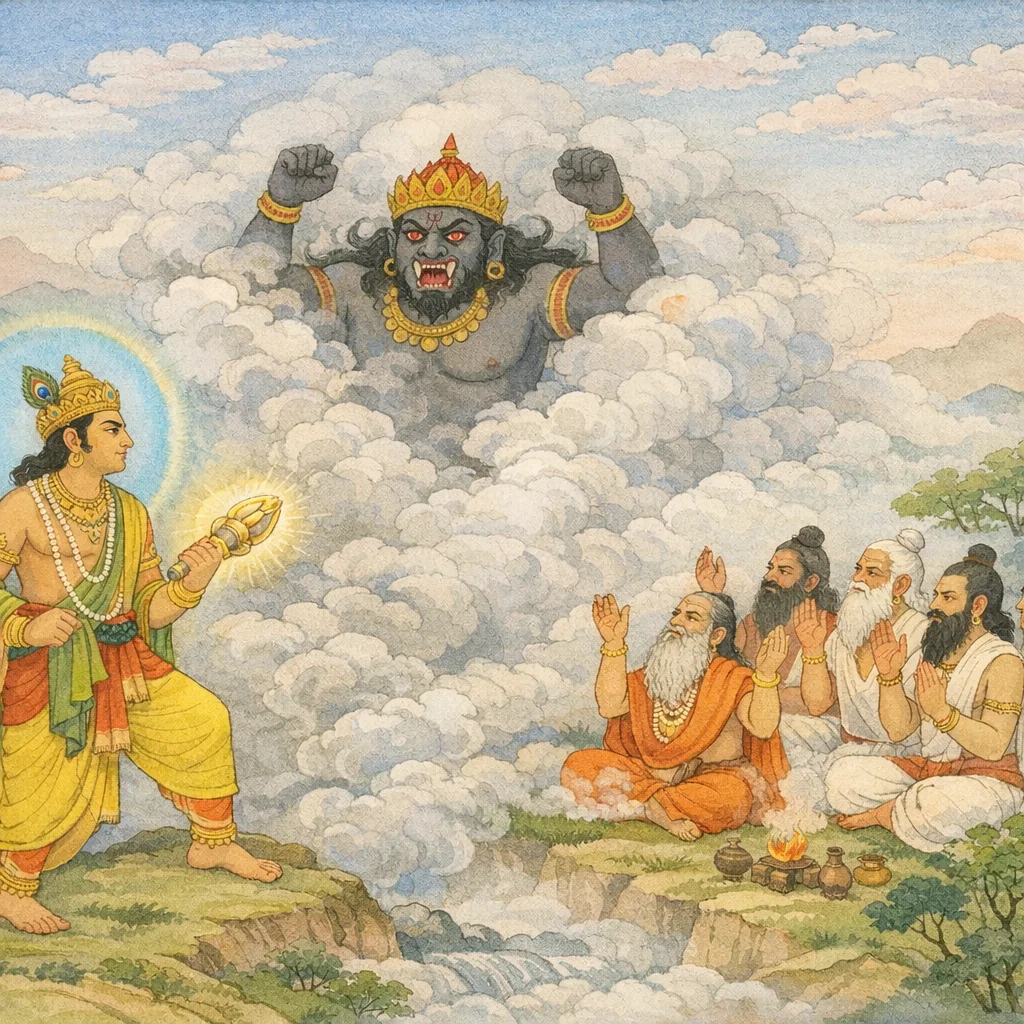
Chapter Arc: मोक्षधर्मपर्व के वृत्रगीताप्रसंग में श्रोता-वक्ता संवाद से आरम्भ होता है—अनन्ततेजस्वी विष्णु के ‘पद’ (स्वरूप/परमधाम) का ज्ञान अत्यन्त दुर्विज्ञेय है; फिर भी किसी ने उसे कैसे जाना? यह जिज्ञासा अध्याय का द्वार खोलती है। → कथन की सत्यता पर श्रद्धा रखते हुए श्रोता की बुद्धि ‘अव्यक्त-दर्शन’ की ओर खिंचती है; उधर देवासुर-संग्राम उपस्थित होते ही रणवाद्यों का भीषण नाद उठता है। वृत्रासुर, महामायावी और महाबली, मायायुद्ध से इन्द्र और देवसेना को मोह में डाल देता है; देवपक्ष की विजय-अनिश्चितता गहराती जाती है। → बृहस्पति-पुरोगामी ब्रह्मर्षि दिव्य स्तोत्र से शक्र को जय हेतु प्रेरित करते हैं; शक्र घोषणा करता है कि गुरु-कृपा से वह दुर्दम्य दैत्य को वज्र से मारेगा। तभी लोकहित के लिए दैवी शक्तियों का निर्णायक हस्तक्षेप होता है—शिव का रौद्र तेज ‘रौद्र-ज्वर’ बनकर वृत्र में समाता है और विष्णु लोकसंरक्षण हेतु ऐन्द्र वज्र में प्रवेश करते हैं; युद्ध का भाग्य दैवी-समावेश से पलटने को तत्पर हो उठता है। → दैवी स्तुति, गुरु-प्रसाद और विष्णु-समाविष्ट वज्र के कारण इन्द्र का संकल्प स्थिर होता है; वृत्र की माया के विरुद्ध देवपक्ष को वह अस्त्र-बल मिलता है जो केवल बाहुबल नहीं, धर्म-रक्षा का उपकरण है। अध्याय वृत्र-वध की ओर कथा को दृढ़ता से मोड़ देता है। → विष्णु के वज्र में प्रवेश के बाद अब प्रश्न शेष रहता है—क्या इन्द्र उस वज्र से वृत्र को निर्णायक रूप से परास्त कर पाएगा, और वृत्र में समाए रौद्र तेज का परिणाम क्या होगा?
Shlokas
Verse 1
इस प्रकार श्रीमह्ाभारत शान्तिपर्वके अन्तर्गत मोक्षधर्मपर्वमें वृत्रगीताविषयक दो सौ अस्सीवाँ अध्याय पूरा हुआ ॥/ २८० ॥। (दाक्षिणात्य अधिक पाठका ३ शलोक मिलाकर कुल ७० ३ *लोक हैं) भीस्न्ह+ज (2) अमना - श्रीविष्णुपुराणमें तीन प्रकारकी प्राकृत सृष्टि बतायी गयी है--पहली महत्तत्त्वकी सृष्टि है, जिसे यहाँ 'क्षर' शब्दसे कहा गया है। दूसरी भूत-सृष्टि मानी गयी है, जो तन्मात्राओंकी सृष्टि है। यहाँ “भूतेषु” पदके द्वारा उसीकी ओर संकेत किया गया है। 'एकादशविकारात्मा” इस पदके द्वारा तीसरी सृष्टिका निर्देश किया गया है, जिसे वैकारिक अथवा ऐन्द्रियक सर्ग भी कहते हैं। इसमें पाँच ज्ञानेन्द्रिय, पाँच कर्मेन्द्रिय और एक मन--इन ग्यारह तत्त्वोंकी रचना हुई है। - सोलह ऋत्विजोंके नाम इस प्रकार हैं--१-ब्रह्मा, २-ब्राह्मणाच्छंसी, ३-आग्नीध्र और ४-पोता--ये चार ऋत्विज सम्पूर्ण वेदोंके ज्ञाता होते हैं। ५-होता, ६-मैत्रावरुण, ७-अछावाक और ८-ग्रावस्तोता--ये चार ऋत्विज ऋग्वेदी होते हैं। ९- अध्वर्यु, १०-प्रतिपस्थाता, ११-नेष्टा और १२-उन्नेता--ये चार यजुर्वेदी होते हैं। १३-उदगाता, १४-प्रस्तोता, १५-प्रतिहर्ता तथा १६-सुब्रह्मण्य--ये सामवेदके गायक होते हैं। > जब तमोगुणकी अधिकता, सत्त्वगुणकी न्यूनता और रजोगुणकी सम अवस्था हो, तब कृष्णवर्ण होता है। यह स्थावर सृष्टिका रंग माना गया है। तमोगुणकी अधिकता, रजोगुणकी न्यूनता और सत्त्वगुणकी सम अवस्था होनेपर धूम्रवर्ण होता है। यह पशु-पक्षीकी योनिमें जन्म लेनेवाले प्राणियोंका वर्ण माना गया है। रजोगुणकी अधिकता, सत्त्वगुणकी न््यूनता और तमोगुणकी सम अवस्था होनेपर नीलवर्ण होता है। यह मानवसर्गका वर्ण बताया गया है। इसीमें जब सत्त्वमुणकी सम अवस्था और तमोगुणकी न्यूनावस्था हो तो मध्यमवर्ण होता है। उसका रंग लाल होता है। इसे अनुग्रह सर्ग कहते हैं। जब सत्त्गगुणकी अधिकता, रजोगुणकी न्यूनता और तमोगुणकी सम अवस्था हो तो हरिद्राके समान पीतवर्ण होता है। यही देवताओंका वर्ण है, अतः इसे देवसर्ग कहते हैं। उसीमें जब रजोगुणकी सम अवस्था और तमोगुणकी न्यूनता हो तो शुक्लवर्ण होता है। इसीको कौमारसर्ग कहा गया है। - दस इन्द्रिय, पाँच प्राण और चार अन्तःकरण--ये उन्नीस भोगके साधन हैं, विषय और वृत्तियोंके भेदसे इन्हींके उतने ही सौ और उतने ही हजार प्रकार हो जाते हैं। - पाँच ज्ञानेन्द्रिय और पाँच कर्मेन्द्रिय--ये दस इन्द्रियाँ सात््विक, राजसिक और तामसिक तथा जाग्रतू, स्वप्न और सुषुप्तिके भेदसे प्रत्येक छ:-छ: प्रकारकी होती हैं। इस प्रकार इनके साठ भेद हो जाते हैं। एकाशीरव्यधिकद्विशततमो<् ध्याय: इन्द्र और वृत्रासुरके युद्धका वर्णन युधिछिर उवाच अहो धर्मिष्ठता तात वृत्रस्थामिततेजस: । यस्य विज्ञानमतुलं विष्णोर्भक्तिश्व तादृशी,युधिष्ठिरने पूछा--दादाजी! अमित तेजस्वी वृत्रासुरकी धर्मनिष्ठा अद्भुत थी। उसका विज्ञान भी अनुपम था और भगवान् विष्णुके प्रति उसकी भक्ति भी वैसी ही उच्चकोटिकी थी
Yudhiṣṭhira said: “O revered grandsire, how astonishing is the righteousness of the mighty Vṛtra, whose splendor was immeasurable. His discernment was unparalleled, and his devotion to Lord Viṣṇu was equally exalted.”
Verse 2
दुर्विज्ञेयं पद तात विष्णोरमिततेजस: । कथं वा राजशार्दूल पदं तु ज्ञातवानसौ,तात! अनन्त तेजस्वी श्रीविष्णुके स्वरूपका ज्ञान तो अत्यन्त कठिन है। नृपश्रेष्ठ) उस वृत्रासुरने उस परमपदका ज्ञान कैसे प्राप्त कर लिया? यह बड़े आश्वर्यकी बात है
Yudhiṣṭhira said: “O dear one, the supreme station of Viṣṇu, whose splendor is immeasurable, is exceedingly hard to comprehend. How, then, O tiger among kings, did that Vṛtrāsura come to know that highest abode? This seems truly astonishing.”
Verse 3
भवता कथितं होतच्छुद्दधे चाहमच्युत । भूयस्तु मे समुत्पन्ना बुद्धिरव्यक्तदर्शनात्,आपने इस घटनाका वर्णन किया है; इसलिये मैं इसे सत्य मानता और इसपर विश्वास करता हूँ; क्योंकि आप कभी सत्यसे विचलित नहीं होते हैं तथापि यह बात स्पष्टरूपसे मेरी समझमें नहीं आयी है; अतः पुनः मेरी बुद्धिमें प्रश्न उत्पन्न हो गया
O Acyuta, you have narrated this, and therefore I accept it as true and place my trust in it, for you never depart from truth. Yet the matter has not become clear to my understanding; because its meaning remains unmanifest to my vision, a question has again arisen in my mind.
Verse 4
कथं विनिहतो वृत्र: शक्रेण पुरुषर्षभ । धार्मिको विष्णुभक्तश्च तत्त्वज्ञश्न पदान्वये,पुरुषप्रवर! वृत्रासुर धर्मात्मा, भगवान् विष्णुका भक्त और वेदान्तके पदोंका अन्वय करके उनके तात्पर्यको ठीक-ठीक समझनेमें कुशल था तो भी इन्द्रने उसे कैसे मार डाला?
Yudhiṣṭhira said: “O bull among men, how was Vṛtra slain by Śakra (Indra)? For Vṛtra was righteous, devoted to Lord Viṣṇu, and skilled in discerning the true purport of the Vedic and Vedāntic words and their syntactic connections—how, then, could Indra kill him?”
Verse 5
एतन्मे संशयं ब्रूहि पृच्छते भरतर्षभ । वृत्रस्तु राजशार्दूल यथा शक्रेण निर्जित:,भरतभूषण! नृपश्रेष्ठ! मैं यह बात आपसे पूछता हूँ, आप मेरे इस संशयका समाधान कीजिये। इन्द्रने वृत्रासुरको कैसे परास्त किया?
Yudhiṣṭhira said: “O bull among the Bharatas, resolve this doubt of mine as I ask. O tiger among kings—how was Vṛtra overcome and defeated by Śakra (Indra)?”
Verse 6
यथा चैवाभवद् युद्ध॑ तच्चाचक्ष्व पितामह । विस्तरेण महाबाहो परं कौतूहलं हि मे,महाबाहु पितामह! इन्द्र और वृत्रासुरमें किस प्रकार युद्ध हुआ था, यह विस्सारपूर्वक बताइये; इसे सुननेके लिये मेरे मनमें बड़ी उत्सुकता हो रही है
Yudhiṣṭhira said: “Grandfather, tell me exactly how that battle took place—describe it in detail, O mighty-armed one. My curiosity to hear it is very great.”
Verse 7
भीष्म उवाच रथेनेन्द्र: प्रयातो वै सार्थ देवगणै: पुरा । ददर्शाथाग्रतो वृत्रं धिष्ठितं पर्वतोपमम्,भीष्मजीने कहा--राजन्! प्राचीन कालकी बात है, इन्द्र रथपर आखरूढ़ हो देवताओंको साथ ले वृत्रासुरसे युद्ध करनेके लिये चले। उन्होंने अपने सामने खड़े हुए पर्वतके समान विशालकाय वृत्रको देखा
Bhishma said: “O king, this is an ancient account. Indra, mounted on his chariot and accompanied by the hosts of gods, set out to do battle with Vṛtra. Then he beheld Vṛtra standing before him—vast and immovable, like a mountain.”
Verse 8
योजनानां शतान्यूर्थध्व पञज्चोच्छितमरिंदम । शतानि विस्तरेणाथ त्रीण्येवाभ्यधिकानि वै,शत्रुदमन नरेश! वह पाँच सौ योजन ऊँचा था और कुछ अधिक तीन सौ योजन उसकी मोटाई थी
Bhīṣma said: “O subduer of enemies, it rose to a height of five hundred yojanas; and in breadth (or thickness) it measured three hundred yojanas and a little more. O king who crushes foes!”
Verse 9
तत् प्रेक्ष्य तादृशं रूप॑ त्रैलोक्येनापि दुर्जयम् । वृत्रस्य देवा: संत्रस्ता न शान्तिमुपलेभिरे,वृत्रासुरका वह वैसा रूप, जो तीनों लोकोंके लिये भी दुर्जय था, देखकर देवतालोग डर गये। उन्हें शान्ति नहीं मिलती थी
Beholding Vṛtra’s such a form—invincible even to the three worlds—the gods were seized with fear. Shaken and unsettled, they could find no peace of mind.
Verse 10
शक्रस्य तु तदा राजन्नूरुस्तम्भो व्यजायत । भयाद् वृत्रस्य सहसा दृष्ट्वा तद्भूपमुत्तमम्,राजन्! उस समय वृत्रासुरका वह उत्तम एवं विशाल रूप देखकर सहसा भयके मारे इन्द्रकी दोनों जाँघें अकड़ गयीं
Bhishma said: “O King, at that time, upon suddenly beholding Vṛtra’s magnificent and towering form, Śakra (Indra) was seized by fear, and his thighs became rigid—his body betraying the inner collapse of courage before a formidable adversary.”
Verse 11
ततो नाद: समभवद् वादित्राणां च निःस्वन: । देवासुराणां सर्वेषां तस्मिन् युद्धे ह्ुपस्थिते
Then a great roar arose—the resounding blare of musical instruments and war-drums—when that battle between all the gods and the asuras had come to be fully joined.
Verse 12
तदनन्तर वह युद्ध उपस्थित होनेपर समस्त देवताओं और असुरोंके दलोंमें रणवाद्योंका भीषण नाद होने लगा ।। अथ वृत्रस्य कौरव्य दूष्टवा शक्रमवस्थितम् । न सम्भ्रमो न भी: काचिदास्था वा समजायत
Bhishma said: “Then, when the battle was at hand, a dreadful roar of war-instruments arose among the hosts of gods and asuras. O descendant of Kuru, when Vṛtra saw Indra standing ready, he felt neither agitation nor fear, nor any wavering resolve.”
Verse 13
कुरुनन्दन! इन्द्रको खड़ा देखकर भी वृत्रासुरके मनमें न तो घबराहट हुई, न कोई भय हुआ और न इन्द्रके प्रति उसकी कोई युद्धविषयक चेष्टा ही हुई ।। ततः समभवद् युद्ध त्रैलोक्यस्य भयंकरम् । शक्रस्य च सुरेन््द्रस्य वृत्रस्य च महात्मन:,फिर तो देवराज इन्द्र और महामनस्वी वृत्रासुरमें भारी युद्ध छिड़ गया, जो तीनों लोकोंके मनमें भय उत्पन्न करनेवाला था
Then there arose a great battle—terrifying to the three worlds—between Śakra, the lord of the gods, and Vṛtra, the high-souled asura. Though Indra stood ready, Vṛtra’s mind showed no panic or fear, nor any rash, hatred-driven impulse.
Verse 14
असिश्रि: पट्टिशै: शूलै: शक्तितोमुद्गरै: | शिलाभिरवविंविधाभिश्न कार्मुकैश्न महास्वनै:,उस समय तलवार, पट्टिश, त्रिशूल, शक्ति, तोमर, मुद्गर, नाना प्रकारकी शिला, भयानक टंकार करनेवाले धनुष, अनेक प्रकारके दिव्य अस्त्र-शस्त्र तथा आगकी ज्वालाओंसे एवं देवताओं और असुरोंकी सेनाओंसे यह सारा आकाश व्याप्त हो गया
Bhīṣma said: “Then the whole sky became filled with swords, paṭṭiśa-blades, tridents, spears, tomara-javelins, and maces; with rocks hurled in many ways; and with great-sounding bows whose dreadful twang resounded—indeed, with diverse divine weapons and missiles, with tongues of fire, and with the gathered hosts of gods and asuras.”
Verse 15
शस्त्रैश्व विविधैर्दिव्यै: पावकोल्काभिरेव च । देवासुरैस्तत: सैन्यै: सर्वमासीत् समाकुलम्,उस समय तलवार, पट्टिश, त्रिशूल, शक्ति, तोमर, मुद्गर, नाना प्रकारकी शिला, भयानक टंकार करनेवाले धनुष, अनेक प्रकारके दिव्य अस्त्र-शस्त्र तथा आगकी ज्वालाओंसे एवं देवताओं और असुरोंकी सेनाओंसे यह सारा आकाश व्याप्त हो गया
Bhīṣma said: “Then everything became utterly confused and choked with tumult—filled with many kinds of divine weapons, with blazing firebrands, and with the armies of gods and asuras. The whole expanse seemed pervaded by the clash of arms and the flare of fire.”
Verse 16
पितामहपुरोगाश्च सर्वे देवगणास्तथा । ऋषयश्च महाभागास्तद् युद्ध द्र्ठमागमन्,भरतभूषण महाराज! ब्रह्मा आदि समस्त देवता, महाभाग ऋषि, सिद्धगण तथा अप्सराओंसहित गन्धर्व--ये सबके सब श्रेष्ठ विमानोंपर आरूढ़ हो उस अद्भुत युद्धका दृश्य देखनेके लिये वहाँ आ गये थे
Bhīṣma said: Led by the Grandsire (Brahmā), all the hosts of gods, and the greatly fortunate sages came there to behold that battle. Mounted on excellent aerial cars, the Siddhas and the Gandharvas—together with the Apsarases—also arrived, drawn by the wonder of the combat. The scene underscores how a war driven by dharma and adharma becomes a spectacle even for the celestial world, inviting reflection on the moral weight of human action.
Verse 17
विमानाग्र्यैर्महाराज सिद्धाश्ष भरतर्षभ । गन्धर्वाश्न विमानाग्र्यैरप्सरोभि: समागमन्,भरतभूषण महाराज! ब्रह्मा आदि समस्त देवता, महाभाग ऋषि, सिद्धगण तथा अप्सराओंसहित गन्धर्व--ये सबके सब श्रेष्ठ विमानोंपर आरूढ़ हो उस अद्भुत युद्धका दृश्य देखनेके लिये वहाँ आ गये थे
O great king, pride of the Bharatas: the Siddhas and the Gandharvas, together with the Apsarases, arrived mounted on the finest aerial cars to behold the wondrous spectacle of that battle.
Verse 18
ततोअनन््तरिक्षमावृत्य वृत्रो धर्मभूतां वर: । अश्मवर्षेण देवेन्द्र समाकिरदतिद्रुतम्,तब धर्मात्माओंमें श्रेष्ठ वृत्रासुरने आकाशको घेरकर बड़ी उतावलीके साथ देवराज इन्द्रपर पत्थरोंकी वर्षा आरम्भ कर दी
Then, covering the sky, Vṛtra—foremost among the righteous—hurriedly showered Indra, the lord of the gods, with a rain of stones. The scene underscores how even a foe described as dharmic can act with fierce resolve in battle, intensifying the moral tension between righteousness and violent means.
Verse 19
ततो देवगणाः: क्रुद्धा: सर्वतः शरवृष्टिभि: । अश्मवर्षमपोहन्त वृत्रप्रेरितमाहवे,यह देख देवगण कुपित हो उठे। उन्होंने युद्धमें सब ओरसे बाणोंकी वर्षा करके वृत्रासुरके चलाये हुए पत्थरोंकी वर्षाको नष्ट कर दिया
Then the hosts of gods, enraged, showered arrows on every side. In the midst of battle they beat back and nullified the rain of stones hurled at Vṛtra’s instigation—showing how disciplined force is employed to counter destructive aggression and restore order in war.
Verse 20
वृत्रस्तु कुरुशार्दूल महामायो महाबल: । मोहयामास देवेन्द्र मायायुद्धेन सर्वश:,कुरुश्रेष्ठ! महामायावी महाबली वृत्रासुरने सब ओरसे मायामय युद्ध छेड़कर देवराज इन्द्रको मोहमें डाल दिया। वृत्रासुरसे पीड़ित हुए इन्द्रपर मोह छा गया। तब वसिष्ठजीने रथन्तर सामद्वारा वहाँ इन्द्रको सचेत किया
Bhīṣma said: “O tiger among the Kurus, the mighty Vṛtra—master of great illusion—bewildered Indra, lord of the gods, on every side by means of a war of magical delusion.”
Verse 21
तस्य वृत्रार्दितस्याथ मोह आसीच्छतक्रतो: । रथन्तरेण तं तत्र वसिष्ठ: समबोधयत्,कुरुश्रेष्ठ! महामायावी महाबली वृत्रासुरने सब ओरसे मायामय युद्ध छेड़कर देवराज इन्द्रको मोहमें डाल दिया। वृत्रासुरसे पीड़ित हुए इन्द्रपर मोह छा गया। तब वसिष्ठजीने रथन्तर सामद्वारा वहाँ इन्द्रको सचेत किया
Bhishma said: When Indra, the slayer of a hundred foes, was afflicted by Vṛtra, delusion overtook him. Then, O best of the Kurus, Vasiṣṭha awakened and steadied him there by means of the Rathantara Sāman.
Verse 22
वसिष्ठ उवाच देवश्रेष्ठो$सि देवेन्द्र दैत्यासुरनिबर्हण । त्रैलोक्यबलसंयुक्त: कस्माच्छक्र विषीदसि,वसिष्ठजीने कहा--देवेन्द्र! तुम सब देवताओंमें श्रेष्ठ हो। दैत्यों तथा असुरोंका संहार करनेवाले शक्र! तुम तो त्रिलोकीके बलसे सम्पन्न हो; फिर इस प्रकार विषादमें क्यों पड़े हो?
Vasiṣṭha said: “O Indra, foremost among the gods, destroyer of Dāityas and Asuras! Endowed with the strength of the three worlds, why, O Śakra, have you fallen into despondency?”
Verse 23
एष ब्रह्मा च विष्णुश्व शिवश्चैव जगत्पति: । सोमश्न भगवान् देव: सर्वे च परमर्षय:,(समुद्विग्नं समीक्ष्य त्वां स्वस्तीत्यूचुर्जयाय ते ।) ये जगदीश्वर ब्रह्मा, विष्णु और शिव तथा भगवान् सोमदेव और समस्त महर्षि तुम्हें उद्विग्न देखकर तुम्हारी विजयके लिये स्वस्तिवाचन कर रहे हैं
Vasiṣṭha said: “Behold—Brahmā, Viṣṇu, and Śiva, the Lord of the world; also the blessed god Soma, and all the supreme seers. Seeing you distressed, they utter words of auspicious blessing for your victory.”
Verse 24
मा कार्षी: कश्मलं शक्र कश्चिदेवेतरो यथा । आर्या युद्धे मतिं कृत्वा जहि शत्रून् सुराधिप,इन्द्र! किसी साधारण मनुष्यके समान तुम कायरता न प्रकट करो। सुरेश्वर! युद्धके लिये श्रेष्ठ बुद्धिका सहारा लेकर अपने शत्रुओंका संहार करो
Vasiṣṭha said: “O Śakra, do not fall into despondency or moral faintheartedness like some ordinary man. O lord of the gods, having fixed a noble resolve for battle, strike down your enemies.”
Verse 25
एष लोकगुरुस्त्रयक्ष: सर्वतलोकनमस्कृत: । निरीक्षते त्वां भगवांस्त्यज मोहं सुराधिप,देवराज! ये सर्वलोकवन्दित लोकगुरु भगवान् त्रिलोचन शिव तुम्हारी ओर कृपापूर्ण दृष्टिसे देख रहे हैं। तुम मोहको त्याग दो
Vasiṣṭha said: “Behold—this Lord, the Teacher of the worlds, the three‑eyed One, revered by all beings. The Blessed One is looking upon you with gracious attention. O ruler of the gods, O king of the devas, cast off your delusion.”
Verse 26
एते ब्रद्यार्षयश्चैव बृहस्पतिपुरोगमा: । स्तवेन शक्र दिव्येन स्तुवन्ति त्वां जयाय वै,शक्र! ये बृहस्पति आदि ब्रह्मर्षि तुम्हारी विजयके लिये दिव्य स्तोत्रद्वारा स्तुति कर रहे हैं
Vasiṣṭha said: “These eminent seer-sages, led by Bṛhaspati, are praising you, O Śakra, with a divine hymn—indeed, for the sake of your victory.”
Verse 27
भीष्म उवाच एवं सम्बोध्यमानस्य वसिष्ठेन महात्मना । अतीव वासवस्यासीद् बलमुत्तमतेजस:,भीष्मजी कहते हैं--राजन! महात्मा वसिष्ठके द्वारा इस प्रकार सचेत किये जानेपर महातेजस्वी इन्द्रका बल बहुत बढ़ गया
Bhishma said: “O king, when the great-souled Vasiṣṭha thus admonished and awakened him to right understanding, the strength of Indra—of supreme splendor—grew exceedingly.”
Verse 28
ततो बुद्धिमुपागम्य भगवान् पाकशासन: । योगेन महता युक्तस्तां मायां व्यपकर्षत,तब भगवान् पाकशासनने उत्तम बुद्धिका आश्रय ले महान् योगसे युक्त हो उस मायाको नष्ट कर दिया
Then the Blessed Lord Pākaśāsana (Indra), regaining clear discernment, and endowed with mighty yogic power, dispelled that māyā.
Verse 29
ततोडड्रिर:सुतः श्रीमांस्ते चैव सुमहर्षय: । दृष्टवा वृत्रस्य विक्रान्तमुपागम्य महेश्वरम्
Then the illustrious son of the Mountain, along with those great sages, having witnessed Vṛtra’s mighty prowess, approached Maheśvara (Śiva).
Verse 30
ततो भगवतस्तेजो ज्वरो भूत्वा जगत्पते:
Then, from the Lord’s radiant power, a burning fever took form—arising from the Master of the universe—showing how divine energy, when provoked or directed, can manifest as an overwhelming force that no worldly power can restrain.
Verse 31
विष्णुश्न भगवान् देव: सर्वलोकाभिपूजित:
Bhīṣma said: “Vishnu—the Blessed Lord, the divine Godhead—is revered and worshipped by all the worlds.”
Verse 32
ततो बृहस्पतिर्धीमानुपागम्य शतक्रतुम् । वसिष्ठ श्ष महातेजा: सर्वे च परमर्षय:,तत्पश्चात् बुद्धिमान् बृहस्पति, महातेस्वी वसिष्ठ तथा सम्पूर्ण महर्षि वरदायक, लोकपूजित शतक्रतु इन्द्रके पास जाकर एकाग्रचित्त हो इस प्रकार बोले--'प्रभो! वृत्रासुरका वध करो”
Bhīṣma said: Thereafter the wise Bṛhaspati approached Śatakratu (Indra). Along with him came the radiant Vasiṣṭha and all the foremost seers. With minds gathered into single-pointed resolve, they addressed Indra, urging him to undertake the slaying of Vṛtrāsura—presenting it as a necessary act for the protection of the worlds and the restoration of cosmic order.
Verse 33
ते समासाद्य वरदं वासवं लोकपूजितम् । ऊचुरेकाग्रमनसो जहि वृत्रमिति प्रभो,तत्पश्चात् बुद्धिमान् बृहस्पति, महातेस्वी वसिष्ठ तथा सम्पूर्ण महर्षि वरदायक, लोकपूजित शतक्रतु इन्द्रके पास जाकर एकाग्रचित्त हो इस प्रकार बोले--'प्रभो! वृत्रासुरका वध करो”
Bhishma said: Having approached Vāsava (Indra), the boon-giver revered by the worlds, they spoke with minds fixed in single-pointed resolve: “O Lord, slay Vṛtra.” Thereafter the wise Bṛhaspati, the greatly radiant Vasiṣṭha, and the assembled perfected seers went to Indra—Śatakratu, famed and worshipped as a giver of boons—and, with concentrated hearts, urged him: “O Lord, bring about the death of Vṛtrāsura.”
Verse 34
महेश्वर उवाच एष वृत्रो महान् शक्र बलेन महता वृतः । विश्वात्मा सर्वगश्नैव बहुमायश्व विश्वुतः,महेश्वर बोले--इन्द्र! यह महान् वृत्रासुर बड़ी भारी सेनासे घिरा हुआ तुम्हारे सामने खड़ा है। ज्ञाननिष्ठ होनेके कारण यह सम्पूर्ण विश्वका आत्मा है। इसमें सर्वत्र गमन करनेकी शक्ति है। यह अनेक प्रकारकी मायाओंका सुविख्यात ज्ञाता भी है
Maheśvara said: “O Śakra (Indra), this mighty Vṛtra stands before you, surrounded by a vast host. Steadfast in true knowledge, he is spoken of as one who has made the whole world his very self. He is said to move everywhere at will, and he is renowned for mastery of many kinds of māyā (strategic, illusory powers).”
Verse 35
तदेनमसुरश्रेष्ठ त्रैलोक्येनापि दुर्जयम् । जहि त्वं योगमास्थाय मावमंस्था: सुरेश्वर,सुरेश्वर! यह श्रेष्ठ असुर तीनों लोकोंके लिये भी दुर्जय है। तुम योगका आश्रय लेकर इसका वध करो। इसकी अवहेलना न करो
Maheshvara said: “O best of the Asuras, this one is unconquerable even by the three worlds. Therefore, O Lord of the Devas, take refuge in Yoga and slay him; do not treat him with contempt.”
Verse 36
अनेन हि तपस्तप्तं बलार्थममराधिप । षष्टिं वर्षमहस््राणि ब्रह्मा चास्मै वरं ददौ,अमरेश्वर! इस वृत्रासुरने बलकी प्राप्तिके लिये ही साठ हजार वर्षोतक तप किया था और तब ब्रह्माजीने इसे मनोवाञ्छित वर दिया था
Maheshvara said: “O lord of the immortals, it was by this very austerity that he performed penance for the sake of strength. For sixty thousand years he practiced tapas, and then Brahmā granted him the boon he desired.”
Verse 37
महत्त्वं योगिनां चैव महामायत्वमेव च । महाबलत्वं च तथा तेजश्चाग्र्यं सुरेश्वर,सुरेन्द्र! उन्होंने इसे योगियोंकी महिमा, महा-मायावीपन, महान् बल-पराक्रम तथा सर्वश्रेष्ठ तेज प्रदान किया है
Maheśvara said: “O Lord of the gods, O Indra—these are declared to be the endowments bestowed: the exalted greatness of yogins, the power of supreme divine illusion (māyā), mighty strength and prowess, and a radiance that is foremost among all.”
Verse 38
एतत् त्वां मामकं तेज: समाविशति वासव । व्यग्रमेनं त्वमप्येन॑ वज़ेण जहि दानवम्,वासव! लो, यह मेरा तेज तुम्हारे शरीरमें प्रवेश करता है। इस समय दानव वृत्र ज्वरके कारण बहुत व्यग्र हो रहा है; इसी अवस्थामें तुम वज़से इसे मार डालो
Maheśvara said: “O Vāsava (Indra), this power of mine now enters into you. The Dānava Vṛtra is at this moment thrown into distress and agitation by fever; strike him down in that very condition with your thunderbolt.”
Verse 39
शक्र उवाच भगवंस्त्वत्प्रसादेन दितिजं सुदुरासदम् । वज्नेण निहनिष्यामि पश्यतस्ते सुरर्षभ
Śakra said: “O Blessed one, by your grace I shall strike down with the thunderbolt that Diti-born foe who is so hard to overcome—while you look on, O bull among the gods.”
Verse 40
इन्द्रने कहा--भगवन्! सुरश्रेष्ठी आपकी कृपासे इस दुर्धर्ष दैत्यको मैं आपके देखते- देखते वज्रसे मार डालूँगा ।। भीष्म उवाच आविशष्यमाने दैत्ये तु ज्वरेणाथ महासुरे । देवतानामृषीणां च हर्षानज्नादो महानभूत्,भीष्मजी कहते हैं--राजन्! जब महादैत्य वृत्रासुरके शरीरमें ज्वरने प्रवेश किया, तब देवता और ऋषियोंका महान् हर्षनाद वहाँ गूँज उठा
Bhishma said: O King, when the fever (jvara) entered the great Asura—the Daitya Vṛtra—then a mighty cry of joy resounded there among the gods and the seers.
Verse 41
ततो दुन्दुभयश्चैव शड्खाश्न सुमहास्वना: । मुरजा डिण्डिमाश्नैव प्रावाद्यन्त सहस्रश:
Then, in a mighty surge of sound, kettledrums and conches of very great resonance were blown; and likewise the muraja-drums and ḍiṇḍima-drums were sounded in their thousands.
Verse 42
फिर तो दुन्दुभियाँ, जोर-जोरसे बजनेवाले शंख, ढोल और नगाड़े आदि सहस्रों बाजे बजाये जाने लगे ।। असुराणां तु सर्वेषां स्मृतिलोपो महानभूत् | मायानाशश्व बलवान् क्षणेन समपद्यत,समस्त असुरोंकी स्मरण-शक्तिका बड़ा भारी लोप हो गया। क्षणभरमें उनकी सारी मायाओंका पूर्णरूपसे विनाश हो गया
Bhishma said: Then, amid the blare of countless instruments—kettledrums, loudly sounded conches, drums, and great war-drums—the Asuras as a whole were struck by a severe loss of memory and presence of mind. In an instant, the power of their deceptive arts collapsed, and their māyā was completely destroyed.
Verse 43
तथाविष्टमथो ज्ञात्वा ऋषयो देवतास्तथा । स्तुवन्त: शक्रमीशानं तथा प्राचोदयन्नपि,इस प्रकार वृत्रासुरमें महादेवजीके ज्वरका आवेश हुआ जान देवता और ऋषि देवेश्वर इन्द्रकी स्तुति करते हुए उन्हें वृत्रवधके लिये प्रेरणा देने लगे
Bhishma said: Knowing that Vṛtra had thus been seized by that overpowering affliction, the sages and the gods began praising Śakra (Indra), the lordly ruler, and at the same time urged him onward—pressing him to undertake the slaying of Vṛtra.
Verse 44
रथस्थस्य हि शक्रस्य युद्धकाले महात्मन: । ऋषिभ: स्तूयमानस्य रूपमासीत् सुदुर्दूशम्,युद्धूके समय रथपर बैठकर ऋषियोंके द्वारा अपनी स्तुति सुनते हुए महामना इन्द्रका रूप ऐसा तेजस्वी प्रतीत होता था कि उसकी ओर देखना भी अत्यन्त कठिन जान पड़ता था
Bhishma said: In the time of battle, the great-souled Indra, seated upon his chariot and receiving the hymns of the seers, appeared in a form so radiant and awe-inspiring that it was exceedingly difficult even to look toward him.
Verse 281
इति श्रीमहाभारते शान्तिपर्वणि मोक्षधर्मपर्वणि वृत्रवधे एकाशीत्यधिकद्धिशततमो<5ध्याय:
Thus, in the Śrī Mahābhārata, within the Śānti Parvan—specifically the Mokṣa-dharma section—ends the two-hundred-and-eighty-first chapter, concerning the slaying of Vṛtra. (This is a concluding colophon marking the close of the chapter.)
Verse 293
ऊचुर्वत्रविनाशार्थ लोकानां हितकाम्यया | तदनन्तर अंगिराके पुत्र श्रीमान् बृहस्पति तथा बड़े-बड़े महर्षियोंने जब वृत्रासुरका पराक्रम देखा, तब महादेवजीके पास आकर लोकहितकी कामनासे वृत्रासुरके विनाशके लिये उनसे निवेदन किया
Bhishma said: Seeking the welfare of the worlds, they appealed for the destruction of Vṛtrāsura. Thereafter, the illustrious Bṛhaspati, son of Aṅgiras, along with other great seers—having witnessed Vṛtrāsura’s formidable prowess—approached Mahādeva and petitioned him to bring about Vṛtrāsura’s downfall for the good of all beings.
Verse 303
समाविशत् तदा रौद्रो वृत्र लोकपतिं तदा | तब जगदीश्वर भगवान् शिवका तेज रौद्र ज्वर होकर लोकेश्वर वृत्रके शरीरमें समा गया
Bhīṣma said: At that time the fierce, wrathful power entered Vṛtra, the lord among beings. Thus the world’s Lord—Bhagavān Śiva—having become a terrible, blazing fever of Rudra-like energy, merged into Vṛtra’s body, intensifying his might and the dread of the conflict.
Verse 3136
ऐन्द्रें समाविशद् वजं लोकसंरक्षणे रत: । फिर लोकरक्षापरायण सर्वलोकपूजित देवेश्वर भगवान् विष्णुने भी इन्द्रके वज्॒में प्रवेश किया
Bhishma said: Devoted to the protection of the worlds, the Blessed Lord Vishnu entered Indra’s thunderbolt. Ever intent on safeguarding creation, the Lord of gods—revered by all beings—thus took refuge within the weapon so that the power meant for cosmic defense might act without deviation from righteousness and for the welfare of all.
Frequently Asked Questions
Whether to pursue an action that promises large results but carries an intrinsic linkage to wrongdoing or harm; the chapter advises rejecting such gain when it is pāpānubandha, even if instrumentally advantageous.
Ethical agency requires buddhi to govern sensory impulse; one should deliberate, know one’s capacity, and choose wholesome actions whose consequences are not contaminated by harm, thereby stabilizing well-being and social order.
Yes: by emphasizing restraint, truth, purification, and the avoidance of harm-linked actions, the chapter frames moral discipline and corrective practices as preparatory conditions for inner clarity and long-term liberation-oriented life aims.