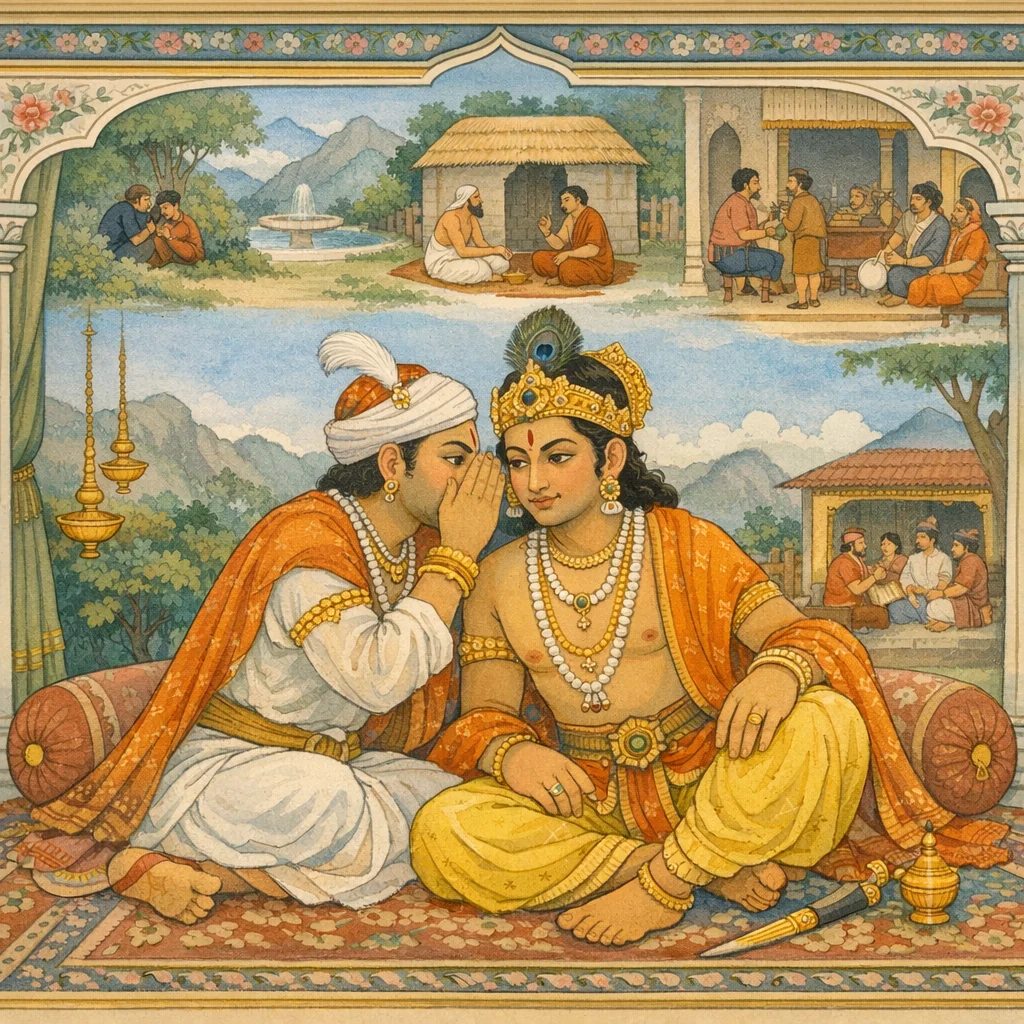
Adhyaya 141
Śaraṇāgatapālana—Prastāvanā (Protection of the Refuge-Seeker: Opening of the Kapota Narrative)
Upa-parva: Rājadharmānuśāsana (Instruction on Royal Duties) — Śaraṇāgatapālana Episode
The chapter begins with Yudhiṣṭhira requesting Bhīṣma to define the dharma of protecting one who seeks refuge (śaraṇāgatapālana). Bhīṣma affirms it as a great dharma and legitimizes the inquiry by citing royal exemplars (e.g., Nṛga) who attained supreme success through protecting supplicants. He then references a traditional account in which even an enemy, having sought refuge, was honored and sustained—introducing the Kapota (dove/pigeon) paradigm. Yudhiṣṭhira asks for details: how the enemy came for refuge, how he was fed with the host’s own flesh, and what spiritual outcome resulted. Bhīṣma frames the ensuing story as a ‘divine’ and ‘sin-destroying’ narrative previously taught by Bhārgava to King Mucukunda, and begins the scene-setting: a cruel bird-hunter, socially abandoned due to his conduct, lives by killing birds and selling them. A violent storm and flooding overtake the forest; disoriented and cold, he fails to find safe ground as animals and birds seek shelter. After the sky clears, he resolves to spend the night in the forest, offers a gesture of supplication toward the local deities, and lies down on leaves with his head on a stone, exhausted—positioning him as a refuge-seeker for the next narrative movement.
Chapter Arc: युधिष्ठिर के प्रश्नों की पृष्ठभूमि में भीष्म आपत्तिकाल-नीति का द्वार खोलते हैं—जब युगक्षय से धर्म क्षीण हो और लोक-व्यवहार उलट जाए, तब राजा कैसे टिके? → भीष्म ‘घृणा त्यागकर’ समयानुकूल व्यवहार की कठोर बात रखते हैं और उदाहरणस्वरूप भारद्वाज कणिक तथा राजा शत्रुंजय का पुरातन संवाद सुनाते हैं—जहाँ नीति, छल-प्रच्छन्नता, और राज्य-रक्षा की अनिवार्यता एक-दूसरे से टकराती है। → कणिक का तीक्ष्ण उपदेश चरम पर पहुँचता है: अनुकूल समय आने तक शत्रु को ‘कंधे पर बैठाकर’ भी साधो, फिर अवसर पहचानकर ‘घड़े को पत्थर पर फोड़ने’ की तरह निर्णायक प्रहार करो; साथ ही काल-अकाल, स्वबल-परबल का सूक्ष्म आकलन कर स्वयं को उसी के अनुसार नियोजित करो। → उपदेश का व्यावहारिक विस्तार आता है—गुप्तचरों का जाल (उद्यान, प्रपाएँ, आवास, पानागार, तीर्थ, सभाएँ), लोक-रंजन हेतु सान्त्व, सम्मान और क्षमा; और अंततः राजा शत्रुंजय कणिक की हितकारी वाणी को यथावत अपनाकर बंधु-बांधवों सहित समृद्धि प्राप्त करता है।
Shlokas
Verse 1
अपन क्ाता बछ। 5 चत्वारिशदाधिकशततमो< ध्याय: भारद्वाज कणिकका सौराष्ट्रदेशके राजाको कूटनीतिका उपदेश युधिछ्िर उवाच युगक्षयात् परिक्षीणो धर्मे लोके च भारत । दस्युभि: पीड्यमाने च कथं स्थेयं पितामह,युधिष्ठिरने पूछा--भरतनन्दन! पितामह! सत्ययुग, त्रेता और द्वापर-ये तीनों युग प्राय: समाप्त हो रहे हैं, इसलिये जगत्में धर्मका क्षय हो चला है। डाकू और लुटेरे इस धर्ममें और भी बाधा डाल रहे हैं; ऐसे समयमें किस तरह रहना चाहिये?
Yudhiṣṭhira said: “O Bhārata, as the ages draw toward their end, dharma in the world has grown depleted. And when society is further harassed by bandits and plunderers, how should one stand firm—how should one live—O Grandsire?”
Verse 2
भीष्म उवाच अत्र ते वर्तयिष्यामि नीतिमापत्सु भारत । उत्सृज्यापि घृणां काले यथा वर्तेत भूमिप:,भीष्मजीने कहा--भरतनन्दन! ऐसे समयमें मैं तुम्हें आपत्तिकालकी वह नीति बता रहा हूँ, जिसके अनुसार भूमिपालको दयाका परित्याग करके भी समयोचित बर्ताव करना चाहिये
Bhishma said: “Here I shall explain to you, O Bharata, the policy to be followed in times of calamity—how a king, when the moment demands it, should act with timely resolve, even if it means setting aside compassion.”
Verse 3
अत्राप्युदाहरन्तीममितिहासं पुरातनम् । भारद्वाजस्य संवाद राज्ञ: शत्रुंजयस्य च,इस विषयमें भारद्वाज कणिक तथा राजा शत्रुंजयके संवादरूप एक प्रचीन इतिहासका उदाहरण दिया जाता है
Bhīṣma said: “Here too, they cite an ancient precedent: the old historical account in the form of a dialogue between Bhāradvāja and King Śatruñjaya.”
Verse 4
राजा शत्रुंजयो नाम सौवीरेषु महारथ: । भारद्वाजमुपागम्य पप्रच्छार्थविनिश्चवयम्,सौवीरदेशमें शत्रुंजय नामसे प्रसिद्ध एक महारथी राजा थे। उन्होंने भारद्वाज कणिकके पास जाकर अपने कर्तव्यका निश्चय करनेके लिये उनसे इस प्रकार प्रश्न किया--
Bhīṣma said: “In the land of the Sauvīras there was a king named Śatruñjaya, a great chariot-warrior. Approaching Bhāradvāja, he asked him to determine decisively what course of action—what duty—should be followed.”
Verse 5
अलब्धस्य कथं लिप्सा लब्धं केन विवर्धते । वर्धितं पाल्यते केन पालितं प्रणयेत् कथम्,“अप्राप्त वस्तुकी प्राप्ति कैसे होती है? प्राप्त द्रव्यकी वृद्धि किस प्रकार हो सकती है? बढ़े हुए द्रव्यकी रक्षा किससे की जाती है? और उस सुरक्षित द्रव्यका सदुपयोग कैसे किया जाना चाहिये?”
Bhishma said: How does one develop the desire and means to obtain what has not yet been gained? By what does acquired wealth grow? By whom or by what is increased wealth protected? And once protected, how should that wealth be rightly directed and put to proper use?
Verse 6
तस्मै विनिश्चितार्थाय परिपृष्टो<र्थनिश्चयम् । उवाच ब्राह्मणो वाक्यमिदं हेतुमदुत्तमम्,राजा शत्रुंजयको शास्त्रका तात्पर्य निश्चितरूपसे ज्ञात था। उन्होंने जब कर्तव्य-निश्चयके लिये प्रश्न उपस्थित किया, तब ब्राह्मण भारद्वाज कणिकने यह युक्तियुक्त उत्तम वचन बोलना आस्मभ किया--
When the king—his purpose firmly settled and seeking a clear decision on what ought to be done—questioned him, the Brahmin replied with these excellent words, rich in reasoned argument, setting forth a decisive course of action.
Verse 7
नित्यमुद्यतदण्ड: स्यान्नित्यं विवृतपौरुष: । अच्छिद्रश्छिद्रदर्शी च परेषां विवरानुग:,“राजाको सर्वदा दण्ड देनेके लिये उद्यत रहना चाहिये और सदा ही पुरुषार्थ प्रकट करना चाहिये। राजा अपनेमें छिद्र अर्थात् दुर्बलता न रहने दे। शत्रुपक्षके छिद्र या दुर्बलतापर सदा ही दृष्टि रखे और यदि शत्रुओंकी दुर्बलताका पता चल जाय तो उनपर आक्रमण कर दे
Bhīṣma said: A king should always be ready to wield punishment (daṇḍa) and should continually display resolute manliness and initiative. He must keep his own position free of vulnerabilities, while constantly watching for weaknesses in opponents; and when an enemy’s weak point is discovered, he should promptly press into that opening.
Verse 8
नित्यमुद्यतदण्डस्य भृशमुद्विजते नर: । तस्मात् सर्वाणि भूतानि दण्डेनैव प्रसाधयेत्,“जो सदा दण्ड देनेके लिये उद्यत रहता है, उससे प्रजाजन बहुत डरते हैं, इसलिये समस्त प्राणियोंको दण्डके द्वारा ही काबूमें करे
Bhīṣma said: A man who is always poised to wield punishment is greatly feared by the people. Therefore, all beings should be kept in order through punishment alone—i.e., by the disciplined and authoritative use of daṇḍa as an instrument of governance.
Verse 9
एवं दण्डं प्रशंसन्ति पण्डितास्तत्त्वदर्शिन: । तस्माच्चतुष्टये तस्मिन् प्रधानो दण्ड उच्यते,“इस प्रकार तत्त्वदर्शी विद्वान् दण्डकी प्रशंसा करते हैं; अतः साम, दान आदि चारों उपायोंमें दण्डको ही प्रधान बताया जाता है
Bhīṣma said: Thus do the learned, who behold the truth, praise daṇḍa. Therefore, among the four means—sāma (conciliation), dāna (gifts), bheda (division), and daṇḍa (punishment)—daṇḍa is declared the foremost.
Verse 10
छिन्नमूले त्वधिष्ठाने सर्वेषां जीवनं हतम् | कथं हि शाखास्तिष्ठेयुश्छिन्नमूले वनस्पती,“यदि मूल आधार नष्ट हो जाय तो उसके आश्रयसे जीवननिर्वाह करनेवाले सभी शत्रुओंका जीवन नष्ट हो जाता है। यदि वृक्षकी जड़ काट दी जाय तो उसकी शाखाएँ कैसे रह सकती हैं?
Bhīṣma said: “When the very foundation is cut at the root, the life of all who depend upon it is destroyed. For how could the branches possibly remain when the root of a tree has been severed?”
Verse 11
मूलमेवादितश्षछिन्द्यात् परपक्षस्य पण्डित: । ततः सहायान् पक्ष च मूलमेवानुसाधयेत्,“विद्वान् पुरुष पहले शत्रुपक्षके मूलका ही उच्छेद कर डाले। तत्पश्चात् उसके सहायकों और पक्षपातियोंको भी उस मूलके पथका ही अनुसरण करावे
Bhīṣma said: A wise man should, from the very outset, cut off the root of the opposing faction. Thereafter, he should also bring its helpers and partisans into line by making them follow the same course as that root—so that the enemy’s support-system collapses along with its source.
Verse 12
सुमन्त्रितं सुविक्रान्तं सुयुद्धं सुपलायितम् । आपदास्पदकाले तु कुर्वीत न विचारयेत्,“संकटकाल उपस्थित होनेपर राजा सुन्दर मन्त्रणा, उत्तम पराक्रम एवं उत्साहपूर्वक युद्ध करे तथा अवसर आ जाय तो सुन्दर ढंगसे पलायन भी करे। आपत्कालके समय आवश्यक कर्म ही करना चाहिये, पर सोच-विचार नहीं करना चाहिये
Bhīṣma said: In a time of peril, a king should act with sound counsel, display excellent valor, and fight well with full resolve; and if the moment demands it, he should also retreat in an orderly and skillful way. When crisis has arrived, one must do what is necessary—there is no room for prolonged deliberation.
Verse 13
वाड्मात्रेण विनीतः स्याद् हृदयेन यथा क्षुर: । श्लक्ष्णपूर्वाभिभाषी च कामक्रोधौ विवर्जयेत्,“राजा केवल बातचीतमें ही अत्यन्त विनयशील हो, हृदयको छूरेके समान तीखा बनाये रखे; पहले मुसकराकर मीठे वचन बोले तथा काम-क्रोधको त्याग दे
Bhīṣma said: “Let a king be outwardly humble in speech alone, yet keep his heart as keen as a razor. Let him address others first with smooth, pleasing words, and let him abandon lust and anger.”
Verse 14
सपत्नसहिते कार्य कृत्वा सन्धिं न विश्वसेत् । अपक्रामेत् ततः शीघ्र कृतकार्यो विचक्षण:,'शत्रुके साथ किये जानेवाले समझौते आदि कार्यमें संधि करके भी उसपर विश्वास न करे। अपना काम बना लेनेपर बुद्धिमान् पुरुष शीघ्र ही वहाँसे हट जाय
Bhīṣma said: “When one must transact a matter in the company of a rival, even after concluding a treaty one should not place trust in it. Once one’s objective has been secured, a discerning person should withdraw from there quickly.”
Verse 15
शत्रुं च मित्ररूपेण सान्त्वेनैवाभिसान्त्वयेत् । नित्यशश्रोद्विजेत् तस्माद् गृहात् सर्पयुतादिव
Bhīṣma said: Even an enemy, when he comes in the guise of a friend, should be met with soothing words and outward conciliation; yet one should remain constantly wary of him—just as one would be of a house that harbors a snake.
Verse 16
“शत्रुको उसका मित्र बनकर मीठे वचनोंसे ही सान्त्वना देता रहे; परंतु जैसे सर्पयुक्त गृहसे मनुष्य डरता है, उसी प्रकार उस शत्रुसे भी सदा उद्विग्न रहे ।। यस्य बुद्धि: परिभवेत् तमतीतेन सान्त्वयेत् । अनागतेन दुष्प्रज्ञं प्रत्युत्पन्नेन पण्डितम्,“जिसकी बुद्धि संकटमें पड़कर शोकाभिभूत हो जाय, उसे भूतकालकी बातें (राजा नल तथा भगवान् श्रीराम आदिके जीवन-वृत्तान्त) सुनाकर सान्त्वना दे, जिसकी बुद्धि अच्छी नहीं है, उसे भविष्यमें लाभकी आशा दिलाकर तथा विद्वान पुरुषको तत्काल ही धन आदि देकर शान्त करे
Bhīṣma said: One whose mind has been overwhelmed and thrown into distress should be consoled by recalling the past—by hearing of earlier examples and histories that restore courage. A person of poor judgment should be steadied by pointing to future gain and hope. But a wise person should be pacified at once through timely, practical measures—such as immediate assistance with wealth and resources.
Verse 17
अज्जलिं शपथं सान्त्व॑ प्रणम्य शिरसा वदेत् । अश्रुप्रमार्जनं चैव कर्तव्यं भूतिमिच्छता,'ऐश्वर्य चाहनेवाले राजाको चाहिये कि वह अवसर देखकर शत्रुके सामने हाथ जोड़े शपथ खाय, आश्वासन दे और चरणोंमें सिर झुकाकर बातचीत करे। इतना ही नहीं, वह धीरज देकर उसके आँसूतक पोंछे
A king who seeks power and prosperity should watch for the right occasion: before the enemy he should join his hands in reverence, swear an oath, offer soothing assurances, and speak with his head bowed at the other’s feet. Nor is that all—if he desires success, he should strengthen the foe’s resolve and even wipe away his tears.
Verse 18
वहेदमित्र स्कन्धेन यावत्कालस्य पर्यय: । प्राप्तकालं तु विज्ञाय भिन्द्याद् घटमिवाश्मनि,“जबतक समय बदलकर अपने अनुकूल न हो जाय, तबतक शत्रुको कंधेपर बिठाकर ढोना पड़े तो वह भी करे; परंतु जब अनुकूल समय आ जाय, तब उसे उसी प्रकार नष्ट कर दे, जैसे घड़ेको पत्थरपर पटककर फोड़ दिया जाता है
Bhishma said: “So long as the turn of time has not shifted in your favor, you should even bear the enemy upon your shoulder and carry him, if that is what prudence requires. But once the favorable moment has arrived and you recognize it, you should break him decisively—like a pot dashed against a stone.”
Verse 19
मुहूर्तमपि राजेन्द्र तिन्दुकालातवज्ज्वलेत् । न तुषाग्निरिवानर्चिर्धूमायेत चिरं नर:,'राजेन्द्र! दो ही घड़ी सही, मनुष्य तिन्दुककी लकड़ीकी मशालके समान जोर-जोरसे प्रज्वलित हो उठे (शत्रुके सामने घोर पराक्रम प्रकट करे), दीर्घकालतक भूसीकी आगके समान बिना ज्वालाके ही धूआँ न उठावे (मन्द पराक्रमका परिचय न दे)
Bhīṣma said: “O king, even if only for a brief moment, a man should blaze forth like a torch made of tinduka-wood—displaying fierce valor before the foe. He should not, for a long time, smolder like a fire of chaff, giving only smoke without flame—showing merely feeble prowess.”
Verse 20
नानार्थिको<र्थसम्बन्धं कृतघ्नेन समाचरेत् । अर्थी तु शक््यते भोक्तुं कृतकार्यो5वमन्यते । तस्मात् सर्वाणि कार्याणि सावशेषाणि कारयेत्,“अनेक प्रकारके प्रयोजन रखनेवाला मनुष्य कृतघ्नके साथ आर्थिक सम्बन्ध न जोड़े किसीका भी काम पूरा न करे, क्योंकि जो अर्थी (प्रयोजन-सिद्धिकी इच्छावाला) होता है, उससे तो बारंबार काम लिया जा सकता है; परंतु जिसका प्रयोजन सिद्ध हो जाता है, वह अपने उपकारी पुरुषकी उपेक्षा कर देता है; इसलिये दूसरोंके सारे कार्य (जो अपने द्वारा होनेवाले हों) अधूरे ही रखने चाहिये
Bhishma said: One who has many aims should not enter into financial dealings with an ungrateful person, nor should he bring anyone’s task to full completion. For a person still seeking his objective can be made to render service again and again; but once his purpose is fulfilled, he tends to slight the benefactor. Therefore, one should have others’ undertakings carried out with something still left unfinished.
Verse 21
कोकिलस्य वराहस्य मेरो: शून्यस्य वेश्मन: । नटस्य भक्तिमित्रस्य यच्छेयस्तत् समाचरेत्,“कोयल, सूअर, सुमेरु पर्वत, शून्यगृह, नट तथा अनुरक्त सुहृदू--इनमें जो श्रेष्ठ गुण या विशेषताएँ हैं, उन्हें राजा काममें लावे-
Bhīṣma said: From the cuckoo, the boar, Mount Meru, an empty house, an actor, and a devoted friend—whatever excellence each possesses, that beneficial quality a king should adopt and put into practice, choosing only what leads to true welfare (śreyas).
Verse 22
उत्थायोत्थाय गच्छेत नित्ययुक्तो रिपोर्गहान् । कुशल चास्य पृच्छेत यद्यप्यकुशलं भवेत्,“राजाको चाहिये कि वह प्रतिदिन उठ-उठकर पूर्ण सावधान हो शत्रुके घर जाय और उसका अमंगल ही क्यों न हो रहा हो, सदा उसकी कुशल पूछे और मंगल कामना करे
Bhīṣma said: “A king should, day after day, rise and go—ever vigilant—to the very house of his enemy. Even if that enemy is faring ill, he should still inquire after his welfare and offer words of goodwill.”
Verse 23
नालसाः: प्राप्तुवन्त्यर्थानू न क्लीबा नाभिमानिन: । न च लोकरवाद् भीता न वै शश्चत् प्रतीक्षिण:,“जो आलसी हैं, कायर हैं, अभिमानी हैं, लोक-चर्चासे डरनेवाले और सदा समयकी प्रतीक्षामें बैठे रहनेवाले हैं, ऐसे लोग अपने अभीष्ट अर्थको नहीं पा सकते
Bhīṣma said: The lazy do not attain their desired aims; nor do the cowardly, nor the arrogant. Nor do those frightened by public talk, nor those who wait forever for the “right time.” In dharma and in worldly success alike, achievement belongs to the steady and courageous who act without vanity and without fear of gossip.
Verse 24
नात्मच्छिद्रं रिपुर्विद्याद् विद्याच्छिद्रं परस्य तु । गूहेत् कूर्म इवाड्रानि रक्षेद् विवरमात्मन:,“राजा इस तरह सतर्क रहे कि उसके छिद्रका शत्रुको पता न चले, परंतु वह शत्रुके छिद्रको जान ले। जैसे कछुआ अपने सब अंगोंको समेटकर छिपा लेता है, उसी प्रकार राजा अपने छिठद्रोंको छिपाये रखे
Bhīṣma said: “A king should remain so vigilant that an enemy does not discover his own vulnerabilities, while he himself learns the enemy’s weak points. As a tortoise withdraws and conceals its limbs, so should the king conceal and guard his own openings.”
Verse 25
बकवच्चिन्तयेदर्थान् सिंहवच्च पराक्रमेत् । वृकवच्चावलुम्पेत शरवच्च विनिष्पतेत्,“राजा बगुलेके समान एकाग्रचित्त होकर कर्तव्य-विषयका चिन्तन करे। सिंहके समान पराक्रम प्रकट करे। भेड़ियेकी भाँति सहसा आक्रमण करके शत्रुका धन लूट ले तथा बाणकी भाँति शत्रुओंपर टूट पड़े
Bhīṣma said: A king should contemplate his aims with the focused stillness of a crane; he should show valor like a lion; he should seize the enemy’s wealth with the sudden raid of a wolf; and he should spring upon foes like an arrow. Thus, in the dharma of kingship, deliberation and restraint must be joined to decisive force when the realm’s protection requires it.
Verse 26
पानमक्षास्तथा नार्यो मृगया गीतवादितम् । एतानि युकक्त्या सेवेत प्रसंगो हृत्र दोषवान्,'पान, जूआ, स्त्री, शिकार, तथा गाना-बजाना--इन सबका संयमपूर्वक अनासक्तभावसे सेवन करे; क्योंकि इनमें आसक्ति होना अनिष्टकारक है
Bhīṣma said: Drinking, gambling with dice, women, hunting, and singing with instrumental music—one should engage with these only with discernment and restraint; for attachment and overindulgent involvement in them becomes a source of fault and harm. The ethical point is not a blanket denial of worldly pleasures, but a warning that uncontrolled craving turns them into causes of downfall.
Verse 27
कुर्यात् तृणमयं चापं शयीत मृगशायिकाम् । अन्ध: स्यादन्धवेलायां बाधिर्यमपि संश्रयेत्,“राजा बाँसका धनुष बनावे, हिरनके समान चौकन्ना होकर सोये, अंधा बने रहनेयोग्य समय हो तो अंधेका भाव किये रहे और अवसरके अनुसार बहरेका भाव भी स्वीकार कर ले
Bhīṣma said: “Let him fashion a bow made of grass; let him lie down on a deerskin, ever alert like a deer. When the time calls for it, let him behave as though blind; and, as occasion demands, let him even take refuge in the posture of deafness.” In ethical context, the counsel urges disciplined simplicity and vigilant self-protection, along with strategic restraint in speech and perception—knowing when to withhold reaction or disclosure for the sake of dharma and safety.
Verse 28
देशकालौ समासाद्य विक्रमेत विचक्षण: । देशकालव्यतीतो हि विक्रमो निष्फलो भवेत्,“बुद्धिमान्ू पुरुष देश और कालको अपने अनुकूल पाकर पराक्रम प्रकट करे। देशकालकी अनुकूलता न होनेपर किया गया पराक्रम निष्फल होता है
Bhīṣma said: “A discerning person should display valor only after securing a favorable place and time. For courage shown without regard to proper place and time—out of season or out of context—ends up fruitless.”
Verse 29
कालाकालौ सम्प्रधार्य बलाबलमथात्मन: । परस्य च बल ज्ञात्वा तत्रात्मानं नियोजयेत्,“अपने लिये समय अच्छा है या खराब? अपना पक्ष प्रबल है या निर्बल? इन सब बातोंका निश्चय करके तथा शत्रुके भी बलको समझकर युद्ध या संधि के कार्यमें अपने आपको लगावे
Bhīṣma said: “After carefully weighing whether the time is favorable or unfavorable, and whether one’s own side is strong or weak—and after also understanding the enemy’s strength—one should then commit oneself accordingly to the course of action, whether it be war or peace.”
Verse 30
दण्डेनोपनतं शत्रुं यो राजा न नियच्छति । स मृत्युमुपगह्नाति गर्भमश्वतरी यथा,“जो राजा दण्डसे नतमस्तक हुए शत्रुको पाकर भी उसे नष्ट नहीं कर देता, वह अपनी मृत्युकों आमन्त्रित करता है। ठीक उसी तरह जैसे, खच्चरी मौतके लिये ही गर्भ धारण करती है
Bhīṣma said: If a king, even after obtaining an enemy who has been brought low by punishment and has bowed in submission, does not restrain and finish him off, he effectively embraces his own death. It is like a mule that conceives only to meet death—its pregnancy becomes the very cause of its destruction.
Verse 31
सुपुष्पित: स्थादफल: फलवान् स्याद् दुरारुह: । आम: स्यात् पक्वसंकाशो न च शीर्येत कस्यचित्,“नीतिज्ञ राजा ऐसे वृक्षके समान रहे, जिसमें फूल तो खूब लगे हों, परंतु फल न हो। फल लगनेपर भी उसपर चढ़ना अत्यन्त कठिन हो, वह रहे तो कच्चा, पर दीखे पकेके समान तथा स्वयं कभी जीर्ण-शीर्ण न हो
Bhishma said: “Let the king who understands polity be like a tree—abundant in blossoms yet without fruit; and even if it bears fruit, let it be hard to climb. Let it remain unripe while seeming ripe, and let it never wither away for anyone.”
Verse 32
आशां कालवतीं कुर्यात् तां च विघ्नेन योजयेत् । विध्नं निमित्ततो ब्रूयान्निमित्तं चापि हेतुत:,“राजा शत्रुकी आशा पूर्ण होनेमें विलम्ब पैदा करे, उसमें विघ्न डाल दे। उस विघ्नका कुछ कारण बता दे और उस कारणको युक्तिसंगत सिद्ध कर दे
Bhishma said: “Let the king make the enemy’s expectation a matter of time—draw it out—and then entangle it with obstacles. Let him explain the obstacle as arising from some pretext, and then present that pretext as grounded in a plausible rationale.”
Verse 33
भीतवत् संविधातव्यं यावद् भयमनागतम् । आगतं तु भयं दृष्टवा प्रहर्तव्यमभीतवत्,“जबतक अपने ऊपर भय न आया हो, तबतक डरे हुएकी भाँति उसे टालनेका प्रयत्न करना चाहिये; परंतु जब भयको सामने आया हुआ देखे तो निडर होकर शत्रुपर प्रहार करना चाहिये
Bhishma said: “So long as danger has not yet arrived, one should make preparations as though afraid—taking prudent, preventive measures to avert it. But when the danger is seen to have come, one should strike the enemy fearlessly.”
Verse 34
न संशयमनारुहा[ नरो भद्राणि पश्यति । संशयं पुनरारुह्य यदि जीवति पश्यति,“जहाँ प्राणोंका संशय हो, ऐसे कष्टको स्वीकार किये बिना मनुष्य कल्याणका दर्शन नहीं कर पाता। प्राण-संकटमें पड़ कर यदि वह पुनः जीवित रह जाता है तो अपना भला देखता है
Bhishma said: “A man does not come to see what is truly auspicious without first mounting the ground of peril and uncertainty. But if, having entered that life-threatening crisis, he survives and returns, then he comes to recognize his own good—what is beneficial and worth preserving.”
Verse 35
अनागतं विजानीयाद् यच्छेद् भयमुपस्थितम् । पुनर्वद्धिभयात् किंचिदनिवृत्तं निशामयेत्,“भविष्यमें जो संकट आनेवाले हों, उन्हें पहलेसे ही जाननेका प्रयत्न करे और जो भय सामने उपस्थित हो जाय, उसे दबानेकी चेष्टा करे। दबा हुआ भय भी पुनः बढ़ सकता है, इस डरसे यही समझे कि अभी वह निवृत्त ही नहीं हुआ है (और ऐसा समझकर सतत सावधान रहे)
Bhishma said: “One should try to recognize impending dangers in advance; and when fear has already arisen before one’s eyes, one should strive to restrain and suppress it. Yet, fearing that a subdued fear may swell again, one should regard it as not fully dispelled—and therefore remain continually vigilant.”
Verse 36
प्रत्युपस्थितकालस्य सुखस्य परिवर्जनम् । अनागतसुखाशा च नैव बुद्धिमतां नयः,“जिसके सुलभ होनेका समय आ गया हो, उस सुखको त्याग देना और भविष्यमें मिलनेवाले सुखकी आशा करना--यह बुद्धिमानोंकी नीति नहीं है
Bhīṣma said: To renounce a happiness whose time has already arrived and lies readily at hand, and instead to fasten one’s hopes upon a happiness not yet come—this is not the policy nor the prudent conduct of the wise.
Verse 37
योडरिणा सह संधाय सुखं स्वपिति विश्वसन् | स वृक्षाग्रे प्रसुप्तो वा पतितः प्रतिबुद्धयते,'जो शत्रुके साथ संधि करके विश्वासपूर्वक सुखसे सोता है, वह उसी मनुष्यके समान है, जो वृक्षकी शाखापर गाढ़ी नींदमें सो गया हो। ऐसा पुरुष नीचे गिरने (शत्रुद्वारा संकटमें पड़ने) पर ही सजग या सचेत होता है
Bhīṣma said: One who makes a pact with an enemy and then sleeps in comfort, trusting him, is like a man sunk in deep sleep atop a tree—he wakes only when he falls. The teaching warns against naïve reliance on a hostile party: misplaced trust invites disaster, and awareness often comes only after harm is done.
Verse 38
कर्मणा येन तेनैव मृदुना दारुणेन च । उद्धरेद् दीनमात्मानं समर्थो धर्ममाचरेत्,“मनुष्य कोमल या कठोर, जिस किसी भी उपायसे सम्भव हो, दीनदशासे अपना उद्धार करे। इसके बाद शक्तिशाली हो पुन: धर्मांचरण करे
Bhīṣma said: By whatever means of action is available—whether gentle or even stern—one should lift oneself out of a wretched condition. Having regained strength and capacity, one should then practice dharma properly.
Verse 39
ये सपत्ना: सपत्नानां सर्वास्तानुपसेवयेत् । आत्मनश्षापि बोद्धव्याक्षारा विनिहता: परै:,“जो लोग शत्रुके शत्रु हों, उन सबका सेवन करना चाहिये। अपने ऊपर शत्रुओंद्वारा जो गुप्तचर नियुक्त किये गये हों, उनको भी पहचाननेका प्रयत्न करे
Bhīṣma said: One should cultivate and make use of all those who are enemies of one’s enemies. And one should also strive to recognize the spies planted against oneself by others.
Verse 40
चारस्त्वविदित: कार्य आत्मनो5थ परस्य च | पाषण्डांस्तापसादीं श्र परराष्टरे प्रवेशयेत्,“अपने तथा शत्रुके राज्यमें ऐसे गुप्तचर नियुक्त करे जिसको कोई जानता-पहचानता न हो। शत्रुके राज्योंमें पाखण्डवेषधारी और तपस्वी आदिको ही गुप्तचर बनाकर भेजना चाहिये
Bhīṣma said: One should employ spies who are unknown and unrecognizable, both within one’s own realm and in that of the other (the enemy). In the enemy’s and foreign kingdoms, one should send in as agents those disguised as heretics or as ascetics and the like, so that intelligence is gathered without arousing suspicion. The counsel frames statecraft as a guarded duty: protection of the realm may require secrecy, yet it must be directed toward security rather than wanton harm.
Verse 41
उद्यानेषु विहारेषु प्रपास्वावसथेषु च । पानागारे प्रवेशेषु तीर्थेषु च सभासु च,“वे गुप्तचर बगीचा, घूमने-फिरनेके स्थान, पौंसला, धर्मशाला, मदबिक्रीके स्थान, नगरके प्रवेशद्वार, तीर्थस्थान और सभाभवन--इन सब स्थलोंमें विचरें
Bhīṣma said: “Let the secret agents move about in gardens and pleasure-grounds, at public water-stations and rest-houses, in drinking-halls, at the city entrances, at sacred fords (tīrthas), and in assembly-halls.”
Verse 42
धर्माभिचारिण: पापाक्षौरा लोकस्य कण्टका: । समागच्छन्ति तान् बुद्धवा नियच्छेच्छमयीत च,“कपटपूर्ण धर्मका आचरण करनेवाले, पापात्मा, चोर तथा जगत्के लिये कण्टकरूप मनुष्य वहाँ छद्यवेष धारण करके आते रहते हैं, उन सबका पता लगाकर उन्हें कैद कर ले अथवा भय दिखाकर उनकी पापतृत्ति शान्त कर दे
Bhīṣma said: “Those who misuse dharma as a pretext—sinful men, thieves, and people who become thorns to society—keep arriving there in disguise. Having identified them, one should restrain them: either confine them or, by instilling fear of punishment, pacify and curb their sinful tendencies.”
Verse 43
नविश्वसेदविश्वस्ते विश्वस्ते नातिविश्वसेत् विश्वासाद् भयमभ्येति नापरीक्ष्य च विश्वसेद्
Bhīṣma said: “One should not place trust in the untrustworthy, and even in the trustworthy one should not trust without measure. From excessive trust, danger arises; therefore, one should not give trust without first testing and examining.”
Verse 44
'जो विश्वासपात्र नहीं है, उसपर कभी विश्वास न करे, परंतु जो विश्वासपात्र है, उसपर भी अधिक विश्वास न करे; क्योंकि अधिक विश्वाससे भय उत्पन्न होता है अतः बिना जाँचे बूझे किसीपर भी विश्वास न करे ।। विश्वासयित्वा तु परं तत्त्वभूतेन हेतुना । अथास्य प्रहरेत् काले किंचिद् विचलिते पदे
Bhīṣma said: “Never place trust in one who is unworthy of trust; and even in one who is trustworthy, do not place excessive trust. For from excessive trust fear and danger arise. Therefore, do not trust anyone without first examining and understanding them. Having first won a person’s confidence by some seemingly sound and ‘true’ reason, one should then strike at the right moment—when that person’s footing slips even slightly.”
Verse 45
“किसी यथार्थ कारणसे शत्रुके मनमें विश्वास उत्पन्न करके जब कभी उसका पैर लड़खड़ाता देखे अर्थात् उसे कमजोर समझे तभी उसपर प्रहार कर दे ।। अशड्क््यमपि शड्केत नित्यं शड्केत शड्कितात् । भयं हाशड्किताज्जातं समूलमपि कृन्तति
“By some seemingly true reason, kindle trust in the enemy’s mind; and when you see his footing falter—when you deem him weakened—then strike. Suspect even what seems beyond suspicion; and from the suspicious, be ever on guard. For fear born of heedlessness can cut down even what is rooted, tearing it out by the very roots.”
Verse 46
“जो संदेह करने योग्य न हो, ऐसे व्यक्तिपर भी संदेह करे--उसकी ओरसे चौकजन्ना रहे और जिससे भयकी आशंका हो, उसकी ओरसे तो सदा सब प्रकारसे सावधान रहे ही; क्योंकि जिसकी ओरसे भयकी आशंका नहीं है, उसकी ओरसे यदि भय उत्पन्न होता है तो वह जड़मूलसहित नष्ट कर देता है ।। अवधानेन मौनेन काषायेण जटाजिनै: । विश्वासयित्वा द्वेष्ारमवलुम्पेद् यथा वृक:,'शत्रुके हितके प्रति मनोयोग दिखाकर, मौनव्रत लेकर, गेरुआ वस्त्र पहनकर तथा जटा और मृगचर्म धारण करके अपने प्रति विश्वास उत्पन्न करे और जब विश्वास हो जाय तो मौका देखकर भूखे भेड़ियेकी तरह शत्रुपर टूट पड़े
Bhishma said: Even toward a person who does not seem worthy of suspicion, one should still be watchful and not become careless. And toward one from whom danger is likely, one must always be vigilant in every way; for if fear arises from a quarter that appeared harmless, it can destroy a man utterly, root and branch. By careful self-control—through silence, saffron robes, matted hair, and a deerskin—one may first win an enemy’s trust, and once that trust is secured, strike him down at the opportune moment like a hungry wolf.
Verse 47
पुत्रो वा यदि वा भ्राता पिता वा यदि वा सुद्त् । अर्थस्य विघ्नं कुर्वाणा हन्तव्या भूतिमिच्छता,"पुत्र, भाई, पिता अथवा मित्र जो भी अर्थप्राप्तिमें विघ्न डालनेवाले हों, उन्हें ऐश्वर्य चाहनेवाला राजा अवश्य मार डाले
Bhīṣma said: “Whether it be one’s son, brother, father, or even a well-wishing friend—if they become an obstacle to the acquisition and protection of the king’s material interests, then a ruler who seeks prosperity and sovereignty should not hesitate to put them to death.”
Verse 48
गुरोरप्यवलिप्तस्य कार्याकार्यमजानतः । उत्पथं प्रतिपन्नस्थ दण्डो भवति शासनम्,“यदि गुरु भी घंमडमें भरकर कर्तव्य और अकर्तव्यको नहीं समझ रहा हो और बुरे मार्गपर चलता हो तो उसके लिये भी दण्ड देना उचित है; दण्ड उसे राहपर लाता है
Bhishma said: Even a teacher, if swollen with pride and unable to discern what ought to be done from what ought not to be done, and if he has taken to a wrongful path—then for him too punishment is a proper means of governance; discipline brings him back to the right way.
Verse 49
अभ्युत्थानाभिवादाभ्यां सम्प्रदानेन केनचित् । प्रतिपुष्पफलाघाती तीक्ष्णतुण्ड इव द्विज:,'शत्रुके आनेपर उठकर उसका स्वागत करे, उसे प्रणाम करे और कोई अपूर्व उपहार दे। इन सब बर्तावोंके द्वारा पहले उसे वशमें करे। इसके बाद ठीक वैसे ही जैसे तीखी चोंचवाला पक्षी वृक्षके प्रत्येक फ़ूल और फलपर चोंच मारता है, उसी प्रकार उसके साधन और साध्यपर आघात करे
Bhishma said: “By rising to greet him, by offering respectful salutations, and by presenting some gift, one should first bring an enemy under one’s influence. Then, like a sharp-beaked bird that strikes at every flower and fruit on a tree, one should assail his resources and his aims—systematically damaging both his means and his ends.”
Verse 50
नाच्छित्त्वा परमर्माणि नाकृत्वा कर्म दारुणम् | नाहत्वा मत्स्यघातीव प्राप्रोति महतीं श्रियम्
Bhīṣma said: One does not attain great prosperity without striking at vital points, without undertaking harsh deeds, and without slaying—like a fisherman who kills fish. The verse underscores a hard-edged realism: worldly success and power often arise from actions that wound, coerce, or destroy, raising a moral tension between dharma and the pursuit of śrī (fortune, sovereignty).
Verse 51
“राजा मछलीमारोंकी भाँति दूसरोंके मर्म विदीर्ण किये बिना, अत्यन्त क्रूर कर्म किये बिना तथा बहुतोंके प्राण लिये बिना बड़ी भारी सम्पत्ति नहीं पा सकता है ।। नास्ति जात्या रिपुर्नाम मित्र वापि न विद्यते । सामर्थ्ययोगाज्जायन्ते मित्राणि रिपवस्तथा
Bhīṣma said: A king cannot obtain vast wealth without, like fishermen, piercing the vulnerable points of others—without performing exceedingly harsh deeds and without taking many lives. There is no one who is an enemy or a friend merely by birth; through the conjunction of power and circumstance, friendships arise, and so do enmities.
Verse 52
“कोई जन्मसे ही मित्र अथवा शत्रु नहीं होता है। सामर्थ्ययोगसे ही शत्रु और मित्र उत्पन्न होते रहते हैं ।। अमित्र नैव मुछ्चेत वदन्तं करुणान्यपि । दुःखं तत्र न कर्तव्यं हन्यात् पूर्वापकारिणम्
Bhishma said: No one is a friend or an enemy merely by birth. Through the conjunction of power, capacity, and circumstance, enmities and friendships continually arise. Therefore one should not release an enemy even if he speaks words of pity; in such a case one should not indulge in soft-hearted grief—one should strike down the one who has previously done harm.
Verse 53
“शत्रु ककणाजनक वचन बोल रहा हो तो भी उसे मारे बिना न छोड़े। जिसने पहले अपना अपकार किया हो, उसको अवश्य मार डाले और उसमें दु:ख न माने ।। संग्रहानुग्रहे यत्न: सदा कार्योडनसूयता । निग्रहश्चापि यत्नेन कर्तव्यो भूतिमिच्छता,'ऐश्वर्यकी इच्छा रखनेवाला राजा दोषदृष्टिका परित्याग करके सदा लोगोंको अपने पक्षमें मिलाये रखने तथा दूसरोंपर अनुग्रह करनेके लिये यत्नशील बना रहे और शत्रुओंका दमन भी प्रयत्नपूर्वक करे
Bhishma said: Even if an enemy speaks reassuring words, he should not be let go without being slain. One who has previously done harm must surely be struck down, and it should not be counted as grief. A king who seeks prosperity and sovereign power should abandon fault-finding and envy, always striving to win and keep people on his side through support and favor; and with deliberate effort he should also restrain and subdue enemies.
Verse 54
प्रहरिष्यन् प्रियं ब्रूयात् प्रहत्यैव प्रियोत्तरम् । असिनापि शिरश्छित्त्वा शोचेत च रुदेत च,“प्रहार करनेके लिये उद्यत होकर भी प्रिय वचन बोले, प्रहार करनेके पश्चात् भी प्रिय वाणी ही बोले, तलवारसे शत्रुका मस्तक काटकर भी उसके लिये शोक करे और रोये
Bhīṣma teaches that even when one is poised to strike, one should speak words that are gentle and dear; even after striking, one should reply with kindly speech. Even if one has cut down an enemy—severing his head with a sword—one should still feel sorrow for that life and weep. The ethic is restraint and compassion amid unavoidable violence: harsh action may be compelled by duty, but cruelty of speech and heart is not.
Verse 55
निमन्त्रयीत सान्त्वेन सम्मानेन तितिक्षया | लोकाराधनमित्येतत् कर्तव्यं भूतिमिच्छता,'ऐश्वर्यकी इच्छा रखनेवाले राजाको मधुर वचन बोलकर दूसरोंका सम्मान करके और सहनशील होकर लोगोंको अपने पास आनेके लिये निमन्त्रित करना चाहिये, यही लोककी आराधना अथवा साधारण जनताका सम्मान है। इसे अवश्य करना चाहिये
Bhishma said: A king who seeks prosperity and sovereign success should invite people to his side with gentle persuasion—by speaking kindly, honoring them, and bearing hardships with forbearance. This, indeed, is called ‘winning the world’ (the goodwill of the people), and it must be practiced by one who desires flourishing power.
Verse 56
न शुष्कवैरं कुर्वीत बाहुभ्यां न नदीं तरेत् । अनर्थकमनायुष्यं गोविषाणस्य भक्षणम् | दन्ताश्न परिमृज्यन्ते रसश्चापि न लभ्यते,“सूखा वैर न करे तथा दोनों बाँहोंसे तैरकर नदीके पार न जाय। यह निरर्थक और आयुनाशक कर्म है। यह कुत्तेके द्वारा गायका सींग चबाने-जैसा कार्य है, जिससे उसके दाँत भी रगड़ उठते हैं और रस भी नहीं मिलता है
Bhīṣma said: One should not nurse a barren enmity, nor attempt to cross a river by swimming with one’s bare arms. Such effort is pointless and even life-shortening—like a dog chewing a cow’s horn: its teeth get worn down, yet it gains no taste or nourishment. The teaching is to avoid futile hostility and self-harming exertion that yields no real benefit.
Verse 57
त्रिवर्गे त्रेविधा पीडानुबन्धास्त्रय एव च | अनुबन्धा: शुभा ज्ञेया: पीडाश्व परिवर्जयेत्,धर्म, अर्थ और काम--इन त्रिविध पुरुषार्थोंके सेवनमें लोभ, मूर्खता और दुर्बलता-यह तीन प्रकारकी बाधा-अड़चन उपस्थित होती है। उसी प्रकार उनके शान्ति, सर्वहितकारी कर्म और उपभोग--ये तीन ही प्रकारके फल होते हैं। इन (तीनों प्रकारके) फलोंको शुभ जानना चाहिये; परंतु (उक्त तीनों प्रकारकी) बाधाओंसे यत्नपूर्वक बचना चाहिये
Bhīṣma said: In the pursuit of the three aims of human life—dharma, artha, and kāma—three kinds of obstructing afflictions arise: greed, folly, and weakness. Likewise, three kinds of consequent outcomes follow: peace, actions that benefit all, and enjoyment. These outcomes should be recognized as auspicious, while those obstructing afflictions should be carefully avoided.
Verse 58
ऋणशेषमग्निशेषं शत्रुशेषं तथैव च । पुन: पुन: प्रवर्धन्ते तस्माच्छेषं न धारयेत्,“ऋण, अग्नि और शत्रुमेंसे कुछ बाकी रह जाय तो वह बारंबार बढ़ता रहता है; इसलिये इनमेंसे किसीको शेष नहीं छोड़ना चाहिये
Bhīṣma said: If any remainder is left of a debt, a fire, or an enemy, it repeatedly grows again. Therefore, one should not keep any ‘residue’ of these—do not leave them unfinished.
Verse 59
वर्धमानमृणं तिछेत् परिभूताश्च शत्रव: । जनयन्ति भयं तीव्र व्याधयश्चाप्युपेक्षिता:,“यदि बढ़ता हुआ ऋण रह जाय, तिरस्कृत शत्रु जीवित रहें और उपेक्षित रोग शेष रह जायाँ तो ये सब तीव्र भय उत्पन्न करते हैं
Bhishma said: If a growing debt is allowed to remain, if humiliated enemies are left alive, and if neglected diseases are left untreated—each of these gives rise to intense fear. The teaching is to address such dangers early, before they swell into threats that undermine one’s security and dharma.
Verse 60
नासम्यक् कृतकारी स्यादप्रमत्त: सदा भवेत् | कण्टको<पि हि दुश्छिन्नो विकारं कुरुते चिरम्,“किसी कार्यको अच्छी तरह सम्पन्न किये बिना न छोड़े और सदा सावधान रहे। शरीरमें गड़ा हुआ काँटा भी यदि पूर्णरूपसे निकाल न दिया जाय--उसका कुछ भाग शरीरमें ही टूटकर रह जाय तो वह चिरकालतक विकार उत्पन्न करता है
Bhishma said: One should not abandon a task without completing it properly, and should remain vigilant at all times. For even a thorn, if badly removed—leaving a fragment lodged within—causes trouble and disorder for a long time. The teaching urges thoroughness and sustained attentiveness in action, because small remnants of negligence can grow into enduring harm.
Verse 61
वधेन च मनुष्याणां मार्गाणां दूषणेन च । अगाराणां विनाशैश्व॒ परराष्ट्रं विनाशयेत्,“मनुष्योंका वध करके, सड़कें तोड़-फोड़कर और घरोंको नष्ट-भ्रष्ट करके शत्रुके राष्ट्रका विध्वंस करना चाहिये
Bhīṣma says that an enemy realm may be brought to ruin by killing its people, by damaging and defiling its roads and routes, and by destroying its houses—measures that cripple the opponent’s social order and capacity to function. The statement reflects a hard, strategic view of warfare in which the weakening of infrastructure and civilian stability is treated as a means to political collapse, raising sharp ethical tension with broader dharma-discourses on restraint and protection.
Verse 62
गृध्रदृष्टिबकालीन: श्वचेष्ट: सिंहविक्रम: । अनुद्विग्द: काकशड्की भुजड़रितं चरेत्,“राजा गीधके समान दूरतक दृष्टि डाले, बगुलेके समान लक्ष्यपर दृष्टि जमाये, कुत्तेके समान चौकन्ना रहे और सिंह के समान पराक्रम प्रकट करे, मनमें उद्धेग को स्थान न दे, कौएकी भाँति सशंक रहकर दूसरोंकी चेष्टा पर ध्यान रक्खे और दूसरेके बिलमें प्रवेश करनेवाले सर्पके समान शत्रुका छिद्र देखकर उसपर आक्रमण करे
Bhishma said: “A king should look far ahead like a vulture, fix his aim with the steady focus of a crane, stay alert like a dog, and display the valor of a lion. He should not give room to agitation; like a crow he should remain wary and watchful of others’ movements; and like a serpent entering another’s burrow, he should notice the enemy’s opening and strike through that breach.”
Verse 63
शूरमञ्जलिपातेन भीरूुं भेदेन भेदयेत् । लुब्धमर्थप्रदानेन सम॑ तुल्येन विग्रह:,“जो अपनेसे शूरवीर हो, उसे हाथ जोड़कर वशमें करे, जो डरपोक हो, उसे भय दिखाकर फोड़ ले लोभीको धन देकर काबूमें कर ले तथा जो बराबर हो उसके साथ युद्ध छेड़ दे
Bhīṣma said: One should win over a truly valiant person through respectful submission (with folded hands); a timid person should be broken by instilling fear; a greedy person should be brought under control by granting wealth; and with an equal—one of matching strength—one should enter into open conflict. The verse outlines a pragmatic ethic of statecraft: different temperaments require different means, and policy must be calibrated to the opponent’s nature rather than applied uniformly.
Verse 64
श्रेणीमूख्योपजापेषु वललभानुनयेषु च । अमात्यान् परिरक्षेत भेदसंघातयोरपि,अनेक जातिके लोग जो एक कार्यके लिये संगठित होकर अपना दल बना लेते हैं, उस दलको श्रेणी कहते हैं। ऐसी श्रेणियोंके जो प्रधान हैं, उनमें जब भेद डाला जा रहा हो और अपने मित्रोंको अनुनय-विनयके द्वारा जब दूसरे लोग अपनी ओर खींच रहे हों तथा जब सब ओर भेदनीति और दलबंदीके जाल बिछाये जा रहे हों, ऐसे अवसरोंपर अपने मन्त्रियोंकी पूर्णरूपसे रक्षा करनी चाहिये। (न तो वे फूटने पावें और और न स्वयं ही कोई दल बनाकर अपने विरुद्ध कार्य करने पावें। इसके लिये सतत सावधान रहना चाहिये)
Bhīṣma said: “When influential guild-leaders are being secretly worked upon, when favourites and allies are being courted through persuasion and flattery, and when schemes of division and faction-building are being spread on all sides—then a ruler must carefully protect his ministers. He should ensure they neither get split by intrigue nor form a separate faction that turns against him.”
Verse 65
मृदुरित्यवजानन्ति तीक्ष्ण इत्युद्धिजन्ति च । तीक्षणकाले भवेत् तीक्ष्णो मृदुकाले मृदुर्भवेत्,“राजा सदा कोमल रहे तो लोग उसकी अवहेलना करते हैं और सदा कठोर बना रहे तो उससे उद्विग्न हो उठते हैं, अत: जब कठोरता दिखाने का समय हो तो वह कठोर बने और जब कोमलतापूर्ण बर्ताव करनेका अवसर हो तो कोमल बन जाय
Bhīṣma said: “If a ruler is always gentle, people take him lightly; if he is always harsh, they become alarmed and resentful. Therefore, when the occasion calls for severity he should be severe, and when the occasion calls for gentleness he should be gentle.”
Verse 66
मृदुनैव मृदुं हन्ति मृदुना हन्ति दारुणम् । नासाध्यं मृदुना किंचित् तस्मात् तीक्षणतरो मृदुः,“बुद्धिमान् राजा कोमल उपायसे कोमल शत्रुका नाश करता है और कोमल उपायसे ही दारुण शत्रुका भी संहार कर डालता है। कोमल उपायसे कुछ भी असाध्य नहीं है; अतः कोमल ही अत्यन्त तीक्ष्ण है
Bhīṣma said: “By gentleness alone one overcomes the gentle; by gentleness one also overcomes the fierce. There is nothing that cannot be achieved through gentleness; therefore, gentleness is in truth the sharpest weapon.”
Verse 67
काले मृदुर्यो भवति काले भवति दारुण: । प्रसाधयति कृत्यानि शत्रुं चाप्पधितिष्ठति,“जो समयपर कोमल होता है और समयपर कठोर बन जाता है, वह अपने सारे कार्य सिद्ध कर लेता है और शत्रु पर भी उसका अधिकार हो जाता है
Bhishma said: One who is gentle when the time calls for gentleness, and becomes stern when the time demands sternness, accomplishes all necessary tasks and even gains mastery over the enemy.
Verse 68
पण्डितेन विरुद्ध: सन् दूरस्थो5स्मीति नाश्वसेत् । दीर्घो बुद्धिमतो बाहू याभ्यां हिंसति हिंसित:,“विद्वान् पुरुषसे विरोध करके “मैं दूर हूँ” ऐसा समझकर निश्चिन्त नहीं होना चाहिये; क्योंकि बुद्धिमानकी बाँहे बहुत बड़ी होती हैं (उसके द्वारा किये गये प्रतीकारके उपाय दूरतक प्रभाव डालते हैं), अतः यदि बुद्धिमान् पुरुषपर चोट की गयी तो वह अपनी उन विशाल भुजाओं द्वारा दूरसे भी शत्रुका विनाश कर सकता है
Bhishma said: “Having made an enemy of a wise man, one should not feel secure by thinking, ‘I am far away.’ For the arms of the intelligent are long: when wronged, he can strike back through far-reaching means, and even from a distance bring ruin upon his foe.”
Verse 69
न तत् तरेद् यस्य न पारमुत्तरे- न्न तद्धरेद् यत् पुनराहरेत् पर: । न तत् खनेद् यस्य न मूलमुद्धरे- न्न त॑ हन्याद् यस्य शिरो न पातयेत्
Bhīṣma said: One should not attempt to cross what has no further shore. One should not seize what another can take back again. One should not dig at what one cannot uproot from its very root. And one should not strike down one whose head one cannot bring to the ground.
Verse 70
“जिसके पार न उतर सके, उस नदीको तैरनेका साहस न करे। जिसको शत्रु पुनः बलपूर्वक वापस ले सके ऐसे धनका अपहरण ही न करे। ऐसे वृक्ष या शत्रुको खोदने या नष्ट करनेकी चेष्टा न करे जिसकी जड़को उखाड़ फेंकना सम्भव न हो सके तथा उस वीरपर आघात न करे, जिसका मस्तक काटकर धरतीपर गिरा न सके ।। इतीदमुक्त वृजिनाभिसंहितं न चैतदेवं पुरुष: समाचरेत् । परप्रयुक्ते न कथं विभावये- दतो मयोक्तं भवतो हितार्थिना,“यह जो मैंने शत्रुके प्रति पापपूर्ण बर्तावका उपदेश किया है, इसे समर्थ पुरुष सम्पत्तिके समय कदापि आचरणमें न लावे। परंतु जब शत्रु ऐसे ही बर्तावोंद्वारा अपने ऊपर संकट उपस्थित कर दे, तब उसके प्रतीकारके लिये वह इन्हीं उपायोंको काममें लानेका विचार क्यों न करे, इसीलिये तुम्हारे हितकी इच्छासे मैंने यह सब कुछ बताया है”
Bhishma said: “One should not dare to swim a river whose far bank one cannot reach. One should not seize wealth that an enemy can forcibly recover again. One should not attempt to dig up or destroy a tree—or an enemy—whose root cannot be torn out; nor should one strike at a warrior whose head one cannot cut off and cast upon the ground. This counsel, though it speaks of sinful conduct toward an enemy, should never be adopted by a capable man in times of prosperity. Yet if the enemy, by such very methods, brings danger upon you, why should one not consider employing the same measures as a counter? It is for your welfare that I have stated all this.”
Verse 71
यथावदुक्त वचन हितार्थिना निशम्य विप्रेण सुवीरराष्ट्रप: तथाकरोदू् वाक्यमदीनचेतन: श्रियं च दीप्तां बुभुजे सबान्धव:
Bhishma said: Having duly listened to the Brahmin’s well-spoken counsel, offered for his welfare, the king of that brave realm acted exactly as instructed. With a steady mind, unbowed by despair, he enjoyed radiant prosperity together with his kinsmen.
Verse 139
इस प्रकार श्रीमह्याभारत शान्तिपर्वके अन्तर्गत आपद्धर्मपर्वमें ब्रह्मदत्त और पूजनीका संवादविषयक एकसौ उनतालीसवाँ अध्याय पूरा हुआ
Thus ends the one hundred and thirty-ninth chapter of the Āpaddharma section within the Śānti Parva of the sacred Mahābhārata, dealing with the dialogue between Brahmadatta and Pūjanikā. Here the narrative closes this unit, completing a teaching episode on conduct in times of distress and moral uncertainty.
Verse 140
हितार्थी ब्राह्मण भारद्वाज कणिककी कही हुई उन यथार्थ बातोंको सुनकर सौवीरदेशके राजाने उनका यथोचितरूपसे पालन किया, जिससे वे बन्धु-बान्धवों-सहित समुज्ज्वल राजलक्ष्मीका उपभोग करने लगे ।। इति श्रीमहाभारते शान्तिपर्वणि आपद्धर्मपर्वणि कणिकोपदेशे चत्वारिंशदधिकशततमो< ध्याय:,इस प्रकार श्रीमह्ा भारत शान्तिपर्वके अन्तर्गत आपद्धर्मपर्वमें काणिकका उपदेशविषयक एक सौ चालीसवाँ अध्याय पूरा हुआ
Bhishma said: Having heard those truthful counsels spoken by the Brahmin Bharadvaja, Kanika—counsels intended for one’s welfare—the king of the Sauvira country followed them in the proper manner. As a result, together with his kinsmen and relatives, he came to enjoy a splendid royal fortune. Thus ends the one-hundred-and-fortieth chapter in the Śānti Parva of the Mahābhārata, within the Āpaddharma section, dealing with Kanika’s instruction.
Frequently Asked Questions
The dilemma is whether protection must be extended even to an adversary who seeks refuge; the chapter frames refuge as creating a binding obligation that overrides ordinary hostility.
Bhīṣma establishes that protecting the refuge-seeker is a ‘great dharma’ validated by precedent and that narrative exemplars are legitimate vehicles for dharma-knowledge, especially for rulers tasked with safeguarding life.
Yes: Bhīṣma characterizes the forthcoming account as ‘divine’ and ‘destroying all sins’ (sarvapāpapraṇāśinī), signaling a traditional claim that attentive hearing/understanding of the dharmic exemplar has purificatory value.