Adhyaya 9
अध्याय ९ — दुर्योधनस्य अन्त्यावस्था, विलापः, तथा सौप्तिक-प्रतिवृत्तम् (Duryodhana’s Final Condition, Lamentation, and the Night’s Report)
Upa-parva: Duryodhana’s Final Moments and the Report of Night Retaliation (Sauptika Context Unit)
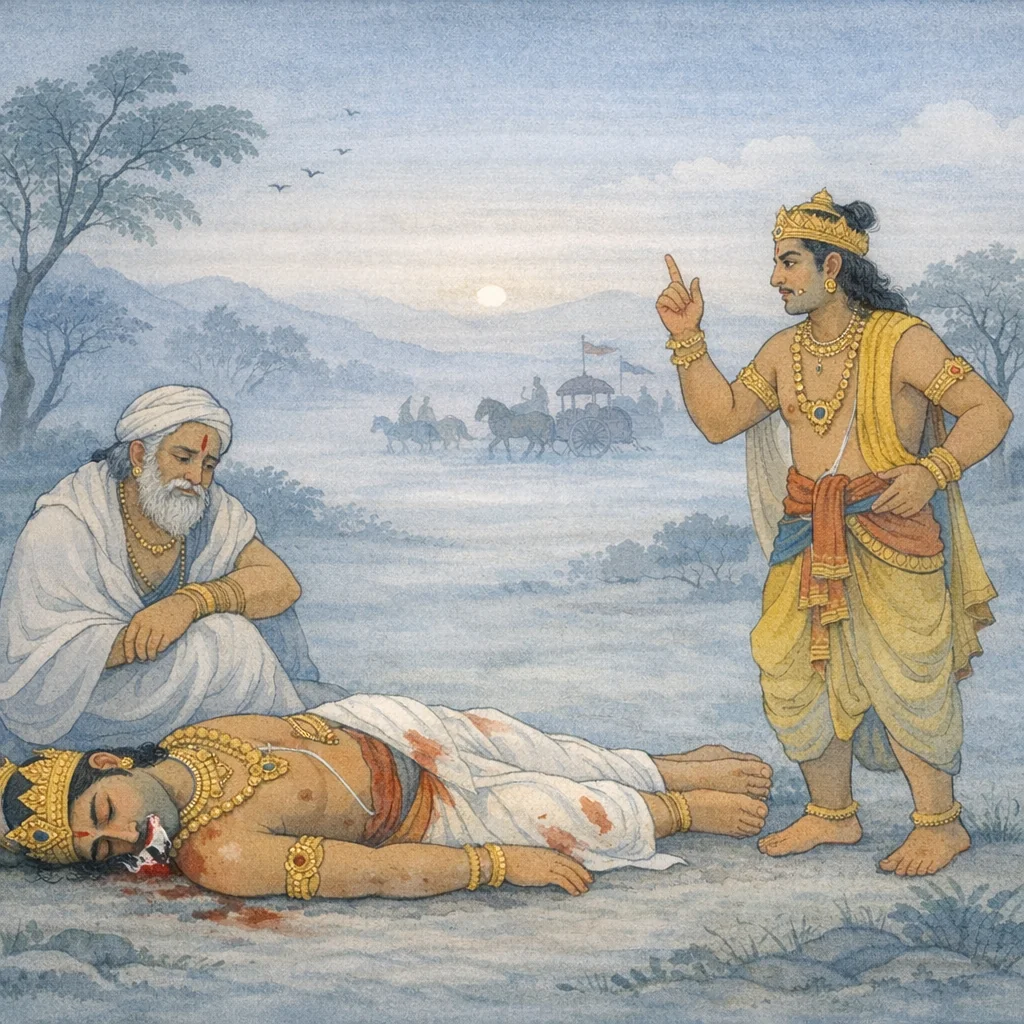
Sañjaya reports that after killing the Pāñcālas and Draupadī’s sons, Aśvatthāmā, Kṛpa, and Kṛtavarmā arrive where Duryodhana lies struck down. They find him barely breathing, senseless, with shattered thighs, vomiting blood, and surrounded by terrifying scavengers; the three survivors keep the beasts at bay and encircle him in grief. Kṛpa reflects on the overwhelming force of fate as the once-dominant commander now lies in dust; he points to Duryodhana’s beloved mace fallen nearby, using it as a symbol of warrior identity and reversal of fortune. Aśvatthāmā then laments and criticizes the manner of Duryodhana’s defeat, framing it as a deviation from proper combat norms, and anticipates reputational consequences. He consoles Duryodhana by enumerating the remaining survivors and declaring that the night retaliation has eliminated the Pāñcāla leadership and the sons of Draupadī, presenting it as “counter-action” for prior losses. Duryodhana, pleased, acknowledges that this deed exceeded what others achieved for him and offers a final benediction, expressing hope of reunion in heaven before dying. The three embrace him, depart at dawn toward the city, and the framing narration notes Dhṛtarāṣṭra’s anguished reaction and reflective silence.
Chapter Arc: रात्रि के रक्त-धुएँ के बाद प्रभात की ठंडी हवा में कौरव-शिविर के बचे हुए रथी दुर्योधन को खोजते हैं—और उसे धरती पर पड़ा पाते हैं, टूटी जंघाओं के साथ, चेतना डूबती-उतराती, मुख से रक्त-फेन उगलता हुआ। → कृपाचार्य और अश्वत्थामा उस दृश्य से भीतर तक हिल जाते हैं। जिनके द्वार पर कभी अर्थ-हेतु ब्राह्मण उपासना करते थे, उसी नरेश के शरीर पर अब मांस-हेतु क्रव्यादों की दृष्टि है—राज-वैभव की क्षणभंगुरता उनके विलाप को और तीखा करती है। वे दुर्योधन के पास बैठकर उसके पराक्रम, उसके साथ गिरे महारथियों (बाह्लिक, जयद्रथ, सोमदत्त, भूरिश्रवा आदि) का स्मरण करते हुए शोक और आत्मग्लानि में डूबते जाते हैं। → द्रोणपुत्र (अश्वत्थामा) की करुण वाणी में दुर्योधन के निधन का समाचार स्पष्ट हो उठता है—‘अग्रे यात्वा रणे शूरः, पश्चाद् विनिहतः परैः’—और यह स्वीकारोक्ति कि वह प्रायः धर्मपूर्वक शत्रुओं का सामना करते हुए मारा गया। यह क्षण शोक को नियति-स्वीकृति में बदल देता है, पर साथ ही भीतर प्रतिशोध की आग भी सुलगा देता है। → विलाप के बीच वे मृत-राजा को अंतिम प्रणाम/आलिंगन-भाव अर्पित करते हैं, और स्वर्गगमन की कल्पना में उसे उन पूर्वगतान् महारथियों के बीच प्रतिष्ठित देखते हैं। नगर/शिविर की ओर लौटते हुए (प्रत्यूषकाले) कथावाचक-स्वर शोकाकुल गति का संकेत देता है—जीवितों के लिए अब शांति नहीं, केवल आगे की कठोरता है। → दुर्योधन के अंत के साथ कौरव-पक्ष का ध्वज गिर चुका है—पर शेष बचे योद्धाओं के हृदय में प्रतिशोध की प्रतिज्ञा आकार ले रही है; अगला कदम किस पर और कैसे टूटेगा?
Shlokas
Verse 1
(दाक्षिणात्य अधिक पाठका ६ “लोक मिलाकर कुल १५९ ६ श्लोक हैं।) भस्म करत (2 अमन नवमो<्ध्याय: दुर्योधनकी दशा देखकर कृपाचार्य और अभश्वत्थामाका विलाप तथा उनके मुखसे पांचालोंके वधका वृत्तान्त जानकर दुर्योधनका प्रसन्न होकर प्राणत्याग करना संजय उवाच ते हत्वा सर्वपज्चालान द्रौपदेयांश्व सर्वशः । आगच्छन् सहितास्तत्र यत्र दुर्योधनो हतः,संजय कहते हैं--राजन्! वे तीनों महारथी समस्त पांचालों और द्रौपदीके सभी पुत्रोंका वध करके एक साथ उस स्थानमें आये, जहाँ राजा दुर्योधन मारा गया था
Sañjaya said: O King, those three great warriors—having slain all the Pāñcālas and every one of Draupadī’s sons—came together to the very place where Duryodhana lay slain. The verse frames their return not as triumph but as the grim aftermath of a night of slaughter, setting an ethical tension between martial success and the collapse of righteous conduct.
Verse 2
गत्वा चैनमपश्यन्त किज्चित्प्राणं जनाधिपम् । ततो रथेभ्य: प्रस्कन्द्य परिवद्रुस्तवात्मजम्,वहाँ जाकर उन्होंने राजा दुर्योधनको देखा, उसकी कुछ-कुछ साँस चल रही थी। फिर वे रथोंसे कूद पड़े और आपके पुत्रके पास जा उसे सब ओरसे घेरकर बैठ गये
Having gone there, they saw the lord of men (King Duryodhana) still retaining a faint breath of life. Then, leaping down from their chariots, they hurried to your son and sat around him on all sides, enclosing him as he lay.
Verse 3
त॑ भग्नसक्थं राजेन्द्र कृच्छुप्राणमचेतसम् । वमन्तं रुचिरं वक्त्रादपश्यन् वसुधातले
Sanjaya said: “O king of kings, they saw him lying on the ground—his thigh broken, his breathing laboured and faint, his senses clouded—vomiting from his handsome mouth.”
Verse 4
वृतं समन्ताद् बहुभि: श्वापदैर्घोरदर्शनै: । शालावृकगणैश्वैव भक्षयिष्यद्धिरन्तिकात्
Sañjaya said: It was surrounded on every side by many fearsome wild beasts; and packs of jackals too were close at hand, as though ready to devour it. The scene underscores the moral desolation after slaughter—where the aftermath of adharma invites predation and dread, and the battlefield becomes a place of ominous signs rather than honor.
Verse 5
निवारयन्तं कृच्छात्तान् श्वापदांश्व चिखादिषून् | विचेष्टमानं महयां च सुभूशं गाढवेदनम्
Sañjaya said: “With great difficulty he tried to ward off those wild beasts and flesh-eating creatures. He writhed upon the ground, grievously afflicted, his pain intense and unrelenting.”
Verse 6
राजेन्द्र! उन्होंने देखा कि राजाकी जाँचें टूट गयी हैं। ये बड़े कष्टसे प्राण धारण करते हैं। इनकी चेतना लुप्त-सी हो गयी है और ये अपने मुँहसे पृथ्वीपर खून उगल रहे हैं। इन्हें चट कर जानेके लिये बहुत-से भयंकर दिखायी देनेवाले हिंसक जीव और कुत्ते चारों ओरसे घेरकर आसपास ही खड़े हैं। ये अपनेको खा जानेकी इच्छा रखनेवाले उन हिंसक जन्तुओंको बड़ी कठिनाईसे रोकते हैं। इन्हें बड़ी भारी पीड़ा हो रही है, जिसके कारण ये पृथ्वीपर पड़े-पड़े छटपटा रहे हैं ।। त॑ शयानं तथा दृष्टवा भूमौ सुरुधिरोक्षितम् । हतशिष्टास्त्रयो वीरा: शोकार्ता: पर्यवारयन्
Sañjaya said: Seeing him lying thus upon the ground, drenched in blood, the three surviving warriors—grief-stricken—stood around him. The scene underscores the moral wreckage of war: even the victors are left encircled by sorrow, confronted with the suffering body of a fallen king and the irreversible consequences of violence.
Verse 7
तैस्त्रिभि: शोणितादिग्धैर्नि:श्वसद्धिर्महारथै:
Sañjaya said: With those three great chariot-warriors—smeared with blood and breathing hard—(the scene was marked by the grim aftermath of violence, where prowess and resolve persist even as the moral weight of slaughter hangs over them).
Verse 8
इस प्रकार श्रीमह्याभारत सौप्तिकपर्वमें रात्रियुद्धके प्रसंगमें पांचाल आदिका वधविषयक आठवाँ अध्याय पूरा हुआ,शुशुभे स वृतो राजा वेदी त्रिभिरिवाग्निभि: | वे तीनों महारथी वीर खूनसे रँग गये थे और लंबी साँसें खींच रहे थे। उनसे घिरा हुआ राजा दुर्योधन तीन अग्नियोंसे घिरी हुई वेदीके समान सुशोभित हो रहा था ।। ते तं शयानं सम्प्रेक्ष्य राजानमतथोचितम्
Sañjaya said: Surrounded by those three fires, the king shone like a sacrificial altar encircled by three blazing flames. The three great chariot-warriors, their bodies stained with blood and their breath coming in long, heavy gasps, stood around him; and Duryodhana, lying there, appeared splendid in that grim circle—like an altar ringed by three fires. Seeing the king lying thus, in a condition unbefitting his station, they looked upon him with grave attention.
Verse 9
ततस्तु रुधिरं हस्तैर्मुखान्निर्मुज्य तस्य हि । रणे राज्ञ: शयानस्य कृपणं पर्यदेवयन्,तत्पश्चात् रणभूमिमें सोये हुए राजा दुर्योधनके मुखसे बहते हुए रक्तको हाथोंसे पोंछकर वे तीनों दीन वाणीमें विलाप करने लगे इति श्रीमहा भारते सौप्तिकपर्वणि दुर्योधनप्राणत्यागे नवमो5ध्याय:
Sañjaya said: Then, wiping away with their hands the blood flowing from the mouth of the king as he lay on the battlefield, those three began to lament piteously.
Verse 10
कृप उवाच न दैवस्यातिभारो5स्ति यदयं रुधिरोक्षित: । एकादशचमूभर्ता शेते दुर्योधनो हतः,कृपाचार्य बोले--हाय! विधाताके लिये कुछ भी करना कठिन नहीं है। जो कभी ग्यारह अक्षौहिणी सेनाके स्वामी थे, वे ही ये राजा दुर्योधन यहाँ मारे जाकर खूनसे लथपथ हुए पड़े हैं
Kṛpa said: “For destiny there is no burden too great. Behold—Duryodhana, once the lord of eleven armies, now lies slain, drenched in blood.”
Verse 11
पश्य चामीकराभस्य चामीकरवि भूषिताम् । गदां गदाप्रियस्येमां समीपे पतितां भुवि
Kṛpa said: “Look—this mace, gleaming like gold and adorned with golden ornamentation, lies fallen here on the ground nearby. It belongs to the one who is fond of the mace.”
Verse 12
देखो, सुवर्णके समान कान्तिवाले इन गदाप्रेमी नरेशके समीप यह सुवर्णभूषित गदा पृथ्वीपर पड़ी है ।। इयमेनं गदा शूरं न जहाति रणे रणे । स्वर्गायापि व्रजन्तं हि न जहाति यशस्विनम्
Kṛpa said: “Look—near this mace-loving king lies his gold-adorned mace, shining like pure gold, fallen upon the earth. This very mace does not abandon that heroic warrior in battle after battle; indeed, it does not forsake the famed one even as he goes on toward heaven.”
Verse 13
यह गदा इन शूरवीर भूपालका साथ किसी भी युद्धमें नहीं छोड़ती थी और आज स्वर्गलोकमें जाते समय भी यशस्वी नरेशका साथ नहीं छोड़ रही है ।। पश्येमां सह वीरेण जाम्बूनदविभूषिताम् । शयानां शयने हम्यें भार्या प्रीतिमतीमिव,देखो, यह सुवर्णभूषित गदा इन वीर भूपालके साथ रणशय्यापर उसी प्रकार सो रही है, जैसे महलमें प्रेम रखनेवाली पत्नी इनके साथ सोया करती थी
Kripa said: “Look at this mace, adorned with Jāmbūnada-gold. It lies beside the hero upon his bed of battle, as though it were a loving wife lying with him on a palace couch. Even as the renowned king departs for heaven, this weapon that never abandoned him in any war does not abandon him now.”
Verse 14
यो<यं मूर्धाभिषिक्तानामग्रे यात: परंतप: । स हतो ग्रसते पांसून् पश्य कालस्य पर्ययम्,जो ये शत्रुसंतापी नरेश सभी मूर्धाभिषिक्त राजाओंके आगे चला करते थे, वे ही आज मारे जाकर धरतीपर पड़े-पड़े धूल फाँक रहे हैं। यह समयका उलट-फेर तो देखो
He who once marched at the head of consecrated kings, a scorcher of foes—now, slain, lies on the ground swallowing dust. Behold the reversal wrought by Time.
Verse 15
येनाजौ निहता भूमावशेरत पुरा द्विष: । स भूमौ निहतः शेते कुरुराज: परैरयम्,पूर्वकालमें जिनके द्वारा युद्धमें मारे गये शत्रु भूमिपर सोया करते थे, वे ही ये कुरुराज आज शशत्रुओंद्वारा स्वयं मारे जाकर भूमिपर शयन करते हैं
Kripa said: “Those enemies who were once struck down in battle by him used to lie upon the earth. Now that very king of the Kurus, slain by others, lies upon the ground.”
Verse 16
भयान्नमन्ति राजानो यस्य सम शतसंघश: । स वीरशयमने शेते क्रव्याद्धि: परिवारित:,जिनके आगे सैकड़ों राजा भयसे सिर झुकाते थे, वे ही आज हिंसक जन्तुओंसे घिरे हुए वीर-शय्यापर सो रहे हैं
Kripa said: “Before him, kings in their hundreds used to bow their heads in fear. Yet now that very hero lies upon a warrior’s bed—surrounded by flesh-eating creatures.”
Verse 17
उपासत द्विजा: पूर्वमर्थहेतोर्यमी श्वरम् उपासते च तं हाद्य क्रव्यादा मांसहेतव:,पहले बहुत-से ब्राह्मण धनकी प्राप्तिके लिये जिन नरेशके पास बैठे रहते थे, उन्हींके समीप आज मांसके लिये मांसाहारी जन्तु बैठे हुए हैं
Kripa said: “Formerly, brahmins used to sit in attendance upon that king for the sake of wealth and patronage. But today, in that very place, flesh-eating creatures sit near him, drawn only by the prospect of meat.”
Verse 18
संजय उवाच तं शयानं कुरुश्रेष्ठ ततो भरतसत्तम । अश्वत्थामा समालोक्य करुणं पर्यदेवयत्,संजय कहते हैं--भरतश्रेष्ठ! तदनन्तर कुरुकुल-भूषण दुर्योधनको रणशय्यापर पड़ा देख अश्वत्थामा इस प्रकार करुण विलाप करने लगा--
Sañjaya said: “O best of the Kurus, O foremost of the Bharatas—then, seeing Duryodhana, the ornament of the Kuru line, lying on his battlefield couch, Aśvatthāmā looked upon him and began to lament in deep compassion.”
Verse 19
आहुस्त्वां राजशार्दूल मुख्य॑ सर्वधनुष्मताम् । धनाध्यक्षोपमं युद्धे शिष्यं संकर्षणस्य च,“निष्पाप राजसिंह! आपको समस्त धनुर्धरोंमें श्रेष्ठ कहा जाता था। आप गदायुद्धमें धनाध्यक्ष कुबेरकी समानता करनेवाले तथा साक्षात् संकर्षणके शिष्य थे तो भी भीमसेनने कैसे आपपर प्रहार करनेका अवसर पा लिया? नरेश्वर! आप तो सदासे ही बलवान् और गदायुद्धके विद्वान् रहे हैं। फिर उस पापात्माने कैसे आपको मार दिया?
Sañjaya said: “O tiger among kings, people used to declare you the foremost of all archers. In battle you were said to rival Kubera, the lord of wealth, and you were a direct disciple of Saṅkarṣaṇa (Balarāma). Even so, how did Bhīmasena ever find an opening to strike you? O ruler, you were always strong and skilled in mace-fighting—how then did that sinful man manage to kill you?”
Verse 20
कथं विवरमद्राक्षीद् भीमसेनस्तवानघ । बलिन कृतिनं नित्यं स च पापात्मवान् नृप,“निष्पाप राजसिंह! आपको समस्त धनुर्धरोंमें श्रेष्ठ कहा जाता था। आप गदायुद्धमें धनाध्यक्ष कुबेरकी समानता करनेवाले तथा साक्षात् संकर्षणके शिष्य थे तो भी भीमसेनने कैसे आपपर प्रहार करनेका अवसर पा लिया? नरेश्वर! आप तो सदासे ही बलवान् और गदायुद्धके विद्वान् रहे हैं। फिर उस पापात्माने कैसे आपको मार दिया?
Sañjaya said: “O sinless king, how did Bhīmasena find an opening against you? You were ever strong and accomplished; yet that sinful-minded man, O ruler, managed to strike you down. How could he obtain the chance to attack one who was always powerful and skilled?”
Verse 21
कालो नूनं महाराज लोके5स्मिन् बलवत्तर: । पश्यामो निहतं त्वां च भीमसेनेन संयुगे,“महाराज! निश्चय ही इस संसारमें समय महाबलवान् है, तभी तो युद्धस्थलमें हम आपको भीमसेनके द्वारा मारा गया देखते हैं
Sañjaya said: “O King, in this world Time is surely the stronger power. For we behold even you struck down by Bhīmasena in the clash of battle.”
Verse 22
कथं त्वां सर्वधर्मज्ञ क्षुद्र: पापो वृकोदर: । निकृत्या हतवान् मन्दो नूनं कालो दुरत्यय:,“आप तो सम्पूर्ण धर्मोके ज्ञाता थे। आपको उस मूर्ख, नीच और पापी भीमसेनने किस तरह धोखेसे मार डाला? अवश्य ही कालका उल्लंघन करना सर्वथा कठिन है
Sañjaya said: “How did Bhīma—Vṛkodara—base, sinful, and foolish—kill you by deceit, though you were a knower of all dharma? Surely Time (fate) is impossible to transgress.”
Verse 23
धर्मयुद्धे ह्वार्मेण समाहूयौजसा मृधे । गदया भीमसेनेन निर्भग्ने सक्थिनी तव,'भीमसेनने आपको धर्मयुद्धके लिये बुलाकर रणभूमिमें अधर्मके बलसे गदाद्वारा आपकी दोनों जाँघें तोड़ डालीं
Sañjaya said: “In what was proclaimed a righteous duel, Bhīmasena challenged you on the battlefield; yet, by the force of unrighteousness, he shattered both your thighs with his mace.”
Verse 24
अधर्मेण हतस्याजौ मृद्यमानं पदा शिर: । य उपेक्षितवान क्षुद्रे धिक् कृष्णं धिग् युधिष्ठिरम्
Sañjaya said: “The head of one who was slain in battle by unrighteous means is being crushed underfoot. Cursed be Kṛṣṇa, and cursed be Yudhiṣṭhira—who, in this petty-minded way, looked on and did not prevent it.”
Verse 25
“एक तो आप रणभूमिमें अधर्मपूर्वक मारे गये। दूसरे भीमसेनने आपके मस्तकपर लात मारी। इतनेपर भी जिन्होंने उस नीचकी उपेक्षा की, उसे कोई दण्ड नहीं दिया, उन श्रीकृष्ण और युधिष्ठिरको धिक्कार है! ।। युद्धेष्वपवदिष्यन्ति योधा नूनं वृकोदरम् | यावत् स्थास्यन्ति भूतानि निकृत्या हसि पातित:,“आप धोखेसे गिराये गये हैं, अतः इस संसारमें जबतक प्राणियोंकी स्थिति रहेगी, तबतक सभी युद्धोंमें सम्पूर्ण योद्धा भीमसेनकी निन्दा ही करेंगे
Sañjaya said: “First, you were slain on the battlefield by unrighteous means. Second, Bhīmasena kicked you upon the head. Yet those who ignored that vile act and imposed no punishment—cursed be Kṛṣṇa and cursed be Yudhiṣṭhira! Warriors will surely revile Vṛkodara (Bhīma) in every battle; as long as living beings endure in this world, they will remember that you were brought down by deceit and struck down.”
Verse 26
ननु रामो<ब्रवीद् राजंस्त्वां सदा यदुनन्दन: । दुर्योधनसमो नास्ति गदया इति वीर्यवान्
Sañjaya said: “Indeed, O king, the mighty Rama—delighter of the Yadus—has always declared about you: ‘In mace-fighting there is none equal to Duryodhana.’”
Verse 27
“राजन! पराक्रमी यदुनन्दन बलरामजी आपके विषयमें सदा कहा करते थे कि 'गदायुद्धकी शिक्षामें दुर्योधनकी समानता करनेवाला दूसरा कोई नहीं है” ।। श्लाघते त्वां हि वाष्णेयो राजसंसत्सु भारत | स शिष्यो मम कौरव्यो गदायुद्ध इति प्रभो
Sañjaya said: “O Bhārata (Dhṛtarāṣṭra), in the assemblies of kings the Vāṣṇeya (Balarāma) openly praises you: ‘This Kaurava is my disciple in the art of fighting with the mace, O lord.’”
Verse 28
'प्रभो! भरतनन्दन! वे वृष्णिकुलभूषण बलराम राजाओंकी सभामें सदा आपकी प्रशंसा करते हुए कहते थे कि “कुरुराज दुर्योधन गदायुद्धमें मेरा शिष्य है” ।। यां गतिं क्षत्रियस्याहु: प्रशस्तां परमर्षय: । हतस्याभिमुखस्याजौ प्राप्तस्त्वमसि तां गतिम्,“महर्षियोंने युद्धमें शत्रुका सामना करते हुए मारे जानेवाले क्षत्रियके लिये जो उत्तम गति बतायी है, आपने वही गति प्राप्त की है
Sanjaya said: “O lord, O delight of the Bharatas! Balarama, the ornament of the Vrishni line, would always praise you in the assemblies of kings, declaring: ‘King Duryodhana of the Kurus is my disciple in mace-fighting.’ And the exalted destiny that the great seers commend for a kshatriya—one who is slain in battle while facing the enemy—you have attained that very destiny.”
Verse 29
दुर्योधन न शोचामि त्वामहं पुरुषर्षभ । हतपुत्रौ तु शोचामि गान्धारीं पितरं च ते,'पुरुषश्रेष्ठ राजा दुर्योधन! मैं तुम्हारे लिये शोक नहीं करता। मुझे तो माता गान्धारी और आपके पिता धृतराष्ट्रके लिये शोक हो रहा है, जिनके सभी पुत्र मार डाले गये हैं
Sanjaya said: “O Duryodhana, bull among men, I do not grieve for you. Rather, I grieve for Gandhari and for your father Dhritarashtra—bereft of their sons—who must now endure the crushing aftermath of this war.”
Verse 30
भिक्षुकौ विचरिष्येते शोचन्तौ पृथिवीमिमाम् । धिगस्तु कृष्ण वार्ष्णेयमर्जुनं चापि दु्मतिम्
Sanjaya said: “Those two will wander over this very earth as beggars, grieving. Shame upon Krishna of the Vrishnis, and upon Arjuna too—of misguided judgment.”
Verse 31
पाण्डवाश्षापि ते सर्वे कि वक्ष्यन्ति नराधिप
Sanjaya said: “And what will all those Pandavas say to you, O king?”
Verse 32
धन्यस्त्वमसि गान्धारे यस्त्वमायोधने हत:
Sanjaya said: “Blessed are you, O Gandhari, since you have fallen in battle.”
Verse 33
हतपुत्रा हि गान्धारी निहतज्ञातिबान्धवा
Sañjaya said: Gandhārī had indeed lost her sons, and her kinsmen and relatives had been slain—an image of utter bereavement that lays bare the human cost of vengeance and war.
Verse 34
धिगस्तु कृतवर्माणं मां कृपं च महारथम्
Sañjaya said: “Shame upon Kṛtavarmā—and upon me as well—and upon Kṛpa, that great chariot-warrior.” In this moment of moral recoil, he condemns the perpetrators (and himself) for a deed deemed ignoble within the warrior code, delivering a sharp ethical judgment amid the aftermath of night-violence.
Verse 35
ये वयं न गताः: स्वर्ग त्वां पुरस्कृत्य पार्थिवम् । “मुझको, कृतवर्माको तथा महारथी कृपाचार्यको भी धिक््कार है कि हम आप-जैसे महाराजको आगे करके स्वर्गलोकमें नहीं गये ।। ३४ $ ।। दातारं सर्वकामानां रक्षितारं प्रजाहितम्
Sañjaya said: “Shame on us—that we did not attain heaven with you, O king, placed at our head. You were the giver of every desired boon and the protector devoted to the welfare of the people.”
Verse 36
कृपस्य तव वीर्येण मम चैव पितुश्न मे
Sañjaya said: “By the valor of your Kṛpa, and by my own, and by that of my father as well …”
Verse 37
तव प्रसादादस्माभि: समित्रै: सह बान्धवै:
“By your gracious favor, we—together with our friends and our kinsmen—have been able to stand and act thus.” Sanjaya attributes the present outcome to the recipient’s beneficence, emphasizing dependence on another’s support and the shared fate of allies and family in the aftermath of war.
Verse 38
कुतश्चापीदृशं पापा: प्रवर्तिष्पयामहे वयम्
Sañjaya said: “From where have we, sinful as we are, come to undertake such a deed?”
Verse 39
वयमेव त्रयो राजन् गच्छन्तं परमां गतिम्,“राजन्! परम गतिको जाते समय आपके पीछे-पीछे जो हम तीनों भी नहीं चल रहे हैं, इसके कारण हम स्वर्ग और अर्थ दोनोंसे वंचित हो आपके सुकृतोंका स्मरण करते हुए दिन- रात शोकाग्निमें जलते रहेंगे
Sañjaya said: “O King, as you go on to the highest state, we three alone are not following behind you. Because of this, deprived of both heaven and worldly prosperity, we shall remember your meritorious deeds and, day and night, burn in the fire of grief.”
Verse 40
यद् वै त्वां नानुगच्छामस्तेन धक्ष्यामहे वयम् | तत् स्वर्गहीना हीनार्था: स्मरन्त: सुकृतस्य ते,“राजन्! परम गतिको जाते समय आपके पीछे-पीछे जो हम तीनों भी नहीं चल रहे हैं, इसके कारण हम स्वर्ग और अर्थ दोनोंसे वंचित हो आपके सुकृतोंका स्मरण करते हुए दिन- रात शोकाग्निमें जलते रहेंगे
Sañjaya said: “If indeed we do not follow after you, then we shall be consumed by that very fault. Deprived of heaven and bereft of all worthy gain, we will keep remembering your good deeds, O King, and burn day and night in the fire of grief.”
Verse 41
कि नाम तद् भवेत् कर्म येन त्वां न व्रजाम वै । दुःखं नूनं कुरुश्रेष्ठ चरिष्याम महीमिमाम्
Sañjaya said: “What deed could there be by which we should not go to you? Surely, O best of the Kurus, we shall wander over this earth in sorrow.”
Verse 42
'कुरुश्रेष्ठ! न जाने वह कौन-सा कर्म है, जिससे विवश होकर हम आपके साथ नहीं चल रहे हैं। निश्चय ही इस पृथ्वीपर हमें निरन्तर दुःख भोगना पड़ेगा ।। हीनानां नस्त्वया राजन् कुतः शान्ति: कुतः सुखम् । गत्वैव तु महाराज समेत्य च महारथान्
Sañjaya said: “O best of the Kurus, I cannot discern what deed or destiny has compelled us that we are not able to go with you. Surely, remaining on this earth, we shall have to endure unceasing sorrow. For us, left bereft of you, O King—where could there be peace, and where happiness? Yet, O great king, having gone and then meeting again with the great chariot-warriors…”
Verse 43
आचार्य पूजयित्वा च केतु सर्वधनुष्मताम्
Sañjaya said: Having duly honored the teacher, and also Ketu—the foremost among all archers—(he proceeded further), marking a deliberate act of reverence even amid the harsh momentum of war.
Verse 44
हतं मयाद्य शंसेथा धृष्टद्युम्नं नराधिप । “नरेश्वर! फिर सम्पूर्ण धनुर्धरोंके ध्वजस्वरूप आचार्यका पूजन करके उनसे कह दें कि “आज अअभश्व॒त्थामाके द्वारा धृष्टद्युम्म मार डाला गया” || ४३ $ || परिष्वजेथा राजानं बाह्विकं सुमहारथम्
Sanjaya said: “O king, you should now proclaim: ‘Today I have slain Dhṛṣṭadyumna.’ And you should embrace the king Bāhlīka, that great chariot-warrior.” In the grim aftermath of the night massacre, the speech frames killing as a report to be announced and validated, and it urges a gesture of solidarity among allies—revealing how victory is sought not only by force but also by public declaration, morale, and the bonding of the war-party despite the ethically dark means employed.
Verse 45
सैन्धवं सोमदत्तं च भूरिश्रवसमेव च । “महारथी राजा बाह्लिक, सिन्धुराज जयद्रथ, सोमदत्त तथा भूरिश्रवाका भी आप मेरी ओरसे आलिंगन करें |। तथा पूर्वगतानन्यान् स्वर्गे पार्थिवसत्तमान्,“दूसरे-दूसरे भी जो नृपश्रेष्ठ पहलेसे ही स्वर्गलोकमें जा पहुँचे हैं, उन सबको मेरे कथनानुसार हृदयसे लगाकर उनकी कुशल पूछें"
Sañjaya said: “Embrace Saindhava (Jayadratha), Somadatta, and Bhūriśravas as well. And likewise, embrace from the heart the other foremost kings who have already gone before to heaven, and inquire after their welfare as I say.” In the aftermath of slaughter, the verse frames death in battle as a passage to the heavenly realm for kṣatriya rulers, and it emphasizes remembrance, honor, and courteous regard even amid the moral wreckage of war.
Verse 46
अस्मद्वाक्यात् परिष्वज्य सम्पृच्छेस्त्वमनामयम्,“दूसरे-दूसरे भी जो नृपश्रेष्ठ पहलेसे ही स्वर्गलोकमें जा पहुँचे हैं, उन सबको मेरे कथनानुसार हृदयसे लगाकर उनकी कुशल पूछें"
Sañjaya said: “Following my words, embrace them with heartfelt affection and inquire after their well-being—those foremost of kings who, one after another, have already reached the world of heaven.”
Verse 47
संजय उवाच इत्येवमुक्त्वा राजानं भग्नसक्थमचेतनम् | अभश्रृत्थामा समुद्वीक्ष्य पुनर्वचनमब्रवीत्,संजय कहते हैं--महाराज! जिसकी जाँघें टूट गयी थीं, उस अचेत पड़े हुए राजा दुर्योधनसे ऐसा कहकर अभश्रव॒त्थामाने पुन उसकी ओर देखा और इस प्रकार कहा --
Sañjaya said: Having spoken thus to the king—Duryodhana—who lay unconscious with his thighs shattered, Aśvatthāmā looked at him again and then spoke once more. The scene underscores the grim moral aftermath of war: a fallen ruler, incapacitated and senseless, becomes the object of renewed counsel that will propel further violence rather than restraint.
Verse 48
दुर्योधन जीवसि त्वं वाक्यं श्रोत्रसुखं शूणु । सप्त पाण्डवत: शेषा धार्तराष्ट्रासत्रयो वयम्
Sañjaya said: “Duryodhana, you still live—hear words that will be sweet to your ear. Of the Pāṇḍavas, seven remain; of the Dhārtarāṣṭras, we are three.”
Verse 49
*राजा दुर्योधन! यदि आप जीवित हों तो यह कानोंको सुख देनेवाली बात सुनें। पाण्डवपक्षमें केवल सात और कौरवपक्षमें सिर्फ हम तीन ही व्यक्ति बच गये हैं ।। ते चैव भ्रातर: पञ्च वासुदेवो5थ सात्यकि: । अहं च कृतवर्मा च कृप: शारद्वतस्तथा,“उधर तो पाँचों भाई पाण्डव, श्रीकृष्ण और सात्यकि बचे हैं और इधर मैं, कृतवर्मा तथा शरद्वानके पुत्र कृपाचार्य शेष रह गये हैं
Sañjaya reports the grim remainder after the slaughter: on the Pāṇḍava side only the five brothers survive, along with Vāsudeva (Kṛṣṇa) and Sātyaki; on the Kaurava side only three remain—Sañjaya himself, Kṛtavarmā, and Kṛpa, the son of Śaradvat. The verse lays bare the war’s moral desolation: victory and defeat alike are hollow when nearly all are destroyed, leaving only a few witnesses to bear the weight of what has been done.
Verse 50
द्रौपदेया हता: सर्वे धृष्टद्युम्नस्थ चात्मजा: । पज्चाला निहता: सर्वे मत्स्यशेषं च भारत,“भरतनन्दन! द्रौपदी तथा धृष्टद्युम्नके सभी पुत्र मारे गये, समस्त पांचालोंका संहार कर दिया गया और मत्स्य देशकी अवशिष्ट सेना भी समाप्त हो गयी
Sañjaya said: “All the sons of Draupadī have been slain, and so too the sons of Dhṛṣṭadyumna. All the Pāñcālas have been killed, O Bhārata, and even the remaining forces of the Matsya realm have been wiped out.”
Verse 51
कृते प्रतिकृतं पश्य हतपुत्रा हि पाण्डवा: । सौप्तिके शिबिरं तेषां हतं सनरवाहनम्,“राजन! देखिये, शत्रुओंकी करनीका कैसा बदला चुकाया गया? पाण्डवोंके भी सारे पुत्र मार डाले गये। रातमें सोते समय मनुष्यों और वाहनोंसहित उनके सारे शिविरका नाश कर दिया गया
Sañjaya said: “Behold, O king, how an act has been repaid in kind. The Pāṇḍavas too have been made bereft of their sons. In the night-raid, while they slept, their entire camp was destroyed—together with its men and their mounts.”
Verse 52
मया च पापकर्मासौ धृष्टद्युम्नो महीपते । प्रविश्य शिबिरं रात्रौ पशुमारेण मारित:,'भूपाल! मैंने स्वयं रातके समय शिविरमें घुसकर पापाचारी धृष्टद्युम्मको पशुओंकी तरह गला घोंट-घोंटकर मार डाला है”
Sañjaya said: “O king, I too—having entered the camp at night—killed that Dhṛṣṭadyumna, a doer of sinful deeds, strangling him like an animal.”
Verse 53
दुर्योधनस्तु तां वाचं निशम्य मनस: प्रियाम् । प्रतिलभ्य पुनश्चेत इदं वचनमब्रवीत्,यह मनको प्रिय लगनेवाली बात सुनकर दुर्योधनको पुनः होश आ गया और वह इस प्रकार बोला--
Sañjaya said: Hearing those words, pleasing to his heart, Duryodhana regained his composure once again and spoke these words.
Verse 54
न मे5करोत् तद् गाड़ेयो न कर्णो न च ते पिता | यत् त्वया कृपभोजाभ्यां सहितेनाद्य मे कृतम्
Sañjaya said: “Neither Gāḍeya, nor Karṇa, nor even your father ever did for me what has been done today—done by you, acting together with Kṛpa and Bhoja.”
Verse 55
“मित्रवर! आज आचार्य कृप और कृतवर्माके साथ तुमने जो कार्य कर दिखाया है, उसे न गंगानन्दन भीष्म, न कर्ण और न तुम्हारे पिताजी ही कर सके थे ।। स च सेनापति: क्षुद्रो हत: सार्थ शिखण्डिना । तेन मन्ये मघवता सममात्मानमद्य वै,“शिखण्डीसहित वह नीच सेनापति धृष्टद्युम्न मार डाला गया, इससे आज निश्चय ही मैं अपनेको इन्द्रके समान समझता हूँ
Sañjaya said: “O best of friends! What you have accomplished today together with the teacher Kṛpa and Kṛtavarman is something that neither Bhīṣma, the son of the Gaṅgā, nor Karṇa, nor even your own father could achieve. That base commander Dhṛṣṭadyumna has been slain—along with Śikhaṇḍin. Therefore, today I truly deem myself equal to Maghavat (Indra).”
Verse 56
स्वस्ति प्राप्तुत भद्रं व: स्वर्गे न: संगम: पुन: । इत्येवमुक्त्वा तूष्णी स कुरुराजो महामना:,“तुम सब लोगोंका कल्याण हो। तुम्हें सुख प्राप्त हो। अब स्वर्गमें ही हमलोगोंका पुनर्मिलन होगा।/ ऐसा कहकर महामनस्वी वीर कुरुराज दुर्योधन चुप हो गया और अपने सुहृदोंके लिये दुःख छोड़कर उसने अपने प्राण त्याग दिये। वह स्वयं तो पुण्यधाम स्वर्गलोकमें चला गया; किंतु उसका पार्थिव शरीर इस पृथ्वीपर ही पड़ा रह गया
Sañjaya said: “May well-being be yours; may you attain happiness. In heaven, indeed, we shall meet again.” Having spoken thus, the high-souled king of the Kurus fell silent. In the pathos of farewell to his companions, Duryodhana relinquished his life—departing himself to the meritorious realm of heaven, while his mortal body remained lying upon the earth.
Verse 57
प्राणानुपासृजद् वीर: सुहृदां दुःखमुत्सूजन् । अपाक्रामद् दिवं पुण्यां शरीरं क्षितिमाविशत्,“तुम सब लोगोंका कल्याण हो। तुम्हें सुख प्राप्त हो। अब स्वर्गमें ही हमलोगोंका पुनर्मिलन होगा।/ ऐसा कहकर महामनस्वी वीर कुरुराज दुर्योधन चुप हो गया और अपने सुहृदोंके लिये दुःख छोड़कर उसने अपने प्राण त्याग दिये। वह स्वयं तो पुण्यधाम स्वर्गलोकमें चला गया; किंतु उसका पार्थिव शरीर इस पृथ्वीपर ही पड़ा रह गया
Sañjaya said: The heroic king released his life-breath, casting off the sorrow that burdened his well-wishers. He departed to the meritorious heaven, while his physical body entered the earth—remaining here upon the ground.
Verse 58
एवं ते निधन यात: पुत्रो दुर्योधनो नूप । अग्रे यात्वा रणे शूर: पश्चाद् विनिहतः परै:,नरेश्वर! इस प्रकार आपका पुत्र दुर्योधन मृत्युको प्राप्त हुआ। वह समरांगणमें सबसे पहले गया था और सबसे पीछे शत्रुओंद्वारा मारा गया
Sañjaya said: “Thus, O king, your son Duryodhana has met his end. A hero in battle, he went forth first into the fray, yet in the end he was the last to be struck down by his foes.”
Verse 59
तथैव ते परिष्वक्ता: परिष्वज्य च ते नृपम् । पुनः पुन: प्रेक्षमाणा: स्वकानारुरुहू रथान्,मरनेसे पहले दुर्योधनने तीनों वीरोंको गले लगाया और उन तीनोंने भी राजाको हृदयसे लगाकर विदा दी, फिर वे बारंबार उसकी ओर देखते हुए अपने-अपने रथोंपर सवार हो गये
Sañjaya said: “In the same way, they too embraced him; and having embraced the king, they took leave. Again and again looking back toward him, they mounted their own chariots.”
Verse 60
इत्येवं द्रोणपुत्रस्य निशम्य करुणां गिरम् । प्रत्यूषकाले शोकार्तत: प्राद्रवन्नगरं प्रति,इस प्रकार द्रोणपुत्रके मुखसे वह करुणाजनक समाचार सुनकर मैं शोकसे व्याकुल हो उठा और प्रातःकाल नगरकी ओर दौड़ा चला आया
Sañjaya said: “Having thus heard the lamenting words spoken by Droṇa’s son, I was overwhelmed with grief; and at daybreak, distressed by sorrow, I ran toward the city.”
Verse 61
एवमेष क्षयो वृत्त: कुरुपाण्डवसेनयो: । घोरो विशसनो रीौद्रो राजन् दुर्मन्त्रिते तव,राजन! इस प्रकार आपकी कुमन्त्रणाके अनुसार कौरवों तथा पाण्डवोंकी सेनाओंका यह घोर एवं भयंकर विनाशकार्य सम्पन्न हुआ है
Sañjaya said: “Thus has this destruction come to pass for the armies of the Kurus and the Pāṇḍavas—terrible, slaughterous, and fierce, O King—brought about through your own ill-counsel.”
Verse 62
तव पुत्रे गते स्वर्ग शोकार्तस्यथ ममानघ । ऋषिदत्तं प्रणष्टं तद् दिव्यदर्शित्वमद्य वै,निष्पाप नरेश! आपके पुत्रके स्वर्गलोकमें चले जानेसे मैं शोकसे आतुर हो गया हूँ और महर्षि व्यासजीकी दी हुई मेरी वह दिव्य दृष्टि भी अब नष्ट हो गयी है
Sanjaya said: “When your son departed for heaven, I was overwhelmed with grief, O blameless one. And today, indeed, that divine sight bestowed on me by the sage has vanished.”
Verse 63
वैशम्पायन उवाच इति श्रुत्वा स नृपतिः पुत्रस्य निधनं तदा । नि:श्वस्य दीर्घमुष्णं च ततश्चिन्तापरो5 भवत्,वैशम्पायनजी कहते हैं--राजन्! इस प्रकार अपने पुत्रकी मृत्युका समाचार सुनकर राजा धृतराष्ट्र ग॒रम-गरम लंबी साँस खींचकर गहरी चिन्तामें डूब गये
Vaiśampāyana said: Hearing thus, the king—on learning at that time of his son’s death—heaved a long, hot sigh, and then sank into consuming anxiety.
Verse 66
अश्वत्थामा कृपश्चैव कृतवर्मा च सात्वत: । दुर्योधनको इस प्रकार खूनसे लथपथ हो पृथ्वीपर पड़ा देख मरनेसे बचे हुए वे तीनों वीर अश्वत्थामा, कृपाचार्य और सात्वतवंशी कृतवर्मा शोकसे व्याकुल हो उसे तीन ओरसे घेरकर बैठ गये
Sañjaya said: Ashvatthama, Kripa, and Kritavarma of the Satvata line—seeing Duryodhana lying on the earth, drenched in blood—those three surviving warriors, their minds scorched by grief, sat down around him on all sides, lamenting.
Verse 83
अविषदह्दोन दुःखेन ततस्ते रुरुदुस्त्रय: । राजाको इस प्रकार अयोग्य अवस्थामें सोया देख वे तीनों असहा दुःखसे पीड़ित हो रोने लगे
Sañjaya said: Overwhelmed by unbearable grief, those three began to weep. Seeing the king lying in such an unworthy and pitiable condition, they—crushed by intolerable sorrow—broke into lamentation.
Verse 303
धर्मज्ञमानिनौ यौ त्वां वध्यमानमुपेक्षताम् “अब वे बेचारे शोकमग्न हो भिखारी बनकर इस भूतलपर भीख माँगते फिरेंगे। उस वृष्णिवंशी श्रीकृष्ण और खोटी बुद्धिवाले अर्जुनको भी धिक्कार है, जिन्होंने अपनेको धर्मज्ञ मानते हुए भी आपके अन्यायपूर्वक वधकी उपेक्षा की
Sañjaya said: “Those two—who pride themselves on knowing dharma—looked on with indifference while you were being slain. Now, wretched and grief-stricken, they will wander this earth as beggars. Shame on Kṛṣṇa of the Vṛṣṇi line and on the misguided Arjuna as well, who, though claiming to be righteous, ignored your unjust killing.”
Verse 316
कथं दुर्योधनो5स्माभिहीत इत्यनपत्रपा: | “नरेश्वर! क्या वे समस्त पाण्डव भी निर्लज्ज होकर लोगोंके सामने कह सकेंगे कि “हमने दुर्योधनको किस प्रकार मारा था?”
Sañjaya said: “How will the Pandavas, shameless and without any sense of moral embarrassment, be able to say before people, ‘This is how we killed Duryodhana’?”
Verse 333
प्रज्ञाचक्षुश्न दुर्धर्ष: कां गतिं प्रतिपत्स्यते । जिनके सभी पुत्र, कुटुम्बी और भाई-बन्धु मारे जा चुके हैं, वे माता गान्धारी तथा प्रज्ञाचक्षु दुर्जय राजा धृतराष्ट्र अब किस दशाको प्राप्त होंगे?
Sañjaya said: “What course will the wise yet unseeing, hard-to-overcome king now attain? When all their sons, kinsmen, brothers, and allies have been slain, what condition will Mother Gāndhārī and the clear-minded but blind, unconquerable King Dhṛtarāṣṭra now reach?”
Verse 353
यद् वयं नानुगच्छाम त्वां धिगस्मान् नराधमान् | आप हमें सम्पूर्ण मनोवांछित पदार्थ देते रहे और प्रजाके हितकी रक्षा करते रहे। फिर भी हमलोग जो आपका अनुसरण नहीं कर रहे हैं, इसके लिये हम-जैसे नराधमोंको धिक््कार है!
Sañjaya said: “Since we do not follow you, shame on us—wretched men that we are. You kept granting us every desire of our hearts and continued to protect the welfare of the people; yet we failed to walk in your path.”
Verse 363
सभृत्यानां नरव्याप्र रत्नवन्ति गृहाणि च । “नरश्रेष्ठू आपके ही बल-पराक्रमसे सेवकोंसहित कृपाचार्यको, मुझको तथा मेरे पिताजीको रत्नोंसे भरे हुए भव्य भवन प्राप्त हुए थे
Sañjaya said: “O tiger among men, it was by your very strength and heroic prowess that splendid mansions filled with treasures were obtained—along with attendants—for Kṛpācārya, for me, and for my father.”
Verse 373
अवाप्ता: क्रतवो मुख्या बहवो भूरिदक्षिणा: । “आपके ही प्रसादसे मित्रों और बन्धु-बान्धवोंसहित हमलोगोंने प्रचुर दक्षिणाओंसे सम्पन्न अनेक मुख्य-मुख्य यज्ञोंका अनुष्ठान किया है
Sañjaya said: “Through your very favor, we—together with our friends and kinsmen—have been able to perform many eminent sacrificial rites, richly endowed with abundant priestly gifts.”
Verse 383
यादृशेन पुरस्कृत्य त्वं गत: सर्वपार्थिवान् । “महाराज! आप जिस भावसे समस्त राजाओंको आगे करके स्वर्ग सिधार रहे हैं, हम पापी ऐसा भाव कहाँसे ला सकेंगे?
Sañjaya said: “O great king! With whatever noble disposition you are departing for heaven, placing all the kings before you (as it were), how could we sinners ever summon such a spirit?”
Verse 423
यथाज्येष्ठं यथाश्रेष्ठं पूजयेवचनान्मम । “महाराज! आपसे बिछुड़ जानेपर हमें शान्ति और सुख कैसे मिल सकते हैं? राजन! स्वर्गमें जाकर सब महारथियोंसे मिलनेपर आप मेरी ओरसे बड़े-छोटेके क्रमसे उन सबका आदर-सत्कार करें
Sañjaya said: “In accordance with seniority and excellence, offer honor and hospitality on my behalf. O great king, once we are separated from you, how could we ever find peace and happiness? And, O ruler, when you reach heaven and meet all those great chariot-warriors there, convey my reverence to each of them—duly, in the proper order of elders and juniors.”
Verse 3236
प्रायशो 5भिमुख: शत्रून् धर्मेण पुरुषर्षभ । पुरुषप्रवर गान्धारीनन्दन! आप धन्य हैं, क्योंकि युद्धमें प्राय: धर्मपूर्वक शत्रुओंका सामना करते हुए मारे गये हैं
Sañjaya said: “O bull among men, facing the enemy head-on and in accordance with dharma, you have fallen. O foremost of men, son of Gāndhārī, you are blessed indeed—for in battle you were slain while, for the most part, confronting your foes in a righteous manner.”
Frequently Asked Questions
The chapter stages a conflict between warrior-code ideals (fair combat and restraint) and retaliatory impulses justified by grief, humiliation, and strategic necessity, with characters disputing legitimacy through competing moral vocabularies.
Power and status are shown as contingent and reversible; appeals to fate (kāla/daiva) can console grief but also function rhetorically to manage blame, revealing how ethical narratives are constructed after catastrophe.
No explicit phalaśruti is stated; the meta-layer appears as narratorial framing—Sañjaya’s report and Vaiśaṃpāyana’s closure—emphasizing witness-accountability and the listener’s reflective burden in interpreting events.