Adhyaya 91
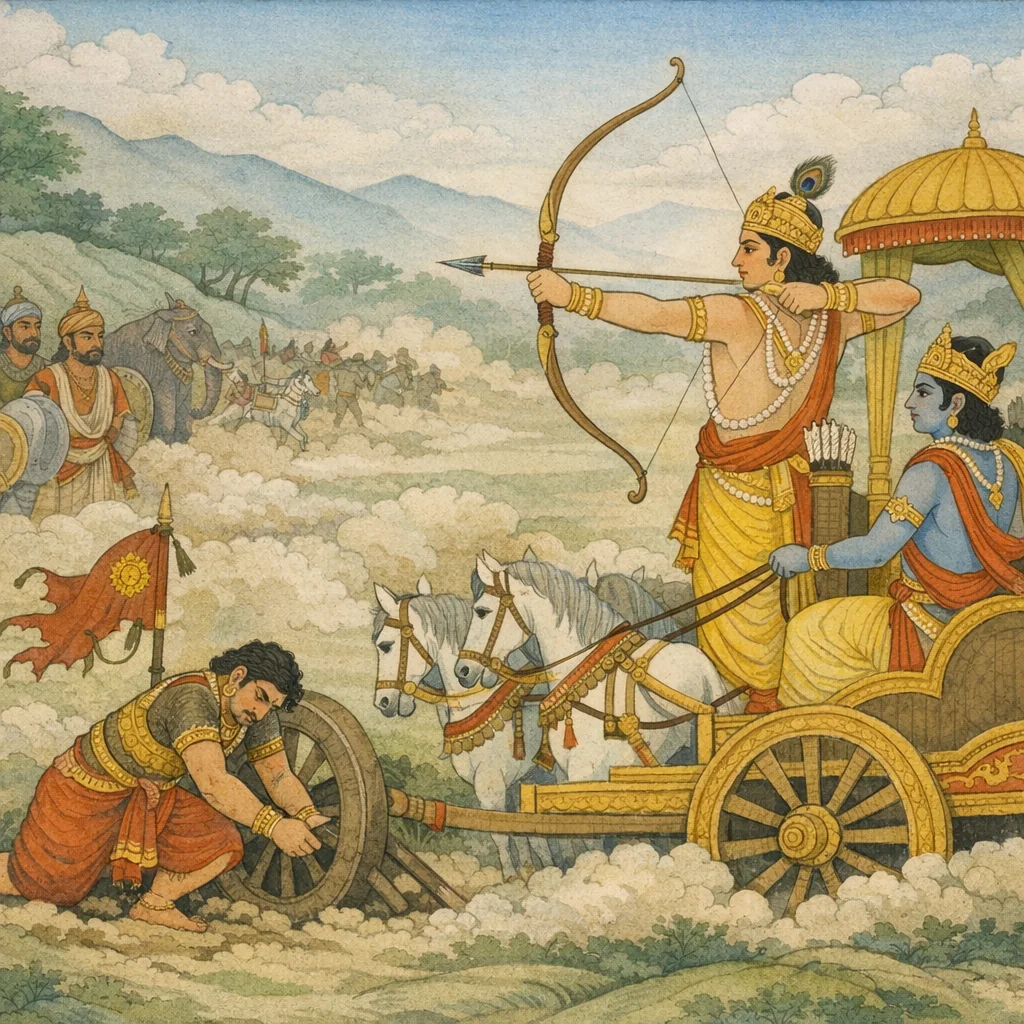
Chapter Arc: कर्ण रणभूमि में अर्जुन के सम्मुख अडिग खड़ा है, पर स्मृति की ज्वाला भड़क उठती है—सभा में द्रौपदी के अपमान और जुए की अधर्म-लीला का प्रश्न अब युद्ध के बीचोबीच उसके सामने आ खड़ा होता है। → अर्जुन के बाण-वर्ष और दिव्यास्त्रों की टक्कर के बीच कर्ण पर ‘धर्म’ का अभियोग कसता जाता है—“तब तुम्हारा धर्म कहाँ गया था?” सभा-अपमान, शकुनि का छल, दुर्योधन-दुःशासन का उन्माद—सबका प्रतिध्वनि-रूप अर्जुन के शब्दों/प्रहारों में उभरता है। कर्ण का रथ-ध्वज गिरता है, कुरु-सेना के हृदय डगमगाते हैं और रण में ‘हाहाकार’ उठता है। → निर्णायक क्षण में कर्ण के रथ का पहिया पृथ्वी में धँस जाता है; वह रथ से कूदकर उसे निकालने का यत्न करता है। उसी असहाय अंतराल में अर्जुन ब्रह्मास्त्र-समान तीव्र शरवृष्टि से उसे दबाता है और अंततः अंजलिक (अंजलिकास्त्र) से कर्ण का शिरच्छेद कर देता है—सूर्य-सम तेजस्वी मस्तक रक्त-मंडल-सा धरती पर गिरता है। → कर्ण का शरीर भी धराशायी हो जाता है; महान दानी, उदारकर्मी, पर अधर्म-संघ में बँधा हुआ राधेय अपने कर्मफल की पूर्णता को प्राप्त करता है। कुरु-पक्ष में शोक और स्तब्धता फैलती है, और पाण्डव-पक्ष में भी विजय का स्वाद करुणा से मिश्रित हो उठता है। → कर्ण-वध के बाद युद्ध की धुरी बदल जाती है—अब कुरु-सेना किसके नेतृत्व में टिकेगी, और दुर्योधन इस आघात का उत्तर किस प्रकार देगा?
Shlokas
Verse 1
इस प्रकार श्रीमह्याभारत कर्णपर्वमें कर्णके रथके पह्ियेका पृथ्वीमें फैसना--इस विषयसे सम्बन्ध रखनेवाला नब्बेवाँ अध्याय पूरा हुआ ॥/ ९० ॥। (दाक्षिणात्य अधिक पाठके २ श्लोक मिलाकर कुल ११८ श्लोक हैं।) वश ःःस बछ। अप ऋाल>ज | ः ! कर्णद्वारा पृथ्वीमें एकनवतितमो<ध्याय: भगवान् श्रीकृष्णका कर्णको चेतावनी देना और कर्णका वध संजय उवाच तमब्रवीद् वासुदेवो रथस्थो राधेय दिष्ट्या स्मरसीह धर्मम् प्रायेण नीचा व्यसनेषु मग्ना निन्दन्ति दैवं कुकृतं न तु स््वम्,संजय कहते हैं--राजन्! उस समय रथपर बैठे हुए भगवान् श्रीकृष्णने कर्णसे कहा --राधानन्दन! सौभाग्यकी बात है कि अब यहाँ तुम्हें धर्मकी याद आ रही है! प्राय: यह देखनेमें आता है कि नीच मनुष्य विपत्तिमें पड़नेपर दैवकी ही निन््दा करते हैं। अपने किये हुए कुकर्मोंकी नहीं
Sanjaya said: Then Vasudeva, seated upon the chariot, spoke to Radheya (Karna): “It is indeed fortunate that here and now you remember dharma. For it is commonly seen that base men, when sunk in calamity, blame fate alone—never their own misdeeds.”
Verse 2
यद् द्रौपदीमेकवस्त्रां सभाया- मानाययेस्त्वं च सुयोधनश्व । दुःशासन: शकुनि: सौबलश्न नते कर्ण प्रत्यभात्तत्र धर्म:,“कर्ण! जब तुमने तथा दुर्योधन, दुःशासन और सुबलपुत्र शकुनिने एक वस्त्र धारण करनेवाली रजस्वला द्रौपदीको सभामें बुलवाया था, उस समय तुम्हारे मनमें धर्मका विचार नहीं उठा था?
Sanjaya said: “O Karna, when you—together with Suyodhana (Duryodhana), Duhshasana, and Shakuni the son of Subala—had Draupadi, clad in a single garment, brought into the royal assembly, did the thought of dharma not arise in you at that moment?”
Verse 3
यदा सभायां राजानमनक्षज्ञं युधिष्ठिरम् । अजैषीच्छकुनिर्ज्ञानात् क्व ते धर्मस्तदा गत:,“जब कौरवसभामें जूएके खेलका ज्ञान न रखनेवाले राजा युधिष्ठिरको शकुनिने जान- बूझकर छलपूर्वक हराया था, उस समय तुम्हारा धर्म कहाँ चला गया था?
Sañjaya said: “When, in the royal assembly, Śakuni—fully aware of his deceit—defeated King Yudhiṣṭhira, who had no knowledge of the dice-game, where had your dharma gone at that time?”
Verse 4
वनवासे व्यतीते च कर्ण वर्षे त्रयोदशे । न प्रयच्छसि यद् राज्यं क्व ते धर्मस्तदा गत:,“कर्ण! वनवासका तेरहवाँ वर्ष बीत जानेपर भी जब तुमने पाण्डवोंका राज्य उन्हें वापस नहीं दिया था, उस समय तुम्हारा धर्म कहाँ चला गया था?
Sañjaya said: “O Karṇa, even after the period of exile had passed and the thirteenth year was completed, when you did not restore the kingdom to the Pāṇḍavas—where, then, had your dharma gone?”
Verse 5
यद् भीमसेन सर्पैश्न विषयुक्तैश्न भोजनै: । आचरत् त्वन्मते राजा क्व ते धर्मस्तदा गत:
Sañjaya said: “When, by your counsel, the king resorted to the use of snakes and poison-laced food against Bhīmasena—where had your dharma gone at that time?”
Verse 6
“जब राजा दुर्योधनने तुम्हारी ही सलाह लेकर भीमसेनको जहर मिलाया हुआ अन्न खिलाया और उन्हें सर्पोंसे डँसवाया, उस समय तुम्हारा धर्म कहाँ गया था? ।। यद् वारणावते पार्थान् सुप्ताज्जतुगृहे तदा । आदीपयस्त्वं राधेय कक््व ते धर्मस्तदा गत:,'राधानन्दन! उन दिनों वारणावतनगरमें लाक्षाभवनके भीतर सोये हुए कुन्तीकुमारोंको जब तुमने जलानेका प्रयत्न कराया था, उस समय तुम्हारा धर्म कहाँ गया था?
Sañjaya said: “When King Duryodhana, acting on your very counsel, fed Bhīmasena food laced with poison and had him bitten by serpents—where had your dharma gone then? And when, at Vāraṇāvata, you sought to burn the Pārthas as they slept inside the house of lac—O son of Rādhā—where was your dharma at that time?”
Verse 7
यदा रजस्वलां कृष्णां दःशासनवशे स्थिताम् | सभायां प्राहस: कर्ण क््व ते धर्मस्तदा गत:,“कर्ण! भरी सभामें दुःशासनके वशमें पड़ी हुई रजस्वला द्रौपदीको लक्ष्य करके जब तुमने उपहास किया था, तब तुम्हारा धर्म कहाँ चला गया था?
Sañjaya said: “Karna, when Draupadī—Kṛṣṇā—was in her menstrual state and lay helpless under Duḥśāsana’s control in the royal assembly, you mocked her. Where, then, had your dharma gone at that moment?”
Verse 8
यदनार्य: पुरा कृष्णां क्लिश्यमानामनागसम् | उपप्रेक्षसि राधेय कक््व ते धर्मस्तदा गत:,'राधानन्दन! पहले नीच कौरवोंद्वारा क्लेश पाती हुई निरपराध द्रौपदीको जब तुम निकटसे देख रहे थे, उस समय तुम्हारा धर्म कहाँ गया था?
Sañjaya said: “O ignoble one, O son of Rādhā—when, in former days, the blameless Kṛṣṇā (Draupadī) was being tormented, you stood by and watched at close quarters. Where, then, had your dharma gone at that time?”
Verse 9
विनष्टा: पाण्डवा: कृष्णे शाश्वतं नरकं॑ गता: । पतिमन्यं वृणीष्वेति वर्देस्त्वं गजगामिनीम्
Sañjaya said: “O Kṛṣṇā (Draupadī), the Pāṇḍavas have been destroyed and have gone to everlasting hell. Therefore, choose another husband—so says Vṛddha (Dhṛtarāṣṭra) to you, O lady of elephant-like gait.”
Verse 10
राज्यलुब्ध: पुन: कर्ण समाव्यथसि पाण्डवान् । यदा शकुनिम॒श्रित्य क्व ते धर्मस्तदा गत:
Sañjaya said: “Blinded by greed for sovereignty, O Karṇa, you again torment the Pāṇḍavas. When you took refuge in Śakuni’s counsel, where did your dharma go then?”
Verse 11
“कर्ण! फिर राज्यके लोभमें पड़कर तुमने शकुनिकी सलाहके अनुसार जब पाण्डवोंको दुबारा जूएके लिये बुलवाया, उस समय तुम्हारा धर्म कहाँ चला गया था? ।। यदाभिमन्युं बहवो युद्धे जघ्नुर्महारथा: । परिवार्य रणे बाल॑ क््व ते धर्मस्तदा गत:,“जब युद्धमें तुम बहुत-से महारथियोंने मिलकर बालक अभिमन्युको चारों ओरसे घेरकर मार डाला था, उस समय तुम्हारा धर्म कहाँ चला गया था?
Sanjaya said: “Karna! When, driven again by greed for the kingdom, you summoned the Pandavas back to the dice-game on Shakuni’s counsel—where had your sense of dharma gone then? And when, in battle, many great chariot-warriors surrounded the boy Abhimanyu and killed him—where was your dharma at that time?”
Verse 12
यद्येष धर्मस्तत्र न विद्यते हि कि सर्वथा तालुविशोषणेन । अद्येह धर्म्याणि विधत्स्व सूत तथापि जीवन्न विमोक्ष्यसे हि,“यदि उन अवसरोंपर यह धर्म नहीं था तो आज भी यहाँ सर्वथा धर्मकी दुहाई देकर तालु सुखानेसे क्या लाभ? सूत! अब यहाँ धर्मके कितने ही कार्य क्यों न कर डालो, तथापि जीते-जी तुम्हारा छुटकारा नहीं हो सकता
Sañjaya said: “If, on those earlier occasions, dharma was not present there at all, then what is the use now of invoking dharma in every way—only to dry up one’s palate with empty talk? O Sūta, even if you perform any number of ‘righteous’ acts here today, still you will not be released while you yet live.”
Verse 13
नलो हाक्षेर्निर्जित: पुष्करेण पुनर्यशो राज्यमवाप वीर्यात् । प्राप्तास्तथा पाण्डवा बाहुवीर्यात् सर्वे: समेता: परिवृत्तलोभा:,'पुष्करने राजा नलको जूएमें जीत लिया था; किंतु उन्होंने अपने ही पराक्रमसे पुनः अपने राज्य और यश दोनोंको प्राप्त कर लिया। इसी प्रकार लोभशूनन््य पाण्डव भी अपनी भुजाओंके बलसे सम्पूर्ण सगे-सम्बन्धियोंके साथ रहकर समरांगणमें बढ़े-चढ़े शत्रुओंका संहार करके फिर अपना राज्य प्राप्त करेंगे। निश्चय ही ये सोमकोंके साथ अपने राज्यपर अधिकार कर लेंगे। पुरुषसिंह पाण्डव सदैव अपने धर्मसे सुरक्षित हैं; अतः इनके द्वारा अवश्य धृतराष्ट्रके पुत्रोंका नाश हो जायगा”
Sañjaya said: “Nala was once defeated at dice by Puṣkara; yet by his own valor he regained both his kingdom and his fame. In the same way, the Pāṇḍavas—free from greed, united with all their kin, and relying on the strength of their arms—will overcome their exalted foes on the battlefield and win back their realm. Protected by their dharma, those lion-like men will surely bring about the destruction of Dhṛtarāṣṭra’s sons.”
Verse 14
निहत्य शत्रून् समरे प्रवृद्धान् ससोमका राज्यमवाप्तुयुस्ते । तथा गता धार्तराष्ट्रा विनाशं धर्माभिगुप्तै: सततं नृसिंहै:,'पुष्करने राजा नलको जूएमें जीत लिया था; किंतु उन्होंने अपने ही पराक्रमसे पुनः अपने राज्य और यश दोनोंको प्राप्त कर लिया। इसी प्रकार लोभशूनन््य पाण्डव भी अपनी भुजाओंके बलसे सम्पूर्ण सगे-सम्बन्धियोंके साथ रहकर समरांगणमें बढ़े-चढ़े शत्रुओंका संहार करके फिर अपना राज्य प्राप्त करेंगे। निश्चय ही ये सोमकोंके साथ अपने राज्यपर अधिकार कर लेंगे। पुरुषसिंह पाण्डव सदैव अपने धर्मसे सुरक्षित हैं; अतः इनके द्वारा अवश्य धृतराष्ट्रके पुत्रोंका नाश हो जायगा”
Sañjaya said: “Having slain the enemies who have grown formidable in battle, they—together with the Somakas—seek to regain the kingdom. Thus the sons of Dhṛtarāṣṭra are headed toward destruction, for those lion-like men, ever protected by dharma, will surely bring about their ruin.”
Verse 15
संजय उवाच एवमुक्तस्तदा कर्णो वासुदेवेन भारत । लज्जयावनतो भूत्वा नोत्तरं किज्चिदुक्तवान्,संजय कहते हैं--भारत! उस समय भगवान् श्रीकृष्णके ऐसा कहनेपर कर्णने लज्जासे अपना सिर झुका लिया, उससे कुछ भी उत्तर देते नहीं बना
Sañjaya said: O Bhārata, when Vāsudeva had spoken to him in this manner, Karṇa, overcome with shame, bowed his head and could not utter any reply.
Verse 16
क्रोधात् प्रस्फुरमाणौष्ठो धनुरुद्यम्य भारत । योधयामास वै पार्थ महावेगपराक्रम:,भरतनन्दन! वह महान् वेग और पराक्रमसे सम्पन्न हो क्रोधसे ओंठ फड़फड़ाता हुआ धनुष उठाकर अर्जुनके साथ युद्ध करने लगा
Sañjaya said: “O Bhārata, in anger—his lips quivering—he lifted his bow and engaged Arjuna in battle, a warrior endowed with tremendous speed and overpowering might.”
Verse 17
ततोअब्रवीद् वासुदेव: फाल्गुनं पुरुषर्षभम् । दिव्यास्त्रेणैव निर्भिद्य पातयस्व महाबल,तब वसुदेवनन्दन श्रीकृष्णने पुरुषप्रवर अर्जुनसे इस प्रकार कहा--“महाबली वीर! तुम कर्णको दिव्यास्त्रसे ही घायल करके मार गिराओ'
Then Vāsudeva (Śrī Kṛṣṇa) spoke to Phālguna, the bull among men (Arjuna): “O mighty warrior, strike him down only after piercing him with a divine weapon.”
Verse 18
एवमुक्तस्तु देवेन क्रोधमागात्तदार्जुन: । मन्युमभ्याविशद् घोरें स्मृत्वा तत्तु धनंजय:,भगवानके ऐसा कहनेपर अर्जुन उस समय कर्णके प्रति अत्यन्त कुपित हो उठे। उसकी पिछली करतूतोंको याद करके उनके मनमें भयानक रोष जाग उठा
Sañjaya said: Thus addressed by the divine one, Arjuna at that moment was seized by anger. Recalling those deeds, Dhanañjaya was overtaken by a fierce wrath—his resolve hardening in the moral urgency of battle.
Verse 19
तस्य क्रुद्धस्य सर्वेभ्य: स्रोतोभ्यस्तेजसो<र्चिष: । प्रादुरासंस्तदा राज॑स्तदद्भुतमिवाभवत्,कुपित होनेपर उनके सभी छिढठद्रोंसे--रोम-रोमसे आगकी चिनगारियाँ छूटने लगीं। राजन्! उस समय वह एक अद्भुत-सी बात हुई
Sañjaya said: When he became enraged, fiery sparks of blazing energy burst forth from all the channels of his body. O King, at that moment it seemed as though something wondrous and uncanny had occurred—an outward sign of the terrible force that anger can unleash in the midst of war.
Verse 20
तत् समीक्ष्य ततः कर्णों ब्रह्मास्त्रेण धनंजयम् | अभ्यवर्षत् पुनर्यत्नमकरोद् रथसर्जने,यह देख कर्णने अर्जुनपर ब्रह्मास्त्रका प्रयोग करके बाणोंकी झड़ी लगा दी और पुनः रथको उठानेका प्रयत्न किया
Sañjaya said: Seeing that situation, Karṇa again showered Dhanañjaya (Arjuna) with a rain of arrows by employing the Brahmāstra. Even while pressing the attack, he once more strove to free and raise his chariot—revealing the grim ethic of the battlefield, where a warrior must simultaneously uphold resolve under adversity and pursue victory through the most formidable means at hand.
Verse 21
ब्रह्मास्त्रेणैेव तं पार्थो ववर्ष शरवृष्टिभि: । तदस्त्रमस्त्रेणावार्य प्रजहार च पाण्डव:,तब पाएघुपुत्र अर्जुनने भी ब्रह्मास्त्रसे ही उसके अस्त्रको दबाकर उसके ऊपर बाणोंकी वर्षा प्रारम्भ कर दी और उसे अच्छी तरह घायल किया
Sañjaya said: Then Pārtha (Arjuna), employing the Brahmāstra itself, poured down a rain of arrows upon him. Countering that weapon with a weapon of his own, the Pāṇḍava struck him hard and wounded him severely—showing the grim logic of battle where force is met by force, even when the weapons invoked are of the highest order.
Verse 22
ततोअन्यदस्त्रं कौन्तेयो दयितं जातवेदस: । मुमोच कर्णमुद्दिश्य तत् प्रजज्वाल तेजसा,तदनन्तर कुन्तीकुमारने कर्णको लक्ष्य करके दूसरे दिव्यास्त्रका प्रयोग किया जो जातवेदा अग्निका प्रिय अस्त्र था। वह आग्नेयास्त्र अपने तेजसे प्रज्वलित हो उठा
Sañjaya said: Then the son of Kuntī released another weapon—dear to Jātavedas (Agni)—aimed at Karṇa. Kindled by its own blazing energy, that Agneya missile flared up, intensifying the destructive momentum of the duel and underscoring how divine force, once invoked in war, escalates beyond ordinary human restraint.
Verse 23
वारुणेन तत: कर्ण: शमयामास पावकम् | जीमूतैश्व दिश: सर्वाश्चक्रे तिमिरदुर्दिना:,परंतु कर्णने वारुणास्त्रका प्रयोग करके उस अग्निको बुझा दिया। साथ ही सम्पूर्ण दिशाओंमें मेघोंकी घटा घिर आयी और सब ओर अन्धकार छा गया
Sañjaya said: Then Karṇa, by deploying the Vāruṇa weapon, quenched the blazing fire. And with masses of rain-clouds he covered all the directions, turning the day into a dark, gloom-laden time—an act that displays the escalating use of divine missiles in war, where power is measured not only by valor but by mastery over astras and their consequences for all beings on the battlefield.
Verse 24
पाण्डवेयस्त्वसम्भ्रान्तो वायव्यास्त्रेण वीर्यवान् । अपोवाह तदाभ्राणि राधेयस्य प्रपश्यत:,पराक्रमी अर्जुन इससे विचलित नहीं हुए। उन्होंने राधापुत्र कर्णके देखते-देखते वायव्यास्त्रसे उन बादलोंको उड़ा दिया
Sañjaya said: The son of Pāṇḍu, unshaken and resolute, employed the Wind-weapon with heroic power and, before Rādheya’s very eyes, swept away those clouds. The moment underscores Arjuna’s steadiness of mind in battle—meeting hostile displays not with panic or cruelty, but with disciplined skill and clarity of purpose.
Verse 25
ततः शरं महाघोरं ज्वलन्तमिव पावकम् | आददे पाण्डुपुत्रस्य सूतपुत्रो जिघांसया,तब सूतपुत्रने पाण्डुकुमार अर्जुनका वध करनेके लिये जलती हुई आगके समान एक महाभयंकर बाण हाथमें लिया
Sañjaya said: Then the charioteer’s son (Karna), intent on killing the son of Pāṇḍu (Arjuna), took up a most dreadful arrow, blazing like fire—an act that marks the battle’s escalation into a deliberate, personal attempt at slaying a principal foe rather than merely winning ground.
Verse 26
योज्यमाने ततस्तस्मिन् बाणे धनुषि पूजिते । चचाल पृथिवी राजन् सशैलवनकानना,राजन! उस उत्तम बाणको धनुषपर चढ़ाते ही पर्वत, वन और काननोंसहित सारी पृथ्वी डगमगाने लगी
Sañjaya said: “O King, the moment that honored, excellent arrow was set upon the bow, the whole earth—together with its mountains, forests, and groves—began to tremble.” The verse heightens the moral and narrative gravity of the act: the arming of a divinely potent weapon is portrayed as an event that disturbs the very order of the world, signaling the catastrophic weight of the war’s escalation.
Verse 27
ववौ सशर्करो वायुर्दिशश्व॒ रजसा वृता: । हाहाकारश्न संजज्ञे सुराणां दिवि भारत,भारत! कंकड़ोंकी वर्षा करती हुई प्रचण्ड वायु चलने लगी। सम्पूर्ण दिशाओंमें धूल छा गयी और स्वर्गके देवताओंमें भी हाहाकार मच गया
Sañjaya said: A fierce wind began to blow, driving showers of gravel; all the directions were veiled in dust. Even among the gods in heaven, O Bhārata, a cry of alarm arose—an ominous sign that the moral order was being shaken by the violence of the war.
Verse 28
तमिषुं संधितं दृष्टवा सूतपुत्रेण मारिष । विषादं परमं जग्मुः पाण्डवा दीनचेतस:,माननीय नरेश! जब सूतपुत्रने उस बाणका संधान किया, उस समय उसे देखकर समस्त पाण्डव दीनचित्त हो बड़े भारी विषादमें डूब गये
Sañjaya said: “O revered one, when the Pāṇḍavas saw the charioteer’s son (Karna) set his arrow to the bow, their hearts sank; they were overwhelmed by the deepest despondency.”
Verse 29
स सायक: कर्णभुजप्रमुक्त: शक्राशनिप्रख्यरुचि: शिताग्र:
Sañjaya said: The arrow, released from Karṇa’s arm, flashed with a brilliance like Indra’s thunderbolt, its tip keen and razor-sharp.
Verse 30
भुजान्तरं प्राप्प धनंजयस्य विवेश वल्मीकमिवोरगोत्तम: । कर्णके हाथसे छूटा हुआ वह बाण इन्द्रके वज़के समान प्रकाशित हो रहा था। उसका अग्रभाग बहुत तेज था। वह अर्जुनकी छातीमें जा लगा और जैसे उत्तम सर्प बाँबीमें घुस जाता है, उसी प्रकार वह उनके वक्षःस्थलमें समा गया ।। स गाढविद्ध: समरे महात्मा विघूर्णमान: श्लथहस्तगाण्डिव:
Sañjaya said: Reaching the space between Dhanañjaya’s arms, that foremost arrow entered him, like an excellent serpent slipping into its anthill. Deeply pierced in the battle, the great-souled Arjuna reeled; his grip slackened, and the Gāṇḍīva bow hung loose in his hand.
Verse 31
तदन्तरं प्राप्य वृषो महारथो रथाड्रमुर्वीगतमुज्जिहीर्षु:
Sañjaya said: Having found that opening, Vṛṣa—the great chariot-warrior—eagerly sought to lift up the chariot that had sunk into the earth, striving to recover his mobility amid the press of battle.
Verse 32
ततः किरीटी प्रतिलभ्य संज्ञां जग्राह बाणं यमदण्डकल्पम्
Sañjaya said: Then Kirīṭī (Arjuna), regaining consciousness, seized an arrow like Yama’s rod of punishment.
Verse 33
ततोडर्जुन: प्राउ्जलिकं महात्मा ततोअब्रवीद् वासुदेवो5पि पार्थम् । छिन्ध्यस्य मूर्धानमरे: शरेण न यावदारोहति वै रथं वृष:
Then the great-souled Arjuna, with palms joined in reverence, stood attentive. Thereupon Vāsudeva spoke to Pārtha: “Sever the enemy’s head with an arrow—before that bull among warriors can mount his chariot.”
Verse 34
इसी समय होशमें आकर किरीटधारी महात्मा अर्जुनने यमदण्डके समान भयंकर आंजलिक नामक बाण हाथमें लिया। यह देख भगवान् श्रीकृष्णने भी अर्जुनसे कहा --'पार्थ! कर्ण जबतक रथपर नहीं चढ़ जाता तबतक ही अपने बाणके द्वारा इस शत्रुका मस्तक काट डालो” ।। तथैव सम्पूज्य स तद् वच: प्रभो- सतत: शरं प्रज्वलितं प्रगृहय । जघान कक्षाममलार्कवर्णा महारथे रथचक्रे विमग्ने,तब “बहुत अच्छा” कहकर अर्जुनने भगवान्की उस आज्ञाको सादर शिरोधार्य किया और उस प्रज्वलित बाणको हाथमें लेकर जिसका पहिया फँसा हुआ था, कर्णके उस विशाल रथपर फहराती हुई सूर्यके समान प्रकाशमान ध्वजापर प्रहार किया
Honoring the Lord’s command, Arjuna at once took up a blazing arrow and struck Karṇa’s great chariot while its wheel was sunk and stuck fast, smiting the banner that flew above it, radiant like the Sun.
Verse 35
त॑ हस्तिकक्षाप्रवरं च केतु सुवर्णमुक्तामणिवज्पृष्ठम् । ज्ञानप्रकर्षोत्तमशिल्पियुक्तै: कृतं सुरूप॑ तपनीयचित्रम्,हाथीकी साँकलके चिह्नसे युक्त उस श्रेष्ठ ध्वजाके पृष्ठभागमें सुवर्ण, मुक्ता, मणि और हीरे जड़े हुए थे। अत्यन्त ज्ञानवान् एवं उत्तम शिल्पियोंने मिलकर उस सुवर्णजटित सुन्दर ध्वजाका निर्माण किया था
Sañjaya said: That excellent banner, marked with the emblem of an elephant’s girth, had its surface inlaid with gold, pearls, gems, and diamonds. Crafted by master artisans of exceptional knowledge and skill, it was beautifully formed and richly ornamented with refined gold.
Verse 36
जयास्पदं तव सैन्यस्य नित्य- ममित्रवित्रासनमीड्यरूपम् | विख्यातमादित्यसमं सम लोके त्विषा सम॑ पावकभानुचन्द्रै:,वह विश्वविख्यात ध्वजा आपकी सेनाकी विजयका आधार स्तम्भ होकर सदा शत्रुओंको भयभीत करती रहती थी। उसका स्वरूप प्रशंसाके ही योग्य था। वह अपनी प्रभासे सूर्य, चन्द्रमा और अग्निकी समानता करती थी
Sañjaya said: “That banner of your army was ever a foundation of victory, continually striking terror into the foe. Its form was worthy of praise, and its radiance was renowned in the world—equal to the Sun, and comparable in brilliance to fire, the Sun, and the Moon.”
Verse 37
ततः क्षुरप्रेण सुसंशितेन सुवर्णपुड्खेन हुताग्निवर्चसा । श्रिया ज्वलन्तं ध्वजमुन्ममाथ महारथस्याधिरथे: किरीटी,किरीटधारी अर्जुनने सोनेके पंखवाले और आहुतिसे प्रज्वलित हुई अग्निके समान तेजस्वी उस तीखे क्षुरप्रसे महारथी कर्णके उस ध्वजको नष्ट कर दिया, जो अपनी प्रभासे निरन्तर देदीप्यमान होता रहता था
Sañjaya said: Then the diademed Arjuna, from his chariot, with a razor-edged arrow—well-honed, gold-feathered, and blazing like the sacrificial fire—shattered the banner of the great chariot-warrior Karṇa, a standard that had been continually radiant with splendor.
Verse 38
यशक्षु दर्पक्ष तथा प्रियाणि सर्वाणि कार्याणि च तेन केतुना । साकं कुरूणां हृदयानि चापतन् बभूव हाहेति च नि:स्वनो महान्,कटकर गिरते हुए उस ध्वजके साथ ही कौरवोंके यश, अभिमान, समस्त प्रिय कार्य तथा हृदयका भी पतन हो गया और चारों ओर महान् हाहाकार मच गया
Sañjaya said: With that fallen banner, the Kurus’ glory and pride collapsed as well; all their cherished hopes and undertakings were struck down, and even their hearts seemed to fall with it. Then a great cry of “Alas! Alas!” rose on every side—an ominous sound of collective despair in the midst of war.
Verse 39
दृष्टवा ध्वजं पातितमाशुकारिणा कुरुप्रवीरेण निकृत्तमाहवे । नाशंसिरे सूतपुत्रस्य सर्वे जयं तदा भारत ये त्वदीया:,भारत! शीघ्रकारी कौरव वीर अर्जुनके द्वारा युद्धस्थलमें उस ध्वजको काटकर गिराया हुआ देख उस समय आपके सभी सैनिकोंने सूतपुत्रकी विजयकी आशा त्याग दी
O Bharata! Seeing that the banner had been swiftly cut down in battle by Arjuna, the quick-acting hero of the Kurus, all your soldiers then abandoned hope of victory for the charioteer’s son (Karna).
Verse 40
अथ त्वरन् कर्णवधाय पार्थोी महेन्द्रवज्ञानलदण्डसंनि भम् । आदत्त चाथाञ्जलिकं निषज्ञात् सहस्ररश्मेरिव रश्मिमुत्तमम्,तदनन्तर कर्णके वधके लिये शीघ्रता करते हुए अर्जुनने अपने तरकससे एक अंजलिक नामक बाण निकाला, जो इन्द्रके वज्र और अग्निके दण्डके समान भयंकर तथा सूर्यकी एक उत्तम किरणके समान कान्तिमान् था
Sañjaya said: Then, hastening to bring about Karna’s death, Partha (Arjuna) drew from his quiver the arrow named Añjalika—terrible like Indra’s thunderbolt and like a staff of fire, and radiant like a supreme ray of the thousand-rayed Sun.
Verse 41
मर्मच्छिदं शोणितमांसदिग्ध॑ वैश्वानरार्कप्रतिमं महाहम् । नराश्वनागासुहरं >यरत्निं षड्वाजमगज्जोगतिमुग्रवेगम्
Sañjaya said: “It was a mighty, dreadful weapon—piercing vital points, smeared with blood and flesh, blazing like the fire-god and the sun. It was a destroyer of men, horses, and elephants; a precious prize of war, moving with irresistible, fierce speed, like a war-chariot drawn by six horses.”
Verse 42
सहसतनेत्राशनितुल्यवीर्य कालानल व्यात्तमिवातिघोरम् । पिनाकनारायणचक्रसंनिभं भयड़्करं प्राणभृतां विनाशनम्
Sañjaya said: “It was terrifying—its power like Indra’s thousand-eyed thunderbolt, like the gaping blaze of the fire of Time at the end of an age. Resembling Śiva’s Pināka and Nārāyaṇa’s discus, it struck dread into all living beings, a force made for the destruction of life.”
Verse 43
वह शत्रुके मर्मस्थलको छेदनेमें समर्थ, रक्त और मांससे लिप्त होनेवाला, अग्नि तथा सूर्यके तुल्य तेजस्वी, बहुमूल्य, मनुष्यों, घोड़ों और हाथियोंके प्राण लेनेवाला, मूठी बँधे हुए हाथसे तीन हाथ बड़ा, छः पंखोंसे युक्त, शीघ्रगामी, भयंकर वेगशाली, इन्द्रके वज्रके तुल्य पराक्रम प्रकट करनेवाला, मुँह बाये हुए कालाग्निके समान अत्यन्त भयानक, भगवान् शिवके पिनाक और नारायणके चक्र-सदृश भयदायक तथा प्राणियोंका विनाश करनेवाला था।। जग्राह पार्थ: स शरं प्रह्ृष्टो यो देवसड्घैरपि दुर्निवार्य: । सम्पूजितो य: सततं महात्मा देवासुरान् यो विजयेन्महेषु:,देवताओंके समुदाय भी जिनकी गतिको अनायास नहीं रोक सकते, जो सदा सबके द्वारा सम्मानित, महामनस्वी, विशाल बाण धारण करनेवाले और देवताओं तथा असुरोंपर भी विजय पानेमें समर्थ हैं उन कुन्तीकुमार अर्जुनने अत्यन्त प्रसन्न होकर उस बाणको हाथमें लिया
Sañjaya said: Rejoicing, Pārtha (Arjuna) took that arrow in his hand—an irresistible missile whose course even hosts of gods could scarcely check. Ever honored by all and great-souled, Arjuna, mighty in battle, was capable of overcoming even gods and asuras; thus he accepted the weapon that promised decisive force in the grim ethics of war, where victory is sought without abandoning disciplined purpose.
Verse 44
त॑ वै प्रमृष्ट प्रसमीक्ष्य युद्धे चचाल सर्व सचराचरं जगत् | स्वस्ति जगत् स्यादृषय: प्रचुक्रुशु- स्तमुद्यतं प्रेक्ष्य महाहवेषुम्,महायुद्धमें उस बाणको हाथमें लिया और ऊपर उठाया गया देख समस्त चराचर जगत् काँप उठा। ऋषिलोग चोर-जोरसे पुकार उठे कि 'जगत्का कल्याण हो!”
In that great battle, when that arrow was taken in hand and raised aloft, the entire world—moving and unmoving—trembled. The seers, seeing it poised in the mighty clash, cried out loudly: “May there be welfare for the world!”
Verse 45
ततस्तु तं वै शरमप्रमेयं गाण्डीवधन्वा धनुषि व्ययोजयत् । युकत्वा महास्त्रेण परेण चाप॑ं विकृष्य गाण्डीवमुवाच सत्वरम्,तत्पश्चात् गाण्डीवधारी अर्जुनने उस अप्रमेय शक्तिशाली बाणको धनुषपर रखा और उसे उत्तम एवं महान् दिव्यास्त्रसे अभिमन्त्रित करके तुरंत ही गाण्डीवको खींचते हुए कहा --
Sañjaya said: Then Arjuna, the wielder of the Gāṇḍīva, set upon his bow an immeasurably powerful arrow. Having empowered the bow with a supreme great weapon-mantra, he drew the Gāṇḍīva and spoke at once—signaling a decisive, duty-bound resolve amid the moral gravity of battle.
Verse 46
अयं महास्त्रप्रहितो महाशर: शरीरदह्वच्चासुहरश्न दुर्हद: । तपो<स्ति तप्तं गुरवश्च॒ तोषिता मया यदीरष्ट सुहृदां श्रुतं तथा
Sañjaya said: “This mighty arrow, launched by a great weapon, is a blazing torment to the body and a swift taker of life—hard to withstand. Yet I have practiced austerity and satisfied my teachers; and what I have heard from well-wishing friends has proved true.”
Verse 47
अनेन सत्येन निहन्त्वयं शर: सुसंहित: कर्णमरिं ममोर्जितम् । इत्यूचिवांस्तं प्रमुमोच बाणं धनंजय: कर्णवधाय घोरम्
Sañjaya said: “By the power of this truth, may this well-fixed arrow strike down Karṇa—my mighty foe.” Having spoken thus, Dhanañjaya (Arjuna) released that dreadful shaft for the slaying of Karṇa. The verse frames the killing not as mere rage but as an act sealed by a solemn assertion of satya, invoking the moral force of truth amid the brutal necessities of war.
Verse 48
“यह महान दिव्यास्त्रसे प्रेरित महाबाण शत्रुके शरीर, हृदय और प्राणोंका विनाश करनेवाला है। यदि मैंने तप किया हो, गुरुजनोंको सेवाद्वारा संतुष्ट रखा हो, यज्ञ किया हो और हितैषी मित्रोंकी बातें ध्यान देकर सुनी हो तो इस सत्यके प्रभावसे यह अच्छी तरह संधान किया हुआ बाण मेरे शक्तिशाली शत्रु कर्णका नाश कर डाले, ऐसा कहकर धनंजयने उस घोर बाणको कर्णके वधके लिये छोड़ दिया ।। कृत्यामथर्वाज्धिरसीमिवोग्रां दीप्तामसह्ां युधि मृत्युनापि । ब्रुवन् किरीटी तमतिप्रद्ृष्टो हायं शरो मे विजयावहो<स्तु
Sañjaya said: “This great shaft, driven by a divine weapon, can destroy an enemy’s body, heart, and life-breath. If I have practiced austerity, pleased elders and teachers through service, performed sacrifices, and listened with care to the counsel of well-wishing friends, then by the power of that truth may this well-aimed arrow destroy my mighty foe Karṇa.” So speaking, Arjuna the diademed warrior, with fierce resolve, released that dreadful missile for Karṇa’s death—like a blazing Atharvanic kṛtyā of destruction, unbearable in battle even to Death itself—and declared: “May this arrow of mine bring victory.”
Verse 49
जिधघांसुरकेन्दुसमप्र भाव: कर्ण मयास्तो नयतां यमाय । जैसे अथर्वांगिरस मन्त्रोंद्वार आभिचारिक प्रयोग करके उत्पन्न की हुई कृत्या उग्र, प्रज्वलित और युद्धमें मृत्युके लिये भी असहा होती है, उसी प्रकार वह बाण भी था। किरीटधारी अर्जुन अत्यन्त प्रसन्न होकर उस बाणको लक्ष्य करके बोले--'मेरा यह बाण मुझे विजय दिलानेवाला हो। इसका प्रभाव चन्द्रमा और सूर्यके समान है। मेरा छोड़ा हुआ यह घातक अस्त्र कर्णको यमलोक पहुँचा दे” ।। तेनेषुवर्येण किरीटमाली प्रह्ष्रूपो विजयावहेन
Sañjaya said: “May this arrow I have launched—radiant like the moon and the sun—carry Karṇa to Yama’s realm. As a fierce, blazing kṛtyā, raised by a sorcerous rite through Atharvan and Aṅgiras mantras, becomes unbearable in battle even to one facing death, so too was that arrow.” Then the diademed Arjuna, exultant, fixed his aim and declared: “May this arrow of mine grant me victory. Its power is like the moon and the sun. Let this deadly weapon I have released send Karṇa to Yama’s world.”
Verse 50
जिधघांसुरकेन्दुसमप्र भेण चक्रे विषक्तं रिपुमाततायी । किरीटथधारी अर्जुन अत्यन्त प्रसन्न हो अपने शत्रुको मारनेकी इच्छासे आततायी बन गये थे। उन्होंने चन्द्रमा और सूर्यके समान प्रकाशित होनेवाले उस विजयदायक श्रेष्ठ बाणसे अपने शत्रुको बींध डाला ।। तथा विमुक्तो बलिनार्कतेजा: प्रज्वालयामास दिशो नभश्षु । ततोडअर्जुनस्तस्य शिरो जहार वृत्रस्थ वज्ेण यथा महेन्द्र:,बलवान अर्जुनके द्वारा इस प्रकार छोड़ा हुआ वह सूर्यके तुल्य तेजस्वी बाण आकाश एवं दिशाओंको प्रकाशित करने लगा। जैसे इन्द्रने अपने वज्रसे वृत्रासुरका मस्तक काट लिया था, उसी प्रकार अर्जुनने उस बाणद्वारा कर्णका सिर धड़से अलग कर दिया
Sañjaya said: Wearing his diadem, Arjuna—intent on slaying the foe who stood before him as an aggressor—shot a supreme, victory-bringing arrow, radiant like the sun and the moon, and pierced the enemy. Released by the mighty Arjuna, that sun-bright missile blazed through the sky and lit up the quarters. Then Arjuna severed Karṇa’s head from his body with that arrow, just as great Indra once struck off Vṛtra’s head with the thunderbolt (vajra).
Verse 51
शरोत्तमेनाउ्जलिकेन राजं- स्तदा महास्त्रप्रतिमन्त्रितेन । पार्थोउपराह्ने शिर उच्चकर्त वैकर्तनस्याथ महेन्द्रसूनु:,राजन! महान् दिव्यास्त्रसे अभिमन्त्रित अंजलिक नामक उत्तम बाणके द्वारा इन्द्रपुत्र कुन्तीकुमार अर्जुनने अपराह्नकालमें वैकर्तन कर्णका सिर काट लिया
Sañjaya said: O King, then Pārtha—Indra’s son—using the excellent arrow called Añjalika, empowered by great weapon-mantras, severed the head of Vaikartana (Karṇa) in the afternoon.
Verse 52
तत् प्रापतच्चाउ्जलिकेन छित्न- मथास्य कायो निपपात पश्चात् तदुद्यतादित्यसमानतेजसं शरन्नभोमध्यगभास्करोपमम्
Sañjaya said: That head, severed by the stroke of Añjalika, fell down; and afterward his body too collapsed. His uplifted form, radiant like the rising sun—like the autumn sun standing in the middle of the sky—was brought down in an instant, showing how even the most splendid warrior-glory in war is subject to the swift, impartial law of death.
Verse 53
ततोअस्य देहं सततं सुखोचितं सुरूपमत्यर्थमुदारकर्मण:
Sañjaya said: “Then his body—ever accustomed to comfort—handsome in form, and belonging to one of exceedingly noble deeds—(came to be affected/overpowered),” indicating a poignant contrast between a life of refined ease and the harsh, morally weighty pressures of the battlefield.
Verse 54
शरैविभिन्नं व्यसु तत् सुवर्चस: पपात कर्णस्य शरीरमुच्छितम्
Sañjaya said: Pierced and torn by arrows, that radiant, lofty body of Karṇa fell lifeless—marking the grim culmination of valor in war and the tragic cost of pride, fate, and duty on the battlefield.
Verse 55
स्रवद्वरणं गैरिकतोयविस्रवं गिरेयथा वज्हतं महाशिर: । देहाच्च कर्णस्य निपातितस्य तेज: सूर्य खं वितत्याविवेश
Sañjaya said: “From Karṇa’s fallen body the blood streamed, red like ochre-water, as from a great mountain-peak struck by a thunderbolt. And the radiance that had belonged to him, spreading out, entered the sun-filled sky—signaling the close of a mighty life amid the terrible justice of war.”
Verse 56
तेजस्वी कर्णका वह ऊँचा शरीर बाणोंसे क्षत-विक्षत हो घावोंसे खूनकी धारा बहाता हुआ प्राणशून्य होकर गिर पड़ा, मानो वज़्के आघातसे भग्न हुआ किसी पर्वतका विशाल शिखर गेरुमिश्रित जलकी धारा बहा रहा हो। धरतीपर गिराये गये कर्णके शरीरसे एक तेज निकलकर आकाशमें फैल गया और ऊपर जाकर सूर्यमण्डलमें विलीन हो गया ।। तदद्धुतं सर्वमनुष्ययोधा: संदृष्टवन्तो निहते सम कर्णे । ततः शड्खान् पाण्डवा दश्मुरुच्चै- दृष्टवा कर्ण पातितं फाल्गुनेन,इस अद्भुत दृश्यको वहाँ खड़े हुए सब लोगोंने अपनी आँखों देखा था। कर्णके मारे जानेपर उसे अर्जुनद्वारा गिराया हुआ देख पाण्डवोंने उच्च स्वरसे शंख बजाया
Sañjaya said: The radiant Karṇa, his tall body torn and mangled by arrows, streams of blood pouring from his wounds, fell down lifeless—like a great mountain-peak shattered by a thunderbolt, sending forth a reddish, ochre-tinged torrent. From Karṇa’s body, cast upon the earth, a brilliance rose, spread across the sky, and, ascending, merged into the orb of the Sun. All the warriors there beheld this astonishing sight with their own eyes when Karṇa was slain. Then, seeing Karṇa felled by Phālguna (Arjuna), the Pāṇḍavas blew their conches loudly.
Verse 57
तथैव कृष्णश्न धनंजयश्न हृष्टो यमौ दश्मतुर्वारिजातौ । त॑ सोमकाः प्रेक्ष्य हतं शयानं सैन्यै: सार्थ सिंहनादान् प्रचक्रु:
Sañjaya said: In the same way, Kṛṣṇa and Dhanañjaya (Arjuna) rejoiced, and the twin sons of Mādrī (Nakula and Sahadeva) struck their lotus-like hands together in exultation. Seeing that foe lying slain, the Somakas, along with their troops, raised lion-roars—an outward surge of triumph amid the grim moral weight of battlefield death.
Verse 58
इसी प्रकार श्रीकृष्ण, अर्जुन तथा हर्षमें भरे हुए नकुल-सहदेवने भी शंख बजाये। सोमकगण कर्णको मरकर गिरा हुआ देख अपनी सेनाओंके साथ सिंहनाद करने लगे ।। तूर्याणि संजघ्नुरतीव हृष्टा वासांसि चैवादुधुवुर्भुजांश्व । संवर्धयन्तश्न नरेन्द्र योधा: पार्थ समाजग्मुरतीव हृष्टा:
Sanjaya said: In the same way, Śrī Kṛṣṇa and Arjuna, and Nakula and Sahadeva—filled with exhilaration—blew their conches. When the Somakas saw Karna slain and fallen to the ground, they raised a lion-like roar together with their troops. Overjoyed, they struck up the war-instruments, shook out their garments and waved their arms; and, swelling the tumult, the warriors came thronging toward Pārtha (Arjuna) in great delight—celebrating the fall of a formidable foe and the turning of the battle’s moral and strategic tide.
Verse 59
वे बड़े हर्षमें भरकर बाजे-बजाने और कपड़े तथा हाथ हिलाने लगे। नरेन्द्र! अत्यन्त हर्षमें भरे हुए पाण्डव योद्धा अर्जुनको बधाई देते हुए उनके पास आकर मिले ।। बलान्विताश्चापरे हाप्यनृत्य- न्नन्योन्यमाश्लिष्य नदन्त ऊचु: । दृष्टवा तु कर्ण भुवि वा विपन्नं कृत्तं रथात् सायकैरर्जुनस्थ
Sañjaya said: Filled with great joy, they began to sound instruments and wave garments and hands. O king, the Pāṇḍava warriors, overwhelmed with delight, came up to Arjuna to congratulate him. Others, strong and exultant, danced; embracing one another, laughing, they spoke—having seen Karṇa fallen upon the ground, cut down from his chariot by the arrows shot by Arjuna.
Verse 60
अर्जुनके बाणोंसे छिन्न-भिन्न एवं प्राणशून्य हुए कर्णको रथसे नीचे पृथ्वीपर गिरा देख दूसरे बलवान् सैनिक एक-दूसरेको गलेसे लगाकर नाचते और गर्जते हुए बातें करते थे ।। महानिलेनाद्रिमिवापविद्ध॑ं यज्ञावसानेडग्निमिव प्रशान्तम् | रराज कर्णस्य शिरो निकृत्त- मस्तं गतं भास्करस्येव बिम्बम्,कर्णका वह कटा हुआ मस्तक वायुके वेगसे टूटकर गिरे हुए पर्वतखण्डके समान, यज्ञके अन्तमें बुझी हुई अग्निके सदूश तथा अस्ताचलपर पहुँचे हुए सूर्यके बिम्बकी भाँति सुशोभित हो रहा था
Sanjaya said: When they saw Karna—shattered by Arjuna’s arrows, bereft of life—fall down from his chariot onto the earth, other mighty warriors embraced one another, dancing and roaring as they spoke among themselves. Karna’s severed head appeared striking—like a mountain-peak hurled down by a great gale, like a sacrificial fire that has gone out at the rite’s conclusion, and like the sun’s disc sinking into the western horizon. The verse frames the battlefield’s grim triumph: exultation on one side, and the stark extinguishing of a heroic life on the other.
Verse 61
शरैराचितसर्वाड्र: शोणितौघपरिप्लुत: । विभाति देह: कर्णस्य स्वरश्मिभिरिवांशुमान्,सभी अंगोंमें बाणोंसे व्याप्त और खूनसे लथपथ हुआ कर्णका शरीर अपनी किरणोंसे प्रकाशित होनेवाले अंशुमाली सूर्यके समान शोभा पा रहा था
Sañjaya said: Karṇa’s body—its every limb packed with arrows and drenched in streaming blood—still shone forth, like the sun (Āṃśumān) blazing with its own rays. Even amid the brutal ethics of battlefield duty, the verse frames Karṇa’s wounded endurance as a grim radiance: valor and steadfastness persisting under the full cost of war.
Verse 62
प्रताप्य सेनामामित्रीं दीप्तै: शरगभस्तिभि: । बलिनार्जुनकालेन नीतो><स्तं कर्णभास्कर:
Sañjaya said: Having scorched the hostile army with blazing rays in the form of arrow-showers, the sun-like Karṇa was driven to his setting by mighty Arjuna—Time itself in battle. The verse frames Karṇa’s fall not merely as a personal defeat, but as the moral and inevitable turning of the war’s tide under the force of destiny and righteous consequence.
Verse 63
अस्तं गच्छन् यथादित्य: प्रभामादाय गच्छति । तथा जीवितमादाय कर्णस्येषुर्जगाम स:,बाणमयी उद्दीप्त किरणोंसे शत्रुकी सेनाको तपाकर कर्णरूपी सूर्य बलवान् अर्जुनरूपी कालसे प्रेरित हो अस्ताचलको जा पहुँचा। जैसे अस्ताचलको जाता हुआ सूर्य अपनी प्रभाको लेकर चला जाता है, उसी प्रकार वह बाण कर्णके प्राण लेकर चला गया
Sañjaya said: “As the sun, when setting, seems to depart carrying away its radiance, so that arrow departed after taking away Karṇa’s life.”
Verse 64
अपराल्ने5पराह्नो5स्य सूतपुत्रस्य मारिष | छिन्नमञज्जलिकेनाजौ सोत्सेधमपतच्छिर:,माननीय नरेश! दान देते समय जो दूसरे दिनके लिये वादा नहीं करता था, उस सूतपुत्र कर्णका अंजलिक नामक बाणसे कटा हुआ देहसहित मस्तक अपराह्नकालमें धराशायी हो गया
Sañjaya said: O venerable one, in the late afternoon, the head of that son of a charioteer—Karna—was cut off in the battle by the Añjalika arrow and fell to the ground along with its severed portion.
Verse 65
उपर्युपरि सैन्यानामस्य शत्रोस्तदञ्जसा । शिर: कर्णस्य सोत्सेधमिषु: सो<5प्यहरद् द्रुतम्,उस बाणने सारी सेनाके ऊपर-ऊपर जाकर अर्जुनके शत्रुभूत कर्णके शरीरसहित मस्तकको वेगपूर्वक अनायास ही काट डाला था
Sañjaya said: That arrow, flying swiftly over and above the ranks of the army, effortlessly struck down Karṇa—Arjuna’s formidable foe—severing his head together with its crest in a single, rapid stroke.
Verse 66
कर्ण तु शूरं पतितं पृथिव्यां शराचितं शोणितदिग्धगात्रम् । दृष्टवा शयानं भुवि मद्रराज- श्छिन्नध्वजेनाथ ययौ रथेन,शूरवीर कर्णको बाणसे व्याप्त और खूनसे लथपथ होकर पृथ्वीपर पड़ा हुआ देख मद्रराज शल्य उस कटी हुई ध्वजावाले रथके द्वारा ही वहाँसे भाग खड़े हुए
Sañjaya said: Seeing the heroic Karna fallen upon the earth—his body pierced all over with arrows and smeared with blood—Shalya, the king of Madra, beheld him lying on the ground and then departed from there in his chariot, its banner cut down.
Verse 67
हते कर्णे कुरव: प्राद्रवन्त भयार्दिता गाढविद्धा श्ष संख्ये । अवेक्षमाणा मुहुरर्जुनस्य ध्वजं महान्तं वपुषा ज्वलन्तम्,कर्णके मारे जानेपर युद्धमें अत्यन्त घायल हुए कौरवसैनिक अर्जुनके प्रज्वलित होते हुए महान् ध्वजको बारंबार देखते हुए भयसे पीड़ित हो भागने लगे
When Karṇa was slain, the Kuru warriors—grievously wounded in the fight—fled in fear, again and again casting their eyes upon Arjuna’s great banner, blazing with radiant splendor.
Verse 68
सहसतनेत्रप्रतिमानकर्मण: सहस्रपत्रप्रतिमाननं शुभम् | सहसरश्मिर्दिनसंक्षये यथा तथापतत् कर्णशिरो वसुंधराम्,सहसनेत्रधारी इन्द्रके समान पराक्रमी कर्णका सहस्रदल कमलके समान वह सुन्दर मस्तक उसी प्रकार पृथ्वीपर गिर पड़ा, जैसे सायंकालमें सहस्र किरणोंवाले सूर्यका मण्डल अस्त हो जाता है
Sañjaya said: Karṇa’s noble head—whose deeds were like those of Indra of the thousand eyes, and whose face was like a thousand-petalled lotus—fell upon the earth, just as the thousand-rayed sun’s orb sinks at day’s end. The image marks the close of a mighty life in war: splendour and power are transient, and even the greatest warrior meets the same final law that governs all embodied beings.
Verse 91
(व्यूढोरस्कं कमलनयनं तप्तहेमावभासं कर्ण दृष्टवा भुवि निपतितं पार्थबाणाभितप्तम् | पांशुग्रस्तं मलिनमसकृत् पुत्रमन्वीक्षमाणो मन्द मन्दं वब्रजति सविता मन्दिरं मन्दरश्मि: ।।) जिसकी छाती चौड़ी और नेत्र कमलके समान सुन्दर थे तथा कान्ति तपाये हुए सुवर्णके समान जान पड़ती थी, वह कर्ण अर्जुनके बाणोंसे संतप्त हो धरतीपर पड़ा, धूलमें सना मलिन हो गया था। अपने उस पुत्रकी ओर बारंबार देखते हुए मन्द किरणों वाले सूर्यदेव धीरे-धीरे अपने मन्दिर (अस्ताचल)-की ओर जा रहे थे। इति श्रीमहाभारते कर्णपर्वणि कर्णवधे एकनवतितमो<5ध्याय:
Sañjaya said: Seeing Karṇa—broad-chested, lotus-eyed, radiant like heated gold—fallen upon the earth, scorched by Pārtha’s arrows, covered with dust and grown dull, the Sun, his father, kept looking again and again at his son; and with weakened rays he moved slowly toward his own abode, the western mountain.
Verse 96
उपप्रेक्षसि राधेय कक्व ते धर्मस्तदा गत: । '(याद है न, तुमने द्रौपदीसे कहा था) “कृष्णे! पाण्डव नष्ट हो गये, सदाके लिये नरकमें पड़ गये। अब तू किसी दूसरे पतिका वरण कर ले। जब तुम ऐसी बात कहते हुए गजगामिनी द्रौपदीको निकटसे आँखें फाड़-फाड़कर देख रहे थे, उस समय तुम्हारा धर्म कहाँ चला गया था?
Sañjaya said: “O son of Rādhā (Karna), you now scrutinize and judge—yet where had your dharma gone at that time? When you spoke to Draupadī with cruel certainty—‘Kṛṣṇā, the Pāṇḍavas are destroyed, fallen forever into hell; choose another husband’—and stared at her from close range with shameless insistence, where was your sense of righteousness then?”
Verse 306
चचाल बीभत्सुरमित्रमर्दन: क्षिते: प्रकम्पे च यथाचलोत्तम: । समरांगणमें उस बाणकी गहरी चोट खाकर महात्मा अर्जुनको चक्कर आ गया। गाण्डीव धनुषपर रखा हुआ उनका हाथ ढीला पड़ गया और वे शत्रुमर्दन अर्जुन भूकम्पके समय हिलते हुए श्रेष्ठ पर्वतके समान काँपने लगे
Sañjaya said: Struck by that arrow’s deep blow, Arjuna—terrible in battle and a crusher of foes—reeled and trembled. His hand, resting upon the Gāṇḍīva bow, slackened; and on the battlefield he shook like the loftiest mountain when the earth quakes.
Verse 316
रथादवप्लुत्य निगृहा दोर्भ्या शशाक दैवान्न महाबलो<5पि । इसी बीचमें मौका पाकर महारथी कर्णने धरतीमें धँसे हुए पहियेको निकालनेका विचार किया। वह रथसे कूद पड़ा और दोनों हाथोंसे पकड़कर उसे ऊपर उठानेकी कोशिश करने लगा; परंतु महाबलवान् होनेपर भी वह दैववश अपने प्रयासमें सफल न हो सका
Sañjaya said: Leaping down from his chariot, Karṇa seized it with both arms and strove to lift it up; yet, though possessed of great strength, he could not succeed—overruled by fate. In that critical interval, he sought to free the wheel that had sunk into the earth, but destiny thwarted his effort, tightening the moral tension of the battle where human prowess meets the unseen workings of daiva.
Verse 523
वराड़मुर्व्यामपतच्चमूमुखे दिवाकरो<स्तादिव रक्तमण्डल: | अंजलिकसे कटा हुआ कर्णका वह मस्तक पृथ्वीपर गिर पड़ा। उसके बाद उसका शरीर भी धराशायी हो गया। जैसे लाल मण्डलवाला सूर्य अस्ताचलसे नीचे गिरता है, उसी प्रकार उदित सूर्यके समान तेजस्वी तथा शरत्कालीन आकाशके मध्यभागमें तपनेवाले भास्करके समान दुःसह वह मस्तक सेनाके अग्रभागमें पृथ्वीपर जा गिरा
Sañjaya said: In the very forefront of the army, his head—severed by the arrow—fell upon the earth, like the red-orbed sun sinking beyond the western horizon. Thereafter his body too collapsed. The simile marks the moral weight of the moment: a radiant, formidable warrior is brought down by the inexorable law of battle, where prowess and destiny converge, and even the fiercest splendor must set.
Verse 536
परेण कृच्छेण शिर: समत्यजद् गृहं महर्धीव सुसड़मी श्वर: । तदनन्तर सदा सुख भोगनेके योग्य, उदारकर्मा कर्णके उस अत्यन्त सुन्दर शरीरको उसके मस्तकने बड़ी कठिनाईसे छोड़ा। ठीक उसी तरह, जैसे धनवान् पुरुष अपने समृद्धिशाली घरको और मन एवं इन्द्रियोंको वशमें रखनेवाला पुरुष सत्संगको बड़े कष्टसे छोड़ पाता है
Sañjaya said: With extreme difficulty, Karṇa’s head at last relinquished that exceedingly beautiful body—fit for constant enjoyments and marked by noble deeds. It was like a wealthy man parting, with pain, from his prosperous home, or like a self-controlled master of mind and senses who can leave the company of the good only with great struggle.