Adhyaya 78
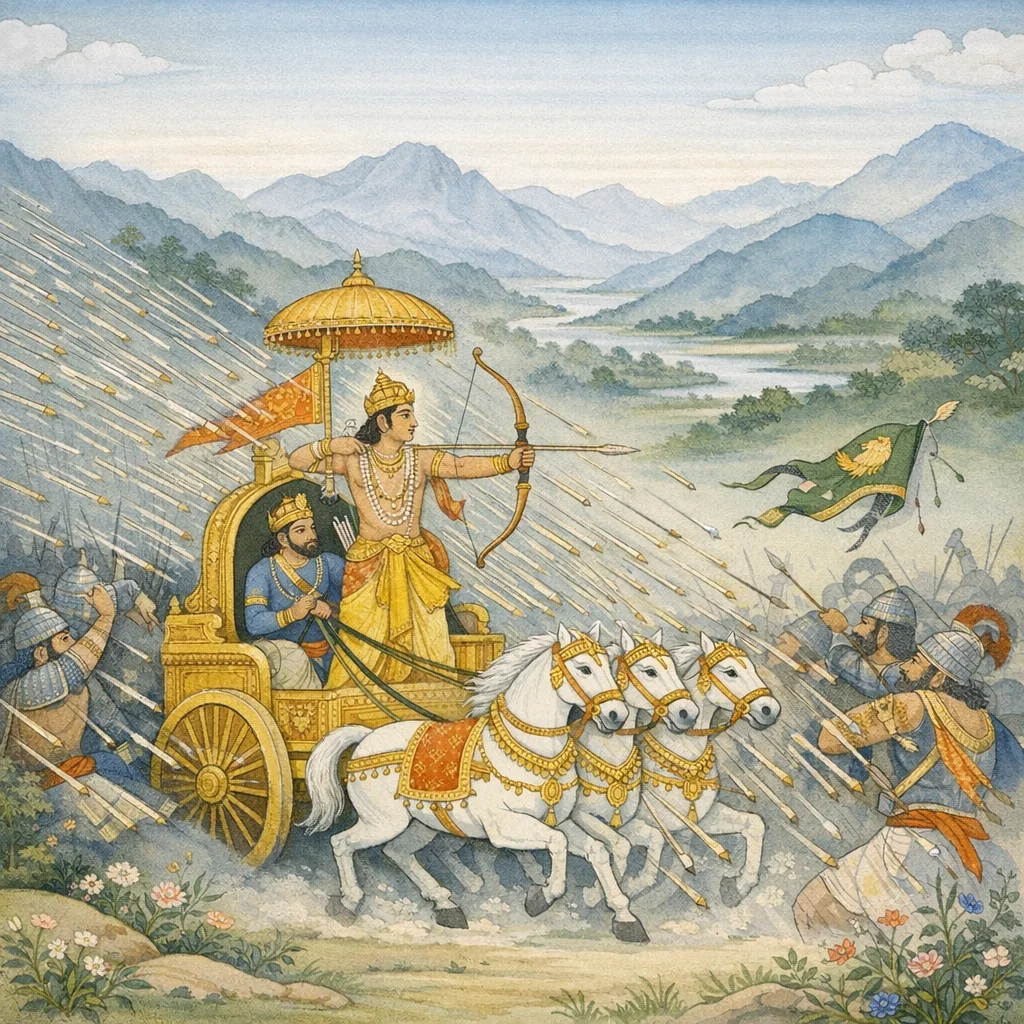
Chapter Arc: धृतराष्ट्र का प्रश्न—भीम द्वारा कौरव-सेना के भगाए जाने के बाद रणभूमि में किसका पराक्रम टिकेगा: कर्ण, कृप, कृतवर्मा, अश्वत्थामा, या दुर्योधन? → संजय वर्णन करता है कि राधेय कर्ण अकेले ही पाण्डव-पक्ष के महारथियों पर बाण-वर्षा करता है। शिखण्डी, धृष्टद्युम्न, द्रौपदी-पुत्र, नकुल-सहदेव आदि मिलकर उसे घायल करते हैं, पर कर्ण प्रत्युत्तर में उनके ध्वज-धनुष काटता, वक्षस्थल भेदता और पंक्तियों को छिन्न-भिन्न करता जाता है। → कर्ण का धनुष सुवर्णभूषित बाणों की छतरी बन जाता है—समस्त पाण्डव महारथी उसके शरों से ‘आच्छादित’ हो जाते हैं; वह मध्याह्न-सूर्य/कालान्तक के समान दहकता दिखाई देता है और शत्रु-पक्ष की पैदल-घोड़ा-रथ-हाथी वाहिनियों का संहार कर एकाकी अचल खड़ा रहता है। → पाण्डव-पक्ष की अग्रिम टुकड़ियाँ दबती हैं; अनेक सोमक-पांचाल दल कटते हैं, फिर भी पांचालों का अद्भुत धैर्य दिखता है—वे मारे जाते हुए भी रणमुख नहीं छोड़ते और कर्ण को छोड़कर पीछे नहीं हटते। → कर्ण की प्रचण्ड बढ़त के बीच प्रश्न खुला रह जाता है—क्या पाण्डवों का कोई महारथी इस ‘सूर्यवत्’ कर्ण को रोक पाएगा, या सेना का पलायन व्यापक हो जाएगा?
Shlokas
Verse 1
/ (दाक्षिणात्य अधिक पाठके २ श्लोक मिलाकर कुल ८१ श्लोक हैं।) ऑपन-माज बछ। अि--छऋा-ज अष्टसप्ततितमो< ध्याय: कर्णके द्वारा पाण्डव-सेनाका संहार और पलायन धृतराष्ट्र रवाच ततो भग्नेषु सैन्येषु भीमसेनेन संयुगे । दुर्योधनो<ब्रवीत् कि नु सौबलो वापि संजय
Sañjaya said: When the armies had been shattered in battle by Bhīmasena, Duryodhana spoke: “Tell me, Sañjaya—what has become of Śakuni, the son of Subala?”
Verse 2
कर्णो वा जयतां श्रेष्ठो योधा वा मामका युधि । कृपो वा कृतवर्मा वा द्रौणिर्द:शासनो5पि वा
Sañjaya said: “Whether it be Karṇa—the foremost among victors—or any of my warriors in battle—whether Kṛpa, or Kṛtavarmā, or Droṇa’s son (Aśvatthāmā), or even Duḥśāsana—(each stands ready for the fight).”
Verse 3
धृतराष्ट्रने पूछा--संजय! युद्धस्थलमें भीमसेनके द्वारा जब कौरवसेनाएँ भगा दी गयीं, तब दुर्योधन, शकुनि, विजयी वीरोंमें श्रेष्ठ कर्ण, मेरे अन्य योद्धा कृपाचार्य, कृतवर्मा, अश्व॒त्थामा अथवा दुःशासनने क्या कहा? ।। अत्यद्भुतमहं मन्ये पाण्डवेयस्य विक्रमम् | यदेक: समरे सर्वान् योधयामास मामकान्,मैं पाण्डुनन्दन भीमसेनका पराक्रम बड़ा अद्भुत मानता हूँ कि उन्होंने अकेले ही समरांगणमें मेरे समस्त योद्धाओंके साथ युद्ध किया
Dhṛtarāṣṭra said: “Sañjaya, when on the battlefield Bhīmasena routed the Kaurava forces, what did Duryodhana, Śakuni, Karṇa—the foremost among victorious heroes—and my other warriors, Kṛpācārya, Kṛtavarmā, Aśvatthāmā, or Duḥśāsana, say?” Sañjaya said: “I consider the prowess of Bhīma, the son of Pāṇḍu, truly astonishing—how, alone in battle, he engaged all of your warriors.”
Verse 4
यथाप्रतिज्ञं योधानां राधेय: कृतवानपि । कुरूणामथ सर्वेषां कर्ण: शत्रुनिष्दन:
Sañjaya said: True to his vow, Rādheya (Karna) carried out what he had pledged concerning the warriors; and then Karna—slayer of foes—set about the destruction of all the Kurus’ enemies, acting with the grim resolve of a champion bound by his word amid the moral weight of war.
Verse 5
तत् प्रभग्नं बल॑ दृष्टवा कौन्तेयेनामितीजसा
Sañjaya said: Seeing that army shattered—broken, routed, and driven into flight—by the son of Kuntī, whose energy was irresistible,
Verse 6
राधेयो वाप्याधिरथि: कर्ण: किमकरोद् युधि । पुत्रा वा मम दुर्धर्षा राजानो वा महारथा: । एतनमे सर्वमाचक्ष्व कुशलो हासि संजय
Sañjaya said: “Tell me—what did Rādheya, the son of Adhiratha, Karṇa, do in the battle? And what of my sons, so hard to assail, and the kings who are great chariot-warriors? Relate all of this to me in full, O Sañjaya—may you be well.”
Verse 7
अमिततेजस्वी कुन्तीपुत्र भीमसेनके द्वारा अपनी सेनाको भगायी गयी देख अधिरथ और राधाके पुत्र कर्णने युद्धमें कौन-सा पराक्रम किया? मेरे पुत्रों अथवा महारथी दुर्धर्ष नरेशोंने क्या किया? संजय! यह सब वृत्तान्त मुझे बताओ; क्योंकि तुम कथा कहनेमें कुशल हो ।। संजय उवाच अपराह्ने महाराज सूतपुत्र: प्रतापवान् । जघान सोमकान् सर्वान् भीमसेनस्य पश्यत:,संजय बोला--महाराज! प्रतापी सूतपुत्रने अपराह्न-कालमें भीमसेनके देखते-देखते समस्त सोमकोंका संहार कर डाला
Sañjaya said: O King, in the late afternoon the valiant son of the charioteer—Karna—slew all the Somakas, even as Bhimasena looked on.
Verse 8
भीमो>प्यतिबल सैन्यं धार्तराष्ट्र व्यपोथयत् । अथ कर्णॉडब्रवीच्छल्यं पज्चालान् प्रापपस्व माम्,इसी प्रकार भीमसेनने भी कौरवोंकी अत्यन्त बलवती सेनाको मार गिराया। तत्पश्चात् कर्णने शल्यसे कहा--“मुझे पांचालोंके पास ले चलो”
Sañjaya said: Bhima too struck down the exceedingly powerful army of the sons of Dhritarashtra. Then Karna said to Shalya, “Drive me toward the Panchalas.”
Verse 9
द्राव्यमाणं बल॑ दृष्टवा भीमसेनेन धीमता । यन्तारमब्रवीत् कर्ण: पञज्चालानेव मां वह,बुद्धिमान भीमसेनके द्वारा कौरव-सेनाको भगायी जाती देख रथी कर्णने सारथि शल्यसे कहा--“मुझे पांचालोंकी ओर ही ले चलो”
Sañjaya said: Seeing the Kaurava forces being driven into flight by the wise Bhīmasena, Karṇa spoke to his charioteer Śalya: “Drive me straight toward the Pāñcālas.”
Verse 10
मद्रराजस्तत: शल्य: श्वेतानश्वान् महाजवान् | प्राहिणोच्चेदिपडचालान् करूषांश्न महाबल:,तब महाबली मद्रराज शल्यने महान् वेगशाली श्वेत अश्वोंको चेदि, पांचाल और करूषोंकी ओर हाँक दिया
Sañjaya said: Then Śalya, the mighty king of Madra, urged on his swift white horses and drove his chariot forcefully toward the Cedis, the Pāñcālas, and the Karūṣas.
Verse 11
प्रविश्य च महत् सैन्यं शल्य: परबलार्दन: । न्ययच्छत् तुरगान् हृष्टो यत्र यत्रैच्छदग्रणी:,शत्रु-सेनाको पीड़ित करनेवाले शल्यने उस विशाल सेनामें प्रवेश करके जहाँ सेनापतिकी इच्छा हुई, वहीं बड़े हर्षके साथ घोड़ोंको रोक दिया
Sañjaya said: Shalya, the crusher of the enemy’s might, entered that vast host and—wherever the commander wished—checked and held back the horses with keen delight.
Verse 12
त॑ रथं मेघसंकाशं वैयाप्रपरिवारणम् । संदृश्य पाण्डुपञ्चालास्त्रस्ता ह्वासन् विशाम्पते,प्रजानाथ! व्याप्रचर्मसे आच्छादित और मेघगर्जनके समान गम्भीर घोष करनेवाले उस रथको देखकर पाण्डव तथा पांचाल-सैनिक त्रस्त हो उठे
Sañjaya said: O lord of the people, O ruler of men—when the Pāṇḍavas and the Pañcāla warriors beheld that chariot, dark and towering like a rain-cloud, screened about with protective coverings and hide-guards, and resounding with a deep roar like thunder, they were struck with fear and agitation.
Verse 13
ततो रथस्य निनद: प्रादुरासीन्महारणे । पर्जन्यसमनिर्घोष: पर्वतस्येव दीर्यत:
Then, in that great battle, the roar of the chariot suddenly arose—thunderous like a rain-cloud, and as if a mountain were splitting apart.
Verse 14
तदनन्तर उस महायुद्धमें फटते हुए पर्वत और गर्जते हुए मेघके समान उसके रथका गम्भीर घोष प्रकट हुआ ।। ततः शरशतैस्तीक्ष्णै: कर्ण आकर्णनि:सृतै: । जघान पाण्डवबलं शतशो5थ सहस्रश:,तत्पश्चात् कर्णने कानतक खींचकर छोड़े गये सैकड़ों तीखे बाणोंद्वारा पाण्डव-सेनाके सैकड़ों और हजारों वीरोंका संहार कर डाला
Sañjaya said: Thereafter, Karṇa—releasing razor-sharp arrows in hundreds, drawn back to the ear—struck down the Pāṇḍava host, cutting through their ranks in hundreds and even thousands.
Verse 15
त॑ तथा समरे कर्म कुर्वाणमपराजितम् | परिवत्र॒ुर्महेष्वासा: पाण्डवानां महारथा:,संग्राममें ऐसा पराक्रम प्रकट करनेवाले उस अपराजित वीरको महाधनुर्धर पाण्डव महारथियोंने चारों ओरसे घेर लिया
Sañjaya said: As he continued to perform his deeds in the thick of battle, remaining unconquered, the great chariot-warriors of the Pāṇḍavas—mighty archers—surrounded that invincible hero on all sides.
Verse 16
तं शिखण्डी च भीमश्न धष्टद्युम्नश्न पार्षत: । नकुल: सहदेवश्न द्रौपदेयाश्व॒ सात्यकि:
Sañjaya said: Around him gathered Śikhaṇḍin, Bhīma, and Dhṛṣṭadyumna the son of Pārṣata (Drupada); Nakula and Sahadeva as well; and the sons of Draupadī, along with Sātyaki.
Verse 17
सात्यकिस्तु तदा कर्ण विंशत्या निशितै: शरै:
Sañjaya said: Then Sātyaki struck Karṇa with twenty keen, razor-pointed arrows.
Verse 18
अताडयद् रणे शूरो जन्नुदेशे नरोत्तम: । उस समय शूरवीर नरश्रेष्ठ सात्यकिने रणभूमिमें बीस पैने बाणोंद्वारा कर्णके गलेकी हँसलीपर प्रहार किया ।। शिखण्डी पज्चविंशत्या धृष्टद्युम्नश्व॒ सप्तभि:,शिखण्डीने पचीस, धृष्टद्युम्नने सात, द्रौपदीके पुत्रोंने चौंसठ, सहदेवने सात और नकुलने सौ बाणोंद्वारा कर्णको युद्धमें घायल कर दिया
Sañjaya said: In the midst of battle, the heroic and foremost of men struck in the region of the neck. In this exchange, Sātyaki pierced Karṇa at the throat–collarbone junction with twenty sharp arrows; then Śikhaṇḍin with twenty-five, Dhṛṣṭadyumna with seven, the sons of Draupadī with sixty-four, Sahadeva with seven, and Nakula with a hundred arrows further wounded Karṇa in the fight.
Verse 19
द्रौपदेया श्चतुःषष्ट्या सहदेवश्व सप्तभि: । नकुलश्न शतेनाजौ कर्ण विव्याध सायकै:,शिखण्डीने पचीस, धृष्टद्युम्नने सात, द्रौपदीके पुत्रोंने चौंसठ, सहदेवने सात और नकुलने सौ बाणोंद्वारा कर्णको युद्धमें घायल कर दिया
Sañjaya said: Draupadī’s sons struck Karṇa in the thick of battle—sixty-four arrows from the Draupadeyas, seven from Sahadeva, and a hundred from Nakula—wounding him as the struggle intensified.
Verse 20
भीमसेनस्तु राधेयं नवत्या नतपर्वणाम् । विव्याध समरे क्रुद्धो जन्नुदेशे महाबल:,तदनन्तर महाबली भीमसेनने समरभूमिमें कुपित हो राधापुत्र कर्णके गलेकी हँसलीपर झुकी हुई गाँठवाले नब्बे बाणोंका प्रहार किया
Sañjaya said: Then mighty Bhīmasena, enraged amid the press of battle, struck Rādheya (Karna) with ninety arrows whose joints were bent, piercing him at the region of the neck.
Verse 21
अथ प्रहस्याधिरथिदव्याक्षिपद् धनुरुत्तमम् । मुमोच निशितान् बाणान् पीडयन् सुमहाबल:,तब अधिरथपुत्र बहाबली कर्णने हँसकर अपने उत्तम धनुषकी टंकार की और उन सबको पीड़ा देते हुए उनपर पैने बाणोंका प्रहार आरम्भ किया
Sañjaya said: Then Karṇa, the mighty son of Adhiratha, laughed aloud, twanged his excellent bow, and began to loose sharp arrows, pressing and tormenting his opponents.
Verse 22
तान् प्रत्यविध्यद् राधेय: पञ्चभि: पडठ्चभि: शरै: | सात्यकेस्तु धनुश्कछित्त्वा ध्वजं च भरतर्षभ
Sañjaya said: Rādheya (Karna) struck back at them with five and five arrows. Then, O bull among the Bharatas, he cut down Sātyaki’s bow and also his banner.
Verse 23
त॑ तथा नवभिर्बाणैराजघान स्तनान्तरे । भरतश्रेष्ठ! राधापुत्र कर्णने पाँच-पाँच बाणोंसे उन सबको घायल कर दिया। फिर सात्यकिका ध्वज और धनुष काटकर उनकी छातीमें नौ बाणोंका प्रहार किया ।। भीमसेनं ततः क्रुद्धो विव्याध त्रिंशता शरै:
Sañjaya said: O best of the Bharatas, Karṇa, the son of Rādhā, first wounded them all with volleys of five arrows each. Then, cutting down Sātyaki’s banner and bow, he struck him in the chest with nine arrows. Thereafter, in wrath, he pierced Bhīmasena with thirty shafts.
Verse 24
सारथिं च त्रिभिबाणैराजघान परंतप:,इतना ही नहीं, शत्रुओंको संताप देनेवाले कर्णने तीन बाणोंसे सहदेवके सारथिको भी मार डाला और पलक मारते-मारते द्रौपदीके पुत्रोंकी रथहीन कर दिया। भरतश्रेष्ठ) वह अद्भुत-सा कार्य हुआ
Sañjaya said: Karṇa, the scorcher of foes, struck down even Sahadeva’s charioteer with three arrows. In a ruthless surge of battle, he swiftly deprived Draupadī’s sons of their chariots—an astonishing feat of martial skill.
Verse 25
विरथान् द्रौपदेयांकश्ष चकार भरतर्षभ । अदक्ष्णो्निमिषमात्रेण तदद्भुतमिवाभवत्,इतना ही नहीं, शत्रुओंको संताप देनेवाले कर्णने तीन बाणोंसे सहदेवके सारथिको भी मार डाला और पलक मारते-मारते द्रौपदीके पुत्रोंकी रथहीन कर दिया। भरतश्रेष्ठ) वह अद्भुत-सा कार्य हुआ
O best of the Bhāratas! Karna, the tormentor of foes, made Draupadī’s sons bereft of their chariots. Nor was that all: with three arrows he slew Sahadeva’s charioteer as well; in the mere space of a blink, the deed seemed like a marvel.
Verse 26
विमुखीकृत्य तान् सर्वान् शरै: संनतपर्वभि: । पजञ्चालानहनच्छूरांश्षेदीनां च महारथान्,उसने झुकी हुई गाँठवाले बाणोंसे उन समस्त वीरोंको युद्धसे विमुख करके पांचालवीरों और चेदि-देशीय महारथियोंको मारना आरम्भ किया
Sañjaya said: With arrows whose joints were bent he turned all those warriors back from the fight; then he began to strike down the valiant Pañcāla fighters and the great chariot-warriors of the Cedi land.
Verse 27
ते वध्यमाना: समरे चेदिमत्स्या विशाम्पते । कर्णमेकमभिद्रुत्य शरसड्घै: समार्पयन्,प्रजानाथ! समरमें घायल होते हुए भी चेदि और मत्स्य देशके वीरोंने एकमात्र कर्णपर धावा करके उसे बाण-समूहोंसे ढक दिया
Sañjaya said: Though being struck down and wounded in the thick of battle, the warriors of Cedi and Matsya, O lord of men, rushed straight at Karna alone and showered him with dense volleys of arrows.
Verse 28
तान् जघान शितैर्बाणै: सूतपुत्रो महारथ: । ते वध्यमाना: समरे चेदिमत्स्या विशाम्पते
Sañjaya said: The great chariot-warrior, the Sūta’s son (Karna), struck them down with keen arrows. As the Cedis and the Matsyas were being cut down in the battle, O lord of men, they were overwhelmed in that combat.
Verse 29
एतदत्यद्धभुतं कर्म दृष्टवानस्मि भारत
Sañjaya said: “O Bhārata, I have witnessed this deed—exceedingly wondrous and beyond ordinary measure.”
Verse 30
यदेक: समरे शूरान् सूतपुत्र: प्रतापवान् । यतमानान् परं शक्त्या योधयानांश्व धन्विन:
Sañjaya said: “How was it that the valiant son of a charioteer, mighty in prowess, stood alone in battle against heroic warriors—against archers who strained to the utmost and pressed the fight with all their strength?”
Verse 31
पाण्डवेयान् महाराज शरैरवारितवान् रणे । भारत! महाराज! यह अद्धुत पराक्रम मैंने अपनी आँखों देखा था कि अकेले प्रतापी सूतपुत्रने समरांगणमें पूरी शक्ति लगाकर प्रयत्नपूर्वक युद्ध करनेवाले पाण्डव-पक्षीय धनुर्धर वीरोंको अपने बाणोंद्वारा रणभूमिमें आगे बढ़नेसे रोक दिया ।। तत्र भारत कर्णस्य लाघवेन महात्मन:
Sañjaya said: “O King, in that battle he checked the sons of Pāṇḍu with his arrows. There, O Bhārata, by the swift, deft skill of the great-souled Karṇa, the Pāṇḍava-side archers—though striving with full strength and intent on fighting—were held back on the field and prevented from advancing. Sañjaya spoke of it as a marvel he had witnessed with his own eyes.”
Verse 32
तुतुषुर्देवता: सर्वा: सिद्धाश्न सह चारणै: । भरतनन्दन! वहाँ महामनस्वी कर्णकी फुर्ती देखकर चारणोंसहित सिद्धणण और सम्पूर्ण देवता बहुत संतुष्ट हुए ।। अपूजयन महेष्वासा धार्तराष्ट्रा नरोत्तमम्
Sañjaya said: “All the gods, together with the Siddhas and the Cāraṇas, were delighted. O descendant of Bharata, seeing there the great-souled Karṇa’s swift prowess, the Siddha hosts along with the Cāraṇas and the entire company of gods became deeply satisfied. The mighty archers among the Dhārtarāṣṭras then honored that best of men.”
Verse 33
कर्ण रथवरश्रेष्ठं श्रेष्ठ सर्वधनुष्मताम् । धृतराष्ट्रके महाधनुर्धर पुत्र सम्पूर्ण धनुर्धरों तथा रथियोंमें श्रेष्ठ नरोत्तम कर्णकी भूरि-भूरि प्रशंसा करने लगे ।। तत: कर्णो महाराज ददाह रिपुवाहिनीम्
Sañjaya said: “They began to praise Karṇa again and again—Karṇa, the finest of chariot-warriors, the foremost among all archers—O Dhṛtarāṣṭra. That best of men, your son’s great bowman, complete in the arts of archery and preeminent among the rathīs, was extolled repeatedly. Then Karṇa, O king, set the enemy host ablaze with his arrows, scorching the opposing army.”
Verse 34
ते वध्यमाना: कर्णेन पाण्डवेयास्ततस्तत:
Sañjaya said: “As Karṇa struck them down, the sons of Pāṇḍu were being slain here and there across the field—scattered under the pressure of his assault, as the battle’s violence overwhelmed their ranks.”
Verse 35
तत्राक्रन्दो महानासीत् पञ्चालानां महारणे
Sañjaya said: There, amid the great battle, a mighty wail arose from the Pāñcālas—an outcry of anguish that marks the human cost of war and the shattering of a community in the clash of arms.
Verse 36
वध्यतां सायकैस्तीक्ष्णै: कर्णचापवरच्युतै: । कर्णके धनुषसे छूटे हुए तीखे बाणोंद्वारा मारे जानेवाले पांचालोंका महान् आर्तनाद उस महासमरमें गूँजने लगा ।। तेन शब्देन वित्रस्ता पाण्डवानां महाचमू:
Sañjaya said: “Struck down by sharp arrows released from Karṇa’s excellent bow, the Pāñcālas raised a great cry of anguish that echoed across that vast battlefield. Startled by that sound, the mighty host of the Pāṇḍavas was shaken.”
Verse 37
तत्राद्भधुतं पुनश्षक्रे राधेय: शत्रुकर्शन:
Sañjaya said: There, once again, Rādheya (Karna), the crusher of foes, performed a wondrous feat—displaying in battle the extraordinary prowess that shakes even the confidence of great warriors.
Verse 38
यथौघ: पर्वतश्रेष्ठमासाद्याभिप्रदीर्यते
Sañjaya said: “Just as a surging flood, on reaching the mightiest of mountains, is shattered and broken apart.”
Verse 39
कर्णोडपि समरे राजन् विधूमोडग्निरिव ज्वलन्
Sañjaya said: O King, even Karṇa, blazing in the battle like a smokeless fire, shone forth with fierce brilliance—an image of pure, unobstructed martial energy in the midst of war.
Verse 40
शिरांसि च महाराज कर्णाश्रैव सकुण्डलान्
Sañjaya said: “And, O great king, there lay heads as well—ears too—still bearing their earrings.”
Verse 41
बाहूंश्व वीरो वीराणां चिच्छेद लघु चेषुभि: । महाराज! वीर कर्णने बाणोंद्वारा पाण्डव-पक्षके वीरोंके मस्तक, कुण्डलसहित कान तथा भुजाएँ शीघ्रता-पूर्वक काट डालीं || ४० ई || हस्तिदन्तत्सरून् खड्गान् ध्वजान् शक्ती्हयान् गजान्
Sañjaya said: “O King, that hero Karna swiftly severed, with his light and rapid arrows, the arms of the warriors. By his shafts he quickly cut down the heads of the Pandava-side fighters, along with their ears and earrings, and hewed off their arms. He also struck down elephant-tusk standards, sword-bearers, banners, spears, horses, and elephants—turning the field into a scene of relentless slaughter.”
Verse 42
रथांश्व विविधान् राजन् पताका व्यजनानि च । अक्षं च युगयोक्त्राणि चक्राणि विविधानि च
Sañjaya said: “O King, there were chariots and horses of many kinds, along with banners and fly-whisks; and likewise axles, yokes and harness-ropes, and wheels of various sorts.”
Verse 43
शर्म वर्म प्रतिष्ठा च जीविताशा च संजय । शत्रुसूदन राधापुत्र कर्णने भी अपनी प्रतिज्ञाके अनुसार सारा कार्य किया। संजय! वही समस्त कौरव-योद्धाओंका कल्याणकारी आश्रय, कवचके समान संरक्षक, प्रतिष्ठा और जीवनकी आशा था,चिच्छेद बहुधा कर्णो योधव्रतमनुष्ठित: । राजन! योद्धाओंके व्रतका पालन करनेवाले कर्णने हाथीदाँतकी बनी हुई मूठवाले खड्गों, ध्वजों, शक्तियों, घोड़ों, हाथियों, नाना प्रकारके रथों, पताकाओं, व्यजनों, धुरों, जूओं, जोतों और भाँति-भाँतिके पहियोंके टुकड़े-टुकड़े कर डाले | ४१-४२ $ ।। तत्र भारत कर्णेन निहतैर्गजवाजिभि:
Sañjaya said: “O King, Karna—Radha’s son, the slayer of foes—fulfilled his vow and carried out every task as he had pledged. For the Kaurava warriors he was their beneficent refuge: like a coat of mail he protected them; he was their honor and their hope of life. Observing the warrior’s code, Karna cut down many things in the press of battle: swords with hilts of ivory, standards and banners, spears, horses and elephants, chariots of many kinds, flags and fans, as well as yokes, poles, harnessing-gear, and wheels—splintering them into pieces. There, O Bharata, the field became strewn with elephants and horses slain by Karna…”
Verse 44
विषमं च सम॑ चैव हतैरश्चपदातिभि:
Sañjaya said: “The ground became uneven and level alike—churned and strewn everywhere by the fallen horses and foot-soldiers.”
Verse 45
रथैश्व कुण्जरैश्वैव न प्राज़्ायत किड्चन । मरे हुए घोड़ों, पैदलों, रथों और हाथियोंसे पट जानेके कारण वहाँकी ऊँची-नीची भूमिका कुछ पता नहीं लगता था ।। नापि स्वे न परे योधा: प्राज्ञायन्त परस्परम्
Sañjaya said: With chariots and elephants strewn everywhere, nothing could be made out clearly. The ground’s rises and hollows were indistinguishable, covered over by the fallen—dead horses, foot-soldiers, chariots, and elephants. In that confusion, warriors could not recognize even their own side or the enemy; they failed to identify one another amid the slaughter.
Verse 46
राधेयचापनिर्मुक्ता: शरै: काउ्चनभूषणै:
Sañjaya said: Arrows, released from Rādheya’s bow and adorned with gleaming gold, sped forth—signaling the fierce, deliberate force of Karṇa’s assault amid the moral darkness of war, where skill and resolve are displayed even as destruction mounts.
Verse 47
संछादिता महाराज पाण्डवानां महारथा: । महाराज! राधापुत्रके धनुषसे छूटे हुए सुवर्णभूषित बाणोंद्वारा समस्त पाण्डव महारथी आच्छादित हो गये ।। ते पाण्डवेया: समरे राधेयेन पुन: पुन:
Sañjaya said: O King, the great chariot-warriors of the Pāṇḍavas were completely covered over. O Mahārāja, from the bow of Rādhā’s son (Karna) there flew golden-ornamented arrows, and by them all the Pāṇḍava champions were enveloped on every side. Thus, in the battle, those sons of Pāṇḍu were again and again assailed by Rādheya.
Verse 48
मृगसड्घान् यथा क्रुद्धः सिंहो द्रावयते वने
Sañjaya said: “Just as an enraged lion in the forest scatters herds of deer, so did the warrior drive the opposing ranks into flight.”
Verse 49
पज्चालानां रथश्रेष्ठान् द्रावयन् शात्रवांस्तथा । कर्णस्तु समरे योधांस्त्रासयन् सुमहायशा:
Sañjaya said: Driving the foremost chariot-warriors of the Pañcālas into flight, and likewise routing the enemy ranks, Karṇa—of exceedingly great renown—terrified the fighters on the battlefield.
Verse 50
कालयामास तत् सैन्यं यथा पशुगणान् वृकः । जैसे वनमें कुपित हुआ सिंह मृगसमूहोंको खदेड़ता रहता है, उसी प्रकार शत्रुपक्षके पांचाल महारथियोंको भगाता हुआ महायशस्वी कर्ण समरांगणमें समस्त योद्धाओंको त्रास देने लगा। जैसे भेड़िया पशुसमूहोंको भयभीत करके भगा देता है, उसी प्रकार कर्णने पाण्डवसेनाको खदेड़ दिया ।। दृष्टवा तु पाण्डवीं सेनां धार्तराष्ट्रा: पराड्मुखीम्
Sanjaya said: Like a wolf driving a herd of animals into panic, Karna harried that host. And as a furious lion in the forest keeps scattering bands of deer, the greatly renowned Karna, routing the Panchala great chariot-warriors on the enemy side, began to strike terror into all the fighters on the battlefield and drove the Pandava army into flight—an image of war’s ruthless momentum, where prowess overwhelms order and fear spreads faster than counsel.
Verse 51
तत्राजम्मुर्महेष्वासा रुवन्तो भैरवान् रवान् । पाण्डव-सेनाको युद्धसे विमुख हुई देख आपके महाधनुर्धर पुत्र भीषण गर्जना करते हुए वहाँ आ पहुँचे ।। दुर्योधनो हि राजेन्द्र मुदा परमया युत:
Sañjaya said: “There, mighty archers raised terrifying cries and roars. Seeing the Pāṇḍava army turn away from the battle, your great bowmen—your sons—arrived on the spot, thundering with dreadful shouts. And Duryodhana, O king, was filled with supreme joy.”
Verse 52
वादयामास संहृष्टो नानावाद्यानि सर्वश: । राजेन्द्र! उस समय दुर्योधनको बड़ी प्रसन्नता हुई। वह हर्षमें भरकर सब ओर नाना प्रकारके बाजे बजवाने लगा ।। पञ्चालापि महेष्वासा भग्नास्तत्र नरोत्तमा:
Sañjaya said: “O best of kings, at that time Duryodhana was filled with great delight. Overjoyed, he had many kinds of instruments sounded on every side. There too, the foremost warriors of the Pāñcālas—great archers—were broken and routed.” Ethically, the verse underscores how triumph in war can intoxicate the mind, prompting outward celebration even as it rests upon the suffering and collapse of opposing heroes.
Verse 53
न्यवर्तन्त यथा शोरं मृत्युं कृत्वा निवर्तनम् । उस समय वहाँ भगे हुए महाधनुर्धर नरश्रेष्ठ पांचाल मृत्युको ही युद्धसे लौटनेकी अवधि निश्चित करके पुनः सूतपुत्र कर्णसे जूझनेके लिये लौट आये ।। तान् निवृत्तान् रणे शूरान् राधेय: शत्रुतापन:
Sañjaya said: As brave men do, they turned back—having made death itself the only limit for withdrawing from battle. At that time, those foremost of men among the Pāñcālas, great archers who had earlier fled, fixed their return from the fight only upon death, and came back again to engage Sūtaputra Karṇa. Seeing those heroes return to the battlefield, Rādheya—scorcher of foes—(prepared to meet them).
Verse 54
अनेकशो महाराज बभज्ज पुरुषर्षभ: । महाराज! शत्रुओंको संताप देनेवाला पुरुषश्रेष्ठ राधापुत्र कर्ण उन लौटे हुए शूरवीरोंको रणभूमिमें बारंबार भगा देता था ।। ५३ $ ।। तत्र भारत कर्णेन पञज्चाला विंशती रथा:
Sañjaya said: “O King, that bull among men shattered them again and again. O great king, Karṇa—the son of Rādhā, the foremost of warriors and a torment to his enemies—repeatedly drove those returning heroes into flight on the battlefield. There, O descendant of Bharata, by Karṇa (were struck down) twenty chariots of the Pāñcālas.”
Verse 55
कृत्वा शून्यान् रथोपस्थान् वाजिपृष्ठांक्ष भारत
Sañjaya said: “O Bhārata (Dhṛtarāṣṭra), having made the chariot-platforms empty and the horses’ backs bare—so that no warrior could remain stationed or mounted—the fierce struggle still went on.”
Verse 56
आदित्य इव मध्यद्ठे दुर्निरीक्ष्य: परंतप:
Sañjaya said: “Like the sun when looked at directly, the scorcher of foes was impossible to gaze upon—his presence in battle blazing with such intensity that it overwhelmed the sight and spirit of those who faced him.”
Verse 57
एवमेतन्महाराज नरवाजिरथद्विपान्,तथा स सोमकान् हत्वा तस्थावेको महारथ: । महाराज! इस प्रकार शत्रुसूदन महाधनुर्धर कर्ण शत्रुपक्षके पैदल, घोड़े, रथ और हाथियोंका संहार करके अविचलभावसे खड़ा रहा। जैसे समस्त प्राणियोंका संहार करके काल खड़ा हो, उसी प्रकार महाबली महारथी कर्ण सोमकोंका विनाश करके युद्धभूमिमें अकेला ही डटा रहा
Sañjaya said: “So it was, O King. Having slain the enemy’s foot-soldiers, horsemen, charioteers, and elephants—and likewise having destroyed the Somakas—Karna, the great chariot-warrior, stood firm alone. Like Time (Kāla) standing after the destruction of all beings, the mighty Karna remained unshaken on the battlefield, having brought ruin upon the Somakas.”
Verse 58
हत्वा तस्थौ महेष्वास: कर्णोडरिगणसूदन: । यथा भूतगणान् हत्वा कालस्तिष्ठेन्महाबल:
Sañjaya said: Having slain them, the mighty archer—Karna, the destroyer of the host of warriors—stood firm. He was like all-powerful Time itself, which, after destroying multitudes of beings, remains unmoved.
Verse 59
तत्राद्भुतमपश्याम पज्चालानां पराक्रमम्
Sañjaya said: “There we witnessed something astonishing—the heroic prowess of the Pāñcālas.”
Verse 60
राजा दुःशासनश्वैव कृप: शारद्वतस्तथा
Sañjaya said: King Duhshasana too was there, and Kripa—the son of Sharadvat—likewise, named among those present as the grim roll of warriors in this war continued.
Verse 61
अश्वत्थामा कृतवर्मा शकुनिश्चव महाबल: । न्यहनन् पाण्डवीं सेनां शतशो5थ सहस्रश:
Sañjaya said: Aśvatthāmā, Kṛtavarmā, and Śakuni—men of great might—fell upon the Pāṇḍava host, cutting it down in hundreds and then in thousands.
Verse 62
राजा दुर्योधन, दुःशासन, शरद्वानके पुत्र कृपाचार्य, अश्वत्थामा, कृतवर्मा और महाबली शकुनिने भी पाण्डव-सेनाके सैकड़ों-हजारों वीरोंका संहार कर डाला ।। कर्णपुत्रौ तु राजेन्द्र भ्रातरौ सत्यविक्रमौ । निजघ्नाते बल क्रुद्धो पाण्डवानामितस्तत:,राजेन्द्र! कर्णके दो सत्यपराक्रमी पुत्र शेष रह गये थे। वे दोनों भाई क्रोधपूर्वक इधर- उधरसे पाण्डव सेनाका विनाश करते थे
Sañjaya said: O king, the two sons of Karṇa—brothers of unfailing valor—were still left. Enraged and fighting with sheer force, they struck down the Pāṇḍava host from place to place, spreading destruction across the battlefield.
Verse 63
तत्र युद्ध महच्चासीत् क्रूरं विशसनं महत् | तथैव पाण्डवा: शूरा धृष्टद्युम्मशिखण्डिनौ
Sañjaya said: There, a vast battle arose—cruel and fiercely destructive, a great slaughter. And on that very field stood the Pāṇḍava heroes as well, with Dhṛṣṭadyumna and Śikhaṇḍin.
Verse 64
द्रौपदेयाश्न संक्रुद्धा अभ्यघ्नंस्तावकं बलम् | इस प्रकार वहाँ महान् संहारकारी एवं क्रूरतापूर्ण भारी युद्ध हुआ। इसी तरह पाण्डववीर धृष्टद्युम्न, शिखण्डी और द्रौपदीके पाँचों पुत्र आदिने भी कुपित होकर आपकी सेनाका संहार किया || ६३ $ ।। एवमेष क्षयो वृत्त: पाण्डवानां ततस्तत: । तावकानामपि रणे भीम॑ प्राप्प महाबलम्
Sañjaya said: Enraged, the sons of Draupadī struck down your army. Thus, again and again, destruction fell upon the Pāṇḍavas’ forces; and in that battle your troops too met with terrible loss at the hands of mighty Bhīma.
Verse 77
इस प्रकार श्रीमह्याभारत कर्णपर्वमें शक़ुनिकी पराजयविषयक सतहत्तरवाँ अध्याय पूरा हुआ
Thus ends, in the Mahabharata’s Karna Parva, the seventy-seventh chapter concerning the defeat of Shakuni. The closing formula affirms the epic’s moral course: even amid the turmoil of war, deceit and manipulative counsel are finally brought to account as righteous consequence unfolds.
Verse 78
इस प्रकार कर्णको पाकर जहाँ-तहाँ पाण्डव-योद्धाओंका संहार हुआ और महाबली भीमसेनको पाकर रणभूमिमें आपके योद्धाओंका भी महान् विनाश हुआ ।। इति श्रीमहाभारते कर्णपर्वणि संकुलयुद्धेडष्टसप्ततितमो5ध्याय:
Sañjaya said: Thus, wherever Karṇa was encountered, the Pāṇḍava warriors were cut down in many places; and when the mighty Bhīmasena was met upon the battlefield, your warriors too suffered great destruction. Here ends the seventy-eighth chapter of the Mahabharata’s Karna Parva, in the section describing the confused, densely packed battle.
Verse 163
परिवव्र॒ुर्जिघांसन्तो राधेयं शरवृष्टिभि: । शिखण्डी, भीमसेन, ट्रुपदकुमार धृष्टद्युम्म, नकुल-सहदेव, द्रौपदीके पाँचों पुत्र और सात्यकिने अपने बाणोंकी वर्षद्वारा राधापुत्र कर्णको मार डालनेकी इच्छासे उसे सब ओरसे घेर लिया
Sañjaya said: Intent on killing Rādheya (Karṇa), they surrounded him on every side with a storm of arrows. Śikhaṇḍī, Bhīmasena, Drupada’s son Dhṛṣṭadyumna, Nakula and Sahadeva, the five sons of Draupadī, and Sātyaki—resolved to bring down Karṇa—closed in upon him from all directions.
Verse 233
सहदेवस्य भल्ल्लेन ध्वजं चिच्छेद मारिष | आर्य! तदनन्तर क्रोधमें भरे हुए कर्णने भीमसेनको तीस बाणोंसे घायल किया और एक भल्लसे सहदेवकी ध्वजा काट डाली
Sañjaya said: O noble one, with a sharp bhalla-arrow he cut down Sahadeva’s banner. Then, filled with wrath, Karṇa struck Bhīmasena with thirty arrows, and with a single bhalla he again severed Sahadeva’s standard.
Verse 286
प्राद्रवन्त रणे भीता: सिंहत्रस्ता मृगा इव । महारथी सूतपुत्रने पैने बाणोंसे उन सबको घायल कर दिया। प्रजानाथ! समरमें मारे जाते हुए चेदि और मत्स्य देशके वीर सिंहसे डरे हुए मृगोंके समान रणभूमिमें कर्णसे भयभीत हो भागने लगे
Sañjaya said: Terrified on the battlefield, they fled like deer frightened by a lion. The great chariot-warrior Karṇa, the son of a sūta (charioteer), wounded them all with sharp arrows. Thus the Cedi and Matsya heroes—being cut down in the press of war—lost heart and, fearing Karṇa, scattered from the field.
Verse 333
कक्षमिद्धो यथा वद्विनिदाघे ज्वलितो महान् । महाराज! जैसे ग्रीष्म-ऋतुमें अत्यन्त प्रज्वयलित हुई आग सूखे काठ एवं घास-फ़ूसको जला देती है, उसी प्रकार कर्ण शत्रुसेनाको दग्ध करने लगा
Sañjaya said: “O King, as a great fire kindled in the heat of summer blazes fiercely and consumes dry wood and heaps of grass, so Karṇa began to scorch and destroy the enemy’s army.”
Verse 343
प्राद्रवन्त रणे भीता: कर्ण दृष्टवा महारथम् | कर्णके द्वारा मारे जाते हुए पाण्डवसैनिक रणभूमिमें उस महारथी वीरको देखते ही भयभीत हो जहाँ-तहाँसे भागने लगे
Sañjaya said: Seeing Karṇa—the great chariot-warrior—on the battlefield, the Pāṇḍava soldiers, terrified as they were being cut down by him, fled in all directions from the field of combat.
Verse 366
कर्णमेकं रणे योध॑ मेनिरे तत्र शात्रवा: । उस घोर शब्दसे पाण्डवोंकी विशाल सेना भयभीत हो उठी। शत्रुओंके सभी सैनिक रणभूमिमें एकमात्र कर्णको ही सर्वश्रेष्ठ योद्धा मानने लगे
Sañjaya said: “There, in the thick of battle, the enemy host regarded Karṇa alone as the true warrior. At that dreadful roar, the vast army of the Pāṇḍavas was shaken with fear; and all the soldiers on the opposing side began to look upon Karṇa as the single, supreme champion of the field.”
Verse 373
यदेनं पाण्डवा: सर्वे न शेकुरभिवीक्षितुम् । शत्रुसूदन राधापुत्रने पुनः वहाँ अद्भुत पराक्रम प्रकट किया, जिससे समस्त पाण्डव- योद्धा उसकी ओर आँख उठाकर देख भी नहीं सके
Sañjaya said: “Such was the astonishing might displayed again by Rādhā’s son, the slayer of foes, that all the Pāṇḍavas could not even raise their eyes to look upon him.”
Verse 386
तथा तत् पाण्डवं सैन्यं कर्णमासाद्य दीर्यते । जैसे जलका महान् प्रवाह किसी ऊँचे पर्वतसे टकराकर कई धाराओंमें बँट जाता है, उसी प्रकार पाण्डवसेना कर्णके पास पहुँचकर तितर-बितर हो जाती थी
Sañjaya said: “Thus the Pāṇḍava host, on reaching Karṇa, was shattered and scattered. Like a mighty rush of water striking a lofty mountain and splitting into many streams, so too the Pāṇḍava army, coming up against Karṇa, broke apart in disarray.”
Verse 393
दहंस्तस्थौ महाबाहु: पाण्डवानां महाचमूम् । राजन! समरांगणमें धूमरहित अग्निके समान प्रज्वलित होनेवाला महाबाहु कर्ण भी पाण्डवोंकी विशाल सेनाको दग्ध करता हुआ स्थिरभावसे खड़ा रहा
Sanjaya said: O King, on the battlefield the mighty-armed warrior stood firm, scorching the vast host of the Pandavas. Like a smokeless fire blazing in full flame, the mighty-armed Karna too remained steady, burning down the Pandavas’ great army—an image of war’s relentless force, where steadfastness becomes both prowess and peril.
Verse 433
अगम्यरूपा पृथिवी मांसशोणितकर्दमा | भारत! वहाँ कर्णद्वारा मारे गये हाथियों और घोड़ोंकी लाशोंसे पृथ्वीपर चलना असम्भव हो गया। रक्त और मांसकी कीच जम गयी
Sanjaya said: O Bharata, the earth there became impassable—its very surface unrecognizable—turned into mire of flesh and blood. With heaps of elephant and horse carcasses slain by Karna, movement on the ground was no longer possible; a sludge of blood and flesh had formed.
Verse 453
घोरे शरान्धकारे तु कण्णस्त्रि च विजृम्भिते । कर्णका अस्त्र जब वेगपूर्वक बढ़ने लगा तो वहाँ बाणोंसे घोर अन्धकार छा गया। उसमें अपने और शत्रुपक्षके योद्धा परस्पर पहचाने नहीं जाते थे
Sanjaya said: When Karna’s weapon—his astric discharge—burst forth with full force, a dreadful darkness made of arrows spread over the battlefield. In that blinding storm, warriors on both sides could no longer clearly recognize their own men from the enemy.
Verse 473
अभज्यन्त महाराज यतमाना महारथा: । महाराज! समरभूमिमें प्रयत्नपूर्वक युद्ध करनेवाले पाण्डवपक्षके महारथी राधापूुत्र कर्णके द्वारा बारंबार भागनेको विवश कर दिये जाते थे
Sanjaya said: O King, those great chariot-warriors, though striving with all their might on the battlefield, were repeatedly forced to retreat, broken in spirit and formation by Radhā’s son Karna.
Verse 543
निहता: सायकै: क्रोधाच्चेदयक्ष पर: शता: । भरतनन्दन! कर्णने वहाँ बाणोंद्वारा बीस पांचाल रथियों और सौसे भी अधिक चेदिदेशीय योद्धाओंको क्रोधपूर्वक मार डाला
Sanjaya said: In wrath, Karna there struck down with his arrows twenty Panchala chariot-warriors and more than a hundred fighters from the land of Cedi. Thus, O joy of the Bharatas, anger drove the slaughter, and the battlefield’s tally rose through relentless missile-fire.
Verse 553
निर्मनुष्यान् गजस्कन्धान् पादातांश्वैव विद्रुतान् । भारत! उसने रथकी बैठकें सूनी कर दीं, घोड़ोंकी पीठें खाली कर दीं, हाथियोंके पीठों और कंधोंपर कोई मनुष्य नहीं रहने दिये और पैदलोंको भी मार भगाया
Sañjaya said: “O Bhārata, he made the chariot-seats empty, left the horses’ backs without riders, cleared the elephants’ shoulders of men, and drove the foot-soldiers into flight.”
Verse 563
कालान्तकवपु: शूर: सूतपुत्रो5भ्यराजत । इस प्रकार शत्रुओंको तपानेवाला कर्ण मध्याह्न-कालके सूर्यकी भाँति तप रहा था। उस समय उसकी ओर देखना कठिन हो गया था। शूरवीर सूतपुत्रका शरीर काल और अन्तकके समान सुशोभित हो रहा था
Sañjaya said: The heroic son of the charioteer—Karna—shone forth with a form like Time and Death themselves. Burning his foes, he blazed like the midday sun; it became hard to look toward him. In that moment, his very body appeared adorned with the dread majesty of Kāla and Antaka.
Verse 583
तथा स सोमकान् हत्वा तस्थावेको महारथ: । महाराज! इस प्रकार शत्रुसूदन महाधनुर्धर कर्ण शत्रुपक्षके पैदल, घोड़े, रथ और हाथियोंका संहार करके अविचलभावसे खड़ा रहा। जैसे समस्त प्राणियोंका संहार करके काल खड़ा हो, उसी प्रकार महाबली महारथी कर्ण सोमकोंका विनाश करके युद्धभूमिमें अकेला ही डटा रहा
Sañjaya said: Having thus slain the Somakas, Karṇa—the great chariot-warrior—stood his ground alone, unmoving. After cutting down the enemy’s foot-soldiers, horses, chariots, and elephants, he remained steady on the battlefield, like Time (Kāla) itself standing after bringing destruction upon all beings—so did the mighty Karṇa, having devastated the Somakas, hold the field single-handed.
Verse 596
वध्यमानापि यत् कर्ण नाजहू रणमूर्धनि । वहाँ हमलोगोंने पांचाल वीरोंका यह अद्भुत पराक्रम देखा कि वे मारे जानेपर भी युद्धके मुहानेपर कर्णको छोड़कर पीछे न हटे
Sañjaya said: “O Karṇa, even while being cut down, they did not abandon the battle-front.” Thus we witnessed the astonishing valor of the Pāñcāla heroes: though slain, they did not turn back from the very mouth of war, nor did they leave Karṇa.