Adhyaya 87
द्रोणपर्व — अध्याय ८७: सात्यकेरनुयात्रा (Sātyaki’s resolve and departure to reach Arjuna)
Upa-parva: Jayadratha-vadha-anuyāna (Sātyaki’s pursuit toward Arjuna)
Sañjaya reports that, upon hearing Yudhiṣṭhira’s words, Sātyaki evaluates both operational risk and reputational cost, resolving to go so that none may say he approached Arjuna out of fear. He affirms hierarchical obedience—placing Yudhiṣṭhira’s command as weighty as a guru’s—and declares his commitment to the welfare of Kṛṣṇa and the Pāṇḍavas. He outlines the tactical problem: Arjuna is positioned at a distance, intent on Jayadratha’s neutralization, while Jayadratha is protected within layered defenses under prominent chariot-warriors (including figures such as Droṇa’s son, Karṇa, and Kṛpa). Sātyaki then inventories the opposing screen: elephant formations (including named corps), elite chariot units, and contingents associated with Kirātas, Kāmbojas, Śakas, and others—presented as trained and cohesive. He orders full preparation of his chariot with diverse weapons and well-conditioned horses; ritual auspiciousness and gifting accompany his departure. Before moving, he instructs Bhīma to protect the king, and with confidence in success he advances into the opposing host to rejoin Arjuna per Yudhiṣṭhira’s directive.
Chapter Arc: धृतराष्ट्र, अभिमन्यु-वध के शोक से व्याकुल होकर संजय से पूछते हैं—“कल (श्वोभूते) मेरे पुत्रों ने क्या किया, और सव्यसाची अर्जुन के पराक्रम को जानते हुए भी वे कैसे निर्भय होकर उस पाप-कर्म में प्रवृत्त हुए?” → राजा का विलाप आरोप में बदलता है: वे पूछते हैं कि पुत्र-शोक से क्रुद्ध, मृत्यु-समान अर्जुन को रण में आते देख कौरवों ने क्या सोचा; साथ ही वे अपने पक्ष के वरिष्ठों—शल्य, सोमदत्त, भीष्म, द्रोण, विकर्ण, बाह्लीक, कृप आदि—की स्थिति और निर्णयों पर भी प्रश्न उठाते हैं, मानो दोष और उत्तरदायित्व की खोज कर रहे हों। → धृतराष्ट्र का अंतर्द्वंद्व चरम पर पहुँचता है: एक ओर वे स्वीकारते हैं कि कृष्ण-सारथ्य और कवचधारी अर्जुन के रहते ‘पराजय नहीं’—दूसरी ओर वे संजय से सुनी बातों (भीष्म-द्रोण जैसे पुरुषसिंहों के हत होने/असमर्थ होने की आशंका) को स्मरण कर दुर्योधन की हठ और अपने पुत्रों के ‘अत्यन्त अन्याय’ पर टूट पड़ते हैं। → अध्याय का निष्कर्ष किसी बाह्य समाधान में नहीं, धृतराष्ट्र के भीतर उतरते सत्य में है—कि अन्याय से उपजा यह शोक अब लौटाया नहीं जा सकता; वे संजय से युद्ध-वृत्तांत की माँग करते हुए भी अपने पुत्रों की नीति-हीनता को ही मूल कारण मानने लगते हैं। → संजय के विस्तृत वर्णन की ओर संकेत बना रहता है—अर्जुन के प्रतिशोध-प्रचंड आगमन के सामने कौरव-सेना की वास्तविक दशा और अगले संघर्ष का परिणाम क्या हुआ?
Shlokas
Verse 1
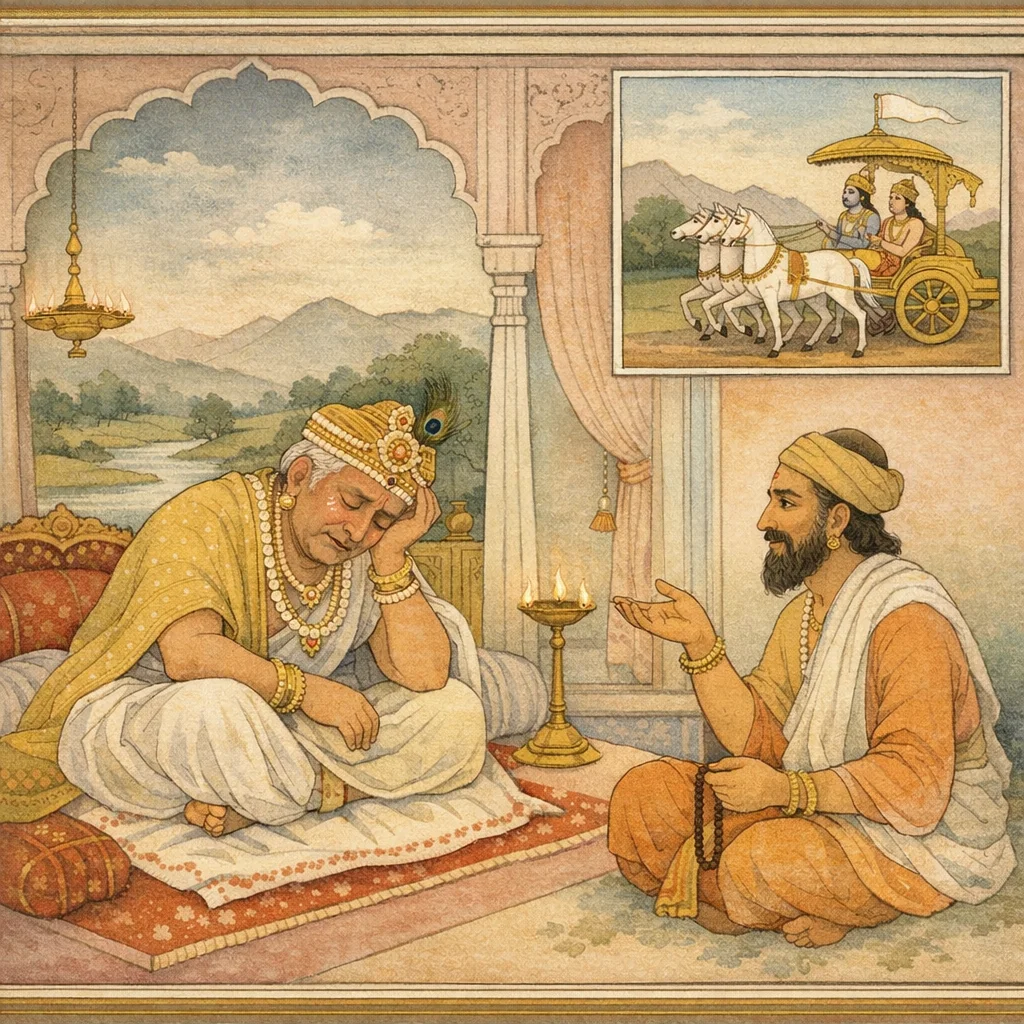
ऑपन--माजल छा जि (जयद्रथवधपर्व) पजञ्चाशीतितमो<ध्याय: धृतराष्ट्रका विलाप धृतराष्ट उवाच श्वोभूते किमकार्षुस्ते दुःखशोकसमन्विता: । अभिमन्यौ हते तत्र के वायुध्यन्त मामका:,धृतराष्ट्रने कहा--संजय! अभिमन्युके मारे जानेपर दुःख और शोकमें डूबे हुए पाण्डवोंने सबेरा होनेपर क्या किया? तथा मेरे पक्षवाले योद्धाओंमेंसे किन लोगोंने युद्ध किया?
Dhṛtarāṣṭra said: “Sañjaya, when morning came, what did they do—those Pāṇḍavas overwhelmed by grief and sorrow after Abhimanyu had been slain there? And among my own warriors, who then fought?”
Verse 2
जानन्तस्तस्य कर्माणि कुरव: सव्यसाचिन: । कथं तत् किल्बिषं कृत्वा निर्भया ब्रूहि मामका:,सव्यसाची अर्जुनके पराक्रमको जानते हुए भी मेरे पक्षवाले कौरव योद्धा उनका अपराध करके कैसे निर्भय रह सके? यह बताओ
Dhṛtarāṣṭra said: “Though the Kuru warriors know the deeds and prowess of Savyasācin (Arjuna), how did my own men, after committing that wrongdoing against him, remain fearless? Tell me.”
Verse 3
पुत्रशोकाभिसंतप्तं क्रुद्धं मृत्युमिवान्तकम् । आयान्तं पुरुषव्याप्रं कथं ददृशुराहवे,पुत्रशोकसे संतप्त हो क्रोधमें भरे हुए प्राणान्तकारी मृत्युके समान आते हुए पुरुषसिंह अर्जुनकी ओर मेरे पुत्र युद्धमें कैसे देख सके?
Dhṛtarāṣṭra said: “How, on the battlefield, did my sons manage to behold that tiger among men—Arjuna—who, scorched by grief for his son and inflamed with wrath, was advancing like Death itself, the very Ender of life?”
Verse 4
कपिराजध्वजं संख्ये विधुन्वानं महद् धनु: । दृष्टवा पुत्रपरिद्यूनं किमकुर्वत मामका:,जिनकी ध्वजामें कपिराज हनुमान् विराजमान हैं, उन पुत्रवियोगसे व्यथित हुए अर्जुनको युद्धस्थलमें अपने विशाल धनुषकी टंकार करते देख मेरे पुत्रोंने क्या किया?
Dhṛtarāṣṭra said: “Seeing in the thick of battle Arjuna—grief-stricken by the loss of his son—shaking his great bow and making it resound, and bearing the banner marked by the lord of monkeys (Hanumān), what did my sons do then?”
Verse 5
कि नु संजय संग्रामे वृत्तं दुर्योधन प्रति । परिदेवो महानद्य श्रुतो मे नाभिनन्दनम्,संजय! संग्रामभूमिमें दुर्योधनपर क्या बीता है? इन दिनों मैंने महान् विलापकी ध्वनि सुनी है। आमोद-प्रमोदके शब्द मेरे कानोंमें नहीं पड़े हैं
Dhṛtarāṣṭra said: “Tell me, Sañjaya—what has happened in this battle with regard to Duryodhana? Today I have heard a great sound of lamentation; no words of joy or celebration have reached my ears.”
Verse 6
बभूवुर्ये मनोग्राह्या: शब्दा: श्रुतिसुखावहा: । न श्रूयन्तेड्द्य सर्वे ते सैन्धवस्य निवेशने,पहले सिंधुराजके शिविरमें जो मनको प्रिय लगनेवाले और कानोंको सुख देनेवाले शब्द होते रहते थे, वे सब अब नहीं सुनायी पड़ते हैं
Dhṛtarāṣṭra said: “Those words that once were pleasing to the mind and delightful to the ear—heard continually in the camp of the king of Sindhu—are today no longer heard there at all.”
Verse 7
स्तुवतां नाद्य श्रूयन्ते पुत्राणां शिबिरे मम । सूतमागधसंघानां नर्तकानां च सर्वश:,मेरे पुत्रोंके शिविरमें अब स्तुति करनेवाले सूतों, मागधों एवं नर्तकोंके शब्द सर्वथा नहीं सुनायी पड़ते हैं
Dhṛtarāṣṭra said: “Today, in the camp of my sons, the sounds are no longer heard at all—those of the bards and panegyrists (sūtas and māgadhas) who used to sing praises, nor of the dancers. The very signs of confidence and celebration have fallen silent.”
Verse 8
शब्देन नादिताभी क्षणम भवद् _यत्र मे श्रुति: । दीनानामद्य तं शब्दं न शुणोमि समीरितम्
Dhṛtarāṣṭra said: “There was a moment when my hearing was filled and shaken by that sound. But today I do not hear that cry of the distressed being raised.”
Verse 9
जहाँ मेरे कान निरन्तर स्वजनोंके आनन्द-कोलाहलसे गूँजते रहते थे, वहीं आज मैं अपने दीन-दु:खी पुत्रोंके द्वारा उच्चारित वह हर्षसूचक शब्द नहीं सुन रहा हूँ ।। निवेशने सत्यधृते: सोमदत्तस्य संजय । आसीनोऊहं पुरा तात शब्दमश्रौषमुत्तमम्,तात संजय! पहले मैं यथार्थ धैर्यशाली सोमदत्तके भवनमें बैठा हुआ उत्तम शब्द सुना करता था
Dhṛtarāṣṭra said: “In the place where my ears used to ring without cease with the joyful clamour of my own people, today I do not hear that cry of exultation uttered by my sons, now wretched and afflicted. O Sañjaya, formerly, seated in the residence of Somadatta—firm in truth and steadfast in resolve—I would hear that excellent, auspicious sound; but now it is absent, and the silence itself proclaims their downfall.”
Verse 10
तदद्य पुण्यहीनो5हमार्तस्वरनिनादितम् । निवेशनं गतोत्साहं पुत्राणां मम लक्षये
Today I feel bereft of merit; I perceive that the dwelling of my sons resounds with the cries of the distressed, and that their spirit and confidence have ebbed away. The sound itself tells me that suffering has entered our house, and that the consequences of our chosen course in war are now ripening.
Verse 11
परंतु आज पुण्यहीन मैं अपने पुत्रोंके घरको उत्साहशून्य एवं आर्तनादसे गूँजता हुआ देख रहा हूँ ।। विविंशतेर्दुर्मुखस्य चित्रसेनविकर्णयो: । अन््येषां च सुतानां मे न तथा श्रूयते ध्वनि:,विविंशति, दुर्मुख, चित्रसेन, विकर्ण तथा मेरे अन्य पुत्रोंके घरोंमें अब पूर्ववत् आनन्दित ध्वनि नहीं सुनी जाती है
Dhṛtarāṣṭra said: “But today, bereft of merit, I see the houses of my sons drained of spirit and echoing with cries of distress. In the dwellings of Viviṃśati, Durmukha, Citraseṇa, Vikarṇa, and my other sons, the former sounds of joy are no longer heard.”
Verse 12
ब्राह्म॒णा: क्षत्रिया वैश्या यं शिष्या: पर्युपासते । द्रोणपुत्रं महेष्वासं पुत्राणां मे परायणम्,सूत संजय! मेरे पुत्रोंके परम आश्रय जिस महाथनुर्थर द्रोणपुत्र अश्वत्थामाकी ब्राह्मण, क्षत्रिय और वैश्य सभी जातियोंके शिष्य उपासना (निकट रहकर सेवा) करते रहे हैं, जो वितण्डावाद, भाषण, पारस्परिक बातचीत, द्रुतस्वरमें बजाये हुए वाद्योंके शब्दों तथा भाँति- भाँतिके अभीष्ट गीतोंसे दिन-रात मन बहलाया करता था, जिसके पास बहुत-से कौरव, पाण्डव और सात्वतवंशी वीर बैठा करते थे, उस अश्वत्थामाके घरमें आज पहलेके समान हर्षसूचक शब्द नहीं हो रहा है
Dhṛtarāṣṭra said: “O Sūta Sañjaya, that great archer, Droṇa’s son—Aśvatthāmā—who is the supreme refuge of my sons, whom disciples from among brāhmaṇas, kṣatriyas, and vaiśyas attend upon with devoted service—(tell me of him).”
Verse 13
वितण्डालापसंलापैद्रूतवादित्रवादितै: । गीतैश्न विविधैरिष्टे रमते यो दिवानिशम्,सूत संजय! मेरे पुत्रोंके परम आश्रय जिस महाथनुर्थर द्रोणपुत्र अश्वत्थामाकी ब्राह्मण, क्षत्रिय और वैश्य सभी जातियोंके शिष्य उपासना (निकट रहकर सेवा) करते रहे हैं, जो वितण्डावाद, भाषण, पारस्परिक बातचीत, द्रुतस्वरमें बजाये हुए वाद्योंके शब्दों तथा भाँति- भाँतिके अभीष्ट गीतोंसे दिन-रात मन बहलाया करता था, जिसके पास बहुत-से कौरव, पाण्डव और सात्वतवंशी वीर बैठा करते थे, उस अश्वत्थामाके घरमें आज पहलेके समान हर्षसूचक शब्द नहीं हो रहा है
Dhṛtarāṣṭra said: “O Sūta Sañjaya, that Aśvatthāmā—Droṇa’s son, a mighty archer and the supreme refuge of my sons—who used to delight day and night in disputations, speeches, mutual conversations, the quick rhythms of instruments, and many kinds of cherished songs; at whose side disciples of every order—brāhmaṇas, kṣatriyas, and vaiśyas—would stay close in attendance and service; and near whom many heroes of the Kauravas, the Pāṇḍavas, and the Sātvata line would sit—today, in his house, sounds of joy are no longer heard as before.”
Verse 14
उपास्यमानो बहुभि: कुरुपाण्डवसात्वतै: । सूत तस्य गृहे शब्दो नाद्य द्रौणे्यथा पुरा,सूत संजय! मेरे पुत्रोंके परम आश्रय जिस महाथनुर्थर द्रोणपुत्र अश्वत्थामाकी ब्राह्मण, क्षत्रिय और वैश्य सभी जातियोंके शिष्य उपासना (निकट रहकर सेवा) करते रहे हैं, जो वितण्डावाद, भाषण, पारस्परिक बातचीत, द्रुतस्वरमें बजाये हुए वाद्योंके शब्दों तथा भाँति- भाँतिके अभीष्ट गीतोंसे दिन-रात मन बहलाया करता था, जिसके पास बहुत-से कौरव, पाण्डव और सात्वतवंशी वीर बैठा करते थे, उस अश्वत्थामाके घरमें आज पहलेके समान हर्षसूचक शब्द नहीं हो रहा है
Dhṛtarāṣṭra said: “O Sūta, O Sañjaya—Aśvatthāmā, the son of Droṇa, who has long been attended and served by many—by Kurus, Pāṇḍavas, and the Sātvatas—whose house formerly resounded with lively sounds, does not today produce the same joyful clamour as before.”
Verse 15
द्रोणपुत्र॑ महेष्वासं गायना नर्तकाश्न ये । अत्यर्थमुपतिष्ठन्ति तेषां न श्रूयते ध्वनि:,महाधनुर्धर द्रोणपुत्रकी सेवामें जो गायक और नर्तक अधिक उपस्थित होते थे, उनकी ध्वनि अब नहीं सुनायी देती है
Dhṛtarāṣṭra said: “Those singers and dancers who once attended the mighty archer, Droṇa’s son, in great numbers—now their sound is no longer heard.”
Verse 16
विन्दानुविन्दयो: सायं शिबिरे यो महाध्वनि:,नृत्यतां श्रूयते तात गणानां सोउद्य न स्वनः । विन्द और अनुविन्दके शिविरमें संध्याके समय जो महान् शब्द सुनायी पड़ता था, वह अब नहीं सुननेमें आता है। तात सदा आनन्दित रहनेवाले केकयोंके भवनोंमें झुंड-के-झुंड नर्तकोंका ताल स्वरके साथ गीतका जो महान् शब्द सुनायी पड़ता था, वह अब नहीं सुना जाता है
Dhṛtarāṣṭra said: “My son, the great clamour once heard at evening in the camp of Vindā and Anuvindā—the resonant sound of troupes of dancers—today that music-like din is heard no more.”
Verse 17
श्रूयते सोडद्य न तथा केकयानां च वेश्मसु । नित्यं प्रमुदितानां च तालगीतस्वनो महान्
Dhṛtarāṣṭra said: “Today, in the houses of the Kekayas, that great sound of time-keeping and song—so regularly heard among those who are ever cheerful—is not heard in the same way.”
Verse 18
सप्त तन्तून् वितनन््वाना याजका यमुपासते
Dhṛtarāṣṭra said: “That One whom the sacrificers worship while spreading out the seven threads.”
Verse 19
ज्याघोषो ब्रह्मघोषश्न तोमरासिरथध्वनि:
Dhṛtarāṣṭra said: “There arose the twang of bowstrings and the solemn chanting of sacred formulas, along with the clamor of javelins, swords, and chariots.”
Verse 20
नानादेशसमुत्थानां गीतानां यो5भवत् स्वन:
Dhṛtarāṣṭra said: “That sound which arose from songs originating in many different regions…”
Verse 21
यदा प्रभृत्युपप्लव्याच्छान्तिमिच्छठ्जनार्दन:,संजय! जब अपनी महिमासे कभी च्युत न होनेवाले भगवान् जनार्दन समस्त प्राणियोंपर कृपा करनेके लिये शान्ति स्थापित करनेकी इच्छा लेकर उपप्लव्यसे हस्तिनापुरमें पधारे थे, उस समय मैंने अपने मूर्ख पुत्र दुर्योधनसे इस प्रकार कहा था --
Dhṛtarāṣṭra said: “Sañjaya, when the Blessed Lord Janārdana—never falling away from His own divine majesty—set out from Upaplavya and came to Hastināpura, desiring to establish peace out of compassion for all living beings, I then spoke to my foolish son Duryodhana in this manner.”
Verse 22
आगत: सर्वभूतानामनुकम्पार्थमच्युत: । ततो5हमन्लुवं सूत मन्द दुर्योधनं तदा,संजय! जब अपनी महिमासे कभी च्युत न होनेवाले भगवान् जनार्दन समस्त प्राणियोंपर कृपा करनेके लिये शान्ति स्थापित करनेकी इच्छा लेकर उपप्लव्यसे हस्तिनापुरमें पधारे थे, उस समय मैंने अपने मूर्ख पुत्र दुर्योधनसे इस प्रकार कहा था --
Dhṛtarāṣṭra said: “O charioteer, when Acyuta—Lord Janārdana, who never falls from His own majesty—came from Upaplavya to Hastināpura, wishing to establish peace out of compassion for all living beings, I then addressed my foolish son Duryodhana in this manner, O Sañjaya.”
Verse 23
वासुदेवेन तीर्थन पुत्र संशाम्य पाण्डवै: । कालप्राप्तमहं मन्ये मा त्वं दुर्योधनातिगा:,“बेटा! भगवान् श्रीकृष्णको साधन बनाकर पाण्डवोंके साथ संधि कर लो। मैं इसीको समयोचित कर्तव्य मानता हूँ। दुर्योधन! तुम इसे टालो मत
Dhṛtarāṣṭra said: “My son, taking Vāsudeva—who is a sacred refuge—as your mediator, make peace with the Pāṇḍavas. I consider this the duty demanded by the moment. Duryodhana, do not evade it.”
Verse 24
शमं चेद् याचमान॑ त्वं प्रत्याख्यास्यसि केशवम् | हितार्थमभिजल्पन्तं न तवास्ति रणे जय:,“भगवान् श्रीकृष्ण तुम्हारे हितकी ही बात कहते हैं और स्वयं संधिके लिये याचना कर रहे हैं। ऐसी दशामें यदि तुम इनकी बात नहीं मानोगे तो युद्धमें तुम्हारी विजय नहीं होगी”
“Keśava (Śrī Kṛṣṇa) speaks only for your welfare, and He Himself is pleading for peace. In such a case, if you reject Him, then in battle there will be no victory for you.”
Verse 25
प्रत्याचष्ट स दाशार्हमृषभं सर्वधन्विनाम् । अनुनेयानि जल्पन्तमनयान्नान्वपद्यत,परंतु उसने सम्पूर्ण धनुर्धरोंमें श्रेष्ठ भगवान् श्रीकृष्णकी बात माननेसे इनकार कर दिया। यद्यपि वे अनुनयपूर्ण वचन बोलते थे, तथापि दुर्योधनने अन्यायवश उन्हें नहीं माना
But Duryodhana refused and would not accept the words of the Dāśārha—Śrī Kṛṣṇa, the foremost of all bowmen. Though He spoke in gentle, conciliatory entreaty, Duryodhana, through injustice, did not heed Him.
Verse 26
(कर्णदुःशासनमते सौबलस्य च दुर्मते: । प्रत्याख्यातो महाबाहुः कुलान्तकरणेन मे ।।) कर्ण, दुःशासन और खोटी बुद्धिवाले शकुनिके मतमें आकर मेरे कुलका नाश करनेवाले दुर्योधनने महाबाहु श्रीकृष्णका तिरस्कार कर दिया। ततो दुःशासनस्यैव कर्णस्य च मतं द्वयो: । अन्ववर्तत मां हित्वा कृष्ट: कालेन दुर्मति:,फिर तो कालसे आदृष्ट हुए दुर्बुद्धि दुर्योधनने मुझे छोड़कर दुःशासन और कर्ण इन्हीं दोनोंके मतका अनुसरण किया
Dhṛtarāṣṭra said: Influenced by the counsel of Karṇa and Duḥśāsana, and by the wicked-minded Śakuni, my son Duryodhana—who has become the destroyer of our lineage—spurned the mighty-armed Śrī Kṛṣṇa. Thereafter, that misguided one, driven as though by Time itself, abandoned my advice and followed only the opinion of those two—Duḥśāsana and Karṇa.
Verse 27
न हाहं द्यूतमिच्छामि विदुरो न प्रशंसति । सैन्धवो नेच्छति द्यूतं भीष्मो न द्यूतमिच्छति,मैं जूआ खेलना नहीं चाहता था, विदुर भी उसकी प्रशंसा नहीं करते थे, सिंधुराज जयद्रथ भी जूआ नहीं चाहते थे और भीष्मजी भी द्यूतकी अभिलाषा नहीं रखते थे
Dhṛtarāṣṭra said: “I did not wish for gambling; Vidura did not approve of it. The king of Sindhu (Jayadratha) too did not desire the dice-game, and Bhīṣma also had no longing for gambling.”
Verse 28
शल्यो भूरिश्रवाश्वैव पुरुमित्रो जयस्तथा । अश्वत्थामा कृपो द्रोणो द्यूतं नेच्छन्ति संजय,संजय! शल्य, भूरिश्रवा, पुरुमित्र, जय, अश्व॒त्थामा, कृपाचार्य और द्रोणाचार्य भी जूआ होने नहीं देना चाहते थे
Dhṛtarāṣṭra said: “Śalya, Bhūriśravas, Purumitra, and Jaya—as also Aśvatthāmā, Kṛpa, and Droṇa—do not wish, O Sañjaya, that gambling should take place.”
Verse 29
एतेषां मतमादाय यदि वर्तेत पुत्रक: । सज्ञातिमित्र: ससुहृच्चिरं जीवेदनामय:,यदि बेटा दुर्योधन इन सबकी राय लेकर चलता तो भाई-बन्धु, मित्र और सुहृदोंसहित दीर्घकालतक नीरोग एवं स्वस्थ रहकर जीवन धारण करता
Dhṛtarāṣṭra said: “If my son had acted after taking the counsel of these men, he would have lived long—free from illness—together with his kinsmen, friends, and well-wishers.”
Verse 30
श्लक्ष्णा मधुरसम्भाषा ज्ञातिबन्धुप्रियंवदा: । कुलीना: सम्मता: प्राज्ञा: सुखं प्राप्स्यन्ति पाण्डवा:,'पाण्डव सरल, मधुरभाषी, भाई-बन्धुओंके प्रति प्रिय वचन बोलनेवाले, कुलीन, सम्मानित और दिद्दान् हैं; अतः उन्हें सुखकी प्राप्ति होगी
Dhṛtarāṣṭra said: “The Pāṇḍavas are gentle and refined, sweet in speech, and they speak words that are pleasing to kinsmen and friends. Being well-born, respected, and wise, they will attain happiness.”
Verse 31
धमपिक्षी नरो नित्यं सर्वत्र लभते सुखम् | प्रेत्यभावे च कल्याण प्रसादं प्रतिपद्यते,“धर्मकी अपेक्षा रखनेवाला मनुष्य सदा सर्वत्र सुखका भागी होता है। मृत्युके पश्चात् भी उसे कल्याण एवं प्रसन्नता प्राप्त होती है
Dhṛtarāṣṭra said: “A person who keeps dharma as his guiding expectation attains happiness everywhere and at all times. Even after death, he reaches well-being and a state of serene grace.”
Verse 32
अहंस्ति पृथिवीं भोक्तुं समर्था: साधनेडपि च । तेषामपि समुद्रान्ता पितृपैतामही मही,'पाण्डव पृथ्वीका राज्य भोगनेमें और उसे प्राप्त करनेमें भी समर्थ हैं। यह समुद्रपर्यन्त पृथ्वी उनके बाप-दादोंकी भी है
Dhṛtarāṣṭra said: “They are capable of enjoying the earth and are competent even in the means to obtain it. Moreover, this ocean-bounded land is their ancestral inheritance, belonging to their fathers and grandfathers as well.”
Verse 33
नियुज्यमाना: स्थास्यन्ति पाण्डवा धर्मवर्त्मनि । सन्ति मे ज्ञातयस्तात येषां श्रोष्यन्ति पाण्डवा:,“तात! पाण्डवोंको यदि आदेश दिया जाय तो वे उसे मानकर सदा धर्ममार्गपर ही स्थिर रहेंगे। मेरे अनेक ऐसे भाई-बन्धु हैं, जिनकी बात पाण्डव सुनेंगे
If the Pāṇḍavas are enjoined and guided, they will remain steadfast on the path of dharma. I have, dear one, many kinsmen whose counsel the Pāṇḍavas will heed.
Verse 34
शल्यस्य सोमदत्तस्य भीष्मस्य च महात्मन: । द्रोणस्याथ विकर्णस्य बाह्लीकस्य कृपस्य च,“वत्स! शल्य, सोमदत्त, महात्मा भीष्म, द्रोणाचार्य, विकर्ण, बाह्नीक, कृपाचार्य तथा अन्य जो बड़े-बूढ़े महामना भरतवंशी हैं, वे यदि तुम्हारे लिये उनसे कुछ कहेंगे तो पाण्डव उनकी बात अवश्य मानेंगे
Dhṛtarāṣṭra said: “(Think of) Śalya, Somadatta, the great-souled Bhīṣma, Droṇa, Vikarna, Bāhlīka, and Kṛpa. If these venerable elders of the Bharata line were to speak to the Pāṇḍavas on your behalf, the Pāṇḍavas would surely heed their words.”
Verse 35
अन््येषां चैव वृद्धानां भरतानां महात्मनाम् | त्वदर्थ ब्रुवतां तात करिष्यन्ति वचो हि ते,“वत्स! शल्य, सोमदत्त, महात्मा भीष्म, द्रोणाचार्य, विकर्ण, बाह्नीक, कृपाचार्य तथा अन्य जो बड़े-बूढ़े महामना भरतवंशी हैं, वे यदि तुम्हारे लिये उनसे कुछ कहेंगे तो पाण्डव उनकी बात अवश्य मानेंगे
Dhṛtarāṣṭra said: “And indeed, O dear one, the Pāṇḍavas will comply with the words of other aged, great-souled Bharatas as well, when they speak on your behalf.”
Verse 36
कं वा त्वं मन्यसे तेषां यस्तान् ब्रूयादतो5न्यथा । कृष्णो न धर्म संजहाात् सर्वे ते हि तदन््वया:,“बेटा दुर्योधन! तुम उपर्युक्त व्यक्तियोंमेंसे किसको ऐसा मानते हो जो पाण्डवोंके विषयमें इसके विपरीत कह सके। श्रीकृष्ण कभी धर्मका परित्याग नहीं कर सकते और समस्त पाण्डव उन्हींके मार्गका अनुसरण करनेवाले हैं
Dhṛtarāṣṭra said: “Which of those men do you think could speak otherwise about the Pāṇḍavas? Kṛṣṇa would never abandon dharma, and all the Pāṇḍavas indeed follow in his path.”
Verse 37
मयापि चोक्तास्ते वीरा वचन धर्मसंहितम् । नान्यथा प्रकरिष्यन्ति धर्मात्मानो हि पाण्डवा:,“मेरे कहनेपर भी वे मेरे धर्मयुक्त वचनकी अवहेलना नहीं करेंगे; क्योंकि वीर पाण्डव धर्मात्मा हैं!
Dhṛtarāṣṭra said: “I too have spoken to those heroes words aligned with dharma. They will not act otherwise, for the Pāṇḍavas are truly devoted to righteousness.”
Verse 38
इत्यहं विलपन् सूत बहुश: पुत्रमुक्तवान् | न च मे श्रुतवान् मूढो मन््ये कालस्य पर्ययम्,सूत! इस प्रकार विलाप करते हुए मैंने अपने पुत्र दुर्योधनसे बहुत कुछ कहा, परंतु उस मूर्खने मेरी एक नहीं सुनी। अतः मैं समझता हूँ कि कालचक्रने पलटा खाया है
Thus, O Sūta, lamenting again and again, I spoke many words to my son. Yet that deluded one did not heed me at all. Therefore, O Sūta, I think the wheel of Time has turned against us.
Verse 39
वृकोदरार्जुनौ यत्र वृष्णिवीरश्न सात्यकि: । उत्तमौजाश्च पाज्चाल्यो युधामन्युश्न दुर्जय:,जिस पक्षमें भीमसेन, अर्जुन, वृष्णिवीर सात्यकि, पांचालवीर उत्तमौजा, दुर्जय युधामन्यु, दुर्धर्ष धृष्टद्युम्म, अपराजित वीर शिखण्डी, अश्मक, केकयराजकुमार, सोमकपुत्र क्षत्रधर्मा, चेदिराज धृष्टकेतु, चेकितान, काशिराजके पुत्र अभिभाू, द्रौपदीके पाँचों पुत्र, राजा विराट और महारथी ट्रुपद हैं, जहाँ पुरुषसिंह नकुल, सहदेव और मन्त्रदाता मधुसूदन हैं, वहाँ इस संसारमें कौन ऐसा वीर है, जो जीवित रहनेकी इच्छा रखकर इन वीरोंके साथ कभी युद्ध करेगा
Dhṛtarāṣṭra said: “On the side where Bhīma (Vṛkodara) and Arjuna stand—along with the Vṛṣṇi hero Sātyaki, the Pāñcāla champion Uttamaujā, and the unconquerable Yudhāmanyu—who in this world, still wishing to preserve his life, would dare to wage war against such warriors?”
Verse 40
धृष्टद्युम्नश्न दुर्धर्ष: शिखण्डी चापराजित: । अश्मका: केकयार्नैव क्षत्रधर्मा च सौमकि:,जिस पक्षमें भीमसेन, अर्जुन, वृष्णिवीर सात्यकि, पांचालवीर उत्तमौजा, दुर्जय युधामन्यु, दुर्धर्ष धृष्टद्युम्म, अपराजित वीर शिखण्डी, अश्मक, केकयराजकुमार, सोमकपुत्र क्षत्रधर्मा, चेदिराज धृष्टकेतु, चेकितान, काशिराजके पुत्र अभिभाू, द्रौपदीके पाँचों पुत्र, राजा विराट और महारथी ट्रुपद हैं, जहाँ पुरुषसिंह नकुल, सहदेव और मन्त्रदाता मधुसूदन हैं, वहाँ इस संसारमें कौन ऐसा वीर है, जो जीवित रहनेकी इच्छा रखकर इन वीरोंके साथ कभी युद्ध करेगा
Dhṛtarāṣṭra said: “There are also the unconquerable Dhṛṣṭadyumna, the hard-to-overcome Śikhaṇḍin, the Aśmakas, the Kekayas, and Kṣatradharmā, son of Somaka.”
Verse 41
चैद्यश्न॒ चेकितानश्न पुत्र: काश्यस्य चाभिभू: । द्रौपदेया विराटश्न द्रपदश्ष महारथ:,जिस पक्षमें भीमसेन, अर्जुन, वृष्णिवीर सात्यकि, पांचालवीर उत्तमौजा, दुर्जय युधामन्यु, दुर्धर्ष धृष्टद्युम्म, अपराजित वीर शिखण्डी, अश्मक, केकयराजकुमार, सोमकपुत्र क्षत्रधर्मा, चेदिराज धृष्टकेतु, चेकितान, काशिराजके पुत्र अभिभाू, द्रौपदीके पाँचों पुत्र, राजा विराट और महारथी ट्रुपद हैं, जहाँ पुरुषसिंह नकुल, सहदेव और मन्त्रदाता मधुसूदन हैं, वहाँ इस संसारमें कौन ऐसा वीर है, जो जीवित रहनेकी इच्छा रखकर इन वीरोंके साथ कभी युद्ध करेगा
Dhṛtarāṣṭra said: “There are also Dhṛṣṭaketu of Cedi, and Cekitāna; Abhibhū, the son of the king of Kāśī; the five sons of Draupadī; King Virāṭa; and the great chariot-warrior Drupada. When such heroes stand together—along with Bhīmasena, Arjuna, Sātyaki, the foremost Pāñcāla warriors, and others—who in this world, still desiring to live, would willingly choose to fight against them?”
Verse 42
यमौ च पुरुषव्याप्रौ मन्त्री च मधुसूदन: । क एताज्जातु युध्येत लोके5स्मिन् वै जिजीविषु:,जिस पक्षमें भीमसेन, अर्जुन, वृष्णिवीर सात्यकि, पांचालवीर उत्तमौजा, दुर्जय युधामन्यु, दुर्धर्ष धृष्टद्युम्म, अपराजित वीर शिखण्डी, अश्मक, केकयराजकुमार, सोमकपुत्र क्षत्रधर्मा, चेदिराज धृष्टकेतु, चेकितान, काशिराजके पुत्र अभिभाू, द्रौपदीके पाँचों पुत्र, राजा विराट और महारथी ट्रुपद हैं, जहाँ पुरुषसिंह नकुल, सहदेव और मन्त्रदाता मधुसूदन हैं, वहाँ इस संसारमें कौन ऐसा वीर है, जो जीवित रहनेकी इच्छा रखकर इन वीरोंके साथ कभी युद्ध करेगा
Dhṛtarāṣṭra said: “And the twin brothers—those tiger-like men—together with Madhusūdana (Kṛṣṇa), the wise counsellor: who in this world, desiring to live, would ever choose to fight against such men?”
Verse 43
दिव्यमस्त्रं विकुर्वाणान् प्रसहेद् वा परान् मम । अन्यो दुर्योधनात् कर्णाच्छकुने श्वापि सौबलात्
Dhṛtarāṣṭra said: “Who else among my side could withstand the enemy while they unleash celestial weapons—other than Duryodhana, Karṇa, or even Śakuni, the son of Subala?”
Verse 44
दुःशासनचतुर्थानां नान्यं पश्यामि पठ्चमम् । अथवा दुर्योधन, कर्ण, सुबलपुत्र शकुनि तथा चौथे दुःशासनके सिवा मैं पाँचवें किसी ऐसे वीरको नहीं देखता, जो दिव्यास्त्र प्रकट करनेवाले मेरे इन शत्रुओंका वेग सह सके ।। ४३ $ ।। येषामभीषुहस्त: स्याद् विष्वक्सेनो रथे स्थित:
Dhṛtarāṣṭra said: “Other than Duryodhana, Karṇa, Śakuni the son of Subala, and Duḥśāsana as the fourth, I see no fifth hero who could endure the onrush of my foes as they bring forth celestial weapons.”
Verse 45
तेषामथ विलापानां नाय॑ दुर्योधन: स्मरेत्
Dhṛtarāṣṭra said: “Amid their lamentations, this Duryodhana does not call them to mind at all.”
Verse 46
तेषां विदुरवाक्यानामुक्तानां दीर्घदर्शनात्,विदुरने भविष्यमें होनेवाली दूरतककी घटनाओंको ध्यानमें रखकर जो बातें कही थीं, उन्हींके अनुसार इस समय हमें यह फल मिल रहा है। इसे देखकर मैं यह समझता हूँ कि मेरे पुत्र सात्यकि और अर्जुनके द्वारा अपनी सेनाका संहार देखते हुए शोक कर रहे होंगे
Dhṛtarāṣṭra said: “The words spoken by far-seeing Vidura—spoken with future consequences in view—are now bearing fruit for us exactly as he foretold. Seeing this, I conclude that my sons, watching the destruction of their own army at the hands of Sātyaki and Arjuna, must be grieving.”
Verse 47
दृष्टवेमां फलनिर्व॑त्ति मनन््ये शोचन्ति पुत्रका: । सेनां दृष्टवाभिभूतां मे शैनेयेनार्जुनेन च,विदुरने भविष्यमें होनेवाली दूरतककी घटनाओंको ध्यानमें रखकर जो बातें कही थीं, उन्हींके अनुसार इस समय हमें यह फल मिल रहा है। इसे देखकर मैं यह समझता हूँ कि मेरे पुत्र सात्यकि और अर्जुनके द्वारा अपनी सेनाका संहार देखते हुए शोक कर रहे होंगे
Dhṛtarāṣṭra said: “Seeing this outcome now come to fruition, I think my sons are lamenting. For they behold my army overwhelmed—crushed by Śaineya (Sātyaki) and by Arjuna.”
Verse 48
शून्यान् दृष्टवा रथोपस्थान् मन्ये शोचन्ति पुत्रका: । हिमात्यये यथा कक्ष शुष्क॑ वातेरितो महान्,बहुत-से रथोंकी बैठकोंको रथियोंसे शून्य देखकर मेरे पुत्र शोकमें डूब गये होंगे; ऐसा मेरा विश्वास है। जैसे ग्रीष्म-ऋतुमें वायुका सहारा पाकर बढ़ी हुई अग्नि सूखे घासको चला डालती है, उसी प्रकार अर्जुन मेरी सेनाको दग्ध कर डालेंगे। संजय! तुम कथा कहनेमें कुशल हो; अतः युद्धका सारा समाचार मुझसे कहो
Dhṛtarāṣṭra said: “Seeing many chariot-platforms left empty of their warriors, I believe my sons have sunk into grief. As, at the end of winter, a great fire—fanned by the wind—drives through dry grass, so too will Arjuna burn through my army. Sañjaya, you are skilled in narration; therefore tell me the full account of the battle.”
Verse 49
अनि्निर्दहेत् तथा सेनां मामिकां स धनंजय: । आचक्ष्व मम तत् सर्व कुशलो हासि संजय:,बहुत-से रथोंकी बैठकोंको रथियोंसे शून्य देखकर मेरे पुत्र शोकमें डूब गये होंगे; ऐसा मेरा विश्वास है। जैसे ग्रीष्म-ऋतुमें वायुका सहारा पाकर बढ़ी हुई अग्नि सूखे घासको चला डालती है, उसी प्रकार अर्जुन मेरी सेनाको दग्ध कर डालेंगे। संजय! तुम कथा कहनेमें कुशल हो; अतः युद्धका सारा समाचार मुझसे कहो
Dhṛtarāṣṭra said: “So too will Dhanañjaya burn my army. Tell me all of that in full, Sañjaya—for you are skilled in narration.”
Verse 50
यदुपायात सायाह्रे कृत्वा पार्थस्य किल्बिषम् | अभिमन्यौ हते तात कथमासीन्मनो हि व:,तात! जब तुमलोग अभिमन्युके मारे जानेपर अर्जुनका महान् अपराध करके सायंकालमें शिविरको लौटे थे, उस समय तुम्हारे मनकी क्या अवस्था थी?
Dhṛtarāṣṭra said: “When, toward evening, you returned to the camp after committing a grave wrong against Pārtha—after Abhimanyu had been slain—what, dear one, was the state of your mind?”
Verse 51
न जातु तस्य कर्माणि युधि गाण्डीवधन्चन: । अपकृत्य महत् तात सोढुं शक्ष्यन्ति मामका:
Dhṛtarāṣṭra said: “Never will my sons be able to endure, dear one, the mighty retaliation in battle that will arise from the deeds of that bowman who bears the Gāṇḍīva. Having committed a grave wrong, they will not have the strength to bear its consequences.”
Verse 52
तात! गाण्डीवधारी अर्जुनका महान् अपकार करके मेरे पुत्र युद्धमें उनके पराक्रमको कभी नहीं सह सकेंगे ।। किन्नु दुर्योधन: कृत्यं कर्ण: कृत्यं किमब्रवीत् । दुःशासन: सौबलश्न तेषामेवं गतेष्वपि,उस समय उनकी ऐसी अवस्था होनेपर भी दुर्योधनने कौन-सा कर्तव्य निश्चित किया? कर्ण, दुःशासन तथा शकुनिने क्या करनेकी सलाह दी?
Dhṛtarāṣṭra said: “My son, having grievously wronged Arjuna, the bearer of the Gāṇḍīva, my sons will never be able to endure his prowess in battle. Even so, when matters had come to such a pass, what course of duty did Duryodhana decide upon? What did Karṇa propose as the proper action? And what counsel did Duḥśāsana and Śakuni (son of Subala) give—what did they say should be done?”
Verse 53
सर्वेषां समवेतानां पुत्राणां मम संजय । यद् वृत्तं तात संग्रामे मन्दस्यापनयैर्भूशम्,तात संजय! युद्धमें मेरे मूर्ख पुत्र दुर्योधनके अत्यन्त अन्यायसे एकत्र हुए मेरे अन्य सभी पुत्रोंपर जो कुछ बीता था तथा लोभका अनुसरण करनेवाले, क्रोधसे विकृत चित्तवाले, रागसे दूषित हृदयवाले, राज्यकामी मूढ़ और दुर्बुद्धि दुर्योधनने जो न्याय अथवा अन्याय किया हो, वह सब मुझसे कहो
Dhṛtarāṣṭra said: “O Sañjaya, tell me in full, dear one, what happened in the battle to all my sons who had assembled together—especially what befell them through the grievous misconduct and folly of that deluded one.”
Verse 54
लोभानुगस्य दुर्बुद्धेः क्रोधेन विकृतात्मन: । राज्यकामस्य मूढस्य रागोपहतचेतस: । दुर्नीतं वा सुनीतं॑ वा तन्ममाचक्ष्व संजय,तात संजय! युद्धमें मेरे मूर्ख पुत्र दुर्योधनके अत्यन्त अन्यायसे एकत्र हुए मेरे अन्य सभी पुत्रोंपर जो कुछ बीता था तथा लोभका अनुसरण करनेवाले, क्रोधसे विकृत चित्तवाले, रागसे दूषित हृदयवाले, राज्यकामी मूढ़ और दुर्बुद्धि दुर्योधनने जो न्याय अथवा अन्याय किया हो, वह सब मुझसे कहो
Dhṛtarāṣṭra said: “O Sañjaya, tell me in full what befell my other sons who had gathered around Duryodhana through sheer injustice in the battle. And tell me, dear Sañjaya, whatever that deluded Duryodhana—driven by greed, of perverted mind through anger, his heart wounded by attachment, foolish in understanding and craving for kingship—did, whether it was ill-governed or well-governed, unrighteous or righteous.”
Verse 85
इति श्रीमहाभारते द्रोणपर्वणि जयद्रथवधपर्वणि धृतराष्ट्रवाक्ये पज्चाशीतितमो<ध्याय:
Thus, in the Śrī Mahābhārata, within the Droṇa Parvan—specifically in the section concerning the slaying of Jayadratha—ends the eighty-fifth chapter, presented as the words of Dhṛtarāṣṭra.
Verse 176
नृत्यतां श्रूयते तात गणानां सोउद्य न स्वनः । विन्द और अनुविन्दके शिविरमें संध्याके समय जो महान् शब्द सुनायी पड़ता था, वह अब नहीं सुननेमें आता है। तात सदा आनन्दित रहनेवाले केकयोंके भवनोंमें झुंड-के-झुंड नर्तकोंका ताल स्वरके साथ गीतका जो महान् शब्द सुनायी पड़ता था, वह अब नहीं सुना जाता है
Dhṛtarāṣṭra said: “Dear son, that once-uplifting sound—the rhythmic clamour of troupes of dancers—no longer seems to be heard. The great evening din that used to rise from the camp of Vinda and Anuvinda, and the loud, time-keeping songs in the houses of the ever-joyful Kekayas, have fallen silent.”
Verse 183
सौमदत्तिं श्रुतनिधिं तेषां न श्रूयते ध्वनि: । वेद-विद्याके भण्डार जिस सोमदत्तपुत्र भूरिश्रवाके यहाँ सातों यज्ञोंका अनुष्ठान करनेवाले याजक सदा रहा करते थे, अब वहाँ उन ब्राह्मणोंकी आवाज नहीं सुनायी देती है
Dhṛtarāṣṭra said: “From the dwelling of Saumadatti—Bhūriśravas, a veritable treasury of sacred learning—no sound is heard now. Where priests once continually performed the seven sacrificial rites, the voices of those brāhmaṇas are no longer audible.”
Verse 193
द्रोणस्यासीदविरतो गृहे तं न शृणोम्यहम् । द्रोणाचार्यके घरमें निरन्तर धनुषकी प्रत्यंचाका घोष, वेदमन्त्रोंके उच्चारणकी ध्वनि तथा तोमर, तलवार एवं रथके शब्द गूँजते रहते थे; परंतु अब मैं वहाँ वहाँ वह शब्द नहीं सुन रहा हूँ
Dhṛtarāṣṭra said: “In Droṇa’s house there used to be an unceasing sound—of the bowstring’s twang and the recitation of Vedic mantras. The clamor of spears, swords, and chariots would also resound there. But now I no longer hear those sounds in that place.”
Verse 446
संनद्धश्नार्जुनो योद्धा तेषां नास्ति पराजय: । रथपर बैठे हुए भगवान् श्रीकृष्ण हाथोंमें बागडोर लेकर जितना सारथ्य करते हैं तथा जिनकी ओरसे कवचधारी अर्जुन युद्ध करनेवाले हैं, उनकी कभी पराजय नहीं हो सकती
Dhṛtarāṣṭra said: “When the armored warrior Arjuna stands ready to fight on their side, there can be no defeat for them. And when the Blessed Lord Śrī Kṛṣṇa sits upon the chariot-seat, holding the reins in his hands and guiding the chariot with full mastery, those for whom the mail-clad Arjuna wages war can never be overcome.”
Verse 453
हतौ हि पुरुषव्याप्रौ भीष्मद्रोणौ त्वमात्थ वै | संजय! यह दुर्योधन मेरे उन विलापोंको कभी याद नहीं करेगा। तुम कहते हो कि 'पुरुषसिंह भीष्म और द्रोणाचार्य मारे गये”
Dhṛtarāṣṭra said: “You have indeed told me, Sañjaya, that the heroic champions Bhīṣma and Droṇa have been slain. Yet that Duryodhana will never recall my lamentations. You say, ‘The lion among men—Bhīṣma and Droṇa—are dead.’”
Verse 2036
वादित्रनादितानां च सोडउ्द्य न श्रूयते महान् । नाना प्रदेशोंसे आये हुए लोगोंके गाये हुए गीतोंका और बजाये हुए बाजोंका भी जो महान् शब्द श्रवण-गोचर होता था, वह अब नहीं सुनायी देता है
Dhṛtarāṣṭra said: “That great sound—once clearly heard—of songs sung by people who had come from many regions, and of the resounding musical instruments, is no longer audible now.”
Frequently Asked Questions
Sātyaki must reconcile urgent battlefield obedience with the risk of being perceived as acting from fear; he explicitly frames action as duty-driven rather than reputation-damaging retreat.
Legitimate authority and collective responsibility can require swift, high-risk action; ethical agency is shown through clarity of intent, disciplined preparation, and prioritizing protection of the vulnerable command center.
No explicit phalaśruti appears here; the chapter functions as operational narration and character-ethics exposition within the war report, emphasizing intent, hierarchy, and readiness rather than devotional reward claims.